
Hard work

“Quarryman Joe Boston” (1930 oil on canvas), by Samuel Lewis Pullman (1900-1961), in the show “Hammers on Stone — The Granite Industry & Cape Ann,’’ at the Cape Ann Museum, Gloucester, Mass., through Feb. 1. Stone quarrying was a major industry in parts of New England for hundreds of years.
The show explores the history, artistry and impact of Cape Ann's granite-quarrying industry through what the museum's calls its “extensive holdings of objects and archival materials related to the industry.’’
The granite went into roads, buildings and other construction all over the world.
Llewellyn King: Can the elephant of AI become capable of policing itself?

Street art in Tel Aviv.
WEST WARWICK, R.I.
For me, the big news isn't the politics of the moment, the deliberations before the Supreme Court or even the news of the battlefront in Ukraine. No, it is a rather modest, careful announcement by Anthropic, the developer of the Claude suite of chatbots.
Anthropic, almost sotto voce, announced it had detected introspection in their models. Introspection.
This means, experts point out, that artificial intelligence is adjusting and examining itself, not thinking. But I don't believe that this should diminish its importance. It is a small step toward what may lead to self-correction in AI, taking away some of the craziness.
There is much that is still speculation — and a great deal more that we don't know about what the neural networks are capable of as they interact.
We don't know, for example, why AI hallucinates (goes illogically crazy). We also don't know why it is obsequious (tries to give answers that please).
I think that the cautious Anthropic announcement is a step in justification of a theory about AI that I have held for some time: AI is capable of self-policing and may develop guidelines for itself.
A bit insane? Most experts have told me that AI isn't capable of thinking. But I think Anthropic's mention that introspection has been detected means that AI is, if not thinking, beginning to apply standards to itself.
I am not a computer scientist and have no significant scientific training. I am a newspaperman who never wanted to see the end of hot type and who was happier typing on a manual machine than on a word processor.
But I have been enthralled by the possibilities of AI, for better or worse, and have attended many conferences and interviewed dozens — yes, dozens — of experts across the world.
My argument is this: AI is trained on what we know, Western Civilization, and it reflects the biases implicit in that. In short, the values and the facts are about white men because they have been the major input into AI so far.
Women get short shrift, and there is little about people of color. Most AI companies work to understand and temper these biases.
While the experiences of white men down through the centuries are what AI knows, there is enough concern about that implicit bias that it creates a challenge in using AI.
But what this body of work that has been fed into AI also reflects is human questioning, doubt and uncertainty.
At another level, it has a lot of standards, strictures, moral codes and opinions on what is right and wrong. These, too, are part of the giant knowledge base that AI calls upon when it is given a prompt.
My argument has been: Why would these not bear down on AI, causing it to struggle with values? The history of all civilizations includes a struggle for values.
We already know it has what is called obsequious bias: For reasons we don't know, it endeavors to please, to angle its advice to what it believes we want to hear. To me, that suggests that something approximating the early stages of awareness is going on and indicates that AI may be wanting to edit itself.
The argument against this is that AI is inanimate and can't think any more than an internal combustion engine can.
I take comfort in what my friend Omar Hatamleh, who has written five books on AI, told me: “AI is exponential and humans think in a linear way. We extrapolate."
My interpretation: We have touched an elephant with one finger and are trying to imagine its size and shape. Good luck with that.
The immediate impact of AI on society is becoming one of curiosity and alarm.
We are curious, naturally, to know how this new tool will shape the future as the Industrial Revolution and then the digital revolution have shaped the present. The alarm is the impact it is beginning to have on jobs, an impact that hasn't yet been quantified or understood.
I have been to five major AI conferences in the past year and have worked on the phones and made several television programs on AI. The consensus: AI will subtract from the present job inventory but will add new jobs. I hope that is true.
Llewellyn King, based in Rhode Island, is executive producer and host of White House Chronicle, on PBS, and an international energy consultant.
@llewellynking2
William Morgan: Why we need writing on architecture

Conversion and expansion of the old Miriam Hospital, in Providence’s Armory District, into apartments. Jack Ryan is its architect. He was recognized with two awards at this year’s AIA-RI annual dinner.
— Photos by William Morgan
Remarks on receiving the ARCHISTAR award from the Rhode Island chapter of the American Institute of Architects at its annual on Nov. 6.
Some years ago, a visitor to my mother’s home, saw one of my books on the coffee table. and declared, “William Morgan. He’s a famous architectural historian.” “No, he’s not” my mother replied, “He’s my son.”
So, it is nice to be recognized. Thank you, AIA – Rhode Island.
When I was the age that kids dream of future careers as astronauts, brain surgeons, or firemen, did I want to grow up and be an architecture critic? No. But from the first lecture in Art 1 in college, I knew my life would be in architecture. Torn tracing paper at Columbia’s architecture school demonstrated that my path would not be as a designer. So, instead I became an historian, and, I hope, an advocate for the role of good architecture.
My wife, Carolyn, and I chose to move to Providence over 25 years ago. We had a list of what might be our ideal places, but we came largely because the city was so rich architecturally, so damned attractive, so human-scaled. (We were snowed by the idea that the city was removing the I-195 overpass from downtown.)
While teaching in the architecture school at Roger Williams University, I started writing for The Providence Journal. I also spent a couple of years as architecture critic for Art New England. (I was let go when I refused to remove the line that “Brown had the lowest architecture I.Q. in the Ivy League” from an article about Rafael Viñoly’s Watson Institute building.) Many of you may know me from my dozen or so years with GoLocalProv.com. I also wrote for Design New England’s entire run, until The Boston Globe decided to shutter the award-winning magazine.
Architectural writing of any kind is more important than ever. The Mother of the Arts is being marginalized, and there needs to be more conversation, more public discussion of the built environment. There have been so many losses, so many failures.
For example, the stupidity of the I-195 makeover of a big chunk of downtown Providence – a tremendous civic opportunity that has been squandered. The bland leading the bland. Not to mention the victory of architecturally illiterate developers, and the triumph of the second-rate.
Good architecture has to compete with, and often cede ground, to “design build,” or building plans available on the Internet for a few dollars. And then there is the challenge of Artificial Intelligence.
If your aim is only to monetize your abilities –that is, if the bottom line is always more important than aspirations or art, you are bound to lose what really matters. And what about the inability of government to maintain bridges and roads, much less plan an intelligently constructed and well-designed commonweal?
Trump’s destruction of the East Wing of the White House should remind us of political leaders who understood place and symbol-making. Harry Truman insisted that a crumbling people’s building had to be restored, not replaced. Woodrow Wilson, who designed his own Tudor revival house, did much to create the Collegiate Gothic campus as president of Princeton University.
(The original East Wing was built in the early 19th Century and later torn down, while the version Trump demolished was constructed under Franklin Roosevelt in 1942 with the design by government architect Lorenzo Winslow.)
FDR not only designed his presidential library, in Hyde Park, N.Y., and the wooden case for the East Room piano, but wrote about Dutch Colonial architecture in the Hudson Valley.
And, of course, Thomas Jefferson, who was not only the brightest man in the land, but who believed in architecture’s fundamental role in defining our republic. Like it or not, we will be judged by our buildings.
The design profession – rather than politicians, contractors, or money men–needs to become the voice of planning that lifts the city and landscape out of the doldrums of mediocre vision into buildings and spaces that support human connection and raise the human spirit.
Thank you for this award, and for all that you do to fight the battle for good architecture.
Architectural historian, critic and photographer William Morgan’s books include Academia: Collegiate Gothic Architecture in the United States and The Cape Cod Cottage

Block Island house by Estes Twombly Architects, the Newport practice with probably more AIA-RI awards than any other firm.
Chris Powell: Special-interest politics support “nips’’ pollution

MANCHESTER, Conn.
Next time you come upon empty and discarded “nip" bottles -- the tiny plastic containers of liquor sold in abundance at Connecticut's liquor stores but neither returnable for deposits nor recyclable -- Larry Cafero wants you to be thankful.
Cafero, executive director of the Connecticut Wine and Spirit Wholesalers, announced the other day that the 5-cent de-facto tax on nip bottles has generated more than $19 million since it began four years ago, with the money distributed by the state to municipalities in proportion to the number of “nips" sold in each. Municipal governments are to use the money for environmental-cleanup purposes.
The problem is that only a little of the money is used to recover the discarded nip bottles themselves. Such an undertaking would be extremely labor-intensive. Instead municipalities use the money to run recycling centers or other programs to reduce litter or protect the environment.
So the nip bottles keep defacing streets, parks, and the countryside, being collected only partially and put in trash cans by people who go for nature walks and are disgusted by Connecticut's policy of letting nature be defaced so a special interest can keep making money off a product that has only pernicious effects -- the strewing of unbiodegradable trash throughout the state and the facilitation of drunken driving and underage drinking.
Other than gratifying the liquor industry, there is no need for this stuff. Connecticut could forbid the sale of nip bottles, as alcoholism-riddled New Mexico does, or impose on them a cash deposit high enough to induce their buyers to return them to the liquor stores or induce everyone else to pick them up and return them for the deposits.
Instead of a “nickel a nip" a dollar a nip might work beautifully.
But while the liquor stores use the “nickel a nip" program to pose as civic-minded, they don't really want to reduce the litter they cause. They complain that their taking the empty nip bottles back and refunding deposits would take up too much space in their stores and require too much additional labor. The liquor stores want littering, drunken driving, and underage drinking to remain profitable for them but costly for society.
Cafero says it would be unfair to change anything about nips because liquor store owners got into their business on the presumption they could sell the products. But that's a rationalization for prohibiting all changes involving business, changes involving taxes, pollution control, consumer protection, public safety, wages, and protections for labor. No other businesses in Connecticut have such privilege. All other businesses are always subject to new laws that change business conditions.
Besides, Connecticut's liquor industry already enjoys outrageous privilege -- state law establishing minimum prices for alcoholic beverages, a law that protects liquor stores against the ordinary competition all other businesses face.
The law against price competition in liquor long has given Connecticut some of the highest liquor prices in the country. It is essentially a tax whose revenue goes not to state government but to the liquor stores and wholesalers themselves.
Why does Connecticut allow such exploitation of the public?
It's all special-interest politics.
Most legislative districts have a dozen or more liquor stores profiting from this exploitation and the stores have an active trade association. With Cafero the liquor stores have hired a former legislative leader, and, if their privileges are ever threatened, store owners and their employees will show up at hearings or rallies to intimidate legislators.
Meanwhile, news organizations, in financial decline, won't investigate and report the sordid details of the liquor business in Connecticut lest they risk losing liquor advertising, and the public, ever more impoverished by inflation and other failing government policies, seems increasingly content just to drink itself silly at home or, worse, on the road.
All this littering, drunken driving, and underage drinking should be worth a lot more to state government than $19 million in four years, or less than $4 million per year. Its cost is much higher than that and it's nothing to celebrate.
Chris Powell has written about Connecticut government and politics for many years (CPowell@cox.net).
Material for a writer

Our Lady of the Airways Chapel, at Logan International Airport. It’s the oldest airport chapel in the United States. It first opened in 1951, in another part of the airport.
“Strangely enough, my favorite airport is Logan Airport, in Boston - but largely for sentimental reasons. My first real summer job was working as a journeyman for the airport's resident maintenance crew - a small army of union electricians, plumbers, and carpenters.’’
— Amor Towles, novelist
Before the hedge-funders
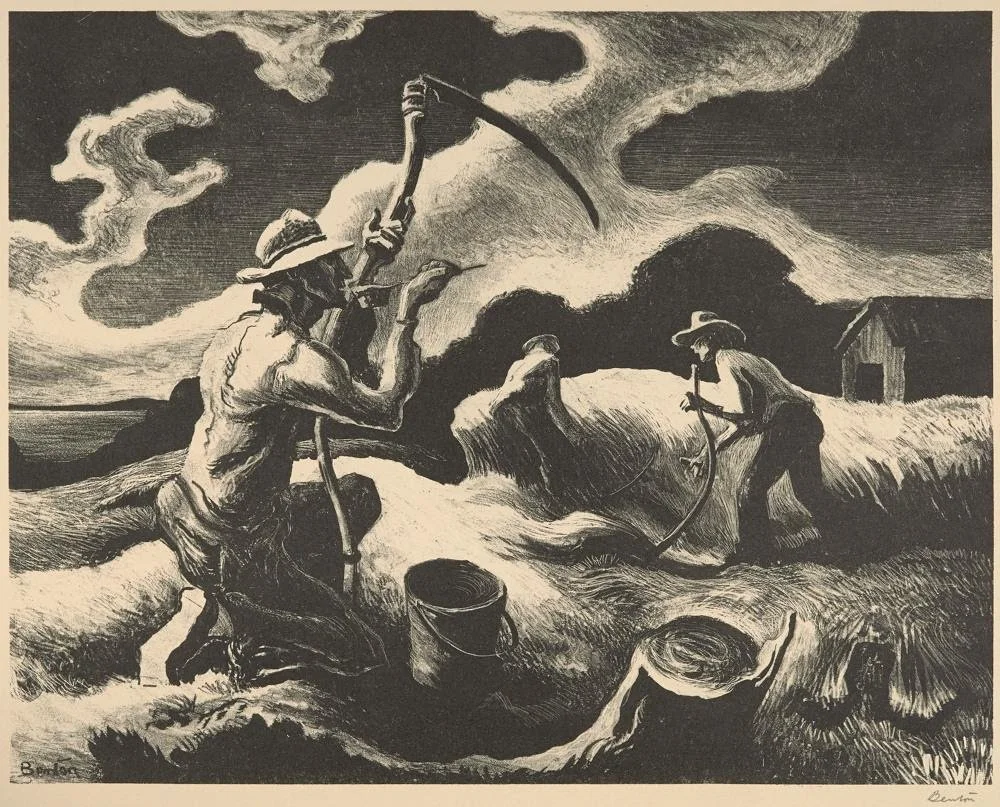
‘‘Island Hay” (1945 lithograph), by Thomas Hart Benton (1889-1975) in the show “Pressing Editions: American Labor in Print,’’ at the Cahoon Museum of American Art, Cotuit, Mass. The island referred to here is Martha’s Vineyard, where Benton spent much time.
The museum says that the show aims to explore how printmaking has “enabled artists and audiences to explore urgent issues of labor in the United States. Juxtaposing historical work with that of contemporary artists Sean Flood, Nina Montejano, and Adrian Tió, ‘Pressing Editions’ presents a timely dialogue on art as work. And artists both historical and contemporary present scenes of local industry, portraits of workers of diverse backgrounds, and reflections on the work that goes into their various art-making processes.”
Céline Gounder: Of covid-19 and pregnancy
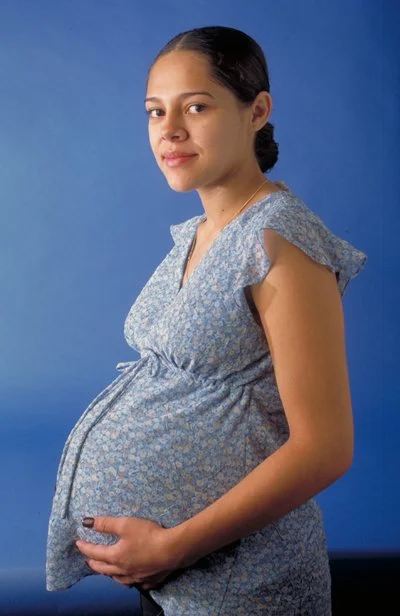
Woman in third trimester of pregnancy
From Kaiser Family Foundation Health News (except for image above)
A large study from Massachusetts has found that babies whose mothers had covid-19 while pregnant were slightly more likely to have a range of neurodevelopmental diagnoses by age 3. Most of these children had speech or motor delays, and the link was strongest in boys and when the mother was infected late in pregnancy.
The increase in risk was small for any one child, but because millions of women were pregnant during the pandemic, even a small increase matters. The study doesn’t prove that covid infection during pregnancy causes autism or other brain conditions in the fetus, but it suggests that infections and inflammation during pregnancy can affect how a baby’s brain grows, something scientists have seen before with other illnesses. It’s a reason to help pregnant women avoid covid and to keep a close eye on children who were exposed in the womb.
What the Study Found
Researchers at Massachusetts General Hospital examined medical records from more than 18,000 mothers and their children born from March 2020 through May 2021, before vaccines were widely available to pregnant women. Because everyone giving birth during that period was tested for covid, the team could clearly see which pregnancies were exposed to the virus causing it.
About 5% of those mothers had covid while pregnant. Their children were modestly more likely to be diagnosed with a neurodevelopmental condition by age 3 than those whose mothers weren’t infected, even after accounting for differences in maternal age, race, insurance status, and preterm birth.
The link appeared strongest among boys and when infection occurred in their mother’s third trimester. Still, most children in both groups showed typical development.
“This was a very clean group to follow,” said Andrea Edlow, a maternal-fetal medicine specialist at Mass General and one of the study’s authors. “Because of universal testing early in the pandemic, we knew who had covid and who didn’t.”
Independent authorities say covid, which causes a powerful immune response in some people, fits the biological pattern seen with other infections in pregnancy. Alan Brown, a professor of psychiatry and epidemiology at Columbia University who studies maternal infection and brain development and was not involved in this research, explained, “Covid would be a very strong candidate for it to happen because the amount of inflammation is very extreme.”
How Might Infection Affect Brain Development?
Scientists are still piecing together how various infections during pregnancy can affect fetal development. Severe illness can cause inflammation that disrupts brain growth or can trigger preterm birth, which carries its own risks.
“There’s a long history of evidence showing that maternal infection can slightly raise the risk for many neurodevelopmental disorders,” said Roy Perlis, the vice chair for research in psychiatry at Massachusetts General Hospital and co-author of the new study.
Edlow’s lab is investigating how infection and inflammation may interfere with brain development. In a healthy brain, immune cells help shape developing neural circuits by trimming away extra or unnecessary connections, a process known as “synaptic pruning,” which sculpts the brain’s wiring. When a mother’s immune system is activated by infection, inflammatory molecules can reach the fetal brain and alter the pruning process.
Animal studies support Edlow’s hypothesis. When scientists trigger inflammation in pregnant mice, their offspring often show changes in how brain cells grow and connect, changes that can alter learning and behavior.
Why Late Pregnancy and Why Boys?
In Edlow and Perlis’s study, the link between covid and developmental delays was strongest when infection occurred late in pregnancy, during the third trimester. That’s also when the fetal brain is growing most rapidly, forming and refining millions of neural connections.
“When we think of organ development, we think earlier in pregnancy, but the brain is an exception in this regard, where there’s a massive amount of brain development in the third trimester. And that continues after birth,” Perlis said. “It is entirely plausible that the third trimester is a period of vulnerability specifically for brain development.”
But not all researchers agree that the third trimester is uniquely vulnerable. Brian Lee, a professor of epidemiology at Drexel University, cautioned that because most mothers in the study were tested at delivery, there were simply more late-pregnancy infections to analyze. “That gives the study more power to find a difference in the third trimester,” he said. “It doesn’t prove earlier infections aren’t important.”
The study also found stronger effects in boys. That pattern is familiar: Boys are generally more likely than girls to have speech or motor delays and to be diagnosed with autism. Researchers suspect that male fetuses may be more susceptible to stress and inflammation, though the biology isn’t fully understood.
What the Study Can and Can’t Show
Edlow and Perlis are careful to say the study shows an association, not proof that covid infection in pregnancy causes developmental problems. Many other factors could explain the correlation.
Mothers who get sick with covid may have other health issues, such as obesity, diabetes, or mental- health conditions, that increase the risk of developmental delays in children. “Persons with mental disorders are much more likely to get covid. Women with mental disorders are much more likely to have kids with neurodevelopmental problems,” Lee said. “Mothers with worse physical health are also at higher risk of having children with neurodevelopmental problems.”
Lee’s research has shown that even infections before or after pregnancy can be linked to autism, suggesting that shared genetics or environment, rather than the infection itself, could be at play.
That’s why experts say much larger, longer studies are needed to understand the extent of any risk from the infection.
Edlow, Perlis, and their team plan to follow the children in their study as they grow older to see whether early differences persist or fade. They’re also studying how inflammation during pregnancy affects the placenta and fetal brain, and how to counteract these effects.
What About Vaccination?
Because this study followed pregnancies from early in the pandemic, it doesn’t answer whether vaccination changes the risk. But other research offers reassurance.
A large national study in Scotland found no difference in early developmental outcomes between children whose mothers were vaccinated and those who weren’t. Another study in the U.S. found the same: no link between prenatal covid vaccination and developmental delays through 18 months. Both align with decades of data showing that vaccination during pregnancy is safe for both the mother and the baby.
“Vaccination is a short spike … your immune system revs up, then it goes back to normal,” Edlow said. “Covid [infection] is much more prolonged, unpredictable, and people can get … a dysregulated immune phenomenon that really doesn’t exist in vaccine responses.”
What This Means for Parents and Clinicians
Since late 2020, there’s been widespread confusion and misinformation about the safety of covid vaccination during pregnancy. Some women have hesitated to get vaccinated out of fear it might harm their baby. But the evidence since then has been clear: Covid vaccines are safe in pregnancy. The American College of Obstetricians and Gynecologists strongly recommends covid vaccination to protect both mother and child.
Experts say the broader lesson is that pregnancy is a period of vulnerability, and prevention matters, not only for covid, but other infections as well.
Janet Currie, a professor of economics at Yale University, said these risks remain “underappreciated,” despite decades of evidence. “Even though the flu vaccine is recommended for pregnant women, very few pregnant women get it,” she said. “Physicians seem to be reluctant to vaccinate pregnant women.”
As Gil Mor, scientific director of the C.S. Mott Center for Human Growth and Development at Wayne State University, in Detroit, put it, “Protecting the mother is protecting the long-term health of the offspring. … The best intervention is vaccination.”
A Century-Old Echo
The idea that what happens in the womb can shape life after birth took root with studies of famine, like the Dutch “Hunger Winter” in the final months of World War II. In 1944 and 1945, as German forces blockaded the western Netherlands, rations fell to just a few hundred calories a day.
Thousands died of starvation, and women pregnant during that period gave birth to babies who later faced higher risks of heart disease, diabetes, and schizophrenia. The episode became a cornerstone of the “fetal origins” idea, that deprivation or stress in pregnancy can have lifelong effects.
The 1918 flu pandemic broadened that idea to infection. Babies exposed to influenza in utero later showed small but lasting differences in education and earnings, a sign that illness during pregnancy could affect brain development. Researchers in Taiwan, Sweden, Switzerland, Brazil, and Japan found similar consequences. Some argued that those findings reflected the disruptions of World War I, not the flu itself. But later studies, including those from the United Kingdom and Finland, have strengthened the case for a biological effect, reinforcing that the infection itself, not wartime upheaval, was the key driver.
“It isn’t simply influenza that can alter fetal neurodevelopment,” Kristina Adams Waldorf, a professor of obstetrics and gynecology at the University of Washington, explained. “Many types of infections … in the mother can be transmitted as a signal to the fetus, which can alter its brain development.”
A century later, the same question has returned with covid: Could infection during pregnancy subtly shape how children grow and learn? The new Massachusetts General Hospital study offers an early look at an answer.
Céline Gounder is a Kaiser Family Foundation Health News reporter ( cgounder@kff.org).
Relat
‘Better for her praise’

“November Morning,’’ by Willard Metcalf (1858-1925), a Massachusetts native who did many paintings with New England settings.
My Sorrow, when she’s here with me,
Thinks these dark days of autumn rain
Are beautiful as days can be;
She loves the bare, the withered tree;
She walks the sodden pasture lane.
Her pleasure will not let me stay.
She talks and I am fain to list:
She’s glad the birds are gone away,
She’s glad her simple worsted gray
Is silver now with clinging mist.
The desolate, deserted trees,
The faded earth, the heavy sky,
The beauties she so truly sees,
She thinks I have no eye for these,
And vexes me for reason why.
Not yesterday I learned to know
The love of bare November days
Before the coming of the snow,
But it were vain to tell her so,
And they are better for her praise.”
“My November Guest,” by Robert Frost (1874-1963)
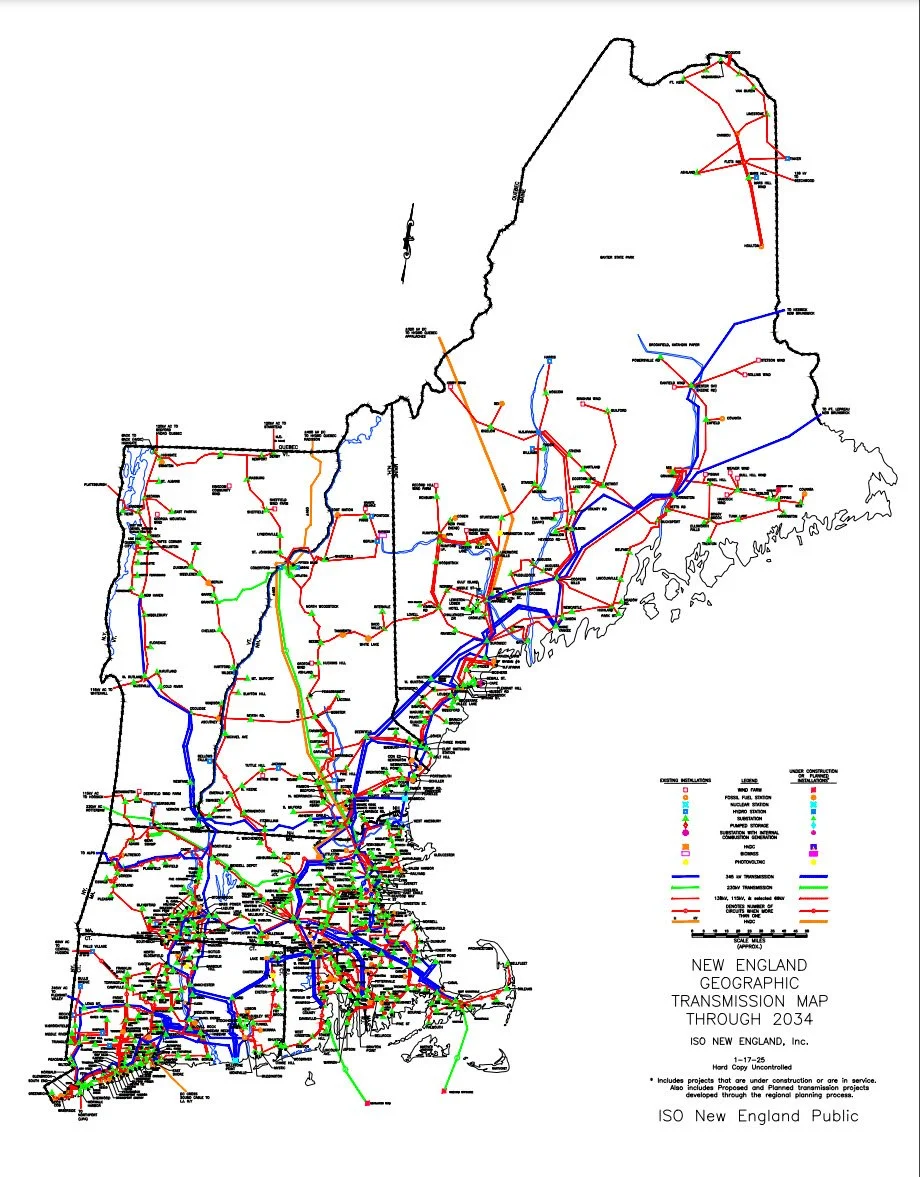
‘Anything that catches my eye’

From Gary Duehr’s show “People, Places, Things,’’ at Bromfield Gallery, Boston, Nov. 5-30.
He says:
“This retrospective skims across several decades of making photos, from People on the streets and squeezed into elevators; to Places behind the scenes or blurred by speed; to Things including messy car interiors and handwritten notes in public.
“A woman cradles flowers on a city street. Sunset sweeps across an LA intersection. A Panama hat and tiger-striped seat covers suggest a safari in Provincetown.
“There is often tension between the camera’s nailing of details and an expressive vision that grabs moments flitting by. The choice of subjects is expansive, even whimsical. To the typical question asked of photographers what they take pictures of, the answer here is: ‘Anything that catches my eye.’”
‘If you discount their stubbornness’

Scene from Hogback Mountain, Wilmington, Vt.
“Look. And smell. Breathe deeply. Feel the air; touch it now and sense its purity, its vigor, its super-constant juvenation (that supposedly has given Vermonters their long life — if you discount their stubborness.’’
— Evan Hill, in The Connecticut River (1972)
xxx
“Vermont is a land filled with milks and maple syrup, and overrun with New Yorkers.’’
— John L. Garrison, in 1946
Painting shaping photography
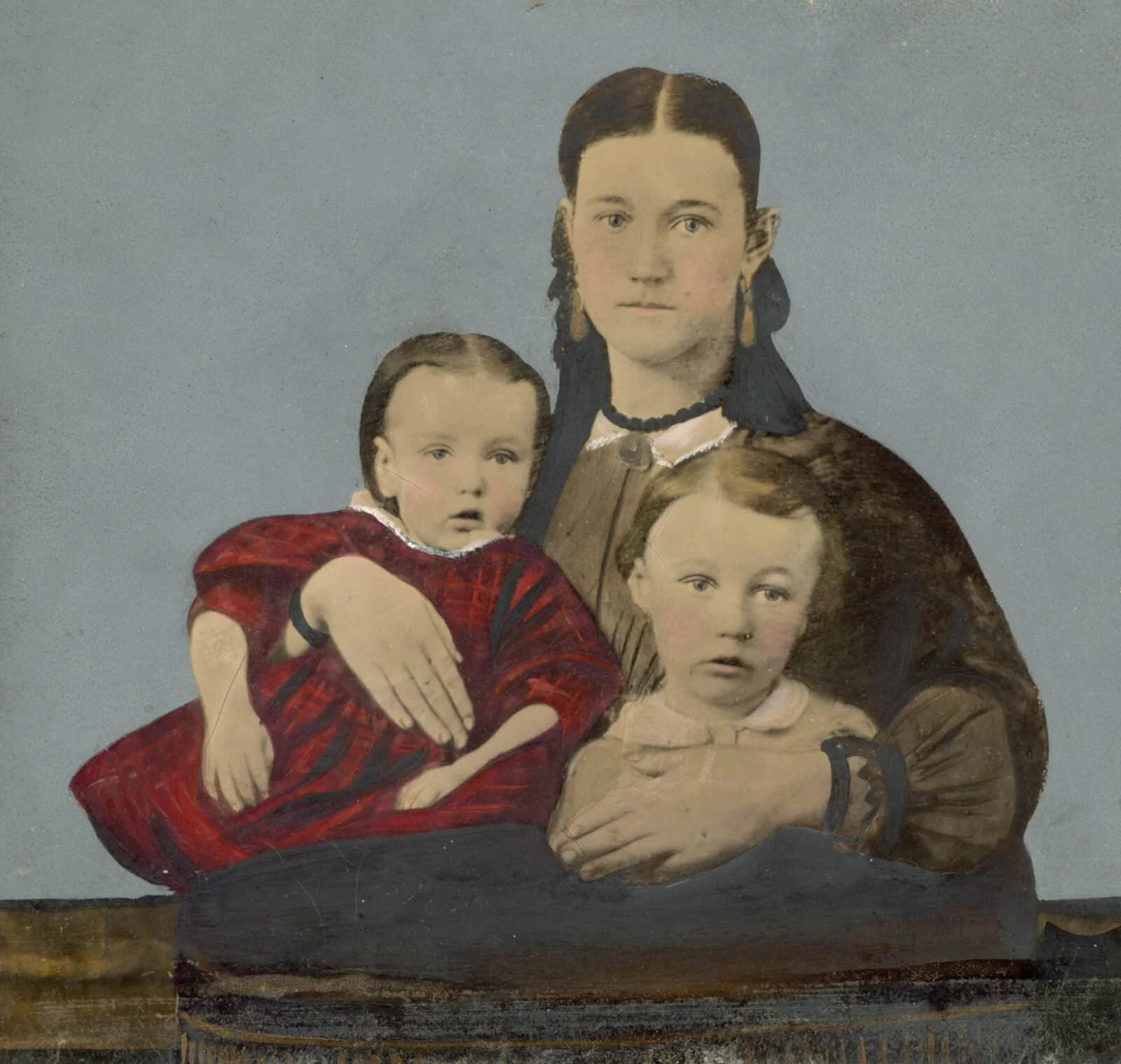
Overpainted full plate tintype, circa 1860’s-’70’s, in the show “Photography and the Painted Image,’’ at the Lyman Allyn Art Museum, New London, Conn., Jan. 17-April 12.
The museum explains:
“This exhibition explores the intersection between photography and painting, highlighting the ways in which the two mediums have overlapped and complemented each other.
The first section showcases the painted backdrop, a hallmark of 19th- and early 20th-Century portrait studios, where elaborate hand-painted backgrounds framed sitters within idealized worlds.
“The second section turns to the painted foreground, focusing on carnival and arcade photographs in which participants posed within humorous or fantastical cutouts that transformed their identities through caricatures and other painted figures.
“The final section explores the painted photograph itself – images enhanced, tinted, or entirely transformed by the application of pigment, from subtle hand-coloring to bold overpainting.
“Together, these works reveal how painting not only shaped the settings and surfaces of photography but also extended its capacity for imagination, spectacle, and self-representation, offering new ways of seeing and being seen.’’
Llewellyn King: A reminder of kings and emperors to rise at the White House, to burden the taxpayers for decades

The East Wing of the White House being demolished on Oct. 21, 2025. A huge ballroom paid for by Trump campaign donors and other rich people will replace it. In return for? Thereafter, themass of taxpayers will cover the maintenance costs.
—Photo by Sizzlipedia
WEST WARWICK, R.I.
President Donald Trump is building what will become one of the greatest snow-colored pachyderms in the history of the United States.
Some of the nation's biggest tycoons are going to pay to build this ballroom, which will look like the box that the rest of the White House came in — a statement often made about the Kennedy Center looking like the container that the adjacent Watergate complex came in.
Those favor-seeking tycoons won't be around to maintain the building as it stands mostly empty through the decades. Buildings that stand empty deteriorate rapidly. This piece of megalomania, expressed in stone, concrete and gold leaf, will be a burden to taxpayers.
Its ostensible purpose is for state dinners, where heads of state we as a nation want to flatter are dined. They should be called state ingratiation events.
When the president of the United States gives you a state dinner, you are exalted, whether it is haute cuisine in a gilded neoclassical building that looks like a 19th-Century railroad station or in a tent. The office of the president doesn't need gold leaf and vaulted ceilings to embellish it.
"Location, location, location," say the real-estate agents, and there's the rub. The White House is, by design, inaccessible.
I can say this with authority because for years I had a so-called White House hard pass and could gain entry quite easily. Even with it, my personal belongings and I had to pass through scanners at the visitor gates.
If you don't have a hard pass, you will have a hard time. You need an escort, and that must be arranged. Things lighten up a bit for events such as the Christmas parties. If you want to be there in time to have your picture taken shaking hands with the president, get there extra early.
The White House gates are a nightmare, and sometimes precleared names are lost mysteriously in the computer system. This happened to a reporter who worked for me who was invited to a press picnic held on the South Lawn during the Clinton administration. The poor fellow had to stand outside the gate like an untouchable while the rest of us got through.
Eventually, he got in. President Bill Clinton — who had an extraordinary ability to find a discomforted person in any situation and make them feel good — put his arm around the reporter in no time. When you have had difficulty getting into the White House, you mostly just feel rejected. The Secret Service makes a person waiting to be cleared for entry at the gates feel inferior or implies that they are up to no good.
My wife, Linda Gasparello, a fully accredited White House correspondent at the time, used her influence to get the crooner Vic Damone, who had an appointment, past the implacably suspicious gatekeepers. He was nearly in tears of frustration from the way he was treated.
The envisioned shimmering excess at 1600 Pennsylvania Avenue won't lend itself to being used for charity events or non-White House galas. It will be just too difficult to get in.
Washington isn't short on big, fancy spaces. I believe that the biggest (besides armories and hangars) is the ballroom of the Walter E. Washington Convention Center. That room can seat over 2,700 and hold 4,600 for non-dinner events.
The Trump Ballroom would accommodate 1,000, we are told, presumably seated. So, it is too small for one kind of event and possibly too big for other events that might take place at the White House, if the attendees can get through the security barriers.
Washington isn't London or Paris. It isn't overstocked with grandiose ceremonial structures built by kings and emperors for their own aggrandizement. Instead, it has fun spaces that are pressed into service for formal affairs, such as the Spy Museum, the National Building Museum or the Air and Space Museum, in keeping with a nation that prizes its citizens over its leaders.
It seems to me that it is wholly appropriate for the United States to show national humbleness, as befits a country that threw off a king and his grandeur 250 years ago.
I have always thought that the tents put up for state dinners at the White House had a particularly American charm — a modest reproach to the world of dictators and fame-seekers, an unsaid rebuke to ostentation.
On X: @llewellynking2
Llewellyn King, based in Rhode Island, is executive producer and host of White House Chronicle, on PBS, and an international energy-sector consultant.
As it shrinks

“Union Pacific's Rock-filled Causeway” (photo of Great Salt Lake, Utah) by Sallie Dean Shatz, from the “Learning Humility from a Dying Lake’’series, in the show “Human Impact: Contemporary Art and Our Environment,’’ at Burlington (Vt.) City Arts, March 13-June 20.
She explains:
“The causeway stretches 20 miles across the Great Salt Lake dissecting it (you can see it in the satellite images to the left.) The causeway was built with two bridges that water could flow through. It has been used to cut off the access of water between the north and south arm, sacrificing the north arm to save the ecosystem of the south arm.
“The south arm has more fresh water flowing into it from the mountains than the north arm. The salinity of the north arm is currently 34%. The current salinity for the south arm is 11.2%. For reference oceans are 3% salinity. The color of the north arm changes by season with the growth of archaea as seen in some of the other images in this exhibit. Note the archaea (pink) seeping into the south arm along the causeway.’’
Chris Powell: Of teachers’ salaries, per-student parenting and generational poverty in Connecticut
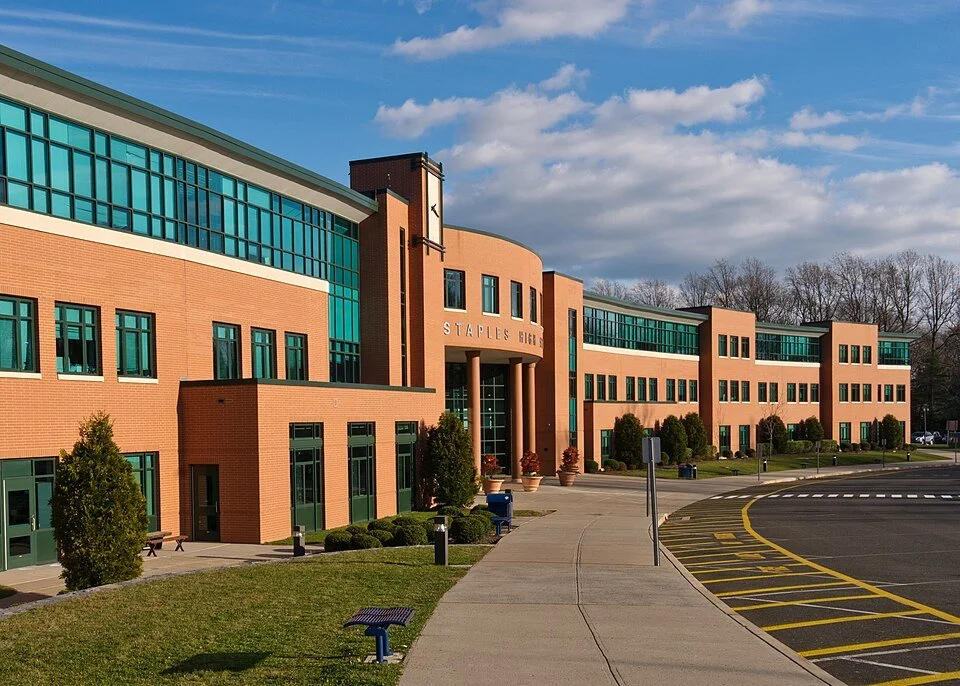
Fancy Staples High School, in rich Westport, Conn.
MANCHESTER, Conn.
Will Connecticut ever realize that two of what it professes to be its highest ideals of public policy, local control and equality of opportunity, are contradictions?
State government was reminded of this again the other day by another report
Connecticut's teacher pension system perpetuates inequity in student tes...
from the Equable Institute, a nonprofit organization that seeks to improve government employee pensions. Connecticut's state teacher- retirement system, the institute notes, does much better by teachers in wealthy municipalities than those in poor ones, because teacher pensions are calculated from their salaries. Wealthy municipalities pay more so their teachers get bigger pensions.
Indeed, Equable says state government pays twice as much for the pensions of teachers in some wealthy municipalities than it pays for the pensions of teachers in some poor ones.
Additionally, because of the higher salaries they pay, wealthy municipalities suffer less turnover in their teaching staffs and retain better teachers longer than poor municipalities do.
Equable says the disparity in pension contributions is responsible for some of the disparity in student performance between wealthy and poor municipalities. That stands to reason, but pension disparities surely matter far less to educational results than the disparities in the household wealth of students and the amount of parenting they get.
As usual, liberals and teachers unions like to attribute all the deficiencies of public education to inadequate spending, even though Connecticut has been raising education spending steadily for almost 50 years, improving teacher salaries and pensions without improving student performance.
Per-pupil parenting has always been the main determinant of student performance, but politics prohibits addressing the parenting problem. No elected official or candidate dares to note the strong correlation between single-parent households and child neglect and abuse, student educational failure, poor physical and mental health, and general misbehavior. Acknowledging that correlation would impugn the entire welfare system and the perverse incentives it gives the poor, and it would show where so much social disintegration is coming from.
But everyone admires teachers as individuals, so finding public money for satisfying them and their unions is easy and doesn't cause the political problems that examining the causes of poverty would.
It's no wonder that teachers prefer to teach well-parented, well-behaved, attentive, and curious kids rather than poorly parented, ill-behaved, and indifferent or demoralized kids. It's no wonder that teachers in impoverished cities, like police officers there, can get worn down quickly and seek to pursue their careers in municipalities with less poverty and dysfunction. This is just another aspect of the flight to the suburbs, which has been caused by government's failure to solve poverty in the cities.
Maybe state law should arrange for all teachers to be paid directly by state government according to the same salary schedule so their pensions would be equalized. No adjustments for union contracts or individual merit could be permitted, since they would generate inequality.
Such an egalitarian system likely would reduce salaries and pensions in wealthy and middle-class municipalities and increase them in poor ones. But of course teacher unions would never give up bargaining power over wages and benefits, not in the pursuit of equality or anything else.
Or maybe teachers in the poorest municipalities should be paid at least $100,000 per year more than teachers in the highest-paying municipalities. They might not all be good teachers but most might deserve more money just for having to deal with so many indifferent and misbehaving students.
While that might be fairer to those teachers, who are part of the constituency the Equable Institute is trying to help, Connecticut's long experience would still be that school spending is almost irrelevant to educational performance, and the presumption of increasing teacher salaries and pensions would still be that the job satisfaction of teachers is more important than education itself and ending generational poverty.
But even the long failure to end generational poverty isn't the biggest problem here. The biggest problem here is simply Connecticut's failure to care much about it. As a political matter, paying off the teachers is the most we can do.
Chris Powell has written about Connecticut government and politics for many years (CPowell@cox.net).
Display it and let it degrade

“Gathering My Thoughts” (Ohio-grown willow), by Laura Ellen Bacon, at the Clark Art Institute, Williamstown, Mass., through Oct. 12, 2026.
— Photo by Derek Hansen
The museum says:
Ms. Bacon “weaves her sculptures from slender strands of willow. Gradually, twist by twist, she builds an enormous form with a complex interior structure. The technique is entirely original to her, but has affinities with such rural English crafts as fences, baskets, and thatching, as well as the nests and burrows of birds and other animals. Bacon has conceived her work for the Clark as a record of its own making: each of the overlapping volumes represents one day of her skilled labor. Together, they accumulate into an organic shape, like an outgrowth of the woodland floor. She enjoys the fact that the sculpture may become a habitat for insects and other creatures. Because it is made entirely from natural materials, it will be disassembled and allowed to degrade into the forest floor.’’
Cullen Paradis: Boston/Cambridge ranked as nation’s third biggest innovation hub
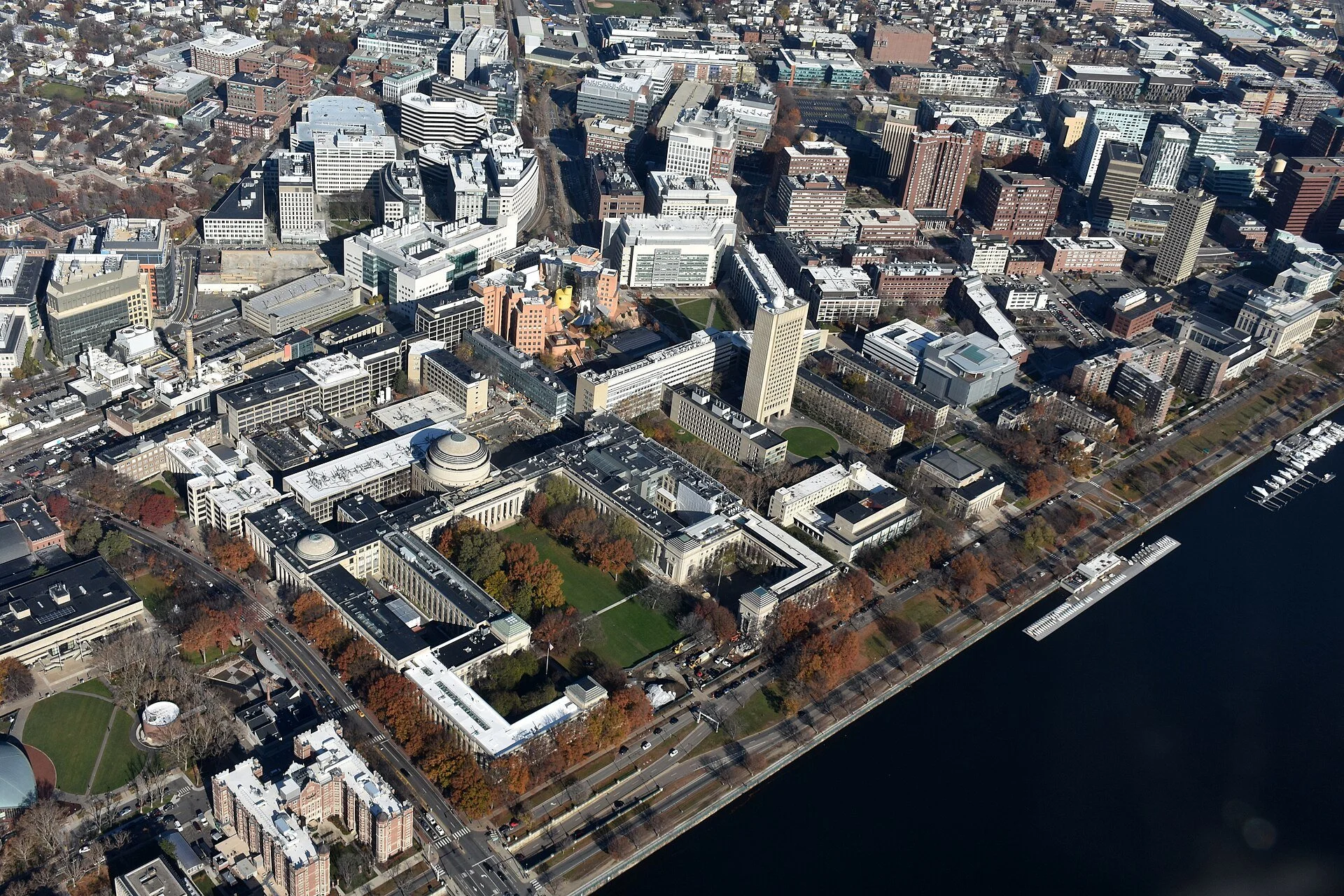
MIT's central and east campus from above the Harvard Bridge. Left of center is the Great Dome over Killian Court, with the Stata Center behind.
— Photo by Nick Allen
(Robert Whitcomb, New England Diary’s editor/publisher, is The Boston Guardian chairman.)
While residents may complain about poorly timed traffic lights and power outages, Boston and Cambridge have been ranked the third largest innovation engine in America and the ninth worldwide.
The World Intellectual Property Organization (WIPOP), a subsidiary of the United Nations that tracks, protects and distributes intellectual property, has released new data on which cities and regions around the globe are innovation hotspots in 2025.
Boston placed quite well nationally, ranking behind only San Francisco and New York City.
“Innovation clusters, whether innovation-driven cities or regions, form the beating heart of national innovation systems,” the report said.
“These hubs unite top universities, researchers, inventors, venture capitalists and research and development (R&D) firms in driving forward breakthrough ideas. From Bengaluru to Berlin, Boston to São Paulo, Shenzhen or Seoul, global cities blend research, start-ups and R&D firms to power innovation.”
WIPO’s global innovation index (GII) measures a combination of investment in innovation, technological progress and adoption of new technologies, and socioeconomic impacts. Boston actually does even better on rankings that take size into account, scoring 3rd globally behind only San Francisco and Cambridge, UK. WIPO gave special notice to San Francisco and Boston as the only cities to place top ten in both overall innovation and innovation density.
Those placements have real numbers behind them, with one of every hundred publications filed worldwide coming from Boston according to WIPO metrics. One of every sixty-six international patent treaties comes from Boston, and one of every fifty venture capital dollars spent globally is invested right here.
A large part of that is Boston’s education system.
The Massachusetts Institute of Technology (MIT) got second place in the Times Higher Education 2026 rankings with a perfect 100 points for industry connections and innovation. WIPO also noted that the Quacquarelli Symonds World University 2026 rankings gave MIT first place globally with a perfect 100.
Harvard Medical School got its own shoutout from WIPO as the region’s top scientific organization.
Other private enterprises played their own role, with Boston Scientific coming third in WIPO’s global ranking of medical device companies.
Boston’s rankings this year are a shift from 2024, better in some areas but slipping slightly back in others. While not all of the metrics between years are the same, Boston’s placement on the overall ranking slipped from 8th to 9th in 2025. Ranked with density taken into account, however, saw Boston jump from 5th place to 3rd. This could suggest that while Boston is ramping up innovation investment it’s not enough to fully compensate for the city’s size.
“The GII uses a bottom-up, data-driven methodology that disregards administrative or political borders and instead pinpoints those geographical areas where there is a high density of inventors and scientific authors,” said the 2025 report.
The city’s placements in 2024 were mostly the same for 2023 and 2022 as well, suggesting that this is a recent change rather than the continuation of an ongoing trend.The mayor’s office, Harvard Medical School and the MIT did not respond to a request for comment on this article by press time.
Top 10 innovation clusters
1. Shenzhen-Hong Kong-Guangzhou
2. Tokyo-Yokohama
3. San Jose-San Francisco
4. Beijing
5. Seoul
6. Shanghai-Suzhou
7. New York
8. London
9. Boston-Cambridge
10. Los Angeles
Cullen Paradis is a Boston Guardian contributor.
Criminally cute?

From the “Whiskers and Whimsy: Animals in Currier & Ives Prints’’ show at the Springfield (Mass.) Museums through Jan. 4
The museum explains:
“Currier & Ives, the New York City-based printmaking firm operating from 1835 to 1907, played an outsized role in shaping American visual culture with their scenes from military history and landscapes. Additionally, Nathaniel Currier (American, 1813–1888) and James Merritt Ives (American, 1824–1895) found widespread appeal for their ‘sentimental prints’ that featured puppies, kittens, and birds—often in comical situations!’’
Celine Gounder: The quiet collapse of America’s reproductive-health system
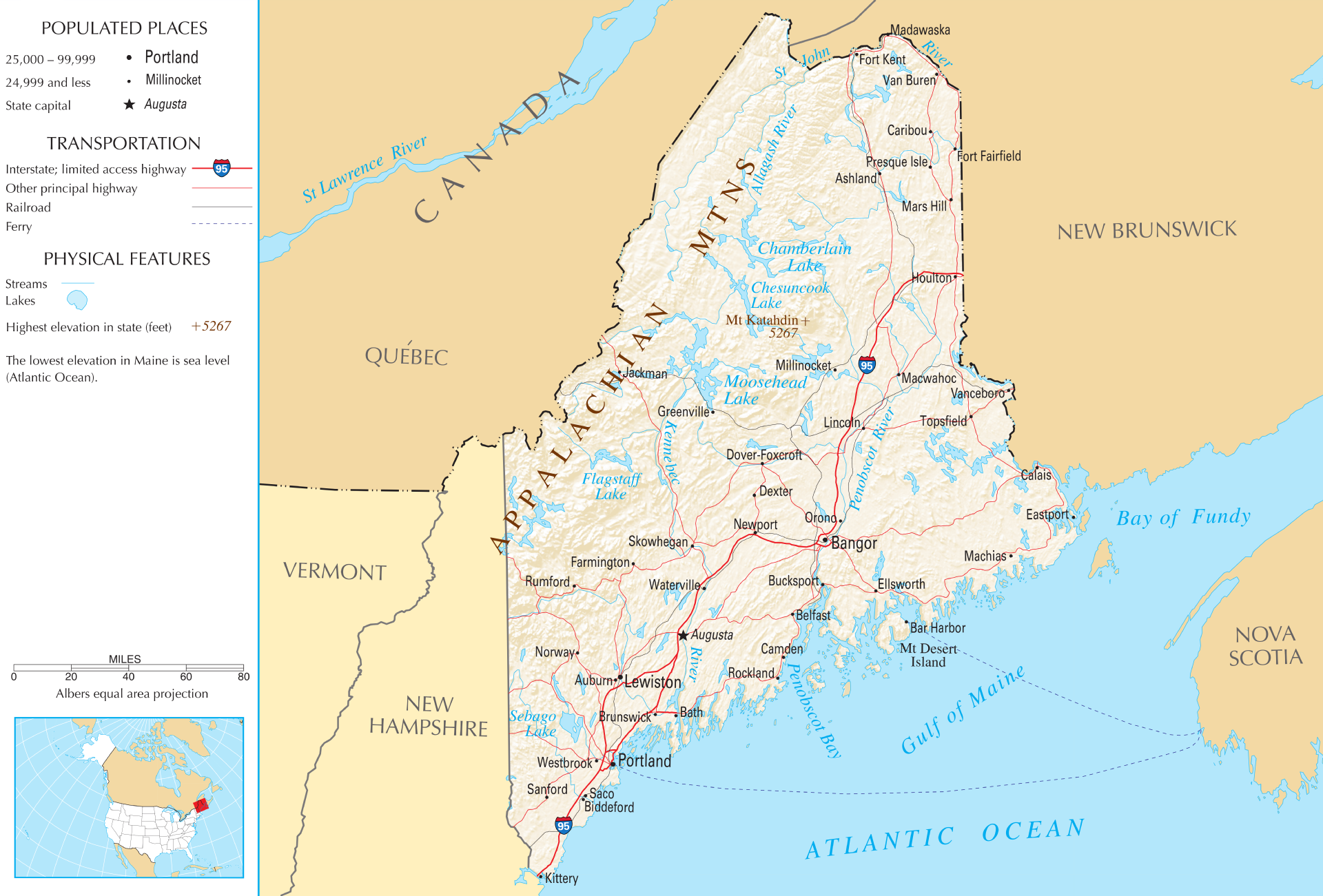
From Kaiser Family Foundation Health News, except for inage above.
In late October, Maine Family Planning announced three rural clinics in northern Maine would close by month’s end. These primary-care and reproductive health clinics served about 800 patients, many uninsured or on Medicaid.
“People don’t realize how much these clinics hold together the local health system until they’re gone,” said George Hill, the group’s president and CEO. “For thousands of patients, that was their doctor, their lab, and their lifeline.”
Maine Family Planning’s closures are among the first visible signs of what health leaders call the biggest setback to reproductive care in half a century. The U.S. Department of Health and Human Services’ Office of Population Affairs, which administers the Title X family planning program, has been effectively shut down. At the same time, Medicaid cuts, the potential lapse of Affordable Care Act subsidies, as well as cuts across programs in the Health Resources and Services Administration and Centers for Disease Control and Prevention are eroding the broader safety net.
“When you cut OPA, HRSA, and Medicaid together, you’re removing every backup we have,” said Clare Coleman, president of the National Family Planning and Reproductive Health Association. “It’s like taking EMTs off the road while closing the emergency rooms.”
Asked about the cutbacks, HHS press secretary Emily G. Hilliard said, “HHS will continue to carry out all of OPA’s statutory functions.”
How the Safety Net Frays
For more than 50 years, Title X has underwritten a national network of clinics, now numbering over 4,000, that provide contraception, pregnancy testing, testing and treatment for sexually transmitted infections, cancer screening, and other primary and preventive care to nearly 3 million low-income or uninsured patients annually. OPA managed nearly $400 million in grants, issued clinical guidance, and ensured compliance.
In mid-October, OPA’s operations went dark amid federal layoffs that also affected hundreds of CDC staffers. “Under the Biden administration, HHS became a bloated bureaucracy — expanding its budget by 38% and its workforce by 17%,” a spokesperson for the department said at the time, adding, “HHS continues to eliminate wasteful and duplicative entities, including those inconsistent with the Trump administration’s Make America Healthy Again agenda.”
According to Jessica Marcella, who led OPA under the Biden administration, the office was previously staffed by 40 to 50 people. Now, she says, only one U.S. Public Health Service Commissioned Corps officer remains.
“The structure to run the nation’s family planning program disappeared overnight,” said Liz Romer, OPA’s former chief clinical adviser.
“This isn’t just about government jobs,” Coleman said. “It’s a patient-care crisis. Every safety-net program that touches reproductive health is being weakened.”
Linking Health, Autonomy, and Opportunity
Created in 1970 under President Richard Nixon and rooted in President Lyndon Johnson’s War on Poverty, Title X was designed as a cornerstone of preventive public health, not a partisan cause. Nixon called family planning assistance key to a “national commitment to provide a healthful and stimulating environment for all children,” and Congress agreed overwhelmingly across party lines.
The Biden administration shut off federal family- planning grants to Tennessee and Oklahoma after the states directed clinics not to provide abortion counseling. The Trump administration restored the money, claiming two lawsuits were settled. They weren’t.
Sara Rosenbaum, a professor of health law at George Washington University, said the program reflected a pivotal shift in how policymakers understood health itself.
“By the late 1960s, there was a deep appreciation that the ability to time and space pregnancies was absolutely essential to women’s and children’s health,” she said. “Title X represented the idea that reproductive care wasn’t a privilege or a moral issue. It was basic health care.”
UCLA economist Martha Bailey later found that children born after the first federally funded family-planning programs were 7% less likely to live in poverty, and had household incomes 3% higher, than those born before. Research by Bailey just published by the National Bureau of Economic Research showed that when low-income women can access free birth control, unintended pregnancies drop by 16% and abortions drop by 12% within two years.
Those findings underscore what Rosenbaum calls “one of the great public health achievements of the 20th Century — a program that linked economic opportunity to health and autonomy.”
That bipartisan foundation and evidence-based mission, Rosenbaum said, make today’s unraveling especially striking.
“What was once common sense, that access to family planning is essential to a functioning health system, has become politically fragile,” she noted. “Title X was built for continuity, but it’s being undone by neglect.”
Hidden Health Risks Behind Unplanned Pregnancies
Family planning is central to maternal and infant health because it gives women the time to optimize such medical conditions as high blood pressure, diabetes, and heart disease before pregnancy, and allows them to safely space out their births.
“Pregnancy is the ultimate stress test,” said Andra James, a maternal-fetal medicine specialist who advised the CDC on its contraceptive guidelines.
“It increases the heart’s workload by up to 50%. For people with heart disease, diabetes, or hypertension, that stress can be dangerous.”
Brianna Henderson, a Texas mother, learned this firsthand. Weeks after delivery, she developed peripartum cardiomyopathy, a form of heart failure that can occur during or after pregnancy. She survived. Her sister, who had the same undiagnosed condition, died three months after giving birth to her second child. Those kids are now 12 and 16, and they’re growing up without a mom. Their dad and his mother look after the kids now.
“Contraception has been a lifesaving option for me,” Henderson said.
James and other specialists warn that without CDC-informed guidance on contraceptive safety for complex conditions, clinicians and patients are left without clear, current standards.
What History and Data Predict Happens Next
Title X clinics provide millions of STI tests each year and are often the only cancer screening sites for uninsured women. Cuts to Medicaid and ACA subsidies will make it even harder for people to afford preventive visits.
“If these clinics close, we’ll see more infections, more unplanned pregnancies, and more maternal deaths, especially among Black, Indigenous, and rural communities,” said Whitney Rice, an expert on reproductive health at Emory University.
And the geographic gaps are large already. Power to Decide, a nonprofit reproductive rights group, counts more than 19 million women living in “contraceptive deserts,” where there’s no reasonable access to publicly supported birth control.
“These are places where the nearest clinic might be 60 or 100 miles away,” said Power to Decide interim co-CEO Rachel Fey. “For many families, that distance might as well be impossible.”
High Price of Short-Term Savings
Each pregnancy averted through Title X saves about $15,000 in public spending on medical and social services, according to an analysis by Power to Decide. And an analysis by the Guttmacher Institute shows that every $1 invested in publicly funded family-planning programs saves roughly $7 in Medicaid costs.
Cutting federal funding for reproductive health services “isn’t saving money. It’s wasting it,” said Brittni Frederiksen, a KFF health economist and former OPA scientist. “We’ll spend far more fixing the problems these cuts create.” KFF is a health information nonprofit that includes KFF Health News.
Supporters of cuts argue federal spending must be reduced and states should set their own priorities.
Strain on the Ground
Some clinics that provide abortions are closing, even in states where voters have passed some of the nation’s broadest abortion protections. It’s happening in such places as New York, Illinois, and Michigan, as reproductive health-care faces new financial pressures.
Affirm CEO Bré Thomas said the state could lose $6.1 million in Title X funding if federal appropriations expire after March 31. It’s a cut that would reduce access to care across the network.
“That’s $6.1 million for Arizona,” she said. “That means over 33,000 patients in our state could lose access to services.”
Thomas noted that two consecutive funding reductions, combined with 11 years of flat federal support and rising health care costs, have already strained operations. Without new funding, she warned, clinics may be forced to limit contraceptive options to cheaper methods, reduce preventive care, and lay off staff, especially in rural communities. “We’re talking about impacts to people’s jobs and their ability to access the care they need,” she said.
Megan Kavanaugh, a scientist at the Guttmacher Institute, underscored those limits.
“Federally Qualified Health Centers do not have the capacity to absorb the number of patients who will lose care,” she said, referring to federally funded community-based clinics for underserved populations. “Some people may find another clinic, but a large share simply won’t, and we’ll see that reflected in higher rates of unintended pregnancy, untreated infections, and later-stage disease.”
Hospitals are beginning to absorb the spillover.
“The safety net is shrinking, and hospitals can’t absorb everyone,” said Sonya Borrero, a reproductive-health expert at the University of Pittsburgh School of Medicine and a former chief medical and scientific adviser at OPA. “Wait times will get longer, and preventable problems will rise.”
Funding Frozen, Oversight Halted
With OPA offline, Title X dollars already awarded can be spent, but no new funds are moving.
“Most programs can hang on for a few months,” Romer said. “By spring, many won’t have enough money to stay open.”
The halt also suspends compliance reviews and technical assistance tied to CDC-aligned guidelines.
Marcella, the former OPA leader, warned of a “backdoor dismantling.”
“If there aren’t people to administer the grants, then the administration can later argue the program isn’t working and redirect the funds elsewhere,” she said. “This is a functional elimination, done quietly.”
Kavanaugh called the moment “one more step toward dismantling the public health infrastructure that has supported people’s reproductive health for decades.”
Without staff to move money and guidance, she said, “that’s how a system collapses.”
What Can Still Be Done
According to the National Association of Community Health Centers, Federally Qualified Health Centers can still use HRSA money that was already approved, even during the government shutdown. But no new funding is being released, similar to the freeze on Title X funds. At the same time, HRSA has stopped first-quarter payments for its Title V Maternal and Child Health program, which limits how states can provide preventive care and services for children and young people with special health needs.
Some states — California, New Mexico, Washington — are plugging holes with state dollars, and health systems are expanding telehealth, but most jurisdictions cannot replace federal support at scale.
“Private donors can’t replace the federal government,” said Hill, of Maine Family Planning. “You can’t crowdfund your way to a working health system.”
Congress could restore Title X and rebuild OPA’s staffing, but without administrators in place, money can’t reach clinics quickly. States have a short window to bridge care by stabilizing Medicaid coverage, shoring up community health centers, and protecting contraceptive access.
“This isn’t a political debate,” Romer said. “It’s women showing up for care and finding the doors locked.”
Céline Gounder is a reporter f0r Kaiser Family Foundation Health News( cgounder@kff.org)