
Vox clamantis in deserto




David Warsh: On Russia, Trump hoisted on the Democrats' petard
A few months after Russia’s annexation of the Crimean peninsula, in 2014, Foreign Affairs conducted an illuminating exchange of views. It is as good a place as any to begin to retrace the steps that brought us to the present day “Russia crisis.” It is always a good idea to go back to the beginning when you are lost.
John Mearsheimer, of the University of Chicago, wrote “Why the Ukraine Crisis Is the West’s Fault: The Liberal Delusions that Provoked Putin. Michael McFaul, advisor to President Barack Obama, back at Stanford after a two-year stint as ambassador to Moscow, argued that the takeover had been “Moscow’s Choice: Who Started the Ukraine Crisis.” Alexander Lukin, vice president of the Diplomatic Academy of the Russian Ministry of Foreign Affairs, described “What the Kremlin Is Thinking: Putin’s Vision for Eurasia.” (Foreign Affairs allows non-subscribers only one free article a month, so choose your link carefully.)
Mearsheimer, 69, the leading expositor (after Henry Kissinger, 94) of what is commonly called the realist view in international affairs, described a triple package of encroachment: NATO enlargement, European Union expansion, and aggressive democracy promotion. Of these, NATO was the “taproot” of the trouble. Putin’s actions should be easy to comprehend, he wrote, especially for those who remembered Russian experiences with Napoleonic France (in 1812), imperial Germany (in World War I) and Nazi Germany (in World War II). He continued,
No Russian leader would tolerate [NATO], a military alliance that was Moscow’s mortal enemy until recently, moving into Ukraine. Nor would any Russian leader stand idly by while the West helped install a government there that was determined to integrate Ukraine into the West…. After all, the United States does not tolerate distant great powers deploying military forces anywhere in the Western hemisphere, much less on its borders. Imagine the outrage in Washington if China built an impressive military alliance and tried to include Canada and Mexico in it.''
McFaul, 53, an expositor of the liberal view of foreign affairs, responded in the next issue. If Russia was really opposed to NATO expansion, why didn’t it raise a stink after 1999, when NATO expansion began? Hadn’t Russian president Dimitri Mededev permitted the U.S. to continue to operate its airbase in Kyrgyzstan? Hadn’t he tacitly acquiesced to NATO intervention in Libya?
"In the five years that I served in the Obama administration, I attended almost every meeting Obama held with Putin and Medvedev, and, for three of those years, while working at the While House, I listened in on every phone conversation, and I cannot remember NATO expansion ever coming up.''
The real reason for the annexation, McFaul wrote, had to do with internal Russian politics. Putin needed to cast the US as an enemy in order to discredit those who opposed his election to a third presidential term. He feared a “color revolution,” like the “Orange Revolution” in Ukraine in 2004, might force him from power.
Mearsheimer wasn’t impressed: And to argue that Russian opposition was based on “resentment,” as had former Bill Clinton adviser Stephen Sestanovich, 67, in a companion piece, “How the West Has Won,” was to miss the point. Russia was worried about its border.
"Great powers always worry about the balance of power in their neighborhoods and push back when other great powers march up to their doorstep. This is why the United States adopted the Monroe Doctrine in the early nineteenth century and why it has repeatedly used military force and covert action to shape political events in the Western Hemisphere.''
Meanwhile, Lukin, the Kremlin insider, had already reminded readers of the gauzy view of Russia that had taken hold in America after 1993. Gradually Russia would embrace Western-style democracy at home and cease to pose a threat to the security of its former satellites. It would accept Western leadership in economic affairs. And it would recognize that various tough treatment of its one-time allies – Serbia, Libya, Iraq, and Iran – was the legitimate exercise of Western leadership in global affairs. Lukin wrote:
"The ongoing crisis in Ukraine has finally put an end to this fantasy. In annexing Crimea, Moscow decisively rejected the West’s rules and in the process shattered many flawed Western assumptions about its motivations. US and European officials need a new paradigm for how to think about Russian foreign policy – and if they want to resolve the Ukraine crisis and prevent similar ones from occurring in the future, they need to get better at putting themselves in Moscow’s shoes.''
What Putin had in mind, Lukin wrote, was the formation of a Eurasian Union, similar to the European Union but not particularly a rival to it, linking the economies of Armenia, Belarus, Georgia, Kazakhstan, Kyrgyzstan, Russia, Tajikistan and Ukraine.
"The concept of a Eurasian space or identity first arose among Russian philosophers and historians who emigrated from communist Russia to Western Europe in the 1920s. Like Russian Slavophiles before them, advocates of Eurasianism spoke of the special nature of Russian civilization and its differences from European society; but they gazed in a different direction. Whereas earlier Slavophiles emphasized Slavic unity and contrasted European individualism with the collectivism of Russian peasant communities, the Eurasians linked the Russian people to the Turkic-speaking people, or 'Turanians,' of the Central Asian Steppe.''
The differences of opinion had been clearly set out.
That was three years ago. You know the rest. Escalating sanctions on Russia from the West, especially the US. From Russia, increasing bellicosity.
Since he was elected, Donald Trump has been hoist on a petard largely of the Democratic Party’s making, going back to Bill Clinton’s decision to press for NATO expansion in 1994. Enlargement was forcefully opposed by other Democrats in 1996, but to no avail. Clinton went ahead. George W. Bush and Obama continued in the same groove.
Don’t get me wrong. I don’t mean to say a kind word about Trump. He first came by his views of Russia from well-heeled Russian customers for his real estate developments. And I am only mildly sympathetic to Putin’s problems. We have enough of our own.
The good news is that Trump has appointed two sensible realists who know a thing or two about Russia: Rex Tillerson Secretary of State and, the other week, Jon Huntsman as ambassador to Russia. It is the beginning of a long journey back to common sense.
David Warsh is proprietor of economicprincipals.com, where this first ran. He is a long-time columnist and economic historian.
Beyond traditional 'urban renewal'

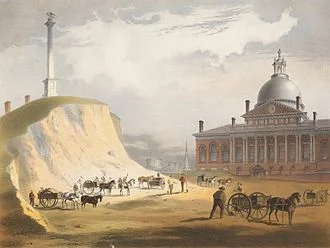
Cutting down Beacon Hill in 1811; a view from the north toward the Massachusetts State House.
Adapted from Robert Whitcomb's "Digital Diary,'' in GoLocal24.com.
Boston’s new master plan, called “Imagine 2030’’ is refreshingly flexible. It encourages improvements in accessibility and interconnectivity across the city through more reliable public transportation, better education and more recreational re sources. However, it leaves many of the details and decisionsto private-sector organizations and individuals, with city government acting more as referee and cheerleader and improvements promoted more through economic incentives than through regulations.
It’s not a heavily top-down government-run “urban-renewal’’ approach of the wrecking-ball-and-bulldozer sort that did so much damage in many old American cities in the ‘50s and ‘60s. Rather it takes more of a Jane Jacobs (author of The Death and Life of Great American Cities) stance – treating the city as an immensely complicated organism with vibrant and open neighborhoods and walkability key strengths.
The plan has a couple of powerful forces behind it: One is that cities in general are on the upswing; suburbs have lost a lot of their allure. Another is that Greater Boston’s great research and innovation machine, lubricated by its famed higher-education sector and its roles as a major financial center and the capital of New England, will probably keep running indefinitely to pay for the improvements. Let’s hope that more of that money washes down to Providence and over to Worcester..
Two New Englands of humor
"Basically, there are two New Englands, northern and southern, with plenty of shared schizophrenia between them....The Connecticut Yankee and the Maine Yankee may both trade on rurality for their wit, but one is garrulous and the other taciturn. When the Bostonian tells a story the Vermonter becomes an ignorant hayseed; when the Vermonter tells a story the Bostonian is a pompous ignoramus. Usually in such a match there's no contest; the Vermonter will inevitably prevail.''
-- From Jim Brunelle, in The Best of New England Humor
How N.E. can lead nation in offshore wind energy
Via the New England Board of Higher Education (nebhe.org)
By Dan Kuchma, David Cash, Fara Courtney, Jerome Hajjar, Eric Hines, Anthony Kirincich, Stephen Lohrenz, James Manwell and Chris Niezrecki
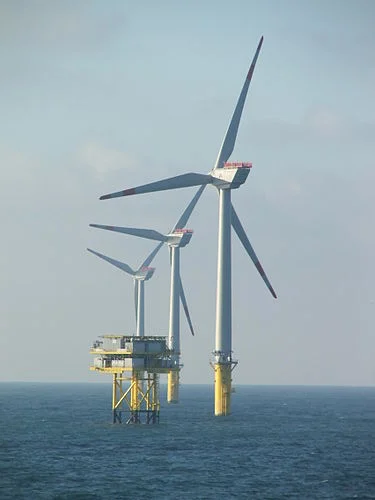
In the coming decades, the U.S. will see large-scale offshore wind energy (OWE) development in which hundreds of billions of dollars are invested in building and operating OWE capabilities that are price-competitive with fossil fuel-based electricity. European market commitment, investment in infrastructure and R&D focused on cost reduction has enabled this competitiveness.
New England is poised to lead the nation, thanks in part to: offshore winds that are up to twice as powerful as other regions in the U.S., high electricity demands and costs, thousands of megawatts in pending plant retirements, the creation in Massachusetts of the first commercial-scale offshore wind market, Rhode Island’s construction of the first American offshore wind farm, and Maine’s leadership in deepwater floating-turbine technologies.
New England’s institutions of higher education, meanwhile, have a distinguished history as leaders in research related to wind energy, the ocean environment, public policy and infrastructure planning. Together, they are playing a critical role in the thought leadership, engineering innovation and workforce education that will ensure the success of our American offshore wind industry.
On Aug. 8, 2016, Massachusetts Gov. Charlie Baker, a Republican, signed into law an energy bill that requires the state’s utilities to draw on at least 1,600 megawatts of offshore wind capacity in the coming years, enough to power a third of the homes in Massachusetts.
A month later, the Massachusetts Clean Energy Center awarded the University of Massachusetts System plus Northeastern, Tufts and the Woods Hole Oceanographic Institution a capacity-building grant to become the Massachusetts Research Partnership in Offshore Wind (MRP). The MRP is currently formulating a national research agenda for offshore wind that can help guide the use of new and existing American research assets and expertise in the service of making American offshore wind an innovative, competitive and environmentally responsible enterprise.
In an effort to ensure the national scope of this research agenda, the MRP has convened an initiative entitled the Partnership for Offshore Wind EneRgy (POWER-US), which is bringing to the table key national laboratories and institutions of higher education from every region of the U.S.
Caught in the Breeze
New England has a net electricity capacity of approximately 34 gigawatts (GW)
On any given day, we use approximately 17 GW of this power
By 2020, approximately 8 GW is planned for retirements, i.e. one half of our daily draw and one quarter of our total capacity
On May 31, 2017, the Brayton Point coal-fired power plant was retired—then the largest coal-fired power plant in New England
Massachusetts 2016 legislation requires the purchase of 1.6 GW of offshore wind and approximately 1.6 GW of hydropower
There is Massachusetts legislation pending that would raise the offshore wind number to 4 GW
Wind or no wind, we need to replace our electricity-generation capacity in the next several years. Renewables or not, coal is too expensive compared with natural gas and coal-fired power plants have had to close because they cannot compete in the electricity markets.
Without such an initiative, the U.S. role in developing its own OWE resource could very likely be marginalized by this European-based industry which has developed its technical know-how through decades of experience. The longer the U.S. waits to invest in this industry, the more difficult it will become for the U.S. to take control of its own energy destiny. When one considers, however, the speed at which the U.S. developed its land-based wind-energy production, and the depth to which the U.S. has advanced ocean observation and exploration, large-scale testing, and cyber-infrastructure, the potential for U.S. leadership in offshore wind is very real.
Significant American public investment in infrastructure, research and collaboration among the public, private and academic sectors will have a serious impact on the trajectory of American offshore wind. Such collaboration raises various issues affecting the public interest, including:
Sources of employment and development of local industry and expertise
The impact of large-scale development on electrical grid operation and power markets
the policy and regulatory landscape that can ensure sustainable growth for the industry
How a given project will affect other offshore wind energy projects, including use of workforce and infrastructure, cumulative impacts and long-term costs
What happens to the investments in infrastructure beyond the 25-year operational period assumed for offshore wind projects
Environmental impact other than to satisfy the regulations which are still in early stages of development
The development of a system-level assessment and risk-based approach using the most relevant available data
Ensuring the right level of learning and technology assessment throughout OWE development
Contributing to public sources of data and metadata on site characteristics such as seabed conditions and marine habitats, while respecting the proprietary nature of certain information
Identifying and testing the breadth of new technologies, including remote sensing, longer-lasting materials, and new construction methods that could advance OWE
Contributing to the development of the type of rich technical community that supports other types of similarly large investments and responsibilities
The cumulative impacts of large-scale development at the regional and national scale.
The value proposition of offshore wind to a region is highly dependent on the impact that OWE development can have on jobs and economic growth. The strategic development of local labor markets can transform coast communities and regional economies, as it already has across northern Europe. Due to the size of OWE turbines (as tall as Boston’s Hancock Tower) it is economical to design, manufacture, install and maintain them with local expertise, which is currently developing in the New England area. The U.S. is at the very early stages of preparing and educating a workforce to drive and support the OWE industry. We should begin to design education programs at all levels, from skilled labor educated at the community college level, to advanced degrees in specialized fields.
This should include apprenticeships, training programs for existing workers and international exchanges, and span high school-voc-tech, two-year, four-year, certificate, bachelor’s, master’s and doctoral programs. In the U.S., high-quality jobs in the energy and infrastructure sector have the potential both to be local and to be resistant to automation.
Regional powers?
Regional cooperation across multiple states is essential to managing the complexity of OWE development and operation, the future size of this industry and the current state of any individual ports, manufacturing facilities, workforce and other resources. The electrical grid should be developed at a regional level and in consideration of how it may be expanded to bring future sources of OWE and other energy assets—including utility-scale storage—most economically and reliably to users.
A public investment in characterizing the resource and site conditions at potential wind energy sites reduces the risk for individual private developers and investors, and leads to lower-cost power-purchase agreements, as has been effectively demonstrated in Europe. It also advances our understanding of the ocean and marine environments, and enables improved decisions on the right level and location of OWE development. Site characterization includes making an assessment of external conditions (e.g., winds, waves, currents, extreme events), seabed conditions (e.g., geology, boulders, artifacts, soil composition, stiffness and strength), marine-region habitats (e.g. , benthic ecosystems, fish, mammals, birds), and other human uses (e.g., ship and aircraft corridors, fisheries, coast guard, navy, recreational activities).
Since the U.S. does not have a supply chain for OWE development, there is an opportunity to do things differently from other nations, and in ways more suitable for our environment. The U.S. has pioneered and developed many technologies and industries that could produce innovative solutions for OWE. Innovations are required in many areas such as new and improved methods for site characterization, new sensors for measuring the performance of the full wind-turbine systems, including the condition and remaining design life of each component, new foundation concepts such as floating platforms and new operational strategies.
The development of an OWE supply chain and securing financing for projects is totally dependent on the commitment that government, industry and the public makes to purchasing OWE. For example, the energy ministers from Germany, Denmark and Belgium, along with 25 companies and NGOs, have just pledged to develop 60 gigawatts more of OWE by 2030. In Europe, the public investment in research and associated initiatives has been at about $3 billion. The level of public investment needed to support U.S. academia and agency initiatives in advancing offshore wind is very large, and ought to be considered as fundamental to creating American jobs at all levels ranging from hard-hat occupations to industry leadership.
In our opinion, the best research is inspired by real-world problems. In OWE, the methods used for characterizing a wind-energy resource area (wind, waves, currents, marine habitats, strength of seabed, etc.) are antiquated, too costly, insufficient and in need of significant advancement. Many of the technologies exist for making the needed advancement, such as advanced geophysical scanning techniques, sensors for monitoring aquatic life, and autonomous underwater vehicles (AUVs) that can deploy these technologies. Academia has a significant role to play in the evaluation and maturing of these technologies.
There are also important areas for research with implications for the long-term sustainability of the industry. For example, the current design lifespan of 20 to 25 years that is used for offshore wind energy development is an artifact of land-based wind turbine machine technology and offshore oil and gas, and may not be appropriate for offshore wind for both economic reasons and for environmental stewardship. This is recognized by many components of the industry, and there is a significant opportunity for innovative strategies to greatly extend lifespans.
Considering the industry from the point of view of infrastructure, 25 years is a very short timeframe. One may consider replacing the machine parts in the Hoover Dam, but after 82 years, the structure continues to serve its purpose. The same goes for our buildings and bridges. Our codes may address a 50-year design life for buildings and a 75-year design life for bridges, but the actual lifespans of our built environment are much longer. The longevity and adaptive reuse of our New England building stock is a prime example of this. Why would someone plan to tear down an offshore wind farm so soon after the capital costs are paid in full and the cost of power reduces to operation and maintenance? No fossil fuel can compete with that over the long term. Currently, the lowest retail electricity prices in the U.S. can be found in states with abundant hydropower, such as Oregon..
The U.S. already has great assets to bring to the table including those specifically designed to support advancement in wind energy. A few examples include the laboratories, computational platforms and personnel at the National Renewable Energy Laboratory and substantial OWE purpose-built test facilities such as the Wind Technology Testing Center in Boston, planned and designed by several authors of this piece. In addition to OWE test facilities, other existing laboratory testing facilities for earthquake and hurricane research, and many important studies funded by federal and state governments can play a critical role in advancing American OWE. An important next step is to determine how to operate these facilities/resources as a network and to fill in the gaps for creating a complete network.
A few examples of gaps include offshore wind ocean testbeds for advancing site characterization, foundation testing facilities for testing structural elements below the waterline, data archival and management tools, and a framework for obtaining the data needed to advance design and analysis models.
Academia has an important role in shaping U.S. offshore wind energy development, not as an ivory tower but as an honest broker.
The role of the private sector is to help the market establish accurate and efficient pricing; the role of the public sector is to safeguard and advance the public interest; and the role of the academic sector is to assist and encourage both the private and public sectors to think deeply about the decisions they face and to help formulate the bases for such decisions through rigorous and disinterested scholarship.
Several universities across Europe have extensive research and educational activities jointly funded by industry and the public sector that are advancing new and improved methods of harnessing OWE. Discussions with European colleagues have pointed to missed opportunities in the early days of offshore wind development; the U.S. can learn from this experience and establish an effective framework for innovation from the beginning. Federal departments, agencies and administrations such as the Department of Energy, the Department of the Interior, the National Science Foundation, the National Oceanic and Atmospheric Administration, the National Institute of Standards and Technology and the National Aeronautics and Space Administration can work together to bring in-depth expertise across a range of fields and fully advance U.S. OWE development and operation.
The generation and transmission of electricity is a regional issue, but the advancement of research, infrastructure and education are also national issues that require clear and effective dialogues at both the regional and national levels. New England’s institutions of higher education are playing a critical role in leading and facilitating these dialogues. In the process, we are creating opportunities for our students to learn firsthand how the world of ideas can change the real world in which we live.
Daniel A. Kuchma is a professor of civil and environmental engineering at Tufts University.
David W. Cash is dean of the John W. McCormack Graduate School of Policy and Global Studies at the University of Massachusetts, Boston and former Massachusetts commissioner of the Department of Environmental Protection and the Department of Public Utilities.
Fara Courtney is an independent consultant working with the Massachusetts Clean Energy Center and the Massachusetts Research Partnership for Offshore Wind to convene Massachusetts research institutions in support of a national research agenda for offshore wind.
Jerome F. Hajjar is the CDM Smith Professor and chair of civil and environmental engineering at Northeastern University.
Eric M. Hines is a professor of the practice of civil and environmental engineering at Tufts University, and a principal at LeMessurier Consultants Inc., Structural Engineers.
Anthony Kirincich is an associate scientist at the Woods Hole Oceanographic Institution
Stephen E. Lohrenz is dean of the School for Marine Science and Technology at the University of Massachusetts, Dartmouth.
James F. Manwell is a professor of mechanical and industrial engineering and serves as the director of Wind Energy Center at the University of Massachusetts, Amherst.
Christopher Niezrecki is professor and chair of mechanical engineering and serves as the director of the Center for Wind Energy at the University of Massachusetts, Lowell.
Collaborative collages

"Sunday Drive'' (textile and various media) by Grey and Leslie Held. In their show at the New Art Center, Newton, Mass., Dec. 8-Jan. 4.
The gallery reports: "This exhibition features fabric collages made collaboratively by Grey Held, collaborative drawing instructor at the New Art Center, and his wife, Leslie Held, an award-winning theatrical costume designer. Leslie’s collection of fabric scraps, ribbons and salvaged sections of embroideries are the basic materials that Grey and Leslie use to construct their various fabric collages, each with its own color palette and emotional temperature. The pair describe their work as something that emerges and evolves through the process of collaboration; they never know how a piece will turn out, but must surrender to the collaborative process that has its own trajectory, its own unfolding story.''

Frank Carini: Sacrificing 30,000 trees for a solar farm in Rhode Island?!
Via ecoRI News (ecori.org)
HOPKINTON, R.I.
Rhode Island just doesn’t get it, even when it tries to be 21st Century. Cutting down 30,000 trees to make room for a solar farm is only slightly less 1980's than destroying 200 acres of forest to build a fossil-fuel power plant.
The smallest state has plenty of wasted space, in the form of brownfields, old landfills, rooftops, parking lots and empty big-box retailers, but the Ocean State seems driven to Paul Bunyan its way to the future.
The latest ax-wielding project, being proposed by Southern Sky Renewable Energy LLC for 73 acres off Main Street in Ashaway, a village in Hopkinton, is a 13.8-megawatt solar installation, with 43,000 solar panels, that would require the clear-cutting of 60 forest acres.
“I mourn the loss of 30,000 trees, I really do,” Town Councilor David Husband is quoted as saying in a recent Westerly Sun story. “But something’s going in there sooner or later.”
Therein lies the problem — one that afflicts municipalities, taxpayers, businesses and state government alike. We’re addicted to building things in places that make no sense — i.e., the natural-gas power plant proposed for the forest of Burrillville, R.I., an office park in the Johnston, R.I., woods, a casino in Tiverton, R.I., wetlands — in the endless pursuit of more tax dollars and jobs, as if better, or even adequate, land-use management would bankrupt the state and cause unemployment to rise.
At a July 17 meeting, Hopkinton Town Council members noted that the solar farm would benefit the town financially. Sure, if you ignore the impact on ecological diversity and other external costs. Woods matter.
Connecticut’s Council on Environmental Quality is concerned about taking farmland out of production and cutting down forests to power society. Earlier this year the nine-member council published a report aimed at stimulating the siting of solar-energy facilities in places other than farms and forests. The report documents the surge in proposals to use farmland and forestland for the construction of large solar electricity-generating facilities.
“We do not see any need for Connecticut’s land-conservation and renewable-energy goals to be in conflict,” the council’s chairwoman has said.-
Chopping down forests further fragments forestland, which hurts natural resources such as drinking water and habitat, and weakens environmental health by diminishing biodiversity. Taking agricultural land out of production reduces the amount of local food that can be grown and harvested.
Scott Millar, manager of community technical assistance for Grow Smart Rhode Island, told ecoRI News in May that solar panels on rooftops, industrial land, landfills and brownfields would minimize environmental damage.
“We need to take a hard look at what we’re proposing,” he said. “We shouldn’t be sacrificing farms and forests.”
Instead, we should be modernizing the regional power grid; building solar arrays on vacant and underused development, like the city of East Providence did at the Forbes Street Landfill; covering parking lots with solar canopies, like the 3.2-megawatt canopy covering 800 parking spaces across 5 acres at Bristol Community College’s Fall River, Mass., campus; regulating and incentivizing renewable-energy developers to build in appropriate places; supporting local farming so the industry doesn’t have to sell out to energy consumption.
Frank Carini is the ecoRI News editor.
Summer on and on

"Not even dried-up leaves,
skidding like iceboats on
their points down winter streets,
can scratch the surface of
a child's summer and its wealth:
a stagnant calm that seemed
as if it must go on and on''
From "Thesis, Antithesis, and Nostalgia,'' by Alan Dugan
America a very tough place to do big projects
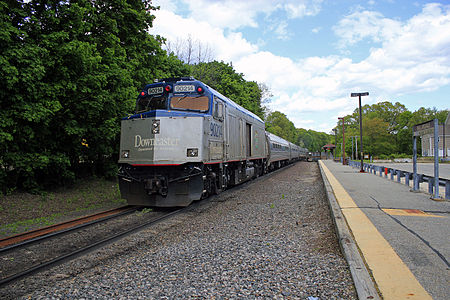
Amtrak's Downeaster train, which connects Boston with the Maine Coast.
Adapted from Robert Whitcomb's "Digital Diary,'' in GoLocal24.com
Amtrak and commuter rail travelers face a summer of hell in and around New York’s Penn station as long overdue repairs are made to rail infrastructure there. There will be many delays. New Englanders traveling to New York might want to consider taking Metro North trains from Connecticut. Those terminate at Grand Central Station, not Penn Station. Hopefully within a decade the hellhole that is Penn Station will be replaced with something more gloriously fitting for the nation’s busiest train station.
In other train news, I was sorry to hear that plans for a new high-speed Amtrak route through southwestern Rhode Island and southeastern Connecticut have been held up or perhaps killed by local NIMBYs who assert that the proposed route would have some bad local environmental effects. In fact, the environmental effects would be minor. And by thwarting building along the most commonsensical route in the area, the foes would hurt the environment by ensuring that the train trip between Boston, New York and points south wouldn’t be as fast and competitive with driving as it should be.
Thiswould keep more cars on the roads, causing more pollution and perhaps necessitating more and/or wider roads. Highways, of course, are much wider than rail lines. This is yet another example of why America is the toughest place in the Developed World to build and repair infrastructure.
Still, there’s happy rail news. Amtrak’s Downeaster, which connects Boston and southern Maine, terminating in Brunswick, reported its second-highest number of passengers – 511,422, in fiscal 2017, which ended June 30. That’s up 9 percent from a year earlier and close to the record of 518,572 set in fiscal 2014.
People grow to love their trains – if they’re given the opportunity. Patricia Quinn, who runs the Northern New England Passenger Rail Authority, was quite right to crow: “These results are pretty impressive. Achieving near-record ridership in a year of low fuel prices and construction-related service interruption indicates that the Downeaster has come of age in solidifying a durable and loyal customer base.’’
Maine Indians knew when to be away

A no-see-um, also called a biting midge.
'''No-see-um' was an Indian word -- red skin as vulnerable as white. To the early Indian, coming here {the Maine woods} to make a warm-weather camping trip would have seemed the act of a fool: Thoreau, with his veil, his smoke from rotting logs; we, with our Off and our Cutter. When the tribes lived here...they left in the summer. When the black flies, the mosquitoes, and the no-see-ums hatched, the Indians departed, and they did not come back until the bugs were gone.''
-- John McPhee, in The Survival of the Bark Canoe
Airline deregulation
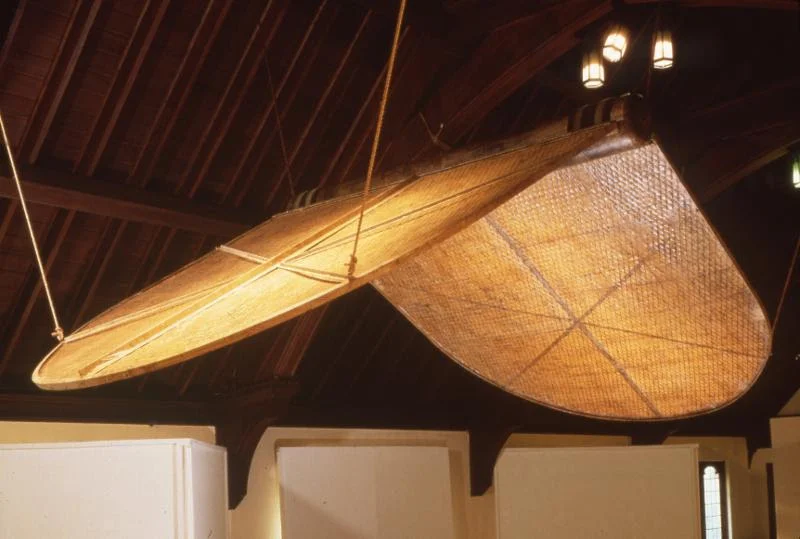
"Flight Pattern,'' by Joyce McDaniel, in the show "Ode to Joyce McDaniel: Sculptor & Teacher, '' at the Boston Sculptors Gallery, July 26-Aug. 13. The show will feature new work by Ms. McDaniel as well as by 11 artists who studied with her.
Jim Hightower: The plutocratic DeVoses and the school-privatization scam
Via ecoRI News (ecori.org)
Betsy DeVos and her husband, Dick, are lucky: They inherited a big chunk of the multibillion-dollar fortune that Dick’s dad Richard amassed through his shady Amway corporation. But what they’ve done with their Amway money is certainly not the American Way.
The DeVos couple are part of the Koch Brothers’ coterie, pushing plutocratic policies that reject our country’s one-for-all, all-for-one egalitarianism.
In particular, Betsy DeVos has spent years and millions of dollars spreading the right wing’s ideological nonsense that our tax dollars should subsidize private schools — even ones that exclude people of color and the poor, as well as to profiteering schools known to cheat students and taxpayers.
Bizarrely, Donald Trump chose this vehement opponent of public education to head the agency in charge of — guess what — public education. Rather than working to help improve our public schools, the Trump-DeVos duo wants to take $20 billion from their federal funding and give it to corporate chains.
To see the “efficiency” of this scheme, look to Arizona, where state Senate President Steve Yarborough pushed privatization into law. One of Arizona’s corporatized schools, called ACSTO, pays its executive director $125,000 a year. His name is Steve Yarborough.
ACSTO also pays millions of dollars to another for-profit corporation named HY Processing to handle administrative chores. The “Y” in HY stands for Yarborough.
And ACSTO pays $52,000 a year in rent to its landlord — Steve Yarborough.
As Wall Street banksters, drug company gougers, airline fee fixers, and so many others have taught us over and over, most corporate executives are paid big bucks to take every shortcut to cheat and do whatever to squeeze out another dime in profits.
Why would we entrust our schoolchildren to them?
Jim Hightower is a radio commentator, writer and public speaker. He’s also the editor of the populist newsletter, The Hightower Lowdown.
'Walk to no purpose'
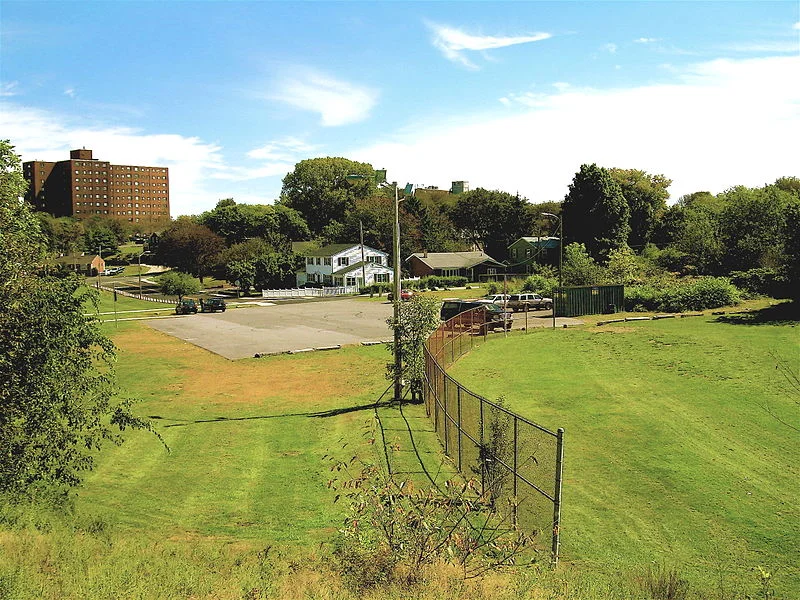
Gallows Hill Park, Salem, traditionally believed to be where alleged witches were hung in 1692.
"Follow its lazy main street lounging
from the alms house to Gallows Hill
along a flat, unvaried surface
covered with wooden houses
aged by yellow drain
like the unhealthy hair of an old dog.
You'll walk to no purpose
in Hawthorne's Salem.''
-- From "Hawthorne,'' by Robert Lowell
When cars had fins

"The Dual Caddy Dream-Time of Mojo Krome" (oil on panel), by Ken Tighe, in the group show "New England Collective VIII,'' at Galatea Fine Art, Boston, Aug. 2-27.
Summer cool-off

"Greenland, no. 63,'' by Zaria Forman, in her August show at the Dedee Shattuck Gallery, Westport, Mass.
Don Pesci: Where Democrats are the status quo party
Quite suddenly, the enabler for the State Employees Bargaining Agent Coalition (SEBAC) in Connecticut’s General Assembly, Speaker of the House Joe Aresimowicz, has contracted a wicked case of ants in his pants.
The state legislature closed for official business on June 7, nearly two months ago. But Aresimowicz, the gatekeeper in the House without whose approval no bill may reach the floor of the General Assembly, dawdled delinquently and brought no budget to the floor. In truth, the Democratic leader in the House had no budget bill in hand to present to the legislature – none. Aresimowicz was waiting for state employee rank and file union members to vote on a closed door deal being shaped by Gov. Dannel Malloy and union chiefs.
The fiscal year ended on June 30. Democrat legislators still had not produced a budget. In the meantime, Republicans – who had fashioned a budget that had been vetted and pronounced balanced by the State Budget Office – were unable to get their budget bill to the floor so that it might be discussed and voted upon. Unlike Democrats, Republicans were budgeting for the Connecticut’s imperiled future, Republican leader in the Senate Len Fasano later would say.
The obstacles were Aresimowicz, presently employed by a union, Malloy, who in the past has marched with union protesters on strike-lines, progressive legislators in the General Assembly agitating for increased taxes on remaining wealthy taxpayers in the state who had not yet bolted for less predatory states, those in Connecticut’s media who prefer the current ruinous status quo, and confused and unorganized taxpayers, soon to be plundered again by the progressive legislative proponents ofthe largest and second largest tax increases in state history.
The Democratic Party “resistance” was waiting, as usual, upon unions to make “concessions.” The SEBAC-Malloy-Aresimowicz fait accompli would not come out of the closed to the public closet until July 18.
So – wait for the concessions.
The SEBAC-Malloy-Aresimowicz-progressive Democrat deal resembled to a “T” past SEBAC-Malloy- Aresimowicz-progressive Democrat deals. So pro-union was the deal that it passed a vote by rank and file union workers in the blink of an eye. The deal guarantees annual raises of three percent per year; it includes a no-layoff provision; and – most importantly – pushes out the termination of the agreed upon contracts until 2027, by which time Malloy, Aresimowicz and not a few retired union leaders may have shaken the dust of Connecticut from their feet and become residents of Florida. Former Gov. Jodi Rell, once thought to be a firewall that preventing union arsonists from burning down the house, is now a citizen of Florida.
This is the status quo in Connecticut: tax increases, spending increases, business flight and reduced revenues – which, of course, necessitate higher taxes, more spending, more business flight and diminished revenues. At this remove, no one any longer remembers former Gov. Lowell Weicker’s prophetic campaign prediction: “Raising taxes in the middle of a recession would be like pouring gas on a fire.” The recession that greeted Weicker when he became governor – and instituted an income tax – lasted more than a decade. The current recession that wafted Malloy into office officially ended in June, 2009 – but not in Connecticut, where the tax-increase fire still burns in the basement.
While Democrats in the General Assembly have yet to produce a budget, they are now using the state crisis they have caused to force Republicans who do not support the state deadly status quo to lend their shoulders to push forward a union deal that will secure so-called union “concession” to 2017 – thus preventing future governors and future legislators from successfully attacking the real causes of Connecticut’s discontent.
The Democrat Party is now the last refuge of scoundrels who wish to maintain the status quo. The Republican Party has become the reform party.
Suppose, critics of the proposed contracts ask, there is another recession. Given the present SEBAC-Malloy-Aresimowicz fait accompli, what can a future governor or a future legislature do to mitigate the ruinous consequences of a third recession? Answer: nothing. Bound by inflexible, court enforceable contracts, future governors and legislators will not be able to reduce unionized benefits, modify salary increases or curtail contractual layoff protections until the ironclad contracts elapse in 2017. A Republican reform – so far resisted by union employed Aresimowicz, pro-union governor Malloy, and progressives in Connecticut’s status quo General Assembly – would allow the legislature to escape the contract trap by changing from contract to statute the means government may use to snatch democracy from the jaws of SEBAC.
Don Pesci is a Vernon, Conn.-based columnist.
Llewellyn King: Dangerously crowded U.S. airliners

Always safer without passengers.
According to Greek legend, Procrustes was a rogue blacksmith who had an iron bed that he would invite to travelers to use, except that if they were too short, he would stretch them until they fit it and if they were too long, he would amputate the offending limbs.
Well, over at American Airlines, the spirit of Procrustes is alive and well.
They’re planning to reward you for your business by putting you in even smaller seats than you’re now squeezed into. They’re going to lop two inches off the space you’re getting on their new Boeing 737 MAX airplanes.
In fairness, I must point out that Spirit Airlines already has customers on their aircraft squeezed into the smaller seats. Others will follow suit.
Unbelievably, American and some airlines are going to compound their hostility to their customers by making the toilets even smaller than they are now. Soon they may reduce service to a kind of communal bedpan; that way they could cram in more seats.
But that’s not all. The airlines are already discussing a sub-coach fare, where you’d get the tiny seat and the dolls-house toilet, and you wouldn’t get any space in the overhead bins and your flight wouldn’t qualify for frequent-flyer miles.
The plan here is to get you to upgrade to a slightly larger seat, allowing you to carry your bag on board. The wise will take that option because otherwise, it looks like you’ll be paying a fee for your small bag to go into the hold. Crafty.
All this is glorious fun for late-night comedians — none of whom would be caught dead in coach, by the way. They’re all up front, if a private plane isn’t available.
But there’s a big safety issue here which the airlines, in their desire to get more bodies jammed into the wretched space available, don’t talk about. If there were an accident — and there will be one because safe as airline travel is, there are always accidents — people will be stuck in their seats because the gangways will be too crowded. Crowding makes for chaos.
The worst scenario – and I’ve discussed this with aviation experts aplenty over many years — is what would happen in those precious moments, either after a very hard landing with a collapse of the gear or a collision on the ground, before fire breaks out? Precious seconds when people in panic in the rear of the plane will most likely be fighting each other to get to the escape routes. And, of course, there will be some fool trying to get his or her suitcase out of the overhead bin.
Hijacking goes back to the earliest days of airplanes, but ramped up in the 1960s with hijackings to Cuba, and then the Middle East got into the game.
Pilots, airlines and the government knew there was a simple way of frustrating this: harden the cockpits with locks and steel bars. The White House knew about the fix, as did the FAA: I raised it with the White House, and friends raised it with the FAA.
But the airlines said it would be too expensive, which is always the first line of argument from people who don’t want to do something; the existential fear of spending money.
After 9/11, the cockpits were hardened almost overnight. I asked a former White House science adviser why the fix couldn’t have been done earlier, when people in aviation had suggested it. He told me, “I should have pushed that one harder.” Indubitably.
The unconscionable crowding of airliners, like the hardening of cockpits, will have to wait until the aviation community, the FAA and the public realizes that not only is flying in coach on an airliner today a horrible experience, but it’s also potentially dangerous, very dangerous.
Llewellyn King (llewellynking1@gmail.com) is host and executive producer of White House Chronicle, on PBS, and a frequent contributor to New England Diary. He's also a veteran columnist, editor and publisher as well as an international business consultant. This piece first ran on Inside Sources.
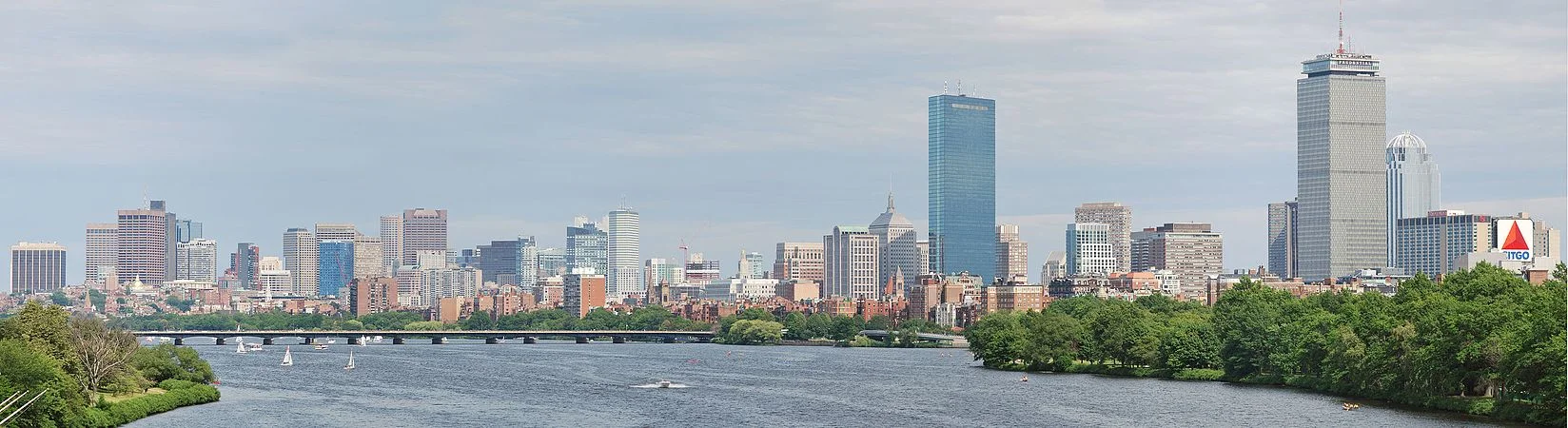
You can still swim in the Charles
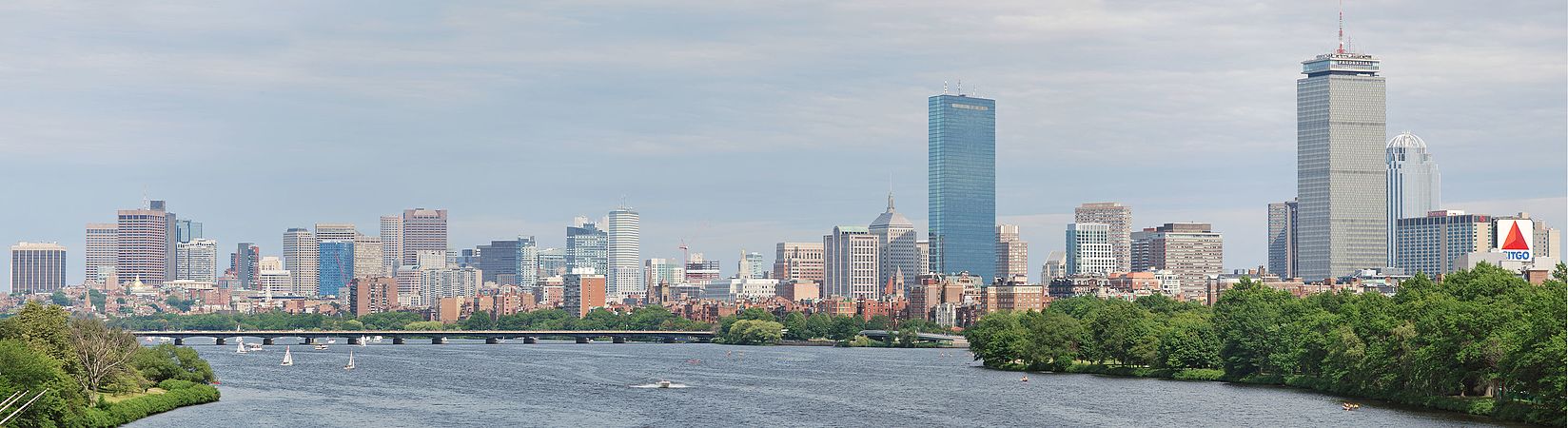
View of the Charles River from the Boston University Bridge.
Via ecoRI News (ecori.org)
BOSTON
The Environmental Protection Agency (EPA) recently gave a grade of B for water quality last year in the Charles River. This is a slight reduction from the B+ grade awarded for water quality in the river in 2015.
EPA and state and local partners have worked to improve water quality in the Charles River for more than two decades. This is the 22nd year EPA has issued a Charles River Report Card. The 2016 grade of B reflects EPA analysis of bacterial contamination in water samples taken monthly from the lower Charles River by the Charles River Watershed Association (CRWA) at 10 sampling stations between Watertown and Boston.
In 2016, the Charles River met Massachusetts's bacterial water-quality standards for boating 86 percent of the time and for swimming 55 percent of the time. The grade is determined according to the following criteria:
A: Almost always met standards for boating and swimming
B: Met standards for almost all boating and some swimming
C: Met standards for some boating and some swimming
D: Met standards for some boating but no swimming
F: Didn’t meet standards for boating or swimming
The grade is also based on a comparison to previous years’ grades and whether the water quality has improved. The slightly lower grade for 2016 is likely related to the fact that seven out of 10 sample events occurred during or immediately after a rain event, despite the overall drought conditions that occurred throughout the region during most of 2016, according to EPA.
The lower Charles River has improved dramatically from the launch of EPA’s Charles River Initiative in 1995, when the river received a D for meeting boating standards only 39 percent of the time and swimming standards just 19 percent of the time. Improvements are due to a significant reduction in the amount of sewage discharged into the river during the past 20 years from combined sewer overflows and illicit discharges through storm drains. Illicit discharges often consist of cracked and leaking sewer pipes or improper sewer connections to the storm-drain system.
For the third year, EPA has launched a water-quality monitoring buoy in front of the Museum of Science in the Charles River Lower Basin. This buoy measures water quality in near real time, and the data can be viewed on EPA’s Charles River Web site and viewed as part of an exhibit on the Charles River in the Museum of Science.
The 2016 calendar year saw further expansion on the public’s enjoyment of the long-term trend of improved water quality in the Charles River, illustrated by some 140 swimmers competing in the Charles River Swim, a mile swim held in June, and the release of a study for a permanent swimming area near the entrance to the Charles at North Point Park.
Aside from illicit discharges, stormwater containing phosphorus, and the algae it produces, are some of the major pollution problems remaining. A major load of phosphorus comes from fertilizer and runoff from impervious surfaces such as roads and rooftops.
'Design of darkness'

"I found a dimpled spider, fat and white,
On a white heal-all, holding up a moth
Like a white piece of rigid satin cloth--
Assorted characters of death and blight
Mixed ready to begin the morning right,
Like the ingredients of a witches’ broth--
A snow-drop spider, a flower like a froth,
And dead wings carried like a paper kite.
What had that flower to do with being white,
The wayside blue and innocent heal-all?
What brought the kindred spider to that height,
Then steered the white moth thither in the night?
What but design of darkness to appall?--
If design govern in a thing so small.''
-- "Design,'' by Robert Frost
Save the architectural glories of New London
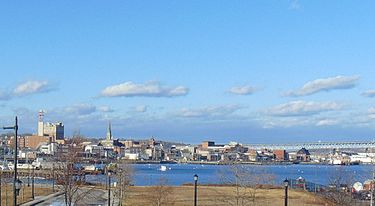
The New London skyline from Fort Trumbull.
From Robert Whitcomb's "Digital Diary,'' in GoLocal24.com:
I’ve long been fond of New London, Conn., with its dramatic setting where the Thames River meets Long Island Sound, with its ferry service to Orient Point and Block Island, the submarine base across the river in Groton, the Coast Guard Academy, Connecticut College and other institutions. The city still has some glorious old – but badly maintained -- downtown buildings constructed in its ocean-shipping days, which included the whaling boom. But there’s not been the sort of architectural preservation that has saved much of downtown New Bedford, with a somewhat similar history as New London’s, from the wrecking ball.
To help protect and repair its gorgeous old downtown buildings, New London, as David Collins, of the local paper, The Day, has suggested, needs a downtown historic district as rigorous as New Bedford’s. It would then benefit more strongly from tourism and other synergies associated with its role as a ferry port through which many thousands of travelers, tourists and students go every year.
Nautical life on Block Island
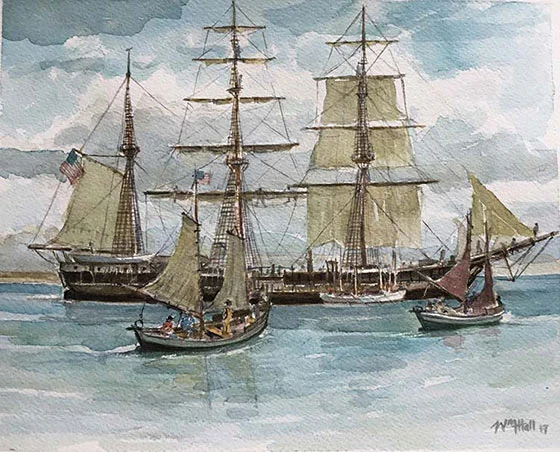
From William T. Hall’s new exhibit of watercolors, “Block Island Nautical Life and Historical Views,” depicting earlier times of boating and fishing on Block Island. The show runs through Aug. 2 at the Jessie Edwards Studio, on Block Island.
In the show, the gallery says, you can see Mr. Hall’s "use of classical watercolor techniques, his knowledge of boats and Island history, and his talent for story telling {combining} to make this exhibit both a meticulous rendering of old working boats and a narrative of the quotidian concerns of Island mariners. We see the images, and we can read Hall’s brief accompanying stories that draw us into an earlier time on Block Island. ''