Boston needs a lot of rain now
From The Boston Guardian; article by Jules Roscoe
(Robert Whitcomb, New England Diary’s editor, is The Boston Guardian’s chairman.)
Boston’s groundwater levels are trickling downwards amid a two-year statewide drought and the lowest precipitation levels recorded in 26 years, according to the Boston Groundwater Trust (BGT).
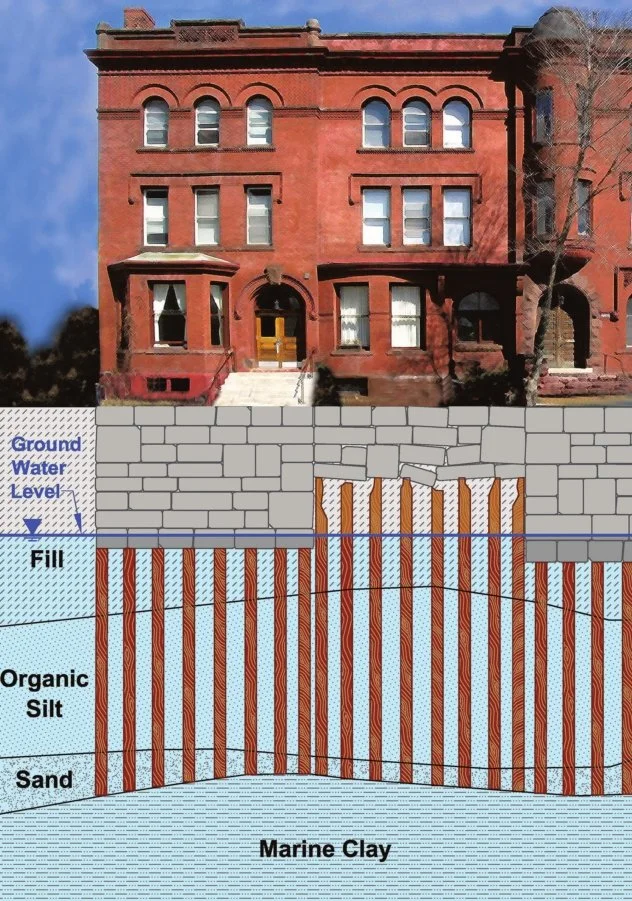
Much of Boston is built on infilled land, which is supported by wooden piles. Those piles need to be fully submerged in groundwater in order to be stable and preserved. If groundwater levels drop too low, the piles become exposed to air, which opens the door for bacteria, fungi, and bugs to eat away at the wood and weaken the entire base structure of the city. Groundwater levels, therefore, are critical, and the BGT is responsible for monitoring them.
During the winter thanks to some intense snowstorms, groundwater levels were looking up, BGT Executive Director Christian Simonelli said at the time. But the city would need substantial rain during the spring and summer months to keep that boost, and it did not get it.
“We need rain,” Simonelli said. “The first six months of this year are the driest that we’ve ever tracked.”
Simonelli wrote in a BGT newsletter last week that Boston typically receives more than 22 inches of precipitation during the first half of the year.
“However, this year, we have recorded 11 inches,” the newsletter said. “This total is the lowest we have ever recorded for the first six months since we began tracking in the year 2000.”
Massachusetts has been in a drought since August of 2024, and the Energy and Environmental Affairs department lists the northeast region of the state, including Boston, as Level 3, Critical Drought status.
“We’ve been seeing these prolonged periods of drought more recently within the past five years,” Simonelli said. “The city of Boston is generally consistent between 45 to 50 inches of precipitation. But some years over the past five years, we’ve had 60. And then other years, we’ve had 30. There’s much less consistency than there ever has been before.”
The levels aren’t the lowest they have ever been, though, which Simonelli attributes to city and state partnership to improve sewer and pipe infrastructure. The BGT monitors groundwater levels through observation wells throughout the city, and when a particular spot dips, it asks the owner of that infrastructure to check for a structural problem, like a leak or a burst pipe, that could be impacting the water. “We own the wells, but we don’t own the infrastructure that directly affects the groundwater,” Simonelli said. “That’s why those agencies are so important. We’re the canary in the coal mine jumping up and down saying something’s wrong. But it’s them going out there, investigating the underground infrastructure. And when they find an issue, like a pipe that may be broken, a manhole that may be leaking, they go ahead and fix that.”
The BGT has noticed some hotspots of low groundwater levels at Copley Square and along Dartmouth Street in the Back Bay. Observation wells in the latter are recording their lowest groundwater levels on record.
“While the recent lack of precipitation has undoubtedly contributed to the decline, the sustained downward trend points toward a likely infrastructure-related problem,” the newsletter stated. The BGT said it would continue working with the city to inspect all manholes, pipes, and sewer laterals in that area to find the potential problem.