
Vox clamantis in deserto





Chris Powell: Conn. GOP gets serious, Democrats wallow in trivia
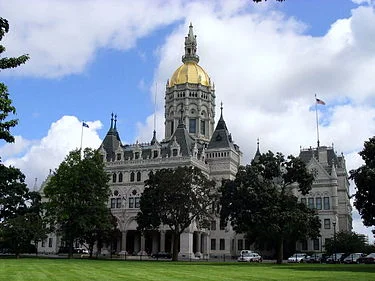
The Connecticut Capitol, in nearly bankrupt Hartford.
While this year's regular session of the Connecticut General Assembly has little to show for itself but more gambling -- another casino and more off-track betting -- it was positive in one respect: the recognition by Gov. Dannel Malloy and the unusually large Republican minority that structural changes in spending policies are necessary to save the Nutmeg State.
The governor has extracted substantial if inadequate concessions from the state employee unions, but he proposed to close the budget deficit by shifting to municipalities $400 million in teacher pension costs. Instead he might have proposed reducing teacher pension benefits, since those benefits, unlike state employee pension benefits, are set by state law rather than union contract. But having dozens if not hundreds of members and their dependents in every town, the teacher unions are far more influential than even the state employee unions, so no one dares to economize there.
The Republicans united behind a budget proposal that avoided tax increases by cutting more from state employee compensation. They essentially proposed to remove salaries and benefits from collective bargaining for the time being. Thus the Republicans realized at last that they gain nothing by being nice to the state employee unions. Since the Democrats are the party of those unions and retain narrow majorities in both houses of the legislature, this Republican effort to restore democratic control of public expense will have no chance of passing until Republican majorities are elected. But standing for something important may distinguish the Republicans favorably in next year's election.
The legislature failed to produce a budget for two reasons.
First, the Democrats could not hold their majority together. Most Democratic legislators are liberals and will always prefer raising taxes. But enough Democrats either agree with the governor that raising taxes now would hurt the state more than it would help or they fear for their re-election if taxes are raised again, since the public is realizing that living conditions have only worsened as taxes have been raised during the Malloy administration.
Second, the Republicans seem to have decided that any compromise with the Democrats on the budget will have to raise taxes and spending somewhat and that sharing responsibility for that isn't worthwhile politically, especially since, in the forthcoming special session of the legislature, the Democrats probably will compromise among themselves to reach such an outcome anyway. The Republicans may figure that the Democrats might as well own the whole thing and be obliged to defend it in the election next year, when the public will be looking for change.
Both parties bear responsibility for the expansion of gambling, policy that is disgraceful, contrary to Democratic pretenses of protecting the poor and opposing concentration of wealth and Republican pretenses of advocating responsible living. But at least the Republicans aren't celebrating the legislative session as the Democrats are.
Democratic state headquarters this week issued a statement lauding the legislature for banning therapy aimed at trying to convert homosexuals into heterosexuals, though there was no evidence of its use in Connecticut; for increasing penalties for hate crimes, as if they were not already seriously punishable; for reducing bail for minor offenses, as if this affects many people; and for approving a state constitutional amendment for a transportation fund “lockbox,” as if money still won't be fungible and government won't always find a way to divert it.
Failing to produce a budget, the legislative session was all trivia.
Chris Powell is managing editor of the Journal Inquirer, in Manchester, Conn.
-
'Protect the Oceans'

"Cod Larvae'' (encaustic on panel), by Pamela Dorris DeJong, in the group "Protect the Oceans: An exhibit of artists interested in protecting our oceans and shoreline habitats,'' at Highfield Hall, Falmouth, Mass., through June 18.
Summer loss
"The season’s ill—
we’ve lost our summer millionaire,
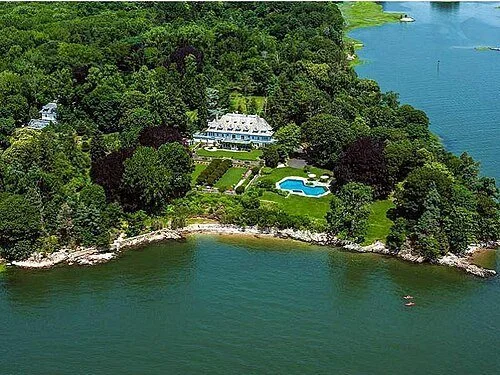
who seemed to leap from an L. L. Bean
catalogue. His nine-knot yawl
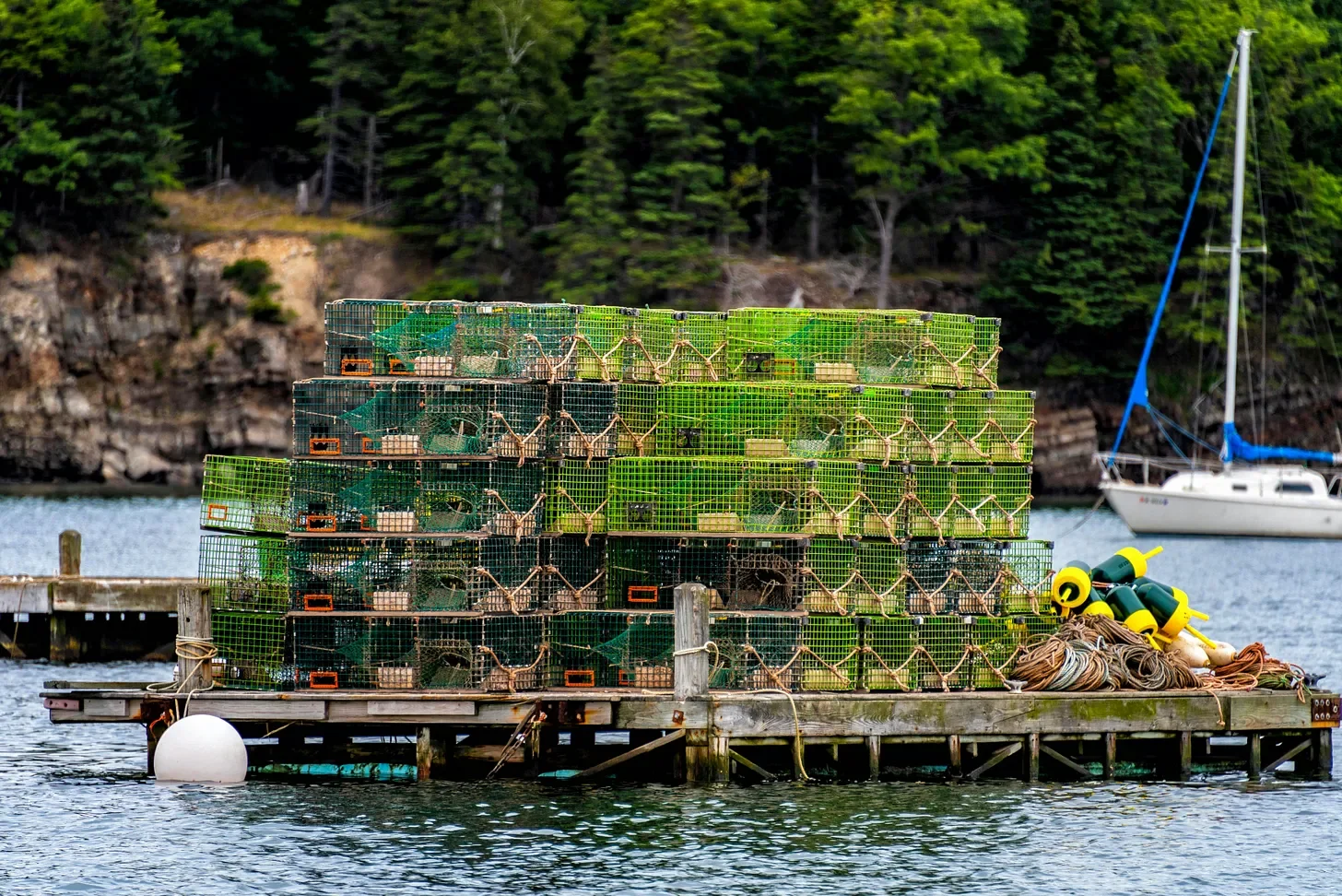
was auctioned off to lobstermen.
A red fox stain covers Blue Hill.''
-- From "Skunk Hour,'' by Robert Lowell.
(Blue Hill refers to Blue Hill, Maine)
'Hate to be made literate'
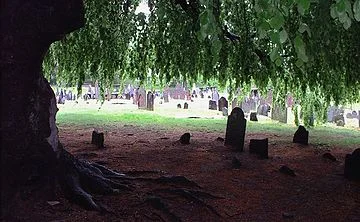
Ye Antientist Burial Ground,, in New London, Conn., is one of the earliest graveyards in New England and the oldest colonial cemetery in New London County. The hillside lot of 1.5 acres adjoins the original site of the settlement’s first “meeting house’’ (church). There’s a broad view to the east of the Thames River and, on the far shore, the heights of Groton.
The lot was reserved for a burying ground and recorded as such in the summer of 1645 with the first decedent "of mature age" interred there in 1652. An ordinance of June 6, 1653 set the place apart, declaring: "It shall ever bee for a Common Buriall place, and never be impropriated by any."
"Somehow the blocks of slate and marble hate
to be cut and carved to the dimensions
of Mary Monday’s age and her virtues.
At heart they hurt to be made literate
and they are rebelling, fast as they can,
shedding an edge, a letter, as they go
—a year, a part of a skull, a bone—
it hurts them to stand so long for this
kind of death not theirs. Fast as they can
they are leaning away from their duty
and look down longing for the warm sod.''
From "New England Graveyard, '' by Stephen Sandy
Joyous racist murderers
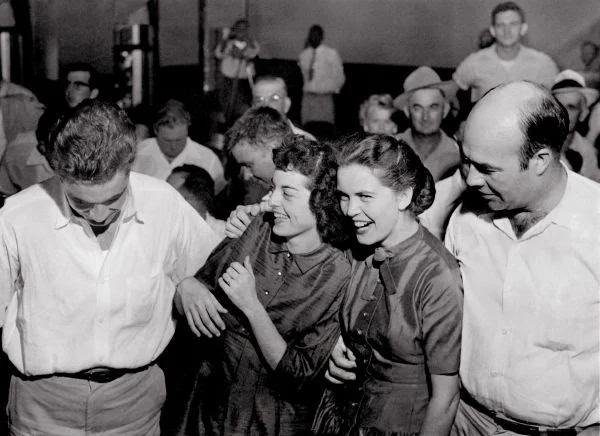
Photo from the show "Black & Brown People/ White Problems,'' at the Samson Projects gallery, Boston, through Aug, 19. In this picture, from left to right: Roy Bryant, Carolyn Bryant, Juanita Milam, and J. W. Milam embrace after the men's acquittal by an all-white male jury of the charge of having kidnapped, beaten and murdered Emmett Till, a 14 year-old black boy in 1955 – a crime that the two men confessed to in an interview in 1956, paid for by Look magazine, and in which they showed no remorse. Photo by Associated Press; individual photographer not identified.
Use it up, wear it out
''In Maine, there is a deeply ingrained sense that you can always get a little more use out of something.''
-- Tim Sample
Spreading out the casino scam
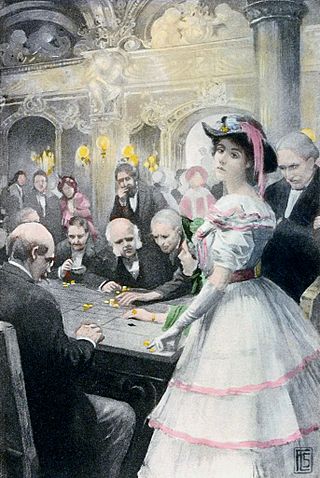
"Gwendolen at the roulette table" – 1910 illustration with George Eliot's Daniel Deronda.
Adapted from Robert Whitcomb's "Digital Diary,'' in GoLocal245.com
After failing to improve the standard of living (well, loan sharks have done well) in southeastern Connecticut (a state whose government is swimming in red ink) with their vast casinos, the MashantucketPequot and Mohegan tribes are pushing to build a “satellite’’ casino in East Windsor, Conn., making the pitch that this will reduce the flow of revenue to Springfield, Mass., where another casino based on wishful macroeconomic thinking is going up.
Let the cannibalization of casino suckers continue! Surf a new wave of embezzlements and personal bankruptcies in Greater Hartford! Of course, the tribes are getting support from their local state legislators, who look to campaign contributions before the next election.
The plan is for the Pequots’ Foxwoods and the Mohegans’ Sun to pay 25 percent of their gross slot-machine revenues at the new facility to the state so long as no other enterprise is allowed to have a casino in Connecticut. So much for the free market!
Llewellyn King: The electric-car revolution is just getting going

The days of the internal combustion engine are numbered. The electric car is about to do to the traditional gasoline and diesel car engine what the cell phone is doing to the copper-wire, landline telephone: shoulder it out of the way.
Andrew Paterson, a principal with the Verdigris Capital Group, told a conference in Washington on June 7, electric car sales will at least quadruple in the coming decade and then really begin to accelerate. This, he said, was part of a larger electric boom that would see the doubling of world electric demand, mostly in Asia, by the middle of the century.
Electric utilities in the United States stand to benefit from the switch from gasoline and diesel to electricity largely because they will be able to meet the new demand without adding new generation, according to the Electric Power Research Institute, based in Palo Alto, Calif. It believes most of the charging of electric vehicles will take place off-peak, at night and when there is less demand. At worst the new load will fall partly during the day, when there is a surplus of solar power.
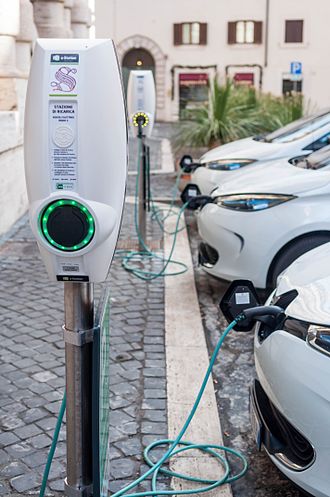
Analysts say much depends on whether commercial and company parking facilities can be turned into charging stations as well. Maybe when the boom really picks up, even parking meters will become charging stations.
The change in transportation will have huge effects beyond the car infrastructure. Gradually, gas stations will become obsolete. Technicians who service cars with oil changes and tuning will be out of work.
Electric cars are fundamentally simpler than today’s vehicles — they will run for tens of thousands of miles without maintenance, and that will be confined to things like tires, brakes and lights. Cities will get cleaner and quieter.
Once upon a time, it was just environmentalists who loved electric cars. Now consumers are gooey over them. The proud owner of a Tesla Model S told me this week that he would never buy a conventional car again. He said that his Tesla has it all — quiet, undreamed of acceleration and great luxury. And he has what it takes to go electric easily: a suburban home with a carport and a charging station in his office building in Washington.
Apartment dwellers and those without driveways or garages in townhouses will have to wait for technology to fix their charging needs. Manufacturers are striving for easier charging and longer-endurance batteries.
There are, by my count, less than a dozen dedicated charging companies that have sought to commercialize charging by wiring commercial garages and other places where cars sit. None has been very successful to date and there have been bankruptcies.
As always with new ways of doing things, there is hesitance and a hope that someone else will lead the way. I believe that the moment entrepreneurs find a way of making money from cars in commercial parking lots and other away-from-home sites, there will be a boom in offering charging and the switch to electric will be accelerated. Charging will become big business.
But questions do abound for long-distance driving. Soon 300 miles will be the electric vehicle standard, but it will not get you from Chicago to Los Angeles, or even Washington to Boston.
The speed of technological evolution is the unknown, but it will control the accelerator in the race to electricity. Better batteries, faster charging and more public confidence in the duration of each charge will all control the rate of change.
When it comes to heavy vehicles that travel great distances, like intercity buses and trucks, the conversion to electricity, though yearned for, may be a lot slower. Until smart highways offer charging through induction, using electromagnetic fields, diesel will still rule.
The earliest cars were electric and were thought then to be the future — clean and quiet. But lead-acid batteries could not hack it. Stubbornly Harrods, the famous department store, used electric delivery vehicles around London until the 1960s; maybe because these sedate, quiet, liveried road queens exuded classiness.
Like all revolutions, there will be winners: those who find out how to make money out of battery charging and those who make electricity. And losers: oil companies, gas stations, service departments of dealerships and the long-dreamed-of hydrogen car.
Incontrovertibly, the air in cities will be a winner — a big, big winner.
Llewellyn King (llewellynking1@gmail.com), a frequent contributor to New England Diary, is executive producer and host of White House Chronicle, on PBS, and a veteran publisher, editor, columnist and international business consultant. This piece first ran in InsideSources.
A little kid's yacht

"Beached Dory,'' by Margaret Wendling, at Alpers Fine Art, Andover, Mass.
Wilderness is relative
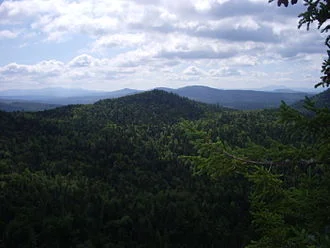
Landscape in the Dartmouth College Grant, in Coos County, N.H.
"Until I carried my wife off to New Hampshire, she defined wilderness as the Bronx.''
-- P. J. O'Rourke
'Banks of bloom'
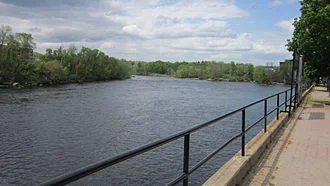
The Merrimack River in Manchester, N.H.
O dwellers in the stately towns,
What come ye out to see?
This common earth, this common sky,
This water flowing free?
As gayly as these kalmia flowers
Your door-yard blossoms spring;
As sweetly as these wild-wood birds
Your caged minstrels sing.
You find but common bloom and green,
The rippling river's rune,
The beauty which is everywhere
Beneath the skies of June;
The Hawkswood oaks, the storm-torn plumes
Of old pine-forest kings,
Beneath whose century-woven shade
Deer Island's mistress sings.
And here are pictured Artichoke,
And Curson's bowery mill;
And Pleasant Valley smiles between
The river and the hill.
You know full well these banks of bloom,
The upland's wavy line,
And how the sunshine tips with fire
The needles of the pine.
Yet, like some old remembered psalm,
Or sweet, familiar face,
Not less because of commonness
You love the day and place.
And not in vain in this soft air
Shall hard-strung nerves relax,
Not all in vain the o'erworn brain
Forego its daily tax.
The lust of power, the greed of gain
Have all the year their own;
The haunting demons well may let
Our one bright day alone.
Unheeded let the newsboy call,
Aside the ledger lay
The world will keep its treadmill step
Though we fall out to-day.
The truants of life's weary school,
Without excuse from thrift
We change for once the gains of toil
For God's unpurchased gift.
From ceiled rooms, from silent books,
From crowded car and town,
Dear Mother Earth, upon thy lap,
We lay our tired heads down.
Cool, summer wind, our heated brows;
Blue river, through the green
Of clustering pines, refresh the eyes
Which all too much have seen.
For us these pleasant woodland ways
Are thronged with memories old,
Have felt the grasp of friendly hands
And heard love's story told.
A sacred presence overbroods
The earth whereon we meet;
These winding forest-paths are trod
By more than mortal feet.
Old friends called from us by the voice
Which they alone could hear,
From mystery to mystery,
From life to life, draw near.
More closely for the sake of them
Each other's hands we press;
Our voices take from them a tone
Of deeper tenderness.
Our joy is theirs, their trust is ours,
Alike below, above,
Or here or there, about us fold
The arms of one great love!
We ask to-day no countersign,
No party names we own;
Unlabelled, individual,
We bring ourselves alone.
What cares the unconventioned wood
For pass-words of the town?
The sound of fashion's shibboleth
The laughing waters drown.
Here cant forgets his dreary tone,
And care his face forlorn;
The liberal air and sunshine laugh
The bigot's zeal to scorn.
From manhood's weary shoulder falls
His load of selfish cares;
And woman takes her rights as flowers
And brooks and birds take theirs.
The license of the happy woods,
The brook's release are ours;
The freedom of the unshamed wind
Among the glad-eyed flowers.
Yet here no evil thought finds place,
Nor foot profane comes in;
Our grove, like that of Samothrace,
Is set apart from sin.
We walk on holy ground; above
A sky more holy smiles;
The chant of the beatitudes
Swells down these leafy aisles.
Thanks to the gracious Providence
That brings us here once more;
For memories of the good behind
And hopes of good before.
And if, unknown to us, sweet days
Of June like this must come,
Unseen of us these laurels clothe
The river-banks with bloom;
And these green paths must soon be trod
By other feet than ours,
Full long may annual pilgrims come
To keep the Feast of Flowers;
The matron be a girl once more,
The bearded man a boy,
And we, in heaven's eternal June,
Be glad for earthly joy!
-- "June On The Merrimac,'' by John Greenleaf Whittier
Becoming unexceptional America
Adapted from Robert Whitcomb's "Digital Diary'' in GoLocal24.com
President Trump and his advisers might bear in mind that corrupt dictatorships such as the Saudi monarchy and other tyrannies in the Mideast are a major cause of Islamic terrorism. They spawn hopelessness and anger that then lead to the likes of al-Qaida and ISIS. Now we’re in bed with these regimes more than ever because Trump prefers dictators over democratically elected leaders (easier to make deals with and associating with thugs makes this very insecure man feel more powerful) and he doesn’t see any value in America’s promoting human rights and democracy.
The unhappy masses below these tyrants will remember who propped up these regimes if and when they're overthrown. And anti-American succession regimes will have all that U.S. military gear we’re selling them. It recalls Lenin’s line: “The bourgeoisie will sell us the rope with which we’ll hang them.’’
The president might also learn that Iran, which he repeatedly bashes and which has about 80 million people, compared to about 32 millionin Saudi Arabia, is less dictatorial than the latter and has a substantial middle class, much of which is pro-American. Indeed, the Iranians, most of whom are Shiites, just had a semi-free election – something you won’t see anytime soon in the Sunni dictatorships that Trump sucks up to.
In the short run, America can’t do much about the many nations run by vicious dictators, but if we are unwilling to at least try to defend liberty and human rights just how “exceptional’’ are we anymore?
Meanwhile, Trump clumsily gets us involved in a regional dispute involving Qatar and some other Persian Gulf kleptocracies.
Public restrooms ground zero in opiate crisis
By MARTHA BEBINGER, WBUR
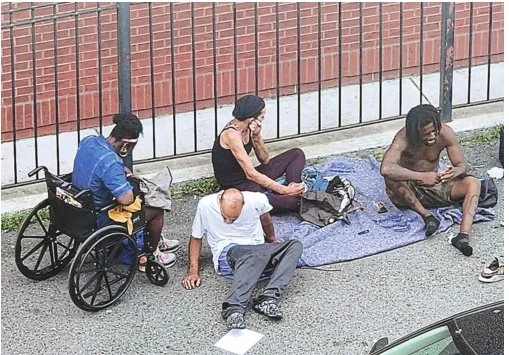
A man named Eddie threaded through the midafternoon crowd in Cambridge, Mass. He was headed for a sandwich shop, the first stop on a tour of public bathrooms.
“I know all the bathrooms that I can and can’t get high in,” said Eddie, 39, pausing in front of the shop’s plate-glass windows, through which we can see a bathroom door.
Eddie, whose last name we’re not including because he uses illegal drugs, knows which restrooms along busy Massachusetts Avenue he can enter, at what hours and for how long. Several restaurants, offices and a social services agency in this neighborhood have closed their restrooms in recent months, but not this sandwich shop.
“With these bathrooms here, you don’t need a key. If it’s vacant, you go in. And then the staff just leaves you alone,” Eddie said. “I know so many people who get high here.”
At the fast-food place right across the street, it’s much harder to get in and out.
“You don’t need a key, but they have a security guard that sits at the little table by the door, directly in front of the bathroom,” Eddie said. Some guards require a receipt for admission to the bathroom, he said, but you can always grab one from the trash.
A chain restaurant a few stores down has installed bathroom door locks opened by a code that you get at the counter. But Eddie and his friends just wait by the door until a customer goes into the restroom, then grab the door and enter as the customer leaves.
“For every 10 steps they use to safeguard against us doing something, we’re going to find 15 more to get over on their 10. That’s just how it is. I’m not saying that’s right, that’s just how it is,” Eddie said.
Eddie is homeless and works at a restaurant. Public bathrooms are among the few places where he can find privacy to inject heroin. He says he doesn’t use the drug often these days. Eddie is on methadone, which curbs his craving for heroin, and he says he now uses the drug only occasionally to be social with friends.
He understands why restaurant owners are unnerved.
“These businesses, primarily, are like family businesses; middle-class people coming in to grab a burger or a cup of coffee. They don’t expect to find somebody dead,” Eddie said. “I get it.”
Managing Public Bathrooms Is ‘A Tricky Thing’
Many businesses don’t know what to do. Some have installed low lighting — blue light, in particular — to make it difficult for people who use injected drugs to find a vein.
The bathrooms at 1369 Coffee House, in the Central Square neighborhood of Cambridge, are open for customers who request the key code from staff at the counter. The owner, Joshua Gerber, has done some remodeling to make the bathrooms safer. There’s a metal box in the wall next to his toilet for needles and other things that clog pipes. And Gerber removed the dropped ceilings in his bathrooms after noticing things tucked above the tiles.
“We’d find needles or people’s drugs,” Gerber said. “It’s a tricky thing, managing a public restroom in a big, busy square like Central Square where there’s a lot of drug use.”
1369 Coffee House owner Josh Gerber opens the bathroom door, which has a combination lock given to patrons at the front counter. (Jesse Costa/WBUR)
Gerber and his staff have found several people on the bathroom floor in recent years, not breathing.
“It’s very scary,” Gerber said. His eyes drop briefly. “In an ideal world, users would have safe places to go [where] it didn’t become the job of a business to manage that and to look after them and make sure that they were OK.”
There are such public safe-use places in Canada and some European countries, but not in the U.S., at least not yet. So Gerber is taking the unusual step of training his baristas to use naloxone, the drug that reverses most opioid overdoses. He sent a training invitation email to all employees recently. Within 10 minutes, he had about 25 replies.
“Mostly capital ‘Yes!! I’ll be there for sure!’ ‘Count me in!'” Gerber recalled with a grin. “You know, [they were] just thrilled to figure out how they might be able to save a life.”
Safe Spaces And Hospital Bathrooms
Last fall, a woman overdosed in a bathroom in the main lobby of Massachusetts General Hospital in Boston. Luckily, naloxone has become standard equipment for security guards at many hospitals in the Boston area, including that one.
“I carry it on me every day, it’s right here in a little pouch,” said Ryan Curran, a police and security operations manager at the hospital, pulling a small black bag out of his suit jacket pocket.
The woman who overdosed survived, as have seven or eight people who overdosed in the bathrooms since Curran’s team started carrying naloxone in the past 12 to 18 months.
“It’s definitely relieving when you see someone breathing again when two, three minutes beforehand they looked lifeless,” Curran said. “A couple of pumps of the nasal spray and they’re doing better. It’s pretty incredible.”
Ryan Curran, the day-shift operations manager of police and security at Massachusetts General Hospital, stands in front of the bathrooms in the main lobby. (Jesse Costa/WBUR)
Massachusetts General Hospital began training security guards after emergency room physician Dr. Ali Raja realized that the hospital’s bathrooms had become a haven for some of his overdose patients.
“There’s an understanding that if you overdose in and around a hospital that you’re much more likely to be able to be treated,” Raja said, “and so we’re finding patients in our restrooms, we’re finding patients in our lobbies who are shooting up or taking their prescription pain medications.”
Many businesses, including hospitals and clinics, don’t want to talk about overdoses within their buildings. Curran wants to be sure the hospital’s message about drug use is clear.
“We don’t want to promote, obviously, people coming here and using it, but if it’s going to happen, then we’d like to be prepared to help them and save them and get them to the [Emergency Department] as fast as possible,” Curran said.
Speed is critical, especially now, when heroin is routinely mixed with the much more potent opioid, fentanyl. Some clinics and restaurants check on bathroom users by having staff knock on the door after 10 or 15 minutes, but fentanyl can deprive the brain of oxygen and cause death within that window. One clinic has installed an intercom and requires people to respond. Another has designed a reverse-motion detector that sets off an alarm if there’s no movement in the bathroom.
Limited Public Discussion
There’s very little discussion of the problem in public, says Dr. Alex Walley, director of the Addiction Medicine Fellowship Program at Boston Medical Center.
“It’s against federal and state law to provide a space where people can use [illegal drugs] knowingly, so that is a big deterrent from people talking about this problem,” he said.
Without some guidance, more libraries, town halls and businesses are closing their bathrooms to the public. That means more drug use, injuries and discarded needles in parks and on city streets.
I know all the bathrooms that I can and can’t get high in.
In the area around Boston Medical Center, wholesalers, gas station owners and industrial facilities are looking into renting portable bathrooms.
“They’re very concerned for their businesses,” said Sue Sullivan, director of the Newmarket Business Association, which represents 235 companies and 28,000 employees in Boston. “But they don’t want to just move the problem. They want to solve the problem.”
Walley and other physicians who work with addiction patients say there are lots of ways to make bathrooms safer for the public and for drug users. A model restroom would be clean and well-lit with stainless-steel surfaces, and few cracks and crevices for hiding drug paraphernalia. It would have a biohazard box for needles and bloodied swabs. It would be stocked with naloxone and perhaps sterile water. The door would open out so that a collapsed body would not block entry. It would be easy to unlock from the outside. And it would be monitored, preferably by a nurse or EMT.
There are very few bathrooms that fit this model in the U.S.
Some doctors, nurses and public health workers who help addiction patients argue any solution to the opioid crisis will need to include safe injection sites, where drug users can get high with medical supervision.
“There are limits to better bathroom management,” said Daniel Raymond, deputy director for policy and planning at the New York-based Harm Reduction Coalition. If communities like Boston start to reach a breaking point with bathrooms, “having dedicated facilities like safer drug consumption spaces is the best bet for a long-term structural solution that I think a lot of business owners could buy into.”
Maybe. No business groups in Massachusetts have come out in support of such spaces yet.
This story is part of a partnership that includes WBUR, NPR and Kaiser Health News.
Dangerously domesticated wildlife

Take me to your garbage.
From Robert Whitcomb's "Digital Diary'' in GoLocal24.com
The national attention given to the case of three young bears and their mother living near houses and rooting around in garbage and bird feeders in the tony college town of Hanover, N.H. (home of Dartmouth College) reflects our ambivalence about wild animals. On the one hand, some people wanted the charismatic and unpredictable creatures destroyed: The beasts had become so habituated to living near humans that they presented a possible peril to their human neighbors. On the other hand, many saw them as sort of large pets that were fun to watch.
In the end, wildlife officials moved the three young bears to wilder northern New Hampshire and continued to look for the mother, who, as of this writing, was still missing. Whether the young bears will be able to survive long in the wilds is unknown.
Miranda Willson: Boston's climate-change plans said to lack coordination
Via ecoRI News (ecori.org)
BOSTON
When news began circulating that President Trump was planning to pull America out of the Paris Agreement, Boston Mayor Marty Walsh was quick to reaffirm the city’s commitment to addressing climate change and reducing carbon emissions.
“We’re seeing reports that the president plans to back out of the Paris climate agreement and we’re urging the president and the White House to reconsider,” Walsh said at May 31 press conference. “If this administration turns its back on the environment, cities like Boston will have to step up.”
Whether the city has or will adequately “step up,” however, remains a point of contention for some community leaders, activists and policymakers. Undeniably, Walsh and other elected officials recognize the threat of climate change — Boston, after all, is one of the most vulnerable U.S. cities to the impacts of climate change — and have begun to address the issue.
In 2007, the city pledged to reduce emissions to 25 percent below 2005 levels by 2020, and paved the way to becoming the first city in the country to require “green” building standards in all public zones.
The city’s most recent — and, arguably, comprehensive — action on climate change is Climate Ready Boston, a 400-page report released last December by the Office of Environment, Energy, and Open Space, the Massachusetts Office of Coastal Zone Management, the Boston Planning and Development Agency and the Green Ribbon Commission (GRC), which is composed of representatives from local businesses, institutions, civic organizations and city departments.
Climate Ready Boston provides the latest climate projections for the city and summarizes how the city can minimize the negative impacts of climate change. The most immediate impacts of climate change in Boston, according to it and other reports, are sea-level rise, increased frequency of extreme heat, and flash flooding.
Flashes of concern
Julie Wormser is the vice president of policy and planning at Boston Harbor Now, which serves as one of several community advisors for Climate Ready Boston. She noted that the impacts of climate change are already being felt in the city, especially more extreme heat days and increased flash flooding.
“We already see health issues [among] people with disabilities, and illnesses among the youngest and oldest people who can’t get cool during heat waves,” Wormser said. “We are also seeing flash floods and flash droughts. … Basically, we’re getting all three of the big three climate impacts, but sea-level rise is an existential threat; it’s a little further off.”
According to the Climate Ready Boston executive summary, sea levels in Boston rose about 9 inches over the 20th century, and another 8 inches of sea-level rise is expected by 2030.
Wormser said the impacts of climate change in Boston have thus far disproportionately impacted some groups of people, typically members of already marginalized groups such as people with disabilities, low-income residents and the homeless In some cases, extreme weather and heat have been fatal or near-fatal.
“Last spring, we had the hottest day in March, and the next week it was the coldest ever for that date,” she said. “Many homeless people ditched their coats because it was super warm. Then there was this cold front, and shelters had to get [people] new coats.”
This map details the areas of Boston that would be impacted by 3 feet of sea-level rise. Three communities, East Boston, South Boston and Charlestown, are at the biggest risk from climate-related flooding.
Most vulnerable at risk
Climate Ready Boston draws attention to climate-justice issues and the ways in which the effects of climate change will continue to disproportionately harm marginalized groups. The report includes a vulnerability assessment, a detailed analysis of eight neighborhoods that are particularly vulnerable to climate change, and a set of climate resilience initiatives to be implemented throughout the city.
John Cleveland, executive director of the GRC, said the commission is now focused on communicating these issues and the report’s findings to community leaders, business and trade associations, and members of the local real-estate community.
He noted that neighborhood-based resilience initiatives have already begun in two neighborhoods that are at a high risk of flooding: East Boston and Charlestown.
On April 24, the city put out a request for proposals for a third neighborhood-specific coastal resiliency plan in another flood-prone neighborhood, South Boston.
Mia Goldwasser, the city’s climate preparedness program manager, has been leading these and other implementation efforts for Climate Ready Boston. She emphasized the need to address resiliency issues at the neighborhood level. because of the unique challenges that different neighborhoods face.
“East Boston and Charlestown are very different sites and have different issues surrounding them — the flood pathways are narrow and specific,” she said. “In South Boston, the whole area is low lying, so there are different issues we’re dealing with and different resident and stakeholder communities. ... But we’re still pursuing similar approaches for short-term and long-term strategies that need to be put in place to reduce the risks for these neighborhoods.”
Another major project that the city hopes to implement soon, according to both Goldwasser and Cleveland, involves changing Boston’s zoning laws to better account for the effects of sea-level rise, extreme storms and extreme heat.
Wormser noted that the need to confront the city’s development community through zoning requirements that account for climate-change impacts and through flood-resilience mandates is crucial, especially given the high demand for land and housing in the Boston area.
“The part that’s super unfortunate timing is that we’re in the middle of a historic building boom,” she said. “Many of the new buildings that have been built since Superstorm Sandy were permitted before the Great Recession, when no one was thinking about sea-level rise, so you have billions of dollars of new buildings that are minimally protected.”
The Climate Ready Boston report identifies areas that are at the highest risk of coastal flooding.
Changing the culture
Mike Prokosch serves on the board of the Boston Climate Action Network (BCAN), another community advisory group for Climate Ready Boston. Like Wormser, he emphasized the urgent need for the city to refine zoning codes and better regulate developers, pointing to the Seaport District as an example of a neighborhood that was recently invested in without adequate consideration for sea-level projections.
“Past administrations and this administration pushed the whole Seaport District, which was built without a thought to the fact that it’s basically going to be underwater in 50 years ... What do you do about that?” Prokosch said.
The Dorchester resident, who has been involved in local climate activism with BCAN for the past decade, believes that changing the zoning and building codes must be a bigger priority for the city. He also said the city lacks sufficient methods for integrating the issue of climate change into its many departments and plans.
“I think the biggest problem we’re facing in Boston is lack of coordination among city agencies,” Prokosch said. “A lot of agencies are very traditional, like, ‘This is the way we do our work. Go away. We don’t need your input; we know what we’re doing.’”
The Rev. Mariama White-Hammond, a minister for ecological justice at Bethel A.M.E. Church and an advocate for local climate-justice issues, called for a “paradigm shift” across city departments if Boston is serious about addressing climate change.
“It’s one thing to know that climate is an issue. It’s another thing to change the way you’re doing business,” White-Hammond said. “And I don’t see that paradigm shift happening at the [Boston Redevelopment Authority], or in housing, or public health ... that shift has to be citywide. It can’t just be the environmental office thing.”
Goldwasser acknowledged that increasing collaboration among city agencies is necessary to better address many issues, including climate change.
“It is true that we’re structured to fulfill certain missions and have certain operational structures, and that when you put a new issue in the mix, you’re not from the outset equipped to fully take it on in the most efficient way,” she said.
While White-Hammond praised Climate Ready Boston for its recognition of all of the impacts of climate change on Bostonians and its neighborhood-specific approach, she said the report doesn’t have enough concrete suggestions and goals for the city itself.
“There’s a real recognition at the local level, but not enough there about what [City Hall] is going to do and how we hold them accountable,” she said.
Prokosch claimed the city isn’t doing enough when it comes to renewable-energy investments, and is instead focusing only on energy efficiency.
“When Trump pulls out of the Paris agreement and Mayor Walsh says the city has to step up and do more now ... why not both? Why just energy efficiency?” he asked.
For White-Hammond, climate change at any level of leadership must be addressed in conjunction with issues of equity and justice, such as gentrification and displacement. While climate change will likely displace some Bostonians in the decades to come, she stressed that many people are already being displaced by gentrification and growing economic inequalities.
“For me, there’s this question of people’s ability to remain in the places they care about and not be pushed out, either by major-level economic inequalities or by climate and the impinging environmental disaster,” Hammond-White said. “You can be displaced now, you can be displaced later, but I don’t want to see any kind of displacement. I would like to see communities where we make space for everyone.”
She expressed hope that climate change can be an opportunity for leaders, in Boston and elsewhere, to create new economic and social systems that are sustainable, just and equitable.
“We need to change our economy based on fossil fuels and we need to change our system that creates such levels of instability for certain kinds of folks,” White-Hammond said. “The way that we displace people and treat people makes it seem like their lives don’t matter. Both of these things, to me, are huge problems.”
Miranda Willson is an ecoRI News contributor.

'Young Russian Artists' at the Shattuck Gallery

''Marta'' (oil on canvas), by Valeriya Lakrisenko, in the show "Young Russian Artists,'' at the Dedee Shattuck Gallery, Westport, Mass., through June 25.
This exciting show presents the work of six brilliant young (all under 30) painters from St. Petersburg. All are graduates or current students at the Imperial Academy of Arts there. This institution maintains traditional Russian painting techniques and style.
The Shattuck Gallery notes that the show comes when relations between Russia and the United States are tense and complicated. "Viewers will see a side of Russia not usually depicted in the news.''
New England housing

"Yellow House" (oil on panel), by Priscilla Serafin, at Alpers Fine Art, Andover, Mass.
Trump's 'pluto-populism'
Adapted from an item in Robert Whitcomb's "Digital Diary'' in GoLocal24.com
The Trump budget proposal is filled with so many bogus assumptions and so much creative accounting it’s hard to take any of it seriously. Indeed, people in both parties on Capitol Hill are treating it as a joke.
But there is a central, cohering direction – make America’s put-upon rich people even richer while sticking it to poorer people, many of whom, deluded by Trump’s demagoguery and such right-wing propaganda organs as Fox “News,’’ voted for the mogul. (Meanwhile, many Democrat-inclined people were too lazy tomake it to the polls.) You have to give the hateand fake-conspiracy peddlers at Fox credit – the network has very good production values.
Of course, the richer the rich get, the more they control the government and the more that they’re able to further enrich themselves in a vicious or at least lucrative circle.
An essential part of the Trump budget is the assumption, or, rather, assertion, that it will somehow be paid for by increased economic growth – more of what George H.W. Bush used to call “voodoo economics.’’ The promise is that annual gross domestic product growth will rise to 3 percent, even as the nonpartisan Congressional Budget Office projects only a 1.9 percent rate. That’s because the CBO technicians wisely take into consideration, among other things, our aging population and falling productivity.
Most administrations – including Obama’s – havecooked (or massaged?) the books and often projected considerably higher GDP growth than happens. But the assumptions in the Trump plan are particularly egregious given the Niagara of retiring Baby Boomers and the big proposed tax cuts.
For many Boomers, by the way – especially the richer ones -- Trump is relatively kindly. Older white Baby Boomers vote heavily Republican, and he has vowed not to touch gigantically expensive Medicare or regular Social Security – by far the two biggest entitlement programs – which of course benefit them.
He promised in the campaign not to cut Medicaid. Now he wants to slash Medicaid, Food Stamps and Social Security Disability Insurance. That isn’t to say that Medicaid can’t use some major improvements, such as reducing the amount of unnecessary care and in some cases including work requirements for recipients. And Social Security Disability Insurance has long been rife with abuse. But the fact is that most of the people who benefit from these programs are honest and truly needy. Indeed, most are far more honest than Donald Trump.
Martin Wolf, a Financial Times columnist, described Trump’s “ideology’’ well when he called it “pluto-populism” -- “policies that benefit plutocrats, justified by populist rhetoric.”
'Luminosity and saturation'

"Untitled'' (oil and cold wax on panel), by George Shaw, in his show at The Gallery at Spencer Lofts, Chelsea, Mass., July 8-Aug. 16.
The gallery cites his "balance between luminosity and saturation, with a focus on texture and the relationship between minimal objects and space.'' He "explores the physics of consciousness as it relates to the macrocosm. There exists in both the stark and elegant lines and planes of the geometric universe the making of what we observe before us, the landscape.''
'Two Seasons'
There is a June when Corn is cut
And Roses in the Seed—
A Summer briefer than the first
But tenderer indeed
As should a Face supposed the Grave's
Emerge a single Noon
In the Vermilion that it wore
Affect us, and return—
Two Seasons, it is said, exist—
The Summer of the Just,
And this of Ours, diversified
With Prospect, and with Frost—
May not our Second with its First
So infinite compare
That We but recollect the one
The other to prefer?
-- ''There Is A June When Corn Is Cut,'' by Emily Dickinson