
Vox clamantis in deserto




Recyling upward

Portion of this yew
Is a man my grandsire knew,
Bosomed here at its foot:
This branch may be his wife,
A ruddy human life
Now turned to a green shoot.
These grasses must be made
Of her who often prayed,
Last century, for repose;
And the fair girl long ago
Whom I often tried to know
May be entering this rose.
So, they are not underground,
But as nerves and veins abound
In the growths of upper air,
And they feel the sun and rain,
And the energy again
That made them what they were!
-- "Transformations,'' by Thomas Hardy
Craig Aaron: Get ready for pro-Trump TV 24/7 in your city
Donald Trump’s favorite local TV chain is about to get a lot bigger thanks to — wait for it — Donald Trump.
Trump’s Federal Communications Commission is paving the way for Sinclair Broadcast Group — already the nation’s largest TV conglomerate — to take over Tribune, which owns 42 stations in many of the country’s big cities, including New York, Los Angeles, Chicago, Philadelphia, Dallas, and Denver.
You may not have heard of Sinclair. But if you watch your local news, there’s a good chance you’re already watching a Sinclair-owned station.
Sinclair already owns 173 stations, which are local affiliates in different cities for national networks like ABC, CBS, FOX, and NBC. If this merger goes through, Sinclair will own a whopping 215 stations.
No company has ever had that degree of control over local TV news, which is still the top news source for a majority of Americans.
This deal would have been unthinkable in any other administration. But Trump’s FCC is actually rewriting the rules to make it happen — and to give one of the administration’s loudest media boosters an even bigger megaphone.
Sinclair is no ordinary company: It’s notorious for slipping right-wing views and Republican talking points into its newscasts. It overrides the objections of local journalists and requires its stations to run conservative commentaries and slanted stories every day.
In March, for example, Sinclair ordered its local stations to air a Trump-friendly commentary that accused the national media of publishing “fake news.”
This behavior is nothing new for Sinclair: This is the same company that aired the distorted Swift Boat movie that helped sink John Kerry during the 2004 presidential election. Sinclair also refused to fire commentator Armstrong Williams after the FCC fined the company in 2007 for airing government propaganda and failing to disclose his conflicts of interest.
Instead, Sinclair put Williams in charge of one of its front companies.
And Sinclair went all out for Trump in 2016. Jared Kushner, the president’s adviser and son-in-law, has bragged about a special deal he struck with Sinclair to get Trump uninterrupted favorable coverage. The company has been hiring Trump-campaign spokespeople as analysts ever since.
Now Sinclair’s getting its payback.
If this deal goes through, the company’s cookie-cutter, Trump-boosting content could reach more than 70 percent of the U.S. population. But to pull off its takeover of Tribune, Sinclair needs the FCC to change the rules,
So that’s exactly what FCC Chairman Ajit Pai is doing: As one of his first acts, he changed how the agency calculates station reach so Sinclair could dodge the ownership limits. In fact, the FCC is now pretending that Sinclair would reach just 44 percent of the national audience — even though the company is already boasting to investors that it will actually reach a much greater share.
Sinclair would still need to sell off a couple of stations to get under the national cap. So company lobbyists are pushing to get rid of any limits whatsoever.
The FCC’s ownership rules were designed to ensure a diversity of local voices and opinions — ut women and people of color own very few TV stations. Instead of creating olicies hat romot equity and opportunity, the Trump FCC would rather super-size Sinclair.
For years, Sinclair has been using every trick in the book to evade and undermine the rules. Now the game has changed: Instead of appointing a referee to call corporate fouls, Trump gave the whistle to Chairman Pai, a full-throated cheerleader for runaway consolidation.
If you don’t like this rigged game, now is the time to make your voice heard.
Craig Aaron is the president and CEO of Free Press.
Not for petting
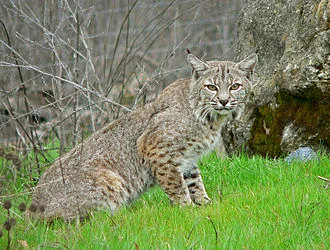
Bobcat: Wary and looking for dinner. The fur is wonderful camouflage, especially in the fall.
The number of bobcats, those beautiful, solitary and shy predators, has been increasing in recent years as they’ve been given more protection, as once-open fields have gone back to woods and as they, like such other rapidly expanding and intelligent predators as coyotes, learn how to prosper close to people.
“They are back in New England and at least as abundant as they were 100 years ago, if not more,” wildlife ecologist John Litvaitis told the Associated Press. “They are adapting to a landscape that has changed.”
While these cats used to be hunted down with great enthusiasm, now most states protect them to varying degrees.
The Journal of Fish and Wildlife Management, in the most recent national survey of bobcat numbers – back in 2010 -- reported that their numbers have almost tripled nationwide since the 1980s, to as many as 3.6 million.
Bobcats eat a lot of squirrels and rabbits, which we have in vast numbers. But they might eat your cat or small dog, too. Another reason not to let your pets roam free. And reminder: Your cat and your dog are also flesh-loving predators, too, however cute they may look. Indeed, house cats have devastated the population of many bird species.
David Warsh: The wellsprings of Russian hacking
This passage leapt out at me last week as I read Everyone Loses: The Ukraine Crisis and the Ruinous Contest for Post-Soviet Eurasia (Routledge, 2017), by Samuel Charnap and Timothy Colton, a slim and well-balanced recounting of events at the center of the present low state of U.S.-Russia relations.
“Unless Putin changes course, at some point in the not-too-distant future, the current nationalistic fever will break in Russia. When it does, it will give way to a sweaty and harsh realization of the economic costs. Then… Russia’s citizens will ask: What have we really achieved? Instead of funding schools, hospitals, science and prosperity at home in Russia, we have squandered our national wealth on adventurism, interventionism and the ambitions of a leader who cares more about empire than his own citizens.’’
The speaker is Victoria Nuland, assistant secretary of state for European and Eurasian affairs in the Obama administration. She was testifying before the Senate Committee on Foreign Relations in May 2014, not long after Russia annexed the Crimea.
Many in the Russian elite took Nuland’s remark as “a de facto declaration of political war,” according to Sergei Karaganov, an adviser to Russian President Vladimir Putin, in a letter to the authors. A sanctions slugfest followed the Crimean takeover, intensifying after pro-Russian rebel or Russian forces in eastern Ukraine brought down a Malaysia Airlines passenger jet on July 17, 2014. “Regime change,” an objective of U.S. foreign policy in Iraq, Libya and Syria, the Russians concluded, apparently extended to their country as well.
The Ukraine affair and its consequences seem worth remembering after a week when Putin, speaking to reporters at a meeting in St. Petersburg, conceded that private Russian hackers may well have been involved in probing U.S. polling machinery and leaking emails during our elections last year. So might others around the world have been involved.
“Hackers are free-spirited people, like artists,” said Putin. “If artists wake up in the morning in a good mood, they paint all day. Hackers are the same. If they wake up, read about something going on in relations between nations, and have patriotic leanings, they may try to add their contribution to the fight against those who speak badly about Russia.” His government hadn’t been doing the work, Putin asserted. He doubted that any amount of hacking could much influence the electoral outcome in another country.
Andrew Higgins, of The New York Times, wrote from Moscow,
“The evolution of Russia’s position on possible meddling in the American election is similar to the way Mr. Putin repeatedly shifted his account of Russia’s role in the 2014 annexation of Crimea and in armed rebellions in eastern Ukraine. He began by denying that Russian troops had taken part before acknowledging, months later, that the Russian military was ‘of course’ involved.’’
Thus did the attribution problem finally turn into a question of military and industrial organization in Russia’s rapidly growing computer establishment, broadly defined. It seems a safe bet that many, perhaps most, of the hacks detected by U.S. intelligence services during 2016 were of Russian origin, though that doesn’t mean that Putin directed them or even authorized them with any precision. Clearly the level of Russian antipathy towards Clinton was high.
Already in her first presidential campaign, in 2008, Clinton had scorned Putin. George W. Bush might have claimed he had looked into Putin’s eyes and gotten “a sense of his soul,” but she knew better. “He was a KGB agent – he doesn’t have a soul,” she told a fund-raising crowd. As secretary of state, she harshly reproached Russia for fraud and intimidation after the parliamentary elections of 2012 – on the eve of Putin’s campaign for a third presidential term.
“Putin was livid,” wrote reporter Mark Lander, White House correspondent for The New York Times, in Alter Egos: Hillary Clinton, Barack Obama, and the Twilight Struggle over American Power. (Random House, 2016). Clinton had sent “a signal” to “some actors in our country,” Putin claimed. Protesters took to the streets in Russia’s first major demonstrations since the 1990s. U.S. cheerleaders hopefully dubbed it “the Snow Revolution.”
As it happened, Clinton’s spokesperson in those days was Nuland. Born in 1961, a 1983 graduate of Brown University, is daughter of surgeon-author Sherwin Nuland, wife of neoconservative commentator Robert Kagan. She entered government service as chief of staff to Deputy Secretary of State Strobe Talbott during the Clinton administration. She became Vice President Dick Cheney’s national-security adviser on the eve of the invasion of Iraq, and afterwards served four years as ambassador to NATO. Nuland faced sharp questions about her role as Clinton’s press aide in the wake of the Benghazi attack, but was confirmed as an assistant secretary of state in September 2013 – just in time for the Ukrainian crisis.
After she turned up passing out cookies to Ukrainian demonstrators in Kiev, Nuland was the victim of the very first notable Russia hack, recorded and posted on YouTube, discussing with U.S. Ambassador Geoffrey Pyatt who should serve in the Ukrainian leadership following the flight of president Viktor Yanukovych to Moscow. “Fuck the E.U.,” she famously said, referring to the suggestion that the European Union, rather than the United Nations, should serve as a mediator in Ukraine.
Nuland, and her former mentor Talbott, were high up in the plans for a Clinton administration in 2016. Last week Albright Stonebridge Group, a strategy and commercial diplomacy firm, announced she would become a senior counselor. The Russians, like nearly everyone else, had been preparing for President Clinton. Instead they got President Trump.
Everyone Loses is an excellent summary of the mess that ensued after massive street protests drove a pro-Russian democratically elected president from office in February 2014. Charap, a senior fellow at the International Institute for Strategic Studies, and Colton, professor of government at Harvard and author of Yeltsin: A Life (Basic, 2008), are eager to propose a set of precondition-free talks.
“The West needs to cease holding out for Russia to surrender and accept its terms. Russia must stop pining for the good old days of great-power politics, be it the Big Three of 1945 {the U.S., Soviet Union and Britain} or the Concert of Europe 1815-1914, and accept that its neighbors will have a say in any agreement that affects them. The neighbors should stop seeking national salvation from without, and recognize that it will be up to them, first and foremost, to bring about their countries’ security and well-being.’’
But then Everyone Loses was written before the U.S. election. In order to focus narrowly on the fate of the so-called In-Betweens (Belarus, Ukraine, Georgia, Armenia and Azerbaijan) and the Central Asian nations along the Russian periphery (Kazakhstan, Uzbekistan, Turkmenistan, Tajikistan and Kyrgyzstan), the authors left everything out of their book that didn’t “bear directly” on the lose-lose situation that grew out of the crisis in Ukraine. That includes NATO expansion, divergences over Russia’s wars in Chechnya, matters of ballistic-missile defense, the U.S. occupation of Iraq, the civil war in Syria and U.S. intervention in Libya.
That is, of course, no way to understand the larger situation. The Russians are no angels. But it is the U.S. that has been on a bender since 1989. A complicated rethinking of U.S.foreign policy is in store. The largely accidental election of Donald Trump has confused the issue. But that leaves plenty of time for the retracing of steps before the next election.
David Warsh, an economic historian and veteran columnist on economic, political and media matters, is proprietor of economicprincipals.com, where this first ran.
'Great broken world'
''Who thinks of June's first rose today?
Only some child, perhaps, with shining eyes and
rough bright hair will reach it down.
In a green sunny lane, to us almost as far away
As are the fearless stars from these veiled lamps of town.
What's little June to a great broken world with eyes gone dim
From too much looking on the face of grief, the face of dread?
Or what's the broken world to June and him
Of the small eager hand, the shining eyes, the rough bright head? ''
--- "June 1915,'' by Charlotte Mary Mew
The way the weather's been
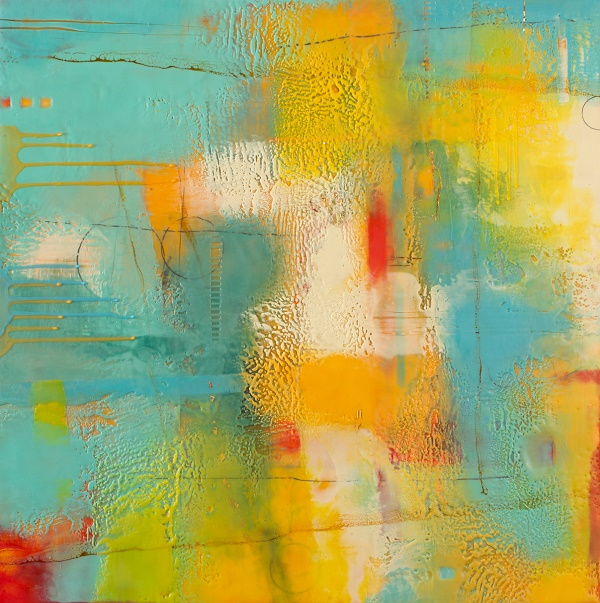
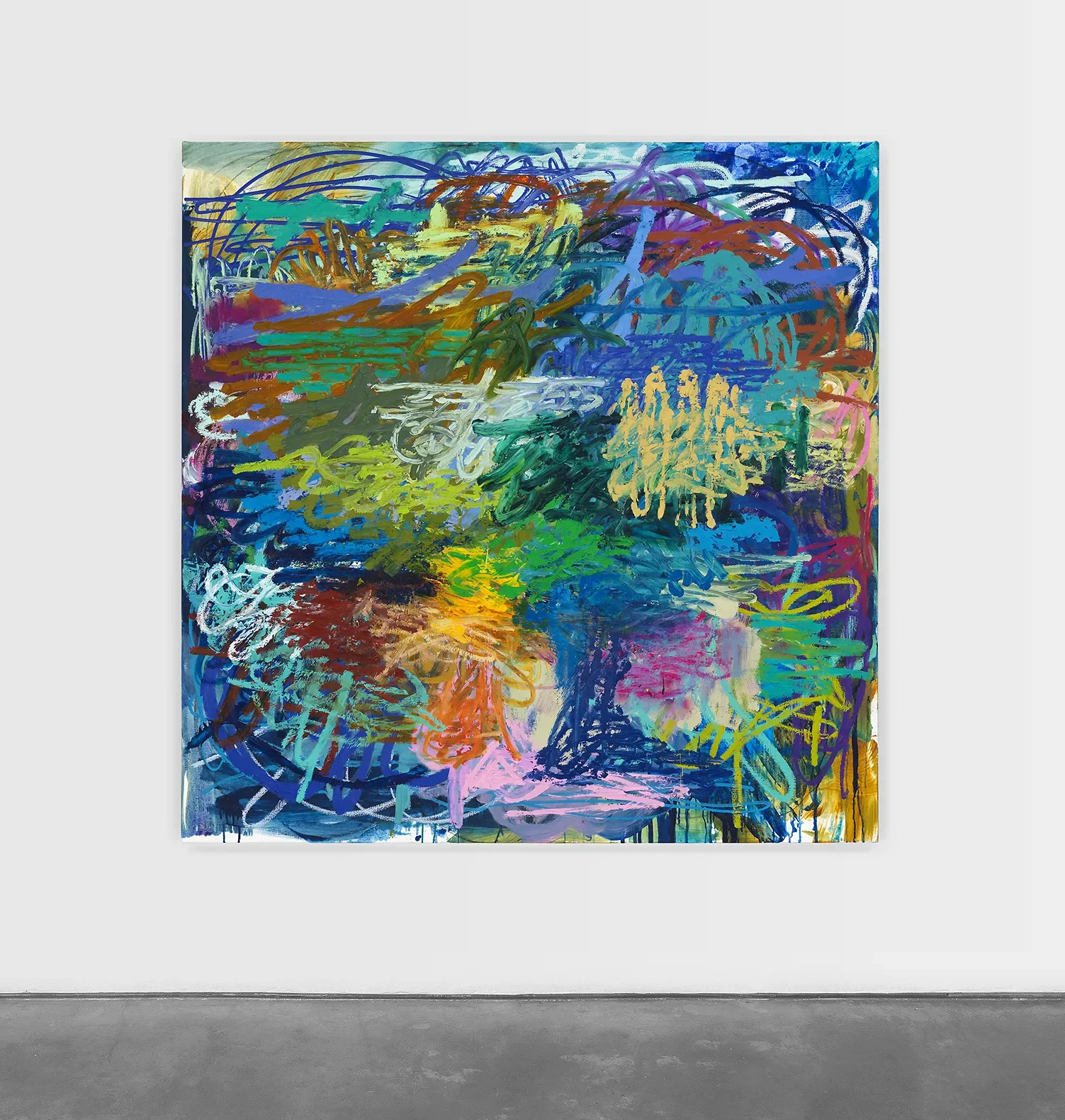
"Reverie III" ( encaustic), by Kellie Weeks, in her encaustic (a process that uses paint and bees' wax) show "Daydreams,'' at Artspace Maynard, in Maynard, Mass., through June 30.
Southern N.E. has joined other states in sticking with Paris Agreement on climate change
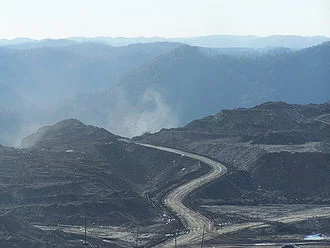
Cutting off the top of a mountain in Appalachia to get coal.
Via ecoRI News (ecori.org)
One day after President Trump pulled the United States out of the 2015 Paris Agreement, a slew of states and cities are saying they are all in anyway. Massachusetts, Connecticut and Rhode Island joined the founding states of Washington, New York and California in the United States Climate Alliance.
The states and cities agree to do their part to cut fossil-fuel emissions 26 percent to 28 percent of 2005 levels. The commitment is nonbinding, and it’s not clear what if any of the financial obligations will be met.
The list of signors is growing. Colorado, Virginia, Hawaii, Oregon have joined. Some 80 U.S. cities also reiterated their commitment to the Paris Agreement, including Boston, Cambridge, Holyoke and New Bedford, Mass., Burlington, Vt., Middletown and New Haven, Conn., and Providence.
"We will continue to lead. We are increasing investments in renewable energy and energy efficiency. We will buy and create more demand for electric cars and trucks. We will increase our efforts to cut greenhouse gas emissions, create a clean energy economy, and stand for environmental justice. And if the President wants to break the promises made to our allies enshrined in the historic Paris Agreement, we’ll build and strengthen relationships around the world to protect the planet from devastating climate risks. The world cannot wait — and neither will we," according to the Climate Mayors coalition.
An intriguing conversation
From Robert Whitcomb's "Digital Diary'' in GoLocal24.com
Many of the people around Donald Trump are simply amoral/immoral climbers and operators (like him), united only by their desire for money, power and attention. As Trump’s power seems to fade you’ll see an accelerating exit from his chaotic administration. Meanwhile, it will be amusing to see how well the oily pseudo-“policy wonk’’ and Sammy Glick-style House Speaker Paul Ryan and the very smart survivor Senate Majority Leader Mitch McConnell handle the challenges of dealing with a sociopath in the White House.
Given Trump’s at least 40-year history of fraud, interspersed with loans from some dubious people (especially Russian oligarchs in the past 20 years), and mental and emotional instability why would anyone be surprised by what has been happening?
The latest (?) exciting report, from The Washington Post:
“A month before Donald Trump clinched the Republican nomination, one of his closest allies in Congress — House Majority Leader Kevin McCarthy — made a politically explosive assertion in a private conversation on Capitol Hill with his fellow GOP leaders: that Trump could be the beneficiary of payments from Russian President Vladimir Putin.
“’There’s two people I think Putin pays: Rohrabacher and Trump,” McCarthy (R-Calif.) said, according to a recording of the June 15, 2016, exchange, which was listened to and verified by The Washington Post. Rep. Dana Rohrabacher is a California Republican long known in Congress as a fervent defender of Putin and Russia.
“House Speaker Paul D. Ryan (R-Wis.) immediately interjected, stopping the conversation from further exploring McCarthy’s assertion, and swore the Republicans present to secrecy.’’
“Some of the lawmakers laughed at McCarthy’s comment. Then McCarthy quickly added: ‘Swear to God.’
“Ryan instructed his Republican lieutenants to keep the conversation private, saying: ‘No leaks. . . . This is how we know we’re a real family here.”’
My hunch is that the Russians didn’t pay Trump directly but rather the secretive Trump Organization has continuedto get big loans and “investments’’ from people close to Russian dictator Vladimir Putin. Let’s hope that special counsel Robert Mueller will get to the bottom of it. As for Rohrabacker, who knows?
Unapologetically romantic
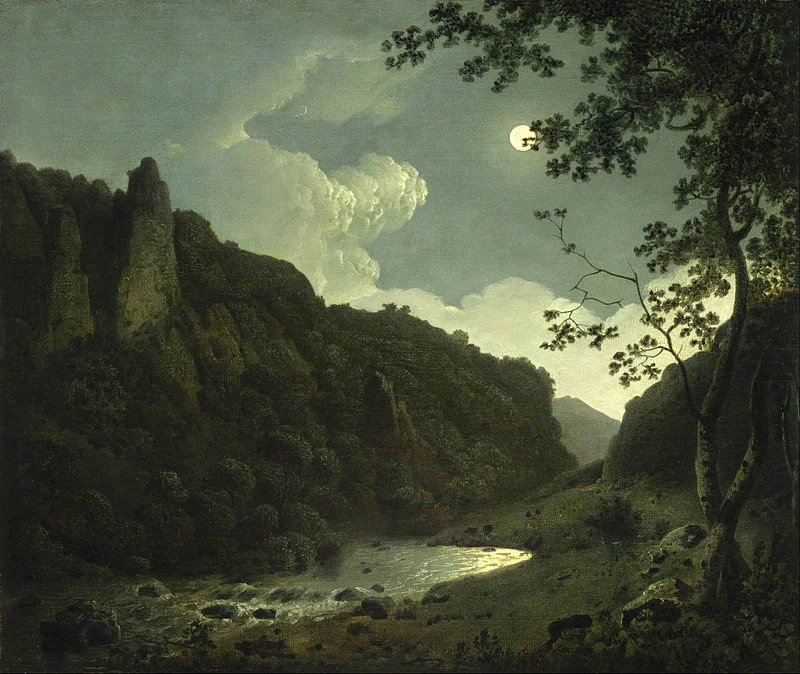
''Ten o'clock: the broken moon
Hangs not yet a half hour high,
Yellow as a shield of brass,
In the dewy air of June,
Poised between the vaulted sky
And the ocean's liquid glass.
Earth lies in the shadow still;
Low black bushes, trees, and lawn
Night's ambrosial dews absorb;
Through the foliage creeps a thrill,
Whispering of yon spectral dawn
And the hidden climbing orb.
Higher, higher, gathering light,
Veiling with a golden gauze
All the trembling atmosphere,
See, the rayless disk grows white!
Hark, the glittering billows pause!
Faint, far sounds possess the ear.
Elves on such a night as this
Spin their rings upon the grass;
On the beach the water-fay
Greets her lover with a kiss;
Through the air swift spirits pass,
Laugh, caress, and float away.
Shut thy lids and thou shalt see
Angel faces wreathed with light,
Mystic forms long vanished hence.
Ah, too fine, too rare, they be
For the grosser mortal sight,
And they foil our waking sense.
Yet we feel them floating near,
Know that we are not alone,
Though our open eyes behold
Nothing save the moon's bright sphere,
In the vacant heavens shown,
And the ocean's path of gold. ''
-- "A June Night,'' by Emma Lazarus
Jim Hightower: Trump trade plan means more offshoring of U.S. jobs
Via OtherWords.org
Like rose blossoms, a politician’s promises can be beautiful when they burst into full, glorious bloom — only to fade over time and, petal by petal, fall away.
Take Donald Trump’s glorious pledge last year to renegotiate the NAFTA trade deal and provide a “much better” deal for working families who lost manufacturing jobs as a result of it. Beautiful! This particular blossom is what convinced many hard-hit former factory workers to vote Trump into the White House.
But the bloom is now off Trump’s rosy promise, and it looks like working families will get nothing but thorns from him.
A recently leaked copy of Trump’s NAFTA plan reveals that, far from scrapping the U.S.-Mexico-Canada trade deal, White House negotiators are goosing it up with even more power for multinational corporations.
In particular, it includes new “investor incentives” to offshore thousands more of our middle-class jobs. Where did this come from? Right out of last year’s discredited and defeated Trans-Pacific Partnership, a scam intended to enthrone corporate supremacy over our own laws.
Indeed, the 500 corporate executives and lobbyists who essentially wrote that raw TPP deal have quietly been huddling with Trump’s team to draft the plan for this “new” NAFTA, the consumer advocacy group Public Citizen reports.
What about those working people Trump promised to help? They’re locked out, not even allowed to watch the negotiations, much less have a say in them. The same goes for consumers, environmentalists, and farmers. Even members of Congress are being left in the dark, allowed no voice in shaping the deal.
But I’m guessing that the six Goldman Sachs executives Trump brought in to run our economic policy do have a say, along with his daughter and son-in-law who oversee both our government and the extended Trump family’s global business empire.
It’s the same old NAFTA story: Corporate powers are at the table — and you and I are on the menu.
Jim Hightower is a radio commentator, writer, and public speaker. He’s also the editor of the populist newsletter, The Hightower Lowdown, and a member of the Public Citizen board.
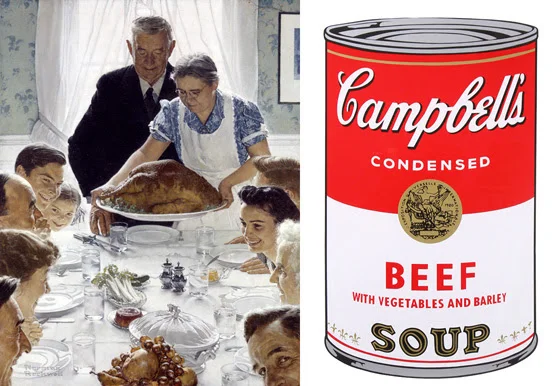
Rockwell and Warhol: An unlikely pairing?
Left, "Freedom from Want'' (oil on canvas), by Norman Rockwell, 1943; right, "Campbell's Soup Can'' (color silkscreen on paper) 1969, in the show "Inventing America: Rockwell and Warhol,'' at the Rockwell Museum, Stockbridge, Mass., June 10-Oct. 29.
Both of these artists portrayed a kind of romanticism. Rockwell liked to say that he painted things the way he wanted life to be. But as he gotolder, he got tougher in recognizing and representing American society's flaws and the contradictions of human emotions and behavior. The nostalgia in his pictures thinned a bit.
I remember with mild fondness his covers for the old Saturday Evening Post, one of about a dozen magazines we got at our house in the '50s and early '60s, before TV killed so many of them. I looked forward much more to the weekly arrival of Life magazine, with its great photos, than to the rather musty Post.
As a kid, I saw the Rockwell covers as corny. Now, in part because I know a lot more about Rockwell's sometimes troubled life, and having read many of his comments on art, his life and America, I see that his work, besides being technically superb, has far more depth than you'd see from glancing at a Post cover. By the way, one reason he and his wife moved to Stockbridge from Vermont is that Austen Riggs, the famous mental hospital is there. Mrs. Rockwell would be treated at the institution from time to time.
As for Warhol, he deeply appreciated the commercial romanticism (the passion for colorful consumer goods) and the craft of Madison Avenue's high-concept popular art during its post-World War II golden age.
When I lived in New York I saw him a couple of times from a few feet away at downtown Manhattan parties. He seemed expressionless --- cold and creepy.
Both Rockwell and Warhol presented longing --- the former for a safer and friendlier world, the latter for a world of color and humor, in which even the seemingly banal could be infused with a kind of goofy joy.
-- Robert Whitcomb
Chris Powell: A clearer view of Aetna's travel plans
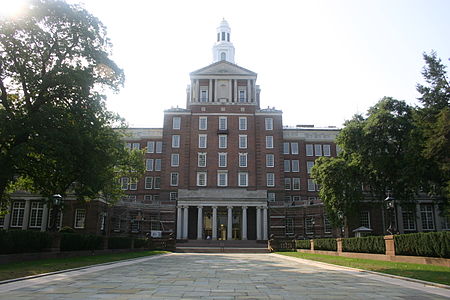
Aetna's current headquarters, in Hartford.
Aetna's supposed departure from Hartford may be recorded as the signature humiliation of Gov. Dannel Malloy's administration, the capstone of the last decade of Connecticut's decline. At least the governor's political opponents will portray it that way.
But they will be wrong, for several reasons. First, the company really doesn't plan to leave Hartford but rather to relocate its top executives. Most of the company's nearly 6,000 employees in Hartford are expected to remain.
Second, the move seems mainly a matter of the personal preference of Aetna CEO Mark Bertolini, who has no particular affection for Connecticut.
Third, the assertion by some "experts" that Aetna wants to attract young workers by being based in a livelier city is nonsense. For the top executives Aetna will be relocating will not be hipsters. Young workers don't start at the top.
More likely Aetna's top executives would like to be big fish in a big pond rather than in a small one.
Fourth, even those who deplore the corporate welfare of the Malloy administration can't deny that the governor was ready to do nearly anything to induce Aetna to stay, starting with his promise to match any financial incentives offered to Aetna by any other state.
That the company declined to pursue the governor's offer suggests that its decision has little to do with business climate, taxes, workforce skills, or anything else under state government's control. Commenting on Aetna's plans, the governor said, "Hartford is not ever going to be New York or Boston. And that's fine." Fine? He might have said, "Thank God!"
Of course those cities have their virtues, but congestion, noise, pollution and being prime targets for terrorism aren't among them. Connecticut is close enough to those cities to use them any time but conveniently set apart enough so that there is space for the reflection and privacy without which life provides little comfort and sense.
"The Connecticut countryside," the historian and sometime politician Odell Shepard wrote in 1939, "seldom obviously picturesque, has been made by long collaboration between earth and man. It is saturated with humanity. Vermont has far more landscape to the square mile but we mix more people with the view.
"This little place of ours is homely, used, and worn, like a weather-beaten homespun coat that has often been patched and turned. Or it is like some wise old face written with character and wrinkled deep in time.
"Jonathan Edwards it was, I think, who defined a certain sort of beauty as ‘the visible fitness of a thing to its use,' like the exact adjustment of a mortise to its tenon.
"That is what we have here -- a beauty homemade and blood-warm, moderate, honest, and utterly our own. There is no glozing and seductive glamour about it, no mirage of a fairer land than earth affords. It renders the sober truth of things, no more."
The sober truth of things today is that Connecticut indeed is in danger but not particularly because of Aetna's departure or anyone else's. Instead the state's decline is a consequence of the corruption brought about by its former prosperity, which caused elected officials to think that they could not just appease every selfish or unproductive special interest but also lock that appeasement into perpetuity by contract, nullifying democracy for all time. That's not a natural disaster but a political one, and it has a remedy: a revival of civic virtue.
Chris Powell is managing editor of the Journal Inquirer ,in Manchester, Conn.
Astrophysics at the Art Club
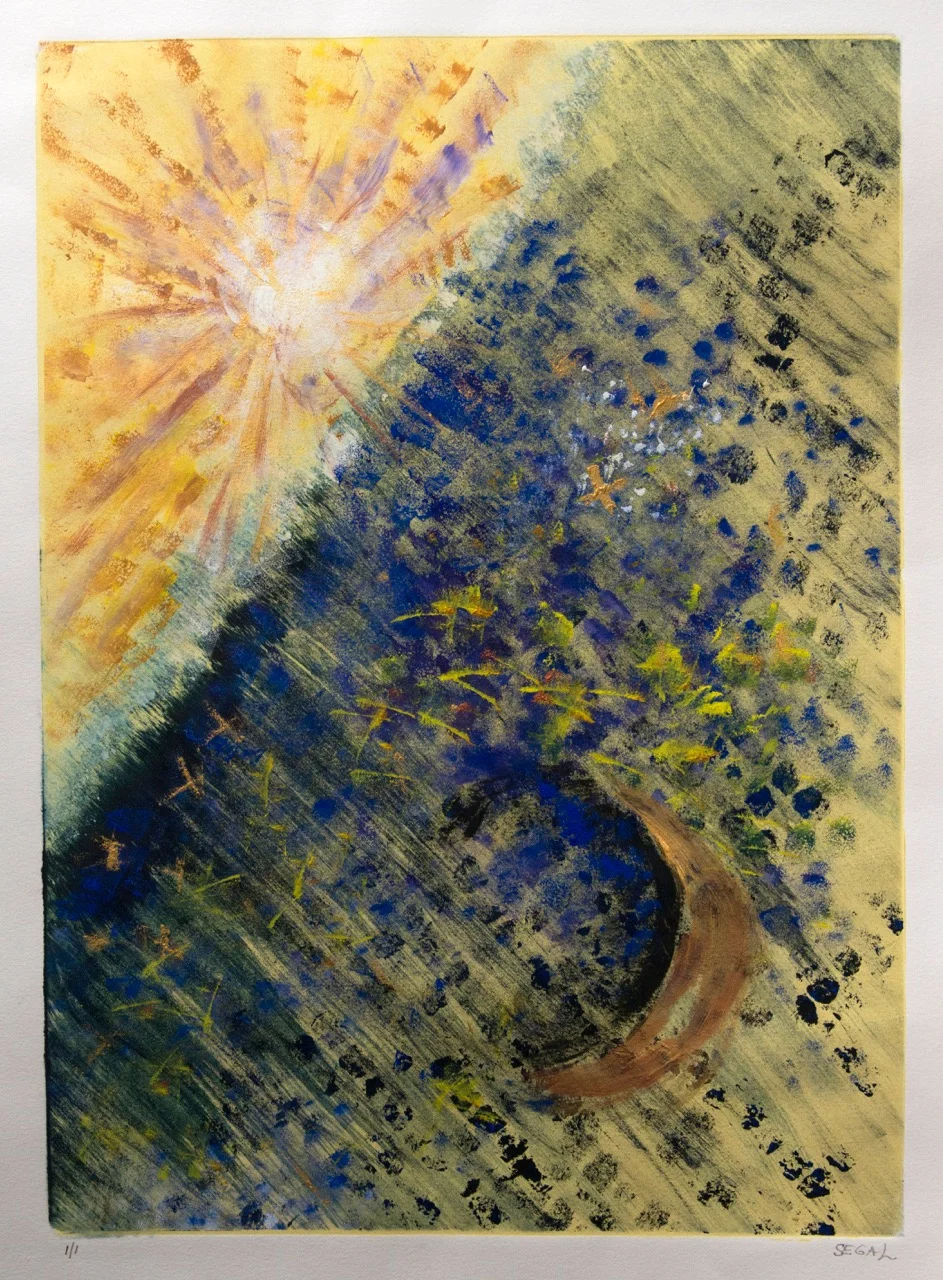
"The Sun, The Moon, The Stars'' (monotype print), by Roberta Segal, in her joint show with Nina Ackmann, "A Sense of Design,'' at the Providence Art Club, June 4-23.
Moving toward Atlantic Time
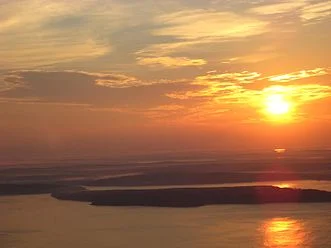
Sunrise from the top of Cadillac Mountain, on Mt. Desert Island, Maine. In the fall and winter, when the sun rises south of due east, it's the first place in the U.S from which you can see the sunrise.
Adapted from Robert Whitcomb's "Digital Diary,'' in GoLocalPov.24
I predict that the New England states, with the possible exception of Connecticut, whose southwestern corner is tightly connected with New York, will eventually adopt year-round Daylight Savings Time – or call it Atlantic Time, which is used in Canada’s Maritime Provinces.
This will ensure more light year-round in the afternoon and address how far east New England is. In the past few weeks, legislators in all six states in the region have been more seriously looking at the shift.

Exploring the nautical life

"Glass Boat'' (plantpaper, twigs and glass), by Jane Balsgaard (photp by Tom Grotta, courtesy of browngrotta arts.) in the group show "Plunge: Explorations From Above and Below,'' at the New Bedford Art Museum, through Oct. 8, in collaboration with the browngrotta arts gallery .Sixteen artists from around the world present their ideasabout, and methods of expressing, nautical life. The work ranges from photographs to large paintings and sculpture.
In Conn., 'the sober truth of things'
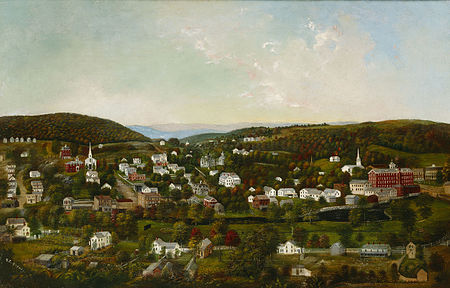
"Winsted, Connecticut'' (oil), by Sarah E. Harvey, circa 1879.
"The Connecticut countryside, seldom obviously picturesque, has been made by long collaboration between earth and man. It is saturated with humanity. Vermont has far more landscape to the square mile but we mix more people with the view.
"This little place of ours is homely, used, and worn, like a weather-beaten homespun coat that has often been patched and turned. Or it is like some wise old face written with character and wrinkled deep in time.
"Jonathan Edwards it was, I think, who defined a certain sort of beauty as ‘the visible fitness of a thing to its use,' like the exact adjustment of a mortise to its tenon.
"That is what we have here -- a beauty homemade and blood-warm, moderate, honest, and utterly our own. There is no ... seductive glamour about it, no mirage of a fairer land than earth affords. It renders the sober truth of things, no more."
-- Odell Shepard (historian), writing in 1939
'Literary Soil'
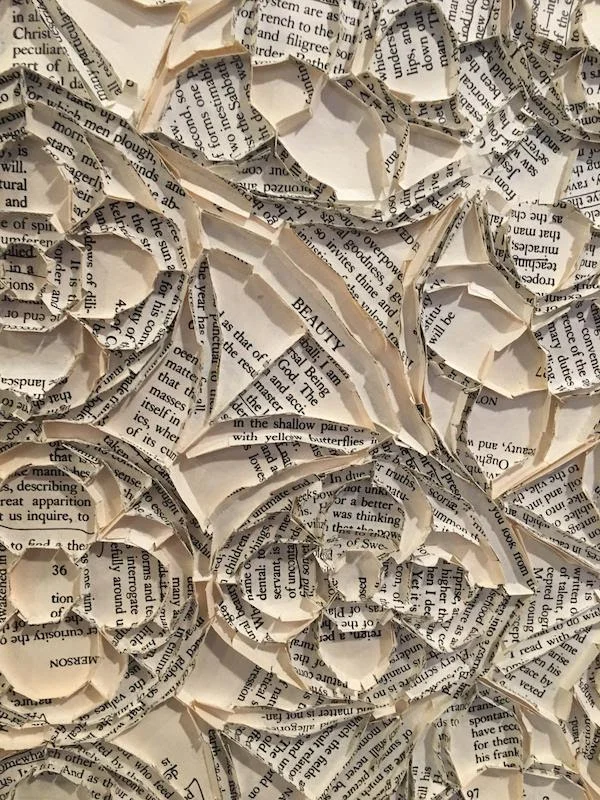
"The Emersonian Rose'' (cut and folded book pages), by Greg Lookerse, in his show "Literary Soil,'' at the Fruitlands Museum, Harvard, Mass. The exhibition refers to the shared cultural tradition of the Transcendentalists and the museum.
We must protect the pollinators
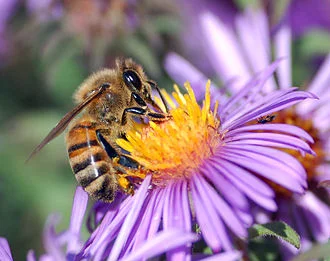
Via ecoRI News (ecori.org)
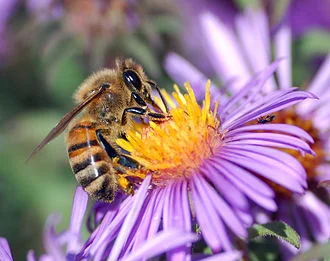
Pollinators are vital to the health of natural food chains and the functioning of ecosystems. They are also often the key to agricultural success. Through foraging and natural movements, pollinators — invertebrates such as bees, butterflies and beetles, and vertebrates such as bats and birds — transfer pollen, allowing the fertilization and subsequent fruiting of trees and plants.
Of all flowering plants, 85 percent require an animal — mostly insects — to transfer pollen for fertilization. Pollinators account for the fertilization of 35 percent of crop production worldwide, with a value of $217 billion annually. Both European honeybees and the 3,500 species of native bees account for most of agricultural pollination. Their bodies are designed to attract the electrostatically charged pollen with their bristly thorax and hairy “pollen baskets” on their legs.
Since the 1950s, however, there has been a 50 percent decline in managed honeybee hives, according to the Audubon Society. Wild hives have fared even worse. Nearly 17percent of vertebrate pollinators and more than 40 percent of invertebrate pollinators are facing the threat of extinction.
Also, more than 140 species of butterflies in North America are at risk, while monarch butterflies alone have declined by 90 percent during the past two decades, according to the Audubon Society.
The Audubon Society offers some reasons as to why is this happening:
Pesticide exposure. Heavy pesticide use in agriculture and landscaping shows direct correlation to declines in all insects, especially bees. The synergistic effects of pesticides aren’t well understood and the application of different pesticides on the same property may intensify toxicity to pollinators.
Changes in land use. Natural habitats and open space are being lost to development. In the past eight years, more than 8 million acres of former farmland and natural space has been paved or developed. Urbanization reduces nesting habitat for bees and limits the floral resources they require for food.
Invasive species. As foreign species of plants, insects, fungi and bacteria become introduced, they alter and interfere with the proper functioning of ecosystems by pushing out native species, changing the availability of food resources, and introducing diseases for which endemic species have no defense.
Pathogens, parasites and disease. Honeybees have been hard hit hard by diseases and varroa mite infestations. Colony collapse disorder has impacted bees worldwide, and the causes are still being investigated.
Climate change. Weather patterns are becoming more extreme, growing seasons are altering, and average temperatures are warming. For pollinators, climate change affects food sources that may not be available at times when they are expected and needed.
Changes in agricultural methods. Bees need a diversity of plants that flower throughout the growing season. Small farms and gardens that supplied diverse crops are in steep decline. This has resulted in reduced nutrition for bees. They are also less likely to bounce back from environmental crises such as drought and floods. The loss of field borders and scrubland also means less habitat for native bees.
The Audubon Society offers some tips to support and encourage the diversity and health of pollinators:
Go natural with your lawn. Allow flowers such as clover and dandelions to grow. Minimize or eliminate the use of pesticides.
Select native New England flowering plants and bushes. Use pollen-producing plants in planters and on apartment balconies.
Refrain from clearing leaf litter and old plant stalks in spring as bees lay their eggs in these.
Minimize or eliminate pesticide use in your gardens. Predatory insects will come for those beetles and cutworms. Garden plants can tolerate a little bit of defoliation without much harm.
Leave dead trees on your property, as many pollinators use decaying trees to lay their eggs and pupate into adults. Bumblebees use brush piles, old burrows and tree cavities for nests.
'and slips away'
"There are days in June that seem to be December.
Thus sometimes the substance of this room
or more accurately the people in it who pray silently
start up in the midst of happiness and alter,
bewitched by a murmur from the calm foliage.
Our hearts are shifting as the winds
changing,
pliable as gold.
See this windless sail,
motionless?
Almost before one feels the subtle breeze,
it stirs up
and slips away.''
- Francis Jammes
Multiple explosions
"In June, as many as a dozen species may burst their buds on a single day. No man can heed all of these anniversaries; no man can ignore all of them."
-- Aldo Leopold