From The Boston Guardian. (This has been edited by New England Diary.)
(Robert Whitcomb, editor of New England Diary, is chairman of The Guardian)
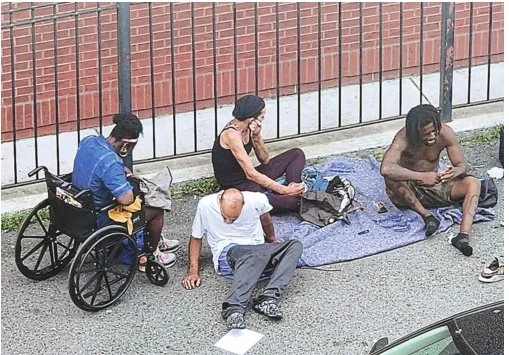
The Massachusetts House recently committed $4 million to help fund Boston’s fight against outdoor drug use.
State Rep. Aaron Michlewitz, who serves the Downtown and is chairman of the Ways and Means committee, which sets the state budget, announced that the House would pledge $4 million to various groups in the city combating drug in Boston. The city itself is investing just as much money.
“I’d say there’s probably about an equivalent amount from the city that is actually used as part of their budget,” said Steve Fox, a neighborhood leader in the South End and a member of the South End/Roxbury/Newmarket Working Group on Addiction and Recovery, which has spearheaded planning efforts around fixing the city’s drug problem for the past 10 years.
“That’s police personnel, Coordinated Response Team personnel. So, figure that the total budget for us doing this is actually $8 million.”
The Working Group has been leading efforts to fight addiction for the past decade. After last summer, which Fox said was “the worst that anyone can remember” for prolific drug use, the group spent the rest of the year putting together and testing a framework for getting people off the street and into treatment. It focused on public health and public safety, and putting aside harm-reduction strategies in favor of moving people into recovery.
That framework has so far been successful. Fox said that in the first five months of implementing and testing the group’s recommendations, the Coordinated Response Team and the police-based Neighborhood Engagement Safety Team had helped 550 people get into recovery. It’s that framework that the state wants to fund. And it’s on those teams that the city is spending its money, even though there’s no dedicated funding package for them.
“What we’ve asked for is the number of personnel that are needed in order to meet the ongoing requirements. We’re grabbing people from a bunch of different locations based upon the qualities that we need, and putting them together into a team,” Fox said. “The NEST team came about as a result of the reassignment of existing officers from other locations. Look at the big picture. The city is funding this, whether it comes out of [police district] A-1’s budget or D-4’s budget.”
The state’s funding, in contrast, must be approved by the state Senate and the governor before it actually goes into effect. Michlewitz said that the goal would be July, when the new fiscal year begins.
From that state funding, the city itself would receive $2.24 million to give as grants to supportive- recovery housing projects, $650,000 for clinical support staff, such as nurse practitioners and addiction specialists, and $500,000 for the Suffolk County district attorney’s office to design a “pre-arraignment diversionary session” that would guide users towards recovery pathways instead of funneling them into the justice system.
There would also be $460,000 to the Boston Public Health Commission, for an additional 30 beds, and $150,000 to the Coordinated Response Team to begin operating a mobile response center.
There’s no guarantee that this funding would be repeated year after year if approved. “We’re going to take this one step at a time, one year at a time, one season at a time, in essence,” Michlewitz said. “We’ll hopefully get this through for July, and then we’ll see where we are, and reevaluate and see how it worked. Hopefully it could be something that we do on a regular basis, if the funding allows it to be.”
Fox said members of the Working Group had begun talking to senators to gather support for getting the $4 million passed.