
Vox clamantis in deserto


The future of the storied Maine Coast
Rising Tides: Adapting to Maine’s Coastal Future captures the memorable voices of Mainers in a rapidly changing world. These include oyster farmers and other aquaculturalists, fishermen, marine biologists and other scientists, and community leaders who are navigating dramatic changes along and off Maine’s iconic coast. Presenting deep geological, climatological, and human history, in-depth interviews, and other research, the book shows the challenges and opportunities as rising seas caused by global warming, along with sometimes controversial shoreline development, are reshaping ways of life along The Pine Tree State’s storied coast. The vivid changes include shifting fisheries, new industries and markets and the technology that pushes them.
The problems, opportunities, and adaptations in Maine carry lessons for coastal communities around the world. These are global issues described locally through the stories of Mainers on the frontlines. A powerful and timely portrait, Rising Tides is both a warning and an inspiration. It displays the dangers posed by change while also serving as a testament to the ingenuity and determination required not only in Maine but on coasts everywhere.
W. as Maine Coast painter

“St. Ann’s Chapel” (Kennebunkport, Maine) (oil on canvas), by George W. Bush (yes, that one), in a show of more than 40 paintings of landmarks in that affluent coastal town, where the Bush family has long summered. The show is at the University of New England in Biddeford, Maine. It’s a fundraiser to repair that Episcopal church from damage it sustained in storms in January 2024.
Stalactites into the sea
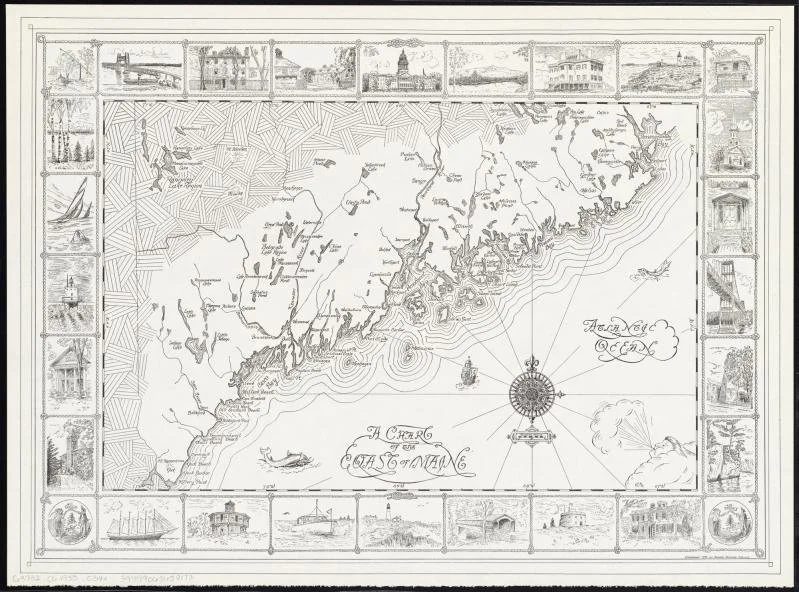
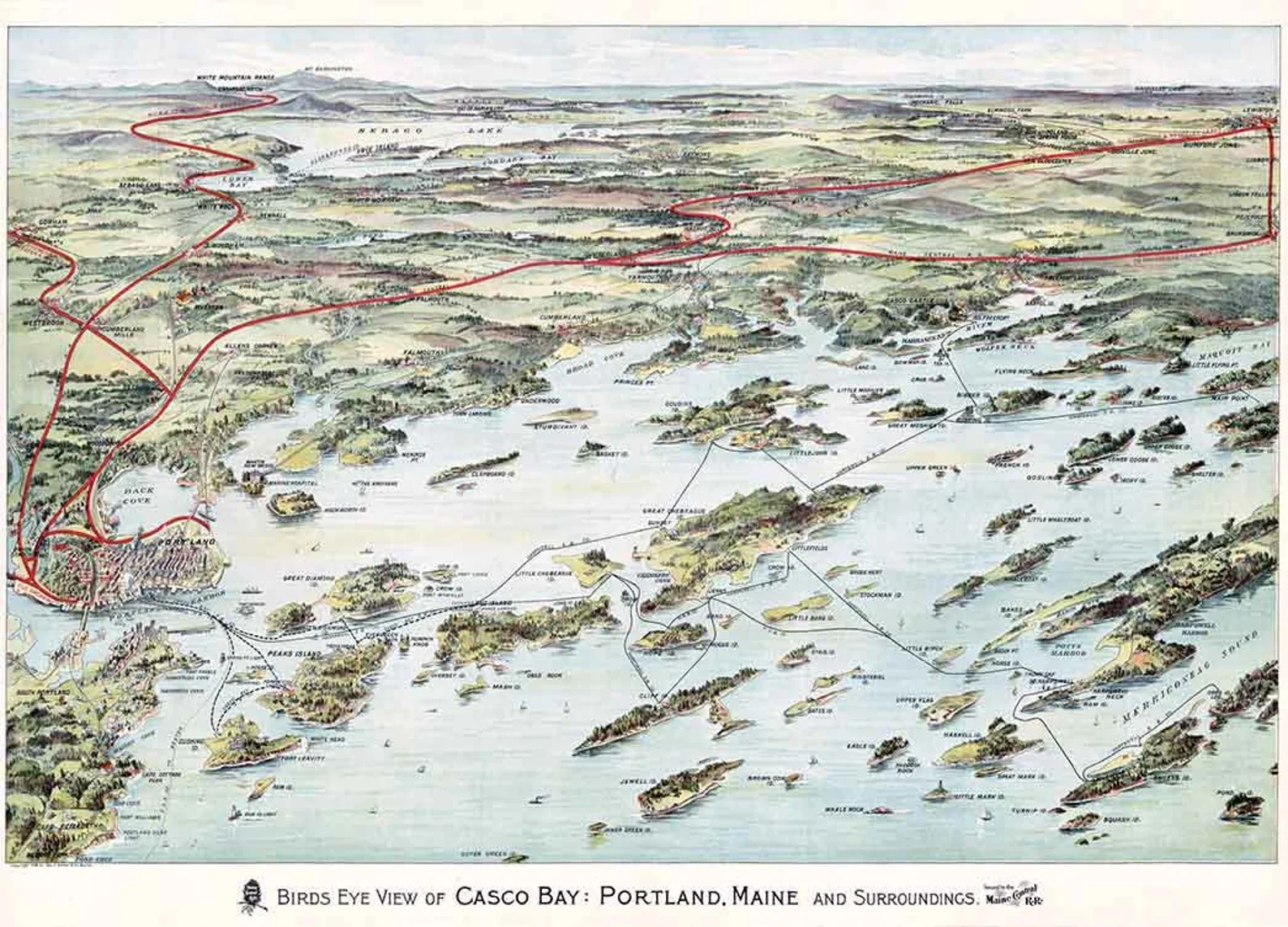
“The middle part of Maine, all the way from Bar Harbor to Portland, hangs down like stalactites that drip little islands into the Atlantic. It's divided by rivers and harbors with cozy names that sound like brands of bubble bath or places boats sink in folks songs.”
— Linda Holmes, American author and podcaster
Peter Neill: Urgently asking: Where is the plan for the Maine Coast?
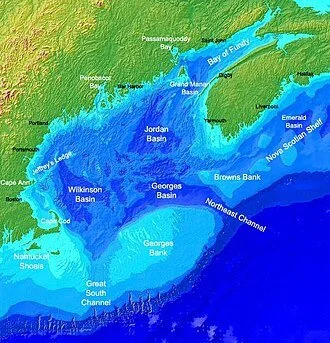
SEDGWICK, Maine
Recently, two ocean-related conferences unfolded here in Maine, where I live. The first was hosted by established marine-research institutes and focused on the so-called blue economy, specifically on emerging aquaculture along our Atlantic coast: shellfish, seaweed, processed by-products, and investment opportunities. The keynote speaker was an old friend, Thor Sigfusson, founder of the Iceland Ocean Cluster, proponent of the innovative utility of “100 percent of the fish” as a unifying policy and successful catalyst for proven ocean-related start-ups worldwide finding value in every element of the catch, from medical services to fashion. The attendees included research scientists, consultants, policy innovators, and investment firms with ocean interest.
The second meeting was the Maine Fishermen’s’ Forum, an annual gathering of local industry representatives, marine scientists, policymakers, support groups, commercial product representatives, and fishermen—the , the workforce behind an industry that is the second-largest revenue producer (after tourism) in Maine.
The back-to-back events caused me to ask a question relative to both: If these perspectives and activities are central to the future of an ocean-driven community, then where is the plan?
My response to both, given the sense of fulsome prospect projected, was the same: Despite the success of the developed lobster fishery, despite the optimism about further exploitation of the state’s coastal resources, the future seemed piecemeal, opportunistic, conventionally framed, and limited by past values, structures, and behaviors, inadequate to a justified investment by state government and serious blue economy investors.
What seemed absent was a larger integrated plan to justify and motivate adequate funding beyond first-round capital. There seemed to be best intent but again, there did not seem to be much of a plan.
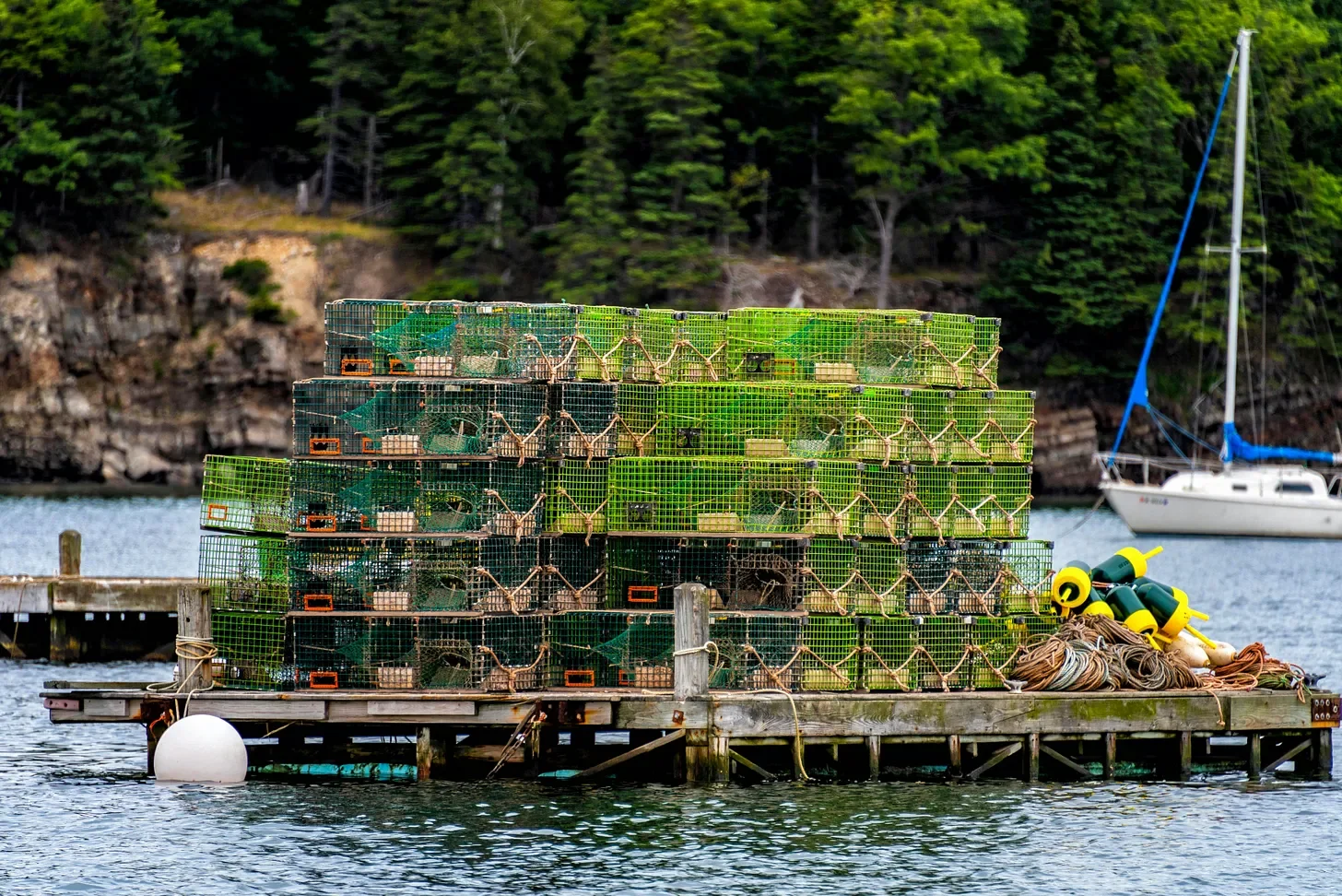
Here are some of the forces affecting the future of the lobster industry in Maine: sea-temperature change; related species migration and relocation; inflation and the rising costs of bait, fuel, labor, and transportation; access to shifting offshore harvests; increased capital costs and interest rates; lack of adequate processing to capture full added value; loss of profits to export markets; impact of volatile tariffs; single-species focus, with limited investment in associated fisheries, byproducts, new applications and new markets; seasonal limit for equipment and on-the-water skills; reduction in next generation supply, not only of infant lobsters, but of new fishermen to react to any expanded opportunity, human capital to meet new demand.
Add to that the implications of reduced working-waterfront facilities, the certainty of more extreme weather, comparable offshore dis-opportunity by limiting wind and ocean-geothermal energy, industrial aquaculture, future desalination needs, coastal transportation, and community development, and you realize that there is no comprehensive plan. Given no plan, how can any investor assume a context for success? Rejection of offshore-wind projects, coastwise aquaculture, industrial seaweed cultivation, diminished salt-water access, and little federal or state seed-funding seems more a plan for failure, not success.
State government has reacted to the larger implications of climate change, with the multi-year effort of a commission to define adaptation and mitigation of impacts, well-documented and predictable. Slowly, specific reactions with limited funding are being legislated with specific, albeit similarly limited outcomes. As the federal government has denied the climate reality, and has worked to cancel funds for further research, development, and infrastructure preventions and improvements, the financial climate has also changed for the worse, and without economic subsidy, private capital has no interest in augmenting scale and speed of the outcome. We are dead in the water.
I came away from these conferences despondent about the subversive reality of perverse intent. The plans can be there, and they can be realized by imagination, commitment, and acceptance of blue economy interest. What is so tragically ironic is that failure to shape a future, internationally, nationally, locally, and personally, is the worst investment of them all. And the inevitable payout is only loss.
Where is the plan?
Peter Neill is founder of the World Ocean Observatory, a web-based resource for science-based and educational information committed to the health and future of climate and ocean. He is also host of World Ocean Radio, a weekly syndicated radio show and podcast that inspired this essay.
Important for Maine and beyond
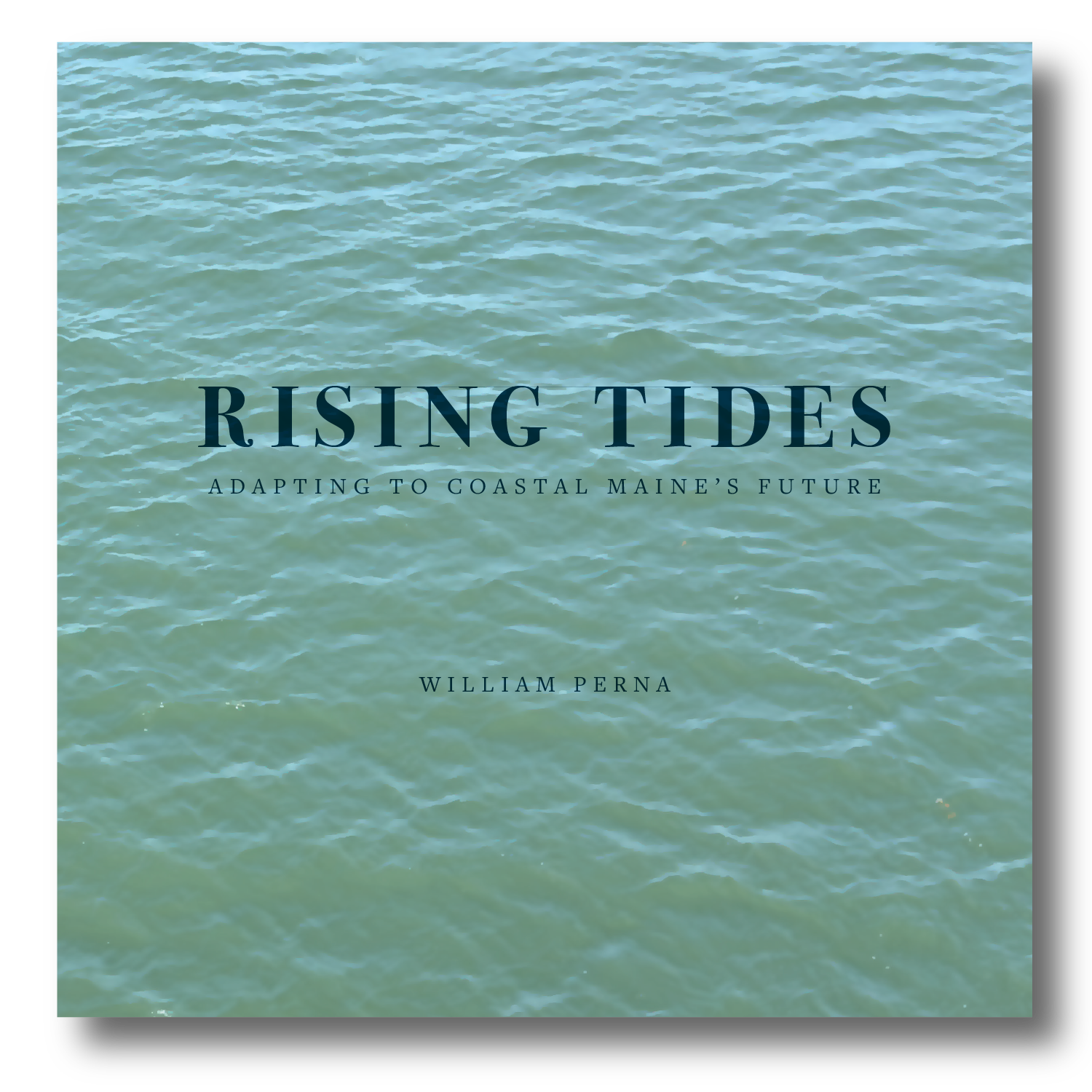
Rising Tides: Adapting to Coastal Maine's Future
$45.00
Hardcover - 10×10
Rising Tides: Adapting to Maine’s Coastal Future captures the memorable voices of Mainers in a rapidly changing world. These include oyster farmers and other aquaculturalists, fishermen, marine biologists and other scientists, and community leaders who are navigating dramatic changes along and off Maine’s iconic coast.
Presenting deep geological, climatological, and human history, in-depth interviews, and other research, the book shows the challenges and opportunities as rising seas caused by global warming, along with sometimes controversial shoreline development, are reshaping ways of life along The Pine Tree State’s storied coast. The vivid changes include shifting fisheries, new industries and markets and the technology that pushes them.
The problems, opportunities, and adaptations in Maine carry lessons for coastal communities around the world. These are global issues described locally through the stories of Mainers on the frontlines. A powerful and timely portrait, Rising Tides is both a warning and an inspiration. It displays the dangers posed by change while also serving as a testament to the ingenuity and determination required not only in Maine but on coasts everywhere.
‘Babbling and strewing flowers’
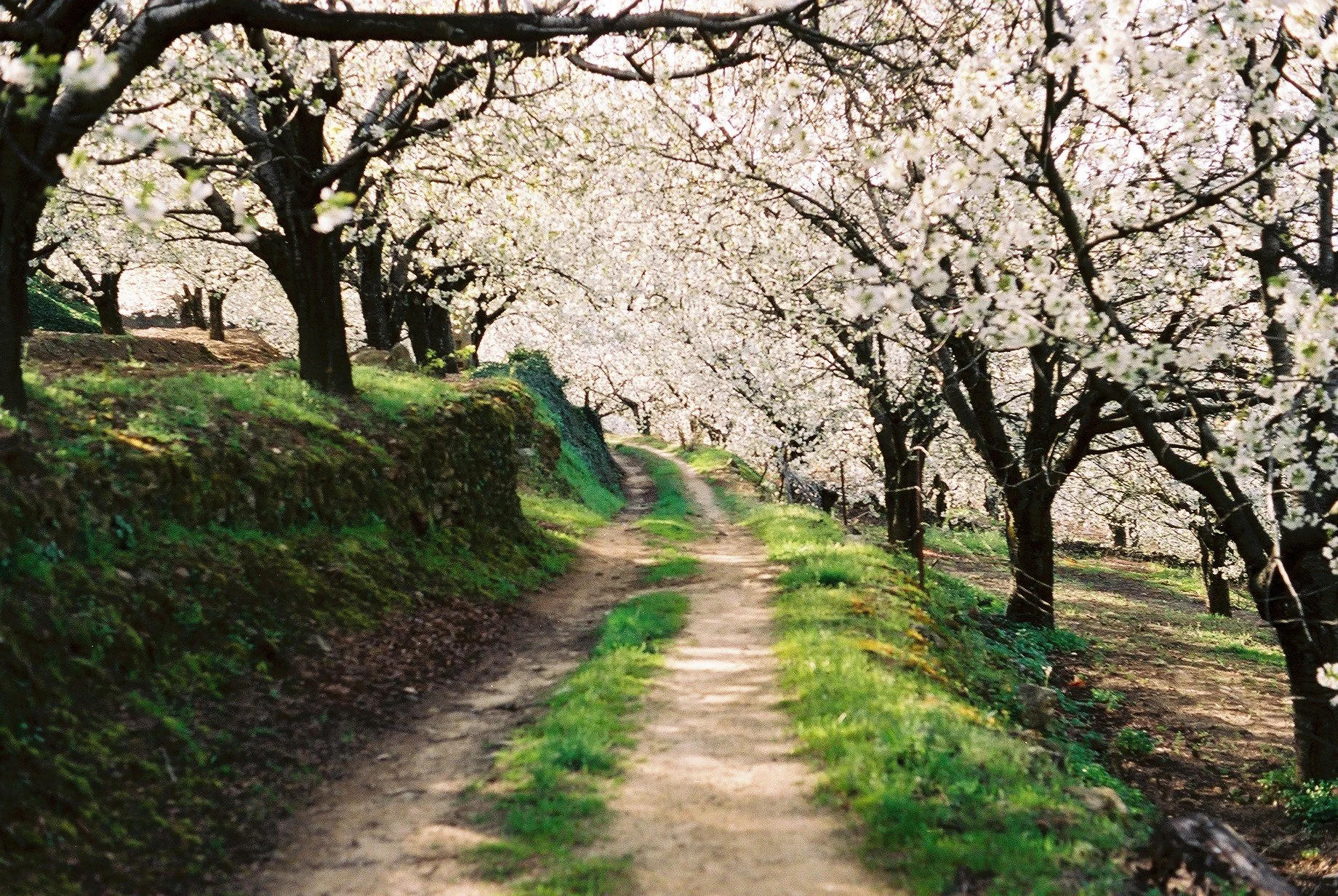
—Photo by Victor Estrada Diaz
To what purpose, April, do you return again?
Beauty is not enough.
You can no longer quiet me with the redness
Of little leaves opening stickily.
I know what I know.
The sun is hot on my neck as I observe
The spikes of the crocus.
The smell of the earth is good.
It is apparent that there is no death.
But what does that signify?
Not only underground are the brains of men
Eaten by maggots.
Life in itself
Is nothing,
An empty cup, a flight of uncarpeted stairs.
It is not enough that yearly, down this hill,
April
Comes like an idiot, babbling and strewing flowers.”
— “Spring,’’ by Edna St. Vincent Millay (1892-1950), American poet. She grew up on the Maine Coast. This poem refers indirectly to the carnage of World War I.
Inspiration from travel

“Waterlilies” (encaustic, color pigments), by Jeanne M. Griffin, who is based in Wells, Maine.
Part of her artist statement:
“Travel plays a large role in my life and, over the years, I have visited close to 100 countries. I am particularly drawn to countries of the Third World and love seeking out and visiting with local artists. I have always been fascinated with their weavings and paintings and the textures and patterns they create using various tools and materials….”
“My travels expose me to many ideas and thoughts which percolate in my head and eventually find their way into my work. {For example} I have incorporated printing with Indonesian tjaps (more commonly used in batik printing) combined with encaustic medium and color pigments to produce each one-of-a-kind painting. This is one way of keeping my wonderful memories of these beautiful countries and interesting people alive.’’
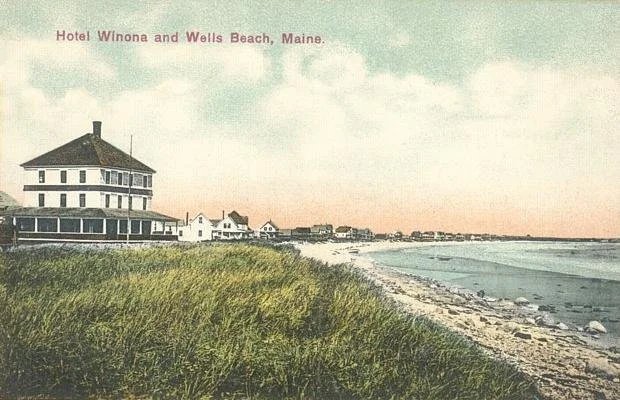
Wells has long been a popular summer resort, as you can see in this 1908 postcard. Founded in 1643, it is the third-oldest town in Maine.

Tidal salt marsh at the Rachel Carson (1907-1964) National Wildlife Refuge, in Wells, named after the prolific writer, marine biologist and conservationist best know for the books Silent Spring and The Sea Around Us. She spent summers on the Maine Coast.
‘What Maine was really like’

‘‘There were no curtains. Light saturated the immaculate rooms. In the kitchen was a wood-burning stove, an iron sink, gray-white walls, a basket of new peas. In lieu of electric lights, glass oil lamps were lined up, waiting for evening. ‘It looked like what Maine was really like, just as they found it,’ Wyeth remembers.’’
— Richard Meryman, on painter Andrew Wyeth’s (1917-2009) first visit to Maine, in 1939, in Andrew Wyeth: A Secret Life (1996)

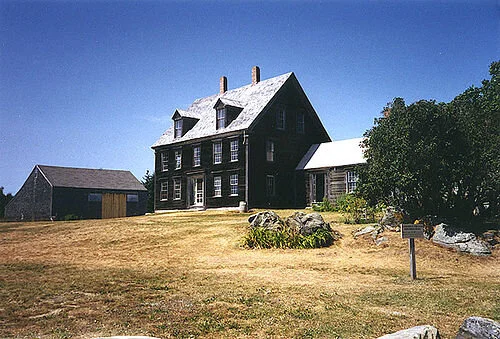
“Christina’s World’’ (tempera), set in Maine’s Midcoast and probably Wyeth’s most famous painting. He divided his time between his summer place in Cushing, on the Maine Coast, and Chadds Ford, in southeastern Pennsylvania. Below is the house portrayed in the painting.
A new crop
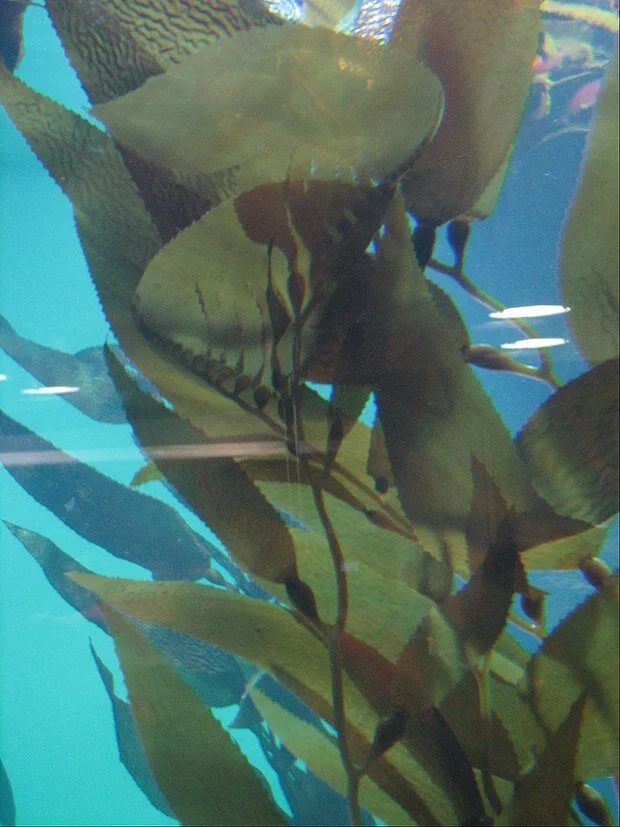
Giant kelp before harvesting
From Robert Whitcomb’s “Digital Diary,’’ in GoLocal24.com
We New Englanders think more about lobsters as we head into summer. But they’re disappearing from much of the southern New England coast, apparently mostly because of warming waters. Waters are warming in the lobster heartland of the Maine Coast, too, but not too much yet to slash harvests. At the same time, key finfish species are declining. So to find other ways of continuing to work on that storied coast, some former and current lobstermen and other fishermen are getting into oyster and other shellfish aquaculture, and now kelp, which is sold as a very healthy food.
The kelp farms have another attribute:
Our fossil-fuel burning is loading carbon dioxide into the atmosphere, much of which of it then goes into the oceans, where it makes the water more acidic. Among other damage, this harms the development of the shells of oysters, and hurts lobsters, too. But kelp farms reduce the acidity of the water around them, creating sites not only better for shellfish but also for other creatures.
Round and round
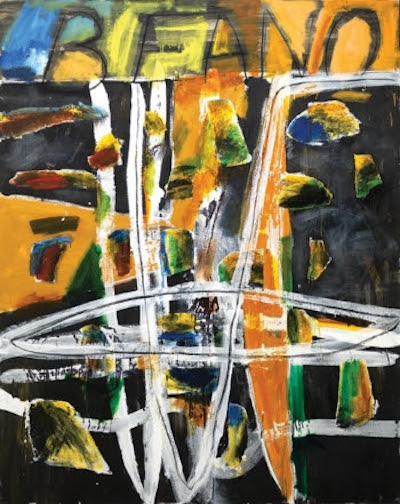 "Back and Forth'' (oil on canvas), by JOHN WALKER, in the show "John Walker: New Works,'' at the Addison Galleries, Boston Nov. 7-21.
"Not since John Marin burst upon the American art scene in the 1920s and 30s have paintings of Maine succeeded to a comparable degree in setting a new standard for pictorial innovation in the art world at large."
-- Hilton Kramer, "Painter John Walker Evokes Maine Coast," New York Observer, Aug. 9, 2004.
xxx
Whoever wins the election on Tuesday, it can be said without reservation that the public, in all its confused glory, will, as of January, blame the newly elected officials for doing exactly what the public complained that the tossed-out officials were doing.