
Vox clamantis in deserto




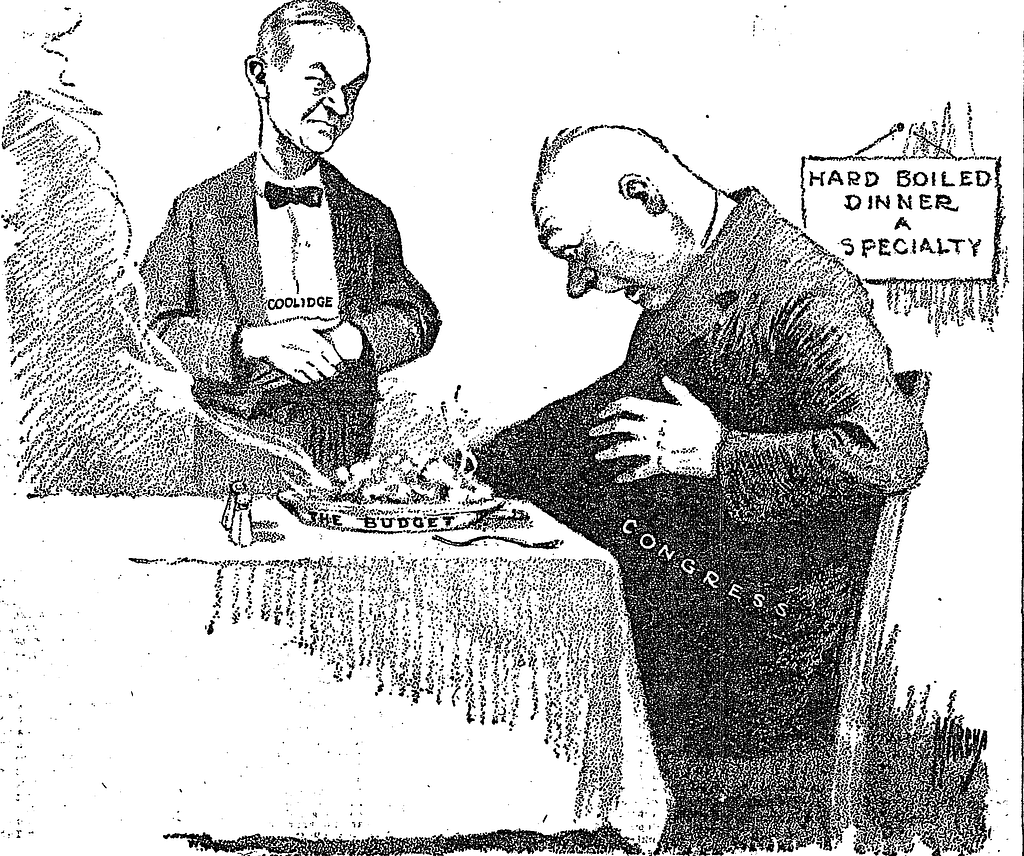




Chris Powell: Behind chronic school absenteeism

MANCHESTER, Conn.
Chronic absenteeism in Connecticut's schools fell substantially in the school year just ended, state officials announced last week. But their data show the problem remains at what should be appalling levels in many places, especially the state's cities, and the official diagnosis of the problem is incomplete.
Students are classified as chronically absent if they miss 10 percent of their school days, and the new state average for chronic absenteeism is down to 16.4 percent. Officials attribute the decline in part to the state's Learner Engagement and Attendance Program, in which school employees visit the homes of chronically absent students, inquire about problems, and offer help. It's basically social work. This is said to address the "root causes" of chronic absenteeism.
As might be expected, the new data shows that chronic absenteeism correlates heavily with a community's poverty. Hartford's rate is 33 percent, New Britain and Bridgeport are at 30 percent, New Haven 28 percent Norwich and New London 25 percent and Waterbury 22 percent. In turn, poverty correlates with family dysfunction and demoralization.
But Connecticut and the country have always had poverty, and today's high levels of chronic absenteeism are new. So what changed?
First, government stopped enforcing student truancy laws and policies. Today there are no penalties for parents who fail to see that their children get to school.
And second, educational standards were eliminated and replaced with social promotion. Now there are no tests for advancement and graduation. Nearly all students are advanced from grade to grade and given high school diplomas irrespective of learning, and they and their parents know this. While schooling grows ever more expensive to taxpayers, there are no reprimands or penalties for treating it with contempt.
So why should the demoralized attend school consistently if advancement and graduation will follow anyway if they don't? This policy may be the biggest "root cause," but educators and elected officials don't dare to address it.
* * *
Two recent columns of mine were criticized falsely last week in replies by elected officials.
The first column, questioning whether southeastern Connecticut is ready for the massive expansion of employment for submarine construction at Electric Boat, was criticized in an essay by U.S. Rep. Joe Courtney. Courtney's essay stressed the region's efforts with workforce training. But my column never cited workforce training. Its references to unpreparedness involved only housing and transportation.
The second column, criticizing Connecticut's new law restricting police officers from getting near polling places, was denounced in an essay by Stamford state Rep. Matt Blumenthal.
Blumenthal wrote: "Powell writes that our new law 'forbids police officers from getting within 250 feet of a polling place.' Not so. State and local police can do their jobs just as they always have. The law's catch-all exception says just that: All a department or officer needs is the permission of the moderator or the secretary of the state."
But the column explicitly acknowledged the exception. It said: "The law forbids police officers from getting within 250 feet of a polling place unless they are responding to a serious emergency or their presence is approved by an election moderator." Blumenthal deceptively omitted the latter part of that sentence.
Continuing, Blumenthal claimed that the new law has no application to state and local police. He wrote: "What does the law actually do? It stops federal agents and troops -- people with no lawful role in Connecticut elections -- from being stationed at polling places to intimidate voters."
But Blumenthal simultaneously noted that Connecticut Secretary of the State Stephanie Thomas issued state and local police a partial exemption from the law. She wouldn't have done that if the law didn't apply to state and local police, an application Blumenthal now strangely denies.
In any case state law can't restrict the disposition of federal agents and troops, since the Constitution establishes the supremacy of the federal government in such matters. Otherwise General Sherman never would have taken Atlanta and the South would have won the Civil War with a simple court injunction.
There was nothing inaccurate or misleading about either column.
Chris Powell has written about Connecticut government and politics for many years (CPowell@cox.net).
Chris Powell: Conn. judge dismantles due process by impaneling anonymous jurors

People in jury pool waiting to be selected or rejected for duty.
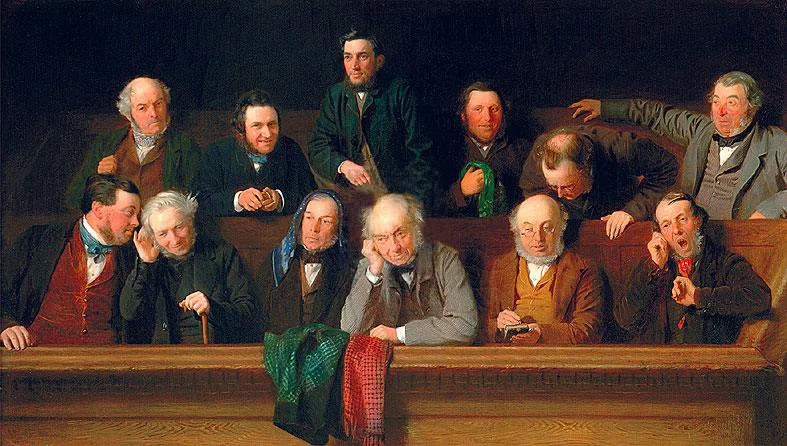
“The Jury,’’ an 1861 painting by John Morgan, of a British jury, all of whom then had to be men.
MANCHESTER, Conn.
Even the Trump administration hasn't yet tried to mangle the criminal-justice system and civil liberties as much as a judge in Meriden (Conn.) Superior Court is trying to do. Where are Connecticut's "No Kings" people when they're needed close to home?
In what seems unprecedented, at least outside of totalitarian jurisdictions, the judge, Maria del Pilar Gonzalez, has decided to empanel a jury in a murder case while concealing the identities of juror candidates from the defense and the public.
Judge Gonzalez isn't doing it for fun. She aims to keep the defense and the public ignorant of juror identities because the prosecution has accused the defendant of conspiring to threaten jurors during his first prosecution for murder, which ended in a mistrial in 2024. The accusation arose from a statement given by a man who was imprisoned with the defendant, but the defendant has not yet been tried on the charge and there seems to be no evidence that any juror was threatened.
So with little evidence the judge presumes that the defendant is probably guilty of jury tampering and she wants to guard against it happening again.
But the judge would be wrong even if the defendant had tried to corrupt his first jury. For the identification of jurors to the defense and the public in criminal cases is basic to due process of law. Jurors must be screened against prejudice and improper motives, and they must be accountable for their service. That can't be achieved if their identities and backgrounds are concealed when jury candidates are examined by the court. If Judge Gonzalez's decision stands, the jury in the murder case she is trying could be rigged against the defendant and no one besides the judge and prosecutor might know.
If there is a credible threat to a jury's integrity, the court can guard against it by other means, as by surveying jurors individually in private or even giving them police protection. Empaneling anonymous jurors compromises justice as much as threatening, blackmailing, or bribing jurors does.
The murder defendant's lawyer has filed an emergency appeal with the state Supreme Court. Meanwhile Judge Gonzalez plans to continue selecting jurors without identifying them. The Supreme Court urgently should undo this secrecy rather than risk the time and expense of appeals that surely will follow a verdict rendered by an anonymous jury. It would be astonishing -- and terrifying -- if eventually a state or federal appeals court didn't punt Judge Gonzalez's decision back to medieval times.
* * *
A NEEDLESS EXPERIMENT: With Gov. Ned Lamont’s signature on the legislation last month, Connecticut began its experiment with what has been called "no-excuse absentee voting." People now may vote by mail for simple convenience; they no longer need to assert a reason such as illness, disability, religious observance, military service, or absence from the state.
The more absentee voting there is -- the more that people are separated from the direct casting of their ballots, the more that people other than election workers handle their ballots -- the greater will be the risk of election fraud. But the governor and General Assembly have decided that the risk is small and worth taking.
Another risk has gotten less consideration -- the risk that opening tens of thousands of additional mailed ballots and running them through tabulation machines will delay the calculation and announcement of results and present opportunities for adjusting the results in political emergencies. Even now Hartford and Bridgeport, always the repositories of huge Democratic pluralities, seem unable to report their final results by dawn the day after the election.
With luck "no-excuse absentee voting" will start slow. People have to apply for absentee ballots in person at town hall or by mail, and then complete and mail the ballot, and for some people that may be more trouble than going to their polling places, especially since Connecticut now provides 14 days of early voting in person so that Election Day crowds can be avoided. That’s all the convenience and security an election needs.
Chris Powell has written about Connecticut government and politics for many years (CPowell@cox.net).
Chris Powell: Raising taxes on Connecticut’s rich just an excuse for plunder

Copper Beech Farm, formerly the Lauder Greenway Estate, is a private property in Greenwich, Conn.
MANCHESTER, Conn.
Connecticut is already nearly the highest-taxed state in the country, as well as nearly the most expensive (in part because its taxes are so high), but on April 15 -- the deadline for submission of state and federal tax returns -- a hundred people from what calls itself the Connecticut for All coalition gathered at the state Capitol to urge state government to raise taxes on the rich.
When it showed up at the Capitol in March, the Connecticut for All coalition was supporting legislation to increase state government's obstruction of federal immigration-law enforcement. That's what Connecticut for All means by "all" -- open borders admitting all illegal immigrants -- as if the state doesn't already have a desperate shortage of housing and expensive schools whose costs are rising in part because they must enroll so many illegal immigrant students who don't speak English.
Connecticut for All's arguments for higher taxes on the rich are as flawed as its arguments for open borders -- especially its argument that taxes should be raised on the rich because some lower-income people pay a higher share of their income in state and local taxes than rich people do.
As is the case with federal taxes, the rich also already pay the overwhelming majority of state and local taxes in Connecticut.
Poor people pay no income taxes and often get various income supports from the government, like earned-income tax credits, medical insurance, and food and housing stipends, which help refund the taxes they pay indirectly -- sales taxes, municipal property taxes (paid through their rents), and federal and state energy taxes.
Besides, the percentage-of-income argument doesn't accurately indicate the practical burden of taxes.
Twenty percent of the annual income of someone earning minimum wage in Connecticut -- $16.94 per hour or $35,000 per year -- is $7,000.
But just 19 percent of the annual income of someone earning $350,000, who is subject not just to sales and property taxes, as the poor are, but also to state and federal income taxes, is $66,500, more than nine times as much.
Who really bears more of the burden of government?
Yes, inflation -- currency devaluation -- benefits the wealthy, since they own property and stocks, whose value rises even as inflation ravages the poor, who own little property. But then why do Democrats, supposedly the tribunes of the poor, like and perpetuate inflation even more than Republicans do?
Maybe what is most disgraceful about the clamor for raising taxes on the wealthy is its sense of entitlement, as was expressed by a college instructor at the Connecticut for All rally at the Capitol. . "It's time to tax the wealthy and the ultra-wealthy and redistribute those funds to the hard-working people of Connecticut," she said.
Of course many wealthy people are not "hard-working" at all but mere beneficiaries of inherited wealth or government patronage. But many poor people aren't so "hard-working" either but collectors of welfare benefits, people who are already beneficiaries of much income redistribution. Poverty is not virtue.
Yes, taxation is always a mechanism of income redistribution, but its original objective in this country was the maintenance of a decent government and a prosperous society. Contrary to the suggestion of that college instructor who spoke at the Capitol, the tax system was not originally meant for plunder, and it should not be regarded as a device for making one's living from the sweat of others. That attitude has produced vast waste and corruption in government.
Raising taxes on the rich in Connecticut isn't yet a matter of fairness; the people advocating it are not trying to calculate mathematically what tax rates are fair. They just want government to control and spend more money.
All able-bodied people, no matter how poor, should share and feel the burden of government, for as was said by a great liberal authority from a century ago, Theodore Roosevelt, the first duty of a citizen is not to vote himself more government subsidies but to pull his own weight.
Chris Powell has written about Connecticut government and politics for many years (CPowell@cox.net).
Conn. physicans step up their medical-debt suits against patients

This article is a Kaiser Family Health News and Connecticut Mirror collaboration
BRISTOL, Conn.
Many hospital systems in Connecticut have stopped suing their patients over unpaid bills, stung by criticism about the harm caused by aggressive collection tactics.
Have you been forced into debt because of a medical or dental bill? Have you had to make any changes in your life because of such debt? Have you been sued or pursued by debt collectors for a medical bill? We want to hear about it.
But physicians, dentists, ambulance companies, and other health care providers are still taking their patients to court, a Connecticut Mirror-KFF Health News investigation of state legal records shows.
Lawsuits by doctors and other nonhospital providers now dominate health care collections in Connecticut, the records show, accounting for more than 80% of cases filed against patients and their families in 2024.
That’s a major reversal from just five years earlier, when hospital system lawsuits made up three-quarters of health-related collection cases in the state’s courts.
The shift is moving medical debt collections into a less regulated realm. Most hospitals, because they are tax-exempt nonprofits, must make financial aid available to low-income patients and follow federal regulations that limit aggressive collection activities. Other medical providers, such as private medical groups, are generally exempt from these rules.
The lawsuits are typically over bills of less than $3,000, but the impact on patients can be devastating. Lawsuits are among the most ruinous byproducts of a health care debt problem that burdens an estimated 100 million people in the U.S.
Lawsuits can lead to garnished wages, liens on homes, and hundreds of dollars of added debt from interest and court fees. They also pile additional financial strains on struggling families, prevent patients from getting needed care, and sap trust in medical providers.
“It’s really messed up,” said Allie Cass-Wilson, a nurse in Bristol, Connecticut, who was sued over a $1,972 debt by an OB-GYN practice where she’d been a patient years earlier. “How can they do that to people?” She did not contest the lawsuit, court records show.
Cass-Wilson, who is 36 and lives in a small apartment just off an expressway on-ramp, said she learned of the outstanding debt only when she was sued. When she tried making an appointment, she said, she was told her doctor wouldn’t see her. “They said I was blacklisted,” Cass-Wilson said. “I was so confused. I couldn’t believe that my medical provider let my care be interrupted like this.”
Cass-Wilson ultimately sought medical care elsewhere.
Radiologists, Dentists, Ambulances
Overall, CT Mirror and KFF Health News identified more than 16,000 health care-related debt cases in Connecticut courts from 2019 to 2024. The database was assembled from online court records with the help of January Advisors, a data science consulting firm that helped extract and sort the data.
Over the six-year period, most of Connecticut’s more than 25,000 licensed physicians and dentists did not pursue patients in court for outstanding balances.
But records show that more than 400 medical providers, including several hospital systems, sued their patients. Among those filing lawsuits were radiologists, anesthesiologists, eye doctors, podiatrists, allergists, and pediatricians.
Dentists, periodontists, and other dental providers filed more than 1,000 lawsuits against patients. And ambulance companies sued more than 140 people.
Med-Aid, a company based outside New Haven, Conn., that provides orthopedic braces and other medical supplies to patients, sued more than 400 people, the court records show. The company’s president, Frank Dilieto, did not respond to repeated interview requests.
Cass-Wilson was sued by Briar Rose Network in Bristol. It’s a member of a large network of OB-GYN practices across Connecticut called Physicians for Women’s Health. The network’s members sued close to 100 patients in 2024, records show.
Paula Greenberg, CEO of Women’s Health Connecticut, a private equity-backed company affiliated with Physicians for Women’s Health that manages business operations for the network, said the lawsuits represent a small fraction of the more than 300,000 patients the network sees every year.
“This is an organization committed to patients,” Greenberg said. She noted that the group offers options to help patients pay, including installment plans and financial aid.
Geoffrey Manton, president of Naugatuck Valley Radiological Associates, said his practice also will work with people who say they can’t pay. But, he said, patients sometimes stop responding to their bills.
“Hiding from your problems isn’t going to solve them,” Manton said. “If we didn’t take any action, there could be that person that is in that late-model Mercedes that just chooses not to pay any bills.” The group sued more than 125 patients from 2019 to 2024, according to the court records.
Many medical providers say that aggressive collections stem from the growing prevalence of high-deductible health plans that leave patients with thousands of dollars of bills before their coverage kicks in.
Greenberg and Manton said each of their physician groups must collect. “This is a business,” Greenberg said. “We have to look at our operating costs.”
Critics of medical collection lawsuits note that the patients are typically sued over relatively small debts that are likely to have little impact on multimillion-dollar medical practices.
The average patient debt that members of Physicians for Women’s Health sued over in 2024 was less than $1,100, court records show. The physician group’s annual revenues are typically in the tens of millions of dollars, according to Greenberg.
Even relatively small debts — which often include interest — can place substantial burdens on families struggling to keep up with their bills, especially while dealing with a serious illness, patient advocates say.
“We don’t have a realistic choice in using health care,” said Lisa Freeman, who heads the Connecticut Center for Patient Safety and has advocated for patients struggling with medical bills. “To then get sued for it, when people have less and less funds available for anything extra, that’s very disheartening.”
A Stroke, Then a Lawsuit
Matthew Millman, 54, lost his job as an IT support worker after having a stroke. Then Meriden Imaging Center sued him over an $1,891 bill.
Millman and his wife said they tried to explain their financial situation to the center, which is affiliated with Midstate Radiology Associates, a large physician group that operates imaging centers and doctors’ offices across Connecticut.
“It was very frustrating,” said Millman, who lives in an aging apartment owned by his wife’s family in New Britain. Millman, his wife, and their teenage daughter are barely getting by on his two part-time jobs — one bagging groceries, the other helping homebound seniors. Together, the jobs pay about $1,500 a month, he said.
The imaging center, after winning the collection case against Millman, tried to garnish his wages, though that was unsuccessful because Millman had lost his IT job.
“It’s all about money,” Millman said, shaking his head. “If you are trained in helping somebody with their health, it shouldn’t be about the money first. It should be about their health.”
Court records show that Midstate Radiology, Meriden Imaging Center and affiliates filed more than 1,000 collection lawsuits against patients from 2019 to 2024, making them the most litigious nonhospital providers in the state. As is common in medical debt lawsuits, the plaintiffs prevailed in most cases, records show.
Midstate president Gary Dee, a radiologist, didn’t respond to emails and messages left at his West Hartford office.
Across town from Millman’s apartment in New Britain, Joseph Lentz lives in a cramped apartment with his wife and daughter. He used to oversee operations at a Boy Scout camp but is now unemployed. Lentz lost his job during the pandemic. The family home went into foreclosure, he said.
In 2023, Orthopedic Associates of Hartford sued Lentz over a $3,644 bill the practice said he owed after having shoulder surgery in 2018.
‘
“I’d pay it if I could, I guess,” said Lentz, 59. “But I don’t even know where next month’s rent is coming from. I’m trying to climb out as best I can. I guess this is just one more thing to shovel in.”
The orthopedic group filed more than 580 lawsuits against patients from 2019 to 2024, prevailing in most, records show.
The medical group declined interview requests. But chief executive David Mudano said in a statement: "As an independent physician practice, we strive to balance compassion for patients with the financial responsibility required to sustain our practice.”
Old Debts and Disputed Claims
Lentz, who did not contest the lawsuit, said he has no reason to doubt he owes the debt. But in many cases reviewed by CT Mirror and KFF Health News and in interviews, patients being sued questioned the accuracy of their medical bills, citing care they thought health insurance should have covered or, in some cases, bills for services they never received.
This reflects broader problems with aggressive collection tactics like lawsuits when disputes over the accuracy of medical bills and delayed or denied insurance claims are so widespread in American health care.
A 2022 report by the federal Consumer Financial Protection Bureau found that nearly half of the medical debt complaints fielded by the agency involved bills that consumers said were erroneous in some way or that consumers said they’d already paid.
“We know people are billed incorrectly,” said Lester Bird, who studies debt collection lawsuits at the nonprofit Pew Charitable Trusts. Bird noted that courts are ill equipped to sort through disputed medical charges or insurance claims, especially when there is little documentation in most debt collection lawsuits.
“It’s complicated before it gets to the courts,” Bird said, “and it’s very complicated when it gets into the courts.”
This can create headaches for physicians and other providers. But billing problems ultimately affect patients and their families most, said Connecticut state Sen. Saud Anwar, a Democrat who is also a physician. “Patients are left to deal with it.”
Andrew Skolnick, an attorney in Milford, outside New Haven, was sued in 2023 by an imaging center where his wife had received services in 2020.
Skolnick said that when the couple, who were covered through his job-based insurance, originally received the bill from Diagnostic Imaging of Milford, he tried to tell the imaging center it had submitted the claim to the wrong insurance plan, but he said they wouldn’t speak with him.
The center later filed the lawsuit, alleging he owed more than $2,000, plus almost $300 in interest.
Despite interview requests, officials at Diagnostic Imaging of Milford did not comment for this article.
Unlike most patients who are sued, Skolnick had the resources and expertise to contest the suit. He said he offered to pay what would have been his responsibility under the plan if the imaging center had filed his claim correctly. He ultimately settled for $1,700, court records show.
“It wasn’t a tremendous amount, but I knew that they had made a mistake,” Skolnick said. “The system is not working.”
More Protections?
Anwar, the state lawmaker and physician, expressed concern that lawsuits undermine patients’ faith in their doctors.
“It’s a sacred relationship,” he said. “If your physician, who is taking care of you, is suing you for money, that’s a problem.
Many hospitals, facing bad publicity from suing patients, have stopped taking patients to court over unpaid bills. Hospital collection lawsuits identified by CT Mirror and KFF Health News in Connecticut court records plunged from more than 4,900 in 2019 to fewer than 300 in 2024.
Also, in recent years, several states, including Connecticut, have expanded protections for patients with bills they can’t pay.
Connecticut now bars medical debt from consumer credit reports, and legislators are pushing to get hospitals to provide more financial aid to patients. Other states have restricted the use of wage garnishment and property liens to collect medical debt.
But state efforts to rein in aggressive medical debt collections have mostly focused on hospitals. That may need to change, said Connecticut state Sen. Matt Lesser, a Democrat who co-chairs the legislature’s Human Services Committee.
He is a key backer of a bill introduced this year that would bar hospitals from billing patients who receive public benefits like food assistance or who make less than twice the federal poverty level, about $32,000 for an individual.
The restriction would not apply to bills from physicians and other nonhospital providers, however. “We may have to go bigger if that’s where the heart of the matter is,” Lesser said.
Connecticut Gov. Ned Lamont, a Democrat who spearheaded an initiative to cancel medical debt for more than 150,000 state residents, also expressed concern about physicians suing the people in their care.
“Everyone should do the right thing by patients,” he said.
Analyzing Conn. Health Care Debt Collection Lawsuits
How often do health care providers sue patients over unpaid bills?
In most states, that’s nearly impossible to answer because courts don’t typically identify which debt collection lawsuits involve a medical debt versus other kinds of debt, such as rent, credit cards, or cellphone bills.
But Connecticut is different. Debt collection cases filed in small-claims court for unpaid medical or dental bills must be classified as health care debt. We worked with the data science consulting firm January Advisors to pull these cases from the Connecticut court database and analyze them. (January Advisors has worked with nonprofits and researchers across the country to collect debt collection data from state courts. The firm did not have any editorial input in our project.)
We started with health care collection cases filed in small-claims court from 2019 to 2024. But this covered only cases involving debts smaller than $5,000. We also wanted to know about cases in which providers sued for bills exceeding $5,000. Connecticut courts don’t assign a “medical” category for large-claim cases. So we pulled all large-claim records for any plaintiff — hospital or nonhospital provider — that appeared in medical small-claims cases. We also included cases with plaintiffs that didn’t appear in that dataset but had common medical terminology in their names, like “hospital” or “DDS.”
We then went through each case manually to confirm that the plaintiff was a medical or dental provider. We determined whether the provider was part of a larger hospital or physician group. And we categorized each plaintiff by a provider type (e.g., hospital system, dental, physician group).
In some cases, the data we pulled was incomplete, so we looked up the court records online and manually entered the information into our database. The Connecticut Judicial Department purges case records from its online portal after a certain amount of time. In those cases, we asked the agency to provide summonses and claims so we could manually enter the case information into our database.
We removed cases with out-of-state defendants or out-of-state plaintiffs and any cases in which missing records made it difficult to confirm information about the provider.
Chris Powell: Tax credits for dairy cows and journalists?

Trying to keep this Holstein happy.
MANCHESTER, Conn.
Connecticut's dairy farmers, long having suffered in a marginal business and having been reduced in numbers from about 800 in the 1970s to only 80 today, say they are on the brink of failure and require a subsidy from state government to survive.
Other states, including Massachusetts, provide what Connecticut's dairy farmers want: a tax credit to offset low milk prices. So such legislation has been proposed in the General Assembly by state Sen. Stephen Harding, R-Brookfield, whose district is rural and has many farms.
The farmers estimate that collectively they are likely to lose $20 million this year, so the legislation's tax credit would cover that loss.
Of course dairy farms aren't the only businesses in trouble in Connecticut. The state is nearly the highest taxed in the country and might be losing population if not for illegal immigration. These days hardly a business enters or expands in the state without seeking some sort of financial incentive or tax abatement from state or municipal government.
Struggling businesses that receive no such subsidy might look at the proposal to subsidize dairy farms and wonder: What's so special about them?
Cows may be cute and dairy farms quaint, but the legislature should ask that question and, if it approves the subsidy legislation, provide a clear answer to it.
For could Connecticut really not survive without dairy farms? Would it be wrong to let Massachusetts and other states subsidize the milk consumed in Connecticut?
Farming generally is also a marginal business in Connecticut, so if dairy farms get a state subsidy, why shouldn't other farms get one too?
Legislators may have noticed -- and enjoyed -- the sharp decline of the news business in the state in recent years. Local news, the most expensive to produce, since its potential audience is smallest, has nearly vanished. The state's newspapers are shadows of their former selves with less local news than ever. Few radio stations in the state have reporters anymore, and television news increasingly emphasizes weather as if its viewers live without windows.
Last year there was some talk in the legislature about subsidizing the news business in the hope of reviving it. Nothing was done, but if cows can get tax credits, anything serving the public interest more than chocolate milk might have a fair claim as well.
After all, if every dairy farm in Connecticut closed, the state still would get plenty of dairy products elsewhere. For the state's dairy farms aren't as crucial to dairy products in Connecticut as the trucking industry is.
But if Connecticut's news organizations disappear, no one in other states will step in to provide the missing news. Indeed, most news organizations in other states are in as much trouble as Connecticut's are, and for the same reasons.
This doesn't mean that government subsidies for news organizations are a good idea. Government money is inevitably compromising, and defining news organizations for tax purposes would be a challenge. For journalism is a constitutional right, not a profession -- a right anyone can exercise at any time with no more capital than a pen, a pad, and an Internet site or e-mail provider.
Indeed, state policy might be of more help to news organizations not with subsidies but with schools that made their students more literate, more familiar with history and government, more civic-minded, and less full of self-esteem after 13 years of social promotion.
The only people who read newspapers and follow news organizations anymore are people who care about their communities, want to know what is going on in them, and want the authorities to be held to account -- and many if not most people today no longer care about that. More than half Connecticut's eligible adult population didn't vote in the last election for governor. In such an environment there is little future for journalism, civic-mindedness, and democracy itself.
Government subsidies for failing industries are horrible precedents, inviting more special pleading and subsidies. But maybe every Connecticut journalist will have to rent a cow.
Chris Powell has written about Connecticut government and politics for many years (CPowell@cox.net).
Chris Powell: Conn. public Schools couldn’t meet new home-school standards

MANCHESTER, Conn.
In principle there's nothing wrong with the basics of the home-schooling legislation that got a public hearing before the General Assembly this week. The bill would require people to notify local officials in person when they withdraw their children from public school to home-school them, to bring their home-schooled children to some sort of wellness inspection once a year, and to provide evidence that the children are learning.
But the legislation should prompt howls of ironic laughter.
The legislation has arisen out of the case of an abused girl who was murdered by her family after her abuse and murder were concealed by a claim of home-schooling that fooled the state Department of Children and Families. It's fair to worry that claims of home-schooling can conceal child abuse or worse.
Unfortunately the howling has to start when one notices that child neglect and abuse in Connecticut are almost infinitely more frequent among children being public-schooled, children about whom state and municipal governments seldom do anything.
Thousands of public school students in the state -- almost 20% of them -- are chronically absent from school, but there are no longer any penalties for them or their parents, so the problem endures. In cities the chronic absenteeism rate is closer to 25%. When those children are absent it's not because they are being home-schooled but because their parents are negligent.
A few weeks ago it was reported that Hartford's schools have changed their policy and now accept young children who are not toilet-trained. School staffers were instructed to clean and re-diaper them. This change of policy indicates wholesale child neglect in the city, but no one advocating the new accountability requirements for home-schooling has taken note of it. Nor have the state Education Department and the Department of Children and Families.
Requiring parents of home-schooled kids to produce evidence of learning may be the biggest howler. For Connecticut's public schools have no such requirement for their own students. Social promotion is policy throughout the state, with advancement from grade to grade and graduation achieved without having to learn anything except how to stash your cell phone in a Yondr pouch.
Two years ago Hartford's school system was exposed for having graduated a young woman who was illiterate. She is unlikely to have been the only such graduate in Hartford or the rest of the state that year. The city's school superintendent and the state education commissioner promised investigations but no explanation was produced and no state legislator has ever demanded one.
Indeed, while the failures of public education in Connecticut practically scream for investigation, the General Assembly is deaf to the problem.
Why?
First, it's because the people who most deserve reprimanding -- neglectful parents -- are among the legislators' own constituents. There are many in nearly every legislator's district. The law should hold them to account. But standards are falling throughout society, and politics in Connecticut lacks the courage to restore them.
And second, legislators overlook the failures of public education because an examination would discomfort teachers and their unions. Teachers aren't to blame for child neglect and abuse and chronic absenteeism; they see Connecticut's social disintegration most intimately and must play the hands they are dealt. But teachers are to blame for much of public education's unaccountability -- binding arbitration of union contracts, the secrecy of teacher evaluations, the impossibility of firing inadequate teachers, and hostility to competition in education.
That hostility to competition in education may be the bigger part of the legislative campaign against home-schooling. Legislators know that if they make trouble for home-schooling parents, they will win political points, endorsements, and contributions from teachers and their unions, Connecticut's most influential special interest.
So instead legislators scapegoat the home-schoolers, who probably get far better results with their students than the public schools do. Some proficiency testing could settle the matter but Connecticut practically forbids proficiency testing in public schools, especially at graduation, presumably because the results would be terrifying. Taxpayers mustn't know the results but instead just keep throwing money.
Chris Powell has written about Connecticut government and politics for many years (CPowell@cox.net).
Chris Powell: Bribing Conn. voters won’t lessen poverty

Demonstration in Washington, D.C.
- Photo by Djembayz
MANCHESTER, Conn.
Connecticut Gov. Ned Lamont's address this week welcoming the General Assembly back to work was reminiscent of the old lament about election years -- that people in a democracy are easily bribed with their own money.
Such a bribe was the highlight of the governor's remarks -- his proposal to issue “tax rebates," $200 for single people, $400 for married couples. Meanwhile people around the state, most of them associated with the governor's own party, are clamoring for state government to appropriate more money for social needs state government still neglects.
Many of those needs are more compelling than the needs or wants of many of the people who will receive those “tax rebates." But who will be candid about the incongruity?
That is, the “tax rebates" are needed most to help re-elect the regime so that it can hold power for another four years in the name of addressing all those unmet social needs, though those needs seem only to increase as more is spent in the name of alleviating them. Seldom are any problems actually solved.
The governor's address inadvertently acknowledged that poverty has been worsening in Connecticut during his administration.
Once upon a time in Connecticut most parents could feed their children before sending them to school. Indeed, once upon a time most children in Connecticut had two parents. Now many children in Connecticut -- most children in the cities -- have only one parent, if that, and many arrive at school unfed and distracted by hunger. It's a big problem. So the governor would have all public schools provide free breakfasts.
Not long ago most working people in Connecticut had jobs requiring a skill level, and their compensation included adequate employer-sponsored medical insurance. Not anymore. Today many young people in Connecticut graduate from high school largely uneducated and qualified only for menial work. As a result more adults are working in minimum-wage jobs once considered entry-level. So the governor wants state government to offer a “public option" program of medical insurance for people who don't qualify for Medicaid, insurance for the destitute.
The governor said he will appoint a special commission to study the funding of elementary and high school education. It would have been better to study why poverty is worsening. For everyone in state and local government already knows that funding lower education is always a tug of war between state taxes and municipal property taxes, with most of the money ending up with members of teacher unions, who control most municipal spending by virtue of the binding arbitration of their contracts.
Nearly every legislative session tinkers with school funding formulas without ever improving student performance. Formula tinkering is just the illusion of concern and action, since student performance is not a matter of per-pupil spending at all, but almost entirely a matter of per-pupil parenting, which can't be discussed though it is at the center of the poverty problem.
The governor noted that Connecticut's high housing prices are impoverishing people who don't own their housing. But he seems to expect far more housing construction than is likely to result from the state's new law restricting municipal zoning. With 169 cities and towns in charge of housing development, there will be little urgency and accountability. What's needed is a state housing development agency to acquire and take control of the sort of vacant or underused city and inner-suburb properties the governor cited in his address, and to contract for middle-income housing to be built on them urgently.
Instead the other day the governor proposed to apply rent control to apartments owned by out-of-state landlords, a demagogic form of expropriation that will inhibit housing creation.
As most legislative sessions do, the new one will produce a lot more spending, which will be euphemized, as the governor did in his address, as ‘‘investment," a presumption that government spending is always productive. It isn't. After all, as the Lamont administration's most recent scandal has shown, state government lately has “invested" hundreds of thousands of dollars in Hartford Sen. Douglas McCrory's girlfriend.
Chris Powell has written about Connecticut government and politics for many years (CPowell@cox.net).
Chris Powell: Merchants are more honest than Sen. Blumental about debt

In the early 20th Century, the National Consumers League promoted the “Shop Early Campaign". This systematic multi-year publicity campaign used cartoons, letters, editorials, articles and advertisements, sending materials to hundreds of newspapers and retailers across America.
MANCHESTER, Conn.
What would the holidays be in Connecticut without U.S. Sen. Richard Blumenthal warning his constituents about the perils of the season -- dangerous toys, fraudulent business practices, Republicans, and the like? (Poking the Russian bear on its own doorstep has yet to make the senator's list.)
Last week the senator affected alarm about merchants who advertise products available for purchase with deferred payments -- “buy now, pay later" promotions. People who purchase something by agreeing to pay in the future may find that when the bill comes due that their financial situation has deteriorated. Worse, the senator notes, being late with a deferred payment may trigger penalty interest charges.
Of course, anyone who has graduated from high school might suspect these risks. But then maybe the senator understands that many Connecticut high-school graduates can't read, write, and do math at a high school or even an elementary-school level.
In any case the senator overlooks an argument in favor of “buy now, pay later" purchases, an argument that members of Congress especially should understand: inflation and the decline of the value of the U.S. dollar and wages paid in dollars. Amid inflation certain goods -- if not worn out, damaged, or perishable -- may actually increase in value and, when payment has to be made, may be worth more than their original price.
Indeed, Blumenthal misses the great irony in his warning people against deferred-payment schemes: his having been for the last 15 years an enthusiastic supporter of the federal government's own “buy now, pay later" policy.
For the federal government increasingly finances itself with borrowing, and its total debt now exceeds $38 trillion, an unfathomable number.
Government debt is not necessarily bad; it can be productive. But this is a matter of degree, and in recent years the federal debt has gone wild, as suggested by the country's recent severe inflation and the heavy burden of federal government interest payments, estimated at about a trillion dollars annually and rising.
Most of this debt is not for long-lasting capital projects that will benefit the country for decades but for ordinary operating expenses and income supports, with the interest requiring payment far into the future by people who never benefited from the debt.
This is borrowing for current expenses, which used to be considered immoral. But in national politics today, especially among Democrats like Blumenthal, money is believed to be infinite. (Most Republicans know better without acting much better.)
Today in Congress if any Democrat sees a need, actual or merely political, he'll put it into an appropriations bill, and, if he's friendly enough with the ranking Democrat on the House Appropriations Committee, Connecticut Rep. Rosa DeLauro, she'll put it into the next federal budget with no concern about the federal debt, inflation, or interest burdens.
Members of Congress love this system because it lets them distribute infinite goodies, essential or not, and pay for them indirectly, not with taxes but with inflation, a disguised tax few voters understand or can fix responsibility for.
That's why the merchants promoting deferred payments are actually more honest than the senator who is warning his constituents against them.
Stick to a merchant's deferred-payment plan and you'll pay only as much as you signed up to pay. But with the federal government, whose costs are increasingly financed by borrowing, debt monetization, and inflation, you pay now, later, and -- since the debt is never actually repaid at all, but just keeps rising -- you pay for the rest of your life as well for what you get or once got from the federal government, and for what you didn't get but others get or used to get.
So what's really more dangerous -- the toys Blumenthal is scorning, whose small parts a 2-year-old might pull off and swallow or stick in his nose or ear, or a government that, when the kid turns 18, will welcome him into adulthood largely ignorant and unskilled but, as a taxpayer, already heavily mortgaged?
Chris Powell has written about Connecticut government and politics for many years (CPowell@cox.net).
Chris Powell: Designed to prohibit housing affordability

MANCHESTER, Conn.
Perhaps taking a hint from socialist Democrat Zohran Mamdani's successful campaign for mayor of New York City, whose slogan was “A city we can afford," politicians in both parties in Connecticut are taking “affordability" for their own platforms.
Some Connecticut Democrats, including Gov. Ned Lamont, have even attributed their party's success in this month's municipal elections to a supposed commitment to affordability. This is laughable. Far more votes were probably pushed toward the Democrats by the political chaos in Washington than by any achievement in “affordability" in Connecticut, though the six-week partial shutdown of the federal government was an entirely Democratic stunt, not President Trump's doing.
Yes, Connecticut's Democratic state administration hasn't raised taxes much lately, but municipal property taxes still go up because state law and policy determine much of how municipalities spend their money. These days there's not much difference between state and municipal finance.
Greenwich state Sen. Ryan Fazio, a candidate for the Republican nomination for governor next year, pressed the “affordability" theme in response to Lamont's declaration of candidacy for a third term.
“Governor Lamont's first eight years in office," Fazio said, “have seen Connecticut's electricity rates rise to the third-highest in the nation, and our economic growth plummet to fourth worst in the country. Families are struggling to make ends meet, while people and jobs are leaving our state. … I am running for governor to make our state more affordable and safe and create opportunities for all."
Connecticut's increasing unaffordability has been caused to a great extent by the explosion of federal spending and debt, for which the state's members of Congress, all Democrats, share responsibility.
But much of Connecticut's unaffordability is also caused by the state's own law and policy. Indeed, state law and policy virtually prohibit affordability by preventing ordinary efficiency in government, and affordability will never be achieved if this isn't spelled out.
For example, Connecticut didn't enact collective bargaining for government employees and binding arbitration for their union contracts in pursuit of affordability. Collective bargaining and binding arbitration for government employees had the effect of driving up government's costs, relieving elected officials of difficult responsibility, and sustaining a powerful special interest that serves as the army of the majority party, the Democrats.
These laws forbid ordinary democratic control and accountability in public administration.
Connecticut didn't enact its minimum budget requirement for school systems in pursuit of affordability. The minimum budget requirement, which virtually prohibits economizing in school systems even if student enrollment falls substantially, was enacted to ensure that any financial savings in schools would be transferred to school employees, particularly teachers, rather than refunded to taxpayers.
Nor did Connecticut enact its “public benefits charges" -- essentially taxes on electricity -- to make life in the state more affordable but to conceal the costs of welfare and “green" energy programs in electricity bills so people would blame the electric utilities for electricity's high cost, though the utilities, at the command of state law, stopped generating electricity years ago and now only distribute it.
At least Republican state legislators, a small minority in the General Assembly, recently made an issue of the “public benefits charges" and the majority Democrats found them hard to defend, so some were removed from electric bills. But they were not eliminated. Instead state government now is paying for the “public benefits" with bond money, which will cost state residents even more in the long run.
The “public benefits charges" were an easy target. The special interests dependent on them, welfare recipients and self-styled environmentalists, are not so influential. But collective bargaining and binding arbitration for state and local government employees have huge special-interest constituencies, as does the minimum budget requirement for schools.
Those anti-affordability laws are far more expensive than the “public benefits charges," and no politician is likely to criticize them, though there will be little affordability in the state until they are repealed or reduced in scope.
Chris Powell has written about Connecticut government and politics for many years (CPowell@cox.net).
Chris Powell: Of teachers’ salaries, per-student parenting and generational poverty in Connecticut
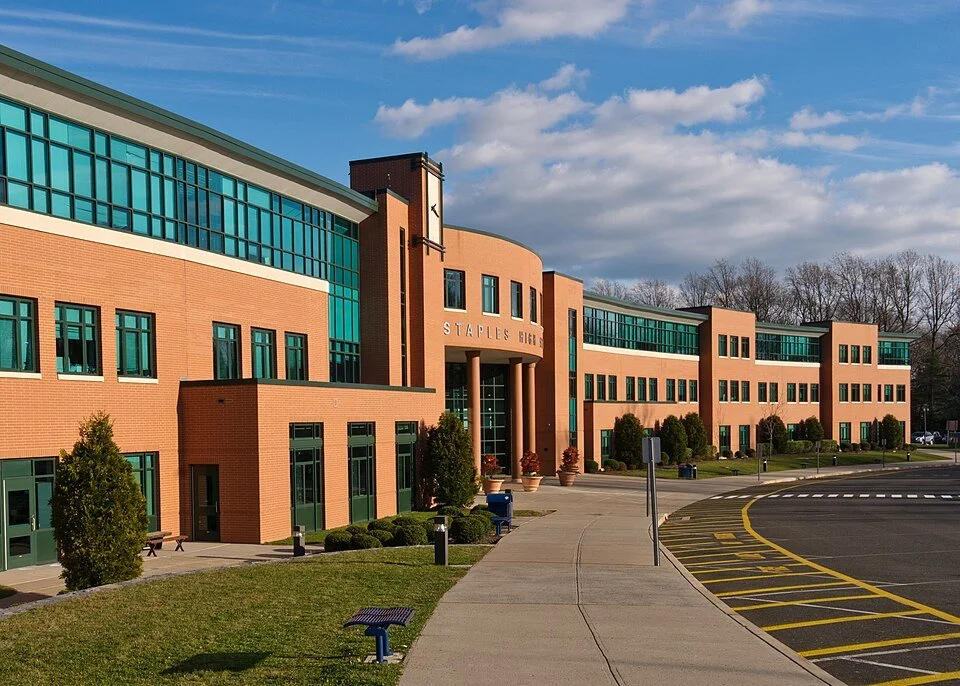
Fancy Staples High School, in rich Westport, Conn.
MANCHESTER, Conn.
Will Connecticut ever realize that two of what it professes to be its highest ideals of public policy, local control and equality of opportunity, are contradictions?
State government was reminded of this again the other day by another report
Connecticut's teacher pension system perpetuates inequity in student tes...
from the Equable Institute, a nonprofit organization that seeks to improve government employee pensions. Connecticut's state teacher- retirement system, the institute notes, does much better by teachers in wealthy municipalities than those in poor ones, because teacher pensions are calculated from their salaries. Wealthy municipalities pay more so their teachers get bigger pensions.
Indeed, Equable says state government pays twice as much for the pensions of teachers in some wealthy municipalities than it pays for the pensions of teachers in some poor ones.
Additionally, because of the higher salaries they pay, wealthy municipalities suffer less turnover in their teaching staffs and retain better teachers longer than poor municipalities do.
Equable says the disparity in pension contributions is responsible for some of the disparity in student performance between wealthy and poor municipalities. That stands to reason, but pension disparities surely matter far less to educational results than the disparities in the household wealth of students and the amount of parenting they get.
As usual, liberals and teachers unions like to attribute all the deficiencies of public education to inadequate spending, even though Connecticut has been raising education spending steadily for almost 50 years, improving teacher salaries and pensions without improving student performance.
Per-pupil parenting has always been the main determinant of student performance, but politics prohibits addressing the parenting problem. No elected official or candidate dares to note the strong correlation between single-parent households and child neglect and abuse, student educational failure, poor physical and mental health, and general misbehavior. Acknowledging that correlation would impugn the entire welfare system and the perverse incentives it gives the poor, and it would show where so much social disintegration is coming from.
But everyone admires teachers as individuals, so finding public money for satisfying them and their unions is easy and doesn't cause the political problems that examining the causes of poverty would.
It's no wonder that teachers prefer to teach well-parented, well-behaved, attentive, and curious kids rather than poorly parented, ill-behaved, and indifferent or demoralized kids. It's no wonder that teachers in impoverished cities, like police officers there, can get worn down quickly and seek to pursue their careers in municipalities with less poverty and dysfunction. This is just another aspect of the flight to the suburbs, which has been caused by government's failure to solve poverty in the cities.
Maybe state law should arrange for all teachers to be paid directly by state government according to the same salary schedule so their pensions would be equalized. No adjustments for union contracts or individual merit could be permitted, since they would generate inequality.
Such an egalitarian system likely would reduce salaries and pensions in wealthy and middle-class municipalities and increase them in poor ones. But of course teacher unions would never give up bargaining power over wages and benefits, not in the pursuit of equality or anything else.
Or maybe teachers in the poorest municipalities should be paid at least $100,000 per year more than teachers in the highest-paying municipalities. They might not all be good teachers but most might deserve more money just for having to deal with so many indifferent and misbehaving students.
While that might be fairer to those teachers, who are part of the constituency the Equable Institute is trying to help, Connecticut's long experience would still be that school spending is almost irrelevant to educational performance, and the presumption of increasing teacher salaries and pensions would still be that the job satisfaction of teachers is more important than education itself and ending generational poverty.
But even the long failure to end generational poverty isn't the biggest problem here. The biggest problem here is simply Connecticut's failure to care much about it. As a political matter, paying off the teachers is the most we can do.
Chris Powell has written about Connecticut government and politics for many years (CPowell@cox.net).
Chris Powell: Bears more likely to triumph in Conn. than ‘affordable’ housing’

A Black Bear, of the species found in New England.
MANCHESTER, Conn.
With Connecticut Gov. Ned Lamont's veto of the wide-ranging housing bill recently passed by the General Assembly, the state’s towns aren't likely to reach the ‘‘fair share" quotas of ‘‘affordable" housing the bill set for them. But the legislature's failure to approve other legislation may ensure that each town ends up with another quota -- a quota of bears.
Confrontations with bears in Connecticut have been increasing rapidly, and according to the state Department of Energy and Environmental Protection, there were more than 3,000 last year. These included two attacks on people and 67 of what might be called ‘‘bearglaries," in which the hungry creatures broke into people's houses. Bear attacks on livestock are up too.
A few days ago a bear attacked a man as he walked with his dog on his property in North Canaan. He escaped with scratches.
According to the environmental department, Connecticut has far more bear confrontations than neighboring states, though neighboring states are estimated to have more bears than Connecticut's 1,200 or so. Maybe Connecticut has so many more bear confrontations because, except for Rhode Island, Connecticut's neighbors allow bear hunting while Connecticut doesn't.
The increasing conflicts with bears prompted some legislators in the recent session to propose authorizing bear hunting. But the bears have a lobby organization as influential as the government employee unions, and it also frightened the legislators out of protecting the public.
The bear lobby argues that people who put bird feeders in their yards or fail to secure their trash barrels are to blame for the increasing confrontations. Certainly bird feeders and trash barrels are attractions, but as the many “bearglaries" show, removing feeders and securing trash barrels has little deterrent value.
Providing access to bird feeders and trash barrels may actually discourage bears from breaking into houses for food.
In any case, the bears are already rampant in Connecticut and won't be going away on their own. Unmolested and having no natural predators, they will reproduce at an estimated rate of more than two cubs per year per mother. A doubling of the state's bear population every three years seems possible, with the population pushing steadily into the eastern part of the state. As long as Connecticut's feckless policy toward bears is only to shoo them into a neighbor's yard, more confrontations are inevitable, with or without bird feeders and trash cans, and within a decade every town in Connecticut could have a dozen bears as permanent residents.
Unlike housing developers, bears don't observe zoning regulations. So odds are that, if state law doesn't change, bears will be disrupting many suburbs and rural towns long before those towns get their first “affordable" housing.
It's understandable why government employees come first in Connecticut, far ahead of the public interest. They are numerous and politically organized and have their own political party, so politicians are afraid of them. But why do bears have to come second, still far ahead of the public interest?
Unlike taxpayers, bears are not an endangered species. Other states manage to stand up to them. Except for the political timidity of the state's elected officials, why should bears be any more protected in Connecticut than coyotes and poisonous snakes?
WHO NEEDS “BABY BONDS”? A month ago Hartford Mayor Arunam Arulampalam announced he had rounded up an extra $3 million in city funds and various grants for the city's ever-dysfunctional school system.
Aleysha Ortiz wants that money instead. She's the recent graduate of Hartford Public High School who is suing the city because, despite the diploma the school gave her, she was illiterate. She's suing for damages, and last month her lawyers offered to settle for ... $3 million.
If Ortiz wins she'll have invented a great racket for indifferent students and their neglectful parents. Fail to learn in school, say nothing about it publicly until social promotion graduates you, and then sue and cash in for life. By comparison the “baby bonds" about which state government is so proud will be chump change.
Chris Powell has written about Connecticut government and politics for many years (CPowell@cox.net).
Chris Powell: Illegal-immigration backers in Conn. don’t get critical questions

MANCHESTER, Conn.
Immigration-law enforcement agents must be compelled, by congressional action or court order, to identify themselves conspicuously during arrests, to display their badges, and to make prompt public reports identifying the people they have detained, why they have been detained, and where they are being held. A free country cannot allow secret arrests. The necessity of such accountability in government goes back centuries to the Magna Carta.
Democrats in Congress should press this issue instead of simply decrying all immigration-law enforcement. Most of the country will agree, and Republicans in Congress who disagree will risk being exposed as totalitarians.
Police in Connecticut already are obliged by law to follow similar procedure, though they sometimes neglect to report arrests promptly and news organizations fail to notice.
But the greater failure of Connecticut journalism lately involves its reporting of complaints against immigration law enforcement. Reporters can't be blamed when they can't reach or get responses from immigration law enforcers, but they can be blamed when they quote officials, activists, and others in the immigration controversy without posing critical questions.
The recent arrest by immigration agents of a woman as she was driving her children to school in New Haven provoked outrage. Some of it verged on hysteria, like the statement issued by Mayor Justin Elicker.
"To arrest a mother in front of her two young children while taking them to school is simply unconscionable," the mayor said.
So what is the appropriate time to arrest and detain someone with children who is suspected of being in the country illegally? Will such a suspect necessarily cooperate in scheduling her arrest and detention, or might she flee instead? Do New Haven's own police always give notice to the targets of their arrest warrants?
Mayor Elicker wasn't asked.
He continued: "We condemn this deplorable act of family separation and call upon the Trump administration to stop its inhumane approach and cruel tactics."
But don't arrests in New Haven and elsewhere routinely separate people from their children, or are children brought to jail with their parents?
The mayor wasn't asked.
"New Haven," the mayor said, "is a welcoming city for all, and our immigrant neighbors are a part of our New Haven family."
Does New Haven really welcome legal and illegal immigrants, the well-intentioned and the ill-intentioned, and the self-supporting and the dependent alike? Does New Haven distinguish among them, or is that properly the work of immigration authorities? Or should no one do that work and should the nation's borders be opened again?
Mayor Elicker concluded: "New Haven will continue to stand up for our residents and our values, and we will continue fight back with every resource available to us against the Trump administration's reckless immigration policies."
What exactly does "every resource available" mean? Even as the mayor was so upset about that immigration arrest, New Haven's school system was facing a deficit of $16.5 million and was preparing to lay off scores of employees, and the chronic absenteeism rate of its high school students stood at 50 percent.
Since New Haven can hardly take care of itself, how can it afford to be a "sanctuary city," accepting, housing, concealing, and trying to educate unlimited numbers of illegal immigrants? And since state government covers so much of New Haven's expenses, how can Connecticut afford to let the city assume unlimited liabilities like these?
Nor were compelling questions posed the other week amid outrage in Meriden about the immigration agents’ arrest and detention of a city high school student and his father a few days before the boy's graduation.
The two were reported to have been arrested at a scheduled meeting with immigration authorities, so presumably they knew there was something wrong about their presence in the country.
Protesters in Meriden chanted that they want immigration authorities to get out of Connecticut. But wouldn't that leave the borders open again? Is that what the protesters want?
Though they were surrounded by journalists, the protesters were never asked.
Chris Powell has written about Connecticut government and politics for many year (CPowell@cox.net).
Chris Powell: Look for places with good parenting

MANCHESTER, Conn.
Anyone asked to guess the 10 best public high schools in Connecticut would probably select some of those chosen by the Internet site Niche, which connects high school graduates with colleges.
Nine of the 10 high schools chosen by Niche are in Westport, New Canaan, Darien, Greenwich, Wilton, Ridgefield, Avon, Farmington, Glastonbury and Norwalk. All but Norwalk are prosperous communities that spend a lot of money on their schools and get good results. The high school in Norwalk cited by Niche is a regional school drawing especially motivated students, many from outside the city.
According to Niche, all 10 of the best public elementary schools in the state are in three of the towns with the best high schools -- Greenwich, New Canaan and Westport -- and nine of the 10 best middle schools are in the towns with the best high schools.
Of course educators will conclude from these rankings that per-pupil spending correlates with student performance -- spending up, education up. This is self-serving and wrong.
For while not everyone in the towns with the supposedly best schools is rich, most people there are at least middle class and most children there have two parents, either living with them or otherwise involved in their lives. Their parents spend time with them. Most know their letters, numbers, and colors when they first arrive in school. They know how to behave. They have some interest in learning. Their attendance is good because their parents see to it.
Most such children are easy to teach -- not because per-pupil spending is high but because per-pupil parenting is.
Of course circumstances are much different in high schools in municipalities with terrible demographics, municipalities with high poverty and low parenting. Here many children live in fatherless homes, homes with only one wage earner and a smattering of welfare benefits, homes over which a stressed, exasperated, and sometimes addicted mother presides. These children get much less attention and many are frequently absent from school.
In New Haven, the city that is always lecturing Connecticut about how to live, high schools have a chronic absenteeism rate of 50 percent, highest in the state. Good luck to teachers and administrators trying to educate children who frequently don't show up and, when they do, often disrupt classes, get into fights, or suffer mental breakdowns, but whose general discipline or expulsion is forbidden.
That's why the Niche school rankings are so misleading.
For schools and teachers play the hands they are dealt by community demographics.
Any school dealt four aces is almost certain to win regardless of its resources and the competence of its staff. Any school dealt mostly jokers will resort to clamoring at the state Capitol for more money, as if the great increase in state financial aid to schools since the Education Enhancement Act was passed in 1986 has made any difference in education results, and as if the clamor for more money isn't just an excuse for ignoring the parenting problem, which seldom can be discussed in polite political company.
Connecticut's best schools are actually the ones that get the best results from the students who are hard to teach -- the students neglected at home -- not those who are easy to teach. Nobody seems to compile such data, perhaps because it would impugn the premise of education in Connecticut -- that only spending and teacher salaries count and educational results are irrelevant.
For many years in Connecticut the only honest justification for raising teacher salaries has been to induce teachers to stick around with the demoralized, indifferent, and misbehaving kids about whom nothing can be done until government finds the courage to restore academic and behavioral standards. These days teachers are given raises mainly to secure labor peace and union support for the Democratic Party.
It's the same with police departments. Cities, where poverty is worst, struggle to keep officers not so much because suburbs often pay better but because, like city teachers, city cops increasingly want to escape the worsening social disintegration and depravity around them.
Chris Powell has written about Connecticut government and politics for many years (CPowell@cox.net).
Chris Powell: Conn. devalues education while throwing more money at it

MANCHESTER, Conn.
Except to the teacher unions, Connecticut's Linda McMahon is a big relief as secretary of the U.S. Education Department, mainly because her predecessor, Connecticut's Miguel Cardona, was such a disaster.
Cardona spent most of his time pandering to the unions. In contrast, the other day McMahon celebrated National Charter Schools Week, applauding competition among schools and the reduction of union influence, which has dumbed down education while inflating its costs.
As long as the teacher unions have so much power in the Democratic Party, and are the foremost special-interest in politics in most states, as in Connecticut, there's no chance of saving public education, and alternative schools may be the only way of preserving any education at all.
Still, it would be nice if somebody tried to restore public education. For public education often used to accomplish what private education seldom could and usually didn't even try to do: integrate society comprehensively -- racially, ethnically, religiously, economically, and by all levels of student intelligence.
Of course, children would and will always be bratty, snobby, cruel, and cliquish much of the time, but even then public schools still can introduce them to different kinds of people and force them to deal with differences and thereby get a hint of the need to unify the country.
Regional “magnet’’ schools in Connecticut and elsewhere were meant to increase racial integration by putting city and suburban students together across municipal boundaries. But there aren't enough “magnet’’ schools to achieve much integration, and, as Hartford's experience has shown, the integration achieved by “magnet’’ schools has led to greater segregation of the urban underclass. For the "magnet" schools have drawn the more parented and engaged students out of neighborhood schools in the city, leaving the students in those schools even more indifferent and demoralized.
The urban underclass is the essence of the education problem. Many people naturally want to escape it and place their children in schools that aren't dragged down by their demographics. That means “magnet’’ or charter schools or, most of all, fleeing the city for the suburbs, not that all suburban schools are so much better.
The only way to recover the integrative influence of public education may be to try to improve public education everywhere at once, first by recognizing that student learning correlates far more with parenting than with school spending. Parenting has declined not just because welfare policy is so pernicious, subsidizing fatherlessness and child neglect, but also because government and schools have let parenting decline by eliminating behavioral and academic standards for both parents and students.
There are no penalties for parents who fail to see that their children get to school reliably. There are no penalties for parents who avoid contact with their children's teachers when something is wrong. There are no penalties for parents or students when students fail to learn.
Indeed, Connecticut's only comprehensive policy of public education -- social promotion -- destroys behavioral and academic standards. It proclaims to parents and students alike that there is no need to learn and that school isn't important. Thus Connecticut devalues education even while increasing its cost.
Connecticut's underclass has figured this out. The underclass knows that no student needs to earn a high school diploma, and that people who have children they are unprepared to support will be subsidized extensively by the government in a fatherless home -- subsidized enough to avoid starvation but not enough to get a proper upbringing.
But if even ignorant students must be graduated from high school, at least their dismal academic records could be printed on their diplomas so a diploma might mean something again, if only a horror story.
Making failing students repeat grades, as was done before self-esteem trumped learning, would have even more impact. Limiting students to two repeated grades before graduating them early but ignorant would have still more.
Until society forcefully demonstrates its respect for education and realizes that just throwing more money at it doesn't work, the underclass won't respect it either.
Chris Powell has written about Connecticut government and politics for many years (CPowell@cox.net).
Chris Powell: Illegal-immigration backers ignore its enormous costs
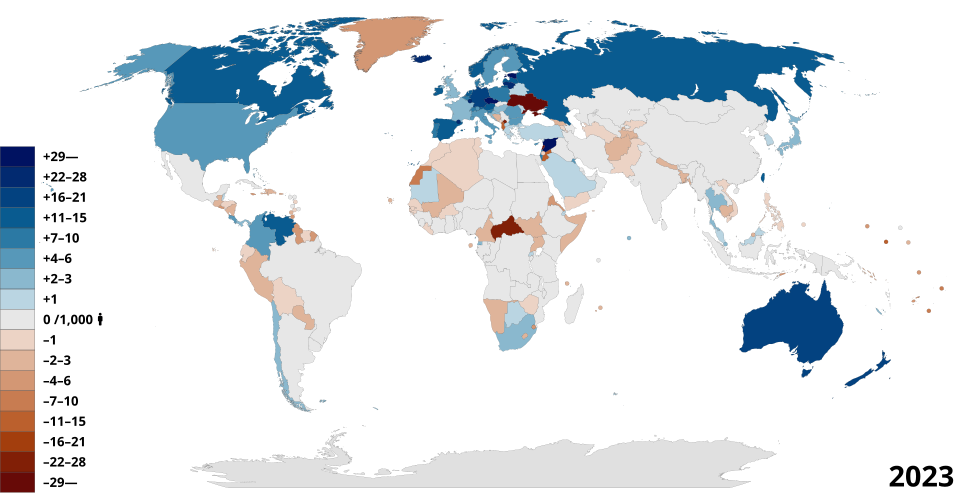
Net migration rates per 1,000 people in 2023, showing flows to more affluent nations, in blue, from poorer nations.
MANCHESTER, Conn.
Last week two groups supporting illegal immigration, Connecticut Voices for Children and the Immigration Research Initiative, issued a report warning that mass deportation of the state's illegal-immigrant population -- estimated at as many as 150,000 people -- would be disastrous for the state's economy and state government. The report claimed that illegal immigrants pay more than $400 million in state taxes each year.
This was at best a dodgy estimate. Many illegal immigrants are children and are not employed. The adults among them cannot work legally and so most of their earnings cannot be tracked. While anyone who spends money in Connecticut is likely to pay sales taxes, the report acknowledges that nearly all illegal immigrants who work in Connecticut hold low-wage jobs.
So what they buy is mainly for subsistence, like food, which is exempt from sales tax.
But the bigger flaw in the report is that it omits anything about the costs of illegal immigration in Connecticut, which are huge and increasing, particularly on account of the state government medical insurance being extended to them and the education of their children, most of whom don't speak English and enter the state's schools without providing any record of their education elsewhere and so need to be laboriously evaluated for placement. These students have exploded expenses in the schools of Connecticut's “sanctuary cities," which in turn seek much more financial support from state government.
In February the Yankee Institute, drawing on estimates from the Federation for American Immigration Reform, contended that illegal immigration costs Connecticut more than $1 billion a year.
Whatever the true cost, that it likely weighs heavily against illegal immigration became clear when Governor Lamont, a supporter of the state's “sanctuary’’ policies, disputed the Yankee Institute estimate even as he conceded to a journalist that he had no idea what illegal immigrants cost state government. The governor referred the journalist to the state budget office, which said it had no idea of the cost either and wasn't going to find out.
That is, advocates and apologists for illegal immigration in Connecticut don't want to know its costs, and, worse, don't want the public to know either.
The report from Connecticut Voices for Children and the Immigration Research Initiative is defective in other ways. It asserts that if Connecticut lacked illegal immigrants it would experience a severe shortage of workers for the low-wage jobs they hold -- especially in construction, restaurants, agriculture, janitorial work, and beauty shops.
This is the cliche that illegal immigrants do jobs citizens won't do, and it is nonsense.
Citizens will do almost any job if wages are high enough and can compete with the welfare benefits available to them. Indeed, the jobs held by illegal immigrants are so poorly paid in large part precisely because illegal immigrants are available to do them without the wage,
benefit and labor protections required for citizens. Raise agricultural salaries enough and even some teachers, charity organization workers, and journalists in Connecticut may be tempted to return to picking shade tobacco as many did as teenagers.
Connecticut is full of low-skilled citizen labor. With its social-promotion policy, public education makes sure of that.
For years the state's manufacturers have lamented that they can't find skilled workers for tens of thousands of openings. Meanwhile, middle-aged single mothers are not working at fast-food drive-through windows because they are so highly skilled. But jobs requiring lesser skills are where young people are supposed to start, not remain as adults.
So Connecticut doesn't need to import more low-skilled workers, especially since the state has failed so badly with its housing supply. The state needs to find ways of raising skills and wages and reducing the cost of living, especially the cost of housing, for its legal residents.
But the report from the apologists for illegal immigration sees the path to prosperity as a matter of legalizing all illegal immigrants, in effect reopening the borders. It didn't work the first time.
Chris Powell has written about Connecticut government and politics for many years (CPowell@cox.net).
Chris Powell: What’s lurking Ahead for Conn.?
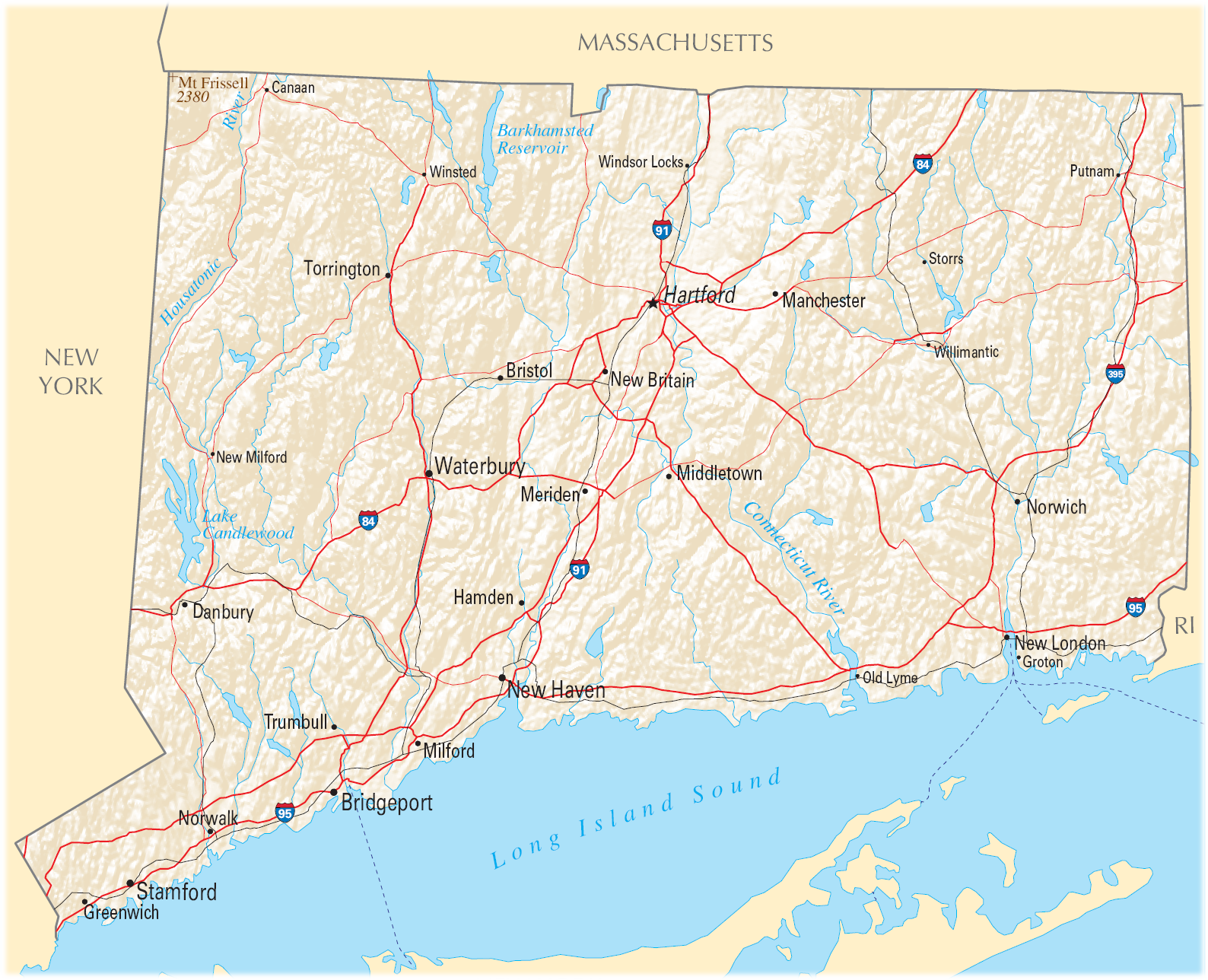
MANCHESTER, Conn.
In an interview the other week, Connectitcut Gov. Ned Lamont sounded unenthusiastic about seeking a third term.
He complained that legislators and municipal officials parade through his office asking for goodies at state government expense even as the Trump administration is slashing away at financial aid to Connecticut, punching big holes in state government's finances.
The aid cuts don't seem well-reasoned, or reasoned at all. They may be merely malicious. But having long been persecuted by Democrats, even as Democrats concealed and dissembled about the corruption and incompetence of their own national administration, Trump now can exact enormous revenge.
Just as Democrats long have thrived on the patronage power they invested in the presidency, losing that power is going to hurt.
A national recession and even a worldwide one may be coming, possibly triggered by Trump's leap into tariffs.
As a “sanctuary" state with several sanctimonious “sanctuary" cities, including New Haven, Connecticut may expect special hostility from the Trump administration, especially since the hostility is mutual here, as with the three Yale University professors who recently publicized their departure for Canada and attributed it to their detesting Trump. (Since Yale long has propelled Connecticut toward the looney left, these departures may be a good start.)
Lamont keeps saying he thinks that Connecticut is in good shape, but developments contradict him.
Remarking the other week on the human needs that state government addresses, the governor noted that about 40 percent of the babies born in Connecticut are born to mothers on Medicaid, which, among other groups, provides medical insurance for the indigent. But he didn't grasp the bigger significance of that data.
That is, people who can't support themselves shouldn't be having children -- or else these are people who recently have fallen out of the middle class as times get harder.
Homelessness in Connecticut is rising again along with rents and housing prices, which have been driven up by inflation and state government's failure to clear the way for less-expensive housing.
Connecticut's food pantries are experiencing much heavier demand.
Student proficiency in the state keeps declining as schools graduate illiterates and near-illiterates without prompting concern from many in authority. The failing, insolvent and poorly managed school systems in Hartford and Bridgeport are undergoing financial audits by a state education bureaucracy that seems almost as large, inscrutable, and disconnected as the failing school systems themselves. But the educational results of those school systems are not being audited.
These developments don't suggest that Connecticut is in good shape. They suggest that parts of the state are sliding deeper into poverty and ignorance.
The more that the Trump administration slashes federal financial aid to state government, the more cautious the governor properly becomes about state spending. But the legislators, municipal officials and special interests parading through his office with their hands out still can't imagine financial restraint. They think that state government has a large budget surplus and they want to spend it regardless of whether big cuts in federal aid will have to be covered. But they refuse to see that the surplus is only technical, the flip side of state government's still grossly overcommitted pension funds.
That is, the surplus is really just money borrowed from pension obligations, money that, if spent, will increase the heavy tax burden of the pension funds.
Lamont is often portrayed as a moderate Democrat. But he is moderate only insofar as he fears that overspending will produce state budget deficits and tax increases that will alienate voters. He is firmly part of his party's far left in toleration of illegal immigration, transgenderism, racial preferences and manufacturing and coddling poverty.
Other than the blindly ambitious, who would want to be governor amid what lurks ahead?
Even so, Trump's slashing of federal aid just might be the tonic that Connecticut needs to force audits of everything in state government and compel hard but necessary and ultimately beneficial choices. As long as state government remains a pension and benefit society for its employees -- the only people whom state government guarantees to take care of -- it won't even be trying to serve the public.
Chris Powell has written about Connecticut government and politics for many years (CPowell@cox.net).
Chris Powell: Conn. insanity Law is Crazy

Depiction of Mongol cannibalism from Matthew Paris's chronicle.
MANCHESTER, Conn.
Having recently shrugged off his inability to get state government employees to return to their normal workplaces, Connecticut Gov. Ned Lamont may have been lucky to be traveling in India the other week when the state Psychiatric Review Board announced it had conditionally released Tyree Smith, a murderous cannibal, back into society, proclaiming him cured of his taste for human flesh.
Members of the Republican minority in the General Assembly exploded with exasperated questions.
Of course, the Democratic majority let the event pass without comment. But at least the Democrats' indifference wasn't caused by what might have been expected -- the political influence of something like the Connecticut Anthropophagist Association. Such a special interest would have to work hard to become as predatory as the primary constituencies of the Democrats, the state employee and teacher unions. No, Democratic legislators ignore everything questionable in state government when their party controls the administration, which is almost always.
The Republican questions were fair: Where is the cannibal living? Does he have roommates? If so, are they aware of his past? If he is in a group home, is the staff aware? Do his neighbors know he is nearby? Who makes sure he takes his medication? How often he is to take it? What are the supervision and mental health regimens imposed on him? What safety protocols surround him?
The Psychiatric Security Review Board's executive director, Vanessa M. Cardella, answered some of the questions. The parolee's medicine will be administered by a visiting nurse. (He or she better be tall, muscular, and heavily armed, or accompanied by several such guards.) The state probation office will supervise him. He will wear an electronic monitoring device, be tested regularly for drug and alcohol use, and keep receiving mental health treatment. If he fails to comply, the board can send him back to Whiting Forensic Institute, Connecticut's euphemistically named prison for the criminally insane.
Cardella said, ‘‘There is a 0% recidivism rate for violent crime for acquittees on conditional release status."
Yes, so far, so good -- or so it may seem. But many ordinary parolees violate their probation, not all crimes are violent, and psychiatric parolees may offend again short of violence and may already have done so.
Now who wants to volunteer to be neighbor to someone acquitted by reason of insanity for murder with a side of cannibalism?
For that matter, where do the governor and legislature find volunteers to serve on the Psychiatric Security Review Board? Those jobs may be as thankless as those of the state auditors, who at least get paid.
But there are fair questions here for legislators too.
The law distinguishes the ordinary criminal from the insane one on the presumption that the latter did not understand the wrongfulness of his actions and so shouldn't be held responsible for them -- shouldn't be punished but just confined, comfortably enough, for the safety of society -- and that he may be restored to sanity and good behavior.
While this may seem sensible and just in principle, it is not persuasive in practice when the crime is murder. For then the law's presumption carries much greater risk. The law assigns the Psychiatric Security Review Board to measure that risk and make a judgment.
That is, state law, not the board itself, already has decided that release should be available to insane murderers judged cured. The board's judgment on the cannibal may be mistaken but appears to have been conscientiously reached.
The problem is that the law itself is crazy.
The best solution here may be to forbid any release of murderers acquitted by reason of insanity, allowing release only for insane people acquitted of lesser crimes, if there are any such offenders.
The cannibal's case provides a strong financial reason for this change in policy. For enforcing all the complicated conditions imposed on his release to protect the public probably will be far more expensive and far less reliable than keeping him at Whiting and continuing to treat him there.
Chris Powell has written about Connecticut government and politics for many years (CPowell@cox.net),
Annual show-off

Western Barndoor Hill, in Granby, Conn.
“It was a radiant October day. Connecticut suggested an outrageous show-off, the low hills overflowing with autumnal brilliance, eruptions of golden leaves, friezes of crimson, the pines maintaining their sober greenness amid the blaze-like sentinels.
“All this last glory of the growing season was nevertheless contained, neat, firmly – for centuries now – under control: This was New England.’’
From the novel A Stolen Past (1985), by John Knowles (1926-2001)

Chris Powell: Connecticut’s public-pension racket

"The Worship of Mammon" (1909), by Evelyn De Morgan.
MANCHESTER, Conn.
An angry reader notes that after 24 years as a judge, the Connecticut Supreme Court’s chief justice, Richard A. Robinson, has just "retired" while joining a big national law firm, Day Pitney, which has five offices in Connecticut. "So now," the reader writes, "he will be getting a full pension from state taxpayers plus another full-time paycheck. Why should the state pay him a pension if he is still working? This is why the state is virtually bankrupt. It’s crazy. How come the press doesn’t report this part of it?"
Maybe what's left of journalism in Connecticut doesn't report the pension angle because it's an old story, not that it ever has been told very well.
Robinson's immediate predecessor as chief justice, Chase T. Rogers, retired six years ago after 20 years as a judge and then went to work at Day Pitney too. She now draws an annual state pension of more than $160,000, quite apart from her salary at the law firm. Since Robinson had four more years as a judge than Rogers, his state pension may be a bit larger. Since both retired judges are in their mid-60s, with continued good health they probably will have quite a few years earning at the law firm at least as much as their pensions.
But such opportunities are not peculiar to retired Connecticut judges. Virtually all retired state employees are eligible to do the same kind of thing -- that is, to collect an excellent retirement pension from state government even as they launch second careers.
The practice is especially popular among state troopers and municipal police officers, who typically can retire with great pensions at a young age -- in their late 40s or early 50s -- and then qualify for other good jobs to take them into their actual retirement.
Sometimes it’s a bit of a racket, as was shown in 2020 by the internationally notorious case of State Trooper Matthew Spina. The trooper was video-recorded by a motorist he stopped in New Haven and the video was posted on the Internet. It showed the trooper hysterical with rage, screaming at the motorist, ordering him out of his car and handcuffing him, bullying and threatening him, searching his backpack, and stomping on his possessions before uncuffing him and letting him go without even ticketing him, since he had done nothing wrong, or at least nothing actionable.
While inflicting this abuse Spina declared that he hated his job and the public and was eager to retire in 14 months.
Spina appeared to be middle-aged and a little journalism revealed that for five years he had been working so many extra hours that his overtime pay exceeded or nearly equaled his base annual salary of almost $100,000. That is, like many other troopers he was risking burning himself out and driving himself crazy to attain the magical threshold of the state pension system -- three extremely high-earning years from which his pension would be calculated.
State police management readily obliged his mad pursuit of a pension bonanza.
Spina indeed retired the next year and now draws an annual state pension of more than $116,000. If he has another job now, his pretend retirement may be almost as comfortable as that of the retired judges.
Of course Connecticut’s state employee pension system isn’t a racket for everyone, but it is often excessively generous. It is a fair question as to why state government should pay large pensions, or any pensions, to people earning substantial amounts in second careers.
But there is a simple explanation. It’s that Connecticut has many more politically active state and municipal government employees and retired employees than it has politically attentive and engaged citizens.
Anyone who sees extravagance here should try putting the pension question to his state legislators. Few legislators are likely to express any criticism, lest they alienate a powerful special interest. If Connecticut is ever to have a better public life, it will need a better public.
Chris Powell has written about Connecticut government and politics for many years (CPowell@cox.net).
Chris Powell: Connecticut’s abortion barbarians

U.S. abortions by gestational age in 2016.
MANCHESTER, Conn.
Now that the issue has been returned to the states and democracy, abortion extremism has revived throughout the country. In some states this extremism aims to make abortion virtually impossible, limiting it to the earliest weeks of pregnancy, sometimes before women may realize they are pregnant. But in Connecticut the extremism goes the other way.
A few days ago Connecticut abortion extremism manifested itself at the state Department of Public Health, which held a hearing on its proposal to repeal three state regulations that pose only slight impediments to abortion, regulations that did not bother advocates of "reproductive rights" back when the U.S. Supreme Court's decision in Roe v. Wade was in force. Indeed, for decades Connecticut has modeled its abortion law on the principle proclaimed by Roe -- that abortion should be an individual right prior to fetal viability but subject to state regulation after, because society has an interest in the unborn when they are able to live outside the womb.
As constitutional law Roe was questionable, as even some advocates of abortion rights acknowledged, but it amounted to a political compromise that commanded majority support nationally, though not in all states.
The Supreme Court's reversal of Roe has changed nothing in Connecticut. There is no movement here to outlaw or seriously restrict abortion, though the public probably would support legislation to require parental consent for abortions for minors, since such abortions conceal rape.
To the contrary, as shown by the health department's proposal to repeal those three regulations, the political movement about abortion in Connecticut is, in its own words, to "go beyond Roe" -- to legitimize late-term abortion, abortion of viable fetuses, in all circumstances.
The department would repeal the regulation arising from the Roe principle that authorizes abortion in the last trimester of pregnancy only to protect the mother's life or health.
This regulation is actually only the pretense of concern for unborn life, since no government authority is checking on late-term abortions and since protecting a pregnant woman's health is construed to include her mental health. In advance of childbirth it's impossible to disprove a woman's claim that delivering her child will drive her insane, absurd as such a claim may seem.
But even the regulation's pretense of concern for viable fetuses is too much for Connecticut's abortion extremists.
Another regulation proposed for repeal requires abortion providers to try to save of life of a fetus -- that is, a child -- who survives an abortion. Connecticut's abortion extremists want to erase any hint of an abortion survivor's humanity. An infant bleeding and gasping for breath is to be coldly left to die in the presence of doctors, nurses, the law, and its own mother -- barbarity.
Also proposed for repeal is the regulation that authorizes medical personnel to refuse to participate in abortions for religious reasons. As Connecticut essentially declares abortion the highest public good, all conscience is to be trampled.
The foremost advocate of repealing the regulations, state Rep. Jillian Gilchrest, D-West Hartford, leader of the abortion extremists in the General Assembly -- they style themselves the Reproductive Rights Caucus -- maintains that the regulation protecting the consciences of medical personnel is unnecessary because federal law already protects them. But Gilchrest would not advocate repealing the regulation if she wasn't hoping that someday abortion extremists will gain control of the federal government, repeal the law, and let Connecticut drive anti-abortion doctors and nurses out of their profession.
Gov. Ned Lamont told the Hartford Courant he wasn't fully informed about the move to repeal the abortion regulations and would be looking into it. But he added perceptively, "I hope it's not a solution looking for a problem."
That's just what it is. For the only problem here is that some people think that while Connecticut is more liberal on abortion than all states except Vermont and Oregon, which have no gestational limits, the state still doesn't exalt abortion enough.
Does the governor agree with the barbarians? Since the health department answers to him, it will be answering for him if it decides to "go beyond Roe."
-----
Chris Powell has written about Connecticut government and politics for many years (CPowell@cox.net).