
Vox clamantis in deserto







Advancing ballpark tech in Worcester

Rendering of Polar Park.
From The New England Council (newenglandcouncil.com):
Worcester Polytechnic Institute (WPI) and the Pawtucket Red Sox have announced a partnership to advance ballpark technology once the team moves to Worcester, in 2021. This partnership will provide the new Polar Park in Worcester with the latest technology.
WPI students will work on projects to modernize the game experience, such as mobile apps for ordering food, technology to assist with finding parking, or special seating for those with sensory challenges. The partnership will also make the school the team’s official academic technology advisor through the 2023 baseball season.
The president of WPI, Laurie Leshin, commented, “As Worcester’s hometown technological university, WPI shares the club’s vision and opportunity for Polar Park: to create a versatile regional sports venue that combines a traditional ballpark environment with modern, smart, and connect amenities.”
Larry Lucchino, principal owner and chairman of the Pawtucket Red Sox, said, “One of the many appealing assets in Worcester is WPI, a world-class technology leader. . . We have long sought this collaboration to help this ballpark be innovative as well as friendly and beautiful. We look forward to WPI’s participation on the key technology fronts.’
Al DeCiccio: Requiem for Southern Vermont College

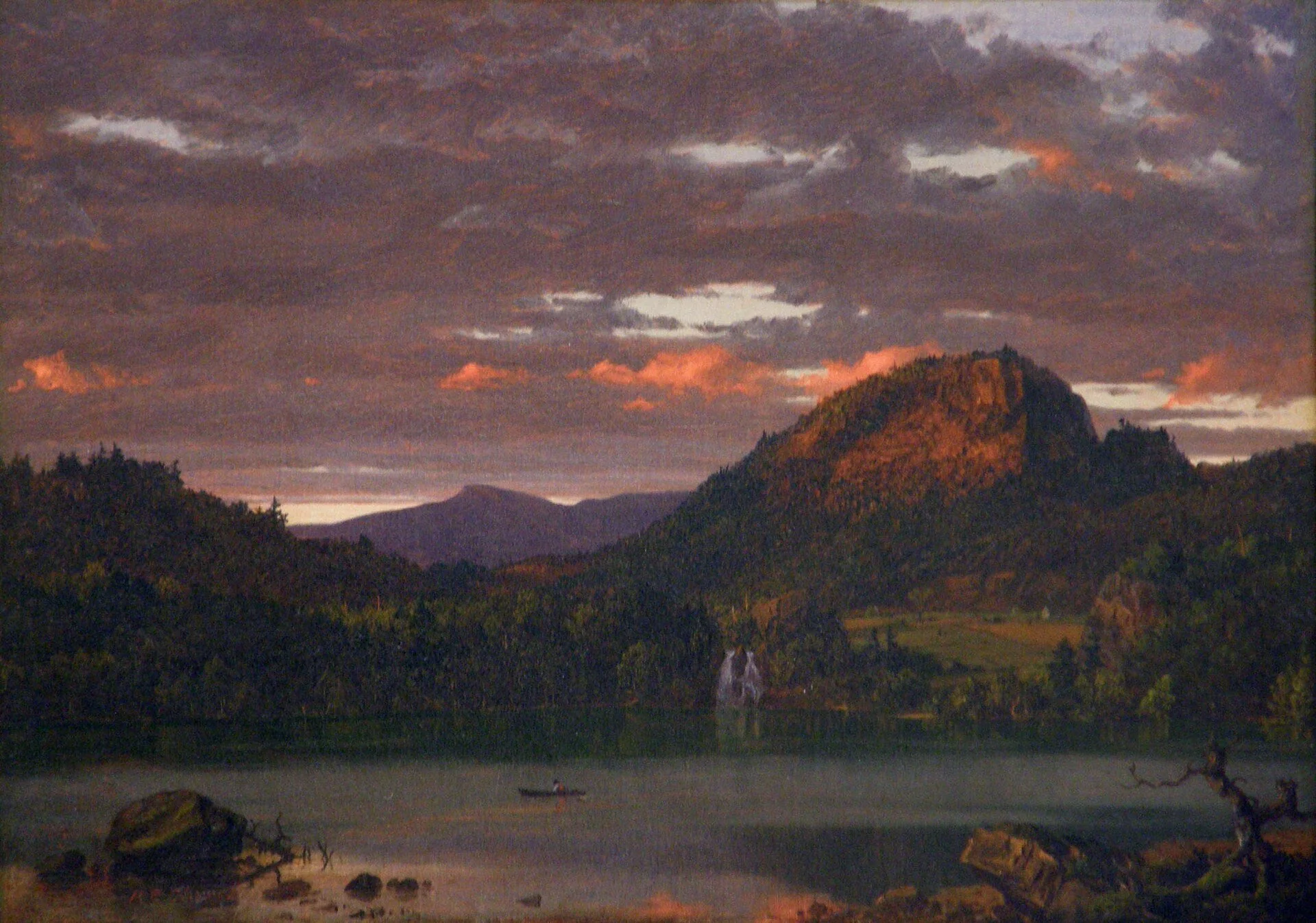
Hunter Hall at Southern Vermont College.
From The New England Journal of Higher Education, a service of The New England Board of Higher Education (nebhe.org)
I was born in Lawrence, Mass., the first son of first-generation, working-class Italian-American parents—my mother, a nurse, and my dad, a shoe cutter in the old Everett Mills. The Everett Mills are across the street from the Holy Rosary Church. In that church, I walked barefooted down the aisle when I was 7 in an unsuccessful attempt to barter God for the sight back in my left eye, its cornea badly damaged by a direct hit from my then-best friend’s rock. His side won the battle that day a little more than 58 years ago.
I learned then, and I am re-learning yet again after the announcement that Southern Vermont College (SVC), would close at the end of the current semester,
that what the witches said about Macbeth’s approaching morphed into one of the important lessons my parents tried to teach me, “Never take anything for granted.”
I have always tried not to take things or people for granted. I am fortunate to have held faculty positions and administrative positions in my career. I have been humbled to hold the provost’s position at SVC, and I have been honored to work with special people, such as Greg Winterhalter, Sarah Nosek, Lynda Sinkiewich, Eric Despard and Jennifer Nelson.
Greg was a professor who studied with Howard Zinn and who cultivated in all of us a love for the fine arts. I saw Greg serve lunch he prepared to his first-year seminar students, and I benefited from his goodwill when he and his students helped in a project that garnered national recognition for SVC—establishing an exhibition for the Bennington Museum that displayed the genealogical histories of students following the methodology of Henry Louis Gates, Jr., and including DNA research.
I observed Sarah Nosek move through the probationary period while also advancing the research of her students (rare in an undergraduate institution) and the leadership talents of women in the social sciences (notwithstanding annoying obstacles like the time, one rainy semester, her office filled up with water).
I watched Lynda Sinkiewich, a long-time faculty leader, model professionalism for newer faculty members when she worked year after year after year to earn her doctorate while teaching a full course load and assuming all faculty responsibilities.
An adjunct faculty member and a noted musician, Eric Despard went above and beyond his contracted responsibilities by performing at every SVC event; SVC’s de facto musical director without a full-time contract, he even brought established, well-known musicians to its beautiful theater, showing his deep appreciation for and dedication to the college.
And I saw Jennifer Nelson, a mathematician with the sensibility and talent of an artist, work 36 consecutive hours every new student orientation weekend to place incoming students in appropriate foundational science and math courses, a task she gladly accepted in addition to her full teaching load, leading the division of natural sciences and mathematics, and making her Bennington home a welcoming place for all colleagues.
So, like the magnificent Mount Anthony that looms above SVC, all of you and your special colleagues will arise and rejoice in the many associations you enjoyed as part of the SVC family (past and present). Of course, I am fully aware of the loss you all feel. For all of you, certainly, “peace comes dropping slow,” as Yeats wrote in “The Lake Isle of Innisfree”). I can empathize with your loss, because I learned from Aristotle about how tragedy elicits daunting emotions. I also learned that, in the tragic experience, there can be catharsis, the purging of powerful emotions.
How might you have this catharsis?
Robert Frost, a poet who graduated from Lawrence High School as a co-valedictorian with his future wife, Elinor White, and who’s buried behind Bennington’s First Church, wrote this verse for the end of “The Tuft of Flowers”:
“’Men work together,’ I told him from the heart,/’Whether they work together or apart.’”
I know that, throughout the years, your colleagues and your students shared much wisdom and camaraderie with you. That can never be taken away. Though apart, you will indeed continue to work with those colleagues in the higher education enterprise of shaping women and men who will help our citizenry to lead happy and healthy lives. In the days to come before SVC’s commencement at which you will celebrate graduating students, you will work with non-graduating students to provide prospective academic opportunities. While these processes and possibilities unfold, you will experience catharsis.
Collaborating with your colleagues and working together with students, you built an SVC community.
When you worked with those at Bennington College, Williams College and the Massachusetts College of the Liberal Arts to bring in special guests like Anita Hill, you extended community. When you brought in dance groups and musicians and artists and writers such as the poet laureate of Vermont, you extended community. When you encouraged collaboration with the Oldcastle Theatre Company, with high schools, and with the Community College of Vermont, you extended community. When Tom Redden and Tracey Forrest used their spirituality to work with Bennington’s Interfaith Council to offer a community-based course on comparative religion, you extended community. When you secured money to support civic projects which your students selected for funding, as Jeb Gorham did for years, you extended community.
Community is essential so that we do not succumb to the illusion of scarcity and so that we appreciate the material reality of abundant talents. Just because SVC was small, essentially one building (the Everett Mansion) and less than 1,000 students, its stakeholders did not lament a lack of resources; they showed they could think and act as if they were big, buoyed by the many advocates they gained from the Bennington community. In Wendell Berry’s “A Jonquil for Mary Penn,” we learn that “It was a different world, a new world to [Mary Penn] … a world of … community.” Mary Penn started to heal when she saw the power of a caring community. Your healing has already started because the community you built has acknowledged your efforts. That is why newspaper story after story reports that so many in Bennington are dismayed by the decision to close and so supportive of your preparation of the area’s nurses, radiologic technologists, writers, researchers, statisticians and law enforcement agents.
Hosting talent
SVC hosted so much talent—Andre Dubus III, Megan Mayhew Bergman, Katherine Paterson, Edward Zlotkowski, to name some—and was home to magnificent artistic performances and exhibitions. SVC made the nationally known Carnegie Classification List for Community Engagement—an astounding feat for a small college. SVC is a leader in laboratory learning. I am so sad that a college that Henry Louis Gates Jr., acknowledged as a place of excellence for first-generation and underserved students is going to close. That’s wicked. Still, SVC has left an indelible mark on higher education and in all those who have played a role advancing its noble mission.
Al DeCiccio, now dean of the School of Arts, Sciences, and Education at D’Youville College in Buffalo, N.Y., is the former provost of Southern Vermont College.
'Postive and negative shapes'

Frank Capezzera, "Seated Woman (Green)" (mixed media on hardboard), by Frank Capezzera, his show “Form and Field: Humans and Gods in the Moment,’’ at Galatea Fine Art, Boston, July 3-28.
He tells the gallery:
"The depiction of the human and superhuman predates recorded written history, as found in cave wall paintings, rock face petroglyphs and talismans. It is human to be self-aware. It is human to conceive of gods.
This exhibit of acrylics/mixed media paintings represents a summing up of my recent exploration of figurative work.
My aim has been to treat the rendering of the field, or background in which the subject is found, with emphasis equal to that given the subject itself. I begin with preliminary line drawings and mark making, and, through addition, subtraction, deconstruction and reconstruction, search for suggestive images that are ambiguous, perhaps even unreliable in their narratives.
I work from live models, photographs and imagination. I am attracted, both, to figures in action and those in repose. I seek out positive and negative shapes as I compose the image. Some pieces allude to classical artistic forms, such as statuary of gods and goddesses and heroic figures, and others are derived from comic book figures.
My creative process is taken up with the search for solutions to the problems I, myself, create with each succeeding mark or application of pigment, including the decision of when the painting is finished."
When they flood your land
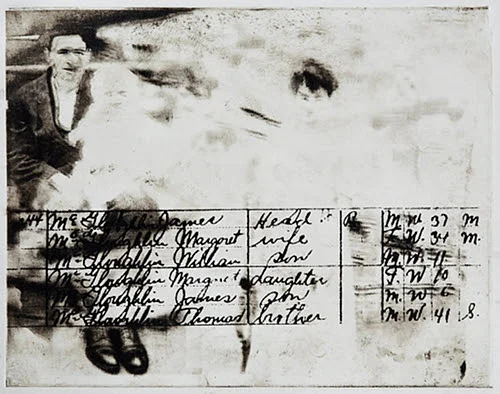
Print by Kate McGloughlin from her show “Requiem for Ashokan: Kate McGloughlin,’’ at Center for Contemporary Printmaking, Norwalk, Conn., through May 19. The gallery says the show is centered around the loss experienced by her ancestors due to the creation of the Ashokan Reservoir, in New York State. “The exhibition includes a handmade artist's book by McGloughlin as well as written text and audio files illustrating the story from the points of view of both the settlers and the immigrants. ‘‘
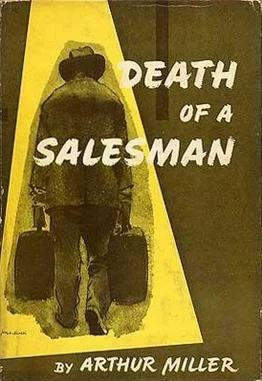
Don Pesci: Amazon strikes back at Willy Loman

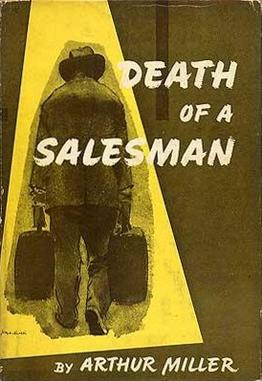
"Sometimes...it's better for a man just to walk away. But if you can't walk away? I guess that's when it's tough.”
—- The Willy Loman character in Death of a Salesman
The old saying is “You can’t fight City Hall.” That is partly true. City Hall is huge and more powerful than you. The gods of government have resources denied to the little people, but then government is supposed to be on the side of the little people, as is the media, a presumed joint support that tends to even the perpetual battle between the lions of the market place and … let’s call him Willy, after Willy Loman, the chief character in Arthur Miller’s play Death of a Salesman.
The Willy of this piece is a Connecticut salesman – there are many of them – who do business with Amazon. And Willy has a problem that will not be settled by the usual white-hatted Attorney General of Connecticut or legislators who weep over the little guy or the media, afflicters of the comfortable and comforters of the afflicted. You can bet your house on that.
In the world of commerce, Amazon is bigger than God. It seems only hours ago that the equivalent of City Hall in Connecticut, state government – not only in Connecticut and its environs, but everywhere in the nation – was breathing heavy in strenuous attempts to lure Amazon into their beds, the better to ravish the e-commerce giant with taxes.
New York Gov. Andrew Cuomo was dashed when Amazon, searching for a place in the Northeast to locate part of its headquarters, kissed the state goodbye. Pummeled by progressives in New York -- among them Mayor of New York City Bill de Blasio (birth name Warren Wilhelm Jr.) and U.S. Rep. Alexandria Ocasio-Cortez -- for having considered the governor's crony-capitalist $3 billion tax break, the company withdrew an offer to plop a new facility in New York that might have generated $27 billion in revenue.
“What happened is the greatest tragedy that I have seen since I have been in government,” moaned a grievously wounded Cuomo.
Crony capitalist blood began to beat like a tom-tom in former Connecticut Gov. Dannel Malloy’s veins, and it still swells in Gov. Ned Lamont’s heart. Both Malloy and Lamont are crony-capitalist governors -- is there any other kind in the high-taxed Northeast? Wouldn’t it be grand to net such a massive leviathan? Malloy moved on, Lamont is fishing still.
But salesman Willy is dangling at the end of an economic rope, and he writes, somewhat desperately:
“If I sell something on Amazon, they take 15% as a referral fee. This covers marketing, customer acquisition, and credit card fees. If I use Amazon to warehouse and ship the item, they then charge a pick and pack fee. That is also taxed. So if I do $1M a year in gross sales, Amazon ends up taking about 33%."
Adding the cost of doing business with Amazon, Willy notes “$330,000 in fees, with 6.35% sales tax is almost $21,000 a year. You should understand that Amazon is half of e-commerce. Third party sellers [like Willy] represent over half of their sales. Connecticut, through its tax additions, just made it impossible for 25% of e-commerce to do business here.”
Along with his note to Connecticut Commentary, Willy enclosed the “Dear Willy” letter he had received from god:
The "Dear Seller" letter Willy received read in part:
“Amazon is required to collect taxes on Selling on Amazon fees in Connecticut, the District of Columbia, Hawaii, South Dakota or West Virginia, based on each state’s tax rates. Selling on Amazon Fees include the Referral Fee, Subscription Fee, Variable Closing Fee, Per-item Fee, Promotion & Merchandising Fee, Refund Commission Fee, Checkout by Amazon, and Sales Tax Collection Fee... If your business is located outside Connecticut, the District of Columbia, Hawaii, South Dakota or West Virginia, we will not collect sales tax on the Selling on Amazon fee you pay.
“Amazon is required to collect taxes on FBA Prep Services in Arizona, Connecticut, Illinois or West Virginia, based on each state’s tax rates. FBA inventory prep fees include the Labelling Fee, Polybagging Fee, Bubblewrap Fee, Taping Fee, and Opaque Bagging Fee...
“You will be able to view the sales tax collected on your fees in the transaction details page of your Payments reports.”
Willy is a Connecticut native with deep roots in the state. He’s married with young childern. And the blade of crony capitalism has fallen bloodily on Willy’s neck, because he is, in fact, an independent businessman who is expected to shut up and pay. Crony capitalism is a complex arrangement in which tax heavy states such as Connecticut and New York supply seed tax money to super-leviathans like Amazon as inducements to locate in the states; the companies then pass along to its customers and third party salesmen like Willy the costs they incur from their location in a high tax state like Connecticut. But the tax axe invariably falls on Willy’s neck. Large companies are tax collectors, not tax payers. The real taxpayers are those who consume the products and services of companies such as Amazon – and small businesses like Willy’s from whom Amazon recovers the additional costs incurred by tax increases.
It will not take long for Willy to realize “Sometimes...it's better for a man just to walk away.” No one profits when Willy walks. It would be well for legislators to remember the line in Willy’s letter. Connecticut, along with a handful of other states singled out in Amazon’s “Dear Seller” letter, has “through its tax additions,” Willy writes, “just made it impossible for 25% of e-commerce to do business here.”
Don Pesci is a Vernon, Conn.-based columnist.
Posted by Don Pesci at 2:04 PM
Labels: Cuomo, Lamont, Malloy, Willy Loman
Jordan Rau: Feds cracking down on short-staffed nursing homes

The federal government accelerated its crackdown on nursing homes that go days without a registered nurse by downgrading the rankings of a tenth of the nation’s homes on Medicare’s consumer website, new records show.
In its update in April to Nursing Home Compare, the Centers for Medicare & Medicaid Services gave its lowest star rating for staffing — one star on its five-star scale — to 1,638 homes. Most were downgraded because their payroll records reported no registered-nurse hours at all for four days or more, while the remainder failed to submit their payroll records or sent data that couldn’t be verified through an audit.
\
If you would like a copy of this data, please email elucas@kff.org
“Once you’re past four days [without registered nursing], it’s probably beyond calling in sick,” said David Grabowski, a health policy professor at Harvard Medical School. “It’s probably a systemic problem.”
It was a tougher standard than Medicare had previously applied, when it demoted nursing homes with seven or more days without a registered nurse.
“Nurse staffing has the greatest impact on the quality of care nursing homes deliver, which is why CMS analyzed the relationship between staffing levels and outcomes,” the agency announced in March. “CMS found that as staffing levels increase, quality increases.”
The latest batch of payroll records, released in April, shows that even more nursing homes fell short of Medicare’s requirement that a registered nurse be on-site at least eight hours every day. Over the final three months of 2018, 2,633 of the nation’s 15,563 nursing homes reported that for four or more days, registered nurses worked fewer than eight hours, according to a Kaiser Health News analysis. Those facilities did not meet Medicare’s requirement even after counting nurses whose jobs are primarily administrative.
CMS has been alarmed at the frequency of understaffing of registered nurses — the most highly trained category of nurses in a home — since the government last year began requiring homes to submit payroll records to verify staffing levels. Before that, Nursing Home Compare relied on two-week snapshots nursing homes reported to health inspectors when they visited — a method officials worried was too easy to manipulate. The records show staffing on weekends is often particularly anemic.
CMS’s demotion of ratings on staffing is not as severe as it might seem, however. More than half of those homes were given a higher rating than one star for their overall assessment after CMS weighed inspection results and the facilities’ own measurement of residents’ health improvements.
That overall rating is the one that garners the most attention on Nursing Home Compare and that some hospitals use when recommending where discharged patients might go. Of the 1,638 demoted nursing homes, 277 were rated as average in overall quality (three stars), 175 received four stars, and 48 received the top rating of five stars.
Still, CMS’s overall changes to how the government assigns stars drew protests from nursing home groups. The American Health Care Association, a trade group for nursing homes, calculated that 36% of homes saw a drop in their ratings while 15% received improved ratings.
“By moving the scoring ‘goal posts’ for two components of the Five-Star system,” the association wrote, “CMS will cause more than 30 percent of nursing centers nationwide to lose one or more stars overnight — even though nothing changed in staffing levels and in quality of care, which is still being practiced and delivered every day.”
The association said in an email that the payroll records might exaggerate the absence of staff through unintentional omissions that homes make when submitting the data or because of problems on the government’s end. The association said it had raised concerns that salaried nurses face obstacles in recording time they worked above 40 hours a week. Also, the association added, homes must deduct a half-hour for every eight-hour shift for a meal break, even if the nurse worked through it.
“Some of our member nursing homes have told us that their data is not showing up correctly on Nursing Home Compare, making it appear that they do not have the nurses and other staff that they in fact do have on duty,” LeadingAge, an association of nonprofit medical providers including nursing homes, said last year.
Kaiser Health News has updated its interactive nursing home staffing tool with the latest data. You can use the tool to see the rating Medicare assigns to each facility for its registered nurse staffing and overall staffing levels. The tool also shows KHN-calculated ratios of patients to direct-care nurses and aides on the best- and worst-staffed days.
Jordan Rau: jrau@kff.org, @JordanRau
RELATED TOPICS

'In the evening wind'

I put your leaves aside,
One by one:
The stiff, broad outer leaves;
The smaller ones,
Pleasant to touch, veined with purple;
The glazed inner leaves.
One by one
I parted you from your leaves,
Until you stood up like a white flower
Swaying slightly in the evening wind.
White flower,
Flower of wax, of jade, of unstreaked agate;
Flower with surfaces of ice,
With shadows faintly crimson.
Where in all the garden is there such a flower?
The stars crowd through the lilac leaves
To look at you.
The low moon brightens you with silver.
The bud is more than the calyx.
There is nothing to equal a white bud,
Of no colour, and of all,
Burnished by moonlight,
Thrust upon by a softly-swinging wind.
“The Weather-Cock Points South, ‘‘ by Boston’s Amy Lowell (1874-1925)
David Warsh: My search for narratives
Have you been in a bookstore recently? The front tables are full of stories of stories of personal transformations of one sort or another: columnist David Brooks (his own and others), Michelle Obama, Tara Westover (the daughter of survivalists who left home for university), television personality Chelsea Handler, Mayor Pete Buttigieg. Economists, too, write books about identity and transformation. Here are three good ones.
I picked up Spending Time: The Most Valuable Resource (Oxford, 2019), by Daniel Hamermesh, with considerable interest. I put it down thinking that it was the best book about self-management I had seen since Charles Duhigg’s Habit (2012). The ways we choose to spend our time are fundamentally interesting. Hamermesh provides a wise and thorough audit of the budget.
The Wealth of Religions: The Political Economy of Believing and Belonging (Princeton, 2019), by Rachel McCleary and Robert Barro: a tour of the history of world religions contemplated as economic clubs, conferring benefits and exacting costs on members. Religious identity can be understood as a market, the authors say; conversion or continuance as a choice like any other. The effects on conduct of belief is the important thing. A wide-ranging survey of the social science literature is leavened by occasional glimpses of the authors, a Methodist philosopher and a Jewish economists, traveling the world together as students of religion.
An Economist Walks into a Brothel: and Other Unexpected Places to Understand Risk(Portfolio/Penguin, 2019), by Allison Schrager. A financial economist and journalist for Quartz, Schrager examines a series of off-beat occupations through the prism of what has been learned about the analysis of risk, foursquare in the tradition of Freakonomics (2006) and The Undercover Economist (2006).
I find I read very little these days that’s not narrative – biography, history, current affairs, or fiction. It is an occupational hazard, I suppose. Happy to think that there is plenty of good writing about self-improvement available to those who haven’t given up!
David Warsh, a Somerville, Mass.-based economic historian and a veteran columnist, is proprietor of economicprincipals.com, where this column first appeared.
'So Eden sank to grief'

Nature’s first green is gold,
Her hardest hue to hold.
Her early leaf’s a flower;
But only so an hour.
Then leaf subsides to leaf.
So Eden sank to grief,
So dawn goes down to day.
Nothing gold can stay.
— “Nothing Gold Can Stay,’’ by Robert Frost
People's pier at Rocky Point

Rendering of Rocky Point pier.
From Robert Whitcomb’s “Digital Diary,’’ in GoLocal24.com
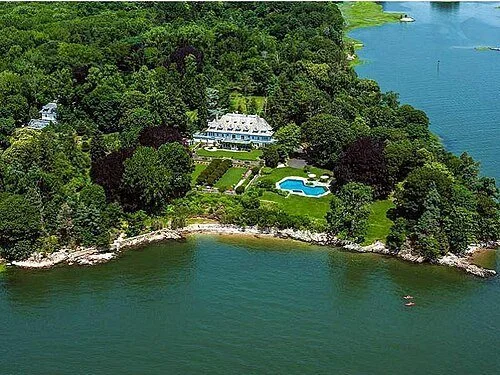
The Rhode Island Department of Environmental Management hopes that work on the new, 280-foot-long T-shaped pier at Rocky Point, in Warwick, scheduled to start within a few weeks, will be finished by year’s end. Too bad it won’t be ready for this summer, but the fact that it will be there soon is heartening. Long piers are potent magnets for people (and fish) and this one, with its shade structure, benches, railings and solar-powered lights, will be a more powerful one than most. That the new pier will provide easy access to saltwater fishing only 10 miles from downtown Providence will be a big draw, including out-of-state tourists.
I sure wish that there were more such public amenities, especially when the rich monopolize so much of the shoreline. Bring back the WPA!
Fun or fatal?

‘Incoming Tide’’ (oil on panel), by Lori Mehta, in the group show “Making a Splash,’’ at Edgewater Gallery, Boston.

'Deep roots and old loyalties'

Colorized photo of Wiscasset’s green in 1910.
“Many small towns I know in Maine are as tight-knit and interdependent as those I associate with rural communities in India or China; with deep roots and old loyalties, skeptical of authority, they are proud and inflexibly territorial.’’
— Paul Theroux, novelist and travel writer
Not affordable housing

“Back Bay,’’ by photographer Roger Palframan, in his show “City Visions,’’ at Copley Society of Art, Boston, through June 15.
Roger Palframan works in Boston but is from Britain. The society says that his most recent work, such as that in “City Visions,’’ focuses on “organized environments and the unexpected patterns and rhythms they produce. He utilizes shape, form and line to reveal detail and texture and create striking images.’’ His photographs “depict tight clusters of buildings, evoking the crowded feeling of city life while revealing the man-made beauty of each scene.’’
South Coast Rail will expand 'Greater Boston'

It’s hard to believe, but this is where the Fall River train station will be built.
Adapted from Robert Whitcomb’s “Digital Diary,’’ in GoLocal24.com
The best news for southeastern New England in a long while comes from Massachusetts Gov. Charlie Baker, who, fulfilling a campaign promise, is dedicating more than $1 billion in state bond revenue to the long-delayed extension of MBTA service to Fall River, New Bedford and Taunton. The plan is to have the project, called South Coast Rail, completed by late 2023. Taunton, Fall River and New Bedford are the only Massachusetts cities within 50 miles of Boston that don’t have commuter rail access to Boston.
The extension will make it easier for southeastern Massachusetts and eastern Rhode Island to share in the wealth and economic development of Greater Boston while making southeastern Massachusetts’s housing, whose costs are generally much lower than Boston’s and its suburbs’, more accessible to commuters. (And Rhode Islanders in Tiverton, Little Compton, on Aquidneck Island and Bristol may find it easier to take the train to Boston from Fall River than from Providence.)
In the long run, South Coast Rail will help make southeastern New England more prosperous, help restrain traffic congestion and reduce car traffic’s strain on the environment.
In any case, much needs to be done to get more people off the roads. Consider that a MassINC Polling Group recent survey of 1,200 Bay State registered voters found that 67 percent say that they’ve left work earlier or later to avoid Greater Boston’s traffic crush. Sixty-three percent describe themselves as angry /frustrated about the delays on the roads and the MBTA. The pollsters found:
"Among those with commutes longer than 45 minutes, about half (51%) have thought about changing jobs; 30% have considered leaving their area altogether.’’ The booming Metro Boston economy, fueled by technology, health care, finance and higher education, has kept the jobless rate low (latest: 3 percent) but eventually traffic congestion might cause many to leave the area. The best answer is more and better commuter rail service.
Please hit this link to learn more.
Gloria Oladipo: The biggest threat to free speech on American campuses

Statue of George Orwell outside BBC headquarters, in London. Orwell said:
"If liberty means anything at all, it means the right to tell people what they do not want to hear” — words from Orwell's proposed preface to his dystopian novel Animal Farm .
uaVia OtherWords.org
The school year may be winding to a close, but the tired argument about “attacks on free speech” on college campuses is alive as ever.
According to Donald Trump, liberal universities like Berkeley are allowing conservative students to be “assaulted” for sharing their beliefs on campus. To combat such violations, Trump signed an executive order requiring colleges to “protect free speech” or risk losing federal education funding.
I’m delighted to alert Trump and all those with similar concerns that free speech on campus, on both sides of the political aisle, is doing just fine — to a point.
College campuses, now more than ever, are home to a variety of organizations with differing political views: pro-Democratic and pro-Republican organizations, Students for Justice in Palestine and Students Supporting Israel, as well as other organizations with conflicting viewpoints.
More specifically, college campuses are fairly accommodating spaces for conservative students.
To date, no campus has banned any form of Trump paraphernalia, nor has any college persecuted a student for wearing pro-Trump symbols. College campuses routinely host conservative speakers: Cornell hosted Dick Cheney, while the University of Baltimore had Betsy DeVos speak at its commencement ceremony, among other examples.
Outside organizations actively use their influence to make sure that conservative students have their perspectives represented. Many conservative organizations are well funded by Republican politicians and wealthy Republican families.
Additionally, conservative news outlets such as Breitbart and the National Review regularly publish articles demonizing universities they say aren’t doing enough to protect their version of “free speech,” which appears to mean shielding campus conservatives from any kind of criticism or protest.
When the president and other conservatives talk about the precarious state of free speech, they’re often referring to efforts to stop hateful speech on campuses.
They’re angry that Milo Yiannopoulos wasn’t allowed to speak at Berkeley when he was planning to out undocumented students, putting them at risk of deportation. They’re angry that a student organization from Cornell University canceled conservative speaker Jannique Stewart because of her blatant homophobia.
College campuses have always been willing to host dialogue, even when it’s difficult. However, the president’s and other conservatives’ demand that outside speakers be permitted to freely antagonize the most marginalized students on their own college campuses shows a complete disregard for the safety and humanity of students.
So is free speech in jeopardy? Yes, but not in the way that conservatives traditionally conceive it.
Contrary to the usual story, many leftists within universities are persecuted for their beliefs. Lisa Durden, a black professor formerly at Essex County College, in New Jersey, was fired after defending a black-only Black Lives Matter event on Fox News. Jim Stump, a former professor at Bethel College, in Indiana ,was fired for defending evolution compared to the university’s predominantly creationist beliefs.
Trump’s executive order itself — and the outside intimidation that conservative publications exert on students — represents an actual attack free speech. Student groups, often made up of people of color and other marginalized demographics, are constantly demonized for organizing to stop hate in their communities. While conservative students speak freely, those in opposition to homophobes and racists are silenced.
Free speech, including hateful speech, has consequences — including freely spoken responses of anger and protest from others. Students shouldn’t be expected to be idle in response to hate speech.
Instead of shaming and censoring progressive students, more should be done to protect those who protest, fighting against hate and for their own humanity.
Gloria Oladipo is a Black woman sophomore at Cornell University and a permanent resident of Chicago.

Llewellyn King: The Green New Deal is political theater

Not since Newt Gingrich, Dick Armey and The Heritage Foundation cooked up the Contract with America in 1994, has there been such a clever piece of political stagecraft as the Green New Deal.
But whereas the Gingrich plan was able to make its way untrammeled through the congressional election and, in many of its goals, into law, the Green New Deal is by its nature more political theater than legislative agenda.
The Green New Deal is a crummy document, featuring many old and failed ideas from the past — stretching back to the 19th century. But as a banner, it is effective; as a call to arms, it works.
What its Republican critics have wrong is that in cleaving to the White House line on global warming, they underestimate the degree of real alarm which aberrant weather, more severe hurricanes, rising sea levels and daily reports of catastrophic ice melts in the Arctic and Antarctic will engender.
A television video of a starving polar bear, whose sea ice habitat is under threat from climate change, has an incalculable effect on public alarm. But that bear and the bad news of rising water in Miami, Norfolk, Va., and San Francisco cannot be denied and will be present at the balloting in 2020.
The Green New Deal document is too broad, too idealistic and too weakly drafted to be taken seriously as legislation. But as propaganda, it is brilliant.
As presented by the Democratic House-Senate duo of Rep. Alexandria Ocasio-Cortez, of New York, and Sen. Ed Markey, of Massachusetts, it is more than an environmental wish list. It is a far-left social and environmental game plan. It is a call to reorder, reengineer and convert our society from what we drive to what we eat. It delves into the crypt of failed socialist ideas and brings out the cadavers, like the one of a living, guaranteed wage.
Sadly, the Green New Deal will hang some of these old, failed ideas around the necks of many of the Democratic presidential hopefuls -- at least five have uncritically endorsed it.
Recently, I went to hear one of those contenders, Rep. Tulsi Gabbard, of Hawaii. In a few words, she impressed me; then, in a few more, she appalled me.
As someone who has served two deployments in the Middle East, as an enlisted woman and as an officer, Gabbard has something to say about foreign policy: She says no more wasteful foreign wars. But as an environmental champion, she has swallowed whole the weary fictions of the left.
Gabbard determines all electricity should be generated by renewables, defined as solar and wind. For good measure she throws in a denunciation of nuclear power, concentrating on the abandoned San Onofre plant, between Los Angeles and San Diego. To make her point, she says that the waste would last for 500,000 years, which should get a sharp rebuke from scientists.
Nuclear, she should be told, is progressive. It is science at the beginning of its age of discovery with new products and ideas swirling around as they have not since the 1950s. Small, factory-built reactors with various new technologies are being readied for market. The Holy Grail of nuclear fusion is closer than ever.
The science of carbon capture and storage, she should also be told, is evolving.
The green world needs to know that wind and solar are limited in that they cannot produce more power than they reap. Solar is confined by the amount of sun that falls on a given collector, wind by the amount of ambient breeze blowing though one windmill. That is guaranteed by the second law of thermodynamics.
Nonetheless, the message of the framing-word green in the Green New Deal is a clear call to arms. The rest of it should be put down to Ocasio-Cortez’s youth and inexperience and Markey’s foggy hopes.
But that does not mean that the next election will not, to rephrase a Clinton slogan, hinge on “It’s the climate, stupid.” The Green New Deal makes a nifty bumper sticker.
Llewellyn King is executive producer and host of White House Chronicle, on PBS. His email is llewellynking1@gmail.com.
'Some Assembly Needed'

“7 Ladies’’ (bowling pins, furniture spindles, handles, wooden beads, drum sticks, darning eggs, wooden combs), by Michael Stasiuk, in the group show “Some Assembly Needed,’’ at the Art Complex Museum, Duxbury, Mass. through Sept. 1. The other artists in the show are: Martin Ulman, Michael Ulman, Donna Rhae Marder, Lisa Kokin, Yuri Tozuka, John McQueen, Tom Deininger, Leo Sewell, Aaron Kramer and Jee Hye Kwon.
Jessicah Pierre: 'Baby bonds': A revolutionary way to close the racial wealth divide

— Photo by RealtOn12
Via OtherWords.org
The gap between America’s ultra-wealthy and the rest of us is growing dramatically as wealth continues to concentrate at the top at the expense of the rest of us. One major symptom of this economic rift is the racial wealth divide, which is greater today than it was nearly four decades ago.
The median Black family today owns $3,600 — just 2 percent of the $147,000 of wealth the median white family owns. At the extreme top, the Forbes 400 richest Americans own more wealth than all Black households, plus a quarter of Latinx households, combined.
When analyzing the racial wealth divide, it’s important to note that this is a systemic issue — a result of policies, not individual behavior.
Darrick Hamilton, the executive director of the Kirwan Institute for the Study of Race and Ethnicity at Ohio State, emphasizes that the key ingredient of how successful you’ll be in America isn’t how hard you work individually — it’s how wealthy your family is.
For instance, the racial wealth gap continues to grow despite rising rates of Black employment and education. These other things simply can’t make up for enormous, systemic disparities in family wealth.
Hamilton’s proposed solution? “Baby bonds.”
Baby bonds are federally managed accounts set up at birth for children and endowed by the government with assets that will grow over time. Neither the child nor their parents would be able to access these funds until the child reaches adulthood, at which point they could use the money to get an education, purchase a home, or start a business.
Baby bonds could play an essential role in balancing the historical injustices that created the racial wealth divide.
One recent study shows a baby bond program has the potential to reduce the current black-white wealth divide more than tenfold. Another shows that had a baby bond program been initiated 40 years ago, the Latinx-white wealth divide would be closed by now — and the black-white wealth divide would have shrunk by 82 percent.
Baby bonds are an essential, universal, race-conscious program to provide everyone with an opportunity to start life off secure, irrespective of their race and the financial position in which they’re born.
And they’re just one of 10 bold solutions offered in a new Institute for Policy Studies report on closing the racial wealth divide, which counts Hamilton among its coauthors.
“Large scale policy change,” it concludes, “is the most promising path to addressing the racial wealth divide and many asset poor whites as well.” The report also recommends solutions ranging from Medicare for All and higher taxes on the wealthy to setting up a congressional committee to study reparations.
Just like all other issues of inequality in America, the racial wealth divide is a structural problem that requires structural solutions. In order to create economic prosperity for every American, we must start with taking bold action to close the racial wealth divide once and for all.
Jessicah Pierre is the inequality media specialist at the Institute for Policy Studies.

Don Pesci: Humpty Dumpty's answer to a progressive's confusion

Humpty Dumpty and Alice. From Through the Looking-Glass. Illustration by John Tenniel
Connecticut State Rep. Josh Elliot, a progressive Democrat from Hamden, views the state budget as “a moral document that can be used to create a more equitable and fair society,” The Hartford Courant tells us. The paper quotes Elliot on the point: “Are you taking an economic frame and saying ‘what can we do to grow GDP at all costs?’ … Or are you taking a moral and ethical frame and saying ‘what can we do to build up a just society?’ And I think those two questions are at loggerheads right now.”
There is a welter of confusion here. The point that Elliot appears to be making is that progressives like himself view the economy as having a moral dimension lost to free-marketers, i.e., redundantly rich capitalists concerned only – note the devil word “only” -- with growing the Gross Domestic Product (GDP). It would not be possible in Elliot’s view for a free-marketer such as, say, Fredrick Hayek, author of The Road To Serfdom -- a ruthless attack against the collectivist ethos that informs socialism, communism, progressivism and fascism -- to be a moralist.
In The Constitution Of Liberty, Hayek identifies one indispensable “moral rule for collective action… The most important among the principles of this kind that we have developed is individual freedom, which it is most appropriate to regard as a moral principle of political action. Like all moral principles, it demands that it be accepted as a value in itself, as a principle that must be respected without our asking whether the consequences in the particular instance will be beneficial.”
This is how a true moral philosopher addresses morality. In Elliot’s progressive universe Hayek’s overriding moral principle of political action – the sustenance of individual liberty – is subservient to his own undisclosed overriding moral principle, which is antagonistic to the liberty of the subject. Under the progressive scheme of things, individual liberty is sacrificed on the altar of an “equitable and fair society” created without regard to real-world circumstances by modernist super-moralists like Elliot, who know better than the little people who participate in a free market what services and goods should be provided to them. To Elliot, the liberty of the subject celebrated by moral philosophers such as Hayek is immoral.
Elliot’s framing permits only two possibilities: an economic frame that allows only the growth of products “at all costs” and an economic frame, moral and ethical, that is concerned primarily with building up a “just society.” There is no via media in Elliot’s view. His is a stark and merciless either-or: either an immoral free market society or an ethical progressive-socialist society. In Communist governments, the governed are not permitted to choose between the two.
Progressivism is the shadow of socialism, which is why so many progressives here in the United States, still a free market country, support the candidacy for president of Bernie Sanders, running for the Democratic presidential nomination but a socialist wolf in wolf’s clothing. Progressivism differs from socialism only in degree, not in kind. And, of course, socialism historically has been the nursery bed of both communism and fascism. Mussolini and Hitler both were socialists before they became fascists, and Stalin embraced the Marxism of the Communist Manifesto because he correctly recognized a visionary Communist scheme of “property ownership by the proletariat” as a perfection of socialism. There is another reason as well: Only under a Communist government is the ruling elite powerful enough to suppress the liberty of the people, which Hayek and other classical liberals such as Adam Smith characterized as the indispensable “moral rule of collective action.”
Communists, socialists and progressives – three peas in the same liberty denying pod – care little for the real-world consequences of their theoretical utopias.
When Alice objects to Humpty Dumpty’s use of words to signify opposing meanings, he offers her a lesson in tyrannical government. Humpty Dumpty has misused the word “glory” to signify “a nice knock-down argument.”
Alice protests, “But ‘glory’ doesn't mean ‘a nice knock-down argument.’"
Humpty Dumpty snarls scornfully, “When I use a word, it means just what I choose it to mean -- neither more nor less.'
“The question is,” said Alice, “whether you can make words mean so many different things.”
“The question is,” said Humpty Dumpty, “which is to be master -- that's all.”
Elliot may make the word “moral” mean whatever he wishes it to mean. After all, Democrats are now masters of Connecticut governance; they hold commanding positions in General Assembly, the state’s constitutional offices, and the governor’s office as well. And nearly half of the Democrat ruling majority is composed of quasi socialist progressives like Elliot. Still, the real meanings of words are stubborn things.
According to a Yankee Institute piece published in May of 2018, “The Tax Foundation’s annual ranking of states based on state and local income tax collection placed Connecticut second in the nation, trailing only New York, for the most money collected per resident. Connecticut collected $2,279 per person through both local and state income taxes. Massachusetts ranked fourth and Rhode Island 20th. The national average per capita tax rate was $1,144, meaning Connecticut has almost doubled the average tax burden.” Is there a connection between the loss of assets – salaries are assets too – and the loss of liberty?
Depressing figures such as these will increase under Governor Ned Lamont’s recent revenue expansions. In what sense is it “moral” for Connecticut’s government to increase the burden of taxation further, when we know that excessive taxation, a great deal of which is used to enhance the salaries of tax-consuming public employees, tends to drive to other states both Connecticut’s rich and middle class taxpayers, thus depriving those in need of dwindling tax resources?
Indeed, in what sense is it moral to support a government now engaged in encouraging infanticide? Connecticut is contiguous to New York, which now winks at infanticide; and, one may be certain that socially progressive governments – New York and Connecticut – sooner or later will swap their social-justice DNA, without mentioning the outsized proportion of African American women obtaining abortions relative to white women. The Centers for Disease Control and Prevention’s 2016 report points out that black babies made up a whopping 35 percent of the total abortions reported in 2013, although blacks represent only 13 percent of the U.S. population.
Moral? To what cleverly invented Decalogue do progressives point to justify such a disparity in abortion between black and white women?
Don Pesci is a Vernon, Conn.-based essayist.