
Vox clamantis in deserto






Beach bathos

“Abandoned, Truro MA’’ (lambda print), by Eleanor Steinadler, in a group photography show at Galatea Fine Art, Boston, May 1-June 2.
Looking for the old routes

“Old Souvenir in Transit’’ (encaustic), by Nancy Spears Whitcomb
'Down to the Puritan marrow'

“The Ice Hole’’, by Maine painter and writer Marsden Hartley (1877-1943)
When the world turns completely upside down
You say we’ll emigrate to the Eastern Shore
Aboard a river-boat from Baltimore;
We’ll live among wild peach trees, miles from town,
You’ll wear a coonskin cap, and I a gown
Homespun, dyed butternut’s dark gold color.
Lost, like your lotus-eating ancestor,
We’ll swim in milk and honey till we drown.
The winter will be short, the summer long,
The autumn amber-hued, sunny and hot,
Tasting of cider and of scuppernong;
All seasons sweet, but autumn best of all.
The squirrels in their silver fur will fall
Like falling leaves, like fruit, before your shot.
2
The autumn frosts will lie upon the grass
Like bloom on grapes of purple-brown and gold.
The misted early mornings will be cold;
The little puddles will be roofed with glass.
The sun, which burns from copper into brass,
Melts these at noon, and makes the boys unfold
Their knitted mufflers; full as they can hold
Fat pockets dribble chestnuts as they pass.
Peaches grow wild, and pigs can live in clover;
A barrel of salted herrings lasts a year;
The spring begins before the winter’s over.
By February you may find the skins
Of garter snakes and water moccasins
Dwindled and harsh, dead-white and cloudy-clear.
3
When April pours the colors of a shell
Upon the hills, when every little creek
Is shot with silver from the Chesapeake
In shoals new-minted by the ocean swell,
When strawberries go begging, and the sleek
Blue plums lie open to the blackbird’s beak,
We shall live well — we shall live very well.
The months between the cherries and the peaches
Are brimming cornucopias which spill
Fruits red and purple, sombre-bloomed and black;
Then, down rich fields and frosty river beaches
We’ll trample bright persimmons, while you kill
Bronze partridge, speckled quail, and canvasback.
4
Down to the Puritan marrow of my bones
There’s something in this richness that I hate.
I love the look, austere, immaculate,
Of landscapes drawn in pearly monotones.
There’s something in my very blood that owns
Bare hills, cold silver on a sky of slate,
A thread of water, churned to milky spate
Streaming through slanted pastures fenced with stones.
I love those skies, thin blue or snowy gray,
Those fields sparse-planted, rendering meagre sheaves;
That spring, briefer than apple-blossom’s breath,
Summer, so much too beautiful to stay,
Swift autumn, like a bonfire of leaves,
And sleepy winter, like the sleep of death.
— “Wild Peaches,’’ by Elinor Wylie (1885-1928), a sometime resident of Connecticut
First delicacy of spring

Fiddlehead ferns
“Fiddle ferns (aka fiddlehead ferns}, if you know where to find them, are the first delicacy of spring {in New England}, appearing even before asparagus. Plunge them briefly in rapidly boiling water, and serve with butter, salt, and if you like, lemon juice. Chopped almonds may be added, or the ferns may be served on hot buttered toast.’’
— Sara B.B. Stamm, in Favorite New England Recipes (1972)
Chris Powell: New Haven's biggest problem

New Haven.
Anyone who fears for manufacturing in Connecticut should visit New Haven, where it seems that half the indignation in the country is produced.
The outrage of the moment is what may be a case of mistaken identity last week in which police officers from Hamden and Yale University shot at a car they stopped on Dixwell Avenue in New Haven because it fit the description of a car said to be involved in an attempted armed robbery a mile away in Hamden. A passenger in the car was wounded but no evidence linking the car or its occupants to the robbery has been found. The state's attorney's office and the state police have taken over the investigation.
Horrible as such a mistake by the police here would be, cases of mistaken identity in police work happen all the time and some have far worse results. Some are caused by the negligence of officers, others by devastating coincidence. This one may have been compounded by the officers' lack of judgment if not trigger-happiness.
But because the occupants of the stopped car are black, the protests in New Haven presume without evidence that the incident was part of a nationwide police scheme to murder black people. "No justice, no peace, no racist police," the protesters chant, though the Hamden officer in the incident is black himself and first worked as an officer in New Haven, where he was trained.
The protesters, many of them students at Yale, want the officers fired and prosecuted immediately, before any investigation. That reflects the university's political correctness. They also want the university police disarmed and suburban officers forbidden to pursue criminal suspects into New Haven.
So much for the mandatory regionalism advocated by New Haven Sen. Martin M. Looney. But the rest of the New Haven area might be glad to have less to do with the city if its miserable demographics were not producing so much of the region's crime. Over the weekend prior to the incident on Dixwell Avenue four people were injured in three shootings in New Haven, and even as protesters were chanting away at another rally last Thursday night, a riot broke out at a street party elsewhere in the city, one teenager getting shot and another injured by flying glass.
Of course there were no protests of that violence, since it was typical for New Haven, nor any expressions of sympathy for those assigned by government to protect society against the anarchy of city life. In this respect New Haven is not much worse than Hartford or Bridgeport.
Connecticut does not hold its police to account as well as it should but it has been improving. There are mechanisms for accountability and some recognition that officers in all towns represent the state as a whole. So if Connecticut is really to be a state, the pursuit of violent felons cannot stop at town lines.
So why, despite their worsening demographics, are Connecticut's cities not only largely walled off politically but, as the protests in New Haven show, trying to wall themselves off from due process of law and even law itself? For neither can Connecticut be a state if law in the cities is only a polite fiction.
Chris Powell is a columnist for the Journal Inquirer in Manchester, Conn.
Molecules in the sun

The cement pond on the Cohasset, Mass., common.
“I lay on the lush green of the Commons watching you traipse through
the knee-deep
water of a cement pond, splashing and kicking
each molecule of water momentarily suspended….’’
— From “Many Little Suns,’’ by Renuka Raghavan
That New Hampshire squirrel

“All the time we were there, you could see that dead squirrel right out in plain sight. Whenever anyone mentions New Hampshire, that squirrel is always what I think of. I bet I’ve thought about that squirrel a million times.”
―Connecticut-based novelist Wally Lamb in I Know This Much Is True
Before the storm?

“Morning Calm #2 (30 x 20 limited edition AluminaArte print) taken in Harwich, on Cape Cod, by Bobby Baker. Copyright Bobby Baker Fine Art.

David Warsh: Mueller report, 4 newspapers and the table-turner crew

I read three papers on April 19, the day after the Mueller Report, redacted by Trump appointee Atty. Gen. William Barr, was released. The Washington Post gave over its front page to five stories, eleven bylines, with the best single story I read all day, by Dan Balz, as the centerpiece; an editorial (“The Opposite of Exoneration”), and eight op-ed columns arrayed across two full pages, plus a sixteen-page special section. Twenty pages altogether.
Likewise The New York Times – four stories and a lengthy graphic filling the front page, nine bylines; eight more full pages inside (nine stories, fifteen bylines, and a two-page graphic); a full-page editorial, a David Brooks column and an op-ed piece; plus a very effective special section – thirteen pages from the report reproduced full-size and lightly annotated below. Twenty five pages altogether.
The front page architecture of The Wall Street Journal was, I thought, the most compelling: two stories (“Trump efforts to block probe detailed” and “Congress grapples to find next step,” four bylines, and a large graphic above the fold; below, three more stories about other matters: Girl Scout cookie season, Boeing 737 MAX trainer disputes between the US and Canada, and years of deferred maintenance at Notre-Dame Cathedral; and with two more Mueller Report stories, two bylines, and some excepts on two full pages inside, plus a Gerald Seib column.
Three and a half pages altogether – and yet the Journal’s editors’ and reporters’ interpretation of the report was almost exactly the same as that of The Times and The Post teams, and nearly as complete.
Two things seemed clear from the coverage:
1. Consideration of impeachment proceedings may be about to turn serious, not those yeasty first-term House Democrats, but among the Democratic Party leadership – House Speaker Nancy Pelosi, Majority Leader Steny Hoyer, and Judiciary Committee Chairman Jerry Nadler and their lieutenants. The standard wisdom has been that a bill of impeachment with no conviction from the Senate would be a distraction.
But as WSJ reporters Siobhan Hughes and Rebecca Ballhaus noted, some Democrats considered that Special Counsel Robert Mueller had delivered a broad account of misconduct that resembled the formerly secret “Road Map” that Special Counsel Leon Jaworski provided to Congress on March 1, 1974. Jaworski’s filing provided a series of guideposts for lawmakers contemplating the impeachment of President Richard Nixon. It may not eventuate, but as the breadth of Mueller’s indictment of the President’s conduct sinks in, Speaker Pelosi’s earlier judgment that impeachment is “just not worth it” will get a second going-over and a fuller discussion over the next several months. See this paper-leading story in today’s Post, by Devlin Barrett and Matt Zapotosky, to understand what Mueller was thinking.
2. Donald Trump’s re-election committee emailed supporters after the report came out that it is “time to turn the tables… [to] investigate the liars who instigated this sham investigation.” Would-be table-turners have three investigations underway or almost ready to go. Two of them have to do with the Steele dossier, a 35-page compendium of allegations prepared by a former British intelligence expert on Russia, which had been partly financed by the Clinton campaign and the Democratic National Committee though it had been started by Republican foes of Trump. The provenance and reliability of the document has been a matter of contention ever since.
The first such probe is that of Justice Department Inspector General Michael E. Horowitz. He announced a year ago that, at the request of then Attorney General Jeff Session, he would investigate whether the FBI’s application for court-authorized counterintelligence surveillance of “a certain person” had been adequately predicated. It has become clear since that the person was former Trump campaign foreign policy adviser Carter Page, for whom a surveillance warrant was obtained shortly after he left the campaign on the basis of information contained in the Steele dossier.
The second is the Justice Department task force that Attorney General Barr promised to form to investigate whether what he termed FBI “spying” on Trump campaign associates was undertaken for good reason. “I think spying on a political campaign is a big deal,” Barr told a Senate subcommittee earlier this month, explaining that he wanted to look into both “the genesis and the conduct” of the FBI inquiry. “I think spying did occur,” he said. “The question is whether it was adequately predicated. And I’m not suggesting that it wasn’t adequately predicated. But I need to explore that.”
Meanwhile, ticking away somewhere in FBI headquarters is a third probe, a fully predicated investigation by several FBI field offices of the Clinton Foundation, the existence of which, in effect, started it all. Former FBI deputy director Andrew McCabe was fired for revealing the existence of the probe to a WSJ reporter on the eve of the 2016 election. Inspector General Horowitz subsequently excoriated McCabe and recommended a criminal investigation. McCabe has insisted he was authorized to leak the news to protect the FBI’s reputation for disinterestedness; Horowitz concluded that he broke the rules to protect himself and then lied about it to fellow agents. Few details of the Clinton Foundation investigation have leaked out.
In February, in “Making Music Together,” I suggested that the four English-language newspapers I read were doing a good job of keeping track of the news, fashioning a narrative of U.S. politics in particular. I compared entering the worlds of their news pages to listening to a daily quartet: “The Times is a daily violin, exciting and emotional; the WPost resembles a viola, warmly supportive of The Times’ s themes, but less jittery; the WSJ is something of a cello, understated and lower-pitched; and the FT, a different voice altogether, is more like a piano.” Sometimes the composition they produce is not harmonious. Some days they don’t seem to be performing on the same page. But they are playing by the same rules of human curiosity. Each paper has contributed its share of major scoops.
The exceptions to this four-part narrative I find every evening are the editorial pages of The Wall Street Journal. (While I read their columnists, I don’t pay much attention to the editorials of The Times or The Post.) For two years, the WSJ editorialists have been at war with the leadership of the FBI. They are furious at former FBI Director James Comey for having let Hillary Clinton off the hook for her email transgressions. They consider the interest FBI and other US intelligence agencies took in the Russian dealings of Donald Trump, before and after the election, to have been unwarranted. I learn from them. I try hard to understand their point of view. But often they seem as scornful of the fair-play ideals of their own news pages as… well, Donald Trump. “Obstruction of Nothing” was their collective appraisal of the Mueller report.
WSJ columnist Holman Jenkins Jr., a fervent table-turner, confided to readers earlier this month, “I suspect at least one major news organization in this country will soon decide it can no longer afford to be dragged against its will to acknowledge the doings of US intelligence agencies in the 2016 election. It will want to get on top of the story.” Apparently he was right. An off-lead story in The New York Times was headlined “Renewed Scrutiny for a Disputed Dossier on the President” — three bylines, 1,750 words, a well-balanced assessment.
Meanwhile, The Times’s editorial page returned to a favorite hobby horse, intimating in the headline of “The Great Russian Heist of 2016” that Russian interference had somehow stolen the election. In “Targeting Bill Barr,” the WSJ rejoiced that “the country finally appears to have an attorney general who can take the heat.” The good news is that the story of the war against (and within) the FBI is headed for the cooler, more rational confines of the news pages of four great newspapers.
xxx
Andrew W. Marshall died last month, at 97. The Times, the WSJ, The Post, the FT, The Economist, and National Review published memorials. As the founding director of the Pentagon’s Office of Net Assessment, his job for 42 years was seeing things through the eyes of others – not just those of America’s opponents, but those of American leaders as well.
Raised in Detroit, Marshall made hi way to the University of Chicago in the years after World War II – to the economics department and the Cowles Commission. He found himself listening to music with Tjalling Koopmans and playing bridge with Kenneth Arrow, but it was Frank Knight, the author of Risk, Uncertainty, and Profit, who made the most durable impression on him.
By then Knight was on his way out of what would become the “second” Chicago school, but Marshall acquired from him a life-long taste for the jiu-jitsu possibilities of dissenting views expressed in the presence of powerful orthodoxies. In 1949, W. Allen Wallis sent him to the Washington office of RAND Corp., where he remained until he joined the Pentagon under Defense Secretary James Schlesinger, in 1973.
Marshall’s appreciation of the strengths and weaknesses of the Soviet Union and the People’s Republic of China enhanced America’s strategic position for forty years.
David Warsh, an economic historian and veteran columnist, is proprietor of economicprincipals.com, where this essay first ran. He is based in Somerville, Mass.

Boston has huge solar-energy potential
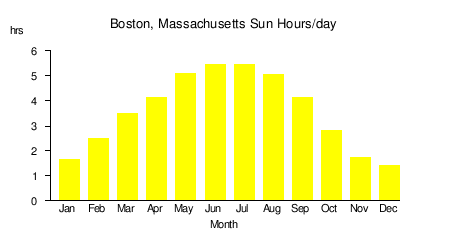
From ecoRI News (ecori.org)
The amount of solar-energy capacity installed in Boston has tripled since 2013, according to a new report.
“In cities like Boston, the sunlight hitting the roofs of our homes, businesses, and institutions is an abundant source of pollution-free energy,” said Ben Hellerstein, state director for Environment Massachusetts. “We've made progress in harnessing this energy, but there’s a lot more Boston can do.”
Boston ranked ahead of Philadelphia but behind Burlington, Vt., for installed solar capacity per capita at the end of 2018.
The report, “Shining Cities 2019: The Top U.S. Cities for Solar Energy,’’ is the sixth annual report from Environment America and Frontier Group ranking America's large cities by the total and per-capita amount of solar energy capacity installed within city limits.
From 2013 to 2018, solar-energy capacity more than doubled in 45 of 57 of the country’s largest cities.
All of the cities in the study could install far more solar-energy capacity than they currently have. In Boston, the technical potential for solar-energy generation on small buildings is equal to more than nine times the amount of solar-energy capacity currently installed, according to Environment Massachusetts.
City officials are drafting a new version of Boston’s climate action plan to reach carbon neutrality by 2050. According to Carbon Free Boston, a report from the Boston Green Ribbon Commission and the Institute for Sustainable Energy at Boston University, up to 15 percent of Boston’s electricity could be generated by rooftop solar panels installed on buildings within city limits.
Last summer, environmental advocates and experts delivered a letter to Mayor Marty Walsh outlining their recommendations for Boston’s climate plan, including a requirement for new buildings to be built with solar panels on their roofs.
And then it eats you

“Silent Encroachment’’ (acrylic on canvas), by Nancy Wood, in her show “Shaping Space, at Galatea Fine Art, Boston, May 1-June 2. The gallery says:
“This series is a visual experiment in stretching, expanding and compressing geometric and optical images. The resulting hypnotic, pulsing, floating patterns, founded in logic, crossover into the emotional realm and provide access to the subconscious. The act of multiplying, dividing, adding, subtracting, and repeating elements by eye and intuition result in a visual translation of an internal experience of the world. Geometry gives way to something more organic and infinite, similar to the evolutionary process in nature. There is an element of trial and error but an opportunity arises to adapt or change course, like nature in an effort for survival.’’

Llewellyn King: Trump, business and government

Trump Tower, at 721 Fifth Ave., in Manhattan
There is a persistent belief that business people are what you need in the Oval Office. It was one of the credentials on Donald Trump’s resume.
That, too, may be one of the underlying weaknesses of Trump’s presidency.
When Trump was elected, he thought he was the new proprietor of the United States, as though he had bought it in a deal. He had paid his money and acquired a new company: Donald Trump, chairman, chief executive officer and majority stockholder.
Trump came to Washington to run his new company. He won, as he likes to say, and the United States was his with which to do what he liked, where his whim was law. Pull out of a treaty, abrogate an agreement, decide the moral acceptability of the sexual preferences of the staff, and fire, fire, fire.
Rupert Murdoch — Trump’s man Friday in the media — famously said he had the right to say what was published in his newspapers. He asserted a kind of divine right of the proprietor; a concept that was eroding as the concept of the newspaper as a public service was gaining ground. Murdoch was not interested in the public service approach. Neither is Trump. They sit next to each other in the pea pod of history.
Trump’s view of the presidency as a proprietorship, the wholly owned property of the CEO, is seen in his actions and even more in his frustrations. If he were sitting atop a giant corporation, his word would be law; he could hire and fire at will, dictate a course of action and maybe retract it. The boss gets what the boss wants, particularly if it is a privately held outfit, like the Trump real estate empire.
Clearly, Trump thought that was what he would do when he took over the United States. His attempts to govern by fiat illustrate that frustration.
Trump, who is not a reader, had not schooled himself in the realities of governance, the give and take of Washington, the grand negotiation that is democracy, imperfect but purposeful — the great purpose being the republic and its well-being.
The organizing principle of a business is profit: It must take in more money than it spends. In real estate you bet against rising demand, borrow and buy. That is not a guide as to how to run the United States, or any other country.
The assets and liabilities balance differently. For example, NATO is an asset and Russia a liability.
Statesmen want to project power rather than use it. Trump wants to use it, to have dominion over the whole government and allies. He wants Congress to act only as permissive board of directors, not an equal partner. If the deal fails, he wants to be able to walk away. In government, and especially in international relations, you cannot walk away. The deal is nonetheless your deal, your failure.
I have watched other business people come to Washington and make, on a smaller scale, the same mistakes. They failed to understand the system; that to get things done you bend the system, not break it.
These, the benders, are the consummate Washington hands, often with institutional memories. They are the ones who get things done.
There is another side to this coin, and that is that no knowledge of business is a detriment to a leader. Sen. George McGovern, D-South Dakota, after his unsuccessful bid to win the 1972 presidential election, lamented that he wished he had understood business better when he was candidate lashing out at big business.
Lashing out at business is a standard approach by today’s Democratic hopefuls. It does not sit well with a lot of voters, particularly as most are employed by business. Those who think that kicking posterior is all that is needed in Washington are as wrong as those who think that business needs a boot in the same place.
The C suite does not fit in the Oval Office but, conversely, politicians have often been ignorant of the disciplines of business. Some tension is constructive; too much, and the nation loses.
On Twitter: @llewellynking2
Llewellyn King is executive producer and host of White House Chronicle, on PBS. He is based in Rhode Island and Washington, D.C. His email is llewellynking1@gmail.com.
So stop whining

“Our New England climate is mild and equable compared with that of the Platte. ‘‘
— Francis Parkman (1823-1893), Boston-based historian of North America
'Silence and Stones'

From Alan Metnick’s photo show “Silence and Stones,’’ at the Providence Art Club through May 9. This exhibition will share work created during the artist's many trips to Jewish cemeteries in Poland.

Sam Pizzigati: Class war hits the water

Via OtherWords.org
We typically think of urban neighborhoods when we think of gentrification — places where modest-income families thrived for generations suddenly becoming no-go zones for all but the affluent.
The waters around us have always seemed a place of escape from all this displacement, a more democratic space where the rich can stake no claim. The wealthy, after all, can’t displace someone fishing on a lake or sailing off the coast.
Or can they? People who work and play around our waters are starting to worry.
Local boat dealers and fishing aficionados alike, a leading marine industry trade journal reports, have begun “expressing concern about the growing income disparity in the United States.”
What has boat dealers so concerned? The middle-class families they’ve counted on for decades are feeling too squeezed to buy their boats — or even continue boating.
“Boating has now priced out the middle-class buyer,” one retailer opined to a Soundings Trade Only survey. “Only the near rich/very rich can boat.”
Mark Jeffreys, a high school finance teacher who hosts a popular bass fishing webcast, worries that his pastime is getting too pricey — and wonders when bass anglers just aren’t going to pay “$9 for a crankbait.”
Not everyone around water is worrying. The companies that build boats, Jeffreys notes, seem to “have been able to do very well.” They’re making fewer boats but clearing “a tremendous amount” on the boats they do make.
In effect, the marine industry is experiencing the same market dynamics that sooner or later distort every sector of an economy that’s growing wildly more unequal. The more wealth tilts toward the top, research shows, the more companies tilt their businesses to serving that top.
In relatively equal societies, Columbia University’s Moshe Adler points out, companies have “little to gain from selling only to the rich.” But that all changes when wealth begins to concentrate. Businesses can suddenly charge more for their wares — and not worry if the less affluent can’t afford the freight.
The rich, to be sure, don’t yet totally rule the waves. But they appear to be busily fortifying those stretches of the seas where they park their vessels, as Forbes has just detailed in a look at the latest in superyacht security.
Deep pockets have realized that people of modest means may not take well to people of ample means — “cocktails in hand” — floating “massive amounts of wealth” into their harbors. In 2019’s first quarter alone, the International Maritime Bureau reports, unwelcome guests boarded some 27 vessels and shot up seven.
Anxious yacht owners, in response, are outfitting their boats with high-tech military-style hardware.
One new “non-lethal anti-piracy device” emits pain-inducing sound beams. Should that sound fail to dissuade, the yachting crowd can turn on a “cloak system” from Global Ocean Security Technologies. The “GOST cloak” can fill the area surrounding any yacht with an “impenetrable cloud of smoke” that “reduces visibility to less than one foot.”
The resulting confusion, the theory goes, will give nearby authorities the time they need to come to a besieged yacht’s rescue.
But who will rescue the boating middle class? Maybe we need an “anti-cloak,” a device that can blow away all the obfuscations the rich pump into our national political discourse, the mystifications that blind us to the snarly impact of grand concentrations of private wealth on land and sea.
Or maybe we just need to roll up our sleeves and organize for a more equal future.
Sam Pizzigati co-edits Inequality.org for the Institute for Policy Studies. His latest book is The Case for a Maximum Wage.

Chris Powell: 'God Bless America' because it can improve itself
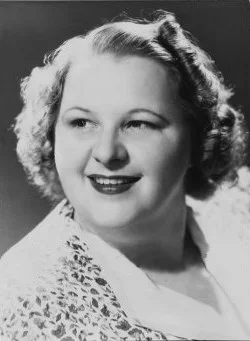
Kate Smith in 1948
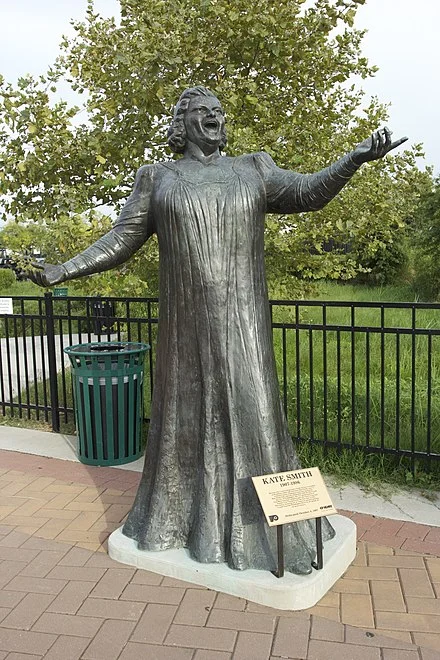
Statue of Kate Smith in Philadelphia, removed this month amid allegations she was racist.
Nothing demonstrates both the political self-satisfaction and the psychological insecurity of the present than the rush to take historical figures out of the context of their time and deny them any fair evaluation. Such is the case with the sudden proscription by the New York Yankees and Philadelphia Flyers of Kate Smith, the popular singer from more than a half century ago whose famous rendition of Irving Berlin’s song "God Bless America" lately was being played at Yankees baseball games and Flyers hockey games.
Smith became prohibitively politically incorrect the other day when it was discovered that in the 1930s she recorded two songs that are being described as racist, which is too harsh.
One song, "That's Why Darkies Were Born," was recorded not just by Smith but also by the black singer and civil rights crusader Paul Robeson. The song is more plausibly construed as expressing sympathy and admiration for black people for refusing to let their brutally unfair burdens crush them spiritually.
The other song, "Pickaninny Heaven," which Smith sang in a movie in 1933, uses that racially derogatory term and racial stereotypes in the course of her consoling black orphans about an afterlife in which they would see their mothers again. The song's stereotypes are awful but its intent was patronizing, not vicious.
While Smith was renowned as "the songbird of the South," she does not seem to have left much of a record in regard to racial issues. But she was a national heroine for providing encouraging music during the Great Depression and then, during World War II, for singing for the troops and helping to sell more war bonds than any other celebrity. So beloved was she that, introducing her to the king and queen of the United Kingdom in 1939, President Franklin D. Roosevelt famously said, "Miss Smith is America."
President Reagan seems to have more or less concurred, awarding Smith the Medal of Freedom in 1982.
Now all Smith's good work is apparently to be erased and a statue of her that was erected outside the Flyers' arena because she was a fan of the team has been removed as if she had been more politically retrograde than the rest of the country. But presumably the Yankees' and Flyers' box offices and vendors will continue making change with dimes, on which Roosevelt's image remains engraved, though he put U.S. citizens of Japanese descent in internment camps during World War II and was elected president four times with the support of the segregationist South. (At least Roosevelt won the war, thereby defeating a few monstrous tyrannies.)
With Smith's "God Bless America" banished, maybe Yankees and Flyers games will stick to the national anthem, "The Star-Spangled Banner," though its tune is much harder to sing and though its lyrics were written by Francis Scott Key, who, even as he lauded "the land of the free and the home of the brave," owned slaves, just as George Washington and many other Founding Fathers did. Their statues aren't coming down yet.
Where does this politically correct nonsense end? Cannot most people understand that American history especially is part of what is called the ascent of man, the gradual if grossly uneven improvement of moral standards in pursuit of justice? If only the perfect can be honored or even remembered fondly, history has no point.
Chris Powell is a columnist for the Journal Inquirer, in Manchester, Conn.

In search of small grocery stores

Adapted from Robert Whitcomb’s “Digital Diary,’’ in GoLocal24.com
Did the now-settled strike at Dutch-owned Stop & Shop permanently boost business at New England-based supermarket chains, such as Shaw’s, Market Basket and Dave’s Marketplace? And how much at the few remaining small grocery stores?
Wouldn’t it be nice if we had more of the latter, places – better than 7-Elevens -- that you could nip into and buy small quantities of stuff? Yes, small grocery stores’ items are more expensive than those in the big supermarkets, with their efficiencies of scale, but faster and more pleasant. (Reminds me of Benny’s vs. Home Depot.) I think that New England towns and cities would be considerably more agreeable if we had more of those little grocery-and-other-stuff stores you see in New York City that we often called “Korean markets’’ when I lived there because so many were owned by Korean-American, or bodegas, with their Latin American focus. Very handy.
All this reminds me of the store called simply “Central Market,’’ in the small downtown of the village I lived I as a boy. The smells of ground coffee, (overripe?) fruit, fish, some of it perhaps just brought in from the nearby harbor, and other goods were rich, and the floor was covered with sawdust, which wouldn’t pass an OSHA inspection now. Eventually a big A&P supermarket went up on the edge of town, closer to a new superhighway (that all too soon became a long parking lot in rush hours). The owners of Central Market couldn’t compete and so the store was eventually shut down. So now there was no grocery store we could walk or bike to. Another triumph for the car culture.
'Text as object'

Painting by Lola Baltzell, in the show “Writing in the Margins: Lola Baltzell, Carol Blackwell, Amy Solomon and Valerie Spain,’’ at Maud Morgan Arts Chandler Gallery, Cambridge, Mass., through May 17. The gallery says: “We all share a passion for books and text, and the idea of text as object. We are all readers and book lovers, but also relish in altering books, searching for meaning in random words, foreign languages we don't understand. The title evokes many associations for us, as artists, but also for viewers as well. ‘‘
Jon Reidel/Rick Dalton: Scaring up New England college students amidst challenging demographics
Seal of the University of Vermont
From The New England Journal of Higher Education, a service of The New England Board of Higher Education (nebhe.org)
As an unprecedented number of colleges and universities close their doors forever while others struggle to survive, a deep pool of prospective students—and the key to accessing them—is hiding in plain sight.
Students from rural America attend college at lower rates (59%) than their urban (62%) and suburban (67%) counterparts and comprise only 29% of all students ages 18-24 enrolled in higher education, according to the National Student Clearinghouse. Colleges in New England and upstate New York face a double dilemma: They’re in locations with downward demographic trends and low college attendance rates.
This past fall, the majority of New England public colleges and universities saw enrollment declines, according to data collected by the New England Board of Higher Education. Overall, 17% of the small colleges in New England have closed permanently in the past five years with an additional 25% likely to shut their doors by 2025, according to educational consultant Michael Horn, co-founder and distinguished fellow at the Clayton Christensen Institute for Disruptive Innovation.
One of the two most rural states in the country is Vermont (the other is Maine) where only 60% of high school students attend college—a rate that ranks last in New England and 42nd nationally. These numbers contributed to the closures of three higher ed institutions, all announced within the last few months: Green Mountain College, Southern Vermont College and the College of St. Joseph.
Vermont Gov. Phil Scott and other leaders in education, business and government have recognized that low numbers of college-educated citizens will have a negative impact on the state’s economy. Unless Vermont produces more skilled and educated citizens, as measured by the reliable indicator of college degrees, 132,000 jobs will go unfilled over the next decade, and that’s why they launched Advance Vermont to boost the share of Vermonters who earn two-year or four-year degrees or other credentials of value by 15% to 70% by 2025.
David Reese, president of Southern Vermont College, saw the demographics as a crisis when he told Inside Higher Ed (IHE) last fall, “New England is in a bad way, especially the rural parts.” Vermont’s high school population, which typically supplies about one-third of Southern Vermont’s students, is “plummeting—and we haven’t even hit the 2026 ‘baby bust’ from the recession,” IHE added.
Hiding in plain sight: an obvious answer to the higher education crisis
Despite this ominous trend, there are organizations with proven track records of helping colleges reach qualified students and helping schools and communities beat the odds. A recent University of Vermont study found that 88% of students assigned to a college counselor through the Vermont Student Assistance Corporation (VSAC) enrolled in college. Yet research also shows that there’s a layer of students who were first-gen (the first in their families to attend college) and from low-income households who fail to attend college simply because no one’s helping them figure out how to do so.
CFES Brilliant Pathways, in rural Essex, N.Y. (two miles west of Vermont on Lake Champlain), has a 90% success rate getting students to pursue college. “Nonprofits like CFES have track records that few, if any, can match, in moving underserved students from rural and urban areas to and through college,” said Harvard Business School professor Joe Fuller.
Erick DuShane, a student who participated in the CFES Brilliant Pathway program for five years at his K-12 rural school in New York and is now a junior at the University of Rochester, says his postsecondary aspirations were raised after visiting campuses and realizing he was college material.
Replicating a successful model: school-college partnerships
One way to attract students from rural areas to college would be to replicate existing programs that have been successful in other places. CFES set up a partnership between the University of Vermont and Christopher Columbus High School in the Bronx in 2001 that has brought 440 New York City students to UVM over the past 18 years.
The innovative collaboration helped diversify UVM’s undergraduate population and benefited the university’s overall recruitment strategy. At the same time, the partnership changed the life trajectories of students like Manny Tejada, a first-generation college student who interned in UVM admissions as an undergrad and today serves as an associate director there.
“I’m now in a position to give back by helping students like myself get into college,” says Tejada, whose fiancé, Enmy Soler, also went to UVM from a CFES school in the Bronx and recently earned her master’s degree in education while working in the UVM Women’s Center.
“CFES has played a major role in diversifying our undergraduate population and continues to have an impact nationwide in helping underserved students get into college,” says UVM President Thomas Sullivan.
UVM recently approached CFES about starting a similar partnership at Burlington High School, in its own backyard. The local partnership, spurred by Burlington High’s interim director of guidance, Tim Wile, would provide college counseling, mentoring, tutoring and financial literacy to Burlington students—whether they intend to enroll at UVM or not.
“Our state needs more citizens prepared to fill thousands of anticipated job openings in Vermont over the next decade that require two- or four-year degrees or a credential of value,” said Vermont Lt. Gov. David Zuckerman at the 2018 CFES National Conference in Burlington. “Getting more kids college- and career-ready is good for our economy, our colleges and certainly our residents.”
The Burlington partnership and others like it will benefit rural institutions such as Castleton University and Northern Vermont University, as well as such colleges as Champlain and Saint Michael’s that are in small cities surrounded by rural areas. The results could be transformative. If just six more students from each of Vermont’s 75 high schools chose to attend college, the Green Mountain State would move from the bottom 10 states for college-attendance rates to among the top 25. In raw numbers, that’s 450 more students per year who would go to college, not insignificant given that only 5,000 high school seniors graduate each year in Vermont.
CFES Brilliant Pathways numbers reveal the impact first-gen students could have on college enrollments. CFES has helped 100,000 students across the country attend college, with a 75% “on-time” completion rate.
CFES’s current strategic plan calls for the nonprofit to take on another cohort of 100,000 students over the next eight years. We estimate that 25,000 of those young people will be from New England and New York and that these students would not pursue higher education without mentoring and the development of college pathway knowledge and essential skills. This is a recipe not just for lifting kids out of poverty, but for keeping colleges open and stimulating the economy across our region.
Jon Reidel is director of advancement and communications at CFES Brilliant Pathways. Rick Dalton is president and CEO of CFES Brilliant Pathways.
Related Posts: