
Vox clamantis in deserto





Chris Powell: More and more taxes to fund Conn.'s 'pension and benefit society'; roommate hate wasn't racial
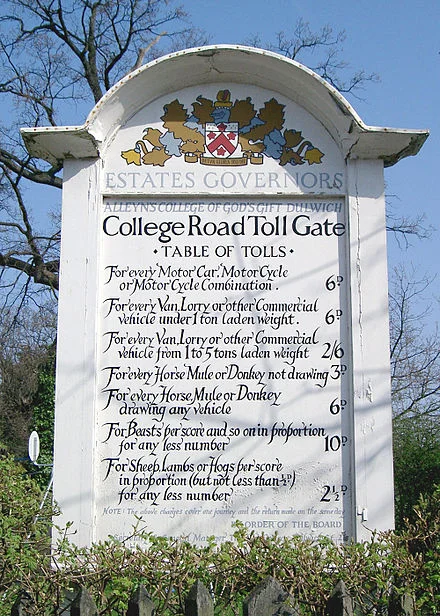
What if half the effort being made by Connecticut Gov. Dannel Malloy and the General Assembly to raise revenue for state government was put into trying to economize? For that matter, what if any effort was?
But that is mere dreaming. The agenda of the governor and the legislature’s Democratic majority is not just to impose highway tolls, raise the gasoline tax, the sales tax, and the cigarette tax and authorize municipalities to impose their own sales tax, but also to expand casino gambling and authorize sports betting, the latter initiatives being regressive taxes, taxes that fall disproportionately on the poor, whom Democrats always profess to be serving.
Advancing these plans last week, the Democrats overlooked the latest scandal of their administration. The University of Connecticut announced that a department head at its medical school was being demoted for not noticing that a professor had disappeared for months while still being paid his $200,000 annual salary. Police say he had been murdered by his wife.
So the department head will lose her title and the $30,000 annual stipend that goes with it but still will be paid $300,000 in salary and another $83,000 per year in fringe benefits -- even more than is paid to the university’s “chief diversity officer,” who, at $220,000 per year, recently warned students that they might need mental health treatment if they encountered conservative political views. She was not demoted.
It seems that the more state government raises revenue, the more oblivious it becomes to its failure to accomplish its nominal objectives, the more it functions mainly as a pension and benefit society. There is an election this year but it already seems too late.
* * *
DUE PROCESS PREVAILS: Hartford Superior Court last week refused to let racial politics interfere with justice. A white former student at the University of Hartford was granted probation for her disgusting abuse of her former roommate, who is black, though the local chapter of the National Association for the Advancement of Colored People clamored to have the perpetrator charged with a hate crime.
The former roommates plainly did hate each other but, as Hartford State’s Attorney Gail Hardy, who is black, told the court, there was no evidence that racial animus was behind the crime. The victim then concurred with the probation.
A legal precedent that white and black college students can hate each other for reasons other than race is modest progress. That a black prosecutor refused to be demagogued by other black people into denying due process of law for a white person was heroic.
* * *
A SETBACK FOR BOUGHTON: Among the candidates for governor, Danbury’s nine-term Republican mayor, Mark Boughton, may be the best prepared, having also been a teacher, state legislator, and municipal association official and possessing a calm demeanor and sense of humor.
But a few months ago Boughton had surgery for a benign tumor on the brain and at a political event last week he suffered a seizure he attributes to poor diet and failure to take medication to prevent seizures. He says he will do better on those accounts while resuming his campaign.
Will the incident hurt his candidacy or just make more people eager to run with him as lieutenant governor? Politics can be like that.
Chris Powell is a columnist for the Journal Inquirer, in Manchester, Conn., and a frequent contributor to New England Diary.
'Windows to the Woods'

Painting by Tamara Gonda in her joint show with Nancy French "Windows to the Woods,'' April 6-May 5, at the Whitty Gallery in the Wild Salamander Creative Arts Center, Hollis, N.H.
The gallery says: "The beauty of the natural world is not lost on these two artists. The peaceful wooded scenes painted by Tamara Gonda are perfectly complemented by the graceful curved branches in the sculptural pieces hand crafted by Nancy French. Celebrate spring with a visit to this exhibit.''
"When I see birches bend to left and right
Across the lines of straighter darker trees,
I like to think some boy's been swinging them.
But swinging doesn't bend them down to stay
As ice-storms do. Often you must have seen them
Loaded with ice a sunny winter morning
After a rain. They click upon themselves
As the breeze rises, and turn many-colored
As the stir cracks and crazes their enamel.
Soon the sun's warmth makes them shed crystal shells
Shattering and avalanching on the snow-crust—
Such heaps of broken glass to sweep away
You'd think the inner dome of heaven had fallen.
They are dragged to the withered bracken by the load,
And they seem not to break; though once they are bowed
So low for long, they never right themselves:
You may see their trunks arching in the woods
Years afterwards, trailing their leaves on the ground
Like girls on hands and knees that throw their hair
Before them over their heads to dry in the sun.
But I was going to say when Truth broke in
With all her matter-of-fact about the ice-storm
I should prefer to have some boy bend them
As he went out and in to fetch the cows—
Some boy too far from town to learn baseball,
Whose only play was what he found himself,
Summer or winter, and could play alone.
One by one he subdued his father's trees
By riding them down over and over again
Until he took the stiffness out of them,
And not one but hung limp, not one was left
For him to conquer. He learned all there was
To learn about not launching out too soon
And so not carrying the tree away
Clear to the ground. He always kept his poise
To the top branches, climbing carefully
With the same pains you use to fill a cup
Up to the brim, and even above the brim.
Then he flung outward, feet first, with a swish,
Kicking his way down through the air to the ground.
So was I once myself a swinger of birches.
And so I dream of going back to be.
It's when I'm weary of considerations,
And life is too much like a pathless wood
Where your face burns and tickles with the cobwebs
Broken across it, and one eye is weeping
From a twig's having lashed across it open.
I'd like to get away from earth awhile
And then come back to it and begin over.
May no fate willfully misunderstand me
And half grant what I wish and snatch me away
Not to return. Earth's the right place for love:
I don't know where it's likely to go better.
I'd like to go by climbing a birch tree,
And climb black branches up a snow-white trunk
Toward heaven, till the tree could bear no more,
But dipped its top and set me down again.
That would be good both going and coming back.
One could do worse than be a swinger of birches.''
-- "Birches,'' by Robert Frost
Historic preservation seen as bonanza for Rhode Island
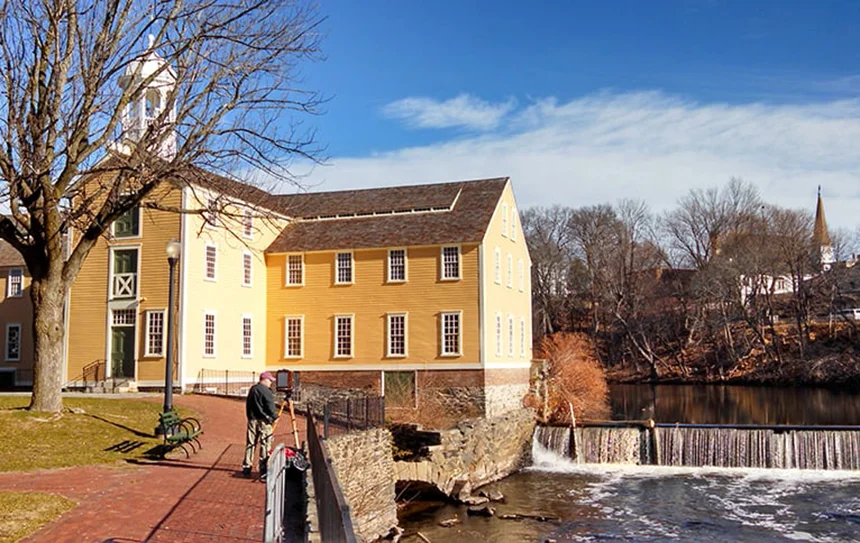
The late 18th Century Slater Mill, in Pawtucket, R.I., is considered one of the birthplaces of the American Industrial Revolution.
From ecoRI News (ecori.org)
Historic preservation pays dividends for Rhode Island’s economy and environment, according to a recent study commissioned by The Preservation Society of Newport County and Preserve Rhode Island. The report by nationally recognized economist Donovan Rypkema of PlaceEconomics is the first to analyze Rhode Island's preservation sector on four main themes: heritage tourism, historic tax credits, quality of life, and sustainability.
“What we found is Rhode Island’s historic cities, towns and neighborhoods attract visitors, residents, businesses and investment,” Rypkema said. “The assets of past centuries are the base of a 21st-Century economy and are often locations of choice for today’s Rhode Islanders.”
Preserve Rhode Island executive director Valerie Talmage noted that the study took a comprehensive look “at the diverse ways in which our lives are positively impacted by historic preservation.”
Some of the key findings in the 37-page report include:
Rhode Island welcomes 9.8 million heritage visitors annually, who add nearly $1.4 billion to the state’s economy.
Spending by heritage visitors creates 19,000 direct jobs, and another 7,000 indirect jobs.
Since 2001, 326 historic buildings have been rehabilitated in 26 of the state’s 39 cities and towns using state historic tax credits.
Every dollar the state invests in a tax-credit project generates $10.53 in economic activity.
Nearly 60 percent of Rhode Island’s population growth since 2000 has occurred within local historic districts, which comprise only 1 percent of the state's land area.
Preservation is green, as the reuse of one 40,000-square-foot historic building is equivalent to taking 24 to 28 cars off the road and preserving 4.2 acres of open space.
“In 1956, Preservation Society founder Katherine Warren said, ‘Historic preservation is an economic asset as well as an aesthetic one.’ This report proves how visionary she really was,” Preservation Society of Newport County executive director Trudy Coxe said. “Historic preservation has become an important economic driver for the state and investing in our historic resources is a direct investment in our future.”
Funding for the study was provided by the van Beuren Charitable Foundation, Rhode Island Historical Preservation & Heritage Commission, and the National Trust for Historic Preservation. Washington, D.C.-based PlaceEconomics is a private sector firm with three decades of experience analyzing the economic impacts of historic preservation.
An all-day conference scheduled for next week will also address the impacts of historic preservation on Rhode Island’s economy.
Grow Smart Rhode Island’s annual Power of Place Summit, March 29 at the Rhode Island Convention Center in downtown Providence, will explore how the state with the “greatest concentration” of historic buildings and neighborhoods in America can capitalize more fully on this strategic asset.
The conversation will attempt to answer this question: How can Rhode Island regain its momentum for redeveloping historic buildings and neighborhoods?
Discussion panelists are: Scott Wolf, Grow Smart’s executive director; Kristin DeKuiper, partner at Holland & Knight LLP; state Rep. Kenneth Marshall, D-Bristol; Kaity Ryan, deputy chief of staff for Preservation Society of Newport County; Clark Schoettle, executive director of the Providence Revolving Fund; and Talmage from Preserve Rhode Island.
Beginning in 2002, the “pace of breathing new life into our state’s bountiful supply of old historic buildings increased when Rhode Island stepped up with an ambitious State Historic Tax Credit program to supplement a similar tax credit at the federal level,” according to Grow Smart.
“Entrepreneurs responded by fixing and re-purposing hundreds of historic buildings — many underutilized or vacant.”
The result attracted new people, business, jobs and vitality to historic centers across Rhode Island. However, momentum slowed when the program was eliminated in 2008 and then was reinstated with limited funding in 2013.
Currently, 32 projects representing a proposed quarter-billion-dollar investment in Rhode Island’s economy remain on the program’s waiting list, according to Grow Smart.
America's fascination with guns

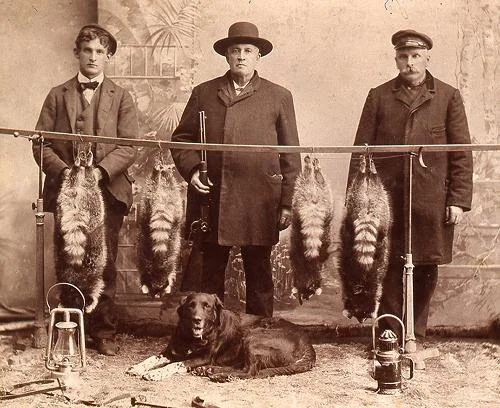
"Coon Hunters'', c. 1895 (toned gelatin silver print), by John G. Ellinwood, in the show "Gun Country,'' at the Addison Museum of American Art, at Phillips Academy, Andover, Mass., through July 31.
This show looks at representations of firearms in the Addison's own collection as a way of analyzing the origins of America's fascination with guns. It's accompanied by "Speaking of Guns," a sound art installation created in collaboration with Phillips Academy students.
The museum says that the objects in "Gun Country" are being shown together for the first time, "inviting discussion on the cultural significance of guns in America and how it has remained strong through the years. In a time when guns are a pervasive and sometimes polarizing topic of discussion in America, 'Gun Country' is a timely examination of how it all began.''
Write here…
Llewellyn King: Time to bring back earmarks?
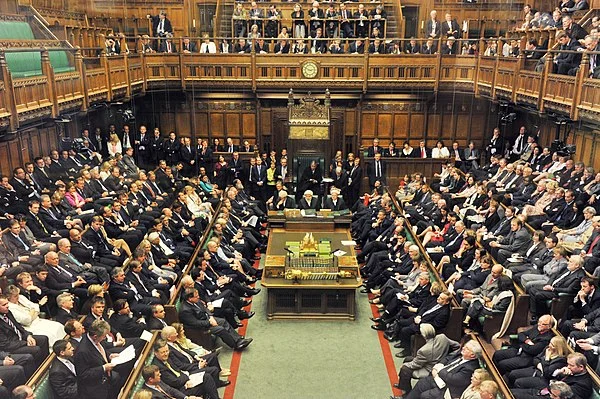
The remarkably intimate House of Commons chamber.
To know what is wrong with Congress, look to Britain. Look to what is wrong with the venerable British system and the House of Commons.
The fact is rank-and-file members of both institutions have little role in government.
In Britain, it has always been accepted that members of Parliament vote with their parties except when there are rare free votes on issues where there is conscience but no policy – for example the vote to abandon the death penalty in 1969, which was a free vote with members voting their consciences.
The sense of the impotence that the British system engenders in ordinary backbenchers was well explained in the autobiography of Matthew Parris, a former Conservative MP who served in the House of Commons when Margaret Thatcher was prime minister. He concluded that he could do much more for Britain out of Parliament and abandoned it to become one of the nation’s most successful political writers and broadcasters. He says of his time in Parliament, “To be an MP is to feed your ego and starve your self-respect.” Political television star and former Republican congressman from Florida, Joe Scarborough, might concur.
Do members of Congress, particularly in the House, feel as frustrated? Many have told me so.
Richard Arenberg, who worked for Democrats on Capitol Hill for 34 years and now teaches at Brown University, told me, “There is not much point in being a member of the House if you are in minority.”
Members of that chamber, particularly in opposition, have insignificant effect on the governance for which they came to Washington to carry out. The outcome on most issues is predetermined by the leadership of the majority.
The U.S. system is tolerant of those who defy the party in a way the British system is not, but we have moved, since the Gingrich Revolution of 1994, to a practice that is closer to parliamentary than it ever has been. We, the leadership decides, you vote.
Members do not control what comes to the floor and are expected to vote with their parties most of the time. They are the proverbial potted plants, revered socially and stunted professionally. They can shine in committee work, but they do not affect the outcome in legislation.
In this system, with the rigidity that has evolved, Congress is not the place to be if you are member without a leadership role.
Therefore, it is no surprise that bipartisanship is so hard to come by these days and compromise has been largely abandoned as a part of the work on Capitol Hill.
Although the parties seethe internally, Democrats tugged between the center and the left, Republicans torn between their center and their right, there is no common ground between them, little bipartisan agreement.
Craig Shirley, a noted biographer of Ronald Reagan, points out that compromise was possible when there were liberal New England Republicans and conservative Southern Democrats. That overlap, he says, is gone and with it, possibility for compromise.
What is to be done? One answer, suggested by President Trump, hinted by House Speaker Paul Ryan and floated around Washington in the think tanks, is to bring back earmarks so that members of Congress can fight for projects for their districts, trade support and have a greater sense of purpose.
Although earmarks, as they became more profligate, got a bad name (the “Bridge to Nowhere” in Alaska) and were denounced by the fledgling Tea Party as congressional sin incarnate, they gave purpose to members -- something to bring home.
At a recent meeting of the American Enterprise Institute, Jason Grumet, founder and president of the Bipartisan Policy Center, said, “What do we have to lose? The current congressional process is broken.”
My guess is that it will happen, if the Tea Party Republicans can be mollified, and it will be an enhancement of Congress, not a diminishment.
You see, there is a bridge I would really like to see built close to where I live, so I can get to the beach faster in summer.
Llewellyn King is executive producer and host of White House Chronicle, on PBS. His e-mail is llewellynking1@gmail.com.
Aetna CEO touts return to community-based healthcare

Via Cambridge Management Group (cmg625.com)
FierceHealthcare reports that Aetna CEO Mark Bertolini “is pushing for a return to community-based healthcare even as the insurance company prepares to merge with retail pharmacy giant CVS.''
“Critics of the merger have said the deal will hurt competition and cut local services. But Bertolini said the $69 billion deal with CVS doesn’t change the fact that the healthcare industry is moving toward a renaissance of community-based care,” the news service reported.
“Everything is going back to community,” Bertolini said at a conference in California. “I think the best way to manage the kind of shift we’re in is to go back to community and build smaller and smaller governance models to help support the growth of this. What you’re in essence building is a marketplace in the community around health.” Aetna is based in Hartford and CVS in Woonsocket, R.I.
To read more, please hit this link.
'Blurred in thin rain'
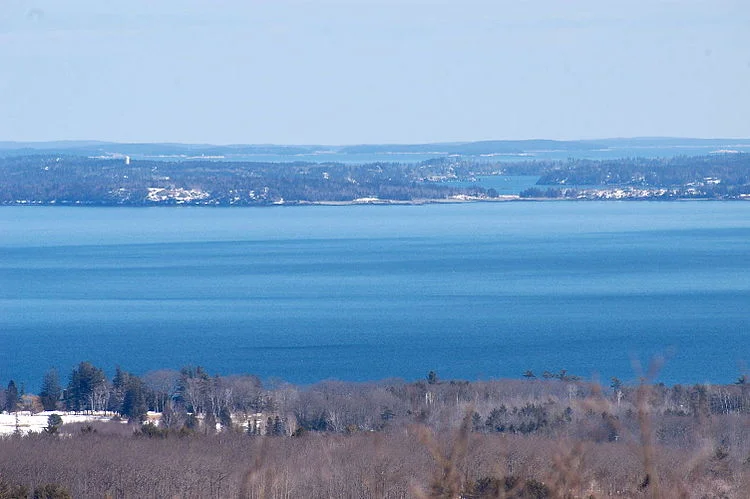
The Thorofare.
“Still weeks to ice-out
in upcountry lakes. Here
on the coast, salt-ice
gets lifted off coves
by gales and steep wave-
lengths. Tides flow hard
between the mainland
and islands. Out in
the Thorofare, two fish-
boats, blurred in thin rain,
march back and forth like
small boys’ small toys’’
From “Beyond Equinox,.’’ by Philip Booth, who spent much of his life in the beautiful mid-coast Maine town of Castine. The "Thorofare'' is the passage between Vinalhaven and North Haven Islands. (It's usually spelled "Thoroughfare''). Castine is the home of the famous Maine Maritime Academy, seen below.
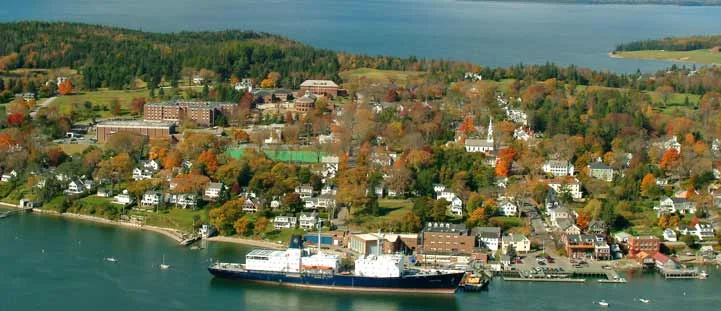

Winter scene in Castine.
'Gala time' in the 'sugar bush'

"Sugar shack,'' where the sap is boiled to produce syrup, surrounded by its "sugar bush''.
"Then 'sugaring off' was a gala time, with parties in the "sugar bush,'' where dippers of syrup were poured into the snow to harden for the guests....Sweet, sour pickles were often served to whip up jaded appetites. They ate sugar between the buttered layers of pancakes four tiers thick; and songs were sung and jokes were cracked and even the most dour old farmer became genial at the thought that the long cold mountain winter was over and spring would soon be there.''
-- Ernest Pole, on the sugar harvest after the 1938 hurricane, in his book The Great White Hills of New Hampshire (1946)
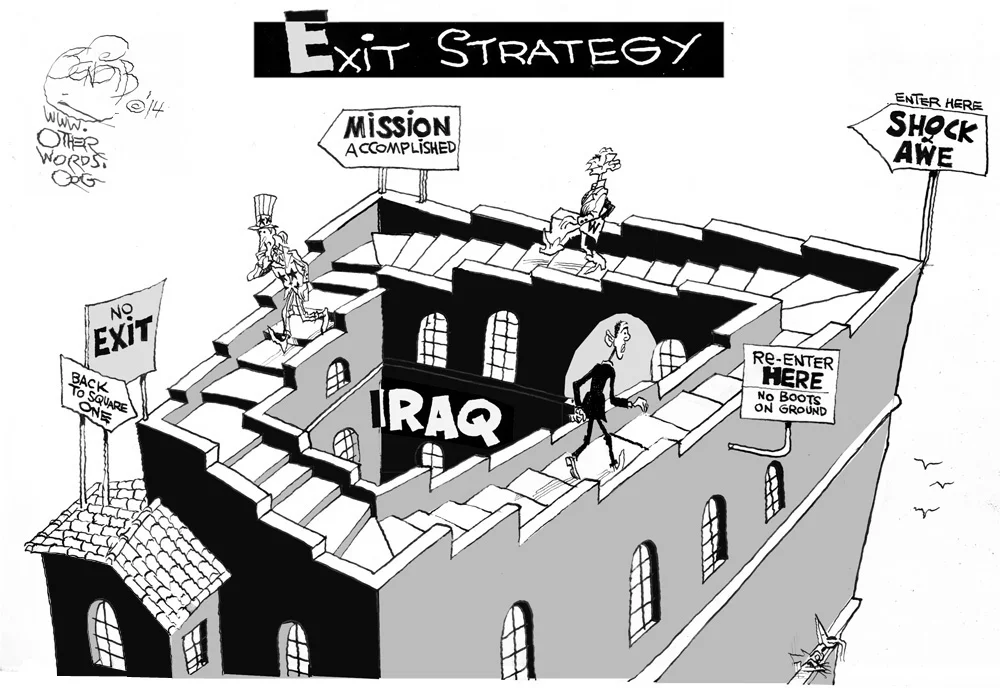
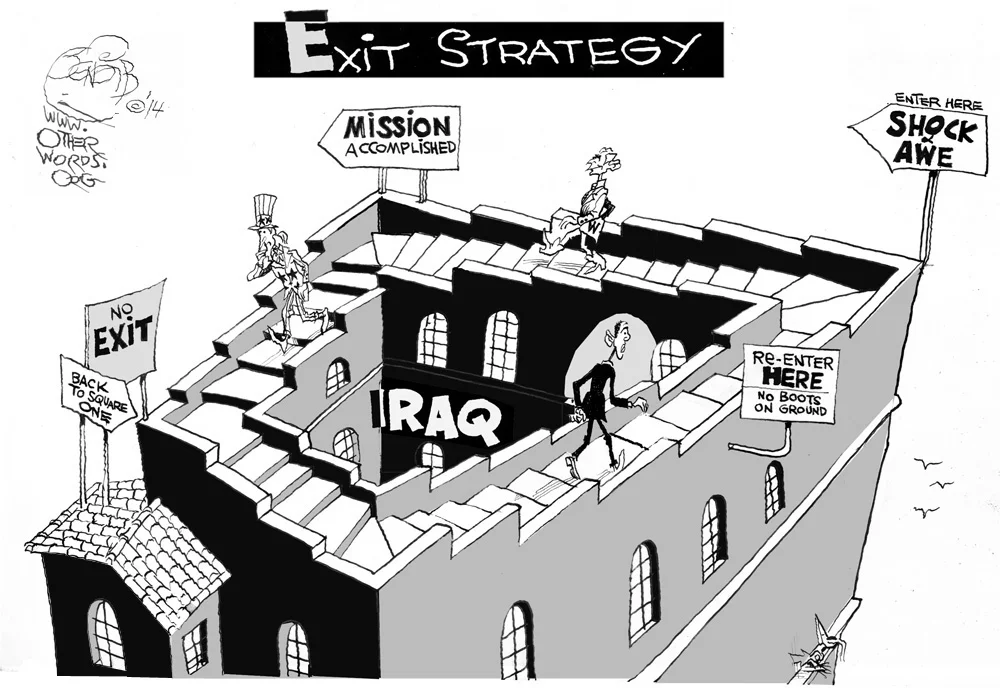
Stephanie Savell: The ongoing vast, devastating cost of the Iraq War
PROVIDENCE
This March marked the 15th anniversary of the U.S.-led invasion of Iraq.
In 2003, President George W. Bush and his advisers based their case for war on the idea that Saddam Hussein, then dictator of Iraq, possessed weapons of mass destruction — weapons that have never been found. Nevertheless, all these years later, Bush’s “Global War on Terror” continues — in Iraq and in many other countries.
It’s a good time to reflect on what this war — the longest in U.S. history — has cost Americans and others around the world.
First, the economic costs: According to estimates by the Costs of War project at Brown University’s Watson Institute for International and Public Affairs, the war on terror has cost Americans a staggering $5.6 trillion since 2001, when the U.S. invaded Afghanistan.
$5.6 trillion. This figure includes not just the Pentagon’s war fund, but also future obligations such as social services for an ever-growing number of post-9/11 veterans.
It’s hard for most of us to even begin to grasp such an enormous number.
It means Americans spend $32 million per hour, according to a counter by the National Priorities Project at the Institute for Policy Studies.
Put another way: Since 2001, every American taxpayer has spent almost $24,000 on the wars — equal to the average down payment on a house, a new Honda Accord, or a year at a public university.
As stupefying as those numbers are, the budgetary costs pale in comparison with the human toll.
As of 2015, when the Costs of War project made its latest tallies, up to 165,000 Iraqi civilians had died as a direct consequence of U.S. war, plus around 8,000 U.S. soldiers and military contractors in Iraq.
Those numbers have only continued to rise. Up to 6,000 civilians were killed by U.S.-led strikes in Iraq and Syria in 2017 –– more civilians than in any previous year, according to the watchdog group AirWars.
In addition to those direct deaths, at least four times as many people in Iraq have died from the side effects of war, such as malnutrition, environmental degradation, and deteriorated infrastructure.
Since the 2003 invasion, for instance, Iraqi health care has plummeted — with hospitals and clinics bombed, supplies of medicine and electricity jeopardized, and thousands of physicians and healthcare workers fleeing the country.
Meanwhile, the war continues to spread, no longer limited to Afghanistan, Iraq, or Syria, as many Americans think. Indeed, the U.S. military is escalating a shadowy network of anti-terror operations all across the world — in at least 76 nations, or 40 percent of countries on the planet.
Last October, news about four Green Berets killed by an Islamic State affiliate in the West African nation of Niger gave Americans a glimpse of just how broad this network is. And along with it comes all the devastating consequences of militarism for the people of these countries.
We must ask: Are these astounding costs worth it? Is the U.S. accomplishing anything close to its goal of diminishing the global terrorist threat?
The answer is, resoundingly, no.
U.S. activity in Iraq and the Middle East has only spurred greater political upheaval and unrest. The U.S.-led coalition is seen not as a liberating force, but as an aggressor. This has fomented insurgent recruitment, and there are now more terrorist groups in the Middle East than ever before.
Until a broad swath of the American public gets engaged to call for an end to the war on terror, these mushrooming costs — economic, human, social, and political — will just continue to grow.
Stephanie Savell co-directs the Costs of War project at Brown University’s Watson Institute for International and Public Affairs.
Watch out for the 'balloon blowers'

From Robert Whitcomb's "Digital Diary,'' in GoLocal24.com
Given that Rhode Island’s economy is generally doing better than it has for years (of course the booming global economy explains much of this), that her administration has not been touched by major scandal (yet) and that she is a very articulate and personable person (more apparent in small groups than in big ones or on TV), Rhode Island Gov. Gina Raimondo’s lack of popularity surprises me.
Some of this is probably Rhode Islanders’ traditional cynicism and distrust of politicians, fueled by past scandals and tribalism. Some of it may be due to the fact that her administration has run a program to attract businesses with tax and other incentives to move to the state, causing some resentment/envy among the businesses already here. I, too, have skepticism about “bribing’’ companies to move to Rhode Island with special deals, preferring to entirely recruit on the basis of the location, quality of the physical and educational infrastructure and that vague but important thing “quality of life.’’
But in the real world, all states wave goodies to lure companies. Maybe if the six New England states agreed not to get into bidding wars with each other it would cut down on tax-incentive brandishing: Promote the region as a whole.
(To read about Vermont’s controversial business incentive program, which may have negative lessons for other New England states, please hit this link):
http://digital.vpr.net/post/can-you-prove-vermont-s-main-business-incentive-creates-jobs-it-s-debatable#stream/0)
And of course she also has to deal with the fallout from the UHIP/Deloitte benefits-payments system disaster, variants of which happened in some other states, too.
But maybe her biggest problem is simply that many see her as a cool technocrat who doesn’t connect with them
Former Sen. and Gov. Lincoln Chafee may run against Ms. Raimondo in the Democratic primary from the left, whose members are, as with the Tea Partiers on the right of the GOP, the most enthusiastic voters. As Richard Nixon, who tended to run from the right but govern in the center or sometimes even center-left, famously put it in a conversation with John Whitaker, an aide:
“The trouble with far-right conservatives … is that they really don’t give a damn about people and the voters sense that. Yet any Republican presidential candidate can’t stray too far from the right-wingers because they can dominate a primary and are even more important in close general elections.”
“The far-right kooks are just like the nuts on the left. They’re door-bell ringers and balloon blowers and they turn out to vote.’’
Mass. companies continue to produce major water pollution

Via ecoRI News (ecori.org)
Industrial facilities dumped excessive pollution into Massachusetts waterways 124 times over 21 months, according to a new report by Environment Massachusetts.
“All of Massachusetts’s rivers and streams should be clean for swimming, drinking water, and wildlife,” said Ben Hellerstein, state director for Environment Massachusetts. “But industrial polluters are still dumping chemicals that threaten our health and environment, and no one is holding them accountable."
The report, "Troubled Waters: Industrial Pollution Still Threatens American Waterways,'' comes as the Trump administration tries to weaken clean water protections and slash enforcement funding for the Environmental Protection Agency (EPA).
In reviewing Clean Water Act compliance data from January 2016 through September 2017, the Environment Massachusetts Research & Policy Center and Frontier Group found that major industrial facilities are regularly dumping pollution beyond legal limits set to protect human health and the environment, in Massachusetts and across the country.
“In thousands of instances, industrial facilities have released more pollution than they were permitted to, but that is just the tip of the iceberg,” said Elizabeth Berg, a policy associate with Frontier Group and one of the authors of the report. “Many facilities have further violated the Clean Water Act by failing inspections, or filing incomplete reports. Our waterways simply need better protection.”
For example, the report found that the Texas Instruments facility in Attleboro, Mass., poured pollutants in excess of its permit limits 13 times into Coopers Pond, including one violation more than 500 percent beyond its permit limits. Wyman-Gordon Co. in North Grafton also exceeded its permit 13 times.
The 10 states with the most exceedances reported by major industrial facilities. (Environment Massachusetts)
"Our rivers and streams are where we go fishing, swimming and boating ... as well as the source of drinking water for many communities,” said Gabby Queenan, policy director for the Massachusetts Rivers Alliance. “At the local, state and federal level, we must do a better job of protecting these essential public resources.”
Over that 21-month period from January 2016 to September 2017, major U.S. industrial facilities released pollution that exceeded the levels allowed under their Clean Water Act permits 8,148 times, according to the 70-page report.
The report also found that during about one-third of exceedances — more than 2,600 times in total — pollutants were being added to waters that were already too polluted for uses such as recreation, fishing or drinking water, hindering efforts to restore them.
Three-quarters of facilities that exceeded their discharge permit limits did so more than once. These polluters seldom faced fines or penalties. Each year from 2011 to 2017, an average of 27,849 facilities were non-compliant across the country, while an average of 13,076, less than half, faced any EPA or state enforcement action.
'Edge of one of many circles'

Male red-winged blackbird
I
Among twenty snowy mountains,
The only moving thing
Was the eye of the blackbird.
II
I was of three minds,
Like a tree
In which there are three blackbirds.
III
The blackbird whirled in the autumn winds.
It was a small part of the pantomime.
IV
A man and a woman
Are one.
A man and a woman and a blackbird
Are one.
V
I do not know which to prefer,
The beauty of inflections
Or the beauty of innuendoes,
The blackbird whistling
Or just after.
VI
Icicles filled the long window
With barbaric glass.
The shadow of the blackbird
Crossed it, to and fro.
The mood
Traced in the shadow
An indecipherable cause.
VII
O thin men of Haddam,
Why do you imagine golden birds?
Do you not see how the blackbird
Walks around the feet
Of the women about you?
VIII
I know noble accents
And lucid, inescapable rhythms;
But I know, too,
That the blackbird is involved
In what I know.
IX
When the blackbird flew out of sight,
It marked the edge
Of one of many circles.
X
At the sight of blackbirds
Flying in a green light,
Even the bawds of euphony
Would cry out sharply.
XI
He rode over Connecticut
In a glass coach.
Once, a fear pierced him,
In that he mistook
The shadow of his equipage
For blackbirds.
XII
The river is moving.
The blackbird must be flying.
XIII
It was evening all afternoon.
It was snowing
And it was going to snow.
The blackbird sat
In the cedar-limbs.
"Thirteen Ways of Looking at a Blackbird,'' by Wallace Stevens
Set up 'microgrids'

A microgrid with renewable energy resources in grid-connected mode.
From Robert Whitcomb's "Digital Diary,'' in GoLocal24.com
With recent storms and widespread power failures in eastern New England reminding us of the fragility of our regional electricity grid, many experts are looking at creating more “microgrids.’’ Those are localized groups of electricity sources that normally operate connected to the traditional centralized electrical grid but can also be disconnected to "island mode" and function autonomously. Of course the storms are also leading many consumers to buy gas or diesel generators and/or to take the big step of installing their own green source of power – especially rooftop solar panels.
We’re unlikely to experience fewer storms in the future, and the tops of New England’s glorious big and heavily leafed (for six months a year) deciduous trees are thick over many electrical lines. I doubt if the public would be willing to pay to bury them all!
A city for genealogists and antique dealers?

Part of the Boston skyline seen from Memorial Drive, Cambridge.
"Harvard (across the river in Cambridge) and Boston are two ends of one mustache. ... Without the faculty, the visitors, the events that Harvard brings to the life here, Boston would be intolerable to anyone except genealogists, antique dealers, and those who find repletion in a closed local society.''
-- Elizabeth Hardwick (19176-2007), critic and essayist.
Editor's note: Things have changed a lot in Boston recent decades, and it's now a very dynamic and globalized city
Lord of the North Shore

This looks like something from Brideshead Revisited. It's the Crane Estate, in Ipswich, Mass., built by plumbing-fixture mogul Richard T. Crane in the 1920s. The 59-room structure is sometimes open for tours. See: www.thetrustees.org.
It's close to the exquisite Crane Beach -- four miles of fine-grain sand backed by pitch pine forest on Ipswich Bay that's protected by a wildlife preserve. It's also close to the beautiful but often storm-battered Plum Island, named for the beach plums that flourish there. (See picture below.) But who knows if Plum Island will be there in a century, given rising seas and seemingly more frequent Nor'easters?

u\
At least once a week

"Island Storm'' (oil on canvas), by Sandys Moore, at Alpers Fine Art, Andover, Mass.
Progress is a two-way street

From Robert Whitcomb's "Digital Diary,'' in GoLocal24.com
Sometimes a city can take relatively simple and inexpensive measures to make itself more popular and prosperous. For example, it can improve its signage, clean up graffiti more quickly and punish the perpetrators – and turn more one-way streets into two-way streets.
The last has been generally shown to increase a city’s overall employment, reduce crime and accidents, boost the quantity and quality of housing (including hotels) and expand such sectors as food, entertainment, the arts and professional services.
Now, some might complain that two-way streets make downtowns too crowded. But crowded cities are safer and more dynamic than less densely populated ones. And those with lots of street life 24/7 are the best. That’s a good reason to replace as many surface parking lots as possible with buildings (even if they’re parking garages). The fewer gaps between buildings the better. For an interesting discussion of the pros and cons of two-way streets, read this CityLab piece, co-authored by Richard Florida, who has written a lot about downtown Providence, among other old cities.
David Warsh: The other Marshall Plan
SOMERVILLE, MASS.
Rex Tillerson never had a chance to become the pretty good secretary of state that he might have become. As the president who fired him with a Tweet explained: “We were not really thinking the same…. Really, it was a different mind-set, a different thinking.”
The diplomatic press corps seemed credulous in agreeing with their sources, career Foreign Service officers, that, whatever else, that Donald Trump had been elected should not affect the conduct of their mission.
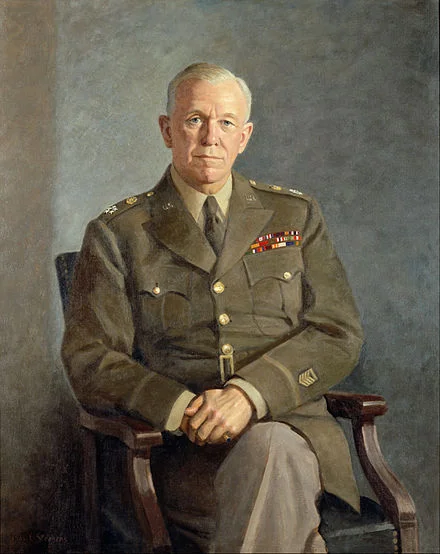
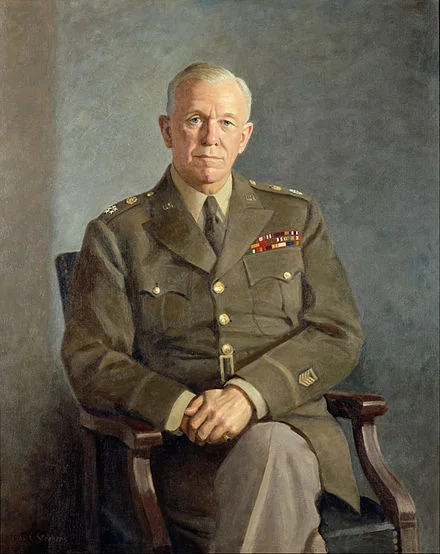
In the last melancholy week, while thinking about the tasks that the next president will face, whoever it may be, it was good to have two quite different books to read about one of the greatest secretaries of state, the revered George Marshall, who, having served as first acting and then actual Chief of Staff of the U.S. Army from 1939 until 1945, was Secretary of State from 1947 until 1949. (He stepped in for a year as Secretary of Defense, in September 1950-51).
On the next to last page of The Marshall Plan: The Dawn of the Cold War (Simon & Schuster, 2018), economist Benn Steil draws the moral of his book: “In contrast with the earlier Cold War period, the post-Cold War period has been marked by the absence of an American Grand Strategy, a calibrated mapping of means to large ends.”
The first 375 pages of Steil’s book describe with a flair for drama how that mapping was undertaken, and with what result. His account of the political foundations seems certain to become a standard reference work for many years to come.
The last 25 pages of the book, in a chapter called “Echoes,” describe the improvisation that has served since 1990. Steil’s reflections are a curtain-raiser – a full-blown overture, I suspect, given that he is a popular historian and senior fellow at the Council of Foreign Relations – to a debate that is bound to happen about the wisdom of NATO enlargement after 1990 to the very boundaries of Russia.
It’s a pity, then, that Steil’s publisher didn’t devise a title to convey the real significance of his story. But the aid package was only the softer half the U.S. strategy that underpinned containment. The North Atlantic Treaty Organization, a military alliance formed originally by a dozen Western nations two years after Marshall’s famous Harvard University commencement address in 1947, was the other half. Steil summarizes the way the strategy evolved:
"Over the course of 1946 and 1947 the United States developed a framework of Soviet containment to safeguard its interests without appeasement or war. It then devised the Marshall Plan as the most promising means, given Soviet conventional military supremacy in Europe, and a large American edge in economic power, to implement it. When France and Britain averred that economic integration made Marshall nations more dependent on each other and less able to defend themselves against hostile action by Russia or Germany, the United States responded with NATO. Together the Marshall Plan and NATO provided the means to carry out containment.
"The grand strategy of containment worked – there is no longer much argument about that. Steil respectfully examines historian Alan Milward’s critique of Marshall Plan triumphalism and concludes that the proposition that 'less food and more Germany would have worked better is 'farfetched.”'
Arriving at his “Echoes” chapter, and the question of NATO’s Cold War afterlife, Steil is only a little less certain. After describing how Secretary of State Madeline Albright chose Harvard’s commencement on the 50th anniversary of Marshall’s address to tout NATO enlargement, he writes,
If historical anniversaries were important for NATO expansion, waiting two years for the 80th anniversary of the Versailles Treaty would have been more apposite. The treaty heaped humiliations on Germany after World War I with no clear end in sight, and help ed create the economic and political conditions that led to World War II. Having improbably abandoned communism for democracy, and capitalism in a near bloodless revolution, Russians were, 10 years after the fall of the Berlin Wall, feeling similarly humiliated and threatened by an unexpected Western military advance towards their borders.
China hardly comes up in Steil’s book. Further good news, then, is the arrival of The China Mission: George Marshall’s Unfinished War 1945-1947 (Norton, 2018), by Daniel Kurtz-Phelan, a former Foreign Service officer and executive editor of Foreign Affairs.
It has been nearly forgotten, but between his wartime years and his term at Foggy Bottom, Marshall spent 17 months in China, trying to mediate between the national government of Chiang Kai-shek and the Red Army of Mao Zedong.
He failed, of course. But what a romantic story Kurtz-Phelan makes of it!
Some 400 pages by Steil on Russia, another 360 pages about China – who has time to properly read these books? Not me. I race through the first and the last chapters, rely on the indices for the rest, and stop when I am confident that, at least, I have understood the author’s point of view.
I’ll tell you this, though: I will take The China Mission to Michigan with me this summer, because I so enjoyed Barbara Tuchman’s Stillwell and the American Experience in China 1911-1945 (1971) many years ago: those years in China were, after all, a romantic time. Kurtz-Phelan has written his book in the same vein, and with an even more compelling figure at the center of it.
Moreover, the aftermath of the mission – the Who-Lost-China? controversy that poisoned political lives in the U.S. for the next 20 years – is a warning about the kind of harm that can ensue if the coming debate over NATO enlargement takes the wrong turn.
Indeed, you’ll understand by the end of the book what President Lyndon Johnson was thinking (and, if you know something about it, how mistaken he was) when he asserted that U.S. foreign policymakers had “lost their effectiveness from the day that the Communists took over China” and concluded therefore “I knew that all these problems, taken together, were chicken shit compared with what might happen if we lost Vietnam.”
The other Marshall Plan, then, was to know when to fold ’em. A less judicious adviser could have started a whole new war, committing U.S. troops to battle on the Chinese mainland in 1946, instead of five years later, in very different circumstances, in Korea.
After one last attempt, in late December 1946, to persuade Chiang to govern his cities rather than seek to engage the rebels on the battlefield, Marshall cabled President Truman that the Chinese leaders were not going to end their civil war. “It is quite clear to me that my usefulness here will soon be at an end, for a variety of reasons.” Truman called him home days later.
The story should be reassuring, Kurz-Phelan concludes. “Even at the height of its power, when it had just led the Allies to victory in World War II and accounted for nearly half of the global economy, America could not solve every problem….” But even then, “America did not have to solve every problem to show it was strong.”
David Warsh, an economic historian and long time political, historical and economic journalist, is proprietor of eonomicprincipals.com, based in Somerville.
A grand tour of some grand New England houses

William (“Willit’’ ) Mason, M.D., has written has a delightful – and very handy -- book rich with photos and colorful anecdotes, called Guidebook to Historic Houses and Gardens in New England: 71 Sites from the Hudson Valley East (iUniverse, 240 pages. Paperback. $22.95). Oddly, given the cultural and historical richness of New England and the Hudson Valley, no one else has done a book quite like this before.
The blurb on the back of the book neatly summarizes his story.
“When Willit Mason retired in the summer of 2015, he and his wife decided to celebrate with a grand tour of the Berkshires and the Hudson Valley of New York.
While they intended to enjoy the area’s natural beauty, they also wanted to visit the numerous historic estates and gardens that lie along the Hudson River and the hills of the Berkshires.
But Mason could not find a guidebook highlighting the region’s houses and gardens, including their geographic context, strengths, and weaknesses. He had no way of knowing if one location offered a terrific horticultural experience with less historical value or vice versa.
Mason wrote this comprehensive guide of 71 historic New England houses and gardens to provide an overview of each site. Organized by region, it makes it easy to see as many historic houses and gardens in a limited time.
Filled with family histories, information on the architectural development of properties and overviews of gardens and their surroundings, this is a must-have guide for any New England traveler.’’
Dr. Mason noted of his tours: “Each visit has captured me in different ways, whether it be the scenic views, architecture of the houses, gardens and landscape architecture or collections of art. As we have learned from Downton Abbey, every house has its own personal story. And most of the original owners of the houses I visited in preparing the book have made significant contributions to American history.’’
To order a book, please go to www.willitmason.com
Chris Powell: Hypocritical nonsense in debate over Conn. chief justice nomination
Arguing this week for Gov. Dannel Malloy's nomination of Associate Justice Andrew J. McDonald to be chief justice of Connecticut's Supreme Court, state Rep. William Tong (D.-Stamford), co-chairman of the General Assembly's Judiciary Committee, fed the state House of Representatives a lot of nonsense.
"We are not in a position of second-guessing judges," Tong said. "We must honor the separation of powers. If we don't, we compromise the independence of the judiciary."
But if it's wrong for legislators to second-guess judges, why does Connecticut's Constitution give the General Assembly the power to appoint and reappoint them, just as the U.S. Constitution gives Congress the power to appoint judges? By what criteria should legislators decide judicial appointments?
Tong and other backers of McDonald, nearly all of them political liberals, maintain that experience, ability, and character should be decisive, not what nominees have done or are likely to do in office.
By this standard the country should have obediently accepted forever the U.S. Supreme Court decisions in Dred Scott v. Sandford (once a slave, always a slave), Plessy v. Ferguson (racial segregation is OK), and Lochner v. New York (labor conditions can't be regulated by government), and should obediently accept forever the court's decisions in Citizens United v. Federal Elections Commission (corporations have First Amendment rights) and District of Columbia v. Heller (individuals have Second Amendment rights).
Of course McDonald's supporters don't really believe their own argument. None would argue that President Richard Nixon's Supreme Court nominations of Judges Clement F. Haynsworth Jr. and G. Harrold Carswell, former segregationists, should have been confirmed by the U.S. Senate just because of their experience and good character, nor that Judge Robert H. Bork, nominated to the court by President Ronald Reagan, should have been confirmed, though he was a brilliant scholar and was faulted only for holding that constitutions should be construed as they were originally understood.
The Senate rejected those nominees for political reasons -- they were seen as too conservative and interventionist -- and all of liberalism cheered. But Connecticut is being told that judicial nominees must not be opposed for being too liberal and interventionist.
As for Tong's supposed concern for the separation of the powers of government, Connecticut's Supreme Court long has been separating the legislature from its powers. That's what the court's recent decision purporting to find capital punishment unconstitutional was about, a decision in which McDonald concurred.
In fact the separation of powers of the branches of government applies only to the exercise of those powers, not their definition, which is left to the state and federal constitutions and to statute. Deciding on judicial nominations does not violate the separation of powers.
As for judicial independence, that applies to deciding individual cases, not to the wholesale rewriting of constitutions, as the state Supreme Court did in the capital punishment case.
With the latest long-term master contract for the state employee unions, Governor Malloy has put their expensive privileges beyond control through the ordinary democratic process for a decade.
Judicial terms in Connecticut are eight years, so if McDonald is appointed chief justice, the governor may have guaranteed liberal interventionism on the court for nearly as long.
That would be more of a legacy than most governors leave.
Chris Powell is a columnist for the Journal Inquirer in Manchester, Conn., and a frequent contributor to New England Diary.