
Vox clamantis in deserto



Billboard Boulevard: Sex, fireworks, guns and God
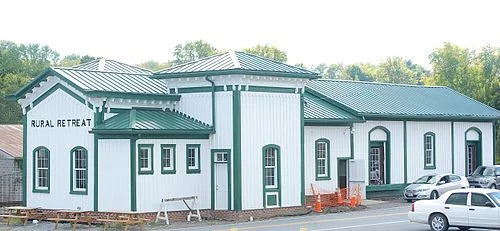
The former railroad depot in Rural Retreat, Va., on our route. A lot of "former'' this and that on our route.
Adapted From Robert Whitcomb's "Digital Diary,'' in GoLocal24.com:
Leaving our wives behind in Rhode Island (they had better things to do), an old friend and I drove the inland route to Florida the other week, mostly to check out what was happening in the inland southeastern corner of “Flyover Country.’’ We traveled in a huge Chevy Suburban, whose gas-guzzling appetite was gargantuan. Thus we did our part to boost global warming as we drove through weather that stayed nippy until we got to not-very-lovely Ocala, Fla., where it finally warmed up.F
Much of the route was in the Appalachians, with the most spectacular sections, of course, in Virginia, East Tennessee and North Carolina. I was particularly eager to see the Smoky Mountains again. Some of my East Tennessee relatives had taken me up there when I was a boy. On this trip, the mountains still looked softly spectacular.
Most of the folks we met on the way were at least superficially friendlier than New Englanders, who tend to be guarded. I’m mostly referring to hotel staffers, restaurant workers serving deliciously unhealthy fatty and salty Southern food, the personnel in a Civil War museum in the Shenandoah Valley, in Virginia, who had good feelings about the Confederacy and the good ole fraternity house boys near the campus of the University of Georgia, in Athens. In front of their plantation-style house, they gave us directions to a couple of quirky restaurants, one of which would have fit in well in late ‘ 60s San Francisco, with waiters in clothes that looked like Hippie outfits, or at least Halloween versions of same.
Athens and Asheville, N.C., (also a college town) were the most engaging cities we visited.
There were innumerable attractions along the way, with seemingly every burg with more than 5,000 people with a museum or other attraction peddled on roadside signs, with such curiosities as upside down airplanes as graphic blandishments. I particularly liked such examples of local charm as the large but mysteriously closed auto museum (with big car models sticking out from the brick exterior walls) in a remote area of Georgia; the billboard advertising “Virginia’s only cavern with elevator service’’; a Virginia town named “Rural Retreat,’’ and a village in North Carolina called “Forks of Ivy.’’
But most illuminating were the big billboards along the Interstates seeming to give contradictory messages about the region’s moral climate. Hypocrisy, or just psychological/ sociological complexity in the Bible Belt?
Among the most numerous billboards were for those “Adult Superstores’’ (porn and sex toys), along with such related enterprises as strip joints (“Café Risque: We Bare All’’); gun markets and such related attractions as “Machine Gun America,’’ and Protestant evangelical churches (“Jesus Paid for All’’), some of them put up to promote attendance at an individual institution in a small town. There are lots of simple crosses but we didn’t spot any roadside crucifixes. This was Protestant Bible-thumping country.
And, yeah, fireworks signs remain plentiful. But with the loosening of fireworks-sale controls in the Northeast, that draws much less excitement for travelers from up here these days. I remember my father filling the back of our station wagon with fireworks he bought in South Carolina back in the early ‘60s on our way back from Florida. That both my parents smoked added a touch of suspense to the rest of the trip home.
The billboards become more conventionally commercial from Orlando south, but then as they say, the further south you go in Florida, the further north you go.
Site-specific show in hard-drinking, arty New Canaan

Sculpture by Jeremy Holmes to be shown in his show at Heather Gaudio Fine Art, New Canaan, Conn., starting Feb. 10.
His site-specific bentwood installations fill voids of unused space. He works with the shapes of walls and ceilings to create what he calls “abstract wood sculptures.” His work emphasizes his preoccupation with materiality.

East view of Church Hill, the central part of New Canaan (1836), by John Warner Barber
New Canaan, which is not on Long Island Sound, looks more like an old New England town than does much of the rest of Fairfield County. Much of it is bucolic and it has drawn many writers and artists to live there. It also has had the reputation of being a hard-drinking town, for youths and adults and, unfair or not, a reputation for having a surplus of spoiled rich kids.
Bridges for kissing and civic life
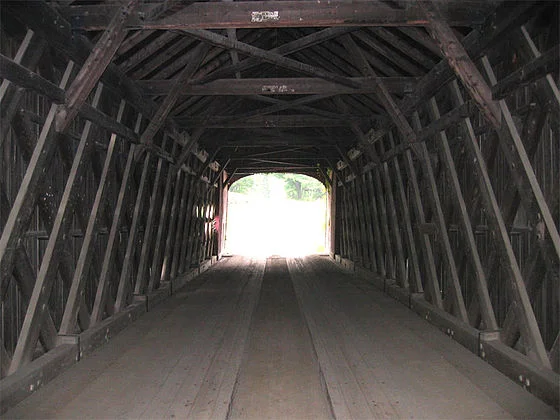
Plank-lattice truss interior structure of Green River Bridge in Guilford, Vt.
“They were called kissing bridges, and indeed many’s the kiss that was stolen in the darkened interiors of covered bridges. But covered bridges were more than convenient trysting spots for couples passing through in one-horse shays. They represented a triumph of local craftsmanship – and a surge of the spirit. {The late author} and artist Eric Sloane says that the covered bridge was to the nineteenth century what the barn was to the eighteenth. In the sense the covered bridge reflected the impulse to forge rivers, shift roots, and expand horizons, he is correct. But the covered bridge was also an expression of community, an eagerness to be closer to the folks “on the other side.’’ It is not surprising, therefore, that the covered bridge was often a meeting place for groups of citizens.’’
-- From the late John Deedy, in his essay in Arthur Griffin’s New England: The Four Seasons.
Editor’s note: A couple of years ago my wife and I attended a wedding in a New Hampshire covered bridge. It was musty.
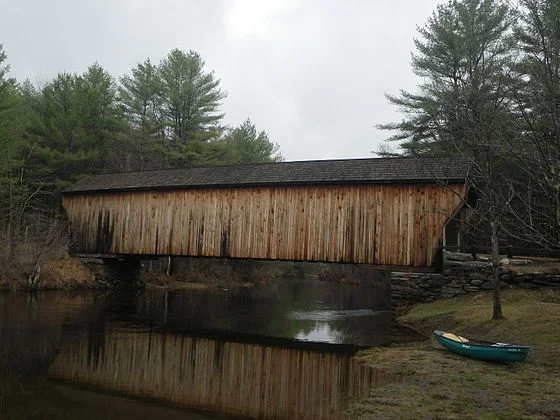
Covered bridge in Newport, N.H.
Philip K. Howard: How to make a deal to address America's infrastructure crisis
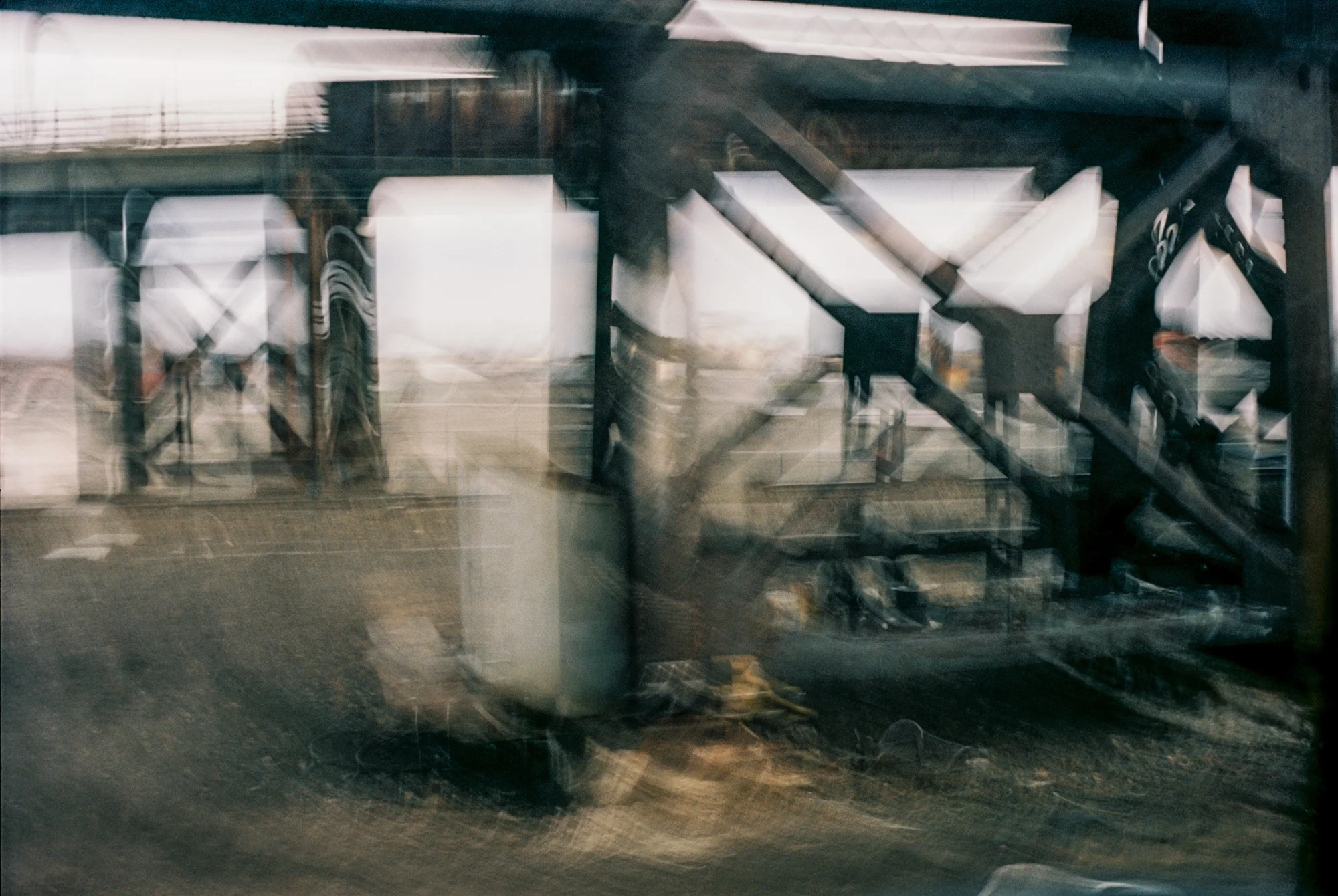
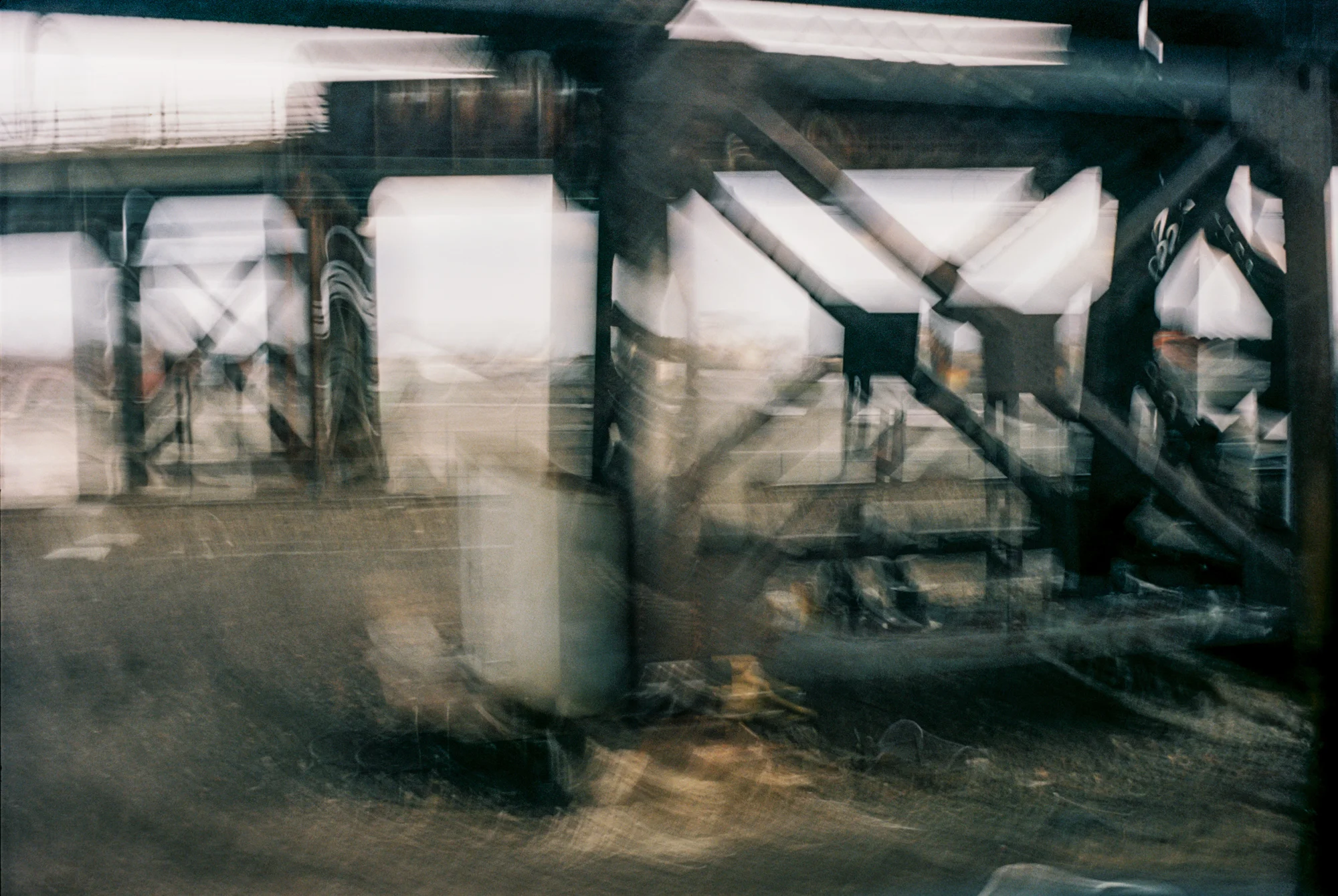
A photo by Philip K. Howard in his "Peripheral Visions'' series, much of it about transportation infrastructure, some of it crumbling. To see more, please hit this link.
President Trump this week reiterated his commitment to “rebuild our crumbling infrastructure.” He called upon Congress to enact a law that “generates at least $1.5 trillion” and also to “streamline the permitting and approval process — getting it down to no more than two years, and perhaps even one.”
This would be an enormous boon to society, improving not only America’s competitiveness, but also creating a greener environmental footprint — while adding more than a million new jobs.
But environmental groups are lining up in opposition even before they’ve seen the details. Streamlining red tape, they argue, requires gutting environmental regulations. Are they really in favor of bloated processes that can take a decade or longer and produce impenetrable 5,000-page environmental review statements?
The facts are not on their side. A 2015 report by my organization, Common Good, found the following:
Other greener countries such as Germany approve large projects in less than two years, including environmental review.
A typical six-year delay in large projects more than doubles the effective cost of the projects.
Lengthy environmental reviews often harm the environment by prolonging polluting bottlenecks.
Modernizing America’s infrastructure is a necessity, not an ideology. Rickety transmission lines lose 6 percent of their electricity, the equivalent of 200 coal-burning power plants. About 2,000 “high-hazard” dams are in deficient condition. Century-old water-mains leak over 2 trillion gallons of fresh water a year. Over 3 billion gallons of gasoline are consumed by vehicles idling in traffic jams. Half of fatal car accidents are caused in part by poor road conditions.
Fixing this doesn’t require changing, much less gutting, environmental protections. Common Good has presented Congress with a three-page legislative proposal that creates clear lines of authority to make decisions on a timely basis: An environmental official would be authorized to focus the review on material issues, not thousands of pages of trivial detail; the White House could resolve disagreements among bickering agencies; federal law would preempt delays by state and local governments on interstate projects; and lawsuits would be expedited and limited to material environmental harms, not foot faults.
No one intended environmental review or permitting to take a decade. Current regulations say that analyses in complex projects should not exceed 300 pages. But the review for raising the roadway of the Bayonne Bridge, a project with virtually no environmental impact (it used the existing bridge foundations), was 20,000 pages including exhibits. This is bureaucratic insanity.
What the current process does is give environmental groups a veto. Just by threatening to sue, they can drag processes on for years. But where in the Constitution does it empower naysayers to call the shots? Environmental review should not be used to prevent elected officials from making decisions.
Funding is also obviously needed. The political deal is obvious: Democrats should agree to streamline permitting as long as Republicans provide adequate funding. Most roads and other such projects lack a revenue stream and require public funds. It’s a good investment, returning about $1.50 for every dollar spent, according to Moody’s. It’ll be an even better investment when effective costs are cut in half by streamlining permitting.
Trump’s initiative is a moral as well as a practical imperative. We are living off the infrastructure built by our grandparents and their grandparents. What shape will it be in when we bequeath it to our grandchildren?
New York has choke points that can’t tolerate any further delay. The two rail tunnels coming into Penn Station from New Jersey are over 100 years old, and were badly damaged by Superstorm Sandy. When they shut down for repairs the result is “carmageddon” — 25-mile gridlock.
The approach bridge to those tunnels is made of iron and wood, and occasionally catches fire or gets stuck when pivoting open for barge traffic — causing trains to wait for hours. The “Gateway project” for two new tunnels is essential to avoiding economic and environmental chaos, and almost ready for construction. It needs permits and money. Congress has to provide it.
On fixing America’s transportation woes, it’s time to link arms, not use any pretext to oppose this plan.
Philip K. Howard is chairman of the nonpartisan Common Good (commongood.org) reform organization and a New York-based civic leader, lawyer, author (including the best-selling The Death of Common Sense), and photographer. He's also an old friend, classmate and sometime colleague of New England Diary editor Robert Whitcomb. This piece first ran in The New York Post.
After the storm in Sandwich
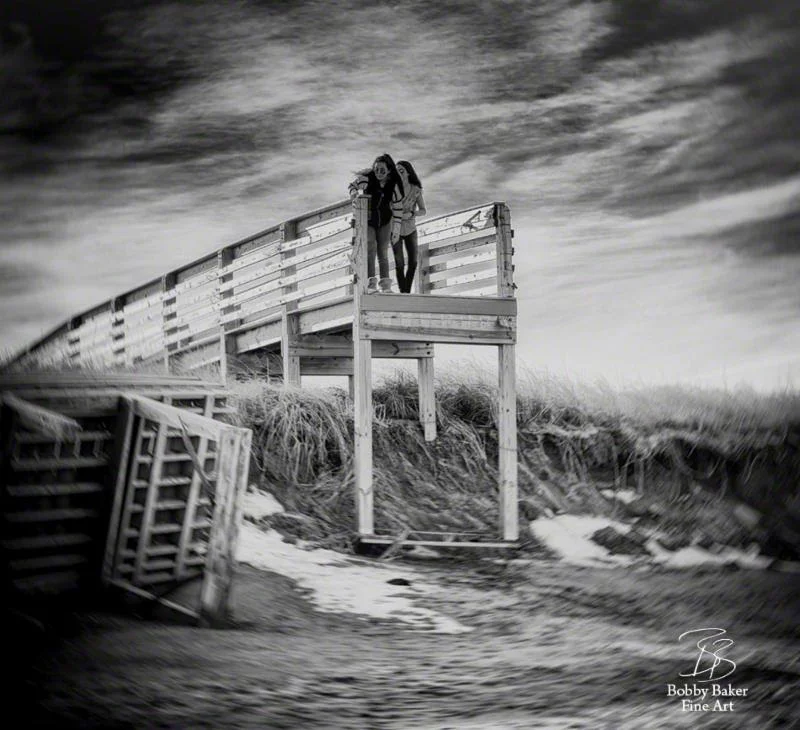
"Not In Kansas Anymore'' (aluminarte print), by Bobby Baker
Comment by Mr. Baker:
"A January storm took its fury out on the Sandwich (on Cape Cod) boardwalk. To the left of this image is a pile of twisted wood, rope, grasses, and whatever - all that is left of the end of this boardwalk. While walking Town Neck Beach on a recent winter day, I looked up at the open end of the devastated boardwalk, and saw someone approach the fall off. I quickly captured my shot, and just as quickly the subjects disappeared - stunned and sad at what they saw, they must have fled to the safety of solid ground. ''
Assume nothing
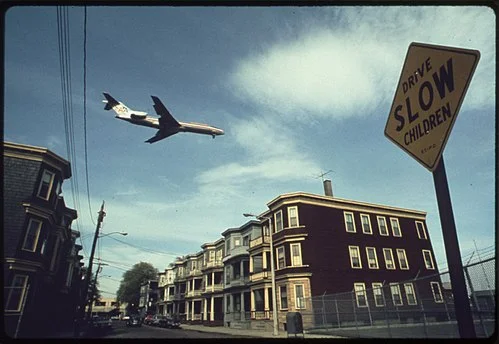
An airliner descending to land at Logan International Airport, in East Boston, aka "Eastie''.
"You can't assume anything in politics. That's why every Saturday I walk around my district. I talk to the longshoremen in Charlestown. I listen to the people in East Boston and their concern on the airport noise. I walk down to the Star Market in Porter Square, and people tell me about meat prices.''
-- Thomas P. ("Tip") O'Neill, the late U.S. House speaker.
'Delving into the past'

"Untitled #16" (mixed media on paper), by Jamal Thorne, in his show "Bootleg Delorean,'' at Kingston Gallery, Boston, Feb. 28-April 1.
The gallery says:
"These new paintings by Jamal Thorne {are} composite experiences that embody the dynamic of delving into the past while being confronted with the idiosyncrasies of the present. Events unfold and time moves forward. Thorne builds layers of paint and tape covering textured surfaces, with a process informed by the Civil Rights Movement, current and past. Each new layer preserves and makes an impression while some elements from the previous layers are lost. For Thorne the process of cutting deep into the accumulating layers serves to mimic the act of reclaiming a connection to the past, while the finished work is a documentation of shared experience.''
A more and less innocent time

Why teenagers in the '60s longed to cross the line from Connecticut into New York. Hit this link.
Maine fights 'Big Sugar'

The official name of the Food Stamp program.
From Robert Whitcomb's "Digital Diary,'' in GoLocal24.com
Maine deserves a lot of credit for seeking to improve the health of low-income people on Food Stamps while trying to cut the cost of the state-federal program in the Pine Tree State. (The federal government pays 100 percent of Food Stamp benefits but shares administrative costs with the state.)
The state wants to ban the purchase with Food Stamps of candy and soda. New York, Illinois and Minnesota have also sought approval from the U.S. Agriculture for similar bans.
Sadly, as anyone who watched checkout lines in supermarkets can confirm, many people buy lots of candy, soda and other junk food with Food Stamps. But consuming candy and soda, whatever the quick pleasure they provide, do far more harm than good, among other things in raising the incidence of obesity and diabetes, which are epidemic in America, where poor people tend to be fatter than more prosperous ones. The science is clear.
When Food Stamp recipients get sick because of their over-consumption of this junk, the taxpayers must pay for much of the cost of their care through Medicaid.
As Maine Gov. Paul LePage (a Tea Party Republican!), said the other week: “The time has come to stand up to Big Sugar and ensure our federal dollars are supporting healthy food choices for our neediest people.’’
Seems very fair and reasonable.
But the U.S. Department of Agriculture, which oversees the Food Stamp program, has rejected Maine’s request, using such vague excuses as concerns about administrative costs for retailers and the alleged difficulty of deciding on which products to take off the Food Stamp list. But seems to me that these problems, especially in the computer age, can be very easily overcome. And again, the science on the effects of consuming large quantities of candy and soda are clear.
I suspect that the USDA’s opposition to Governor LePage’s proposal reflects the Trump administration’s disinclination to displease the powerful U.S. sugar lobby, based in swing state Florida, and other players in the junk-food world.
Wealth of a summer

-- Photo by Peng
"Not even dried-up leaves,
skidding like iceboats on
their points down winter streets,
can scratch the surface of
a child's summer and its wealth:
a stagnant calm that seemed
as if it must go on and on....''
-- From "Thesis, Antithesis, and Nostalgia,'' by Alan Dugan
But will they vote?

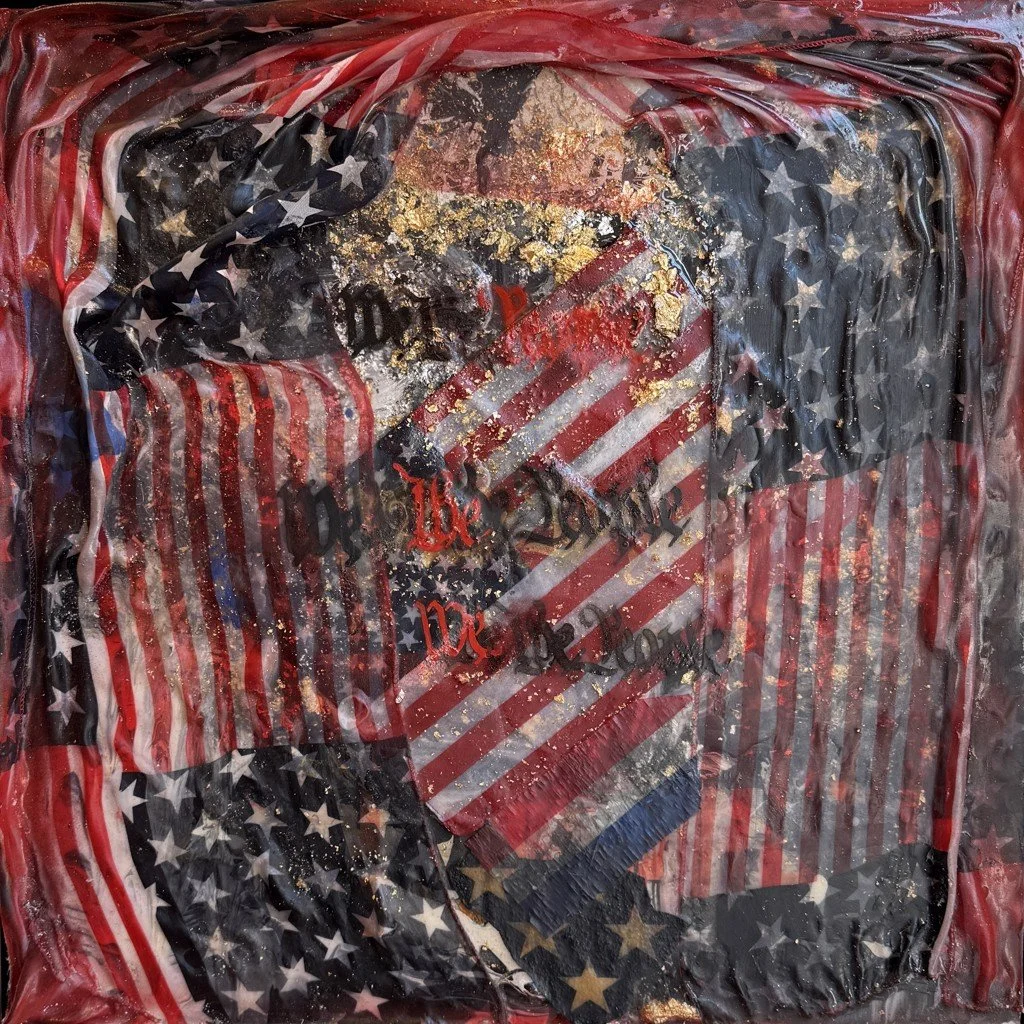
"We the People'' (on on canvas), by Mia Cross, in the show "Thrive: Core Member Exhibition,'' at Fountain Street Fine Art, Boston, Jan. 31-Feb. 25.
Llewellyn King: The scary future of work and nonwork

Your replacement.
It used to be that when you left high school or college, you sought to hook up with an employer who would offer you a whole bunch of goodies: things that were taken for granted then, such as job security, health insurance and a defined pension.
You could work for, say, General Electric, AT&T or Marshall Field. And you'd be on a kind of employment plateau.
Those were the days when most unionized employees, such as truck drivers, would reasonably count themselves as middle-class. They'd expect their children to do even better than they had.
But stagnant wages and disappearing benefits are booting millions out of the middle class. They can’t afford the genteel life anymore.
In today’s workplace, keep your resume burnished and your home in good repair, in case you need to downsize quickly. Damocles’s sword hangs over the head of every employee: It could fall in a merger, if production is moved to another state or offshore, or if your company tried for a leveraged buyout and sank under massive debt.
With just 10.7 percent of U.S. workers belonging to unions in 2017, according to the Bureau of Labor Statistics, things are not pretty for those who thought they would lead a life shielded from the buffets of the economy. Now no one is shielded -- unless you are rich, in which case you're likely to be one of those doing the buffeting. Or, you chose the security of government employment. That way you're in a cocoon that private industry no longer offers.
At present, the enormity of this uncertainty in the workplace is concealed with the giddy stock market and full employment. But it's there. When there's a stock market correction or we have a recession (both of which history says are inevitable), the plight of working people will become more obvious. Also, the attendant plight of new retirees -- more and more without pensions and relying, if they're lucky, on 401(k) plans. They won’t have lifetime pensions, guaranteeing glitter in their golden years.
But worse may be to come. Meet the gig economy, where contract employment replaces formal employment: no employer medical plan, no paid vacation, no sick leave.
Hanging over all this gloom is the existential worry about artificial intelligence. One argument is that its predecessor, automation, always created more jobs than it cost. Mechanized woolen mills made cloth for the many. Production lines produced goods that more consumers could afford like cars and washing machines. Win-Win.
Artificial intelligence, though, threatens simply to replace workers, not to make new products. Already, banks and some retailers are working to get people out of transactions, an indication of the workerless future.
Euro Trains Have Borrowed Pricing from Amtrak
While making a round-trip reservation from Brussels to London on the super-fast Eurostar, I find that it's embraced one of the horrors of super-slow Amtrak: dynamic pricing. That's the system where the cost of tickets is what the market will bear.
European trains, like Amtrak, have public subsidies. So the governments on both sides of the Atlantic are actually squeezing out people with limited budgets. Shame.
It seems to me if it's the intent of government to subsidize transport, it should do so with an eye to the poor -- with fixed pricing -- not the rich.
This Was Not Your Grammy's Grammys
Was I wrong in thinking the that the Grammys this year were strictly for the young? Bono and Sting looked decidedly uncomfortable.
There's an age chasm between Bruno Mars listeners and, well, those of us who heretofore thought we were cool when we listened to Bono and Sting.
The Things They Say
“Before you judge a man, walk a mile in his shoes. After that who cares? He's a mile away and you've got his shoes!" -- Billy Connolly, Scottish comedian
Llewellyn King (llewellynking1@gmail.com) is executive producer and host of White House Chronicle, on PBS.
Web Site: whchronicle.com
Chris Powell: New Haven's mayor has been very busy helping to erase America's borders

New Haven from the air.
President Trump can be counted on to discredit even a legitimate issue, as he did last week at a White House meeting by joking about the absence of New Haven Mayor Toni Harp, whom he had summoned to praise, along with other mayors, for their work on transportation issues.
“Toni Harp. Where's Toni? Toni? Toni?," Trump said, adding, "Uh, can't be a sanctuary city person. That's not possible, is it?”
Of course, Harp is the mayor of the most brazen sanctuary city in the country and, having learned a few hours earlier of the Trump administration's new demand for immigration policy information from other such cities, she seems to have suspected, rightly, that, to score political points, the president might change the meeting's subject from transportation to immigration. So Harp skipped the meeting.
Whereupon the president blustered, "The mayors who chose to boycott this event have put the needs of criminal illegal immigrants over law-abiding America."
Of course the immigration issue is not that simple. Yes, some illegal immigrants are criminals but most are not. The real issue is whether immigration is ever to be controlled and, if so, how.
So it might have been helpful if Harp had attended the meeting and had replied to any demagoguery from the president.
But just as Trump demagogues the immigration issue by overstating its criminal aspects, Harp and other proponents of sanctuary cities and states -- like the mayor nearly all of them Democrats, including Connecticut Gov. Dannel Malloy -- claim to find virtue in nullifying federal law as the old segregationists did. It is actually the position of the nullifiers that anyone who breaks into the United States and makes his way to New Haven should be exempt from immigration law.
The president's demagoguery has made it nearly impossible to have an intelligent and civilized debate on the immigration issue. But his opponents are fortunate about this, since they don't want such a debate. They would lose it. For the logic of their position is that the United States shouldn't even be a country.
xxx
Connecticut's latest sad deportation case is that of Joel Colindres, an illegal immigrant living in New Fairfield with a U.S. citizen wife and two young U.S. citizen children. He says he came to the United States from Guatemala in 2004 to escape violence and persecution, surrendered to immigration authorities in Texas, and got regular stays of deportation until recently. Now the Immigration and Customs Enforcement agency may expel him in a few days.
Presumably Colindres enjoyed the infamous "catch and release" policy of previous administrations, whereby, rather than being sent back immediately, illegal immigrants were given years to stay in the country, marry and start families to use as hostages against deportation by future administrations if their overused claims of fleeing persecution were ever doubted. Indeed, most illegal immigrants from Latin America are really only economic refugees, not political ones.
While it may be hard to see the point of deporting an illegal immigrant who has a citizen wife and children, there is one. It is to frighten and deter other illegal immigrants and induce their Democratic supporters to accept the obvious political compromise -- another immigration amnesty like the Simpson-Mazzoli Act of 1986, which promised but never delivered border security, in exchange for another such promise, this time the president's border wall. But erasing the border remains more important to the Democrats than legalizing the illegals and preserving families.
Chris Powell is managing editor of the Journal Inquirer, in Manchester, Conn.

After some decades of steep decline, parts of New Haven have become much more prosperous, and, well, gentrified, in the past couple of decades, including this stretch of upper State Street.
Dr. Elliot's very vivid historical novel
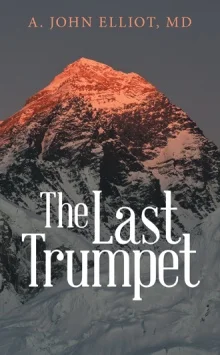
A. John Elliot, M.D., is an old friend of mine who has written a wild ride of a historical novel called The Last Trumpet. He practiced in Rhode Island and Connecticut, and has lectured widely. His teaching experience includes Yale Medical School and in Tibet and China, where he is an honorary professor at the West China Medical School. He has also taught in Tibet. Elliot has done extensive nonprofit and for-profit medical consulting work. In 1994, Dr. Elliot was the Republican candidate for in Rhode Island Second Congressional District in 1994.
His book:
In the Thirties, we find the book’s deeply flawed German hero, Andreas von Eckhart, as a tortured yet brilliant physician, famed mountain climber, war veteran and womanizer and a loner who trusts no one. Now that his general father is dead and his sister has mysteriously disappeared, Andreas is left to wander within his inherited castle and contemplate his place in a chaotic world.
The Last Trumpet takes you on his torturous, colorful journey from London to the Himalayas in search of the truth amid the evils of the Third Reich.
No, I’m not getting any money from his book sales!
For more information, see: https://www.archwaypublishing.com/Bookstore/BookDetail.aspx?Book=762512
-- Robert Whitcomb
Jim Hightower: Jeff Bezos wants the key to your house
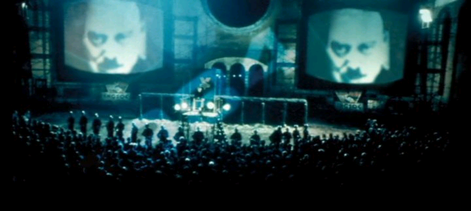
Amazon is watching you.
Via OtherWords.org
Would you give your house key to a complete stranger, letting that person (whose name you don’t even know) walk right into your home when you’re not there?
One stranger who’s brazenly asking you and millions of other people to do just that is Jeff Bezos.
He’s the head honcho of Amazon, the e-commerce behemoth whose vast supercomputer network routinely compiles and stores dossiers on every one of his customers. He’s obsessed with having the most data on the most people — it’s a little creepy.
Now, adding to the creep factor, Bezos literally wants Amazon to get inside your home. And, ironically, he’s using “security” as his rationale.
Rather than simply delivering the products you order from Amazon to your doorstep, the corporation wants a key to unlock your door, allowing its delivery crews to go inside and do you the favor of placing the packages securely in your abode.
What could possibly go wrong with that?
Other than you being robbed, of course, either by rogue Amazon employees or by hackers who will certainly gain access to the corporation’s computerized key codes. Or maybe “Crusher,” your pitbull, mauls the Amazon intruder and you get sued.
Need I mention that Bezos expects you to pay for the privilege of having his employees enter your home? First, his dicey, open-sesame program, which he calls “Amazon Key,” is available only to customers who shell out $99 a year to be “Amazon Prime” members.
Second, you must buy a special Internet-unlocking gizmo and a particular camera to join his corporate key club. And guess where you must go to buy this entry technology? Yes, Amazon — where prices for the gizmo and camera setup start at $250.
This is Jim Hightower saying… What a deal! For Amazon, that is.
Bezos’s real goal — indeed, his only goal, always — isn’t so much to get inside your home. It’s to get inside your wallet.
Jim Hightower is a radio commentator, writer, and public speaker. He’s also the editor of the populist newsletter, The Hightower Lowdown.

Joanna Detz: Facebook changes: Disaster or renaissance for U.S. journalism?

Via ecoRI News (ecori.org)
Facebook's algorithm changes coupled with other challenges could presage a total extinction event for digital publishers
Hope you like your friends' cat photos. You'll probably be seeing more of them on Facebook, and fewer posts from news organizations like this one.
Facebook's recent announcement that it is changing the algorithm driving its news feed to prioritize posts from friends and family has news organizations worried that Facebook users will be seeing fewer of their news posts.
Over the past several years, news publishers have made huge investments in their Facebook audiences. And, at least until the middle of last year, those investments were paying off in clicks — Facebook was the top referrer to news websites.
For its part, Facebook played the (albeit unintentional) role of the printing press for many digital publishers, distributing their original content to a wider audience and driving traffic and clicks to publishers' websites.
And, make no mistake, Mark Zuckerberg's social-media empire profited greatly from providing a platform for news content. Facebook quickly became the world's biggest distributor of content without actually producing any of its own original content.
When Facebook got in trouble in 2016 for taking ad money from foreign agents looking to influence the presidential election, soul-searching ensued. And now Facebook is turning its back on media outlets and betting on a return to the company's roots of "connecting people to people."
So what does this mean for publishers like this one?
Only the future will tell, but it clarifies that Facebook was never an ally to news organizations; it was always just a marketing platform that kept changing the rules to suit its needs and its bottom line.
For news organizations, it's exhausting to pander to a third-party algorithm and chase clicks. Let’s hope that this monumental shift isn't the end of the news but the beginning of a return to media's traditional role of writing stories that shine a light in dark places and hold the powerful to account.
Let's hope that most Facebook users care enough to frequent the Web sites and subscribe to the newsletters of their favorite news organizations to get news directly from the source without an algorithm telling them what to read.
As a news organization focused on covering ecosystems in southern New England, we understand how a small change can have system-wide ramifications. We can only hope that the media ecosystem our reporters inhabit isn't lost to (social media) developers.
Joanna Detz is the executive director of ecoRI News and has never owned a cat.
'American exceptionalism'?
From Robert Whitcomb's "Digital Diary,'' in GoLocal24.col
Politicians and other leaders and some intellectuals like to repeat that America is uniquely “exceptional’’ in its glory and goodness. But of course in many ways it’s like many other countries in its vulnerability to corruption and demagoguery. It has been very lucky: A vast country rich in natural resources (to be taken away from the relatively few Indians and, for a long time, exploited in part with slavery), English common law, Enlightenment ideas about the rule of law and human rights and some of that good old Puritan ethic. And of course protection for a long time by oceans shielding it from bad guys (or even good guys) in Eurasia. No more!
To read historian Joshua Zeitz’s rumination on “American exceptionalism,’’ please hit this link:
https://www.politico.com/magazine/story/2018/01/07/trump-american-exceptionalism-history-216253
A biological approach

"Scrunched down in the seats
of my frozen car,
I told you with smoking breath
how I wanted to piss on the windshield,
both relieving myself
and clearing visibility
in one masterful stroke.
...And there while the engine warmed
and your your head bobbed
in and out of your coat,
we made some sense of winter.''
-- From ''Winter,'' by D.W. Donzella
Sliding down winter in Camden

At the U.S. National Toboggan Championships, in Camden, Maine.
Camden, Maine, on the Pine Tree State's Mid-Coast and, very unusual for New England, with (low) mountains behind its gorgeous harbor, is a famed summer place for the affluent "from away''. But it's beautiful and fun year round.
The high point of the winter is the annual U.S. National Toboggan Championships, this year to be held Feb. 9-11, as usual at the Camden Snow Bowl. It includes a party in the woods, with a bonfire, food and music. In warmer weather, admire Camden's famous schooner fleet.
Works for now
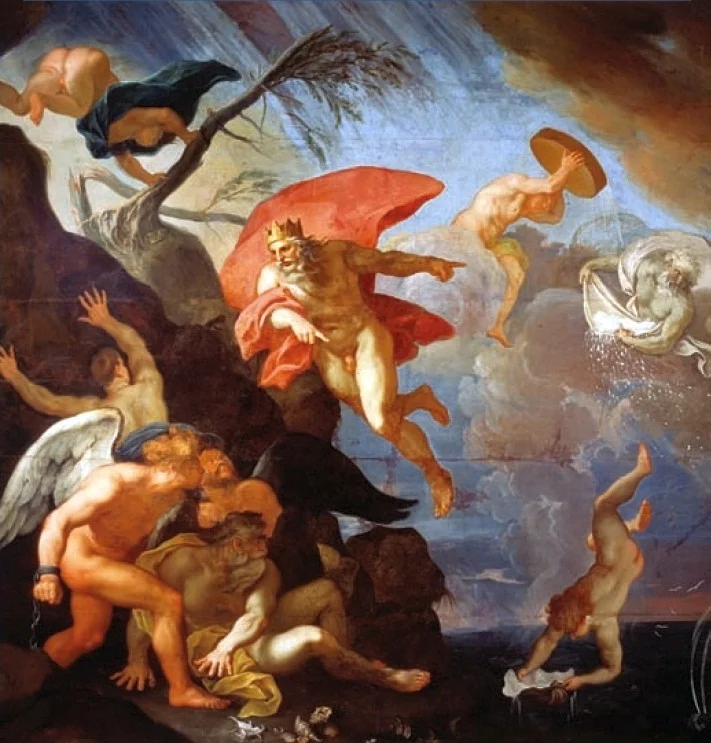
"Allegory of Winter'' by Jerzy Siemiginowski-Eleuter.
"Is there any better tonic for living than a climate that ranges from 15 above a night to 35 above in the afternoon, that has air both windless and dry, that has the sun rising though frost mist and its moon lavishing itself on a white world?....
"We are forced by pleased experience and reviving logic to concede that a perfect day in any one season is the equal of a perfect day in any other season. This, just as we had formed the rigid opinion that winter was one season we could do without.''
-- From In Praise of Seasons, by the late Alan H. Olmstead, a Connecticut-based editor and essayist.