
Vox clamantis in deserto

West Africa's spectacular cultures
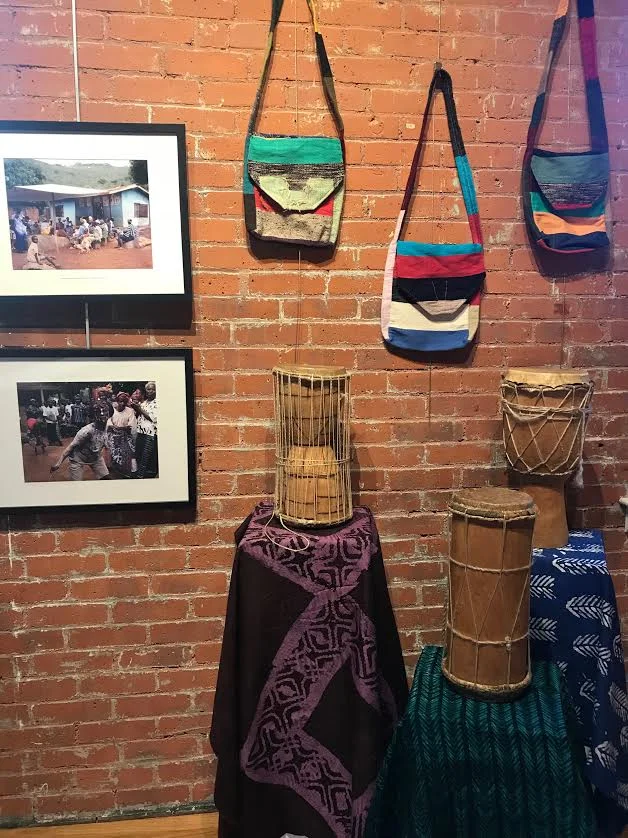
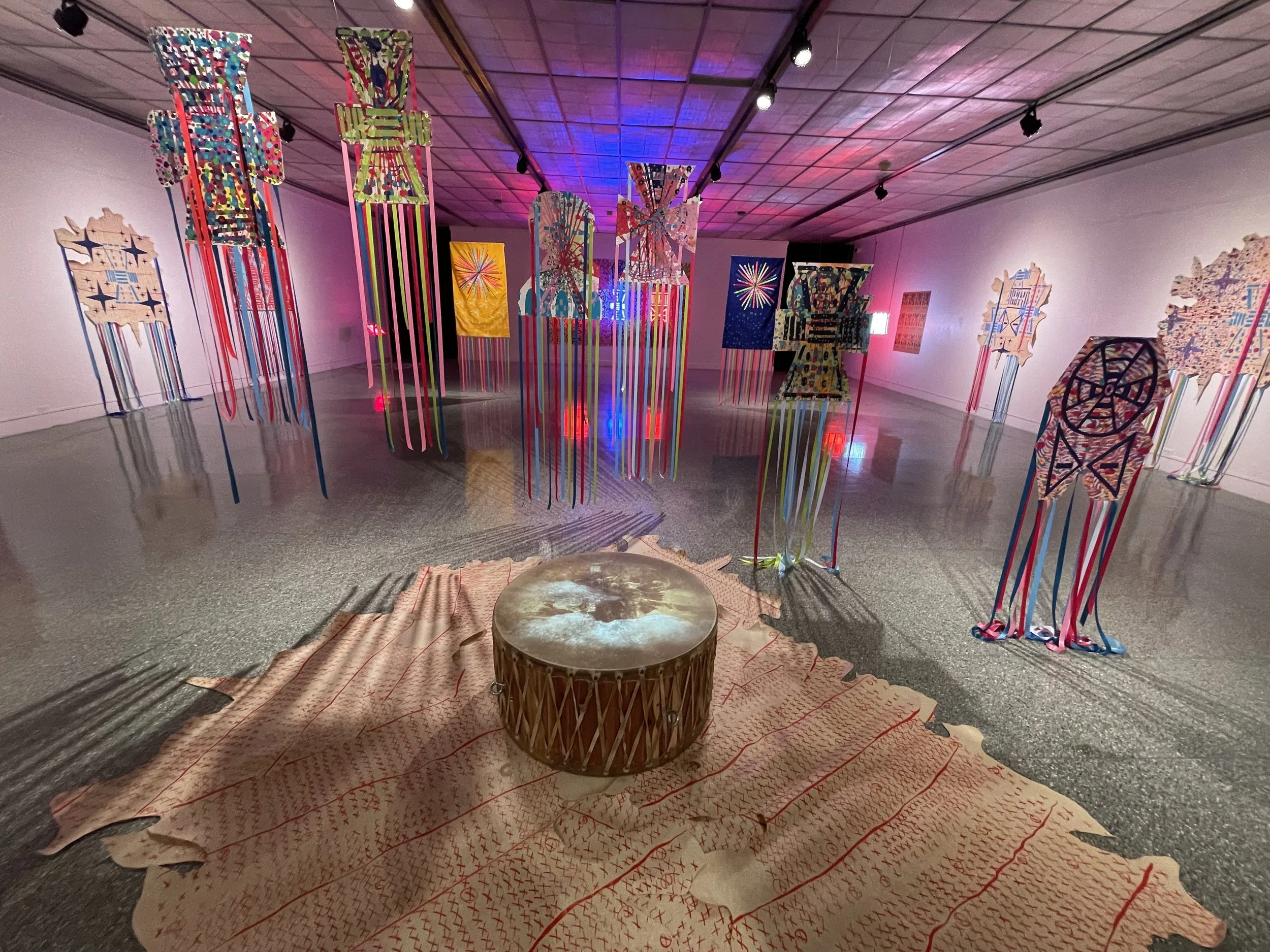
Friends of The Foundation for West Africa and the Warwick (R.I.) Center for the Arts (WCA) are hosting an exhibit of photographs, textile and cultural artifacts from West Africa from Jan. 31 through Feb. 23.
The opening reception will be on Thursday, Feb. 1, 6-8 p.m., at the WCA, 3259 Post Road in Warwick.
The photographs and most of the items on display are from visits to Sierra Leone, Liberia, Senegal and The Gambia over the past 15 years by foundation founder and president Christopher Hamblett. The Warwick Center for the Arts is a beautiful space for the exhibit Please stop by the reception this Thursday, or any time during gallery hours. It's a great way to learn about The Foundation for West Africa's support of community radio stations, and the spectacular cultures of the region.
Reading by Robert Lowell
Hear/see this reading by the poet Robert Lowell by hitting this link.

Tradition vs. modernity
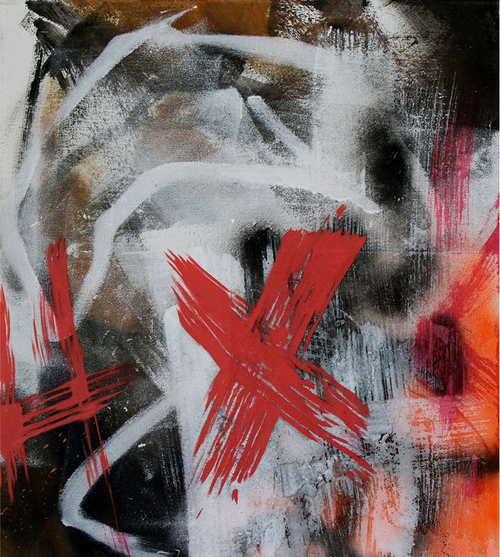
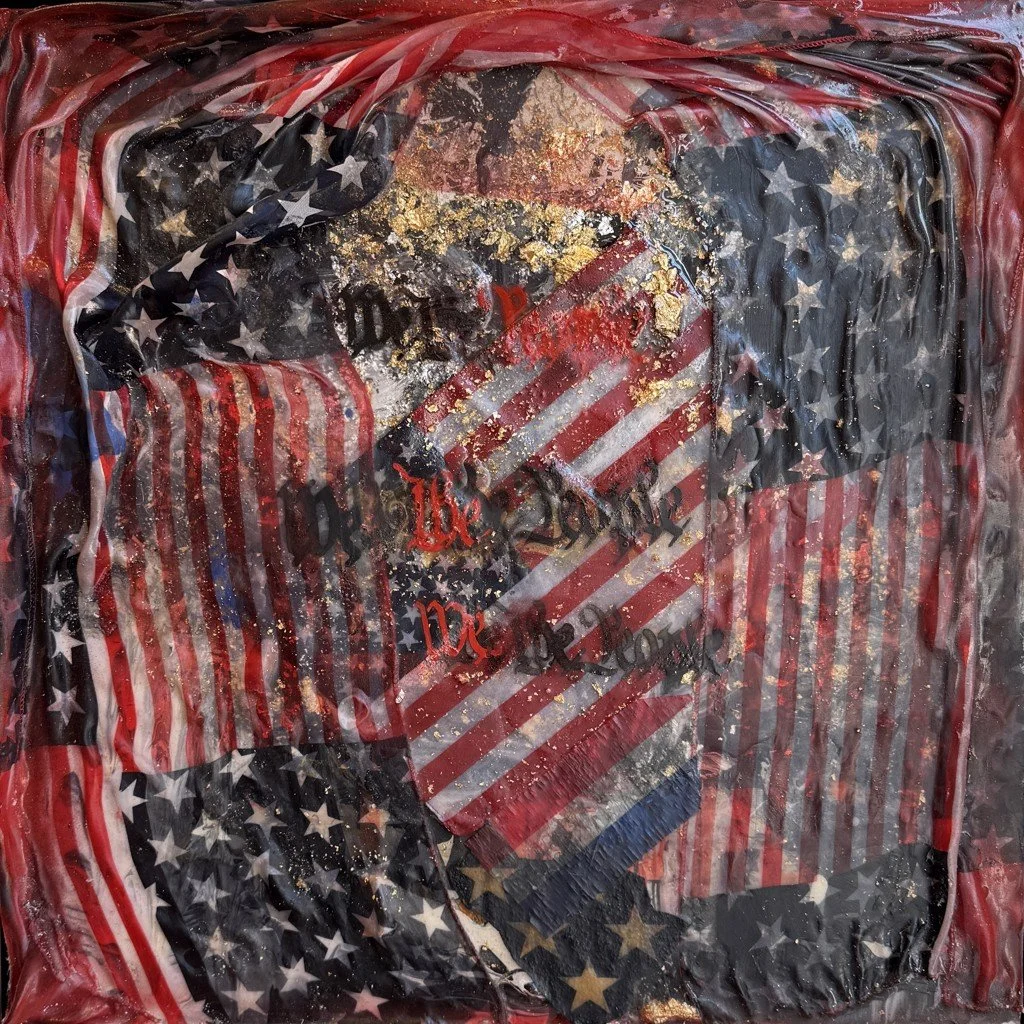
From "Tradition and Irreverence: Exploring the American Diaspora,'' Nathan Clark Bentley's show through Feb. 23 at ArtSpace Maynard, in Maynard, Mass. The show looks at American culture through symbols and language. The gallery says that Bentley's work "is robust with color and purpose. The paintings show the dichotomy between tradition and modernity present in America's urban landscape and try to find the places where the two connect.''
Of course, the images recall the power, offensiveness and sometimes quirky charm of the graffiti that bedevils many cities.
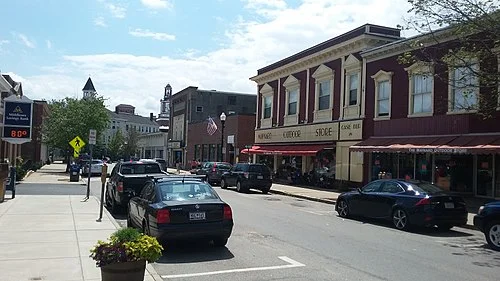
Downtown Maynard. The old mill town turns out to be quite arty and there's some nice countryside in the town, about 20 miles west of Boston. Thoreau wrote about a walk he took there in 1851.
Better class of people
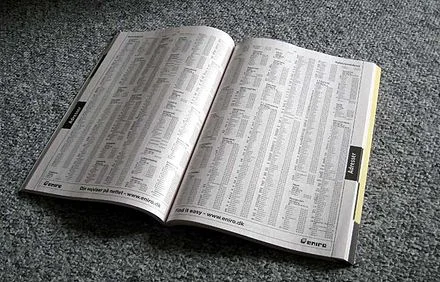
"I am obliged to confess I should sooner live in a society governed by the first two thousand names in the Boston telephone directory than in a society governed by the two thousand faculty members of Harvard University.''
-- The late William F. Buckley Jr.
'A busy cry'
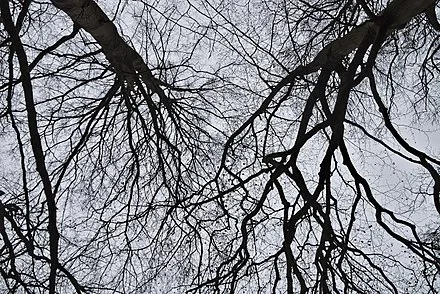
"Today the leaves cry, hanging on branches swept by wind,
Yet the nothingness of winter becomes a little less.
It is still full of icy shades and shapen snow.
The leaves cry . . . One holds off and merely hears the cry.
It is a busy cry, concerning someone else.
And though one says that one is part of everything,
There is a conflict, there is a resistance involved;
And being part is an exertion that declines:
One feels the life of that which gives life as it is.''
-- From "The Course of a Particular,'' by Wallace Stevens (great poet and insurance executive in Hartford).
Stephen J. Nelson: John Hennessey, a great academic and a great reformer
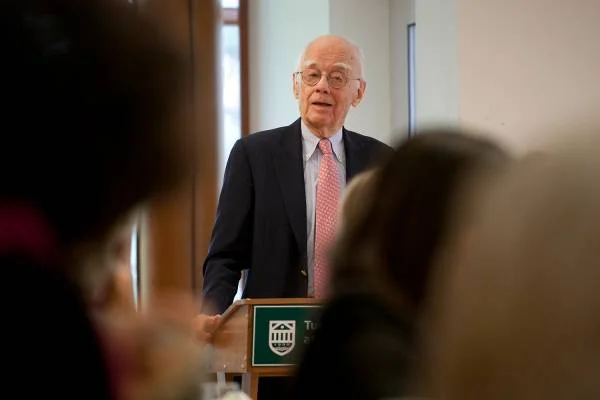
John Hennessey speaking at a Tuck School function.
Via the New England Board of Higher Education (nebhe.org)
John W. Hennessey Jr. lived a remarkable, full life as a professor, as a leader in his field of management and business, and moral, ethical leadership, and as dean at Dartmouth College’s Tuck School of Business and provost at the University of Vermont. He was extraordinary on many fronts, a great man who lived in tumultuous times marked by world war as a young man, later as a graduate student and then professor and dean during the massive social and culture changes wrought by the 1960s and ‘70s. He was ahead of his times in ways that were noteworthy then, but now are even more so as we look retrospectively at his life. He died Jan. 11 at 92.
Hennessey was part of “the greatest generation,” those who were teenagers as a horrific war broke out, served as young men and women, and then came home to continue college careers and get on with their personal and early professional lives. Following his recent death, an article about his life in The Boston Globe captured Hennessey’s early-on bewilderment and criticism of the many discriminations of his time.
Of particular note for him were the barriers that many institutions, among them our most elite, constructed against women, including his wife. After graduating from the Harvard Business School, Hennessey wondered about whether attending there made him complicit in Harvard’s discrimination policies. After all, his wife who wanted a law degree, could not even apply to Harvard’s Law School. Those personal lessons, coupled with the feminist activism of his mother as a suffragette at Vassar College and a similarly inclined sister at Vasser decades later, were in Hennessey’s gestalt as a young faculty member at the Tuck School.
When in 1968, Dartmouth’s president, John Dickey, approached Hennessey to become the dean of the Tuck School, his response was clear. Hennessey's quid pro quo: He would become Dickey’s dean only if he agreed to permit Hennessey to accept women to the Tuck School, which at the time, like all of Dartmouth College, was an all-male institution. Dickey agreed and the first women came to Tuck three years before Dartmouth decided to admit women undergraduates and four years before their arrival on campus. Hennessey was graduating his first women from Tuck before Dartmouth made the move to co-education in its undergraduate ranks.
But he was by no means done with that stroke. While making those commitments for women in business, he was also actively involved both at Tuck and with business school colleagues across the country to recruit racial minorities and opening doors for them into the business and corporate world. He invented the case-study approach to teaching business ethics, led the Tuck School to growth and expansion, and was an enormous influence in the leadership and wisdom of Dartmouth.
A fellow alumnus from the late 1940s at Princeton, John Kemeny, was Dartmouth’s president, in the 1970s. Kemeny turned to Hennessey repeatedly for advice and counsel. When Kemeny left the presidency, in 1981, many a rumor at Dartmouth had it that Hennessey was on the short list of successors. That did not turn out to be the case, one might say sadly for Dartmouth. Here was maybe the greatest man not to become a college president.
Hennessey then went on to a distinguished career as provost at the University of Vermont and for a short time acting president there.
What are the testimonies from this distinguished life in the halls of the academy? What does his forward-looking leadership and vision for higher education and society say to us today?
First, we need to be ever ahead of the curve. Hennessey did not wait for the civil-rights legislation of the 1960s and '70s, affirmative action, Title IX and all the rest to animate, motivate and move him in the direction of equality and equity. It was in his gut and in his heart, and he had the courage to give voice to those principles. Our colleges and universities today need to witness this legacy and build on it. That includes issues and contentions that Hennessey would have thought that we had conquered, yet today continue to require revisiting and conquering anew.
Second, and more critically, check your ego and your self-righteousness at the door. It is easy for those who aspire to promote change to do it with their chests out. John Hennessey was as reserved a man, as he was an intelligent and forceful leader. But leadership was not about him, and more importantly even the good that he sought to do was not a testimony to his goodness.
The Globe piece quotes him in words that stand on their own and form a coda about the life of John Hennessey. As the undergraduate wave of women of Dartmouth began to take courses at the Tuck School, Hennessey commented late in his oral history that his upper-level administrative colleagues didn’t realize the ways in which they were “being paternalistic and fatherly.” As said noted, “The idea that it can all be done with good intentions and with ‘good old boys’ simply being gooder, isn’t going to work. And you’re going to have to listen to wise women.”
John Hennessey enriched the halls of academe, the quest for the life of the mind, and for lives well-lived.
Stephen J. Nelson is professor of educational leadership at Bridgewater State University and Senior Scholar with the Leadership Alliance at Brown University. He is the author of the recently released book, The Shape and Shaping of the College and University in America: A Lively Experiment. Nelson served on the student affairs staff at Dartmouth College from 1978-1987. He is currently working on a biography of John G. Kemeny, Dartmouth math and computer-science professor and president, 1970-81.
Brown U. tries to fend off expansionist Partners HealthCare
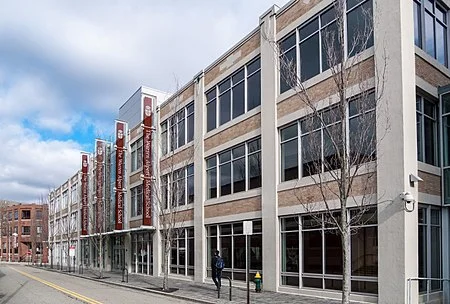
Part of the Warren Alpert Medical School, aka the Brown Medical School, in Providence.
Adapted from Robert Whitcomb’s “Digital Diary,’’ in GoLocal24.com:
Brown University’s plan to join with for-profit Prospect Medical Holdings to buy Care New England to fend off Partners HealthCare’s bid for CNE is motivated by a very reasonable fear. Partners is joined at the hip with the Harvard Medical School. Letting the Partners behemoth into Rhode Island would result in many patients and clinicians who might otherwise stay in Rhode Island going to Partners’ famous Harvard-affiliated hospitals in Greater Boston, perhaps ravaging the small Brown Medical School in the process.
Indeed, Partners would suck a lot of oxygen out of the Ocean State’s health-care sector. But the takeover looks full-steam ahead. Partners’ Massachusetts General Hospital and Brigham and Women’s Hospital may well already be planning to welcome many new patients from Little Rhody.
Swap state nicknames?

"Ocean State IV'' a wintry-looking oil on canvas), by Sean Thomas, at Alpers Fine Art, Andover, Mass. Rhode Island's nickname is "The Ocean State,'' while Massachusetts is called "The Bay State.'' A cursory look at a map would suggest that they should swamp nicknames.
The latest marriage of two great dictatorships

Stalin and Nazi Foreign Minister Joachim von Ribbentrop shaking hands after the signing of the Nazi-Soviet pact on Aug. 23, 1939. The two tyrannies then proceeded to carve up Poland between themselves.
From Robert Whitcomb's "Digital Diary,'' in GoLocal24.com:
Divisions in the West worsened in part by Trump’s nationalist pseudo-populism are making it easier for Russia and China to solidify what has effectively become in recent years an alliance. (Think of a milder version of the Nazi-Soviet relationship of 1939-early 1941.)
Not only are the Russians and Chinese cooperating on many military and other security matters aimed against the West, they are also coordinating their economic expansionism. They’re doing this, in part, through connections between Russia’s Eurasian Economic Union (aimed at keeping former Soviet Central Asian “republics’’ under heavy Kremlin influence) and China’s Belt and Road infrastructure and economic development and trade project, aimed at expanding China’s global economic, security and cultural power across Eurasia.
With the decline of American leadership of the Western Alliance as the latter seeks to better defend itself from the two great expansionist dictatorships, Western liberal democracy seems more fragile than it has been for a long, long time. While I admire French President Emmanuel Macron and British Prime Minister Theresa May for pushing back against, especially, Russian aggression, the U.S., because of its size and power should take the lead. But the Trump administration doesn’t seem very interested.
To read a thoughtful piece on this – “The Geopolitics of the Beijing-Moscow consensus,’’ please hit this link.
Llewellyn King: Solar industry will adjust to Trump's tariffs

Solar panels in a Boston suburb.
In announcing import tariffs on solar panels of 30 percent, President Trump appears, as often, to be taking a hammer to fix a watch: If it doesn’t break, it might start running again. In the case of the solar industry he won’t break it, but he might cause it to miss a beat or two.
Solar is one of the great success stories. It is a fast-growing industry, which is adding more jobs — mostly in installation — than any other economic sector. It is, as they say, on a roll.
The big mission for solar is carbon-free electricity on rooftops, at electric utilities and in the facilities of companies like Google, Apple and Walmart, which want to be colored green. Other uses include autonomous generators for remote locations.
The idea of using the sun’s energy in various things is not new. In Botswana, for example, a few black pipes placed on a roof have provided hot water probably since the 1920s. I first saw them there in the 1960s.
After the 1973 oil crisis, solar was examined seriously in the United States as a power source. Various ideas were afoot. The favored one was to create “farms” of mirrors aimed at a central tower with a boiler. One such installation was at the Sandia National Laboratory in Albuquerque, N.M.; a larger demonstration plant was built in Barstow, Calif.
But it was science that made the difference, much of it done in the Department of Energy’s national laboratories. The solar cell, pioneered at Bell Laboratories and used for space exploration, was the ticket. The direct conversion of sunlight into electricity opened the floodgates of possibility. Whoosh!
Early in the solar story, the technology was regarded as fanciful by the electric industry, which favored coal and nuclear. But as prices have fallen, enthusiasm has risen and now solar and wind are hot tickets in the electricity stakes. Germany has more deployed solar than any other country, but deployment is aflame worldwide. When better batteries or other storage devices come on the market, solar will get a second boost.
Like many technologies pioneered in the United States, solar cell and panel manufacturing has moved to Asia. China is playing a dominant manufacturing role with factories on the mainland and other countries, including Taiwan and Vietnam.
Industry calculates that the immediate effect of Trump’s tariffs will be to cut the rate of deployment and cost jobs. The Solar Energy Industries Association calculates 23,000 jobs will go this year.
But solar will begin to adjust, probably with more Chinese factories being established in the United States. This is how the Japanese car manufacturers dealt with tariffs.
Interestingly, the two companies that filed complaints to the U.S. International Trade Commission, resulting in the Trump tariff hike, are both foreign-owned. Atlanta-based Suniva is mostly Chinese-owned and Hillsboro, Ore.-based SolarWorld is German-owned.
More interesting is the Department of Energy’s decision announced by secretary Rick Perry to offer a prize of $3 million for innovation in domestic chip manufacturing. The government, in my experience, does best when it is pulling an industry to achieve a goal and far less well when it is pushing it.
A prize is classic pulling. Aviation prizes offered by newspapers and boosters were early incentives for flight, first across the English Channel and later the Atlantic.
The government saying, “We are going to the moon. You help us get there” works far better than giving aerospace contractors a bunch of money in the 1960s and saying, “Try to get to the moon.”
With its solar actions of a tariff and a prize-incentive, the Trump administration is both pushing and pulling.
Llewellyn King (llewellynking1@gmail.com) is executive producer and host of White House Chronicle, on PBS, and a frequent contributor to New England Diary.
On Twitter: @llewellynking
The long view
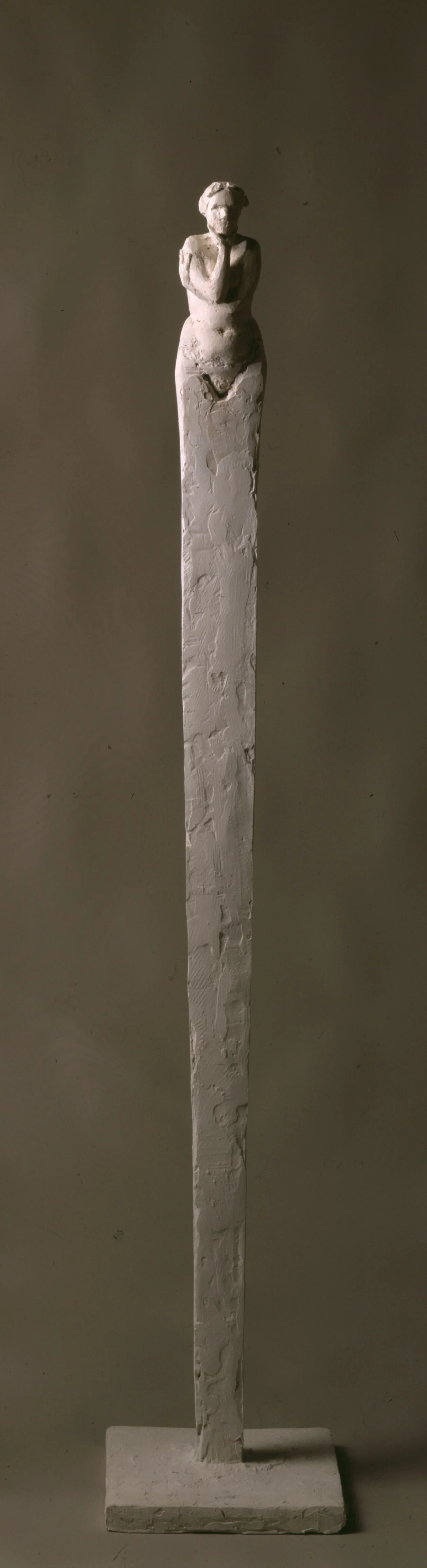
"Column Woman'' (bronze), by Penelope Jencks, in the show "The Hans Hoffman Legacy,: Creative Diversity,'' at the Berta Walker Gallery, Provincetown, Mass., through March 11.
Chris Powell: Bringing back highway tolls won't help Conn.'s overall condition

On Route 95 in Stamford, Conn. Route 95 in the state used to be known as the Connecticut Turnpike, which had lots of toll booths. Those were removed in 1985.
Restoring tolls to Connecticut's highways is being presented by high-minded people as the responsible solution to the neglect of the state's transportation system and the draining of its dedicated fund.
Most candidates for the Democratic nomination for governor support or seem sympathetic to tolls, Ned Lamont being the most enthusiastic. Independent candidate Oz Griebel seems enthusiastic, too. The candidates were happy to say so the other day at a forum of the Connecticut Construction Industries Association, whose members expect to be paid most of the revenue raised.
But restoring tolls is a bad idea -- not because Connecticut's transportation system doesn't need work but because any new source of revenue will mainly just relieve the political pressure to economize throughout state government.
That is, tolls will solidify state government's most recent contract with the state employee unions, which prohibits layoffs and reform of the state pension system. Tolls will protect collective bargaining for state and municipal employees and binding arbitration of their contracts, the mechanisms by which the unions control the government.
Tolls will delay auditing the state's primary education system, in which social promotion produces illiterates at ever-increasing expense, and delay auditing of the state's welfare system, which subsidizes childbearing outside marriage and thereby perpetuates poverty.
Tolls will distract from University of Connecticut President Susan Herbst's million-dollar salary and the labor policies that reinstated a UConn employee to his job after he operated a university vehicle while smoking dope, policies that destroy standards.
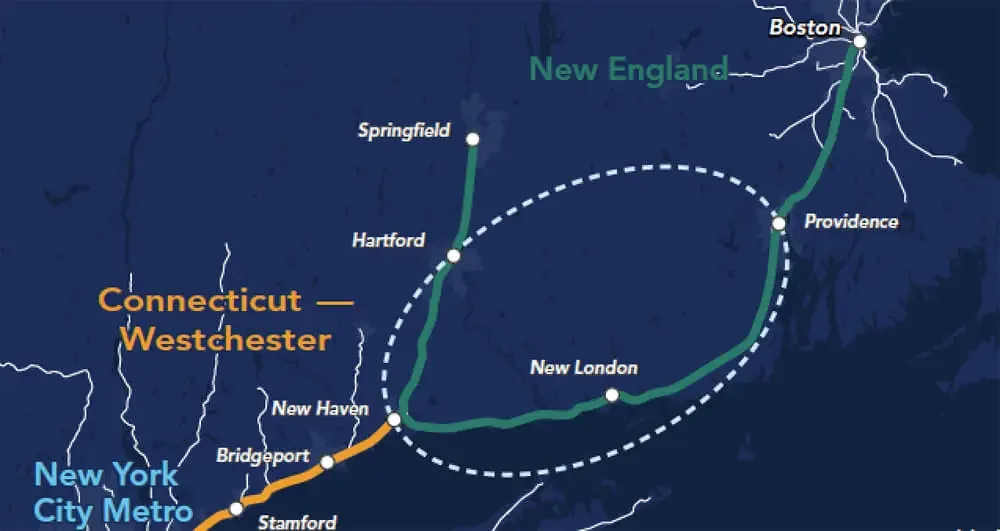
Tolls will ratify the current state administration's foolish transportation priorities, like the bus highway from Hartford to New Britain and the commuter railroad between Springfield and New Haven, even as the country's busiest commuter railroad, the Metro-North line between New Haven and Manhattan, needs expensive renovation.
Tolls will also ratify Hartford's spending $80 million on a minor-league baseball stadium despite the city's insolvency, as well as the Malloy administration's reimbursing half that money in a special grant to dissuade the city from filing for the bankruptcy it needs.
No state government that was trying to economize rather than just gratify special interests would maintain any of these policies.
The Malloy administration and its predecessors have often raided the transportation fund because deferring maintenance of infrastructure is the easy and traditional way of deceiving the public, shifting the financial burden to future elected officials who will have to raise even more revenue. But giving state government more revenue will only hasten Connecticut's decline. The state cannot begin to recover until government's burden on the people is reduced.
There are many other state government accounts to raid -- funds that should be raided so accountability in government can be restored. Let the money in those accounts be diverted to transportation for a change while the rest of state government is cleaned up.
Contrary to the advocates of tolls, the creakiness of its transportation system isn't what is discouraging economic growth in Connecticut. No, economic growth in the state is being discouraged by the incompetence, corruption, mistaken priorities, and spectacular unfunded liabilities of state government itself. Modern trains and smooth pavements won't lure anyone here while state government can offer newcomers only decades of new taxes and fees to sustain the mistakes that it desperately refuses to acknowledge.
Chris Powell is managing editor of the Journal Inquirer, in Manchester, Conn.
It's the drive, not the destination
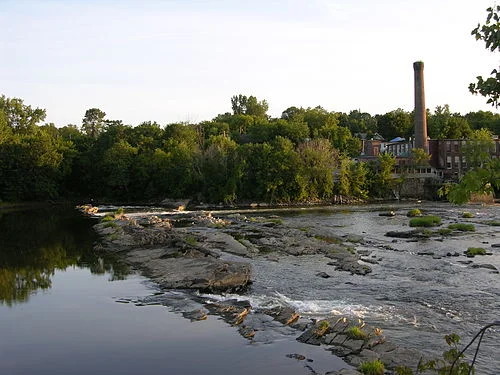
Chace Mill on the Winooski Falls, in Vermont.
"Years ago, I was asked to come up to do a store signing in Vermont. The short version is the two younger guys who own the store pick me up at the airport and start driving me around Vermont, showing me the sights and the {mostly closed} textile mills and the restaurants, and the punchline is there's no store. There is no store!''
-- Mark Wald, an author
'How changed from the fair scene'

"When winter winds are piercing chill,
And through the hawthorn blows the gale,
With solemn feet I tread the hill,
That overbrows the lonely vale.
O'er the bare upland, and away
Through the long reach of desert woods,
The embracing sunbeams chastely play,
And gladden these deep solitudes.
Where, twisted round the barren oak,
The summer vine in beauty clung,
And summer winds the stillness broke,
The crystal icicle is hung.
Where, from their frozen urns, mute springs
Pour out the river's gradual tide,
Shrilly the skater's iron rings,
And voices fill the woodland side.
Alas! how changed from the fair scene,
When birds sang out their mellow lay,
And winds were soft, and woods were green,
And the song ceased not with the day!
But still wild music is abroad,
Pale, desert woods! within your crowd;
And gathering winds, in hoarse accord,
Amid the vocal reeds pipe loud.
Chill airs and wintry winds! my ear
Has grown familiar with your song;
I hear it in the opening year,
I listen, and it cheers me long.''
-- "Woods in Winter ,'' by Henry Wadsworth Longfellow
Belonging and alienation; Boston's vibrant Chinatown
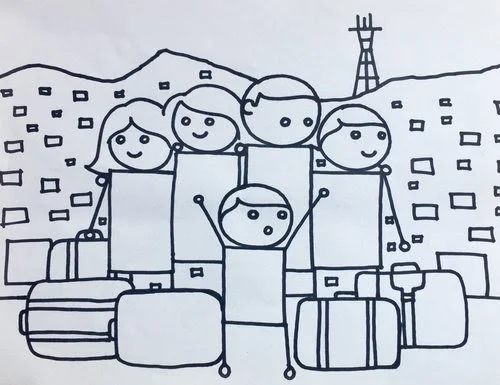
Sketch of "Daly City, February 1981," by Bren Bataclan, in his show "Kulap,'' at the Pao Arts Center, in the Boston Chinatown Neighborhood Center, through April 28.
Mr. Bataclan is a Cambridge-based Filipino American artist who grew up in the San Francisco area. He has a diverse background in art and design. The gallery says the exhibition is "inspired by his family's immigration to California in 1981 and explores the conflicted feelings that came with it. Bataclan's minimalist works are enjoyable for people of all ages while encompassing such themes as belonging, alienation and confusion. His compositions address big questions and strong themes while inviting viewers to consider what it means to be an immigrant and a citizen.''
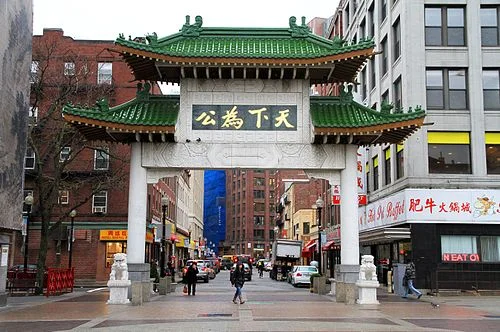
The Paifang Gate, the semi-official entrance to Boston's Chinatown.
Boston's Chinatown, in the Hub's downtown, is the only surviving large historic ethnic Chinese enclave in New England since the demise of the Chinatowns in Providence and Portland after the 1950s. The vibrant Boston Chinatown has many Chinese and Vietnamese restaurants, many other small business and a large art community, too. But big financial-services companies are expanding from the nearby Financial District centered on State, Federal and Devonshire streets and biotech and other tech firms are also raising their flags there.
Chinatown's proximity to the big MBTA rail/bus and Amtrak center in and around South Station is a big draw.
A grand tour of great New England houses and gardens and the stories behind them
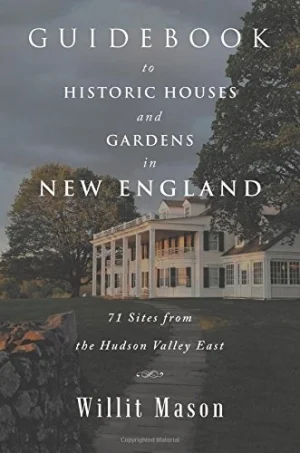
From Melissa Wuske's piece for Foreword Reviews:
"Guidebook to Historic Houses and Gardens in New England: 71 Sites from the Hudson Valley East by Willit Mason gives travelers practical and historical knowledge about the birthplace of America.
"New England, one of the earliest settled parts of the United States, arguably has some of its deepest history. That history is beautifully preserved in its many breathtaking homes, many well over a century old, crafted of ageless stone, and many surrounded by natural, well-manicured splendor. Mason provides a well-thought-out guide that traverses the region and the decades, showing the deep history beneath the present-day grandeur. The book catalogues the region thoroughly without being overwhelmingly exhaustive.''
Ski bum turned filmmaker helped create an industry
Video and text: Warren Miller, a ski bum turned fillmmaker, helped create an industry. Hit this link.
Rebuilding the Puerto Rican grid
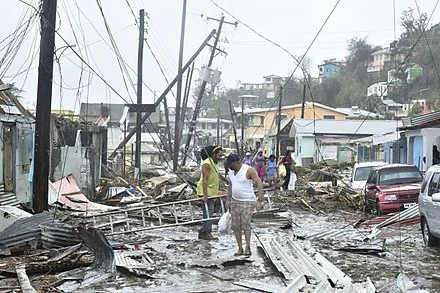
A road in the Roseau area of Puerto Rico littered with structural debris, damaged vegetation and downed power poles and lines after Maria blows through.
Project Notice from New England Diary contributor Llewellyn King:
I am soliciting interested companies and organizations to provide funding for me and a small television crew to travel to Puerto Rico and report on the power situation and the role of mainland utilities in rebuilding the electric grid.
This is one of American industrial history's great rebuilding stories. My plan is to tell it from the point of view of the engineers and lineworkers.
If you are interested in funding a series (three half-hour episodes) of my weekly news and public affairs program, "White House Chronicle" on PBS, please contact me. As an independent producer, I do not receive any funding from PBS.
This series would air nationwide on 200 PBS and public, educational and governmental access stations, and the commercial AMG TV network. It would air worldwide on Voice of America Television and Radio. And the audio would air three times on SiriusXM Radio's P.O.T.U.S. (Politics of the United States), Channel 124.
Contact me, too, if you are interested in funding just my reporting on this effort for InsideSources, the syndicate which distributes my weekly column to 500 newspapers.
This is U.S. electricity history and it should be recorded. I hope to hear from you.
Allbest,
Llewellyn King
llewellynking1@gmail.com
Executive Producer and Host,
"White House Chronicle" on PBS;
Contributor, HuffPost;
Columnist, InsideSources Syndicate;
Commentator, SiriusXM Radio
Web Site: whchronicle.com
Wistful in winter

Fresh Pond, in Cambridge, Mass.
"I spoke to you that last winter morning
Watching the wind smoke snow across the ice
Told of how the beauty of your spirit, flesh,
And smile had made day break at night and spring
Burst beauty in the wasting winter's place.
You did not answer when I spoke, but stood
As if that wistful part of you, your sorrow,
Were blown about in fitful winds below;
Your eyes replied your worn heart wished it could
Again be white and silent as the snow. ''
-- From "Two Seasons,'' by the late Galway Kinnell, the famed Sheffield, Vt.-based poet.