
Vox clamantis in deserto







Ice Age reminders

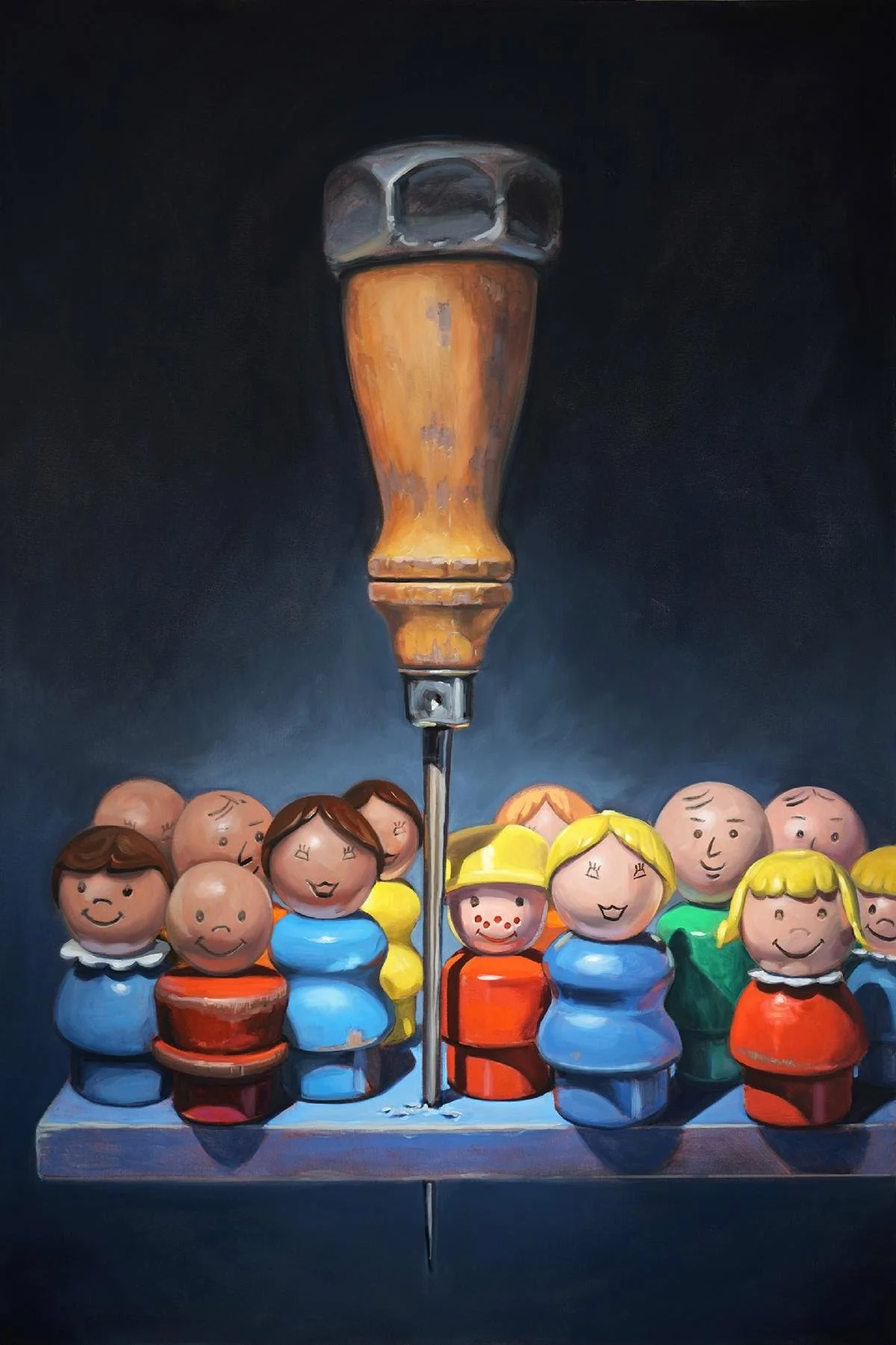
"Erratic 4 Untitled'' (acrylic on paper), by Mira Cantor, in her show "Erratics, works on paper by Mira Cantor,'' at Kingston Gallery, Boston, Nov. 1-26. The show is inspired by the forms of the same name created by the Ice Age and found all over New England, virtually all of which wascovered by ice 15,000 to 20,000 years ago. Ms.Cantor told the gallery: "These erratics are palpable forms of energy, eroding in slow motion."
Jill Richardson: Finding common language on global warming
Via OtherWords.org
If you don’t already agree with me on something, odds are I can’t convince you I’m right.
There’s plenty of science showing that the global climate crisis is already affecting us, that vaccines don’t cause autism, and that humans evolved from a common ancestor with apes. Yet many Americans don’t believe in man-made climate change, the safety of vaccines, or human evolution.
For the two-thirds of Americans who believe in human-caused climate change, the future is terrifying. If you fall in the other third, try to imagine for a moment how you’d feel if you did believe the planet was warming, ice caps were melting, seas were rising, and weather was getting more extreme.
I’ll be honest: I’m scared. Scared enough to seriously consider whether it would be wise or ethical to have children. And I’m frustrated and angry that our country isn’t doing enough to prevent the coming crisis.
I don’t want to take away anyone’s car or air conditioning. I don’t want to force anyone to go vegetarian, or limit the number of children Americans can have. There must be a way to decrease pollution and roll back the clock on climate change without compromising our lifestyles in an intolerable way.
But it won’t happen while we’re all bickering about whether or not the climate crisis is happening in the first place.
While the disagreement is most often on scientific terms, actual scientists don’t have any doubt at this point. The question isn’t whether the climate is changing, but how fast it’s changing and what will happen as a result.
But it’s only a small percentage of Americans who are truly scientifically literate. It takes a lot of education — not to mention time and access to academic journals — to actually comb through the literature and find the facts as researchers see them.
Most of us just base our conclusions on media reports of scientific studies or one of Al Gore’s movies.
Part of the problem is, perhaps, economic. It’s nice to talk about switching to clean energy, but that means jobs in fossil-fuel industries would go away. So far, this country hasn’t done much in the way of helping people transition to new careers.
No environmentalist wants coal miners or oil workers to be unemployed. We want them to have well-paying, satisfying jobs that allow them to live the lifestyle they enjoy — without hurting the planet.
The good news it that solar generation alone now employs more people than oil, gas, and coal combined. But in some places, the only alternatives to good coal jobs, for example, may be poorly paid service jobs with lower wages. Perhaps some people would have to move (or else demand their states invest more in renewables).
Ultimately, we need to find a common language to have a discussion, and we need to get serious about providing for anyone whose job will be lost by switching to clean energy.
Because the alternative is doing nothing — and then figuring out later how to help people whose homes are under water from sea-level rise or increasingly violent hurricanes.
Jill Richardson is a columnist for OtherWords,org.
Smoky skies

"Wild Garden at Salt Pond'' (oil on canvas), by Anne Garton, in the two-person show (with Ulla Neigenfind) "Nature Abounding,'' at Miller White Fine Arts Gallery, South Dennis, Mass., through Nov. 3. The gallery calls Ms. Garton's paintings "nearly ethereal...letting the viewers imagine that they are out there in the woods, enjoying the color of the sky on a cool, cloudy day.''
Why Charlie Baker has succeeded (so far)
Joshua Miller, of The Boston Globe, had a nice summary of the success (so far) of Massachusetts Gov. Charlie Baker:
“His wonky, straightforward style stands in stark contrast to that of his party’s bombastic leader, President Trump.
“What’s more, Massachusetts’ economy is strong, and unemployment is low; there’s a sense among voters that the state is generally headed in the right direction, while the nation is on the wrong track; Baker has crafted a likable media persona; he’s presented himself as a fiscal check on the Democratic Legislature; and there’s been an apparent dearth of crises in state government.
“’He’s not an ideologue, and voters here, at least in their governor’s office, prefer managers and problem solvers,’ said political science professor Peter Ubertaccio, dean of the School of Arts and Sciences at Stonehill College. ‘He’s like the uncle who is always glad to see you and give you good advice, even if you’re not going to take it. He strikes folks as a decent guy and a good manager, and that just fits the moment.’”
Most GOP governors (which means now most governors) govern with far more practicality and cooler rhetoric than members of Congress. They have to, in order to get anything important done. Actually governing/administering, and coming up with the compromises and solutions to do so, is a hell of a lot tougher than bloviating on Capitol Hill, where people are rarely held responsible for much of anything, as long as they’re good on TV.
Federal legislators spendremarkably little time actually legislating, as opposed to raising money and giving speeches. In recent decades they ‘ve spent less and less time working according to their constitutional job description and much less time working across the aisle to craft bipartisan bills.
'Welcome home!'
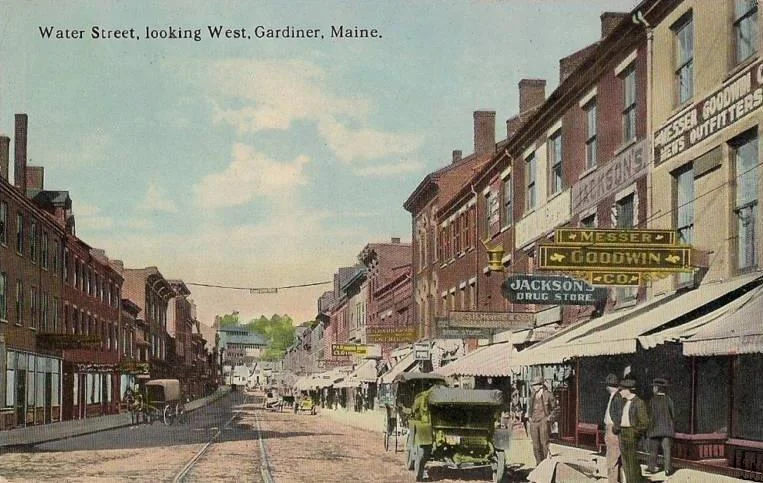
Downtown Gardiner, Maine, in 1914. Edwin Arlington Robinson spent his early years in the town, which may have been a model for "Tilbury Town.''
"Old Eben Flood, climbing alone one night
Over the hill between the town below
And the forsaken upland hermitage
That held as much as he should ever know
On earth again of home, paused warily.
The road was his with not a native near;
And Eben, having leisure, said aloud,
For no man else in Tilbury Town to hear:
'Well, Mr. Flood, we have the harvest moon
Again, and we may not have many more;
The bird is on the wing, the poet says,
And you and I have said it here before.
Drink to the bird.' He raised up to the light
The jug that he had gone so far to fill,
And answered huskily: 'Well, Mr. Flood,
Since you propose it, I believe I will.'
Alone, as if enduring to the end
A valiant armor of scarred hopes outworn,
He stood there in the middle of the road
Like Roland's ghost winding a silent horn.
Below him, in the town among the trees,
Where friends of other days had honored him,
A phantom salutation of the dead
Rang thinly till old Eben's eyes were dim.
Then, as a mother lays her sleeping child
Down tenderly, fearing it may awake,
He set the jug down slowly at his feet
With trembling care, knowing that most things break;
And only when assured that on firm earth
It stood, as the uncertain lives of men
Assuredly did not, he paced away,
And with his hand extended paused again:
'Well, Mr. Flood, we have not met like this
In a long time; and many a change has come
To both of us, I fear, since last it was
We had a drop together. Welcome home!'
Convivially returning with himself,
Again he raised the jug up to the light;
And with an acquiescent quaver said:
'Well, Mr. Flood, if you insist, I might.
'Only a very little, Mr. Flood—
For auld lang syne. No more, sir; that will do.'
So, for the time, apparently it did,
And Eben evidently thought so too;
For soon amid the silver loneliness
Of night he lifted up his voice and sang,
Secure, with only two moons listening,
Until the whole harmonious landscape rang—
'For auld lang syne.' The weary throat gave out,
The last word wavered; and the song being done,
He raised again the jug regretfully
And shook his head, and was again alone.
There was not much that was ahead of him,
And there was nothing in the town below—
Where strangers would have shut the many doors
That many friends had opened long ago.''
-- "Mr. Flood's Party,'' by Edwin Arlington Robinson (1869-1935)
'Holding on'

"Chestnuts fell in the charred season,
Fell finally, finding room
In air to open their old cases
So they gleam out from the gold leaves,
In the dusk now, where they dropped down.
I go watch them, waiting for winter,
Their husks open and holding on.
Those rusted rims are rigid=hard
And cling clean to the clear brown...''
-- From "Another Reluctance,'' by Maine-based poet Annie Finch
'Maximum clear days'

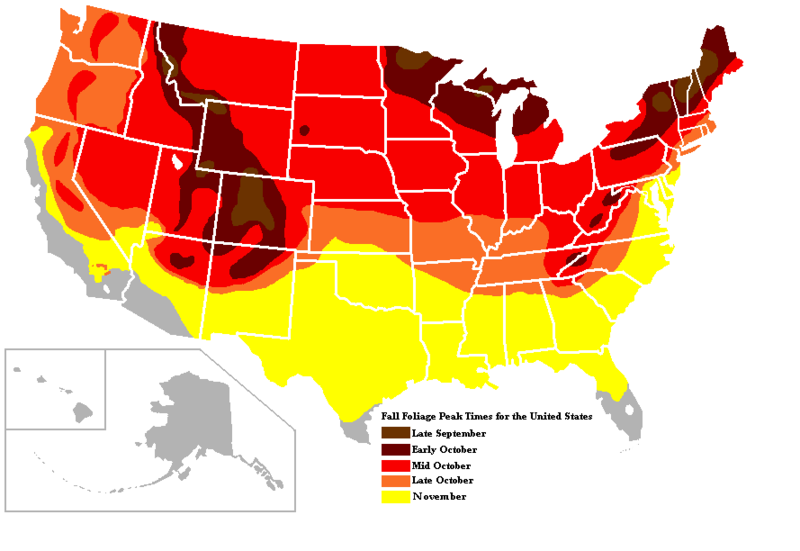
Early October in central Massachusetts.
-- Photo by JKB
"October is the truly autumnal month. The intensity of summer heat has faded, yet the cold sting of winter is still weeks ahead. Warm days, cool nights, and glorious autumn foliage are the normal delightful fare in New England. The number of clear days reaches its annual maximum, winds tend to be light, the horizon is dulled by a blue-gray haze -- weather conditions known in American lore as Indian Summer.''
But: "Though the tropical storm season is definitely on the wane by October, the month has produced some mighty hurricanes'' {affecting New England.
-- From New England Weather Book, by David Ludlum and the editors of Blair & Ketchum's Country Journal.

Tim Faulkner: How a new economy might work in Rhode Island

Via ecoRI news (ecori.org)
PROVIDENCE
Ever hear a politician brag about how much open space she protected? Or how much food scrap he wants to divert from the landfill? Or how they both made a neighborhood healthier by shutting down a polluter? Probably not often.
Instead, the words and acts of most elected officials focus on top-down economic development, such as lowering taxes and offering big corporations massive financial incentives to relocate.
That kind of outdated thinking is driving the spread of an altered economy, one that reduces the emphasis on unbridled profit-making and gives priority to health, nature and economic equality. Models vary, but most advocates and practitioners call for a shift to a shared economy, one that relies on local resources and networks and shuns outside ownership.
Statistics show that the current economic system isn’t working. The United States is doing poorly in creating economic equality and providing health care. Success stories abound, as do data, supporting the benefits of spending local. The grassroots-economy movement has been led by networks of artists, environmentalists and social entrepreneurs.
Specific solutions vary. Some say it’s as simple as having consumers, the government and institutions buy locally made products from locally owned businesses. Everything from food to furniture should made using local raw materials and labor and sold in locally owned shops. Bartering is also common, especially for items that can't be produced locally.
This modified capitalism has also fostered a more minimalist lifestyle. Less stuff and smaller homes reduces environmental harm. It also leads to greater contentment. Houses are smaller while the role of nature and open space is greater.
Partisan gridlock and corporate-funded opposition are stalling favorable policies at the legislative level, so the movement so far has adapted through tweaks to existing rules and systems.
Local environmentalist Greg Gerritt and social-enterprise advocate and impact-investor Dan Levinson, of Main Street Resources, recently discussed the issue and policies around a new economic movement.
Gerritt’s economic platform of ecological healing focuses on addressing climate change, ending fossil-fuel use and protecting forests.
Levinson believes that Rhode Island can prosper from a food-based economy and greater simplicity. Solutions include asking large food users such as universities to exclusively buy local; shifting out-of-state tourism marketing funds into attracting locals to local destinations; government injecting money into the local economy by paying premiums to local companies that bid on local projects.
Rather than politicians, local small-business owners should decide where economic stimulus money goes, Levinson said. “Ask these guys where to put it," he said. "They are not going to want to pollute. They treat people fairly. They are not going to ship all over the world."
Tim Faulkner writes for ecoRI News.
Chris Powell: DNA doesn't tell you much; little incentive for compromise in legislature

The structure of the DNA double helix. The atoms in the structure are color-coded by element and the detailed structures of two base pairs are shown in the bottom right.
-- Graphic from Wikipedia
Solving crime and exonerating the wrongly accused are no longer the main purposes of analyzing human deoxyribonucleic acid, or DNA. No, DNA analysis now is used most often in the fast-growing business of tracing ancestry.
Television commercials proclaim that if you mail a swab from your mouth, a DNA analysis company can tell you not just which ethnicgroups you derive from but even what your culture is and who you are.
It's fun and may be slightly more accurate than an astrological forecast but it's also pathetic. For while genes determine superficial features -- complexion, eye shape and color, hair type -- as well as susceptibility to certain ailments, the connection of genetics with culture and character is small, since culture and character are much more matters of upbringing, environment, experience and insight. Indeed, connecting genetics with culture and character is the ugly, old rationale for ethnic stereotyping, racism, and genocide.
The commercials for DNA analysis also suggest that culture is as trivial as mode of dress -- a flowered hat, lederhosen, a tartan kilt -- rather than civic and religious beliefs, literature, customs, history, an entire way of living.
Just as people who think they have lived previous lives always imagine themselves to have been ancient Egyptian princes or princesses rather than sweaty and exhausted slaves who piled stones on the pyramids, people hoping that DNA will tell them who they are may not realize that, as the saying goes, if you trace your ancestry back far enough you'll always find a horse thief.
One may be glad of kinship for increasing one's appreciation of humanity. But no one deserves credit or discredit for his ancestors, and genes do not determine identity. Especially in the United States, still the land of freedom and opportunity, DNA is too lazy an explanation for anything. People are far more what they make themselves.
* * *
Calls for compromise to break the stalemate over Connecticut's state budget sound high-minded but contribute nothing. Exactly who should compromise and how?
The conflicting positions on the budget are fairly principled.
Most Democrats in the General Assembly want to raise taxes a lot to preserve the status quo in state and municipal government.
Gov. Dan Malloy wants to raise taxes a little less and to transfer state aid from suburbs to cities.
And Republican legislators and the eight Democratic legislators who voted for the Republican budget want to raise taxes much less and sharply reduce spending on higher education.
No one has much political incentive to compromise.
Governor Malloy is not seeking re-election next year and without a budget he seems empowered to allocate money arbitrarily. There may be lawsuits about this but what court is more empowered than the governor to run the state without a budget?
Most Democratic legislators were elected by a party dominated by the government and welfare classes and so cannot impose sacrifice without jeopardizing their political careers. Already the enforcer of the government and welfare classes, the Working Families Party, is challenging the renegade Democrats for re-election.
And having passed a budget that the governor has vetoed, Republican legislators can claim to have done their job already and to be the party of fiscal restraint, leaving the governor to take the blame for whatever happens because of his veto.
This stalemate could continue until the election next year.
Chris Powell is managing editor of the Journal Inquirer, in Manchester, Conn., and a frequent contributor to New England Diary.
Statehood for Puerto Rico
Adapted from Robert Whitcomb's "Digital Diary,'' in GoLocal24.com:
About 80 percent of Holyoke, Mass., public school students are of Puerto Rican background. Now district officials are preparing for a flood of new students as a result of the ravages of hurricanes Irma and, especially, Maria, in that U.S. commonwealth. Other urban school districts in southern New England, especially in Massachusetts and Connecticut, that have lots of Puerto Ricans, are making similar arrangements.
What will immediately help the ravaged island is suspension of the Jones Act, which requires goods shipped between American ports to only be carried on ships built primarily in the United States and with U.S. citizens as their owners and crews. Happily, President Trump last week suspended the law. But it may be time to get rid of it for good.
The idea behind this 1920 law was to protect the American shipping business.
But the Jones Act dramatically raises the prices of goods brought into the island. Puerto Ricans must absorb extra shipping costs of items that could be shipped directly and much more cheaply from a nearby island, such as Hispaniola or Jamaica. The Jones Act forces shippers to route through an American port, in Puerto Rico’s case most likely from Jacksonville and Miami.
Puerto Rico desperately needs supplies to start to recover from these terrible storms.
For the longer term, Daniel W. Drezner, of the Fletcher School of Law and Diplomacy at Tufts wrote:
“This is not just about recovering from Hurricane Maria. It is also about Puerto Rico’s long-term future. If the Jones Act were suspended, consumer prices would drop by 15 percent to 20 percent and energy costs would plummet. A post-Jones Puerto Rico could modernize its infrastructure and develop its own island-based shipping industry. Indeed, the island could become a shipping hub between South America, the Caribbean and the rest of the world. This industry would generate thousands of jobs and opportunities for skilled laborers and small businesses. On an island with official unemployment over 10 percent (but actually closer to 25 percent), this would energize their entire workforce.’’
Meanwhile, it continues to be perverse that residents of Puerto Rico and the nearby U.S. Virgin Islands, while American citizens who can serve in our armed forces, can’t vote in U.S. elections. But that, of course, goes back to the fact that Puerto Rico is not a state. Out of fairness and for national-security concerns, the island, perhaps combining with the U.S. Virgin Islands, should become one.
If it had been a state, it probably wouldn’t have suffered thelethal delays in receiving aid after the hurricanes. Statehood would mean that Puerto Ricans would have to pay federal taxes but that the respect and assistance that they’d get as full parts of the United States would make that well worth it.
Stephen J. Nelson: Air Force Academy chief speaks out for diversity
A college leader spoke up to his students and campus community the other week. His concern was a timely topic: race and race relations, bigotry and racial slurs. And who was the president? Well, while we don’t often think of these leaders in this way, the superintendents of our three major military academies are the presidents of their universities. And this superintendent of the Air Force Academy, Lt. Gen. Jay Silveria, the academy’s superintendent, spoke out because of race-baiting posts on the message boards of five African-American students on his campus.
He was forceful. He related his concerns to the cadets and the academy to recent events including the Charlottesville white supremacy rally last summer, and the recent dust-up over NFL players protesting unequal and unfair treatment of blacks in America. And in the process of what Silveria said, he additionally challenged the chair of his board, no less a figure than the president of the United States, his commander-in-chief up the chain of command.
Superintendent Silveria minced no words. He expressed his outrage and told his students that they, too, should be outraged, not just as Air Force students, and future military leaders for our country, but more importantly “as human beings.” His message was simple: If you cannot treat with equality and respect those different than yourself in gender or race, then you should get out. This was a cry for basic human integrity and dignity: Racial slurs are indecent acts that must be condemned. Invoking the fundamental mission of our colleges and universities, Silveria urged “civil discourse and talk about these issues.”
Then, in stark contrast to his commander-in-chief and displaying the force incumbent on college presidents, Silveria went to the heart of the value of diversity. This was not some mushy apology and boilerplate appeal for progressive politics. No this was the power of diversity, “the power that we come from all walks of life, that we come from all parts of this country, that we come from all races, that we come from all backgrounds, gender, all make-up, all upbringing.” That is, “the power of that diversity comes together and makes us that much more powerful.” This is no weak-tea argument. This is the revered founding creed of the nation and embedded as fundamental values of academia.
Contrast Silveria’s stand with that in recent months of Jerry Falwell Jr. at Liberty Baptist University, in Virginia. Falwell has done everything from apologize for the bus videotape behavior of Donald Trump, to excuse the president’s remarks about Charlottesville, "the bad people on both sides,'' and to support throwing transgendered military people out of the military services. One president stood up for cherished values of the college and university and of the nation. The other caved in a craven fashion in a quest to curry favor with the ideological proclivities of the president of the United States. (And indeed Falwell was rumored to be the head of a presidential task force on higher ed that never materialized.)
The other week, the generalplaced his leadership front and center with the men and women of his campus. He challenged them about how they must behave, and what they owe each other and the country now and in their future leadership in military service. President Trump, are you listening to this leader in your military command?
We can and should take heart from this president of one of our major universities about how campuses and leaders can best handle issues of diversity and can push back against those instigating racist messages and rhetoric. All college presidents as they work hard to take similar stands can be encouraged to be likewise forceful when called upon and take up Silveria’s urgent message about how we find unity and power in the diversity of our racial and other differences. Our colleges and universities and the nation benefit hugely from such stand-up leadership.
Stephen J. Nelson is professor of educational leadership at Bridgewater (Mass.) State University and senior scholar with the Leadership Alliance at Brown University.
Younger than springtime

"A child looking at ruins grows younger
but cold
and wants to wake to a new name
I have been younger in October
than in all the months of spring''
From "The Love of October,'' by W.S. Merwin
A proud town's ancient ball park

(See photo below.)
"Fenway Park, which opened in 1912, is the oldest Major League ball park. But forty miles west of Boston, there's another ball field that is older still -- by more than three full decades. In fact, the town of Clinton, Massachusetts, prides itself on being home to something virtually every other American city and town would envy like little else: the oldest baseball field. Anywhere.''
-- From New England Notebook, by Ted Reinstein

Cause for celebration?

"Women's Day in Iran'' (collage encaustic), by NancySpears Whitcomb, in the group show of New England Wax members entitled "Shift: Approaching Encaustic From All Angles,'' through Nov. 26 at the Fuller Craft Museum, Brockton, Mass.
Crumpled identity

"Maria as Actress'' (Polaroid emulsion transfers, ink on paper), by A.J. Nadal, in the show "Women, Interpreted and Interactive Narrative,'' at the Cambridge (Mass.) Art Association, through Nov. 2.
Falling into the shadows
"The leaves drift in a clatter and dry hiss
over the beach chair left out in the yard
since summer; its symmetries and surfaces,
the taut green fabric of its back and seat,
the dull sheen of its frame, are aswarm with leaves
that fall all afternoon into the shadows'''
-- From "The Beach Chair,'' by David Ferry
A fall fishing tradition

From Robert Whitcomb "Digital Diary,'' in GoLocal24.com:
This time of year reminds me of fishing for smelt, which would run from fall into winter. I grew up in a house up a hill from a harbor on Massachusetts Bay. When it started to get cool in late September and early October, we’d take bamboo rods with several hooks attached to something that looked a little like a coat hanger down to a dock and try to catch as many of these small fish to take home and fry in butter. They were delicious. We’d do this several times a week until November, when it was usually too cold and windy to enjoy such fishing.
It was a quiet seasonal joy.
Seasonal 'weird laughter'

"Celia Thaxter's Garden,'' on Appledore Island, by Childe Hassam.
"Once more their weird laughter of the loons comes to my ear, the distance lends it a musical, melancholy sound. For a dangerous ledge off the lighthouse island floats in on the still air the gentle trolling of a warning bell as it swings on the rocking buoy; it might be tolling for the passing of summer and sweet weather with that persistent, pensive chime."
-- From the writer Celia Thaxter, who spent much of her life on Appledore Island, in the Isles of Shoals, off New Hampshire.

White Island (left) and Seavey Island (right) in the Isles of Shoals at high tide.
Llewellyn King: Hegemons not great for innovation

Innovation is the hot word in the business press and in academia. Business itself, maybe less so. If business is profitable and secure it would rather grow through acquisition than innovation.
There is a public sense that innovation is on a tear; that new ideas are bursting forth irrepressibly. Possibly not.
At a recent exhibition of early stationary steam engines in Rhode Island, I was struck by the inventiveness and the variety of these machines, but mostly by the diversity of the manufacturers. These were the inventions, the innovations that powered the Industrial Revolution. They were being improved and deployed in ever greater numbers until electricity — that big game-changer, that supernova of invention — came along to disrupt everything again.
Likewise, it is impressive to look at the early days of automobiles. Hundreds, if not thousands, of manufacturers, hoping that they had found the forward route and that route was the one that would survive.
Aviation, the same story.
The impediment to these kinds of diverse inventions and modifying innovations is often just the size of corporations.
The early years of computers were a time of incandescent creativity, followed quickly by innovations. But the inventors succeeded too well and instead of there still being thousands of entrants, the early winners hold hegemony over the industry. They have moved from innovators to rent collectors, from white-hot invention to comfortable, corpulent middle age very fast. Include in this list of those who went from eureka beginnings to cautious management: Microsoft, Google, Amazon and probably Uber.
Commercial success came too quickly and hegemon, as it always does, followed; then sclerosis through size.
It can be seen as a replay of what has happened in other industries, where success has led to growth and invention has given way to preservation.
Those who opposed — and lost — the merger of McDonnell Douglas and Boeing did so because they feared that Boeing, which had upended aviation not once but twice with the 707 and the 747, would lose the heart it once had for such bold and risky innovation. Big organizations are inherently hard of hearing.
Computing also has become a hegemon in its own way. The adventurous money, the best minds and the great universities all are centered on Silicon Valley and what has become celebrity technology.
But other technologies are coming on quietly, most notably additive manufacturing, colloquially known as 3D printing. It is moving very fast and has gone from manufacturing simple things to making very complex nuclear fuel, aviation parts and even human body parts. It could be the next big thing.
But what about the next little thing?
Step forward an imaginative television program running on 200 public broadcasting stations. It is called “Make48” and it is a reality show with a difference. Its CEO Tom Gray says one should think of the annualized, eight-part series as a cross between “Shark Tank” and “How It’s Made,” two very successful commercial cable television shows that cater to the latent creative, entrepreneurial spirit often daunted by the complexity of thinking up a product, making it, financing it and getting it to market.
Make48 seeks to solve those problems, or most of them, by recruiting teams of inventors who, at the Kansas City Art Institute, are supplied with experts to show the creators how to manufacture their creations in 48 hours. The product can be in any material: metal, wood, plastic, rubber — you name it. But it has to be made in front of television cameras in 48 hours. Then three winners get the professional help in marketing the products, getting them on store shelves, TV sales programs and online shopping. The whole suit of needs met.
The program is supported generously by chief sponsor Stanley Black & Decker, and by The Grommet, QVC, Duck Tape and others, who are looking outside for new products. Always the hope that the next Walkman, safety razor or Post-it is waiting to be created and taken to market. Last year’s winners were modest: a kitchen sink stopper or bath plug, a series of color-coded food preparation surfaces to prevent cross-contamination, and a laser-aiming device for men and boys using toilets.
Who knows whether a big winner, like the electric screwdriver, will come forth, but mighty oaks do start as acorns.
On Twitter: @llewellynking2
Llewellyn King is executive producer and host of White House Chronicle, on PBS.

Chris Powell: As in Detroit and Central Falls, bankruptcy could finally make Hartford responsible

Constitution Plaza, in downtown Hartford.
Advocates of a financial bailout for Hartford city government warn that a bankruptcy filing by the city will be a "black eye" for Connecticut, as if the state isn't already mortified by the failure of Gov. Dan Malloy and the General Assembly to enact a budget three months into the new fiscal year.
But last week a series of investigative reports by Eric Parker of WFSB-TV3 in Hartford examined the recent municipal bankruptcy reorganizations in Detroit and Central Falls, R.I., and concluded that the cities have greatly improved as a result.
Hartford's situation is much like those in Detroit and Central Falls before their bankruptcies, with debt and pension obligations outpacing revenue. Indeed, the two federal judges who handled Detroit's bankruptcy reviewed Hartford's financial data and recommended bankruptcy. While Hartford's city government would lose authority during a bankruptcy, the Detroit judges suggested that Mayor Luke Bronin could be appointed the city's emergency manager, thereby preserving some democratic supervision in the process.
Detroit, which long had been losing population and was becoming a giant slum, dragging its suburbs down with it, began to revive at the moment of its bankruptcy filing, Parker reported. That's when businesses gained confidence that management of the city would become responsible. Downtown is prospering again and real estate values in the city and its suburbs have risen sharply.
Detroit's bondholders and bond insurers absorbed huge losses, pensioners smaller but still substantial loses. The blow to pensioners in Central Falls was harder. But there probably won't be much private-sector investment in Hartford until the city, which is not only broke but riddled with corruption and incompetence, is reorganized both financially and politically, and that can't be done without pain.
After all, just in the last few weeks former Hartford Mayor Eddie Perez pleaded guilty to bribery and a developer, James C. Duckett Jr., was convicted of defrauding the city of hundreds of thousands of dollars in the guise of building a soccer stadium. Of course, Hartford's new minor-league baseball stadium was completed last year at $30 million or so beyond its $50 million budget even as city government had become insolvent and had stopped maintaining its schools.
The $50 million Mayor Bronin wants in additional aid from state government so that the city might avoid bankruptcy -- and probably only postpone it -- would pass the bill for the stadium along to municipalities that are not quite as corrupt and incompetent as Hartford is.
Far from giving Connecticut another "black eye," bankruptcy for Hartford would restore virtue to the city's bondholders and unionized employees, who long have been operating as if the city will be rescued financially no matter how incompetent and corrupt it becomes. For the bondholders and unions have enough political influence to prevent incompetence and corruption. Instead the bondholders have been indifferent and the unions have encouraged city government to keep giving the store away, especially to themselves.
Imagine how different Hartford might be if, instead of assuming that state government would underwrite its corruption and incompetence forever, the bondholders and the unions were compelled to audit city government constantly to maintain its fiscal responsibility, thereby insuring their bonds and pensions.
But while cities can file bankruptcy, states can't, and the way things are going, Connecticut state government soon may be little more than a pension and benefit society cannibalizing public services.
Chris Powell is managing editor of the Journal Inquirer, in Manchester, Conn.