
Vox clamantis in deserto








Ignorance the bigger problem
From Robert Whitcomb's "Digital Diary,'' in GoLocal24.com:
Very, very few Americans are sympathetic to the “Alt Right,’’ the KKK or neo-Nazis. Thus the huge “counter-demonstration’’ against the Aug. 19 “Free Speech Rally’’ in Boston was ridiculously overwrought.
The “Free Speech Rally’’ was conducted, such as it was, by an outfit called the Boston Free Speech Coalition, which says it’s “a coalition of libertarians, progressives, conservatives, and independents.” The counter-demonstrators tried to label the coalition as a bunch of extreme right wingers and effectively quashed their freedom of speech. I have no idea what the real views of the members of the coalition might be. But I do know that their First Amendment rights were thwarted by this trendy counter-demonstration against “hate,’’ as if you could ban something that everyone feels from time to time.
The biggest problem in all this is not bigotry but massive ignorance about American constitutional rights and American civics and history in general. (Certainly if the Alt Right or outright fascists took over they’d curb or prohibit free speech themselves and knock a lot of heads in the process.)

Chris Powell: Conn. deportation cases rife with cynicism; a portrait to take down

Most of Connecticut's recent heartbreaking deportation cases follow a pattern of cynicism on both sides.
That is, illegal entry for economic reasons is disguised by a claim for refugee status and asylum. There is a failure to appear at an immigration hearing, lest the refugee claim be scrutinized and disproved, a failure later represented as an accident or someone else's fault when it gets in the way of an appeal. There is issuance of a deportation order followed by multiple delays of enforcement over the course of many years as the executive branch of government declines to enforce the law, thereby allowing unskilled foreign labor to drive the national wage base down for the benefit of capital.
Meanwhile illegal immigrants build families in this country, with spouses and children to be used as hostages against enforcement.
Then there is the new national administration's refusal to delay deportation again, the setting of a deportation deadline, and an emergency appeal to an immigration court or the regular federal courts, making a claim of new evidence. At last there is still another stay of the deportation order, or else the illegal immigrant's relocation to a church purporting to provide "sanctuary."
This pattern demonstrates that the entire immigration system has been a racket in which the immigrants have been confident that the U.S. government was unlikely to enforce immigration law against them, and the government, through administrations of both political parties, prior to the current administration, indeed has declined to enforce the law as often as it has enforced it.
Since the government is as culpable as the illegal immigrants here, little good is likely to come from destroying families by deporting a father or mother who would leave citizen children here. But the country won't ever regain immigration law and control of its borders until deportation for illegal entry is swift and sure.
CLEAN UP THE CAUCUS ROOM: Before Connecticut commits itself to the cultural revolution that is toppling Confederate statues in the South, masking or breaking politically incorrect engravings and windows at Yale, and prompting New York City to contemplate renaming Columbus Circle for Hillary Clinton or Sacco and Vanzetti, Democrats in the state Senate might consider a more modest reform.
The walls of the Senate's Democratic caucus room at the state Capitol display portraits of past Democratic lieutenant governors, who presided over the Senate. Among those depicted is T. Frank Hayes, who was simultaneously lieutenant governor and mayor of Waterbury in the 1930s and who, in the latter position, looted the city, was convicted and sent to prison for it, and helped cause the defeat for re-election of his former ticket mate, Gov. Wilbur L. Cross, at once the most erudite and homespun governor the state ever had.
So if the walls of the Democratic Senate caucus room are to be places of honor, why is Hayes's portrait still hanging there?
Surely the Democrats could find a portrait of another prominent Democrat who did not disgrace himself and the state. A painting or poster of the Charter Oak is always appropriate to fill extra space in any official gallery in Connecticut. Hayes's portrait could be removed for storage at the archives at the State Library across the street from the Capitol.
Yes, Hayes didn't wage war against the United States, nor did he own slaves. Connecticut can be glad that, unlike some other states, it has few connections to such profound offenses. But Hayes's offense is bad enough and it shouldn't require a cultural revolution to take him down and replace him with someone or something better.
Chris Powell is managing editor of the Journal Inquirer, in Manchester, Conn.
"Life's Declivity'
"As Summer into Autumn slips
And yet we sooner say
"The Summer" than "the Autumn," lest
We turn the sun away,
And almost count it an Affront
The presence to concede
Of one however lovely, not
The one that we have loved --
So we evade the charge of Years
On one attempting shy
The Circumvention of the Shaft
Of Life's Declivity."
-- "As Summer Into Autumn Slips,'' by Emily Dickinson
Keep drivers guessing

"In Vermont no back road of any pride is content to have only one name. In the next town to me and its neighbors to the north, for example, Grassy Brook Road becomes Archie Jones Road, becomes Lower Road, becomes Route 35, becomes Weaver Brook Road, becomes Cambridgeport Road -- all in the course of about 15 miles of the same thoroughfare.''
-- "Unimproved Roads,'' by Castle Freeman Jr., in the March 1998 issue of Yankee magazine.
Channeling 'social upheaval'

"Red Flag'' (painted aluminum with silver and bronze leaf), by Charlie Hewitt, in his show "Heart of Gold,'' at Heather Gaudio Fine Art, New Canaan, Conn., through Sept. 9.
The gallery says: "Hewitt's work channels the social upheaval of the 1960s, the laborers and mill-towns of his native Maine, and the gritty urban landscape of the Bowery,in New York City. He expresses his life experiences through an abstraction rich with emotive content. These personal associations come through in colorful, energetic, at times scrappy and idiosyncratic mixed-media compositions on canvas, works-on-paper, prints, welded sculpture, and ceramics.''
Some Kennedys at it again
From Robert Whitcomb's "Digital Diary,'' in GoLocal24.com
Poor Massachusetts Congressman Joseph P. Kennedy III – the thoughtful, very well informed and disciplined young man who has put a lot behavioral space between himself and a family too many of whose members are known for out-of-control and arrogant (“Do you know who I am?!”) behavior.
He must have been very embarrassed when his Uncle Max Kennedy and his daughter Caroline, both acting deranged, were arrested on Aug. 30 in a fancy rented house near the Kennedy compound inHyannisport, onCape Cod, after arguing with police officers responding to neighbors’ complaints about a very loud party there.
The cops said Max Kennedy was, among things, “screaming incoherently and throwing himself at the wall’’ and smashing a cabinet filled with glass valuables.
After he was put into a police cruiser, Caroline tried to get her father out of the vehicle and was arrested herself. At the police station, the cops said, she told them proudly: “I went to Brown and I’m a teacher, sweetheart!’’
Oh, well, as my late father used to say, bitterly, “Your friends you can pick; your relatives you’re stuck with.’’
Admirable ignorance

"It is what he does not know,
Crossing the road under the elm trees,
About the mechanism of my car,
About the Commonwealth of Massachusetts,
About Mozart, India, Arcturus,
That wins my praise. I engage
At once in whirling squirrel-praise.
He obeys the orders of nature
Without knowing them.''
-- From Richard Eberhart's "On a Squirrel Crossing the Road in Autumn, in New England''
As the fall settles in

"Crane Beach, Afternoon" (cropped image, oil), by James Mullen, at Alpers Fine Art, Andover, Mass.

John O. Harney: September song -- jobs, demographics, town & gown, etc.

September, from the Très Riches Heures du Duc de Berry.
Via the New England Board of Higher Education (nebhe.org)
Post-Labor Days. For many, that means time to put away the white pants and relish that last summer getaway. Few will reflect on the true meaning of Labor Day (and May Day) or the too-often-denigrated labor movement in general. Fewer will think of the 19th Century mill girls in Lowell, Mass., and their successors who risked their jobs—and sometimes their lives—to create the day of recognition for workers. Many of today’s employers keep their shifts going even during Labor Day. Many professionals dabble with work even during the paid time off the labor movement won for them (though even today the U.S. is the only "first world economy" that doesn’t require employers to offer any paid time off).
As historian Charles Scontras, of the University of Maine’s Bureau of Labor Education, recently noted, “Workers whose knowledge and skills are increasing[ly] linked to increased productivity and the creation of wealth, and who may have viewed with indifference the movement of manufacturing abroad for the past few decades are, themselves, increasingly experiencing living on the edge of economic insecurity.” Many students, meanwhile, got back to class in late August; speed counts. Labor Day is not what it used to be.
But labor is more crucial than ever.
Indeed, NEBHE’s Commission on Higher Education & Employability is heating up. The Commission will host a panel discussion at NEBHE’s board meeting on Sept. 14 in Maine, a full Commission meeting on Sept. 27 at Carbonite, in Boston, and a summit Dec. 4 at the Federal Reserve Bank of Boston.
The Commission is not some set of crass commercial tasks, but rather a deliberate initiative to help all New Englanders find fulfilling jobs and, in so doing, enrich the region’s economy. One concern for the Commission is bringing adult workers into the workplace to capitalize on the aging of the region's population; Maine, Vermont and New Hampshire have the oldest median agesin America. Why not go a step further and redouble efforts to make New England a world leader in all things geriatric, including deploying the region’s fabled health research expertise in a well-funded, concentrated fight against the scourge of Alzheimer’s disease?
The other side of New England's demographic challenge is the need to engage groups who have not always been well-served by education. Obviously, Donald Trump’s suggestion to end Deferred Action for Childhood Arrivals (DACA) will not help.
A different brain drain. On the subject of age, New England is losing its claim to an 88-year-old genius. Famed left-wing social critic Noam Chomsky announced last month that he is leaving MIT, where he has been a linguistics professor since 1955, to join the linguistics department at the University of Arizona. Brain drain is a common worry. And the drain is often the Sun Belt (at least before climate change was understood). But the brain drain is more commonly seen through the lens of New England losing workers than losing intellectual capital, especially academics such as Chomsky who have lost favor among corporate-minded higher ed thinkers.
You work too much. Most students (59 percent) work during college. But like countless moms advised, the key is moderation. Working while in college can be a good strategy for students from low-income families to get through and get ahead in college, especially if their enlightened employers offer flexibility. But an ACT Center for Equity for Learning report suggests that working more than 15 hours a week while in college may do more harm than good—especially for students from underserved backgrounds.
The findings come just as the Trump administration proposes cutting $500 million from the federal work-study program; some estimate that would lead to only 333,000 students awarded work-study aid in 2018, compared with 634,000 in 2017.
College readiness is inherently involved in the employability effort. Even in the age of alternative credentials, higher education of some sort is critical to the region’s employability future. Much talked-about 21st Century skills generally include: collaboration ("teamwork"); communication; critical thinking (though more about solving problems than being critical of authority or mass media) and creativity (as long as it can be monetized?). Having been in Boston’s Kenmore Square around the Hub’s famed Sept. 1 move-in days, I would add one more: the ability to walk down a street without knocking anyone over.
Relevant for future enrollment? The Maine House considered a proposal to allow people with concealed carry permits to carry their firearms on public colleges (except in facilities that post signs barring them). The idea was rejected. The bill would have changed existing law that lets the trustees of the University of Maine, the Maine Community College System and the Maine Maritime Academy decide the rules for the campuses they oversee. In a line straight out of Miss Sloane, bill sponsor Rep. Richard Cebra (R.-Naples) said the proposal is “a women’s issue” because “a small, concealed handgun creates an equality between a 100-pound woman and a 225-pound attacker.” Cebra and two colleagues also requested allowing members of the Legislature to carry concealed handguns in the statehouse, following a gun attack in Virginia on a congressional baseball practice. Across the region, Massachusetts bans guns on campus; the other five states leave it up to individual campuses, according to the Campaign to Keep Guns off Campus.
Regional thinking. When we staged our mock election campaign for “Governor of New England” nearly a decade ago, one of the “candidates,” Vermont’s then treasurer, and later real governor, Jim Douglas argued: “We have 250 towns (Maine has 435) and the Legislature offered an incentive a couple of years ago to provide more school construction aid for towns that would consolidate their schools and build a joint school. They pulled back because nobody wanted to do it. So before we talk about expansion and collaboration in the federation beyond the borders, we should realize it is pretty tough to cooperate even internally sometimes.”
Hard as it is to join schools within states, Vermont and New Hampshire towns are among those considering a new interstate district. Previously, Vermont was part of the first joint compact district in the nation, when Norwich, Vt. joined with Hanover, N.H., in 1964 to form the Dresden School District.
Going coed. College readiness and employability both hinge on the economic sustainability of higher ed institutions. One strategy to bolster institutional finances has been to appeal to more groups of students. The University of Saint Joseph (USJ) announced last month that it will open undergraduate admissions to male students for fall 2018. Historically, USJ admitted only women to its main undergrad programs, but began introducing coeds to various graduate programs starting in 1959. President Rhona Free cited studies showing that less than 1% of full-time female college students attend a women’s college and only 2% of female high school seniors say they’d consider attending one.
Play ball! Major League Baseball (MLB) and Northeastern University entered a partnership to provide pro ballplayers with access to higher-education programs. The agreement follows the inclusion of a new Continuing Education Program in MLB’s collective-bargaining agreement, which provides players with additional funds devoted to their educational development.
Northeastern President Joseph E. Aoun, who is slated to speak at the NEBHE Dec. 4 summit, said of the baseball agreement: "We must be boundless, and meet learners where they are. That is why this partnership with Major League Baseball—to prepare players at all levels for the next step in their lives and careers—is so important." The agreement provides a range of opportunities to interested players—both during and following their baseball careers—through in-person and online instruction. Players will have access to degree programs in fields such as finance, health sciences, information technology, human services, communications and psychology, data analytics, sports leadership, digital media and project management.
Peace in Maine. The Lewiston, Maine, police have been holding neighborhood meetings to address complaints about Bates College off-campus housing. Lewiston Mayor Bob Macdonald was quoted in the Lewiston-Auburn Sun Journal as saying: "These are people who have lived there for years, and their quality of life won't be ruined by out-of-state yahoos." NEJHE has covered such delicate town-gown relations, including a full edition on Colleges In Their Places.
Being your Guide. Putting together our annual Guide to New England Colleges and Universities always offers an opportune time to inspect the region’s higher-ed landscape for institutional comings and goings. What’s new this year? Facing declining enrollment, Andover Newton Theological School of Massachusetts signed an agreement to move into Yale Divinity School, in New Haven, Conn., and become Andover Newton Seminary at Yale Divinity School. The former Rockport College connected with the University of Maine Augusta is now Maine Media College. The entire board of the New England Center for Circus Arts (NECCA) stepped down after turmoil between the trustees, the founders and the staff. It sent us scurrying to make sure we hadn’t missed out on the circus, but alas, NECCA doesn’t fit the criteria for the Guide, notably that they be authorized to grant undergraduate or graduate degrees.
A little civility. Former NEBHE chair and frequent NEJHE editorial contributor Lou D’Allesandro reflected on the enactment of a New Hampshire Senate Bill he sponsored to develop a uniform framework for civics courses. “By outlining an instructional framework, this bill ensures that our teachers are teaching the fundamentals of democracy, the responsibilities of every citizen, and the tools to engage. At no additional cost to the state, this is a common sense measure for our students and our democracy.”
Collaborating. I was honored to join the July 2017 ACL Northeast Community Gathering at the Harvard Graduate School of Education. It’s a group of collaborators who could save higher education money by sharing rather than cutting. But the consortia themselves face challenges. Neal Abraham, executive director of Five Colleges Inc., {Amherst, Smith, Mount Holyoke and Hampshire colleges and the University of Massachusetts at Amherst} notes that they are often seen as “cost centers” and collaboration is hardly mentioned to new officials stepping into higher ed leadership positions. At Five Colleges, which has 37 employees and is often seen as a leader among consortia, the directors of virtually every function area have turned over in the past eight years. Abraham, himself, is stepping down.
The featured speakers at the ACL Northeast Community meeting were Harvard Project Zero’s Howard Gardner and Wendy Fischman. They offered “impressions” from their work on “Liberal Arts and Sciences in the 21st Century.” The study investigates how students, parents of students, faculty, administrators, trustees, young alumni and job recruiters conceive of the purposes, best practices and most challenging features of undergraduate education in the U.S., especially liberal arts and sciences. It'll take time to see final results. But in the meantime, Fisher asks: Wouldn't we all want a population that reads the newspaper and understands it?
Missing BIF. For the first time in several years, I’ll be missing this month’s Business Innovation Factory summit, in Providence, due to a conflict. It’s always a profound inspiration. I urge you to watch the videos, which generally are released within a month or so of the event.
John O. Harney is executive editor of The New England Journal of Higher Education, a service ofNEBHE.
Josh Hoxie: Tax cuts for the rich only help the rich
Via OtherWords.org
Soon you’re going to hear a lot about taxes.
You’ll see images of families flashing across your TV screen while a soothing narrator assures you that the tax plan being debated in Washington really is good for you. The newspapers you read, the social media apps you scroll through, the websites you frequent, and the snippets of radio you catch will all feature ads talking about it.
That’s what a marketing blitz looks like, and there’s one coming for the Trump tax plan. It will be well-produced, well-orchestrated, and completely devoid of facts.
President Trump started his sales pitch for his tax-cutting agenda in Missouri in August, where the assembled audience was treated to a fact-free sermon on the virtues of his plan. Gone were any specifics of what’s in it, or who gets what.
Looking at Trump’s tax plan from the campaign, as well as what the Republican majority in the House of Representatives have proposed, we can see the basic outlines of what’s coming.
Corporations will see their nominal tax rates drop from 35 percent to 20 or even 15 percent. Individual rates will go down — possibly for everyone, but definitely and most strikingly for the very wealthy. Overall tax revenue will tank, potentially by as much as $10 trillion over 10 years.
What does all this look like in the real world?
On the corporate side, we know for sure that lower corporate taxes do not create jobs.
In the ads to come, maybe you’ll see a guy in a hard hat claim that corporate tax cuts will put him back to work. He’s lying.
A recent Institute for Policy Studies report looks at 92 profitable companies that already pay an effective 20 percent tax rate, thanks to loopholes. On average they’ve cut jobs, even as the rest of the private sector saw a 6 percent jobs increase.
On the individual side, half of the proposed cuts will go to millionaires, according to the Institute on Taxation and Economic Policy. Less than 5 percent go to families with household incomes below $45,000.
This is probably the biggest wealth grab in American history by the wealthy, for the wealthy. Selling it as a middle-class tax cut, regardless of the images in the ads you see, is just old-fashioned lying.
And finally there’s the revenue. Trump claims his tax cuts will pay for themselves with increased economic growth. That theory’s been debunked many times over and yet remains stubbornly in play.
So what happens when trillions of dollars of tax revenue get slashed?
Congress currently bans itself from passing bills that increase the deficit in one of their better acronyms — Pay As You Go (PAYGO). That means the tax cuts Trump proposes will have to come out of public programs.
No matter how much hype you hear, you’d better believe those cuts are gonna hurt. From food assistance like the Women, Infant, and Children (WIC) program to Head Start, and from clean water protections to unemployment insurance — it’s all on the line.
It’s hard to keep an eye on the truth when savvy marketing campaigns are hell-bent on deflecting your attention away from it. Don’t buy it. The Trump tax-cut plan is disastrous for working families and for anyone who cares about a fair and just economy.
Josh Hoxie directs the Project on Taxation and Opportunity at the Institute for Policy Studies.
Regional joy

"... I suddenly remembered all my old absent and distant Sox-afflicted friends (and all the other Red Sox fans, all over New England), and I thought of them-in Brookline, Mass., and Brooklin, Maine; in Beverly Farms and Mashpee and Presque Isle and North Conway and Damariscotta; in Pomfret, Connecticut, and Pomfret, Vermont; in Wayland and Providence and Revere and Nashua, and in both the Concords and all five Manchesters; and in Raymond, New Hampshire (where Carlton Fisk lives), and Bellows Falls, Vermont (where Carlton Fisk was born), and I saw all of them dancing and shouting and kissing and leaping about like the fans at Fenway -- jumping up and down in their bedrooms and kitchens and living rooms, and in bars and trailers, and even in some boats here and there, I suppose, and on back-country roads (a lone driver getting the news over the radio and blowing his horn over and over, and finally pulling up and getting out and leaping up and down on the cold macadam, yelling into the night), and all of them, for once at least, utterly joyful and believing in that joy-alight with it.''
-- From Five Seasons, by Roger Angell (1977)

Buzzards Bay most perilous for a hurricane surge

During the tidal surge that accompanied the Sept. 21, 1938 hurricane that ravaged Long Island and much of New England. The southeast to southwest winds on the east side of the storm pushed particularly high surges up Narragansett and Buzzards bays.
Adapted from Robert Whitcomb's "Digital Diary,'' in GoLocal24.com:
We in southern New England have had some famous hurricanes, although they’re usually different from those Down South. (They tend to be less intense, wider and to move forward faster.) So what are the questions/lessons from Harvey’s assault on Houston?
The most difficult lesson is that far too much building has been happening in flood zones, which includes much of Houston. And assuming that climate scientists are right, the results of overbuilding will get worse. Houston and Texas in general has lax (in comparison to, for example, the Northeast and California) building codes and in some places, most notably Houston, little zoning.
This has led to massive paving and building over of flood-vulnerable land, which has worsened flooding as water has poured from pavement and other hard surfaces into overburdened bayous. Marshlands, woods and meadows absorb water and thus mitigate the effects of area flooding. In Greater Houston, much of these giant sponges have been destroyed to make way for parking lots, malls and subdivisionsin the nearly uncontrolled development that Texas is famous for.
Of course people like to live near water. Aided by the much-in-need-of reform Federal Flood Insurance Program, individuals and developers have built too close to the sea and rivers – with an irresponsibility partly subsidized by taxpayers. Seas continue to rise and rainfall events are becoming more extreme. A lot of this indirect waterfront building subsidy turns out to be welfare for the rich, who can afford the high purchase price of waterfront property.
In some places, though, fear of flooding is leading even affluent folks to move to higher ground from homes right along the shore. This has even led to gentrification in, for example, previously unfashionable, higher parts of Miami. Let’s hope that this also happens more in inland jurisdictions open to massive freshwater flooding.
It’s unlikely that the Trump administration will take on developers (after all, Trump continues to be one, even in office) and push for gradual moves to keep new building away from flood zones. So the states will have to take the lead. Will Harvey lead even an anti-regulation paradise such as Texas to act?
Inevitably, people want to know if the Harvey flood was worsened by global warming. Well, there’s natural variability (part of “weather’’) and then there’s climate. Most very strong tropical cyclones lose some steam if they movevery slowly over the sea because the turbulence brings up deeper, colder water. But the water in the Gulf over which Harvey slowly traveled has become very warm down very deep. That sounds very much like the effect of global warming. And the storm’s slow movement seems to be linked to a general slowdown in upper-level winds that’s been associated with a warming Arctic.
Finally, it should be said that Texas’s response to the Harvey disaster has been far better (orderly and calm) than Louisiana’s in Katrina. I think that’s mostly because Louisiana is such a corrupt and inefficient place. The leadership of the wheelchair-bound Lone Star State governor, Greg Abbott, has been impressive.
It will be entertaining to see and hear GOP members of Congress who opposed much of the federal funding for Hurricane Sandy recovery fall over themselves to get the maximum bucks from Washington to clean up after Harvey. They’ll get it, especially given the grim fact that most Houstonians don’t have flood insurance. But will they then back land-development and public-infrastructure changes to reduce damage in the next storm? Probably not because that would further enable “Big Government’’ (of which the Sunbelt gets a disproportionate share of the largesse.) Hypocrisy makes the world go round!
What won’t help is that the Trump administration has proposed cutting Federal Emergency Management Agency programs as well as funding for the National Weather Service (whose forecasts for Harvey were very accurate) and the National Oceanic and Atmospheric Administration, whose services help coastal residents prepare for hurricane and other storm disasters.
By the way, the most prone places for hurricane-related damage in New England are Narragansett Bay and, even more, Buzzards Bay, the upper part of which is in danger of getting some of the biggest hurricane surges in the country. Watch out Wareham! Very vulnerable to fresh water flooding from these storms is the hilly terrain of inland Rhode Island, Massachusetts and Connecticut.
David Vallee, with the National Weather Service office in Taunton, Mass., warned The Cape Cod Times of a storm surge in Buzzards Bay where communities such as Bourne and Wareham could see 15 to 25 feet of tidal surge. “Buzzards Bay is the Miami of the Northeast,” Mr. Vallee told the paper.
When will there be a national taxpayer revolt against public money being used to rebuild and rebuild and rebuild structures on the same flood-prone land?
Waiting to settle in with fall
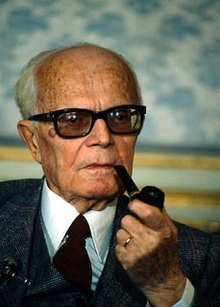
"But when fall comes, kicking summer out on its treacherous ass as it always does one day sometime after the midpoint of September, it stays awhile like an old friend that you have missed. It settles in the way an old friend will settle into your favorite chair and take out his pipe and light it and then fill the afternoon with stories of places he has been and things he has done since last he saw you.”
-- Novelist Stephen King {a Mainer), in Salem's Lot
Our lovely liar
"His words were magic and his heart was true,
And everywhere he wandered he was blessed.
Out of all ancient men my childhood knew
I choose him and I mark him for the best.
Of all authoritative liars, too,
I crown him loveliest.
How fondly I remember the delight
That always glorified him in the spring;
The glorious profusion and the benedight
Profusion of his faith in everything!
He was a good old man, and it was right
That he should have his fling.
And often, underneath the apple trees,
When we suprised him in the summer time,
With what superb magnificence and ease
He sinned enough to make the day sublime!
And if he liked us there about his knees,
Truly it was no crime.
All summer long we loved him for the same
Perennial inspiration of his lies;
And when the russet wealth of autumn came,
There flew but fairer visions to our eyes--
Multiple, tropical, winged with a feathery flame,
Like birds of paradise.
So to the sheltered end of many a year
He charmed the seasons out with pageantry
Wearing upon his forehead, with no fear,
The laurel of approved iniquity.
And every child who knew him, far or near,
Did love him faithfully. ''
-- ''Uncle Ananias,'' by Edwin Arlington Robinson
The communications industry
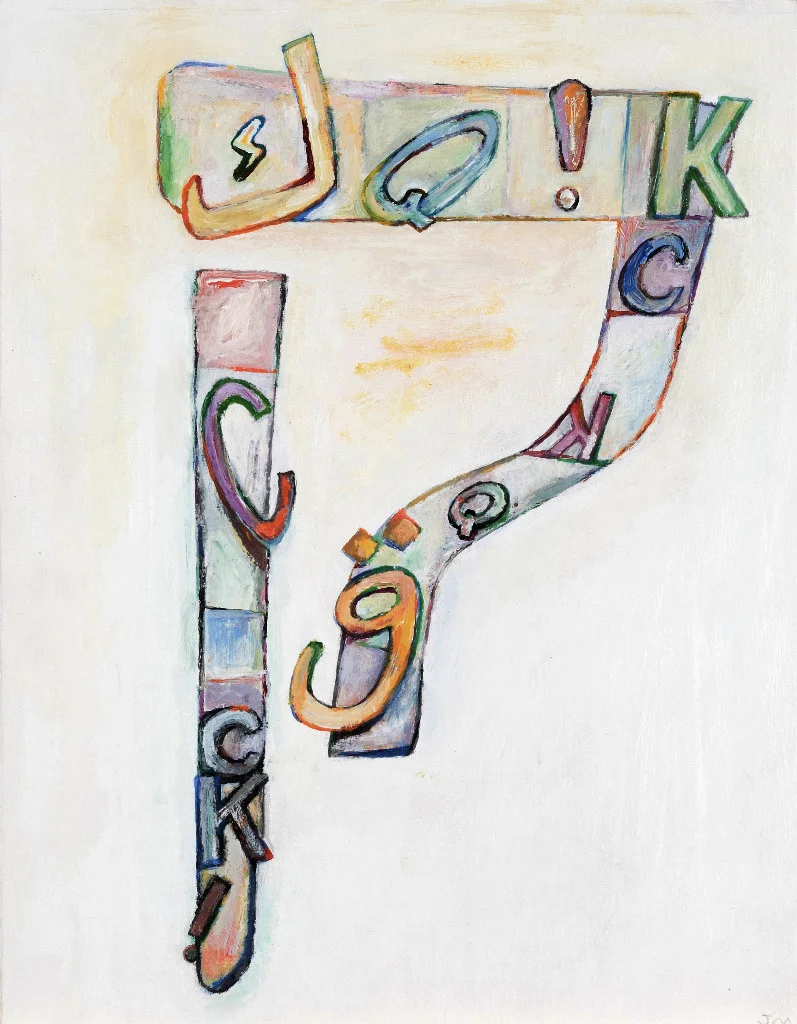
"Tendrils,'' by Catherine Carter, in the show "Lines of Communication,'' at Fountain Street Fine Art, Boston, through Oct. 8. The gallery says that her paintings focus on lines and their connections to natural forms.
Biden is too old to run for president
From Robert Whitcomb's "Digital Diary,'' in GoLocal24.com
Joe Biden is apparently thinking of running for president again in 2020. The former vice president is a popular and charming guy (I interviewed him a few times many years ago when I worked in Delaware, which he then served in Congress), knows policy issues well, is a good if too talkative speaker and represents the sort of policy positions (New Deal redux) that could be a winner in that year’s election against Trump (if he’s still in office, which I now doubt) or another Republican.
But Biden would be 77 then – too old! While you can be that elderly and still be in sound mental and physical health, the chances are much, much greater that your health will quickly fall apart (think stroke) than for, say, a 60-year-old. Or the decline could be more subtle, e.g. --Ronald Reagan was in his late seventies in his second term and displayed signs of cognitive decline. Luckily for the nation, Reagan had very good people around him to help.
We all need to know when to step back and let younger people make a mess of things.
Mental health through art

"Compensation''
(slab build, molded earthenware, slip, mixed media) by Ian Thomas, in the show "Mindful: Exploring Mental Heath Through Art,'' at the Fuller Craft Museum, Brockton, Mass., Nov. 18-April 22.
The museum says the show "will feature 33+ works created by 14 contemporary artists, with an emphasis on the topics of anxiety, depression, suicidal thoughts and tendencies, and PTSD. The exhibition explores the impact that mental illness has on society, and how the arts can encourage positive self-expression and guide effective mental health promotion and treatment. The project also examines links between mental disorders and artistic tendencies through the inclusion of artworks made by those who have been diagnosed with mental illnesses and those who have not. The exhibition includes innovative art expressions rooted in traditional craft materials, as well as art that explores unexpected relationships among craft and painting, sculpture, and installation art. This traveling exhibition was organized by the Society for Contemporary Craft, based in Pittsburgh.''
'Her uncompromising opinions'
“I never fully realized how much a New England birth in itself was worth, but I am happy that that was my lot. I have felt it so keenly these last few days. Dear old New England, with all her sternness and uncompromising opinions; the home of all that is good and noble.”
― Matthew Pearl, in the The Technologists
'I trace its devious course'

The Moshassuck River, near its mouth, in Providence.
Again September’s golden day,
Serenely still, intensely bright,
Fades on the umbered hills away,
And melts into the coming night.
Again Moshassuck’s silver tide
Reflects each green herb on its side,
Each tasselled wreath and tangling vine
Whose tendrils o’er its margin twine.
And, standing on its velvet shore,
Where yesternight with thee I stood,
I trace its devious course once more,
Far winding on through vale and wood.
Now glimmering through yon golden mist,
By the last glinting sunbeams kissed,
Now lost where lengthening shadows fall
From hazel-copse and moss-fringed wall.
Near where yon rocks the stream inurn
The lonely gentian blossoms still,
Still wave the star-flower and the fern
O’er the soft outline of the hill;
While far aloft, where pine-trees throw
Their shade athwart the sunset glow,
Thin vapors cloud the illumined air,
And parting daylight lingers there.
But, ah, no longer thou art near
This varied loveliness to see,
And I, though fondly lingering here,
To-night can only think on thee —
The flowers thy gentle hand caressed
Still lie unwithered on my breast,
And still thy footsteps print the shore
Where thou and I may rove no more.
Again I hear the murmuring fall
Of water from some distant dell,
The beetle’s hum, the cricket’s call,
And, far away, that evening bell —
Again, again those sounds I hear,
But, oh, how desolate and drear
They seem to-night—how like a knell
The music of that evening bell!
Again the new moon in the west,
Scarce seen upon yon golden sky,
Hangs o’er the mountain’s purple crest
With one pale planet trembling nigh,—
And beautiful her pearly light
As when we blessed its beams last night,
But thou art on the far blue sea,
And I can only think of thee.
-- "A September Evening on the Banks of the Moshassuck,'' by Sarah Helen Whitman (1803-1878)

James P. Freeman: MTV pulls its young viewers into progressivism and degeneracy

In the 2011 book, I Want My MTV, John Taylor, bass player for Duran Duran, commenting on early video content said, “All this stuff like Culture Club was the result of an underground, progressive, liberal, London art school sensibility.”
By 1992, however, an unscripted soap opera (The Real World) and a character named Bill Clinton became programming staples, nodding to its future direction. Gifts to cultural regression later included Beavis and Butt-Head, Jackass and The Jersey Shore. About the last, Snooki impressed producers in 2008 by her candid -- celebrated? -- talk about sex and alcohol for a show about “Guidos and Guidettes." Her years of embarrassingly bad behavior (2009-2012) were rewarded by, among other things, a paid appearance ($32,000) to speak to students at Rutgers University in 2011, (where she advised students to study hard but party harder) and as a participant on Dancing With the Stars (which was announced on the selectively prim and proper Good Morning America) in 2013.
Rob Tannebaum, author of I Want My MTV, told National Public Radio’s, All Things Considered, on a whimsical trip about the golden years of the cable station, “MTV quickly realized and learned that narrative television, even reality TV, rated better than music videos."
For years its reality programming has glorified and valued moral relativism (watch the appallingly dreadful Teen Mom and Undressed). But now the company believes that it is a moral arbiter to correct all that ails our culturally sensitive society. A culture that has been largely led by progressives for over a half a century and of which MTV has been a big promoter for the last 36 years.
Conservatives constantly complain about universities being incubators of progressive preening and pedagogy (where “white shaming” is the newest rage). But it starts well before the first delicate snowflake lands on a college campus. It starts with MTV and it is time that conservatives start paying attention.
MTV is the greatest cultural influencer of young people today.
According to marketing blogger Brandon Gaille, MTV reaches 387 million people worldwide and is considered the no. 1 media brand globally. In 2015, he wrote that, “It is the one channel where people in the 12-34 age bracket continually tune in to catch up with what is coming next in pop culture, music, and fashion.” Furthermore, he added, the network “provides a variety of programming, ranging from politics to reality TV, and it is all targeted to the young adult demographic.”
Its reach of young people is staggering. Over 47 million people follow MTV on Facebook, three times as many as those who follow Fox News. One in three U.S. citizens falls into the 12-34 age demographic, accounting for over 90 million people.
MTV’s sway may be wider than currently understood too. Notwithstanding a steady decline in overall television ratings -- VMAs showed an 18 percent drop in viewership from 2013 to 2014; Adweek reported last year that the network lost half its 18-49 audience from 2011 to 2016 -- it makes a greater impact on ubiquitous social media. Which is difficult to measure.
For the average MTV viewer, Gaille observes, the largest annual expenditure, unsurprisingly, is on personal computers, tablets and smartphones. As of Gaille’s 2015 writing, ratings for computers and mobile devices were not reflected in Nielsen ratings, “which is where many of the 12-34 key demographic consume media content.” (Nielsen in 2017 received accreditation for such digital measurements.)
MTV’s president, Chris McCarthy, 42, is progressivism’s newest cultural and political warrior. He is also proof that the personal values of powerful cultural decision makers can be newsworthy and wildly, unduly influential. Last month he told The New York Times that the station is “about amplifying young people’s voices,” adding, “we shouldn’t be telling people how to feel.” But telling people how to feel and what to do, like the federal government, is exactly what MTV is doing. Subtly and not so subtly.
There is no pretense to objectivity with MTV News. Thirty years ago, when it first aired, it reported on the comings and goings of music stars; now it has descended into the progressive abyss. Its “Politics” section makes The New York Times’s op-ed pages look moderate. A gem from this past January asked, “Why Do American Conservatives Look So Different From the Rest of the World?” And a recent post from the “Movies” section contained this headline: “Matt Damon Explains How Suburbicon Shows the ‘Definition of White Privilege’ at Work.”
Ever since the first VMAs debuted in September of 1984, award winners received a trophy called a Moonman. No More. In politically correct 2017, McCarthy asks The Times, “Why should it be a man?” As only a progressive can describe a miniature silver statue, “It could be a man, it could be a woman, it could be transgender, it could be nonconformist.” It could be a conservative in disguise…
At this year’s VMAs, , no one, apparently, got McCarthy’s feelings and doings message.
Sadly, it is now taken for granted that elite entertainers use award ceremonies, however briefly, as a vehicle to express opinions and level grievances. No longer content to simply be recognized for questionable talent, today’s award winners (and special guests) are now social commentators and news broadcasters for young people. This year’s VMAs unrepentantly dissolved into a progressive political platform.
Pink told the story of her six-year-old daughter feeling unattractive because she believed she looked like a boy. As CNN reported, “The singer said she used it as a teachable moment to discuss androgynous artists who have found success, including herself.” The program also showcased the Rev. Robert Wright Lee IV, a descendent of Civil War Gen. Robert E. Lee. Nervously, he lamented, “We have made my ancestor an idol of white supremacy, racism and hate.” Citing a “moral duty” to speak out against “America’s original sin,” Lee called on “all of us with privilege and power to answer God’s call to confront racism and white supremacy head-on.” That statement implies there is a powerful sense of white privilege and channels white shaming.
Not to be out done by our ever-inclusive, multi-diverse cultural correctness, MTV, following grade-school catechism, chose to honor all six videos nominated in its -- seriously! -- “Best Fight Against the System” category. All artists received little Moon Persons for their so-called “groundbreaking” efforts.
The Technicolor irony is that MTV is the system.
The ratings results for this year’s VMAs are a compelling, if not revealing, story. Only 6.5 million brave souls watched the show -- linear viewing -- across 11 Viacom networks on traditional television (down from 10.3 million viewers in 2016). But as deadline.com reported, (“MTV Focuses on Social Successes”) the 2017 VMAs clocked 62.8 million video streams on Facebook. The 2015 show drew only 4.4 million streams.
Conservatives are largely to blame for allowing these cultural excesses to flourish and become mainstream, and for allowing them to go unanswered. Especially guilty are those running for political office under the pretentious slogan “fiscal conservative and social moderate.” On fiscal matters, they have not corrected any of the $20 trillion in national debt. And on social, hence, cultural matters, they have retreated and surrendered any sense of resistance.
Twenty-five years after Pat Buchanan’s much criticized speech, the moral and cultural cesspool has clearly been realized. MTV has eclipsed higher education as a new, larger, and more troubling progressive front in the ongoing culture war.
James P. Freeman is a New England-based writer and a former columnist with The Cape Cod Times. His work has also appeared in The Providence Journal, newenglanddiary.com and nationalreview.com. He formerly worked in the financial-services industry. This piece first appeared in the New Boston Post.