Vox clamantis in deserto

Sharks off the beach!

White shark cruising the surface.
Photo by Brocken Inaglory
Adapted from Robert Whitcomb's Digital Diary, in GoLocal 24.com
Every time there’s a very rare (and always much publicized) attack by a white shark on swimmers or surfers (or surfboards) off Cape Cod, there’s a new proposal to kill as many of these creatures as possible off the Cape’s beaches. Consider the proposal that surfaced last week to use drum line traps to kill the sharks. That’s a terrible idea. Sharks are part of the eco-system and wiping them out in certain waters will hurt other species, too. Everything in the sea is connected.
The best advice to swimmers and surfers in waters known to be occasionally visited by sharks is not to go out beyond the surf line. White sharks, the scariest ones, like deep water and usually attack prey from below. It’s good to remember how rare shark attacks on people are in New England, with no more than half a dozen in Massachusetts since 2000. (There’s some confusion about the exact number of documented attacks.) The last fatal attack in the state was off Mattapoisett, on Buzzards Bay, in 1936.
The seal population has swollen along the southeastern New England coast in recent years, attracting sharks. If you see seals, you might want to keep closer to the shore. At the same time, people are using the beaches more than ever. But that’s no excuse for humans to destroy yet another piece of the marine eco-system.
Meanwhile, with global warming, we may see more white sharks on the New England coast.
Sculpture and poetry
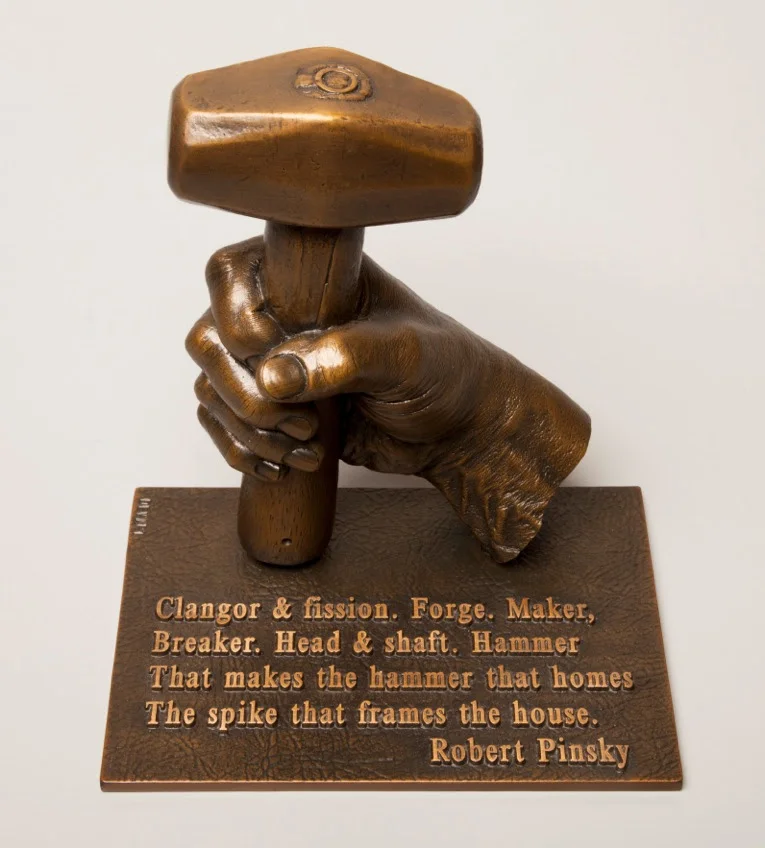
Work by Murray Dewart, in his show "Spirit Level,'' at Boston Sculptors Gallery, through Oct. 1
'''Spirit Level' features new work by Murray Dewart. An illuminated gateway, tall and translucent, looms in a darkened interior, while a beautiful soulful sound track plays. A large water vessel is accompanied by projected video imagery of gardens and parks, creating a lyrical meditation on the natural world. Several small bronzes fill one wall, and a fine example of Dewart's signature one-ton granite and bronze gates is also on display.
"Dewart is an internationally recognized sculptor. For over thirty years, he has been recognized by Boston Globe critics for his craft, his spiritual understanding, and for his serene sculptures reflecting the quest for a universal language of form. Christine Temin wrote, 'Dewart has a fine gift for creating not just a pleasing play of shapes, but shapes that have something to say...and a lesson for living.' Cate McQuaid praised his work's 'quiet majesty and spiritual gravity.'
''Dewart is the editor of the Random House anthology: Poems About Sculpture. Recently, he has been traveling around the country giving readings along with former U.S. Poet Laureate Robert Pinsky (see sculpture above), who wrote the book's introduction. ''
Jill Richardson: Amazon selling farm-fresh electronics at Whole Foods
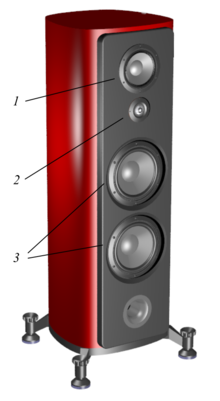
Home loudspeaker.
Via OtherWords.org
Now that Amazon’s taken over Whole Foods, the "natural-foods'' grocery known for its high prices, the new owners have pledged to lower prices.
I stopped by the store to see what had changed. In addition to a few discounts — organic apples went from $2.99 to $1.99 per pound — I noticed a big display in the middle of the produce section.
“Farm Fresh,” it read. “Just Picked.”
What agricultural product was this ad for? Amazon Echo — a wireless speaker.
Presumably Amazon grew the electronic devices on a nearby farm and, once ripe, harvested them off the vine and shipped them to the produce aisle in my local Whole Foods.
The same day, while browsing hiking socks online, I came across a brand I hadn’t seen before called Farm to Feet.
Seriously? Farm to Feet?
It’s true that wool — and the socks were mostly made of wool, in addition to a few synthetic fibers like spandex — comes from a sheep, and sheep are raised on a farm. The socks certainly had more of a connection to a farm than an Amazon Echo.
But I think we can officially say that “Farm to Table” has jumped the shark.
Initially, sellers who claimed to offer “Farm to Fork,” “Farm to Table,” or “Farm to School” goods supported a closer connection with your local farmer.
The idea was — and is — a great one. Get to know a local grower and learn more about where your food comes from. Support a local business. Better yet, you’ll get to eat foods that are fresh picked because they weren’t shipped halfway across the world in order to reach you.
One farm I visited near my home in Southern California grows blackberries that are bigger than some plums. These juicy giants simply can’t survive shipping. You can eat them locally or not at all.
When I lived in the Midwest, my favorite local farmer grew luscious varieties of pears and apples I’d never heard of before. They’re more delicious than apples I’ve found at any grocery store.
Often, when farmers sell directly to consumers, it’s a win-win. Farmers can charge higher prices than they can charge wholesalers, while consumers pay lower prices than they’d pay at a store.
When restaurant chefs work with farmers, they can ask farmers to grow specific varieties they want to serve, and promise the farmers a guaranteed market for their produce once it’s harvested.
My local school system found that smaller sized fruits, which farmers would otherwise be unable to sell, were the perfect size for young schoolchildren. Their Farm to School program gave a market to nearby growers while providing nutritious food to kids for lunch.
But advertising a pair of socks as “Farm to Feet” because the wool came from some farm, somewhere — that’s missing the point.
As for advertising electronics as “Farm Fresh,” I have no words. I’ve visited a lot of farms on five continents, and I’ve yet to meet a farmer who grows electronics.
Getting to know where your food comes from is a great idea. Supporting farmers in your community is wonderful. It’s a privilege that not everyone has, and it’s enriched my life immeasurably to be able to thank the people who grow my food face to face.
But for some, it’s just a marketing slogan. If your product doesn’t directly connect consumers to farmers, you shouldn’t advertise it as “Farm to” Anything.
Jill Richardson is the author of Recipe for America: Why Our Food System Is Broken and What We Can Do to Fix It.
How microbiomes affect disease
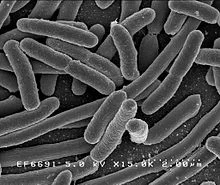
Escherichia coli: a long-term resident in our gut
This is from the New England Council (newenglandcouncil.com):
"IBM and Massachusetts General Hospital (MGH) are joining forces to study how human microbiomes affect various diseases.
"In collaboration with the Broad Institute, the University of California {at} San Diego and the Simons Foundation’s Flatiron Institute, IBM and MGH will attempt to map the three million bacterial genes found in the human microbiome to further understand how to treat diseases such as Type 1 diabetes, Crohn’s disease, and ulcerative colitis. Research at this level is unprecedented and a massive amount of computing power is required for analysis which is where IBM’s 'citizen science' World Community Grid enters the picture. The World Community Grid is a hyper-secure software that can gauge when a personal computer has processing power to spare and then remotely run experiments for the project. Anyone with Internet can chose to contribute to the study by joining the Microbiome Immunity Project through IBM’s World Community Grid.
“'This type of research on the human microbiome, on this scale, has not been done before,' said Ramnik Xavier, co-director of the Infectious Disease and Microbiome Program at the Broad Institute of MIT and Harvard and chief of the gastrointestinal unit at MGH. 'It’s only possible with massive computational power.'''
'Treetops seething'
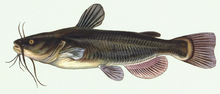
Bullhead
"I was fishing in the abandoned reservoir
back in Quinapoxet {Mass.},
where the snapping turtles cruised
and the bullheads swayed
in their bower of tree-stumps,
sleek as eels and pigeon fat.
One of them gashed my thumb
with a flick of his razor fin
when I yanked the barb
out of his gullet.
The sun hung its terrible coals
over Buteau's farm: I saw
the treetops seething.''
From "Quinapoxet,'' by Stanley Kunitz
Too hot not to cool down

"But now in September the garden has cooled, and with it my possessiveness. The sun warms my back instead of beating on my head ... The harvest has dwindled, and I have grown apart from the intense midsummer relationship that brought it on."
-- Robert Finch

Robert Whitcomb: Banned and enjoyed in Boston

Scollay Square, Boston, in the late 19th Century. The neighborhood was a center of "sin'' for many decades. The square is long gone.
A version of this first ran in The Boston Guardian
Wicked Victorian Boston, by Robert Wilhelm (History Press, $21.99)
In this entertaining and well-illustrated, if sometimes repetitive, anecdotal survey of “vice’’ and efforts to control it in mid- and late 19th-Century Boston, Mr. Wilhelm looks at how the remnants of Puritan Boston sought to suppress the widespread prostitution, drunkenness, drug abuse, gambling and occasional murder and mayhem that you'd find in any large American city of that time – and ours.
All this titillated residents of other, more, er, relaxed cities given Boston’s reputation for straight-backed rectitude, which wentback to the 17th Century.
The author tries to put the behavior in the context of the city’s rapidly changing ethnic and socio-economic environment. For instance: “The changing ethnic complexion of Boston in the Victorian era was also altering the nature of vice in the city. The rapid influx of Irish immigrants was disconcerting for the old Yankees; they despaired at the newcomers’ fondness for hard drink and gambling and feared that the Catholic newcomers would owe their first allegiance to the pope….’’
But some members of the Yankee community, both Brahmins and middle class, also enthusiastically participated in the sin community, as “young debutantes dabbled in pornography; civic leaders were sued for domestic abuse and {mostly Protestant} clergymen were charged with adultery.’’
Mr. Wilhelm often focuses on such centers of sin and iniquity as “The Black Sea,’’ along the waterfront, and later, the West End. In these places illegal gambling, prostitution, drunks, violence and con men were thick on the ground. Later on, a thriving Chinatown offered such new services as opium dens. Gambling activities included such ghastly spectator “sports’’ as betting on how many rats a dog could kill in a “rat pit’’. Meanwhile, the “third tier’’ of theaters became venues for prostitution. Even such seemingly innocent (if bizarre) sporting events as “pedestrian races’’ would be tinctured with corruption.
Then there were such scams as spiritualists promising access to the dead and quack “doctors’’ selling their services to the gullible. I particularly enjoyed reading about the latter professionals, who provided “oxygenized air’’ (nitrous oxide) for all matter of ailments.
To confront the perceived moral collapse were such anti-vice crusaders as the Methodist minister Henry Morgan and the wonderfully named New England Society for the Suppression of Vice, later to be called the Watch and Ward Society. But, as Mr. Wilhelm writes, that “{The} lines of morality were becoming blurred, and social standing was not a solid indicator of righteous behavior’’ made the war more difficult to wage. (When and where was social standing a “solid indicator of righteous behavior”?)
The anti-vice community succeeded in driving some gambling establishments and brothels out of business, and temperance organizations, in which women had major roles, succeeded in closing some of the worst saloons. Still, human nature remained human nature and new criminal enterprises arose as Boston entered the 20th Century, especially what we now call “organized crime’’.
Now that Boston has become a much more secular and international city these battles over morality seem rather quaint.
Robert Whitcomb is editor of New England Diary and president of the board of Guard Dog Media, which owns The Boston Guardian.
Giving at the 'giving meter'

A "giving meter'' in Atlanta.
Adapted from Robert Whitcomb's "Digital Diary,'' at GoLocal24.com
The City of Providence will install 10 “giving meters’’ in the city where people can make donations to assist people who need housing and other help. The meters seem particularly aimed at trying to help get panhandlers off the streets via expanding social-service programs for them. A new agency called the PVD Gives Commission will oversee the distribution of the gifts. Giving meters are being tried in a number of cities across America.
I doubt if the program will raise much money or that we’ll see a sharp drop in panhandling. Most of the street beggars have mental-illness and/or alcohol and other drug problems and tend to be resistant to being helped. And some may even find panhandling to be more lucrative than other jobs. Still, just the existence of the meters may encourage people in the city to be kinder. Will these meters offer paper receipts that donors can use for tax deductions?
Joint human-insect anxiety

"It is the air of urgency which strikes a responsive chord in me when I see him (a wooly caterpillar} on a garden path in late September. His consciousness, if any, must be dim. He cannot know why he is in a hurry, only that he is. But I recognize in myself a similar vague uneasiness. My preparations for the winter have been made.....But the confidence of summer has imperceptibly faded. Something impends.
"When I was a boy I used to attribute this feelings of uneasiness to the knowledge that I would be going unwillingly to school again. As a matter of fact, I still have to do just that, and perhaps this is part of the reason why something within me begins to grow tense. But it is certainly no more than a factor or even a rationalization. Isia isabella (wooly caterpillar} and I know in our nerves and our muscles that something pretty drastic is going to happen and we are not sure that the most we can do about will be enough.''
'Basic interactions'

"Multicolor Installation'' (painted steel), by Carolina Sardi, in her show at the Lanoue Gallery, Boston, through Oct. 15. She says: "My art is my way of expressing my world vision. I try to convey maximum information in the most minimal but essential forms. Although I work mainly with steel, my sculptures and installations have an organic sensibility that reflects my interest in the basic interactions of life. The reference to geometry, natural shapes and the use of positive and negative spaces are a response to my search for a balance between opposites."
'You get used to it'

"I conversed with a young lobster fisherman who gets up at 5in the morning and is home again from the sea at 3 in the afternoon. I asked him if he liked lobstering. 'You get used to it,' was his reply.''
-- Earl Thollander, in Back Roads of New England.
Incidentally

"Balance'' (spackle, paper pencil and canvas on three panels), by Julie S. Graham, in her show "Incidental Matters,'' at Kingston Gallery, Boston, Oct. 4-29. She likes to use unlikely color, geometric and materials combinations to evoke the strange connections in our incomprehensibe world.
Still, in many ways the best month

1940 WPA poster.
"The leaves of brown came tumblin' down, remember
In September in the rain
The sun went out just like a dying ember
That September in the rain.''
From the song "September in the Rain,'' by Harry Warren and Al Dubin. To hear it, hit this link.
New England hill country shopping areas

The main drag of the resort town of Lincoln, N.H.
-- Photo by P199
''When we look at the economic character of the New England hill country today, we see that one of the best ways of breaking the region into separate sections is to see the kind of communities in which one finds the larger shopping areas, with the nationally known supermarkets and chain stores. Categorized in this way, the New England hill country falls roughly into three regions: south, middle and north. In the southernmost region, it is the factory and mills towns which contain the active business centers. In the middle region, agricultural towns, with their grain towers and rail sidings, are where the larger stores serve the local population. Farthest north, the upper region concentrates its metropolises around resort areas and wood-product mills.''
-- From Mountain New England: Life Past and Present, by William F. Robinson (1988)

Sam Pizzigati: Retailers connive to tighten screws on public-school budgets

"The Old Beggar,'' by Lewis Dewis.
Via OtherWords.org
Back to school! These three simple words used to leave America’s public-school teachers giddy with anticipation. Now they leave them opening up their wallets and worrying.
The problem? Teachers have been spending out of their own pockets for generations to decorate their classrooms and the like. Now many have to spend their own money for basic school supplies — everything from pens and pencils to cleaning supplies.
One national study last year by Scholastic and YouGov found teachers spending an average of $530 a year on classroom supplies. The number of teachers who spend over $1,000 out of pocket, adds a National School Supply and Equipment Association report, has doubled.
In Oklahoma, third grade teacher Teresa Danks has been spending $2,000 annually of her own money. Earlier this summer, with her school district facing a $10 million budget cut, Danks actually started panhandling. She took to a busy street corner with a simple hand-made sign: “Teacher Needs School Supplies! Anything Helps.”)
Many passers-by did help. But the fiscal squeeze on America’s public-school budgets and teacher wallets is now threatening to get even worse.
That’s because big-box retail giants — the very stores where many teachers go to buy school supplies — have unleashed a fierce lawsuit offensive to significantly lower their local property- tax bills.
Property taxes remain, in most of the country, the single most pivotal source of local public school funding. If corporate retail powers like Home Depot and Target succeed in their new greed grab, the state comptroller in Texas recently warned, local public schools in his state alone would lose $1.2 billion annually, with another $703 million in school funding lost from the state level.
Our top big-boxers are flourishing: Home Depot profits last year jumped nearly 14 percent to $8 billion. And Home Depot CEO Craig Menear took home $11.5 million.
So on what grounds should the big-box boys be taxed less? Retail CEOs, Education Week reports, are having their lawyers make the astonishingly audacious argument that “the massive stores they operate ought to be appraised as if they were vacant.”
This ridiculous “dark store theory” has been winning lawsuits in Michigan, Indiana and Wisconsin, and school districts in the Midwest have already lost millions of dollars in revenue. In some cases, court rulings have actually forced local governments to reimburse big-box retailers for the higher property taxes they’ve already paid.
The new attack on local public-school funding isn’t just coming from brick-and-mortar retailers. Amazon, the online retail king, is taking new steps to avoid taxes, too.
Amazon now collects sales taxes on the goods consumers buy online in states that impose them.But Amazon is only collecting taxes on about half the goods that people who click onto Amazon itself buy. The half of sales that go through the third-party vendors that the Amazon site spotlights go untaxed.d.
The State of South Carolina is demanding that Amazon end this tax avoidance. Amazon is disputing the South Carolina claim, and the case is going to the courts. All the big online retailers will be watching closely. A South Carolina victory could mean higher tax revenue nationwide from big online retailers.
All these big-time retailers can afford to pay higher taxes. Our biggest retail empires, after all, have already made their emperors into some of the world’s richest people. The chief executive of Amazon, Jeff Bezos, now holds the third-largest individual fortune in the world.
Panhandling Oklahoma teacher Teresa Danks says she’s “tired of not having enough funding for our classrooms but being expected to always make it happen.”
The super rich who run retail in America could ease that fatigue. They could start paying their taxes.
Sam Pizzigati, an Institute for Policy Studies associate fellow, co-edits inequality.org.

'Out-of-body transformation'

Work by Anne Lilly, in her joint show "Stillness,'' with Phyllis Berman, at Room 83 Spring, Watertown, Mass., Sept. 9-Oct. 28.
The gallery says: "Kinetic sculptor Anne Lilly uses carefully engineered motion to shift and manipulate our perceptions of time, space and energy. Her steel sculptures move you. Sit across from someone with the tall mirrors ... moving slowly back and forth between you, and experience an out-of-body transformation as you morph into the other person and back into yourself. Anne’s work crosses the line between art and science.''
Put parking garages underwater?
From Robert Whitcomb's "Digital Diary,'' in GoLocal24.com
Building underwater parking garages might be a partial answer to the parking problems of coastal cities, such as Boston and Providence. An Aug. 22 Boston Globe story, “Could underwater garages solve Boston’s parking shortage?’’ noted that underwater parking garages “have been built, or are in the midst of being built, in at least three cities: Amsterdam, Copenhagen, and Geneva.’’
The Globe went on: “In a city like Boston, where the most parking-starved areas are surrounded by water, the payoff could be significant: helping to reduce the pollution and traffic caused by drivers circling the block hunting for spots, making parking more affordable, and freeing up more street-level space for other uses.’’
Much of tight little downtown Providence is virtually at sea level and would seem a good candidate for such garages. It might seem an eccentric idea, but so did moving the rivers and Route 195 when those huge projects were first proposed.
'Into the apparitions of the sky'

"I saw the spiders marching through the air,
Swimming from tree to tree that mildewed day
In latter August when the hay
Came creaking to the barn. But where
The wind is westerly,
Where gnarled November makes the spiders fly
Into the apparitions of the sky,
They purpose nothing but their ease and die''
-- From"Mr. Edwards and the Spider,'' by Robert Lowell