
Vox clamantis in deserto




WPI is setting up an operation in Boston's burgeoning Seaport District
This is from the New England Council
"New England Council member Worcester Polytechnic Institute (WPI) recently announced that it will launch an Innovation and Collaboration Space in Boston’s Seaport District this fall to improve access to industry partners and other agencies for students and faculty.
"WPI has signed a seven-year lease for a 6,400 square-foot space that is within walking distance of major innovation sector leaders such as GE, Vertex, Amazon and Red Hat. The new space will create and strengthen strategic partnerships, professional development, and research opportunities in addition to advancing the university’s position in the state’s innovation economy. The new space will be home to WPI’s Boston Project Center, where students have analyzed and tried to solve real-world problems in the community over the past few years. The space is expected to open in October.
“'The Seaport District is playing a critical role in what has been dubbed Mass Miracle 2.0., and WPI will use this new space for industry-centric meetings, classes, projects, and events that are tailored to the interests and needs of our neighbors who are working in areas such as healthcare technology, robotics, cybersecurity, and big data,' said Stephen Flavin, Vice President and Dean of Academic and Corporate Engagement.
“It will be a top priority to better serve these businesses and organizations by providing them with more convenient access to our high-caliber programs, and to connect them to our students and alumni.”
Easier than a bow tie

"Southwest Cravat'' (fabric), by Tanya Crane, in the show "Artists Awards,'' at the Society of Arts and Crafts, Boston, through Oct. 20. The gallery says:. "Her pieces are large in both size and meaning, exploring concepts like racial identity, industry and labor.''
Her pieces are large in both size and meaning, exploring concepts like racial identity, industry, and labor
A kind of love

-- Photo by William Morgan
Photo taken near the site of the now closed Sandy Hook Elementary School, in Newtown, Conn., where, on Dec. 14, 2012, Adam Lanza, after fatally shooting his mother at home, went to the school and shot to death 20 kids, six school employees and then himself.
Llewellyn King: Elon Musk and the power of celebrity
Elon Musk and then President Obama at the Falcon 9 launch site in 2010.
Agents of change are not always welcome. Seldom, in fact. Take Elon Musk, unquestionably an agent of change and not universally celebrated by his peers.
The public loves Musk, who has promised them pollution-free solar power, electric cars, space travel and an underground, intercity transport system called “Hyperloop,” in which they will be whisked in vacuum tubes on magnetic cushions at more than 800 miles an hour. He has hired Boeing to build the tunnels for the system.
More, Musk has attacked artificial intelligence and its use in weaponry as a threat to humanity. In this, he has fed into the general unease about artificial intelligence.
Recently, the chairman and chief executive officer of one of the largest electric-utility holding companies unloaded on me about Musk, accusing the inventor of being “dishonest,” “lying” and using fraudulent data in pushing SolarCity, his rooftop solar company. Also recently, a nuclear scientist with creative credentials denounced Musk to me as a showman, a media darling, a hoax and someone who had used too much government money, particularly at SpaceX, his reusable- rocket company.
The automobile industry wishes that Musk had stayed in his native South Africa rather than beginning a student odyssey, which saw him studying in Canada and at Stanford University before making his first fortune with PayPal.
It is true that Musk has used some debatable numbers. Three years ago, he told the Edison Electric Institute annual meeting that more electricity from solar panels could be generated from a nuclear power plant site than from the solar plant. That was a huge blooper: the equivalent of saying the economy of Liechtenstein is larger than that of the United States.
One expects people whose whole life is tied up in math, from rockets to electric cars, to get their sums right. Yet Musk glides on, like some blithe spirit, changing things as he goes. Changing them in fundamental ways.
And we should applaud his progress.
The arguments over Musk's creations end up as a battle between technological incrementalists and a disruptor. His critics are incrementalists, moving forward slowly and steadily.
Incremental change is the compound interest of technology. Look no further than today’s automobile to see how it has improved and changed incrementally over the years.
Then look to Musk and his Tesla: It is standing the automobile industry on its ear. So much so, The Economist magazine has heralded the death of the internal-combustion engine.
Change agents can be unsung heroes. James Watt was when he was creating the condenser that made steam power viable, and Bill Gates when he was helping to write the original Windows operating system, and Mark Zuckerberg when he was playing around with Facebook.
But by and large, hero inventors get the job done faster and with more ease. All the cited inventors found hero status later, but they might have gotten there faster with the public cheering them on — and loosening the financial strings — if they were known names with which to to begin.
Wall Street is cool to unsung inventors and cannot control itself when a name inventor goes to market. That is why Tesla has a larger market cap than General Motors, why Apple is the largest company in the world by some measures, and why Elon Musk and other celebrity inventors will shape our future faster and more dramatically than a lot of quiet evolvements.
Woe betide the technology-based industry that lacks a celebrity, a Pied Piper, to conquer the public imagination. Exhibit A might be the nuclear industry, which has achieved incredible things in making clean electricity through high science, but languishes today. Its last hero was Adm. Hyman Rickover, in the 1950s.
The book on celebrity invention could be said to have been written by one of the greatest American inventors: Thomas Edison.
He knew the power of a headline. His rival Nikola Tesla, less so.
Llewellyn King is executive producer and host of White House Chronicle, on PBS. His e-mail is llewellynking1@gmail.com. This first appeared in Inside Sources..
James P. Freedom: Free speech took a huge hit in Boston on Aug. 19
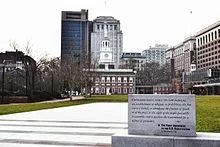
Monument to the First Amendment outside Independence Hall, in Philadelphia.
“If there is any principle of the Constitution that more imperatively calls for attachment than any other it is the principle of free thought — not free thought for those who agree with us but freedom for the thought that we hate.”
— The late Oliver Wendell Holmes Jr., U.S. Supreme Court justice
“We are so concerned to flatter the majority that we lose sight of how very often it is necessary, in order to preserve freedom for the minority, let alone for the individual, to face that majority down.”
— William F. Buckley Jr., founder of National Review magazine
Out in the grape-growing town of Delano, Calif., during a famous exchange captured on grainy color film at a public hearing in 1966, Sen. Robert F. Kennedy questioned Kern County Sheriff Leroy Galyen about labor strife affecting migrant farm workers and the arrests of 44 strikers and priests. Kennedy asked the sheriff: “How can you go arrest somebody if they haven’t violated the law?” Galyen responded: They’re ready to violate the law.”
Likewise, Boston public officials in advance of and during the Aug. 19's “Free Speech Rally” suppressed freedom of speech because speakers were ready to say something insensitive, perhaps even hateful. And local media condoned it.
Rally organizers were not ready to violate the law. In fact, all they intended was to exercise and express their constitutionally protected freedoms. Such as free speech.
Those freedoms, however, were ultimately too much too bear for Boston Mayor Marty Walsh, Boston Police Commissioner William Evans, and 40,000 so-called counter-protestors. (With impossible irony, they protested 40 “free-speech” advocates, barricaded like animals, on a bandstand on Boston Common.)
Before the free-speech rally Mayor Walsh stoked the counter-protest and condemned the group that was wrongly — and loudly — reported by media as being sympathizers with white supremacists. Among those guilty-by-false-association was John Medlar, who held the permit for Boston Free Speech Coalition, and is its spokesman.
Medlar, visually and vocally harmless, appeared on the WGBH program Morning Edition a day before the rally, dispelling what he called “misinformation about what we actually stand for.” He said, “If people are bringing overtly white supremacist symbols like swastikas or KKK flags or using the Nazi salute, we will disassociate ourselves from them.” Days in advance of the event the Boston Coalition rejected violence. It wrote on its Facebook page that the group was strictly about free speech: “We denounce the politics of supremacy and violence.” (The Boston rally was planned well in advance of the Charlottesville, Va., protests.) But these assurances mattered little to Boston officials.
America is itself supposed to be a free-speech zone but the free-speech advocates nonetheless had to obtain a permit for free speech, which was granted by the city with severe restrictions. A maximum of 100 people would be permitted entry (with no backpacks). Mayor Walsh went to the safe harbor of MSNBC four days before the rally and further articulated the restrictions (“no signs” and “no sound”). He also said he was “concerned with the message.”
Boston is subjective and selective when granting permits. Conservative-tinged groups such as the Tea Party and Boston Free Speech must obtain them but progressive-affiliated groups like Occupy Boston and counter-free speech groups are, interestingly, exempt from Boston’s high-minded indignation and moral preening. An example of Boston’s non-neutral public neutrality.
Mayor Walsh urged the public to stay away from the rally — lest they be offended — and he consulted with Southern Poverty Law Center for guidance on how to handle events involving white supremacists. He claimed it would be frustrating that vendors would lose business just “for five people to be able to spew hate.” And one commentator on Boston television reminded viewers, “there is no freedom of speech to incite violence.”
So what hateful speech (“the message”) was spoken on Saturday to incite violence?
No one knew.
Not only did Boston city officials suppress the expression of free speech but they also silenced dissemination of the content of that speech.
A Boston police directive, issued a couple of days before the event, read: “NO media personnel will be allowed inside the barricaded area around the Bandstand.” Additionally, media members were expected to “remain mobile and refrain from long term stationary reporting which may incite and attract participants.” What happened to that other vital First Amendment freedom? Like freedom of the press?
Boston media had to follow the official directive like obedient puppies, bowing to the fear-driven direction of their master, Mayor Walsh, who surely must have approved the police order. He therefore effectively imposed a journalistic blackout. And journalists accepted it.
Only in Boston can a hyper-progressive administration suppress a mostly progressive media into such pathetic submission. The order should have been vigorously challenged. Where was the outrage by media executives? How could Boston media accurately report a local event making national headlines without finding out the truth behind it? Instead, on Saturday, no mainstream Boston media could seek the whole truth.
That did not prevent wall-to-wall coverage — fake news? — of the unofficially sanctioned, media-ready counter-rallies. The mayor actually walked with counter protesters, who were unfettered by free-speech restrictions Many interviews with counter-protestors were broadcast (involving, at times, offensive background free speech, hateful signs, and backpacks). But the media were prevented from engaging with the free-speech participants. One television commentator on Boston’s Fox 25, wrongly declared the station was there to “cover every angle.” Except one critical angle: What the free-speech speakers were saying and doing. (No wonder conservatives rightly sense a left-leaning media bias.)
As a consequence, the public had to rely upon a YouTube video posted by a participant, recorded on the bandstand. That video showed no hateful speech (even if there were, that is constitutionally protected speech). And among their terrifying signs: “Black Lives Do Matter.”
The mayor, acting as if he had victoriously evacuated from Dunkirk, tweeted out: “Boston stood for peace and love, not bigotry and hate.” Except for several counter-protester bullies who harassed journalists, taunted and assaulted police (“Stupid black bitch, you’re supposed to be on our side”), and abused a woman holding an American flag. And responding to charges that some speakers were denied admittance, Commissioner Evans said at the post-rally press conference, “That’s a good thing because their message isn’t what we want to hear.” This is their close-minded, homogeneously-diverse, yet happy and harmonious, progressive Boston.
A post-mortem editorial in The Boston Globe, two days after the rallies, finally asked, “Why was media restricted from the bandstand?” Sarah Betancourt, writing for Columbia Journalism Review, raised important First Amendment concerns. She concluded that Boston officials “failed at protecting the media’s right to cover a newsworthy event.” She added that, “Journalists were blocked from witnessing and reporting on the very reason for the massive crowds.”
In 1860, nearly a hundred years before Bobby Kennedy’s questioning of Sheriff Galyen, Frederick Douglass, the eminent African-American human-rights leader, delivered “A Plea for Free Speech in Boston.” Douglass thought that the principle of free speech was “an accomplished fact.” He said, “There can be no right of speech where any man, however lifted up, or however humble, however young, or however old, is overawed by force, and compelled to suppress his honest sentiments. Equally clear is the right to hear. To suppress free speech is a double wrong.”
But the “mortifying and disgraceful fact,” Douglass stingingly observed then, “stares us in the face, that though Faneuil Hall and Bunker Hill Monument stand, freedom of expression is struck down. No lengthy detail of facts is needed.” The same must be said of Boston in 2017.
James P. Freeman, an occasional contributor to New England Diary, is a New England-based writer, former columnist with The Cape Cod Times and former banker. This piece first appeared in the New Boston Post. His work has also appeared in The Providence Journal and nationalreview.com.
Call the EPA
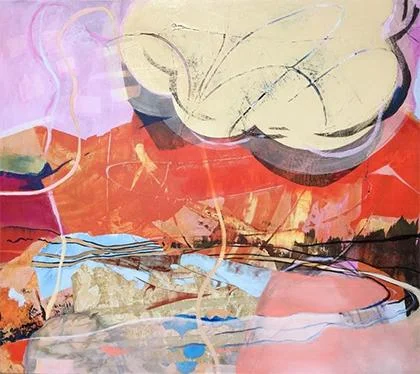
"Yellow Cloud'' (oil and collage on panel), by Jackie Reeves, in the group show "Speak My Language,'' at the Brickbottom Artists Association, Sept. 8-Oct. 14.
An old library's 'creature comfort'
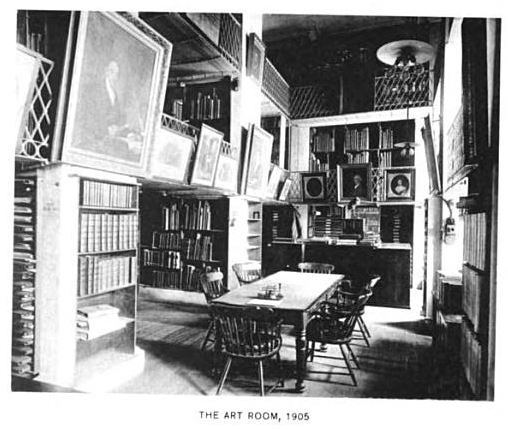
Inside the Boston Athenaeum.
"The high-ceilinged rooms, the little balconies, alcoves, nooks and angles all suggest sanctuary, escape, creature comfort. The reader, the scholar, the browser, the borrower is king.''
-- David McCord, about the Boston Athenaeum
Chris Powell: Using Charlottesville for a partisan political agenda
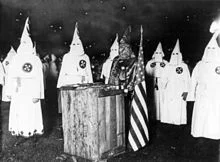
Connecticut Gov. Dannel Malloy, that state's congresspeople and Democratic officials everywhere insist that everyone must speak out against the aspiring Nazis and Klansmen who went looking for a fight in Charlottesville the other week and were given one by street-theater-loving leftists as the city's police withdrew.
Many people are heeding the Democrats' calls, holding church services and "vigils" to declaim against "racism and hate." Even University of Connecticut President Susan Herbst felt compelled last week to issue a statement essentially declaring that she's not a Nazi, as if anyone had suspected her.
But no, we all don't have to speak out against "racism and hate."
For Nazis and Klansmen are not really numerous in this country. The few dozen who descended on Charlottesville may have constituted most of those who would even dare show themselves. The reaction to them is so disproportionate to their significance that it plainly has a partisan political purpose -- to keep discrediting President Trump for his inability to speak sensibly and accurately about anything.
But anyone who wanted to know that about Trump knew it long before Charlottesville. Further, people who live normal lives and behave decently can be safely assumed not to be Nazis or Klansmen. But people who demand that everyone certify that he is not a Nazi or Klansman cast insinuation against everyone and engage in political intimidation. The sanctimony of the church services and "vigils" compounds this insinuation and intimidation, a merger of religion and politics that offends the political left when the right attempts it.
Even so, sanctimony is a great tool politically and it is getting out of hand. This week some environmental and religious groups planned a "vigil" at Hartford City Hall in support of an ordinance banning disposal of fracking waste. For apparently God isn't just against Nazis, Klansmen, and Trump; He stands with the left on energy policy too.
As they marched in Charlottesville the Nazi thugs carried torches for intimidating effect. The people holding "vigils" against "racism and hate" carry candles to reinforce their sanctimony. Invoking religion, the candles are more intimidating politically than the torches.
* * *
It's no wonder that Governor Malloy and leaders of the General Assembly like to attend "vigils" and posture against "racism and hate." It's a lot easier than a job they were elected to do: producing a state budget.
The state Senate's Democratic leader, Martin Looney, of New Haven, says municipal officials are wrong to complain about the delay of the budget. The budget is so late, Looney says, because legislators are trying to arrange "more aid to municipalities and more education aid."
Not really. The delay results from disagreement over the governor's plan to divert $400 million from teacher pension fund contributions, use the money to finance state government, and make municipalities replace it by raising property taxes. Most Democratic legislators would prefer to raise state taxes instead, particularly the sales tax.
The money here is not "aid to education" but compensation for members of teacher unions, who, as part of the majority party's biggest component, government employees, have to be bought off just as the state employee unions were recently bought off with a new contract that preserves their jobs and compensation for four years.
Without a budget the governor is reducing "aid to education" for all but the poorest cities and towns. It would be nice if this policy could last for a year or two so Connecticut could see if anything changes in student performance. For decades nothing about student performance changed as aid went up. Would anything change if aid went down?
Chris Powell is managing editor of the Journal Inquirer, in Manchester, Conn.
Amazonian ambiguities
From Robert Whitcomb's "Digital Diary,'' in GoLocal24.com
Here’s yet another observation on Amazon, which has been hiring thousands of people across America and a few hundred at its new distribution center in Fall River:
Those warehouse jobs are being taken by many people who might otherwise have been working in the thousands of stores being put out of business by Amazon. Those are people who would have been customers of nearby stores and restaurants and, because they were working in local stores (which paid local taxes) -- people much more likely to be civically engaged than those working for a gigantic global corporation most of whose buildings are gigantic warehouses far from town or city centers. Thus Amazon’s relentless expansion will accelerate the decline of local economies and local government.
But, as I’ve said, people love the convenience of dealing with Amazon, which will trump the attractions of local retailing in most places. High-end stores, with intense personal service, in very affluent neighborhoods will be partial exceptions. As for the good PR Amazon gets from its hiring binge, that will fade as the geniuses in Seattle figure out more ways to automate its warehouses.
You could do worse

"When I see birches bend to left and right
Across the lines of straighter darker trees,
I like to think some boy's been swinging them.
But swinging doesn't bend them down to stay
As ice-storms do. Often you must have seen them
Loaded with ice a sunny winter morning
After a rain. They click upon themselves
As the breeze rises, and turn many-colored
As the stir cracks and crazes their enamel.
Soon the sun's warmth makes them shed crystal shells
Shattering and avalanching on the snow-crust—
Such heaps of broken glass to sweep away
You'd think the inner dome of heaven had fallen.
They are dragged to the withered bracken by the load,
And they seem not to break; though once they are bowed
So low for long, they never right themselves:
You may see their trunks arching in the woods
Years afterwards, trailing their leaves on the ground
Like girls on hands and knees that throw their hair
Before them over their heads to dry in the sun.
But I was going to say when Truth broke in
With all her matter-of-fact about the ice-storm
I should prefer to have some boy bend them
As he went out and in to fetch the cows—
Some boy too far from town to learn baseball,
Whose only play was what he found himself,
Summer or winter, and could play alone.
One by one he subdued his father's trees
By riding them down over and over again
Until he took the stiffness out of them,
And not one but hung limp, not one was left
For him to conquer. He learned all there was
To learn about not launching out too soon
And so not carrying the tree away
Clear to the ground. He always kept his poise
To the top branches, climbing carefully
With the same pains you use to fill a cup
Up to the brim, and even above the brim.
Then he flung outward, feet first, with a swish,
Kicking his way down through the air to the ground.
So was I once myself a swinger of birches.
And so I dream of going back to be.
It's when I'm weary of considerations,
And life is too much like a pathless wood
Where your face burns and tickles with the cobwebs
Broken across it, and one eye is weeping
From a twig's having lashed across it open.
I'd like to get away from earth awhile
And then come back to it and begin over.
May no fate willfully misunderstand me
And half grant what I wish and snatch me away
Not to return. Earth's the right place for love:
I don't know where it's likely to go better.
I'd like to go by climbing a birch tree,
And climb black branches up a snow-white trunk
Toward heaven, till the tree could bear no more,
But dipped its top and set me down again.
That would be good both going and coming back.
One could do worse than be a swinger of birches. ''
-- "Birches,'' by Robert Frost
Longing for the elms
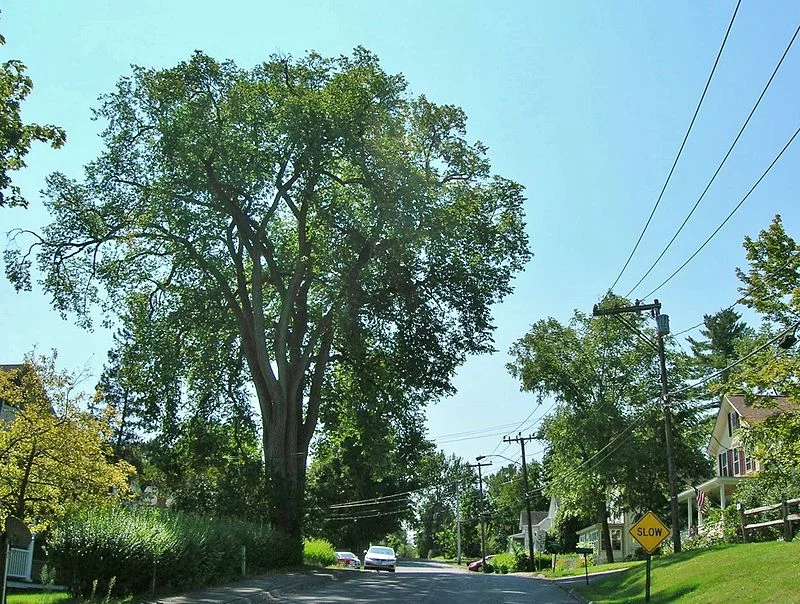
A rare surviving American elm in western Massachusetts. Most of these trees were killed by Dutch Elm Disease in the mid 20th Century.
"Never again
when the heat overwhelms us
cool elms
The elm leaves shrivel on the twig
and the sun beats through and our time is big
with a lidless time that knows no dark,
no shadow where the heart can see...''
-- From "Long Hot Summer,'' by the late Archibald MacLeish. He lived in Conway, Mass.
New England's uber mountain
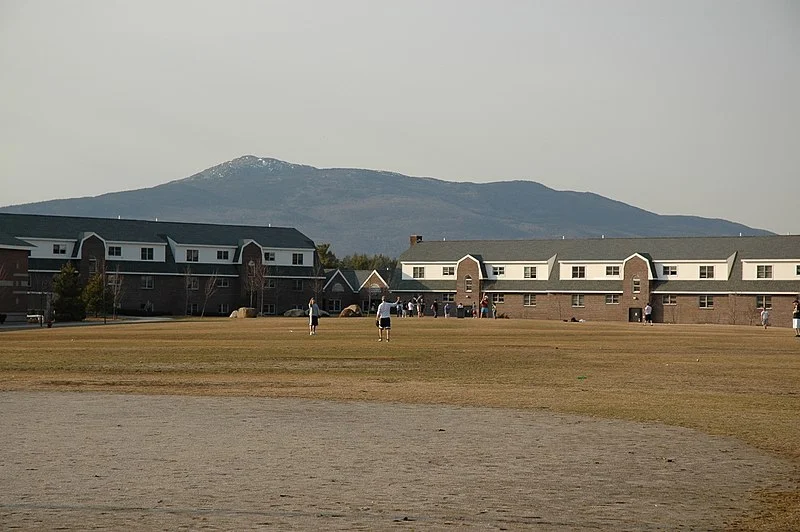
Mount Monadnock, from the campus of Franklin Pierce University, in Rindge, N.H.
"Mount Monadnock is to New England what Mount Olympus was to the ancient Mediterranean: not the the highest or the grandest mountain, not the wildest or the most difficult, but somehow the most sovereign mountain. It is middle-sized at 3,165 feet and stands alone in the middle of a plain in southern New Hampshire like a clipper ship in parking lot.''
-- Castle Freeman Jr.
If Mass. won't help pay to build baseball stadium....

McCoy Stadium, the current home of the Pawtucket Red Sox.
Adapted from an item in Robert Whitcomb's "Digital Diary,'' in GoLocal24.com
Those who think that Worcester is about to grab the Pawtucket Red Sox should consider this news from the (Worcester) Telegram & Gazette.
Hit this link: http://www.telegram.com/news/20170813/worcester-city-councilors-love-idea-of-wooing-pawsox-but-obstacles-loom from the (Worcester) Telegram & Gazette:
“Massachusetts legislators told the Telegram & Gazette …{that} the {state} Legislature is unlikely to put public dollars toward a stadium for a private team. And even if a deal in Rhode Island that seeks to do that falls through, and neither city offers public money, staying in Pawtucket would likely be the shrewder move,’’ a stadium expert told the paper.
“All things being equal, Worcester is probably going to have to pay a higher subsidy to get them,” said Victor A. Matheson, a College of the Holy Cross economics professor who specializes in stadiums. After all, the Worcester Metropolitan Statistical Area is only about half the size of the Providence-Warwick Metropolitan Statistical Area, which includes Pawtucket. (Also, Worcester is not on the Main Street of the East Coast -- Route 95. Pawtucket is.)
“It sounds wonderful, doesn’t it?” Senate Majority Leader Harriette L. Chandler (D.-Worcester) said of the idea of the PawSox moving to Worcester. ”(But) who’s going to pay for it?”
“The reality,’’ she told the paper, “is that the Legislature has an established precedent of not putting public money into sports stadiums.’’ And Massachusetts is of course a much richer state than Rhode Island on a per-capital basis.
While Massachusetts has spent money for public-infrastructure improvements associated with stadiums (most notably around Gillette Stadium, in Foxboro), that’s not the same as the millions that the PawSox wants from Rhode Island taxpayers to actually build a new PawSox stadium itself in downtown Pawtucket. The Boston Red Sox, by the way, got no public money for its massive improvements at Fenway Park in recent years.
The PawSox want $38 million in public money in Rhode Island to build a new stadium: $23 million from the state and $15 million from Pawtucket. The PawSox assert that the long-term loans from the public for the project would be repaid from the tax revenues that the new stadium generated and so wouldn’t hurt taxpayers. But of course it’s impossible to know how well the team and stadium would do in coming decades, indeed how popular baseball in general will be.
Anyway, I continue to be very skeptical that the PawSox would go to Worcester. And I hope that they’ll stay in Pawtucket. Had a wonderful evening there a couple of weeks ago.
Todd McLeish: In R.I. monarchs resurging, other butterflies not

"Monarch Butterfly {No. 16} (watercolor,) by Titian Ramsay Peale, 1817, in the show "Flora/Fauna: The Naturalist Impulse in American Art,'' at the Florence Griswold Museum, Old Lyme, Conn.
Via ecoRI.org
Monarch butterflies have continued their resurgence in Rhode Island this year after a global decline in 2013, but overall populations of butterflies in the state appear to be declining slightly.
“The biggest factor this year was probably the long, wet spring we had,” said Marty Wencek, a biologist for the Rhode Island Department of Environmental Management and an avid butterfly observer for 55 years. “The wet weather can suppress the population when you have a lot of butterflies wintering as pupa and a lot of small caterpillars. Just like the gypsy moths got whacked by the wet weather, it can also affect other species.”
As if to emphasize the point, the first day of a two-day, statewide butterfly survey sponsored by the Audubon Society of Rhode Island was nearly rained out this year, resulting in fewer surveyors spending fewer hours searching for and counting fewer butterflies.
According to Jon Scoones, who coordinated the survey, 1,454 butterflies of 52 species were identified — a similar number of species but half of the individual totals of past years. Yet, there were still several notable highlights. Numbers of the tiny dun skipper, for instance, doubled compared to last year, while the even tinier sachem went from one in 2016 to 105 this year, almost all in Newport County.
Monarchs, which Scoones said “everyone uses as a litmus test,” increased from 29 to 134, mostly in the West Bay area of Narragansett Bay. Butterfly enthusiasts around the state have posted numerous photos on social media of monarch eggs, caterpillars and adults in recent weeks, many with messages claiming to feel a sense of relief that the butterflies appear to have rebounded.
On the other hand, survey results found the very common cabbage white to have declined from 638 to 243, and the popular pearl crescent dropped from 374 individuals to 78.
Of particular note, Scoones said, is that the number of variegated fritillaries, a southern species found fairly rarely in the state, increased this year, especially in the Big River area.
“I was heartened to see that the variegated fritillaries are coming up here, but I’m not sure if that’s a good thing or bad,” he said. “It’s nice to know that we’re having more butterflies in our area, but should it even be up here? I’m not sure. It might be here because of climate change.”
That may be the reason for increased sightings of other southern species as well, including zabulon skipper and red-banded hairstreak.
“They don’t really belong here, but everything from the south is trending in our direction,” Wencek said. “Why? Because it’s warmer.”
Some southern species aren’t accustomed to the winter cold of southern New England, however, and they become scarce following severe winters, like occurred in 2013. But others appear able to survive.
“A lot of factors affect butterflies,” Wencek said. “I always point to the wet spring when numbers are down, but I know there’s more to it than that, like habitat loss and pesticide use. Those are major factors, too.”
One thing Wencek and Scoones said that almost anyone can do to boost butterfly populations is to plant native flowers from which the adult insects can sip nectar, and plant the specific host plant that each species requires during its caterpillar stage.
“It definitely works,” Wencek said. “I planted hops, and it brought in question marks. I put in pipevine and we got a pipevine swallowtail laying eggs. You want black swallowtail? Plant parsley.
“These bugs are dependent on the host plant, so if climate change hinders that plant’s ability to thrive, it will hinder the ability of that butterfly to survive.”
While butterfly numbers appear to fluctuate widely from year to year, Wencek has observed a slight decline in overall numbers in recent years. It is especially noticeable with the very common species, which he said are still common but he is noticing fewer of them.
Looking to the future, he said Rhode Islanders should expect to see more and more butterfly species from the South making the Ocean State their summer home.
“Every year starting about now, we start getting exotic southern butterflies that fly north until they die, which is an interesting phenomenon,” he said. “We’ll start seeing more of those in the future. Some years you might not see a ton of them, but expect it to be a more common occurrence.”
Rhode Island resident and author Todd McLeish runs a wildlife blog.
Trying to rekindle lost wonder

"Regarder le silence'' (mixed media on canvas), by Eric Roux-Fontaine, in his Sept, 1-Sept. 30 show. "Souvenir du Futur,'' at M Fine Arts Galerie, Boston.
The gallery says that "the scenes {he depicts} are oc:urring in a world apart from ours. In a sense, they are, as we become increasingly detached from the nature around us. Roux-Fontaine describes his work as a 'modest attempt to recapture the enchantment of the world,' the enchantment that many of us have forgotten in the modern age. ''Souvenir du Futur'' aims to rekindle that lost wonder, and help us see the beauty in the world around us again.
Boston one of the biggest art-buying centers
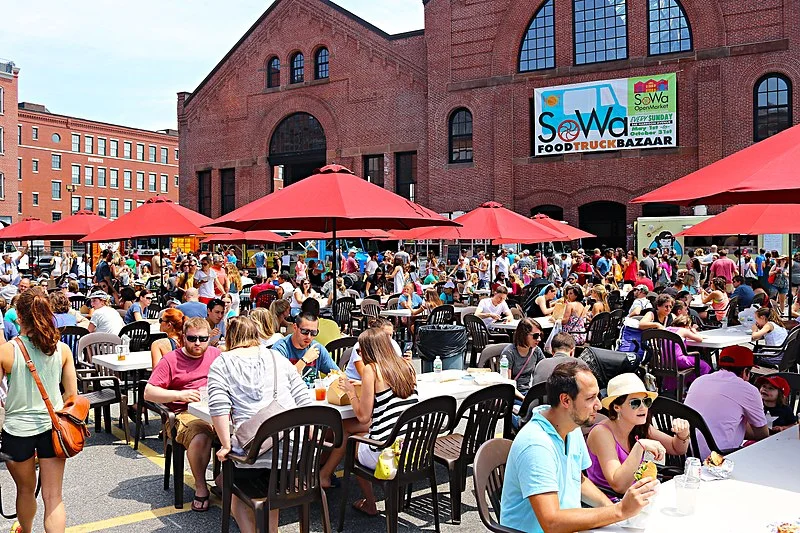
In the SoWa arts district in Boston.
Photo by Sowaboston
From Robert Whitcomb's Digital Diary in GoLocal24,com
Boston was one of the top 10 art buying cities in the U.S. last year, according to a new report by art marketplace Artfinder, the Boston Business Journal reported.
The paper reported that “’Boston is young, cultural and creative, plus it has great universities” Artfinder CEO Jonas Almgren said in an email. ‘We also have a lot of artists in Boston, and of course our customer hubs tend to grow in places where we have thriving artist communities.’’’
So maybe more RISD grads will stay in our area?
But the total dollar value of art buying is and will remain much higher in New York than Boston!
Artfinder’s surprising top 10 list of U.S. cities is below, with each number representing the number of art buyers per million inhabitants in 2016:
Tallahassee (1,303)
New Haven (953)
Anaheim, Calif. (842)
Tampa (789)
Raleigh, N.C. (770)
San Francisco (726)
Miami (620)
Austin (592)
Santa Monica, Calif. (578)
Boston (572
'An end to roaming'
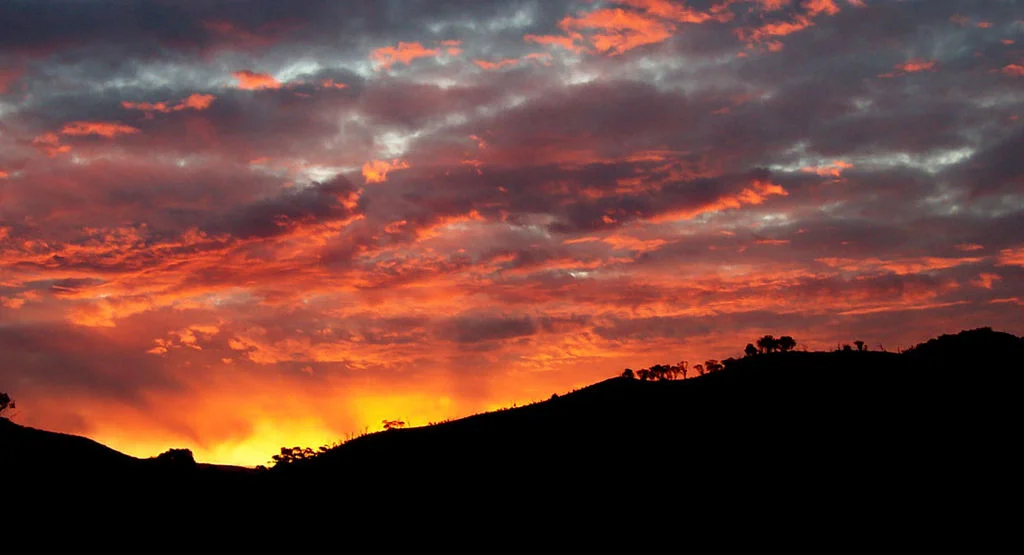
Photo by CC By-SA 3.0
When summer's end is nighing
And skies at evening cloud,
I muse on change and fortune
And all the feats I vowed
When I was young and proud.
The weathercock at sunset
Would lose the slanted ray,
And I would climb the beacon
That looked to Wales away
And saw the last of day.
From hill and cloud and heaven
The hues of evening died;
Night welled through lane and hollow
And hushed the countryside,
But I had youth and pride.
And I with earth and nightfall
In converse high would stand,
Late, till the west was ashen
And darkness hard at hand,
And the eye lost the land.
The year might age, and cloudy
The lessening day might close,
But air of other summers
Breathed from beyond the snows,
And I had hope of those.
They came and were and are not
And come no more anew;
And all the years and seasons
That ever can ensue
Must now be worse and few.
So here's an end of roaming
On eves when autumn nighs:
The ear too fondly listens
For summer's parting sighs,
And then the heart replies.
-- From ''Last Poems,'' by A.E Housman
But you end up on the ground

"Updraft'' (acrylic on linen), by Dozier Bell, in his show at Corey Daniels Gallery, Wells, Maine, through Sept. 9.

Michele Perkins: Small colleges can still prosper
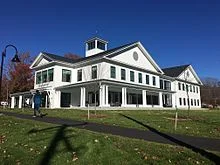
The John Lyons Academic Center on the New England College campus.
Via the New England Board of Higher Education (nebhe.org)
In New England and in several other regions of the country, it’s only natural to be concerned about the fiscal challenges confronting our nation’s private colleges and universities. Forecasts by prominent higher education experts increasingly suggest that many, if not most, of our small private institutions will face closure in the decade ahead. However, Inside Higher Ed recently reconsidered this angle in a piece titled “Healthier Than Imagined?” The article profiles a recently released research report commissioned by the Council of Independent Colleges (CIC) and concludes that the projected demise of small, private colleges may, in fact, be overblown.
New England College (NEC), which was mentioned in the Inside Higher Ed article, contradicts the assertion that most, if not all, small, tuition-dependent liberal arts colleges are failing. Our college is succeeding in this economy and experiencing substantial budget surpluses. At a time when many institutions are struggling to balance their budgets, NEC will post an unrestricted operating surplus of about $800,000 for FY2017 on an operating budget of $57 million. We anticipate growing that surplus to $1 million in the 2018 fiscal year.
While I’m happy to report these numbers, I unfortunately do not have any “secret sauce” recipe to share about how we are doing this in very challenging times and in an era of severely declining demographics. Honestly, the short answer to our success can be described in a few phrases: We are creative; we are unafraid to embrace change and to change in major ways; we are open to intelligent risk-taking; and we are willing to put in the time and effort to make it happen. Everyone at the college shares these values; everyone must share these values to succeed.
We also are clear on what is timeless and not up for modification or elimination— such as the liberal arts. I firmly believe you can do both–embrace innovation and remain faithful to the liberal arts—and we are here to prove it. At NEC, we plan to grow our traditional residential undergraduate enrollment from an expected 1,060 this fall to 1,500 over the next several years—during a period of declining K-12 enrollments (estimated as high as 15% over the next decade by the National Center for Education Statistics). New England College’s enrollment trends project growth, not decline.
NEC’s residential, undergraduate programs don’t currently pay for themselves; operating surpluses are driven by other programs such as online education and graduate programs, which push total enrollment to about 2,700. We know that our traditional undergraduate programs must grow to about 1,300 students to break even financially. To grow our undergraduate numbers in the face of declining high school populations, we looked outside our region.
New England College recruits in secondary markets including New York City and all the Mid-Atlantic states, and we are developing markets in western and southern states. In recent years, we have seen increased enrollment and, with over 35% of our residential undergraduate students from underrepresented populations, NEC now has the largest diversity percentage of any college or university in New Hampshire–public or private.
A final note about enrollment size: The CIC report found that a group of the smallest private colleges—those with fewer than 1,000 students enrolled—have posted consistently weaker financial performance than larger peers through both good times and bad. The data consistently show that if an institution has enrollment under 1,000 students, then it is more difficult to keep the doors open. New England College recognized that there are many opportunities to provide a quality education beyond the traditional student population and crossed the 1,000-student threshold long ago.
As the Inside Higher Ed article correctly points out, NEC has kept its debt levels low, embracing a highly conservative debt strategy for many years and only taking on additional debt in the last few years. We have managed annual budgets conservatively, including leaving some faculty and staff positions unfilled in some years and offering voluntary retirement packages a few years ago, all this while meeting the public’s demand for new program offerings. We have learned to be “Yankee Frugal” in our budget, while also working to be resourceful and creative.
In this environment, some business and political leaders question the role of the liberal arts in this changing economy. While we recognize and actively promote the need for “real-world” learning, we remain undeterred in our belief that a well-rounded education will best serve students as they progress through multiple projected career paths, often in jobs that don’t yet exist. Other concerns also include the evolving policy on immigration that may hurt institutions’ ability to enroll the international students that have increasingly become a financial lifeline.
If we enrolled only traditional, residential undergraduates—with all the services we provide, it would simply not be viable. Given the volatility of higher education enrollment markets, changing student preferences, economic shifts and changing demand for various course offerings, flexibility is essential. We are also struggling to deal with our "discount rate"—the amount colleges increasingly reduce tuition through scholarships in order to attract students without causing inappropriate levels of student debt.
It hasn’t been easy, but flexibility of courses, a variety of delivery modes, online opportunities, competitive scholarships, smart marketing and being open to innovative ideas provide a model that allows us to serve NEC students and meet our academic purpose and mission.
Michele Perkins is president of New England College, in Henniker, N.H., with a total of about 2,700 undergraduate and graduate students.