
Vox clamantis in deserto

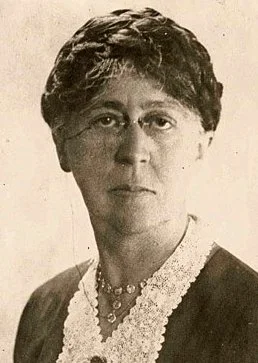
Llewellyn King: Defend civilization -- wear a tie

I ask you, what’s a man to do? Men are terrified to leave the house these days. Should they wear a suit and look overdressed, as though they’re on the way to a meeting with the bank, trying to look both stable and reliable while subtly conveying need? Or should one assume that one’s body language is so articulate that social status, wealth, success and importance (or need) will shine though like people in Hollywood?
Actually, I blame Hollywood for everything: the sartorial confusion, the dress wilderness, the not knowing how to look and the death throes of the necktie.
I have it well documented that the dress decay — that’s what I think it is — came from show business. No less an authority on social rectitude, the manager of the Carlyle Hotel in New York, told me that the Hollywood riffraff, who he loved for their free-spending ways, had destroyed the dress code; made it hard for a poor newspaper man to pass for an investment banker by having the right kit.
“You used to be able to get all togged up for success,” a Savile Row tailor explained.
He said anyone could tell who had a bespoke suit and who didn’t, and he said a real gentlemen had at least one bespoke suit. In a famous phrase from the party girl Mandy Rice-Davies, “He would wouldn’t he.” This man made suits for the upper crust, or those who wished to be thought of us as such.
His name, the master tailor, was Henry Stewart. Although he learned his trade in Savile Row, when I knew him he practiced it in New York and made very beautiful, very expensive suits. He boasted he could “give a man a waist,” even if years of good living had transmuted his concave stomach to convex.
Back in those days, a tailor would ask a man, “How do you dress, sir?” If that phrase has you bemused, think about the male anatomy and what the effects of gravity are on it below the waist and out of sight.
My father owned only one suit and what an ill-fitting thing it was. He wore it for church, Masonic meetings and to borrow money at the bank. Otherwise, a small contractor, he wore his work clothes, which actually gave him more dignity than the suit.
Nowadays, in my experience, rather than dressing up to go to church one does just the opposite: jeans, cut-offs, flip-flops are good enough, apparently. Gone are the days of men in suits and women in hats and gloves on a Sunday. Gone the way of the necktie. What must God think?
I have watched the agonizing death of the tie, of that once sacred part of a man’s wardrobe; that single piece of cloth that gave man the option to express a modicum of individuality. Now it is old-fashioned, out of step and not hip to wear a tie.
But for those of us who were steeped in the tie culture, it is a tough farewell. Men, take your favorite tie in hand and sing, “We’ll meet again, don’t know where don’t know when, but I know we’ll meet again some sunny day.”
I’m putting a lock on my tie rack in case the agents of the open-necked state come for them — to deport them to Italy, the home of gorgeous silk ties.
I wore a tie at school, in my first job at age 16 and ever since. I am naked otherwise. No tie and I feel hostile eyes can see into my soul and know how little I think and what mundane if unspeakable thoughts I have. My soul is exposed without a tie and, preferably, a suit.
I fear the naked throat is the symbol of the decline of the West. I want to be counted as fighting for civilization, with a snazzy Windsor knot, a throwback to when a man’s tie was his shield, his comfort — and something to wipe his eyeglasses with.
Llewellyn King, a frequent contributor to New England Diary, is host and executive producer of White House Chronicle, on PBS. This piece first appeared in Inside Sources.
Bees coming back?

Adapted from Robert Whitcomb's "Digital Diary,'' in GoLocal24.com
Good news! Bees may be coming back, slowly. The U.S. Agriculture Dept. says the number of commercial honeybee colonies rose 3 percent in the April 2016-April 2017 period after years of crashes.
Some of the improvement may stem from a mysterious decrease in the varroa mites implicated in the deaths of many bees. And some may be due to more careful pesticide use by farmers and others. Still, pollinators such as bees and butterflies remain under great stress, much of it manmade, including from the paving over of foraging areas for bees. And without pollinators, we’d eventually starve to death.
The USDA reported that the varroa mite, which has afflictedU.S. honeybee colonies since 1987, was reported in 42 percent of commercial hives between April and June this year, down 53 percent from the year-earlier period.
Many New Englanders have joined the campaign to protect honeybees. Notable among them are the beekeepers and physicians Jane and Allen Dennison, of Rumford, R.I. Among their promotional points is that honey is a very effective treatment for wounds -- and so a way of avoiding antibiotics and thus reducing the prevalence of antibiotic resistance. They've been speaking around America about this.
The end of it

The shadows under the trees
And in the vines by the boat-house
Grow dark,
And the lamps gleam softly.
On the street, far off,
The sound of the cars, rumbling,
Moves drowsily.
The rocks grow dim on the edges of the shore.
The boats with tired prows against the landing
Have fallen asleep heavily:
The monuments sleep
And the trees
And the smooth slow-winding empty paths sleep.
-- "Park Going to Sleep,'' by Helen Hoyt
John O. Harney: Northern N.E. states have much higher 'patriotic' metrics than the southern ones

This piece is by our friend John O. Harney, executive editor of the New England Journal of Higher Education, part of the New England Board of Higher Education (nebhe.org), where this piece originated.
From time to time we revive the collection of facts and figures called "Data Connection" that we had published quarterly for nearly 20 years in the print editions of The New England Journal of Higher Education (formerly Connection magazine).
The latest ...
"Patriotic" rank of northern New England states measured by indicators such as share of enlisted military population, share of adults who voted in the 2016 presidential election, per-capita AmeriCorps volunteers: Maine 11th, New Hampshire 13th, Vermont 21st.
"Patriotic" rank of southern New England states based on such indicators: Connecticut 45th, Rhode Island 47th, Massachusetts 48th .
Number of New England higher education institutions in the Princeton Review's top 20 list of "Future Rotarians and Daughters of the American Revolution" where "surveyed students' answers indicated their personal political persuasions to be very conservative, low levels of acceptance of the gay community on campus, high levels of popularity for student government on campus and a very religious student body": 2 (Gordon College, Saint Anselm College), information from The Princeton Review
Number of New England higher education institutions in the Princeton Review's top 20 list of "Birkenstock-Wearing, Tree-Hugging, Clove-Smoking Vegetarians " where "surveyed students' answers indicated their personal political persuasions to be very liberal, high levels of acceptance of the LGBTQ community on campus, low levels of popularity for student government on campus and a student body that is not very religious": (Bennington College, Wesleyan University, University of Vermont, Brown University, Clark University), from The Princeton Review
Average annual compensation of heads of top 50 New England boarding schools: $455,000, from GoLocalProv.com.
Number of U.S. colleges fielding football teams this fall: 777, from the National Football Foundation.
Number of teams added since 2011: 40, from the National Football Foundation.
Number of teams added in New England since 2011: 1 (University of New England), from thr National Football Foundation
Number of New England teams that will launch in 2017: 1 (Dean College) from the National Football Foundation
Percentage of associate degree holders who report they are effectively managing financial stress and their economic life: 27 percent, from Gallup-USA Funds
Percentage of bachelor's degree holders who report they are: 41 percent, from Gallup-USA Funds
Percentage of community college graduates who go on to earn a bachelor's degree during the next six years: 41 percent, from the National Student Clearinghouse
Chris Powell: Conn. shouldn't get emotional about exit of GE and Aetna
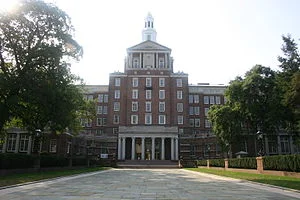
The soon-to-be former headquarters of Aetna in Hartford. It looks like a hotel or part of a college.
Having spent the last several decades capitulating to its government and welfare classes and squandering its advantages over other states, Connecticut has a lot to apologize for and correct. But it shouldn't feel quite so bad about the departure of General Electric's headquarters from Fairfield to Boston and the departure of Aetna's headquarters from Hartford to New York.
People have thought of GE and Aetna as Connecticut companies when they really haven't been.
General Electric got started in Schenectady in upstate New York, consolidated in New York City, and acquired many related companies around America before moving its corporate headquarters to Fairfield and transforming itself into an international financial conglomerate.
While Aetna started in Hartford in 1853, as it grew it also opened offices throughout the country and the world and became a financial conglomerate much like GE. Aetna has 5,000 employees in Connecticut but 44,000 elsewhere.
The boards of both companies long have lacked members with roots in the state.
People here like to think of United Technologies Corp. as a Connecticut company as well. But while UTC began in Connecticut with Pratt & Whitney Aircraft and retains its headquarters here, like GE and Aetna the company used its earnings to acquire other businesses and became an international conglomerate. UTC's employment in the state has declined steadily as it has expanded its aircraft engine and other businesses elsewhere.
Since the businesses of these companies are so dependent on and/or or regulated by national governments, politics has required them to diversify their geography. It's not enough for them to have the support of Connecticut's delegation in Congress. They need support nationally.
Meanwhile other national and international companies have expanded into Connecticut for the same reason, perhaps causing emotional pangs and resentments in the places where they originated.
But that's the evolution of most big businesses -- from entities with local character and geographic loyalty to cold accumulations of mobile capital. They're not emotional about Connecticut and the state is silly to be emotional about them.:
Defending their ratification of the new state employee union contract, Democratic state legislators say that its 10-year term, criticized by Republican legislators as too long, is no big deal. The Democrats note that state employee union contracts have been reopened early before, as the one just extended was.
But that argument is weak, since reopening such contracts is possible only with the consent of the unions and there is no guarantee that the unions will give their consent. Indeed, if, as the Democratic legislators suggest, reopening contracts is a mere technicality, why should their length be specified at all? Why shouldn't the contracts be written so they can be terminated by either party at any time?
When union leaders urged their members to ratify the new contract, they did not argue, as Democratic legislators argue now, that the duration clause is meaningless. No, union leaders argued that the contract provides long-term protection of jobs and compensation. Union members might not have ratified the contract if its four-year guarantee of employment really meant that layoffs could begin at any time.
The essence of the contract issue remains that Democrats, the party of government employees, believe that government employees should have more power over the government than the voters do. It's nonsense but it is repaid well by government employees at election time.
Chris Powell is managing editor of the Journal Inquirer in Manchester, Conn.
Boston charter schools' chiefs rake it in
From Robert Whitcomb's "Digital Diary,'' in GoLocal24.com:
Wages certainly aren’t lagging for company and “nonprofit’’ organizations’ executives as more and more of the country’s wealth goes to a sliver of people at the top, in a winner-take-all economy that eschews sharing with lower-level but essential employees.
Consider The Boston Globe’s Aug. 1 story “Some charter school leaders’ pay far outpaces their public rivals’’. See: https://www.bostonglobe.com/metro/2017/08/01/some-boston-charter-school-leaders-paid-hefty-salaries/fbHDOC33WKmzcvvZaNNkLN/story.html
The Globe discovered that the “median pay package for the top leadersof the 16 charter schools in Boston was $170,00 last year.’’ Some Rhode Islanders might remember the former Providence school Supt. Diana Lam. As the boss of Conservatory Lab, she got a $275,000 in salary and $23,000 more for unused personal time off in 2016.
That was more than Boston School Supt. Tommy Chang’s totalcompensation of$272,000 in 2016.
These just-before-retirement pay packages are used as the basis for maximizing the departing executives’ pensions, which approach $200,000 a year.
Remember these charter schools are public institutions.
Over the years of looking at executive-suite compensation I’ve there’s often remarkably little connection between execs’ pay and the success of their organizations, in the public or private sectors. They mostly get these pay packages because the boards authorizing them are composed of very affluent people made uncomfortable by the idea that these execs should be paid at rates commensurate with common sense and reality. Hey! We’re rich and so you should be too! Meanwhile, lower-level employees often see their pay and benefits slashed.
(If Hollywood, publishing houses, basketball teams, etc., want to pay their stars millions for bringing in these organizations’ revenue, that’s perfectly fair. Clear talent.)_
U.S. Education Secretary Best DeVos, wallowing like much of the Trump regime in economic conflicts of interest, wants to dramatically increase the number of charter schools. If that happens, let’s hope that more attention is paid to their executive salaries.
'Made her light escape'

"As imperceptibly as grief
The summer lapsed away,—
Too imperceptible, at last,
To seem like perfidy.
A quietness distilled,
As twilight long begun,
Or Nature, spending with herself
Sequestered afternoon.
The dusk drew earlier in,
The morning foreign shone, —
A courteous, yet harrowing grace,
As guest who would be gone.
And thus, without a wing,
Or service of a keel,
Our summer made her light escape
Into the beautiful.''
-- Emily Dickinson (of Amherst, Mass.) "Part Two: Nature, XLV''

'Exotic wayfarers' from 'away'

Panoramic view of Willoughby Notch and Mount Pisgah, on the "Northeast Kingdom''.
- Photo by Patmac13
"During the years that I lived with my grandparents in Lost Nation Hollow , a number of itinerant specialists could be counted on to visit Kingdom County {Vermont's "Northeast Kingdom''} each year. I had no idea where most of these exotic wayfarers hailed from. "Away,'' most of us called anywhere more than five miles beyond the county line. Or' the other side of the hills.' All I knew for certain is that since we could not go to them, the mind readers and barnstorming four-man baseball teams and one-elephant family circuses came to us.''
-- Howard Frank Mosher, in Northern Borders
While the water's still warm

"Insight'' (pastel), by Michele Poirier-Mozzone, in the show "A Summer Collection,'' at the Cultural Center of Cape Cod, South Yarmouth, Mass., through Aug. 27.
James P. Freeman: Using the espionage act against journalists
“Some of these people [columnists and commentators] have been known to make up, or willfully distort, information to support their political preferences.”
— Jody Powell, 1984, The Other Side of the Story
It may be a gnarly revelation.
President Trump is not the first president to wage war with journalists. As Jody Powell, a press secretary to Jimmy Carter in his presidency, understands. Forty years ago, Powell explains over 314 pages, “when the news seemed to me, then …, to be wrong, unsupportable, and unfair.” And, perhaps, fake.
Every president from George Washington to Barack Obama has expressed dismay about the press but, as the Los Angeles Times notes, “none have gone as far as Trump in their public derision.” Even so, few should be surprised by the graffiti artist from New York who came to Washington to deface standard protocols of public life, including media relations. So why is there such acute anxiety over Trump’s repeated calls this year about his arbitrarily defined “fake news” (“the enemy of the people”) against a further arbitrarily- defined “failing media”? Because some fear that he will invoke The Espionage Act as a form of retribution against journalists.
That prospect was recently broached by George Freeman (no relation to me), executive director of the Media Law Resource Center and a former longtime New York Times attorney.
In June 1917, a couple of months after America’s entry into World War I, Congress passed The Espionage Act, further strengthened and amended by The Sedition Act of 1918. The laws were intended to ensure the nation’s security after President Woodrow Wilson had demanded protection from what he called “the insidious methods of internal hostile activities.” Thousands of dissenters were prosecuted. While the Sedition Act was repealed after WWI, major portions of the Espionage Act remain part of U.S. law today.
At their core, many provisions sought to fundamentally bar many forms of communication (profane, abusive and disloyal speech) concerning the government, the flag, military forces of the United States, or any uniform connected to the American military. Such sweeping legislation, which placed severe and undue impediments on free speech, was challenged early in U.S. courts.
But no other modern legal challenge to free speech, as it relates to the freedom of the press, was more important than the landmark First Amendment case of New York Times v. Sullivan (1964). The U.S. Supreme Court ruled in favor of The Times. Free and open debate about the conduct of public officials, the court reasoned, was more important than occasional, honest factual errors that might hurt or damage officials’ reputations. Associate Justice Hugo Black wrote: “An unconditional right to say what one pleases about public affairs is what I consider to be minimum guarantee of the First Amendment.” The decision largely eliminated sedition as a crime. Fifty years later, Roy S. Gutterman, a journalism and communications law professor at Syracuse University, reasonably concluded, “This decision changed the way reporters and journalists could operate and transformed commentary, newsgathering, criticism, even parody and satire.”
Still, The Espionage Act is potent.
Freeman is concerned about the present, given the extreme unpredictability of a president who equally craves and crucifies the press -- especially a president whose administration seems oddly susceptible to frequent leaks of its own, and a president with a remarkable proclivity for calling any news he is discomfited by fake news.
While Freeman concedes that act has never been used to prosecute a journalist, let alone successfully, “that crucial distinction is somewhat in doubt.” If President Trump “actually tries to prosecute a journalist or publication that,” Freeman fears, “merely accepts and publishes a leak of information arguably covered by the Espionage Act — as opposed to just the leaker him/herself — that’s when the Trump offensive against the press will go to a whole new and terribly dangerous level.” He adds that, despite leaks of sensitive government information that the press has published throughout its history, “no president nor prosecutor has {fully} gone after the press.”
However, provocative Freeman’s thesis, though, he is wrong in believing that President Obama “defended ordinary newsgathering, including the reception of leaks.” Indeed, President Obama opened the door for waging a larger war on the press.
In eight years, the Obama administration prosecuted nine cases involving leakers and whistle blowers, compared with a total of three cases by all previous administrations. An analysis appearing in The New York Times last December by James Risen shows that Obama repeatedly used the Espionage Act “not to prosecute spies but to go after government officials who talked to journalists.” Risen, an investigative reporter, writes that, under Obama, the U.S. Justice Department and FBI “spied on reporters by monitoring their phone records, labeled one journalist an unindicted co-conspirator in a criminal case for simply doing reporting, and issued subpoenas to other reporters to try to force them to reveal their sources and testify in criminal cases.”
In 2010, Obama’s Justice Department obtained a search warrant for Fox News reporter James Rosen’s private email during an investigation. In an affidavit supporting the search warrant, an FBI agent accused the reporter of conspiring to violate the Espionage Act.
Obama’s team may have adopted a “zealous, prosecutorial approach” due to large-scale leaks by Chelsea Manning and later by Edward Snowden, says Risen. And he cites the Valerie Plame case during President George W. Bush’s administration, where Plame was outed as a C.I.A. employee and former operative, which in turn “led to a series of high-profile Washington journalists being subpoenaed to testify before a grand jury and name the officials who had told them about her identity.”
Today, Risen asserts, many press freedom groups believe that Obama’s “record of going after both journalists and their sources has set a dangerous precedent that Mr. Trump can easily exploit.” So, what has Trump been up to? Following Obama’s lead.
In Part III of a compelling series by Freedom of the Press Foundation, on the 100th anniversary of The Espionage Act, senior reporter Peter Sterne last month wrote, “Espionage Act prosecutions of journalists’ sources have continued under the administration of President Donald Trump and only look to get worse.” While Julian Assange, founder of WikiLeaks, was the recipient and publisher of the classified documents leaked by Manning, Obama’s Justice Department, we are reminded, declined to publicly issue charges against WikiLeaks. But the case is still technically open. Nonetheless, the Justice Department under Attorney General Jeff Sessions has indicated that it intends to seek Assange’s arrest.
This past spring, The New York Times reported a purported conversation earlier this year between President Trump and then-FBI Director James Comey, alone together in the Oval Office. A reporter wrote: “Mr. Trump began the discussion by condemning leaks to the news media, saying that Mr. Comey should consider putting reporters in prison for publishing classified information, according to one of Mr. Comey’s associates.”
Regarding "fake news'' (2016’s “Words of the Year”), a phrase modernized, not coined, by Facebook, the social-media company has made efforts to supposedly combat fake news and help support journalists. Facebook Journalism Project has led to modifications in its publishing tools, among other changes. Could Facebook, as a distributor of news, one day be implicated or prosecuted in the dissemination of sensitive and classified information, let alone fake news? President Trump might think so.
Meanwhile, history repeats itself at the White House.
Jody Powell believed “that our relations with the press began to fray in the late summer of 1977,” a few months into Carter’s first term, a president whose party controlled both houses of Congress. With abject chaos surrounding his relationship with journalists, culminating (so far) with the resignation of his first press secretary, Sean Spicer, the same sentiments may be echoed in the summer of 2017, a few months into Trump’s first term, a president whose party also controls both houses of Congress.
James P. Freeman is a New England-based writer and former columnist with The Cape Cod Times. His work has also appeared in The Providence Journal, newenglanddiary.com and nationalreview.com. This piece first appeared in the New Boston Post.
'Replete and satisfied'

"August creates as she slumbers, replete and satisfied."
-- Joseph Wood Krutch
Get tough on taggers
From Robert Whitcomb's "Digital Diary,'' on GoLocal24.com
Localities and states need to get much tougher on graffiti “taggers’’ on publicly owned structures. Such public vandalism should be treated as felonies, with serious jail time, not as misdemeanors. And police and the rest of the law-enforcement community should make sure that photos of these people, who are mostly young males, be widely distributed to the public.
I was reminded of the need for this long-overdue change while reading about the graffiti guys’ attack on David Macaulay’s beautiful mural on a retaining wall alongside Route 95 in Providence. The state gave up and painted it over.
The effect of graffiti itself, and of leaving it visible far toolong, is much more serious than some might think. It signals lawlessness and menace to residents and visitors and tends to make people want to avoid areas where it’s common. Thus it’s bad for public morale and the economy.
It’s particularly offensive and depressing in such older areas as southern New England, with considerable manmade beauty in the form of old buildings.
Make this public vandalism a felony.
Chris Powell: The decline of civic engagement and newspapers
What happens to local news when there are no local news organizations? What happens to communities without local news? The Washington Post tried to answer those questions the other day, using as an example East Palo Alto, Calif., where many news organizations are nearby but none pays attention to the town.
Interesting as the Post's report was, the answers to its questions were a bit obvious: that without local news, communities stay ignorant of themselves; government decisions are made with less participation; problems are not well communicated; corruption increases; and communities lose their identity.
A related question may be more important: What is behind the decline of local news? The decline is manifested by the fall of newspaper circulation, the closing of scores of dailies and weeklies, and the collapse of newspaper employment by more than half since 2001.
The easy answer is the Internet. But while the Internet competes with newspapers for people's time, as radio and television did, it seldom provides local news. Instead the internet enables people to engage in virtual communities, to immerse themselves in interests that may span the nation or even the world -- sports teams, the stock market, movies, and such -- but at the expense of the attention people pay to their geographic communities.
Most of what remains of local news is still produced by newspapers, and the few Internet sites carrying local news are supported mainly by charitable donations because local businesses don't find internet advertising effective.
The real problem with the decline of local news, as that Washington Post story implied, is demographics. While East Palo Alto, a working-class town with a heavily minority population, lacks local news coverage, its wealthy neighbor, Palo Alto, receives plenty of coverage from local dailies and weeklies.
For Palo Alto's median household income is three times higher than East Palo Alto's, and local news is the most expensive part of journalism, since, while important locally, it is potentially of interest to fewer people than national and world news. Even the most compelling local news story may induce only a few thousand people to pay something for it, while millions of people may pay something for the most compelling national or world news story.
So while struggling communities need local journalism more, they can afford it less -- and they have less interest in it, for their residents are less literate and involved.
Indeed, the decline of local newspapers may correspond less with the rise of the internet than with the collapse of civic engagement as measured by voting in elections, which has been diminishing steadily for half a century. Today even in Connecticut a quarter or more of the population doesn't register to vote.
In a lecture a week ago in his hometown of Winsted, Conn., the country's foremost civic activist, Ralph Nader, noted that most schools fail to teach civic engagement and critical thinking.
Sometimes it's hard to see what the schools are teaching at all, especially when the annual National Assessment of Educational Progress tests show that even in Connecticut most high school seniors never master high school math or English. Such students are not prepared to become newspaper readers, much less citizens.
In the end communities will get local news only if they are willing and able to pay for it and value civic engagement. As public policy keeps dumbing down and impoverishing Connecticut and the country, demographic trends are otherwise.
Chris Powell is managing editor of the Journal Inquirer, in Manchester, Conn.

Respite in the woods

"The Window'' (acrylic, copper and steel), by Aneleise Ruggles, in the group exhibition "Finding Solace in the Woods,'' featuring 15 sculptural pieces in the Elaine and Philip Beals Preserve, Southboro, Mass., through Sept. 14. The exhibition touts the woods as one of the "few places to find quiet moments of respite and meditation away from the stress of daily life.'' The idea here is to "create a symbiosis between nature and art.''
Playing in Portsmouth
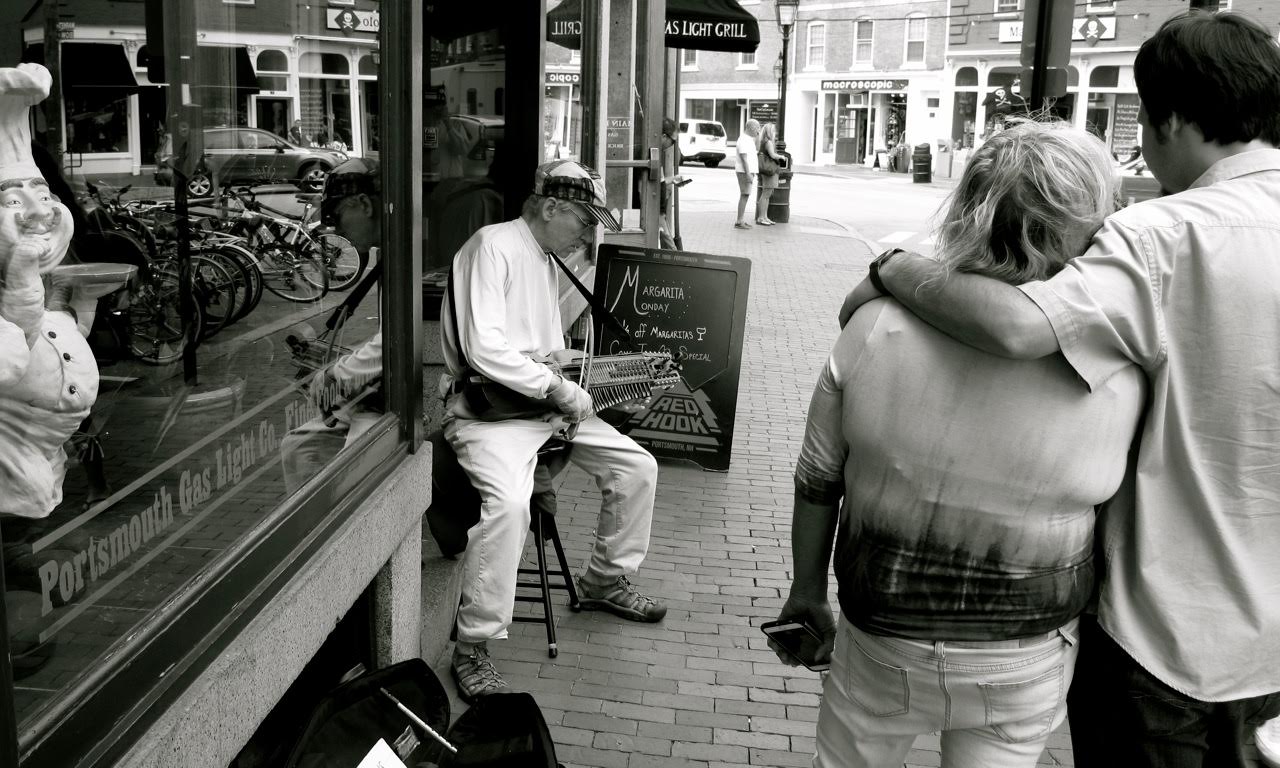
Busker in down Portsmouth, N.H.
Photo by William Morgan, noted architectural historian and photographer

Affirmative-action angst
The earliest known image of Dartmouth College, Hanover, N.H., in the February 1793 issue of Massachusetts Magazine. The college, officially founded in 1769, was an outgrowth of a Connecticut school for educating Native Americans founded in 1755.
From Robert Whitcomb's "Digital Diary,'' in GoLocal24.com
In other education news, the Trump administration, playing to its white male base, wants to sue colleges to block affirmative-action programs aimed at increasing the number of people of color on campuses. The implication is that black and Hispanic students get far more help than do white kids. (Asian-American students are put in another category.)
I’m not crazy about formal affirmative-action programs but colleges have, and should have, many things to consider when putting together classes. For example, many of the most prestigious colleges, including the Ivy League, give a big preference to “legacies,’’ those students, most of whom are white, with alumni parents or other close relatives.
Indeed, rich (mostly white) kids get a big advantage in admissions. First, they (or, rather, their families) can pay full tuition, a not minor consideration for admissions officers. Second, being already affluent, they and their families are naturally more likely to donate to their colleges before and after graduation – especially the legacy students. Thus Jared Kushner, with mediocre high school marks, got into Harvard – after his father donated $2.5 million to that illustrious institution. It’s unknown if Donald Trump’s rapacious multimillionaire real-estate operator father, Fred, wrote a donation check to get young Donald Trump into the University of Pennsylvania’s Wharton School as a transfer student from Fordham.
Finally, a thought experiment forwhite people: Do you really think that life would have been easier for you as a black person?
Probablythe fairest way to do college affirmative action in our increasingly genealogically plutocratic society is to make more of an effort to enable low-and-middle-income to attend. That would particularly benefit people of color, as well as poor whites.

Wex, a fast-growing Maine tech company, to build new headquarters in Portland
This from the New England Council (nec.com):
"WEX is one step closer to building a new global headquarters in Portland, ME, after the City Council’s Economic Development Committee approved Wex’s bid.
"Wex, a Maine-based international technology company, currently has 800 of its 2,700 employees in Maine and will add an additional 500 with the completion of their new building. The new global headquarters will not only be of use to Wex as a recruiting tool, but it will also be of great value to the city of Portland. The proposed building would be 100,000 square feet and four stories with 10,000 square feet of retail space. The City Council is expected to finalize the deal on August 21st.
'''We’re looking forward to hearing from the public regarding the committee’s selected development proposal and our purchase and sale agreement,' City Councilor David Brenerman, chair of the city’s Economic Development Committee, said in a written statement. “This is truly an exciting opportunity to attract the world headquarters of a major Maine-based international business that will bring almost 500 new high-quality jobs to Portland’s eastern waterfront.”
"The New England Council congratulates WEX on its continued growth and success.''
Candace Williams: On the affordability of New England's colleges and universities
Via the New England Board of Higher Education (nebhe.org)
The affordability of public colleges and universities, whose primary mission is to serve state residents, is top-of-mind for students and parents, institutional leaders and state policymakers. NEBHE's 2016-17 tuition & fees report "New England Fast Facts: The Price of Public Colleges in New England, 2016-17'' shows that since fall 2011, tuition and required fees have risen 16% at community colleges and 18% at 4-year institutions. Over that same period, enrollment in the region’s public institutions has fallen by 3.5%—a trend that is expected to continue due to a projected 14% decline in the number of new high school graduates in New England by 2032.
State and institutional financial aid awards seek to lower the sticker price of college. While individual financial aid packages vary, at least one program is fairly easy to predict and summarize: the federal Pell Grants. On average, Pell Grants continue to cover tuition and fees for students in the lowest income quintile in New England who are enrolled at community colleges. At the 4-year level, Pell Grants covered 60% of tuition and fees for students in the lowest income quintile in 2007-08. Today, the maximum Pell Grant pays for about half of a year’s tuition and fees at 4-year institutions.
These trends are forcing institutions and systems to get creative to ensure affordability for students, maintain enrollment and meet the needs of regional employers, who increasingly demand workers with postsecondary credentials.
In New Hampshire, a state known for its high in-state tuition prices, tuition has been frozen at community colleges. Meanwhile, the University of New Hampshire introduced the Granite Guarantee, which will provide free tuition to any full-time freshmen who are eligible for Pell Grants.
Rhode Island, with the leadership of Gov. Gina Raimondo, successfully passed a free college proposal for students entering the Community College of Rhode Island, beginning in fall 2017.
Maine, which consistently has the lowest in-state tuition rates in New England, has launched an effort, known as the Flagship Match, to extend competitive out-of-state tuition rates to residents of the five other New England states, as well as New Jersey, Pennsylvania, Illinois and California.
Nevertheless, budget shortfalls continue to jeopardize state’s efforts to address college affordability. Maine is expected to raise tuition in 2018 for the first time in over six years, while higher education leaders in Massachusetts and Connecticut wrestle with budget and tuition constraints.
Candace Williams is NEBHE's associate director of policy & research.
Frank Carini: Selfish climate-change deniers helping to ruin the world for short-term profit
Climate-change deniers are selfish, or possibly scared. The debate they have managed to manufacture is artificial, like much of the food we consume. It’s fake news.
Whatever you want to call it — climate change, global warming, overpopulation — humans, in a short period of cosmic time, have had a tremendous impact on the planet, its climate and its ecosystems. Much of it to the detriment of life.
To think that 7.5 billion people, plus the more than 100 billion who have come and gone, haven’t had an impact is the very definition of denial. Why can’t we admit it and work to lessen the impact. The answer, sadly, is simple: greed. Sacrifice is for someone else.
We spew some 9.5 gigatons of global greenhouse-gas emissions from fossil fuels into the atmosphere annually. We’ve done so for decades. One gigaton is equivalent to a billion metric tons, or more than 100 million African elephants or 6 million blue whales. If you think all that accumulating pollution isn’t having an impact on the planet, on the climate, you are divorced from reality. Pull your head out of the tar sands.
Greenhouse gases, such as carbon dioxide and methane, which we generate in abundance, are altering the climate, changing ocean chemistry and helping the seas rise. Science doesn’t lie. But politicians, CEOs and Big Business frequently do.
Diversity created the planet on which we live, and we have spent our limited existence on this sphere stamping it out, for short-term individual gain.
Our hubris led directly to the demise of passenger pigeons, Carolina parakeets and great auks, to name but a few. We have overfished and trashed the oceans. We felled cypress forests to sell mulch. New Orleans drowned as a result.
We treat the planet and life on it as if it is a free all-you-can-eat buffet. Profit trumps life. Drill, mountain mine and blast, baby.
Climate-change deniers like to argue that the planet’s rising seas and changing climate are just part of a natural cycle. They’re correct, but they also like to ignore the fact our activities play a major role. We’re changing and speeding up the process. We’re putting future generations at risk, and destroying life-creating/sustaining natural systems.
We’ve replaced natural coastal buffers, such as salt marshes and mangroves, with homes, roads, restaurants and tourist attractions, making our built-up shorelines vulnerable to storm surge, flooding and erosion. We're currently filling runoff-capturing wetlands to build another Rhode Island casino.
We dynamite and bleach coral reefs to capture fish for aquariums. We poach rhinos and elephants for their ivory. We slaughter sharks for their fins. None of these ongoing massacres are required for our survival.
We support diversity-killing monoculture so multinationals can control the world’s food supply. We poison water resources to save money or make money.
The only way to get better is to admit we're having an impact, a bigly one. We need to be educated and conscious consumers. We need to be stewards, not mindless devourers. It requires sacrifice.
Frank Carini is editor of the ecoRI News.