
Vox clamantis in deserto











Llewellyn King: America's vulnerability to China's not-so-secret weapon -- rare earths

Rare earths are used in the manufacturing of wind turbines.
In October 1973, the world shuddered when the Arab members of the Organization of Petroleum Exporting Countries imposed an oil embargo on the United States and other nations that provided military aid to Israel in the Yom Kippur War. At the same time, they ramped up prices.
The United States realized it was dependent on imported oil — and much of that came from the Middle East, with Saudi Arabia the big swing producer. It shook the nation. How had a few foreign powers put a noose around the neck of the world’s largest economy?
Well, it could happen again and very soon. The commodity that could bring us to our knees isn’t oil, but rather a group of elements known as rare earths, falling between 21 and 71 on the periodic table. This time, just one country is holding the noose: China.
China controls the world’s production and distribution of rare earths. It produces more than 92 percent of them and holds the world in its hand when it comes to the future of almost anything in high technology.
Rare earths are great multipliers and the heaviest are the most valuable. They go into many of the things we take for granted, from the small engines in automobiles to the wind turbines that are revolutionizing the production of electricity. For example, rare earths increase a conventional magnet’s power by at least fivefold. They are the new oil.
Rare earths are also in cell phones and computers. Fighter jets and smart weapons, like cruise missiles, rely on them. In national defense, there is no substitute and no other supply source available.
Like so much else, the use of rare earths as an enhancer was a U.S. discovery: General Motors, in fact. In 1982, General Motors research scientist John Croat created the world’s strongest permanent magnet using rare earths. He formed a company, called Magnequench. In 1992, the company and Croat’s patents were sold to a Chinese company.
From that time on it became national policy for China to be not just the supplier of rare earths, but to control the whole supply chain. For example, it didn’t just want to supply the rare earths for wind turbines; it insisted that major suppliers, such as Siemens, move some of their manufacturing to China. Soon Chinese companies, fortified with international expertise, went into wind turbine manufacture themselves.
“Now China is the major manufacturer of wind turbines,” says Jim Kennedy, a St. Louis-based consultant who is devoted to raising the alarm over rare earths vulnerability. A new and important book, Sellout, by Victoria Bruce, details how the world handed control of its technological future to China and Kennedy’s struggle to alert the United States.
At present, the rare earths threat from China is serious but not critical. If President Trump — apparently encouraged by his trade adviser Peter Navarro, and his policy adviser Steve Bannon — is contemplating a trade war with China, rare earths are China’s most potent weapon.
A trade war moves the rare earths threat from existential to immediate.
In a strange regulatory twist the United States, and most of the world, won’t be able to open rare-earths mines without legislation and an international treaty modification. Rare earths are often found in conjunction with thorium, a mildly radioactive metal, which occurs in nature and doesn’t represent any kind of threat.
However, it’s a large regulatory problem. The Nuclear Regulatory Commission and the International Atomic Energy Agency have defined thorium as a nuclear “source material” that requires special disposition. Until these classifications, thorium was disposed of along with other mine tailings. Now it has to be separated and collected. Essentially until a new regime for thorium is found, including thorium-powered reactors, the mining of rare earths will be uneconomic in the United States and other nuclear non-proliferation treaty countries.
Congress needs to look into this urgently, ideally before Trump’s trade war gets going, according to several sources familiar with the crisis. A thorium reactor was developed in the 1960s at the Oak Ridge National Laboratory, in Tennessee. While it’s regarded by many nuclear scientists as a superior technology, only Canada and China are pursuing it at present.
Meanwhile, future disruptions from China won’t necessarily be in the markets. It could be in the obscure but vital commodities known as rare earths: China’s not quite secret weapon.
Llewellyn King (llewellynking1@gmail.com) is host and executive producer of White House Chronicle, on PBS, and a veteran publisher, columnist and international business executive. This first appeared in Inside Sources.
Frugality and classicism

The Nickels-Sortwell House (built in 1807), in Wiscasset, Maine.
"{My grandmother} had been born and brought up in a great, flat-roofed Palladian house with fanflight windows over the doors and yard-wide pumpkin-pine paneling, in the southwest corner of Maine. There she had absorbed simultaneously the frugality and the classicism of Down East New England. She could make soap and translate Horace with equal facility and mordant effect.''
-- Robert K. Leavitt, from The Chip on Grandma's Shoulder.

Look south

"Eye of the Storm'' (digital painting), by Gloria King Merritt, in the group show "The New England Collective VIII, through Aug. 27, at Galatea Fine Art, Boston.
"One must now turn a weather eye in another direction, keeping watch to the south, where tropical storm activity accelerates markedly after July 15. A storm track leading from the tropics along the Eastern Seaboard off Cape Hatteras and past Cape Cod poses an increasing threat to New England, though dangerous hurricanes usually postpone their visits northward until the last week in August or later.''
-- From the "August'' chapter of The Country Journal New England Weather Book, by David Ludlum.
Tim Faulkner: Senate rejects Trump cuts to coastal environmental projects

The Sakonnet River, a saltwater strait that forms part of Narragansett Bay.
Via eco RI News (ecori.org)
On the same night that the U.S. Senate rejected the latest effort to repeal and replace the Affordable Care Act, it also come out forcefully against President Trump’s effort to eliminate funding for key coastal programs.
In its funding bill for the departments of Commerce, Justice and Science, the Senate approved funding for the Coastal Resources Management Council, Sea Grant and the National Estuarine Research Reserves.
Instead of level funding, the Senate increased by $2 million to $76.5 million for the Sea Grant program, a division of the National Oceanic and Atmospheric Administration (NOAA).
“The Committee flatly rejects the [Trump] administration’s proposed elimination of NOAA's Sea Grant program,” the Senate Appropriations Committee wrote in a statement regarding the 2018 funding bill.
The Sea Grant program at the University of Rhode Island is one of 33 nationwide affiliated with universities located near salt water and the Great Lakes. New England has eight Sea Grant offices that focus on coastal hazards, sustainable coastal development, and seafood safety.
Rhode Island Sea Grant receives $2 million from the federal government annually to run its research center at URI’s Bay Campus, in Narragansett. Another $1 million is provided by the state and other sources. Its research includes studies of algal blooms, oyster farming, and lobster diseases.
Had Trump’s budget passed, nine positions would have been lost between the URI research center and a laboratory at Roger William University, in Bristol.
“We are very pleased that the House and Senate have rejected the president’s request to terminate the program,” said Dennis Nixon, director of Rhode Island Sea Grant.
Nixon said Sea Grant has no critics in Congress and that it seen as a valuable institution for advancing timely research.
Trump has been accused of using a broad brush to eliminate any program with the word “grant” in it, to increase defense spending and pay for a border wall with Mexico.
Sen. Sheldon Whitehouse, D-R.I., and other Washington insiders maintain that the president’s budget holds little influence on spending and that Congress ultimately decides how money is appropriated. Soon after Trump released his proposed budget in March, Whitehouse downplayed major funding cuts to the Environmental Protection Agency and other environmental programs such as Sea Grant.
“Do not be dissuaded or dismayed by the cuts to EPA, the elimination of Sea Grant and other such efforts,” Whitehouse said on March 11. “It is an act of political theater; it is not an act of budgeting.”
Some $85 million was also restored for coastal management grants. The funds pay for about 60 percent of the budget for the Coastal Resources Management Council (CRMC), a state agency based in Wakefield. CRMC is responsible for permitting coastal development such as docks and seawalls. The 46-year-old agency also creates planning guidelines for offshore wind development and climate-change adaptation. Its Ocean Special Area Management Plan is considered one of the most advanced coastal planning documents in the country.
The Narragansett Bay Estuarine Reserve, based on Prudence Island, had its 70 percent of federal funding restored. The research reserve has eight employees and an $850,000 annual budget. It's one of 28 research reserves nationwide. The Rhode Island facility conducts research and monitoring of shoreline habitat. Recent projects have focused on eelgrass and the Asian shore crab.
The U.S. House of Representatives already passed similar funding for these coastal programs. The two budgets are expected to be modified slightly to match before they are fully approved for the fiscal year that begins Oct. 1.
“It’s good news that both the House and Senate are funding the coastal programs,” said Grover Fugate, CRMC's executive director.
Tim Faulkner writes frequently for ecoRI News.
Pedestrian placebo effect

-- Photo by Coolcaesar
Adapted from Robert Whitcomb's "Digital Diary'' in GoLocal24.com
I was amused to read in The Boston Globe that those pedestrian buttons at intersections don’t actually work. See: https://www.bostonglobe.com/metro/2017/07/24/ahead-and-press-that-pedestrian-button-makes-you-feel-good/1krGOm2CfeZBvIkEkNm5rL/story.html
But people keep pushing the buttons, even if they have long suspected that they don’t do anything. As The Globe reported “Officials say the city’s core is just too congested – with cars and pedestrians – to allow any one person to manipulate the {traffic lights} cycle.’’ But fidgety people keep pushing the buttons, in a search for a sense of control. Maybe there’s a soothing placebo effect that we all need in these tense times.
Chris Powell: Eisenhower's secret campaign to defeat Joe McCarthy
Ike and McCarthy, by David A. Nichols (Simon and Schuster. $27.95. 379 pages).
With demagoguery now running rampant across America, in large part because of a president indifferent to the truth and the dignity of his office, David A. Nichols's book is a fascinating voyage to a similarly threatening time that at least had a happy ending.
Nichols, a scholar of the administration of President Dwight D. Eisenhower, aims to correct the misimpression that Ike was timid in the face of the country's second great Red Scare (the first one came right after World War I). Rather, Nichols writes, in his first two years in office Ike became devoted to breaking the scare's primary perpetrator, Wisconsin Sen. Joseph McCarthy, with a secret political campaign run from the White House by the president's aides.
The impression of Eisenhower's timidity arose in part from his steady refusal to confront McCarthy or even mention his name as the senator kept charging, usually without evidence, that the federal government was riddled with Communists who were security risks if not outright spies for the Soviet Union. Of course there were Communists and spies, but McCarthy seldom got near one of any importance. Yet Eisenhower restrained himself even when McCarthy updated his smear of the Franklin Roosevelt and Harry Truman administrations, Democratic administrations -- from "20 years of treason" to "21 years of treason" -- encompassing the first year of the Eisenhower administration, the administration of a fellow Republican.
Eisenhower, Nichols writes, loathed McCarthy from the start but didn't want to talk back to him, believing -- or maybe rationalizing -- that this would elevate the senator and give him even more attention. Eventually Eisenhower and his aides decided that the country needed to see more of McCarthy, not less, so that the senator's bullying, intemperance and distortions would become his most prominent characteristics in the public mind.
The result was the famous Army-McCarthy Hearings in 1954 before a Senate committee, largely staged by the president and his supporters, at which the central issue became not Communist infiltration at all but McCarthy aide Roy Cohn's confidential and unseemly hectoring of the Army to get favors for another McCarthy aide, G. David Schine, who had just been drafted into the Army. Cohn and Schine were suspected of having a homosexual relationship. {Roy Cohn was later a close mentor of Donald Trump.}
Here Nichols makes plain that the supposed good guys were not above McCarthyite tactics themselves. For the Army's lead lawyer, Joseph Welch, who has gone down in history for puncturing the senator with the famous rebuke at a televised hearing -- "Have you no sense of decency, Sir?" -- had just used televised innuendo to suggest Cohn's homosexuality and to exploit prejudice against homosexuals.
Further, Nichols shows, Eisenhower himself, as president, initially flirted with and patronized the fascism of anti-communist politics, at one point proposing to outlaw membership in the Communist Party. The president also dissembled and induced his associates to dissemble about the creation of the Army's report on Cohn's interventions for Schine, even getting Secretary of the Army Robert T.B. Stevens to commit perjury about it.
Journalists of the time don't come out so well either, as Nichols shows many of them sensationalizing McCarthy's reckless allegations and others, including CBS's Edward R. Murrow, colluding with the White House press office against the senator.
Eisenhower, in light of some of those who followed him, turned out to be a pretty good president, siding soon enough with free thought and speech and due process of law. But it is hard not to wonder if the president would have come around so soon if McCarthy had not targeted the Army, from which Ike had retired as the general who had led the Western armies against Hitler.
And while McCarthy quickly fell from national influence, sunk into alcoholism, and died prematurely, his censure by the Senate remains misunderstood. The two counts of the censure had nothing to do with McCarthy's abuse of supposed Communists and their sympathizers and his contempt of due process but rather his affronting the dignity of the Senate itself.
Nichols has told and extensively documented a compelling story. Anyone interested in American history and politics may have a hard time putting this book down.
Chris Powell is managing editor of the {Manchester, Conn.} Journal Inquirer and a frequent contributor to New England Diary.
Luminous lake

"Bear Camp/Blue and Green''' (graphite and watercolor), by Sallie Wolf, at Patricia Lloyd Carega Gallery, Center Sandwich, N.H.
PCFR new season; watching Venezuela
The Providence Committee on Foreign Relations (thepcfr.org; pcfremail@gmail.com) is watching events in Venezuela, now being dragged into all-out dictatorship. Hit this link:
https://www.washingtonpost.com/world/the_americas/venezuela-ushers-in-new-pro-government-chamber-as-opposition-vows-rebellion/2017/08/04/9c0c71e2-7883-11e7-8c17-533c52b2f014_story.html?utm_term=.abb99f0a3bea
Much of New England’s heating oil has come from once-prosperous Venezuela, now facing economic collapse and political violence.
Meanwhile, with Russian intrusion into American politics and government such an issue, PCFR planners thought it would a good idea to recruit a Russia expert to start off its 2017-2018 season. Thus it has the distinguished Prof. David R. Stone of the U.S. Naval War College lined up for its Wednesday, Sept. 13 dinner.
He'll explain Putin and the new Russian nationalism and how it affects us.
Professor Stone received his B.A. in history and mathematics from Wabash College and his Ph.D in history from Yale University. He has taught at Hamilton College and at Kansas State University, where he served as director of the Institute for Military History. He has also been a fellow at the Center for Advanced Study in the Behavioral Sciences at Stanford University. His first book Hammer and Rifle: The Militarization of the Soviet Union, 1926-1933 (2000) won the Shulman Prize of the Association for Slavic, East European, and Eurasian Studies and the Best First Book Prize of the Historical Society. He has also published A Military History of Russia: From Ivan the Terrible to the War in Chechnya (2006), and The Russian Army in the Great War: The Eastern Front, 1914-1917 (2015). He also edited The Soviet Union at War, 1941-1945 (2010). He is the author of several dozen articles and book chapters on Russian / Soviet military history and foreign policy.
The rest of the PCFR fall season:
French Consul General Valery Freland will talk about how the French presidential-election outcome might change that nation’s foreign policy and the Western Alliance, on Wednesday, Sept. 27. By the way, he went to school with French President Macron.
Then on Wednesday, Oct. 11, Graham Allison, who has been running Harvard’s Belfer Institute, will talk about, among other things, Chinese expansionism in the South China Sea. He'll talk about his new book Destined for War: Can America and China Escape Thucydides's Trap?
On Wednesday, Nov. 1, comes Michael Soussan, the writer and skeptic about the United Nations. He’s the author of, among other things, Backstabbing for Beginners, about his experiences in Iraq, which is being made into a movie starring BenKingsley.
Information, please, on the Stone House
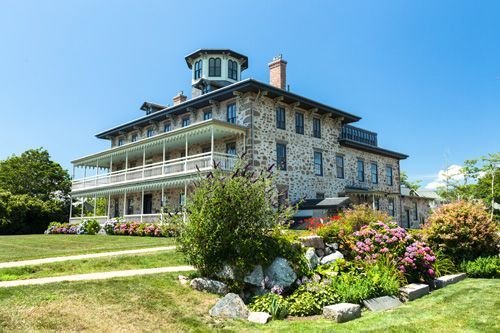
We're doing some historical research on the Stone House, an old inn. We'd appreciate any information from readers about their own weddings and/or wedding receptions held at the Stone House or such events involving their friends and/or relatives. Dates of the events would be most appreciated -- and pictures. We'd guess that there have been weddings and/or wedding receptions there going back to the late Twenties, when there was a speakeasy in this lovely structure, built in 1854 as a private home. The place has also long had its iconic "Tap Room'' -- a cozy bar and restaurant.
Please email information to:
rwhitcomb4@cox.net
PCFR season opener on Russia; watching Venezuela

The Kremlin.
The Providence Committee on Foreign Relations (thepcfr.org; pcfremail@gmail.com) is watching events in Venezuela, now being dragged into all-out dictatorship. Hit this link:
Much of New England’s heating oil has come from once-prosperous Venezuela, now facing economic collapse and political violence.
Meanwhile, with Russian intrusion into American politics and government such an issue, PCFR planners thought it would a good idea to recruit a Russia expert to start off its 2017-2018 season. Thus it has the distinguished Prof. David R. Stone of the U.S. Naval War College lined up for its Wednesday, Sept. 13 dinner.
He'll explain Putin and the new Russian nationalism and how it affects us.
Professor Stone received his B.A. in history and mathematics from Wabash College and his Ph.D in history from Yale University. He has taught at Hamilton College and at Kansas State University, where he served as director of the Institute for Military History. He has also been a fellow at the Center for Advanced Study in the Behavioral Sciences at Stanford University. His first book Hammer and Rifle: The Militarization of the Soviet Union, 1926-1933 (2000) won the Shulman Prize of the Association for Slavic, East European, and Eurasian Studies and the Best First Book Prize of the Historical Society. He has also published A Military History of Russia: From Ivan the Terrible to the War in Chechnya (2006), and The Russian Army in the Great War: The Eastern Front, 1914-1917 (2015). He also edited The Soviet Union at War, 1941-1945 (2010). He is the author of several dozen articles and book chapters on Russian / Soviet military history and foreign policy.
The rest of the PCFR fall season:
French Consul General Valery Freland will talk about how the French presidential-election outcome might change that nation’s foreign policy and the Western Alliance, on Wednesday, Sept. 27. By the way, he went to school with French President Macron.
Then on Wednesday, Oct. 11, Graham Allison, who has been running Harvard’s Belfer Institute, will talk about, among other things, Chinese expansionism in the South China Sea. He'll talk about his new book Destined for War: Can America and China Escape Thucydides's Trap?
On Wednesday, Nov. 1, comes Michael Soussan, the writer and skeptic about the United Nations. He’s the author of, among other things, Backstabbing for Beginners, about his experiences in Iraq, which is being made into a movie starring BenKingsley.

Not very straitlaced Boston

An ad for what came to be known as "The Old Howard,'' which from time to time featured risque acts, including strippers, and in whose neighborhood were numerous sin-laden establishments.
Two good books for the beach or any other place:
First, there’s the amusingly and quaintly illustrated Wicked Victorian Boston (published by History Press), by Robert Wilhelm, about, for example, such lovely late 19th Century activities as prostitution, drinking in illegal saloons, animal fighting, sports gambling, opium dens and daughters of Boston Brahmins posing nude for photos in “the Hub of the Universe’’. Of course it’s all seasoned with the fragrance of the hypocrisy that was/is as rife in Boston as in most cities. But then, as the old line has it: “Hypocrisy is the tribute that vice pays to virtue.’’
Forget about Puritan rectitude and that old line “banned in Boston.’’
The other book is a collection of Roger Angell’s essays called This Old Man: All in Pieces (Anchor Books). Mr. Angell, who is 96, is a long-time reporterand essayist for The New Yorker, where he was also for decades an editor. In this charming, often humorous and wise volume he looks at the challenges of old age, without self-pity; baseball, on which he’s a celebrated writer; life in New York, where he mostly lives, and in Maine (where he has a cottage) and many other things. He also writes about his famed stepfather, E.B. White, and Katherine White, who was White’s wife, Angell’s mother and a formidable editor at The New Yorker. The Whites spent much of the latter part of their lives living in Brooklin, Maine.
There are also letters Mr. Angell wrote to various exciting individuals, some famous, some not, as well as beautiful tributes to the dead, which of course comprise most of the people Roger Angell has known.
A funny line about Katherine White from Nancy Franklin, a critic, which Mr. Angell said was accurate: “As an editor she was maternal; as a mother she was editorial.’’
Fine dining on the course

Chokeberries
-- Photo by Michael Jeltsch
‘’From 1930 to 1931 I caddied at the Winchester (Mass.) Country Club…. I didn’t mind the work, or toting the bag, but I had no eyes for the ball. There were blueberries to look for. There were chokeberries – astringent but habit-forming – to pick and cram into the mouth. In season I pinched the flower sprout of chickory and went home with a pocketful to sweeten that night’s salad. Mushrooms popped up among the trees where my golfer’s ball remained forever lost. Later the milkweed pods swelled day by day, to pop fragrantly open and then drift off as lint. An eggshell under a tree was a command to look up till I saw the nest. A horse chestnut stumped out of its prickly pod was a topaz, a useless one, but polished bright. On weekends during school the apples lit.’’
-- From the late poet John Ciardi’s “Summer in Winchester,’’ an essay he wrote forArthur Griffin’s New England: The Four Seasons.
Our 'unruly parts'

Work by Rhode Island-based painter Kim Salinas Silva in show "Stop Me!,'' at Periphery Space gallery, Pawtucket, R.I,, through Aug. 12. She says her work is "profoundly influenced'' by the writings of Cart Jung, the Swiss psychologist and Freud rival. "His view that humankind cannot be healthy until we embrace our shadow, or the darker, more unruly parts of ourselves, has become crucial to my work.''
'Earth-secrets'

"A shaded lamp and a waving blind,
And the beat of a clock from a distant floor:
On this scene enter—winged, horned, and spined
— A longlegs, a moth, and a dumbledore;
While ‘mid my page there idly stands
A sleepy fly, that rubs its hands...
Thus meet we five, in this still place,
At this point of time, at this point in space.
— My guests besmear my new-penned line,
Or bang at the lamp and fall supine.
I muse. Yet why?
They know Earth-secrets that know not I.''
-- "An August Midnight,'' by Thomas Hardy
Don Pesci: Republicans are the party of liberty
Below is a key note address delivered to the Bethel (Conn.) Republican Town Committee during their lobsterfest.
When William F. Buckley Jr. – who lived in Connecticut nearly all his life, first in Sharon and later in Stamford – went to Ireland for the first time, he did what most Irish-Americans do on their first trip to the land of saints. He visited dusty old churches and examined dusty old records to uncover his family’s roots.
Then he went on a pub crawl.
It was the most curious thing, he told me. On whatever topic a conversation began in a pub, it somehow almost invariably turned into a discussion of religion. And this, he found, was true in pub one, two, three and so on. One of the people mentioned a famous atheist writer in Ireland. Buckley pretended to be shocked and said, “Do you mean to tell me there are ATHEISTS in Ireland? Hadn’t Saint Patrick driven them all out? “There are atheists in Ireland,” one of the people gathered around him said. “But you have to understand,” Mr. Buckley, “Here in Ireland, there are two kinds of atheists – Protestant atheists and Catholic atheists.”
I often think of that episode when, making my rounds, it is pointed out to me that there are no more nonpartisan, objective journalists in the land of Washington, Jefferson and Lincoln. And I’m tempted to reply, “There are nonpartisan, objective journalists around. But you have to understand, there are two kinds of nonpartisan, objective journalists – Democrats and Republicans. Most media people self-identify as independents, Joe Scarborough being the most recent convert to Independence -- but the claim of independent is for cover mostly; on matters of moment, most media folk in Connecticut drift towards the left corner of the political barricades.
Here in Connecticut, I once thought, Democrat nonpartisan objective journalists probably outnumbered Republican nonpartisan objective journalists by a ratio of two to one because Democrat voters in Connecticut outnumber Republican voters by the same ratio. Newspaper publishers are still interested in sales.
This turns out not to be true. A recent study in Washington showed that 90 percent of nonpartisan objective journalists regularly vote the Democrat Party ticket. The proportions likely are similar in Connecticut. A friend, extrapolating from editorials and op-ed pieces concerning Connecticut politics, ventured that the disproportion may be much greater than that. She reckons about 98 percent pro-Democrat to .03 Republican, the gap being made up of journalists professionally indifferent to politics, sports announcers, weather-persons and the like.
Laying aside the math, it sure doesn’t feel that Republicans here in Connecticut have a very strong journalistic wind at their backs.
Clobbered By Taxes
Proof of this is in the political pudding. Reasonable people can reason forward from premises to conclusions and backwards, inferentially from conclusions to premises. The General Assembly has been dominated by Democrats for about half a century, in round numbers. Presently, there are no Republican members of Connecticut’s all Democratic congressional delegation; in the past, the delegation was split evenly between the party of Lincoln and the party of Jefferson, Jackson and John Bailey, the late Democratic state chairman. Jackson, I may note parenthetically, was only recently booted from the state Democratic annual fund raising dinner.
Feeling the prick of conscience, Democrats last year renamed their annual dinner because Jackson owned slaves and was indifferent to the plight of those Native Americans he had herded on to reservations. Who knew? John C. Calhoun has been expelled from Yale, and Thomas Jefferson is still on parole.
Six years ago, with the election of Dannel Malloy, Democrats captured the gubernatorial office for the first time since it had been held by Gov. Bill O’Neill and, before him, by Gov. Ella Grasso, both ardent foes of an income tax. Malloy celebrated the Democrats' clean sweep by refusing to do any budget business with Republicans; that, of course, left Malloy, a progressive Democrat, the General Assembly, many members of which are progressive Democrats, and state unions, Connecticut’s fourth branch of government, in charge of the state’s purse strings.
The results we see before us. State taxpayers have been clobbered by the Malloy administration with the largest and the second largest tax increases in state history – following the imposition, and it wasa grievous imposition, of the Lowell P. Weicker Jr. income tax. A thimble full of real objective nonpartisan journalists are beginning to take note that the revenue increases have not led, as promised, to balanced budgets or a vibrant Connecticut economy. The exact opposite is true. Among states not bewitched by the extravagant and false pretentions of progressivism, Connecticut has become a laughing-stock. People are beginning to talk about the state’s prosperity in the past tense.
Reasoning backwards from results such as entrepreneurial flight, the exodus of young people and businesses from the state, recurring deficits, and the inability or unwillingness of a Democratic majority and a Democratic governor to produce and pass through the legislature a budget before the end of the fiscal year, surely reasonable people can conclude that the operative premises of the current Democrat progressive regime have not advanced the public good.
In the last few months, following the dramatic collapse of progressive pretensions, General Electric has shaken the dust of Connecticut from its feet and moved to Massachusetts; Mother Aetna has announced it is moving its headquarters from Connecticut to New York; three rating agencies -- S&P Global Ratings, Moody's and Fitch – have downgraded state bonds, which will increase the cost of borrowing; Connecticut’s biennial deficit is hovering around $5 billion; the state’s pension obligations are approaching, depending upon whose figures one is willing to accept, $68 billion. People gathered here will understand this is only a partial accounting of Connecticut’s dip into penury following a half century of Democratic hegemonic rule in the General Assembly. Time restraints prevent me from adding to the list.
The Republican leader in the state Senate, Len Fasano, said recently he had talked with GE executives before they left Connecticut and – this is a quote from Fasano -- “They said Connecticut continues to tax at rates that make it unaffordable for businesses and people to stay here and didn’t see what Connecticut might look like seven or eight years from now. That’s the same analysis I’ve heard from a number of businesses as to why they’re leaving. The progressive agenda this governor put forth is now coming home to roost.”
The Titans of Industry Packing Their Bags
Stanley Black and Decker, like Aetna born and bred in Connecticut, was celebrating its 175th anniversary in the state. U.S. Sen. Dick Blumenthal, who while state attorney general, was much in the habit of suing companies, turned up at Republican Mayor of New Britain Erin Stewart’s doorstep to bestow his congratulations. "This company,” Blumenthal enthused, “is a national treasure, but obviously a Connecticut icon," as was – please note the past tense – Mother Aetna, and Sikorsky, bought up in 2015 by Lockheed Martin, which is headquartered in Bethesda, Md. Florida job poacher Gov. Rick Scott had contacted Stanley Black and Decker, and his presence in the state had shivered the timbers of Democrats such as Blumenthal and U.S. Rep. Elizabeth Esty, both present at the anniversary celebration.
Senior Vice President and CFO of Stanley Black and Decker Donald Allan had not been seduced by Scott’s blandishments. "I think [Florida is] trying to do the right thing for their state” he said. “However, we want to make sure we do the right thing for the State of Connecticut. We have no plans to go anywhere." Business plans sometimes change in response to changing circumstances.
The dire situation in Connecticut was far from hopeless, Allan thought: “I think this situation can be solved, but I think government and businesses have to work together to do that." No doubt Blumenthal and Esty were gratified that Allan did not descend to particulars, which are, to put it in the kindest possible terms, distressing.
Let me take you back to June 30, the last day of the fiscal year, 22 daysremoved from June 7, the closing of the state legislature, the date when the state budget was supposed to have been finalized.
Here is a Hartford Courant headline on June 30, front page, top of the fold, heralded in super-sized font that even Lori Pelletier, Connecticut President of the AFL-CIO, could not fail to notice: “A Stinging Blow”. To the left of the story was a companion item in smaller caps, also top of the fold, front page: “Dems Push Tax Hikes,” sub-headed, “House proposes delaying vote until July 18.” The significance of that important date will be mentioned shortly in this analysis.
One may imagine Aetna CEO Mark Bertolini devouring these headlines with his poached egg and cappuccino, thinking to himself as he does so, “See, I was right to move Aetna’s headquarters to New York. We may have escaped the tax-hike rat-trap just in time.” As easily, one may imagine Pelletier, pounding her desk after an encouraging conversation with Massachusetts progressive fire-brand Sen. Elizabeth Warren, and letting loose the standard progressive war-whoop: “See, I was right all along about this cruel, uncaring, unchristian, greedy, fat-cat, overstuffed poltroon.”
Bertolini, who earlier brushed horns with Malloy, did not leave the state without pressing down upon the brow of labor a crown of thorns. An official Aetna statement warned, according to a Courant report, that its employee presence in Connecticut would be determined by the state’s economic growth – nada, so far – and what Bertolini called “fiscal stability.” Not much of that around during the Malloy administration. Hartford has been a Democratic Party hegemon since 1967.
“The company remains hopeful,” the official Aetna statement read, “that lawmakers will come to an agreement that puts Connecticut on a sound financial footing, and that the state will support needed reforms to make Hartford a vibrant city once again.” There’s a slogan Hartford Mayor Luke Bronin, once chief counsel to the Malloy administration, might consider adopting: "Make Hartford Great Again!''
The one-party Democratic city is now, and has been for years, teetering on the brink of bankruptcy. A judge -- provided he is not a nonpartisan Democratic judge -- might be able to impose on Hartford’s public union employees a regimen that may save Connecticut’s capital city from the union wrecking ball. It becomes increasingly obvious every day that union-bought speaker of the House, Joe Aresimowicz, is not in the reformation business. He much prefers the status quo: outsized union pensions, recurring deficits, fleeing businesses, and “fixed-cost” growth that crowds out possible future reforms made by future governors interested in making Connecticut great again.
Unions The Fourth Branch of Government
During the first week of July, the Connecticut Post noted in an editorial, “As of now, the next special session to vote on a budget is not scheduled until July 18. Not by coincidence, that happened to be the day before the State Employees Bargaining Agent Coalition (SEBAC) was scheduled to finish voting on contract concessions negotiated by Malloy.”
Indeed, this series of events is no coincidence. Generally in politics, things happen as they do because politicians who control events want them to happen in a certain way. Political business in the House of Representatives is controlled by the speaker, without whose assent business is not reported to the floor. Democrats did not bring a budget to the floor on June 7, when the legislature was due to close, because Democrats had no budget. Republicans, who did have a budget in hand that had been vetted and declared balanced by the state’s budget office, were not permitted to bring their budget to the floor for either an open discussion or a vote.
Aresimowicz, the budget gatekeeper in the General Assembly, wanted it that way. Both Republicans and Malloy then produced mini-budgets that were not voted upon, after which Malloy assumed plenary powers to keep the state on an even keel until union-employed Aresimowicz was prepared to open a discussion on the budget that should have been allowed on June 7; that was the date during which a Democrat budget acceptable to Aresimowicz’s caucus should have been presented to the General Assembly for discussion and a vote.
None of this occurred because Aresimowicz and Malloy, the nominal head of the Democratic Party in Connecticut, did not want any vote on any budget before July 18. Well then, what was so special about July 18?
Mark Pazniokas and Keith Phaneuf of CTMirror noted in a June 29 report: “Instead of a vote on a mini-budget, House Democratic leaders tried to refocus attention off the failings of the day and onto July 18, when they say they intend to vote on a two-year budget that would protect municipal aid and hospitals, but also would raise the sales tax from 6.35 percent to 6.99 percent.” Aresimowicz was quoted in the CTMirror report to this effect: “House Democrats, really happy to announce that we are putting forward a two-year budget to address the many fiscal situations we’re finding in our state.” And, according to the report, Aresimowicz pointedly noted, “He said the day House Democrats hope to vote is one day after state-employee unions are to complete their voting on whether to ratify a tentative concessions deal.”
In the General Assembly, things happen the way they do because Democrat leaders, as well as the state’s highly unpopular lame-duck Democratic governor, want them to happen as they do. Malloy, despite his denials, did not want the Republican alternative budget to be brought to the floor for debate, and the Republican budgets – there were more than one -- were smothered in their cribs, likely because Republicans had, since the beginning of Malloy’s first term, gained seats in both the House and Senate. The party split in the Senate is now 18 Democrats, 18 Republicans; and, in recent years, Republicans have drawn uncomfortably close to Democrats in the House as well. There the split is 79 Democrats, 72 Republicans – too close for Democratic comfort. Moreover, there is in the General Assembly a rump moderate Democrat faction that occasionally votes with Republicans against destructive progressive policies.
The quotable Otto Von Bismarck used to say “Only a fool learns from his own mistakes; a wise man learns from the mistakes of others.” Foolishly, progressive Democrats did not learn even from their own mistakes. And, purely for political reasons, they were determined not to rely on the wisdom of others.
Here is what the Republican Party learned from the mistakes of the Malloy administration: it is foolhardy to raise taxes in the midst of a recession. President John F. Kennedy, who wisely did learn from the mistakes of others, said as much in perhaps the most important economic declaration of his presidency, an address he gave to the economic Club of New York three months before he was assassinated.
Cutting tax rates – and consequently increasing revenue by spurring business activity – Kennedy’s plan produced the new revenue used after his death to launch President Lyndon Johnson’s Great Society programs, some of which, economists later realized, were not so great. Raising taxes, wise Connecticut Republicans know, saved General Assembly progressive Democratic leaders the necessity of making prudent, long-term, permanent cuts in spending. The adjectives here – “permanent, long-term” – are critical. Temporary fixes fix problems temporarily, after which they recur, like a bad penny or like repetitive deficits.
The Republican budget plan no progressive Democrat wished to bring to the floor for an up or down vote was balanced, held the line on taxes and, in the words of Republican minority leader in the House Themis Klarides , eliminated the deficit while “preserving core services, such as education, without hurting our towns and cities.’’ The Republican plan also increased school aid for every town and city; preserved municipal funding overall; forestalled the shift of $400 million in teacher pension payments to municipalities; had no tax or fee hikes at all, rejected the House Democratic sales tax hike; offered municipal mandate relief; limited state borrowing to $1.3 billion; eliminated the property tax on hospitals; implemented a defined contribution plan for new hires; increased pension and healthcare payments for all state workers; saved money by reducing overtime payments made to state employees; and enhanced fraud detection programs to make government more efficient.
What’s not to like, eh?
The answer to that question – if you are a progressive Democrat – is everything. Every point of the Republican rescue plan must be resisted, because the Republican program is an assault on the progressive status quo. Progressivism in Connecticut has a long beard. The new state Republican Party is a revolutionary instrument. The most efficient way to resist revolutionary change is to nip it in the bud; just make sure that no reform measures are brought to the floor for a vote in Connecticut’s greatest deliberative political body. A bill passed is a power, but a bill deferred, or not considered, is a pious wish. Because Democrats in the General Assembly control all the gate keeping functions, they are able to frustrate Republicans at every turn.
In a well ordered republic, there are no accidents. There are different kinds of orders in healthy republics; there is, for example a constitutional order. Nowhere in the state constitution are unions invested with political power; or, to put it in terms discussed here, we may say that unions ought not to be allowed to determine the budget narrative. Unions should be bit players, not the chief characters of the budget play.
Is that the way it happens in Connecticut? Not at all.
A constitutional sequence of budget events in Connecticut would go like this: 1) the governor produces a balanced budget; 2) the governor submits his budget to the General Assembly; 3) the legislature either accepts the budget as is, or modifies the budget; 4) if modified and accepted by both houses of the General Assembly, the budget is resubmitted to the governor for his approval signature, or not; 5) if the governor signs the budget, it becomes law.
In Connecticut, this constitutional process is interrupted by contractual negotiations between the governor and unions. And it is this interruption that has prolonged the budget process in Connecticut. But the union negotiations are not just an interruption of a constitutional process. The participation of unions in the making of a budget changes the process and the end results. In effect, this additional scene to the budget play materially affects its last act. Managing Editor of the {Manchester} Journal Inquirer Chris Powell has written that out-sized union influence is subversive of the democratic, small “d”, process.
Why so? Contractual disputes are not settled by legislatures – but by courts. The union-Malloy- Aresimowicz deal pushes contracts out until 2027, making necessary changes in those contracts impossible for future governors and legislators to effect. Connecticut is one of a handful of states in which the final budget product depends upon contractual negotiations between the chief executive and union heads. Wiser heads in other states adjust budgets through statute changes. Connecticut was unable to finalize a budget on June 7, the closing day of legislative year, because Democratic Speaker Aresimowitz, who is employed by a union, was waiting upon contractual negotiations between Malloy and SEBAC that did not conclude until July 18.
Having the contracts in hand, Malloy, who in the past has busied himself by marching in union strike-lines, and Aresimowitz are now able to present a fait accompli to Republican reformers -- who are very much interested in restoring to the legislature its constitutional budget making authority.
Bottoms Up: The Progressive Coup and the Resistance
Consider what will happen if the General Assembly, asserting its constitutional prerogatives, were to reclaim its budget making authority from a non-democratic, union-gubernatorial political combine that does not represent the broad public interest. Because of the delays and interruptions of the democratic budget process, Malloy now wields plenary power over an unapproved General Assembly budget. Suppose the General Assembly, asserting its constitutional responsibilities, were to reject the union-Malloy-Aresimowitz deal and toss the political ball back into the governor’s court?
What would happen? In a regular – not a special session -- this would happen: the union-Malloy-Aresimowitz-deal would become law after 30 days had elapsed – without a vote in the General Assembly. Statutorily, this can only happen in regular session – not during a special session, a saving grace Connecticut should be thankful for. The next regular session is in February. It seems there will be a recorded vote on the upcoming budget. And Connecticut can only pray that somehow, by hook or crook, Republicans will be able to b-pass the too clever by half status quo obstructionists and place their reform budget before the General Assembly for an honest up or down vote – because the Republican budget contains life-saving measures without which Connecticut will continue its downward fall. The bottom – very near us – always comes up fast.
The Democratic controlled General Assembly long ago surrendered its constitutional prerogatives to union enablers; and they cannot now justly complain that they have been over-mastered by a progressive cabal that, let off the leash, would yet again increase taxes upon the general working population and a few millionaire hedge fund managers, all of whom are considerably more mobile than Aetna and General Electric executives.
Republicans want to restore a constitutional republican (small “r”) order that has been overturned by undue attentions paid to special interests. The legislative body, the primary law making body of our “Constitution State,” should never be permitted to rent out its constitutional responsibilities and obligations to un-elected political factions – or, indeed, to the other branches of government, executive or judicial.
The Republican Party has now become the party of necessary reform; the Democratic Party is the party of the status quo – and everyone now agrees that the status quo is the road full of good intentions that leads, very quickly, to perdition. The Republican Party wants permanent solutions to problems that, if left unaddressed, will continue to erode Connecticut’s standing among other states. Democrats want to make their “temporary fixes” permanent; that is what they want their status quo budget to accomplish.
If any proof of this is necessary, it was furnished on July 24, when a motion to bring the Republican budget to the floor for a vote was narrowly defeated, one brave Democrat voting with Republicans. The SEBAC-Malloy-Aresimowicz also passed and now moves to the Senate, where it is hoped at least one Democrat may vote for the greater good. “A dead thing,” G. K. Chesterton reminds us, “can go with the stream, but only a living thing can go against it.”
Following the House vote, Republican leader Klarides accurately characterized the Democratic resistance to sound Republican measures: “The reason our budget has not been called for a vote is that the majority fears it will pass.” Rep. Gail Lavielle thought, not without reason, that the vote in favor of the so-called union “concession” agreement presaged further crippling taxes: “This is a catastrophe for Connecticut; 10 years of no changes in public sector union benefits; tax increases and service cuts for years, and everyone who voted for this will be responsible.”
Emerging from the Constitutional Convention, Ben Franklin was asked by a woman who accosted him on the street, “Well, sir, what have you given us?” His reply is our sacred trust – “A republic, madam – if you can keep it.”
Here in Connecticut, we have a republic to keep. Let us keep it in good order. Let us be steadfast and brave, for liberty can only be given away once. If we give it to our rulers, we are undone. If we give it to our children, they will bear in their hearts and spirit the stirring life affirming words of Samuel Adams, known during his own time as “The father of the American Revolution.”
Here is Adams's full throated challenge to patriots of his own day. Let them ring down the ages in our ears like a loud clanging liberty bell: “If ye love wealth better than liberty, the tranquility of servitude better than the animating contest of freedom, go home from us in peace. We ask not your counsels or arms. Crouch down and lick the hands which feed you. May your chains set lightly upon you, and may posterity forget that ye were our countrymen.”
Don Pesci is a Vernon, Conn.-based essayist.
Ennui time

"All projects failed, in the August afternoon
he lay & cursed himself and cursed his lot
like Housman's lad forsooth.
A breeze sometimes came by. His sunburn itcht.
His wife was out on errands. He sighed and scratcht
The little girls were fiddling with the telephone.''
-- From "Henry's Fate,'' by John Berryman
The '5:15 Club' at MIT
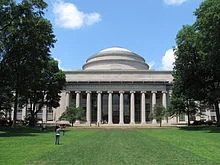
MIT's Building 10 and Great Dome overlooking Killian Court.
"Boy, I hated MIT. I worked my butt off for four long years. The only thing that saved my sanity was the 5:15 Club, named, I guess, for the guys who didn't live on campus and took the 5:15 train back home. Yeah, right 5:15, my tush. I never got home before midnight!''
--- Remarks by the late Tom Magliozzi, when he was co-host of Car Talk, on NPR.
How languages lose function

"Truth of Consequences'' (two channel video), by Furen Dai, in her show and artist residency, at Samson Projects, Boston, through November.
The gallery says: "Furen Dai spent years as a professional translator. Her history and interest in linguistic studies has guided her artistic practice since 2015 around the research and development of a nearly extinct language called NüShu. It is the world’s only known language created for and used solely by women. Through this language, the women of Hunan Province, China, managed to build their own secret society. Since her research trip to Jiang Yong, a small village where the language was still being spoken for the primary purpose of a museum attraction, Dai’s practice has focused largely on the economy of culture industry, and how languages lose function, usage, and history. Furen Dai’s hybrid art practice utilizes video, sound, sculpture, painting and collaboration.''
Look for an old parking lot

Adapted from Robert Whitcomb's "Digital Diary,'' in GoLocal24.com
The folks at ecoRI News are quite right to raise alarmsabout cutting down trees to make way for solar “farms’’. See: https://www.ecori.org/green-opinions/2017/7/24/more-rhode-island-forest-set-to-be-sacrificed-for-energy-production.
This is not a good way to expand renewable energy in an area that has lots of open space in vast empty parking lots around dead big-box stores and malls, landfills and brownfields, not to mention rooftops. By cutting down trees, we’re reducing the amount of oxygen that goes into our air, removing plants that help clean pollutants from the air and ravaging the complex ecosystem that depends on the trees.
This issue has come to the fore with the proposal by Southern Sky Renewable Energy LLC to clear-cut all the trees on 60 acres in the Ashaway section of Hopkinton, R.I., to make way for a 13.8-megawatt solar farm, with 43,000 panels. An estimated 30,000 trees would be cut down.
Increasing the use of non-carbon-based energy is essential and there are places where a lack of alternative sites justifies cutting down trees. But ina long-developed suburban/urban area such as Rhode Island, there are many places for solar arrays that canbe installed without damaging the rest of our ecosystem. And as Amazon and other forces continue to undermine malls and other retail centers, there will be many more.
Todd McLeish: The most habitat-destructive ocean trawling method

Via ecoRI News (ecori.org)
Commercial fishing gear that is dragged along the seafloor to capture species that live on, in or near the ocean bottom has long been criticized for damaging sensitive habitats and catching innumerable non-target species. It disturbs sediments, destroys corals, and removes many of the organisms that commercial species feed upon.
But a new study of the predominant bottom-trawling methods used in the North Atlantic found that some gear is more damaging than others.
Jeremy Collie, an oceanography professor at the University of Rhode Island and a member of the international team of scientists that conducted the study, said trawling is controversial because it can affect entire ecosystems.
“It’s a serious problem, but we’re finding that it’s a very localized problem,” he said. “The distribution of where bottom fishing takes place is patchy, and the habitat we care about is patchy. Where those two things intersect is where the problem is.”
The researchers examined 70 previous studies on the effects of bottom trawling to determine which methods were most harmful.
Otter trawling, which is used to catch cod, haddock, flounder and other fish near the bottom and is the most common fishing method in New England, uses two large metal doors to hold open the net as it drags along the seafloor. It was found to be the least harmful of the methods assessed. Otter trawls killed 6 percent of the marine organisms in the way each time the net passed, according to the study published July 17 in the Proceedings of the National Academy of Science.
The researchers also studied beam trawling, a method that uses a metal beam to hold open the net; towed dredges that drag a toothed metal bar along the seafloor, used in New England’s scallop fishery; and hydraulic dredges, which use a jet of water to loosen the seabed to capture surf clams and ocean quahogs living in the sediment.
Hydraulic dredges caused the most damage, killing 41 percent of animal and plant life on the seabed.
“The degree of damage caused by each gear type can be characterized by how far the gear penetrates the seafloor,” Collie said. “The further it penetrates, the more damage it causes.”
While some critics have argued that the most damaging gear should be banned, Collie said that approach could close entire fisheries, since each gear type is designed to harvest a targeted species.
“Rather than banning a particular type of gear, spatial management can be used to restrict them to particular areas or to prohibit their use in closed areas,” Collie said. “The information from our studies should help to inform spatial management.”
In addition to calculating the mortality caused by each bottom-trawling method, the study also estimated how long it would take for various habitats to recover from trawling.
The study found that sandy habitats that are typical of large areas of the continental shelf are likely to recover from trawling in just a few months, especially if they are only trawled once or twice annually. But habitats with gravel or cobblestones could take a decade or more to recover.
“And in areas that might have biogenic epifauna, like cold-water corals or glass sponges, recovery times could stretch from decades to centuries,” Collie said. “Those species grow slowly, or once you wipe them out, it’s harder for their larvae or juveniles to re-establish themselves.”
The recent study is part of the Trawling Best Practices Project, which is examining the impact of trawling worldwide and plans to publish trawling guidelines for the fishing industry that focus on preserving the marine ecosystem.
“From my perspective, we want to identify the vulnerable habitats and protect them, recognizing that they are a small fraction of the total area,” Collie said. “For the New England shelf, there are large areas that we don’t need to be concerned about and large areas of sandy sediment where trawling effects are not a concern. Small areas like gravel and complex habitats, and those that are fished by scallop gear, are the areas we need to focus in on.”
The next step in the project is to complete a global analysis of what Collie called “the footprint of fishing” that will identify the areas where trawling effort is greatest. The researchers will also examine the indirect effects of bottom trawling — how trawling affects the ability of certain habitats to produce fish. The project will conclude with the creation of a methodology that fishery agencies around the world can adopt to better manage their fisheries.
Todd McLeish, a freelance writer, runs a wildlife blog.