
Vox clamantis in deserto






Personal time capsules in ice

"Insight or Afterglow'' (polypropylene print on sintra), by Kathleen Gerdon Archer, in her show "Fare Well; The Art of Leaving,'' at Kingston Gallery, Boston, Aug. 30-Oct. 1.
The gallery says: "Remembrance and the fragility of life are at the core of Kathleen Gerdon Archer's most recent photographic series, Fare Well: The Art of Ending. Archer's work honors people she lost through painterly photographs of constructed ice forms. Of the symbolism in her lyrical images she says, 'We are all bits and pieces of the generations that came before us, condensed like the lines of minerals that we see in rocks left by glaciers on the New England shore.'
"Archer's photographs capture the quiet melting of ice sculptures she has created. The constructions are intimate time capsules for the person she is memorializing. Personal items from the homes of lost family and friends are placed in a vessel and frozen, layer by layer, scoring lines in the ice that mirror stratum of the earth. The first layer is rock and the second plant matter. The third is seed from plants and birds and the fourth layer is thick with torn family photographs. Subsequent layers are personal memorabilia... jewelry, birth and death announcements, report cards and more. As they melt, Archer photographs the exposed contents.''
'Revelry of indecision'

"They dip their wings in the sunset,
They dash against the air
As if to break themselves upon its stillness:
In every movement, too swift to count,
Is a revelry of indecision,
A furtive delight in trees they do not desire
And in grasses that shall not know their weight.
They hover and lean toward the meadow
With little edged cries;
And then,
As if frightened at the earth’s nearness,
They seek the high austerity of evening sky
And swirl into its depth.''
-- "Swallows,'' by Leonara Speyer
An unscientific ruling on flounder conservation

Fluke, aka summer flounder.
The Trump administration doesn’t have much respect for science, so it wasn’t all that surprising that it has rejected the science-based ruling of the Atlantic States Marine Fisheries Commission. The ruling was that New Jersey has been violating a conservation plan for summer flounder (aka fluke).
The effect of the administration’s (via the Commerce Department) order is to letGarden State fishermen harvest a lot more summer flounder. This is the first time that an administration has rejected fishing-control guidance by the commission. It seems probable that fishing of other stressed species will also be allowed to expand.
The commission is an interstate organization set up by Congress to help conserve fisheries. It has found that the fluke population is 42 percent below the sustainable level. In a variant of the “tragedy of the commons,’’ and an emphasis on maximizing short-term profit, the administration’s gutting of science-based fishing limits in the New Jersey case threatens to eviscerate fishing stocks in the not very long-term. The fluke population off New Jersey has fallen 25 percent since 2010.
The administration’s decision is a political one, to please the recreational and commercial fishing industry.
Alyssa Aquino: What happened to Trump's transportation plan?

Commuter rail in Westchester County, N.Y.
Via OtherWords.org
Every time the train derails, my mother begs me to stay put. But how can I?
Along the densely populated Eastern Seaboard, your life is structured around transport. Not everyone can live in New York City or Washington, D.C., so millions of people who work there commute in. The car traffic qualifies as its own hell, so many take the rail.
Joe Biden famously commuted on a train from his home in Delaware to D.C. most days as senator. These days, I less famously commute from Maryland to D.C. So when Donald Trump announced an ambitious $1.1 trillion infrastructure plan, I was actually excited.
You see, American infrastructure isn’t so great. We have the world’s biggest economy, but our transit systems rank behind 10 other countries, according to the Global Competitiveness Index. Our trains are tied with Malaysia’s.
For a commuter, these statistics aren’t surprising.
New York, a global financial capital, boasts an intensely convoluted transportation system, where the subway stalls and overcrowds and overheats amidst the press of 4.3 million daily commuters. The stations leak so badly you could say many have permanent waterfall features.
The D.C. metro? It catches on fire. No, really. It does.
The derailments along the lines connecting neighboring states to New York are an even deadlier inconvenience. In 2015, 237 people were killed from Amtrak rail incidents alone, according to the Infrastructure Report Card.
That’s nearly double the number — 136 — who died in airline crashes. And nearly 1,000 more were injured.
As someone whose livelihood is intimately tied to accessing a city, transportation is important to me. So I was a bit let down (if vastly unsurprised) when Trump’s campaign promise didn’t pan out.
First, the numbers kept changing. Was it $1 trillion? Or $500 billion? Or $200 billion, mostly in tax breaks for businesses?
Well, he figured out his math eventually — his budget proposal actually cuts $2.4 billion from the Department of Transportation.
The money needed to fix the Metro-North line? Gone. That’s a pretty callous way for Trump to treat his home state.
But it’s also cruel to Trump’s supporters in places like Ohio, Kentucky, and Indiana — rail-poor places sometimes jeered as “flyover country.”
Indeed, most of Trump’s proposed transportation cuts come out of railway systems that those states use, too. Trains through the Midwest already run late half the time, yet all 15 long-distance Amtrak lines get the axe in Trump’s budget.
Right now, 23 states are only serviced with long-distance trains, a figure that breaks neatly into 220 communities and 140 million people. That service is at risk — and so are thousands of jobs for the people who work the trains.
And who knows how many jobs might be lost by commuters? Already, delays along the Northeast lines cost the area $500 million a year when people can’t get to work.
Beyond the economic impacts are the long-term consequences that could arise from a less connected country. Historically, rail expansion didn’t just connect heartland areas to coastal cities — it allowed the agricultural industry to really take root, a fact of huge cultural as well as economic importance.
Protesters rallying from Denver to Cincinnati decided, no thank you, we want our trains. And Congress paid attention, kind of — it’s decided to keep the status quo for now. But that status quo was enough for Trump to decide that a $1.1 trillion transfusion was necessary to fix it. So where’s the plan?
Meanwhile, as I wait each day on D.C.’s often-late subway, I can’t help but think the people in “flyover country” are missing the same thing.
Alyssa Aquino is a Next Leader at the Institute for Policy Studies.
Back to New York

At a lobster eatery in Wiscasset, Maine, in high summer.
"Summer person: "Nice little town, so old and quaint. But I suppose you have a lot of oddballs, too.''
Native: "Oh, yes, quite a few. You see 'em around. But they're mostly gone after Labor Day.''
--Adapted from Inside New England, by Judson D. Hale Sr.
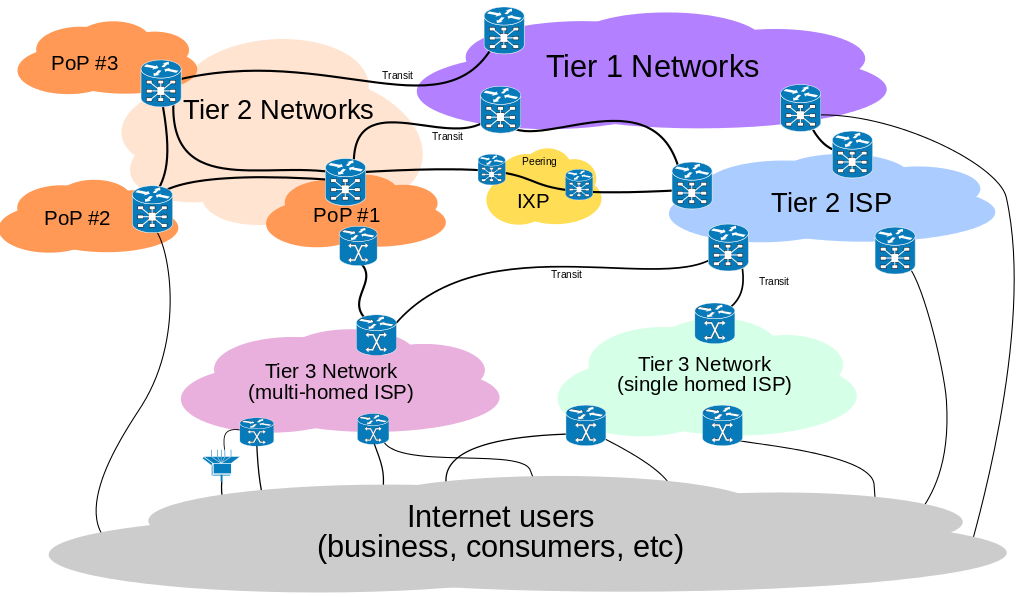
Razan Azzarkani: Don't let broadband companies control the Internet
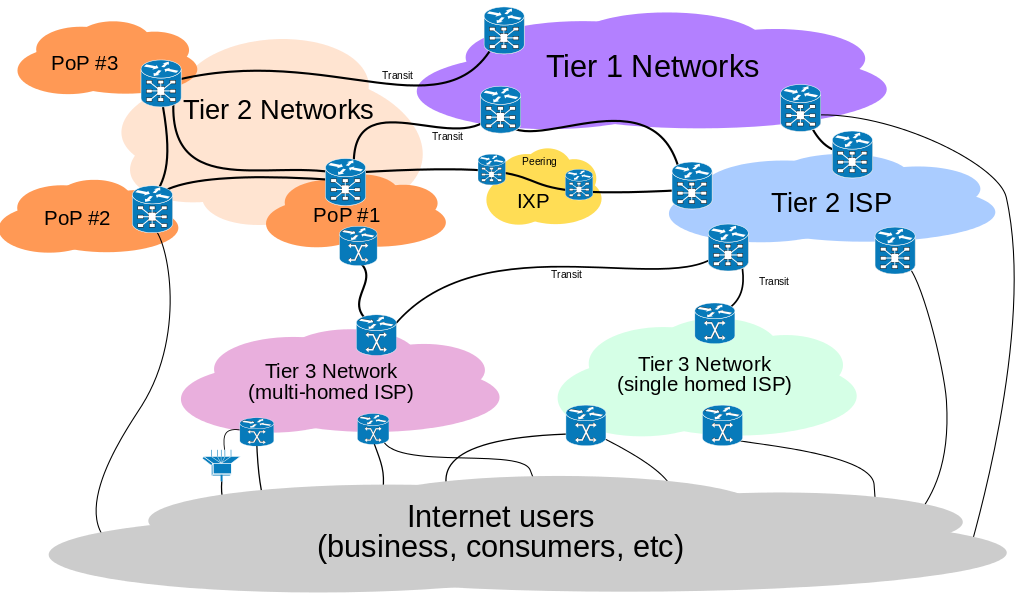
Credit: Ludovic.ferre
Via OtherWords.org
Think about the Web sites you visit. The movies you stream. The music you listen to online. The animal videos that are just too cute not to share.
Now think about the freedom to use the Internet however and whenever you choose being taken away from you. That’s exactly what Verizon, AT&T, Comcast, and other Internet Service Providers (ISPs), are trying to do.
Right now, those companies are constrained by a principle called net neutrality — the so-called “guiding principle of the Internet.” It’s the idea that people should be free to access all the content available online without ISPs dictating how, when, and where that content can be accessed.
In other words, net neutrality holds that the company you pay for Internet access can’t control what you do online.
In 2015, the Federal Communications Commission adopted strong net neutrality rules that banned ISPs from slowing down connection speeds to competing services — e.g., Comcast can’t slow down content or applications specific to Verizon because it wants you to switch to their services — or blocking Web sites in an effort to charge individuals or companies more for services they’re already paying for.
But now the open Internet as we know it is under threat again. Net neutrality rules are in danger of being overturned by Donald Trump’s FCC chairman, Ajit Pai ,and such broadband companies as Comcast, AT&T and Verizon.
But these corporations aren’t doing this alone. They’re getting help from at least eight handpicked members of Congress, all Republicans (Speaker Paul Ryan being the most notable), who’ve signed statements of support for overturning the neutrality rules.
Why? All we need to do is follow the money.
These eight lawmakers have all received significant campaign contributions from these corporations. That means the big broadband corporations and their special interest groups are attempting — and succeeding — to influence policymakers’ decisions on rules that affect us all.
The fun doesn’t stop there.
Ajit Pai — the FCC chairman bent on overturning net neutrality — is a former lawyer for Verizon, one of the very companies petitioning to have the rules changed. Lately Pai has been citing an academic paper arguing that the FCC “eschewed economics and embraced populism as [its] guiding principle” in making decisions on issues like net neutrality.
The catch? This paper wasn’t written by independent experts. It was funded and commissioned by CALinnovates, a telecommunications industry trade group. Their biggest member? None other than AT&T, which stands to benefit a lot if these rules are overturned.
This is just one example of “information laundering,” in which corporate-commissioned research is being used to further corporate agendas. It’s just another way corporations are using their money and influence to lobby members of Congress.
During a recent day of action, such major Web sites as Facebook, Twitter and Google stood up in defense of net neutrality by using pop-up ads, GIFs, and videos to inform the public of the issue and ask them to tell the FCC to “preserve the open Internet.”
You too can fight back against corporate influence by calling the FCC and telling them you won’t give up your right to use the Internet the way you want.
Razan Azzarkani is a Next Leader at the Institute for Policy Studies.
Ross Gittell: Commit to New England's 'employability' advantage
Via the New England Board of Higher Education (nebhe.org)
Higher education has provided New England with an economic advantage, as the region without strong natural resource advantages has relied on its higher education institutions (HEIs) and brainpower. A higher education-based economic advantage has enabled the region to develop strong well-paying technology and knowledge-based industries tied to New England’s academic research and development (R&D) capabilities, and to lead the nation in per-capita income (currently 30% above the national average) and unemployment consistently below the national rate.
Lumina Foundation’s report "A Stronger Nation'' suggests that about two-thirds of working-age adults in New England will require education beyond high school by 2025, while the region’s post-secondary-achool attainment is currently below one-half. This gap is affecting regional growth. New England lags behind other regions, and increasing numbers of national and regional employers look to other regions to grow employment.
New England would benefit if colleges and universities enabled more of an employabilitym advantage for the region. Broadly enhancing the employability of residents by expanding access to advanced education, particularly education aligned with areas in which there are long-term skill gaps can also lead to well-paying careers for greater numbers of people and help arrest rising income and geography-based inequality in the region.
Clusters
Many New England industry clusters built over the past century have strong ties to higher education. These include an array of technology- and education-based industries, where employment concentration is 40% above the national average. The high-technology clusters of note include aerospace, defense, biotech and information technology. An export sector that is increasingly R&D-based is healthcare, tied to biotech and pharmaceutical industries; healthcare’s concentration in the region is 25% above the national average.
While these clusters remain strong in New England, other nations and U.S. regions are gaining ground on New England. Since 2000, high-technology industry employment as a percentage of total employment has declined in New England from 7% to 6.6%, while holding constant in the U.S. Manufacturing employment concentration has had a particularly steep decline in New England, dropping from 13.4% and above the U.S. average concentration, to 8.3% of total employment and below the national average.
While high energy costs and other business factors may contribute to technology and knowledge-based industry decline, labor-skill shortages and demography are working against the economic vitality and competitiveness of the region now—and will increasingly do so if efforts are not made to close the gaps.
New England’s regional unemployment rate has been consistently below the U.S. average, as the region’s population and labor force have been growing at only about half the U.S. average since 2000. Along with this slow growth, the population is aging across New England, with the percentage of the population who are young adults (ages 25 to 44) going from over 31% (and above the U.S. average) to 25% (and below the U.S. average). Meanwhile, the share of the population age 65 and older went up from below 13%, to greater than 16%.
This highlights the need for New England HEIs to work together to help ensure that the demography does not work strongly against the regional economy. One way to accomplish this is by focusing education in the region more purposively and directly on employability needs and expanding access to advanced education aligned with economic opportunity.
T-shaped challenge
Employability needs are broad and deep. They are so called T-shaped, including wide breadth and, at the same time, specialized skills. This means strong liberal arts/humanities education is critical along with strong career and technical skills, as well as skills-based education and experience, including internships and work-based learning. And New England higher education is well-positioned to do this, especially if its broad range of excellent institutions–research universities, public flagships and regionals, liberal arts colleges, and community colleges–can work together and with industry to help students align their academic program choice and extracurricular activities with career planning.
New England higher ed could then provide intentional, and more seamless education/career pathways to New England employment. This would involve providing current and forecast information about occupations and career opportunities, integrated academic and career guidance and planning, robust articulation and transfer of credits from secondary to postsecondary education and within postsecondary (including from community colleges to leading R&D HEIs), and internships and work-study experiences that strongly connect New England college students to employment in New England.
Working against the region’s economic vitality, however, is the Two New Englands paradox. Strong economic conditions and industry and employment benefits from higher ed are concentrated within the region where higher ed R&D is concentrated, including Boston/Cambridge-128, Providence, Hanover/Lebanon and New Haven. R&D from Yale, Dartmouth, MIT, Harvard and Brown has contributed to economic growth globally, but not in rural parts of New England.
Most of the R&D-leading HEIs are concentrated in urban areas (with notable exceptions being Dartmouth College, in Hanover, N.H, and the UMass flagship in Amherst, Mass.), while most rural areas in the region are left without many of higher education’s economic advantages beyond the direct spending by the locally based institutions and their students.
The Two New Englands underscores a significant gap between urban and rural New England. Urban New England is well above the national average in per-capita income, educational attainment (% of adults with associate degrees or higher) and employment concentration in high tech, information and finance. Rural New England, however, is below the national average on all of these. This is true while the concentration of employment in all areas of education is equal in rural and urban New England—and significantly higher than the national average. So it is not for lack of educational institutions that rural areas lag behind urban areas.
New England would benefit if HEIs across the region focused more on employability of graduates for jobs in the region, and committed to a regionwide collaboration to address labor market skill gaps. This could help ensure that rural areas do not fall further behind. Employers that might not stay or be attracted to New England because of high costs could locate in the region’s rural areas if an appropriately skilled labor force were there, thus benefiting from New England’s higher ed and tech advantages while avoiding the high costs of urban areas. This could be particularly attractive for larger employers that are based in urban New England, but looking to expand employment nearby.
What can be done?
A first step has already been taken with NEBHE's organization of the New England Commission on Higher Education & Employability, chaired by Rhode Island Gov. Gina Raimondo. The commission comprises representatives from all sectors of higher education in all New England states, along with regional employers and public officials. The Commission's purpose is to inspire and enable a regional approach to employability that builds on the region's higher education advantage. Preliminary priorities that have emerged include:
Having HEIs in New England commit to collaboration on employability. They could, for example, share a goal to increase college attainment in the region (associate degrees or higher) from the current 46% to over 60% by 2025, and align education programs to regional employment opportunity.
Strengthening HEI “cross-sector” (Research, Regional, Private, Community College) collaboration, with a focus on student educational pathways to employment in the region. This could involve stronger articulation and transfer programs for students in the region between community colleges and public and private research universities in STEM and other high-demand program areas. This would target community college students most interested in advancing their education beyond the associate degree, particularly those concerned about costs and facing geographic restrictions during their first years of college.
Enhancement and promotion of sub-bachelor's degree options, including industry and occupation certificates and career and technical education, aligned with labor market needs and well-paying careers, and focused on areas with high skill gaps and high job availability.
Strengthening academic preparation and academic and career planning for students in K-12. This could include making available to students and their families “state of the art” labor market information and career-planning tools in New England’s secondary and postsecondary institutions. Partnerships with industry could be extended and advanced to include more work-based learning opportunities for students in the region, such as internships, co-ops and work-study programs. Best practices could be modeled in career preparation and academic program alignment.
Coordination of re-education and retraining efforts for adults in a region-wide collaboration focused on needs of employers in strong clusters that are pervasive in the region. This could include a region-wide effort to provide credit for prior learning experience. Innovative and coordinated practices could enable adults to retrain or be placed in well-paying employment across the region.
Focus on efforts that address income inequality based on economic opportunity gaps and underrepresentation of various groups in the region's competitive industries. Explicit equity objectives and practices could support advancement of underrepresented groups.
Rural HEIs should be included in regionwide efforts and have opportunity to partner with R&D focused HEIs. This could involve expanding innovative pedagogy using technology and varied course delivery (e.g., hybrids and virtual) to connect urban and rural institutions and advance higher education services in rural areas.
Link employability efforts to R&D advantages, for example, by leveraging of R&D to promote the locating of production/manufacturing rural areas.
And do all the above in ways that distinguish the region as a national and global leader in R&D … and E.
Ross Gittell is chancellor of the Community College System of New Hampshire, vice president and forecast manager of New England Economic Partnership, and a co-chair of NEBHE’s Commission on Higher Education & Employability.
Providence needs more of an infusion of Boston/Cambridge
Adapted from Robert Whitcomb's "Digital Diary,'' in GoLocal24.com
Best of luck to Social Enterprise Greenhouse, a Providence-based local-business accelerator.
The Providence region, between the huge dynamos of Boston and New York, has long lagged in business startups. But progress has been made in the past few years. While Rhode Island has only one well-known angel investment firm – Cherrystone Angel Group -- the state is increasingly on the radar in Boston, one of America’s venture-capital centers. Particularly attractive are the Ocean State’s lower costs, its natural and manmade beauty (well, not everywhere) and, in particular, colleges doingimportant research and innovation. The state-backed Slater Technology Fund, for its part, provides limited amounts of funding to tech startups.
Cambridge Innovation Center’s plan to expand into the new Wexford Science and Technology Center in downtown Providence may help a lot. Kudos to Governor Raimondo’s administration for helping to bring it in.
Obviously it also would help if Providence again became more of a big-company headquarters town again, to provide another source of money for local entrepreneurs.
Air force

"Flock, haze'' (acrylic on linen), by Dozier Bell, in a group show at Corey Daniels Gallery, Wells, Maine, Aug. 10-Sept. 9. The gallery says his "landscapes are created from memory, reliant upon an intrinsic awareness of patterns of light and dark, movement and color. Conjuring the unknowable forces that shape our lives and environment, Bell's work offers a masterful immersion within sky, land, water, bird and air.''
'Hot rank smells'

Daylilies on Block Island, R.I.
"No wind, no bird. The river flames like brass.
On either side, smitten as with a spell
Of silence, brood the fields. In the deep grass,
Edging the dusty roads, lie as they fell
Handfuls of shriveled leaves from tree and bush.
But ’long the orchard fence and at the gate,
Thrusting their saffron torches through the hush,
Wild lilies blaze, and bees hum soon and late.
Rust-colored the tall straggling briar, not one
Rose left. The spider sets its loom up there
Close to the roots, and spins out in the sun
A silken web from twig to twig. The air
Is full of hot rank scents. Upon the hill
Drifts the noon’s single cloud, white, glaring, still.''
-- "August,'' by Lizette Woodworth Reese
Black power

Painting by Jason Chase using what he says is the blackest black paint yet developed. His artwork with this paint will be on view at Laconia Gallery, South Boston, on Aug. 24, 7-10 p.m., and again on Sept. 6, 7-10 p,m., in the Artisan's Asylum, Somerville, Mass.
3-year floodplain-restoration project to start soon along the Connecticut River in Mass.

"View of Springfield {just south of Springfield}, on the Connecticut River,'' by Alvan Fisher.
Via ecoRI News (ecori.org)
LONGMEADOW, Mass.
Large-scale restoration of natural floodplain features and native plants will begin soon on land along the Connecticut River, including 223 acres recently transferred to The Nature Conservancy (TNC) by the trustees of the former Fannie Stebbins Memorial Wildlife Refuge.
Easily visible from Interstate 91 in the suburbs of Springfield, the land is part of one of the most sizeable natural and largely protected floodplain areas in the Connecticut River watershed. In addition to the land-based restoration efforts, work also will take place on part of the adjoining Silvio O. Conte National Fish & Wildlife Refuge and town of Longmeadow lands.
Floodplains are natural water‐storage areas for snowmelt, spring rains and, increasingly, severe storms that cause the Connecticut River and its tributaries to overflow. These areas also act as natural filters, trapping sediment, nutrients and pollutants before they reach rivers and coastal seas, thereby improving water quality.
“Floodplains once covered wide stretches along the Connecticut River and its tributaries, but today, they’re only a fraction of this important ecosystem,” said Kim Lutz, director of TNC’s Connecticut River Program. “The Fannie Stebbins land presents a remarkable opportunity to protect and restore a portion of that habitat.”
TNC and U.S. Fish & Wildlife Service are leading the three-year restoration project, which will include reduction of forest fragmentation by returning seven old fields to floodplain forest; control of invasive plants; and restoration of natural hydrological features.
Work on the 223-acre TNC section is being completed with funding from the Agricultural Conservation Easement Program administered by the U.S. Department of Agriculture’s Natural Resources Conservation Service (NRCS).
This spring, the NRCS purchased a permanent wetlands reserve easement on this section — the first such easement in Massachusetts on the mainstem of the Connecticut River.
“The benefits of restoring, enhancing and protecting critical wetlands cannot be overstated,” said Christine Clarke, Massachusetts State Conservationist for NRCS.
After the easement purchase, fee ownership of the land, plus another 21 acres, was donated to TNC.
This land was previously part of the Fannie Stebbins Memorial Wildlife Refuge owned and managed by a board of trustees elected by the Allen Bird Club, whose members had the foresight to acquire the land in multiple, separate parcels beginning more than 60 years ago.
The refuge was named for Fannie Stebbins, a nationally recognized biologist and educator who was head of Science and Nature Studies in the Springfield School System in the 1930s and ’40s. In 1972, the National Park Service designated the Stebbins Refuge a National Environmental Education Landmark. Massachusetts Audubon has recognized it as an “Important Bird Area,” as hospitable lodging for migrating birds.
In keeping with the Stebbins trustees’ wishes, the land is planned to eventually become part of the Conte Refuge, after the three-year restoration project.
During the three-year restoration project, activities will include mowing, herbiciding and plowing the fields to prepare for tree planting; targeted use of herbicide in forested areas to control invasive plants; and the use of heavy equipment to remove a berm. Temporary closures over portions of the area will occur for public safety when work is underway.

Jim Hightower: In secret, plutocrats keep trying to subvert U.S. democracy

The Broadmoor Hotel and Resort, in Colorado Springs, a favorite meeting place for the very rich.
Via OtherWords.org
Charles and David Koch — the billionaire oil men (who inherited their huge diversified company from their father) who’ve financed a vast network of right-wing advocacy groups — have stayed out of the national limelight recently. But they’re still trying to supplant American democracy with their laissez-fairyland plutocracy.
In fact, in late June, they held a meeting of the Koch Boys Billionaires Club, gathering about 400 other uber-wealthy rascals to plot some political high jinks for next year’s elections.
The club meets every year at some luxury hideaway, and its attendees have to pay $100,000 each just to get in. But participants are also expected to give generously to the brothers’ goal of spending $400 million to buy a slew of congress critters, governors, and others in 2018.
This year, the group gathered in Colorado Springs at the ultra-lux Broadmoor Hotel and Resort, owned by the brothers’ billionaire pal and right-wing co-conspirator, Phillip Anschutz.
Among the recent political triumphs that these elites celebrated in the Broadmoor’s posh ballroom was the defeat this year of a Colorado tax hike to fix the state’s crumbling roads.
After all, who needs adequate roads, when you can arrive in private jets?
This attitude of the Kochs’ privileged cohorts explains why the public is shut out of these candid sessions. A staffer for the Koch confab hailed such no-tax, no-roads policies as a “renaissance of freedom.” For the privileged, that is — the freedom to prosper at the expense of everyone else.
Indeed, their agenda includes killing such working class needs as the minimum wage and Social Security, and privatizing everything from health care to public education. This self-absorbed cabal of spoiled plutocratic brats intends to abandon our nation’s core democratic principle of “We’re all in this together.”
If they kill that uniting concept, they kill America itself.
Jim Hightower is a radio commentator, writer, and public speaker. He’s also the editor of the populist newsletter, The Hightower Lowdown.
David Warsh; McCain and looking for the road back to 'regular order'
I wasn’t surprised in the least when Sen. John McCain (R-Ariz.) flew back to Washington last week to put a stake through the heart of the Republican Party’s effort to kill the Affordable Care Act. That’s because I remember the last time that McCain interrupted himself to fly back to town.
He was running for president then, against Illinois Sen. Barack Obama, in 2008. The financial crisis had come to a head after a year of growing apprehension. Lehman Brothers had failed on Monday, Sept. 15. Panic was taking hold in global credit markets for the first time since 1933.
Acute problems had spread beyond the banks. By Tuesday, Sept. 16, 2008, insurance giant American International Group was on the verge of failure, thanks to the effect of plummeting share prices on its derivative and stock-lending businesses. Treasury Secretary Henry Paulson Jr., had begun calling both candidates daily to brief them, hoping to keep them from saying something that might upset the markets.
On the stump Sept. 16, McCain said, “We cannot have the taxpayers bail out AIG or anybody else.” Paulson phoned immediately to talk him back from that position. The next day McCain reversed himself, foreshadowing the days ahead.
Two days later, Paulson and Federal Reserve Chairman Ben Bernanke persuaded President George W. Bush and leaders of both parties, meeting in the office of Speaker of the House Nancy Pelosi, to accept the hastily drafted Troubled Assets Relief Program (TSRP) bill. And on Friday, Sept. 19, Friday, Bush stood in the White House Rose Garden, along with Bernanke, Paulson and SEC chairman Christopher Cox, to ask Congress to approve a hazy $700 billion bailout plan. By the following Tuesday, it was clear that the measure lacked the necessary Republican votes to pass in the House.
With the first presidential debate scheduled for the following Friday, McCain announced that he was suspending his campaign in order to fly back to Washington. He asked for a meeting with President Bush and Obama. Paulson later wrote that he was “dumbfounded” that the president had agreed to such a conclave. (I am relying here on Paulson’s memoir, On the Brink: Inside the Race to Stop the Collapse of the Global Financial System.) Bush explained that he felt he had little choice.
The meeting was held; Obama and his chief economic adviser Lawrence Summers danced rings around the Republicans: McCain spoke only when called upon at the end, and the meeting dissolved in chaos at its end. In their televised debate that Friday, Obama and McCain condemned Wall Street, but neither mentioned the bailout. Mostly they argued about Afghanistan and Iraq. Obama decisively won the debate.
The following Monday the TARP bill was defeated in the House. When it finally passed three days later, as the banking system continued to threaten to collapse, McCain got little credit for his dramatic gesture. Paulson wrote:
"His return to Washington was impulsive and risky, and I don’t think he had a plan in mind. If anything, his gambit only came back to hurt him, as he was pilloried in the press afterward, and in the end I don’t believe his maneuver significantly influenced the TARP legislative process.
"A number of people I respect on the Hill have a different view. They believe McCain ended up being helpful by focusing public attention on TARP and galvanizing Congress to action. And John did later try to find ways for House Republicans to support legislation. But Democrats absolutely did not want him to get any credit. They wanted the economic issue as their own.''
Looking back, McCain was a central player in one of the great dramas of the 21st Century. The leaders of both parties in Congress, a reluctant administration, central bankers around the world, and both U.S. presidential candidates in an election year – they all agreed on measures that, after many adjustments behind the scenes, prevented a second Great Depression.
Granted, it had been ugly. Every actor displayed a wart or two. “There was no hiding McCain’s rudderlessness over the [first few] days, as he lurched from blunder to blunder,” was how John Heilemann and Mark Halperin described his introduction to the crisis in Game Change. Sen. Lindsey Graham (R.-S.C.) repeatedly helped his good friend McCain maintain his bearings. But strip away all the self-interested accounts of the matter by technocrats, and what’s left is a distinct harbinger of McCain’s dramatic action last week.
In a speech two days before his fateful vote last week, McCain took stock of the battles of the last eight years.
"Our deliberations today are more partisan, more tribal more of the time than any other time I remember…. Both sides have let this happen. Let’s leave the history of who shot first to the historians. I suspect they’ll find we all conspired in our decline – either by deliberate actions or neglect…
"The Obama administration and congressional Democrats shouldn’t have forced through Congress without any opposition support a social and economic change as massive as Obamacare. And we shouldn’t do the same with ours.''
Since I clearly remembered the White House event, in March 2009, with which Obama opened his campaign to reorganize healthcare-insurance markets, I couldn’t resist a taking a little peek back at the history of what happened next. Obama’s proposal’s was patterned on Massachusetts’'s 2006 adoption of “Romney Care,” itself based on a Republican proposal for an individual mandate advanced ten years before, in opposition to Hillary Clinton’s more ambitious plans. Obama invited 150 participants to a conference, drawn from all corners of the debate, including Congressional Republican leaders.
In “The Party of No,” a chapter in The New New Deal:The Hidden Story of Change in the Obama Era, author Michael Grunwald describes the evolution of the Republican leadership’s thinking the wake of Democratic victories – not just the White House, but control of both houses of Congress. Eric Cantor (R.-Va.) was the minority whip then, transparently coveting minority leader John Boehner’s job. Cantor’s deputy, Kevin McCarthy (R.-Calif.), and Paul Ryan (R.-Wis.) were said to be the GOP’s “young guns.” Rep. Mike Pence (R.-Ind. chaired an initial conference of the party’s leadership in Annapolis. Grunwald wrote:
"The new leaders who gathered in Annapolis had a new mantra. Our mistake was abandoning our principles, not following our principles. They saw John McCain as a typical Republican In Name Only (RINO) who had sought electoral salvation in ideological equivocation – and look what happened to him. They even revised their opinions of George W. Bush, who in retrospect seemed less a conservative hero, more a big-spending apostate.''
“Most important, Republicans need to stick together as a team,” exhorted Senate Minority Leader Mitch McConnell. And so they did. The Tea Party election came next, in 2010. Republicans took back the House. Obama was re-elected in 2012. In 2014, Republicans took back the Senate. And by 2016, the strategy of full-throated opposition seemed to have worked. Republicans won the White House.
At least in the matter of healthcare legislation, the Republicans clearly fired the first shot, opposing a program of their own invention just because the opposition party had embraced it. Let McCain’s exaggeration on this count pass. In the offer of olive branches, no more than in lapidary inscriptions, is a man upon his oath. The path back to the state of mind Senate rules describe as “normal order” is much as McCain described it:
Incremental progress, compromises that each side criticize but also accept, just plain muddling through to chip away at problems and keep our enemies from doing their worst isn’t glamorous or exciting. It doesn’t feel like a political triumph. But it’s usually the most we can expect from our system of government, operating in a country as diverse and quarrelsome and free as ours.
In “The Sanctimony and Sin of G.O.P, ‘Moderates','' New York Times columnist Paul Krugman, writing last week before McCain’s vote last Thursday against his party, invited readers “to consider the awfulness of Senator John McCain.” Indeed, Krugman condemned all politicians “who pretend to be open-minded, decry partisanship, tut-tut about incivility and act as enablers for the extremists again and again.” Krugman wrote:
"I started with McCain because so many journalists still fall for his pose as an independent-minded maverick, ignoring the reality that he’s a reliable yes-man whenever it matters.''
Krugman has got it exactly backwards. On the two occasions of the last 10 years when it has mattered most, McCain stood in the center, with the majority consensus, against his party’s leaders (and, often enough, in matters of lesser issues as well, especially immigration and campaign finance). Krugman, himself an unbridled partisan, should stop insisting that there are no Republican moderates. The road back to “regular order” begins with giving credit where credit is due.
David Warsh, a longtime business and political columnist and an economic historian, is proprietor of economicprincipals.com.
Stuff we make here

S CH-54 Tarhe helicopter, made by Connecticut-based Sirkorsky.
The other week, President Trump met with people from a curious mix of companies in part of his Made in America campaign (which doesn’t apply to Trump Organization branded products). The New England companies included, according to Fox News:
Connecticut: Sikorsky
“Aircraft manufacturer Sikorsky, a division of Lockheed Martin, is known for its production of the Black Hawk helicopter. Sikorsky claims to have built ‘the world’s first practical flight helicopter,’ in 1939.’’
Maine: Hinckley Yachts
“What began as a company that built boats for local fisherman in Maine, Hinckley is now a world-renowned builder of premium jetboats between 29 to 79 feet long.’’
Massachusetts: St. Pierre Manufacturing
“St. Pierre Manufacturing makes horseshoes and tire chains. It was founded in 1920, inspired by Henry St. Pierre whose car got stuck in the mud when he was driving to a nearby village.’’
New Hampshire: Cider Belly Doughnuts
“Located on Moulton Farm, …this company is praised for its fresh, homemade cider doughnuts.’’.
Rhode Island: Narragansett Brewing Company
“The Narragansett Brewing Company is the fifth largest lager beer brewery in New England. The company was founded in 1888 by six local businessmen and produced it first beer in 1890.’’
Vermont: Dubie Family Maple
“Located in the heart of Vermont’s Maple Country, this family-owned-and-operated company has been producing Pure Vermont Maple Syrup for 14 years.’’
More nuanced look at the Nutmeg State
"In short, the steady habits of a great portion of the inhabitants of {Connecticut}...seem to be laziness, low bickerings, and whoring''
-- Alexander Wilson, in 1808
Connecticut for many years called itself "The Land of Steady Habits''
August's 'fading green glory'

"Whilst August yet wears her golden crown,
Ripening fields lush - bright with promise;
Summer waxes long, then wanes, quietly passing
Her fading green glory on to riotous Autumn."
-- Michelle L. Thieme, "August's Crown''
2 heads better than one?
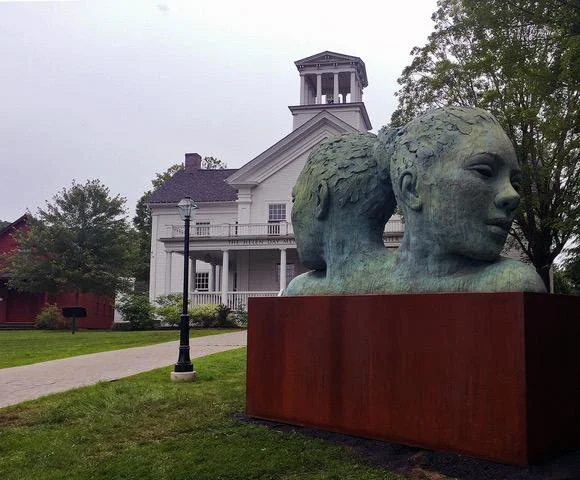
"Morpheous' (bronze), by Lionel Smith, in the group show "Exposed,'' at the Helen Day Art Center, Stowe, Vt., through Oct. 21.
The gallery says: "Lionel Smit is known for large-scale portraiture both on canvas and as sculpture; he is one of South Africa's preeminent contemporary artists. His process as an artist today remains adaptive, inventive and physically engaging. Mr. Smit's sculpture 'Morpheus' conveys a strong sense of duality with the two bronze heads connected in perfect symmetry. ''
James P. Freeman: Department stores in fast descent as Amazon takes their business and destroys jobs
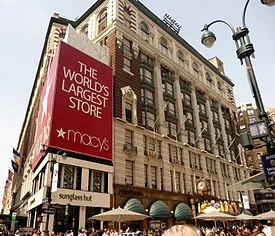
Macy's flagship store in Manhattan.
“Macy’s of today is like in soul and spirit to
Macy’s of yesterday; Macy’s of tomorrow…”
— Edward Hungerford, The Romance of a Great Store (1922)
If today is yesterday’s tomorrow, the Macy’s of 2017 would be unrecognizable to its founder, Rowland Hussey Macy. Except, perhaps, for the ubiquitous red star, the company’s logo, which was inked onto his forearm as a young sailor, while working on the whaling ship Emily Morgan, based out of New Bedford, Mass.. The star was inspired by the North Star, which, according to legend, guided him to port and an optimistic future. Today, the company — and, by extension, the traditional retailing industry — rocked by an exceptional gale, looks to the heavens for safe harbor and secure future. The turbulence, however, is a healthy sign of the creative destruction of capitalism. Accordingly, let traditional retail perish.
Last April, a New York Times expose, “Is American Retail at a Historic Tipping Point?,” revealed that 89,000 Americans have been laid off in general-merchandise stores since October 2016. “That is more than all of the people employed in the United States coal industry, which President Trump championed during the campaign as a prime example of the workers who have been left behind in the economic recovery.”
About one out of every 10 Americans works in retail. That’s nearly 16 million people (both online and in stores), confirms the federal Bureau of Labor Statistics. Unsurprisingly, only 5 percent are represented by unions.
More than 300 retailers have filed for bankruptcy just in 2017. Among them: Gymboree (operating 1,300 stores), rue21 (1,200 stores), Payless ShoeSource (4,400 stores), The Limited (250 stores), and a century-old regional department store company, Gordmans Stores (106 stores, in 22 states). In the past year, Macy’s has announced it would close 100 stores (identifying 68 locations, eliminating 10,000 jobs). J.C. Penney will close 138 stores. Sears (which also owns Kmart) is shuttering 150 stores and said last March that the company has “substantial doubt” about its survival after 13 decades in business. Since 2010, Sears has lost $10.4 billion and has closed several hundred stores.
A report released this spring by Credit Suisse, the financial-services firm, estimates that 8,640 retail stores will close by year’s end and, more staggering, approximately one quarter of the nation’s 1,100 malls will close in the next five years.
“Modern-day retail is becoming unrecognizable from the glory era of the department store in the years after World War II,” notes the Times. “In that period, newly built highways shuttling people to and from the suburbs eventually gave rise to shopping malls — big, convenient, climate-controlled monuments to consumerism with lots of parking.” The glitz and glamour of shopping reminiscent of the Mad Men period is over. Instead, a wrenching, permanent restructuring is likely under way. As it should be.
What happened?
Shifting consumer shopping habits driven by, and probably, a result of, e-commerce. Stated simply: “market forces.” A concept understood by ordinary people. Alarmingly, though, highly compensated retail executives were slow in identifying these new dynamics. For which many big retailers are now desperately, but not adequately, adapting to these changes. They are failing.
Devoid of any romance, today’s retail is a hard scrabble of Sisyphean drudgery. Product comes in. Product goes out. Product comes back in … Repeat. Generic and dingy department stores are full of tired-looking mannequins and haggard-looking, underpaid sales associates pushing promotions and credit cards. But many stores are empty of customers.
America is called “overstored” — having too much retail space, which now totals about 7.3 square feet per capita. On a comparative basis, that is well above the 1.7 square feet per-capita in Japan and France, and the 1.3 square feet in the United Kingdom. Jonathan Berr of Moneywatch says: “Overstoring can be traced back to the 1990s when the likes of Walmart, Kohls, Gap, and Target were expanding rapidly and opening new divisions.” And then the Internet happened.
The late 1990s and early 2000s saw the evolution of a new business model. Those who embraced a so-called “brick and click” model (combining brick-and-mortar operations with online presence) were certain to survive, and those who executed it well would likely thrive for the foreseeable future. Many retailers were late to the party. When they did arrive, they never harmonized their physical space and cyberspace. Consequently, traditional retailers never kept pace with the value created by the likes of Amazon. The new disruptors perfected the model and, more importantly, created a better customer experience.
Between 2010 and 2014, e-commerce grew by an average of $30 billion annually. Now, e-commerce represents 8.5 percent of all retail sales, (trending straight upward since 2000) disproportionately affecting the big-box retailers that are anchor tenants in malls that, in turn, draw foot traffic from which other mall retailers ultimately benefit. ShopperTrak estimates that retail store foot traffic has plunged 57 percent between 2010 and 2015. And more stunning, Amazon is expected to surpass Macy’s this year to become the biggest apparel seller in the United States.
Macy’s, self-described as “America’s Department Store” — a brand celebrating ubiquity over uniqueness — is symbolic and symptomatic of retail’s quandary.
With its corporate sibling, Bloomingdale’s, the company is a constellation of complexities. Far from its meager beginnings as a single dry goods store in Haverhill, Mass. when it opened in 1851, it is now a cobbled-together conglomerate operating 700 stores in 45 states, employing 140,000 (of which 10 percent are unionized). Because of so many mergers and acquisitions, there is no unifying culture. It has 50 million proprietary charge accounts on record (nearly one in six Americans).
Macy's flagship store in Herald Square in Manhattan attracts 23 million visitors annually. Known as an “omnichannel retailer” (myriad ways of consumer engagement; i.e., store, Internet, mobile device), with sales over $25.7 billion, Macy’s is still profitable (earning $619 million last year). But it is in trouble.
In July 2015, Macy’s market capitalization (total value of its publicly traded shares) was more than $22 billion. It has plummeted to about $7 billion today. Constantly tweaking marketing and merchandising, the company nevertheless reported that net sales declined for the ninth straight quarter, in May. Saddled with $6.725 billion in debt and with fewer customers, over half its earnings are derived from its credit-card business. (Just three years ago, credit cards accounted for a quarter of its earnings.) Lead times for its lifeblood, the supply chain, are long and slow. Real estate holdings (estimated to be worth between $15 billion and $20 billion) are substantially more valuable than its business operations. Double-digit growth in online business is cannibalizing negative growth in store business.
Macy’s is ever-reliant upon the next generation of shoppers, but Millennials may not be that reliable; they defy consumption patterns that previous generations followed for years (less materialistic and more loyal to experiences than to physical brands). And Amazon’s new Prime Wardrobe might prove to be a death star, obliterating many red ones. Gloomy and overwhelmed, Macy’s reflects the industry at large.
This past January, Amazon announced it would create 100,000 jobs over the course of 18 months. Yet it is foolish to think that Amazon — which is much more efficient than traditional retailers — will absorb all the displaced workers.
As Rex Nutting, writing for MarketWatch, warns, what Amazon “won’t tell us is that every job created at Amazon destroys one or two or three others.” And what Amazon chief executive Jeff Bezos “doesn’t want you to know is that Amazon is going to destroy more American jobs than China ever did.”
Even if the American consumer is the beneficiary of these disruptive but necessary market forces, sooner or later this economic issue will become a political issue.
Conservative commentator George Will raises a good question: “Why should manufacturing jobs lost to foreign competition be privileged by protectionist policies in ways that jobs lost to domestic competition are not?”
President Trump should, but probably won’t, answer a question that would help clarify the puzzling public policy he is now crafting (see his “major border tax” proposals). As the president will surely learn, economics — like health care — is complicated fare. And like most things involving Trump, it is personal.
During last year’s presidential campaign, Trump said Amazon has “a huge antitrust problem.” (An analysis found that 43 percent of all online retail sales in the United States went through Amazon in 2016.) Notably, Bezos owns The Washington Post, largely critical of the president. In late 2015, Trump called for a boycott of Macy’s after the company stopped selling Trump merchandise and severed ties with the presidential candidate because of comments he made about Mexicans earlier that year.
Then there is his daughter, Ivanka Trump. Despite her father’s call last January that “We will follow two simple rules — buy American and hire American,” she still owns an apparel company with much of its product line foreign-made. And with gilded irony, some is still sold at Macy’s.
With or without first family entanglements, markets will dictate those retailers it deems omnipresent and obsolescent.
James P. Freeman is a New England-based writer and former columnist with The Cape Cod Times. He formerly worked in financial services.
New England Council's tax-reform principles
This from The New England Council:
"As our leaders in Congress consider reforms to our nation’s outdated and complicated tax code, The New England Council today released its “Principles for Effective Tax Reform,” a set of broad recommendations for how best to update and improve the federal tax code. The principles were developed based on input and feedback from a variety of NEC members representing a broad range of industries throughout the region.''
Hit this link to read the NEC's principles for effective tax reform.
“We believe that these principles represent the common concerns and recommendations of the region’s business community, and hope that they are helpful to leaders in Washington as tax reform proposals continue to take shape in the coming weeks and months,” NEC President & CEO Jim Brett said in releasing the principles.
''In the principles, the Council encourages a comprehensive approach to tax reform that addresses both business and individual tax provisions at the same time. The Council also recommends that the tax code be simplified to minimize the burden on businesses, and that all provisions be permanent to provide certainty to businesses. Finally, the Council urges Congress to preserve and enhance incentives for Americans to save and invest in their futures, and to enact tax reform that will continue to encourage the innovation and investment that is so key to continued growth in New England. The New England Council has shared these principles with members of the New England Congressional delegation, other key Congressional leaders, and with the Trump Administration.''
"If you have any questions, please contact Chris Averill at caverill@newenglandcouncil.com or (202) 547-0048.''