
Vox clamantis in deserto





Don Pesci: Of a great Connecticut Republican, Plymouth and John Brown

Doug Hageman died on July 28, within spitting distance of his birthday, and those who knew him needn’t wonder how he managed that. He was an honest and good man and, as a thoughtful and active Republican in the land of Democrats, something of a wonder.
Encountering Doug for the first time – as I did many years ago, at a networking meeting held in the rooms of Associated Builders of Connecticut (ABC) in Rocky Hill – was a bit like catching a glimpse of a unicorn in a dark glade. First you saw the white flashing flanks, then the flowing mane, and then, shockingly, the improbable white horn. And you thought to yourself – it CAN'T be. But it is.
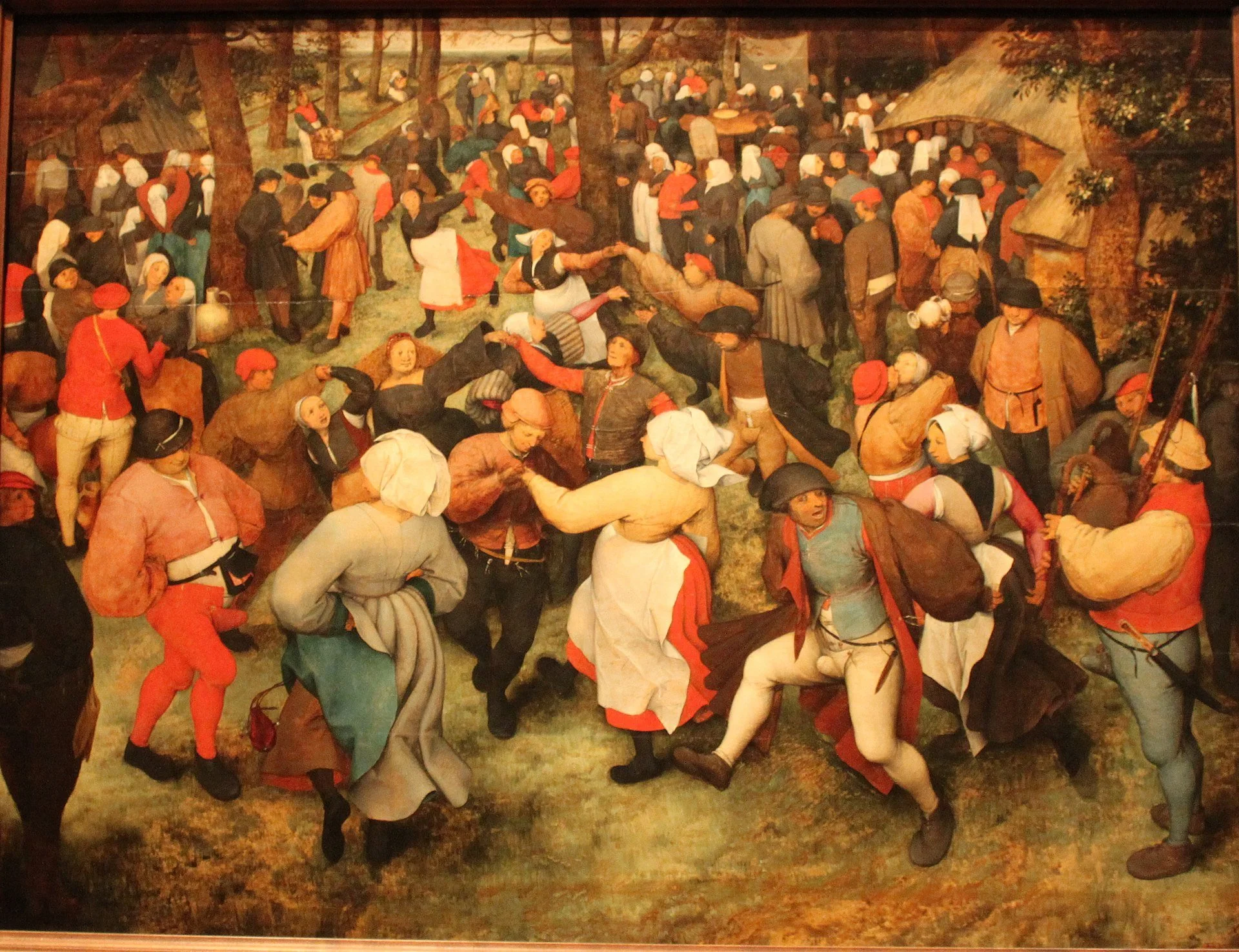
Doug’s family history reaches back to the Mayflower and the founding of Plymouth Colony. If you had given him a few minutes, he would happily explain to you why the separatists of the Plymouth Colony were larval conservative Republicans. At the very least, he would insist, the Plymouth Colony had decisively rejected socialism in favor of a sort of Reaganite conservativism.
Plymouth Plantation, you see, was first founded as a commune in which all property rights were held in common. Food and supplies were distributed based on need according to Marxian prescriptions: from each according to his means, to each according to his needs. All this changed after the 1620-21 famine. Starvation staring them in the face, leaders in the colony decided to abandon socialism in favor of capitalism: every family in Plymouth was assigned a private piece of property the fruits of which they could keep for themselves. Starvation was sent packing with its pants on fire, and a rough kind of prosperity reigned in Plymouth.
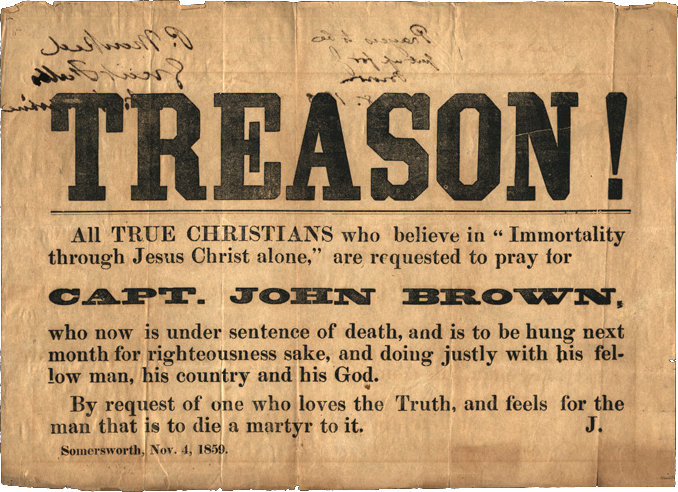
Doug lavished praise on a piece I wrote in Connecticut Commentary on the occasion of the 150th anniversary of the raid on Harper’s Ferry by the abolitionist John Brown in which I had mentioned Thoreau: “Henry David Thoreau, who said of Brown that he would leave a Greek accent falling the wrong way but would right a fallen man – knew Brown was not mad, as did all the notables who assembled in Massachusetts businessman George Stern’s home in Medford to celebrate President Abraham Lincoln’s Emancipation Proclamation.”
Doug thought that John Brown, born in Torrington, Conn., had played a significant and unappreciated role in the abolition of slavery, as indeed he had. I was surprised to find that Doug had read both “A Plea For Captain John Brown” and “Slavery in Massachusetts” by Thoreau.
In his plea for Brown, Thoreau unfurls the following line: “There is hardly a house but is divided against itself, for our foe is the all but universal woodenness of both head and heart, the want of vitality in man, which is the effect of our vice; and hence are begotten fear, superstition, bigotry, persecution, and slavery of all kinds.”
Doug, who never lacked vitality or virtue, rather suspected that Lincoln, the author of “A House Divided” speech, had reproduced Thoreau in the often quoted line: “I believe this government cannot endure permanently half slave and half free. I do not expect the Union to be dissolved—I do not expect the house to fall—but I do expect it will cease to be divided. It will become all one thing, or all the other.”
Doug knew his history and, thankfully, did not keep it to himself but shared it liberally with all he encountered. He was forever bringing new, young blood into Republican ranks. Everyone he touched, not least of all myself, will miss his wise counsel, but most of all his hunger for justice and liberty.
Thoreau perhaps best captured the character of people like Doug: “The fate of the country does not depend on how you vote at the polls — the worst man is as strong as the best at that game; it does not depend on what kind of paper you drop into the ballot-box once a year, but on what kind of man you drop from your chamber into the street every morning.”
Doug’s friends and family are all inconsolable; he was taken from us too soon. Let them remember the enduring words of Pascal: “In the end, they throw a little dirt on you, and everyone walks away. But there is one who does not walk away.” That One is the God of justice and mercy.
Don Pesci, a frequent contributor to New England Diary, is a Vernon, Conn.-based essayist.
An August orchestra
''The Toscaninis of the August night are never podium-bound. They leap from thicket to thicket to thicket, from the brocaded shadow of the elm to the bright spotlight of the young maple standing clear in the moon. There is so much melody for them to lead, they grow careless of their time; let them drop a beat or two and it goes on without them, the most irrepressible and buoyant and joyous of all symphonies.''
-- From In Praise of Seasons, by Alan H. Olmstead
Call child welfare!

"Bonding" (oil and cold wax), by Nella Bush, at her show at Mother Brook Arts and Community Center, Dedham, Mass., through Aug. 19.
Boston cabbies drive you into mysteries

"Criticizing Boston's taxicabs is about as controversial as taking a stand against earthquakes, ax murderers, or the Third Reich....The drivers themselves are generally friendly but often topographically confused...No two rides are the same. No two taxis take you from Point A to Point B via Route C. And even if they do, the fares are somehow different. To enter a taxi in the Hub is to embark on a magical mystery tour of assorted mechanical surprises and geographic wonders.''
-- Nathan Cobb
'Summer, do your worst!'
"When my eyes are weeds,
And my lips are petals, spinning
Down the wind that has beginning
Where the crumpled beeches start
In a fringe of salty reeds;
When my arms are elder-bushes,
And the rangy lilac pushes
Upward, upward through my heart;
Summer, do your worst!
Light your tinsel moon, and call on
Your performing stars to fall on
Headlong through your paper sky;
Nevermore shall I be cursed
By a flushed and amorous slattern,
With her dusty laces' pattern
Trailing, as she straggles by. ''
-- "August,'' by Dorothy Parker
The perils of celebrity

"Brad Pitt as Johnny Suede,'' by James Cole, in group called ''The New England Collective VIII,'' at Galatea Fine Art, Boston, Aug 2-27.
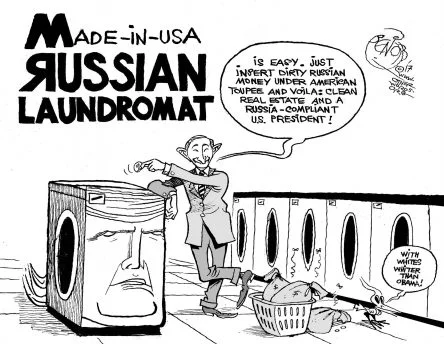
Chuck Collins: Rich folks in overalls seek to kill estate tax

Via OtherWords.org
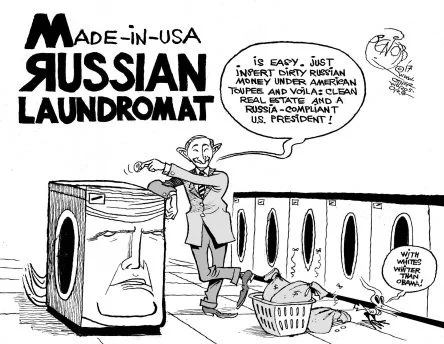
After this summer, President Trump and the Republican Congress have one big item on their agenda: taxes. Specifically, cutting them for the rich.
One tax they’ve got in their crosshairs is the estate tax — which they malign as “the death tax.” But it’s nothing of the sort.
Passed a century ago at the urging of President Theodore Roosevelt, the estate tax is a levy on millionaire inheritances. It puts a brake on the concentration of wealth and political power, and raises substantial revenue — over a quarter of a trillion dollars over the next decade, if it’s kept — from the richest one tenth of 1 percent.
Yet lobbyists are trying to put a populist spin on their effort to abolish this tax, which is paid exclusively by millionaires and billionaires. Puzzlingly, they’re deploying farmers as props and claiming that the tax means the “death of the family farm.”
The accusation is pure manure.
Only households with wealth starting at $11 million (and individuals with wealth over $5.5 million) are subject to the tax. “This hurts a lot of farmers,” claimed Treasury Secretary Steven Mnuchin. “Many people have to sell their family farm.”
But a new report by President Trump’s own U.S. Department of Agriculture shows this claim is bull. Only 4 out of every 1,000 farms will owe any estate tax at all — and the effective tax rate on these small farms is a modest 11 percent.
Of those few farms, most have substantial non-farm income, according to the report — think billionaire Ted Turner’s ranch in Montana. And estate tax opponents haven’t been able to identify a single example of a farm being lost because of the estate tax.
Still, the rodeo continues.
When the House Ways and Means Committee staged a July hearing against the estate tax, they summoned South Dakota farmer Scott Vanderwal to talk about the woes of the estate tax. The problem was, as Vanderwal himself revealed, his farm wouldn’t even be subject to the tax.
In 2014, right-wing election groups ran $1.8 million worth of ads featuring farmer John Mahan of Paris, Ky. “For our family farms to survive, we’ve got to get in this fight” to end the death tax,' he said.
What the ad fails to disclose is that Mahan is the 15th biggest recipient of farm subsidies in Bourbon County, taking $158,213 of taxpayer money between 1995 and 2014. While some farm subsidies promote price stability and conservation practices, the bulk of funds go to the richest 1 percent of farmers and corporate agricultural operations.
Farm organizations such as the National Farmers Union and the American Family Farm Coalition support retaining the estate tax. They believe the concentration of farmland and farm subsidies has created unfair corporate farm monopolies across rural America.
“The National Farmers Union, through its grassroots policy, respects what the estate tax represents,” said union president Roger Johnson in testimony to the Treasury Department. “We are not opposed to the estate tax.”
When defenders of the estate tax have proposed a “carve out” to exempt any remaining farms, the anti-tax crusaders oppose it. They don’t want to lose their fig leaf.
All this farm talk mystifies who actually pays the tax. Most estate taxpayers live in big cities and wealthy states such New York, Florida, and California. Few have probably ever driven a tractor.
Instead of farmers in overalls, picture Tiffany Trump. If Congress abolishes the estate tax, the president’s children stand to inherit billions more.
In the coming tax debate, watch out for the advertisements and sound bites about farmers and the estate tax. The tax lobbyists for billionaires will be pulling the strings.
Chuck Collins is a senior scholar at the Institute for Policy Studies and a co-editor of Inequality.org. He’s the author of the recent book Born on Third Base.
'Worn our bare feet bare'
By the first of August
the invisible beetles began
to snore and the grass was
as tough as hemp and was
no color—no more than
the sand was a color and
we had worn our bare feet
bare since the twentieth
of June and there were times
we forgot to wind up your
alarm clock and some nights
we took our gin warm and neat
from old jelly glasses while
the sun blew out of sight
--- From "I Remember,'' by Anne Sexton
Gossip on neutral ground

"I see no truth at all in the myth that New Englanders are taciturn --- they love gossip as well as anyone I ever knew -- the talk takes place mostly on neutral ground: in stores and barnyards, at auctions and church suppers. Your home is private.''
-- Noel Perrin, in The Amateur Sugar Maker (1972)
Harvard bureaucrats seek to limit freedom of association of undergraduates
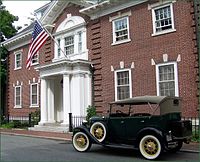
The Owl Club, one of the all-male "final clubs'' of Harvard undergraduates.
Adapted from Robert Whitcomb's "Digital Diary,'' in GoLocal24.com
The bureaucrats at Harvard University want to ban most private social clubs for students at Harvard College – “final clubs’’ (the most socio-economic “elite’’ organizations), fraternities, sororities and the like, alleging that they undermine an idea of “diversity’’ and foment discrimination. The bureaucrats would bar students who take part in these organizations from holding leadership positions at Harvard or getting recommendations for scholarships.
This attack on freedom of association (a sibling of freedom of speech) and on the ability to form close and lasting friendships will probably succeed: After all, being a Harvard student is not obligatory. And, I might add, there are many other colleges where you’d get a considerably better undergraduate education than at Harvard.
To become good citizens, and leaders, students would do well to know people in as wide a range of society as possible. But they also need to be able to form bonds within smaller groups for the loyalty and mutual understanding people need. And if you’recompelled to be “friends’’ with everyone, you’re friends with no one.
Harvard College graduates will seek to join or form such groups when they move into the real world. Imperial Harvard will not succeed in transforming human nature.
Llewellyn King: Scaramucci is making vicious, chaotic, leaking White House worse

Tourism statue in Madurodam, Netherlands, of a legendary, nameless boy plugging a dike.
There's a new sheriff in town. He has strapped on his shooting irons and has been hunting down varmints – varmints right in the ranch house.
The sheriff is Anthony Scaramucci, the new White House communications director, and the varmints are the “leakers.” Watch out!
Scaramucci has threatened to fire people. He says he may be contacting the FBI and the Justice Department. He has also hinted that the leakers are high officials who are using juniors to contact the press.
This is a strange interpretation of “communications.”
The White House is leaking because it isn’t talking coherently. The Trump administration is not rooted in policy or philosophy and the White House staff is divided against itself; a deeply unhappy place wanting in direction and internal clarity.
So, it leaks. It leaks for personal reasons. It leaks for patriotic reasons. It leaks out of frustration. And it leaks because no one is in charge administratively: too many assistants -- including Scaramucci -- are reporting directly to the president, eschewing the line of command which normally flows through the chief of staff and the national security adviser. With Scaramucci on the loose, Reince Priebus is chief of staff in title only: a male nipple.
The communications failure is enormous and extends down to the inability of the press office to answer simple questions, such as who was playing golf with the president? One wouldn't assume this to be a state secret, but reporters ask and get no answer. They aren't rebuffed, they're just not answered.
In this instance, a question not answered is a revelation of another sort: the communications staff are willfully kept in the dark. It isn't claimed that state secrets and initiatives are being discussed on the greens. It's a simple matter of the president’s recreation. Is Trump ashamed of the company he keeps?
The avalanche of leaks are cries for clarity in a chaotic administration. They are the symptoms, not the disease.
The leaks may just get worse. But the mechanics or leaking will get more inventive as Scaramucci ferrets around, suspecting his colleagues who will live in increasing fear.
Leaking is as old a journalism and was going on long before the invention of movable type. Journalists regard it with equanimity, as part of the trade, an integral part of the job -- also as part of their right to collect the news, and the public’s right to know.
However, leaking does have large consequences when it comes to how the government makes decisions. The anti-leakers have a point here: Nowadays, ideas can’t be batted about inside government with abandon. Particularly, they can’t be committed to writing without the fear of them getting into the press.
Leaking classified information is criminal. WikiLeaks troubled many journalists; delicate choices in a democracy.
But that's not what Scaramucci is fishing for; he wants to end the embarrassment of the president.
For those who keep secrets, technology has made the job a thousand times harder. When I was a young reporter, a congressman or White House staffer wishing to show you some document – to leak it -- either had to tell you what it said or allow you to see and copy it by hand. This was risky, as only a few hands would've had access to the document or letter.
The Xerox machine changed that instantly, and the arrival of the digital age put a leak a keystroke away. Privacy and secrecy aren’t what they used to be.
But the hunt-and-kill mission Scaramucci is on won’t stop this White House -- this seething hive of fear and ambition, this policy free for all, this scarcely controlled chaos, this gyre of half-formed purposes -- from leaking.
With Sheriff Scaramucci nosing around, casting doubt on everyone, the leaking might accelerate but will be more devious: Tell a junior to tell friend to tell a reporter, rather than telling the reporter something directly. Email and telephones will be eschewed, or used with great care.
If the communications director wants to control leaking, he should try communicating. He shouldn't send Sanders out there looking like a pudding before the custard is poured over it, without her knowing what the president’s policies are or what he meant by his latest enigmatic tweet.
Sheriff, calm the chaos, and start communicating. Then, pardner, the leaks will dry up like them thar desert.
Llewellyn King is executive producer and host of White House Chronicle, on PBS. His e-mail is llewellynking1@gmail.com.
Grandma Moses: Modernist?
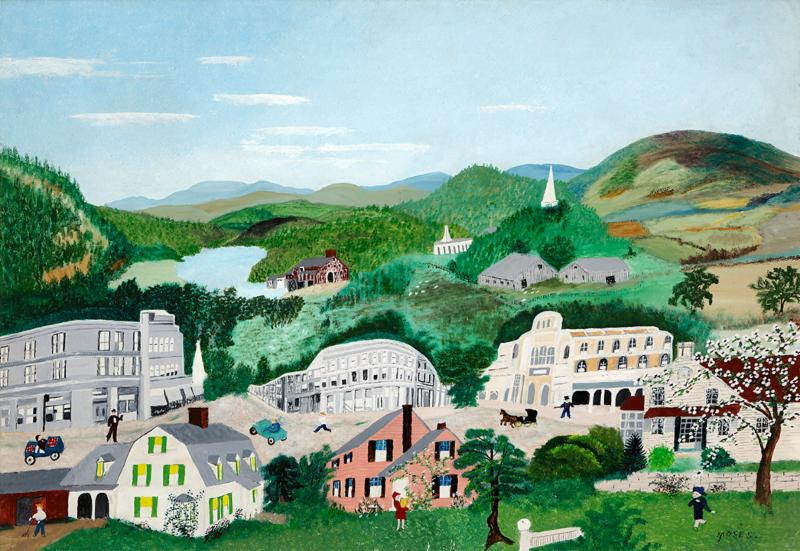
"Bennington, 1945'' (oil and tempera on masonite), by Anna Mary Robertson, aka "Grandma" Moses'' (1860-1961), in the show "Grandma Moses: American Modernist,'' through Nov. 5 at the Bennington (Vt.) Museum.
The museum says: "This exhibition has a subversive goal, as it upsets your expectations and gets you to see her work with fresh eyes. By putting her paintings alongside works by Modernists such as Léger, Cornell, Frankenthalerand Warhol, and folk artists Hicks and Pickett, see how all these artists used color, collage, memory and their own artistic sensibility to create original masterpieces.''
Editor's Note: In the 1950s, Grandma Moses, a "primitive'' artist, may have been the most famous painter in America.
David Warsh: On Russia, Trump hoisted on the Democrats' petard
A few months after Russia’s annexation of the Crimean peninsula, in 2014, Foreign Affairs conducted an illuminating exchange of views. It is as good a place as any to begin to retrace the steps that brought us to the present day “Russia crisis.” It is always a good idea to go back to the beginning when you are lost.
John Mearsheimer, of the University of Chicago, wrote “Why the Ukraine Crisis Is the West’s Fault: The Liberal Delusions that Provoked Putin. Michael McFaul, advisor to President Barack Obama, back at Stanford after a two-year stint as ambassador to Moscow, argued that the takeover had been “Moscow’s Choice: Who Started the Ukraine Crisis.” Alexander Lukin, vice president of the Diplomatic Academy of the Russian Ministry of Foreign Affairs, described “What the Kremlin Is Thinking: Putin’s Vision for Eurasia.” (Foreign Affairs allows non-subscribers only one free article a month, so choose your link carefully.)
Mearsheimer, 69, the leading expositor (after Henry Kissinger, 94) of what is commonly called the realist view in international affairs, described a triple package of encroachment: NATO enlargement, European Union expansion, and aggressive democracy promotion. Of these, NATO was the “taproot” of the trouble. Putin’s actions should be easy to comprehend, he wrote, especially for those who remembered Russian experiences with Napoleonic France (in 1812), imperial Germany (in World War I) and Nazi Germany (in World War II). He continued,
No Russian leader would tolerate [NATO], a military alliance that was Moscow’s mortal enemy until recently, moving into Ukraine. Nor would any Russian leader stand idly by while the West helped install a government there that was determined to integrate Ukraine into the West…. After all, the United States does not tolerate distant great powers deploying military forces anywhere in the Western hemisphere, much less on its borders. Imagine the outrage in Washington if China built an impressive military alliance and tried to include Canada and Mexico in it.''
McFaul, 53, an expositor of the liberal view of foreign affairs, responded in the next issue. If Russia was really opposed to NATO expansion, why didn’t it raise a stink after 1999, when NATO expansion began? Hadn’t Russian president Dimitri Mededev permitted the U.S. to continue to operate its airbase in Kyrgyzstan? Hadn’t he tacitly acquiesced to NATO intervention in Libya?
"In the five years that I served in the Obama administration, I attended almost every meeting Obama held with Putin and Medvedev, and, for three of those years, while working at the While House, I listened in on every phone conversation, and I cannot remember NATO expansion ever coming up.''
The real reason for the annexation, McFaul wrote, had to do with internal Russian politics. Putin needed to cast the US as an enemy in order to discredit those who opposed his election to a third presidential term. He feared a “color revolution,” like the “Orange Revolution” in Ukraine in 2004, might force him from power.
Mearsheimer wasn’t impressed: And to argue that Russian opposition was based on “resentment,” as had former Bill Clinton adviser Stephen Sestanovich, 67, in a companion piece, “How the West Has Won,” was to miss the point. Russia was worried about its border.
"Great powers always worry about the balance of power in their neighborhoods and push back when other great powers march up to their doorstep. This is why the United States adopted the Monroe Doctrine in the early nineteenth century and why it has repeatedly used military force and covert action to shape political events in the Western Hemisphere.''
Meanwhile, Lukin, the Kremlin insider, had already reminded readers of the gauzy view of Russia that had taken hold in America after 1993. Gradually Russia would embrace Western-style democracy at home and cease to pose a threat to the security of its former satellites. It would accept Western leadership in economic affairs. And it would recognize that various tough treatment of its one-time allies – Serbia, Libya, Iraq, and Iran – was the legitimate exercise of Western leadership in global affairs. Lukin wrote:
"The ongoing crisis in Ukraine has finally put an end to this fantasy. In annexing Crimea, Moscow decisively rejected the West’s rules and in the process shattered many flawed Western assumptions about its motivations. US and European officials need a new paradigm for how to think about Russian foreign policy – and if they want to resolve the Ukraine crisis and prevent similar ones from occurring in the future, they need to get better at putting themselves in Moscow’s shoes.''
What Putin had in mind, Lukin wrote, was the formation of a Eurasian Union, similar to the European Union but not particularly a rival to it, linking the economies of Armenia, Belarus, Georgia, Kazakhstan, Kyrgyzstan, Russia, Tajikistan and Ukraine.
"The concept of a Eurasian space or identity first arose among Russian philosophers and historians who emigrated from communist Russia to Western Europe in the 1920s. Like Russian Slavophiles before them, advocates of Eurasianism spoke of the special nature of Russian civilization and its differences from European society; but they gazed in a different direction. Whereas earlier Slavophiles emphasized Slavic unity and contrasted European individualism with the collectivism of Russian peasant communities, the Eurasians linked the Russian people to the Turkic-speaking people, or 'Turanians,' of the Central Asian Steppe.''
The differences of opinion had been clearly set out.
That was three years ago. You know the rest. Escalating sanctions on Russia from the West, especially the US. From Russia, increasing bellicosity.
Since he was elected, Donald Trump has been hoist on a petard largely of the Democratic Party’s making, going back to Bill Clinton’s decision to press for NATO expansion in 1994. Enlargement was forcefully opposed by other Democrats in 1996, but to no avail. Clinton went ahead. George W. Bush and Obama continued in the same groove.
Don’t get me wrong. I don’t mean to say a kind word about Trump. He first came by his views of Russia from well-heeled Russian customers for his real estate developments. And I am only mildly sympathetic to Putin’s problems. We have enough of our own.
The good news is that Trump has appointed two sensible realists who know a thing or two about Russia: Rex Tillerson Secretary of State and, the other week, Jon Huntsman as ambassador to Russia. It is the beginning of a long journey back to common sense.
David Warsh is proprietor of economicprincipals.com, where this first ran. He is a long-time columnist and economic historian.
Beyond traditional 'urban renewal'

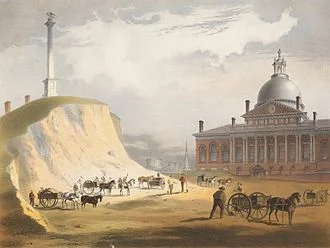
Cutting down Beacon Hill in 1811; a view from the north toward the Massachusetts State House.
Adapted from Robert Whitcomb's "Digital Diary,'' in GoLocal24.com.
Boston’s new master plan, called “Imagine 2030’’ is refreshingly flexible. It encourages improvements in accessibility and interconnectivity across the city through more reliable public transportation, better education and more recreational re sources. However, it leaves many of the details and decisionsto private-sector organizations and individuals, with city government acting more as referee and cheerleader and improvements promoted more through economic incentives than through regulations.
It’s not a heavily top-down government-run “urban-renewal’’ approach of the wrecking-ball-and-bulldozer sort that did so much damage in many old American cities in the ‘50s and ‘60s. Rather it takes more of a Jane Jacobs (author of The Death and Life of Great American Cities) stance – treating the city as an immensely complicated organism with vibrant and open neighborhoods and walkability key strengths.
The plan has a couple of powerful forces behind it: One is that cities in general are on the upswing; suburbs have lost a lot of their allure. Another is that Greater Boston’s great research and innovation machine, lubricated by its famed higher-education sector and its roles as a major financial center and the capital of New England, will probably keep running indefinitely to pay for the improvements. Let’s hope that more of that money washes down to Providence and over to Worcester..
Two New Englands of humor
"Basically, there are two New Englands, northern and southern, with plenty of shared schizophrenia between them....The Connecticut Yankee and the Maine Yankee may both trade on rurality for their wit, but one is garrulous and the other taciturn. When the Bostonian tells a story the Vermonter becomes an ignorant hayseed; when the Vermonter tells a story the Bostonian is a pompous ignoramus. Usually in such a match there's no contest; the Vermonter will inevitably prevail.''
-- From Jim Brunelle, in The Best of New England Humor
How N.E. can lead nation in offshore wind energy
Via the New England Board of Higher Education (nebhe.org)
By Dan Kuchma, David Cash, Fara Courtney, Jerome Hajjar, Eric Hines, Anthony Kirincich, Stephen Lohrenz, James Manwell and Chris Niezrecki
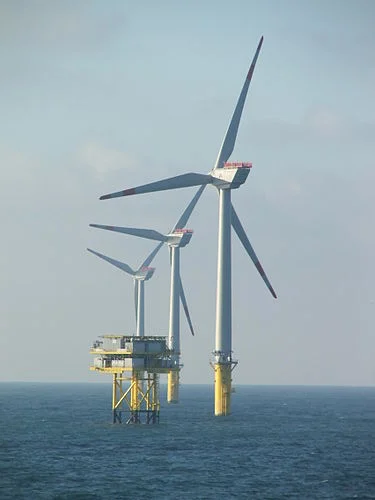
In the coming decades, the U.S. will see large-scale offshore wind energy (OWE) development in which hundreds of billions of dollars are invested in building and operating OWE capabilities that are price-competitive with fossil fuel-based electricity. European market commitment, investment in infrastructure and R&D focused on cost reduction has enabled this competitiveness.
New England is poised to lead the nation, thanks in part to: offshore winds that are up to twice as powerful as other regions in the U.S., high electricity demands and costs, thousands of megawatts in pending plant retirements, the creation in Massachusetts of the first commercial-scale offshore wind market, Rhode Island’s construction of the first American offshore wind farm, and Maine’s leadership in deepwater floating-turbine technologies.
New England’s institutions of higher education, meanwhile, have a distinguished history as leaders in research related to wind energy, the ocean environment, public policy and infrastructure planning. Together, they are playing a critical role in the thought leadership, engineering innovation and workforce education that will ensure the success of our American offshore wind industry.
On Aug. 8, 2016, Massachusetts Gov. Charlie Baker, a Republican, signed into law an energy bill that requires the state’s utilities to draw on at least 1,600 megawatts of offshore wind capacity in the coming years, enough to power a third of the homes in Massachusetts.
A month later, the Massachusetts Clean Energy Center awarded the University of Massachusetts System plus Northeastern, Tufts and the Woods Hole Oceanographic Institution a capacity-building grant to become the Massachusetts Research Partnership in Offshore Wind (MRP). The MRP is currently formulating a national research agenda for offshore wind that can help guide the use of new and existing American research assets and expertise in the service of making American offshore wind an innovative, competitive and environmentally responsible enterprise.
In an effort to ensure the national scope of this research agenda, the MRP has convened an initiative entitled the Partnership for Offshore Wind EneRgy (POWER-US), which is bringing to the table key national laboratories and institutions of higher education from every region of the U.S.
Caught in the Breeze
New England has a net electricity capacity of approximately 34 gigawatts (GW)
On any given day, we use approximately 17 GW of this power
By 2020, approximately 8 GW is planned for retirements, i.e. one half of our daily draw and one quarter of our total capacity
On May 31, 2017, the Brayton Point coal-fired power plant was retired—then the largest coal-fired power plant in New England
Massachusetts 2016 legislation requires the purchase of 1.6 GW of offshore wind and approximately 1.6 GW of hydropower
There is Massachusetts legislation pending that would raise the offshore wind number to 4 GW
Wind or no wind, we need to replace our electricity-generation capacity in the next several years. Renewables or not, coal is too expensive compared with natural gas and coal-fired power plants have had to close because they cannot compete in the electricity markets.
Without such an initiative, the U.S. role in developing its own OWE resource could very likely be marginalized by this European-based industry which has developed its technical know-how through decades of experience. The longer the U.S. waits to invest in this industry, the more difficult it will become for the U.S. to take control of its own energy destiny. When one considers, however, the speed at which the U.S. developed its land-based wind-energy production, and the depth to which the U.S. has advanced ocean observation and exploration, large-scale testing, and cyber-infrastructure, the potential for U.S. leadership in offshore wind is very real.
Significant American public investment in infrastructure, research and collaboration among the public, private and academic sectors will have a serious impact on the trajectory of American offshore wind. Such collaboration raises various issues affecting the public interest, including:
Sources of employment and development of local industry and expertise
The impact of large-scale development on electrical grid operation and power markets
the policy and regulatory landscape that can ensure sustainable growth for the industry
How a given project will affect other offshore wind energy projects, including use of workforce and infrastructure, cumulative impacts and long-term costs
What happens to the investments in infrastructure beyond the 25-year operational period assumed for offshore wind projects
Environmental impact other than to satisfy the regulations which are still in early stages of development
The development of a system-level assessment and risk-based approach using the most relevant available data
Ensuring the right level of learning and technology assessment throughout OWE development
Contributing to public sources of data and metadata on site characteristics such as seabed conditions and marine habitats, while respecting the proprietary nature of certain information
Identifying and testing the breadth of new technologies, including remote sensing, longer-lasting materials, and new construction methods that could advance OWE
Contributing to the development of the type of rich technical community that supports other types of similarly large investments and responsibilities
The cumulative impacts of large-scale development at the regional and national scale.
The value proposition of offshore wind to a region is highly dependent on the impact that OWE development can have on jobs and economic growth. The strategic development of local labor markets can transform coast communities and regional economies, as it already has across northern Europe. Due to the size of OWE turbines (as tall as Boston’s Hancock Tower) it is economical to design, manufacture, install and maintain them with local expertise, which is currently developing in the New England area. The U.S. is at the very early stages of preparing and educating a workforce to drive and support the OWE industry. We should begin to design education programs at all levels, from skilled labor educated at the community college level, to advanced degrees in specialized fields.
This should include apprenticeships, training programs for existing workers and international exchanges, and span high school-voc-tech, two-year, four-year, certificate, bachelor’s, master’s and doctoral programs. In the U.S., high-quality jobs in the energy and infrastructure sector have the potential both to be local and to be resistant to automation.
Regional powers?
Regional cooperation across multiple states is essential to managing the complexity of OWE development and operation, the future size of this industry and the current state of any individual ports, manufacturing facilities, workforce and other resources. The electrical grid should be developed at a regional level and in consideration of how it may be expanded to bring future sources of OWE and other energy assets—including utility-scale storage—most economically and reliably to users.
A public investment in characterizing the resource and site conditions at potential wind energy sites reduces the risk for individual private developers and investors, and leads to lower-cost power-purchase agreements, as has been effectively demonstrated in Europe. It also advances our understanding of the ocean and marine environments, and enables improved decisions on the right level and location of OWE development. Site characterization includes making an assessment of external conditions (e.g., winds, waves, currents, extreme events), seabed conditions (e.g., geology, boulders, artifacts, soil composition, stiffness and strength), marine-region habitats (e.g. , benthic ecosystems, fish, mammals, birds), and other human uses (e.g., ship and aircraft corridors, fisheries, coast guard, navy, recreational activities).
Since the U.S. does not have a supply chain for OWE development, there is an opportunity to do things differently from other nations, and in ways more suitable for our environment. The U.S. has pioneered and developed many technologies and industries that could produce innovative solutions for OWE. Innovations are required in many areas such as new and improved methods for site characterization, new sensors for measuring the performance of the full wind-turbine systems, including the condition and remaining design life of each component, new foundation concepts such as floating platforms and new operational strategies.
The development of an OWE supply chain and securing financing for projects is totally dependent on the commitment that government, industry and the public makes to purchasing OWE. For example, the energy ministers from Germany, Denmark and Belgium, along with 25 companies and NGOs, have just pledged to develop 60 gigawatts more of OWE by 2030. In Europe, the public investment in research and associated initiatives has been at about $3 billion. The level of public investment needed to support U.S. academia and agency initiatives in advancing offshore wind is very large, and ought to be considered as fundamental to creating American jobs at all levels ranging from hard-hat occupations to industry leadership.
In our opinion, the best research is inspired by real-world problems. In OWE, the methods used for characterizing a wind-energy resource area (wind, waves, currents, marine habitats, strength of seabed, etc.) are antiquated, too costly, insufficient and in need of significant advancement. Many of the technologies exist for making the needed advancement, such as advanced geophysical scanning techniques, sensors for monitoring aquatic life, and autonomous underwater vehicles (AUVs) that can deploy these technologies. Academia has a significant role to play in the evaluation and maturing of these technologies.
There are also important areas for research with implications for the long-term sustainability of the industry. For example, the current design lifespan of 20 to 25 years that is used for offshore wind energy development is an artifact of land-based wind turbine machine technology and offshore oil and gas, and may not be appropriate for offshore wind for both economic reasons and for environmental stewardship. This is recognized by many components of the industry, and there is a significant opportunity for innovative strategies to greatly extend lifespans.
Considering the industry from the point of view of infrastructure, 25 years is a very short timeframe. One may consider replacing the machine parts in the Hoover Dam, but after 82 years, the structure continues to serve its purpose. The same goes for our buildings and bridges. Our codes may address a 50-year design life for buildings and a 75-year design life for bridges, but the actual lifespans of our built environment are much longer. The longevity and adaptive reuse of our New England building stock is a prime example of this. Why would someone plan to tear down an offshore wind farm so soon after the capital costs are paid in full and the cost of power reduces to operation and maintenance? No fossil fuel can compete with that over the long term. Currently, the lowest retail electricity prices in the U.S. can be found in states with abundant hydropower, such as Oregon..
The U.S. already has great assets to bring to the table including those specifically designed to support advancement in wind energy. A few examples include the laboratories, computational platforms and personnel at the National Renewable Energy Laboratory and substantial OWE purpose-built test facilities such as the Wind Technology Testing Center in Boston, planned and designed by several authors of this piece. In addition to OWE test facilities, other existing laboratory testing facilities for earthquake and hurricane research, and many important studies funded by federal and state governments can play a critical role in advancing American OWE. An important next step is to determine how to operate these facilities/resources as a network and to fill in the gaps for creating a complete network.
A few examples of gaps include offshore wind ocean testbeds for advancing site characterization, foundation testing facilities for testing structural elements below the waterline, data archival and management tools, and a framework for obtaining the data needed to advance design and analysis models.
Academia has an important role in shaping U.S. offshore wind energy development, not as an ivory tower but as an honest broker.
The role of the private sector is to help the market establish accurate and efficient pricing; the role of the public sector is to safeguard and advance the public interest; and the role of the academic sector is to assist and encourage both the private and public sectors to think deeply about the decisions they face and to help formulate the bases for such decisions through rigorous and disinterested scholarship.
Several universities across Europe have extensive research and educational activities jointly funded by industry and the public sector that are advancing new and improved methods of harnessing OWE. Discussions with European colleagues have pointed to missed opportunities in the early days of offshore wind development; the U.S. can learn from this experience and establish an effective framework for innovation from the beginning. Federal departments, agencies and administrations such as the Department of Energy, the Department of the Interior, the National Science Foundation, the National Oceanic and Atmospheric Administration, the National Institute of Standards and Technology and the National Aeronautics and Space Administration can work together to bring in-depth expertise across a range of fields and fully advance U.S. OWE development and operation.
The generation and transmission of electricity is a regional issue, but the advancement of research, infrastructure and education are also national issues that require clear and effective dialogues at both the regional and national levels. New England’s institutions of higher education are playing a critical role in leading and facilitating these dialogues. In the process, we are creating opportunities for our students to learn firsthand how the world of ideas can change the real world in which we live.
Daniel A. Kuchma is a professor of civil and environmental engineering at Tufts University.
David W. Cash is dean of the John W. McCormack Graduate School of Policy and Global Studies at the University of Massachusetts, Boston and former Massachusetts commissioner of the Department of Environmental Protection and the Department of Public Utilities.
Fara Courtney is an independent consultant working with the Massachusetts Clean Energy Center and the Massachusetts Research Partnership for Offshore Wind to convene Massachusetts research institutions in support of a national research agenda for offshore wind.
Jerome F. Hajjar is the CDM Smith Professor and chair of civil and environmental engineering at Northeastern University.
Eric M. Hines is a professor of the practice of civil and environmental engineering at Tufts University, and a principal at LeMessurier Consultants Inc., Structural Engineers.
Anthony Kirincich is an associate scientist at the Woods Hole Oceanographic Institution
Stephen E. Lohrenz is dean of the School for Marine Science and Technology at the University of Massachusetts, Dartmouth.
James F. Manwell is a professor of mechanical and industrial engineering and serves as the director of Wind Energy Center at the University of Massachusetts, Amherst.
Christopher Niezrecki is professor and chair of mechanical engineering and serves as the director of the Center for Wind Energy at the University of Massachusetts, Lowell.
Collaborative collages

"Sunday Drive'' (textile and various media) by Grey and Leslie Held. In their show at the New Art Center, Newton, Mass., Dec. 8-Jan. 4.
The gallery reports: "This exhibition features fabric collages made collaboratively by Grey Held, collaborative drawing instructor at the New Art Center, and his wife, Leslie Held, an award-winning theatrical costume designer. Leslie’s collection of fabric scraps, ribbons and salvaged sections of embroideries are the basic materials that Grey and Leslie use to construct their various fabric collages, each with its own color palette and emotional temperature. The pair describe their work as something that emerges and evolves through the process of collaboration; they never know how a piece will turn out, but must surrender to the collaborative process that has its own trajectory, its own unfolding story.''

Frank Carini: Sacrificing 30,000 trees for a solar farm in Rhode Island?!
Via ecoRI News (ecori.org)
HOPKINTON, R.I.
Rhode Island just doesn’t get it, even when it tries to be 21st Century. Cutting down 30,000 trees to make room for a solar farm is only slightly less 1980's than destroying 200 acres of forest to build a fossil-fuel power plant.
The smallest state has plenty of wasted space, in the form of brownfields, old landfills, rooftops, parking lots and empty big-box retailers, but the Ocean State seems driven to Paul Bunyan its way to the future.
The latest ax-wielding project, being proposed by Southern Sky Renewable Energy LLC for 73 acres off Main Street in Ashaway, a village in Hopkinton, is a 13.8-megawatt solar installation, with 43,000 solar panels, that would require the clear-cutting of 60 forest acres.
“I mourn the loss of 30,000 trees, I really do,” Town Councilor David Husband is quoted as saying in a recent Westerly Sun story. “But something’s going in there sooner or later.”
Therein lies the problem — one that afflicts municipalities, taxpayers, businesses and state government alike. We’re addicted to building things in places that make no sense — i.e., the natural-gas power plant proposed for the forest of Burrillville, R.I., an office park in the Johnston, R.I., woods, a casino in Tiverton, R.I., wetlands — in the endless pursuit of more tax dollars and jobs, as if better, or even adequate, land-use management would bankrupt the state and cause unemployment to rise.
At a July 17 meeting, Hopkinton Town Council members noted that the solar farm would benefit the town financially. Sure, if you ignore the impact on ecological diversity and other external costs. Woods matter.
Connecticut’s Council on Environmental Quality is concerned about taking farmland out of production and cutting down forests to power society. Earlier this year the nine-member council published a report aimed at stimulating the siting of solar-energy facilities in places other than farms and forests. The report documents the surge in proposals to use farmland and forestland for the construction of large solar electricity-generating facilities.
“We do not see any need for Connecticut’s land-conservation and renewable-energy goals to be in conflict,” the council’s chairwoman has said.-
Chopping down forests further fragments forestland, which hurts natural resources such as drinking water and habitat, and weakens environmental health by diminishing biodiversity. Taking agricultural land out of production reduces the amount of local food that can be grown and harvested.
Scott Millar, manager of community technical assistance for Grow Smart Rhode Island, told ecoRI News in May that solar panels on rooftops, industrial land, landfills and brownfields would minimize environmental damage.
“We need to take a hard look at what we’re proposing,” he said. “We shouldn’t be sacrificing farms and forests.”
Instead, we should be modernizing the regional power grid; building solar arrays on vacant and underused development, like the city of East Providence did at the Forbes Street Landfill; covering parking lots with solar canopies, like the 3.2-megawatt canopy covering 800 parking spaces across 5 acres at Bristol Community College’s Fall River, Mass., campus; regulating and incentivizing renewable-energy developers to build in appropriate places; supporting local farming so the industry doesn’t have to sell out to energy consumption.
Frank Carini is the ecoRI News editor.
Summer on and on
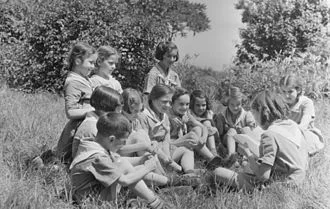
"Not even dried-up leaves,
skidding like iceboats on
their points down winter streets,
can scratch the surface of
a child's summer and its wealth:
a stagnant calm that seemed
as if it must go on and on''
From "Thesis, Antithesis, and Nostalgia,'' by Alan Dugan