
Vox clamantis in deserto







America a very tough place to do big projects

Amtrak's Downeaster train, which connects Boston with the Maine Coast.
Adapted from Robert Whitcomb's "Digital Diary,'' in GoLocal24.com
Amtrak and commuter rail travelers face a summer of hell in and around New York’s Penn station as long overdue repairs are made to rail infrastructure there. There will be many delays. New Englanders traveling to New York might want to consider taking Metro North trains from Connecticut. Those terminate at Grand Central Station, not Penn Station. Hopefully within a decade the hellhole that is Penn Station will be replaced with something more gloriously fitting for the nation’s busiest train station.
In other train news, I was sorry to hear that plans for a new high-speed Amtrak route through southwestern Rhode Island and southeastern Connecticut have been held up or perhaps killed by local NIMBYs who assert that the proposed route would have some bad local environmental effects. In fact, the environmental effects would be minor. And by thwarting building along the most commonsensical route in the area, the foes would hurt the environment by ensuring that the train trip between Boston, New York and points south wouldn’t be as fast and competitive with driving as it should be.
Thiswould keep more cars on the roads, causing more pollution and perhaps necessitating more and/or wider roads. Highways, of course, are much wider than rail lines. This is yet another example of why America is the toughest place in the Developed World to build and repair infrastructure.
Still, there’s happy rail news. Amtrak’s Downeaster, which connects Boston and southern Maine, terminating in Brunswick, reported its second-highest number of passengers – 511,422, in fiscal 2017, which ended June 30. That’s up 9 percent from a year earlier and close to the record of 518,572 set in fiscal 2014.
People grow to love their trains – if they’re given the opportunity. Patricia Quinn, who runs the Northern New England Passenger Rail Authority, was quite right to crow: “These results are pretty impressive. Achieving near-record ridership in a year of low fuel prices and construction-related service interruption indicates that the Downeaster has come of age in solidifying a durable and loyal customer base.’’
Maine Indians knew when to be away

A no-see-um, also called a biting midge.
'''No-see-um' was an Indian word -- red skin as vulnerable as white. To the early Indian, coming here {the Maine woods} to make a warm-weather camping trip would have seemed the act of a fool: Thoreau, with his veil, his smoke from rotting logs; we, with our Off and our Cutter. When the tribes lived here...they left in the summer. When the black flies, the mosquitoes, and the no-see-ums hatched, the Indians departed, and they did not come back until the bugs were gone.''
-- John McPhee, in The Survival of the Bark Canoe
Airline deregulation

"Flight Pattern,'' by Joyce McDaniel, in the show "Ode to Joyce McDaniel: Sculptor & Teacher, '' at the Boston Sculptors Gallery, July 26-Aug. 13. The show will feature new work by Ms. McDaniel as well as by 11 artists who studied with her.
Jim Hightower: The plutocratic DeVoses and the school-privatization scam
Via ecoRI News (ecori.org)
Betsy DeVos and her husband, Dick, are lucky: They inherited a big chunk of the multibillion-dollar fortune that Dick’s dad Richard amassed through his shady Amway corporation. But what they’ve done with their Amway money is certainly not the American Way.
The DeVos couple are part of the Koch Brothers’ coterie, pushing plutocratic policies that reject our country’s one-for-all, all-for-one egalitarianism.
In particular, Betsy DeVos has spent years and millions of dollars spreading the right wing’s ideological nonsense that our tax dollars should subsidize private schools — even ones that exclude people of color and the poor, as well as to profiteering schools known to cheat students and taxpayers.
Bizarrely, Donald Trump chose this vehement opponent of public education to head the agency in charge of — guess what — public education. Rather than working to help improve our public schools, the Trump-DeVos duo wants to take $20 billion from their federal funding and give it to corporate chains.
To see the “efficiency” of this scheme, look to Arizona, where state Senate President Steve Yarborough pushed privatization into law. One of Arizona’s corporatized schools, called ACSTO, pays its executive director $125,000 a year. His name is Steve Yarborough.
ACSTO also pays millions of dollars to another for-profit corporation named HY Processing to handle administrative chores. The “Y” in HY stands for Yarborough.
And ACSTO pays $52,000 a year in rent to its landlord — Steve Yarborough.
As Wall Street banksters, drug company gougers, airline fee fixers, and so many others have taught us over and over, most corporate executives are paid big bucks to take every shortcut to cheat and do whatever to squeeze out another dime in profits.
Why would we entrust our schoolchildren to them?
Jim Hightower is a radio commentator, writer and public speaker. He’s also the editor of the populist newsletter, The Hightower Lowdown.
'Walk to no purpose'

Gallows Hill Park, Salem, traditionally believed to be where alleged witches were hung in 1692.
"Follow its lazy main street lounging
from the alms house to Gallows Hill
along a flat, unvaried surface
covered with wooden houses
aged by yellow drain
like the unhealthy hair of an old dog.
You'll walk to no purpose
in Hawthorne's Salem.''
-- From "Hawthorne,'' by Robert Lowell
When cars had fins

"The Dual Caddy Dream-Time of Mojo Krome" (oil on panel), by Ken Tighe, in the group show "New England Collective VIII,'' at Galatea Fine Art, Boston, Aug. 2-27.
Summer cool-off

"Greenland, no. 63,'' by Zaria Forman, in her August show at the Dedee Shattuck Gallery, Westport, Mass.
Don Pesci: Where Democrats are the status quo party
Quite suddenly, the enabler for the State Employees Bargaining Agent Coalition (SEBAC) in Connecticut’s General Assembly, Speaker of the House Joe Aresimowicz, has contracted a wicked case of ants in his pants.
The state legislature closed for official business on June 7, nearly two months ago. But Aresimowicz, the gatekeeper in the House without whose approval no bill may reach the floor of the General Assembly, dawdled delinquently and brought no budget to the floor. In truth, the Democratic leader in the House had no budget bill in hand to present to the legislature – none. Aresimowicz was waiting for state employee rank and file union members to vote on a closed door deal being shaped by Gov. Dannel Malloy and union chiefs.
The fiscal year ended on June 30. Democrat legislators still had not produced a budget. In the meantime, Republicans – who had fashioned a budget that had been vetted and pronounced balanced by the State Budget Office – were unable to get their budget bill to the floor so that it might be discussed and voted upon. Unlike Democrats, Republicans were budgeting for the Connecticut’s imperiled future, Republican leader in the Senate Len Fasano later would say.
The obstacles were Aresimowicz, presently employed by a union, Malloy, who in the past has marched with union protesters on strike-lines, progressive legislators in the General Assembly agitating for increased taxes on remaining wealthy taxpayers in the state who had not yet bolted for less predatory states, those in Connecticut’s media who prefer the current ruinous status quo, and confused and unorganized taxpayers, soon to be plundered again by the progressive legislative proponents ofthe largest and second largest tax increases in state history.
The Democratic Party “resistance” was waiting, as usual, upon unions to make “concessions.” The SEBAC-Malloy-Aresimowicz fait accompli would not come out of the closed to the public closet until July 18.
So – wait for the concessions.
The SEBAC-Malloy-Aresimowicz-progressive Democrat deal resembled to a “T” past SEBAC-Malloy- Aresimowicz-progressive Democrat deals. So pro-union was the deal that it passed a vote by rank and file union workers in the blink of an eye. The deal guarantees annual raises of three percent per year; it includes a no-layoff provision; and – most importantly – pushes out the termination of the agreed upon contracts until 2027, by which time Malloy, Aresimowicz and not a few retired union leaders may have shaken the dust of Connecticut from their feet and become residents of Florida. Former Gov. Jodi Rell, once thought to be a firewall that preventing union arsonists from burning down the house, is now a citizen of Florida.
This is the status quo in Connecticut: tax increases, spending increases, business flight and reduced revenues – which, of course, necessitate higher taxes, more spending, more business flight and diminished revenues. At this remove, no one any longer remembers former Gov. Lowell Weicker’s prophetic campaign prediction: “Raising taxes in the middle of a recession would be like pouring gas on a fire.” The recession that greeted Weicker when he became governor – and instituted an income tax – lasted more than a decade. The current recession that wafted Malloy into office officially ended in June, 2009 – but not in Connecticut, where the tax-increase fire still burns in the basement.
While Democrats in the General Assembly have yet to produce a budget, they are now using the state crisis they have caused to force Republicans who do not support the state deadly status quo to lend their shoulders to push forward a union deal that will secure so-called union “concession” to 2017 – thus preventing future governors and future legislators from successfully attacking the real causes of Connecticut’s discontent.
The Democrat Party is now the last refuge of scoundrels who wish to maintain the status quo. The Republican Party has become the reform party.
Suppose, critics of the proposed contracts ask, there is another recession. Given the present SEBAC-Malloy-Aresimowicz fait accompli, what can a future governor or a future legislature do to mitigate the ruinous consequences of a third recession? Answer: nothing. Bound by inflexible, court enforceable contracts, future governors and legislators will not be able to reduce unionized benefits, modify salary increases or curtail contractual layoff protections until the ironclad contracts elapse in 2017. A Republican reform – so far resisted by union employed Aresimowicz, pro-union governor Malloy, and progressives in Connecticut’s status quo General Assembly – would allow the legislature to escape the contract trap by changing from contract to statute the means government may use to snatch democracy from the jaws of SEBAC.
Don Pesci is a Vernon, Conn.-based columnist.
Llewellyn King: Dangerously crowded U.S. airliners

Always safer without passengers.
According to Greek legend, Procrustes was a rogue blacksmith who had an iron bed that he would invite to travelers to use, except that if they were too short, he would stretch them until they fit it and if they were too long, he would amputate the offending limbs.
Well, over at American Airlines, the spirit of Procrustes is alive and well.
They’re planning to reward you for your business by putting you in even smaller seats than you’re now squeezed into. They’re going to lop two inches off the space you’re getting on their new Boeing 737 MAX airplanes.
In fairness, I must point out that Spirit Airlines already has customers on their aircraft squeezed into the smaller seats. Others will follow suit.
Unbelievably, American and some airlines are going to compound their hostility to their customers by making the toilets even smaller than they are now. Soon they may reduce service to a kind of communal bedpan; that way they could cram in more seats.
But that’s not all. The airlines are already discussing a sub-coach fare, where you’d get the tiny seat and the dolls-house toilet, and you wouldn’t get any space in the overhead bins and your flight wouldn’t qualify for frequent-flyer miles.
The plan here is to get you to upgrade to a slightly larger seat, allowing you to carry your bag on board. The wise will take that option because otherwise, it looks like you’ll be paying a fee for your small bag to go into the hold. Crafty.
All this is glorious fun for late-night comedians — none of whom would be caught dead in coach, by the way. They’re all up front, if a private plane isn’t available.
But there’s a big safety issue here which the airlines, in their desire to get more bodies jammed into the wretched space available, don’t talk about. If there were an accident — and there will be one because safe as airline travel is, there are always accidents — people will be stuck in their seats because the gangways will be too crowded. Crowding makes for chaos.
The worst scenario – and I’ve discussed this with aviation experts aplenty over many years — is what would happen in those precious moments, either after a very hard landing with a collapse of the gear or a collision on the ground, before fire breaks out? Precious seconds when people in panic in the rear of the plane will most likely be fighting each other to get to the escape routes. And, of course, there will be some fool trying to get his or her suitcase out of the overhead bin.
Hijacking goes back to the earliest days of airplanes, but ramped up in the 1960s with hijackings to Cuba, and then the Middle East got into the game.
Pilots, airlines and the government knew there was a simple way of frustrating this: harden the cockpits with locks and steel bars. The White House knew about the fix, as did the FAA: I raised it with the White House, and friends raised it with the FAA.
But the airlines said it would be too expensive, which is always the first line of argument from people who don’t want to do something; the existential fear of spending money.
After 9/11, the cockpits were hardened almost overnight. I asked a former White House science adviser why the fix couldn’t have been done earlier, when people in aviation had suggested it. He told me, “I should have pushed that one harder.” Indubitably.
The unconscionable crowding of airliners, like the hardening of cockpits, will have to wait until the aviation community, the FAA and the public realizes that not only is flying in coach on an airliner today a horrible experience, but it’s also potentially dangerous, very dangerous.
Llewellyn King (llewellynking1@gmail.com) is host and executive producer of White House Chronicle, on PBS, and a frequent contributor to New England Diary. He's also a veteran columnist, editor and publisher as well as an international business consultant. This piece first ran on Inside Sources.
You can still swim in the Charles
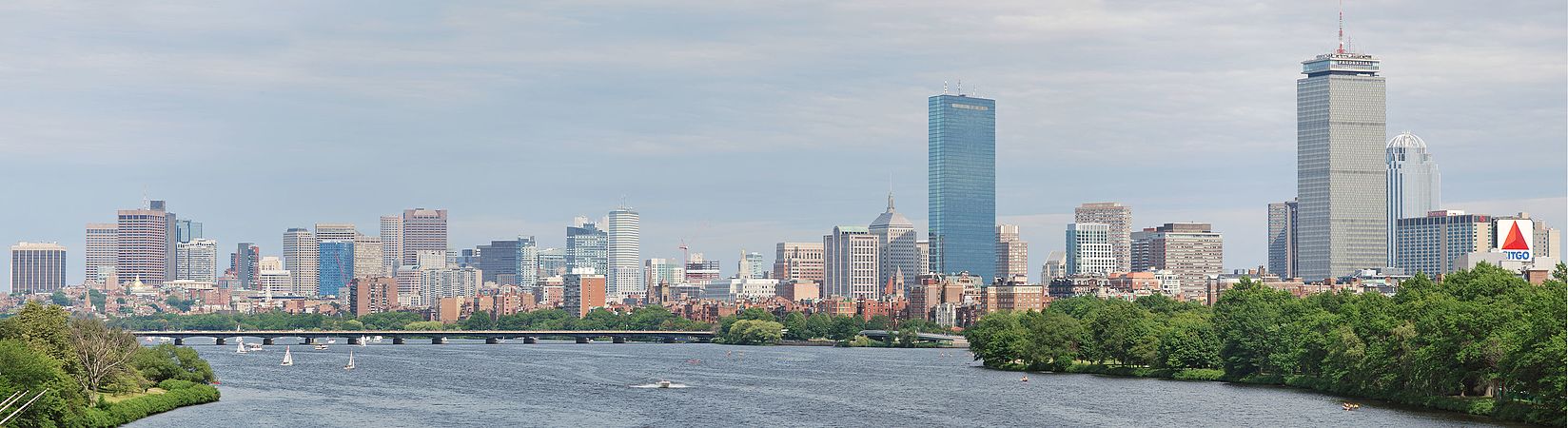
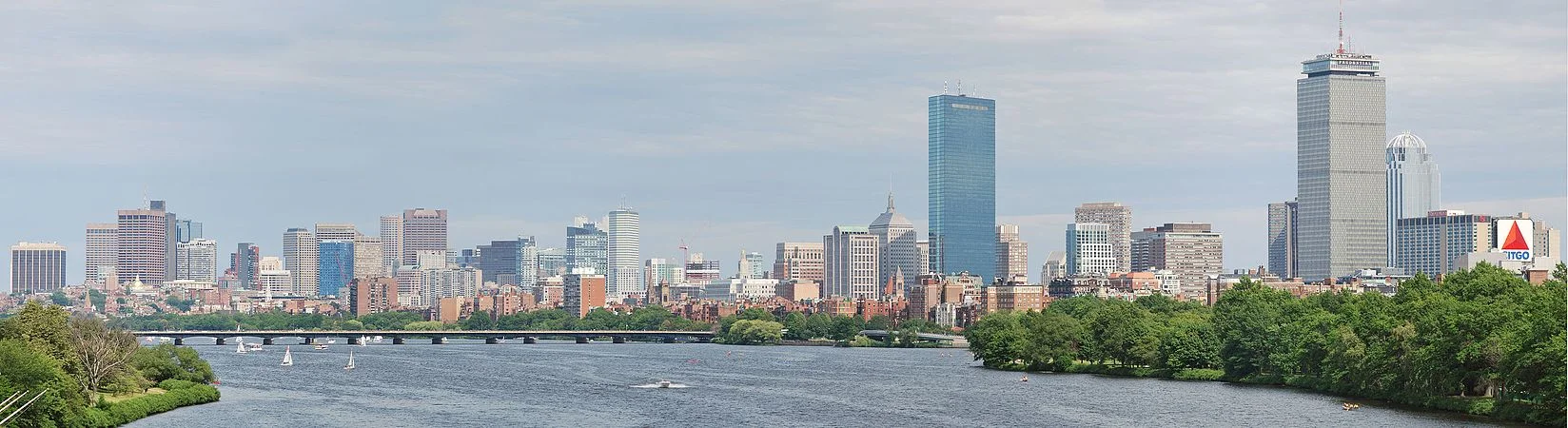
View of the Charles River from the Boston University Bridge.
Via ecoRI News (ecori.org)
BOSTON
The Environmental Protection Agency (EPA) recently gave a grade of B for water quality last year in the Charles River. This is a slight reduction from the B+ grade awarded for water quality in the river in 2015.
EPA and state and local partners have worked to improve water quality in the Charles River for more than two decades. This is the 22nd year EPA has issued a Charles River Report Card. The 2016 grade of B reflects EPA analysis of bacterial contamination in water samples taken monthly from the lower Charles River by the Charles River Watershed Association (CRWA) at 10 sampling stations between Watertown and Boston.
In 2016, the Charles River met Massachusetts's bacterial water-quality standards for boating 86 percent of the time and for swimming 55 percent of the time. The grade is determined according to the following criteria:
A: Almost always met standards for boating and swimming
B: Met standards for almost all boating and some swimming
C: Met standards for some boating and some swimming
D: Met standards for some boating but no swimming
F: Didn’t meet standards for boating or swimming
The grade is also based on a comparison to previous years’ grades and whether the water quality has improved. The slightly lower grade for 2016 is likely related to the fact that seven out of 10 sample events occurred during or immediately after a rain event, despite the overall drought conditions that occurred throughout the region during most of 2016, according to EPA.
The lower Charles River has improved dramatically from the launch of EPA’s Charles River Initiative in 1995, when the river received a D for meeting boating standards only 39 percent of the time and swimming standards just 19 percent of the time. Improvements are due to a significant reduction in the amount of sewage discharged into the river during the past 20 years from combined sewer overflows and illicit discharges through storm drains. Illicit discharges often consist of cracked and leaking sewer pipes or improper sewer connections to the storm-drain system.
For the third year, EPA has launched a water-quality monitoring buoy in front of the Museum of Science in the Charles River Lower Basin. This buoy measures water quality in near real time, and the data can be viewed on EPA’s Charles River Web site and viewed as part of an exhibit on the Charles River in the Museum of Science.
The 2016 calendar year saw further expansion on the public’s enjoyment of the long-term trend of improved water quality in the Charles River, illustrated by some 140 swimmers competing in the Charles River Swim, a mile swim held in June, and the release of a study for a permanent swimming area near the entrance to the Charles at North Point Park.
Aside from illicit discharges, stormwater containing phosphorus, and the algae it produces, are some of the major pollution problems remaining. A major load of phosphorus comes from fertilizer and runoff from impervious surfaces such as roads and rooftops.
'Design of darkness'

"I found a dimpled spider, fat and white,
On a white heal-all, holding up a moth
Like a white piece of rigid satin cloth--
Assorted characters of death and blight
Mixed ready to begin the morning right,
Like the ingredients of a witches’ broth--
A snow-drop spider, a flower like a froth,
And dead wings carried like a paper kite.
What had that flower to do with being white,
The wayside blue and innocent heal-all?
What brought the kindred spider to that height,
Then steered the white moth thither in the night?
What but design of darkness to appall?--
If design govern in a thing so small.''
-- "Design,'' by Robert Frost
Save the architectural glories of New London
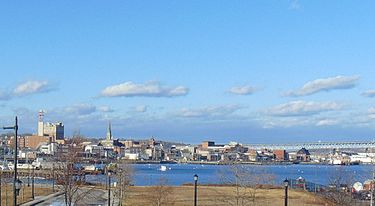
The New London skyline from Fort Trumbull.
From Robert Whitcomb's "Digital Diary,'' in GoLocal24.com:
I’ve long been fond of New London, Conn., with its dramatic setting where the Thames River meets Long Island Sound, with its ferry service to Orient Point and Block Island, the submarine base across the river in Groton, the Coast Guard Academy, Connecticut College and other institutions. The city still has some glorious old – but badly maintained -- downtown buildings constructed in its ocean-shipping days, which included the whaling boom. But there’s not been the sort of architectural preservation that has saved much of downtown New Bedford, with a somewhat similar history as New London’s, from the wrecking ball.
To help protect and repair its gorgeous old downtown buildings, New London, as David Collins, of the local paper, The Day, has suggested, needs a downtown historic district as rigorous as New Bedford’s. It would then benefit more strongly from tourism and other synergies associated with its role as a ferry port through which many thousands of travelers, tourists and students go every year.
Nautical life on Block Island
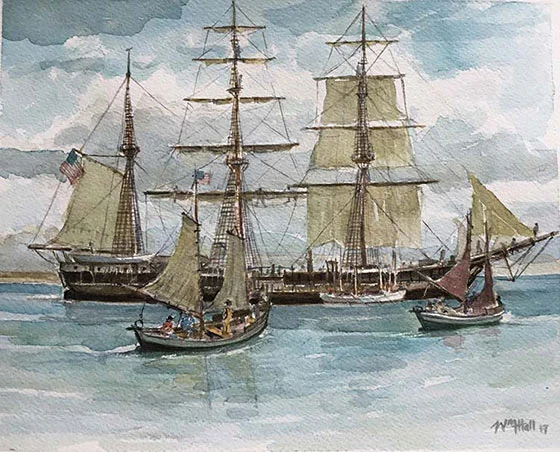
From William T. Hall’s new exhibit of watercolors, “Block Island Nautical Life and Historical Views,” depicting earlier times of boating and fishing on Block Island. The show runs through Aug. 2 at the Jessie Edwards Studio, on Block Island.
In the show, the gallery says, you can see Mr. Hall’s "use of classical watercolor techniques, his knowledge of boats and Island history, and his talent for story telling {combining} to make this exhibit both a meticulous rendering of old working boats and a narrative of the quotidian concerns of Island mariners. We see the images, and we can read Hall’s brief accompanying stories that draw us into an earlier time on Block Island. ''
'Simply hold still'

"View {of the Connecticut River Valley} from Mount Holyoke, Northampton, Massachusetts, after a Thunderstorm—The Oxbow,'' by Thomas Cole in 1836.
''A farmer...has an enormous innate need to simply hold still, to keep what he's got, to limit his greed to what he can keep....What's the use of owning more than you can plough, or hay, or cut into sawlogs or pulp or firewood in wintertime, or drive spiles into to bleed out maple sap in sugar time? No use, at all. In the Connecticut Valley, this Yankee trait has saved a lot of beauty.''
-- Evan Hill, from The Connecticut River (1972)

Connecticut needs to fix its cities
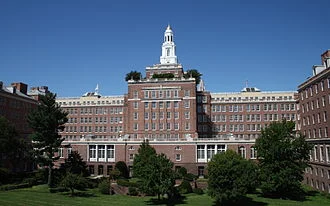
Aetna's headquarters in Hartford, but not for long: The company is moving its home office to Manhattan.
Adapted from Robert Whitcomb's "Digital Diary,'' in GoLocal24.com:
Derek Thompson, writing in The Atlantic’s online service, has some interesting takes on Connecticut’s current fiscal problems. The state government has a huge deficit, some cities are effectively bankrupt, taxes are amongst the highest in the nation and some big companies have fled. And yet the state remains the richest on a per-capita basis in America, albeit largely because of New York City-connected rich folks living in Fairfield County. (Massachusetts is the second-richest; New Jersey the third.)
He notes some remarkably little reported reasons for the state’s ills: One is that Connecticut, like America in general, has lost much of its high-valued manufacturing, a sector for which Connecticut was once famed around the world. (I lived near Waterbury for four years in the early and mid-‘60s, from when I well remember the busy factories up and down the colorfully polluted Naugatuck River.)
Very highly paid people in finance, many of them commuting to Manhattan but many doing their thing in Stamford and Greenwich, have offset some of this loss. However, finance, which of course follows the ups and downs of Wall Street, is more cyclical than manufacturing. And the latter provided a wider range of well-paying jobs to many more people than does finance.
Another important change that Mr. Thompson cited is that the big cities close to Connecticut --- especially New York and Boston – have become much safer and more attractive. Rich people and Millennials have been moving back into them, having grown bored with suburbs, even those as attractively sylvan as some on Connecticut’s strip of the Long Island Sound shoreline.
Conservatives who seem obsessed with high taxes above all else should note that some of the big companies pulling their headquarters from Connecticut are not exactly moving to low-tax venues. Consider that Aetna is leaving Hartford for Manhattan and General Electric has left Fairfield for Boston. They want the dynamism of those cities and are happy to pay for it.
The Nutmeg State has poor, high-crime and often badly run cities. If the state is to improve its long-term prospects, I and Mr. Thompson would agree, it needs to fix its cities. Hartford, which used to be a vibrant and mostly middle-class city before bad municipal government, ill-considered“ urban renewal’’ and other factors drove it into the ditch, is expected to go into official bankruptcy soon. That should let it start cleaning up its act and make it a place that people, especially young adults who might otherwise go to New York, would want to live and work in. That could help turn around the whole state. After all, Hartford is the state capital.

Geoff Coventry: There's no 'free market'' fix for health-care crisis

--Photo by Frank Schulenberg
Women shopping at a bazaar in Cairo.
The Republicans have big plans for health care in this country: to eliminate coverage for millions of Americans while delivering a big tax cut to the rich.
As someone who stands to benefit from that tax cut, let me just say: I don’t need it, and I don’t want it. No tax cut is worth excluding millions of Americans from the health services they need.
Any new health-care legislation should be focused on providing the best available health services for all Americans, not deliberately putting them out of reach. And yet, this is exactly what the twin monstrosities that came out of the House and Senate would have done.
According to the Congressional Budget Office, the House bill would’ve left 23 million Americans uncovered by 2026. The Senate version was only a shade better, leaving 22 million people out. Those bills were nonstarters with the public — the party was forced to pull them, along with any immediate plans to repeal the Affordable Care Act (aka Obamacare).
This Republican-majority Congress has shown their cards: They favor less coverage for workers and the elderly and lower taxes for the wealthy.
Republicans in both chambers claim they’re doing this to support “freedom” and “choice” for the American people. They say the “free market” is the only way to provide Americans with access to affordable health care. They claim deregulation will help drive down health costs.
Well, for starters, so-called “free markets” are unicorns — fanciful creatures with magical powers that don’t exist in the real world. All markets are designed; they don’t emerge spontaneously from nature. We form, structure, regulate and enforce markets through policy and institutions which reflect private and public interests.
When it comes to health care, we’re talking about something closer to a “natural monopoly” like electricity, not an industry like autos or breakfast cereals. Everyone needs basic medical services on a regular basis, and we need to make sure the same quality is available to everyone — even in hard to reach or low-income areas.
This will always require some form of direct government funding of services, especially with respect to primary care. Failing to do so means we’re not serious about the goal of quality care for all Americans.
This doesn’t necessarily mean an entirely government-run system — there’s plenty of room for private medical practices and businesses to provide some of the spectrum of services we need. But it does mean some degree of public funding is essential.
A fully privatized system can never adequately provision the nation. Rural communities don’t have adequate medical facilities and staff. Underdeveloped urban communities suffer from the same lack of basic resources, and their residents often don’t have the ability or time to travel to other locations.
Republican leaders claim they want affordable access to quality health care for all Americans, but all of their proposals have focused on lowering taxes on businesses and the rich, regardless of the very real cost in terms of human life.
It’s a false choice, and the effects will be cruel.
A healthy nation is a prosperous nation. This is primarily a challenge of real resources and the distribution of those resources, not of money. Congress can and should authorize any necessary funding to achieve the stated public goal simply by appropriating the funds.
This includes designing a system that will ensure there are enough facilities, doctors, nurses, specialists, transportation systems, and all the other elements of quality care in close proximity to all who need it — at any level of need and ability to pay.
Members of the House and Senate were put there by the voters and have an obligation to fight for and protect all of their constituents, not just the ones wealthy enough to bankroll their campaigns.
Geoff Coventry is a member of the Patriotic Millionaires and a founder and principal of Tradewind Energy Inc.
Beyond Abstract Expressionism

"Ascension'' (oil on canvas), by the late Budd Hopkins, in the show "Budd Hopkins: Full Circle,'' at the Berta Walker Gallery, Provincetown, July 21-Sept. 3.
The gallery said: "When the idea of creating a traveling exhibition of Budd Hopkins' work was first proposed ... art historian, artist and writer John Perrault was invited to curate the exhibition. Before Perrault's untimely death in 2015, Perrault wrote the following: 'Budd Hopkins was embedded in his time but also removed from it. His intelligence, which is clearly revealed in his writings about art, also shines through his paintings. He was an original. (These exhibitions will) display Hopkins' considerable talents as a painter and make a case for his place beyond the category of second-generation Abstract Expressionism."'
An initiative to close the rural broadband gap in Maine via a pilot project
This is from the New England Council (newenglandcouncil.com):
"Microsoft recently announced a national initiative to close the rural broadband gap. As part of a partnership with Axiom Technologies, areas in rural Maine will participate in a pilot project for the program.
"Microsoft aims to utilize unused television frequencies, known as white spaces, to end the digital divide by bringing internet services to remote areas. The technology, nicknamed 'super Wi-Fi,' is similar to traditional Wi-Fi services, but reaches much greater distances and is powered by low power television channels. In the next five years, Microsoft intends to connect two million households in rural America, and Maine has been chosen as one of the pilot locations. According to Maine Public Radio, 20,000 households in rural Maine lack Internet and with the help of a $72,000 grant from Microsoft, Axiom will be able to offer $9.99 TV white space service for the first year.
"Microsoft explained the proposal in a white paper posted on their Web site. 'In urban America, we have thankfully become accustomed to ongoing capital investments to expand broadband capacity in areas that already have broadband coverage,' the white paper stated. 'But the time has come to expand this coverage to the rural areas that lack it entirely. As a country, we should not settle for an outcome that leaves behind over 23 million people living in rural America. To the contrary, we can and should bring the benefits of broadband coverage to every corner of the nation.”'
Jill Richardson: America's service workers need healthcare
Via OtherWords.org
Our country has a powerful myth that anyone can succeed as long as he or she works hard.
That’s the story of Alexander Hamilton that has swept Broadway: how a “bastard orphan” can become “a hero and a scholar.” According to the lyrics he did it by working harder, being smarter, and being a self-starter.
If that’s all you need to do to succeed, then it’s your own fault if you’re poor.
And White House spokeswoman Kellyanne Conway has no sympathy for you. If you’re sad the Republicans want to take away your Medicaid, she says you can go get a job. Because your poverty is your own fault.
To quote Ernest Hemingway at the end of The Sun Also Rises, “Isn’t it pretty to think so?”
The reality isn’t as nice. We don’t live in a society where anyone can get ahead just by working hard. It might feel that way if you grew up middle class, but that’s not the reality that millions of Americans live in.
Sociological research confirms this unpleasant truth again and again.
As for the people on Medicaid who should just “get a job,” odds are that they already have a job. Maybe two jobs.
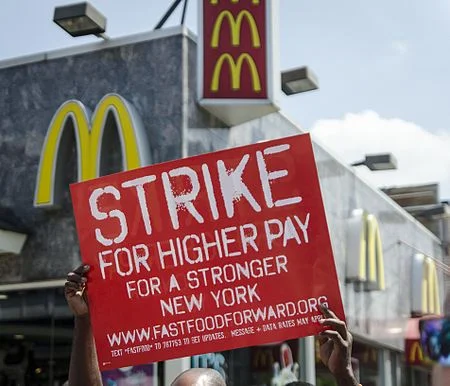
We as a society want people working in restaurants, cleaning our hotel rooms, checking us out and stocking shelves at stores, and doing any number of low-skilled, generally low-wage jobs. Some people even oppose giving those workers a raise because it would either cut into corporate profits or raise prices.
Well, we can’t have it both ways. We can’t benefit from low-wage labor while simultaneously blaming low-wage workers for their own poverty.
And if you’re truly callous enough not to care if the working poor have access to affordable health care, consider how their plight affects you.
Suppose for a moment that 22 million Americans lose their health care, which is what the Congressional Budget Office predicted would happen if the Senate passed the dead-for-now Republican healthcare bill. What happens?
Those 22 million people no longer go for preventive check ups. They don’t treat medical problems when they occur, before the problems get worse. They wait until they have no choice, and then they go to the emergency room.
If they cannot pay the bills accrued at the emergency room, the hospital eats the cost. But hospitals must balance their budgets somehow, so they raise prices for everyone else.
If you’re insured, then you’re not paying the hospital directly, so the higher prices go to your insurance company. And they pass it on to you in the form of higher premiums.
Thus, if you aren’t moved by the human suffering caused by depriving the working poor of health care, perhaps you’ll be moved by your own pocketbook.
Unless emergency rooms start declining treatment to anyone who can’t pay, turning cancer patients and gunshot victims onto the streets to die, somebody is going to pay for the care of the uninsured.
The question is whether they’ll be able to go for preventive check-ups and treat problems early, or whether they ‘ll go to the emergency room after they can no longer avoid it.
For those who rely on Obamacare for their insurance — myself included — the prospects of losing their healthcare is terrifying. I have several friends with cancer who are literally afraid they will die if a repeal bill passes. And that’s not hyperbole.
It’s time we stopped telling ourselves that anyone who’s struggling only has themselves to blame. And as the wealthiest nation on earth, it’s a travesty that we aren’t willing to help them.
Jill Richardson is the author of Recipe for America: Why Our Food System Is Broken and What We Can Do to Fix It.