
Vox clamantis in deserto





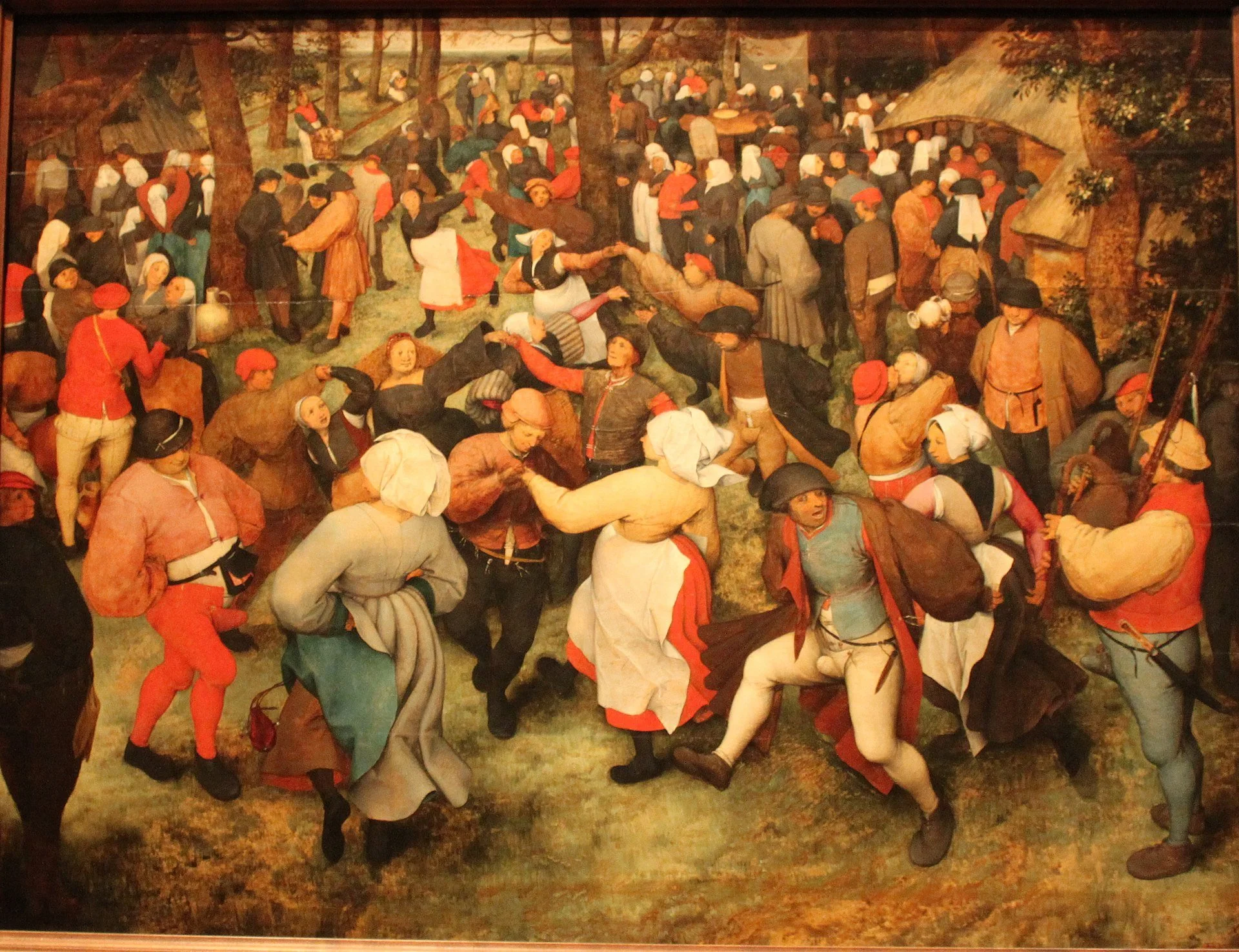
A looming protein machine

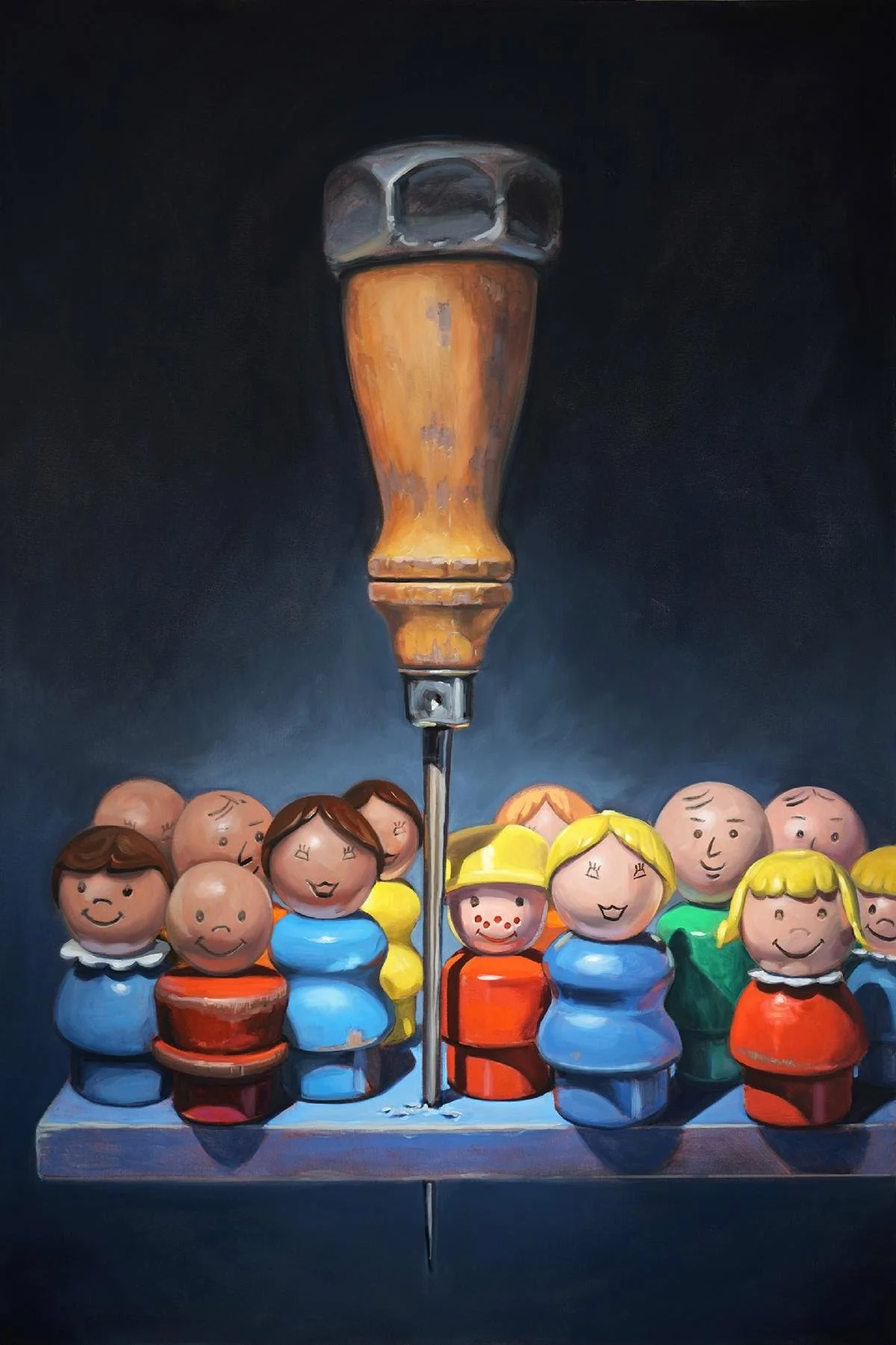
"Towering'' (oil), by Stephanie Bush, in the group show "New Painting & Indoor Sculpture Exhibition,'' at Mill Brook Gallery & Sculpture Garden, Concord, N.H., through Aug. 27.

'The town is drowned'

"The Three Trees,'' Rembrandt etching
"Someone on Walnut Hill has taken a picture,
reducing the town by distance to design
under an arch of sky whose empty vastness
the ample clouds can only underline
All that is left of landscape lies at the bottom
of a sea of summer air: the town is drowned
under that sky, remote above the buildings
that in the picture scarcely clear the ground.''
-- From "The Prospect Before Us,'' by Constance Carrier
Industrial image to pastoral image

Boston Manufacturing Company, 1813-1816, Waltham, Mass. (engraving by Elijah Smith).
"{By tne last quarter of the 1800s} tourists sought out the isolated or remote parts of New England, looking for an imagined world of pastoral beauty, rural independence, virtuous simplicity, and religious and ethnic homogeneity. In these years, a trip to New England came to mean an escape from the conditions of modern urban industrial life, the very life New Englanders a generation earlier had been praised (and sometimes blamed) for creating.''
-- Dona Brown, in Inventing New England
Todd Corayer: Plant milkweek to save monarch butterflies

Female monarch butterfly.

Milkweed.
Via ecoRI News (ecori.org)
WAKEFIELD, R.I. — Planting milkweed in your garden may save a Mexican forest. Migrating monarch butterflies rely on milkweed plants for cover and nutrition on their annual 2,500-mile migration from the oyamel fir forests along Central Mexico’s Transverse Neovolcanic Mountain range to the United States and Canada.
In their larval stage as caterpillars, milkweed is all they consume, but a host of causes have limited areas for the species to grow. Planting milkweed is a simple and beautiful way to bring life, color and sustenance to our yards, and Blue Moon Farm, on Saugatucket Road, has quietly become one of Rhode Island's largest providers.
In their larval stage, monarch butterflies are caterpillars.
Monarch butterflies are miracles of strength and persistence, with simple needs for a brief nine-month life. For protection from dangerous elements of cold and rain, they crowd by the thousands on sagging branches of Mexico’s sacred fir trees. This forest once covered greater expanses, but a warming climate forced it up mountainsides into cool, moist air, and with them went the butterflies.
Monarchs overwinter in just 12 locations there, sheltered from extremes amongst the needles and under protective cloud cover, where cool temperatures lower their metabolic rate, conserving expenditures of lipids, necessary to fuel their journey north come springtime. Before leaving, monarchs mate to begin their cycle of new life.
It was because she is so interested in native plants that Jane Case, owner of Blue Moon Farm, began her business designing and creating perennial gardens more than 30 years ago. It was her understanding of how beneficial milkweed is for butterflies and other winged animals, combined with her artist’s eye for bringing special colors to gardens, that convinced her to originally offer a few varieties. Customers were slow to the idea of planting “a weed” in their private spaces, but recently, as the monarch’s plight has gained widespread attention, sales have increased.
“This has been a long haul,” Case said with a laugh.
It takes four generations to complete a monarch migration. Throughout the route, females will deposit up to 500 milky-white eggs the size of a pen tip on the underside of milkweed. In a week or less, the eggs will hatch, allowing emerging caterpillars to feed on the leaves and their nutritionally rich latex sap. The sap also contains toxic glycosides, which stores in their exoskeletons and, later, their wings, causing them no harm but sickens any who prey on them. Combined with their vivid, striking colors, the toxin serves as an effective warning system.
In just over a month, monarchs transform from those tiny eggs to larval caterpillars, to pupa encased in a silken chrysalis to adult butterflies. Throughout this cycle, it’s milkweed which feeds and protects them.
In about a month, monarchs transform from tiny eggs to larval caterpillars, to pupa encased in a silken chrysalis to adult butterflies.
Larvae seem to feed solely on milkweeds in the genus Asclepias, named in honor of the Greek god of medicine and healing, Asklepios. In their larval stage, they rely mainly on butterfly weed, swamp milkweed or common milkweed.
In turn, the 76 milkweed species depend on butterflies, bees, ants, moths and wasps to transport pollen from their pollinarium to the receptive stigma on other flowering plants. This reliance means more beneficial creatures in gardens, with the bonus of being deer deterrents.
Blue Moon Farm sells five species of Asclepias, including varieties of incarnata such as Cinderella, ice ballet and milkmaid. Because milkweed are perennial, living for more than one year and reproducing from rootstock in addition to seeds, they’re a natural fit in her 3-acre nursery, Commercial gardeners from all over the state have become Case’s largest milkweed clients.
In front of the retail store, Case and the farm’s manager, Mike Yarworth, have planted the tropical milkweed curassavica, so customers can see how beautiful the flowers are and how they aid in the butterfly’s metamorphosis.
“Our goal is to encourage monarchs to lay eggs on the leaves, to feed, to form a chrysalis and watch the whole cycle,” Yarworth said. “We want to see the butterfly emerge.”
He and Case have also observed monarchs favoring the tropical milkweed, which tend not to propagate the following spring so are better choices for smaller gardens.
As researchers learn more about monarch migrations, they have found a significant loss of habitat, from fields containing milkweed tilled over to grow more valuable hays for animal feed, persistent urban sprawl, and liberal use of chemical herbicides, sprayed to kill whatever is undesired, especially plants whose name includes the word “weed.”
To compound this loss of habitat, native Mexican peoples continue to harvest fir for fuel, religious ceremonies and profit.
Monarchs butterflies begin to leave Canada and northern New England from August through late December, as milkweed produces long pointed pods full of seeds tailed with silken white fluff, ingenious parachutes designed to carry them on fall breezes. It’s a natural magic, a genetic gift, that leads these fourth-generation butterflies home to Mexico and the cool mountainous forests of sacred oyamel firs to rest and mate.
Blue Moon Farm sells varieties of milkweed that protect and feed monarchs on their magnificent migrations, and, when year classes are strong, greater populations will return to Mexico — their gorgeous millions dabbed black and orange will crowd on branches, reserving their energy for new journeys north.
Those increased populations will serve as vivid reminders of just how critical it is to preserve and protect the sacred fir forests.
Rhode Island resident Todd Corayer runs a blog called "the fishwrap writer''.
Cold but unfriendly

''This can be a cold place, Boston, and the weather is the least of it. We're often unwelcoming to outsiders. We have a maddening trait of sniping at insiders. We have equal parts determination and aloofness proudly bred into our native bones like the hunting instincts in championship dog.''
--Brian McGrory, in The Boston Globe of March 15, 2002
Big new hospital system would compete with Partners on price
Via Cambridge Management Group (cmg625.com)
As has been long expected, and after several previous merger attempts, Beth Israel Deaconess Memorial Center, in Boston, and Lahey Health, in Burlington, Mass., plan to merge, in a combination that would also include, most prominently, New England Baptist Hospital, in Boston; Anna Jacques Hospital, in Newburyport, and Mount Auburn Hospital, in Cambridge. If approved, the merge would create a 13-hospital system, the second-largest in Massachusetts.
The new network plans to compete with Boston-based Partners HealthCare, the state’s biggest system, with 14 institutions, as a lower-cost network. Partners includes huge Massachusetts General Hospital and Brigham and Women’s Hospital.
Meanwhile, Stuart H. Altman, M.D., chairman of the Massachusetts Health Policy Commission, said he worries about ongoing market consolidation and the associated declining number of independent community hospitals in the state.
Healthcare costs in Massachusetts exceed those in most other states, and that has been attributed in part to the high prices by behemoths like Partners.
New gallery to focus on maritime art
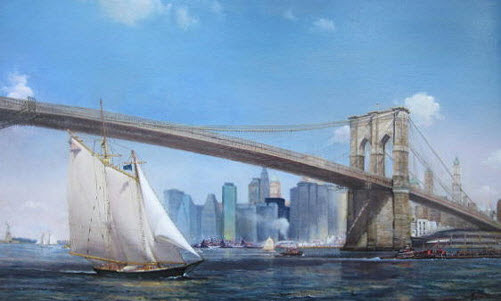
"Brooklyn Bridge, '' by Peter Layne Arguimbau, to be shown at the new Mariner Gallery, Newport. The gallery's grand opening will be on July 29. Contemporary maritime art as well as 19th Century fine art depicting sailing events and seascapes in traditional styles will be displayed.

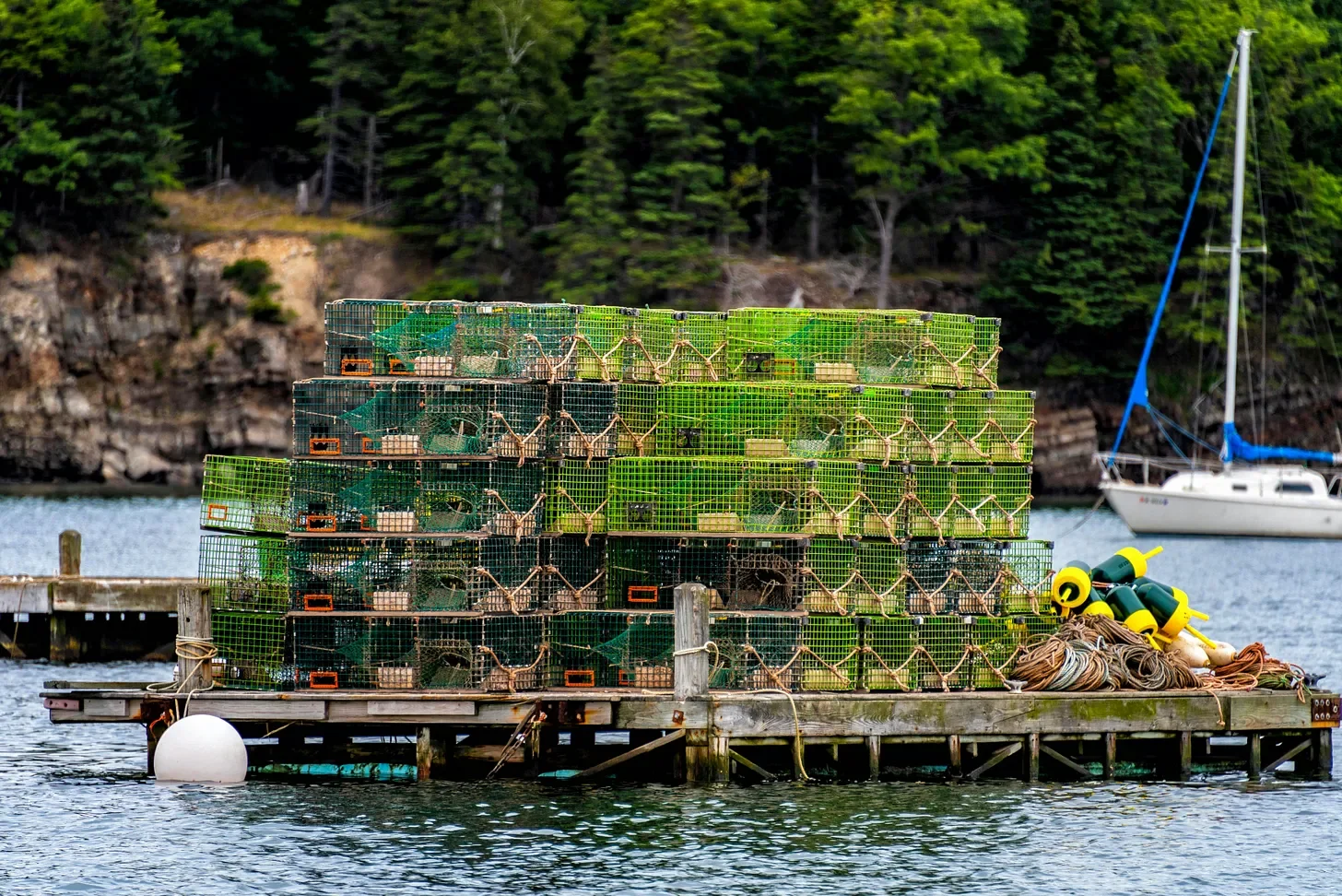
Chris Powell: Forget about Afghanistan, protect lobster owners' privacy

How strange that this country's war in Afghanistan is entering its 17th year with neither success nor political controversy. Americans seem to have taken the advice given to them by the late comedian Mort Sahl about the Vietnam War: Just accept it as part of your life. But the main American portion of the Vietnam War lasted only 10 years.
Of course, Afghanistan is not producing the U.S. military casualties Vietnam did, so presumably the public finds them acceptable if they are even noticed at all. The casualties of Afghans, often innocent civilians, are apparently irrelevant. This lack of interest has caused President Trump to delegate to the defense secretary a decision on whether to send more soldiers to Afghanistan, the current number being grossly inadequate to pacify the country. The necessity and practicality of pacifying it are not questioned, nor the cost -- billions of dollars every year even as the United States is said to lack the money to ensure that everyone has decent medical insurance in America. Indeed, the war in Afghanistan does not seem to be an issue in Congress at all.
But the other day Connecticut's senior U.S. senator, Richard Blumenthal, did express concern about a Transportation Security Administration agent's displaying on Twitter the photo of a 20-pound lobster that was found in a cooler being inspected at the airport in Boston for shipment to Georgia. The lobster had been purchased at a fish shop in Old Saybrook and the shop owner got indignant that the lobster had been displayed without the buyer's permission. So Senator Blumenthal visited the shop to concur with its owner before an audience of journalists.
"What may seem funny to one person may feel like a violation of privacy to another," the senator said. But in displaying the lobster the TSA people did not identify its buyer and thus did not violate his privacy, while if the lobster had any privacy rights, they were first violated by the fish shop itself when it put the crustacean in a display case for sale.
No matter, for the senator had gotten on television again and for a reason -- the privacy rights of lobsters and those who would feast on them -- more interesting than his usual denunciation of the Trump administration, which everyone already knew to be incompetent and disgraceful. But another war waged half-heartedly out of mere inertia is even more disgraceful, and removing that disgrace requires Connecticut's members of Congress to speak out against it and their constituents to press them to.
Nice Guys Finish Without a Budget
Connecticut has gone two weeks without a state budget, but at least House Speaker Joe Aresimowicz this week accepted responsibility for failing to rally the House Democratic majority behind one by July 1. In part the problem may be Aresimowicz's virtues. He is known for reasonableness and patience rather than for cracking heads. To a greater extent the problem may be the division in the speaker’s party.
While most House Democrats, liberals, want to raise taxes again to cover the huge budget deficit that reflects the failure of liberal policies, Governor Malloy has turned against raising taxes, as have a few Democratic House members whose defection would send a tax-raising budget to defeat at the hands of the unusually large minority of Republicans in the House. So for the time being the hapless Democrats seem to prefer to let the governor do Connecticut's budgeting by himself day to day, to exact unpopular cuts on his own, and to take the blame, since he's not seeking re-election. If he tires of that, maybe he will invite the Republicans and dissident Democrats to send him a Republican budget without more taxes.
Chris Powell is managing editor of the Journal Inquirer, in Manchester, Conn.
Tim Faulkner: The governors and global warming
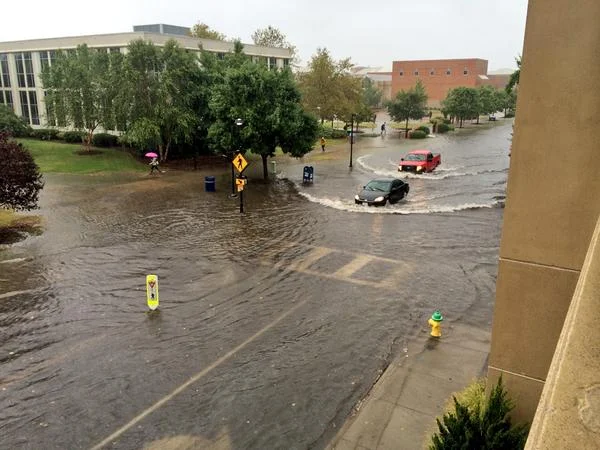
Tidal flooding in Hampton Roads, Va. This has become increasingly common there, and not just during storms.
Via ecoRI News (ecori.org)
PROVIDENCE
For three days inside the Rhode Island Convention Center, governors steered clear of saying “climate change.” The public literature outlining the meetings and activities for the July 13-15 National Governors Association summer gathering didn’t mention the term. Climate change was said twice during a discussion titled “Preparing For the Extreme: Building Resilient Communities.” Only once was it uttered by a governor.
“Whether they believe in climate change or not, they are all aware of it today,” said Virginia Gov. Terry McAuliffe, referring to the residents of his state and the ubiquitous reminders they have of climate-change threats, such as sea-level rise.
For the record, Canadian Prime Minister Justin Trudeau did mention the “fight against climate change” in his speech to the governors. Meanwhile, Vice President Mike Pence boasted about expanding offshore drilling, rolling back the Clean Power Plan and reviving the Keystone XL pipeline.
While climate-change mitigation wasn’t on the agenda, adaptation is well underway in several states. Even as the dozen or so governors in attendance at the breakout meeting avoided saying “climate change," they embraced the word “resilience” as a means to address the destruction caused by more frequent extreme weather, flooding and a rising shoreline.
Louisiana Gov. John Bel Edwards recognized that sea-level rise was a problem. Since he took office in January 2016, 46 parishes have been declared natural-disaster areas.
“Resiliency is a huge issue for us in Louisiana,” Edwards said.
The Louisiana Democrat championed the relocation of the Biloxi-Chitimacha-Choctaw Native American tribe as an successful response to the state’s rapid loss of land to sea-level rise.
Gov. Asa Hutchinson, of Arkansas, and Gov. John Bel Edwards, of Louisiana, didn't say climate change, but they do want to make their states more resilient to extreme weather and flooding.
Republican governors from inland states also seek help with sudden and powerful weather events. Wyoming Gov. Matt Mead wants better forecasting for tornadoes. Arkansas Gov. Asa Hutchinson and Vermont Gov. Phil Scott seek assistance with the preparation for, and response to, flooding.
Brock Long, who was confirmed as director of the Federal Emergency Management Administration (FEMA) on June 23, promised to improve disaster-relief programs, but noted that he doesn’t want to spend money on disaster relief if states don’t prepare for them. FEMA, Long said, spent $3.2 billion during the past four years on disaster relief and only $222 million on emergency planning.
“It should be flipped,” he said.
Long said he worried that states suffer from “hazard amnesia,” meaning that they quickly forget devastating natural disasters and fail to plan for the next one. Simple steps such as teaching residents how to turn off water mains and administer CPR can save lives and money, he said.
Mikael Berkowitz, president of 100 Resilient Cities, the foundation that helps cities adapt to climate change, urged every state to hire a chief resiliency officer to coordinate federal and state emergency planning and responses. He urged replacing aging infrastructure with green infrastructure projects, like the Big U in New York City, to manage flooding and improve the vitality of urban areas.
Climate activists protested outside the Rhode Island Convention Center during the National Governors Association meeting.
Soon after the meeting concluded, some 200 climate activists gathered across the street from the convention center to urge the governors to take aggressive action to cut fossil-fuel emissions.
The protesters called out Rhode Island Gov. Gina Raimondo to respond to a recent letter from the Civic Alliance for a Cooler Rhode Island seeking zero emissions by 2035 and to enact a carbon tax-and-dividend program.
Jerry Elmer, senior attorney for the Conservation Law Foundation, said Raimondo’s act of signing a letter from U.S. governors and mayors in support of the Paris climate agreement was “empty, and meaningless and vacuous as long as she doesn’t take action on climate.”
Elmer chided Raimondo for not opposing the proposed Burrillville power plant.
“What Rhode Island does not need now is a new carbon, long-lived, carbon-emitting power plant," he said. "The bottom line is very, very simple: actions speak louder than words.”
Kat Burnham of People’s Power & Light said Raimondo lacks a clear action plan for addressing climate emissions.
The financial and health costs, Burnham said, will only increase as long as the state relies on fossil fuels.
“We cannot afford to send billions of dollars to other states for natural gas that we don’t want,” she said.
“Environmental protection is not a political issues; it is a human issue," Providence College student Alex Duryea said.
Duryea, the student sustainability coordinator at PC, called for a ban on fracking and an aggressive switch to renewable energy. “The time to act is now," she said.
Tim Faulkner writes frequently for ecoRI News.
'Shimmering grace'
"A something in a summer's Day
As slow her flambeaux burn away
Which solemnizes me.
A something in a summer's noon --
A depth -- an Azure -- a perfume --
Transcending ecstasy.
And still within a summer's night
A something so transporting bright
I clap my hands to see --
Then veil my too inspecting face
Lets such a subtle -- shimmering grace
Flutter too far for me --
The wizard fingers never rest --
The purple brook within the breast
Still chafes its narrow bed --
Still rears the East her amber Flag --
Guides still the sun along the Crag
His Caravan of Red --
So looking on -- the night -- the morn
Conclude the wonder gay --
And I meet, coming thro' the dews
Another summer's Day!"
-- Emily Dickinson, "A Something in a Summer's Day''
David Warsh: Treat the Trump regime as an accidental dark sitcom
I’ve argued that Donald Trump’s election should be viewed as accidental – not the result of an American realignment or identity crisis, but rather a fluke. Pressure to elect an outsider had been growing ever since 1992, when software entrepreneur H. Ross Perot won 19 percent of the popular vote. In 2016, continuing globalization and technology shocks, plus revulsion against the Clinton and Bush dynasties, combined to bring about a result that no one expected.
Jeb Bush, the Establishment candidate, was forced out of the Republican primaries, permitting Trump to take control of the Republican Party. Hillary Clinton battled past her primary challenger, Bernie Sanders, only to lose the presidential election in the Electoral College, when the presumed “Blue wall” states of Michigan, Pennsylvania and Wisconsin very narrowly went for Trump.
So, six months after Trump’s inauguration, how best to think about his presidency?
One view is to reach back nearly 50 years to the Watergate affair, to hunt for misdeeds, to seek to impeach and convict the president of high crimes and misdemeanors, and so repudiate him.
Another is to set a watchful eye, to expect Trump to remain for the rest of his term, and to find new ways to think about what has happened.
Remember The Beverly Hillbillies?
The Beverly Hillbillies was an immensely popular television situation comedy in the 1960s about a rural Southern family that moves to Beverly Hills after becoming rich. It, too, was predicated on an accident. Each successive episode began by recapping the first: patriarch Jed Clampett trying to shoot a squirrel on his farm and hitting a vast oil deposit instead.
The Clampett family are thereupon seen loaded up in a very old truck, like so many Dust Bowl refugees, moving to California – with $25 million in the bank. (It was a lot of money in those days!) In one episode after another, they shake up the privileged society they find there with their backwoods ways.
The twist that sustained the series is that while the Clampetts seem backwoods rubes to their neighbors, who look down on them, they are straightforward, good-hearted, moral folk. It is sophisticated Beverly Hills society that’s self-absorbed, uncomprehending and corrupt, especially Milburn Drysdale, Clampett’s greedy, unscrupulous banker and pretend best friend, who lives next door.
The Trump family saga turns the Clampett gimmick on its head, and weaves a hostile Russian government into the plot. Whether it’s the president declining to release his tax filings, bragging to his Russian guests that the FBI director he has just fired is a “nut job,” casually pulling out of the Paris Climate Accord, or simply telling the French president that his wife is in “such good physical shape – beautiful,” the patriarch is the boor-in-chief, a slippery rogue installed in the White House not by money but by votes. His family members have been outfitted with unaccustomed West Wing offices and security clearances.
The very latest episode, which appeared Saturday on page 1 of The Wall Street Journal (subscription required), features son-in-law Jared Kushner, who organized the meeting of the White House’s American Technology Council last month at which technology industry leaders, venture capitalists and university presidents sat down with the president to talk technology policy. Zachary Bookman, chief executive of OpenGov, got one of 18 seats at the table.
The California start-up, which renders city and state government data more accessible, is seeking federal business. Kushner’s venture-capitalist brother is an investor in the firm, wrote WSJ reporters Jean Eaglesham and Lisa Schwartz. Kushner himself served on Thrive Capital’s board until he sold his interest in the firm to his brother in January. Thrive invested in several fund-raising rounds in InGov, which in 2015 was valued at $180 million – vastly less than the market value of most of the companies at the meeting. Indictable? No. Typical? Yes.
Sitcom is one way of thinking about the Trump administration. The narrative based on the Watergate scandal is the other. Here The New York Times, The Washington Post, and MSNBC have the taken the lead. The latest chapter in this version was the news last week that Donald Trump Jr. sat down last summer with some Kremlin-connected Russians in hopes of finding dirt on Hillary Clinton.
To be sure, the presidency of the United States is not a sitcom. I have myself toggled back and forth between thinking that Donald Trump may have already done something so wrong that he may be driven from office. He may yet do something sufficiently stupid, or dangerous, or both. So far, though, I don’t think that he has.
The Trump presidency will go into history with an asterisk – not because the Russians meddled with the Democrats’ campaign, not because rogue FBI agents put their thumbs upon the scale, but because his election was an accident. The 25-year feud between the Bushes and the Clintons immobilized both major political parties, fracturing one, paralyzing the other, and Trump slipped through as a result. The relevance of the Hillbillies show, a parable of sound values, is to emphasize how unprepared for life in the White House is the Trump clan – a riches-to-rags story just the reverse of what turned out to be the case in the sitcom.
Still, most of us have a distinct preference to let the results of one presidential election stand until the next – Watergate being the exception. Indeed, if the WSJ had chosen to frame the Clinton presidency in terms of The Beverly Hillbillies instead of the Watergate narrative, things might have gone very differently ever since
The Clampett family saga ran for nine seasons, 1962 until 1971. It was among the 20 most popular shows on American television – so popular that it was remade as a film in 1993. The Trump family saga is scheduled for four years. Donald Trump’s administration might be cancelled before then. But, week to week, I find it easier to think of it as a dark sitcom, turning the familiar sound-values premise on its head, a mash-up of West Wing and Breaking Bad. It is not likely to be renewed.
David Warsh, a veteran financial journalist and economic historian, is proprietor of economicprincipals. com, where this essay first appeared.
Prepare for tough and long containment of murderous N. Korean regime

Obedient North Korea kids perform. Failure to obey the regime can get you killed.
Adapted from Robert Whitcomb's "Digital Diary,'' in GoLocal24.com:
Ten years ago, it might have been possible to destroy their key missile and nuclear facilities in U.S. military “surgical strikes,’ as was very seriously considered by American officials. But current dictator KimJong-un and his brutal father before him so expanded and spread out the facilities housing their weapons of mass destruction (which include poison gas), that a direct preemptive attack on the regime would not prevent it from wreaking havoc on South Korea, Japanand, soon, America.
Seeking help from the anti-American Chinese and Russian dictatorships will probably be fruitless: They benefit from the U.S. being distracted by North Korean saber-rattling. China, especially, wants to distract the U.S. from trying to thwart Chinese attempts to essentially take over the entire South China Sea. And, as Anders Corr notes, China has helped to build the North Korean nuclear-weapons program, “from trucks to warheads.’’ See his essay here:
https://www.forbes.com/sites/anderscorr/#679d5691abd9
The only practical response to Kim’s latest nuclear-powered threats is a tough and very patient containment policy. This would include putting U.S. tacticalnuclear weapons back in South Korea, from which they were pulled in 1991 in a failed effort to persuade Pyongyang to permit long-terminternational inspection of its nuclear plants. Such weaponry in the South would tend to make the North Koreans worry more deeply about attacking the South, be it with the North’s nukes and/or massive artillery attacks on Seoul, which is less than 40 miles from the border.
It bears noting that in the early ‘90s, North Korea and South Korea signed the Joint Declaration on the Denuclearization of the Korean Peninsula, whereby both sides promised that they would "not test, manufacture, produce, receive, possess, store, deploy or use nuclear weapons." And the pact bound the two sides to forgo "nuclear reprocessing and uranium enrichment facilities." Another sick joke by the Kim Dynasty.
The agreement, which North Korea signed merely to buy time, also provided for a bilateral inspections regime, which soon fell apart because of North Korean noncooperation, despite the efforts of the U.S. and South Korea to bribe the Kim dynasty out of its barbarism with aid offers.
Meanwhile, we’d be very foolish to follow the advice of China and Russia and put a moratorium on large-scale U.S. and South Korean military exercises meant to display force and will. As with earlier displays of goodwill, this would be taken as a sign of weakness and further egg on the North Koreans.
We must also step up our cyberwar against Kim’s regime and seek as many ways as possible to financially hurt Kim, his family and his well-fed and luxury-loving retainers in a state whose regime has killed so many of its people, through direct mass murder and policies that have made inevitable occasional famine. This will require finding tougher and broader ways to penalize the many Chinese government officials, companies and private individuals who profit from doing business with Kim and his cronies.
Then we must wait out the regime as best we can, perhaps over many years. This recalls President Kennedy calling the Cold War a "long twilight struggle.''
From orchards to mall

"When I was growing up, in the 1950s, my grandparents had a farm outside Hartford, {on} one of the four corners of a crossroads. The farm was surrounded by orchards, and there was a skating pond for the winter and blueberry bushes for July and August picking. By the time I was a teenager, the three other corners were being filled in, and there were supermarkets and gas stations standing on old farmland. By the time I got out of college, my grandparents farm had become a regional shopping mall.
-- Robert Yaro, as quoted in Tony Hiss's The Experience of Place (1990).
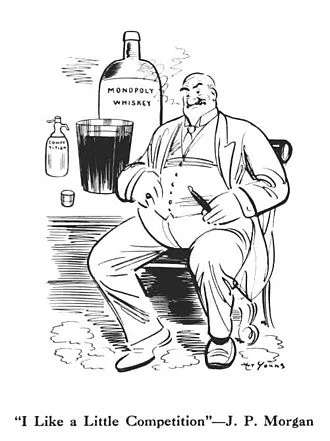
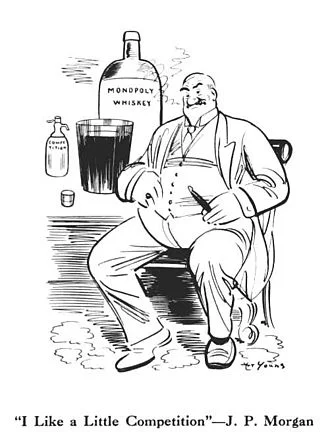
James P. Freeman: Past time to break up America's mega-banks before they cause another crash
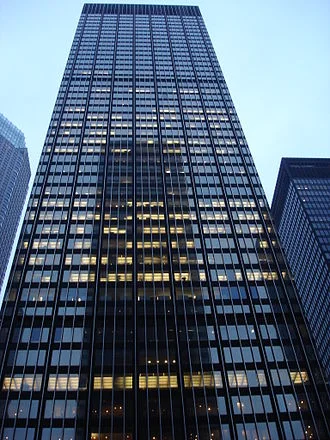
JPMorgan Chase & Co. headquarters, in Manhattan.
As Americans were lounging comfortably over the 4th of July holiday, some were surely feeling a sense of new-found serenity. Not because they were full of burgers, barkers and beer. On the contrary, they were digesting the news that 34 of the nation’s largest banks, for the first time since the financial crisis began a decade ago, all passed the Federal Reserve’s annual “stress tests,” which, according to The Wall Street Journal, “could bolster the industry’s case for cutting back regulation.” But hold the match before lighting leftover fireworks in celebration. Break up the banks first.
Remarkably, the five largest banks today — JPMorgan Chase & Co. Bank of America, Citibank, Wells Fargo Bank, US Bank — now control about 45 percent of the financial industry’s total assets or roughly $7.3 trillion in assets. To put that number in perspective, the size of the U.S. economy is roughly $18 billion.
Twenty-five years ago, the five largest banks owned just 10 percent of all financial assets. The Federal Deposit Insurance Corporation’s statistics reveal that in 1992 there were 11,463 commercial banks and 2,390 savings and loans. By March of 2017, that number had dwindled to 5,060 commercial banks and just 796 savings institutions. The assets held by the five largest banks in 2007 – $4.6 trillion – increased by more than 150 percent over the past decade, when they held 35 percent of industry assets.
The sharp rise in the concentration of these assets (a measure of size and wealth) has real economic, political and social ramifications. As oxfamamerica.org fears, “These massive banks use their wealth to wield significant political and economic power in the U.S., in the countries where they operate, and in the international arena.” Finance today, author Rana Foroohar reasons in Makers and Takers, “holds a disproportionate amount of power in sheer economic terms.” (It takes about 25 percent of all corporate profits while creating only 4 percent of all jobs.)
Moreover, writing five years ago in The Washington Post, just as the banking system was being recalibrated and reregulated, U.S. Sen. Sherrod Brown, D-Ohio, ranking member of the Senate Banking Committee, recognized then (and still true today) what the federal government should recognize now: “Even at the best-managed firms, there are dangerous consequences of large, complex institutions undertaking large, complex activities. These companies are simply too big to manage, and they’re still too big to fail.” While Brown is correct in citing “Too Big To Fail” (a warped public policy), he is right to emphasize (as many more public officials should) that these firms are simply too big to manage and maintain.
JPMorgan Chase is a financial colossus. In January 2017, it reported assets of $2.5 trillion that generated $99 billion in revenue and earned $24.7 billion in profit. It is the largest U.S.-domiciled bank and the sixth largest bank in the world. Today, it alone holds over 12 percent of the industry’s total assets, a greater share than the five biggest banks put together in 1992. Its global workforce of 240,000 operates in 60 countries. From 2009 to 2015, the bank paid $38 billion in fines and settlements (involving among them the Bernie Madoff and London Whale scandals), mere rounding errors in its ethics and financials.
Jamie Dimon is the company's chairman and chief executive officer, perhaps the second most difficult job in the country, only after the presidency of the United States. To say that he “manages” the firm would be an overstatement. More accurately, he “presides.” Dimon was named CEO in 2005 (when assets were only $1.2 trillion) and is widely given credit for adroitly navigating the financial turmoil of 2008-2009. In 2015, he made $27 million and said that banks were “under assault” by regulators. He keeps two lists in his breast pocket: what he owes people; what people owe him.
Now 61, he is the subject of much discussion centering on speculation about who his successor will be. In an interview for Bloomberg Television last September, Dimon said he would leave “when the right person is ready.” But who is ever “ready” and able to run a $2.5 trillion company? No one competently.
Wells Fargo ($2 trillion in assets with 8,500 locations) was thought to be among the best managed banks before, during, and after the crisis until it was revealed last year that it had fired 5,300 employees and clawed back $180 million in compensation, due to the unauthorized opening of 2 million customer accounts. A flawed “decentralized structure” and perverse sales culture were to blame for illicit activities that occurred over a decade.
Fortune Magazine in March 2007, with sterling irony, named Lehman Brothers (No. 1) and Bear Stearns (No. 2), respectively, as the most admired companies in the securities industry. By the end of 2008 Lehman Brothers had filed for bankruptcy (the largest in U.S. history, $692 billion) and Bear Stearns had been sold in a fire sale by fiat to JPMorgan Chase.
Big banks are driven by avarice and algorithms (complicated code-directing computers to effect financial transactions by the millisecond), not altruism. Lending is secondary to speculating. Complexity has replaced familiarity. Vaults hold more data than gold. And traders can destroy banks faster than boards of directors. On any given business day, no executive or regulator can be certain of the health of these institutions.
This is the new Wall Street alchemy.
The first public signs of distress in the financial system before the Crash of 2008 appeared 10 years ago, when a July 2007 letter to the firm’s investors disclosed that two obscure hedge funds managed by Bear Stearns had collapsed. The long fuse had been lit. The Great Recession was triggered. And the torch paper was provided in the form of legislation.
The Financial Services Modernization Act of 1999 (known as Gramm-Leach-Bliley) neutered the Banking Act of 1933 (known as Glass-Steagall), which separated the riskier elements of investment banking from the more conservative aspects of commercial banking. The 1999 law spurred a new model of financial supermarkets (banking, investments and insurance under one company). It also unwittingly fostered a new risk-taking model: Losses could be socialized (depositors, shareholders, taxpayers) while profits could be privatized (executive compensation). Exotic financial instruments and ineffective regulatory oversight fueled the meltdown.
Today’s big banks largely resemble Zuzu’s petals in the film It’s a Wonderful Life, seemingly mended but not made better. During the Crash/Panic of 2008, the federal government engineered the financial equivalent of pasting damaged rose petals in a desperate attempt to prevent the total collapse of the banking sector. It effectively merged the unwieldy likes of Merrill Lynch with Bank of America, Bear Stearns with JP Morgan and Wachovia with Wells Fargo.
In the wake of the crisis (which ultimately required $1.59 trillion in government bailouts and another $12 trillion in guarantees and loans), The Dodd-Frank Wall Street Reform and Consumer Protection Act of 2010 became law. It sought to make the financial system safer and fairer than it had been, to reduce the risk of financial crises, to protect the economy from this kind of devastating costs of risky behavior, and to provide a process for the orderly disposition of failing firms. But after a staggering 848 pages and 8,843 new rules and regulations, Dodd-Frank does nothing to reduce the size of, and hence the systemic risk posed by, the biggest banks.
“We may have gotten past the crisis of 2008,” Foroohar concludes in her book, but, disturbingly, “we have not fixed our financial system.” Bankers still “exert immense soft power” via the revolving door between Washington and Wall Street. And today’s top government regulators are littered with former banking executives, who are “disinclined to police the industry.”
The idea of overhauling big banks, however, is attracting some surprising converts.
In May, President Trump acknowledged that he was “looking at” breaking up the big banks. And the principal architects and former co-heads of the first financial supermarket — Citigroup — have had an epiphany of sorts. In 2015, ex-Citicorp CEO John Reed wrote in the Financial Times that “the universal banking model is inherently unstable and unworkable. No amount of restructuring, management change or regulation is ever likely to change that.” And in 2012, Sandy Weill, another former Citicorp CEO, called for a return to Glass-Steagall.
Dodd-Frank mandates that the Federal Reserve conduct annual stress tests on financial institutions with assets over $50 billion. This year’s test on 34 banks relied upon enhanced computer modeling to assess how those banks would perform under “adverse and severely adverse” economic conditions. But such modeling is an unreliable predictor of reality. As JPMorgan Chase knows well.
In May 2012, The New York Times provided insights into massive trading losses at JP Morgan Chase. The bank had little idea that the losses were brewing. It entrusted computer modeling pioneered by its bankers in the 1990s to identify and measure potential losses. But the bank tripped up its measurements. It deployed a new model that underestimated losses; when it redeployed the old model, it nearly doubled the losses. As The Times chillingly remembers, such computer programs “proved useless during the financial crisis.”
James P. Freeman, a former banker, is a New England-based writer, former columnist with The Cape Cod Times and frequent contributor to New England Diary. This piece first ran in The New Boston Post.
Sun on gray shingles

"Sunrise in Westport (Mass)'' (watercolor on paper), by Peter Hussey, in his current show "Steps Along the Way,'' at the Newport Art Museum. He specializes in painting traditional New England architecture.
Summertime blues
"Well I’m a-gonna raise a fuss, I’m gonna raise a holler
About workin’ all summer just to try an’ earn a dollar
Everytime I call my baby, to try to get a date
My boss says, no dice, son, you gotta work late
Sometimes I wonder what I’m gonna do
’cause there ain’t no cure for the summertime blues."
-- From "Summertime Blues, '' by Eddie Cochran
A different idea of summer
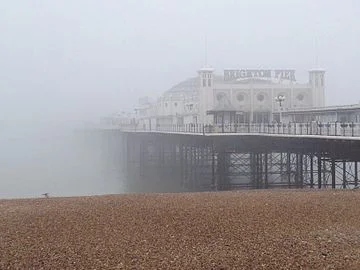
''Summer on a Maine island means a host of rainy mornings, even days, spent in front of the fireplace. The gray light in the window, the feathery murmur of rain on the roof, the banshee wail of the fog siren down past Doughty's Landing at the naval station, the resonant splash of rainwater tumbling into the rain barrels -- the signs were there the moment I woke up, huddled in a bundle of flannel sheets and army blankets.''
-- John Thorne, in Simple Cooking
He's writing about Long Island, in Casco Bay.
The art of competition

"Big Deal (Red Team vs. Blue Team)'' (acrylic paint on wood), by Tim McCool, in his show "Most Improved,'' at the Montserrat College of Art, Beverly, Mass., through July 29.
The work being featured comes from Mr. McCool's recent residency at the Boston Center for the Arts. "My residency, and this exhibit, provide a chance for people to celebrate their friends, loved ones, and also themselves. During the workshops people will get a chance to create trophies, pose on top of Olympic-style award podiums, and reflect on our culture's pressure to compete, succeed and get ahead." he said.