
Vox clamantis in deserto







Don Pesci: Imports, over-regulation assaulting fishing industry

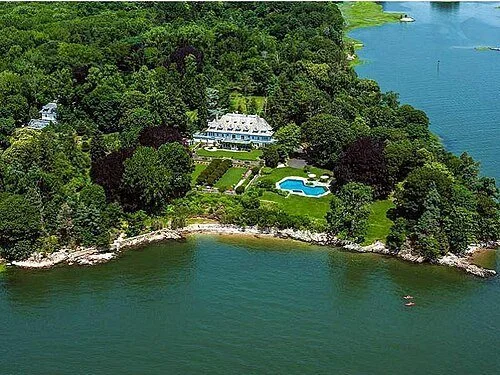
The fishing industry in Connecticut is under assault from foreign fish imports. Mike Gambardella, owner of Gambardella Wholesale Seafood, based in Stonington and East Haven, writes, somewhat frantically, that consumers don’t realize that the import seafood market is at 96 percent: “Our fishermen are throwing wild-caught healthy, chemical free, dead fish overboard daily.”
The regulatory apparatus in the United States is simply crushing local fishing industries: “We’re going out of business in Stonington, Connecticut, one of the oldest commercial fishing ports in the nation, dating from the 1600s”
David Goethel’s experience is typical: The federal government is destroying Mr. Goethel’s industry through overregulation and forcing ground-fishermen like himself to pay $700 per day to have authorities monitor them on their boats. Even the government estimates these additional costs would put 60% of the industry out of business. Cause of Action Institute is helping Mr. Goethel fight back through the courts to save his livelihood.
At his wits end, Gambardella has sent out appeals to nearly everyone, including President Trump and the seven members of Connecticut’s all Democratic U.S. Congressional Delegation.
Former U.S. Rep. Rob Simmons, now first selectman of Stonington, has joined the struggle to remove deathly federal regulations from New England fishermen. But other members of Connecticut’s U.S. congressional delegation, including the state’s two publicity-seeking U.S. senators, Chris Murphy and Dick Blumenthal – now busying themselves seeking to impeach Trump -- have done little but console Gambardella and others with the usual political bromides: “It takes time… be patient… we’re working on it…” Tough to be patient while the patient lies at death’s door on the gurney, and all the doctors appear to be conspiring to euthanize it.
On July 27, at the La Grua Center, 32 Water St., Stonington, just prior to Stonington’s Blessing of the Fleet, Simmons and Meghan Lapp will “lead an interactive discussion with representatives from our local fishing community. During this event, we will learn about the challenges facing one of America’s oldest commercial industries” and what can be done to help preserve one of the oldest industries in Connecticut from the withering hand of excessive regulation.
Everyone should be there.
Don Pesci is a Vernon, Conn.-based essayist.
Llewellyn King: Start all over again with healthcare reform
The process now underway in Congress to repeal and replace the Affordable Care Act (Obamacare) reminds me of what would happen if you tried to thread a small darning needle with a strand of bulky yarn: It won’t go through the eye. The more you try to pull the strand through the eye, the less useful the yarn coming through it will be.
Therefore, isn’t it time to reconsider the whole proposition as though there were no Obamacare, no House version of its replacement, and no preconceived objective beyond affordable care for all?
Also, there should be no pre-established conditions, such as single-payer and multiple-payer; no pre-established goals, such as preserving particular insurance practices and expectations that employers will always be part of the deal; and no expectation that the health-care bill should also be a tax bill or a welfare bill.
Its simple goal should be to free people from fear of medical catastrophe and enable physicians and hospitals to care for the sick without commercial pressure.
I’ve come to the belief that big, new ideas are needed from my own experience as an employer-provider. For more than 30 years, as a small Washington publisher, I provided health insurance for my staff of 25. It was a nightmare that got worse as medicine got more expensive.
Of many strange situations, none was worse than the employee who developed nasopharyngeal cancer, a rare type of head and neck cancer. The insurance paid for chemotherapy and radiation, but refused to pay for expensive painkillers. These had to be brought in from France by a family member.
Maybe the most discouraging was a printing-press operator who wanted the premiums given to him, as he refused to see the point of insurance, although he was married with three small children. “We don’t use insurance,” he declared. “When the kids are sick we go to the emergency room and tell them we have no money.” When pressed, he said they did this because they didn’t want the bother of filling out forms.
If you think, as I do, that the system we have is less than perfect, one is immediately thought to be a believer in British-type national health insurance. Not necessarily so.
As a former citizen, I know something about Britain’s National Health Service and I think it is better than what is happening in the United States. I’ve received treatment in Britain under the system and members of my family in England are devoted to it. There is good treatment for major procedures. However for lesser ailments, there are long waiting lists. Bureaucracy is everywhere.
Worse, can you imagine a health-care system dependent on the budget cycle in Congress?
In Switzerland there is a totally private system, which looks like improved Obamacare. Everyone is obliged to buy insurance, just as everyone has to pay taxes. There are no limits on troublesome things like preexisting conditions. The government regulates the insurers. In a referendum, the Swiss rejected a switch to a single-payer system by 60-40 percent.
There also are mixed systems in Germany and Holland. The commonality is that everyone is covered and the governments regulate. That way, insurance pools are large and have the correct mix of old and young — otherwise the old will overwhelm any system.
Unless we devise a structure that caters to all, we will continue with overburdened emergency rooms, preposterous hospital charges and doctors who will pick and choose their patients.
No one on a gurney being wheeled down a hospital corridor should be thinking, “How will I pay for this?”
The chances are that when Congress has finished trying to thread the unthreadable needle, there will be a groundswell on the left for single-payer — better, possibly, but not a fit in the United States.
Meanwhile, there are too many pre-existing conditions in congressional thinking. We need a new prescription, a bigger needle and a finer thread.
Llewellyn King (llewellynking1@gmail,com) is host and executive producer of White House Chronicle, on PBS, and a veteran publisher, editor, columnist and international business consultant. He is based in Rhode Island and Washington. This piece first ran in Inside Sources.
Can't we all just get along?

Israel/Palestine Impasse
Two peoples want this land
And won't agree to share.
Each side maintains its stand.
Oh, what a foolish pair!
-- Felicia Nimue Ackerman
The art of correspondence

From "Ever Yours, Henry James,'' a site-specific installation by conceptual artist Elane Reichek based on novelist Henry James's letters to Isabella Stewart Gardner, the founder of the Boston museum (which opened in 1903) where this show will run through December.
The show is a graphic sampler composed of fragments from Henry James's letters to Isabella Stewart Gardner. Ms. Reichek was especially drawn to how Mr. James closed his letters to Mrs. Gardner, from the more formal "with many good wishes" to the very affectionate "always constantly."
By focusing on these closings, Ms. Reichek hopes to illustrate the depth of Mrs. Gardner's and Mr. James's long friendship. Ms. Reichek says: "By making use of the older 19th Century private epistolary mode for a public contemporary art piece, I wanted to cross the literal passage between the old and the new....’’
A pre-EPA beach

"Surf, Cohasset {Mass.}, by Maurice Prendergast, ca. 1900.
I remember sharply the look and smell of the beach that was down the hill and through the woods near our house on Massachusetts Bay. Low rocky headlines on each side. Big white-elephant gray-shingled and faux Spanish Mission style mansions -- some summer places and some year-round— loomedamong the bayberry and poison ivy and over the gray sand and pebbles beach, which was occasionally covered by oil from ships a few miles offshore. There was often a rank smell from the oil and from anarrow stream of sewage water that frequently flowed down one side of the beach. (This was way before the Environmental Protection Agency.) Soon after an hour in the sun, my back hurt from sunburn.
The water, unlike Florida’s or even Buzzards Bay, was usually cold and murky. But we all went swimming in it anyway. Then we rushed home to our gray-shingled house a quarter mile from the fragrant beach and took hot showers.
-- Robert Whitcomb
Time to play golf instead?

From Robert Whitcomb's "Digital Diary,'' in GoLocal24.com:
There was unfortunate chaos at the end of the Rhode Island legislative session caused by a war of wills between House Speaker Nicholas Mattiello and Senate President Dominick Ruggerio. The battle was ignited by Mr. Ruggerio’s last-minute inclusion in budget legislation of an escape clause that would let the General Assembly stop the car-tax phaseout – beloved by Mr. Mattiello -- if in any given fiscal year the legislature determines it to be fiscally irresponsible.
As regressive as the car tax is, Mr. Ruggerio is right to be leery of a phaseout’s long-term fiscal effects, especially given the inevitability of recessions. Where would legislators find the money to reimburse the municipalities to offset their loss of car-tax money when the economy goes south?
It’s too bad that the two leaders couldn’t have worked out a deal on the budget, which is now in limbo because of their standoff. That’s because, as I’ve written, the stalled budget was generally fair, practical and reasonable, or about as much as it could be given political realities.
In the end, it comes down to personalities as much as policies and principles. Perhaps the two leaders will go fishing or play 18 holes of golf together in the summer to achieve a détente before a special session in the fall to address the budget and the Pawtucket Red Sox’s desire for a new stadium. Okay. Maybe they don’t like each other and probably won’t get together. But a cooling-off period might help.
In the grass

"The summer sun shone round me,
The folded valley lay
In a stream of sun and odour,
That sultry summer day.
The tall trees stood in the sunlight
As still as still could be,
But the deep grass sighed and rustled
And bowed and beckoned me.
The deep grass moved and whispered
And bowed and brushed my face.
It whispered in the sunshine:
'The winter comes apace.'"
-- "The Summer Sun Shone Round Me,'' by Robert Louis Stevenson
'The mother of beauty'

-- Photo by Dronepicr
"We do not long for endless summer. We know that death is the mother of beauty, and we know that only those who have stood beside the frozen water and shivered in the wind can take the full measure of sunlight and locust hum and fish moving in the deep eddied pools beneath the falls.''
-- The late Boston area mystery writer Robert B. Parker

Religion can be a very lucrative racket

Shot of the Rev. Pat Robertson's Virginia estate. Mr. Robertson has raked in hundreds of millions of dollars for himself from his religion business. Why oh why do poor and middle-class viewers of this con man's TV shows send him money?
Adapted from Robert Whitcomb's "Digital Diary,'' in GoLocal24.com:
Americans’ capacity for self-delusion may exceed that of all other Western nations’ citizens. Millions of them will eagerly buy up gallons of snake oil in the spirit of wishful thinking. Consider P.T. Barnum and greedy TV evangelists.
Many of the latter love Trump, despite a life that’s been anything but “Christian’’ in practice. But then, they, too, love money and luxury, provided by the terrified-of -death suckers who send it to them. The amoral Trump represents the Gospel of Money that they consult daily. They don’t ask, or they ignore, some of the wayshe got it. -- very big inheritance, conning customers, cheating employees and vendors, massive use of tax breaks and strategic cooperation with mobsters.
Trump’s remarks and warm reception at the First Baptist Church in Dallas-sponsored “Celebrate Freedom Rally” at the Kennedy Center in Washington, D.C., on July 2 was an orgy of hypocrisy. Of course, speakers as usual kept implying that freedom of religion was under threat in America when it is anything but. It receives massive financial and other protection, even when it’s run as a business and as an extension of a political party.
And please let’s not ignore the fact that the U.S. Constitution also protects the rights of those who don’t want anything to do with organized religion, too much of which has become a racket for enriching evangelical crooks.
'Genius of summer'

"The consolations of space are nameless things.
It was after the neurosis of winter. It was
In the genius of summer that they blew up
The statue of Jove among the boomy clouds.
It took all day to quieten the sky
And then to refill its emptiness again...."
-- From "An Ordinary Evening in New Haven,'' by Wallace Stevens
'A ghost of a town'
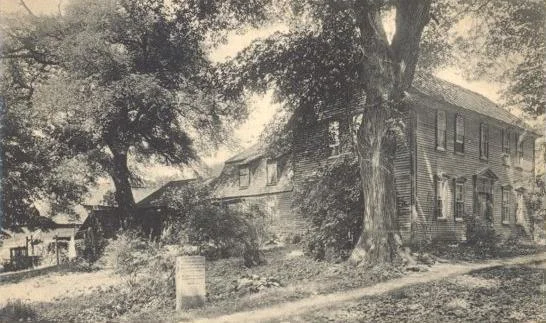
Sheldon Homestead, Deerfield, Mass. circa 1912.
"If it is no exaggeration to say that Deerfield {Mass.} is not so much a town as the ghost of a town, its dimness transparent, its quiet almost a cessation, it is essential to add that it is probably quite the most beautiful ghost of its kind, and with the deepest poetic and historic significance to be found in America....It is, and will probably always remain, the perfect and beautiful statement of the tragic and creative moment when one civilization {Native American} is destroyed by another (white colonists}.''
-- WPA Guide to Massachusetts (1937)
Chris Powell: The Devil in Weimar New Haven

The New Haven Green in happier times.
While it is home to a renowned university, Yale, New Haven often seems as anti-intellectual as any place on the planet, on account of the city's street theater, which isn't so funny anymore as it evokes the political disintegration of Germany's Weimar Republic, when Nazis and Communists rioted until democracy gave way.
On July 8, there were rumors that "right-wing" groups would rally on New Haven's green. So hundreds of counter-protesters got there first. According to the New Haven Register, what was nearly a riot developed as the counter-protesters confronted the half-dozen or so supposed right-wingers who showed up. One of the supposed right-wingers, who said only that he was "anti-socialist," was told by the counter-protesters to leave the green and as obscenities were shouted at him he was shoved and kicked and his hat was grabbed from his head. Police made several arrests for disorderly conduct.
Afterward Mayor Toni Harp issued a statement: "We were in no way supportive of any assembly that intends to incite fear, hatred, and violence. New Haven is and remains an inclusive city and I personally take responsibility for ensuring that this is the case."
But how "inclusive" is a city that assaults and runs out of town anyone merely suspected of planning to disagree with the local mob? Of course this kind of thing is happening throughout the country, as left-wingers and right-wingers spoil for such fights and sacrifice the law for a chance to strike a blow.
The left started the trend years ago with political correctness. Donald Trump trumped it with the hatefulness and vulgarity of his presidential campaign. Now the left is trying to trump Trump with political violence, forgetting that when guns are outlawed, only Trump will have guns. Maybe this situation will give old-school liberals pause about the powerful executive style of government that they long have celebrated.
In any case the country will be lucky if the current chief executive continues to be too incoherent and incompetent to play Caesar. Indeed, the country will be lucky simply to maintain the rule of law through the next 3½ years as even people sworn to its impartial enforcement discard it quickly to smite their political adversaries, as Connecticut's secretary of the state, Denise Merrill, did last week by refusing the Trump administration's request for elections data that was public until the administration asked for it.
If Trump really is the Devil this would be a good time for television networks to broadcast the brilliant 1966 movie of Robert Bolt's play about the Catholic martyr Sir Thomas More, A Man for All Seasons. Paul Scofield's More memorably reprimands his daughter's suitor, Roper, a fanatic not unlike those of today:
ROPER: So now you'd give the Devil benefit of law!
MORE: Yes. What would you do? Cut a great road through the law to get after the Devil?
ROPER: I'd cut down every law in England to do that!
MORE: Oh? And when the last law was down, and the Devil turned round on you -- where would you hide, Roper, the laws all being flat? This country's planted thick with laws from coast to coast -- man's laws, not God's -- and if you cut them down -- and you're just the man to do it -- do you really think you could stand upright in the winds that would blow then? Yes, I'd give the Devil benefit of law, for my own safety's sake.
Chris Powell is managing editor of the Journal Inquirer, in Manchester, Conn.
Worcester pitches to PawSox
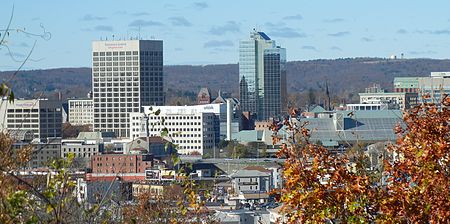
Downtown Worcester.
Adapted from Robert Whitcomb's "Digital Diary,'' in GoLocal24.com:
Worcester officials are quietly reaching out to Pawtucket Red Sox owners about moving the franchise there, perhaps at the vacant Wyman-Gordon Co. property downtown. Presumably they’d pitch the old industrial city’s location well within the Boston Red Sox orbit, its slowly reviving downtown and its commuter rail service to and from Greater Boston.
But the Worcester metro area is not on the Main Street of the East Coast, Route 95, as is Pawtucket, and, at 924,000 doesn’t have the population size of the Providence metro area, 1.6 million. And many simply find the Providence area more interesting, or at least more complicated.
Further, however, much as Worcester officials and downtown business leaders might like to get the PawSox franchise and a stadium to go with it, public support would probably fade if and when the PawSox made their formal proposals for aid from the state and the city, especially if state and local tax revenues fall over the next few months. And foes would cite as warning the infamous cost overruns and other hassles in the construction of Dunkin’ Donuts Park in fiscally sick Hartford, the home of the hideously named Hartford Yard Goats, a Colorado Rockies farm team. Building baseball stadiums is not for the faint of heart!
Anyway, the PawSox owners clearly want to stay in Pawtucket.

An eye test we all need now

"Look Out for Bullshit" (oil on panel), by Natalie Featherston.
Where 'lies are impossible'

The Glass House, designed by Philip Johnson, in New Canaan, Conn. He lied a lot.
"My neighbor’s daughter has created a city
you cannot see
on an island to which you cannot swim
ruled by a noble princess and her athletic consort
all the buildings are glass so that lies are impossible
beneath the city they have buried certain words
which can never be spoken again
chiefly the word divorce which is eaten by maggots
when it rains you hear chimes
rabbits race through its suburbs
the name of the city is one you can almost pronounce''
-- "Utopian,'' by Alicia Ostriker
As in the Blues

"Blue Skies'' (watercolor on paper), by Brian Herrick, at the Patricia Lloyd Cerega Gallery, Center Sandwich, Mass.
Back to the disability-pension trough

From Robert Whitcomb's "Digital Diary,'' in GoLocal24.com:
If only more humans had the anti-sucker capabilities of members of the corvid family. This quote is from The Economist:
“Members of the corvid family, including crows, ravens, rooks and magpies, are known to be unusually intelligent birds capable of keeping track of complex social relationships. Magpies can recognize themselves in mirrors; rooks and crows make and use tools. Ravens and jays can remember which of their group mates were watching when they hid food; American crows can remember the face of a dangerous human years after a single encounter. In the latest example of corvid ingenuity, detailed this month in the journal Animal Behaviour, nine ravens played a simple food-trading game with researchers—and were able to remember, a month later, which humans had behaved fairly or unfairly. They would then choose to avoid playing with humans who treated them badly.’’
And now on to humans:
This is so predictable: When Rhode Island’s unemployment rate is low, as it is now, public-employee unions move in to grab rich new perks from their allies in the General Assembly. These slam state and municipal budgets when the economy goes down (as it’s likely to do over the next year). During the ‘70s and ‘80s, we saw vast pension-benefit increases at the state and municipal levels, which turned into fiscal disasters when the economy went south in the early ‘90s.
And so in the legislative session just, if incompletely, ended were two potentially gigantic and unaffordable giveaways. One allows indefinite extension of expired municipal labor contracts. That means that very generous contracts signed in a time of relative prosperity could go on and on in a time of recession-caused falling tax revenues.
The other part of the raid is that the General Assembly has approved even richer tax-free disability pensions for police and firefighters by allowing “illnesses sustained while in the performance of duty’’ as acceptable reasons for getting a tax-free disability pension – allowing decades of affluence for many more pensioners (many of whom get another job after leaving public employment). As I’ve written, this bill, sponsored by legislators swimming in conflicts of interest, would mean that they could claim cardiovascular disease – extremely common and the most frequent cause of death in America! – as a reason to get big disability pensions. Or skin cancer, contracted from spending a lot of time outside. Or many other common ailments.
The disability pension system for police officers and firefighters is already widely abused. It’s depressing that the General Assembly would be willing to make it worse.
Let’s hope that Gov. Gina Raimondo has the fortitude to confront this raid on the treasury and veto both these deals.
John O. Harney: Trying to raise the employability of New England's college students
Via the New England Board of Higher Education (nebhe.org)
BOSTON
On June 28, the New England Board of Higher Education (NEBHE) convened members of the Commission on Higher Education and Employability (CHEE) in Providence to discuss concrete ways in which New England employers, education leaders and policymakers can work together to ensure a successful, equitable workforce future.
The Commission comprises high-powered educators, employers, economists, policymakers and several students. It is chaired by Rhode Island Gov. Gina Raimondo, the self-described “action-oriented” chief executive who has brought Johnson & Johnson, Virgin Pulse and Vistaprint Corporate Solutions to the Ocean State and attracted national attention with her plan for free college tuition.
NEBHE has historically been interested in higher education’s connections with economic and workforce development. Now, there’s a new urgency. As NEBHE President and CEO Michael K. Thomas wrote in an op-ed in the Providence Journal the day before the Commission convened, “Our region faces a fast-changing modern economy, as well as challenging demographic shifts, and it’s time that we optimized how higher education works with other stakeholders in our regional economy—starting by providing our students with the right skills to match tomorrow’s jobs.”
Disconnects everywhere
The Commission has a tall order. Job One is to get educators and employers simply to speak to one another.
In a recent Gallup study, 96 percent of college representatives said they felt confident in their institution’s ability to prepare students for the workforce, yet only 11 percent of business leaders agreed that today’s college graduates have the skills and competencies that business needs. Also the cultures are very different.
Kelli Vallieres, a NEBHE associate and CEO of Sound Manufacturing, a Connecticut provider of metal fabrication, recounted an “externship” she has worked on with the local high school that took ages to put together. Why? Partly because schools have so many mandates put on their time, said Vallieres.
Vermont state Rep. Kate Webb, a Commission member, added that employers have difficulty articulating the skills they need. Rounding out the dysfunction, students struggle to represent the value of their foundational skills, intelligence, adaptability and resilience … making it hard for employers to assess their strengths.
Several Commission members agreed on a need to address the disconnect between the culture of employers on one hand, and educators on the other.
Working on a plan
To help the Commission develop recommendations due out later this year, the membership is divided into working groups. At the June 28 meeting, working groups focused on: "Effective Use of Labor Market Data & Intelligence; Targeted Higher Education Partnerships; and New Economy Tech Skill Bundles''.
New Hampshire economist and Community Colleges Chancellor Ross Gittell and Andrea Comer, vice president with the Connecticut Business & Industry Association Education and Workforce Partnership, are co-chairs of the working group on Targeted Higher Education Partnerships.
Their working group embraced the full range of education providers—including public, private and new kinds of credentialing organizations—to prepare students and faculty with the talents demanded by the economy.
Gittell recounted “takeaways” from the inaugural meeting held May 31 in the Rhode Island State House. Among them: Students need opportunities for “work-integrated learning” where they learn at the workplace perhaps while earning credits or other credentials. To be attractive to employers, they also need a combination of “foundational” skills (a preferable term these days to “soft skills”) such as resiliency and industry-specific skills. There is also a need to integrate career planning early in student lives. A role for organized labor. And a regional outlook. Gittell used the example of Portsmouth, N.H., landing a big company that chose the New Hampshire seaport partly due to its proximity to Boston, Mass.
Another key to the Commission’s work, said Gittell: Industry needs to come to the table with money.
But co-chair Comer offered a caveat. She noted that Connecticut is still struggling to recover from the recession. GE and Aetna rubbed salt in the wound with their recent decisions to leave the Nutmeg State. We need to do more to encourage employers to stay, rather than asking more of them, Comer warned.
No picking winners and losers
Gittell said he cringes when he harkens back to the government policy of picking industry winners and losers. Instead, he said, New England should promote its diversity of industries across the whole region, not just in Boston and Cambridge.
The working group suggested that the Commission: Define common characteristics of best practices, create a template of partnerships that work, devise a taxonomy of workforce skills, develop granular credentials, analyze local demographic differences and produce a regional playbook along the lines of the “Communities that Work Partnership” sponsored by the Aspen Institute and funded by the U.S. Department of Commerce and private foundations.
Also the working group noted intersections between workforce investment boards (WIBs) and public schools in industry clusters. Some suggested looking at teaching itself: adapting inquiry-based, rather than traditional, techniques and creating “externships”—essentially summer internships to help teachers adopt techniques that energize students.
The group also coalesced around suggestions to watch return on investment and even to develop a “business case” for the Commission itself.
Rhode Island School of Design (RISD) President Rosanne Somerson righted the ship, noting that the Commission’s goal is to create engaged citizens and culture as much as jobs, which should at least be meaningful and fulfilling.
Love the sound of burning glass
Matt Sigelman, CEO of Burning Glass Technologies, spoke to the Commission about his firm’s belief that jobs have a “genome.” If you want students to have successful middle-class lifestyles in the 21st century, he told the audience, they need certain skills. Among those skills: data science. The jobs are not in data science per se, said Sigelman, but more than three-quarters of middle-skill occupations require digital skills. Digital skills should be integrated into every major at every degree level.
The value proposition of liberal arts seems to rise and fall. But conventional wisdom suggests that liberal arts grads will do fine with employers as long as they also have the more practical, industry-specific skills employers are looking for. For example, a student studying the classics or anthropology may be more successful with social media experience.
Hybrid jobs that mix skills sets are also the most human, so less easily automated, Sigelman said, because people increasingly will be asked to manage automation. The Rhode Island School of Design now prefers the term “intelligent augmentation” to “artificial intelligence” because it feels less like a human job-eater and more like a blender of human judgment and data.
Most of the jobs that require a college degree also want a lot of work experience, Sigelman noted. He also said there has been a larger increase in management jobs than in STEM (science, technology, engineering and math) since the Great Recession; yet “middle-skills” workers (with more than a high school diploma, but less than bachelor’s degrees) are more likely to manage than MBAs.
Several employers ask for bachelor’s degrees in much larger percentages than the share of current workers in the occupation who actually have them. For example, 60% of job postings for administrative assistants ask for a college degree, but only 20 percent of current AAs have one. They do increasingly need digital skills. But Sigelman says a college degree is a proxy for some skills that could be offered in a more efficient way.
There’s a perception that those with college degrees can advance in an organization without needing more formal education.
Burning Glass has reported that among job ads that explicitly request credentials, most requested just one of 50 specific creds. Still, certifications and other signals such as academic minors and transcripts that show job-market skills help students demonstrate workplace skills. Also, Seligman added, “brand” matters for a higher education institution (HEI), including regional HEI brand recognition.
Employers are generally likely to invest in employees’ last-mile applications—training in the technical skills that employers want and that change fast, but colleges don’t offer.
Also different kinds of HEIs leave a different mark on the skills conversation. Kerry Healey, the president of Babson College and former Massachusetts lieutenant governor, observed that skills like resilience and adaptability, banishing fear of failure and learning how to be creative are things that need to be “baked in” to the curriculum for everyone. Last-mile skills like coding and computer languages and internships can be pursued extracurricularly on Fridays and weekends.
Sigelman suggested the Commission develop “communities of practice” in areas such as career services. Degrees matter, but how do we make sure they represent a bundle of skills, making them more relevant and sustainable over the life of a career?
Chasing talent
Talent is the name of the game, stressed Travis McCready, president & CEO of Mass Life Sciences Center (MLSC), in his expert testimony to the working group on Targeted Higher Education Partnerships.
He told the group that the MLSC offers a “wide aperture” for talent through middle and high schools, vocational-technical schools and postsecondary education. He added that pharmaceutical companies such as Novartis, Amgen and Shire have migrated toward talent hotspots in the Bay State.
Here, too, an equity component surfaces. School districts with high free- or reduced-lunch populations are specially invited to apply to the MLSC for funds to buy high-quality lab equipment. Once you get to college level, McCready warned, it’s too late if you’ve never worked with a graduated pipette.
Community colleges also get access to MLSC funds for lab facilities and courses. But McCready acknowledged that the MLSC is not an expert, so it serves as convener of industry and community college presidents to encourage relationships. The MLSC offers what are essentially internships and apprenticeships. They are not all lab-related. Life sciences companies need finance and liberal arts specialists too, but, McCready said, the liberal arts students who tend to get hired have some understanding of science.
Noting that more half of New England college students attend independent HEIs, Roger Williams University President Donald Farish pointed out an irony in spending big money to lure private industry but skimping historically on spending for private higher education. Especially when the demography tells us we need to bring in more students.
McCready said the MLSC has worked with Harvard and MIT, as well as small private colleges that fill a niche, such as Wellesley College with its efforts to increase women in life sciences and Regis with its work to accelerate immigrant entry in the disciplines. The MLSC had also experimented with Dean College, which traditionally had no life sciences.
Nevertheless, 70 percent of UMass grads stay and work in the state, and McCready pointed out that money invested in UMass in recent years was “catch-up” after years of low state investment.
Despite all its successes, the MLSC hasn’t cracked the code yet on black and Latino students, said McCready. Only 6 percent of Latino students go on to get hired by industry.
Equity imperative
The tough record with black and Latino students relates to the Commission’s so-called “Equity Imperative.” NEBHE wants to ensure that the workforce vision serves all New Englanders. It’s not only a matter of social justice, but also as a matter of sound economics in the slow-growing region. Maine, Vermont and New Hampshire have the oldest median-age populations in America. And where there is population growth, it’s among groups—both urban and rural—that have not been well-served by education or the job market.
All babies are equal at nine months old; but by age 2, socioeconomic factors begin having an impact on their cognitive development. An attainment gap appears. By high school, a dropout gap has taken has taken hold … soon to translate into an “employability gap.”
Underrepresented groups, for the purposes of addressing the employability gap, include: students of color, students from low-income families and first-generation students. Susan Brennan, associate vice president of university career services at Bentley University, added students with disabilities to the groups New England should bring into the equation. Some could add children of incarcerated people and scores of other sources of inequity.
At Eastern Connecticut State University—which is about 30 percent students of color—lower-income, minority and first-generation students often had no cars, so had difficulty traveling off campus to internships. White students got most of the internships, said President Elsa Núñez.
Eastern’s Work Hub eliminates that need, allowing students to develop practical skills doing real-time work assignments without having to travel off campus, and providing the insurance company Cigna with a computer network and facility where its staff could provide on-site guidance and support to Eastern student interns. Moreover, Núñez observed that the boss in Eastern’s internships automatically becomes the mentor—important in the employability discussion.
Commission member Paul LeBlanc, the president of Southern New Hampshire University and guru of competency-based education, said a critical factor is to provide internships and mentors for students of color; also cultural, not academic, mentorship is needed for students who get the feeling they don’t belong, as Núñez said of her own beginnings in college.
In case anyone still doubts an equity imperative, LeBlanc cited the hard data from Deloitte showing benefits from diversity in teams. RISD’s Somerson said diversity is crucial to innovation. Núñez had a solution for companies that want a fast track to diversity: Forgive student loans.
Rhode Island College President Frank Sánchez added some keen insights to the equity panel.
Why is the conversation missing the large segments of unemployed and underemployed people who are not connecting with traditional educators? How do you formally embed employability in the curriculum? How can we bolster compassion in nursing and teaching, or help businesspeople connect with diverse populations?
Sánchez added that ironically many of the things that HEIs do to raise stature—such as increasing tuition and raising standards—hurt the most vulnerable students. To which Núñez remembered a mentor’s quote: “We can be an elite institution without being elitist.”
Some pointed out a simple overlooked truth on equity: the profound importance of stable state need-based financial aid, which has been generally up and down in New England.
Labor-Market Information
A working group on labor-market information (LMI) weighed real-time vs. traditional LMI. Real-time LMI has the virtue of capturing in-demand employability skills. But working group members agreed that the two types of LMI are complementary and should be bolstered by local intelligence, conversations with employers, local economic drivers and student body makeups.
Berkshire Community College President Ellen Kennedy suggested that the information be tweeked for different sectors to establish benchmarks and skillsets. And that exemplars offer best practices. And perhaps that the Commission identify five essential knowledge points to brand New England and make it attractive for businesses to settle.
Working group members hailed recent LMI initiatives including WorkReadyNH and Maine is IT!, a U.S. Labor Department-funded partnership with Maine community colleges. They also floated the idea of a partnership to share costs of working with outfits such as Burning Glass to look at resume data to study career progressions and occupational transitions. And they spoke of communicating how LMI can be used to improve institutions’ business practices.
Student voices
A key aspect of the NEBHE Commission is the voices of students.
Great Bay Community College alumna Heather Bollinger thought that the region could benefit from a regionwide version of WorkReadyNH. That’s a Granite State program that teaches students interviewing skills so they are prepared to enter the workforce.
Another student rep on the Commission, Mariella Lucaj of the Community College of Rhode Island, recommended marketing the Commission’s work directly to students—and encourage them think differently about their skills—and job prospects.
Desirae LeBlanc, a University of New England student on the Commission, recommended finding a way to push students to want to seek out internships; spoke of her own experiences with service learning programs helping her with employability skills.
Alas, in a nod to today’s sometime-linear thinkers, one of the student reps suggested it’s critical that a student know where they’re going. That led to a few comments about “pathways,” once all the rage, but apparently losing some luster. (Though Comer acknowledged that such structure is especially beneficial to students from underserved areas.)
Even the term “skills” was questioned as connoting lower-level work. Then, oh no, “competencies” and “proficiencies.” Add to that “scaffolding” and “emerging digital skills” and “putting ideas in a parking lot” and you see why at several points, Commissioners spoke of the need to create a sort of glossary showing definitions in the new language of career education.
Last point: We need to include all stakeholders at the table in at least yearly engagement to sustain the work. Perhaps a New England consortium for partnerships?
John O. Harney is executive editor of The New England Journal of Higher Education.
Peter Certo: Forget Russia, what about Trump's collusion with U.S. corporations?
Via OtherWords.org
I've always been a little skeptical that there’d be a smoking gun about the Trump campaign’s alleged collusion with Russia. The latest news about Donald Trump, Jr., however, is tantalizingly close.
The short version of the story, revealed by e-mails that The New York Times obtained, is that the president’s eldest son was offered “some official documents and information that would incriminate Hillary” and “would be very useful to your father.”
More to the point, the younger Trump was explicitly told this was “part of Russia and its government’s support for Mr. Trump.” Donald, Jr.’s reply? “I love it.”
Trump Jr. didn’t just host that meeting at Trump Tower. He also brought along campaign manager Paul Manafort and top Trump confidante (and son-in-law) Jared Kushner.
We still don’t have evidence they coordinated with Russian efforts to release Clinton campaign emails, spread “fake news,” or hack state voting systems. But at the very least, the top members of Trump’s inner circle turned up to get intelligence they knew was part of a foreign effort to meddle in the election.
Some in Washington are convinced they’ve heard enough already, with Virginia Sen, (and failed VP candidate) Tim Kaine suggesting that meeting might be called “treason.”
Perhaps. But it’s worth asking: Who’s done the real harm here? Some argue thatit’s not the Russians after all.
“The effects of the crime are undetectable,” the legendary social critic Noam Chomsky says of the alleged Russian meddling, “unlike the massive effects of interference by corporate power and private wealth.”
That’s worth dwelling on.
Many leading liberals suspect, now with a little more evidence, that Trump worked with Russia to win his election. But we’ve long known that huge corporations and wealthy individuals threw their weight behind the billionaire.
That gambit’s paying off far more handsomely for them — and more destructively for the rest of us — than any scheme by Putin.
The evidence is hiding in plain sight.
The top priority in Congress right now is to move a health bill that would gut Medicaid and throw at least 22 million Americans off their insurance — while loosening regulations on insurance companies and cutting taxes on the wealthiest by over $346 billion.
As few as 12 percent of Americans support that bill, but the allegiance of its supporters isn’t to voters — it’s plainly to the wealthy donors who’d get those tax cuts.
Meanwhile, majorities of Americans in every single congressional district support efforts to curb local pollution, limit carbon emissions, and transition to wind and solar. And majorities in every single state back the Paris climate agreement.
Yet even as scientists warn large parts of the planet could soon become uninhabitable, the fossil fuel-backed Trump administration has put a climate denier in charge of the EPA, pulled the U.S. out of the Paris Accord, and signed legislation to let coal companies dump toxic ash in local waterways.
Meanwhile, as the administration escalates the unpopular Afghan war once again, Kushner invited billionaire military contractors — including Blackwater founder Erik Prince — to advise on policy there.
Elsewhere, JPMorgan CEO Jamie Dimon and other architects of the housing crash are advising Trump on financial deregulation, while student-debt profiteers set policy at the Department of Education.
Chomsky complains that this sort of collusion is often “not considered a crime but the normal workings of democracy.” While Trump has taken it to new heights, it’s certainly a bipartisan problem.
If Trump’s people did work with Russia to undermine our vote, they should absolutely be held accountable. But the politicians leading the charge don’t have a snowball’s chance of redeeming our democracy unless they’re willing to take on the corporate conspirators much closer to home.
Peter Certo is the editorial manager of the Institute for Policy Studies and the editor of OtherWords.org.
'Marks of abuse'

"wade
through black jade.
Of the crow-blue mussel-shells, one keeps
adjusting the ash-heaps;
opening and shutting itself like

an
injured fan.
The barnacles which encrust the side
of the wave, cannot hide
there for the submerged shafts of the

sun,
split like spun
glass, move themselves with spotlight swiftness
into the crevices—
in and out, illuminating

the
turquoise sea
of bodies. The water drives a wedge
of iron through the iron edge
of the cliff; whereupon the stars,

pink
rice-grains, ink-
bespattered jelly fish, crabs like green
lilies, and submarine
toadstools, slide each on the other.

All
external
marks of abuse are present on this
defiant edifice—
all the physical features of

ac-
cident—lack
of cornice, dynamite grooves, burns, and
hatchet strokes, these things stand
out on it; the chasm-side is

dead.
Repeated
evidence has proved that it can live
on what can not revive
its youth. The sea grows old in it.''

-- "The Fish,'' by Marianne Moore