
Vox clamantis in deserto




Prepare for tough and long containment of murderous N. Korean regime

Obedient North Korea kids perform. Failure to obey the regime can get you killed.
Adapted from Robert Whitcomb's "Digital Diary,'' in GoLocal24.com:
Ten years ago, it might have been possible to destroy their key missile and nuclear facilities in U.S. military “surgical strikes,’ as was very seriously considered by American officials. But current dictator KimJong-un and his brutal father before him so expanded and spread out the facilities housing their weapons of mass destruction (which include poison gas), that a direct preemptive attack on the regime would not prevent it from wreaking havoc on South Korea, Japanand, soon, America.
Seeking help from the anti-American Chinese and Russian dictatorships will probably be fruitless: They benefit from the U.S. being distracted by North Korean saber-rattling. China, especially, wants to distract the U.S. from trying to thwart Chinese attempts to essentially take over the entire South China Sea. And, as Anders Corr notes, China has helped to build the North Korean nuclear-weapons program, “from trucks to warheads.’’ See his essay here:
https://www.forbes.com/sites/anderscorr/#679d5691abd9
The only practical response to Kim’s latest nuclear-powered threats is a tough and very patient containment policy. This would include putting U.S. tacticalnuclear weapons back in South Korea, from which they were pulled in 1991 in a failed effort to persuade Pyongyang to permit long-terminternational inspection of its nuclear plants. Such weaponry in the South would tend to make the North Koreans worry more deeply about attacking the South, be it with the North’s nukes and/or massive artillery attacks on Seoul, which is less than 40 miles from the border.
It bears noting that in the early ‘90s, North Korea and South Korea signed the Joint Declaration on the Denuclearization of the Korean Peninsula, whereby both sides promised that they would "not test, manufacture, produce, receive, possess, store, deploy or use nuclear weapons." And the pact bound the two sides to forgo "nuclear reprocessing and uranium enrichment facilities." Another sick joke by the Kim Dynasty.
The agreement, which North Korea signed merely to buy time, also provided for a bilateral inspections regime, which soon fell apart because of North Korean noncooperation, despite the efforts of the U.S. and South Korea to bribe the Kim dynasty out of its barbarism with aid offers.
Meanwhile, we’d be very foolish to follow the advice of China and Russia and put a moratorium on large-scale U.S. and South Korean military exercises meant to display force and will. As with earlier displays of goodwill, this would be taken as a sign of weakness and further egg on the North Koreans.
We must also step up our cyberwar against Kim’s regime and seek as many ways as possible to financially hurt Kim, his family and his well-fed and luxury-loving retainers in a state whose regime has killed so many of its people, through direct mass murder and policies that have made inevitable occasional famine. This will require finding tougher and broader ways to penalize the many Chinese government officials, companies and private individuals who profit from doing business with Kim and his cronies.
Then we must wait out the regime as best we can, perhaps over many years. This recalls President Kennedy calling the Cold War a "long twilight struggle.''
From orchards to mall

"When I was growing up, in the 1950s, my grandparents had a farm outside Hartford, {on} one of the four corners of a crossroads. The farm was surrounded by orchards, and there was a skating pond for the winter and blueberry bushes for July and August picking. By the time I was a teenager, the three other corners were being filled in, and there were supermarkets and gas stations standing on old farmland. By the time I got out of college, my grandparents farm had become a regional shopping mall.
-- Robert Yaro, as quoted in Tony Hiss's The Experience of Place (1990).
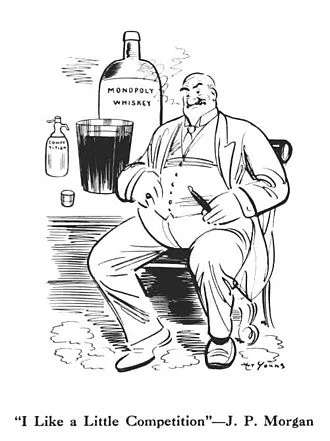
James P. Freeman: Past time to break up America's mega-banks before they cause another crash
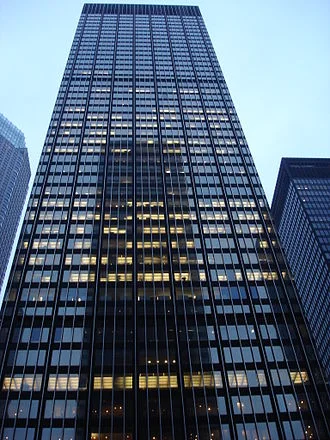
JPMorgan Chase & Co. headquarters, in Manhattan.
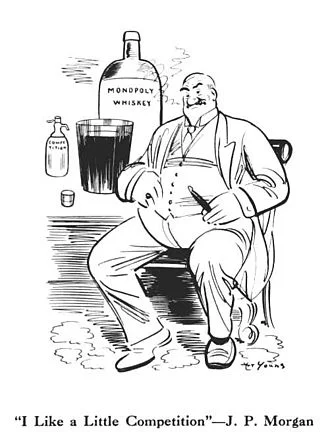
As Americans were lounging comfortably over the 4th of July holiday, some were surely feeling a sense of new-found serenity. Not because they were full of burgers, barkers and beer. On the contrary, they were digesting the news that 34 of the nation’s largest banks, for the first time since the financial crisis began a decade ago, all passed the Federal Reserve’s annual “stress tests,” which, according to The Wall Street Journal, “could bolster the industry’s case for cutting back regulation.” But hold the match before lighting leftover fireworks in celebration. Break up the banks first.
Remarkably, the five largest banks today — JPMorgan Chase & Co. Bank of America, Citibank, Wells Fargo Bank, US Bank — now control about 45 percent of the financial industry’s total assets or roughly $7.3 trillion in assets. To put that number in perspective, the size of the U.S. economy is roughly $18 billion.
Twenty-five years ago, the five largest banks owned just 10 percent of all financial assets. The Federal Deposit Insurance Corporation’s statistics reveal that in 1992 there were 11,463 commercial banks and 2,390 savings and loans. By March of 2017, that number had dwindled to 5,060 commercial banks and just 796 savings institutions. The assets held by the five largest banks in 2007 – $4.6 trillion – increased by more than 150 percent over the past decade, when they held 35 percent of industry assets.
The sharp rise in the concentration of these assets (a measure of size and wealth) has real economic, political and social ramifications. As oxfamamerica.org fears, “These massive banks use their wealth to wield significant political and economic power in the U.S., in the countries where they operate, and in the international arena.” Finance today, author Rana Foroohar reasons in Makers and Takers, “holds a disproportionate amount of power in sheer economic terms.” (It takes about 25 percent of all corporate profits while creating only 4 percent of all jobs.)
Moreover, writing five years ago in The Washington Post, just as the banking system was being recalibrated and reregulated, U.S. Sen. Sherrod Brown, D-Ohio, ranking member of the Senate Banking Committee, recognized then (and still true today) what the federal government should recognize now: “Even at the best-managed firms, there are dangerous consequences of large, complex institutions undertaking large, complex activities. These companies are simply too big to manage, and they’re still too big to fail.” While Brown is correct in citing “Too Big To Fail” (a warped public policy), he is right to emphasize (as many more public officials should) that these firms are simply too big to manage and maintain.
JPMorgan Chase is a financial colossus. In January 2017, it reported assets of $2.5 trillion that generated $99 billion in revenue and earned $24.7 billion in profit. It is the largest U.S.-domiciled bank and the sixth largest bank in the world. Today, it alone holds over 12 percent of the industry’s total assets, a greater share than the five biggest banks put together in 1992. Its global workforce of 240,000 operates in 60 countries. From 2009 to 2015, the bank paid $38 billion in fines and settlements (involving among them the Bernie Madoff and London Whale scandals), mere rounding errors in its ethics and financials.
Jamie Dimon is the company's chairman and chief executive officer, perhaps the second most difficult job in the country, only after the presidency of the United States. To say that he “manages” the firm would be an overstatement. More accurately, he “presides.” Dimon was named CEO in 2005 (when assets were only $1.2 trillion) and is widely given credit for adroitly navigating the financial turmoil of 2008-2009. In 2015, he made $27 million and said that banks were “under assault” by regulators. He keeps two lists in his breast pocket: what he owes people; what people owe him.
Now 61, he is the subject of much discussion centering on speculation about who his successor will be. In an interview for Bloomberg Television last September, Dimon said he would leave “when the right person is ready.” But who is ever “ready” and able to run a $2.5 trillion company? No one competently.
Wells Fargo ($2 trillion in assets with 8,500 locations) was thought to be among the best managed banks before, during, and after the crisis until it was revealed last year that it had fired 5,300 employees and clawed back $180 million in compensation, due to the unauthorized opening of 2 million customer accounts. A flawed “decentralized structure” and perverse sales culture were to blame for illicit activities that occurred over a decade.
Fortune Magazine in March 2007, with sterling irony, named Lehman Brothers (No. 1) and Bear Stearns (No. 2), respectively, as the most admired companies in the securities industry. By the end of 2008 Lehman Brothers had filed for bankruptcy (the largest in U.S. history, $692 billion) and Bear Stearns had been sold in a fire sale by fiat to JPMorgan Chase.
Big banks are driven by avarice and algorithms (complicated code-directing computers to effect financial transactions by the millisecond), not altruism. Lending is secondary to speculating. Complexity has replaced familiarity. Vaults hold more data than gold. And traders can destroy banks faster than boards of directors. On any given business day, no executive or regulator can be certain of the health of these institutions.
This is the new Wall Street alchemy.
The first public signs of distress in the financial system before the Crash of 2008 appeared 10 years ago, when a July 2007 letter to the firm’s investors disclosed that two obscure hedge funds managed by Bear Stearns had collapsed. The long fuse had been lit. The Great Recession was triggered. And the torch paper was provided in the form of legislation.
The Financial Services Modernization Act of 1999 (known as Gramm-Leach-Bliley) neutered the Banking Act of 1933 (known as Glass-Steagall), which separated the riskier elements of investment banking from the more conservative aspects of commercial banking. The 1999 law spurred a new model of financial supermarkets (banking, investments and insurance under one company). It also unwittingly fostered a new risk-taking model: Losses could be socialized (depositors, shareholders, taxpayers) while profits could be privatized (executive compensation). Exotic financial instruments and ineffective regulatory oversight fueled the meltdown.
Today’s big banks largely resemble Zuzu’s petals in the film It’s a Wonderful Life, seemingly mended but not made better. During the Crash/Panic of 2008, the federal government engineered the financial equivalent of pasting damaged rose petals in a desperate attempt to prevent the total collapse of the banking sector. It effectively merged the unwieldy likes of Merrill Lynch with Bank of America, Bear Stearns with JP Morgan and Wachovia with Wells Fargo.
In the wake of the crisis (which ultimately required $1.59 trillion in government bailouts and another $12 trillion in guarantees and loans), The Dodd-Frank Wall Street Reform and Consumer Protection Act of 2010 became law. It sought to make the financial system safer and fairer than it had been, to reduce the risk of financial crises, to protect the economy from this kind of devastating costs of risky behavior, and to provide a process for the orderly disposition of failing firms. But after a staggering 848 pages and 8,843 new rules and regulations, Dodd-Frank does nothing to reduce the size of, and hence the systemic risk posed by, the biggest banks.
“We may have gotten past the crisis of 2008,” Foroohar concludes in her book, but, disturbingly, “we have not fixed our financial system.” Bankers still “exert immense soft power” via the revolving door between Washington and Wall Street. And today’s top government regulators are littered with former banking executives, who are “disinclined to police the industry.”
The idea of overhauling big banks, however, is attracting some surprising converts.
In May, President Trump acknowledged that he was “looking at” breaking up the big banks. And the principal architects and former co-heads of the first financial supermarket — Citigroup — have had an epiphany of sorts. In 2015, ex-Citicorp CEO John Reed wrote in the Financial Times that “the universal banking model is inherently unstable and unworkable. No amount of restructuring, management change or regulation is ever likely to change that.” And in 2012, Sandy Weill, another former Citicorp CEO, called for a return to Glass-Steagall.
Dodd-Frank mandates that the Federal Reserve conduct annual stress tests on financial institutions with assets over $50 billion. This year’s test on 34 banks relied upon enhanced computer modeling to assess how those banks would perform under “adverse and severely adverse” economic conditions. But such modeling is an unreliable predictor of reality. As JPMorgan Chase knows well.
In May 2012, The New York Times provided insights into massive trading losses at JP Morgan Chase. The bank had little idea that the losses were brewing. It entrusted computer modeling pioneered by its bankers in the 1990s to identify and measure potential losses. But the bank tripped up its measurements. It deployed a new model that underestimated losses; when it redeployed the old model, it nearly doubled the losses. As The Times chillingly remembers, such computer programs “proved useless during the financial crisis.”
James P. Freeman, a former banker, is a New England-based writer, former columnist with The Cape Cod Times and frequent contributor to New England Diary. This piece first ran in The New Boston Post.
Sun on gray shingles

"Sunrise in Westport (Mass)'' (watercolor on paper), by Peter Hussey, in his current show "Steps Along the Way,'' at the Newport Art Museum. He specializes in painting traditional New England architecture.
Summertime blues
"Well I’m a-gonna raise a fuss, I’m gonna raise a holler
About workin’ all summer just to try an’ earn a dollar
Everytime I call my baby, to try to get a date
My boss says, no dice, son, you gotta work late
Sometimes I wonder what I’m gonna do
’cause there ain’t no cure for the summertime blues."
-- From "Summertime Blues, '' by Eddie Cochran
A different idea of summer
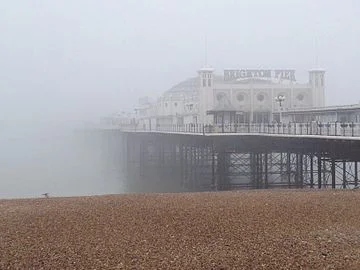
''Summer on a Maine island means a host of rainy mornings, even days, spent in front of the fireplace. The gray light in the window, the feathery murmur of rain on the roof, the banshee wail of the fog siren down past Doughty's Landing at the naval station, the resonant splash of rainwater tumbling into the rain barrels -- the signs were there the moment I woke up, huddled in a bundle of flannel sheets and army blankets.''
-- John Thorne, in Simple Cooking
He's writing about Long Island, in Casco Bay.
The art of competition

"Big Deal (Red Team vs. Blue Team)'' (acrylic paint on wood), by Tim McCool, in his show "Most Improved,'' at the Montserrat College of Art, Beverly, Mass., through July 29.
The work being featured comes from Mr. McCool's recent residency at the Boston Center for the Arts. "My residency, and this exhibit, provide a chance for people to celebrate their friends, loved ones, and also themselves. During the workshops people will get a chance to create trophies, pose on top of Olympic-style award podiums, and reflect on our culture's pressure to compete, succeed and get ahead." he said.
Don Pesci: Imports, over-regulation assaulting fishing industry
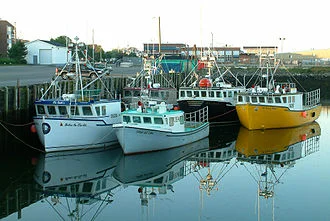
The fishing industry in Connecticut is under assault from foreign fish imports. Mike Gambardella, owner of Gambardella Wholesale Seafood, based in Stonington and East Haven, writes, somewhat frantically, that consumers don’t realize that the import seafood market is at 96 percent: “Our fishermen are throwing wild-caught healthy, chemical free, dead fish overboard daily.”
The regulatory apparatus in the United States is simply crushing local fishing industries: “We’re going out of business in Stonington, Connecticut, one of the oldest commercial fishing ports in the nation, dating from the 1600s”
David Goethel’s experience is typical: The federal government is destroying Mr. Goethel’s industry through overregulation and forcing ground-fishermen like himself to pay $700 per day to have authorities monitor them on their boats. Even the government estimates these additional costs would put 60% of the industry out of business. Cause of Action Institute is helping Mr. Goethel fight back through the courts to save his livelihood.
At his wits end, Gambardella has sent out appeals to nearly everyone, including President Trump and the seven members of Connecticut’s all Democratic U.S. Congressional Delegation.
Former U.S. Rep. Rob Simmons, now first selectman of Stonington, has joined the struggle to remove deathly federal regulations from New England fishermen. But other members of Connecticut’s U.S. congressional delegation, including the state’s two publicity-seeking U.S. senators, Chris Murphy and Dick Blumenthal – now busying themselves seeking to impeach Trump -- have done little but console Gambardella and others with the usual political bromides: “It takes time… be patient… we’re working on it…” Tough to be patient while the patient lies at death’s door on the gurney, and all the doctors appear to be conspiring to euthanize it.
On July 27, at the La Grua Center, 32 Water St., Stonington, just prior to Stonington’s Blessing of the Fleet, Simmons and Meghan Lapp will “lead an interactive discussion with representatives from our local fishing community. During this event, we will learn about the challenges facing one of America’s oldest commercial industries” and what can be done to help preserve one of the oldest industries in Connecticut from the withering hand of excessive regulation.
Everyone should be there.
Don Pesci is a Vernon, Conn.-based essayist.
Llewellyn King: Start all over again with healthcare reform
The process now underway in Congress to repeal and replace the Affordable Care Act (Obamacare) reminds me of what would happen if you tried to thread a small darning needle with a strand of bulky yarn: It won’t go through the eye. The more you try to pull the strand through the eye, the less useful the yarn coming through it will be.
Therefore, isn’t it time to reconsider the whole proposition as though there were no Obamacare, no House version of its replacement, and no preconceived objective beyond affordable care for all?
Also, there should be no pre-established conditions, such as single-payer and multiple-payer; no pre-established goals, such as preserving particular insurance practices and expectations that employers will always be part of the deal; and no expectation that the health-care bill should also be a tax bill or a welfare bill.
Its simple goal should be to free people from fear of medical catastrophe and enable physicians and hospitals to care for the sick without commercial pressure.
I’ve come to the belief that big, new ideas are needed from my own experience as an employer-provider. For more than 30 years, as a small Washington publisher, I provided health insurance for my staff of 25. It was a nightmare that got worse as medicine got more expensive.
Of many strange situations, none was worse than the employee who developed nasopharyngeal cancer, a rare type of head and neck cancer. The insurance paid for chemotherapy and radiation, but refused to pay for expensive painkillers. These had to be brought in from France by a family member.
Maybe the most discouraging was a printing-press operator who wanted the premiums given to him, as he refused to see the point of insurance, although he was married with three small children. “We don’t use insurance,” he declared. “When the kids are sick we go to the emergency room and tell them we have no money.” When pressed, he said they did this because they didn’t want the bother of filling out forms.
If you think, as I do, that the system we have is less than perfect, one is immediately thought to be a believer in British-type national health insurance. Not necessarily so.
As a former citizen, I know something about Britain’s National Health Service and I think it is better than what is happening in the United States. I’ve received treatment in Britain under the system and members of my family in England are devoted to it. There is good treatment for major procedures. However for lesser ailments, there are long waiting lists. Bureaucracy is everywhere.
Worse, can you imagine a health-care system dependent on the budget cycle in Congress?
In Switzerland there is a totally private system, which looks like improved Obamacare. Everyone is obliged to buy insurance, just as everyone has to pay taxes. There are no limits on troublesome things like preexisting conditions. The government regulates the insurers. In a referendum, the Swiss rejected a switch to a single-payer system by 60-40 percent.
There also are mixed systems in Germany and Holland. The commonality is that everyone is covered and the governments regulate. That way, insurance pools are large and have the correct mix of old and young — otherwise the old will overwhelm any system.
Unless we devise a structure that caters to all, we will continue with overburdened emergency rooms, preposterous hospital charges and doctors who will pick and choose their patients.
No one on a gurney being wheeled down a hospital corridor should be thinking, “How will I pay for this?”
The chances are that when Congress has finished trying to thread the unthreadable needle, there will be a groundswell on the left for single-payer — better, possibly, but not a fit in the United States.
Meanwhile, there are too many pre-existing conditions in congressional thinking. We need a new prescription, a bigger needle and a finer thread.
Llewellyn King (llewellynking1@gmail,com) is host and executive producer of White House Chronicle, on PBS, and a veteran publisher, editor, columnist and international business consultant. He is based in Rhode Island and Washington. This piece first ran in Inside Sources.
Can't we all just get along?

Israel/Palestine Impasse
Two peoples want this land
And won't agree to share.
Each side maintains its stand.
Oh, what a foolish pair!
-- Felicia Nimue Ackerman
The art of correspondence
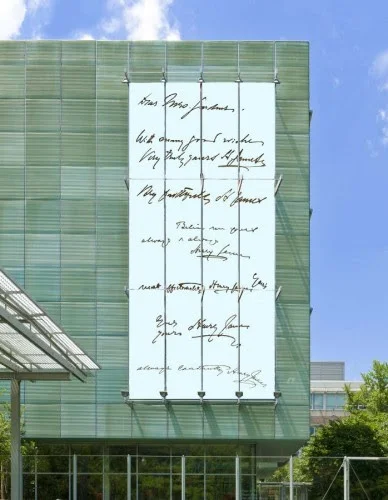
From "Ever Yours, Henry James,'' a site-specific installation by conceptual artist Elane Reichek based on novelist Henry James's letters to Isabella Stewart Gardner, the founder of the Boston museum (which opened in 1903) where this show will run through December.
The show is a graphic sampler composed of fragments from Henry James's letters to Isabella Stewart Gardner. Ms. Reichek was especially drawn to how Mr. James closed his letters to Mrs. Gardner, from the more formal "with many good wishes" to the very affectionate "always constantly."
By focusing on these closings, Ms. Reichek hopes to illustrate the depth of Mrs. Gardner's and Mr. James's long friendship. Ms. Reichek says: "By making use of the older 19th Century private epistolary mode for a public contemporary art piece, I wanted to cross the literal passage between the old and the new....’’
A pre-EPA beach

"Surf, Cohasset {Mass.}, by Maurice Prendergast, ca. 1900.
I remember sharply the look and smell of the beach that was down the hill and through the woods near our house on Massachusetts Bay. Low rocky headlines on each side. Big white-elephant gray-shingled and faux Spanish Mission style mansions -- some summer places and some year-round— loomedamong the bayberry and poison ivy and over the gray sand and pebbles beach, which was occasionally covered by oil from ships a few miles offshore. There was often a rank smell from the oil and from anarrow stream of sewage water that frequently flowed down one side of the beach. (This was way before the Environmental Protection Agency.) Soon after an hour in the sun, my back hurt from sunburn.
The water, unlike Florida’s or even Buzzards Bay, was usually cold and murky. But we all went swimming in it anyway. Then we rushed home to our gray-shingled house a quarter mile from the fragrant beach and took hot showers.
-- Robert Whitcomb
Time to play golf instead?

From Robert Whitcomb's "Digital Diary,'' in GoLocal24.com:
There was unfortunate chaos at the end of the Rhode Island legislative session caused by a war of wills between House Speaker Nicholas Mattiello and Senate President Dominick Ruggerio. The battle was ignited by Mr. Ruggerio’s last-minute inclusion in budget legislation of an escape clause that would let the General Assembly stop the car-tax phaseout – beloved by Mr. Mattiello -- if in any given fiscal year the legislature determines it to be fiscally irresponsible.
As regressive as the car tax is, Mr. Ruggerio is right to be leery of a phaseout’s long-term fiscal effects, especially given the inevitability of recessions. Where would legislators find the money to reimburse the municipalities to offset their loss of car-tax money when the economy goes south?
It’s too bad that the two leaders couldn’t have worked out a deal on the budget, which is now in limbo because of their standoff. That’s because, as I’ve written, the stalled budget was generally fair, practical and reasonable, or about as much as it could be given political realities.
In the end, it comes down to personalities as much as policies and principles. Perhaps the two leaders will go fishing or play 18 holes of golf together in the summer to achieve a détente before a special session in the fall to address the budget and the Pawtucket Red Sox’s desire for a new stadium. Okay. Maybe they don’t like each other and probably won’t get together. But a cooling-off period might help.
In the grass

"The summer sun shone round me,
The folded valley lay
In a stream of sun and odour,
That sultry summer day.
The tall trees stood in the sunlight
As still as still could be,
But the deep grass sighed and rustled
And bowed and beckoned me.
The deep grass moved and whispered
And bowed and brushed my face.
It whispered in the sunshine:
'The winter comes apace.'"
-- "The Summer Sun Shone Round Me,'' by Robert Louis Stevenson
'The mother of beauty'

-- Photo by Dronepicr
"We do not long for endless summer. We know that death is the mother of beauty, and we know that only those who have stood beside the frozen water and shivered in the wind can take the full measure of sunlight and locust hum and fish moving in the deep eddied pools beneath the falls.''
-- The late Boston area mystery writer Robert B. Parker

Religion can be a very lucrative racket

Shot of the Rev. Pat Robertson's Virginia estate. Mr. Robertson has raked in hundreds of millions of dollars for himself from his religion business. Why oh why do poor and middle-class viewers of this con man's TV shows send him money?
Adapted from Robert Whitcomb's "Digital Diary,'' in GoLocal24.com:
Americans’ capacity for self-delusion may exceed that of all other Western nations’ citizens. Millions of them will eagerly buy up gallons of snake oil in the spirit of wishful thinking. Consider P.T. Barnum and greedy TV evangelists.
Many of the latter love Trump, despite a life that’s been anything but “Christian’’ in practice. But then, they, too, love money and luxury, provided by the terrified-of -death suckers who send it to them. The amoral Trump represents the Gospel of Money that they consult daily. They don’t ask, or they ignore, some of the wayshe got it. -- very big inheritance, conning customers, cheating employees and vendors, massive use of tax breaks and strategic cooperation with mobsters.
Trump’s remarks and warm reception at the First Baptist Church in Dallas-sponsored “Celebrate Freedom Rally” at the Kennedy Center in Washington, D.C., on July 2 was an orgy of hypocrisy. Of course, speakers as usual kept implying that freedom of religion was under threat in America when it is anything but. It receives massive financial and other protection, even when it’s run as a business and as an extension of a political party.
And please let’s not ignore the fact that the U.S. Constitution also protects the rights of those who don’t want anything to do with organized religion, too much of which has become a racket for enriching evangelical crooks.
'Genius of summer'

"The consolations of space are nameless things.
It was after the neurosis of winter. It was
In the genius of summer that they blew up
The statue of Jove among the boomy clouds.
It took all day to quieten the sky
And then to refill its emptiness again...."
-- From "An Ordinary Evening in New Haven,'' by Wallace Stevens
'A ghost of a town'
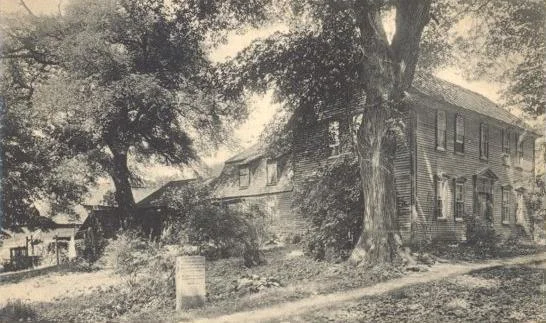
Sheldon Homestead, Deerfield, Mass. circa 1912.
"If it is no exaggeration to say that Deerfield {Mass.} is not so much a town as the ghost of a town, its dimness transparent, its quiet almost a cessation, it is essential to add that it is probably quite the most beautiful ghost of its kind, and with the deepest poetic and historic significance to be found in America....It is, and will probably always remain, the perfect and beautiful statement of the tragic and creative moment when one civilization {Native American} is destroyed by another (white colonists}.''
-- WPA Guide to Massachusetts (1937)
Chris Powell: The Devil in Weimar New Haven
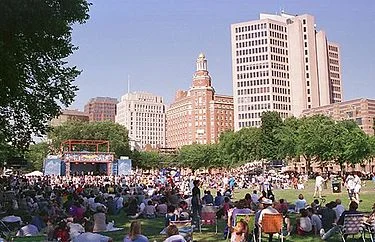
The New Haven Green in happier times.
While it is home to a renowned university, Yale, New Haven often seems as anti-intellectual as any place on the planet, on account of the city's street theater, which isn't so funny anymore as it evokes the political disintegration of Germany's Weimar Republic, when Nazis and Communists rioted until democracy gave way.
On July 8, there were rumors that "right-wing" groups would rally on New Haven's green. So hundreds of counter-protesters got there first. According to the New Haven Register, what was nearly a riot developed as the counter-protesters confronted the half-dozen or so supposed right-wingers who showed up. One of the supposed right-wingers, who said only that he was "anti-socialist," was told by the counter-protesters to leave the green and as obscenities were shouted at him he was shoved and kicked and his hat was grabbed from his head. Police made several arrests for disorderly conduct.
Afterward Mayor Toni Harp issued a statement: "We were in no way supportive of any assembly that intends to incite fear, hatred, and violence. New Haven is and remains an inclusive city and I personally take responsibility for ensuring that this is the case."
But how "inclusive" is a city that assaults and runs out of town anyone merely suspected of planning to disagree with the local mob? Of course this kind of thing is happening throughout the country, as left-wingers and right-wingers spoil for such fights and sacrifice the law for a chance to strike a blow.
The left started the trend years ago with political correctness. Donald Trump trumped it with the hatefulness and vulgarity of his presidential campaign. Now the left is trying to trump Trump with political violence, forgetting that when guns are outlawed, only Trump will have guns. Maybe this situation will give old-school liberals pause about the powerful executive style of government that they long have celebrated.
In any case the country will be lucky if the current chief executive continues to be too incoherent and incompetent to play Caesar. Indeed, the country will be lucky simply to maintain the rule of law through the next 3½ years as even people sworn to its impartial enforcement discard it quickly to smite their political adversaries, as Connecticut's secretary of the state, Denise Merrill, did last week by refusing the Trump administration's request for elections data that was public until the administration asked for it.
If Trump really is the Devil this would be a good time for television networks to broadcast the brilliant 1966 movie of Robert Bolt's play about the Catholic martyr Sir Thomas More, A Man for All Seasons. Paul Scofield's More memorably reprimands his daughter's suitor, Roper, a fanatic not unlike those of today:
ROPER: So now you'd give the Devil benefit of law!
MORE: Yes. What would you do? Cut a great road through the law to get after the Devil?
ROPER: I'd cut down every law in England to do that!
MORE: Oh? And when the last law was down, and the Devil turned round on you -- where would you hide, Roper, the laws all being flat? This country's planted thick with laws from coast to coast -- man's laws, not God's -- and if you cut them down -- and you're just the man to do it -- do you really think you could stand upright in the winds that would blow then? Yes, I'd give the Devil benefit of law, for my own safety's sake.
Chris Powell is managing editor of the Journal Inquirer, in Manchester, Conn.
Worcester pitches to PawSox
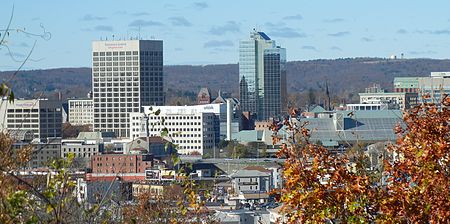
Downtown Worcester.
Adapted from Robert Whitcomb's "Digital Diary,'' in GoLocal24.com:
Worcester officials are quietly reaching out to Pawtucket Red Sox owners about moving the franchise there, perhaps at the vacant Wyman-Gordon Co. property downtown. Presumably they’d pitch the old industrial city’s location well within the Boston Red Sox orbit, its slowly reviving downtown and its commuter rail service to and from Greater Boston.
But the Worcester metro area is not on the Main Street of the East Coast, Route 95, as is Pawtucket, and, at 924,000 doesn’t have the population size of the Providence metro area, 1.6 million. And many simply find the Providence area more interesting, or at least more complicated.
Further, however, much as Worcester officials and downtown business leaders might like to get the PawSox franchise and a stadium to go with it, public support would probably fade if and when the PawSox made their formal proposals for aid from the state and the city, especially if state and local tax revenues fall over the next few months. And foes would cite as warning the infamous cost overruns and other hassles in the construction of Dunkin’ Donuts Park in fiscally sick Hartford, the home of the hideously named Hartford Yard Goats, a Colorado Rockies farm team. Building baseball stadiums is not for the faint of heart!
Anyway, the PawSox owners clearly want to stay in Pawtucket.