
Vox clamantis in deserto








Trump's flexible idea of charity
See how Donald Trump shifted kids' cancer money into his business. Hit this link.
In R.I., successfully mixing liberal, conservative healthcare reform
David Leonhardt, writing in The New York Times, presents Rhode Island as a state that is successfully combining liberal and conservative ideas about healthcare reform.
He writes:
"Conservative health reform is not an oxymoron. Nor is bipartisan health reform. It’s possible to combine conservative and liberal ideas to cover more people while holding down costs.''
"You can find a real-world case study in Rhode Island.''
Gov. Gina Raimondo's "strategy has been based on the most important — and, in a strange way, most promising — fact about American health care: Much of our spending doesn’t make us healthier.''
To read the article, please hit this link.
Why here?
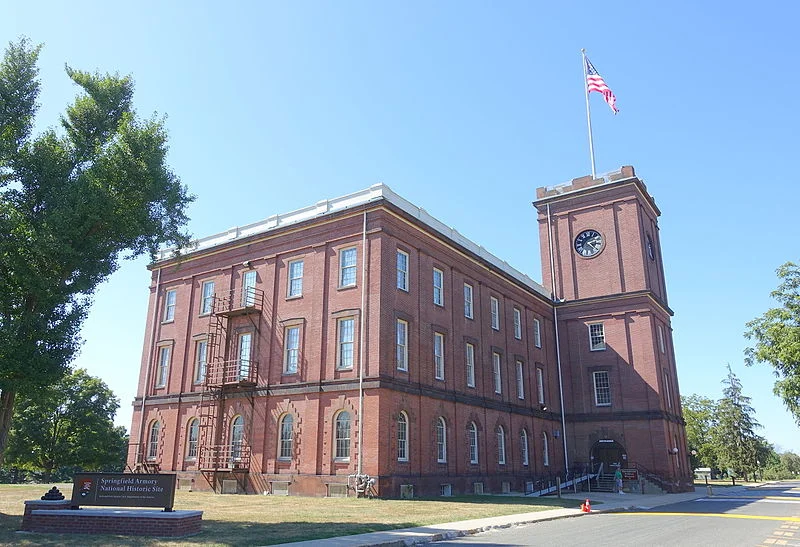
Springfield Armory Museum: A reminder of a time when the city was prosperous.
{My} route...brings me down and around to the city proper, a long, straight street in another country, with homemade shop signs in Spanish, blocks of Third World decay, citizens of many colors draped in windows, doorways, on corners, in parked cards, often with a look in their eyes that asks what you're asking -- Is this the right place, how in the hell did I wind up here?''
-- John Edgar Wideman, on Springfield, Mass., in Fatheralong (1994)
Retail will churn: Deal with it
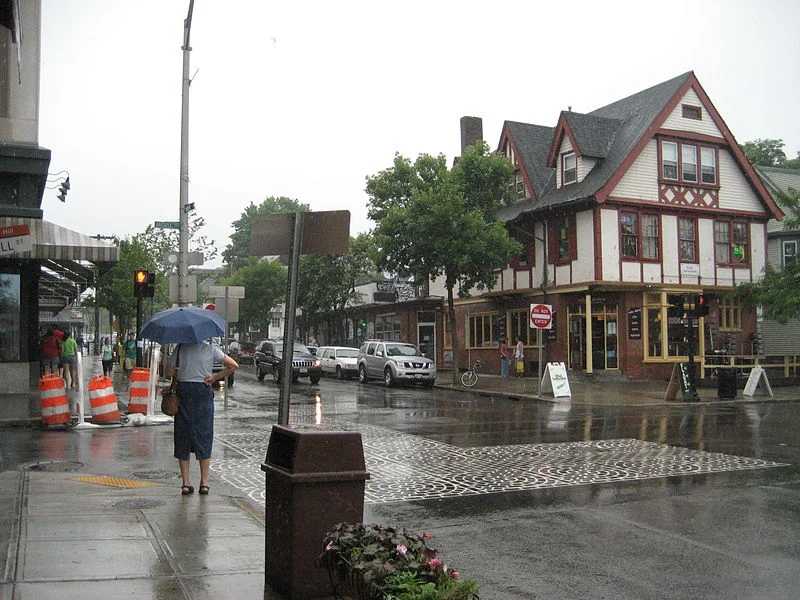
Thayer Street, Providence
-- Photo by Infrogmation
Adapted from Robert Whitcomb's "Digital Diary,'' in GoLocal24.com:
The current issue of East Side Monthly, which serves Providence upscale neighborhood, hasa long article by Amanda Grosvenor is about Thayer Street, on Providence’s College Hill. The basic theme is that the street, long seen as Providence’s Harvard Square because of the proximity of Brown University and the Rhode Island School of Design, has become less“edgy’’ and “funky’’ as some of the quirky stores have moved out and other, presumably more boring stores and, especially, restaurants, have moved in. Indeed, it’s now mostly a restaurant strip.
But such changes never stop. Retail is always a churn.
My wife and I first lived in Providence in the late ‘70s, before exiling ourselves to France, and remember that back then, the street was rather stodgy, not edgy, with shops (or “shoppes”) appealing to “blue-haired ladies.’’
The biggest Thayer Street retail disaster in recent years was the closing of the College Hill Bookstore, a wonderful place to browse and buy. It had a much more interesting collection of booksand periodicals than the nearby Brown Bookstore, which has been sliding into mediocrity for years. The College Hill Bookstore’s owner, local real-estate mogul Ken Dulgarian, decided that he could make more money with another tenant, Spectrum India, which sells boring (to me) cheap clothes, jewelry and other stuff generally associated with the Subcontinent and/or retro hippies.
But bless Mr. Dulgarian for keeping the high-end, intimate and Art Deco’ish Avon Cinema going with an electic and exciting mix of films, big and small. (More comfortable seats and a better sound system, however, would be appreciated.)
I think that there’s still a future for small stores with good service and a commitment to neighborhoods, especially the most attractive and walkable ones. I’m not so sure about the big physical stores, such as Macy’s. These brick-and-mortar outlets (and yes, of course they also have Web sites from which you can order) are being walloped by Amazon. Thus store traffic is way down in many of them and these retailers respond to that by keeping fewer and fewer items in stock.
In my case, which I’m sure is common, I find that they often lack the sizes that they used they have, and as Americans become ever fatter this won’t get better. Being by American standards (but not the rest of the world’s) thin, I now must order almost all my clothes online. (That’s not much; I’m no clothes horse.) The Web, being so huge, has my small size. So that’s one less customer willing to go to a real, physical store. Vicious circle and all that.
High-end vertigo

Untitled (acrylic and India ink), by Jim Bush, in his show "Jim Bush: New Works,'' at the Providence Art Club, through July 14.
Chris Powell: Hartford has run out of options; time for bankruptcy
Last week's conviction of a developer who defrauded Hartford city government of a million dollars in the guise of building a soccer stadium should crush the city's efforts to obtain more financial aid from state government so that the city can avoid bankruptcy.
The soccer stadium scandal echoes Hartford's recent baseball stadium scandal, in which city government spent about $80 million to get the stadium done a year late and 60 percent over budget even as the city was going broke. So it may not have been entirely coincidental that just as the jury in the fraud case delivered its verdict, Mayor Luke Bronin announced that the city has engaged a bankruptcy law firm to pursue the city's options.
Yes, Hartford's financial condition is not the mayor's fault. He is new to the job and he has not just been seeking $40 million more from state government; he also has asked state government to establish a commission to supervise the city's finances. Neither request has been granted, the first because state government's financial position is as bad as the city's. But no matter, since more state money won't make Hartford competent politically and administratively. That's because the city lacks the prerequisite of such competence -- a large, independent middle class of people who are not on government's own payroll.
As a result city government has grown far bigger than the civic virtue available to manage it in the public interest. On top of that, Mayor Bronin's diagnosis of Hartford's basic problem is mistaken. The mayor argues that the city is hobbled financially because half its land is occupied by government or nonprofit institutions and thus exempt from city property taxes. But state government already compensates for that by reimbursing half the city's budget. Further, even as the mayor complains about property-tax exemption, he celebrates the imminent relocation of the University of Connecticut's West Hartford branch to the former Hartford Times building downtown, which will keep still more property off the tax rolls.
The mayor celebrates UConn's move because the tax-exempt government and nonprofit operations bring the city thousands of jobs and much commerce and thereby give huge support to the taxable valuation of the remaining property in the city. Indeed, this is the rationale used by the mayor's former boss, Gov. Dannel Malloy, for awarding state tax breaks to big companies just for staying put
For decades state government has poured ever-larger amounts of money into Hartford only to worsen the city's poverty and corruption. State policy has done the same to Connecticut's other cities. Maybe different policies might do better, but state government cannot even recognize its failure, so there is no chance of different policies.
So what Hartford needs most is just to stop pretending that spending more money makes things better and, instead, to slash its financial obligations to match its resources. This can be accomplished only by bankruptcy, a court-ordered cancellation of the city's big debts, primarily those to its employees and retirees as well as the bondholders who long have enabled the city's mismanagement, confident that state government would always underwrite any amount of exploitation and stupidity in Hartford.
Mayor Bronin has failed to obtain necessary concessions from most city employee unions, but given the depth of Hartford's disaster, he shouldn't have to ask permission from the unions to do what must be done. Only bankruptcy can set things right.
Chris Powell is managing editor of the Journal Inquirer, in Manchester, Conn.

Llewellyn King's Journal: Thank God for the Gulf Stream; joys of cruising; novel-adaption angst

The Gulf Stream system.
COPENHAGEN
Whenever I stray from the East Coast of the United States, I’m reminded of the debt we owe to the Gulf Stream. Malibu, Calif. may be thick with Hollywood stars, but the water is damned cold. Always. I can tell you I’ve tried swimming there often and it is, by the standards of southern New England’s summers, cold. Really, for all the beauty of the West Coast, you have to travel as far south as San Diego to enjoy a dip, which might remind you of the waters of Cape Cod in July.
Lest you didn’t know, that’s why the number of pleasure boats in Seattle is said to be the highest on a per-capita basis in the nation. When it’s too cold to get in the water, get on it.
The Gulf Stream divides as it goes north and sends one branch to Africa and one to Europe, known as the Atlantic Drift. There’s some argument about how much the Atlantic Drift affects the climate of Europe. My empirical, unscientific observation is that it’s a big player and Europe and America would both be devastated with climate change if the Gulf Stream were to cease to flow or change course – a possibility with global warming.
It’s because of this great benevolent current, that there are palm trees on the coast of Cornwall and Devon in the west of England as well as in Ireland and Scotland. In those locations, they are small stunted things, in no way like their robust relatives in Florida. But they’re palm trees. And I’ve inspected some.
About Cruising, the New International Norm
I looked down my proboscis for years when anyone mentioned cruising. I also had harsh things to say about it.
Well, for a decade and a half, I’ve been dining on my words. I took a cruise with my wife, Linda Gasparello, that changed everything back in the early 1990s. We cruised mostly in the Black and Aegean seas -- and it was actually the best cruise we’ve ever taken.
It started our cruise contagion; we’ve cruised far and wide ever since. We’ve even journeyed briefly and enjoyably from Boston to Nova Scotia, but nothing equaled that first cruise. The ship wasn’t too big and the crew -- mostly Greeks on the catering side of things -- were marvelous.
The thing about cruising is the shore stops and tours. That first cruise took us from Athens to Yalta, Odessa, Constantia, Istanbul, Kusadasi, Mykonos, Patras and set us down in Venice. We learned – and this is the thing about cruising -- that it's wonderful because the hotel goes with you and the shore trips are usually well worth taking. That’s the kernel of what it’s about for us; not the food (too much, but good enough), nor the shows (Las Vegas lite), but the floating accommodation and shore excursions.
In 2015, just before Christmas, we cruised around Cape Horn. Amazing. It astounds me that rounding the Horn, where so many mariners perished, can be accomplished in a luxury liner. The shore trips in Argentine and Chilean Patagonia are worth running the credit cards up to the limit to do.
Linda and I have just been at it again. Capriciously, we decided that it was time to cruise the Baltic and see the jewel in its crown, St. Petersburg.
For me, it was a third visit and was Linda’s first. I knew it wouldn’t disappoint and it didn’t. If it isn’t on your bucket list, write it down right now. Then go.
If you get there by water, so much the better because the cruise companies deal with the hassles , and traveling in Russia can be a big hassle, from getting a visa to finding a hotel that doesn’t look like it’s an incubator for social diseases.
So many nationalities now cruise that it’s a new universal cultural norm, like pizza and Coca-Cola.
What’s Wrong with England and Australia for Novel Adaptations?
Paula Hawkins’s The Girl on the Train was a great read; an original story with an original kind of heroine: she has a drinking problem. Also, it's set in England and depends on English train commuting habits, not American. But when it was turned into a movie, it was mysteriously set in New York and the English actress, Emily Blunt, was the heroine.
Now there's a seven-part miniseries made by HBO and starring Sharon Stone and Reece Witherspoon of the splendid Liane Moriarty novel Big Little Lies. I haven’t seen it yet, but the thing is that Moriarty is Australian and her novels, excellent writer that she is, are set in suburban Australia. One of the considerable joys of reading Moriarty is that you forget that the novels are Australian: The struggles of school playgrounds and other aspects of middle-class suburbia are apparently universal.
The makers of the Big Little Lies the miniseries, which has gotten rave reviews, chose to relocate it to Monterey, Calif. Why? Maybe they thought a dash of Oz would be too hard for us to understand.
Oddly, Monterey is not typical of America’s suburbs either. Maybe, also, the series producers forgot that star Nicole Kidman is an Australian. Confusing.
Llewellyn King ( llewellynking1@gmail.com), is executive producer and host of White House Chronicle, on PBS, and a frequent contributor to New England Diary.
Through the second growth

Cellar hole in Dana, Mass.
-- Photo by Jdreed
"Clearings, lit aslant, are strewn across old foundations.
This is of course New England now and even the brook,
Whose amplified whisper on the right is as firm
A guide as any assured blue line on a roadmap,
Can never run clear of certain stones....''
--From "One of Our Walks,'' by John Hollander
David Warsh: Clarifying the story about Podesta and the DNC server
BOSTON
An interesting experiment, conducted last week in Washington, may signal the end of one dispensation and the beginning of another. On July 5, reporter Dan Boylan had brief item in The Washington Times, a Republican newspaper, under the headline, “Hacked computer server that handled DNC emails remains out of reach of Russia investigators.”
Two days later, President Trump tweeted from the Group of 20 summit meeting in Hamburg that “Everyone here is talking about why John Podesta refused to give the DNC server to the FBI and CIA. Disgraceful!”
Never mind that Podesta, Hillary Clinton’s campaign chairman, had no direct connection with the Democratic National Committee, and little or nothing to do with its decision. The DNC turned over its server instead to a trio of private security firms led by CrowdStrike, of Irvine, Calif., its consultant throughout the campaign. Shawn Henry, a former FBI executive who formerly led both the FBI’s criminal and cyber divisions, oversaw the investigation as head of CrowdStrike’s prevention and incident response services.
The one-two punch was a transparent attempt to reopen the antagonisms of the 2016 presidential campaign. Custody of the server hadn’t been a big item to this point, Boylan noted, “But behind the scenes, discussions are growing louder, Congressional sources say.” Lindsey Graham, (R-S.C.), who is heading the Senate Judiciary Committee’s investigation, said “I want to find out from the company [that] did the forensics what their full findings were.”
Why might the DNC be reluctant to turn over its server to the FBI? We’re back to the high degree of polarization that existed in the nation’s leading law-enforcement agency in 2016. Economic Principals has written about this tension before, speculating that incipient mutiny within several FBI field offices may have led Director James Comey to announce, shortly before the November election, that he was reopening the investigation of Hillary Clinton’s emails.
Vetting the previously unexamined exchanges found on former Congressman Anthony Weiner’s computer took only days and turned up nothing new. But the reminder of the long-running controversy was widely considered to have influenced the election – almost certainly more than any action ascribed to Russian hackers. The question of insubordination amid the internal feud, well-documented by The Wall Street Journal (subscription required), didn’t come up in Comey’s Senate testimony, and has received little attention from the mainstream press, and for good reason.
The FBI is proud of its tradition of independence and discipline. Not since the Watergate affair have differences of opinion within the Bureau spilled into the press in the form of leaks that turned out to have momentous consequences. In in 1972 and 1973, Deputy Director Mark Felt’s ambition to displace L. Patrick Gray played a major, if inadvertent role, in precipitating the eventual resignation of President Richard Nixon.
In 2016, Comey headed off a threatened rebellion by agents pursuing a criminal investigation of the Clinton Foundation. No doubt he intended to deal afterwards with those who threatened to go to the press. Such internal matters are very difficult to uncover, at least in the absence of continuing turmoil. That “the vast majority of the FBI community had great trust in your leadership and, obviously, trust in your integrity” was confidently asserted in the Senate hearing, by Sen. Richard Burr (R-N.C.), and never mind the views of the dissenting minority.
Former Assistant Atty. Gen. Christopher Wray, nominated by President Trump to succeed Comey as director, is widely expected to seek to maintain the Bureau’s fall-on-your-sword traditions. Hence the good leaving-alone the affair has received from the mainstream press – that, and a dominating preoccupation with those audacious Russians.
Now the point. The DNC’s reluctance to share its server probably stems from an awareness of lingering antagonisms within the FBI – the natural inference is that there’s presumably something on it that they don’t trust some FBI agents to keep to themselves once seen. Still, the failure to turn over the evidence is just the sort of lever on public opinion the Congressional Republicans have used before with great success, notably with respect to Hillary Clinton’s decision to use a private email server while Secretary of State. I don’t expect Congressman Trey Gowdy (R.-S.C.) to gain much purchase with this one, despite his ascension to the House Oversight and Government Reform Committee.
What might have changed? The appointment of former FBI Director Robert Mueller as special counsel to lead a broad Russia probe, for one thing. The prospect of next year’s mid-term Congressional elections, for another.
Mueller has established a cone of waiting. His inquiry far outranks in probity whatever the hearing the Senate might conduct. If he subpoenas the hacked server, he’ll get it. As Politico’s Jack Shafer wrote last week:
"With Mueller on the case, leaks to the press make less sense than scheduling an appointment with one of the special prosecutor’s tough guys. Mueller has placed a lockdown on his team, so don’t expect leaks from him. It’s gonna be a long, hot, dry summer unless the targets of the investigation start gushing to the press on the direction of their attorneys.''
The midterm elections pose a significant threat to Republican Party ambitions. It’s too soon to assess the possibilities. But leaving aside grandiose hopes, such as reclaiming former Congressman Tom Price’s House seat in Georgia, the Democratic Party is in position to make substantial gains next year, if it can identify suitable candidates
It’s hard to judge these things from Boston (though it may be easier than in Washington). My hunch is that the valence on Capitol Hill has changed. The familiar kamikaze tactics of the last 25 years may be coming to an end. That is why the DNC server experiment bears watching.
David Warsh, a veteran business and political columnist and an economic historian, is proprietor of economicprincipals.com, where this piece first ran.
The wonders of found wood

Wood assemblage by Mike Wright in the current show "Wood as Muse,'' at the Art Complex Museum, Duxbury, Mass. Wright hunts for old painted wood on Provincetown's beaches and streets.
Just another ethnic group
"Gaining access to the inner sanctum of Yankee {rich WASP} society was a vital aspiration for Joseph and Rose Kennedy, but by the 1970s these old longings had become anachronistic. To outsiders, the exclusive Brahmin waltz evenings at the Ritz {hotel} in Boston became equivalent to the polka nights at the Polish clubs.''
-- Richard D. Brown, Massachusetts: A History (1978)
Editor's note: The Ritz referred to is the luxury hotel in Boston's Back Bay that opened in 1927 and was long known as the Ritz-Carlton. It has been called the Taj Boston since 2007.
Democrats should cool the party's identity-politics obsession
Adapted from Robert Whitcomb's "Digital Diary,'' in GoLocal24.com
If the Democrats want to make a big comeback they need to back off from the obsession with identity politics – e.g., the real or desired rights of the transgendered and other sexual-identity groups or this or that ethnic group – and focus on developing easily understandable positions that help as wide a range of people as possible.
At the heart of that would be addressing the economic security and overall quality of life of low- and middle-income people in general. Think of Franklin Roosevelt and Harry Truman and not the Rainbow Coalition. Some Democrats are social conservatives and the party’s promotion of such very recent innovations as gay marriage and transgenderedbathrooms has unsettled them, pulling them away from the party that has traditionally defended their socio-economic interests.
And, of course, they need to replace the senior leadership of the party – especially House Minority Leader Nancy Pelosi, 77. It’s long past time for fresh faces.
A sign of what the Democrats shouldn't be doing comes, natch, from California, where Atty. Gen. Xavier Becerra has added Texas, Alabama, South Dakota and Kentucky to North Carolina, Kansas, Mississippi and Tennessee as states banned for most California state-financed travel because of their policies regarding gays, Lesbians and transgendered people. Mr. Becerra huffed that Golden State taxpayers’ money “will not be used to let people to travel to states who chose to discriminate.’’
This sanctimonious order will hurt California by, among other things, depriving it of many connections and information that would be good for its economy. And of course it discriminates against Californians who might need or want to go to those states. Idiotic!
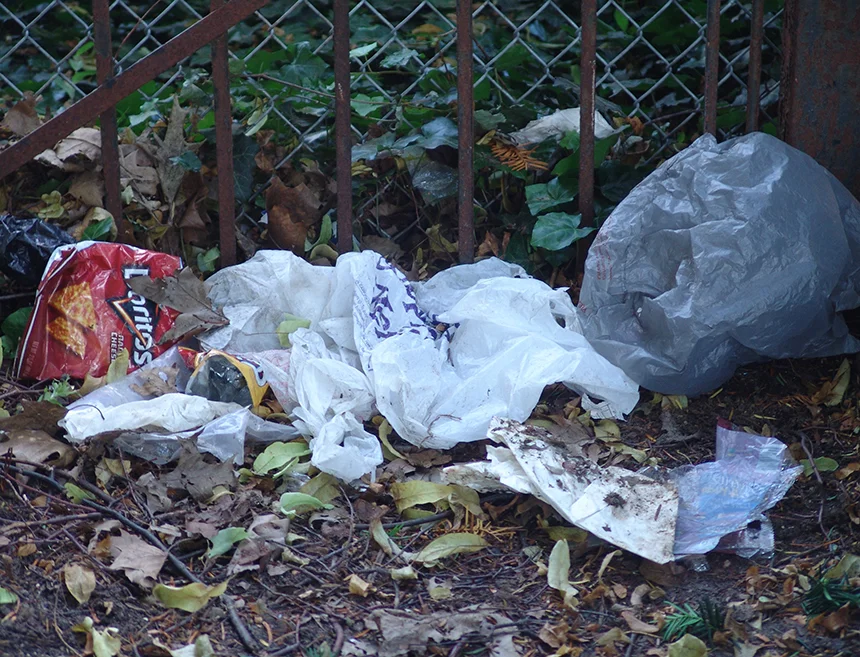
Frank Carini: Pushing against southern New England's rising tide of toxic plastic
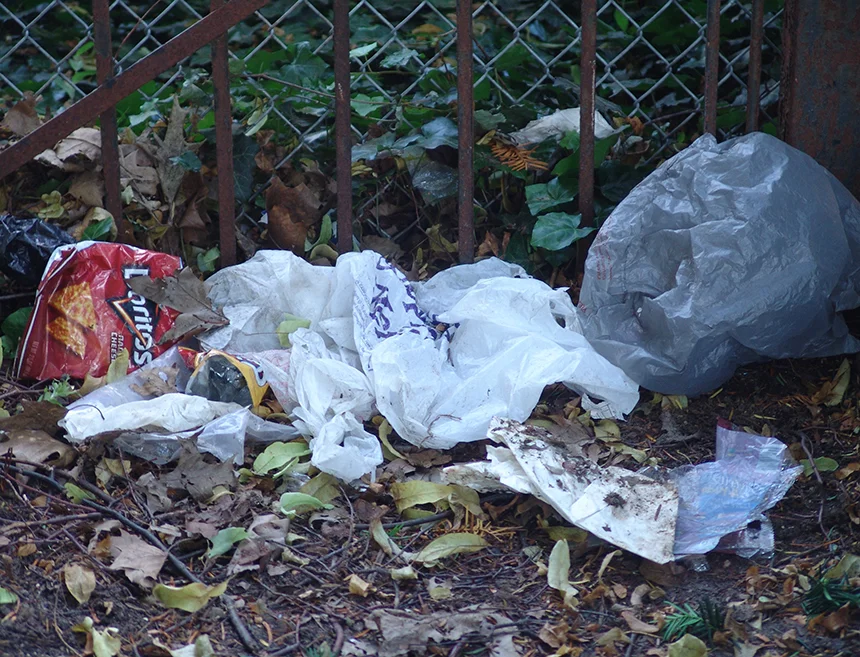
-- Photo by Frank Carini
Via ecoRI.org
There’s an estimated 5.25 trillion pieces of plastic debris in the world’s oceans. Some 8 million tons of plastic enter the sea annually. How much is floating in local marine waters remains a mystery. An answer may be forthcoming, though, as researchers will spend five days next week scouring Narragansett Bay for plastic.
The July 18-22 trash trawl is being conducted by the Rhode Island chapter of Clean Water Action (CWA) to raise public awareness about the most invasive “species” in the ocean: plastic.
Johnathan Berard, state director of CWA Rhode Island, was the policy director at Blue Water Baltimore when the organization partnered with Trash Free Maryland a few years ago to conduct a similar trawl of Chesapeake Bay. While the amount of visible plastic collected was “striking,” the four-day effort also captured a “great deal” of micoplastics — likely photodegraded pieces of plastic bags and wrappers — fishing line, and cellophane rip-strips from cigarette packs.
The Chesapeake Bay trawl and a similar one done on the Hudson River were for scientific research. The Narragansett Bay trawl is more of an advocacy project.
“We want to get elected officials, the press and advocates face to face with the problem,” Berard said. “A jar of Narragansett Bay water filled with plastic is a powerful image.”
Next week’s five-day sweep will employ an ultra-fine mesh net designed to capture micorplastics, microbeads and micofibers. These tiny plastic particles represent the planet’s next big environmental and public-health concern.
Microfibers from polyester fleeces and other synthetic clothing are an emerging concern when it comes to the quality of drinking water. Neither washers nor wastewater treatment facilities are designed to remove these accumulating bits of plastic.
“We can’t keep pushing plastic into the economy,” Berard said. “It wreaks havoc once it’s out in the environment. We find this stuff in our water. It’s in the fish we eat. On our beaches. It’s going to get to a point when it will be too gross to go to the beach or eat fish.”
Plastic packaging isn’t well recycled, or reused. (As You Sow)
Throwaway Economy
The United States alone tosses out 25 billion Styrofoam cups annually, more than 300 million straws daily, and some 3 million plastic bottles every hour of every day. Few of these items are recycled or reused.
“The current system pumps tons of plastic into the economy and environment,” said Jamie Rhodes, program director for UPSTREAM. “The scope of the problem is huge. We can’t burn or recycle our way out of this problem.”
Southern New England is certainly home to its share of plastic pollution. But how much? No one ecoRI News spoke with for this story has any idea, and while they all would be interested in finding out, their bigger concern is how to lessen the local impact of a global problem.
But, as Rhodes, former chairman of the Environmental Council of Rhode Island, noted, we can’t simply ban plastic. “Plastic has raised people out of poverty. I, for one, don’t want a computer made of iron,” he said. “But it’s overused. We need to use it more wisely.”
What is considered a “wise use,” however, can be subjective. One person might think wrapping a cucumber or apple in plastic is a ridiculous waste of resources and feeds the growing waste stream. Another person might argue that such a use of plastic prolongs shelf life and reduces organic waste.
What can’t be debated is the amount of plastic litter collected at beach cleanups in Connecticut, Massachusetts and Rhode Island, roadside debris seen through moving windows, and the flotsam and jetsam that bob in the region’s waters.
“Plastics suck in chemicals. That’s what they’re good at,” Rhodes said. “What’s the long-term impact on humans, on the environment?”
Dave McLaughlin, executive director of Middletown, R.I.-based Clean Ocean Access, noted that “we don’t know the implications of the bioaccumulation of plastics in humans.”
“They’re endocrine disruptors and that is some scary stuff,” he said. “It’s important that we understand the severity of the issue.”
Plastic bags float in Buzzards Bay, Long Island Sound and Narragansett Bay like jellyfish. Turtles, whales and other marine animals often mistake them for food, causing many to starve or choke to death. In fact, all of southern New England’s fresh and salt waters, from hidden brooks to popular beaches, are touched by plastic — a toxic problem that threatens wildlife and public health.
Adult seabirds inadvertently feed small pieces of plastic to their chicks, often causing them to die when their stomachs become filled with petroleum byproducts. As plastic breaks down into smaller fragments — microplastics that may contain toxic chemicals as part of their original plastic material or adsorbed environmental contaminants such as PCBs — fish and shellfish become increasingly vulnerable to the toxins these polluted particles collect.
At least two-thirds of the world’s fish stocks are suffering from plastic ingestion, according to estimates, as much of the planet’s plastic pollution eventually makes its way into the ocean. Local seafood favorites such as stripers and quahogs, for example, are vital to southern New England’s marine food web and the region’s economy.
The countless plastic bags, plastic bottles and plastic wrap strewn along southern New England’s coastline, swimming in the region’s rivers, ponds and lakes, waving from trees, and loitering in parks were each likely used only once, and for just a few minutes. These petroleum byproducts, however, don’t biodegrade. They remain in the environment for centuries. Their long-term impact on environmental and public health is not yet fully understood, and barely studied.
“We’ve plasticized the entire biosphere, including our bodies,” Marcus Eriksen, research director and co-founder of the 5 Gyres Institute, said during a March panel discussion at Brown University titled “The Plastic Ocean.” “The impact of plastic is widespread.”
The world’s plastic problem was first acknowledged in the 1970s. A 1973 survey of the plastic materials accumulating on a private beach on Conanicut Island in Narragansett Bay, for instance, found that the plastic pollutants “were mainly a by-product of recreational activities within the bay and not household, industrial or agricultural refuse.”
The study also noted that “plastic objects manufactured from polyethylene made up the bulk of the flotsam on the beach.” Among the plastic items collected were milk-shake tops, beer-can carriers, fish-hook bags, straws, bleach containers and shotgun pellet holders.
In 1987, the United States eventually responded to the growing plastic problem, with the passage of the Marine Plastic Pollution Research and Control Act. The law, which went to effect Dec. 31, 1988, made it illegal for any U.S. vessel or land-based operation to dispose of plastics in the ocean.
However, this act and other laws like it, such as the Microbead-Free Waters Act of 2015, can’t compete with mass consumption in a throwaway society. Their effectiveness is further limited by Washington, D.C.’s relentless assault on environmental protections, and by non-existent or lax waste-management practices in much of Southeast Asia and in developing countries.
Some four decades since the problems associated with plastic manufacturing and use were first identified, apathy, ignorance, convenience and profit have led to an addiction that is trashing the planet and putting human health at risk.
While our plastic reliance, especially for single-use items, grows, the reuse and recycling of this material has essentially flatlined. Waste-management practices can’t keep pace with the volume of production and the relentless tidal wave of new plastic packaging.
Currently, less than 15 percent of plastics packaging is recycled worldwide, according to As You Sow, a nonprofit foundation chartered to promote corporate social responsibility.
As You Sow is one of about 800 organizations worldwide, including UPSTREAM and the Story of Stuff, united in the goal of dramatically reducing the production of single-use plastic packaging, containers and bags. It’s known as the Break Free From Plastic movement.
Since most plastic is made from fossil fuels, the issue of plastic manufacturing, use and waste is also one of climate change.
“It’s fuel early on, a kid’s juice pouch in the middle, and a fuel at the end,” UPSTREAM’s Rhodes said.
Litter, especially of the plastic variety, costs taxpayers plenty. (Frank Carini/ecoRI News)
Local Impact
Plastic pollution doesn’t just ruin beach getaways and picnics in the park. It also harms the limited exposure many urban children have to nature, according to Leah Bamberger, Providence’s sustainability director.
Last year, the city had a study done to better understand how Providence residents, most notably children, perceive nature and how they use the city’s parks and open spaces. The study found that among the main concerns of children and their parents was the cleanliness of outdoor spaces, particularly litter in parks.
“Litter was the number one barrier that kept kids from enjoying nature and our parks,” Bamberger said. “It debunked the myth that urban kids don’t care about nature.”
Dealing with the region’s litter problem, much of which is some form of plastic, requires taxpayer funding and the ample use of unpaid time.
Staff and volunteers of Clean Ocean Access (COA) have spent the past 11 years cleaning up the Aquidneck Island shoreline. In that time, volunteers have worked nearly 14,000 hours and picked up some 95,000 pounds of debris, much of it plastic, according to McLaughlin, the nonprofit’s executive director.
“There’s litter that’s preventable — the stuff that blows out the back of pickup trucks — and then there’s illegal dumping that’s intentional,” he said. “Most of the plastic we find is from the society of convenience, like packaging and single-use items. A small piece of plastic has a pretty big impact.”
Of the 94,487 pounds of debris collected during 457 cleanups held between 2006 and 2016, much of it was plastic-based, such as bottles, food wrappers, fishing line, straws and cigarette filters, according to the 10-year anniversary report released by COA earlier this year.
All those cigarette butts nonchalantly flicked from car windows and haphazardly dropped on the ground, along with tobacco packaging and plastic lighters, represent one of the main sources of marine debris worldwide. Cigarette butts are made from a plastic called cellulose acetate. It doesn't biodegrade, and can persist in the environment for a long time. This plastic also contains toxins that can leech into water and soil, harming plants and wildlife.
On World Oceans Day, June 8, COA held a coastal cleanup at Easton’s Beach in Newport. Seventy-two volunteers collected 160 pounds of debris, including 1,700 cigarette butts.
Unsurprisingly, plastic bags also make up a good chunk of the organization’s shoreline hauls. Between 2013 and 2016, for example, volunteers picked up 11,874 bags.
The Aquidneck Island coastline, however, isn’t the sole domain for litter. The waters off Newport, Middletown and Portsmouth are also teaming with debris, most notably Newport Harbor. The Rozalia Project has documented a concentration of trash in the historic harbor at 41 million pieces of litter per square kilometer. Trash covers 25.2 percent of the harbor’s seafloor. It’s been dubbed Beer Can Reef, although much of the debris is plastic bottles and cups.
The Long Island Sound Study notes that marine debris is a nuisance and hazard for boaters. For instance, floating lines can foul a boat’s propellers, and chunks of plastic or plastic bags can block an engine’s cooling-water intake.
“While floatable debris in the open waters of Long Island Sound is less concentrated than in the neighboring New York-New Jersey Harbor estuary and in western Long Island Sound embayments, it is present in great enough quantities to mar the aesthetic enjoyment of the Sound,” according to the program that was started in 1985 by the Environmental Protection Agency and the states of New York and Connecticut to improve and protect the water quality of Long Island Sound. “Debris floating in the waters of the Sound can accumulate along with detached seaweed and marsh grass into large surface ‘slicks.’ These slicks can wash ashore fouling beaches and the coastline.”
Plastic caught in fences, lying on beaches, blowing around open spaces and carried by stormwater runoff into the region’s sensitive estuaries is much more than an eyesore. It’s pollution, and it has economic, ecological and public-health impacts. It’s a macro-, micro- and nano-scale problem.
To get a rough idea of the amount of litter accumulating in Rhode Island, McLaughlin did some conservative guesstimating. He figured if 5 percent of the state’s 1 million residents littered once a month, accidental or not, Rhode Island would see 600,000 new pieces of wind-blown trash annually. If 5 percent of the Ocean State’s 3.5 million annual visitors did the same, another 2.1 million pieces would be added to the landscape.
Collectively, southern New England taxpayers spend millions of dollars annually to clean up and prevent litter, much of which is of the plastic variety. Providence and other cities have to spend time and money notifying businesses to keep their Dumpsters closed, so trash doesn’t blow away or get spread about town by animals. DPWs have to clean vacant lots of trash and clear clogged storm drains and catch basins.
It also costs taxpayers when loads of municipal recycling are contaminated — plastic bags are one of the biggest contaminators; biodegradable and compostable plastics are also problem contaminants — and the collected material must then be buried or burned, instead of sold to recyclers.
Despite her relentless efforts organizing cleanups, Massachusetts resident Bonne Combs says, ‘We can’t clean our way out of this problem.’ (Courtesy photo)
No one pays Bonnie Combs to pick up after others. The Blackstone, Mass., resident is a relentless reuser and recycler. She conducts daily one-woman cleanups, at Stump Pond in Smithfield, R.I., up and down the banks of the Blackstone River and in her neighborhood, to name just a few spots. She founded Bird Brain Designs by Bonnie to repurpose animal feed bags into reusable shopping bags.
The marketing director for the Blackstone Heritage Corridor (BHC) manages the organization’s Trash Responsibly program. She also started the BHC’s Fish Responsiblyprogram, which works with businesses, such as Ocean State Tackle in Providence and Barry’s Bait & Tackle in Worcester, and the Audubon Society to make sure monofilament fishing line and spools are recycled properly.
Combs regularly sees firsthand the pervasiveness of southern New England’s plastic problem. She said nips are a “huge problem.” She picks up plenty of iced-coffee cups wrapped in both Styrofoam and plastic, and sees discarded plastic packaging everywhere.
“It’s becoming harder and harder to buy everyday products in recyclable packaging. It’s really frightening,” Combs said. “We have a waste problem. We need to go on a waste diet.”
Since this month is Plastic Free July, perhaps southern New England should start dieting now. But dieting is hard. Much of the world’s food and drink, from coffee to baby food, is now wrapped and shipped in plastic.
Addressing the region’s plastic problem, however, is complicated and will require more than avoiding plastic utensils, plastic bags, plastic water bottles, plastic straws and mylar balloons for a month. McLaughlin, of Clean Ocean Access, said the issue demands a three-pronged approach: policy, which he called “the stick;” technology/innovation, “business taking the lead;” and engagement, “the carrot.”
McLaughlin believes, at this moment at least, all three legs are a little too short.
“It starts with people becoming educated, connected and stewards of the environment,” he said. “We just can’t ban our way to a healthy ocean.”
Policy Improvements
Since the late 1960s, plastic shopping bags have been clogging storm drains, degrading marine ecosystems, choking animals, littering beaches and leaching estrogenic chemicals, but the Ocean State and its two southern New England neighbors lack the political will to enact statewide bans. The American Chemistry Council, the American Petroleum Institute and other lobbyists hold more sway than in-your-face environmental degradation and public-health concerns.
The environmental/public-health impacts associated with plastic manufacturing and disposal include greenhouse-gas emissions, and water and land pollution. For instance, a billion discarded plastic bags is the equivalent of 12 million barrels of oil. These costs are largely ignored.
Lobbyists from D.C. and parts unknown descend whenever a statewide ban or local one is discussed in Connecticut, Massachusetts or Rhode Island. They argue that consumers benefit from the use of plastic bags, because they can easily carry goods without the burden of lugging around reusable bags. They note that plastic bags handed out by retailers are reused as pet-waste containers or to line household trash receptacles. They say properly collected and recycled plastic bags — they shouldn’t be placed in curbside recycling bins and instead be brought back to stores for collection — are made into a composite product used as a wood substitute for decks and stairs.
Unfortunately, only a small percentage of plastic bags are actually recycled. In Rhode Island alone, some 190 million plastic bags are consumed annually, according to a 2006 Brown University study, and only about 9 percent are recycled.
Lobbyists, however, have failed to sway some local municipalities. Three Rhode Island communities — Barrington, Middletown and Newport — have passed bans on plastic retail bags. About 35 municipalities in Massachusetts have similar bans. The first municipality in New England to ban plastic checkout bags was Westport, Conn., in 2008.
While lawmakers in southern New England’s three states have been slow to adequately address the region’s role in the world’s plastic problem, a few western states have attempted to change the paradigm. California enacted a statewide plastic-bag ban last year, despite intense lobbying by plastics manufacturers. A 2013 study of San Jose’s bag ban helped pave the way for California’s statewide ban. The study found that after San Jose enacted its bag ban, there was nearly 90 percent less plastic debris in the city’s storm drains and about 60 percent less plastic street litter.
In Hawaii, all four of the state’s county councils and the city of Honolulu have passed some type of bag ordinance that has effectively banned plastic retail bags in the 50th state.SThis year, Connecticut debated a proposal to put a 5-cent tax on single-use plastic and paper shopping bags. The city of Providence has warned and then fined residents who continue to use their recycling bins for trash. On June 22, for example, the city’s five enforcement officers wrote 50 tickets.
McLaughlin, of Clean Ocean Access, noted that states and municipalities need to support, fund and enforce waste-diversion efforts. In Rhode Island, at least at the state level, resources for such efforts are scarce. In the three decades since the state’s recycling law was enacted, the Rhode Island Department of Environmental Management has neither warned nor fined any business for noncompliance.
Bag bans, bag taxes, fines and enforcement, while all part of the solution puzzle, aren’t the key pieces. Producer responsibility, also known as product stewardship, enlists manufactures in the disposal and recycling of the hazardous and bulky goods they produce. In southern New England, producer-responsibility programs already exist for mercury thermometers and thermostats, paint, and mattresses.
Bamberger, Providence’s sustainability director, Rhodes, of UPSTREAM, and CWA’s Berard all told ecoRI News that producer responsibility is vital to local, national and global efforts to reduce plastic pollution, minimize packaging and change practices.
“Bans are nice, but they’re not a good solution,” Bamberger said. “Producer responsibility is the most effective way to manage the waste stream.”
Berard said, “Manufacturers can’t just put all this material into the economy and then have no skin in the game post-use.”
One of UPSTREAM’S focus points is helping make producers more responsible, here and across the globe.
“Companies need to be part of the solution,” Rhodes said. “We need policies to stop the flow of single-use plastic. This isn’t the system we’ve always had. We created it; we can change it.”
Innovation and Technology
They look like small, floating Dumpsters. In their first year of use, the two trash skimmers attached to docks at Perrotti Park removed more than 6,000 pounds of debris from Newport Harbor. Much of the litter was of the usual-suspect variety — plastic food wrappers, straws and bags, and fishing line.
COA’s Newport Harbor Trash Skimmer Projectwas implemented last August, and made possible by funding from 11th Hour Racing. Some 30 units, manufactured by Washington-based Marina Trash Skimmers, are in use on the West Coast and Hawaii. The two installed in Newport Harbor are believed to be the first ones in use on the East Coast.
They operate essentially as large pool skimmers, filtering water 24 hours a day and capturing floating debris and absorbing surface oil or other contaminants. The skimmers are powered by a three-fourths-horsepower electric engine that costs $2 a day to run. Hundreds of gallons of water flow through the units every few hours, and the skimmers are minimally invasive to marine life.
COA has since added a trash skimmer at Fort Adams State Park and at New England Boatworks, in Portsmouth.
“These units are highly effective in removing floating marine debris,” COA’s McLaughlin said. “But we can’t put trash skimmers everywhere.”
A similar piece of equipment in use in Baltimore’s Inner Harbor also removes debris, including plastic litter, from the water. The water-powered wheel deposits the scooped-out trash into a Dumpster. When there isn’t enough water current, a solar panel attached to the unit provides additional power.
New technology, whether it’s floating Dumpsters or trashy water wheels, play a role in controlling litter. To better address plastic manufacturing and use, however, advanced packaging innovations will have to play a bigger role.
Public Engagement
Solving the problem of plastic pollution can’t be done by stopping littering and improving recycling rates. Producer responsibility alone won’t end the deluge. The effort must include education and outreach, to curb such issues as “wishful recycling.” It’s also about changing behaviors — something as simple as restaurants asking if you want a straw rather than just giving you one.
According to a study recently done by UPSTREAM for the city of Providence, one way to address the issue at an individual consumer level is to incentivize behavior to reduce single-use items, such as being allowed to cut the line at the coffee shop if you bring your own mug.
Much of the outreach is needed to make people aware that the region’s plastic problem isn’t magically fixed curbside, or at a transfer station, landfill or incinerator.
“We see litter on the streets and plastics in the ocean, but when we put our recycling out at the curb, we don’t care or know what happens next,” Rhodes said. “Much of the this material is shipped to small, developing countries like the Philippines and Malaysia, where poor waste pickers go through it.”
McLaughlin said the overuse of plastic is a solvable problem. He said it starts with individuals taking action.
“We have to take care of each other and the environment. That’s how we are going to make progress,” McLaughlinsaid. “We have to get people involved at the local level to take action."
Frank Carini is editor of ecoRI News.
Mining for suckers
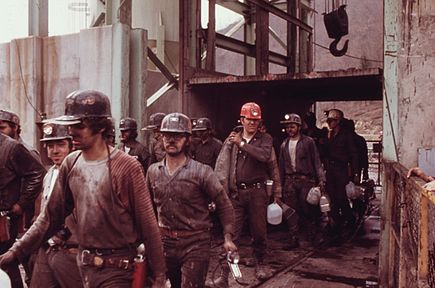
Leaving an Appalachian coal mine at the end of a shift.
In last year's campaign, Donald Trump made much of the wonderfulness of coal-mining and of his solidarity with coal miners and workers in some other old industries, many of whom were then suckers enough to vote for him -- enough to get him elected by Electoral College, with the help of the Kremlin. But this quote from a 1990 Time magazine interview with him suggests what he really thinks of these people:
"I love the creative process {of the real-estate business}. I do what I do out of pure enjoyment. Hopefully, nobody does it better. There’s a beauty to making a great deal. It’s my canvas. And I like painting it.
"I like the challenge and tell the story of the coal miner’s son. The coal miner gets black-lung disease, his son gets it, then his son. If I had been the son of a coal miner, I would have left the damn mines. But most people don’t have the imagination — or whatever — to leave their mine. They don’t have 'it.'''
Trump was born on third base as a son of a rich and ruthless developer. The future president then went on to inherit tens of millions of dollars. He sure had "it.''
-- Robert Whitcomb
Hospitals are stationary tax targets

Theseus and Procrustes, on Attic red-figure neck-amphora, 570–560 B.C.
The State is the great fiction through which everyone endeavors to live at the expense of everyone else
-- Frederic Bastiat
Procrustes – literally, “the stretcher who hammers metal” -- was in Greek mythology a rogue smithy and bandit from Attica who cut off the legs of people to fit them to his iron bed. Political narratives as they relate to facts can be procrustean beds. If the facts don’t fit the narrative, you simply cut off their limbs to make them fit. Facts may be stubborn things, but politicians sometimes are more stubborn.
A few months ago, Connecticut Gov. Dannel Malloy’s budget guru, Ben Barnes, was asked by a reporter why the Malloy administration was so keen to slap a tax on hospitals. Barnes should have replied, “because the hegemonic Democratic Party in Connecticut finds it politically inconvenient to make permanent cuts in spending. Instead, he replied in the accent of infamous bank robber Willie Sutton, “Because that’s where the money is.” Asked why he robbed banks, Sutton’s reply was shockingly apposite, according to a reporter who may have foisted the quote on Sutton – “because that’s where the money is.”
For the Malloy administration – and, indeed, for most progressive Democrats in Connecticut – there is but one solution to declining revenues -- you increase taxes. And when in response to tax increases revenues decrease, you increase taxes further, a process that results in further diminished revenues, which leads to deepening and repetitive state deficits, which leads to more tax increases, which leads to -- guess what? Lame-duck Governor Malloy is the author of two massive tax increases, both the largest and the second largest in state history, and yet deficits continue to raise their horned heads as taxpayers and businesses leave the state.
Connecticut hospitals will not be leaving the state. They are stationary tax targets, ducks set up in a row in Connecticut’s tax carnival, easy prey. And that was – note the past tense – where the money was before progressive legislators forced Connecticut hospitals to lay down for a bloody stretch on Malloy’s tax bed.
Now – better late than never -- Hartford Courant business reporter Dan Harr tells us:
“Connecticut's 28 acute-care hospitals collectively saw their gain from operations fall by 17 percent in the fiscal year that ended Sept. 30, to a level that's not sustainable for the system as a whole over the long haul.
“One big reason for the decline: For the first time, a state tax on health care providers that started in 2012 exceeded the total amount of operating surplus the hospitals had after they paid the tax.”
Here is the inconvenient truth Connecticut’s progressive procrustean lawmakers have trimmed to their narrative, lopping off limbs to suit their purpose: The more you tax, the more you spend; the more you spend, the more you are forced to tax. Inconvenient corollary: There is but one escape from this destructive process -- you must sizably reduce spending permanently.
In Connecticut, the failure of government to act for the benefit of the whole state, has led over a period of years to permanent debts and deficits. All these truths are conveniently tailored by progressives to fit an iron, inflexible, narrative. And never mind that reality intervenes to reduce to dust the presuppositions of the narrative, the most destructive of which is this: If modest taxation is good, immodest, shameless, limitless taxation is better.
Better for whom – qui bono? Who benefits from excessive taxation and entangling regulation, beyond self-serving politicians who wear on their ever expanding chests ribbons and metals that proclaim them as saviors of the state when, in fact, they are saving nothing and making a botch of everything?
The Lowell Weicker 1991 income tax rescued big-spending legislators from the obligation to make prudent, permanent, long-term cuts in spending; ditto Governor Malloy’s two massive tax increases. Tax increases swell government, but a tax placed on, say, restaurants, in the form of mandated increases in the minimum wage, ultimately ends in fewer restaurants, and fewer jobs for people who are not electrical engineers or puffed up, glory seeking politicians.
Another inconvenient truth: Whatever you tax tends to disappear. And, almost always, vanishing large businesses such as General Electric carry wealth with them into other states, inevitably reducing state revenues, which prompt progressive legislators to impose further tax increases – the “abracadabra” that makes the real wealth of the state disappear.
For the real wealth of a state is not measured by the size of its treasury, but rather by the disposable income of people unencumbered by crippling and expensive regulations. Liberty is wealth and -- wealthy people will tell you -- wealth is liberty. When the state is wealthy and the people poor, it is the state unchecked by the people that is at liberty.
Let those who have eyes see, let those who have ears hear. People in Connecticut are groaning in pain. It will not be long before they vote out of office those who have eyes but do not see, those who have ears but do not hear, and these false politicians, God willing, will not be saved by their false and comforting narratives.
Don Pesci is a Vernon, Conn-based essayist on political, economic and cultural matters.
Looking for drama

"In the long dusks of summer we walked the suburban streets through scents of maple and cut grass, waiting for something to happen."
―Steven Millhauser, from Dangerous Laughter
Take cover when experts say another financial crisis likely won't happen 'in our lifetime'

The bursting of the South Sea Bubble in 1720 is regarded as the first modern financial crisis.
From Robert Whitcomb's "Digital Diary'' in GoLocal24.com:
In what could presage a horror movie, Fed Chairwoman Janet Yellen, 70, commented the other day that another financial crisis like 2008’s was not likely “in our lifetime’’ because of banking and related reforms implemented in response to the crash.
Fasten your seatbelts when any leading figure in the money world says that things look safe. Consider the optimistic remarks of former Fed Chairmen Alan Greenspan and Ben Bernanke before the 2008 crash; Council of Economic Advisers Chairman Walter Heller’s projections of steady growth and low inflation out to the horizon in the ‘60s, and famed economist Irving Fisher’s predictions, just before the Great Crash of 1929, that prosperity would continue indefinitely. The fact is that there are far too many variables in the world economy (and the universe) to make such predictions. Among them: war (including the current cyber war being waged by Russia againstthe West); disease, and natural disasters

Jim Hightower; As free as you can afford to be

Via OtherWords.org
I think of freedom in positive, aspirational terms — as in FDR’s “Four freedoms,” or in the uplifting songs of freedom sung by oppressed people everywhere.
But right-wing ideologues have fabricated a negative notion of “freedoms” derived from their twisted concept of individual choice. You’re “free” to be poor, politically powerless, or ill and uncared for, they say — it’s all a matter of decisions you freely make, and our government has no business interfering with your free will.
This is what passes as a philosophical framework guiding today’s Republican congressional leaders.
For example, they say their plan to eliminate health coverage for millions of Americans and cut such essential benefits as maternity care for millions more is just a matter of good ol’ free-market consumerism.
As explained by Jason Chaffetz, a Utah Tea Party Republican: “Americans have choices. And so maybe, rather than getting that new iPhone that they just love and they want to go spend hundreds of dollars on that, maybe they should invest in their own health care.”
Lest you think that Chaffetz must simply be an oddball jerk, here’s a similar deep insight from the top House Republican, Speaker Paul Ryan: “Freedom is the ability to buy what you want to fit what you need.”
Yes, apparently, you’re as free as you can afford to be. As Vice President Mike Pence recently barked at us, Trumpcare’s you’re-on-your-own philosophy is all about “bringing freedom and individual responsibility back to American health care.”
The GOP’s austere view is that getting treatment for your spouse’s cancer should be like buying a new pair of shoes — a free-market decision by customers who choose their own price point, from Neiman Marcus to Goodwill. And if you go barefoot, well, that’s your choice.
Jim Hightower is a radio commentator, writer, and public speaker. He’s also the editor of the populist newsletter, The Hightower Lowdown.
Walk to the island
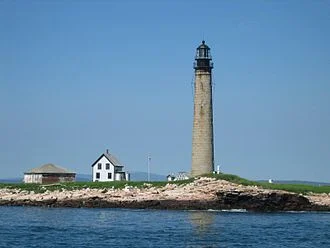
Petit Manan Light, on the Maine coast.
''Off the coast was an island, P'tit Manan,
the bluff from Richard's lawn was almost sheer.
A chill at four o'clock.
It only takes a few minutes to make a man.
A concentration upon now & here.
Suddenly, unlike Bach,
& horribly, unlike Bach, it occurred to me
that one night, instead of warm pajamas,
I'd take off all my clothes
& cross the damp cold lawn & down the bluff
into the terrible water & walk forever
under it out toward the island.''
-- From "Henry's Understanding,'' by John Berryman
A ceramic chronicle

"Vase'' (ceramic), by Andy Hampton, in the group show "Spinning Tales and Weaving Stories,'' at the League of New Hampshire Craftsmen, through Sept. 22.