
Vox clamantis in deserto






Notice to Lovers: Study the month of May

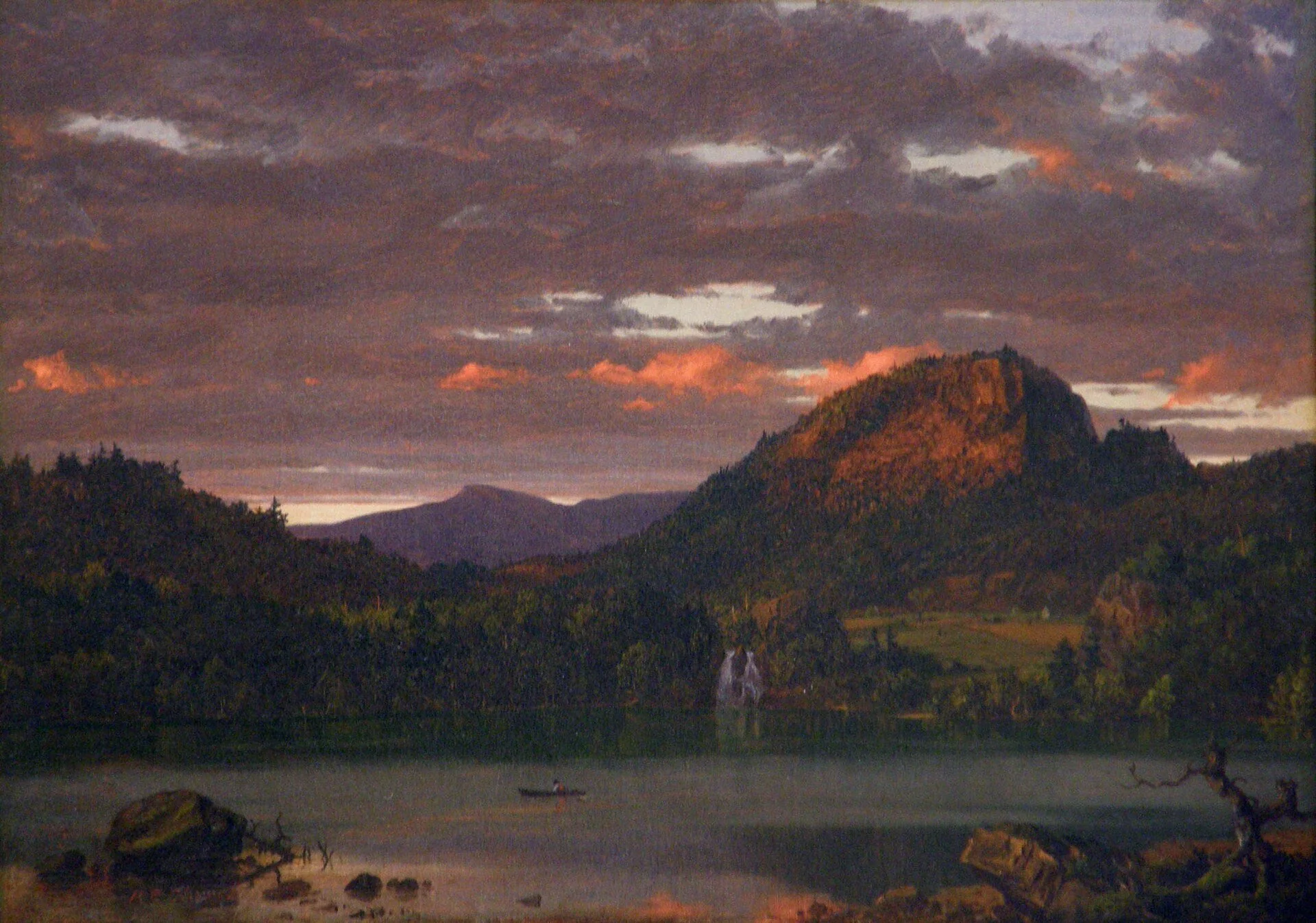
"May,'' by Leandro Bassano.
“And thus it passed on from Candlemass until after Easter, that the month of May was come, when every lusty heart beginneth to blossom, and to bring forth fruit; for like as herbs and trees bring forth fruit and flourish in May, in like wise every lusty heart that is in any manner a lover, springeth and flourisheth in lusty deeds. For it giveth unto all lovers courage, that lusty month of May, in something to constrain him to some manner of thing more in that month than in any other month, for divers causes. For then all herbs and trees renew a man and woman, and likewise lovers call again to their mind old gentleness and old service, and many kind deeds that were forgotten by negligence. For like as winter rasure doth alway arase and deface green summer, so fareth it by unstable love in man and woman. For in many persons there is no stability; for we may see all day, for a little blast of winter's rasure, anon we shall deface and lay apart true love for little or nought, that cost much thing; this is no wisdom nor stability, but it is feebleness of nature and great disworship, whosomever useth this. Therefore, like as May month flowereth and flourisheth in many gardens, so in like wise let every man of worship flourish his heart in this world, first unto God, and next unto the joy of them that he promised his faith unto; for there was never worshipful man or worshipful woman, but they loved one better than another; and worship in arms may never be foiled, but first reserve the honour to God, and secondly the quarrel must come of thy lady: and such love I call virtuous love.
But nowadays men can not love seven night but they must have all their desires: that love may not endure by reason; for where they be soon accorded and hasty heat, soon it cooleth. Right so fareth love nowadays, soon hot soon cold: this is no stability. But the old love was not so; men and women could love together seven years, and no licours lusts were between them, and then was love, truth, and faithfulness: and lo, in like wise was used love in King Arthur's days. Wherefore I liken love nowadays unto summer and winter; for like as the one is hot and the other cold, so fareth love nowadays; therefore all ye that be lovers call unto your remembrance the month of May, like as did Queen Guenever, for whom I make here a little mention, that while she lived she was a true lover, and therefore she had a good end.”
― Thomas Malory, from Le Morte d'Arthur: King Arthur and the Legends of the Round Table
Eerie Earth
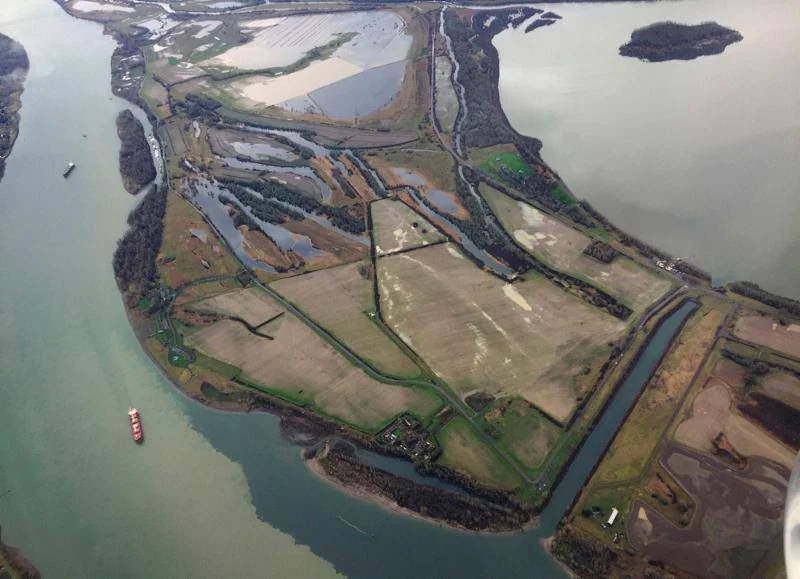
"Leaving PDX'' (archival pigment print), by Mary Lang, in her show "Wonderland: Landscape Photographs by Mary Lang, at the Kingston Gallery, through May 28. (PDX refers to Portland, Oregon's airport). Remember when flying was glamorous?
Then call your maid

"Rise to Meet the Dawn'' (watercolor), by Peter Hussey, in the show "Stops Along the Way,'' at the Newport Art Museum, through Aug. 6. Mr. Hussey finds immense beauty in old New England buildings.
Anti-vaxers Trump, RFK Jr. threaten public health

Boy with measles.
From Robert Whitcomb's "Digital Diary,'' in GoLocal24.com
Science-free lies by anti-vaccine campaigners have led to an increase in measles epidemics. Among the most notable ones now are in Minnesota, Italy and Rumania. The refusal of some parents to vaccinate their children is putting the public at risk. Science ignoramuses such as Donald Trump and the emotionally disturbed crank Robert F. Kennedy Jr., with their idiotic negative remarks about vaccines, are making things worse. No, vaccines don't cause autism.
In some rare cases measles can cause permanent physical damage or even kill.

'New England everywhere'?'
"Having lived here the years that are my best,
I call it home. I am content to stay.
I have no bird's desire to fly away.
I envy neither north, east, south, nor west.
"My outer world and inner make a pair.
But would the two be always of a kind?
Another latitude, another mind?
Or would I be New England anywhere? ''
-- From "New England Mind,'' by Robert Francis
Chuck Collins: Healthcare costs, not taxes, are the big hit on businesses
Members of the House GOP were in a hurry on May 4 to pass their bill to gut Obamacare. They rushed it through before anyone even had a chance to check its cost or calculate its impact on people’s access to insurance.
Their urgency, however, had little to do with health care. The real reason for the rush? To set the table for massive tax cuts.
Indeed, the House health plan would give a $1 trillion boon to wealthy households and pave the way for still bigger corporate tax cuts to come, as part of the so-called “tax reform” they’re pushing.
Meanwhile, dismantling the Affordable Care Act will cause up to 24 million people to lose their health coverage, according to the non-partisan Congressional Budget Office. (Though even that estimate is based on the less extreme version of the bill that failed to pass in April. The new plan may be even worse.)
Why would a GOP politician support an unpopular bill that fewer than 20 percent of voters think is a good idea? Why risk angry constituents showing up at town hall meetings?
Put simply, to please their wealthy donors and Wall Street corporations. For complex legislative reasons, repealing Obamacare’s taxes on the rich first will make it easier for them to slash corporate taxes next.
As the “tax reform” debate begins, prepare for sermons about how cutting taxes for rich and global corporations will be great for the economy. Slashing the corporate tax rate, we’ll be told, will boost U.S. competitiveness.
But if Congress were really concerned about the economy, policy wouldn’t be driven by tax cuts. The real parasite eating the insides of the U.S. economy isn’t taxes, billionaire investor Warren Buffett explained recently, but health care.
In fact, taxes have been steadily going down, especially for the very wealthy and global corporations. “As a percent of GDP,” Buffett told shareholders of his investment firm, the corporate tax haul “has gone down.” But “medical costs, which are borne to a great extent by business,” have increased.
In 1960, corporate taxes in the U.S. were about 4 percent of the economy. Today, they’re less than half that. As taxes have fallen, meanwhile, the share of GDP spent on health care has gone from 5 percent of the economy in the 1960s to 17 percent today.
These costs are the real “tax” on businesses. As any small business owner can tell you, health care costs are one of the biggest expenses in maintaining a healthy and productive work force.
Yet the GOP bill will weaken healthcare coverage and regulation, which will increase costs and hurt U.S. companies.
U.S. employers, remember, must compete with countries that have superior universal health insurance for their citizens and significantly lower costs. While health care eats up 17 percent of the U.S. economy, it’s around just 11 percent in Germany, 10 percent in Japan, 9 percent in Britain and 5.5 percent in China.
No wonder Buffett concluded that “medical costs are the tapeworm of American economic competitiveness.”
Buffett observed that the House healthcare bill would give him an immediate $680,000 annual tax cut, a break he doesn’t really need, while only allowing that tapeworm to bore deeper.
For all its limitations, the Affordable Care Act has expanded coverage and the quality of life for millions of Americans. It’s also put in place important provisions to contain exploding health care expenses, slowing the rise of costs.
The GOP plan to reduce coverage and deregulate health care will take us in the wrong direction. That’s a pretty poor bargain for yet another tax cut for the richest Americans.
Chuck Collins is a senior scholar at the Institute for Policy Studies and a co-editor of Inequality.org. He’s the author of the recent book Born on Third Base.
Not yet edible

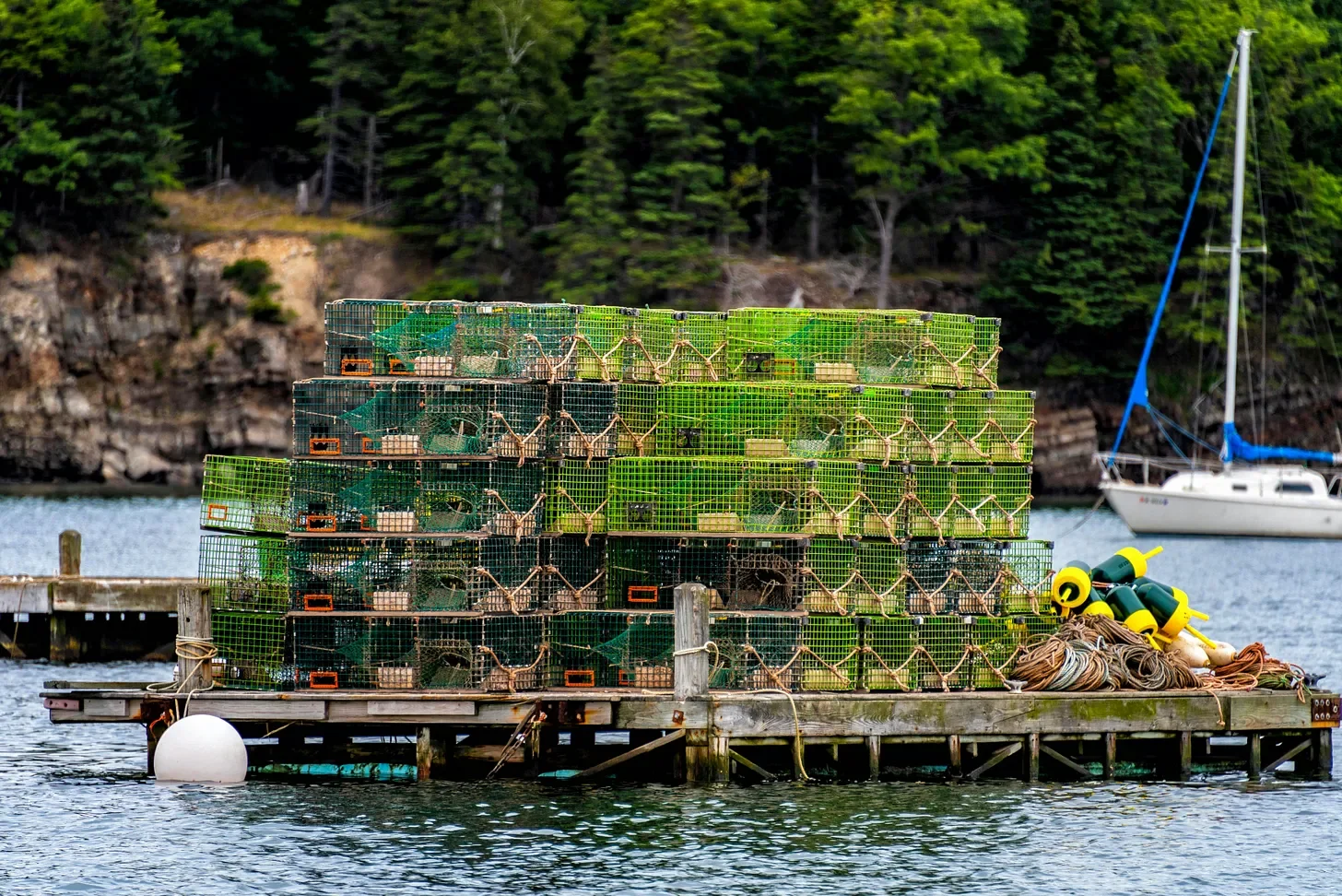
"Black Anemones" (acrylic, silicone, epoxy & calcium carbonate, electronics, lithium batteries, neodymium magnets, copper, and magnetite), by Michael Barton-Sweeney, at Dedee Shattuck Gallery, Westport, Mass. He creates kinetic sculptures that explore electronics, neural networks and marine invertebrates.
Storm modeling for New England

Hurricane Bob approaching New England on Aug. 19, 1991.
From the blog of our friend Jim Brett, president of the New England Council (NEC):
"NEC member Eversource recently announced it will add Plymouth (N.H.) State University to its partnership with the University of Connecticut to improve the predictive weather modeling systems development at the Eversource Energy Center at UConn.
"Eversource will work with the two universities to develop storm modeling and damage forecasting systems designed for the New England climate. The systems will complement the Eversource Energy Center at UConn’s current power outage prediction modeling system and allow utility companies to distribute resources appropriately across the country and region in preparation to damages to an electric grid from storms.
“We are trying to improve the reliability and resilience of the entire electric grid, basically for New England. We’re trying to predict in advance what a particular weather pattern is going to do to our electric grid and the impact it will all have on our customers,” said Bill Quinlan, Eversource’s President of Operations in New Hampshire.
"The New England Council congratulates Eversource on the new collaboration that will continue to improve service to Eversource and other utility customers throughout New England.''
Katie Rybakova/Kate Cook Whitt: Boosting the productivity of classroom talk

Socrates and {his, er, student} Alcibiades, by Christoffer Wilhelm Eckersberg.
Via the New England Board of Higher Education (nebhe.org)
The classic image of a college classroom often includes a professor standing at the front of a room or hall, often standing near a chalkboard or projector screen, lecturing to a room full of 30 to 100 students diligently taking notes. This model of instruction, often referred to as direct instruction, however, is grounded in somewhat-outdated theories of learning behaviorism and cognitivism.
Although higher education has lagged behind in shifting pedagogical approaches, professors and departments are beginning to make shifts to teaching and learning in higher education to reflect the research in constructivism and social constructivism. Essentially, this means that we know, as scholars, that teaching and learning is most effective when students are actively involved in the learning process and are exposed to learning experiences in which they construct their own understanding of core disciplinary ideas. Furthermore, the ideas of social constructivism rest on the concept that learning is inherently social and requires constant communication among and between peers, not only instructors.
Here we share our approaches to academic discourse within an environment that caters to a population including first-generation college students at Thomas College, with the caveat that these forms of academic discourse add an unconventional twist. Academic discourse is one of the ways in which to attend to the needs of a constructivist classroom and allows for students to engage in rigorous, active learning.
Types and forms of academic discourse
Academically productive talk with “Talk Moves." In an effort to support K-12 science teachers in facilitating academically productive science discussions, Sarah Michaels and Cathy O’Connor identified four goals for productive talk and an associated set of nine “Talk Moves.”
Although the moves were originally developed for facilitating K-12 science discussions, they can be used across disciplines and grade levels to support students as they engage in academically productive talk. In my undergraduate Science, Technology, Engineering, Arts, and Mathematics (STEAM) courses, I often engage students in academically productive talk using the talk moves.
When setting up a whole-group discussion, I begin by framing the question for the discussion. The question is centered on a complex phenomenon that is difficult to explain. The first discussion about a question is often a discussion focused on sharing initial ideas. In such discussions, students work to share their current understanding of and questions about the phenomenon. I prompt students to share their thinking and to engage with the thinking of others by using talk moves. Students then engage in a series of investigations and sense-making discussions in which they slowly gather evidence to help explain the phenomenon and collaboratively make-sense of their evidence. Often these discussions involve students arguing from evidence and agreeing or disagreeing with each other. Again, I support students in deepening their reasoning about the topic by using talk moves. Finally, students engage in a whole-group consensus discussion in which they co-construct an explanation, based on evidence, for the phenomenon.
For instance, our question in a recent series of discussions was, “How do wind chimes make sounds that we can hear?” This is a fairly complex scientific question that can be subdivided into several sub-questions: How do wind chimes make different sounds? How does sound travel? How can we hear different sounds? Before our first discussion, students worked in small groups to create explanatory models of their initial ideas about the phenomenon. After creating their initial models, students arranged the room into a circle so that every student could see and hear every other student.
We then established cultural norms for productive discussions. Such norms included “agree or disagree with the idea, not the person,” and “defend ideas with evidence.” We discussed the norms and posted them so that students were always reminded of the norms. Next, I allowed students time to view the models created by other small groups. Then, we began the discussion with the goal of sharing initial ideas about the phenomenon. In addition, we captured questions that we had about the phenomenon.
By the end of the discussion, students realized that they had many questions about the phenomenon and that they needed to ground their initial ideas in evidence. From this discussion grew a need for a series of investigations to gather evidence about the phenomenon.
Next, students engaged in a series of investigations to make sense of the phenomenon. For instance, students filmed ultra-slow motion images of clappers striking wind chimes. After every investigation, we re-grouped into a circle discussion to develop an explanation for the sub-question we were working on. Before each discussion, students worked in small groups to model their ideas and evidence on chart paper, examined models developed by other groups, and then argued from evidence. During whole-group discussions, I facilitated when needed and documented the group’s consensus model on chart paper.
The smaller consensus discussions culminated in a consensus discussion aimed at explaining the phenomenon as a whole. In this discussion, we worked from all previous drafts of models presented until students had developed a model that they felt was grounded in evidence and could adequately explain the phenomenon.
When students were first asked to engage in this kind of academically productive discourse, they were hesitant. Many had never said more than a few words in their college courses and were rarely asked to share their thinking or current understanding on a topic. The first discussion involved a great deal of wait time and facilitation on my part. As students started to learn how to participate in the discussion, however, they began to share their ideas much more willingly. By the final consensus discussion, students had started to engage in productive discussion aimed and sense-making and I only occasionally jumped into the discussion to help refocus or redirect.
Through this process, the students shifted from receivers of knowledge to active constructors of knowledge. They learned to publicly share their ideas, even when those ideas were developing or partially formed. Students became willing to share both what they knew and what they didn’t know so that they could productively co-construct understanding around a complex phenomenon.
Socratic circle with backchannel.
As part of an Introduction to Literature course, my students engaged in an active discussion regarding each novel they read. The guidelines were minimal—students were given guiding questions and asked to complete a “one-pager” front and back analysis of the text as a whole using a critical lens of their choice, which could be used during the discourse. I intentionally sat outside the circle set up in class, marking down interesting ideas and participation—not with the intent to tell learners they are “right” or “wrong,” but rather to comment on them individually once the discussion concludes (which occurs naturally). The class was set up with two circles—a large circle of tables encloses a small table in the center. The “inner circle” had room enough for about four to five students, and these four to five students engaged in verbal discussion that is completely self-dictated. Those in the outside circle could raise their hands to contribute (the inner circle selected those who get called) and contribute to a backchannel through a Web site called Today’s Meet, which essentially functions as a secondary discussion but online in a so-called “chatroom.” The backchannel was projected live on the screen and updated automatically as those on the outside circle shared their thoughts. The goal was self-driven academic discussion and analysis of the text at hand with little to no instructor facilitation. Each Socratic circle discussion lasted about 45 minutes and ran the gamut of Reader Response analysis to complex Marxist, Historical, Feminist, Biographical, Psychoanalytic, and Formalist critiques.
The above pedagogical snapshot sounds effective and engaging; students are actively participating in discussion, self-propelling analysis and different perspectives, and engaging in analytic exchanges where not all perceptions and opinions are the same, thus allowing for the practice of critical yet respectful exchanges. The instructor functions as a sounding board for academic analysis and helps facilitate the preparation for the Socratic circle but ultimately allows learners the freedom to express their opinions without becoming the so-called “sage on the stage.”
To be fair, not all Socratic circle discussions are as fruitful as others, and in practice, academic discourse is not linear in nature. In fact, learners quickly realize the natural shifts and repetition in conversation that occur. Sometimes, a shift includes a differing perspective and adds to academic discourse depth. In other instances, the shift is purely tangential in nature; it’s up to the learners to recognize this tangent and pull themselves back on track to academic discussion. This typically occurs more quickly than one would anticipate, as either someone on the backchannel “checks” the inner circle or someone out of the inner circle comments on the tangent. The academic discourse that occurs combines interest, text-to-self connections, text-to-world connections, and analytical critiques. Consider the following short narrative that depicts this discourse in a live setting (with real names changed).
We've used the introductory text Unwind, by Neil Shusterman, as part of a dystopian literature unit. Unwind showcases a world in which children under age 18 can be “unwound,” which means they would be harvested for parts and organs if the parent turns their child over. An inner-circle participant, Luke, asked the inner circle if the technology to be unwound existed now in society, what would stop people from using this technology? The backchannel blinked with new commentary as those on the outside circle responded to Luke’s question, while those in the inner circle quickly dismissed the question as moral and ethical in nature—something that would be ethically wrong and so would never occur. Luke continued to push, but isn’t that what happened in Unwind's society? How did they believe that it was OK to do that?
Sandra interjected—it’s a dystopian novel, she said, based on the theme of silence that class had one over the the week before and the masses would rather be silent then get “chopped up.” The backchannel harbored surprised-face emojis and a few tangential comments regarding the conversation in the inner circle. “But what about Risa?” asked Tommy. The inner circle turned to him (notice that the conversation is directed to those in the inner circle, not to the instructor). “Risa was a character that stood up for the unwinds at the end.” Several inner-circle participants spoke up at once. “It kind of connects with my feminist critique ...” Mark noted. “But she was getting unwound herself, she had to speak up ...” Tommy countered. Leyla used the short silence to continue her connection to the feminist critique she wrote for her one-pager…
As the conversation continued, I took note of those who spoke with a checkmark. Many at this point had at least 20 checkmarks by their names. I kept an eye on the backchannel too, marking down participation and points I though had not been made yet. About 40 minutes into the completely self-propelled conversations, the discussion fizzled out. The inner circle turned expectantly to me. I smiled and commented on this. We finished the class by debriefing their conversations and considering backchannel comments we may have skipped over. We discussed how well we analyzed the text, how well we encouraged others to pitch in their ideas, and how well we continued to speak about the novel in an academic way. The learning that occurred was engaging yet productive. Even those who are shy or uneasy when it comes to speaking up felt “heard” through the backchannel and mentioned in written exit tickets their consideration of becoming a participant in the inner circle when they gather their confidence. These learners are not only talking about novels—they are learning how to engage in this kind of discourse.
Small group discussion with Livescribe pens.
A small-group discussion allows for depth in discussion without the pressure of contribution in a whole-class setting. The digital component of these small groups through the use of the Livescribe pen allows for two things—stronger facilitation for group work that tends to get off-track often and a way to assess how learners think critically out loud. What the Livescribe pen does, plus the Livescribe dot paper given to each group, is record the discussion the learners are having. They jot down notes to the prompts listed on the dot paper (and audio-recorded beforehand) while they think out loud as to what those prompts mean. This version of academic discourse is particularly effective to listen to as a form of assessment as it allows me to track the way the learners are problem solving and approaching each prompt. Each prompt is loosely connected to the text and intentionally vague. The prompts force learners to first interpret the meaning of the question and then think out loud together to brainstorm a solution. I then keep track of these forms of discourse while also freeing myself to move around freely as the discussions are occurring.
This technology allows me, once I upload a “pencast” onto my laptop (which is essentially an audio-rich PDF document), to click on a particular note and then go to that particular place in the dialogue. The clarity of thought and the brainstorming that occurs within these small-group environments shows continuous progress throughout the discussion. It really is like having five instructors in the room.
Much like with the Socratic Circle pedagogical overview, this above snapshot does little to reveal the natural reactions to such a pedagogical approach. Some participants took longer to figure out the technology itself than having the discussion, while they ultimately were able to function with the Livescribe pen, the academic discourse these groups engaged in was technology-driven, not novel-driven. Others simply did not like to be audio-recorded; they felt like they needed to come up with a “great answer” instead of thinking the answer through out loud. Others preferred this kind of pedagogical approach. They felt as if in Socratic circles they did not feel comfortable speaking up, but were comfortable in a small group. They did not mind the Livescribe pens and, in fact, thought they were “cool.”
Overall the use of the Livescribe pen does more for the instructor and less for the learner. The learners simply begin to understand how to use the tool and it does not teach them any 21st century literacy skills. That being said, the tool’s success in the ability to assess thinking trajectory allows for the instructor to both formally and informally assess the way the learners approach critical analysis. It also allows me to see which learners are capable of taking risks in their thinking aloud, as well as those who are not yet comfortable voicing their unfiltered commentary and are waiting to “redraft,” if you will, a polished answer in their minds.
So what?
Gone are the days in which the venerable professor stands behind the podium overlooking his students and lectures based on his notes. We have moved into a time in which students crave engagement more than knowledge, and truth-seeking more than grade-receiving. Who can blame them? As we move deeper into the 21st Century, knowledge is no longer held prisoner within the gates of the ivory tower. To use the cliché, it is now accessible through a click of a button online. With the movement into proficiency-based learning, grades are being used only as a motivation factor for instructors desperately clinging to tradition.
Students are becoming interested in asking questions and considering how the information they learn is useful and helpful to them in their own lives. If they aren’t “there yet,” we as professors have the duty to help them begin this questioning. The “so what” of academic discourse, then, is less an explanation of why we should use this pedagogical approach and more a proclamation that we have moved past direct instruction and into education that meets (or should meet) the needs for 21st century learners. Academic discourse is no longer a paradigm that critics scoff at as “just talking” but rather a necessary skill to engage with.
Katie Rybakova and Kate Cook Whitt are professors at Thomas College, in Waterville, Maine.

Linda Gasparello: I know cities by their bread

I've always associated cities with bread. Boston, southeast of which I was raised, I associate with oatmeal bread. Washington, D.C., where I spent most of my life, I associate with white bread -- the Wonder kind.
New York, where I lived for a few years, I associate with seeded rye bread. If you said “New York” to me, I'd think of the malty, sour taste of the rye flour, the slight licorice flavor of the caraway seeds and the fight that my teeth would have with the crust. Seeded rye bread is assertive, like New York.
My husband, Llewellyn King, and I have lived in Rhode Island for nearly five years. But I don't yet associate a bread with Providence. This is curious because the city abounds with artisan and ethnic bread bakeries, especially Italian and Portuguese.
What's really curious is that many restaurants in Providence and around the Ocean State don't routinely bring you bread at some point between sitting down and getting your main food.
Restaurants serve bread for a number of reasons. Here are two: Traditionally, serving bread has been a way to welcome guests; and practically, a basket of bread or a small loaf keeps guests happy before the food arrives.
When the poet Omar Khayyam said ecstatically, “A jug of wine, a loaf of bread – and thou,” he was sitting beneath a bough with his beloved, reading a book of verses. Just think, if the 11th-Century lovers were alive today, they'd be sitting in a Persian restaurant, reading their menus and eatingnan-e barbari, a flatbread with pillowy ridges.
I could associate Providence with a flatbread that is ubiquitous in the city: pizza. Providence is a welcoming city. It's not a stretch to associate pizza with the share-a-slice-with-us welcome that my husband and I have gotten from the city.
It's Comedy and a Concert Tonight!
Last October, I was introduced to the Rhode Island Philharmonic Orchestra by a friend who sings with the Providence Singers. Under the superb direction of guest conductor Bramwell Tovey, the orchestra and singers performed Mozart's “Requiem Mass in D Minor” on Oct. 15.
Before stepping onto the podium, Tovey told the bizarre story of how Mozart got a commission from a court intermediary to write a piece commemorating the death of Count Franz von Walsegg's young wife, Anna, which the pretentious count could pass off as his own. The musical heavyweight died, at 35, while writing the requiem.
Tovey's lecture came as a surprise to me. Conductors, in my symphonic concert-going experience, never spoke and carried a small stick. My friend told me that the orchestra's musical director, Larry Rachleff, loved to talk to the audience: It was his schtick.
For 21 seasons, until his retirement from the orchestra on May 6, Rachleff often gave short lectures before he lifted his baton. He is a noted music educator, and currently holds the Walter Chris Hubert Chair at Rice University's Shepherd School of Music, in Houston, where he lives with his wife, mezzo soprano Susan Lorette Dunn, and their young son, Sam.
Rachleff is also a skilled standup comedian, as I found out during his farewell concert on May 6.
The performance of the second piece that he chose, Joseph Canteloube's “Songs of the Auvergne,” was delayed to deal with an offstage problem with the soloist's – his wife, Susan – gown. For about 15 minutes, Rachleff summoned all his comedic talents: He told a story about how his family had encountered a naked woman in a lobby of a hotel in Geneva. When someone walked onstage with his score, he joked, “Usually the {music} librarian hands me the score, but tonight she must be otherwise engaged.”
His adoring audience laughed, and they cried when he took his final bow.
Cry Me a River
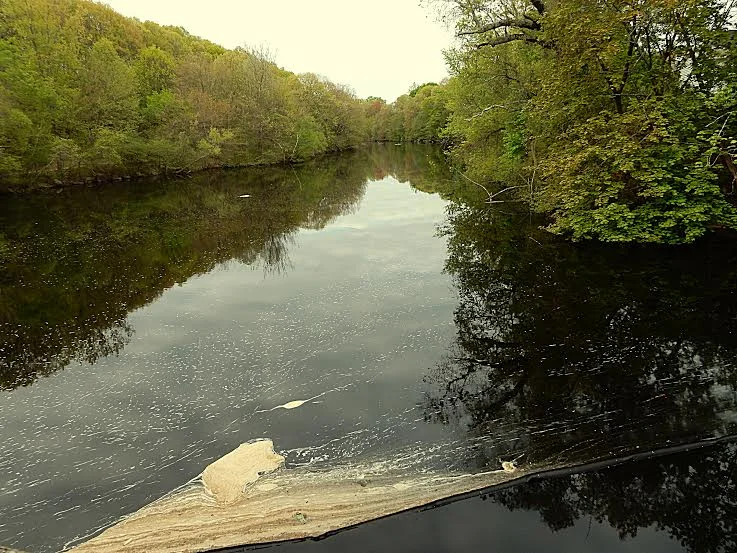
“In rivers, the water that you touch is the last of what has passed and the first of that which comes; so with present time,” said Leonardo da Vinci. (See pictures below.)
For nearly a week recently, if you dipped your hand into the Pawtuxet River at Riverpoint in West Warwick, R.I., you'd touch mounds of filthy foam and pieces of white styrofoam blocks.
From morning till night, I watched this dreck float down the river, collect on the banks and cascade over the dam. I watched pairs of mallard ducks and flocks of geese wading in the smelly suds trapped in the shrubs on both banks. I watched cardinals and other birds that usually stop for a bite at my neighbor's porch feeder, pick at the styrofoam icebergs and carry off pieces, presumably to their nests in the wooded banks.
I took pictures and reported this to Anna Cole, a technical staff assistant at the state's Department of Environmental Management. She dispatched Robert Fritsche, an environmental scientist the department's Bureau of Environmental Protection, Office of Compliance and Inspection, with impressive speed.
My husband has praised Rhode Island's beauty in columns in The Providence Journal, on our television program, White House Chronicle, and on Rhode Island Public Radio. Now I praise the government for taking the preservation of that beauty seriously.
Linda Gasparello is co-host and producer of White House Chronicle, on PBS.

Maine's transitory but successful 'invisible high-risk pool' had enough money
By PATTY WRIGHT
For Maine Public Radio and Kaiser Health News
As the GOP health care bill moves from the U.S. House of Representatives to the Senate, many consumers and lawmakers are especially worried that people with preexisting conditions won’t be able to find affordable health coverage.
There are a number of strategies under consideration, but one option touted by House Republicans borrows an idea that Maine used just before the Affordable Care Act went into effect. It’s called an “invisible high-risk pool” — invisible because people in it didn’t even know they were.
The Maine pool earned higher marks than most state high-risk pools because it had a key ingredient: enough money.
“The problem is that in order to do the Maine model — which I’ve heard many House people say that is what they’re aiming for — it would take $15 billion in the first year, and that is not in the House bill,” Sen. Susan Collins (R.-Maine) told Politico. “There is actually $3 billion specifically designated for high-risk pools in the first year.”
Here’s how the Maine model worked: When a resident applied for health insurance, they had to fill out a questionnaire. If they had certain medical conditions known to be costly, their application was flagged for the high-risk pool. To consumers, it was seamless: They paid regular premiums and got the same sort of coverage as any other enrollee in their chosen health plan.
What was different was how their medical bills were paid. The state set up a nonprofit entity — the Maine Guaranteed Access Reinsurance Association, or MGARA. Mitchell Stein, an independent health-policy consultant, explained that the money to pay for these high-cost patients came from two sources: the insurance policy premiums paid by patients within that high-risk pool and a $4-a-month surcharge on all policyholders in the state.
This “invisible high-risk pool” was just one part of a larger health-reform law in Maine, Stein said, and that makes a straight-up assessment of how well the strategy worked difficult. But it’s “a great theory,” he said, “and can be an appropriate way to handle these things.”
Eric Cioppa, superintendent of Maine’s Bureau of Insurance, agrees with Stein. “In Maine, for the period of time it was operating, it worked very well,” Cioppa said.
It was active from 2012 through 2013, as 2014 marked the advent of the Affordable Care Act’s marketplace insurance exchanges. Though in effect only for a brief period, Cioppa said, the invisible high-risk pool did keep costs down in the individual market, where Anthem was the largest insurer.
Without the invisible high-risk pool, Cioppa said, Anthem would have increased rates more than 20 percent, based on estimates the insurer had to make. Instead, the rates went up less than 2 percent.
But Steve Butterfield, policy director of the Maine-based advocacy group Consumers for Affordable Health Care, cautioned that one crucial component that made Maine’s high-risk pool work was that it was well-funded. The strategy proposed in the House Republicans’ American Health Care Act is not, he said.
“An analysis that was done on what this program would need showed that it would need $15 billion to $20 billion per year to have any kind of reasonable impact on premiums,” Butterfield said.
The GOP bill does allocate about $15 billion to $20 billion — but that is supposed to last almost a full decade, not per year.
“One of our concerns,” Butterfield said, “is if the feds are going to put this in place and only kick in a token amount of money, is it going to be up to the states to pick up the slack and pay into this thing to make it work?”
Furthermore, Butterfield said, as the law stands now, under the Affordable Care Act, there’s no need for high-risk pools of any sort. The idea to use invisible high-risk pools is a solution to a problem that the GOP health care bill creates. Right now people can buy insurance regardless of their health status, whether or not they have a preexisting condition. It’s the GOP bill that would allow states to opt out of that Obamacare rule.
“I don’t understand,” Butterfield said, “why it would be a good idea to, on the one hand, say, ‘Well, we’re worried about preexisting conditions, so we’re going to throw not enough money at a problem we’re creating. At the same time, we’re going to allow insurance companies to charge sick people more.’ ”
And the invisible high-risk pool, said consultant Stein, is just one small proposal within the larger health bill.
“There’s nothing inherently wrong with it,” Stein said, “but it doesn’t really fix all the other problems of the bill.”
Which, he said, include cuts to Medicaid and potential changes to what are, under Obamacare, guaranteed “essential benefits.”
This story is part of a partnership that includes Maine Public, NPR and Kaiser Health News.
Don Pesci: Diner politics in the Nutmeg State

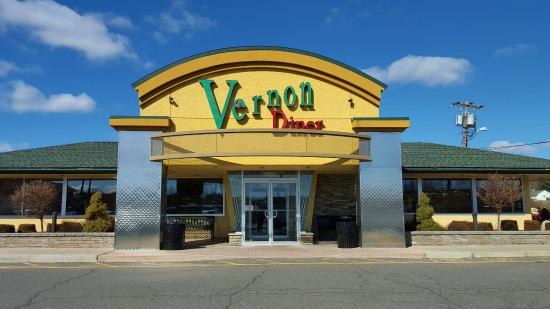
VERNON, CONN.
People in Connecticut like their diners. There are no fewer than 28 all-night diners in the state. It’s where you go to shed your problems over an omelet and hash browns, accompanied by a fresh cup of coffee and, if you are lucky, the companionship of a friend or two. During election time, this holy solitude is broken by lean and hungry politicians on the hunt for votes who have turned out to mingle with the proletariat. Politicians too, it would appear, are just like the rest of us.
The most accomplished of them do not eat when they are conducting business. Imaging is important, just ask U.S. Sen. Dick Blumenthal, about whom it is said that the most dangerous spot in Connecticut is that between Blumenthal and a television camera. Politicians are more attentive to their weight than to their religious prescriptions, and because many of them are life-servers -- the average age of a member of Congress is 57 – caloric intake more important to many of them as avoiding the near occasion of sin.
Some politicians are temperamentally gregarious; one thinks of Democratic U.S. House of Representatives John Larson of the 1st District, who appears genuinely to like people, even some Republicans. Others, forbiddingly aloof, have a rough time of it when they commingle with the general public; conviviality is not their cup of tea. But, longing for votes and campaign contributions, they solider on, smiling, engaging in chit-chat and looking for all the world like a naked manikins pulled off the floor and gathering dust in lightless corridors of an out-of-business retail establishment. There are quite a few of these in Connecticut.
For some reason, politicians like to perform in diners, small, intimate and politically safe venues. There are no grumps here, especially early in the morning, when the customers have had sleep enough and are munching on bread and eggs with a side of sausage or bacon. A diner is the perfect theater for a sweaty politician, a little town hall full of people with their best manners on whose politics is inscrutable.
Though patrons in diners are more than willing to affect affability, dialogue with strangers beyond the usual pleasantries is rare. Politics recedes into the background, is seen as a potential menace on a far horizon. The people the politicians talk to in diners are well behaved and well fed. A customer does not frequent his favorite diner to start a quarrel with a cardboard-cutout senator, particularly after he has stowed away his omelet and a second cup of coffee.
There are, by the way, crucial differences between town hall crowds and those who frequent diners. Serendipity reigns supreme in diners; not so in town halls – not any more. With a little help from an underpaid staff, any politician worth his salt should be able to stuff a town hall meeting with like-minded folk gathered together to give democratic unction to the politicians’ favorite hobby horses, whether the group be, as is the cause with progressives, unionized employees nursing a grievance against Big-Business or, as is the case with alt-rightists, counter-revolutionaries who want to send establishment Republicans and Democrats to a frozen gulag in Vermont – average snowfall 89.25 inches per year, and also home to socialist commandant Bernie Sanders.
When he bid goodbye to a life in politics, in 2012, former U.S., Sen. Joe Lieberman did a farewell tour of diners in Connecticut. White's Diner in Bridgeport, the Athenian Diner in New Haven, Norm's Diner in Groton and Shady Glen in Manchester were all on Lieberman’s itinerary. Lieberman’s career in the U.S. Senate began in 1988. During the course of his career, he had visited 130 diners in more than 60 Connecticut cities and towns.
In 1988, Connecticut was just emerging from a lingering recession, William O’Neill was governor and Connecticut’s income tax was only a glint in future Gov. Lowell Weicker’s eye. Mr. O’Neill’s budget was $7.5 billion, and he was staring down a deficit of $1.5 billion. In 2017, Connecticut is ensnared in yet another recession, the state’s biennial budget is $40 billion, and its projected deficit for the next fiscal year is $5 billion.
Economist Don Klepper-Smith has pointed out that Connecticut is usually first in, last out during national recessions; the state has yet to recover jobs lost during the current recession, which officially ended more than six years ago. As the French say, the more things change, the more they remain the same.
Diner owners in Connecticut have not yet responded to an increase in the minimum wage to $15 dollars an hour by replacing their wait staff with kiosks, but the wait staff in diners are growing impatient with politicians and never-ending taxes and the shortage of high paying jobs in Connecticut that send wave upon wave of customers their way.
Connecticut politicians these days prefer town hall gatherings they can stack with their supporters to diners where, during upcoming elections in Connecticut, the crackling air may be charged with righteous dissent and acrimony – not from the wait staff, who in diners are usually unfailingly cheery, even during brimstone showers, but from that guy in the booth who has been forced to take a lower-paying job after his company moved to South Carolina. He’s been thinking of joining his children who moved to North Carolina two years ago, but just now he’s happily concentrating on his eggs and bacon.
Don Pesci is a Vernon, Conn.-based political and cultural writer.
Freeing the trees

"Irish Uprising'' (oil on cradled panel), by C.J. Lori, in her show "Come Fly With Me','' at Galatea Fine Art, Boston, June 1-30.
'The place to go for an education'
''My father was in the coal business in West Virginia. Both Dad and Mother were, however, originally from Massachusetts; New England, to them, meant the place to go if you really wanted an education.''
-- The late John Knowles, author of A Separate Peace, set in a New England boys' boarding school in the 1940s.

Maybe it would be good for fishing

Adapted from an item in Robert Whitcomb's "Digital Diary,'' in GoLocal24.com
President Trump wants to at least delay the implementation of President Obama’s executive order creating the Northeast Canyons and Seamounts Monument, which covers nearly 5,000 square miles way off Cape Cod. After a transition period of several years, the area would be closed to commercial fishing. And it would be immediately shut to oil and natural gas exploration and drilling whenA and if the order is implemented.
The monument is along the edge of the Continental Shelf and provides a home for a very rich mix of animal and plant life.
The president has shown little interest in environmental/ecological matters and his instinct is to let fishermen and fossil-fuel people grab everything that’s there. And most fishing groups have shown little interest in protecting the area. They want to take as many fish as they can as fast as they can.
But they might bear in mind that such ecologically rich areas play large roles in maintaining the eco-systems over unprotected adjacent areas. (Note in the accompanying map how small the designed protected area is.) That means that protecting this relatively small area will help maintain fish populations around it. Protecting it could improve commercial fishing off southeastern New England.
It’s unclear whether Trump even has the authority to undo the Obama action, and the whole thing could well play out in the courts. But then the president has such a short attention span, he may forget all about it.
Romantic river
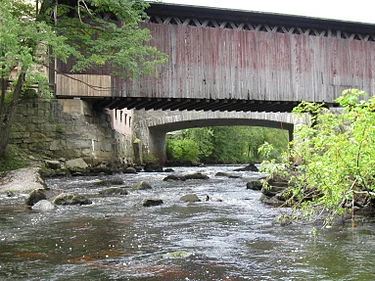
The Contoocook River flows through a village of the same name in Hopkinton, N.H.
Fair Contoocook, singing river,
Flowing over granite ledges,
With a fringe of tall, brown sedges,
Golden-rod with yellow hair,
Meadow's queen so stately fair,
Cardinal flowers of brilliant hue,
Pickerel-weed with blossoms blue.
Ah! you are a generous giver
Of such sweets, Contoocook River.
Like a brook through forests gushing,
Under pines that whisper lowly;
Through broad meadows flowing slowly,
Where the cattle stoop to drink,
Bending o'er your flower-fringed brink;
And the bird to lave his wing
In your wave forgets to sing.
Where the silver birches quiver
Flowing on, Contoocook River.
Gentle stream you are, O river!
High the mountains tower above you,
And the hills as if they love you,
Watch your narrow, winding track
As toward the Merrimac,
Gently, like some dear old song,
That the heart remembers long,
Through New Hampshire's valley's flowing,
Are your rippling waters glowing.
Gay and sweet your song O river!
Sweetest where the rough stones meet you.
Gladdest where the boulders greet you.
Never stone so hard and brown
But your flowing wore it down.
Onward, onward in your song,
Nothing can delay you long.
Forward, forward, on forever,
Type of life, fair singing river.
-- Edith Willis Linn Forbes, "Contoocock River''
UNH students getting free access to IBM's Watson
The New England Council reports:
"IBM Watson Analytics, a branch of New England Council (NEC) member IBM Corporation, recently partnered with the University of New Hampshire, a fellow NEC member, to provide UNH students with free access to IBM’s Waston Analytics Student Edition.
"Waston Analytics is a cloud-based smart data analytics and visualization service. In addition to providing students free access to the service, IBM ran a 90-minute training program to teach UNH faculty how to incorporate the technology into their classes. IBM Watson Analytics and UNH connected at the Peter T. Paul Entrepreneurship Center’s fall hackathon on data analytics, which was sponsored by IBM. IBM Watson Analytics was so impressed by the caliber of students participating from UNH that the company offered to provide access to their service for all students on UNH’s Durham, Manchester and Concord campuses.
“'The end goal is to prepare our students for the new demands of the workforce,' said UNH Director of Graduate Analytics and Data Science, Robert McGrath. 'We believe Watson Analytics will help prepare the next generation of ‘citizen’ data scientists and be instrumental in helping close a critical skills gap identified in the workforce.”'
"The New England Council commends IBM and UNH for creating this opportunity for UNH students to expand their marketable data analytics skills and help prepare them to enter the workforce.''
Tim Faulkner: Would more fossil-fuel plants be redundant in New England?
Via ecoRI News
A key argument against the proposed Burrillville, R.I., fossil-fuel power plant has derailed a similar natural-gas project in nearby Killingly, Conn.
Since the Clear River Energy Center (CREC) plan was announced more than two years ago for a forested site in northwest Rhode Island, opponents have argued that the electricity it would generate would be redundant. Power saved through energy efficiency and created by renewable energy, they reason, reduces electric demand and more than offsets the nearly 1,000 megawatts of energy that would be produced by the proposed facility.
This argument of surplus fossil-fuel energy in New England was argued in a 2015 report from Massachusetts Attorney General Maura Healey and subsequently by research groups such as Synapse Energy Economics of Cambridge, Mass.
Synapse principal associate Robert Fagan has provided testimony on behalf of the Conservation Law Foundation (CLF) in the case against the $1 billion CREC proposal, which is being considered by the Rhode Island Energy Facilities Siting Board (EFSB).
Fagan’s testimony to the EFSB states that new solar and wind projects, and increased energy efficiency reduce near- and long-term demand for electricity in southern New England. Fagan submitted similar findings to the Connecticut Siting Council (CSC) in its review of the 550-megawatt Killingly Energy Center.
In a May 5 draft opinion, the CSC ruled that the Killingly natural-gas power plant application met safety and environmental benchmarks, including promises of sharply reducing its greenhouse-gas emissions in future years. But the $537 million project didn't satisfy the benchmark for public need. To be specific, the CSC noted that energy demand over the next three to five years would be met through existing power plants in southern New England. Long-term energy needs are unclear, the CSC stated.
The board offered the developer, NTW Collection LLC, to resubmit an application when and if other power plants announce plans to retire, a process that takes several years.
“The Council finds and determines that the proposed (Killingly) facility is not necessary for the reliability of the electric power supply of the state or for a competitive market for electricity at this time. If there is a future need for additional capacity, the market will respond,” according to the CSC draft opinion.
It’s uncertain whether the Rhode Island siting board will follow the same logic and turn down the CREC application. CLF senior attorney Jerry Elmer is encouraged by the Connecticut ruling and hopes that Fagan’s testimony will convince the EFSB to deny the CREC application.
“This does not mean that we will automatically win the case," Elmer wrote in an e-mail. "But CLF continues to believe that it will be very, very important for CLF to present Bob Fagan’s testimony that the Invenergy plant is just not needed by the ISO."
ISO New England is the operator of the regional power grid. Its energy projections are a central issue in the CREC application. Invenergy Thermal Development LLC, the Chicago-based developer of CREC, says ISO New England believes that 6,000 megawatts of electric power are “at risk” of going off-line after 2019. Therefore, a new natural-gas power plant would fill the electricity supply gap.
The Connecticut siting board, however, noted that auctions to supply electricity from existing power plants to the grid have already committed electricity until 2021. It gave little weight to the “at-risk” power plants that may close between 2025 and 2030. Instead, the CSC referred to ISO New England’s own words in describing those retirements as “hypothetical.”
Complicating the matter is the fact that ISO New England only agreed to buy half of the output of electricity from the Burrillville power plant in auctions for 2019 and 2020. CLF believes that the agreement to purchase half of the power proves that the entire project is unneeded. Invenergy, however, maintains that the forward purchase agreements prove that some of the electricity from its proposed power plant is needed in the near term while the rest will be relied on in future years as older power plants are decommissioned.
The ISO New England agreements to buy future output from power plants, however, doesn't differentiate between what is needed to meet demand and excess power that it may buy as standby power. The Killingly power plant withdrew its application to receive energy contracts because the project wasn't far enough along the permitting process to be operating and therefor provide power by the contract date.
Further complicating the matter is the promise by both Massachusetts and Rhode Island to dramatically increase their use of imported and locally produced renewable energy by 2020. Both energy pledges would add 3,000 megawatts of capacity to the power grid and would supplant the electricity from fossil-fuel and nuclear power plants that may retire in ISO New England's “at-risk” group.
An additional factor is the rapid gain in energy efficiency. Both Massachusetts and Rhode Island are at or near the top of rankings for policies and actions that reduce energy use. Patrick Knight of Synapse said ISO New England chronically underestimates the impact of energy efficiency on reducing energy needs and revises it projected energy reductions every year to show the gains it is making in cutting energy use.
In all, it appears that the demand for new power plants will decline as energy efficiency improves and renewable-energy capacity increase. The question for Invenergy is whether it can make the case to fill shrinking demand for natural-gas power.
“We think that is validation for the idea that we don't need new power plants in New England,” saId Max Greene, CLF staff attorney.
Next for the CREC is a May 31 Superior Court court hearing in a case filed by CLF and the town of Burrillville that seeks to nullify the water agreement between Invenergy and the town of Johnston. The hearing will address a motion to dismiss the case by Invenergy.
The EFSB is creating a schedule for hearings to present updated advisory opinions from town departments and state agencies. Those hearings are expected this summer.
Teaching young doctors how to talk with dying patients
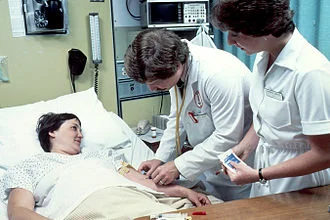
The Boston Globe reports on how the four medical schools in Massachusetts have jointly agreed “to teach students and residents how to talk with patients about what they want from life, so future doctors will know how far to go in keeping gravely ill patients alive.” The May 9 story is headlined "Med schools to teach how to discuss patients’ goals for care — and for life.'' We're reprinting the summary of the story that ran on Cambridge Management Group's Web site: cmg625.com
“’We’ve trained all doctors to ask people, ‘Do you smoke?’” said Dr. Harris A. Berman, dean of the Tufts University School of Medicine, who met with colleagues last week from the medical schools at Tufts, Harvard, Boston University, and the University of Massachusetts. ‘We’ve trained people to ask about sexual preference. That used to be a difficult discussion to have.”’
Now, Dr. Berman told The Globe, physicians should learn how to ask even more deeply personal questions, such as: “What most matters to you? What do you need to make life worth living? In what circumstances would you rather not be alive?”
The newspaper reported that the medical schools’ project stems from the work of the Massachusetts Coalition for Serious Illness Care, “a year-old consortium working to ensure that every resident receives the medical care they want — no more, no less. Dr. Atul Gawande, the surgeon and author who helped found the coalition, approached Berman about coordinating an effort among the medical schools.”
To read more, please hit this link.