
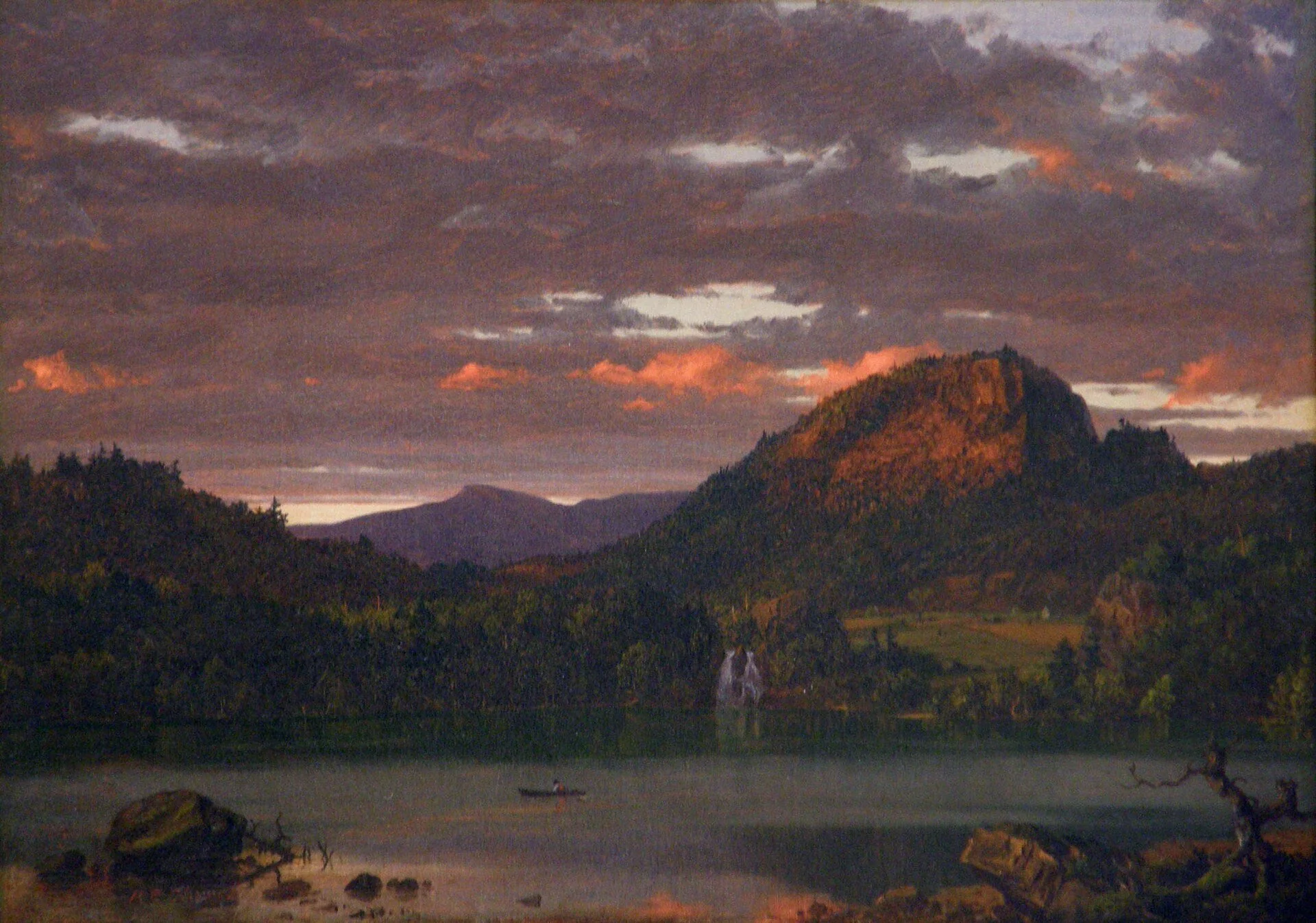
Vox clamantis in deserto
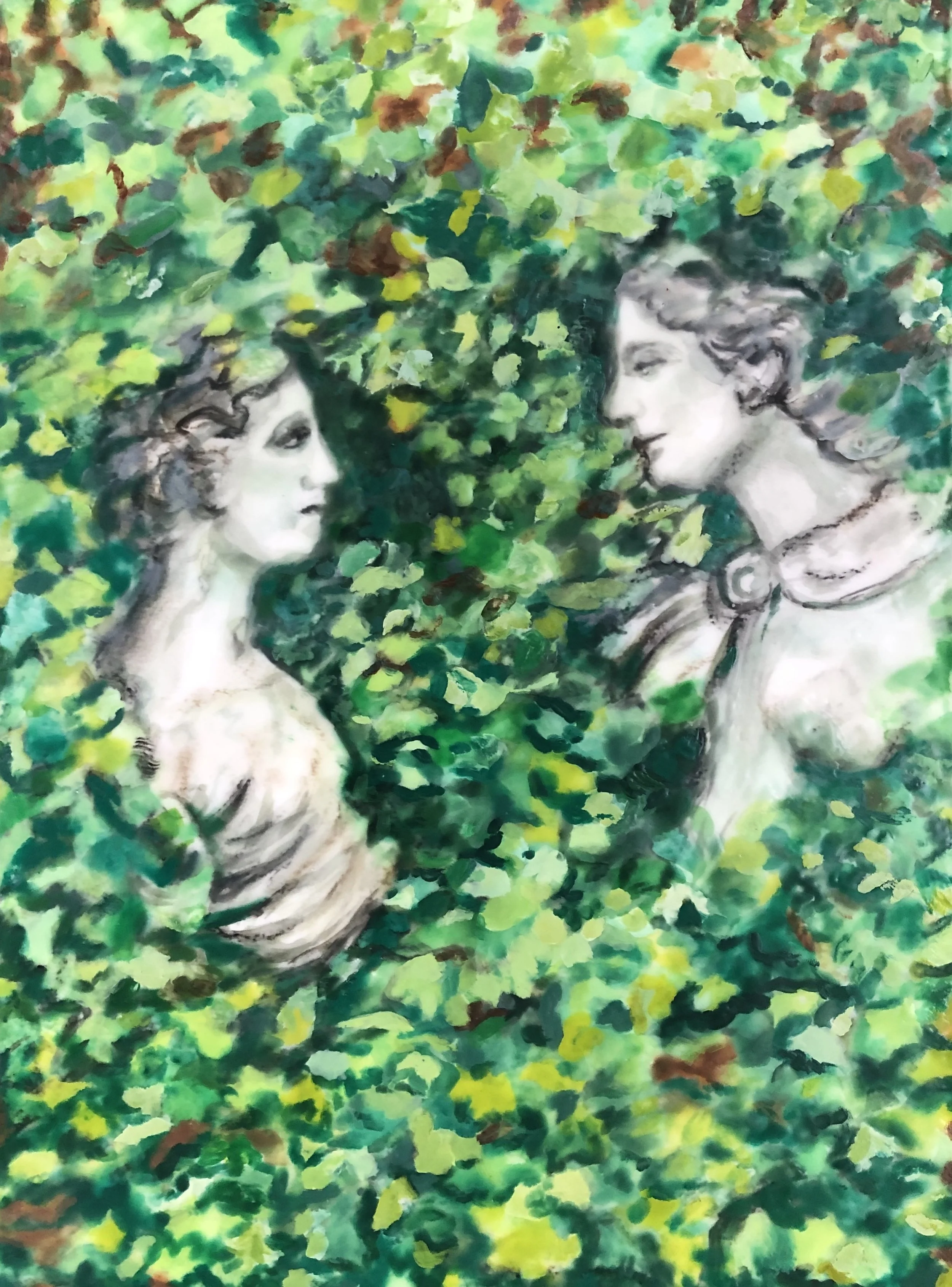


Spring perfume
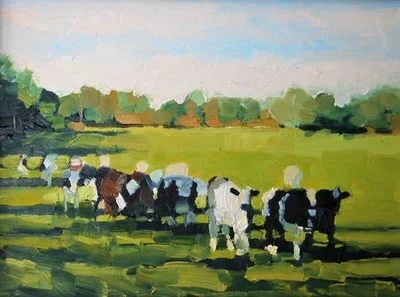
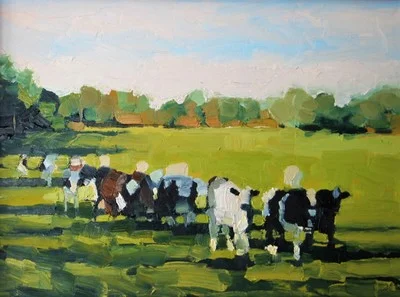
"Cows on Old Jerusalem Road'' (in Salisbury, Vt.) (oil on panel), by Hannah Sessions, at Alpers Fine Art, Andover, Mass.
One indication of high spring in the little town I lived in as a boy was the aroma of grass and manure that wafted over from a small farm on the other side of the road we lived on. Very rich indeed. The smell wasn't quite as pleasant in July. The road we lived on, in Cohasset, Mass., was an extension of another Jerusalem Road, this one along the ocean. Those old New Englanders liked their biblical references.
-- Robert Whitcomb
'Taken to the fire escape'
''E.B. White's essays are the best things I've read about Maine - especially the one in which he's not sure if he can go out sailing any more in his sloop. ''
-- Nicholson Baker (author)
''Most of us, out of a politeness made up of faint curiosity and profound resignation, go out to meet the smiling stranger with a gesture of surrender and a fixed grin, but White has always taken to the fire escape. He has avoided the Man in the Reception Room as he has avoided the interviewer, the photographer, the microphone, the rostrum, the literary tea, and the Stork Club. His life is his own. He is the only writer of prominence I know of who could walk through the Algonquin lobby or between the tables at Jack and Charlie's and be recognized only by his friends.''
— James Thurber, E.B.W., "Credos and Curios"
The late E.B. White lived for many years in North Brooklin, Maine, after moving from New York City.
'Synthesis'

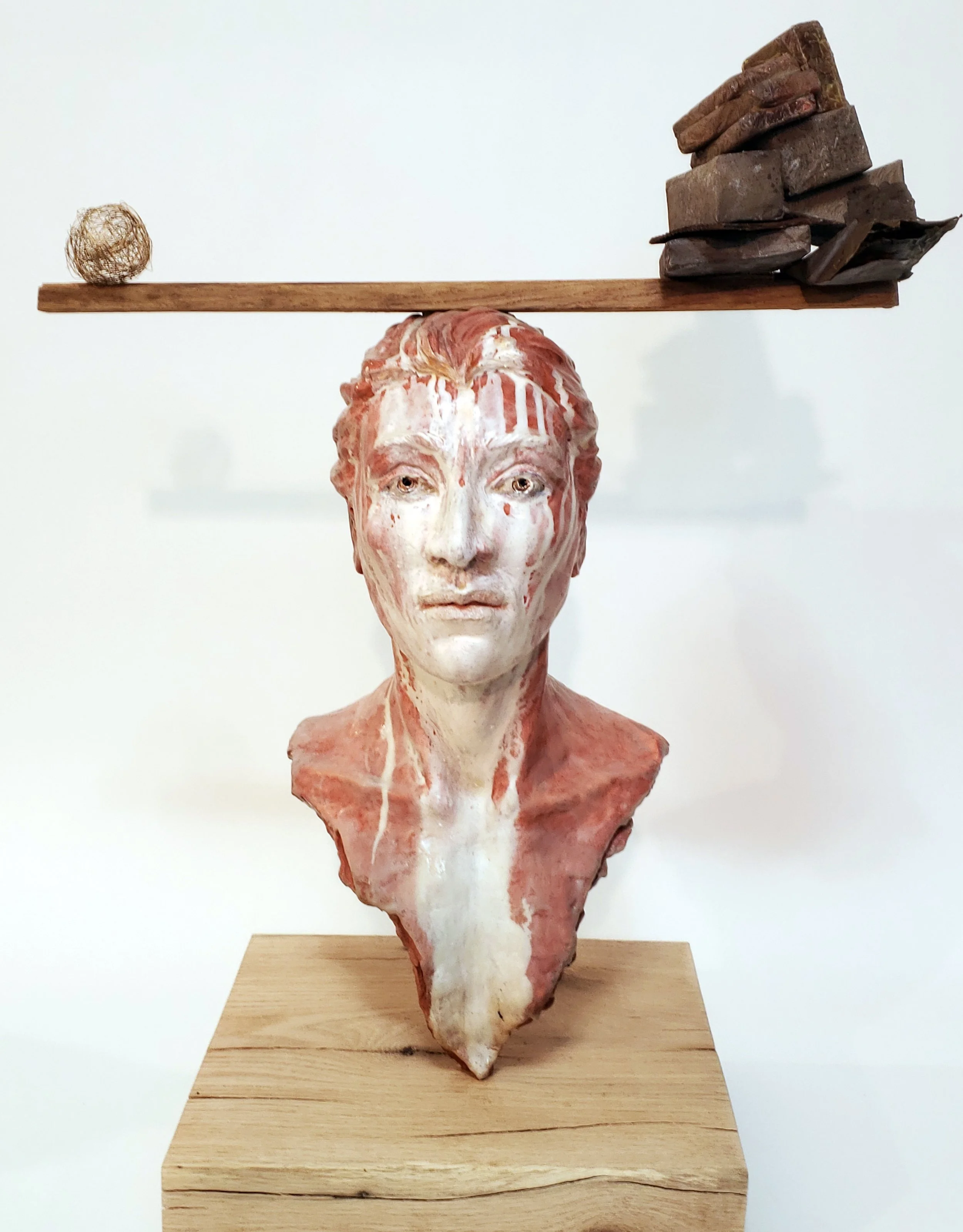
"Synthesis'' (oak, driftwood), by C.C. White, at Patricia Ladd Carega Gallery, Center Sandwich, N.H.
The GOP eyes gutting Social Security
Adapted From Robert Whitcomb's "Digital Diary'' in GoLocal24.com:
There's a move underway by some Trump advisers and Republican lobbyists to eliminate payroll taxes used to fund Social Security and Medicare Part A. (Medicaid is financed from general budget funds), with the ultimate aim of throwing more people on the tender mercies of Wall Street to finance their retirements.
Associated Press writers Josh Boak and Stephen Ohlemacher reported: “This approach would give a worker earning $60,000 a year an additional $3,720 in take-home pay, a possible win that lawmakers could highlight back in their districts even though it would involve changing the funding mechanism for Social Security, according to a lobbyist, who asked for anonymity to discuss the proposal without disrupting early negotiations.’’
Well, yes, that might be an initially popular way to destroy Social Security. The George W. Bush administration tried to give Wall Street lots of Social Security cash. But the public, understandably doubtful that people in the financial-services industry would put customers’ interests first, pushed back. Then came the Great Crash of 2008….
Llewellyn King: Writing books vs. newswriting; the unsheltered; of theater and food
-- Photo by Benjamin Brock
Notebook
As opportunities in journalism have tightened, many of my colleagues have tuned to writing books. I admire them. Actually, I more than admire them: I'm astounded by them.
Among them is my friend Richard Whittle, a former Pentagon correspondent for The Dallas Morning News, who has written two first-rate books. His first was about the V-22 Osprey vertical takeoff aircraft and his second was about drones.
Whittle is hard at it on a third. He tells me that he loves his second career – and, as an elegant writer and an impeccable reporter, he's doing well.
I'm frequently asked why I don’t take this path and write books about the subjects I know something about or, to be exact, subjects about which I’m supposed to know something. The answer is simple: fear. Not fear about my ability, but fear of boredom. Fear of waking up every day and having to take up where I left off the day before.
The peripatetic journalistic life suits me; maybe too well. I love the idea that each day could bring something new, unexpected and thrilling, just because it's new.
Like many newspapermen, I answer phones with alacrity because the next call might, as it says in “The Rubaiyat of Omar Khayyam,” could “in a trice life’s leaden metal into gold transmute.”
The poet was referring to liquor, and it might be why liquor and newspapering have been so indelibly linked. Certainly, the drinking by newpapermen -- and I've worked on newspapers in colonial Africa, London, New York, Baltimore and Washington, D.C. -- was endemic and awesome.
Less now, I gather. The venerable National Press Club in Washington used to support two bars and, at lunch and in the evening, drinkers crowded them 15-deep. Now the only bar is sadly empty most of the time.
Once I ran into a colleague at the end of the day at the Paris Air Show. “How are you?” I asked. “I’m cold, I’m wet, my feet hurt and I haven’t found a story,” he said. I knew why he was miserable: Life's leaden metal hadn’t been transmuted into gold nuggets of news.
The book writers, if they’re any good, unearth many stories, but the thrill of publication isn’t daily. It can take a year or longer. Not for me.
News writing, like drinking, produces its thrills predictably, and I’m for the early gratification. More power to my colleagues who are undaunted by the long haul.
Why Are the Bus Riders Left Out in the Cold?
Rhode Island, where I live, is, as I have found, a kindly place: people look out for one another. So why, I wonder, are there so few bus shelters and even benches?
I find the public transportation users (I’m one) standing forlornly, in all kinds of weather, waiting for a bus. Recently, in the heavy rains, they were especially bedraggled. This must negatively affect ridership. Since I have difficulty standing for long periods, I don’t take the buses in Providence and its surrounding communities. But I'd take them if I could sit down while waiting.
In Washington, D.C., where I’m often, I take the buses a lot. There are seats in shelters that don’t keep you warm but do keep you dry.
It's cruel to leave those who ride buses without shelter or seating.
Sleeping Rough in a Place of Learning
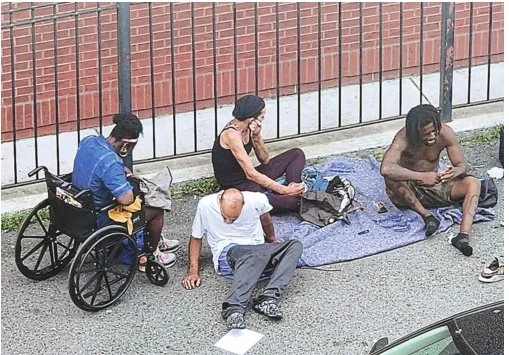
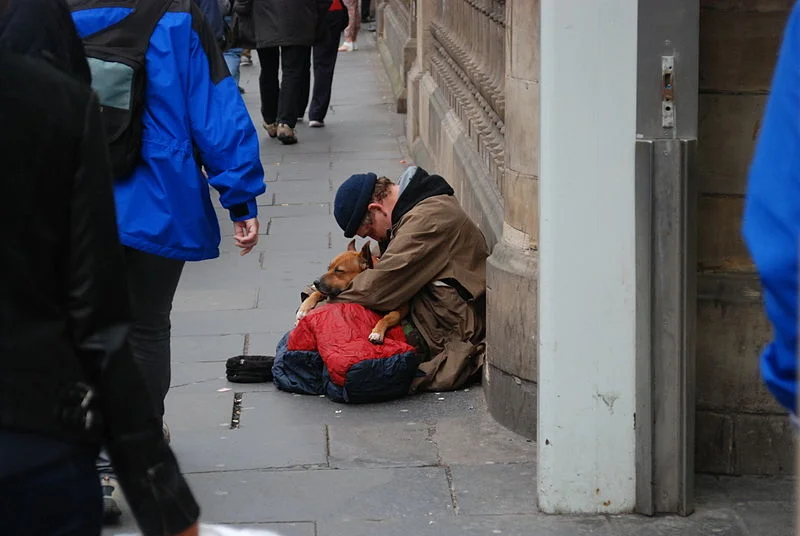
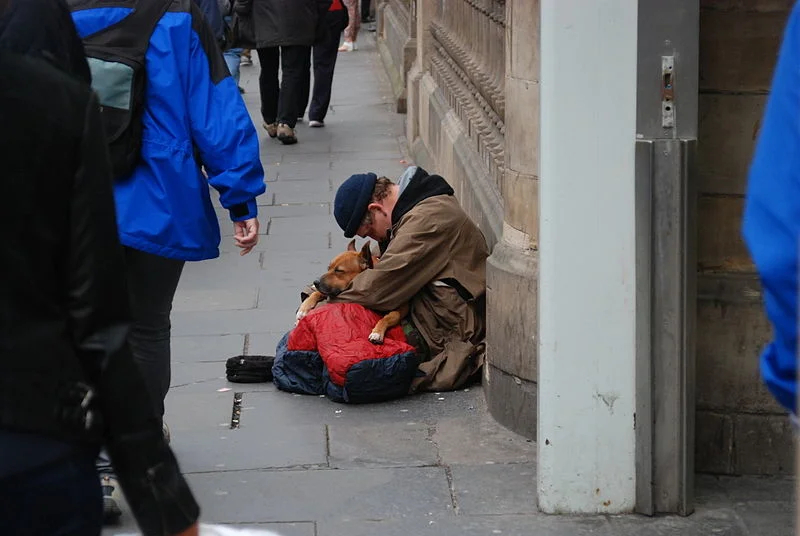
I travel to Cambridge, Mass., quite a bit. But recently, in this self-regarding gyre of great ideas, I’ve noticed more homeless people than ever sleeping on the streets. One wonders, wandering the streets so close to the Great Minds, whether some of them haven’t thought of a solution? Is it a step too far from the ivory towers to the hard pavement where the luckless sleep?
Second Story To Add Restaurant, Lose One Stage
I went to Warren, R.I., to see “Art” at 2nd Story Theatre. At the end Ed Shea, the dominant force there – by turns actor, director and manager -- came on stage to announce that the building, which now includes two small theaters and a very pleasant bar, is to be refurbished, and that the first-story theater will be transformed into a restaurant.
I wish them well, but it's unclear how this will work. Will the restaurant be complimentary or competitive? If I'm going to eat and go to the theater, I favor supper after rather than dinner before. Going to a good restaurant is, in itself, a theatrical experience and competes with theater for entertainment hours.
One of the joys of Rhode Island is its profusion of really good places to eat. Warren is no exception. New Orleans has the reputation, but Rhode Island has the vittles.
Second story will lose a stage, but Shea still plans to cook up some imaginative theater on the remaining one.
Llewellyn King is executive producer and host of White House Chronicle, on PBS. His e-mail is llewellynking1@kingpublishing.com.
Spring moves in faster in the city
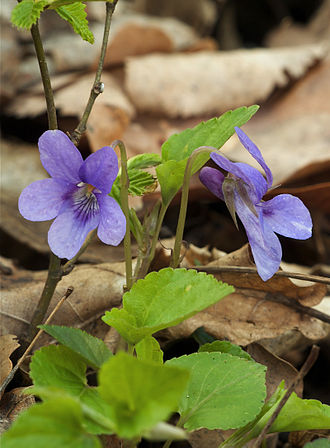
"The country ever has a lagging Spring,
Waiting for May to call its violets forth,
And June its roses--showers and sunshine bring,
Slowly, the deepening verdure o'er the earth;
To put their foliage out, the woods are slack,
And one by one the singing-birds come back.
"Within the city's bounds the time of flowers
Comes earlier. Let a mild and sunny day,
Such as full often, for a few bright hours,
Breathes through the sky of March the airs of May,
Shine on our roofs and chase the wintry gloom--
And lo! our borders glow with sudden bloom."
-- William Cullen Bryant, "Spring in Town'', 1850
Spring pointillism

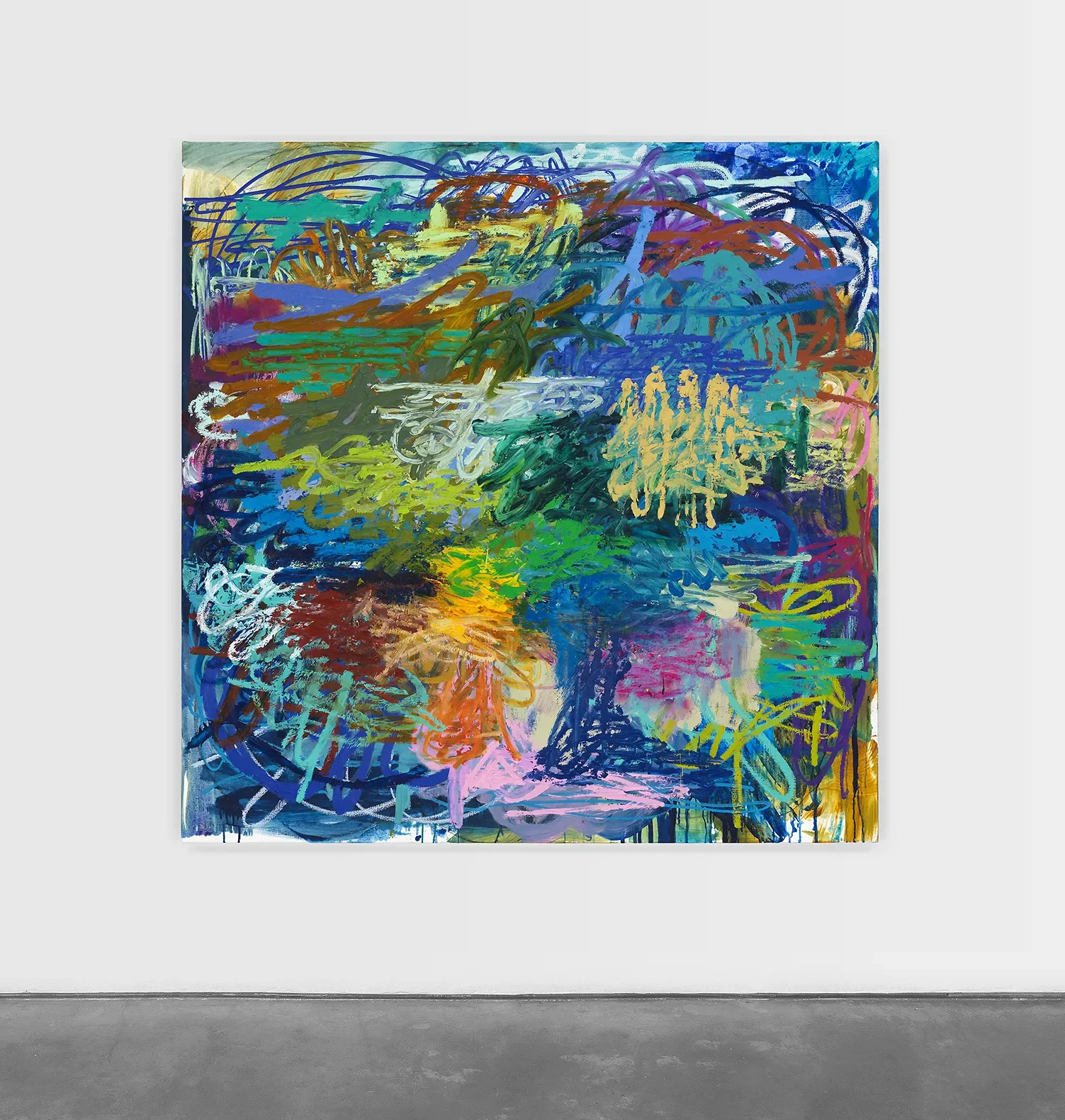
"Verdant Constellation'' (acrylic on canvas on panel), by Jung Hur, at the Corey Daniels Gallery, Wells, Maine, May 18-June 17.
The Dominican mission at Providence College continues as P.C. celebrates its centennial
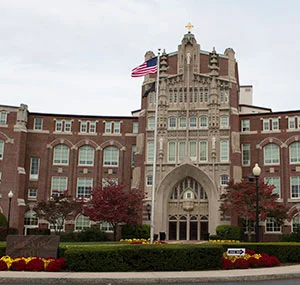
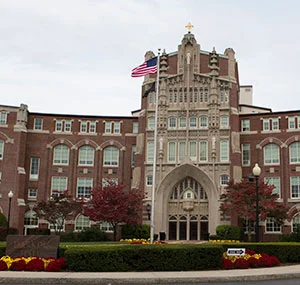
Harkins Hall at Providence College.
“The need of a college, catholic in spirit and under catholic auspices, is most evident.…”
-- Bishop Matthew Harkins of the Diocese of Providence to the Dominican Fathers, Oct. 9, 1915
On Nov. 8, 1915, setting sail from Naples, Italy, and bound for New York City, the Italian-American liner Ancona carried with it approval documents of the Master General of the Dominican Order to found a small Catholic college in Providence, Rhode Island’s capital city. One day later, the ship was torpedoed by a German U-boat and sank; 270 lives were lost along with all cargo and mail. Thus, The Great War interrupted the founding of Providence College.
With the perseverance of Job, the college was finally born on Feb. 14, 1917. And to correct an administrative oversight, a century ago -- likely this month, official letters reveal -- efforts were made to obtain definitive permission from the Vatican, which was granted afterwards, on July 23.
Today, the school remains the only Catholic liberal-arts college in America administered by the Dominican Friars, known formally as the Order of Preachers (the Jesuits had their chance after 22 years in Providence, but withdrew from the archdiocese in 1899).
Deliberative and ruminative during a recent interview, the Rev. Brian J. Shanley, O.P., president of the college, believes that fidelity to Catholic teachings and Dominican traditions are what particularly distinguishes its liberal-arts virtues. St. Dominic de Guzman established the order 800 years ago with the mission of contemplative preaching (faith, prayer and learning) and the eternal salvation of souls. Today, mostly, these are the 3,900 undergraduate souls.
Back in 1917, the original idea was to provide the opportunity for Catholic men -- many of whom faced discrimination as the sons of European immigrants -- to receive a university education. But now 61 percent of the student body are women, 16.3 percent of the Class of 2020 are minorities; and while 64 percent of the same class come from New England, , 29 percent come from Mid-Atlantic states. The college-age demographic in New England is in decline, and by 2028 non-white students may comprise a majority of undergraduates at Providence College. (14 percent of the faculty are members of minority groups.) Diversity, accordingly, is one of the five core values in the school’s strategic plan.
Father Shanley will likely be the last Dominican president of Providence College to have grown up in the pre-digital age. Thus he is a vital link between past and present. He was a student at the college in the 1970s (and a 1980 graduate), and was ordained a priest in 1987. He was a professor of philosophy in the 1990s, and installed as the institution’s 12th president in 2005.
Since then he has worked to promote the academic and physical transformation of the campus. Over the last decade, the college has sought to include study of non-Western cultures in its core Development of Western Civilization program.
When told he would become the longest serving president of the college on June 15, 2019, President Shanley replied with elegant humility. “It’s in God’s hands.”
God’s hands may be needed in helping with the daunting tasks before him. In fact, maintaining its Dominican identities may not be the most urgent challenges facing the school. Father Shanley wants to double the endowment (which at a bit over $200 million is small relative to peer-group institutions) by 2025. He looks at today’s evolving pedagogical model and ponders the challenges of administering “smart classrooms” and “engaged learning.” And he expresses concern about how a mostly secular society values a liberal-arts education at a time when many demand an immediate “return on investment.” For Father Shanley, that return should be seen as including a “meaningful life,” and not exclusively dollars and titles.
On a recent warm day, students lounged on the lawn outside the student union, just as they have done for nearly half a century on sparkling April afternoons. Even as the campus looks more diverse, it is not immune from the full bloom of issues confronting students today -- from micro-aggressions to the more serious, such as sexual assault. And perceived institutional racism.
“Inclusiveness,” notes Father Shanley, “is different from diversity.”
In any case, the meaning of diversity and its place within a Catholic and Dominican college is not accepted with utter unanimity at Providence and is the subject of conflict and debate. Prof. Anthony Esolen, who teaches English Renaissance Literature and the Development of Western Civilization at the college, has criticized the college’s understanding of diversity as being rooted in a kind of secular political ideology. Properly understood, diversity today is, he wrote, a “push for homogeneity.” This acts as a cultural solvent that dilutes unique identities. Perhaps even truths.
For the Millennial generation, “diversity” carries with it the same emotional triggers as “Vietnam” did for the Baby Boomer generation.
Still, Father Shanley is optimistic. He is heartened that the Dominican Order is flourishing at the college, with 75 young men in formation. He hears encouraging anecdotal stories about the quality of the college’s graduates, which he understands as a validation of this goal: “To teach you how to be life-long learners.” Ideally, in 2017, to produce critical thinkers who also have emotional intelligence.
In the wake of the Vietnam War student strike and three years after Providence College’s quinquagenary, on June 2, 1970, the syndicated columnist and journalist Art Buchwald gave the commencement address on campus. In the audience that day, having just graduated summa cum laude and presented the class oration, was Roy Peter Clark, the first in his family to attend college. He went on to teach, write and edit books, and has been called “America’s writing coach.” (He interviewed Buchwald twice in the decades later.)
Clark, recently retired senior fellow at The Poynter Institute for Media Studies, the renowned school for journalists, will deliver the 99th commencement address and will receive an honorary doctor of journalism degree on May 21st. He is intent on creating a nation of writers. So, in his remarks he will genuinely and generously offer assistance to anyone in attendance who wishes to improve his or her writing skills. Clark today is the living embodiment of the Dominican tradition and a fitting link between past and future.
The founding of Providence College, in retrospect, may indeed have been preordained by God’s grace. But for believers over a century ago, the future was far less assured and certainly not as clear as the primeval history of creation written in Genesis. And the next 100 years? For Dominican educators, that future means the continuation of teaching by remaining true to Bishop Harkins’s grand and simple vision.
James P. Freeman, an occasional contributor to New England Diary, is a New England-based writer and a former columnist with The Cape Cod Times. This piece first ran in The New Boston Post.
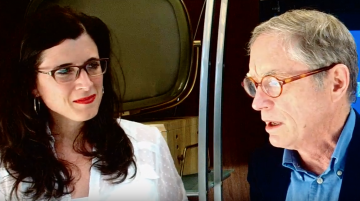
“Bankruptcy in Providence Would Be Very Good” - GoLocal’s Whitcomb on LIVE
Friday, May 05, 2017
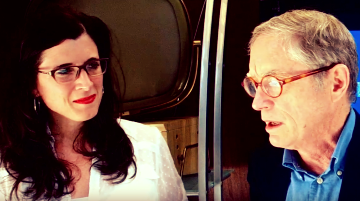
“Bankruptcy in Providence Would Be Very Good”
Kate Nagle and Bob Whitcomb
GoLocal columnist Bob Whitcomb said on GoLocal LIVE that a Providence bankruptcy would be "very good," among other topics covered on Thursday's show. This week Puerto Rico went into bankruptcy in an effort to shed $70 billion on debt.
Whitcomb, a former Providence Journal editorial page editor, spoke to Central Falls' emergence form bankruptcy, and made the case for the state's capital city to follow suit.
From healthcare to French politics and more, Whitcomb covers a myriad of topics weekly in his column for GoLocal.
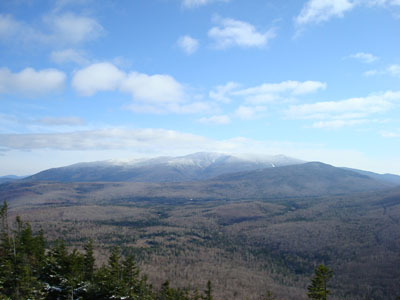
'New Hampshire gold'
I met a lady from the South who said
(You won't believe she said it, but she said it):
'None of my family ever worked, or had
A thing to sell.' I don't suppose the work
Much matters. You may work for all of me.
I've seen the time I've had to work myself.
The having anything to sell is what
Is the disgrace in man or state or nation.
I met a traveler from Arkansas
Who boasted of his state as beautiful
For diamonds and apples. 'Diamonds
And apples in commercial quantities?'
I asked him, on my guard. 'Oh, yes,' he answered,
Off his. The time was evening in the Pullman.
I see the porter's made your bed,' I told him.
I met a Californian who would
Talk California—a state so blessed,
He said, in climate, none bad ever died there
A natural death, and Vigilance Committees
Had had to organize to stock the graveyards
And vindicate the state's humanity.
'Just the way Stefansson runs on,' I murmured,
'About the British Arctic. That's what comes
Of being in the market with a climate.'
I met a poet from another state,
A zealot full of fluid inspiration,
Who in the name of fluid inspiration,
But in the best style of bad salesmanship,
Angrily tried to male me write a protest
(In verse I think) against the Volstead Act.
He didn't even offer me a drink
Until I asked for one to steady him.
This is called having an idea to sell.
It never could have happened in New Hampshire.
The only person really soiled with trade
I ever stumbled on in old New Hampshire
Was someone who had just come back ashamed
From selling things in California.
He'd built a noble mansard roof with balls
On turrets, like Constantinople, deep
In woods some ten miles from a railroad station,
As if to put forever out of mind
The hope of being, as we say, received.
I found him standing at the close of day
Inside the threshold of his open barn,
Like a lone actor on a gloomy stage—
And recognized him, through the iron gray
In which his face was muffled to the eyes,
As an old boyhood friend, and once indeed
A drover with me on the road to Brighton.
His farm was 'grounds,' and not a farm at all;
His house among the local sheds and shanties
Rose like a factor's at a trading station.
And be was rich, and I was still a rascal.
I couldn't keep from asking impolitely,
Where bad he been and what had he been doing?
How did he get so? (Rich was understood.)
In dealing in 'old rags' in San Francisco.
Ob, it was terrible as well could be.
We both of us turned over in our graves.
Just specimens is all New Hampshire has,
One each of everything as in a showcase,
Which naturally she doesn't care to sell.
She had one President. (Pronounce him Purse,
And make the most of it for better or worse.
He's your one chance to score against the state.)
She had one Daniel Webster. He was all
The Daniel Webster ever was or shall be.
She had the Dartmouth' needed to produce him.
I call her old. She has one family
Whose claim is good to being settled here
Before the era of colonization,
And before that of exploration even.
John Smith remarked them as be coasted by,
Dangling their legs and fishing off a wharf
At the Isles of Shoals, and satisfied himself
They weren't Red Indians but veritable
Pre-primitives of the white race, dawn people,
Like those who furnished Adam's sons with wives;
However uninnocent they may have been
In being there so early in our history.
They'd been there then a hundred years or more.
Pity he didn't ask what they were up to
At that date with a wharf already built,
And take their name. They've since told me their name—
Today an honored one in Nottingham.
As for what they were up to more than fishing—
Suppose they weren't behaving Puritanly,
The hour bad not yet struck for being good,
Mankind had not yet gone on the Sabbatical.
It became an explorer of the deep
Not to explore too deep in others' business.
Did you but know of him, New Hampshire has
One real reformer who would change the world
So it would be accepted by two classes,
Artists the minute they set up as artists,
Before, that is, they are themselves accepted,
And boys the minute they get out of college.
I can't help thinking those are tests to go by.
And she has one I don't know what to call him,
Who comes from Philadelphia every year
With a great flock of chickens of rare breeds
He wants to give the educational
Advantages of growing almost wild
Under the watchful eye of hawk and eagle
Dorkings because they're spoken of by Chaucer,
Sussex because they're spoken of by Herrick.
She has a touch of gold. New Hampshire gold—
You may have heard of it. I had a farm
Offered me not long since up Berlin way
With a mine on it that was worked for gold;
But not gold in commercial quantities,
Just enough gold to make the engagement rings
And marriage rings of those who owned the farm.
What gold more innocent could one have asked for?
One of my children ranging after rocks
Lately brought home from Andover or Canaan
A specimen of beryl with a trace
Of radium. I know with radium
The trace would have to be the merest trace
To be below the threshold of commercial;
But trust New Hampshire not to have enough
Of radium or anything to sell.
A specimen of everything, I said.
She has one witch—old style. She lives in Colebrook.
(The only other witch I ever met
Was lately at a cut-glass dinner in Boston.
There were four candles and four people present.
The witch was young, and beautiful (new style),
And open-minded. She was free to question
Her gift for reading letters locked in boxes.
Why was it so much greater when the boxes
Were metal than it was when they were wooden?
It made the world seem so mysterious.
The S'ciety for Psychical Research
Was cognizant. Her husband was worth millions.
I think he owned some shares in Harvard College.)
New Hampshire used to have at Salem
A company we called the White Corpuscles,
Whose duty was at any hour of night
To rush in sheets and fool's caps where they smelled
A thing the least bit doubtfully perscented
And give someone the Skipper Ireson's Ride.
One each of everything as in a showcase.
More than enough land for a specimen
You'll say she has, but there there enters in
Something else to protect her from herself.
There quality makes up for quantity.
Not even New Hampshire farms are much for sale.
The farm I made my home on in the mountains
1 had to take by force rather than buy.
I caught the owner outdoors by himself
Raking.up after winter, and I said,
"I'm going to put you off this farm: I want it.'
"Where are you going to put me? In the road?"
"I'm going to put you on the farm next to it."
"Why won't the farm next to it do for you?'
'I like this better.' It was really better.
Apples? New Hampshire has them, but unsprayed,
With no suspicion in stern end or blossom end
Of vitriol or arsenate of lead,
And so not good for anything but cider.
Her unpruned grapes are flung like lariats
Far up the birches out of reach of man.
A state producing precious metals, stones,
And—writing; none of these except perhaps
The precious literature in quantity
Or quality to worry the producer
About disposing of it. Do you know,
Considering the market, there are more
Poems produced than any other thing?
No wonder poets sometimes have to seem
So much more businesslike than businessmen.
Their wares are so much harder to get rid of.
She's one of the two best states in the Union.
Vermont's the other. And the two have been
Yokefellows in the sap yoke from of old
In many Marches. And they lie like wedges,
Thick end to thin end and thin end to thick end,
And are a figure of the way the strong
Of mind and strong of arm should fit together,
One thick where one is thin and vice versa.
New Hampshire raises the Connecticut
In a trout hatchery near Canada,
But soon divides the river with Vermont.
Both are delightful states for their absurdly
Small towns—Lost Nation, Bungey, Muddy Boo,
Poplin, Still Corners (so called not because
The place is silent all day long, nor yet
Because it boasts a whisky still—because
It set out once to be a city and still
Is only corners, crossroads in a wood).
And I remember one whose name appeared
Between the pictures on a movie screen
Election night once in Franconia,
When everything had gone Republican
And Democrats were sore in need of comfort:
Easton goes Democratic, Wilson 4
Hughes 2. And everybody to the saddest
Laughed the loud laugh the big laugh at the little.
New York (five million) laughs at Manchester,
Manchester (sixty or seventy thousand) laughs
At Littleton (four thousand), Littleton
Laughs at Franconia (seven hundred), and
Franconia laughs, I fear—-did laugh that night-
At Easton. What has Easton left to laugh at,
And like the actress exclaim 'Oh, my God' at?
There's Bungey; and for Bungey there are towns,
Whole townships named but without population.
Anything I can say about New Hampshire
Will serve almost as well about Vermont,
Excepting that they differ in their mountains.
The Vermont mountains stretch extended straight;
New Hampshire mountains Curl up in a coil.
I had been coming to New Hampshire mountains.
And here I am and what am I to say?
Here first my theme becomes embarrassing.
Emerson said, 'The God who made New Hampshire
Taunted the lofty land with little men.'
Anotner Massachusetts poet said,
'I go no more to summer in New Hampshire.
I've given up my summer place in Dublin.'
But when I asked to know what ailed New Hampshire,
She said she couldn't stand the people in it,
The little men (it's Massachusetts speaking).
And when I asked to know what ailed the people,
She said, 'Go read your own books and find out.'
I may as well confess myself the author
Of several books against the world in general.
To take them as against a special state
Or even nation's to restrict my meaning.
I'm what is called a sensibilitist,
Or otherwise an environmentalist.
I refuse to adapt myself a mite
To any change from hot to cold, from wet
To dry, from poor to rich, or back again.
I make a virtue of my suffering
From nearly everything that goes on round me.
In other words, I know wherever I am,
Being the creature of literature I am,
1 shall not lack for pain to keep me awake.
Kit Marlowe taught me how to say my prayers:
'Why, this is Hell, nor am I out of it.'
Samoa, Russia, Ireland I complain of,
No less than England, France, and Italy.
Because I wrote my novels in New Hampshire
Is no proof that I aimed them at New Hampshire.
When I left Massachusetts years ago
Between two days, the reason why I sought
New Hampshire, not Connecticut,
Rhode Island, New York, or Vermont was this:
Where I was living then, New Hampshire offered
The nearest boundary to escape across.
I hadn't an illusion in my handbag
About the people being better there
Than those I left behind. I thought they weren't.
I thought they couldn't be. And yet they were.
I'd sure had no such friends in Massachusetts
As Hall of Windham, Gay of Atkinson,
Bartlett of Raymond (now of Colorado),
Harris of Derry, and Lynch of Bethlehem.
The glorious bards of Massachusetts seem
To want to make New Hampshire people over.
They taunt the lofty land with little men.
I don't know what to say about the people.
For art's sake one could almost wish them worse
Rather than better. How are we to write
The Russian novel in America
As long as life goes so unterribly?
There is the pinch from which our only outcry
In literature to date is heard to come.
We get what little misery we can
Out of not having cause for misery.
It makes the guild of novel writers sick
To be expected to be Dostoievskis
On nothing worse than too much luck and comfort.
This is not sorrow, though; it's just the vapors,
And recognized as such in Russia itself
Under the new regime, and so forbidden.
If well it is with Russia, then feel free
To say so or be stood against the wall
And shot. It's Pollyanna now or death.
This, then, is the new freedom we hear tell of;
And very sensible. No state can build
A literature that shall at once be sound
And sad on a foundation of well-being.
To show the level of intelligence
Among us: it was just a Warren farmer
Whose horse had pulled him short up in the road
By me, a stranger. This is what he said,
From nothing but embarrassment and want
Of anything more sociable to say:
'You hear those bound dogs sing on Moosilauke?
Well, they remind me of the hue and cry
We've heard against the Mid - Victorians
And never rightly understood till Bryan
Retired from politics and joined the chorus.
The matter with the Mid-Victorians
Seems to have been a man named Joh n L. Darwin.'
'Go 'long,' I said to him, he to his horse.
I knew a man who failing as a farmer
Burned down his farmhouse for the fire insurance,
And spent the proceeds on a telescope
To satisfy a lifelong curiosity
About our place among the infinities.
And how was that for otherworldliness?
If I must choose which I would elevate —
The people or the already lofty mountains
I'd elevate the already lofty mountains
The only fault I find with old New Hampshire
Is that her mountains aren't quite high enough.
I was not always so; I've come to be so.
How, to my sorrow, how have I attained
A height from which to look down critical
On mountains? What has given me assurance
To say what height becomes New Hampshire mountains,
Or any mountains? Can it be some strength
I feel, as of an earthquake in my back,
To heave them higher to the morning star?
Can it be foreign travel in the Alps?
Or having seen and credited a moment
The solid molding of vast peaks of cloud
Behind the pitiful reality
Of Lincoln, Lafayette, and Liberty?
Or some such sense as says bow high shall jet
The fountain in proportion to the basin?
No, none of these has raised me to my throne
Of intellectual dissatisfaction,
But the sad accident of having seen
Our actual mountains given in a map
Of early times as twice the height they are—
Ten thousand feet instead of only five—
Which shows how sad an accident may be.
Five thousand is no longer high enough.
Whereas I never had a good idea
About improving people in the world,
Here I am overfertile in suggestion,
And cannot rest from planning day or night
How high I'd thrust the peaks in summer snow
To tap the upper sky and draw a flow
Of frosty night air on the vale below
Down from the stars to freeze the dew as starry.
The more the sensibilitist I am
The more I seem to want my mountains wild;
The way the wiry gang-boss liked the logjam.
After he'd picked the lock and got it started,
He dodged a log that lifted like an arm
Against the sky to break his back for him,
Then came in dancing, skipping with his life
Across the roar and chaos, and the words
We saw him say along the zigzag journey
Were doubtless as the words we heard him say
On coming nearer: 'Wasn't she an i-deal
Son-of-a-bitch? You bet she was an i-deal.'
For all her mountains fall a little short,
Her people not quite short enough for Art,
She's still New Hampshire; a most restful state.
Lately in converse with a New York alec
About the new school of the pseudo-phallic,
I found myself in a close corner where
I bad to make an almost funny choice.
'Choose you which you will be—a prude, or puke,
Mewling and puking in the public arms.'
'Me for the hills where I don't have to choose."
'But if you bad to choose, which would you be?'
1 wouldn't be a prude afraid of nature.
I know a man who took a double ax
And went alone against a grove of trees;
But his heart failing him, he dropped the ax
And ran for shelter quoting Matthew Arnold:
''Nature is cruel, man is sick of blood':
There s been enough shed without shedding mine.
Remember Birnam Wood! The wood's in flux!'
He had a special terror of the flux
That showed itself in dendrophobia.
The only decent tree had been to mill
And educated into boards, be said.
He knew too well for any earthly use
The line where man leaves off and nature starts.
And never overstepped it save in dreams.
He stood on the safe side of the line talking—
Which is sheer Matthew Arnoldism,
The cult of one who owned himself 'a foiled
Circuitous wanderer,' and 'took dejectedly
His seat upon the intellectual throne'—
Agreed in 'frowning on these improvised
Altars the woods are full of nowadays,
Again as in the days when Ahaz sinned
By worship under green trees in the open.
Scarcely a mile but that I come on one,
A black-checked stone and stick of rain-washed charcoal.
Even to say the groves were God's first temples
Comes too near to Ahaz' sin for safety.
Nothing not built with hands of course is sacred.
But here is not a question of what's sacred;
Rather of what to face or run away from.
I'd hate to be a runaway from nature.
And neither would I choose to be a puke
Who cares not what be does in company,
And when he can't do anything, falls back
On words, and tries his worst to make words speak
Louder than actions, and sometimes achieves it.
It seems a narrow choice the age insists on
8ow about being a good Greek, for instance)
That course, they tell me, isn't offered this year.
'Come, but this isn't choosing—puke or prude?'
Well, if I have to choose one or the other,
I choose to be a plain New Hampshire farmer
With an income in cash of, say, a thousand
(From, say, a publisher in New York City).
It's restful to arrive at a decision,
And restful just to think about New Hampshire.
At present I am living in Vermont.
-- Robert Frost, "New Hampshire''
A third chance for fun in this vale of tears
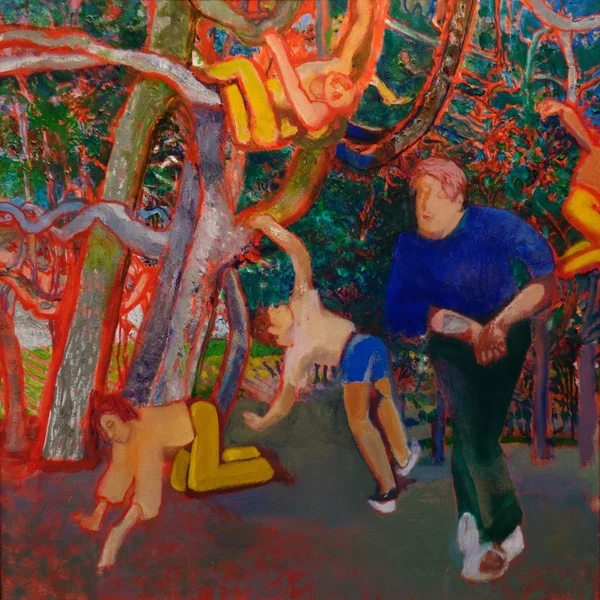
"Fun III'' (oil on canvas), by Robert Henry, at Hatches Harbor Room at Seashore Point, Provincetown, Mass., through June 18.
Revolutionary move to Pawtucket?
Adapted from Robert Whitcomb's "Digital Diary'' in GoLocal24.com
A group of us were talking the other day about the Pawtucket (R.I.) Red Sox’s plan for a multi-recreational-use downtown “Park of Pawtucket’’ at and around a successor stadium of McCoy Stadium. The PawSox organization says it would provide “recreation, entertainment and other amenities year-round,’’ including “concerts, hockey and certain family attractions.’’ Soundsnice, but it’s still hard to see how well this would work without a covered stadium, considering that annual cold snap called “winter’’. The “Park of Pawtucket’’ concept is obviously part of the pitch to get state money to help pay for a McCoy replacement.
Meanwhile, the CEO of GoLocal, Josh Fenton, suggested (in jest?) that the New England Revolution move its base to this new stadium from Gillette Stadium, in Foxboro. Unlike at Gillette, it might often have a chance of filling the stands at a new facility to be shared with the PawSox. Rhode Island, in part because of its large Hispanic and Asian community, loves soccer. And such a move would pull deep-pocketed Robert Kraft, the owner of the Revolution and the New England Patriots, into Rhode Island.
I wonder if the biggest sport in most of the world -- soccer (or "football'' as it's usually called in English-English) -- will ever reach the popularity of that more brutal (brain damage, anyone?) game we call "football'' in the U.S.
Don Pesci: When will Conn.'s progressive Democrats accept economic reality?
VERNON, Conn.
The magic words among progressive Democrats in Connecticut’s General Assembly are “stabilize state finances.” It is an expression very much on the tongue of House Speaker Joe Aresimowitz, long affiliated with unions. Mr. Aresimowitz is employed as education coordinator for AFSCME. Last December, Connecticut’s Office of State Ethics (OSE) advised Mr. Aresimowicz that “nothing in the state ethics code bars him from continuing his job [with] an influential public-employee union once he becomes speaker of the House of Representatives.”
Apparently, the OSE is unfamiliar with the expression “putting the fox in charge of the hen house.”
This convenient expression, “stabilize state finances,” should be taken to mean “raise taxes on the rich.” A quick survey of unending budget deficits, the flight of entrepreneurs and capital from Connecticut, political losses in the General Assembly among Democrats bitten by the progressive bug, and diminished revenue collections from the state’s wealthier citizens should be enough to convince even hard-boiled flat-earthers that soaking the rich ain’t what it used to be.
The wealthy in Connecticut supply about one third of the state’s revenue; this cache of easy money has diminished to such an extent that reliable budget prognosticators are forecasting a budget deficit for the next fiscal year of, in round numbers, $5 billion, a figure that has been bouncing around for days in most newspapers and TV news reports. This entirely predictable turn of events – at some point, as tax increases reaches the point of diminishing returns and yield less revenue – has sensitized Mr. Aresimowitz. But progressives in Connecticut are not easily convinced that doing the same thing over and over again while expecting a different result eventually will make you a candidate for the loony bin, and so, driven forward by the progressive wind at their backs, they are unwilling to take off the table yet another tax increase.
"'I still refuse to enter the negotiations taking anything off the table,’ Mr. Aresimowicz said,” according to a piece in CTMirror, “noting that neither party nor branch of government has offered a plan to date that comes close to solving the budget crisis.”
Mr. Aresimowicz does have a plan, a familiar one – more taxes. Here is his reasoning: “As the hole in the budget grows,” largely because continuing tax increases have caused a drop in state revenues, “the options become more limited.” Increasing the options by, say, privatizing state functions and thus decreasing pension obligations will never do – because enlarging options will not suit Mr. Aresimowicz’s real constituency, the state's union lobby. Enlarging options by wresting control over state budgets from SEBAC, the state union group authorized to conclude contracts with the governor, and vesting it where it belongs, within the state legislature, will greatly offend Mr. Aresimowicz’s union supporters.
When the State of Rhode Island, facing red ink, wishes to discharge a deficit, it does so through a change in statutes, an option not available in Connecticut, where workforce changes are accomplished – more often NOT accomplished – through negotiated changes in state and union contracts. A change from contract to statutory control over state spending is not an option on Mr. Aresimowicz’s table. And why? Because enlarging this option would be a sane solution to Connecticut’s problems, and Mr. Aresimowicz prefers narrow reforms that allow him to do the same thing over and over again, while assuring the general public that this time the result will be different.
None of the solutions that would bring Connecticut’s dying corpse back to life are easy, because real solutions to fundamental problems touch the fundamental core of state politics. If pensions are the problem, one can attack the root of the problem by bringing state workers into the 21st Century. Pensions are old world relics; workers elsewhere in the state rely on Social Security, defined-contribution plans and, in some cases, a second job. Multibillionaire Warren Buffet raised the hackles of progressives everywhere when he pointed out that he regularly paid less in taxes than his secretary.
Just try convincing Mr. Aresimowicz that the salaries and benefits of unionized state employees should be no greater than employees holding comparable jobs in the private sector.
Everywhere on the left in Connecticut, the chatter is of tax increases, possible tolls, of moving a third of pension payments to municipalities, of re-instituting Connecticut’s lapsed constitutional cap on spending – but not yet, not yet, someday… what’s the rush?
And nothing is off the progressive Democratic budget discussion table but serious, long-term spending reforms such as have been outlined by the Yankee Institute that really would, in the words of Mr. Aresimowicz “make sure we’re not finding ourselves in this boat again.” How many times must the Titanic meet the iceberg before the captain and crew make a course correction?
Don Pesci is a political and cultural columnist based in Vernon, Conn.
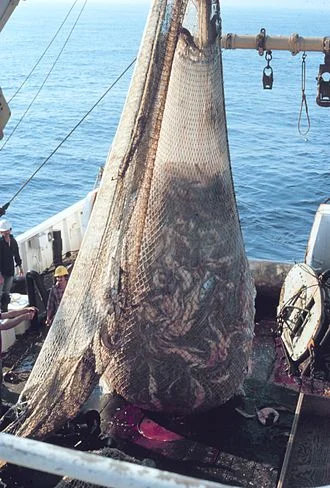
Fishing out all the seas' fish? North Korean conflict; happy Silk Road
To members and friends of the Providence Committee on Foreign Relations (pcfremail@gmail.com; thepcfr.org).
Our next meeting comes Wednesday, May 17, with James E. Griffin, an expert on the global food sector. He's a professor of culinary studies at Johnson & Wales University and an international business consultant. He's particularly well known for his knowledge of global food sourcing and sustainability.
Professor Griffin will focus in his talk on seafood sustainability, looking at it with New England, national and international perspectives. It will be based on international research he and his colleagues have conducted in recent years.
You might to look at this New York Times story about rapacious Chinese overfishing.
https://www.nytimes.com/2017/04/30/world/asia/chinas-appetite-pushes-fisheries-to-the-brink.html?hp&action=click&pgtype=Homepage&clickSource=story-heading&module=second-column-region®ion=top-news&WT.nav=top-news&_r=0
On Thursday, June 1, comes Terence Roehrig, of the U.S. Naval War College, where he is a professor of National Security Affairs, the Director of the Asia-Pacific Studies Group, and teaches in the Security Strategies sub-course. He has been a Research Fellow at the Kennedy School at Harvard University in the International Security Program and the Project on Managing the Atom and a past President of the Association of Korean Political Studies.
Joining us on Wednesday, June 14, will be Laura Freid, who has been serving as CEO of the Silk Road Project, founded and chaired by famed cellist Yo-Yo Ma in 1998, promoting collaboration among artists and institutions and studying the ebb and flow of ideas across nations and time. The project was first inspired by the cultural traditions of the historical Silk Road. Ms. Freid was recently named president of the Maine College of Art. There will be visuals and perhaps music.
We are already working on the fall season. There may be an expert on Mexico (perhaps Jorge Castenada) or Putin’s foreign policy (perhaps Dmitri Trenin) coming to speak early in September. Will advise.
Already scheduled is French Consul General Valery Freland, who will talk about how the French presidential-election outcome might change that nation’s foreign policy and the Western Alliance. He’ll speak on Wednesday, Sept. 27.
Then on Wednesday, Oct. 11, Graham Allison, who has been running Harvard’s Belfer Institute, will talk about, among other things, Chinese expansionism in the South China Sea. He'll talk about his new book Destined for War: Can America and China Escape Thucydides's Trap?
On Wednesday, Nov. 1, comes Michael Soussan, the writer and skeptic about the United Nations. He’s the author of, among other things, Backstabbing for Beginners, about his experiences in Iraq, which is being made into a movie starring Ben Kingsley.
Meanwhile, we’re trying to keep some flexibility to respond to events. Please send along ideas.
And in the soup we will end
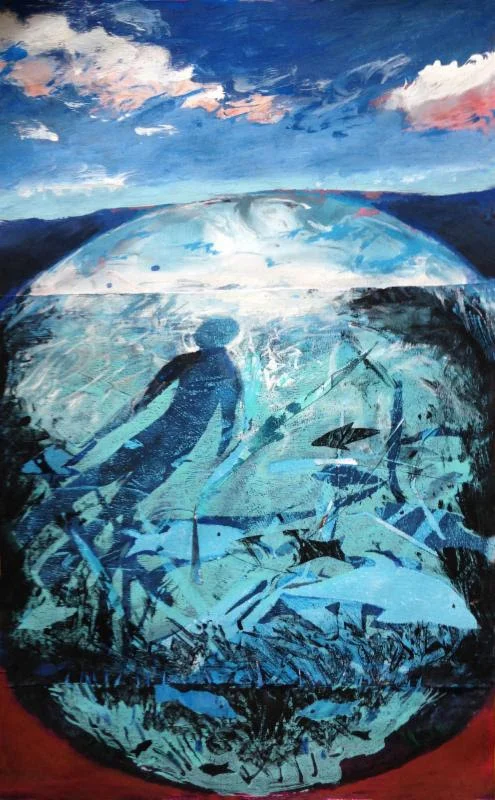
"Primordial Soup'' (oil), by Barbara Fletcher, in the show "Dreamscape: Land & Water,'' at the Loading Dock Gallery, Lowell, Mass., through May 28.
Llewellyn King: The new language of the new Trumpian politics
President Trump may or may not have done good things in his first 100 days in office. But have no doubt, he has affected the language of politics, uprooted the tried-and-true meanings of the past for a new more ambiguous, fluid and hazier speech.
These words and phrases are the language of the day:
Takeaways: These are the facts which you try and sort out from the presidential utterances. Takeaways mostly are the nuggets, the nub, the likely policy in the mattress of words. Takeaways are nearly as good as facts, but not quite as tricky. Takeaways don’t have to be facts, they can be hints, even insults or praise, which indicate which way the presidential wind is blowing; whether it is a zephyr or a gale, a wind of change or just hot air.
Double down: This is when President Trump or his staff cling to a position for a while. For example, the president has doubled down on his demand for wall along the southern border. He has not wavered in his desire to see masonry separating us from Mexico, from the bad hombres there who have never heard of airplanes, boats or Canada. A fence won’t do; nor will an electronic barrier. It has to be a wall, like Hadrian’s Wall, separating England from Scotland, or the Great Wall of China or the Berlin Wall. History loves walls. History doesn’t do fences.
Walk back: Walking back statements, positions, accusations and policies is a kind of wiggle room on steroids. If it stirs up a storm, walk it back. If the historical facts you’ve quoted are pure nonsense, walk them back. If your international agenda has changed, walk back the old one.
Take the strange matter of Chinese currency manipulation. Candidate Trump was going to straighten out that one. But when he needed the Chinese to pressure North Korea, he walked back the issue of currency manipulation. He also did a few backward steps on Chinese incursion into the South China Sea.
Historians might note that in relation to China, President Trump has traded away a lot for little or nothing. The Chinese aren't going to topple the dictatorship of Kim Jong-un in North Korea, or even cut off a lot of their trade with him. “Smart cookies” are in Beijing, too.
Fake news: This is the new aspirin of politics. Take two and recant in the morning. Fake news is, by presidential dictate, anything you don’t like on the news; or the entire purveyor of the news, like CNN or The New York Times. Fake has not yet lost its old meaning: It means made up, false, fictitious.
In the Land of Trump, there are no facts, except those on which he has doubled down, and which might be walked back at some time in the future.
Enemies of the people: That means journalists. All of them, if they don't work for Fox News -- and a few of those are suspect.
Now the president, the negotiator-in-chief, the man who can look across the table at an adversary and get the wretch to sign and concede, is taking on the Arab-Israeli conflict. Trump may not have negotiated the Russians into submission or the Chinese into compliance, but no matter. When at first you don’t succeed, go for the big one. Double down.
Maybe Trump and his son-in-law, Jared Kuchner, will walk through the Valley of Failed negotiations and succeed. But no matter. It’s a no-brainer. You can walk that one back, littering the way with accusations of intransigence and ill will. One doesn’t have to walk back failure in the Middle East. That one walks itself.
Author’s note: I'll walk back all my negative comments as needed or, perchance, double down on them. They are, of course, fake and have been penned by a certifiable enemy of the people.
Llewellyn King is executive producer and host of White House Chronicle, on PBS. His e-mail is llewellynking1@gmail.com.
Now more than ever

"In Flux'' (mixed media on canvas, detail), by Sarah Alexander, in her joint show with Tatiana Flis titled "Scarcely Awake,'' at Fountain Street Gallery, at 400c Harrison Ave., Boston. The gallery just moved from Framingham.

Jim Hightower: Predatory companies seek to destroy the most popular federal agency: the Postal Service

Via OtherWords.org
A half-dollar hardly counts as money these days — it won’t even buy a cup of coffee. But pssssst… here’s an amazing half-dollar bargain for you: A first-class postage stamp.
For 50 cents, you get the stamp, 3 cents in change, and America’s phenomenal network of post office workers and letter carriers, who will deliver your missive into any of the 43,000 zip codes of this vast country.
Our public Postal Service literally delivers, and many of our post offices serve as treasured community centers — two reasons that the U.S. mail service consistently ranks highest of all federal agencies in public support.
So, naturally, it must be ravaged and ultimately eliminated.
That’s what passes for logic in the back rooms of Congress and in the boardrooms of predatory corporations that want to take control our mail for their profit.
They keep demonizing anything public — especially any public service that actually works and is popular — because the corporate powers and the Congress critters they buy in bulk ultimately intend to privatize all of the people’s government. To advance their plutocratic vision, they’re out to tarnish the Postal Service as a massive, money-sucking, dying, bureaucratic behemoth.
But here are a few facts they don’t want you to realize.
One, this public agency provides affordable mail service to all, in poor communities as well as rich. Two, it does this without a dime of taxpayer money, financing its entire operation with the sale of stamps and services. And three, it provides hundreds of thousands of solid middle-class jobs spread throughout every zip code.
To help keep this public jewel out of the hands of a few greed-headed, price-gouging, low-wage, tax-dodging corporations, support “A Grand Alliance To Save Our Public Post Offices.” Find it at www.AGrandAlliance.org.
Jim Hightower is a radio commentator, public speaker and the editor of the newsletter, The Hightower Lowdown. He wrote this for OtherWords.org.
Todd McLeish: Gypsy-moth infestation might pollute region's water supplies
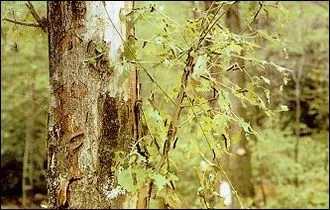
A tree's leaves eaten by gypsy-moth caterpillars.
By TODD McLEISH, for ecoRI News (ecori.org)
Last year’s gypsy-moth infestation may have affected water quality in southern New England.
It’s almost gypsy-moth caterpillar season again, a time of tree defoliation, a variety of other environmental impacts, and caterpillar droppings raining down upon us. And now comes the news that last year’s infestation may have also affected water quality in the region and will likely do so again.
Gypsy-moth caterpillars — along with winter moth caterpillars and forest tent caterpillars, but mostly gypsy moths — defoliated about 230,000 acres in tiny Rhode Island last year, according to University of Rhode Island entomologist Heather Faubert, making it the worst defoliation since at least the early 1980s. More than half of the state’s 400,000 forested acres were impacted.
The defoliation also allowed sunlight into areas usually shaded by forest canopy, which local ecologists said allowed sun-loving invasive plants to spread into the forest, denied native birds and small mammals protection from predators, and made it difficult for frogs and salamanders living on the forest floor to remain cool and moist.
Coupled with last year’s drought, it also resulted in what botanist Keith Killingbeck called “a muted display” of fall foliage.
The water-quality implications from the caterpillars, reported last month by URI researcher Kelly Addy at a research conference at Brown University, were a coincidental result of a comparative study of how rainstorms affect stream-water quality in forested, urban and agricultural watersheds. Addy said sensors in Cork Brook, in North Scituate, R.I., picked up a “signature” of gypsy moths that lasted for many months.
“When you lose canopy cover, you have more sunlight hitting the streams, which warms up the water, and warm water cannot hold as much oxygen, so dissolved oxygen levels go down,” she said.
Addy also noted that dissolved-oxygen levels were further suppressed when large quantities of additional carbon — from caterpillar excrement, the caterpillars themselves and leaf fragments — dropped into the water from above.
“All that carbon fuels the organisms living in the water, causing them to flourish,” she said. “Suddenly, you have more biomass of life in the streams, which sounds good, but they are then consuming more oxygen, and dissolved oxygen levels decline even more.”
In Cork Brook, dissolved oxygen was measured at 8 milligrams per liter in summer 2014 and 2015, but just 5 milligrams per liter last summer.
“At that level, you can start getting oxygen distress in sensitive species,” Addy said.
The low levels of dissolved oxygen in Cork Brook remained through at least last fall, when the sensors were removed.
“If gypsy moths are not a big issue this spring, then the water will likely recover,” she said. “But if it happens repeatedly, then the streams won’t bounce back as easily, and each spring it may remain low.”
Unfortunately, gypsy moths are poised for another big year, with one caveat. “How bad it will be will depend somewhat on the weather,” Faubert said.
In years when it’s rainy in May, the moisture abets several fungal diseases that get passed back and forth between gypsy moth caterpillars, causing the population to crash.
“But even if almost all of our gypsy-moth caterpillars die off from the diseases, they don’t die until they’re already large caterpillars, so they will have already eaten a lot of leaves,” she said. “So we’re in for a lot of gypsy-moth damage, regardless of the weather.”
That means the likelihood of many more dead trees, since the botany rule of thumb suggests that three consecutive years of defoliation will usually kill most trees. And even one year of defoliation of spruce or hemlock trees can kill them, Faubert said.
The only good news is that Faubert found fewer winter-moth eggs this spring than in the past two years, so winter moth caterpillars, which typically hatch in early to mid-April and feed on leaves and tree blossoms for about a month, may have a lesser impact on local trees this year than previously expected.
Todd McLeish runs a wildlife blog.
Freedom and confinement

"Summer Palace'' (large suspended sculpture built from latticed panels), by Caroline Bagenal, at Boston Sculptors Gallery, May 10-June 11. Ms, Bagenal explores themes of freedom and confinement, evoking, says the gallery, "exterior and interior worlds.''