
Vox clamantis in deserto



April 19 PCFR: Global disease threats/responses

Soldiers from Fort Riley, Kansas, ill in the great influenza pandemic of 1918.
To members and friends of the Providence Committee on Foreign Relations (pcfremail@gmail.com; thepcfr.org).
Our next meeting comes on Wednesday, April 19, with Rand Stoneburner, M.D., the distinguished international epidemiologist. Dr. Stoneburner, who has done extensive work with the World Health Organization and other major public health organizations, will talk about Zika, Ebola and what he sees as the biggest global disease threat – an influenza pandemic. He’ll have some graphics.
Meanwhile, see:
https://www.washingtonpost.com/national/health-science/the-trump-administration-is-ill-prepared-for-a-global-pandemic/2017/04/08/59605bc6-1a49-11e7-9887-1a5314b56a08_story.html?utm_term=.45d46676dada&wpisrc=nl_rainbow&wpmm=1
And:
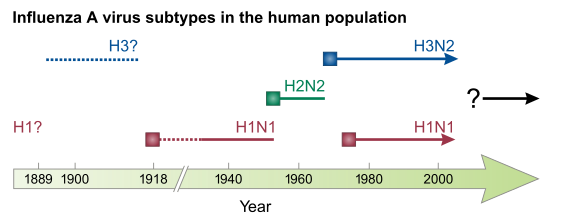
The main types of influenza viruses in humans. Solid squares show the appearance of a new strain, causing recurring influenza pandemics. Broken lines indicate uncertain strain identifications.

Zika transmission map.
'A new theory of comedy'
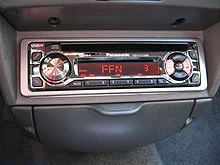
"Another spring,
late afternoon and driving back from Boston
just past the woods
where tree frogs were mating and chirping, neither sad nor glad,
a new theory of comedy
flew out of the blue, inaudibly making its way
through a sonic boom
and the routine blare of the car radio's everyday
box score of doom.''
-- Edwin Honig, from "Spring Two, #12''
Not available at Starbucks

Ceramic mug, by Mitch Shiles, at the Brookline (Mass.) Arts Center.
Crazy, hazy days coming

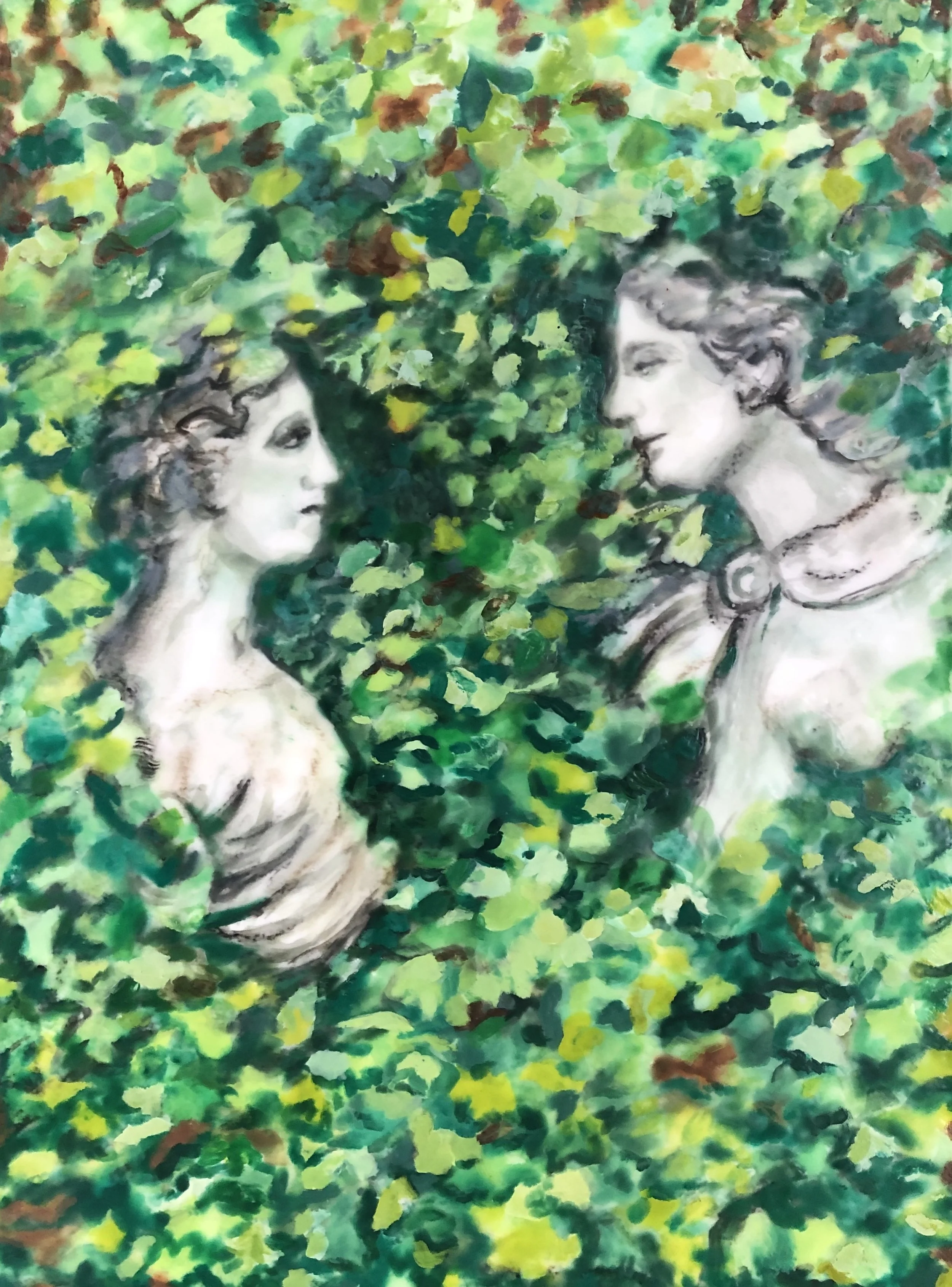
"Summer Blur'' (encaustic) by Nancy Whitcomb, in the group show "Four Explore,'' with Angel Dean, Mimo Gordon-Riley, Nancy Gaucher-Thomas and Priscilla Foley Blackman, at the Providence Art Club, April 23-May 12.

Keep it in the family

From Robert Whitcomb's "Digital Diary'' in GoLocal24.
America’s metro areas, most of which vote Democratic and many of which are very prosperous, subsidize the nation’s rural areas, which vote Republican and tend to have more poverty (except for some in such heavily government-subsidizedsectors as agribusiness) and health and social pathologies. Of course there’s massive hypocrisy in GOP attacks on “big government,’’ whose anti-poverty programs disproportionately favor Red States, not the “welfare queens’’ and illegal immigrants in such Blue State cities as New York and Los Angeles.
As the Trump administration, in its relentless efforts to further enrich its mostly very affluent senior members by cutting income and other taxes for the rich, tries to shrink locally popular programs to help the poor, concentrated in the Red States, it will be interesting to see what Trump’s fanatical fans in those states do.
Meanwhile, you have to be impressed by the confident brazenness of the Trump family and administration in seeking ways to make money off the fact that their leader, an outrageous crook, is in the White House. The administration is rife with egregious conflicts of interest, many connected with the Trump Organization. The taxpayers are now paying big money to help the Trump family and its associates make a killing off the fact that their leader is in the Oval Office.
Near the center are Mr. Trump’s daughter Ivanka and Jared Kushner, who learned the joys of self-dealing and nepotism from their fathers. Mr. Kushner’s father, like Donald Trump, is real estate man. But Charles Kushner is also a convicted felon. In 2005, he was convicted of illegal campaign contributions, tax evasion and witness tampering, and served time in federal prison. After his release he resumed his career in real estate.
But the elder Mr. Kushner has been a devoted father. Consider his $2.5 million donation to Harvard before his son was admitted, despite a not very impressive secondary-school record. Now young Jared is being asked by his father-in-law to, among other minor chores, “reinvent ‘’ government to make it more businesslike. (Whose business is the model?) For some sense of how this might work out, read Elizabeth Spiers’s piece about how Jared ran the New York Observer: https://www.washingtonpost.com/posteverything/wp/2017/03/30/i-worked-with-jared-kushner-hes-the-wrong-businessman-to-reinvent-government/?utm_term=.6322cc1d9211
Such families know how to get things done!
'Forgotten like the Druid's spell'
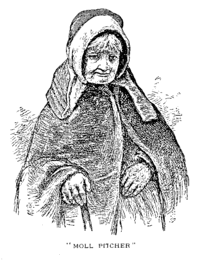
"Pythoness of ancient Lynn''.
How has New England’s romance fled,
Even as a vision of the morning!
Its rites foredone, its guardians dead,
Its priestesses, bereft of dread,
Waking the veriest urchin’s scorning!
Gone like the Indian wizard’s yell
And fire-dance round the magic rock,
Forgotten like the Druid’s spell
At moonrise by his holy oak!
No more along the shadowy glen
Glide the dim ghosts of murdered men;
No more the unquiet churchyard dead
Glimpse upward from their turfy bed,
Startling the traveller, late and lone;
As, on some night of starless weather,
They silently commune together,
Each sitting on his own head-stone!
The roofless house, decayed, deserted,
Its living tenants all departed,
No longer rings with midnight revel
Of witch, or ghost, or goblin evil;
No pale blue flame sends out its flashes
Through creviced roof and shattered sashes!
The witch-grass round the hazel spring
May sharply to the night-air sing,
But there no more shall withered hags
Refresh at ease their broomstick nags,
Or taste those hazel-shadowed waters
As beverage meet for Satan’s daughters;
No more their mimic tones be heard,
The mew of cat, the chirp of bird,
Shrill blending with the hoarser laughter
Of the fell demon following after!
The cautious goodman nails no more
A horseshoe on his outer door,
Lest some unseemly hag should fit
To his own mouth her bridle-bit;
The goodwife’s churn no more refuses
Its wonted culinary uses
Until, with heated needle burned,
The witch has to her place returned!
Our witches are no longer old
And wrinkled beldames, Satan-sold,
But young and gay and laughing creatures,
With the heart’s sunshine on their features;
Their sorcery—the light which dances
Where the raised lid unveils its glances;
Or that low-breathed and gentle tone,
The music of Love’s twilight hours,
Soft, dream-like, as a fairy’s moan 50
Sweeter than that which sighed of yore
Along the charmed Ausonian shore!
Even she, our own weird heroine,
Sole Pythoness of ancient Lynn
Sleeps calmly where the living laid her;
And the wide realm of sorcery,
Left by its latest mistress free,
Hath found no gray and skilled invader.
So perished Albion’s “glammarye,”
With him in Melrose Abbey sleeping,
His charmëd torch beside his knee,
That even the dead himself might see
The magic scroll within his keeping.
And now our modern Yankee sees
Nor omens, spells, nor mysteries;
And naught above, below, around,
Of life or death, of sight or sound,
Whate’er its nature, form, or look,
Excites his terror or surprise,—
All seeming to his knowing eyes
Familiar as his “catechise,”
Or “Webster’s Spelling-Book.”
From John Greenleaf Whittier's "New England Legend''
Note: The Pythoness of ancient Lynn was Moll Pitcher, who lived under the shadow of High Rock in that town, and was sought far and wide for her supposed powers of divination.
Conspicuous consumption
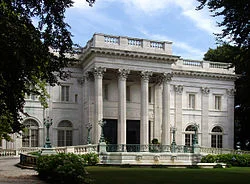
Marble House, Newport, R.I., built in 1888-92.
''One hundred years after the declaration that all men are created equal, there began to gather in Newport a colony of the rich, determined to show that some Americans were conspicuously more equal than others.”
--- The late Alistair Cooke, British-born journalist, television personality and broadcaster


America in the Age of Television
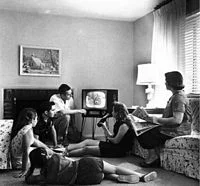
The new family hearth: TV in the 1950s.
From Robert Whitcomb's "Digital Diary'' in GoLocal 24.
David Thomson, one of the most respected film reviewers, has written a terrific book about another medium in Television: A Biography (Thames & Hudson), an erudite and yet accessible discussion about the first 70 years of television as a mass medium, focusing on American television. He shows how TV and the broader culture evolved together, and how commercially and politically powerful TV swiftly became, including in electing good and bad presidents and other politicians and informing and misinforming three generations. He does this with numerous enlightening, amusing and troubling anecdotes connected with themes that link the medium’ s decades.
I’m old enough to have seen most of this evolution, from fuzzy recollections of fuzzy images of Queen Elizabeth II’s coronation; the hijinks of Ernie Kovacs and Lucille Ball; the ads for detergents and kids’ cereal that seemed to finance the ‘50s; Dave Garroway and his sidekick chimp on The Today Show; the 1960 Kennedy-Nixon presidential debate, whichNixon won on the radio but Kennedy won on TV; JFK’s assassination; the Vietnam War; the Watergate hearings; increasingly frank “adult’’ crime and other shows; the rise of highly politicized cable TV news and opinion stations; an explosion in pharmaceutical ads (which have helped drive up healthcare costs); 9/11, and the wars and edgy comedy shows since then.
As do most people, I have vivid memories of where I watched TV – such as the sitting room in our house, smoky from my mother’s Salem cigarettes, looking at thefunny and racist Amos ‘n’ Andy – black and white TV indeed! – to my school’s common room watching JFK’s funeral, with the haunting dirge of The Navy Hymn, to the college fraternity house room where we saw our contemporaries get shot at in the Vietnam War, to The Wall Street Journal newsroom hearing/seeing Nixon resign, to, in a Jerusalem hotel room, learning of Princess Diana’s death, and watching, in The Providence Journal’s commentary department, the collapse of the Twin Towers – an event so transfixing that I had to ask my staff after an hour to turn off the TV and go back to work.
Television has both mirrored and profoundly changed American culture.
Whether you watch a lot of TV or not, you can’t begin to understand America since World War II unless you study the damn thing. Of course, with screens in virtually every residence and public place these days, it’s almost impossible, unless you’re blind, to avoid watching TV these days.
From what used to be a sort of successor to the family hearth, it’s now in so many places that it recalls Big Brother, in Nineteen Eight-Four, blaring, most irritatingly, in most doctors’ waiting rooms.
Mr. Thomson warns, “we are not in charge” of our relations with TV because “technology is less our tool than something that makes tools of us,” to sell products and people, including politicians. Consider our current, TV-created leader, whom Mr. Thomson calls “an inspired mercurial handler of TV’’ who goes “from The Apprentice to being the apprentice’s sorcerer in one blithe insult.’’
Bay State patriot
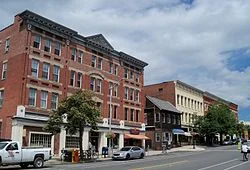
Downtown Amherst.
"I'm lucky to have been raised in the most beautiful place -- Amherst, Massachusetts, state of my heart. I'm more patriotic to Massachusetts than to almost any place. ''
-- Uma Thurman (actress)
Me, myself and my genes
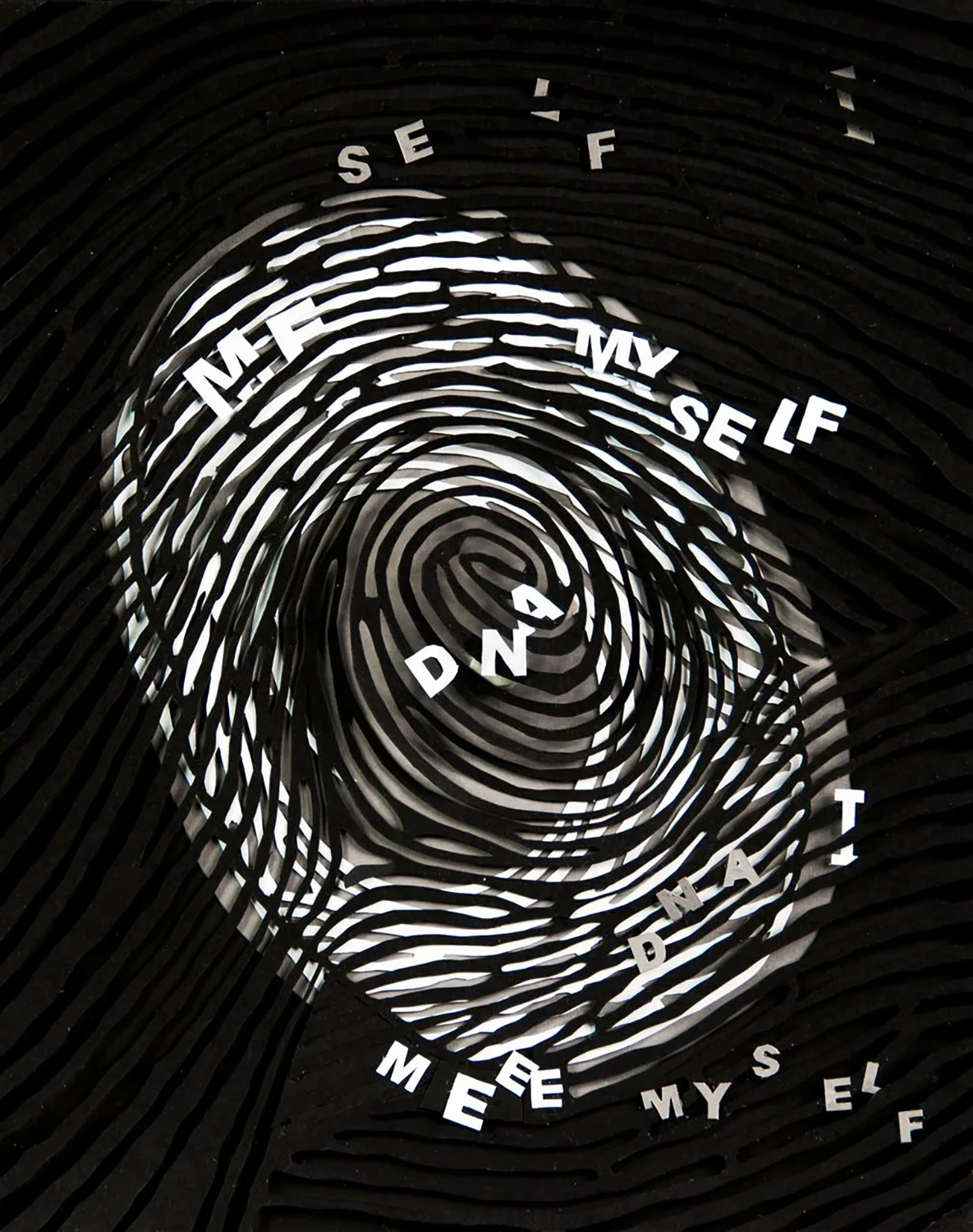
"Identity'' (digital image), by Jane Paulson, in the show "White/Black/Monochrome,'' at the South Shore Art Center, Cohasset, Mass., April 17-May 28. The gallery says the show is a "dynamic study of contrasts, featuring visually arresting photographs, prints, animation, illustration and 3D works.''
Chris Powell: Of contempt and credentialism
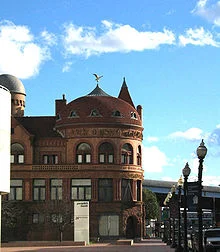
The P.T, Barnum Museum in Bridgeport.
Joe Ganim for governor? At first the idea might seem as ridiculous as the idea of his again becoming mayor of Bridgeport seemed when he got out of federal prison after serving seven years for exploiting his city with racketeering, extortion, bribery, and tax evasion.
But of course Ganim is indeed mayor again and his recent musing about running for governor may be no more ridiculous than Donald Trump's running for president. Many voters throughout the country saw Trump as the perfect mechanism for signifying their contempt for politics and government. Might many voters in Connecticut view Ganim the same way, even though, unlike Trump, Ganim himself may have been a major cause of that contempt?
In any case Ganim's return as chief executive of Connecticut's largest city has signified more than any contempt felt by voters there. It has signified the catastrophic failure of urban policy in the state for the last 50 years, represented most horribly by the collapse of Bridgeport, once the thriving center of the state's industry, now a swamp of poverty, social disintegration, corruption and political patronage. Ganim's restoration also has signified the demoralization of the city's voters, their desperate belief that a crook's return to office might be an improvement over a mayor who, however ineffectual, at least had stayed out of prison.
That is, Ganim is a symptom of Connecticut's steady impoverishment by mistaken social policy, policy in which state government persists though it only worsens living conditions. No one in authority ever answers for this, and it now seems to be accepted as the natural order of things in the state, beyond discussion in politics.
Indeed, this week Gov. Dan Malloy actually reveled in that mistaken social policy, touting what he said was a sixth year of increase in the state's high school graduation rate. But this increase is meaningless in a public education system that even school administrators have begun to acknowledge is entirely one of social promotion, a system in which there are no standards for advancement from grade to grade and for issuance of a high school diploma.
Congratulating themselves this week, the governor and Education Commissioner Dianna Wentzell seemed never to have read the decision issued last September by Superior Court Judge Thomas G. Moukawsher in the latest school-financing lawsuit, wherein the judge found the financing system unconstitutionally irrational because it fails to deliver education to many students.
The judge's decision recounted testimony by school administrators that schools, especially in Connecticut's cities, are giving diplomas to many students who are essentially illiterate after 12 years of social promotion.
The measure of education is not the mere credentialism celebrated by the governor and the commissioner this week but actual learning. By that standard education in Connecticut is little better than it is in most states, since here, as there, standardized tests show that half of high school seniors never master high school English and two-thirds never master high school math but are graduated anyway.
Worse, many students who have not mastered high school are then sent on to public colleges where they require remedial high school courses and end up with degrees of little value, in subjects like social work, women's studies and sociology, as if this final bit of credentialism will prepare them any better for making a living in the private sector, where they find a terrible shock, since, unlike education in Connecticut, in the private sector results count.
If mere credentialism is to be policy in education because it lets everyone feel good, state government could accomplish just as much and save a lot of money by issuing high school diplomas with birth certificates, thereby achieving a 100-percent graduation rate.
Chris Powell is managing editor of the Journal Inquirer, Manchester, Conn.

Llewellyn King: Big Inc. is bad when to comes to customer service

-- By Tanya Little
I have believed for a long time now that Donald Trump was elected president partly because of the behavior of companies like United Airlines and its large and growing fraternity of institutions that find the individual customer an inconvenience.
We live in an age where we have to take what we are handed by the institutions that are supposed to serve us.
We live in an age of frustration. The daily frustration of life has bubbled up in politics, on social media and even in graffiti.
These are some of the institutions of our torment:
The banks that leave you half an hour on the telephone, pleading to speak to someone -- a human being -- who might, just might, help you.
The telephone companies that want you to crawl around the floor, at the behest of directions from a call center in Bangladesh, doing your own repairs.
The Internet providers that will not believe that their systems could need fixing and will only send a technician when all logic and patience is exhausted and someone in the Philippines is satisfied that you do know what you are saying and that English is, in fact, your first language.
The medical insurance company that has a computer converse with you about a problem with your account.
Nowadays services are provided for high, unexpected fees. Vendors, such as hotels and car rental companies, dissemble about costs. They use marketing to bait and obfuscate -- Amtrak excels at this. The fine print is there for the purpose of trapping the hapless customer. The price of everything is calculated as to what can be extracted from you at the time of purchase.
Of course, Trump was not the answer. Electing him may have been electing a fox to protect the chickens. But it was a cry for help from many voters.
Big is not beautiful when it comes to services. It means that you, the customer, are nothing, an impediment, a nuisance, an awkwardness, a de minimis statistic, a grain of sand on the beach of corporate wealth.
Most especially, you are to be kept at arm’s length, at the end of a computerized telephone system, to be contacted only to upsell or to threaten, if you are a day late with your payment.
When it comes to large institutions -- primarily corporations but not-for profits, like the AARP and the unions, are as guilty -- the adage that the customer is always right is inverted: The customer is always wrong and should be fleeced and not heard.
Moreover the customer is a nuisance, an impediment to corporate well-being, and should be kept as far from corporate comfort as possible, preferably by employing computers and automated telephone systems. If human contact is necessary, that sort of customer impudence can be handled by call centers in faraway places. Limited English is an asset; bloody-mindedness, a virtue. Customer insubordination must be checked firmly and early.
And the contracts. Oh, the contracts! The poor victim who was manhandled off a flight he had paid for had a contract with United, allowing the airline to overbook flights (a kind of fraud, selling a seat they do not have). He did not know he was party to such a contract.
We all have these unilateral contracts – with banks, credit-card companies, Internet providers, telephone companies -- stuffed down our throats all the time. In fact, any time you deal with Big Inc. You pay, they dictate.
I believe that is why some people voted for Trump: They were “mad as hell and ... not going to take this anymore.” Looks as though they were conned again.
Llewellyn King is executive producer and host of White House Chronicle, on PBS, and a veteran publisher, columnist, broadcaster and international business consultant. His e-mail is llewellynking1@gmail.com. He's a frequent contributor to New England Diary.

Josh Hoxie:Trump's tax plan for the 1 percent
Via OtherWords.org
After the failed effort to repeal the Affordable Care Act (aka Obamacare), the Trump administration has set its sights on its next big project: so-called “tax reform.”
And the “reform” they seek appears guaranteed to elicit disdain from all sides — with the notable exception of the ultra-wealthy.
Let’s first acknowledge that tax reform is hard. The system is held in place by entrenched interests who don’t want to see their favorite loopholes taken away. That’s a big reason why it’s been over 30 years since the last major tax overhaul, championed by Ronald Reagan in 1986.
Adding to the complexity of tax reform is the fact that all of the White House people working on it are resplendently wealthy.
Treasury Secretary Steven Mnuchin and Trump economic adviser Gary D. Cohn are each worth hundreds of millions. In fact, Trump’s cabinet is the wealthiest in history. That might have something to do with Trump, who calls himself a billionaire, being the wealthiest president in history.
Put simply, the folks making the rules around taxes may not have working families’ interests in the forefront of their minds. Crowding them out are the wishes of the ultra-rich friends they see regularly in their glitzy country clubs and gated communities.
A seminal study by Professors Benjamin Page, Larry Bartels, and Jason Seawright in 2013 showed that the policy preferences of the wealthiest 1 percent are “much more conservative than the American public as a whole” when it comes to “taxation, economic regulation, and especially social welfare programs.”
The top 0.1 percent, those with assets over $40 million, have even more conservative views, the paper points out.
Perhaps unsurprisingly, the study shows, the wishes of the wealthiest citizens are much more likely to make it into public policy than those of the less affluent. One person, one vote be damned.
Every year Gallup puts out the same poll asking people about taxes. Every year they get the same response: Over 60 percent want to see the wealthy pay more in taxes. More than half believe “government should redistribute wealth by taxing the rich.”
Earlier this year, Treasury Secretary Mnuchin seemed to agree. He promised in no uncertain terms that this administration wouldn’t seek to cut taxes for the “upper class.”
Unfortunately, that was a bald-faced, pants-on-fire, inexplicable lie.
Trump’s plan does redistribute wealth, it turns out — but it’s towards greater inequality, not less. It takes serious mental gymnastics to argue that what Trump’s team has proposed on taxes would benefit the average working Joe or Jane.
The plan eliminates the federal estate tax, a levy that only impacts the wealthiest 0.2 percent of heirs and heiresses. It was put in place a hundred years ago with the express goal of reducing inequality and preventing aristocracy.
The plan also cuts the effective tax rates on the wealthiest individuals and most profitable corporations, those doing phenomenally well right now.
Meanwhile, the administration has proposed massive budget cuts eliminating whole programs for working people.
This draconian effort would intentionally and literally push working families into the cold, by zeroing out the Low Income Home Energy Assistance Program. If that weren’t savage enough, the administration also wants to cut the Women Infant and Children (WIC) food program that provides nutrition assistance to about half the babies born in this country.
The poor in this country often don’t see themselves as poor, the late author John Steinbeck noted, but as “temporarily embarrassed millionaires.” Maybe that’s why some working class people support this administration.
Josh Hoxie directs the Project on Taxation and Opportunity at the Institute for Policy Studies.
Looking for tropical survivors

Monk Parakeet.
"I grew up in New Hampshire. My closest neighbor was a mile away. The deer and the raccoons were my friends. So I would spend time walking through the woods, looking for the most beautiful tropical thing that can survive the winter in the woods in New Hampshire.''
-- Steven Tyler, rock musician
Editor's notes:
For years, a colony of Monk Parakeets thrived on a point in East Providence on Narragansett Bay.
Mr. Tyler actually only spent summers in New Hampshire as a kid.
Good place to work at low tide

"A Little Shed at Dusk'' (oil on panel), by Niva Shrestha, in her show "Townscape,'' at Galatea Fine Art, Boston, May 3-28.

Boston can do much more with solar energy

By ecoRI News staff
ecori.org
BOSTON
As Massachusetts continues to debate policies critical to the growth of solar power, a recently released report ranks the city in the middle of the pack for total installed solar capacity.
The report, which ranks Boston 21st among major U.S. cities for solar, comes as the legislature considers raising Massachusetts’s solar goal to 25 percent solar by 2030.
“By using solar power here in Boston, we can reduce pollution and improve public health,” said Sharon Solomon of Environment Massachusetts. “While Boston has taken some steps to encourage solar energy, we can do much more. Solar has a critical role to play in moving Boston to 100 percent renewable energy.”
The report, Shining Cities: How Smart Local Policies Are Expanding Solar Power in America, ranks Boston ahead of Philadelphia, Seattle and Miami for the total amount of installed solar, but behind Newark, N.J., Portland, Ore., and Washington, D.C.
Boston has taken some steps to expand solar energy, such as creating the Renew Boston solar program, which helped lower the cost of solar installations, and installing solar panels on schools and other public buildings. Additionally, businesses and community organizations are exploring innovative models to expand access to solar for low-income housing and churches.
The report outlines additional steps that cities can take to encourage the adoption of solar energy, including requiring “solar-ready” or zero-net-energy buildings and reforming permitting processes.
“With regression happening with environmental policies in Washington, D.C., it is important for cities and towns to lead in solar and renewable energy sources,” City Councilor Matt O’Malley said.
The data in the report reflect the recent growth of solar across the country. The top 20 cities listed in the report have nearly as much solar today as the entire country had installed in 2010. In 2016, solar was the No. 1 new source of energy installed in the United States.
The Solar Foundation recently released new data showing there are 12,486 people employed in solar industry in Greater Boston.
Despite that growth, challenges remain for the solar industry in Massachusetts. Caps on the state’s most important solar program, net metering, are holding back the growth of solar energy, according to Environment Massachusetts. The Legislature is currently considering bills that would lift or eliminate the caps on net metering, restore the full value of net-metering credits, and set a goal of generating 25 percent of the state’s electricity from solar by 2030.
Cities can push solar forward in a number of ways, according to the report. Among the recommendations, cities can set a goal for solar usage, help residents finance solar power, and put solar on government buildings.
Across the country, 25 cities, including Burlington, Vt., have committed to get 100 percent of their electricity from renewable sources.
“Cities are big energy users with lots of unutilized roof space suitable for solar panels,” Solomon said. “Boston has only just begun to tap its solar potential.”
Joys of continuity
"Continuity is one of the things I like about New England.''
-- Tracy Kidder, author of best-selling nonfiction books. He lives in western Massachusetts.