
Vox clamantis in deserto

Of roads and evolution

A Spotted Salamander, whose range includes southern New England.
Adapted from an item in Robert Whitcomb's "Digital Diary,'' in GoLocal24.com
WNPR, a Public Radio station in Connecticut, ran an intriguing little feature the other week headlined “Along Highways, Wildlife Appears to Be Breaking Evolutionary Speed Limit’’ . See: http://wnpr.org/post/along-highways-wildlife-appears-be-breaking-evolutionary-speed-limits
The story, which focuses on New England ecology, looks at “how roads, and the salts and chemicals we put on those roads, impact nearby nature. Some impacts are visible: think road kill and fragmented habitat.’’
Steven Brady, an evolutionary ecologist who has been working with a Dartmouth College-led research group, reports:
"Individual plants that are living right next to a road, in a couple different cases, have evolved the ability to deal with higher concentrations of things like lead, from fuel’’.
Mr. Brady has studied how roads affect amphibians in northeastern Connecticut. He notes that rapid evolution has a time element but also plays out in isolated pockets of space. Across ‘’just tens of meters, scientists are seeing differences in how one group of amphibians evolves compared to another nearby population,’’ the text with the broadcast says.
Colin Donihue, a postdoctoral fellow at Harvard University who studies how lizards evolve in human-dominated landscapes, said that species are evolving within human life spansmakes conservation more of a moving target.
"That idea that ecology and evolution happen on commensurate time scales and can actually feed back and forth to affect each other is a really powerful new way of looking at the interplay of ecology and evolution," Mr. Donihue told WNPR.
"The things we do to the planet -- even when they seem minimal, like a road through a forest -- are not only causing this impact on how well a population does, but it's fundamentally changing the biology of the organisms that live there,’’ Mr. Brady said.
That evolution is happening fastest in places where global warming is fastest, such as Rhode Island.

Sam Pizzigati: A history of taxes in one mega-rich family -- the Rockefellers
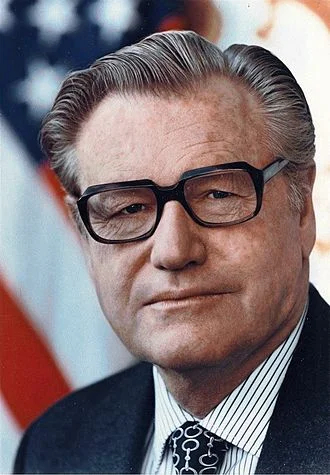
New York Gov. and then Vice President Nelson Rockefeller was embarrassed to disclose how little money he had -- relatively speaking.
David Rockefeller recently passed away.
You may have already heard that news. You may have not. America’s major media outlets haven’t treated Rockefeller’s death — at age 101 — as a top-of-the-news story.
How things change. Once upon a time, any breaking news that involved a Rockefeller almost automatically qualified as news not to be missed. And for good reason.
A century ago, David Rockefeller’s granddad, John D. Rockefeller, ranked as America’s richest man. No other fortune in the United States — or the world — came even close in size to his.
Old John D. passed away in 1937 at age 97. Newspapers treated his death as a mega big deal. Front-page headlines everywhere. Editorial pages filled with reflections on his long and lucrative life.
One of those reflections came from America’s most noted 20th-Century pundit, columnist Walter Lippmann. The nation, Lippmann observed, would likely never see a fortune as grand as Rockefeller’s ever again. John D. had “lived long enough to see the methods by which such a fortune can be accumulated outlawed by public opinion, forbidden by statute, and prevented by the tax laws.”
In the United States, Lippmann added, “sentiment has turned wholly against the private accumulation of so much wealth.”
John D. Rockefeller raged mightily against that public sentiment over his life’s last decades. He fiercely denounced, for instance, the drive to enact a federal income tax.
“When a man has accumulated a sum of money within the law,” old John D. intoned, “the people no longer have any right to share in the earnings resulting from the accumulation.”
The people felt otherwise. A federal income tax became the law of the land in 1913. That tax would go on to whittle down the fortune that John D. later left his six grandchildren.
The most celebrated of those six, longtime New York Gov. Nelson Rockefeller, would end up feeling intensely embarrassed about his diminished financial status, as one Washington insider discovered in 1974.
That insider, a veteran lobbyist by the name of Tom Korologos, vetted Nelson Rockefeller to be vice president, a job in which he served until 1977.
“I’ve got something to worry about,” Korologos remembers Nelson grimacing. The former governor, Korologos soon learned, didn’t want to publicly reveal his personal financial picture.
“His concern,” the vetter explained, “was that when it became public, he wasn’t going to be as rich as everybody thought he was.”
What had happened to the fabled Rockefeller family fortune? Taxes.
Beginning in the early 1940s and lasting into the 1960s, the federal tax rate on individual income over $200,000 annually hovered around 90 percent.
And many states also had their own progressive taxes. In New York, the state tax rate on top-bracket income stood at 15.375 percent.
Deep pockets could, of course, deduct their state taxes off their federal taxable income. But those deductions didn’t change the basic bottom line: The extravagantly rich, in mid-20th Century America, were losing their capacity to be extravagant.
Nelson Rockefeller passed away in 1979, just before the Reagan Revolution began undoing the progressive tax system that had so shaved his net worth. His younger brother David, a banker, lived on to prosper in the rich-people-friendly political environment that the Reagan years ushered in.
Where Nelson watched his wealth shrink, David saw his wealth soar. At his death, Forbes magazine put David’s net worth at $3.3 billion, the world’s 604th largest fortune.
What would John D. Rockefeller think about how his last grandchild’s life turned out? He might be a tad disappointed that his flesh and blood no longer ranked as the richest of the world’s rich. But he’d probably be overjoyed that in America the rich still rule.
At least for now.
Sam Pizzigati, an Institute for Policy Studies associate fellow, co-edits Inequality.org. His latest book is The Rich Don't Always Win.
Beautiful in any season
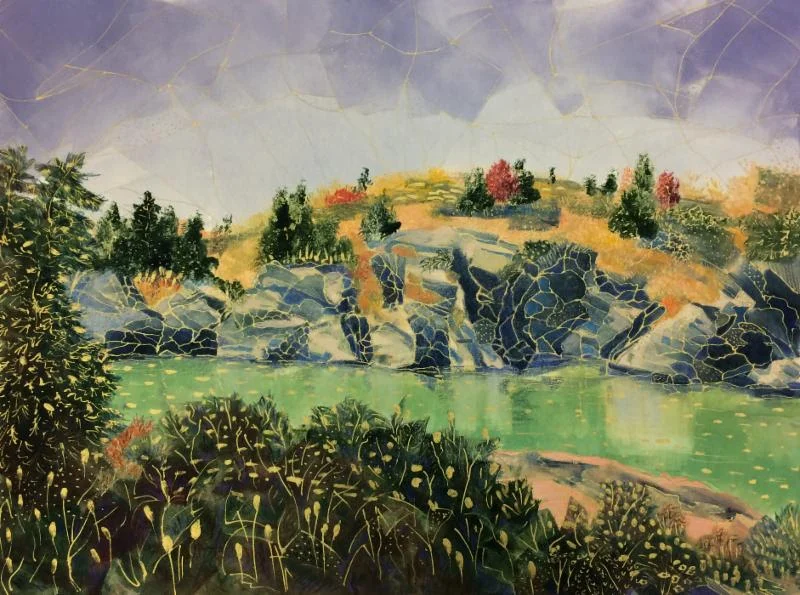
"Fall, Fort Wetherill, Jamestown {R.I.}'' (monotype, archival ink, colored pencil), by Elizabeth Goddard in her show with Regina Partridge, "The Lay of the Land,'' at the Providence Art Club.
'All the trees are put on edge'
"Spring slattern of seasons
you have soggy legs
and a muddy petticoat
drowsy
is your hair your
eyes are sticky with
dream and you have a sloppy body from
being brought to bed of crocuses
when you sing in your whisky voice
the grass rises on the head of the earth
and all the trees are put on edge
spring
of the excellent jostle of
thy hips
and the superior"
-- E. E. Cummings, ''Spring Onmipotent Goddess Thou''
Circular incarceration
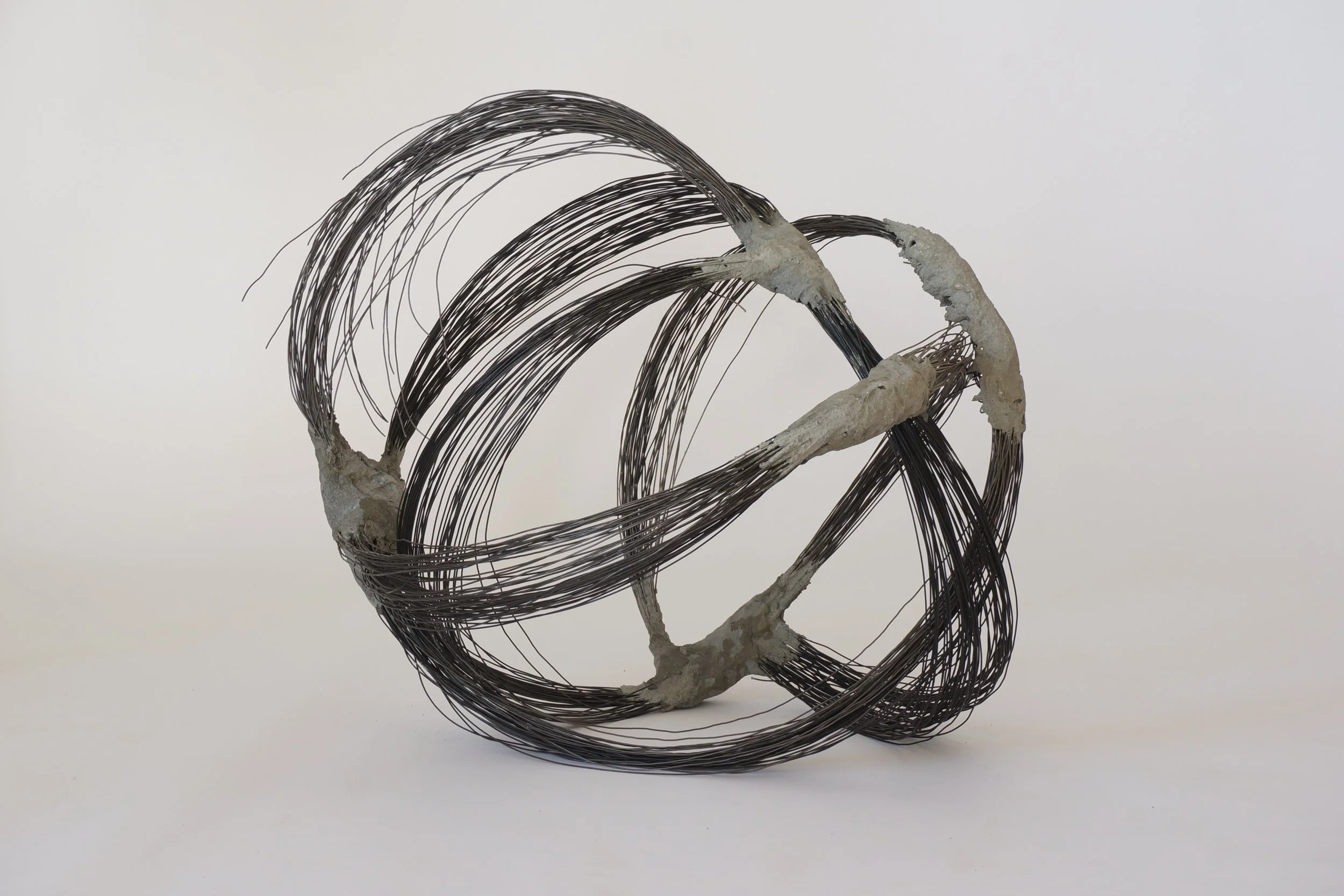
"Circular Logic'' (steel and concrete), by Isabel Mattia, at Dedee Shattuck Gallery, Westport, Mass. She references the "circular logic embedded in the design of our prison systems. They rely, she says, paraphrasing left-wing activist Angela Davis, on "the perception that certain people are inherently criminalized, and are self-perpetuating due to financial incentives to keep these people incarcerated.''
Bright cold dystopian day

"Happy 1984" (in Spanish) stencil graffito, denoting mind control via a video game controller, on a standing piece of the Berlin Wall, 2005.
''It was a bright cold day in April, and the clocks were striking thirteen.''
-- George Orwell, from Nineteen Eight-Four
Maintenance by the moon
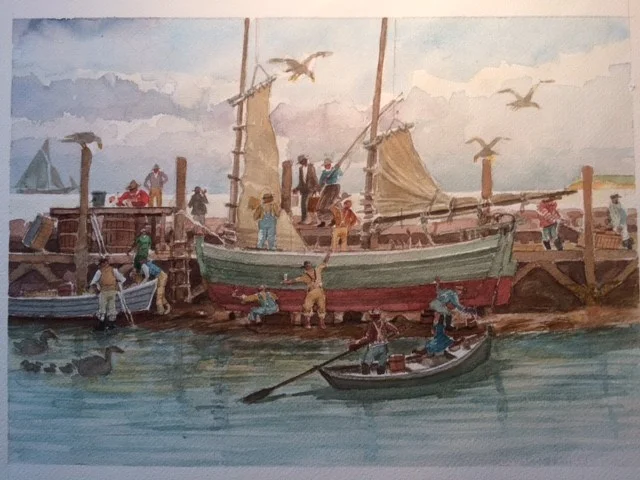
Watercolor by William Hall, part of his show at the Jessie Edwards Gallery on Block Island, scheduled for this July.
Mr. Hall explains that this picture is about scraping the bottom of boats, in this case a Block Island Double Ender, at very low tides Seaweed and barnacles slowed work boats. So this stuff needed to be regularly scraped off. Predictable very low tides would leave parts of Old Harbor, on Block Island, above water for 6 to 8 hours a day for several days in a row in the 19th Century heyday of these boats, which were essential for the islanders' fishing and transportation needs.
Double Enders were secured to the dock to wait for the extreme low tides. When they sat on the mud the work could be done. After scraping, antifouling paint was applied. Several fishermen and their wives worked together to get the scraping and painting done fast within the window of opportunity provided by the low tides.
"Think of it as fishermen's barn-raising. Over two days several boats could fully scrapped, '' Mr. Hall says.
Paper cuts
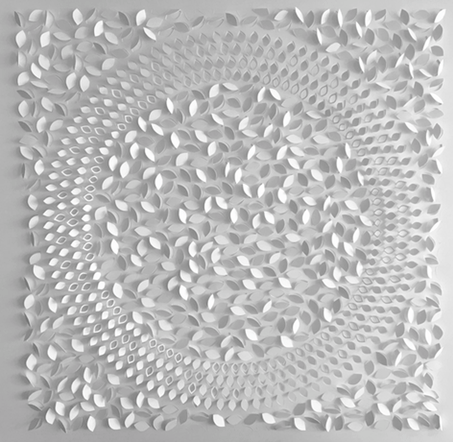
"Pillar of Truth'' (paper "seeds'' -- 2,743 pieces), by Jaq Belcher, in her show at Heather Gaudio Fine Art, New Canaan, Conn., through April 15.
Don Pesci: Pity an oppressed climatologist
Perhaps the governors of the states should hand out victimization certificates along with birth certificates because – when everyone is a victim, no one will be a victim, and that may help to put an end to the victimization of non-victims nonsense. Students at Yale, we have recently discovered, are victims. One may wonder whether a graduate of Yale or Harvard has been the more victimized. Are any of them more victimized than the fatherless children in Connecticut's shoot-up capital city, Hartford, which a few months ago was proclaimed the murder capital of New England?
Everyone, it seems, wants to get in on the action. In academia, the victimization scam may end in the destruction of the liberties of scientists.
Among the most oppressed victims in the 21st Century, we discover, is tortured Penn State University climatologist Michael Mann, who appeared before U.S. Congress at the end of March to declare himself victimized. Consider his bleeding wounds.
Before Mr. Mann put before the Congress his statement, he supplied the members of the House Science Committee – is anyone wondering: does the Congress really need a Science Committee? -- with his curriculum vitae. Mr. Mann is the author of a number of books, none of them suppressed by a Stalinist government. During his hearing, Mr. Mann unreeled “a prodigious list of awards,” according to National Review magazine.
Mr. Mann is suing the magazine, Mark Steyn, Rand Simberg and the Competitive Enterprise Institute for defamation, a judicial action for which Mr. Mann doubtless will receive from his persecuted colleagues yet another award, more plentiful in academia than snowflakes in a blizzard. Incredibly, the non-Stalinist D.C. Court of Appeals has not spiked the case and sent Mr. Mann to a frozen Gulag for gross impertinence.
Mr. Mann regaled the members of the House Science Committee with a story concerning false science. In Stalinist Russia, the crackpot theories of Trofim Lysenko concerning heredity and agronomy were embraced first by Vladimir Lenin and later by Stalin. In practice, the theories were ruinous, Russian agriculture suffered a setback, and real scientists who took issue with Lysenko’s theories were imprisoned, many of them dying in their cells. Mr. Mann’s reference to the evils of the Stalinist state were intended to indicate that science, even here in the good old USA, might suffer setbacks under an oppressive governmental regime and anti-scientific culture.
Stalin’s agricultural and industrial policies did produce real victims: Five million Ukrainians suffered and died under a Stalin administered famine in 1933-34. Intellectuals and school teachers were shot or sent to the Gulag, and eventually Ukraine and the rebellious Caucasus were brought under Stalin’s hobnailed boot. “If you want a vision of the future,” said George Orwell, who was familiar with Stalinist regimes, “imagine a boot stamping on a human face - forever.”
If you want a vision of our future in the new century, try to imagine a distinguished professor of climatology, the author of numerous books, who claims that climate change (AKA global warming) is “settled science,” that 90 percent of scientists in the United States agree with him on the point, and that he is being oppressed by Stalinists because other reputable scientists and commentators have had the temerity to disagree with him on the point.
Furthermore, Mr. Mann is the one using the organs of the state to sue his detractors for slander, hoping perhaps to shut down disagreeable commentators and bloggers who have poked fun at his “scientific” pretensions. Whose face is being smashed here? Is science, the lifeblood of which is controversy and disputation, the victim, or is the victim the tenured, much published, much honored, suit-prone but thin-skinned professor, who appears to be unwilling to brook controversy without taking science to court?
Mr. Mann’s slander case could be settled in an instant – the United States is not Stalinist Russia, and Mr. Mann’s disputants should be able to seek safe shelter under the nation’s 1st Amendment – were it not that most issues of this kind are settled out of court by a party to the suit that does not wish to be impoverished for the rest of his life by enriching lawyers. And so the case will drag on, and on, and on… until one of the principals has become poor enough to be unable to afford further litigation.
This torture by judicial process is what passes for justice in 21st Century America. It is the secret of U.S. Sen. Dick Blumenthal’s many successes as attorney general of Connecticut: if you can impoverish a target through the seizure of assets and endless litigation, you needn’t win a final case in court; after a few rounds, your target, now poor and much more reasonable, will settle the case more or less on your terms.
Leaving aside the all-important undetermined question -- who is right, and who is wrong about climate change? -- it should be relatively easy to determine, out of court, who is the victim and who the victimizer in this particular instance. Perhaps someone should revoke Mr. Mann’s victimization certificate.
Don Pesci is a Vernon, Conn.-based writer and frequent contributor to New England Diary.
'We wait for thy coming'
'T is the noon of the spring-time, yet never a bird
In the wind-shaken elm or the maple is heard;
For green meadow-grasses wide levels of snow,
And blowing of drifts where the crocus should blow;
Where wind-flower and violet, amber and white,
On south-sloping brooksides should smile in the light,
O'er the cold winter-beds of their late-waking roots
The frosty flake eddies, the ice-crystal shoots;
And, longing for light, under wind-driven heaps,
Round the boles of the pine-wood the ground-laurel creeps,
Unkissed of the sunshine, unbaptized of showers,
With buds scarcely swelled, which should burst into flowers
We wait for thy coming, sweet wind of the south!
For the touch of thy light wings, the kiss of thy mouth;
For the yearly evangel thou bearest from God,
Resurrection and life to the graves of the sod!
Up our long river-valley, for days, have not ceased
The wail and the shriek of the bitter northeast,
Raw and chill, as if winnowed through ices and snow,
All the way from the land of the wild Esquimau,
Until all our dreams of the land of the blest,
Like that red hunter's, turn to the sunny southwest.
O soul of the spring-time, its light and its breath,
Bring warmth to this coldness, bring life to this death;
Renew the great miracle; let us behold
The stone from the mouth of the sepulchre rolled,
And Nature, like Lazarus, rise, as of old!
Let our faith, which in darkness and coldness has lain,
Revive with the warmth and the brightness again,
And in blooming of flower and budding of tree
The symbols and types of our destiny see;
The life of the spring-time, the life of the whole,
And, as sun to the sleeping earth, love to the soul!
-- John Greenleaf Whittier, "April''
Tonight's PCFR: French elections, Brexit, Trump & other adventures
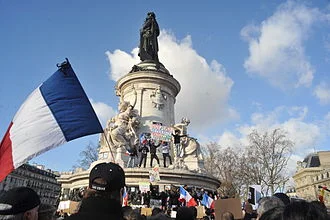
To members and friends of the Providence Committee on Foreign Relations (pcfremail@gmail.com; thepcfr.org):
Jean Lesieur, one of Europe’s most distinguished journalists, will be the speaker at tonight's (April 5) Providence Committee on Foreign Relations’ dinner. Mr. Lesieur is a novelist, a co-founder of France 24 (the French version of CNN), a former foreign correspondent and a former senior editor at the magazines Le Point and L’Express, among other publications. Among other things, he’ll talk about Europe in the Brexit/Trump eras, the state of the Western Alliance and, of course, the wild French election campaign.

WPI prettier than Holy Cross
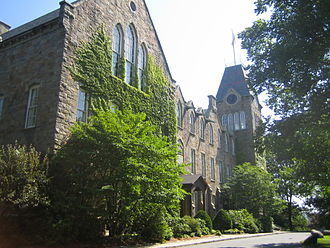
Boynton Hall, at Worcester Polytechnic Institute.
Travel + Leisure magazine has declared the College of the Holy Cross, in Worcester, to have the most beautiful college campus in Massachusetts. I havealways found it windswept ( it is on a high hill) and forbidding. Worcester Polytechnic Institute’s campus is considerably more inviting.
-- Robert Whitcomb
Annual reminder
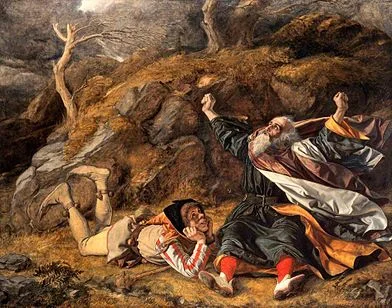
"King Lear and the Fool in the Storm,'' by William Dyce.
"The first of April is the day we remember what we are the other 364 days of the year."
-- Mark Twain
Just before the greenout
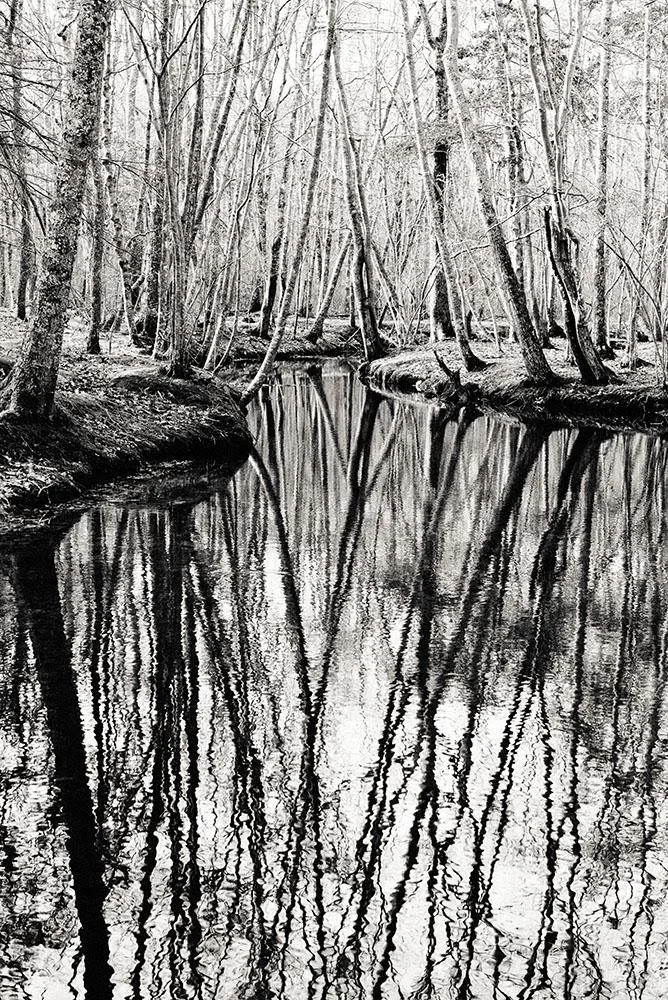
Photo by Audrey Monahan, in "Making Marks,'' a current show featuring female artists hosted by the Providence Art Club.
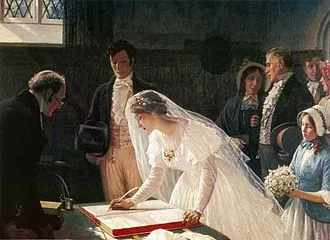
Llewellyn King's Notebook: Tale of many weddings; obscene executive pay; Electronicsville
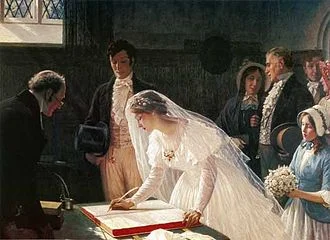
I have been to some amazing weddings. My own (three) have been quite modest, but I have been to some that were extraordinary bashes, with brides in designer gowns and grooms who looked as though they were dressed by Savile Row, and indeed some were.
I have been to Virginia Hunt Country weddings where you would think it was the horses who were getting married, and Irish weddings where you would think the celebrants would all need first responders' help in getting home.
I even can claim, sort of, a royal wedding. In 1960, I helped cover the marriage of Princess Margaret and Anthony Armstrong-Jones in Westminster Abbey. I got a few paragraphs in a major London newspaper and thought I had arrived. In reality, I was on a ferry on the Thames and nowhere near the actual wedding: My job was to report on the crowds waiting for the Royal Yacht to take the newlyweds on honeymoon. All that, it turns out was prelude to the main event.
Last month I went to the wedding of weddings, the nuptials extraordinaire in my book. It topped all the others not in grandeur, but in infectious joy. It was the joining together, as they say, of Hannah Tessitore and Jarrod Hazelton, and I was inside enjoying really good red wine and Beef Wellington, not outside on a boat on a cold London day. These were royals of a kind, more so, methinks.
It all happened in the Rhode Island Yacht Club, an auspicious place, jutting out into upper Narraganset Bay, almost surrounded by water and with resident swans, although I did not notice them being more or less celebratory than usual. Swans are tricky that way.
It was the meeting of a family, hers that's partly Italian and his a mixture of English and German, via South America. Hannah is one of the most gifted people I have worked with. She is a producer on my television show and a quite fabulous Web designer. Jarrod is an economist and polymath; one of those people who seems to know more about everything than you do. This coupled with sardonic wit makes him awesome in a nonthreatening way.
I love their love story. They did not meet on a blind date, nor through a computer site, nor were they neighbors. They met -- Cupid is an imaginative fellow -- in line at an ATM. And I thought that those things just dispensed money.
As Noel Coward said in a song, “I’ve been to a marvelous party.”
Executive Pay: How High the Moon?
When I leaned that an executive at Enron was making $80 million, I told the chairman, a friend, Ken Lay, “Ken, you can get very good help for just $20 million.”
This comes to mind when I read that a near friend (a lot of those in journalism, where you are friendly but in a circumscribed way) has just had his salary raised to $15 million. Nice work if you can get it, but the board should have said no. The unions should have pounced and the customers should turn away.
Excessive executive pay is one of the things that contributes to the sense that most of us are doomed wage-wise, while the precious few are elevated above reason to a place where their compensation distorts the national well-being.
Years ago, before the nation became so inured to the C-suite ripoffs, the conservative columnist George Will said the executive compensation of the heads of public companies had reached a point where these lucky few were “taking,” not earning, their huge wealth. Quite so. It is enough to make a chap sing “La Marseillaise” in the bath.
How We Live Now: Life in Electronicsville
I read a lot of books, though not as many as I would like. I read so damn slowly. My wife, Linda Gasparello, tears up the typographical turnpike at an impressive clip, while I stay close to the curb.
Using a Kindle, I do find I get through more books. It is a clunky devise that needs refinement, but it is so portable. I am reading more books because I always have the gadget with me -- on a bus, plane or train, at the barbershop, while waiting for a friend at a restaurant.
The trouble is you do not have a book afterward, and you have really only rented one. No book to hand on, to grace your shelves. Also, to my shame, I can count the jobs lost when a book comes electronically and not physically: the typesetter, the printer, the binder, the trucker, the warehouse worker and the sales clerk. It is shameful, it is the future and it is me, circa 2017.
Llewellyn King, a frequent contributor to New England Diary, is host and executive producer of White House Chronicle, on PBS.
'Vivid in their stillness'
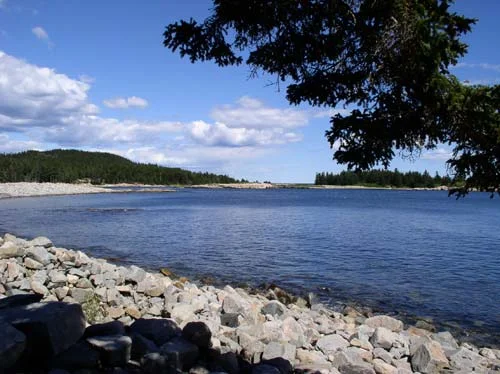
On the Schoodic Peninsula, in Acadia National Park.
-- Photo by Bob LeChat
"The beauty of Maine is such that you can't really see it clearly while you live there. But now that I've moved away, with each return it all becomes almost hallucinatory: the dark blue water, the rocky coast with occasional flashes of white sand, the jasper stone beaches along the coast, the pine and fir forests somehow vivid in their stillness.''
-- Alexander Chee (writer)
April 1 North Country scene
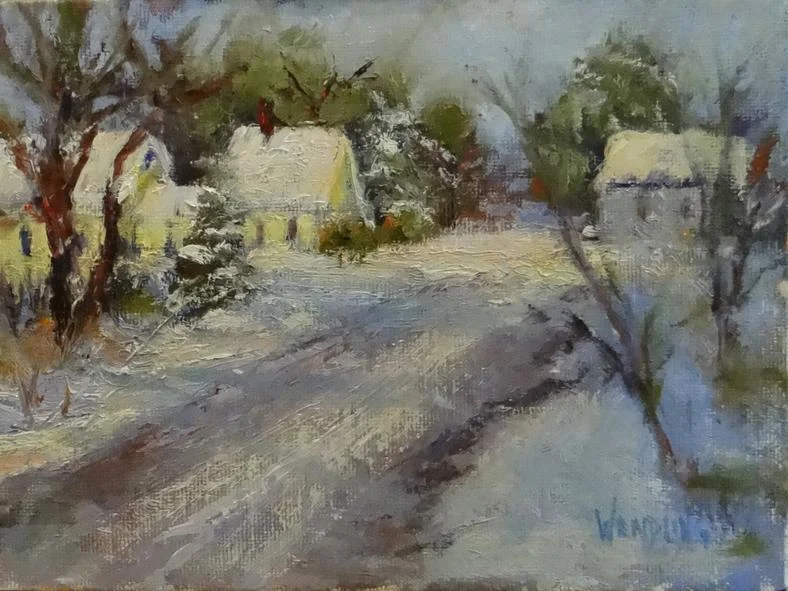
"Blue Snow'' (oil on canvas), by Marilyn Wendling, at Alper Fine Art, Andover, Mass.
'Only you are gone'

APRIL this year, not otherwise
Than April of a year ago
Is full of whispers, full of sighs,
Dazzling mud and dingy snow;
Hepaticas that pleased you so
Are here again, and butterflies.
There rings a hammering all day,
And shingles lie about the doors;
From orchards near and far away
The gray wood-pecker taps and bores,
And men are merry at their chores,
And children earnest at their play.
The larger streams run still and deep;
Noisy and swift the small brooks run.
Among the mullein stalks the sheep
Go up the hillside in the sun
Pensively; only you are gone,
You that alone I cared to keep.”
― Edna St. Vincent Millay, "Song of a Second April''
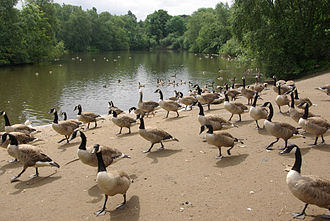
'Egg-addling' to try to stem Canada geese population explosion in Boston
From Robert Whitcomb's "Digital Diary,'' in GoLocal24.com
My friends at The Boston Guardian report that there’s an effort underway to get some residents to help reduce the swelling Canada geese population by “egg-addling,’’ which includes “painting vegetable oil on the eggs or gently scrambling them so they don't come to term. ‘’ Sounds cruel, but the goose droppings are a bit of a health issue, albeit probably exaggerated.
Marion Larson, spokeswoman for the Massachusetts Division of Fisheries and Wildlife, explains that Canada geese were once used as live decoys for hunters until that practice was banned in the ‘30s. But, she told The Guardian, while many of these birds were then liberated, they had “their migratory instincts bred out of them.’’ So now their descendants hang around all winter and make a mess, although they are fun to watch.
They particularly love golf courses, which take up too much open space.
Like raccoons and more recently coyotes, these wild animals have learned to live among people, opportunistically taking advantage of the human-related food, such as garbage and backyard plants, and the relative lack of other predators near people. Given how human over-population is rapidly taking over and ruining much wildlife habitat, in the end perhaps only such opportunistic species will thrive in the future.