
Vox clamantis in deserto



The feathered bastards
"Every year, back comes Spring, with nasty little birds yapping their fool heads off and the ground all mucked up with plants."
-- Dorothy Parker
Not an acceptable circus act
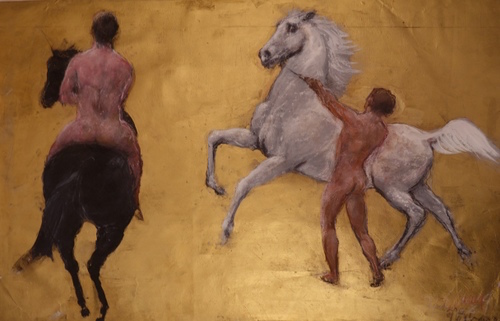
"Dream Drawing With Stallions'' (mixed media on paper), by Nancy Ellen Craig (1927-2015), in the show "Renaissance Dream Paintings,'' at Berta Walker Gallery, Provincetown, May 6-July 5.
Pearl Macek: N.E. ocean fishermen worry about sector's sustainability
Via ecoRI News (ecori.org)
PROVIDENCE
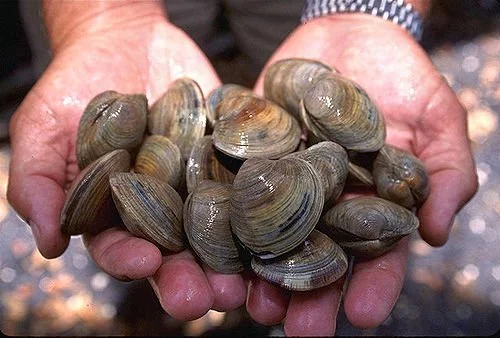
Fishermen, scientists and interested citizens gathered in mid-April at Rhode Island College for a panel discussion about whether commercial ocean fishing is, or can be, sustainable.
The panel consisted of six speakers who discussed the current state of fish populations within U.S. waters, climate change and its impact on fish stocks, and the current rules and regulations imposed on commercial fishermen. The discussion was often heated, and it was obvious that the fishermen, both on the panel and in the audience, weren’t happy with current catch quotas and monitoring regulations.
Panelist John Bullard, the Northeast regional administrator of the National Oceanic and Atmospheric Administration (NOAA), said commercial fishing is “definitely sustainable.” But fishermen David Goethel and Mark Phillips, also on the panel, believe the more important question to explore is whether fishing communities are sustainable. Both fishermen said catch quotas and the crippling expenses fishermen have to face both to run their boats and pay catch monitors are making fishing as a way of life all but impossible.
“The smell of fish is gone, replaced by burnt coffee,” Phillips said about the traditional fishing docks of New England.
NOAA regulates the fishing industry, and both Phillips and Goethel are involved in a lawsuit against the federal agency regarding the costs incurred by New England fishermen who now have to pay monitors about $700 a day to be on their boats.
Traditionally, the monitoring system was federally funded, but commercial fishermen now have to pay the monitors’ wages, a burden that many fishermen believe will push them toward bankruptcy. The lawsuit was filed last December in federal district court in Concord, N.H.
The audience clapped almost every time Phillips and Goethel spoke about the need for less regulation and more freedom to continue the tradition of small-scale commercial fishing. Phillips bemoaned the fact that U.S. fishermen are only allowed to fish one-third of Georges Bank, one of the most valuable fishing grounds off North America and easily accessible by New England fishermen.
He said fish stocks follow a natural cycle completely independent of fishing, and that every 15 to 20 years a fish population crashes and then rebounds. Phillips also said that when fishermen aren’t allowed to harvest a particular fish stock, the population often times dies off because of disease caused, at least in part, by overpopulation. He claimed there are more fish in the Atlantic Ocean than there were 20 to 30 years ago.
NOAA recently released its annual report to Congress on the status of U.S. fisheries and the numbers are fairly promising: the number of stocks listed as subject to overfishing or overfished remain near an all-time low, with only 9 percent of stocks subject to overfishing and 16 percent of stocks being overfished. Overfishing occurs when more fish are caught then the population can replace; overfished means the current population is 35 percent or below the estimated original population. A fish population can become overfished for reasons outside of fishing, such as disease, natural mortality and changes in environmental conditions.
The topic of climate change also came up frequently in the conversation.
“Climate change is a big problem we have to face,” said Jake Kritzer, director of the Fishery Solutions Center team at the Environmental Defense Fund, a nonprofit environmental advocacy group. He noted that a reduction in salinity and nutrients in ocean waters has caused a decrease in the production of plankton.
“Every fishery management plan has to take climate change into consideration,” Bullard said. He also spoke about whole species of fish and marine crustaceans moving further north as New England’s coastal waters get warmer. In recent years, Maine lobstermen have experienced a glut of lobster, which drove prices down to the point that fishermen refused to harvest them until prices increased.
“Fisherman should be advocates,” said Graham Forrester, a professor in the Department of Natural Resources Science at the University of Rhode Island, as he tried to be a unifying voice on a panel that was bitterly divided between fishermen and scientists. “We are struggling in the scientific community to understand these problems.”
At the beginning of the discussion, each member of the audience was given an electronic remote control with which they could answer if they thought fishing was sustainable. At the beginning of the discussion, 69 percent of the audience said yes; by the end of the discussion, that number increased to 78 percent.
In the panelists’ closing remarks Bullard extended a metaphorical olive branch to the fishermen both on the panel and in the audience by saying that regulating the fishing industry needed to be improved, because fishermen have the “hardest job in the world” and “we are making their place of business a hostile environment.”
Pearl Macek is a contributing writer for ecoRI News.
'So Eden sank to grief'
"Nature's first green is gold,
Her hardest hue to hold.
Her early leaf's a flower;
But only so an hour.
Then leaf subsides to leaf.
So Eden sank to grief,
So dawn goes down to day.
Nothing gold can stay."
-- Robert Frost, ''Nothing Gold Can Stay''
Chris Powell: A desperate America needs you to sign a petition for a big new political party.
MANCHESTER, Conn.
How has this happened? How have the two major political parties contrived to give their presidential nominations to candidates who, according to opinion polls, are both heartily disapproved by a majority of voters generally even as they command majority support in their own parties?
Must the next president be a megalomaniac and serially bankrupt buffoon leading a pack of hateful brownshirts, or a clumsily pandering, posturing grifter leading a pack of parasites?
No presidential election in modern times has offered as much opportunity for a third-party challenge. John Anderson took almost 7 percent of the vote in 1980 and Ross Perot almost 20 percent of the vote in 1992 against candidates whom the public did not find half as repulsive as Donald Trump and Hillary Clinton.
Is there no one in public life in this country whose approval rating exceeds his or her disapproval rating — no one who, while perhaps little known at the moment, might earn the country’s respect rather than its contempt in a few months?
Of course since elections are usually exercises in building consensus, campaigns can be a slog toward mediocrity. Disappointed with the result of the 1924 presidential election, the social critic H.L. Mencken renounced democracy itself.
“Democracy,” Mencken wrote, “is that system of government under which the people, having 35,717,342 native-born adult white men to choose from, including many who are handsome and thousands who are wise, pick out a Coolidge to be head of the state. It is as if a hungry man, set before a banquet prepared by master cooks and covering a table an acre in area, should turn his back upon the feast and stay his stomach by catching and eating flies.”
And Coolidge didn’t turn out so badly, as Mencken had to admit when he wrote the former president’s obituary in 1933: “He had no ideas and he was not a nuisance.”
But Donald Trump in charge of the nuclear arsenal? Hillary Clinton —futures trader extraordinaire, tool of Goldman Sachs, destroyer of universal medical insurance, dissembler of Benghazi, compromiser of classified documents — in charge of anything?
Now will someone please start circulating the petitions?
Chris Powell is managing editor of the Journal Inquirer, in Manchester, Conn.
A target of art

"X Marks the Spot'' (mixed media collage) by Sophiya Khwaja, in her show "Machinations,'' through June 25, at Cade Tompkins Projects, Providence. This Pakistani artist, now based in Dubai, will give a talk and participate in a panel discussion at the gallery 3-5 p.m., April 30 at the gallery, at 198 Hope St., Providence.
Saturday, April 30, 2016
3-5pm
Talk 4pm
Exhibition Dates
April 30 - June 25, 2016
'Last year is dead'
"The trees are coming into leaf
Like something almost being said;
The recent buds relax and spread,
Their greenness is a kind of grief.
Is it that they are born again
And we grow old? No, they die too,
Their yearly trick of looking new
Is written down in rings of grain.
Yet still the unresting castles thresh
In fullgrown thickness every May.
Last year is dead, they seem to say,
Begin afresh, afresh, afresh."
- Philip Larkin, "The Trees''
Sand on the wall

"Shore'' (mixed materials with paint on panel), by Luanne E. Witkowski, in her show "New Observations,'' at Lanoue Gallery, Boston, only through April 30.
"The reflective qualities of the gleaming, color-saturated works shift with the perspective of the viewer. Glittering textures awaken tactile responses and are reminiscent of sand and other specific elements of landscape. The works continue to exemplify Witkowski's ability to echo and amplify the experience of being in nature,'' the gallery notes say.
Cambridge conference to discuss developing international cyberbehavior ethics
(April 28th, 2016) The Boston Global Forum (BGF) will host a May 9th Conference titled “Building Ethics Norms for Cyberbehavior’’. This conference (time, place and speakers below) is in part a follow-up to the recent creation of the BGF’s “Ethics Code of Conduct for Cyber Peace and Security,’’ which has been informed by BGF online dialogues with cyberexperts from several countries.
It is part of The Boston Global Forum’s BGF-G7 Summit Initiative, in which the BGF has convened leading scholars and business, technology and government leadersto seek solutions to pressing global issues involving peace, security and development. This BGF group has been working with Japanese officials to draft proposals to present to the national leaders meeting at the G7 Summit on May 26-27 in Japan.
The BGF’s biggest priority leading up to the summit is developing what it calls “Strategies for Combating Cyberterrorism’’.
The May 9 event:
Time: 7 p.m. (EDT) May 9, 2015
Venue: Room 2, Harvard Faculty Club, 20 Quincy St., Cambridge, MA 02138
To be live-streamed at www.bostonglobalforum.org
The conference will be directly linked with participants in Tokyo and Bonn.
For further information, including on attending the conference, please send queries to: Office@BostonGlobalForum.org.
The conference will be moderated by:
- Former Mass. Gov. Michael Dukakis, Co-Founder, Chairman, Boston Global Forum.
Speakers:
- Prof. Jose Barroso, former President of the European Union.
- President Vaira Vike-Freiberga, former President of Latvia, President of Club de Madrid.
- Prof. Thomas E. Patterson, Co-Founder, Member of Board of Directors, Member of Editorial Board, Boston Global Forum; Bradlee Professor of Government and the Press, Harvard Kennedy School.
- Prof. Joseph Nye, Member of the BGF Board of Thinkers; University Distinguished Service Professor, Harvard Kennedy School.
- Prof. Koichi Hamada, Special Adviser to Japanese Prime Minister Shinzo Abe.
- Prof. Thomas E. Patterson.
- Nguyen Anh Tuan, Co-Founder and CEO, Boston Global Forum; Chair, International Advisory Committee, the UNESCO-UCLA program on Global Citizenship Education.
- Prof. John Savage, An Wang Professor of Computer Science, Brown University.
- Ryan Maness, Visiting Fellow of Security and Resilience Studies, Department of Political Science, Northeastern University.
- Tomomi Inada, Chairman of Policy Research Council of Japan’s Liberal Democratic Party and a Member of the Japanese House of Representatives.
- Prof. Nazli Choucri, Professor of Political Science, MIT; Director of the Global System for Sustainable Development (GSSD).
- Prof. Chris Demchak, RADM Grace M. Hopper Chair of Cybersecurity and Co-Director of the Center for Cyber Conflict Studies, at the U.S. Naval War College.
The tricky challenge of managing public speech on campuses
BOSTON
Via the New England Journal of Higher Education. See nebhe.org)
Free speech is fast becoming a hot-button issue at colleges in New England across America, with campus protests often mirroring those of the public-at-large on issues such as racism or tackling institution-specific matters such as college governance. On the surface, the issue of campus free speech may seem like a purely legal concern, yet in reality, colleges should also treat it as a public relations problem.
What the public does not generally understand is that the First Amendment right to free speech is not absolute. It is much more nuanced. People cannot just say what they want whenever they want, and certainly not on college campuses. There is no right to free speech at private educational institutions, and speech can be restricted to a certain degree at public institutions. To be clear, even a public higher-education institution has the right to impose certain restrictions on protest activities.
Yet just because a college can limit speech does not mean that it should. Colleges are loathe to take any action perceived as encroaching on free speech, thus undermining their image as centers of learning, creative thinking and open discourse. College campuses should be seen as places that encourage independent thought and social awareness even to the point of protest. But, at the same time, higher ed institutions must always keep safety and the educational mission at the forefront of their daily operations.
So how can colleges avoid damaging their educational franchise while still maintaining a safe and orderly campus? The answer is planning, communication and positive messaging.
From an institutional perspective, protests today bear little resemblance to those that stole the headlines in the 1960s and 1970s. Back then, there were no computers, cell phones, Internet or e-mail, and schools were often blindsided by student activism. Today, schools know protest plans well in advance, since most are coordinated through social media. That means the administration has the opportunity to work with protestors, actually helping to shape the protest and establish expectations.
Viewed this way, campus protest is much like an organized chess match, in which both the school and the students have the opportunity to anticipate and plan for the opposition’s next moves. Doing that effectively requires advance planning.
Delegating protest oversight and control to a small and nimble decision-making team is one approach that has proven effective. Members of the team might include the provost, the VP for student affairs, the director of public safety and the VP of communication. A few student affairs professionals can then be designated to work closely and proactively with protest leaders.
Having school officials on the ground level of a protest ensures that the school has all the inside information it needs to formulate its game plan. Such plans can then be customized to each individual demonstration, whether the protest be over racial discrimination, college governance or endowment investment.
Creating and disseminating protest restrictions well in advance (preferably in student handbooks at student orientations) establishes the rules of engagement. Schools should make clear that these guidelines comply with federal, state and local laws, and they should articulate institutional policies and procedures. Schools can then rely on these rules to work with protestors to set limits on the time, place and manner of the demonstration. For example, a school may choose to prohibit protests during final exams. Or it may allow protests on the college green, but not within the administration building. Managing expectations well in advance of a protest diminishes the potential for the type of confusion or emotion that causes unmanageable disruptions.
Communications before, during and after a protest are critical. A college should use social media to its advantage, engaging directly with students, setting expectations and boundaries, and controlling its public image. With a media plan in place, press releases and social media posts can be drafted well in advance of the day of the protest. This way, a school can tailor its message and ensure that anyone speaking on its behalf stays on message when dealing with the media. The goal is to avoid those cringe-worthy public comments made when unprepared school officials speak off the cuff. It does not help the school’s public image if it appears that the administration and the students are at odds.
By working with protesters, colleges and universities can present demonstrations and campus dissent as an opportunity for discourse. That, in turn, can turn a potential public relations problem into a positive and sanctioned part of the educational experience.
AiVi Nguyen is a partner and Anthony Dragga an associate at the Boston law firm of Bowditch & Dewey, LLP. Both focus their practices on business and employment litigation.
Vietnam vet looks back

"Wounded Memories,'' by Tom Morrissey, a Vietnam War veteran and a professor of visual and digital art at the Community College of Rhode Island.
This is part of a new exhibit, "Support and Defend: Art Relevant to the Veteran Experience,'' at the Vets Gallery, in the Veterans Memorial Auditorium, Providence.
'These April sunsets'
"I smile, of course,
And go on drinking tea,
Yet with these April sunsets, that somehow recall
My buried life, and Paris in the Spring,
I feel immeasurably at peace, and find the world
To be wonderful and youthful, after all."
- Henry James, in Portrait of a Lady
There's still plenty of life in newsprint: Welcome The Boston Guardian
The Boston Guardian, a new weekly newspaper that’s the successor to the recently closed Boston Courant, has come out with its first edition. The paper serves Boston’s downtown, Back Bay, Beacon Hill and Fenway neighborhoods and will soon expand circulation into the booming Seaport District.
The profitable Courant had a hefty circulation of 40,000 and The Guardian will probably do at least as well. While it has a somewhat different design than The Courant it will cover the same sort of topics, especially development and politics. I hope that they also do more profiles of the many curious characters who live and/or work in their circulation area, one of the world’s most stimulating urban centers.
David Jacobs is the editor and publisher and his wife and longtime business partner, Gen Tracy, is the associate editor of the new paper – the functions they had as The Courant’s owners. Jennifer Maiola is the managing editor of the new paper, as she was of The Courant.
Neither Mr. Jacobs nor his wife own The Guardian. Rather, a group of investors have capitalized it to let the couple and their colleagues continue to serve their community. {Disclosure: The duo are friends of mine, and I have long admired their commitment to community journalism, not to mention their ingenuity, good humor, civic courage and resilience.}
Mr. Jacobs and Ms. Tracy have gotten a lot of attention for deciding to push back against the idea that all print publications must have a Web site. They have come to see such sites as just sucking money, energy and attention from the profitable print product, which, in any event, their readership prefers over staring at screens for coverage of their neighborhoods. And of course Web sites, as wonderful as they can be, are also fertile ground for cut-and-paste plagiarism of copyrighted journalistic work.
The Courant was closed on Feb. 5. In what many legal and media observers saw as an outrage against justice, The Courant lost a wrongful-termination suit from an executive hired to help increase advertising sales.
Mr. Jacobs said that the judgment with interest grew to about $300,000, with $250,000 in legal fees, forcing the couple to shut The Courant and liquidate its assets.
But The Guardian will now take up where The Courant left off as a source of rigorous, useful and often entertaining reportage about the heart of Greater Boston.
-- Robert Whitcomb
Uneven swing seasons
Even after a mild winter, spring is usually hesitant in New England -- a few warm sunny days but then days of cold rain! But fall is usually generous with mild days until Thanksgiving, as if to make us forget the direction we're going.
A tax-free profession
Panhandlers are proliferating in Providence. (There are usually several stationed outside my little office across the street from the Marriott Hotel all day. One is a very bad saxophonist.)
They seem to be raking in money from motorists waiting at the red light.
Do these street merchants declare any of their income for taxes?
--- Robert Whitcomb
Jill Richardson: Every-day racism continues to pervade America
Via OtherWords.org
I’ve had a front row seat to learn about the environment for students of color on campus. As a white woman assistant teaching a class on race, I got a crash course in the subject. But it’s possible to see it everywhere.
The everyday experience of a person of color generally doesn’t involve being spat on. But it’s often shaped by race in more ways than a white person might guess.
A black friend told me, for example, that she selects her clothes so that she doesn’t look threatening to white people.
Another black friend watched cops eyeing her 13-year-old son, an honor student who was doing nothing wrong. Perhaps he forgot to think about whether he looked threatening when he got dressed that day? Or was it because he was born black and male and grew to be six feet tall?
A white student asked an Asian classmate for math help. When the Asian girl said she’s no good in math, she was told: “Yes you are. You’re Asian.” A Korean-American friend, born in Illinois, gets asked how she learned such good English.
It keeps going.
A Chinese person is routinely mistaken for other Chinese people — you know, because they “all look alike.”
A black girl’s friend tells her, “I don’t even think of you as black,” as if that’s supposed to be a compliment. Should she not be proud of her identity?
A Mexican woman is told jokes about Mexican people and — when she points out they’re offensive — she’s accused of not being able to “take a joke.”
These are the experiences people of color have day-in and day-out that many white people remain entirely unaware of.
When whites say they aren’t racist because they’re “colorblind,” they’re blinding themselves to these experiences of their neighbors and classmates. Such attitudes prevent us from having open and honest conversations about the realities of race in our country.
If you don’t feel confident talking about race, start by reading online articles. One can learn a lot from blogs like Angry Asian Man or media outlets like The Root.
And if someone you know says they find something racist or offensive, ask why. Listen. Resist being defensive or immediately accusing that person of being too sensitive.
Instead, if you don’t agree that it’s racist, consider that perhaps there’s something you don’t understand. Don’t feel attacked — it wasn’t your fault you were born into a racist society and socialized by it.
In short, stopping the most disgusting incidents of racism should start with ending the everyday racism that pervades our society.
OtherWords columnist Jill Richardson is the author of Recipe for America: Why Our Food System Is Broken and What We Can Do to Fix It.
Chris Powell: Don't blame the NRA or Yale
MANCHESTER, Conn.
Connecticut saw four of the five remaining presidential candidates on the eve of its primary election.
On the Republican side, Donald Trump, having admitted that he doesn’t want to seem "presidential," went to Bridgeport and Waterbury to revel in the buffoonery, mockery and contempt that have made him so appealing to so many. In Glastonbury, Ohio Gov. John Kasich easily contrasted himself as thoughtful and respectful.
On the Democratic side, Vermont Sen. Bernie Sanders complained to a rally in New Haven that 36 percent of that city's children are not just living in poverty but doing so within sight of Yale University's $26 billion endowment, as if there was some connection.
Hillary Clinton visited Hartford, emphasized the problem of gun violence, and pledged to confront the National Rifle Association and strive to "change the gun culture."
But repugnant as the NRA may be, it has little to do with gun violence, and the"gun culture" Clinton deplored -- presumably the NRA’s 5 million purported members -- is not the culture doing the most damage with guns.
Rather, the "gun culture" that does the most damage is the culture of poverty, unconditional welfare, drug dealing and drug prohibition. Most shootings -- from Hartford to Chicago to Los Angeles -- are not committed by NRA members but by fatherless and uneducated young men, products of the family-destroying welfare system who see drug dealing and crime as their best career options. Sanders’s silly linking of child poverty in New Haven with Yale’s endowment only emphasizes the difficulty of pushing the political left out of its ideological dead end.
Since Yale is such an awful influence, the expropriation of its endowment and the resulting smashing of its political influence under the assault of Sanders’s socialism would be positive. But all Yale’s money could be spent in the name of alleviating poverty and, if it was spent as the hundreds of billions of dollars before it have been spent, there would be only more poverty and dependence afterward.
Amid this half century of policy failure it is hard not to suspect that poverty and dependence are actually the objectives of the political left generally and the Democratic Party particularly. For poverty and dependence fuel the need for government patronage and become not afflictions to be eliminated but profitable businesses and ends in themselves.
A few decades ago it was possible for a few on the left and a few Democrats to acknowledge this failure of policy, as the sociologist Daniel Patrick Moynihan did before becoming one of Clinton’s predecessors as a Democratic senator from New York.
Moynihan wrote in 1965: "From the wild Irish slums of the 19th-century Eastern seaboard to the riot-torn suburbs of Los Angeles, there is one unmistakable lesson in American history: A community that allows a large number of men to grow up in broken families, dominated by women, never acquiring any stable relationship to male authority, never acquiring any set of rational expectations about the future -- that community asks for and gets chaos. Crime, violence, unrest, disorder -- particularly the furious, unrestrained lashing out at the whole social structure -- that is not only to be expected; it is very near to inevitable. And it is richly deserved."
In the Senate 20 years later, Moynihan elaborated: "The institution of the family is decisive in determining not only if a person has the capacity to love another individual but in the larger social sense whether he is capable of loving his fellow men collectively. The whole of society rests on this foundation for stability, understanding, and social peace."
To end poverty and gun violence, government needs first of all to stop manufacturing them.
Chris Powell is managing editor of the Journal Inquirer, in Manchester, Conn.
The hour approaches
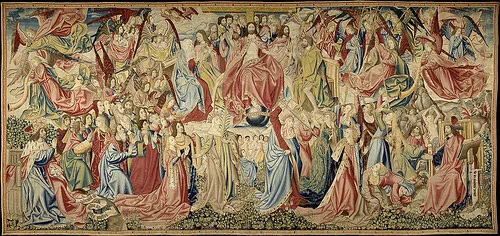
"The Last Judgment Tapestry'' at the the Worcester Art Museum through Sept. 18.
This 16th Century tapestry has 100 nearly life-size figures. There are parts of Worcester in which it appears that the wrath of God has already been exercised.
David Warsh: Hillary Clinton the Hawk
SOMERVILLE, MASS.
Victory in the New York State primary seems to have all but clinched the Democratic nomination for Hillary Clinton. I won’t be surprised if this week’s quintet of Northeast primaries puts Donald Trump so close to the top as to diminish the suspense surrounding the Republican convention.
So it is an auspicious time for Alter Egos: Hillary Clinton, Barack Obama, and the Twilight Struggle over American Power (Random House, 2016), by Mark Landler, to appear. The magazine of The New York Times published a scoop on April 24, under the headline, “How Hillary became a hawk.” The story says:
"Throughout her career she has displayed instincts on foreign policy that are more aggressive than those of President Obama — and most Democrats.''
The article, at least, reads like a campaign document, consisting mainly of vignettes that have been fed to the journalist: Clinton pivoting towards the center in preparation for the general election. “We’ve got to run it up the gut,” she exclaims to her aides after China warns against sending an aircraft carrier into the Yellow Sea to protest North Korean actions.
When visiting Fort Drum, in upstate New York, for the first time as a newly elected senator, she sits down, takes off her shoes, puts her feet on the coffee table, and asks, “General, do you know where a gal can get a cold beer around here?”
She reads “cover to cover” the counterinsurgency field manual General David Petraeus has given her
She befriends and receives the (qualified) endorsement of retired four-star Gen. John M. “Jack” Keane, Fox news military analyst and promoter of the Iraq “surge.”
And when reporter Landler surfaces a striking disagreement with former U.S. Ambassador to Afghanistan Karl Eikenberry (and for two years previously U.S. commander there), a Clinton aide volunteers, “She likes the nail-eaters, [Stanley] McChrystal, Petraeus, Keane – real military guys, not these retired three-stars who go into civilian jobs.”
Landler writes:
"As Hillary Clinton makes another run for president, it can be tempting to view her hard-edged rhetoric about the world less as deeply felt core principle than as calculated political maneuver. But Clinton’s foreign-policy instincts are bred in the bone — grounded in cold realism about human nature and what one aide calls “a textbook view of American exceptionalism.” It set her apart from her rival-turned-boss, Barack Obama, who avoided military entanglements and tried to reconcile Americans to a world in which the United States was no longer the undisputed hegemon. And it will likely set her apart from the Republican candidate she meets in the general election. For all their bluster about bombing the Islamic State into oblivion, neither Donald J. Trump nor Senator Ted Cruz of Texas have demonstrated anywhere near the appetite for military engagement abroad that Clinton has.''
The book itself will be useful in the event Clinton becomes president, as seems increasingly likely. Whether she is a neo-con or liberal hawk or a conservative internationalist is an open question. In the interval, however, better to read America’s War for the Greater Middle East: a Military History (Random House, 2016), by Andrew Bacevich, a scathing assessment of US military policy since 1980.
David Warsh is a long-time financial journalist and economic historian. He the proprietor of economicprincipals.com, where this piece originated.
Lessons in growing
"Late April and you are three; today
We dug your garden in the yard.
To curb the damage of your play,
Strange dogs at night and the moles tunneling,
Four slender sticks of lath stand guard
Uplifting their thin string.
"So you were the first to tramp it down.
And after the earth was sifted close
You brought your watering can to drown
All earth and us. But these mixed seeds are pressed
With light loam in their steadfast rows.
Child, we've done our best."
-- W. D. Snodgrass, "Heart's Needle''