
Vox clamantis in deserto






Unreliable coast

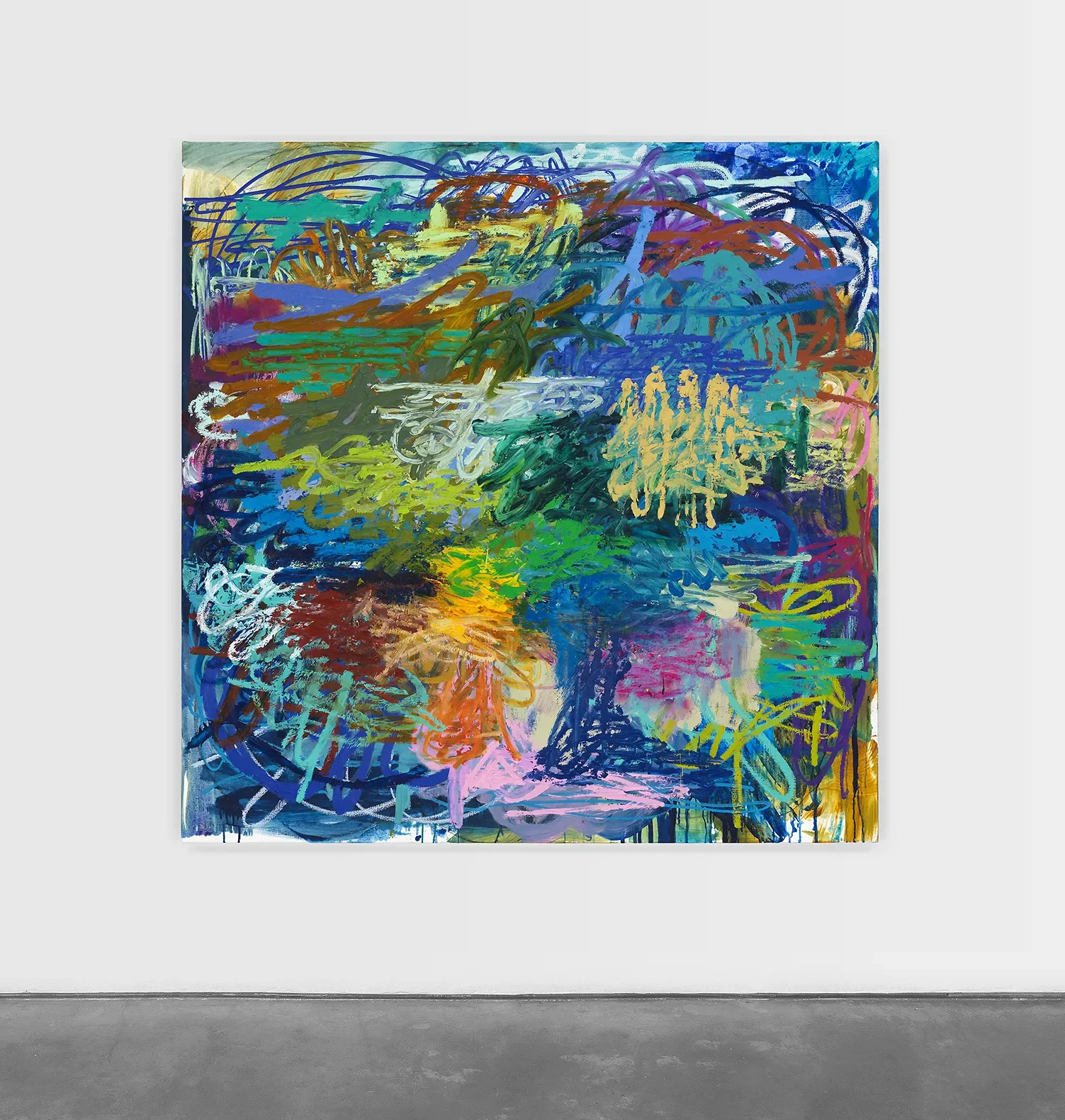
"Restless Sand 2,'' by Phyllis Ewen, in her "Land and Water'' show at Spotlight Gallery at the Lunder Arts Center, Lesley University College of Art and Design, Cambridge, through May 7.
Ms. Ewen illuminates New England's changing landscape, including how it is affected by climate change, in her most recent exhibit. using archival paper, including maps, charts and digitally printed photographs, to create three-dimensional sculptures resembling landscapes.
Ms. Ewen gives viewers a glimpse of the Cape Cod coast. She notes: "The Cape's coast has been changing over many years; the ocean pushes its bed onto the land, creating new heights, narrows, and breaks in existing dunes."
Sweetness without and terror within
"It is the sweetest spring within the memory of man. So green, so mild, so beautiful! Ah, what a contrast between nature without and my own soul so torn with doubt and terror!"
-- Sir Arthur Conan Doyle
Chris Powell: Public-sector unions must be busted for the public interest
Are unions intrinsically good? Of course that is their premise, a premise often on display now that Connecticut Gov. Dan Malloy, facing the collapse of state government's tax revenue, is trying to economize with state government's workforce and Hartford's new mayor, Luke Bronin, facing worse insolvency in a city of abject dependence, is trying to do the same with the city's workforce. The governor and the mayor are being accused of "union busting."
Unions have been crucial to the restraining of rapacious capital. But labor and capital pursue their own interests, and these interests are often opposed to the public interest, as when both labor and capital seek to block competition in the economy. (The best artistic depiction of their equally selfish instincts may be the 1951 Alec Guinness movie The Man in the White Suit, wherein textile manufacturers and the textile workers union unite to suppress the discovery of a fabric that never gets dirty and never wears out, threatening the clothing and laundry industries.)
So the public interest has to make distinctions. That means distinguishing between private-sector unions and government-employee unions. Private-sector unions often have defeated the exploitation of the many by the few. But government-employee unions are often the few exploiting the many, exploiting society as a whole.
A few generations ago even liberal politicians understood this distinction. President Franklin D. Roosevelt, a Democrat, and New York Mayor Fiorello LaGuardia, a Republican, opposed collective bargaining for government employees, partly because of the prospect later celebrated by the leader of the largest government-employee union in New York City, Victor Gotbaum: "We have the power to elect our own boss."
That is, with collective bargaining for government employees, government came to bestow great patronage on them and, through their unions, those employees kicked back to the campaigns of the elected officials bestowing that patronage, thereby making the unions a government-funded special interest that overwhelmed the public interest.Chr
So in this respect "union busting" is as essential to restoring government in the public interest in Connecticut as busting the big financial houses is essential to restoring the federal government to the public interest.
Chris Powell is managing editor of the Journal Inquirer, in Manchester, Conn.
'Living well is the best revenge'*

"Lil Dagover With Her Shih Tzu, Berlin.'' by Lotte Jacobi, in the show "Urban Camera,'' at the deCordova Sculpture Park and Museum, Lincoln. Mass., through Sept. 11 *Translated from an old Spanish proverb.
May 9 conference to discuss G7 agenda
The Boston Global Forum will hold a conference on May 9 on the agenda of the G7 Summit, which is coming up on May 26-27, in Japan. The BGF conference, to start at 6 p.m. on May 9, will be held at the Harvard Faculty Club in Cambridge. The meeting is part of The Boston Global Forum's BGF-G7 Summit Initiative, in which BGF experts have been working with Japanese officials to craft proposals to present to the national leaders for consideration at the summit.
The initiative has been discussing a wide range of issues, from security in Asia in the face of North Korea and Chinese militarism, the global economy, public health, global warming and sustainable infrastructure improvements. But the BGF's biggest priority this year is addressing cybersecurity threats, a topic to which the BGF has drawn internationally known cybersecurity experts to make recommendations.
For further information about the May 9 conference, including about attending it, please consult BostonGlobalForum.org or address inquiries to:
office@BostonGlobalForum.org
Jim Hightower: Those billboards are watching you
Via OtherWords.org
OK, people, we need to discuss billboards. Yes, we really must.
At best, these giant corporate placards are problematic — they loom garishly over us, clutter our landscapes, and intrude into our communities with no respect for local aesthetics or preferences. Now, however, billboards are getting a high-tech reboot, allowing advertisers to invade not only our places, but also our privacy.
Having to see billboards everywhere is bad enough. Far worse, though, is that the modernized, digitalized, computerized structures can see you — and track you.
Clear Channel Outdoor Americas, having already splattered the country with tens of thousands of billboards, has revealed that it’s partnering with AT&T and other data snoops to erect “smart” billboards that will know and record when you drive or walk past one.
Using your own mobile phone, they can then follow your travel patterns and consumer behavior. Aggregating that information with other available data, Clear Channel can then know the average age and gender of passersby who see an ad on a particular billboard and know whether they later make purchases.
It’s “a bit creepy,” admits Andy Stevens — Clear Channel’s own vice president for “research and insights.”
Stevens rationalizes the company’s zippy new Orwellian billboards as just another step into the digital future: “We’re just tapping into an existing data ecosystem,” he shrugs. The millions of profiles collected by Clear Channel are “obviously…very valuable to an advertiser.”
Yet maybe they’re more valuable to those of us who treasure our privacy and have given no permission to be targeted and tracked by a billboard huckster. And we thought government spying was out of control.
For information on corporate snooping, go to www.epic.org.
OtherWords columnist Jim Hightower is a radio commentator, writer and public speaker. He’s the editor of the populist newsletter, The Hightower Lowdown.
George T. Giraud, RIP
The Providence Committee on Foreign Relations (thepcfr.org) mourns the loss of George T. Giraud of Providence and South County, who died April 17 at the age of 96. This kindly gentleman was a longtime, very loyal and enthusiastic member of the PCFR and a dedicated Rhode Island civic leader.
We extend our condolences to his widow, Anne, and the rest of his family and many friends.
Mr. Giraud spent his childhood in France and graduated from Blair Academy and Brown University, Class of '42. He served in World War II as a lieutenant (jg) in the U.S. Navy in the Pacific.
As an investment adviser in Providence his career spanned four decades until his retirement as a senior vice president with Paine Webber.
During his years of community involvement he served on many boards, including the Legal Aid Society, the Society of Financial Analysts, the Boys and Girls Clubs and several Rhode Island state development councils and commissions.
A dedicated world traveler, he also loved antique cars.
Among his great pleasures, besides PCFR dinners, were the Review Club, the Shakespeare Society and the Providence
In recognition of his 30 years of service, including terms as president and treasurer, in lieu of flowers, memorial donations to the Providence Boys and Girls Clubs (550 Wickenden St., Providence, 02903) would be appreciated. Condolences may be left at monahandrabblesherman.com.
Spring spoilsport
"So Spring comes merry towards me here, but earns
No answering smile from me, whose life is twin'd
With the dead boughs that winter still must bind,
And whom today the Spring no more concerns.
Behold, this crocus is a withering flame;
This snowdrop, snow; this apple-blossom's part
To breed the fruit that breeds the serpent's art.
Nay, for these Spring-flowers, turn thy face from them,
Nor stay till on the year's last lily-stem
The white cup shrivels round the golden heart."
-- Dante Gabriel Rossetti, "Barren Spring''
Isaiah J. Poole: Give 'tax and spend' a chance
via otherwords.org
This time of year, a whole lot of Americans are feeling taxed enough already.
But the astonishing momentum of Bernie Sanders’s presidential candidacy reveals something else: Millions of taxpayers are willing to entertain the idea that some of us aren’t taxed enough, and that it’s hurting the rest of us.
Sanders has propelled his race against Hillary Clinton on a platform that would ramp up government investment — in infrastructure, education, health care, research and social services — while boosting taxes on the wealthiest Americans and big business to cover the cost.
Clinton’s own vision is less ambitious, but it’s also a far cry from “the era of big government is over” days of her husband’s administration.
The old conservative epithet against “tax-and-spend liberals” hasn’t completely lost its sting, says Jacob Hacker, a political-science professor at Yale University who pushed the idea of a public option for health insurance during the Affordable Care Act debate. But “we are moving toward the point where we can have an active discussion” about why “you need an activist government to secure prosperity.”
Hacker’s latest book, with Paul Pierson of the University of California at Berkeley, is American Amnesia: How the War on Government Led Us to Forget What Made America Prosper.
Hacker and Pierson argue that it was “the strong thumb” of a largely progressive-oriented government, in tandem with “the nimble fingers of the market,” that created the broad prosperity of the post-World War II era. Conservative ideologues and corporate leaders then severed that partnership.
Anti-government activism replaced the virtuous cycle of shared prosperity that existed into the 1970s with a new cycle that’s reached its depths in today’s radical Republican-run Congress: Make government unworkable. Attack government as unworkable. Win over angry voters. Repeat.
But in today’s mad politics, growing numbers of voters seem to have gotten wise to the routine and how it’s been rigged against them. Some are gravitating toward Donald Trump, as Hacker puts it, out of “the need to put a strong man who you know is not with the program in Washington in charge.”
Sanders has the opposite vision. He’s looking to spark a people-powered reordering of what government can do, with the biggest wealth-holders paying the share of taxes that they did when America’s thriving middle class and thriving corporate sector were, together, the envy of the world.
That vision is embodied in "The People's Budget.'' a document produced by the Congressional Progressive Caucus as an alternative to the House Republican budget.
It’s based on the premise that America can break out of its slow-growth economic malaise through a $1 trillion infrastructure spending plan that would create more than 3 million jobs, increased spending on green-energy research and development, and universal access to quality education from preschool through college.
“There are two messages that come out of the progressive budget,” Hacker said. One is that “we can actually increase investment if we don’t cut taxes further on the wealthy.” The other is that “if we got tougher with the modern robber barons in the healthcare and finance and energy industries, we could actually achieve substantial savings without cutting necessary spending.”
Unfortunately, The People’s Budget won’t get close to a majority vote in Congress — and that’s if it gets a vote at all in the dysfunctional Republican House.
Yet together with the debate provoked by the Sanders campaign, Hacker says, it shows that now “we have a little bit more of an opening for the kind of conversation we should’ve had 20 or 30 years ago, when we were trashing government and abandoning all of these long-term investments that are essential to our prosperity.”
Isaiah J. Poole is the online communications director at Campaign for America’s Future (OurFuture.org).
Beware the giant carp

"From the Canoe'' (oil on canvas), by Anne Ireland, at Alpers Fine Art, Andover, Mass.
And not be ashamed of it
In the spring, at the end of the day, you should smell like dirt.
-- Margaret Atwood, "Unearthing Suite''
Chris Powell: Of minimum wages, gender shifting and hypocritcal trading with China
Woody Allen's movie Bananas has a scene depicting the power madness that afflicts a Latin American revolutionary leader upon his seizure of office. El Supremo gathers his people to proclaim that henceforth the country's official language will be Swedish, that underwear will be changed every half hour and worn on the outside "so we can check," and that all children under 16 years old now are 16 years old.
Modern political liberalism increasingly evokes that scene with its belief that there are no practicalities that power cannot overcome and that merely proclaiming something makes it so.
For the great liberal causes of the moment seem to be, first, raising the minimum wage and, second, giving men who want to be women and women who want to be men the right to use the washrooms of their choice.
California and New York already are increasing their minimum wages to $15 per hour. Connecticut soon may follow. And some states, including Connecticut, have construed the sexual identity clamor as a matter of civil rights. Connecticut Gov. Dan Malloy has gone so far as to prohibit official state government travel to states that maintain ordinary sexual-identity rules, as if those rules, followed for centuries -- followed until very recently even by Connecticut itself -- were actually outrages of oppression. (Who knew?)
Economists are divided on whether minimum wages are beneficial, whether their redistribution of income is positive on the whole or whether income gains for lower-paid workers are offset by automation and declines in employment. Indeed, signing California's minimum-wage bill the other day, Gov. Jerry Brown said the minimum wage makes no economic sense, just political sense.
If the rationale for a minimum wage is accepted, the wage should be increased from time to time to match inflation, and the minimum wage has eroded badly in that respect. But then no business can survive without linking wages to productivity, and proclaiming a minimum wage of $15 per hour or any amount does not suddenly guarantee that the work done by everyone employed at minimum wage will produce that much value to an employer, or that an employer paying minimum wage will be able to recover his higher wage costs by raising prices.
And while current minimum wages surely are not sufficient to support families, as advocates of raising the minimum wage complain, many jobs don't produce enough to match what families consume. So why should the minimum wage necessarily be high enough to support a family? And what size family?
As for whether men can be women and women can be men simply by their own assertion, even the worst reactionaries and most fervent religious fundamentalists these days probably would not advocate oppression of people with sexual identity issues. The lives of such people may be hard enough already.
But has modesty, the rationale for separate-sex washrooms, really been so oppressive all this time? Certainly it never intended to be oppressive, unlike racial, ethnic, and religious discrimination. Separate-sex washrooms did not impair anyone's full inclusion in society. Maybe men who identify as women and women who identify as men would be more comfortable with the right to use the washroom of their choice, without regard to traditional rules, but what of the right of everyone else to modesty?
Anyway, like the minimum wage, the washroom issue is arguable. So a governor who, like Connecticut's, has managed to do business with totalitarian China only makes himself ridiculous with his politically correct indignation about washrooms in North Carolina and Mississippi.
Chris Powell is managing editor of the Journal Inquirer, in Manchester, Conn.
Posted in Chris Powell on Monday, April 11
You couldn't have slept with all the racket
"Everything is blooming most recklessly; if it were voices instead of colors, there would be an unbelievable shrieking into the heart of the night."
- Rainer Maria Rilke, from "Letters of Rainer Maria Rilke''
Let me rest up a bit first

"Come and Rest Your Bones With Me" (oil, charcoal, graphite, mica and golf leaf on panel), by Hilary Tait Norod, in her show "Are You Crazy With Me,'' at Jerome Street Studios, Medford, Mass.
'Nor pity the flowers'
"O Day after day we can't help growing older.
Year after year spring can't help seeming younger.
Come let's enjoy our winecup today,
Nor pity the flowers fallen."
- Wang Wei, "On Parting With Spring''
Llewellyn King: The body language of this presidential campaign
WEST WARWICK, R.I.
Whenever I go out to dinner lately, along with the first sip of wine, I’m served a pre-appetizer: a short, dispiriting conversation about the politics of the moment, complete with a special kind of head-shaking and eye-rolling that has been perfected for this election season.
First the diner’s head is lowered slightly and shaken slowly from side to side. Then the eyes are raised, as though in supplication by a puppy that has done something wrong but doesn’t know what: What did we do to deserve this?
Donald Trump elicits the most severe reaction. People quickly agree that he is not only unsuitable for high office but quite possibly bonkers, stark-raving mad, round the twist — whatever you call the unbalanced in colloquial speech.
Next comes the Ted Cruz shudder. After the shaking of the head over Trump comes a nervous, whole-body response to the mention of Cruz. It begins in the shoulders and migrates down to the pelvis while the head is stationary, having been stilled after shaking at the thought of Trump. Nobody suggests that Cruz is bonkers but quite the opposite, the extreme opposite. In whispers, the Cruz shudderers say “he is clever” and, ominously, “he has an agenda.” Cruz, it is intimated, is in touch with forces beyond he grave, and on the wrong side of that.
John Kasich doesn’t make the grade for dinner gyrations. With a little shake of the head and shrug of the shoulder, he is dismissed.
On to the Big Sigh.
The Big Sigh is reserved for discussion of Hillary Clinton. It is preceded by the “don’t make me laugh” expulsion of breath over Bernie Sanders. Devout liberals keep Sanders alive in conversation for a few moments, saying that they like his views on healthcare or taxing the rich. But he is gone with the first full exhalation.
The real sighing is for Hillary, the choice of last resort. People declare that they will vote for her then elaborate her failings. One is told, “she is overly ambitious,” “she is a terrible manager,” “she has baggage,” “she looks worn out,” and “she has to explain Libya.”
Clearly, she has locked up the hold-your-nose vote.
Look, I haven’t just been supping on sushi in Georgetown, although I’m guilty there, or on Dover sole at the Metropolitan Club in Washington, guilty again, but also on mac and cheese at the humble, working-class Harris Grille in Coventry, R.I., and barbecue at Calhoun’s in Knoxville, Tenn.
What amazes is where are the millions who turn out to support Trump so vigorously? Why don’t I run into them, hunt high and low though I may? Are they all sitting at home waiting for a pollster to call so they can give their man further ammo?
Where are the Cruzers? Are they out there testing the fallibility of Obamacare, or demonstrating against world conquest by Planned Parenthood? The rot starts with women’s health and ends with socialized medicine, don’t you understand?
At least one can find the Bernie Sanders legions. They are the young people with the special cellphone posture; who have turned themselves into question marks as they crouch over their devices, looking into the future on their tiny screens.
When they unwind in middle age to look around them, freed of the millennial stoop, will they morph into Republicans? Will there be any Republicans after Trump and Cruz have worked their magic?
What, I wonder, will we be doing at dinner parties after the Republican National Convention in Cleveland? Will we be doing the Trump headshake and confused eye or the Cruz full-body shudder?
After the Democratic National Convention in Philadelphia, the Big Sigh is predictable at dinner tables across the nation.
In November, after electing President Unsuitable, we will all be holding our heads in a kind mute astonishment.
Llewellyn King (lking@kingpublishing.com) is a longtime publisher, columnist and international business consultant. He is host and executive producer of White House Chronicle, on PBS. Mr. King is based in Rhode Island and Washington, D.C.\Ll
This first ran on InsideSources.
Pope's fatuous push on refugees
So Pope Francis wants the most humane place in the world -- the West, and especially Western Europe -- to help many more refugees without suggesting that, for example, Russia, with its vast space, help, which it does not at all. Yet again, let the West do everything!
The most generous people in the world are asked to do more while the Pope fails to denounce the cause of the refugee problem -- Islamic fascism, worsened by the Putin gangster regime's help for mass-murderer Bashar Assad, the Syrian dictator and pal of Russian thug-in chief Vladimir Putin.
And it's easy for the Pope, who doesn't have to deal with the complications of absorbing millions of immigrants with non-Western backgrounds (and some with anti-Western ideas) into Europe to make glib pronouncements about letting them all in.
The Pope is fatuous.
-- Robert Whitcomb
Cities expert Greg Lindsay next at Providence Committee on Foreign Relations
April 16, 2016
To members and friends of the Providence Committee on Foreign Relations (thepcfr.org; pcfremail@gmail.com)
Hedrick Smith gave us a stirring talk on April 12 as he vividly described his view of an America paralyzed by extreme income inequality and political deadlock, and proposed ways to right the ship of state. The PBS Frontline star and Pulitzer Prize-winning former New York Times foreign correspondent noted that America’s domestic crises inevitably limit its ability to operate effectively abroad.
Next, on Wednesday May 11, comes the internationally known expert on cities, transportation and workplaces around the world, journalist, urbanist and futurist Greg Lindsay.
Look at:
http://www.amazon.com/Aerotropolis-Way-Well-Live-Next/dp/0374100195/ref=sr_1_1?ie=UTF8&s=books&qid=1279805811&sr=8-1
As this Amazon summary of that book, co-written by Mr. Lindsay and John D. Kasarda, put it:
“This brilliant and eye-opening look at the new phenomenon called the aerotropolis gives us a glimpse of the way we will live in the near future―and the way we will do business too.
“Not so long ago, airports were built near cities, and roads connected one to the other. This pattern―the city in the center, the airport on the periphery―shaped life in the twentieth century, from the central city to exurban sprawl. Today, the ubiquity of jet travel, round-the-clock workdays, overnight shipping, and global business networks has turned the pattern inside out. Soon the airport will be at the center and the city will be built around it, the better to keep workers, suppliers, executives, and goods in touch with the global market. This is the aerotropolis: a combination of giant airport, planned city, shipping facility, and business hub.’’
Mr. Lindsay is also a contributing writer for Fast Company, author of the forthcoming book Engineering Serendipity, a senior fellow of the New Cities Foundation — where he leads the Connected Mobility Initiative — a non-resident senior fellow of The Atlantic Council’s Strategic Foresight Initiative, a visiting scholar at New York University’s Rudin Center for Transportation Policy & Management, and a senior fellow of the World Policy Institute.
Heprovocatively notes, on a topic of particular interest to coastal New Englanders: “Rising sea levels is no longer the twenty-second century’s problem; it’s ours. Will we be forced to abandon coastal megacities? Will we manage to wall them off, or float them? The answer is probably ‘all of the above,’with the wealthiest districts of the wealthiest cities deploying some mix of technological and infrastructural fixes while the rest are submerged.
As usual, the dinner will be at the Hope Club, 6 Benevolent St., Providence. Drinks start at about 6, dinner by 7, then the talk and a Q&A and the evening ends by 9.
Please let us know whether you will join us April 12 by replying to pcfremail@gmail.com or, in a crunch, calling (401) 523-3957.
Thanks very much to those who have already let us know!
The Hope Club needs good estimates no later than the day before a PCFR dinner.
Dues and dinner cost information may be found at: thepcfr.org. Other membership information may be found there, too. (A member asked if (the modest) duesand dinner fees for this nonprofit educational and civic membership organization aredeductible for business purposes. In some cases. Ask your tax adviser.)
On Tuesday, June 7, Michael Soussan, former UN whistleblower; acclaimed author; widely published journalist; NYU writing professor, and women's rights advocate, will speak. His satirical memoir about global corruption, Backstabbing for Beginners: My Crash Course In International Diplomacy (Nation Books / Perseus) is being adapted for a feature film, starring Ben Kingsley and Josh Hutcherson
He will speak about the subject of his next book TRUTH TO POWER: how great minds changed the world. A brief history of thought leadership.
Evan Matthews, a key thought leader at the North Atlantic Ports Association and director of the Port of Davisville, has very kindly offered to talk to us on Wednesday, June 22, on changes in world shipping, including the widening of the Panama Canal and other changes of huge interest to New England ports, especially Quonset/Davisville.
We plan to getexperts on the Zika virus, chaotic Brazil, the geopolitical effects of global warming and ocean fishing in the next season. Expert on Central Asia Morris Rossabi, former Ambassador to Slovakia Tod Sedgwick, German General Consul Ralf Horlemann and the Silk Road Project’s Laura Freid will be among those speaking in that season, which starts soon after Labor Day.
Suggestions are appreciated.
We look forward to seeing you.
: @ThePCFR
Ci
Leaving behind 'dissipation without pleasure'
"On the approach of spring, I withdraw without reluctance from the noisy and extensive scene of crowds without company, and dissipation without pleasure."
-- Edward Gibbon
What cool pads

"Amidst Lotus VII'' (oil on panel), by Linda Perlman Karlsberg, in the "Closer Look'' group show at Dedee Shattuck Gallery, Wesport, Mass., from May 7.
My parents' last house, before everything fell apart, was on a pond where in coves at each end grew beautiful flowering lily pads in water that was tan from nearby cranberry-bog sand heavy in iron and from decayed oak leaves and pine needles. The water, swimmable and loaded with bass, put out a smell somewhere between rank and pleasantly aromatic, depending on the weather.
But below the pads often lurked a huge snapping turtle ready to grab a frog or small bird. Adjacent beauty and terror.
-- Robert Whitcomb