Llewellyn King: Looking at New England’s electricity future with some trepidation
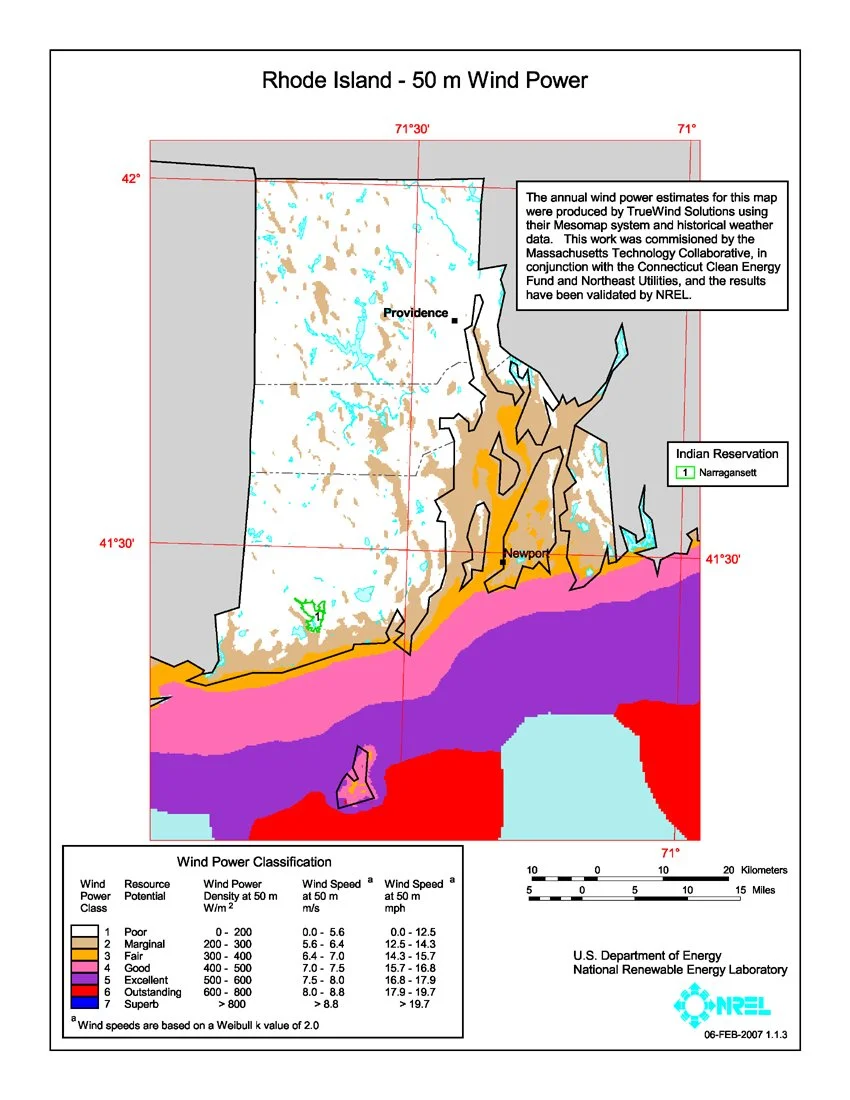
Offshore-wind projects will be a growing source of regional electricity.
WEST WARWICK, R.I.
These days, in terms of resources, New England is poorly positioned to make electricity. As Gregg Cornett, president of Rhode Island Energy, told me in an interview, it doesn’t sit on abundant coal reserves and natural gas — the latter the critical fuel in today’s electricity-generating mix — or hide beneath the surface, waiting for the gasman’s drill.
Going forward the prognosis is that New England will make it through without electricity disruption unless there is severe cold, in which case the system will be stretched and blackouts could result.
The North American Electric Reliability Corporation, the industry-supported, not-for-profit authority that studies electricity supply and predicts problems, says New England is at “moderate risk” this summer, but sees changes and stress in consumption patterns as the region shifts from summer peaking to winter peaking. This will put further pressure on the delivery of gas into the region.
Winters are going to be tough for the New England electric grid and the collective transmission organization that distributes power from and between the region's utilities, the New England Independent System Operator (ISO-NE).
Rhode Island Energy’s Cornett points out that the area has continued to grow, but the infrastructure to support that growth — especially of pipelines bringing in natural gas — has languished.
In part, environmentalists have been responsible because of their desire to restrict all fossil fuels. Times of crisis, though, lead to the burning of oil — a much greater environmental challenge.
Also, because of the lack of pipeline capacity, New England imports liquified natural gas (LNG) from as far away as Norway, adding to the cost of electricity throughout the region. It also imports electricity from Canada.
This means that New England has some of the highest electricity rates in the country. Inaction has consequences.
The bright spots for the future are renewables, wind and solar.
At present they contribute only 12 to 15 percent of the total New England mix, but they represent the one resource that the region has aplenty, especially offshore wind. Currently, this is hamstrung by opposition from President Trump, but there are hopes that these sources will play much bigger roles in coming years.
Cornett says that Rhode Island Energy is enthusiastic about solar and expects this to grow, although power from rooftop installations now represents a decided challenge for the utility. It is by law obliged to pay top dollar for this electricity, and that is more than the power is worth in the market.
The law guaranteeing the high rate was passed by the Rhode Island General Assembly in 2014 to encourage solar installations, not to hobble Rhode Island Energy with high costs. Cornett says the utility, which is the dominant one in the state, gets no gain from the solar power which it has to buy under this arrangement.
There is irony in the energy shortage in New England because twice in its history, it has led the nation in energy production.
According to the 1840 U.S. Census, there were 5,000 water-powered log mills in the region and many other mills, making cloth and grinding corn. New England had dominance in milling of all kinds, thanks to its abundance of rivers on which mills were granted “privileges.”
Rhode Island — with five rivers that had sufficient flow for mills — was a beneficiary of the boom. Most of the mills that survived were converted to steam and those that survived after that, mostly textile mills, turned to electricity.
In the 1990s, there were six operational nuclear-power plants with eight reactors. Today there are just two: Millstone, in Waterford, Conn., with two reactors, and Seabrook,in Seabrook, N.H. with one reactor.
All six New England governors have signed a commitment to investigate the deployment of small modular nuclear reactors (SMRs), but at present there are no commitments to build. This may reflect a national uncertainty about which of the many competing SMR designs with their various technologies will eventually be market-dominant and lead the way to a nuclear renaissance.
Meantime, power executives across the region are grateful they aren’t feeling pressure from data center developers and are hoping for mild winters ahead.
Electric-utility executives used to list cybersecurity as their No. 1 worry. Now they say it is the weather.
You can engineer defenses against cyberattack, but when it comes to the weather, the answer is to hope for the best and respond quickly if there is an outage. The supply future is cloudy.
On X: @llewellynking2
Llewellyn King is executive producer and host of White House Chronicle, on PBS, and an international energy consultant. He’s based in Rhode Island.