
Vox clamantis in deserto





Civic slobs and gender 'self-identifiers'




A couple of questions that have been occurring to me the last few weeks:
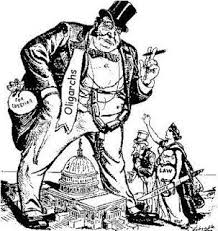
Why do so many people who complain about what they call unfair income inequality and the vast political power of the rich fail to vote? "The 99%'' could, one would think, vote in large enough numbers to easily offset the efforts of "the 1%'' to protect their power and their bank accounts in Panama or wherever.
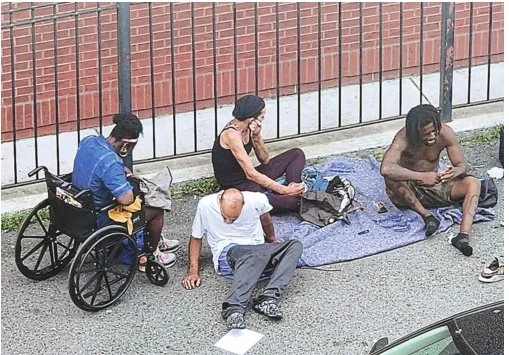
The answer is that most Americans are civic slobs who don't bother to take 15 minutes to vote. They get the country they deserve.
The other question is why someone who opposes a "civil-rights'' law to mandate that anyone can "self-identify'' in either gender at any time and barge into a public bathroom formerly assigned to one (biologically provable) sex is "bigoted''. We've gone way off the rails.
--- Robert Whitcomb

Don Pesci: Confused public in Conn. and across America prey for political Babbitry

VERNON, Conn.
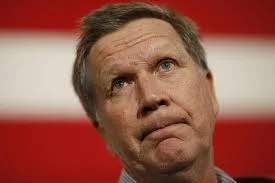
Connecticut’s presidential primary is coming up April 26, and the jockeying has begun. Governor of Ohio John Kasich, who has managed to corral a slender 145 delegates in a primary that a little over a year ago boasted 17 Republican presidential candidates, recently made his appearance in Connecticut and was warmly received by some legislators and editorial writers.
Mr. Kasich seems to be, at least here in the Northeast, the preferred candidate of what Trumpeters disdainfully call “the establishment,” meaning safe Republican politicians and, one supposes, Connecticut’s left-of-center media. In preparation for the arrival of Donald Trump, the Nutmeg Media – which has never understood or approved of the conservative movement – pulled out its critical party hats.
There may not be many surprises in the Connecticut primary mash-up. The delegate vote in Connecticut likely will be split between the three Republican contenders. As of April 10, the national breakdown is as follows: Cruz 545, Kasich 145 and Trump 742. Possibly Mr. Trump will leave Connecticut with a majority of delegates in his pocket.
The Boston Globe recently printed a “satirical” front page containing pre-fab stories covering a future Trump presidency. Screaming headlines on the mock front page included: “Deportations to Begin: President Trump Calls for Tripling of ICE forces, Riots Continue” – “Markets Sink as Trade War Looms” – “US Soldiers Refuse Orders to Kill ISIS Families” – “New Libel Laws Target ‘Absolute Scum’ in Press” – and so on. You get the idea.
Americans, Mr. Trump may hope, view satire as satire, and The Globe -- which, along with other left-of-center papers, has presided approvingly over the Democratic hegemon in the Northeast -- is The Globe.
The matchless scorn of the Trumpeters is directed at thoughtless professional dunderheads, the left-of-center media, moderate Republicans who twiddled their thumbs as the prosperous Hartford of Mark Twain became the murder capital of New England, and other impedimenta to the coming Age of Trump. Their scorn is well deserved. Barry Goldwater said during his own presidential campaign “If you lop off New England and California, you’ve got a pretty good country.” For the past half century, New England and California have been proving him right. All this and more has come to a boil under Mr. Trump’s flag.
Criticism of Mr. Trump in Connecticut will ramp-up as the state primary approaches. Conservatives view Mr. Trump as a flawed leader of a continuing conservative revolution because a) he’s not a conservative, and b) he’s not a Republican, both attributes that have satisfied the political predilections of people who think parties are dispensable. Mr. Trump has big mouth, a thin skin, a glass jaw, and he’s far too big for his political britches.
One of his most ardent followers here in Connecticut has said in so many words: “Screw the Republican Party. We don’t need it. We have Trump,” which is on a par with saying “We don’t need water taps; we have water” or “We should go to war with the army we’ve got, minus weapons.”
There are only two ways to build a party: You can form it around a set of ideas or you can personalize it, build it around a magnetic personality. After one of the bloodiest centuries in the modern period, one would think the world would have grown weary of strongman government. Who needs a strongman president? We already have one in the current Napoleon. Our constitutional and formative ideas have already been set by all the non-loudmouth intellectual giants who have preceded Mr. Trump.
We need a restoration, not a revolution. And if that restoration must be brought about by fierce rebel patriots, we want to be sure they are on the side of the angels. Mr. Trump, many believe, does not and will not pass this test.
Following the Democratic national convention, Hillary Clinton almost certainly will emerge as the designated Party driver. Republicans will choose between Cruz and Mr. Trump at their national convention. One of them will prevail. In the northeast, Mr. Kasich will receive a sufficient number of delegates to keep his pretensions alive until the convention, at which point he will become a power broker of sorts.
Neither this writer nor anyone else knows who the Republican Convention nominee will be.
Republicans have two relatively seasoned candidates, Cruz and Kasich, and a greenhorn in Mr. Trump. Most polls show Mr. Trump losing to Hillary Clinton. Mr. Trump hasn’t any political experience, and he has successfully, so far, been beating experienced Republicans with their experience. Facing Mrs. Clinton, a formidable candidate with several Damoclean swords dangling over her head, Mr. Trump may regret his lack of experience. It does, on occasion, come in handy.
On the whole, this has been the queerest election in a lifetime of queer elections. Republicans seem to be on the point of nominating a man, Mr. Trump, who is neither a reliable conservative nor a reliable Republican. On the Democratic side, an aging socialist, Bernie Sanders, is racking up more votes than Mrs. Clinton among young people who have not yet been pushed out of the socialist college cocoon into the wicked world.
Moderates everywhere have disappeared. The general populace is confused and, as such, has become prey to dangerous political Babbitry. The Supreme Court has been revaluating the values of the U.S. Constitution for several decades. The Congress has been ceding its constitutional power to a run-away subversive president. The Middle East lies prostrate under the drawn sword of Islam. Newspapers have been replaced by twittering banshees. And – worst of all – God, who once showered blessing upon America from sea to shining sea, appears to be hibernating, not that anyone can blame Him.
Not good.
Don Pesci is a political writer.

Power shirts

A little thing I've been noticing for more than 20 years:
When men in Washington want to tell the world that they're now big shots, they stop wearing button-down shirts, replacing them with starchy-looking and usually blindingly white ones with cufflinks. For some reason, they think that this sartorial shift makes them more powerful, or at least makes them look more important.
The upwardly mobile Washington media talking heads move to mimic this politician-and-K-Street-lobbyist dress code, with the idea that we'll then take them and their usually erroneous predictions more seriously. Take a look at the news and "public-affairs'' shows on The Tube.
-- Robert Whitcomb

Richard Freeland: Integrating the liberals arts and professional/vocational education
Via The New England Journal of Higher Education (see nebhe.org)
My talk is about experiential education and liberal learning. This topic has been on my mind ever since I graduated from a liberal arts college many years ago and began my first real job, whereupon I discovered—to my surprise and at some cost to my ego—how much I did not know about putting my ideas to effective use in the world beyond academia. But in addition to my personal interests, the relationship between liberal learning and effective action has become increasingly important for educators in the U.S. over the past several decades, although we are far from anything like consensus on this matter among liberal arts educators. I have chosen this topic for this conference for chief academic officers, because I believe the academic leaders of our colleges and universities have a critically important role to play in what I call the “necessary revolution in liberal education.”
Experiential education, of course, has its roots in occupational and professional education, which in turn, grew from the tradition of apprenticeships. Within the professional context, experiential education has taken many forms, from clinical work in health and medical education, to practice teaching for future educators, to cooperative education in engineering and business. In all these fields, the value of experiential education is obvious: The purpose of occupational and professional studies is to prepare students to work in non-academic settings. Common sense tells us that classroom study can take students only so far in equipping them to perform surgery or build a bridge or manage a sixth-grade classroom.
Employers confirm this obvious point. College graduates whose programs include some form of experiential education are far readier for the workplace than those whose preparation is limited to classroom study.
Liberal education, in contrast to professional studies, has its roots in the education of gentlemen and historically had almost nothing to do with preparing students for useful activity of any sort. Indeed, one of the foundational texts of liberal learning, Cardinal Newman’s famous essay on “the idea of a university,” is in some respects an attack on practical education, arguing at eloquent length that “knowledge is its own reward” and that the goal of a university education is to “raise the intellectual tone of society … and refine the intercourse of private life.”
As liberal education developed in the U.S., however, it did come to be seen as foundational for advanced professional studies in a wide variety of fields, but champions of the liberal arts continued to draw a bright line between liberal learning and preparation for the workplace. I remember the contempt that faculty at my undergraduate college conveyed toward any suggestion that our education had anything to do with preparing for an actual job. This attitude is still, I think, quite common among faculty in the liberal arts and sciences.
Intellectual qualities outside academy
There is, however, a problem with the way we've been characterizing liberal education, a problem that becomes evident the moment you read the mission statement of virtually any liberal arts college. Such statements almost never stress purely intellectual qualities in the manner of Cardinal Newman. Such statements almost always insist that the college is focused on developing the capacity to act effectively in the world after college, both in the workplace and in civic life. The proposition offered by champions of traditional liberal education, therefore, is that a curriculum focused entirely on nurturing intellectual qualities in classroom settings is also the best possible preparation for effective action outside the walls of the academy.
I will be the first to acknowledge the truth in this proposition. It is surely the case that intellectual skills associated with the liberal arts and sciences—critical thinking, quantitative reasoning, effective communications, a generalized adaptability—are vitally important for effective practice, especially in a world where the demands of the workplace are constantly changing. I would also argue that the intellectual context provided by liberal education—an understanding of different perspectives, an appreciation of history, a grasp of psychology and social structure, an awareness of ethical traditions—is also tremendously helpful in informing wise decisions in the nonacademic world.
Granting all of that, I would still argue that the argument that liberal learning in the traditional form that I experienced it in the 1960s is the best possible preparation for action in the nonacademic world is deeply flawed and, to the best of my knowledge, unsupported by empirical research. This is a topic to which I will return more explicitly in a few moments.
It is important to note at this point, however, that, despite the history of distance, and even some antagonism, between the traditions of liberal and professional learning, the boundaries between these two halves of the academic walnut have become blurrier in recent years. On the professional side, most accrediting agencies now insist that the programs they certify include a substantial component of liberal education. On the liberal side, most colleges of arts and sciences have adopted programmatic practices that have roots in professional education. Indeed, most now offer some professional majors, or at least courses in applied fields.
Some are using pedagogical practices first developed in professional fields—things like simulations, case studies and group projects focused on problem-solving. In addition, most liberal arts colleges now offer some form of experiential education, typically in the form of internships, or civic engagement opportunities, or service-learning courses—although these experiences often do not carry academic credit and are mostly on the margins of the basic curriculum.
Convergence of liberal and professional education
Why is this convergence of liberal and professional education occurring? I believe the reason is that, in one way or another, students are demanding it. The unchanging reality is that a large percentage of young people in the U.S., including those attending liberal arts colleges or majoring in a liberal arts fields, seek to improve their qualifications for employment and, more broadly, to prepare themselves to act effectively in the world after graduation. Most will not go to graduate school. Most wisely want their undergraduate years to include some attention to practical skills and some experience in the nonacademic world. Colleges—needing to maintain their enrollments—have come to understand this reality.
This coming together of liberal and professional education has brought us to a fascinating moment in the history of undergraduate studies. Historically, we have had two just two main categories: liberal education and professional education, each with distinct goals and traditions. But now a third category seems to be emerging based upon an integration of the two, with experiential education playing an important role. This movement remains fragmented, even inchoate. It does not yet have a name. I once tried to label it “practice oriented education” but that title did not stick. Still the movement is evident in undergraduate institutions all across the country.
The most impressive example of the trend toward combining the strengths of liberal learning and practical studies is the LEAP project of the Association of American Colleges and Universities. The acronym L-E-A-P stands for Liberal Education and America’s Promise. It represents a massive effort by the AAC&U to build a new model of liberal learning that makes sense for our country’s highly democratized system of higher education in the 21st century. The centerpiece of the LEAP initiative is a statement of the goals of liberal education in the form of 15 specific outcomes developed through wide-ranging consultation with faculty and employers. Amazingly, the AAC&U achieved a remarkable degree of agreement in support of the LEAP framework. Colleges and universities all over the country are using it as the basis for their own undergraduate programs of liberal studies.
There are many interesting things about the LEAP construct. I want to focus on its insistence that liberal education include an emphasis on practice. One category of LEAP outcomes, for example is “intellectual and practical skills” and one of the outcomes listed in this category is “teamwork and problem solving.” Another category is “personal and social responsibility” and two of the outcomes listed under this category are “civic engagement” and “ethical reasoning and action.” In addition, an overarching principle of LEAP is an insistence that the knowledge and skills and responsibilities it seeks to nurture must be demonstrated through “application … in new settings and complex problems.”
This emphasis on action, on teamwork, on problem-solving in new settings seems to me to represent a fundamentally different notion of liberal education than the one to which I was treated so many years ago. Nothing in my undergraduate education was about application except insofar as application meant producing a paper. There were exceptions around the edges, like lab work in the sciences or studios in the arts, but at its heart, this education was about the intellect, about cognition, about thinking and analysis and the mastery of challenging material—all hugely important and all essential to effective action in the world, but all one very large step short of actually applying these intellectual qualities and skills to real problems in authentic settings.
The LEAP framework does not make explicit reference to experiential learning. but it doesn't take much imagination to see how the two are linked. Indeed, some years ago I organized a conference at Clark University in Worcester, on the connection between liberal education and effective practice. The conference included educators from liberal arts backgrounds as well as professionals—business executives, lawyers, government officials—who had attended liberal arts colleges. A central focus of the event was the role of experiential education in promoting the capacity to act effectively in the world. Conference attendees—both educators and practitioners—were unanimous in the conclusion that experiential education should play a central role. As the president of Wellesley College put it, noting overwhelming evidence of the benefits of experiential education, “one wonders why everyone doesn’t just do it.”
Making liberal arts experiential
Having agreed without difficulty on the value of experiential education, the Clark conferees quickly turned to the political challenge of getting this kind of experience included in the undergraduate curriculum of a liberal arts college. At this point the Wellesley president acknowledged that she and her dean had spent three years conducting a carefully managed and richly resourced process to persuade her faculty to make experiential education an integral component of the Wellesley curriculum and had failed.
The resistance was too deep, the commitment to established disciplinary norms too powerful, the aversion to learning a whole new pedagogical approach too daunting. After three years of discussion and experimentation, experiential education at Wellesley remained what it had been at the beginning: available in a few courses because of the interest of individual faculty and widely available in the form of non-credit experiences, but mostly disconnected from the curriculum.
This is, in my view, a sad story, amusing perhaps in the predictability of its outcome, but deeply sad in terms of what it says about liberal education today, at least at one of the country’s elite liberal arts institutions. As the Clark conference confirmed, and as the AAC&U LEAP initiative demonstrates, we are at a moment when there is wide agreement that linking undergraduate studies in the liberal arts and sciences with the capacities of effective practice is an important goal. We are also at a moment when there is wide agreement that the capacities of effective practice involve more than the intellectual qualities traditionally associated with the liberal arts and sciences, qualities like self-direction, discipline, perseverance, imagination and the ability to work in groups and across boundaries of difference.
Many institutions are wrestling with the question of how to turn these general ideas into programmatic reality. At Clark, a particularly ambitious and interesting effort along these lines has developed (with strong faculty involvement) a category of goals within its liberal arts curriculum labeled “capacities of effective practice,” which include exactly the kind of non-intellectual qualities I have just mentioned. The evidence that experiential education can play a critical role in developing these qualities in students is, as the Wellesley president noted, overwhelming. It is without question the single most powerful pedagogical device I have encountered not only to nurture essential non-intellectual capacities but also to deepen a student’s intellectual grasp of the ideas they are studying in the classroom.
But, as the Wellesley experience makes clear, it is a hard sell with a liberal arts faculty whose members tend to believe that undergraduate education comes in only two flavors, with liberal education on one side and practical studies on the other. The third category that draws on the strengths of both may exist in fact but not yet in theory. This is what I meant a few moments ago when I spoke of the “necessary revolution in liberal education.” We are an industry that advances by fostering broad agreement, not by executive action. We need to help our faculty colleagues get beyond an instinctive aversion to explicitly practice-oriented components within their overall curricular structures. Chief academic officers, the people gathered in this room, are ideally positioned to lead in this effort.
Push for more
I end this morning with a plea that you take this challenge on in whatever form makes sense when the opportunity arises in your individual institutional settings. Your presence at this conference suggests an openness to the ideas I have been discussing. Engaging this challenge with the faculties you lead, however, will be difficult and risky. The temptation will be to pull back, admit that the resistance is too strong, and settle for marginal gains. We need to push for more. Our students deserve more. I urge you to play a leadership role in what I believe is truly a national movement with historic significance.
I wish I had some formula for advancing this cause that can ensure success, but I do not. The best I can do is summarize a long discussion about this matter at the Clark conference. The academic administrators among the conferees agreed that efforts to directly confront the biases of liberal arts faculty against adding practical experiences to the curriculum were not likely to be effective. The most hopeful approach seemed to have three essential components.
First, we need to engage the faculty in a discussion of goals and outcomes—get them talking not about their disciplines but about how they want the curriculum to empower their students. Such a discussion, just like the typical college catalog, will quickly range beyond purely intellectual outcomes to a discussion of equipping young people to act effectively in the world beyond college.
The second component involves promoting a culture of assessment—fostering an atmosphere of openness to looking at evidence, at research on pedagogical outcomes in relationship to goals. Such an exploration comes naturally to academics and will, I am confident, point toward the power of experiential education as a powerful means to accomplish the goals being sought.
The third component of the process is to provide faculty leaders and volunteers with the space and support to experiment with new pedagogical approaches. That will take time and money but the investment of both is more than worth it.
John Dewey taught us over a century ago that it is impossible to separate deep learning form experience. Liberal education has spent the intervening hundred years ignoring that fundamentally obvious insight. We are now at a moment when we can recover that truth to the great benefit of the next generation as well as the country. I urge you to be part of that effort.
Richard Freeland is a distinguished professor at Northeastern University, where he was president of from 1996 to 2006, He was Massachusetts commissioner of higher education from 2009 until 2015. This piece is drawn from Mr. Freeland's April talk to the WACE Chief Academic Officer Colloquium.

An organic orgy
"It was that period in the vernal quarter when we may suppose the Dryads to be waking for the season. The vegetable world begins to move and swell and the saps to rise, till in the completest silence of lone gardens and trackless plantations, where everything seems helpless and still after the bond and slavery of frost, there are bustlings, strainings, united thrusts, and pulls-all-together, in comparison with which the powerful tugs of cranes and pulleys in a noisy city are but pigmy efforts."
-- Thomas Hardy
'Defintion of space'

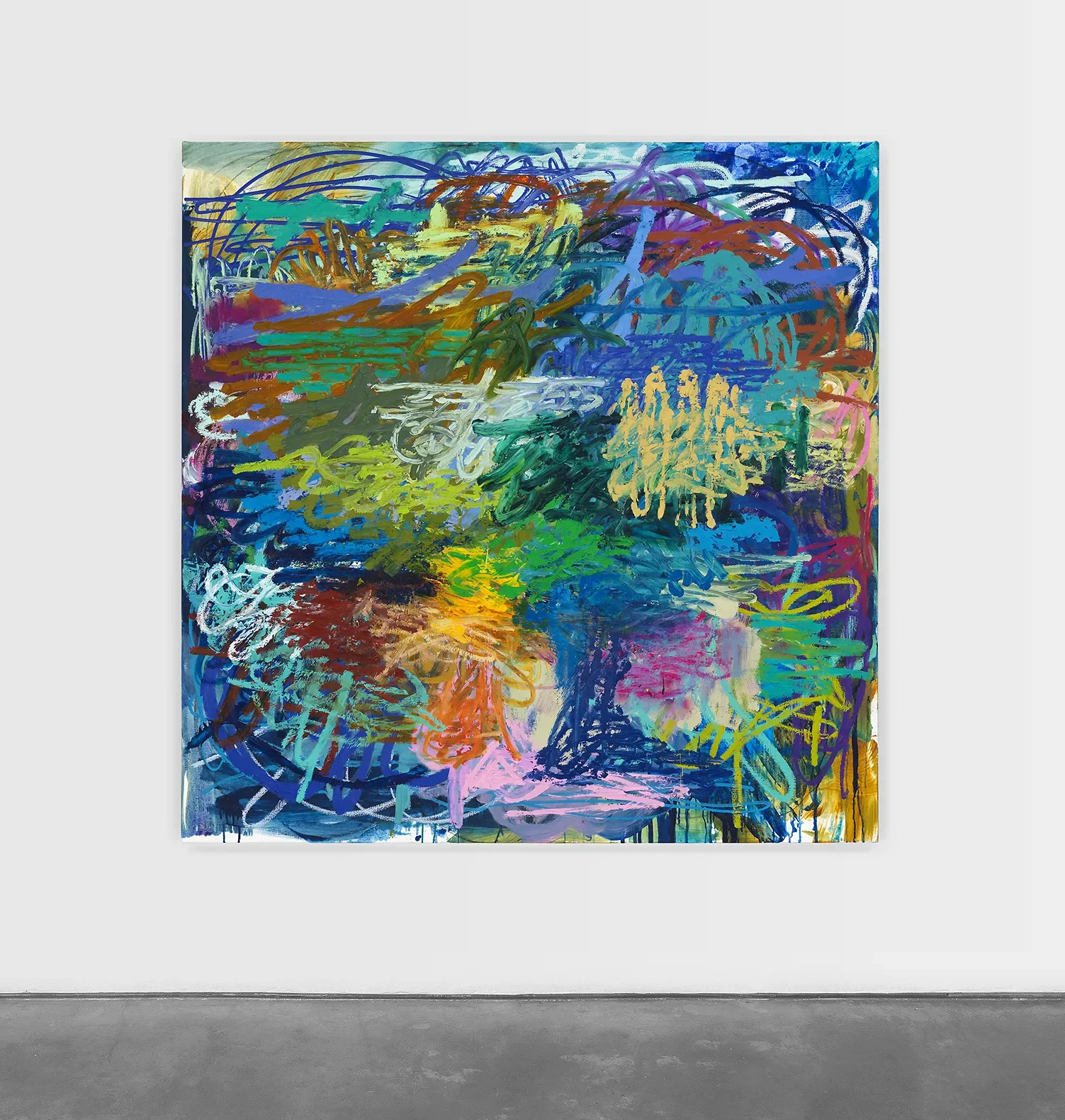
"Bellagio-Promise Kept'' (acrylic, charcoal and crayon on canvas), by Jo-Ann Boback, in her show "Marking My Territory,'' at Galatea Fine Art, Boston, May 4-29.
She says that "this work is about definition of space. I don't worry about what is being expressed -- i.e., landscape, emotional memory, etc. Instead my goal is to be sure it is worth experiencing.''
Online dialogue with chief Japanese spokesman postponed to April 18
The event below has been postponed to April 18, at an hour to be announced, from April 14 because of an urgent meeting with Russian diplomatic officials visiting Japan.
Yasuhisa Kawamura, Director-General for Press and Public Diplomacy of the Japanese government, a job that includes being chief spokesman for Japanese Prime Minister Shinzo Abe, will be the featured speaker in a Boston Global Forum(BGF) live online dialogue titled “The Role of Japan in Peace, Security and Development in the World Today.’’ Such a dialogue takes on particular importance now because Japan will host this year’s G7 Summit, to be held on May 26-27.
The event can be seen live at bostonglobalforum.org.
Joining Mr. Kawamura in the discussion will be Michael Dukakis, Chairman of the Boston Global Forum’s Board of Directors and Board ofThinkers, and Prof. Thomas Patterson, a member of the BGF Board of Directors and Board of Thinkers; Bradlee Professor of Government and the Press at Harvard’s Kennedy School of Government, and Acting Director of the Kennedy School’s Shorenstein Center on Media, Politics and Public Policy.
The session is one in the series of online dialogues in the Boston Global Forum’s BGF-G7 Summit Initiative, in which BGF experts have been working with Japanese officials to craft proposals to be considered by the national leaders at the summit.
The Boston Global Forum encourages its members and friends to send questions for the discussants to office@bostonglobalforum.org. Members of the Boston Global Forum’s Special Editorial Board will gather your questions and insights and send them to the speakers.
The talk and listeners’ responses to it will be live-streamed at www.bostonglobalforum.org

At PCFR: Cities, "backstabbers'' and world shipping/ports

April 12, 2016
This evening we hear Hedrick Smith at the Providence Committee on Foreign Relations (thepcfr.org) dinner.
The next speaker for the PCFR comes Wednesday, May 11, with Greg Lindsay, a famed writer on cities and transportation around the world.
Look at:

He is a contributing writer for Fast Company, author of the forthcoming book Engineering Serendipity, and co-author of Aerotropolis: The Way We’ll Live Next. He is also a senior fellow of the New Cities Foundation — where he leads the Connected Mobility Initiative — a non-resident senior fellow of The Atlantic Council’s Strategic Foresight Initiative, a visiting scholar at New York University’s Rudin Center for Transportation Policy & Management, and a senior fellow of the World Policy Institute.
On Tuesday, June 7, Michael Soussan, former UN whistleblower; acclaimed author; widely published journalist; NYU writing professor, and women's rights advocate, will speak. His satirical memoir about global corruption, Backstabbing for Beginners: My Crash Course In International Diplomacy (Nation Books / Perseus) is being adapted for a feature film, starring Ben Kingsley and Josh Hutcherson
He will speak about the subject of his next book TRUTH TO POWER: how great minds changed the world. A brief history of thought leadership.
Evan Matthews, a key thought leader at the North Atlantic Ports Association and director of the Port of Davisville, has very kindly offered to talk to us on Wednesday, June 22, on changes in world shipping, including the widening of the Panama Canal and other changes of huge interest to New England ports.
We plan to get experts on the Zika virus, ocean fishing and the geopolitical effects of global warming in the next season. Expert on Central Asia Morris Rossabi and former Ambassador to Slovakia Tod Sedgwick will be among those speaking in that season, which starts after Labor Day.
@ThePCFR
Ask the Japanese government
Yasuhisa Kawamura, the Director General for Press and Public Diplomacy for the Japanese government, will discuss themes of the G7 Summit, scheduled for May 26-27 in Japan, in a Boston Global Forum (BGF) online dialogue. The session will start at 7:30 a.m ( EST ) on Thursday, April 14. Mr. Kawamura, who is the chief spokesperson for Prime Minister Shinzo Abe, will answer questions about the summit and Japanese plans and policies.
The Boston Global Forum, founded in 2012, is based in Boston and Cambridge.
The dialogue with Mr. Kawamura is part of the BGF-G7 Summit Initiative, in which BGF experts are working with Japanese officials to craft recommendations to be considered by the national leaders at the summit.
The Kawamura program can be seen on the BGF’s Web site --- bostonglobalforum.org.
You may send questions to Mr. Kawamura via: Office@bostonglobalforum.org.
Jim Bedell: Sea-level rise threatens public's access to Rhode Island's shore
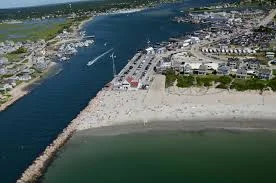
via ecoRI News
(ecori.org)
The scary part is the consolidating evidence of global warming, the surprising acceleration of sea-level rise and the accepting of the profound effects these will have on Rhode Island. The hopeful part is the proactive call to arms by this little state, stepping out in front of the crowd to take meaningful action to deal with the changes coming our way.
Those steps come in the package of the Rhode Island Coastal Resource Management Council’s Shoreline Special Area Management Plan (Beach SAMP). If you don’t know what that is, well, start paying attention.
It’s time to look over the time horizon. Sea-level rise is accelerating way beyond previous assumptions. Before anthropogenic warming began accelerating in the mid-1900s, scientists spoke of natural post-glacial sea-level rise in terms of a few inches per century. The latest National Oceanic and Atmospheric Administration (NOAA) projections cite the range in sea-level rise above 1990 levels to be a maximum of 7 feet by 2100. The youngest of our current schoolchildren will live long enough to see Waterplace Park, Galilee, Misquamicut and much of Wickford and lower Newport under water, and whole waterfront neighborhoods abandoned.
Now several years in progress, the Beach SAMP process has been a national leader in preparing to deal with coming realities. Our state university, world renowned in oceanography and earth science, has been a blessing. It has been gathering data, holding public discussions, and putting together useful proposals to help shore towns and cities think, and more importantly act, to minimize the cost and disruption of the coming changes.
A good example of an early proactive measure is the “armoring” of the sewage-treatment facility in Narragansett, near Scarborough State Beach. The proposed earthen berm — an artificial ridge or embankment — and wall will be needed to protect critical infrastructure from damage in the future as the sea rises.
But there is something else that needs protection as the coastal future becomes the coastal now, and Save The Bay has taken a step to make sure that it’s included in the Beach SAMP. Save The Bay and CRMC are also protecting the people of Rhode Island in another important way: They’re protecting our precious and unique right to use the shore. Among other rights of the shore, we have the right to “pass along the shore.”
Save The Bay has entered an opinion regarding the Narragansett sewer project, saying that without including a way to walk, fish or collect seashells along the shore in front of the sewerage plant, the engineering for the project isn’t complete and it shouldn’t go forward. The nonprofit advocacy organization has proposed moving the protection structure 40 feet landward to allow passage in front of it. That would be a good thing.
I would add an alternative proposal if another is needed. Namely, if the barrier truly can’t be moved inland, put a walkway along the top of the structure to allow passage across the treatment property to the beach on the other side.
Most certainly creative, outside-the-box solutions will have to be part of the remedy for this never-before experience of dealing with such rapidly accelerating climate change.
Of course, the sewer plant project in Narragansett is just one pixel in a much larger picture. As another example, I have included a pair of pictures from the Beach SAMP data available on the CRMC Web site titled “Shoreline Change Maps.” One shows a satellite view of a house and a hotel on Misquamicut Beach along Atlantic Avenue in Westerly with the movement of the land/water boundary, identified by colored lines, during the past 77 years. You can see that both locations have constructed boulder walls across their property.
There are several important things to learn from these photos.
One lesson comes from the boxes at the end of the survey lines going out into the water. The black box shows the total movement landward of the land/water boundary since 1939. At line No. 169 it has moved 109 feet, which means that 109 feet of real estate has disappeared. The learning comes with realizing that although the sea has risen only a number of inches over this time, the land/water boundary location moves many feet landward because the land, in most places, is a gentle slope rising away from the water.
The white boxes show the same survey data in another way. They show the average number of feet per year the shore has moved inland. At the location of line No. 169 it has been retreating at an average rate of 1.5 feet annually.
The colored lines highlight the second lesson we can gleam from this CRMC image. The red line is 1939, the black is 1951, the purple is 1963, the green is 2012 and the blue is 2014. Notice that through 1951 the shoreline was far enough in front of the house and hotel that there was room for anyone to pass along the beach without any problem.
By 2012, the sea had risen up to the point that there was no longer anywhere to walk to pass along the beach. By 2014, a person would have to hazard rock climbing the wall to get by along the shore.
Bear in mind that people don’t come to Misquamicut for the restaurants and hotels and happen to use the beach. The restaurants and hotels only exist there because of the fabulous, unobstructed, world-class strand of sand on which they can recreate. Every year, the town of Westerly takes in millions of dollars because of the miles-long beach that people can enjoy and “pass along.” Protecting lateral access along the shore is as much a local economic business issue as it is an emotional civil rights one.
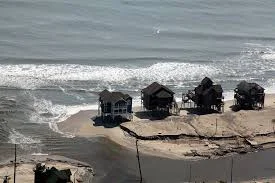
The second picture is of a house on Greenhill Beach, in Wakefield. The owners of the large home built a seawall to try to prevent their property from disappearing. That was legal at the time and was their right — though they may be hastening the erosion of the adjacent properties. But people have walked along this beach as far back as memory of it goes. The blue line is from 2014 surveying. Even then people would have had to climb over the foot of the rock wall to pass by.
At present, at high tide or after a big storm, the only safe place to walk is along the top of the rock pile wall across the house’s yard. It will be a challenge going forward for shorefront properties to find ways to accommodate citizens passing along the shore as the sea advances up and over the land.
The important takeaway is that the shoreline location may be changing, but our constitutional privileges of the shore are not. There are many more locations in Rhode Island with the same dynamic unfolding.
Jim Bedell runs the Rhode Island Shoreline Access Coalition.
Woodland meditation

"Seated by a Tree'' (watercolor on paper, 1973)), by Andrew Wyeth, in the show "Andrew Wyeth: Drawings and Watercolors,'' at the Adelson Galleries, Boston, opening April 15.
Those woods look like those a week before they leaf out in April.

A hill of New Englanders

"Rock Barrier 1" (screenprint), by Henry Ferreira, in the show "Works on Paper,'' through May 30 at Dedee Shattuck Gallery, Westport, Mass.

Don Pesci: Senator Murphy's bizarre climate-Mideast brutality link

Only a few years ago a politician might have been laughed out of Congress for postulating that the troubles in the Middle East – Islamic irredentism; the emergence of Iran, still considered a terrorist state, as a regional Middle East power; the attempt by Shiites, rebuffed during the Iraq war, to establish a caliphate in northern Iraq and Syria; the threats against the United States and other Western nations that pour like a flood of mighty waters from the throats of its former enemies; the scurrying of foreign states once friendly to the United States from a U.S to a Russian protectorate; the sea of women, children and young men murdered, homeless and enslaved Christians, immigrant hordes persecuted by Islamic terrorists now flooding Europe’s shores, largely owing to the recession of U.S. power and influence in the Middle East; all this and more -- were traceable to global warming, the tocsin of a boisterous environmental movement.
The civil wars in Syria and Mali, U.S. Sen. Chris Murphy, of Connecticut, noted in a New Haven Register interview “… were preceded by a ‘massive multi-year drought,’ which were consequences of global warming. ‘The instability that we are seeing in the Middle East and in Africa is today the result of climate change,’ with more challenges coming, Murphy said.”
The connection between global warming and world-altering disturbances in the Middle East, remote at best, is one of the CliffsNotes taken from the current Democratic Party campaign playbook. The global warming bell will be sounded ad nauseam during the coming political campaigns. Socialist presidential candidate Bernie Sanders has already warmly embraced the queer notion. Surprisingly, Mr. Murphy has thrown his support to Hillary Clinton, not Sanders.
Mr. Murphy’s current term in office ends January 2019, and so he can well afford to flourish ideological banners on behalf of movement progressives, which includes the environmental lobby. Nothing Mr. Murphy says, however absurd, will cost him a vote in the near future. Mr. Murphy’s present assertion entails no immediate political cost to him; it is a form of cheap grace. Mr. Murphy’s comrade in the Senate, Dick Blumenthal, is up for re-election in the current cycle, and the remote prospect of losing an election has made the always cautious Mr. Blumenthal wary. Off-election year senators are usually able to find their spines.
Mr. Murphy’s assertion – Middle East instability is caused by climate change -- is a near-perfect example of the post hoc fallacy, which may be stated as follows: A occurred, then B occurred; therefore, A caused B. The rooster Chanticleer crowed, then the sun rose; therefore, the crowing caused the sun to rise.
Messy thinking is the principal cause of a messy foreign policy, and the Obama administration is full of threadbare thoughts. Dangerous errors in foreign policy are the product of political procrusteanism, which occurs when politicians seek to fit the wide and various world into their narrow ideological beds: Feet are lopped off, fingers are sheered away, and one ends up with a dead and useless mutilated corpse, an apt description of U.S. foreign policy in the Age of Obama. Far-fetched claims such as those made by Mr. Sanders and seconded by Mr. Murphy obscure the wreckage. But these bizarre notions can be exploded by an application of “Occam’s Razor,” which holds that the most economical explanation of a phenomenon that accounts for all the important facts is usually the right one.
Here is an economical explanation that embraces real-world data in the Middle East:
Syria is ruled by Bashar Assad whose father, Hafez al-Assad, was only slightly more bloodthirsty than his son. In 2012, President Obama drew his famous “red line in the sand” in Syria. He said that the use of chemical weapons by Assad would cross “a red line” that would entail “enormous consequences” and “change my calculus” on American military intervention in Syria’s civil war. A year later, In August 2013, a rebel-held suburb of Damascus was attacked with sarin gas, and Mr. Obama’s red line inauspiciously disappeared.
Concurrent with Mr. Obama’s red line doctrine, American troops that had ousted Saddam Hussein in Iraq were withdrawn from that country, fulfilling an Obama campaign pledge. The improvident withdrawal of troops created a vacuum in northern Iraq and Syria that soon was filled with the soldiers of Allah, peace be upon him, whose ambition it was to recreate a caliphate. They expressed their fidelity to the Koran by capturing territory from the infidel, killing men who might oppose them, enslaving their children and making concubines of their wives. They also drew the sword of Allah, peace be upon him, across the throats of infidel Christians, which caused Mr. Obama to claim that the ruffians were not behaving in a manner that was faithful to Islam, the Koran or the prescriptions of Mohammed, peace be upon him.
Islamic scholars who are more faithful interpreters of the Koran would heartily disagree.
With the supposed failure of President George W. Bush’s policy towards Iraq before her and the imprecations of Democratic politicians ringing in her ears, Secretary of State Hillary Clinton, now the leading Democratic candidate for president, simply repeated the so-called “policy errors” of Mr. Bush and persuaded Mr. Obama to oust Libyan strongman Muammar Gaddafi from power. The ouster was a success: “We came, we saw, he died,” boasted Mrs. Clinton. Libya descended into chaos, and the Obama administration – refusing steadfastly to let a crisis go to waste – began shipping war material from a Libyan compound to American-supported, anti-Assad forces in northern Syria. The American compound in Benghazi, Libya, soon was destroyed by Islamic terrorists. It is no exaggeration to say that the terrorists who murdered Christians, among others, in the newly established caliphate and in Paris and Brussels and the United States and Canada and London and the Netherlands were, all of them, faithful followers of Mohammed, peace be upon him.
This is only a thimble full of real-world data that should be included in any assessment of the origin and causes of the bloody mess in the Middle East, a good part of it attributable to Mr. Obama’s failed foreign policy. Mr. Murphy’s fanciful theory that Middle East instability is the result of climate change is little more than a head-fake designed in an election year to draw public attention from inconvenient truths. Mr. Murphy, who certainly is no Joe Lieberman, has until 2019 to get it straight before he comes up for re-election, plenty of time for visions and revisions that time will soon erase.
Don Pesci is a political writer based in Vernon, Conn.
Llewellyn King: Utilities struggle to maintain revenues amidst new energy technology
Howard Hughes, a pioneer in movie making and aviation (which informed his cantilevered underwire bra design for actress Jane Russell), was blindsided by disruptive technology. Electric utilities might want to heed Hughes’s history as they deal with future shock.
Hughes believed that his 1930 silent movie Hell’s Angels-- which has some of the finest flying sequences ever shot -- could make it even as the age of talkies was dawning. But he was in error; he had remake the movie with a sound track at huge expense.
Something similar happened to Hughes with the H-4 Hercules, the giant, wooden flying boat -- nicknamed the “Spruce Goose” by the press -- which he built during World War II. Eight reciprocating engines were no match for the potential offered on the horizon by jet engines. And spruce was no match for the superior aluminum alloys that had been developed during the war.
Leaders in the electric utility industry know full well that times are changing. But are they making brilliant silent movies when the talkies are around the corner, so to speak?
Dealing with change is especially hard for utilities because they are in a real-time business. The juice must flow 24-7, which means that the new has to integrate seamlessly with the old. Shutting down to retool, as Hughes did with Hell's Angels, is not an option.
Yet in the 46 years that I've been writing about the utility industry, I've never seen such upheaval, ergo such challenges. There is no aspect of the industry which isn't beset by technology at the gate: computing and artificial intelligence; drones for line surveillance and security; 3D printing (additive manufacturing) for repairs; superior data from smart meters; and aggressive growth from competitors on the roof – in the form of solar panels -- and in the marketplace.
But, to my mind, the most-daunting challenge facing the industry is flat or declining electric demand. For investor-owned utilities, which provide 80 percent of the nation’s electricity, this challenge, this reality has been masked by the good performance of their stocks on Wall Street, which owes a lot to low interest rates and volatility in the market, not to the long-term prospects for investor-owned companies. For now, it is the utility paradox.
The industry, through the Edison Electric Institute, has built a superb lobbying arm that can seek legislative remedies for its troubles -- as it did when dividends were under attack. But there are no legislative fixes for an industry in market turmoil, abetted by technological disruption.
There is more hope for relief from regulators. Increasingly, the industry is focused on state commissions: it wants relief from the downside of rooftop solar; relief from intrusive and misleading marketers of solar products; and, above all, protection of the grid's existing infrastructure.
Additionally, not all technology is disruptive. Utility solar farms are an economic and technological success. Storage is attracting innovators and may yet get a breakthrough. There is the hope that new load may come through electric vehicles -- although growth there could be stunted by cheap oil. It behooves the industry to push for better recharging, particularly inductive charging, and to advertise more electric consumption as a remedy for air pollution from the automobile tailpipe.
In 1974, I worked with the then chairman of the Atomic Energy Commission, the late Dixy Lee Ray, on an energy study for President Richard Nixon. The study advocated more electrification of transportation – and we had railroads in mind first and foremost. The United States has a few miles of electrified railway in the Midwest and the Amtrak corridor from Washington to Boston – far less electrified railway than other developed countries.
The railroads got away from the electric utilities, and they won't be corralled now. But there is a powerful environmental and social case for electrifying cars; creating a moral imperative to drive electric, if refueling is solved -- and I don't mean hanging an extension cord out the kitchen window. South Korea has buses that refuel through induction-charging plates at bus stops; smaller batteries, frequent charging.
It will be a lot easier for utilities to argue for regulatory relief to protect their social and shareholder responsibilities if they are extending their social value.
Llewellyn King, host and executive producer of White House Chronicle, on PBS, is a longtime publisher, editor columnist and international business consultant.
This originated at Inside Sources.
Winter's remnant shield
"The early mist had vanished and the fields lay like a silver shield under the sun. It was one of the days when the glitter of winter shines through a pale haze of spring."
-- Edith Wharton
'Shot heard round the world' in April 1775
"By the rude bridge that arched the flood,
Their flag to April’s breeze unfurled,
Here once the embattled farmers stood,
And fired the shot heard round the world.
The foe long since in silence slept;
Alike the conqueror silent sleeps;
And Time the ruined bridge has swept
Down the dark stream which seaward creeps.
On this green bank, by this soft stream,
We set to-day a votive stone;
That memory may their deed redeem,
When, like our sires, our sons are gone."''
-- Ralph Waldo Emerson, "Concord Hymn''
Lost horizon

Painting by Jessie Willcox Smith, in the show "Women Artists: Transforming Community (Providence to Provincetown 1880-1940)'' at University of Massachusetts at Dartmouth, April 12-30.
“He who would travel happily must travel light.” – Antoine de St. Exupery
Black shapes solid and surface
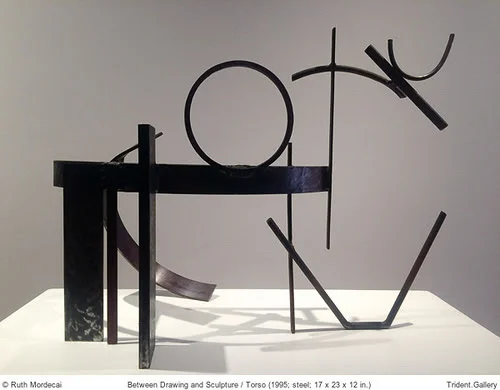
"Between Drawing and Sculpture'' (torso steel), by Ruth Mordecai, at Trident Gallery, Gloucester, Mass., in the group show "In the Time We Have,'' through April 24. She seeks to depict how the two media interact with each other. The show focuses on the inevitability of change and what that means to each artist.

Rachel Gotbaum: Heroin addicts wait for treatment or death in New Hampshire

This article is a collaboration between NPR station WBUR's "Here and Now'' show and Kaiser Health News.
For years, Eileen Shea says her former partner Eddie Sawyer struggled with a heroin addiction. But after losing his job and time with his daughter, he was ready to get help. He was on the waiting list for a bed at the , northern New Hampshire’s only residential treatment facility.
He never made it to treatment. Instead, Sawyer was one of 428 people in New Hampshire who died last year from a drug overdose. When the police found him in his apartment, there was list of rehab facilities on the table next to his bed. It was a list Shea had given to him a month earlier, and there were check marks next to the name of each one. Sawyer had called every place on the list.
“It’s typically four to six weeks that they’re on [the] waiting list,” said Kristy Letendre, director of the Friendship House in Bethlehem, New Hampshire. The facility has 18 beds and transitional housing where people recovering from addiction can live after they finish a 28-day program. “A lot of our admissions come from Manchester and Nashua, which is the southern part of the state, because they have six-month waitlists to get into their programs, so they’re coming up north.”
“Lately we’ve lost people who have reached out and were at the beginnings stages of accessing a bed and then you get a call or hear on the news that that person overdosed and their chance is gone,” Letendre said.But waiting for treatment doesn’t work for a lot of people addicted to heroin and other opioid drugs such as fentanyl and OxyContin. There’s a small window of time, Letendre says, when people are ready for help. If they don’t get help in that window, the risk of relapse and overdose is very high because withdrawal sickness is so miserable it drives people to use again.
Nobody knows this better than Sean Warren.
“In 2015, I had seven friends die of heroin addiction,” said Warren, 23, who had been struggling with heroin for more than two years. He wanted to get off the drug, but he says he couldn’t do it on his own. When he called around to find a rehab bed, he was told it would be nine weeks before he could get one.
Warren ended up stealing his sister’s credit cards to get money to buy drugs. And that’s when Warren said he got lucky — he was arrested. With no access to heroin, Warren went through withdrawal sickness alone in his cell. From jail he was admitted to the Friendship House.“I needed to be in a safe place,” Warren said. “I called everywhere crying and begging to get in, and no one had room for me, so my addiction led me to do more crime.”
“You have to survive for X amount of time,” Warren said. “If I stayed out there for nine weeks, I can guarantee you I wouldn’t be alive right now.”
Most rehab programs in New Hampshire will not take people unless they are free from drugs for at least three days. But finding a place to detox safely is not easy — there are only a handful in the state. There’s also a shortage of doctors who can prescribe medications to help people detox at home. (President Obama proposed a fix for this problem on Monday.)
Many of the people trying to detox on their own show up at Littleton Regional Healthcare, a 25-bed hospital not far from the Friendship house.
Dr. Randy Knight, an emergency-room physician, says every shift he works he sees two to three patients struggling with a drug addiction. Sometimes these are people who have overdosed and are dumped unconscious at the hospital entrance.
Knight says when people show up at the emergency room desperate to detox from opioids there is very little he can do for them. It is different from detoxing from severe alcohol abuse, where people can be admitted to the hospital because they can have life-threatening seizures.“It’s worse than it’s ever been,” Knight said. “We’re burying way too many young people from this disease, and we risk losing an entire generation from New Hampshire because we haven’t committed the necessary human resources, hospital beds or treatments beds to help patients kick this habit.”
Coming off heroin and other opioids is often a brutal experience — which can include hallucinations, vomiting, chills and diarrhea — but it is not considered a medical emergency.
“When I meet a patient and their family requesting help getting off of heroin or opiates, I have to tell them a hospital is not going to be able to provide the services that they need because the patient is not unstable from a medical point of view,” Knight said. “That doesn’t mean they’re not going to use again. And they tell me that, ‘If you send me out there, I’m going to use again.’ But I just can’t offer them a hospital bed in that situation.”
Knight usually gives these patients a blood pressure drug that may ease some of their withdrawal symptoms — but then he can only refer them to rehab — and hope that they don’t have to wait too long for a bed.
Shea offered to take Sawyer to a nearby hospital to help him detox. But she knew there were no guarantees he would be admitted.Eileen Shea will mark the first anniversary of Eddie Sawyer’s death April 7. She replays what could have been done differently for her daughter’s father.
“I told him when we go to the hospital, you’re either gonna have to drink a bunch of booze and they’ll admit you that way because they take alcoholics, or we’re going to go in there and you’re going to have to say you’re suicidal,” she said. “That was the only thing I could think of to help him, because they would not let him in because he was just a drug addict.”
But they never made it to the hospital.
“I wish I could have said, ‘Eddie I’m gonna come pick you up. We’re going to go to the hospital. They’re going to admit you. They’re going take care of you,’” Shea said. “But that’s not what happened. Eddie did not want to continue to do drugs, he just could not stop and he reached out for people to help him stop, and nobody took him.”
This year New Hampshire has doubled its funding for substance-abuse treatment, and has made 43,000 residents eligible for treatment under expanded Medicaid.
Rachel Gotbaum is a New Hampshire-based journalist.
They don't need me
"The year is ended, and it only adds to my age;
Spring has come, but I must take leave of my home.
Alas, that the trees in this eastern garden,
Without me, will still bear flowers."
-- Su Ting, 720 A.D.