
Vox clamantis in deserto








Her only vice

"Untitled,'' by Gertrude Kasebier (1852-1934), in the show "Photo-Secession: Painterly Masterworks of Turn of the Century Photos,'' at the D'Amour Museum of Fine Art, Springfield, Mass., starting April 12.

Oh, yeah, spring again



"If Spring came but once in a century, instead of once a year, or burst forth with the sound of an earthquake, and not in silence, what wonder and expectation there would be in all hearts to behold the miraculous change! But now the silent succession suggests nothing but necessity. To most men only the cessation of the miracle would be miraculous and the perpetual exercise of God's power seems less wonderful than its withdrawal would be."
-- Henry Wadsworth Longfellow.
Warm wood rises

"Atmosphere, 216'' (ash wood) by Jeremy Holmes, in the "Defying Perceptions'' show at Heather Gaudio Fine Art, New Canaan, Conn., through April 9.

Philip K. Howard: Congress needs to clean out the stables of long-outdated laws
Government is broken. So what do we do about it? Angry voters are placing their hopes in outsider presidential candidates who promise to “make America great again” or lead a “political revolution.”
But new blood in the White House, by itself, is unlikely to fix things. Every president since Jimmy Carter has promised to rein in bureaucratic excess and bring government under control, to no effect: The federal government just steamed ahead. Red tape got thicker, the special-interest spigot stayed open, and new laws got piled onto old ones.
What’s broken is American law—a man-made mountain of outdated statutes and regulations. Bad laws trap daily decisions in legal concrete and are largely responsible for the U.S. government’s clunky ineptitude.
The villain here is Congress—a lazy institution that postures instead of performing its constitutional job to make sure that our laws actually work. All laws have unintended negative consequences, but Congress accepts old programs as if they were immortal. The buildup of federal law since World War II has been massive—about 15-fold. The failure of Congress to adapt old laws to new realities predictably causes public programs to fail in significant ways.
The excessive cost of American healthcare, for example, is baked into legal mandates that encourage unnecessary care and divert 30 percent of a healthcare dollar to administration. The 1965 law creating Medicare and Medicaid, which mandates fee-for-service reimbursement, has 140,000 reimbursement categories today and requires massive staffing to manage payment for each medical intervention, including giving an aspirin.
In education, compliance requirements keep piling up, diverting school resources to filling out forms and away from teaching students. Almost half the states now have more administrators and support personnel than teachers. One congressional mandate from 1975, to provide special-education services, has mutated into a bureaucratic monster that sops up more than 25 percent of the total K-12 budget, with little left over for early education or gifted programs.
Why is it so difficult for the U.S. to rebuild its decrepit infrastructure? Because getting permits for a project of any size requires hacking through a jungle of a dozen or more agencies with conflicting legal requirements. Environmental review should take a year, not a decade.
Most laws with budgetary impact eventually become obsolete, but Congress hardly ever reconsiders them. New Deal Farm subsidies had outlived their usefulness by 1940 but are still in place, costing taxpayers about $15 billion a year. For any construction project with federal funding, the 1931 Davis-Bacon law sets wages, as matter of law, for every category of worker.
Bringing U.S. law up-to-date would transform our society. Shedding unnecessary subsidies and ineffective regulations would enhance America’s competitiveness. Eliminating unnecessary paperwork and compliance activity would unleash individual initiative for making our schools, hospitals and businesses work better. Getting infrastructure projects going would add more than a million new jobs.
But Congress accepts these old laws as a state of nature. Once Democrats pass a new social program, they take offense at any suggestion to look back, conflating its virtuous purpose with the way it actually works. Republicans don’t talk much about fixing old laws either, except for symbolic votes to repeal the Affordable Care Act. Mainly they just try to block new laws and regulations. Statutory overhauls occur so rarely as to be front-page news.
No one alive is making critical choices about managing the public sector. American democracy is largely directed by dead people—past members of Congress and former regulators who wrote all the laws and rules that dictate choices today, whether or not they still make sense.
Why is Congress so incapable of fixing old laws? Blame the Founding Fathers. To deter legislative overreach, the Constitution makes it hard to enact new laws, but it doesn’t provide a convenient way to fix existing ones. The same onerous process for passing a new law is required to amend or repeal old laws, with one additional hurdle: Existing programs are defended by armies of special interests.
Today it is too much of a political struggle, with too little likelihood of success, for members of Congress to revisit any major policy choice of the past. That’s why Congress can’t get rid of New Deal agricultural subsidies, 75 years after the crisis ended.
This isn’t the first time in history that law has gotten out of hand. Legal complexity tends to breed greater complexity, with paralytic effects. That is what happened with ancient Roman law, with European civil codes of the 18th Century, with inconsistent contract laws in American states in the first half of the 20th Century, and now with U.S. regulatory law.
The problem has always been solved, even in ancient times, by appointing a small group to propose simplified codes. Especially with our dysfunctional Congress, special commissions have the enormous political advantage of proposing complete new codes—with shared pain and common benefits—while providing legislators the plausible deniability of not themselves getting rid of some special-interest freebie.
History shows that these recodifications can have a transformative effect on society. That is what happened under the simplifying reforms of the Justinian code in Byzantium and the Napoleonic code after the French Revolution. In the U.S., the establishment of the Uniform Commercial Code in the 1950s was an important pillar of the postwar economic boom.
But Congress also needs new structures and new incentives to fix old law.
The best prod would be an amendment to the Constitution imposing a sunset—say, every 10 to 15 years—on all laws and regulations that have a budgetary impact. To prevent Congress from simply extending the law by blanket reauthorization, the amendment should also prohibit reauthorization until there has been a public review and recommendation by an independent commission of citizens.
Programs that are widely considered politically untouchable, such as Medicare and Social Security, are often the ones most in need of modernization—to adjust the age of eligibility for Social Security to account for longer life expectancy, for example, or to migrate public healthcare away from inefficient fee-for service reimbursement. The political sensitivity of these programs is why a mandatory sunset is essential; it would prevent Congress from continuing to kick the can down the road.
The internal rules of Congress must also be overhauled. Streamlined deliberation should be encouraged by making committee structures more coherent, and rules should be changed to let committees become mini-legislatures, with fewer procedural roadblocks, so that legislators can focus on keeping existing programs up-to-date.
Fixing broken government is already a central theme of this presidential campaign. It is what voters want and what our nation needs. A president who ran on a platform of clearing out obsolete law would have a mandate hard for Congress to ignore.
Philip K. Howard, a New York-based lawyer, civic leader and writer, is the founder of the advocacy group Common Good and the author, most recently, of The Rule of Nobody.

'More than young and sweet'
"Mindful of you the sodden earth in spring,
And all the flowers that in the springtime grow,
And dusty roads, and thistles, and the slow
Rising of the round moon, all throats that sing
The summer through, and each departing wing,
And all the nests that the bared branches show,
And all winds that in any weather blow,
And all the storms that the four seasons bring.
You go no more on your exultant feet
Up paths that only mist and morning knew,
Or watch the wind, or listen to the beat
Of a bird's wings too high in air to view,—
But you were something more than young and sweet
And fair, —and the long year remembers you."
-- Edna St. Vincent Millay, "Mindful of You the Sodden Earth in Spring'

New England's risky bet on a population explosion of casinos
By PEARL MACEK for ecoRI News (ecori.org)
NEWPORT, R.I.
Walk through the automated doors at the Newport Grand Casino and the cacophonic sound of more than 1,000 slot machines greets you. As your ears become accustomed to the multiple layers of sounds, an inundation of vivid purples, blues, reds and yellows flash before you as each machine tries to entice potential players.
Slot machines called “Lucky Larry’s Lobstermania,” “Sex and the City” and “Cleopatra” seem innocent enough, but after you insert your money, a digital message gives you a hotline number to call if your gambling has become problem. Nearby, virtual blackjack dealers, big-breasted women with smiling faces, wait patiently inside their respective screens for real players.
It’s a Thursday evening and the crowd, mostly an elderly one, sits before colorful screens waiting to hit the jackpot. On this particular night, however, the casino isn’t anywhere near capacity, which is probably one of the reasons that the Twin River Management Group (TRMG) wants to close it.
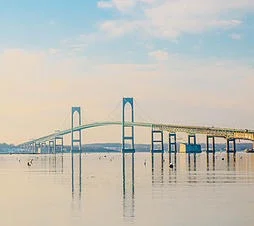
TRMG operates Twin River Casino in Lincoln, a Hard Rock Hotel in Biloxi, Miss., and Arapahoe Park, a horse-racing track in Colorado. The management group officially announced that it had acquired Newport Grand last July, but it was already public knowledge that the company would seek to move Newport Grand’s gaming license to a new site, possibly in Tiverton, which seemed more open to hosting a destination casino.
“When we acquired Newport Grand we acquired it not thinking we would be able to do many things with it other than operate it as it was,” said John E. Taylor Jr., chairman of the board of directors of Twin River Worldwide Holdings, the parent company of TRMG, during a recent phone interview with ecoRI News. “But we wanted to see if there was a possibility that there was another community in a more advantageous location that might consider hosting a facility like this.”
Table games are considered by the gaming world as a vital way of attracting a larger, younger demographic, but twice Rhode Island voters, particularly Newport voters, said “no” to table games at Newport Grand. It seems the last majority “no” vote, in 2014, sealed Newport Grand’s fate.
Gambling with economy
The fiscal 2015 financial report of the Lottery Division of Rhode Island’s Department of Revenue states that $516,262,400 in revenue was generated by video lottery (slot) machines and $106,640,942 was generated by table games. Together, they make up 71.9 percent of the gaming industry in Rhode Island, which brought in a total of $867,054,081 during the last fiscal year.
Rhode Island’s gaming industry is the state’s third-largest revenue source.
Throughout the spring and summer of 2015, TRMG held a series of talks and charrettes in Tiverton to explain to residents the company’s design plans for the proposed casino. According to Taylor, residents seemed receptive to the idea.
“We thought that the market could support 1,000 machines, comparable to the number that they have at Newport Grand, and we thought about 30 table games could be supported,” he said. “But what we told the residents is that we’re having this conversation to see what else you would feel comfortable with.”
In early November of last year, TRMG presented its plan to the Tiverton Town Council: a two-story, 85,000-square-foot facility with an attached 84-room hotel and 1,100 surface parking spaces. The proposed casino would be set on 23 acres on a 45-acre parcel just off Stafford Road and 400 feet from the Massachusetts border.
From this location, it’s a 50-minute drive to Plainridge Park Casino, in Plainville, Mass., and 30 and 43 minutes from Taunton and Brockton, respectively, where two casinos are slated to be built. A $1.7 billion Wynn Boston Harbor casino in Everett also has been proposed.
Taylor said TRMG isn’t too worried about the possibility of three more casinos opening in the area. “Convenience is critical,” he said. “The more convenient that we can make it for people to get to, the better.”
The proposed Tiverton casino would employ between 525 and 600 employees, according to Taylor, and all of Newport Grand’s 175 employees would have the opportunity to work at the casino in Tiverton.
Voters to decide
Earlier this year, both chambers of the General Assembly overwhelmingly approved legislation to give Rhode Island residents the opportunity to vote for or against a Tiverton casino. The legislation was signed by Gov. Gina Raimondo the next day. Questions regarding the casino will be put on the November ballot. The proposal will have to receive a majority “yes” vote from both state voters and Tiverton residents.
Should the ballot questions win approval, the state would receive 15.5 percent of table revenues and 61 percent of video-lottery terminals (VLTs), from both from the new Tiverton casino and Twin River. The legislation would also guarantee each host community $3 million annually from the casinos.
“They (casinos) have been, up to this point, considered to be a real success story, but I do consider the fact that they are such a large part of our state’s revenue to be a real issue for worry and to some extent, a failure of Rhode Island to really get its growth-oriented sectors going,” said Leonard Lardaro, an economics professor at the University of Rhode Island. “What we’re looking at, and I think it is important to put it in this context, is that the gambling industry is very over supplied, very, very oversupplied.”
Patrick Kelly is the chair of the department of accountancy at Providence College. He has studied casinos and their social and economic effects, specifically in the southeastern Connecticut region. Kelly said that in the coming years “there is going to be a lot more commitment to casinos for revenue and jobs,” not just in the Northeast but throughout the United States. He said that is a concern.
By 2018 he expects to see some 60 casinos along the Route 95 corridor between Maine and Maryland, including three or four in Massachusetts, two in Rhode Island and two or three in Connecticut. Kelly said this will ultimately lead to market saturation, but a greater concern of his are the social costs related to having so many casinos, such as problem gambling and an increase in criminal behavior to support gambling addiction.
About 3 percent of the U.S. population is addicted to gambling, while others are hooked by the lure of tax revenue and an economic rescue. (istock)
Addicted to gambling
Tawny Solmere is the director of Problem Gambling Services of Rhode Island (PGSRI). She said that between 1 percent and 3 percent of the U.S. population has a gambling problem, “so that means, with the census of Rhode Island, that we are looking at between 10,000 and 30,00 people” who have problems with gambling.
PGSRI is a hotline service. When people call, they are referred to a counselor at one of the six behavioral health-care clinics run by the nonprofit CODAC Behavioral Healthcare. The lottery subsidizes PGSRI, but Solmere said more help from the state would be welcomed, especially if the casino industry continues to expand.
She noted that co-dependencies, such as drug and alcohol abuse, tend to accompany gambling addiction. But there is an aspect to problem gambling that is particularly egregious. “This disorder, problem gambling, has the highest rate of suicide than any other addiction,” Solmere said.
Solmere said PGSRI and CODAC are neither for nor against casinos, but she is worried that unless more is done to help those with gambling addiction, the situation could easily spiral out of control.
“If we don’t get the resources to meet that need, Rhode Island is going to have an epidemic equal to the heroin epidemic we are looking at now,” she said. “It’s a scary prospect.”
Rep. John Edwards, D-Tiverton, said building the casino in Tiverton “just makes sense” and will offer local residents a large number of employment opportunities. As far as gambling addiction, he said, “You worry a little bit about that,” but, “if they are going to gamble, they are going to gamble somewhere.
“I think that it will be an asset for the Tiverton and the whole East Bay area.”
George Medeiros, a longtime Tiverton resident and owner of Tiverton Sign Shop, agreed. “It’s just something for this area,” he said during a recent phone interview. He noted that there is little to attract people to Tiverton, and for it’s residents, there are few dining and entertainment options.
“For me to get a pizza right now, I would have to go to Fall River or the other side of Tiverton,” Medeiros said.
He said he isn’t worried about traffic congestion, as the casino will be located just off the Route 24 ramp, and according to a TRMG press release from November 2015, the Rhode Island Department of Transportation is planning to build a roundabout on Canning Boulevard with a dedicated turn lane into the proposed casino.
The only thing that worries Medeiros is if the proposed casino in Taunton opens before the Tiverton casino. “They might not be fast enough,” he said.
Brett Pelletier is a member of the Tiverton Town Council and the only one to oppose putting questions about the casino on the November ballot. He also was the only council member to respond to an ecoRI News request for comment.
Pelletier, who is a real-estate analyst with a consulting firm in Boston, was appointed to a Town Council subcommittee to vet the casino legislation and provide feedback before it went to the General Assembly.
“Every time that the meeting was meant to take place, it was canceled for one reason or another,” he said. “We never actually met.”
In regards to Rhode Island’s dependency on the gaming industry, Pelletier said, “I think that it’s an atrocious way to run a government, preying on people who have an unjustified hope that they will strike it rich at a casino.”
Economic impact
The Brockton and Taunton casinos are scheduled to be built by the end of 2018. TRMG has taken the possibility of those facilities opening by then into consideration in its gaming market study.
The company has included four different scenarios, including the Brockton casino entering the market but Taunton doesn’t. The report estimates $127.6 million in revenue if that were to happen. If neither of those casinos opened, the report estimates $147.9 million in revenue for the Tiverton facility.
TRMG has worked closely with the Rhode Island Department of Environmental Management to identify developable land, according to the company, and it hired the firm Natural Resources Services Inc. to suggest mitigation plans for any adverse impact on local wildlife.
Rachel Calabro, a community organizer at Save The Bay, said the Providence-based nonprofit has yet to look deeply into the possible environmental effects of a Tiverton casino. She has seen the plans for the site and suggested that they reduce the amount of parking surface area by building a garage instead. The amount of concrete surface space initially suggested for the casino could lead to serious flooding issues, Calabro said.
She also suggested the installation of solar panels.
Casinos in Tiverton, Taunton and Brockton could certainly become go-to destinations, but the continued reliance on this revenue raises legitimate questions: Can the Rhode Island gaming industry continue to be a leading revenue source given the inevitable construction of more casinos in Connecticut and Massachusetts? Will the gaming industry last and will it be worth the social costs?
A bright joke
The brightness (almost blinding) of the sun-on-snow this far into what had been a very warm early spring produced exhilarating effects this morning, until you considered the dead flowers and frozen tree buds. But snow is a remarkably good insulator and so some of the flowers just pushing up through the ground will survive this meteorological bad joke.
But trying to reach the surface

"Layers of Time No. 3" (encaustic and collage on panel), by Willa Vennema, in the "Beneath the Surface'' show of encaustic works by artists from around New England at the Saco (Maine) Museum through May 28.
136 ways to confuse
"In the spring {in New England} I have counted one hundred and thirty-six different kinds of weather inside of four and twenty hours."
-- Mark Twain
Twain lived for many years in Hartford, Conn., although his favorite place in the world might have been gorgeous Dublin, N.H., near Mount Monadnock. I became very familiar with the town because I had to drive my manic-depressive alcoholic mother there on numerous occasions to be dried out at a famous place for such problematic work known as Beech Hill Farm, on the top of a mountain above the village. Further down the hill was Yankee Inc., which still publishes Yankee Magazine and the Old Farmer's Almanac.
Dublin remains a good place from which to watch the vagaries of New England weather.
-- Robert Whitcomb
Nothing plane about this geometry

Encaustic work from Caryl Gordon's show "Organics and Geometrics,'' at Galatea Fine Art, Boston, through April 30. She sees our world as a mix of organic and geometric shapes.
Yves Salomon-Fernandez/Tony Dreyfus: A drawback of math emphasis
Via the New England Journal of Higher Education (NEJHE), part of the New England Board of Higher Education (nebhe.org)
In June 2015, we argued in a NEJHE article “Reducing Math Obstacles to Higher Education,” that intensified efforts to improve math education may make sense for many students, but for other students–those who lack ability or interest in math–the prescription of more math limits their ability to attain a college credential. As a result, heightened math requirements can limit some students’ employment options and play a counter-productive role in helping this segment of students achieve full participation in the economy.
Such students would benefit more from an educational program with reduced emphasis on traditional math. They could better spend more time on other studies that would help them develop themselves toward successes in further education and careers. All students, including those with little ability or interest in math, should have access to higher education and a college credential that will help them develop the abilities they will need as workers and citizens in a complex society.
In the current article, we focus more on economic issues. Public discussion today focuses greatly on the relationships among economic inequality, education and technological change. But understanding in this area suffers from assumptions about the value of math education for gaining useful skills when work opportunities and skill demands are so varied. With this article, we hope to stimulate research, debate and experimentation that could create new understandings and models to build the flexible programs we need to move closer to full economic participation and economic independence.
As our work has proceeded, a new book has greatly encouraged us: The Math Myth, And Other STEM Delusions by eminent political scientist Andrew Hacker (The New Press, March 2016). Hacker has written extensively about race, gender and income inequality, and with his wife Claudia Dreifus, authored the 2011 book Higher Education? How Colleges Are Wasting Our Money and Failing Our Kids—and What We Can Do About It. Many of Hacker’s points in The Math Myth dovetail closely with ours; he also provides much useful insight into how misleading arguments for more math education have exaggerated the benefits of current approaches to math and allied fields. We hope the publication of The Math Myth will contribute to the goal we hold of reducing math barriers to higher education and good jobs.
Technological progress and the need for math
Education beyond high school is becoming increasingly necessary for entry into the better-paid and more secure sectors of the job market. (Sandy Baum of the Urban Institute provides substantial evidence on the income benefits of college in “Higher Education Earnings Premium: Value, Variation, and Trends,” Feb. 24, 2014.) In so many vocations and careers, math plays little or no role, but higher education is required. As a result, math-based barriers to higher education block people from education toward careers in which they could prosper and contribute more to the nation. We all should have access to such education whether or not we are good at math.
The 20th-Century experience showed how new technology could gain millions of users without demanding users’ expertise. If mechanized factories, the automobile, the telephone and the computer were to spread, some people had to master new knowledge and skills. But most people did not need to learn how to run an assembly line, repair a car engine or design the circuits inside a telephone or personal computer. The creation of technology requires scientists and engineers and its use demands technicians, operators and repair people. As a result, any member of our technology-dependent society inevitably relies on people with mathematical, scientific and engineering skills.
We need these technically and mathematically trained people—yes, many of them. But we do not allneed higher math to contribute in the workplace; for a large number of jobs, higher math skills do not play any significant role.
One argument for sustained universal math education is that technological progress and global competition demand greater science and math skill. Such concerns can be seen in government reports such as “STEM Education: Preparing for the Jobs of the Future,” (from the U.S. Congress Joint Economic Committee, April 2012) or “Federal Science, Technology, Engineering, and Mathematics Education 5-Year Strategic Plan” (from the National Science and Technology Council, May 2013). While this argument partly springs from concerns that American companies face shortages in STEM skills that weaken their competitiveness, another concern is that workers without skills in science and math will suffer limited access to well-paid jobs. Those without science and math skills will, in this view, be denied access to the “new economy.” But this argument disregards key realities of the modern highly specialized economy. Technological and economic change increases math skill demands only for some workers, while leaving math skill demands unchanged or even reduced for others. In an economy with so much specialization of skill and inequality of opportunity, investment in math is a winning bet for some and a losing proposition for others.
In school, home and workplace, powerful math technology is included in handheld graphing calculators, in the most common spreadsheet software and in computer algebra and statistical systems. Such technology is also embedded in countless other programs and devices. What are the implications for math skill demands in the workplace and for what high school and college students should learn? As such technology spreads, who benefits from gaining greater math skills?
Those who head into industries focused on science and engineering may gain important advantages through math skill. The construction engineer may have skills and advantages over the road-building project manager who, in turn, probably has advantages over someone who lays asphalt or pours concrete. Managers and designers of all types—mechanical, electronic and financial—receive benefits from their greater skills.
But even in such technology-dependent industries, large numbers of jobs do not depend at all on math skill. The driver, the call-center worker, the bank teller or the salesperson relies on the math that they need being baked in to their equipment, so that machines operate safely, so that software gets the customer info to the right file, so that the deposit is added and the interest figured. To be sure, such tasks may still require human intelligence, for example, to evaluate the appropriateness of a transaction, to maintain good will with a customer, to recognize exceptional conditions that might cause danger and so forth. Powers of mathematical estimation and arithmetic could play a role.
Indeed, much of our efforts in design of equipment, software, jobs and larger systems are intended to protect operations from the human errors of the operators. Whether or not we like this development, the proportion of people who need to fully understand the mathematical principles or operations of their work is reduced. Perhaps a positive aspect is that more human energy can be devoted to human contact with customers and co-workers. (Andrew Hacker, in Chapter 4 of Math Myths, emphasizes that many people in scientific or technical jobs that require mathematical training, including physicians, engineers and actuaries, often do not draw on that training in any meaningful way.)
More detailed analysis of the experiences of students and of workers in STEM and other fields suggests that the supposed shortage of STEM skills has been exaggerated. Hal Salzman, Daniel Kuehn and B. Lindsay Lowell, in “Guestworkers in the high-skill U.S. labor market” (Economic Policy Institute, April 24, 2013), point out that only 5% of U.S. workforce jobs can be classified as STEM employment. And large proportions of graduates in STEM subjects, as much as half, do not end up working in their fields. (The low percentage of jobs in STEM fields does not include jobs in health.)
The “bad equilibrium” of weak high schools and economic inequality
Even as recent high school graduates wonder whether the cost of college is worth it, salary data continue to show that those with a college credential earn on average much more over a lifetime compared to those without. In fact, the job market in many areas of the country is less welcoming than it once was to people without any college experience. Many employers are increasingly using the college degree as they once used a high school diploma, as a screen to focus on potential employees for jobs at middle-skill levels that in the past were more often filled by people without college degrees. (A September 2014 report by Burning Glass Technologies, “Moving the Goalposts: How Demand for a Bachelor’s Degree Is Reshaping the Workforce,” includes detailed data on different job areas in which a bachelor’s degree is increasingly required.) Meanwhile, college-going rates across the country are at an all-time high, but income inequality continues to grow.
A full understanding of our rising economic inequality would help guide us to strategies toward greater equality. But this inequality is so multifaceted, affecting our society so deeply, that it remains hard to grasp. One key part of this “bad equilibrium” is the sorting of students by the educational system. Math plays a central role in this sorting by which different students are encouraged to pursue or are blocked from pursuing different amounts and levels of education. A second key part of the bad equilibrium is the reinforcing cycles of low wages and low skills.
For "first-generation" college students and students from low-income families, entry into college involves overcoming many obstacles, including a college environment that may be unfamiliar in many ways. As we pointed out in the prior article, math requirements serve as an effective barrier to entry into college and thus limit the potential for many to move to a higher income level with more marketable skills. Weakness in math should not exclude anyone from entry or success in the colleges that can develop these skills and to certify with diplomas that students have them. Yes, study of math can help develop some of these desired skills, especially tenacity in problem-solving, but many paths can help build this tenacity. All students deserve productive paths to develop the skills they need for employment, including mental discipline and problem-solving skills.
Adopting educational approaches that lead to full economic participation
Breaking this negative cycle of unequal opportunity will require many changes—in schools and across many of our social and economic institutions. Is wholesale change possible? We think so. But our country needs profound educational progress, so we can meet the many challenges emerging from rapid economic, technological and environmental change. We are proposing that the K-12 and higher education sectors take a long-term view in addressing existing exclusionary college-entry policies that discourage students who are weak in math from making long-term choices that will help them contribute to the economy at their full potential, generate personal wealth and earn income sufficient for financial independence.
Data on income inequality and wealth gaps point to interactions between race and ethnicity and individual and family wealth. In a 2015 report from Demos and the Institute on Assets and Social Policy called “The Racial Wealth Gap, Why Policy Matters,” Laura Sullivan and her co-authors show how changes in housing and educational policy could reduce the large racial and ethnic gaps in family wealth. We take the position that our educational policies and systems should reduce, certainly not worsen, the social conditions that limit economic mobility for marginalized populations, especially for students of color. In recent years, those populations have suffered significant setbacks. According to Rakesh Kochhar and Richard Fry writing for the Pew Research Center in December 2014, wealth inequality has grown along racial and ethnic lines since the Great Recession; the median wealth of non-Hispanic black households and of Hispanic households fell between 2010 and 2013 and neither group has experienced significant improvements since.
This link between race and income inequality is particularly concerning as demographers are predicting that minority groups will rise to over half of the total population by mid-century. As Sandra L. Colby and Jennifer M. Ortman described in their March 2015 Census report “Projections of the Size and Composition of the U.S. Population: 2014 to 2060, Population Estimates and Projections,” "no group will have a majority share of the total and the United States will become a 'plurality' of racial and ethnic groups." We will all be depending on a more multi-colored workforce and need to develop schools, workplaces and policies that help us “pull together” in the context of a competitive global economy.
In an economy where education matters ever more, it becomes both a social and economic imperative that we provide education that works for students of all backgrounds. Our economic success depends upon learning how to make the path through school and the path from school to work successful for alltypes of students. Both the K-12 and higher education sectors can play active roles in disrupting the pattern of low skills and low wages. Reforming the roles of the K-12 and higher education systems will require many changes in our society as they are critical gate-keepers that determine who gets a shot at earning the credentials that can lead to individual economic prosperity.
Ideas for change
In “Reducing Math Obstacles to Higher Education,” we advocated new thinking about how to build a more flexible educational system of greater access and equality that students need. We called for K-16 collaboration toward solutions to the problem of math as a barrier to higher education and use of empirical data to measure the magnitude of the problem, especially for vulnerable populations. We now add some ideas for change that we think are needed.
- High schools should take a variety of steps to bring their programs more in line with the intellectual, personal and economic interests of their students. As we explained in the prior article, the third and fourth years of high school math are unproductive for many students who do poorly in math and have educational and career interests that do not benefit much from math. For some students, such steps might include less time studying math in the final two years of high school and more time on other subjects in which they can envision a career.
- At the same time, high schools should innovate in other ways to make their program more engaging and useful. As we noted in the earlier NEJHE piece, high schools should expand their mission to include strong programs in arts and social sciences that appeal to the expressive and social interests of adolescents, that develop a rich variety of skills and intelligences, and provide more knowledge about the adult world and the many fields of study available in college. High schools should also move the science program to a greater focus on biology and the applied disciplines of health, nutrition, environmental and earth sciences.
- To give high schools and high school students more flexibility in designing their curricula to meet student needs and interests, colleges should eliminate admission requirements of three or four years of high school math for those students not pursuing STEM degrees. Colleges should also eliminate general college graduation requirements that all students pass a math course at the same level regardless of their major and instead establish major requirements for math with renewed attention on what math is actually needed by the majority of the majors—much in many fields, less in others.
We advocate this reduction in math requirements, not because we want to “dumb down” education in the sense of making it easier and less useful. Instead, we think it is the fundamental duty of the educational community to make the invaluable benefits of skill and knowledge available to the widest possible proportion of students. We must challenge all our preconceptions about what is required to learn. Is calculus really needed for people to prepare for careers in medicine and other health professions? What math do accountants and coders really need to do their work? How much physics can one learn without calculus? How much chemistry can one learn without algebra? Progress on many questions such as these may open doors to many students who currently are excluded from knowledge and skills that can make their education more engaging, their citizenship more responsible, their work life more rewarding and their contribution to society more complete.
Some will object that reducing math requirements means “closing doors” or locking certain students into a disadvantaged class of people with a weak education. This concern appears well-intentioned, but we think misses the bigger picture and closes off opportunities for positive change.
The bigger picture is that our system today–with its single high school path of uniform requirements for all students in a world of highly unequal resources–is effectively closing doors of opportunity for millions of students. Those attending strong high schools, good colleges and established graduate programs have diverse opportunities and salaries far higher than those who attend weak high schools and get little or no college education.
We need schools that come much closer to engaging the interests, desires and ambitions of students, to help people learn what they really can use in their intellectual development and in their work lives. Real economic opportunity demands a deep redesign of school programs. We hope to see some of this deep change in the next decades.
Sustained open doors
We focus on just two aspects of new directions that would complement reduced math requirements in order to improve access and effectiveness of higher education. The first aspect is “sustained open doors,” a strategy that responds directly to the concern about reduced math requirements limiting opportunities for students.
Inevitably, all students do not find motivation, ability and resources available together to support hard work at school. Hence we see early bloomers and late bloomers, school aces and strugglers, rich kids and poor kids. Many students lack the financial and family resources to continue their education into adulthood without interruption.
Yet long educational paths, as much as 20 years total, can pay off far better than short paths ending without any college. Our society must make special efforts to keep doors to education open over students’ lives so that hopes for equal economic opportunity remain real. The students who fail to take advantage of high school for diverse reasons deserve meaningful second chances. Many other students would also do well to leave school after high school or two years of college and to experience the world of work. All these students should later find welcoming opportunities to return to school, with full chances to learn whatever can further their intellectual and economic growth.
For example, someone wanting at age 25 or 30 to enter a field that requires more science or math should be able to study for a year or two and then rejoin a path of a more advanced education. As education for newly created careers becomes more necessary, such re-entries into math and other fields will become needed at various ages of life.
Intellectual focus, personal direction and connection to work
A second aspect of a more just and effective system of education would restructure the last two years of high school and first two years of college to better foster intellectual development, personal direction and engagement with the world of work.
We look at the education of students ages 16 to 21 as one continuum that is ripe for coordinated and systemic reform. Consider this span of education in three two-year periods: the last two years of high school (grades 11 and 12); the two years of community college or the first two years of four-year college (grades 13 and 14); and the last two years of four-year college (grades 15 and 16).
In each of these three two-year periods, students should be encouraged to make choices: to focus their studies for intellectual development and to learn about related careers and work skills. In grades 11 and 12, the degree of focus might be modest, e.g. having students choose one of several major areas for additional study such as science and math, the arts, history and society, or languages. Some focus such as this is common in European high schools for students of this age.
Students planning to finish or pause their education after high school or after only two years of college should have ample opportunities to gain work-related knowledge and skills through courses, internships and apprenticeships. But even those students planning on four-year college should be encouraged to choose a broad focus area and to include in their studies some work-related learning.
Similarly, a two-year college program or even the first two years of a four-year college could include a modest concentration in one subject area, like a minor in a subject such as science, language or history. Such a two-year concentration would help students gain more experience with choice about their academic and vocational lives. Students entering the last two years of college might choose a major related to or different from their focus from the first two years of college. But the earlier experiences of focus and connection to work could make the last half of the college career much more useful.
* * *
Our preference for less focus on math is rooted in the fact that the prevailing math curriculum is blocking many students from completing high school, getting to college or completing college. Those who are least successful in math need more education, not less, that will help prepare them for better jobs and better lives. Our goal should be to offer an education of equal value to all young people—not the same goals for all, which wind up creating much opportunity for some and much less for others. These students less able or less interested in math have a fully equal right to a college education and to the wide opportunities for personal and economic growth that college can bring.
Tony Dreyfus taught math at Brookline High School outside Boston. He also worked with the public school systems in Chelsea, Revere and Everett, Mass., in support of elementary math improvement efforts through math coaches. His college studies in economics and master’s degree in city planning with a focus on regional economics included extended study of statistics and economic modeling.
Yves Salomon-Fernandez is interim president of Massachusetts Bay Community College. She is the incoming president of Cumberland County College in New Jersey. She holds a master’s degree from the London School of Economics and a doctorate in education statistics from Boston College.
Barbara Holland: 'A handful of moments'
"Poets and songwriters speak highly of spring as one of the great joys of life in the temperate zone, but in the real world most of spring is disappointing. We looked forward to it too long, and the spring we had in mind in February was warmer and dryer than the actual spring when it finally arrives. We’d expected it to be a whole season, like winter, instead of a handful of separate moments and single afternoons."
-- Barbara Holland, from Endangered Pleasures: In defense of naps, bacon, martinis, profanity, and other indulgences
Llewellyn King: Another way to fix the illegal-alien problem
Sometimes a better idea is so obvious and so simple that it is overlooked.
For example, it took automobile manufacturers nearly 100 years to realize that drivers and passengers might like to drink something on their journeys, and might need a place in their vehicles to put their drinks. Then they did not get there without a shove from a chain of convenience stores, which started giving away simple plastic devices that clipped onto a window -- woe betide you if you inadvertently opened the window.
According to one man, and his band of dedicated followers, that is what is happening with the immigration debate. He does not propose to solve the issue, but rather to defuse it; to introduce a “third way” which will help those who live in fear of a knock on the door from deportation officers, as well as those who bear the cost of their illegal status.
Illegal immigrants -- or undocumented immigrants, if you prefer the gentler term -- live in what is, in effect, a kind of open prison. They dare not leave the United States because they cannot return. They flit in the shadows, imposing huge costs on local communities for education, healthcare, housing, policing and prisons.
The man with the idea as simple as a cup holder is Mark Jason, 77, a fiscal conservative, who lives in Malibu, Calif. For six years, he has been at the helm of the Immigrant Tax Inquiry Group, an organization he created and finances.
The core of Jason’s plan is to issue illegal immigrants who are working or want to work with a 10-year, special work permit that can be renewed. No amnesty; no citizenship, nor talk of mass-citizenship. The permit holders and their families could leave the country and return, but that is just part of the plan.
There is a caveat, and it is the key to the plan: A 5-percent tax would be levied on both the workers and the employers, which would raise $176 billion over a 10-year period. Instead of going into general revenue, that money would be employed where the illegal immigrants are distorting local economies.
“The model creates $100 billion to act as a financial salve to help heal our immigration issues, and $76 billion to be used for our needed infrastructure,” Jason said, adding, “We calculate that if we allocate 40 percent of the total revenue of $176 billion, we can create over 1.4 million American jobs at $50,000 each in a wide spectrum of fields, including health, education, law enforcement and construction.”
Under the plan, he said, “we would get people out of the emergency rooms and into healthcare plans.”
Gone would be the 18-percent “nanny tax,” which few employers or immigrantsactually pay. Gone too, for the most part, would be the more important Individual Tax Identification Number (ITIN), which Jason, a former Internal Revenue Service special agent and university budget officer, says accounts for the loss of more than $50 billion over 10 years in fraud. Fraud occurs, for example, when ITIN tax filers claim imaginary dependents for excessive tax credits.
Anyone can get an ITIN number, and many undocumented workers paying ITIN tax believe that it is a path of sorts to legality; that one day, they will be able to show they have worked, paid taxes and, therefore, are upstanding people worthy of citizenship.
Jason sees himself as a man who fixes things. After high school in Mexico, in the 1950s, he learned to fix diesel engines because he was appalled by the pollution from their exhaust – pollution he found to be worse than that in his native Los Angeles. He also studied animal husbandry, so that he could try to fix the problem of “scrawny cattle and hogs” in Mexico.
In 2007, Jason heard that the California State University system did not have the funds to admit 8,000 new students. “That was the system that gave me the two distinctly different majors that helped me throughout life, and I wanted other students to have the same opportunity,” he said. So he worked on a state tax reform fix.
Now Jason, who has held briefings in Washington, needs to find a member of Congress who will write a bill and introduce it.
Llewellyn King is host of White House Chronicle, on PBS, and a long-time publisher, columnist and international business consultant. This first ran at InsideSources.
The endless search to 'find' our identity

"Notes from Tervuren'' (gouache, collage and ink on sheet music), by Radcliffe Bailey, at Samson Gallery, Boston through May 28.
His symbolism-laden work explores African-American and international black identity and how individuals may have arrived at their subjective racial, familial, political and national identities. As with many artists these days, there's a strong focus on issues of individual and group identity.
Robert Whitcomb: The gig economy
I’m old and lucky enough that most of my working life took place when large U.S. enterprises usually made long-term commitments, albeit often rather vague, to their competent workers. If a recession hit, senior executives would grit their teeth and try to hang on to their employees. Back when I was a business editor at The Wall Street Journal, the International Herald Tribune and elsewhere, Fortune 500 senior executives’ commitment to their fellow employees often impressed me. Not much anymore!
There was something like two-way loyalty, and the top people often showed a certain sensitivity about public perceptions of their compensation.
Now the idea is to maximize short-term profit and stock price and thus senior execs’ and board members’ compensation above all else. I have seen that in some sectors where managements that used to be satisfied with 15 percent profit margins raised them to over 30 percent. And CEOs now make on average over 300 times the average pay of their employees, compared to 20 times in 1965!
Thus many companies refuse to spend money on long-term investments, such as employee training: While such outlays strengthen companies in the long haul, they cut into short-term net income. So train yourself – you may well be laid off next month anyway.
Then there’s the rise of the “gig economy,’’ in which “on-call’’ workers, “permatemp workers,’’ “independent contractors’’ and people employed by such contract firms as Manpower comprise an ever larger share of the workforce.
The Wall Street Journal reports that these days 17 percent of women and 15 percent of men have such “alternative employment.’’ Such jobs are up by more than half from 2005. (See ‘’’Gig’ Economy Spreads Broadly,’’ WSJ March 26-27).
These positions, with their very unpredictable hours, pay lower wages than regular jobs and offer few if any fringe benefits. They are spreading rapidly across more sectors, such as law and healthcare, pulled by computerization and globalization. They have long been particularly common in higher education, which depends on low-paid adjunct teachers to offset the cost of almost-impossible-to-fire tenured professors, with their high salaries and big benefits.
Employers obviously need flexibility to adjust their staffing levels. But when they reduce the ranks of their full-time employees beyond a certain point to keep short-term profit margins and senior executive pay sky high, they risk undermining the viability of their enterprises by destroying the institutional memory and employee morale and loyalty needed formost enterprises’ long-term success.
Short-termism usually triumphs. CEOs don’t expect to have their jobs very long; thus they want to accelerate their compensation.
Meanwhile, the economy as a whole tends to stay in a low-growth pattern as the purchasing power of most people shrinks and national wealth is increasingly concentrated in a tiny group whose members can perpetuate their (and their children’s) power with the aid of cash (and later, lobbying and other jobs) for politicians in return for favorable policies.
We’ll see a revival of private-sector unionization as more workers see that as the only way to obtain a modicum of economic security. We’ll also see an increasing number of economically insecure Americans following the siren song of such con men as Donald Trump and such presumably sincere but wrong-headed reformers as Bernie Sanders who don’t understand the need to encourage the “animal spirits’’ of entrepreneurism; Mr. Sanders has never had a job in business. There are reasonably centrist policies that can make things better, such as adjustments in the tax code and labor regulations.
None of this is to say that “contingent’’ and/or freelance employment can’t work well for some people. I myself have enjoyed some of its flexibility as a partner in a couple of small businesses. But you can’t build a strong economy on it.
xxx
Post-Brussels, President Obama and some other sensitive souls continue to avoid saying “Islamic’’ before “terrorism’’. They’re being intellectually dishonest. Islam (mostly its Sunni side) has big problems, the worst being that too many of its emotionally needyfollowers adhere to the 7th Century barbarism and supremacism in some of its scripture. Islam needs a reformation.
Robert Whitcomb (rwhitcomb51@gmail.com) is a Providence-based editor and writer and overseer of this site.
Sean Moulton: Speed up government rulemaking
Via OtherWords.org
One of the dirtiest words in politics is “regulation.”
It conjures up images of confusing paperwork, red tape, and obstacles to progress and innovation. However, when it comes to guaranteeing that the water we drink is lead-free, the air we breathe is clean, and that the food we buy at the supermarket won’t cause cancer, people are all for them.
The winds quickly change when you refer to regulations as “protections.”
Regulations, the rules that govern the laws passed by Congress, are necessary. But they present a target-rich environment for corporate and special interests.
Just because a law is passed doesn’t mean it’s going to be enforced. More often, it’s up to various federal agencies to interpret the law and write the rules — that is, the regulations — for its implementation.
This rulemaking process makes it too easy for special interests to twist a good law into something that’s more beneficial for their own interests than American taxpayers. They spend billions of dollars every year to gain access to decision-makers in government in an attempt to influence their policies.
If you want to get the money out of politics, you should also worry about the money inpolicy.
Away from public view, many players take aim at the rules that agencies make: industry, lobbyists, lawyers, politicians, and even other agencies. Their influence and interference often leads to enormous delays and compromised standards.
For example, it took the EPA more than 10 years — and a court order — to finish rules on mercury emissions from power plants.
It was a rule about mercury. In the air. That people were breathing. If that doesn’t qualify as an urgent issue, what does? Yet it took a decade for the government to get regulations in place.
The process has become cumbersome to the point that you can never know whether agencies will finish making rules that they start — much less ensure that the final rules will match a law’s original intent. Unfortunately, all attempts by Congress to “solve” the rulemaking problem have consisted of provisions that would actually make the current system worse.
One preposterous proposal, put forward by Sen. Rand Paul, actually calls for Congress to have oversight over new rules.
Congress is surely dysfunctional. Even proposals with bipartisan support can inexplicably languish for months on the Hill and die with no action. That’s not where you go to smooth out a rocky process.
The fact is that “reform” proposals like these aren’t meant to remedy our rulemaking dilemmas. Instead, they’re part of a campaign by powerful interests to make the process even less effective.
What we need is greater transparency and accountability in rulemaking. There should be no secret processes where political pressure can be brought to bear behind closed doors. Any changes made to a federal agency’s rule — whether by the White House, other agencies, or lawmakers — should be done on the public record, with a full explanation of why it was necessary.
Agencies should also have the authority to operate more quickly and decisively based on their expertise, including rejecting proposed changes they believe damage a rule.
As distasteful you may find regulations, we need to speed up the rulemaking process and make it less vulnerable to pressure from outside groups. Without it, our laws will only protect the highest bidders.
Sean Moulton is the Open Government Program Manager at the Project on Government Oversight (POGO.org).
Will they regret it in the morning?

"Girls Night Out" (acrylic on canvas), by Larisa Martino, in the show "Fashion Statements,'' at ArtProv Gallery, Providence, April 2--May 27.
The wonders of wax

"Festival of Flags I'' (encaustic), by Jeanne Griffin, in the big group show "Beneath the Surface,'' at the Saco Museum, Saco, Maine, April 2-May 28.
The show includes the work of some of New England's best painters working in encaustic, also known as hot-wax painting. The process involves using a mix of heated beeswax and damar varnish to which colored pigments are added. The liquid or paste is then applied to a surface -- often prepared wood, although canvas and other materials are often used. The effects can be very beautiful --- and sometimes eerie.
James P. Freeman: Will Boston follow New York's perilous progressivism?
“One entered the city like a god; one scuttles in now like a rat.”
— Vincent J. Scully, Yale architectural historian
So was the thinking about the demolition in 1963 of a Beaux Arts masterpiece in New York City, the old Pennsylvania Station, an act of progressive vandalism, from which rose (or sank) the present site of the Madison Square Garden complex, a dingy maze of commerce and commotion. In the 1960s, progressivism – once a purely political movement – began to seep into civics and cultural mores, even private-sector architecture.
The city ultimately recovered from this destructive movement in the 1990s and 2000s. But with vicious irony, Bill de Blasio was elected in 2013 as New York City’s mayor (the first Democrat in 20 years) within days of the 50th anniversay of the old Penn Station’s demise.
De Blasio is today’s most outspoken urban progressive, with ambitions beyond his abilities. His friend, and fellow co-chair of Cities of Opportunity Task Force (COTF), Boston Mayor Marty Walsh, should resist this progressive lurch, and distance himself from de Blasio, as he eyes re-election next year.
De Blasio’s Progressive Agenda is intellectual graffiti, slowly defacing the very progress that New York City has enjoyed over the last 20 years; it is also agitating residents, given recent polling.
Boston too has experienced a remarkable 20-year rejuvenation, from which it should not retreat in an effort to emulate New York.
Walsh may not seem like a progressive pillar (more of a wanna-be) but that didn’t stop then-Boston Globe columnist Joan Vennochi, during 2013’s mayoral campaign, from describing his stance on issues as, “dear to progressive hearts.” As The Globe further noted a year later, de Blasio and Walsh “both campaigned on a message of economic populism, vowing to tackle income inequality and dramatically expand early education” – among the flash points of the progressive agenda.
With regard to “rising inequality” and “declining opportunity,” de Blasio said, upon the launch of the COTF that, “the task force is going to organize and focus the progressive ideas coming out of cities.” The defining mission of the COTF is to “make equity a central governing principle” and “advance a national common equity agenda.”
What progressive ideas in the last 50 years have benefitted the likes of, say, Detroit, Chicago and Baltimore, bastions of murder and mayhem? And since when is equity a “governing principle”?
Under Mayors Rudolph Guiliani and Michael Bloomberg, New York City repelled those progressive ideas, making the city safer and more prosperous. Boston was certainly not a progressive haven during these years. Indeed, the late Thomas Menino – Boston’s longest serving mayor – was more of a powerbroker and pragmatist, eschewing lofty ideas. Rather, he fully embraced being the “Urban Mechanic.”
Last year at the second meeting of the COTF, held in Boston, Walsh said, “inequality is a national crisis. It’s holding down wages, it’s holding back our economy, it’s undermining the American Dream.”
Not in Boston. Apparently Walsh does not see the paradox of progressive thinking as it applies to his city. Boston has one of the highest inequality levels in the country, yet The Hub is flourishing. It will be fun watching Walsh explain why Boston should adopt de Blasio’s progressive politics during next year’s mayoral race.
There are other areas where the two mayors are ideologically simpatico: climate change (both mayors attended a Vatican conference on slavery and climate change last year; Walsh says – seriously! – there is “social equity” when “talking about the environment”); free universal pre-K education (in a 2013 position paper Walsh indicated that there is“no greater equity issue” than ensuring all students “start kindergarten with foundational skills”); and affordable housing. Progressives demand equality of outcomes in all aspects of life — even if it is not earned or deserved or paid for.
Writing for The American Prospect, Harold Meyerson noted that the mayoral class of de Blasio and Walsh, among others, in 2013 is “one of the most progressive cohorts of elected officials in recent American history.” Collectively, they may be “charting a new course for American liberalism.”
Today 27 of the nation’s 30 largest cities have Democratic mayors. But, mercifully, 23 states are controlled by both Republican legislatures and governors. It remains to be seen if the new progressives will leave a positive legacy. Preferably, it will be a short-lived one.
Once again, there is talk of “transforming” Penn Station and returning it to its former state of grandeur. That is the delicious irony of New York’s progressivism: everything old is new again. Boston need not repeat the refrain or rattletrap.
James P. Freeman is a New England-based writer and former columnist with The Cape Cod Times. This piece originated in The New Boston Post.
Webcast: Using 'white hat hackers' to thwart cybercriminals
From The Boston Global Forum (bostonglobalforum,org), see a Webcast on using "white hat hackers'' to to fight cybercrime.
http://bostonglobalforum.org/2016/03/white-hat-hacking-presentation-to-the-bgf/