
Vox clamantis in deserto




Llewellyn King: I remain a lover of riding the rails, even Amtrak with its frustrations
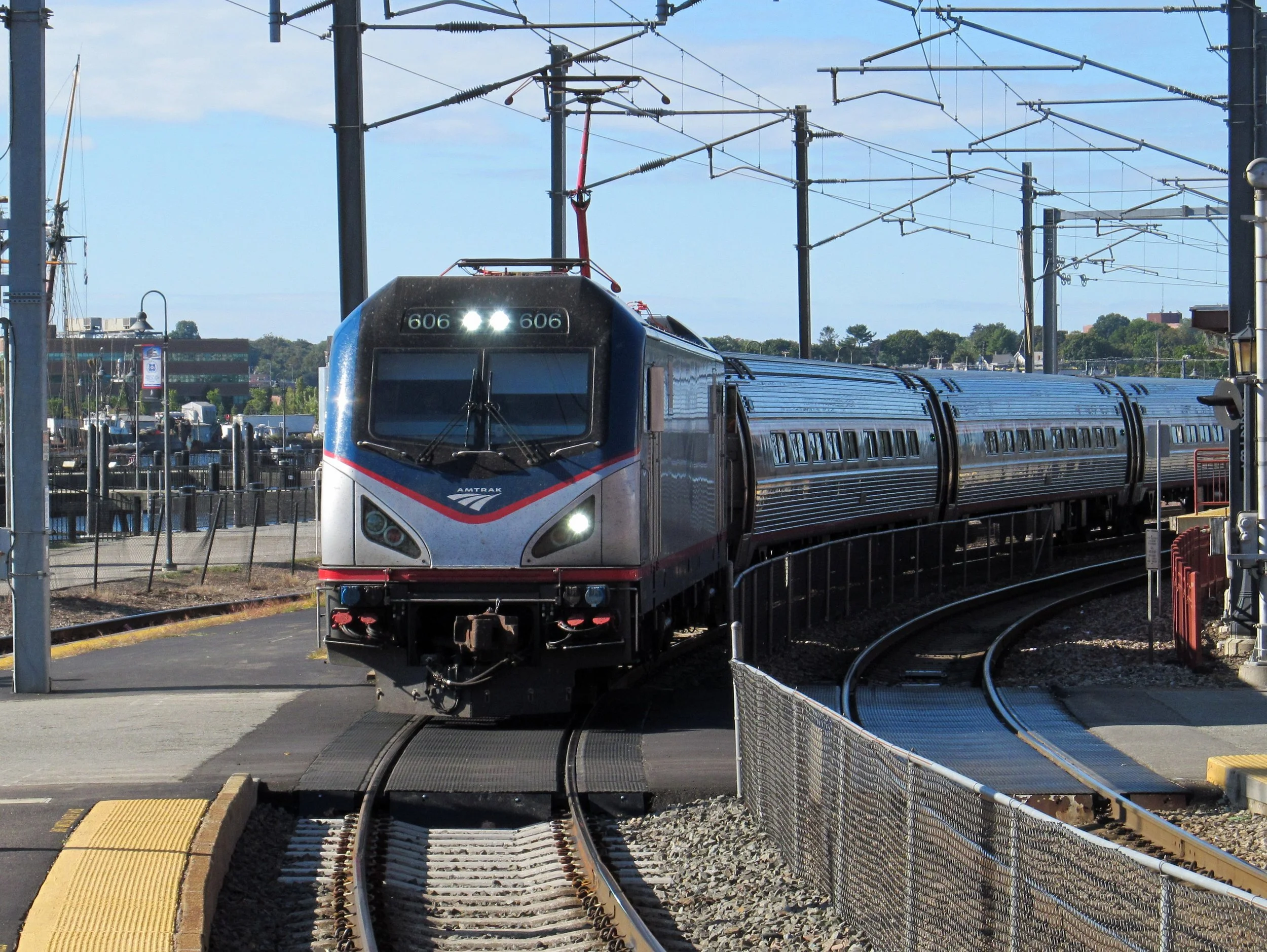
A Northeast Regional train, with an ACS-64 locomotive and Amfleet I passenger cars, at New London, Connecticut’s Union Station.
— Photo by Pi.1415926535
This is being written on Amtrak’s Northeast Regional Train 171, in coach, en route from Providence to New York. I am in my happy place.
I am a trainman. Given a choice, I would ride the rails over any other mode of transport — except flying when I owned a plane.
Something happens to me when the train pulls out of the station. I get a sense of well-being.
Rail travel does things for my soul, puts me into a place of euphoric comfort. Everything becomes possible; things are good and may get better.
Ships do something similar — not cruise liners but ships going somewhere; ships providing transportation not geared to escapism, working ships.
I can trace my train addiction to a journey when I was 5 years old. It was the longest train trip ever and I wouldn’t care to repeat it, although it was the greatest: the adventure of adventures.
It was a train trip from Cape Town, South Africa to Salisbury, Southern Rhodesia (now Harare, Zimbabwe). It took six days; it was a long, long time on the train.
The distance from Cape Town to Harare is slightly over 1,500 miles, but the train wound through endless miles of desert in what was then Bechuanaland (now Botswana) and stopped for long periods for water.
It was, of course, a steam train and steam engines are big, beautiful, thirsty monsters. They could carry enough coal for a fair distance of travel, but water was essential and pumping in remote stretchers of the Kalahari Desert was a slow business, and at times the pumps had to be operated by hand. That could mean hours to water the engine.
But as someone said to me years later, “There is plenty of time in Botswana.”
Later, I would ride an overnight train from Salisbury to Umtali (now Mutare, Zimbabwe) to supervise the production of a newspaper. I rode second class and usually shared a carriage with another man, and sometimes a third and a fourth. As a teenager, I thought of those long discussions through the night as my university.
More steam trains in England, but much faster. The British steam locomotives, before the switchover to diesel, scooped up water from open rail-side troughs as they rushed by at speeds of up to 100 miles per hour.
My work took me weekly by train to Scotland or the North of England, and at times to the Midlands. Those trips were always an adventure in the people I talked to, the great meals on board, and the wonder of falling asleep to the click-clack of the rails.
I took the overnight train to France, before the Channel Tunnel, when the train would leave London, make its way to the coast, be loaded in the dead of night onto a steamer, and continue in France the next day. Good night in England and bonjour in France.
In the 1960s, you could still take a sleeper train from Washington to New York. It isn’t very far and doesn’t require a sleeper, but many took it because it was fun and saved a stay in a hotel in New York. Now Amtrak will get you there in three hours, no muss, no fuss, no romance.
I have train-traveled in Russia, Belgium, the Czech Republic, France, Slovakia, Spain, Sweden and Switzerland, and I am frequently on Amtrak’s Northeast Corridor trains. Amtrak’s on-train service is excellent, with courteous and helpful conductors, but booking tickets on its site requires an AI agent or a tech-savvy kid to fathom.
Twice this year, as my wife and I were heading from Washington to Rhode Island on the last Northeast Regional train of the day, we were told that the train would “terminate” in New York, due to a problem on the line north of the city. Things do happen in train travel.
Both times, Amtrak failed to offer any suggestion as to how the stranded passengers might finish their journeys. Many of the stranded were students and people who couldn’t afford a New York hotel room or rent a car. Quite a few of the stranded didn’t speak English very well.
In the first stranding, we were warned by the sole representative Amtrak had helping abandoned passengers at the Moynihan Train Hall, in New York, that not everyone would be able to get the first train out in the morning or the second. He said graciously that our original tickets would be honored on whichever train we were able to continue our journey north.
On neither occasion did we wait for Amtrak’s gracelessness to play out: We took an Uber home on the first, and a Lyft (a bit cheaper) on the second. For each road trip home, we paid, with tips, over $600.
But I am a constant lover, and I am still riding the rails. Happy man typing!
Llewellyn King is executive producer and host of White House Chronicle, on PBS. His email is llewellynking1@gmail.com and he he’s based in Rhode Island.

Llewellyn King: Guilt-stricken meat eater; review of train stations; our beaches are better
'They treat us like equals''
NOTEBOOK
Italian Veal Caper
Let me be out front about my hypocrisy when it comes to eating animals. I’m a shameless carnivore, but I hate to think of the herds of cattle, pigs and sheep that I've eaten.
In my heart, I’m a vegetarian, but my stomach has an hereditary attachment to the hunters who preceded me. So I eat meat and wish I didn’t.
The best I can do to atone for this sin is to avoid bacon, not because I don’t love it; I do, but I think, along with Winston Churchill, that pigs are pretty terrific creatures. Of course, I do gobble the odd pork roast and chop; so my hypocrisy flourishes.
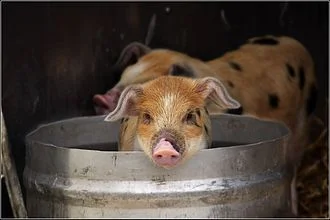
In case you’ve forgotten, this is what Churchill had to say about pigs, “I like pigs. Dogs look up to us. Cats look down on us. Pigs treat us as equals.”
Well, all of this is by way of a gastronomic enquiry: Why is there so little veal on the menus of Italian restaurants, which abound in New England? Rhode Island's numerous Italian restaurants just give a nod to veal, once the staple meat of the fine Italian table, north and south.
Now, I find chicken has replaced veal on Italian restaurant menus. Such standards as veal franchese, veal saltimbocca and veal marsala are mostly made with chicken.
Osso buco (braised veal shank) has almost disappeared from restaurant menus. You can't make it with chicken. My wife, Linda Gasparello, makes delicious osso buco. But buying the veal shanks for a recent dinner party involved perseverance.
Are we saving the calf and sacrificing the chicken? Looks that way. Eat up and leave the agonizing to me.
Train Trials: Amtrak Stations That Are OK, Great and Awful
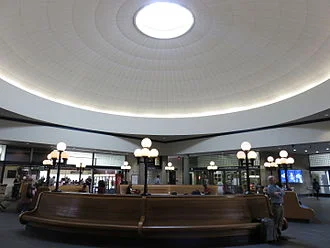
In the main room of the Providence train station. On the floor is carved the lovely phrase from Robert Louis Stevenson: "For my part, I travel not to go anywhere, but to go. I travel for travel's sake. The great affair is to move.''
As readers may know, I’m the fat man in the bow tie, so often seen on the Amtrak train between Providence and Washington, D.C. I take the Northeast Regional in times of low economic activity, as it's now for me, and the Acela when economic activity is robust.
The train is really pretty good or, at least, agreeable. But the stations are something else.
Starting at the head of the line, Boston's South Station has lots of places to eat, but few to sit and wait for your train.
Providence's Amtrak station is a train-rider's joy. A small rotunda with a wonderful sandwich bar – with possibly the best sandwiches in the state – Cafe La France
Going swiftly to my next alighting point: New York's Penn Station. It's just scary, with too much third-rate retailing, too many people squeezed together under a ceiling that’s too low. It's filthy, unfriendly, probably unsafe and everything that train travel used not to be. Even a Zaro's Bakery outlet can't redeem it.
Union Station in Washington, D.C., is an architectural masterpiece and the main hall has been fabulously restored. However, Amtrak, which operates the facility, which also serves commuter trains into Maryland and Virginia, seems to care more about rental income than people. There's too much retailing near the train gates, too little use of the glorious main hall. Worse, passengers waiting for trains have to hunt for the few broken chairs in the station.
It’s a pleasure to get on train just to sit down. I hasten say that Union Station isn't as awful or threatening as Penn Station, but it could use some passenger-friendly improvements.
California Beaches Versus New England Beaches

Recently, I found myself again in one of those arguments that won’t be settled and won’t go away: Where are the best beaches? This argument usually boils down to a contest between California and southern New England.
Let me be partisan: Our beaches are best.
The reason has nothing to do with the tonnage of sand per bather. Rather, it's our secret weapon: the Gulf Stream, which in the summer and early fall sends water that can get well up into the 70s to the southern New England coast, most noticeably into Buzzards Bay. It means that in summer, there's no beach that isn't bather-accessible. You can go in the water.
I've done some pretty thorough research on the western shores of the country and they do have great sand, surf and sunsets -- maybe the best -- but the water is cold. I once ran naked into the Malibu surf to impress an actress: It didn’t work and I froze. In fact, you have to go as far south as San Diego before the water is swimmable.
Sunsets and sand are nice, but you do want to run into the water? We win.
Llewellyn King (llewellynking1@gmail.com), a frequent contributor to New England Diary, is executive producer and host of White House Chronicle, on PBS. He’s also a veteran publisher, editor, columnist and international business consultant