
Vox clamantis in deserto







Llewellyn King: Rubio should learn a little history before he helps speed up a nuclear-arms race in the Mideast

The MIT Nuclear Research Reactor (MITR), in Cambridge, Mass., is the fourth-oldest operating reactor in the country.
The first iteration of the reactor, MITR-I, operated from 1958 to 1974. The reactor was then upgraded to a new design, MITR-II.
There are plans to convert the reactor to use low-enriched uranium by 2027 instead of high-enriched uranium to mitigate the international proliferation risk.
WEST WARWICK, R.I.
The Trump administration last week announced and appeared to crow over an agreement with Saudi Arabia to help the kingdom not only to build nuclear-power plants, but also to enrich the uranium fuel. The plan has become a bit murkier since Trumps wants to make Saudi diplomatic recognition of Israel part of the deal.
There is no reason for the Saudis to enrich uranium. There are plenty of willing suppliers of enriched uranium and more are coming online.
Besides, it has always seemed curious that Saudi Arabia, with its huge fossil reserves and its abundant, reliable sunshine, should want to stress its industrial infrastructure with a nuclear-power program when it clearly doesn’t need it.
We are at war with Iran not because of nuclear power, but because it refuses to abandon its enrichment ambitions.
Enrichment raises the potency of uranium fuel by increasing the amount of the fissile isotope Uranium-235.
Today’s generation of light water reactors — the workhorses that provide about 20 percent of U.S. electricity — use uranium that has been enriched by 3 percent to 5 percent. The uranium for the new small modular reactors will be enriched by about 20 percent
.
Weapons-grade enrichment is generally considered to be uranium that has been enriched by over 90 percent. But Ernie Moniz, who was secretary of energy in the Biden administration and is a nuclear physicist, told a conference organized by the Earthshot Foundation on June 8 that “You can make a pretty good bomb” with 60 percent- enriched uranium, a reference to the Iranian stockpile that we are trying to destroy.
I have been covering nuclear power – and by extension nuclear proliferation — for over 50 years. For most of that time, Saudi Arabia has hankered for nuclear power and enrichment. The question is why.
When I began my coverage, there was great fear of nuclear proliferation — that more counties would get nuclear weapons. Those who have, in that time, are Pakistan and North Korea. China acquired a weapon in 1964.
Israel has never declared itself nuclear-armed, but the arms control community believes it has a weapon and that the United States helped it get one years ago.
The original nuclear weapons nations, the United States, Russia, Britain and France, held the technology close and were loath to see any country step in that direction.
But making civilian nuclear power available to the world has been a plank of U.S. foreign policy since President Eisenhower launched the “Atoms for Peace” program in 1953.
One of the beneficiaries of that program was Iran. In fact, before the Iranian Revolution of 1979, American companies, led by Bechtel, the giant engineering firm, were set to build reactors across Iran.
America’s global nuclear policy was, de facto, nuclear civilian power, yes, nuclear enrichment, no. It was pretty sensible and has worked well. Now it is set aside.
The U.S.-Saudi Arabia deal comes at a time when many nations would like to start down the weapons path. The wars in Ukraine and Iran are a stark inducement to go nuclear.
If Ukraine hadn’t given up its nuclear weapons, would Russia have invaded? Almost certainly not. If Iran had a proven bomb, would Israel and the United States have attacked? I think not.
Nonetheless, every nuclear weapon is a threat to world security. The danger isn’t only that desperate or ambitious countries will use them aggressively, but also that the danger of accidental detonation is ever-present.
The United States and the Soviet Union were so concerned about this that they shared safety technology. For example, when we developed an insensitive TNT for the trigger of a nuclear device, we shared this with the Russians. Neither side wanted a thermonuclear war triggered by someone dropping a weapon off a forklift.
Secretary of State Marco Rubio would seem to be so busy that he hasn’t had time to read up on the history of proliferation.
Rubio, declared about the U.S.-Saudi Arabia deal, “Suffice it to say that any agreement that we are going to make with any country in the world on civil nuclear is going to be one that will have safeguards in place to ensure that it can’t be turned into a weapons program.”
Rubio might want to take a few minutes to ponder these three things: How it is that we came to be at war with Iran, how Iran started with civilian power and went on to weapons, and how safeguards were bypassed.
Saudi Arabia’s neighbors in that volatile region will soon be at Rubio’s door looking for nuclear power -- and enrichment. First up, expect Turkey, then Egypt.
If Congress approves Rubio’s deal, then a nuclear-arms race in the Middle East is more or less assured. Is there a worse place to have that happen?
Llewellyn King, an international energy-sector consultant and commentator, is executive producer and host of White House Chronicle, on PBS. His email is llewellynking1@gmail.com , and he’s based in Rhode Island.
Llewellyn King: This is not the time to politicize electricity

The Millstone Nuclear Power Plant, in Waterford, Conn., is the only multi-unit nuclear plant in New England. The only other remaining nuclear plant in New England is in Seabrook, N.H.

Solar panels over parking at the West Natick, Mass., MBTA station.
WEST WARWICK, R.I.
The future of electricity is being discussed in terms of how we make it: whether it should be generated by nuclear, wind and solar or by coal and natural gas.
Nuclear is favored by the utilities and the Trump administration, but it will take decades and untold billions of dollars to build up the needed nuclear capacity.
The administration has muddied the situation by denouncing wind, halting most offshore wind development, and heavily favoring coal and natural gas.
The utility companies that make and deliver electricity favor what has been described as “all of the above," weighted by regional resources and state laws.
Twenty-three states and Washington, D.C., have zero-carbon goals. Their laws say that by a certain date, carbon-emitting power plants must be phased out.
The administration says turn right, and the states say turn left. But the nation can ill afford a debate over electricity supply.
America needs more electricity now and will need much more in the near future, reflecting the growth in demand for transportation, manufacturing and, above all, the demands of data centers and artificial intelligence — demands that are growing relentlessly.
Changing how we manufacture electricity isn't helpful if the nation is to avoid blackouts and brownouts. They could begin any time, depending on that great variable: weather.
It used to be that if you asked utility executives what kept them awake at night, they would say, “Cybersecurity." Now they say, “Weather." I know. I ask some of them regularly.
Electricity is fundamental. It is unlikely to be replaced. Its essentiality is uncontested. However, what we use to make it — hydro, wind, solar, natural gas, coal, geothermal and nuclear — is changeable. The methods can be superseded by something else.
It is impossible to conceive of electricity being replaced by another force. Electricity is in nature as well as the wall plug. In short, we may well have different kinds of cars, airplanes and homes in the future, but electricity will be the constant, as vital as water.
In recent years, as summers have gotten hotter and drier, electricity has become more and more important. With some places having temperatures of over 100 degrees for weeks and months, air conditioning has moved from being a source of comfort to being essential for life. In Arizona alone, heat deaths are running over 600 a summer — and it is hard to measure accurately who has died because of heat.
There is some good electricity news that doesn't seem to have been politicized.
Batteries are getting better, and more of utility scale are being installed. The electricity-system operators in California and Texas — California ISO and ERCOT — have both said that in critical times, their systems have been saved by utility batteries. They are the silent heroes of the moment.
Likewise, another critical change has been the development of better transmission wires, known in the industry as connectors. Traditionally, they have been made with a steel core and the electricity moving in aluminum around the core, which provides strength and stability. The new connectors have light carbon-fiber cores, which don't sag when hot and carry nearly twice as much electricity as the steel-cored variety.
The so-called Big Beautiful Bill savages the renewable- power sector by phasing out tax credits, which had become the building blocks of the sector. Now many solar and wind projects will evaporate, and some companies will fail.
Part of the genesis of today's problem is that another kind of polarization hampered the ordered growth of nuclear power — the logical new frontier of electric generation — in the latter three decades of the 20th Century. Fears over nuclear safety were fanned by politicians and the environmental movement.
The environmentalists favored coal over nuclear before wind and solar were perfected. That legacy means nuclear power is now in need of a whole new workforce and supply chain.
President Trump wants to build 10 big nuclear plants of the kind that make up the present nuclear fleet of 95 reactors. He will find that the workers and expertise for that kind of effort are in perilously short supply and will take years to rebuild.
To take any power source off the table today for political reasons is to endanger the nation.
On X: @llewellynking2
Bluesky: @llewellynking.bsky.social
Llewellyn King is executive producer and host of White House Chronicle, on PBS, and an international energy-sector consultant. He’s based in Rhode Island.
Llewellyn King: The sometimes silly and unfair world of state secrets
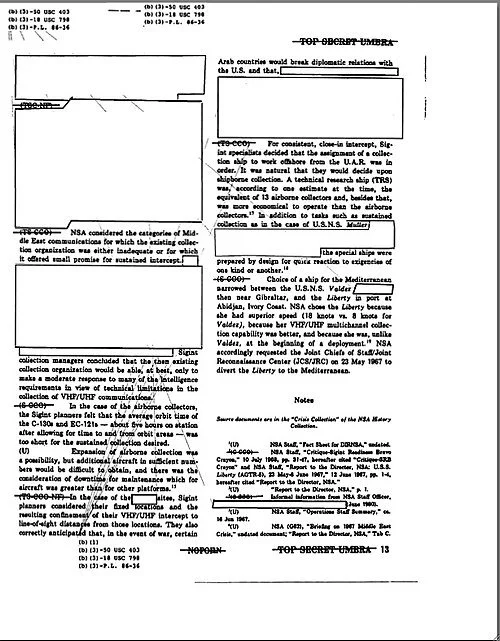
A typical partly declassified U.S. government document from 2004.

J. Robert Oppenheimer, “The Father of the Atomic Bomb,’’ in 1946. He lost his security clearance in 1954. (The movie Oppenheimer is well worth seeing.)
WEST WARWICK, R.I.
Beware: Classified documents don’t always hide state secrets, and security clearances are used as tools of manipulation and vengeance.
Before Xerox, if you wanted to keep a copy of something, you had to type it with a carbon sheet backing every page.
In 1969, I was commissioned by a long-gone consultancy, the Arctic Company, to write a paper on the use of hovercraft by the military, especially the infantry.
They were offering $500 for the job and, like most reporters, I was keen for the income and I signed up.
It was a time when it was believed that hovercraft —vehicles that cover the ground on a cushion of air — would be widely deployed.
I had no great insight into the vehicles or how they might be used as chariots of war. But I did have a lively imagination and access to The Washington Post library. I gorged on newspaper clippings, then wrote my commissioned piece.
After it had been accepted, and I was told by the company that the Army was “very pleased” with it, I forgot about it.
Then someone unrelated asked out of curiosity if they could see it. I said I didn’t have a copy, but I had been told that it had been mimeographed and widely distributed in the Pentagon.
I asked the Arctic Company for a copy, and they referred me to the appropriate office in the Pentagon. I was rebuffed, told that it was classified, and I could only see it if I had security clearance.
The Joint Committee on Atomic Energy, which controlled the nuclear establishment, military and civilian, used classification and security clearances to keep other members of Congress and the press out of its business; it regarded itself as the only responsible custodian of the nation’s nuclear secrets.
I was told that they were so classification-obsessed they couldn’t discuss the contents of the papers they had assembled to discuss because they were marked “Eyes Only.”
When James Schlesinger became chairman of the Atomic Energy Commission (AEC), in August 1971, he set about overhauling the classification of documents.
I was close to Schlesinger, and he told me that he thought more than half of the AEC documents shouldn’t be classified and he set about declassifying them. His argument: If you classify the trivial, all classification is degraded.
Dixy Lee Ray, the last chairperson of the AEC, became a friend of mine. I invited her to dinner at the venerable Red Fox Inn & Tavern in Middleburg, Va., established in 1728. It is a pleasant place to dine and claims to be the oldest continuously operating inn in America.
Ray went everywhere with her two dogs (Ghillie, a Scottish Deerhound, and Jacques, a Miniature Poodle), including in her limousine. The car also contained -- as I am sure the secretary of energy’s car does today -- the hotline that would be part of the launch procedure, in the event a nuclear attack is ordered by the president.
In her briefcase, Ray had an innocuous study she had wanted to give to me.
It was a blustery night, and her driver was waiting in the car in the parking lot with her briefcase on the backseat and both dogs on the front seat.
The moment that Ray opened the rear door, two things happened: A great gust of wind arose and Ghillie leapt from the front seat to the backseat, upsetting the briefcase. Crisis!
All the papers in the briefcase, many of them marked with the big red X of classified documents, blew all over the parking lot.
The three of us, in panic mode, set about scouring the bushes for them in the dark, fearing that someone would find one of them and, so to speak, the jig would be up. We could imagine the headlines.
After an hour’s search, we figured that we had gathered all the papers, and Ray did an inventory. Nonetheless, the next morning I drove out from Washington to make sure that no nuclear secret was impaled on a bush branch.
Most notably from 1954, when J. Robert Oppenheimer, who had been the scientific director of the Manhattan Project, lost his security clearance under murky circumstances, security clearances have been used as a tool of manipulation and vengeance.
If a scientist or a manager loses their clearance, they can appeal in a long, difficult and expensive process. Even if the victim appeals, the damage is done; the subject is damaged goods, publicly humiliated as morally deficient and untrustworthy.
Llewellyn King is executive producer and host of White House Chronicle, on PBS, and an international energy-sector consultant and speaker. His email address is llewellynking1@gmail.com, and he’s based in Rhode Island.
Llewellyn King: Extreme NarcissistTrump rampages as he Tries to Build a dictatorship
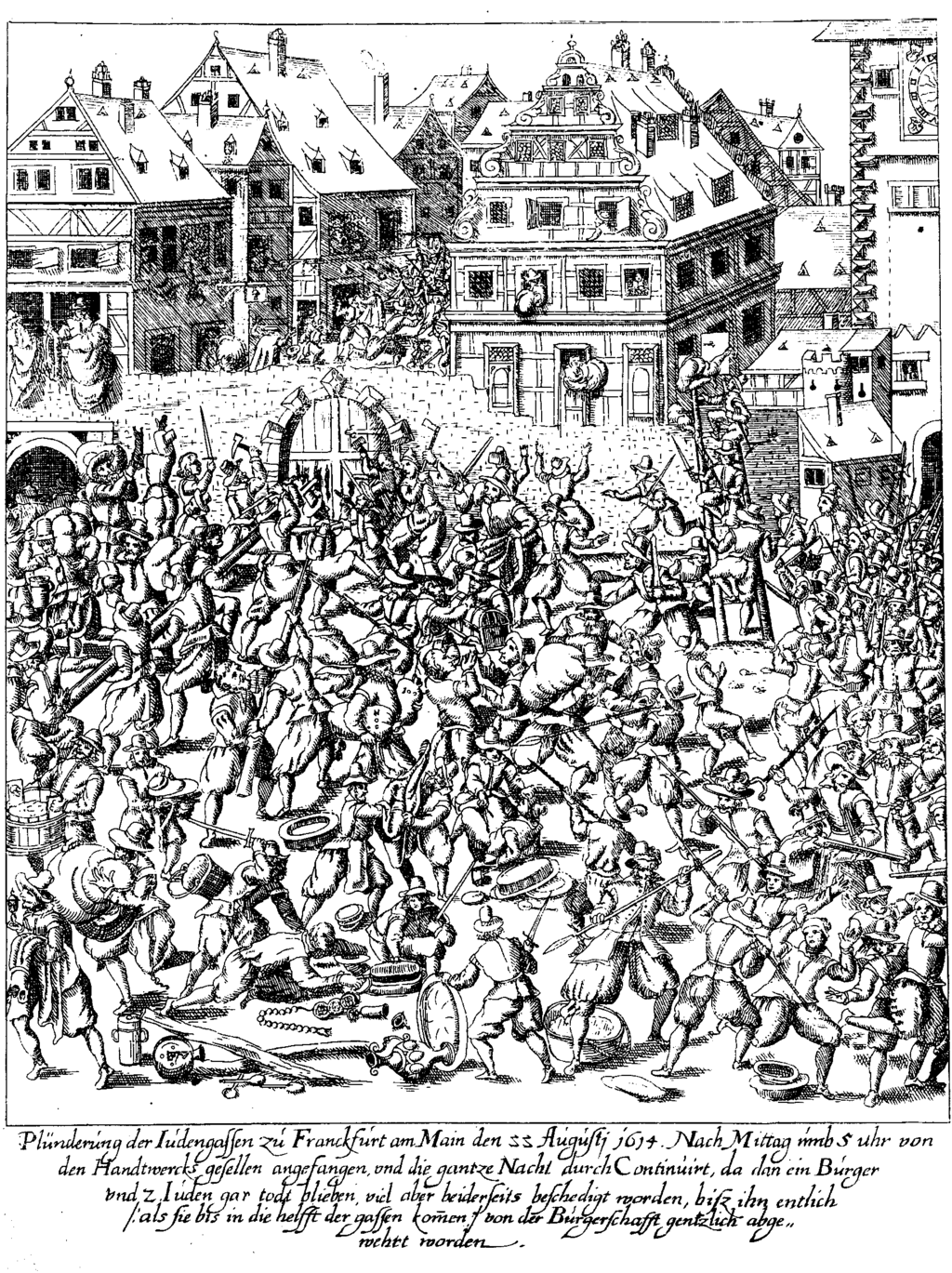
The plundering of the Judengasse (Jewry) in Frankfurt, Holy Roman Empire on Aug. 22, 1614
WEST WARWICK, R.I.
As Juliet might have said, “O America, America, wherefore art thou America?”
What has become of us when the president, Donald Trump, who has frequently alleged that he opposes big government, wants the government to have its hand in everything, from the operation of The Kennedy Center to the regulatory commissions, to gender identification, to traffic control in New York City, to the composition of the White House press pool?
Under the pretext of cutting three shibboleths (“waste, fraud and abuse”), Trump is moving to bring everything that he can under his control; to infuse every apparatus of the country with the Trump brand, which emerges as a strange amalgam of personal like and dislike, enthusiasm and antipathy.
He likes the brutal Russian dictator Vladimir Putin — he who orders assassinations outside of Russia and causes his opponents to fall out of windows with the nation — so much so that he is about to throw Ukraine under the bus. Short shrift for people who have fought the Russian invader with blood and bone.
He has a strange antipathy to our allies, starting with our blameless neighbor Canada, our supply cabinet of everything from electricity to tomatoes.
He shows a marked indifference to the poor, whether they are homeless in America or dying of starvation in Africa.
He and his agent, Elon Musk the Knife, have obliterated the U.S. Agency for International Development, ended our soft power leadership in the world and handed diplomatic opportunities to China, while at home, housing starts are far behind demand, the price of eggs is out of sight, and necessary and productive jobs in government are being axed with a kind of malicious pleasure.
The mindlessness of Musk’s marauders has cut the efficiency he is supposed to be cultivating. It is reasonable to believe that government worker productivity is at an all-time low because of the unelected slasher’s rampage.
If there is a word this administration enjoys it is “firing.” The Trump-Musk duopoly relishes that word. It goes back to the reality television show The Apprentice, when its star, Trump, loved to tell a contestant, “You’re fired!”
Now a catchphrase from a cancelled TV program is central to the national government.
Meanwhile, the extraordinary assemblage of misfits and socially challenged individuals in Trump’s Cabinet — and, it must be said, who were confirmed by the Republicans in the Senate — are doing their bit to disassemble their departments, fixing things that aren’t broken, breaking things because they hated their authors or because revenge is a policy. Look to the departments of Defense, Justice, Health and Human Services, and Homeland Security — really all the departments — and you’ll find these hearties at work.
There is a quality of cruelty that is alien to the American ethos, that is un-American, running though all of this.
When everything that isn’t broken is fixed, we may lose:
Our standing in the world as the beacon of decency.
Our role as a guarantor of peace.
The trust of our allies.
Our place as the exemplary of constitutional government and the rule of law.
Our leadership in all aspects of science, from space exploration to medicine to climate.
Nowhere is the animus of Trump and its lust to control more evident than its hatred of the free press.
The free flow of news, fact and opinion, already damaged by the economic realities of the news business and its outdated models, is an anathema to Trump. A free press is a free country. There is no alternative.
Last week the White House and his 27-year-old press secretary, Karoline Leavitt, moved to destroy the norm of decades in the press room, where the press corps collectively through its elected body, the White House Correspondents’ Association, has assigned seats. The association also decides who will be a part of the small rotating group of journalists and photographers — the pool — who accompany the president. It has been effective and is time-honored.
Now Leavitt, a Trump triumphalist, will choose the pool and favor the inclusion of podcasters and talk-show hosts who are reliably enthusiastic about the president.
At The Washington Post – the local newspaper of government — editorial pages are to be defenestrated. The Post, which has had for decades the best editorial columnists in the nation, is to be silenced. Its owner, the billionaire Jeff Bezos, has told the editorial staff that going forward they will write only about his version of “free trade and personal liberty.’’
It is the end of an era of great journalism, the dimming of a bright light, the encroachment of darkness in the nation’s capital.
A newspaper can’t be perfect, and The Washington Post certainly is far from that.
But it is a great newspaper, and its proprietor has been manipulated by the controlling fingers of the Trump machine: A machine that values only loyalty and brooks no criticism. A machine that is unmoved by the nation’s and world’s tears. A Romeo who doesn’t hear Juliet.
Llewellyn King is the executive producer and host of White House Chronicle, on PBS, as well as an international energy-sector consultant. His email is llewellynking1@gmail.com and he based in Rhode Island.

Llewellyn King: To stressed out wait staff — please don’t ask me


The White Horse Tavern, in Newport, R.I., built before 1673, is believed to be the oldest tavern building in the United States.

Union Oyster House, in Boston, opened to diners in 1826, and is among the oldest operating restaurants in the United States. It’s the oldest known to have been continuously operating since it was opened.
Sometimes I dine in fancy restaurants with starched white tablecloths, napkins and professional waiters; waiters who don’t ask me throughout the meal, “How is your food so far, sir?” To pestering waiters, I want to say, “If I am capable of ordering a meal, I am also capable of calling you to the table and telling you if the soup is cold, the fish is old, or the bread is stale.”
That is an occasional indulgence and reminds me of the time when, between journalistic gigs, I worked at a high-end restaurant in New York. It even featured a big band, Les Brown and His Band of Renown.
My wife and I frequently dine somewhere local, usually a pub-type eatery. After a while, you learn what they are good at and order accordingly. You are resigned to vinyl tablecloths and flimsy paper napkins.
And I resign myself to being asked at least three times some variant of “How is it so far?” The answer, which like other diners I never have the moral courage to voice, should be, “Go away! You are spoiling my dinner with an insincere inquiry about the comestibles. I am eating, aren’t I?”
Maybe these waiters should ask the chef how the food is for starters — it is too late by the time it gets to the table.
The other dinner-spoiling intrusion, if you don’t have a professional, is the young waiter who wants you to be their life coach. It begins something like this, “I am not really a waiter. I am studying sociology. Do you think I should switch my major to journalism?”
I am tempted to reply, “I don’t know anything about sociology and it is damn hard to make a living in journalism these days. But there is a huge shortage of plumbers. You might try an apprenticeship somewhere and give up college.”
Give up waiting tables, too, I hope.
Please don’t misunderstand; I love restaurants. It cheers me up to eat out. I rank towns with a vibrant restaurant culture as high on the quality-of-life scale.
I am writing this from Greece, where a cornucopia of restaurant choices beckons everywhere, from avgolemono soup to taramasalata. I am all in.
When your mouth is full, the awful business of asking you how the chef’s skills are that day doesn’t seem to be part of the continental culture. That, I find, is an egregious weakness of the English-speaking nations.
But the business of interrogating you about your breakfast, lunch or dinner isn’t confined to when you are at the table. If you make a reservation online, using one of the booking services, you will be pursued afterward, sometimes for days, by annoying questions about the restaurant’s food and ambiance, and the service.
The multiple-choice questions follow a formula like this, “On a scale of one to 10, how would you rate your dining experience?” How do you explain that you loved the meal except for flies diving into your plate? Is that a one because of the flies, or a 10 because of the food? Splitting the difference with a five explains neither the failure nor the success.
A restaurant in Washington, D.C., once specialized in delicious roast beef sandwiches. They were the creation of the man who owned the restaurant, and he had cuts of beef, a sauce and rolls all made for the purpose.

But once I can remember, there was a distinct problem: A rat appeared next to a colleague when he was tucking into the sandwich.
How do you rate that dining experience when Yelp sends its questionnaire? Do you rate the food as a resounding 10 but the ambiance as one? How would the number-crunchers rate that in the overall dining experience?
Knowing how they like to seek averages, my suspicion is the roast beef eatery would have rated a five.
I read somewhere that during the Siege of Paris in 1870-71, an entrecote (a sirloin steak) was a slice of a rat. For years, I wondered about that place in Washington and its excellent roast beef sandwiches.
I would rather eat with an annoying server than a fraternizing rodent. Bon appetit!
On Twitter: @llewellynking2
Llewellyn King is executive producer and host of White House Chronicle, on PBS.
Llewellyn King: Democrats must avoid being tarred as 'socialists,' whatever that word actually means

Socialists in Union Square, New York City, on May Day 1912
Socialism is a toxic word in America, and so its happy adoption by some of the new stars of the Democratic left is to handle something that might blow up with lethal political consequences.
Words are the materiel of politics: its artillery, its infantry and its minefield, packed with unstable incendiary devices; hence the potency of one word, socialism.
Trouble is neither the opponents, who hold out anything to do with socialism as a plague that will engulf and destroy, nor the new wave of endorsers seem to have a clear idea of what socialism means. For the Democratic left it means the Nordic countries ,which, according to the old definitions of socialism, are not socialist. They are capitalist democracies with advanced social welfare.
Socialism, classic socialism, had at its bedrock a concept that is now curiously old and irrelevant, like a gas lamp. Socialism, in classic definition, states simply that the means of production should be owned by the workers -- understandable in the 19th Century and now an historical relic.
Karl Marx extended the struggle between workers and owners to embrace all of society as a great class battle between the workers and the owners; a struggle that embraced all aspects of endeavor.
Vladimir Lenin and the Bolsheviks seized on this as a means of total control. The state, representing the workers, would control everything and so a small cadre at the top could dominate as thoroughly and effectively as any emperor or monarch ever had, in fact more so.
Joseph Stalin dragged the idealism of the earlier communism down further and added a massive state apparatus of suppression and industrial-scale brutality.
In the hands of 19th-Century socialists, such as the Englishman Sidney Webb and his wife, Beatrice, who gave us the phrase “collective bargaining,” socialism was humanitarianism as a political system. Harsh events and evil men overtook them.
Communism failed in the botched Soviet Union, and even the word mostly came down with the Berlin Wall in 1989. Only Cuba and few other far, far left states clung to the appellation communist. China remains avowedly communist, but it has evolved into an autocratic mercantilism, far from Marx, Lenin and the rest. Venezuela tried communism and called it socialism.
All of Africa after the colonial withdrawal went for what they called socialist government and failed awfully. The new leaders were not so much attracted to the enlightenment of the Webbs or of the theories of Marx as to the lure of controlling everything. From the Limpopo River (South Africa’s northern border) to the Nile, they failed disastrously.
Those who cling to the word socialism, besides Sen. Bernie Sanders (I-Vt.), himself a durable anachronism, tempt to be tarred with the brush of the failed states, like Nicaragua and Venezuela.
Words play tricks with policy and they should be treated like munitions, useful in the battle but hazardous later. For example, whatever happened to the working class? They morphed into the middle class, and in so doing lost their old power base, the trade unions.
President Trump’s common-man populism is no substitute for a working union with its upward wage pressure, job security and healthcare. But unionism has lost its way, and the unions themselves have not found a new footing in the political firmament.
The Democratic left, which is in ascendancy, needs a new vocabulary to fit its goals. If it wishes, as it seems, to emulate the successful countries that lie along the Baltic Sea, it needs to define its goals outside of the old lingo of socialism. It should articulate its new tangible vision of a more equitable future, untainted with the toxic limitations of the past.
For the Republicans, though, socialism is the gift that has given and keeps on giving. It is the weapon of choice, made more potent by failures in countries which defined themselves as socialist.
In the battle of 2020, Venezuela is a conservative asset. If Sanders and the shining star of the left, Rep. Alexandria Ocasio-Cortez (D.-N.Y.) keep the appellation socialism alive, that is a laurel tied around the GOP’s best weapon.
Llewellyn King, based in Rhode Island and Washington, D.C., is executive producer and host of White House Chronicle, on PBS. His email is llewellynking1@gmail.com.
-