
Vox clamantis in deserto








James T. Brett: New federal housing law elements particularly important to New England

Manufactured homes.
BOSTON
For years, New England employers have identified one challenge that cuts across nearly every industry: our region is not building enough homes to meet demand. As a result, too many individuals and families cannot afford homes in the communities where they want to live and work.
Whether it is a manufacturer struggling to recruit skilled workers, a hospital competing for nurses, a financial institution expanding its workforce, or a university attracting faculty, the effects of the housing shortage are felt across our economy. Housing has become one of the region’s greatest economic constraints.
That is why the enactment of the 21st Century ROAD to Housing Act marks a turning point. More than a housing bill, it is an investment in America’s economic competitiveness and a bipartisan recognition that expanding housing supply is essential to strengthening communities and sustaining long-term economic growth.
New England’s congressional delegations played an important role in shaping and advancing this legislation, including U.S. Sens. Elizabeth Warren and Jack Reed, and U.S. Reps. Jim Himes, Stephen F. Lynch and Ayanna Pressley. The New England Council thanks them for their leadership.
The legislation combines regulatory modernization, financing reforms, and incentives for local innovation to increase housing production.
Several provisions are especially important to New England.
The law modernizes manufactured housing by removing outdated regulatory requirements, updating federal standards and expanding financing opportunities. These reforms create new opportunities to deliver high-quality, lower-cost homes more efficiently.
It also strengthens local lenders by reducing regulatory burdens and improving access to mortgage financing, and it expands opportunities for first-time and workforce homebuyers by improving financing options.
Another provision of particular significance to New England is the creation of a new Federal Innovation Fund. Developed by Senator Warren, the program authorizes up to $200 million annually in competitive grants for local and tribal governments that increase housing supply through reforms such as streamlined permitting, zoning modernization, density incentives, and other locally driven strategies.
Housing availability increasingly shapes where businesses invest, where workers choose to live, and whether communities can grow and remain competitive. Addressing affordability ultimately requires increasing supply, and Congress has now provided tools to help make that happen.
The New England Council has long advocated for practical, bipartisan policies that expand housing production. The enactment of the 21st Century ROAD to Housing Act is a beginning, not the finish line. For New England to remain competitive, federal, state, local, and private-sector leaders must now work together to translate this landmark legislation into more homes, stronger communities and greater economic opportunity.
James T. Brett is president and chief executive of The New England Council.
James T. Brett: Early disease detection — Another reason we’re lucky to live in ‘research-rich’ New England

The cozy-looking Boston University Medical Campus hosts the school's Alzheimer's Disease Center, the site of much research into early detection and treatment.
Via The New England Council (slightly edited)
BOSTON
The New England Council recently hosted a forum in Boston exploring some of the incredible innovation in our region focused on the early detection of diseases. We heard about some of the remarkable advances in technology that are enabling earlier detection of everything from cancer to Alzheimer’s disease.
From our keynote speaker, U.S. Rep. Jim McGovern (D.-Mass.) and our panel of experts from the business and medical communities, we learned how some of these groundbreaking innovations are not only saving lives, but also having a significant economic impact by minimizing long-term health care costs and alleviating strain on our beleaguered health-care system.
A key focus of the discussion among the experts at this program was on how federal policy can continue to foster innovation in this area, and can ensure that every American has access to early- detection tools. And on that front, there was some good news, as Congress has taken steps in recent months to advance policies that will expand access to these tools.
Earlier this year, as part of the fiscal year 2026 appropriations bill, Congress enacted the Nancy Gardner Sewell Medicare Multi-Cancer Early Detection Screening Coverage (MCED) Act, which will allow Medicare — beginning in 2028 — to cover MCED tests in a timely manner following FDA approval and evidence of clinical benefit.
Currently, most vulnerable patients could face years-long waits to access the latest innovations in cancer detection. The New England Council proudly endorsed this bipartisan legislation, and is grateful to the many members of the New England delegation who co-sponsored the proposal.
In more good news, bipartisan legislation has been introduced to expand access to similar testing aimed at early detection of Alzheimer’s disease and other dementia. Last fall, leaders in both the House and Senate introduced the Alzheimer’s Screening and Detection (ASAP) Act, which would create a pathway for Medicare coverage of FDA-approved blood biomarker screening tests that help detect Alzheimer’s and other dementia.
According to the Alzheimer’s Association, if passed, this bill will not only improve patient care, but also help facilitate smoother transitions from primary care to specialists — reducing the burden on overextended health-care workers and helping to alleviate bottlenecks in the health-care system.
However, as we learned from the experts at the program, there are also a number of potential roadblocks to early detection of disease. One of those roadblocks is a lack of access to screening, which has been exacerbated by two recent developments at the federal level: Medicaid cuts enacted under last year’s “One Big Beautiful Bill” Act and the expiration of Affordable Care Act subsidies at the end of 2025.
These developments will undoubtedly result in millions of Americans losing coverage and therefore losing access not just to some of the advanced testing discussed here, but also routine screenings like mammograms, pap smears and colonoscopies.
A second threat to early detection is potential cuts to federally funded research from agencies like the National Institutes of Health and the National Science Foundation. As home to some of the world’s premier medical and scientific research institutions, New England is the recipient of billions of dollars of federal research funding that has supported the development of new early-detection technologies, as well as live-saving new treatments.
In recent years, this funding has repeatedly been on the cutting block, which threatens to slow down the groundbreaking research that is quite literally saving lives each and every day. Indeed, President Trump’s recently released fiscal year 2027 budget proposes some $5 billion in cuts to NIH funding.
The takeaway message is loud and clear: Early detection saves lives, and saves money. Much progress has been made, but we cannot afford to take our foot of the gas pedal.
As Congressman McGovern said in his keynote remarks, “We’re lucky to live in the most
scientifically advanced time in the history of the world … we’re lucky to live in New England, one of the most research-rich regions anywhere in the world.”
Let’s not squander that good fortune. We need to keep supporting the innovation that will detect diseases and save lives.
James T. Brett is president and CEO of The New England Council.
James T. Brett: Why New England needs the ROAD to Housing Act

Three-decker apartment building in Cambridge, Mass., built in 1916
BOSTON
Housing affordability remains one of New England’s biggest economic issues. From Worcester’s competitive rental market to small towns dealing with aging housing stock, the pressure is widespread.
That is why the Renewing Opportunity in the American Dream to Housing Act of 2025, the ROAD to Housing Act, is such a vital piece of legislation. With the bipartisan leadership of Senators Tim Scott (R.-S.C.) and Elizabeth Warren (D-Mass.), the bill was passed by the Senate with strong support from both sides of the aisle.
The bill addresses the crisis from multiple angles: increasing supply, preserving affordable units, empowering local governments, and encouraging private investment. For New England, where high costs and limited land create unique challenges, this would provide essential tools.
One highlight is the $1 billion Innovation Fund, championed by Senator Warren. This program will award competitive, flexible grants to communities expanding housing supply. Municipalities that modernize zoning or adopt creative reforms can use funds to improve infrastructure, build new homes, or upgrade essential systems.
The bill enhances the role of private investment. The Community Investment and Prosperity provisions raise the Public Welfare Investment cap for banks from 15% to 20%, giving financial institutions more flexibility to direct funds into affordable housing and community projects.
Additional reforms streamline programs and lower costs. Removing the cap on units that can be converted under the Rental Assistance Demonstration program will help maintain affordable housing. Updates to Community Development Block Grant allocations will encourage communities to remove barriers such as restrictive zoning. And revisions to the National Environmental Protection Act requirements will cut unnecessary delays in building much-needed housing.
Together, these provisions create a pathway to a healthier housing market. By combining federal leadership with local flexibility and public-private collaboration, the ROAD to Housing Act establishes the conditions for sustainable growth and stronger communities.
For New England, this isn’t just policy; it’s an economic imperative. The region’s ability to attract talent, grow businesses, and sustain communities depends on affordable, accessible housing.
The New England Council commends Senators Warren and Scott for their bipartisan leadership on this legislation. We are grateful to the Senate for passing the bill and urge the House of Representatives to follow suit. With support from builders, bankers, mayors, and nonprofits, the momentum is here. Now it is time to act.
James T. Brett is CEO and president of The New England Council.
James T. Brett: Why New England needs this housing legislation

BOSTON
Housing affordability remains one of New England’s biggest economic issues. From Boston’s competitive rental market to small towns dealing with aging housing stock, the pressure is widespread. Employers find it hard to attract workers, families spend more of their income on housing, and communities face difficult choices between upgrading infrastructure and keeping housing affordable.
That is why the Renewing Opportunity in the American Dream to Housing Act of 2025, the ROAD to Housing Act, is such a vital piece of legislation. With the bipartisan leadership of U.S. Senators Tim Scott and Elizabeth Warren, the bill passed the Senate Banking Committee unanimously this summer. Housing is not a partisan issue; it is a shared economic necessity.
The bill addresses the crisis from multiple angles: increasing supply, preserving affordable units, empowering local governments, and encouraging private investment. For New England, where high costs and limited land create particularly serious challenges, the ROAD to Housing Act provides essential tools.
One highlight is the $1 billion Innovation Fund, championed by Senator Warren. This program would award competitive, flexible grants to communities expanding housing supply. Municipalities that modernize zoning or adopt creative reforms can use funds to improve infrastructure, build new homes, or upgrade essential systems. It is a model that rewards local initiative while respecting community decision-making.
The bill would also enhance the role of private investment. The Community Investment and Prosperity provisions would raise the Public Welfare Investment cap for banks from 15 percent to 20 percent, giving financial institutions more flexibility to direct funds into affordable housing and community projects.
In a region with top-tier banks eager to support local development, this provision presents a significant opportunity to increase resources without additional taxpayer costs.
Additional reforms would streamline programs and lower costs. Removing the cap on units that can be converted under the Rental Assistance Demonstration program would help maintain affordable housing. Updates to Community Development Block Grant allocations would encourage communities to remove barriers such as restrictive zoning. And revisions to National Environmental Protection Act (NEPA) requirements would cut unnecessary delays in building much-needed housing.
Together, these provisions would create a pathway to a healthier housing market. By combining federal leadership with local flexibility and public-private collaboration, the ROAD to Housing Act establishes the conditions for sustainable growth and stronger communities.
For New England, this isn’t just policy — it’s an economic imperative. The region’s ability to attract talent, grow businesses, and sustain communities depends on affordable, accessible housing. Without it, our workforce and economy cannot thrive.
The New England Council commends Senators Warren and Scott for their bipartisan leadership and urges swift passage of the bill in both chambers. With support from builders, bankers, mayors, and nonprofits, the momentum is here. Now it is time to act.
At the council, our mission is to foster growth and opportunity across all six states. Few issues matter more to that mission than housing. The ROAD to Housing Act offers a chance to strengthen our economy and renew the American Dream for families from Boston to Burlington, Providence to Portland.
James T. Brett is the president and CEO of The New England Council, a regional alliance of businesses, nonprofit organizations, and health and educational institutions.

James T. Brett: Omnibus federal bill advances some key New England programs

Manchester, N.H., with its old textile mills along the Merrimack River converted to other uses, such as technology and health care.
BOSTON
In the final days of the 117th Congress, just a few weeks ago, Congress passed a $1.7 trillion Omnibus Appropriations Bill for fiscal 2023, and President Biden signed it into law on Dec. 29. Included in this sweeping legislation are landmark investments in education, health care protecting our environment, supporting working families and investing in research and innovation. The New England Council – the nation’s oldest regional business association – was pleased to see many of our longtime priorities included, and we believe that this legislation will help drive our region’s continued economic growth.
Here are a few of the biggest wins for New England in the bill:
Increased Pell Grant – The Pell Grant is a key tool to expanding access to higher education, providing support for low-income students to attend college. The council has long supported increasing the maximum Pell Grant amount – in fact, we have advocated doubling the maximum grant. While the omnibus did not go so far as to double Pell, it did increase the maximum award by $500, to $7,395, for the 2023-2024 school year, marking the largest increase since the 2009-2010 school year. This boost is a step in the right direction toward making college more affordable for millions of students and preparing the workforce of the future.
Federal Research Funding – New England is home to some of the top research institutions, including world-class universities and hospitals. These facilities conduct research on some of the most pressing medical and scientific challenges facing our nation. As such, the council has long supported federal investments in research, and so we were pleased that the bill included $47.5 billion for the National Institutes of Health (NIH)—a 5.6 percent increase—as well as an historic 12 percent increase for the National Science Foundation (NSF), to $9.9 billion. These investments will undoubtedly spur medical and scientific breakthroughs in our region, while supporting thousands of jobs at our research facilities.
Mental Health & Substance Abuse – The need for increased mental-health and substance-abuse services is one of the biggest health challenges facing our region, and the nation at large. The demand for services has only surged in recent years as the pandemic has presented new challenges for those who struggle with mental health and addiction. Fortunately, the spending bill included billions of dollars for new and increased services, including $1.01 billion for Mental Health Block Grants, $385 million for Certified Community Behavioral Health Clinics, and $1.6 billion to states to address the opioid-misuse epidemic through the State Opioid Response Grant. These funds will help expand much-needed services in our communities and set millions of people on the path toward recovery.
Energy Efficiency & Renewable Energy – The New England region is a leader in efforts to decrease carbon emissions and develop renewable-energy resources. The spending bill included a number of measures that will support this effort and help create new jobs in the clean-energy sector. The $3.46 billion appropriated in the bill for Energy Efficiency and Renewable Energy—a $260 million increase over the previous fiscal year—will allow for investments in vehicle technologies, hydrogen research and development, weatherization-assistance programs and renewable-grid integration, as well as marine, wind, and solar energy.
Retirement Savings – Finally, the spending bill also includes a number of provisions aimed at bolstering retirement savings and ensuring a secure financial future for millions of American workers. The bill included a legislative package championed by the dean of the New England House delegation, U.S. Rep. Richard Neal (D.-Mass.), known as SECURE 2.0. Specifically, the bill will expand access to retirement- savings-plan enrollment, allow emergency withdrawal from plans, increase the opportunity to make catch-up contributions, and support workers paying off student-loan debt, just to name a few. Inclusion of these provisions will undoubtedly help U.S. workers better prepare for their futures.
Beyond these provisions, the spending bill also includes investments to bolster working families, expand access to affordable housing, and support our law enforcement, military and veterans. The New England Council is grateful to our region’s congressional delegation for its members’ efforts to advocate for our region’s priorities in this important piece of legislation. We have no doubt that our region’s economy will benefit from the important investments this bill makes in the year ahead.
James T. Brett is the president & CEO of The New England Council, a Boston-based regional alliance of businesses, non-profit organizations,including and health and educational institution,s dedicated to supporting economic growth and the quality of life in New England.

Flag of the New England Governors Conference.

James T. Brett: Infrastructure bill would be a boon for New England

Work underway during “The Big Dig,’’ in Boston (1991-2106), New England’s most dramatic local infrastructure project so far.
From The New England Council (newenglandcouncil.com)
BOSTON
With billions of dollars of federal relief authorized over the past 18 months, and more and more Americans receiving vaccinations each day, our economy is gradually inching closer to recovery. However, there is more left to do. The New England Council believes that passing a robust infrastructure package will help meet numerous and long-standing unmet demands, and will help our region’s businesses remain competitive and allow our residents to thrive.
As New Englanders, we know all too well the infrastructure challenges that our region faces. Too many of our bridges are structurally deficient and yearly increases in the number of vehicles and drivers have put more stress on our roadways. A growing number of residents across our region are looking to transit to provide a safe, affordable and reliable means of transportation. Besides the need to meet new requirements for a growing region, our aging water systems – some approaching or surpassing a century old – need attention. And the pandemic has shown that broadband is a critical need for New England to expand telework, telehealth and remote learning options. These and many other needs must be addressed.
Just months ago, a bipartisan group of senators and President Biden agreed upon a bold infrastructure framework This five-year deal would fund so-called “traditional” infrastructure – roads, bridges, rail, transit, ports and airports and water systems. In addition, the deal called for new infrastructure spending which would be allocated towards those traditional infrastructure items along with an expanded list of core infrastructure such as broadband, resiliency, and electric-vehicle infrastructure.
As for financing the new spending, the agreement called for more than a dozen ways to do so, including redirecting unused unemployment insurance payments; re-purposing certain unspent COVID-19 relief funds; extending customs fees; reinstating certain Superfund fees, and selling off telecom spectrum to name a few.
In late July, senators reached a final deal on legislation to enact the bipartisan agreement. Besides baseline funding, some $550 billion in new spending over the next five years was included, representing a compromise backed by members of both parties. The bill included a number of the “pay-fors” from the original agreement as well as new funding sources designed to maximize support among the members of the Senate. The Senate legislation also included other crucial infrastructure priorities for our region, like addressing PFAS contamination.
The hard work of the Senate paid off. On Aug. 10, this legislation – the Infrastructure Investment and Jobs Act – was adopted by a bipartisan vote of 69 to 30. Every senator from New England voted in favor.
Now, the bill is before the U.S. House of Representatives, and a vote is slated to be held before the end of this month.
Not since the Eisenhower administration has Congress had such an opportunity to advance a package that will so boldly affect infrastructure in a manner that will benefit virtually every individual in New England and across the nation. The New England Council believes that this landmark legislation would have a tremendous impact on our region by addressing many of the challenges we face, while also creating new jobs and spurring economic growth. We are grateful to the Senate for taking quick action on the bill, and we urge the House to follow suit as soon as possible.
James T. Brett is president and chief executive of The New England Council.
N.E. Council letter to congressional delegation on infrastructure needs

Massachusetts State House
BOSTON
May 5 letter from New England Council President and CEO James T. Brett to the New England congressional delegation:
On behalf of the New England Council, I would like to thank you and your staff for all that you have done in the face of this national emergency to help address the health effects and the economic impacts attributed to the coronavirus outbreak. Our region is fortunate to have such effective leaders advocating on our behalf during this unprecedented time. We are grateful for the relief and economic stimulus measures that have been included in the CARES Act, as well as in the interim supplemental funding measure that was passed just a couple of weeks ago.
This aid will go a long way toward supporting our region’s healthcare providers, as well as the many businesses across an array of industries that have been negatively affected by the coronavirus pandemic.
As Congress continues to work towards mitigating the immediate effects of the coronavirus outbreak, it is necessary to look to ways in which the House and Senate can help lessen the long-term economic implications of this national emergency, while building on your outstanding efforts to date. The New England Council believes that one way to help accomplish this goal is to pursue a job-creating, economy-boosting infrastructure package that addresses a variety of needs for all manner of business, health, education, energy and transportation sectors.
We are heartened that many in Congress share the view that a major infrastructure proposal should be considered, and the New England Council believes the following components should be included in whatever infrastructure package Congress puts together.
Roads & Bridges: The American Road and Transportation Builders Association (ARTBA) recently reported that in 2019, there were 1,513 structurally deficient bridges in New England out of 18,129 bridges. That’s roughly 8.4 percent of bridges in our region, where the national average of structurally deficient bridges is 7.5 percent. We also have a pressing need to fix our roadways to accommodate the increased traffic we’ve seen over the years, not just for carpools and individual drivers but to put roads in a condition that can incentivize bus-rapid-transit (BRT). A state of good repair keeps vehicle maintenance costs down, improves the flow of traffic, enhances safety, reduces gasoline usage, and helps the region attain air quality requirements.
Public Transit: A significant number of residents in our region count on transit to provide a safe, affordable and reliable means of commuting. For others, transit is their only or primary option to get from place to place. The CARES Act included substantial federal assistance for transit, however that funding will address losses attributed to the sudden disruption of daily transportation. When the nation emerges from this pandemic, Americans will still need to be able to count on transit systems. Besides addressing years of transit maintenance backlogs, an investment by Congress to bolster transit can help ensure greater access for commuters, decrease congestion on our roads and improve air quality.
Airports: The CARES Act provided $10 billion in federal assistance to our nation’s airports to meet current needs related to the coronavirus pandemic and the sudden loss of significant amounts of revenue. Pre-pandemic figures showed that airline travel (and thus, airport usage) was expected to proceed on an upward trajectory, but a potential slow recovery from the coronavirus may limit such growth for the foreseeable future. As such, additional considerations may have to be met in the months ahead should losses continue to mount throughout this sector of our economy.
Also, as growth returns to the industry as previously predicted, there will be a need for facility upgrades and new construction to accommodate millions of passengers each day. Ports: The CARES Act also addressed the status of the Harbor Maintenance Trust Fund (HMTF) to help ensure greater utilization of our ports. It is unclear, though, if there will be a requirement for further measures at this point to help increase harbor utilization.
However, as trade with existing partners resumes, and new economic relationships bring heightened activity to our shores, it will be necessary to have enhanced on-shore facility capabilities and channels that can accommodate the vessels that will bring those goods and allow for exports.
Drinking Water and Wastewater Upgrades: Water infrastructure needs across the region constantly demand attention, whether it is for drinking water systems or wastewater treatment facilities. Besides the need to meet new requirements for a growing region, our aging systems – some approaching or surpassing a century old – need replacing as well. Taken together, these needs add up to billions of dollars’ worth of critical expenditures throughout New England. As water quality is enhanced, it ensures health concerns are ameliorated, reduces storm runoff, and keeps our region’s waterways clear of pollution.
Broadband Access: A high priority for any infrastructure bill must include provisions to facilitate and expedite the deployment of broadband. This should include siting proposals that maximize the use of existing infrastructure to accelerate the private sector build-out of wireless 5G networks and funds to install additional infrastructure across the nation, particularly in some of the more remote locations in New England (including western Massachusetts and the northern border regions of Maine, New Hampshire and Vermont). Furthermore, telework, telehealth, and remote learning needs will only increase following the example set forth in this coronavirus pandemic further emphasizing the need for robust wireless and wired connectivity. Finally, any effort on broadband expansion should include all Americans.
Energy Systems: Energy reliability is one of the key requirements for our economy and for our overall way of life. Indeed, energy reliability is required “to make sure the lights stay on.” It is also essential to pursue cost beneficial grid modernization investments that will enable the grid to safely and reliably accommodate new clean energy resources that reduce greenhouse gas emissions. These distributed generation and distributed energy resources include electric vehicle charging stations that will enable a clean transportation revolution, affordable utility-scale solar power, energy storage facilities and technology, as well as offshore wind development.
Rail: Amtrak’s Northeast Corridor is a key component of interstate transportation between Boston, New York and Washington and locations in between. Maintaining this vital rail link helps to alleviate congestion on our roads and provides another transportation option to the traveling public. The Northeast Corridor received nearly $500 million in the CARES Act, however that will not cover the long-range requirements necessary to expand this crucial transportation link. Congress needs to provide the necessary maintenance to the rail infrastructure in our region as well as those regions that feed into New England. Moreover, Congress should give serious consideration to funding regional rail expansion to help relieve congestion, enhance air quality, and spark economic development beyond traditional hub centers.
Hospitals: If the coronavirus outbreak has demonstrated one thing, it is that hospitals must be considered as a part of our national infrastructure. While many of America’s big city hospitals are being stretched to their limits in this emergency, some communities in our nation have no (or limited) hospital resources at their disposal. A Congressional infrastructure package should give consideration to the inclusion of funds for the construction and renovation of hospitals to ensure we have the ability to adequately manage future potential health catastrophes in our cities and towns alike. Moreover, our nation’s veterans should receive ample consideration as hospital expansion progresses.
Pipeline Safety: The Pipeline Safety Act is past-due for reauthorization and supplemental funds to continue its programs will run out by the end of September. Members of the New England delegation, including those serving on the House Transportation and Infrastructure Committee and other committees, have advocated for the renewal of this law. In addition to establishing safety as paramount, we urge Congress to also consider aging pipeline replacement, security, and capacity concerns.
Education: A Congressional infrastructure package should include federal support for capital needs on public and private higher education campuses as well as for elementary and secondary schools. Such investment will be crucial to keeping our education infrastructure modern and able to accommodate students on updated campuses. Additionally, Congress should consider the inclusion of technology infrastructure, including audio and visual infrastructure in classrooms for remote video and participation, virtual desktop infrastructure, learning management systems, broadband, hardware and software, as well as tools that will assist students with disabilities.
Research: Support for our nation’s research infrastructure is necessary to cement our overall research capabilities and boost our competitiveness for years to come. We urge Congress to include such priorities as high-speed computation, easily accessible and large-scale research data repositories, laboratory and research working environments with greater resiliency to pandemics, and core facility upgrades to modernize shared instrumentation and equipment to increase research capabilities, services, and efficiency. Work at such research facilities would put American researchers at the cutting edge of developing cures and treatments for possible future pandemics.
To maximize federal investments in infrastructure, Congress should include in legislation incentives and programs to foster better adoption of digital technologies in the planning, design, construction management and operations of infrastructure. These technologies can help accelerate project delivery, reduce project costs, enhance construction safety, minimize waste and lead to more innovative and sustainable infrastructure for our nation.
Also, whether it’s new construction or necessary upgrades, climate resiliency must be a requisite consideration for project designers and managers alike. Further, it should be fundamental that any new or upgraded infrastructure component requires elements of cybersecurity protection as a core necessity. Additionally, for some state and local governments hit hard by coronavirus, it may be necessary for Congress to give flexibility when considering the economic abilities of non-federal partners to meet cost-sharing requirements on project awards. These are some of the infrastructure priorities that our members have identified, and in the weeks ahead, others may emerge that our members may wish to have addressed.
The Council may seek to reach out further should it become necessary or beneficial to discuss those with you. Both the House and the Senate have already put forth substantive infrastructure proposals, and we urge the members of both chambers to look towards those proposals as you work towards a compromise infrastructure bill; one that will create jobs, boost the economy, and meet existing and anticipated infrastructure needs. Many have dubbed such an effort as a “Marshall Plan for Infrastructure” and that is clearly what the United States can and should accomplish in the wake of this pandemic. Again, on behalf of our members, thank you for all your efforts to date to help combat this virus and help stabilize our region. .
New England Council touts trade pact

From The New England Council (newenglandcouncil.com)
New England Council President & CEO James T. Brett has released the following statement upon the U.S. Senate’s vote to approve the US-Mexico-Canada Agreement (USMCA):
“ vote in the U.S. Senate to approve the USMCA will no doubt have a significant positive impact on the New England economy. With over 600,000 jobs in our region supported by trade with Canada and Mexico, and nearly $13 billion in exports in 2018 alone, the importance of this agreement for our region’s continued growth and prosperity cannot be understated. Beyond the numbers, the USMCA makes important updates to modernize our trade relationship with these key partners to take into account modern day technology and innovation. From provisions to allow for cross-border data flow, to clear guidance on data localization, to protections for intellectual property, this is truly a 21st century trade deal and hopefully a model for future free trade agreements.”

A Canadian National freight car. This railroad brings much stuff to the United States.

James T. Brett: New England needs approval of new NAFTA

BOSTON
While the U.S. economy continues to show steady signs of growth, there is considerable concern in the business community about current U.S. trade policies and their potential to stunt that growth. And rightly so – with 95% of the world’s consumers located outside of the U.S., it is critical that we have policies in place to promote international trade and expand access to foreign markets for American businesses.
Fortunately, our leaders in Congress have the opportunity to take an important step to bolster U.S. exports and drive continued economic growth by approving the new U.S.-Mexico-Canada Agreement (USMCA), which was signed earlier this year. Approval of this agreement is of particular consequence here in New England, where two of our region’s top trade partners are our neighbors to the north and south.
The USMCA makes critical updates to modernize the previous trade pact between our three nations – the North American Free Trade Agreement, or NAFTA.
NAFTA, which was approved and has been in place since 1994, was written before many of the digital technologies that drive our 21st century global economy, such as cloud computing and online commerce, even existed. The USMCA includes important provisions to address such topics as cross-border data flow and data localization, and takes key steps to protect U.S. intellectual property.
The importance of trade with Canada and Mexico to the New England economy cannot be overstated. Canada is a top-three trade partner for all six New England states, and Mexico is in the top 10 for five of the six states in the region.
Exports from the six New England states to Canada and Mexico totaled nearly $13 billion in 2018 alone. That includes $420 million in exports from New Hampshire alone. Some of the top exports from the Granite State include computer and electronic products, machinery and transportation equipment.
At the same time, trade with our North American neighbors supported over 600,000 jobs in New England in 2017, including nearly 55,000 jobs in New Hampshire.
Some members of Congress have expressed reservations about the USMCA, particularly on such issues as labor and environmental protections, patent exclusivity for certain medicines and enforcement mechanisms.
While the business community appreciates these concerns, walking away from the USMCA because of them would be, simply put, disastrous.
Fortunately, House Speaker Nancy Pelosi has taken the initiative to establish a working group to negotiate with Ambassador Robert Lighthizer, the U.S. trade representative, to address these concerns. Several New Englanders – House Ways & Means Committee Chairman Richard Neal of Massachusetts as well as Connecticut Representatives Rosa DeLauro and John Larson – have been named to this nine-member group, so our region’s interests are certainly well-represented, and we are confident that the working group will reach a satisfactory resolution.
In our 21st Century global economy, access to foreign markets is vital to the success of American businesses. It is imperative, therefore, that the U.S. continue to maintain and expand trade relationship with key partners around the globe, and in particular, with our immediate neighbors here in North America. The New England Council is hopeful that Congress will consider the impact trade with Canada and Mexico on our nation’s economic well-being, and will take swift action to approve this important trade deal.
James T. Brett is the president and CEO of The New England Council, a non-partisan alliance of businesses and organizations.

James T. Brett: New England has benefited greatly from NAFTA
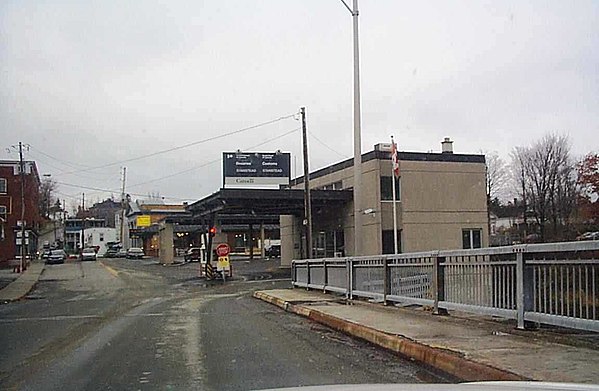
The Canada Border Inspection Station at Stanstead, Quebec, just across the border from Derby Line, Vt.
From The New England Council (newenglandcouncil.com)
Over the past 18 months, we have seen a marked shift in U.S. trade policy. Soon after taking office, President Trump made good on his campaign promise and announced that the U.S. would seek to renegotiate the North American Free Trade Agreement (NAFTA,) a multilateral agreement with Canada and Mexico that was put into effect in 1994. In more recent months—amid reports that NAFTA talks have grown contentious and that the U.S. is considering withdrawing altogether — the administration announced tariffs on certain imports that directly affect our neighbors to the immediate north and south.
Canada and Mexico are not only important allies, they are significant economic partners for the U.S., and for the New England states in particular. As the voice of the region’s business community, The New England Council believes it is of critical importance that the U.S. continue to work toward a modernized NAFTA, and that the administration should reconsider the tariffs against our partners in Canada and Mexico.
The impact of trade with Canada and Mexico on the New England economy cannot be understated. According to the U.S. Department of Commerce, Canada is the premier goods export market for businesses in five of the six New England states — in the sixth state, it is the second-largest market — representing more than $8.3 billion in exports in 2017 alone. Canada estimates that in 2017, service exports from our six states totaled nearly $3.3 billion. Mexico is also a top trade partner for our region, with three states counting our southern neighbor as their second- or third-ranking export market for goods. The region exported $4.4 billion worth of goods to Mexico in 2017, and remains a significant multibillion-dollar market for goods produced in Mexico. Data from the International Trade Administration indicates some 10.7 million American jobs are supported by goods and services exports, and it is doubtless that tens of thousands of New England jobs rely upon trade with Canada and Mexico.
The tariffs that President Trump has put into place are already having a significant impact here in New England. The U.S. Chamber of Commerce recently released a state-by-state analysis of the impact of the emerging trade war on U.S. exports. According to the report, as a result of the administration’s tariffs, $11 million in New Hampshire exports to Canada are targeted for retaliation, and close to $1 million in exports to Mexico are targeted for retaliation. Some of the hardest hit products include steel and aluminum products, lighting products, and certain foods. In total, nearly $2.7 billion in New England exports to Canada and Mexico face retaliation.
It is certainly appropriate to revisit and update major trade agreements. Some elements of our economy did not even exist at the time NAFTA was first negotiated, and we commend the administration for taking steps to modernize this historic agreement. At the same time, the President is right to be concerned about trade imbalances and to seek ways to minimize trade deficits. However, given the importance of trade with these two nations, it is gravely concerning that the administration would even suggest withdrawing from NAFTA. Further, the evidence laid out by the U.S. Chamber’s new report suggests that the tariffs are most certainly not serving our nation’s best interests, and could harm disparate and unrelated sectors of our economy.
It is understandable that partners and neighbors, on occasion, can have temporary disagreements over policy considerations, including on trade matters. However, The New England Council believes it is crucial that the playing field remain open for businesses, workers, and families across New England, so that they — through no fault of their own — are not disadvantaged by potential retaliatory trade measures or a defunct NAFTA.
James T. Brett is the president and CEO of the New England Council.

James T. Brett: Some big wins for New England in federal spending bill
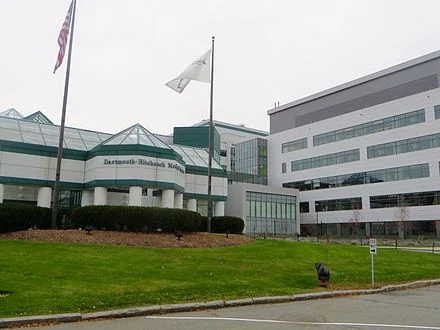
The Dartmouth {College}-Hitchcock Medical Center, in Lebanon, N.H., a recipient of National Institutes of Health research funds.
BOSTON
Last month, Congress passed and President Trump signed into law a $1.3 trillion fiscal 2018 federal spending bill. The bill, which funds the federal government through Sept. 30, includes some big wins for New England, particularly in the areas of health care and scientific research.
New England is home to leading research hospitals and universities, which are developing treatments for numerous devastating diseases. Much of this work is supported by funding from the National Institutes of Health (NIH), and so it is welcome news that the omnibus bill passed last week includes a $3 billion increase in NIH funding, bringing the total funding for this agency to $37 billion.
This increase will have a significant impact in New England. In fiscal year 2017, New England received more than $3.6 billion in NIH funding, which supported nearly 45,000 jobs and drove nearly $8.5 billion in economic activity, including nearly 2,100 jobs and more than $350 million in economic activity in Rhode Island alone. An increase in NIH funding will surely benefit our region, while also helping our medical institutions continue their important work.
The spending bill also includes a $300 million increase in funding for the National Science Foundation (NSF), which funds a wide range of scientific research, much of which is conducted at colleges and universities. Many institutions throughout New England receive such funding, and are conducting cutting-edge research in a variety of fields.
In fiscal year 2017, New England institutions received more than $650 million in NSF funding, including nearly $50 million in Rhode Island. The increase in NSF funding for the current year will mean greater support for research that is underway throughout New England.
A third important area addressed by the spending bill is the opioid-addiction crisis, which has had a significant impact in New England. According to the Centers for Disease Control, there were nearly 4,500 drug overdose deaths in the region in 2016, including 326 here in Rhode Island-
Fortunately, the spending bill includes some $4 billion for various efforts to combat the opioid epidemic, including funding for addiction research, grants to bolster state efforts and support law enforcement, and support for rural communities. This additional support will no doubt help the various efforts underway in our region to combat this epidemic.
Of course there are a variety of other elements of this bill that will benefit New England — including an increase in defense spending, boosts for apprenticeship programs and career and technical education, and money to upgrade Amtrak’s Northeast Corridor, just to name a few.
But the three provisions outlined above will certainly have a significant impact on the economy and quality of life in our region.
It is important to note that this deal was just that: a deal, the product of bipartisan compromise. There will be a variety of other important issues before Congress in the near future, including gun control, immigration reform, and infrastructure investment. We are hopeful that this example of bipartisanship is a sign of things to come. Our region and our nation deserve it.
James T. Brett is the president and CEO of The New England Council (newenglandcouncil.com), a nonpartisan alliance of public and private organizations across the region that lobbies in the region, in Washington and elsewhere for programs that benefit New England's economy and broader society.