
Vox clamantis in deserto



Gerald FitzGerald: our ‘last, best Ride’
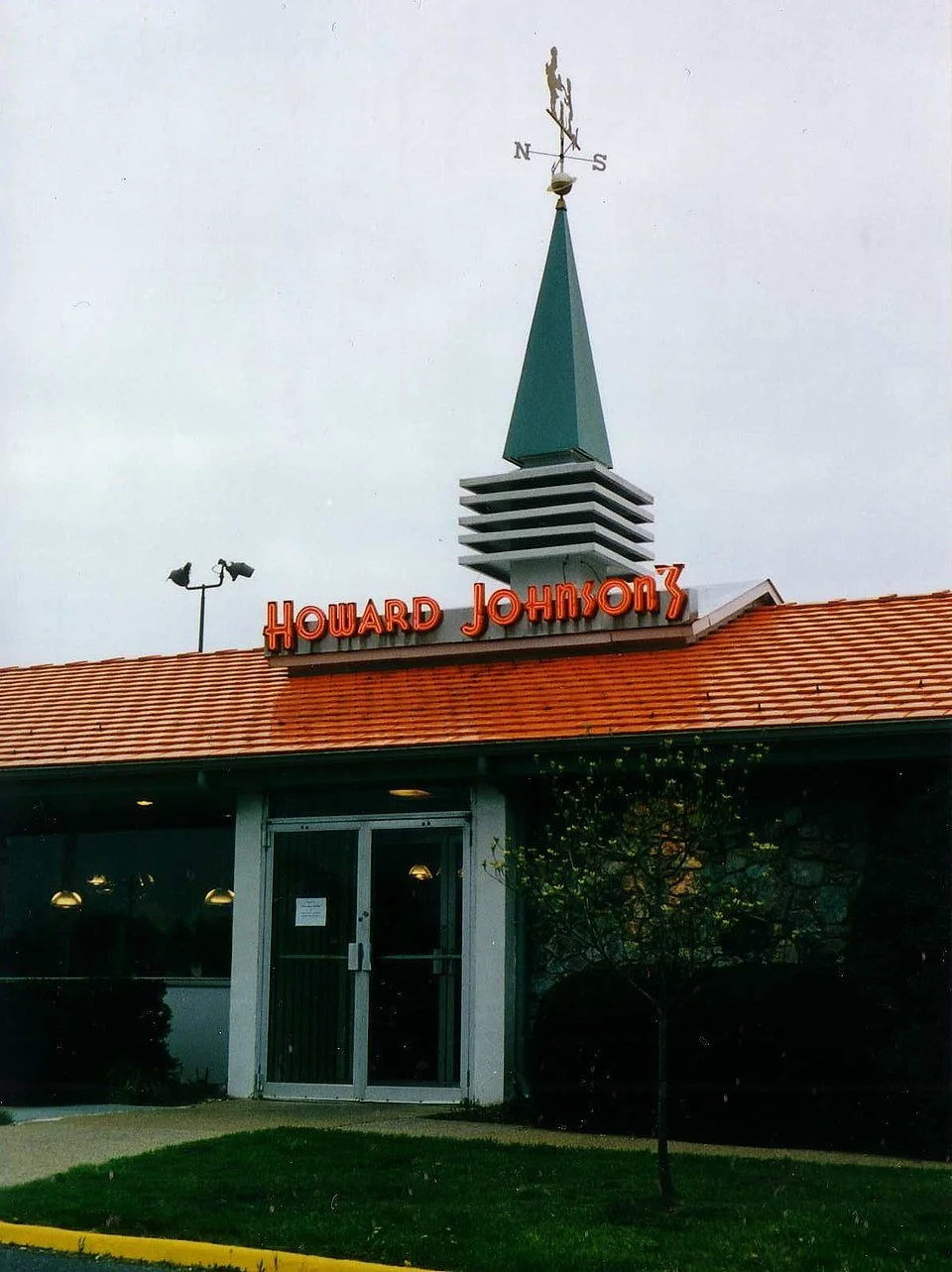
A “HoJo’s” restaurant, with its emblematic red roof and steeple.
We sat on counter stools for 23 hours at a Howard Johnson’s restaurant in Pennsylvania trying to hitchhike to New York City on a turnpike shut down by a blizzard. There were four of us. It was early February, 1966, and things were not looking good.
I'm unsure why my big brother, Chip, and his girlfriend, Ellen, had thumbed out to Cleveland from New York City for a turnaround weekend to begin with, since they each had regular jobs. Paul Burke and I had just flunked out of our Ohio college, John Carroll University. Perhaps they came to empathize or, probably, to help out. Now we were broke, stranded, and had most of 500 miles left to cover.
Like Paul, I had spent my last three bucks on dinner, but it came with bottomless coffee until the waitress on our fourth shift in ripped off the sign taped to the mirror, tore it in half and dropped it into the trash. For a few hours Chip and Ellen had tried to catch shuteye lying down in a small booth. Half the battle was holding onto our individual real estate in the crowded restaurant. No vehicles had moved for many hours other than to pull into the HoJo’s lot and park in the snow.
There had been no more of those for the longest time. I remember questioning a waitress on how she and the rest of the staff managed to get to work since the thruway was closed. She told me that there were cleared local roads behind the restaurant. I started thinking how I might use that fact possibly to change our intended route home but hadn't thought long before something else changed.
Even getting up off your stool to use the bathroom required care. Someone had to watch the seat to enforce its “taken” status. Just getting up to mosey across the restaurant to look out a window at the snowbound highway might be interpreted as surrender by any of numerous standees. But I thought that I had spied some sort of vehicle barreling through the white drifts of the eastbound lanes. That required inspection.
Sure enough! A truck flashing lights and pushing a plow was braving the blizzard. Not only that, but spaced carefully behind that plow were two black, shiny sedans making beautiful headway.
They all pulled into the HoJo’s. I don't think that the plow driver ever got out of his truck but two guys in rumpled raincoats stepped from one sedan and headed toward the restaurant's vestibule. I signaled a suggestion to Paul that we cover the entrance.
Of course, you're going to hit up a potential ride on their way out, not on their way in. You don't know whether people are staying or going. These two men stalked straight past us and the food cashier on toward the back of the building. Then they did the strangest thing: They checked out the ladies room. One went inside while the other stayed out in the hall. Ditto to the gents. After that they stalked right past us without a word back out into the snow. They looked so unfriendly that we said nothing at all. Surely, they were packing. We figured them for mobsters or bodyguards or both. Nothing that helped us.
When they reached the sedans the doors of one opened simultaneously and out stepped a strikingly attractive young couple, one from each side. The raincoats positioned themselves front and back, as if surrounding the young man and woman who were clearly high-end. Dressed in casual, crisp ski wear the young man was ramrod straight and his dark-haired, similarly attired, companion looked downright elegant. We let them pass smoothly. They headed to the rest rooms.
Chip and Ellen were closer to us now. I gestured for Ellen to come stand next to Paul. Then, stepping away with Chip to make the exit less crowded, I turned to Paul and said:
“When they head out you do the talking.”
“Me? Why?” Burke replied.
“Because you were raised in Greenwich.”
I must have dropped my eyes for a bit because I didn't see anyone in the group stop at the cash register to order food or drink. Still, the mobsters and their elegant couple sailed past smiling Ellen and polite Paul, who asked if they might have a little extra room in their two cars and plow truck. The silent, raven-haired Luci Baines Johnson, youngest daughter of then-President Lyndon B. Johnson, stepped into the snowy parking lot licking an ice cream cone. The young man with her was John Patrick Nugent, whom she married later that year.
The celebrity travelers gave us nothing, of course, unless perhaps indirectly. Once they moved out it seemed like everybody started dribbling back to their vehicles. I've no idea whether the turnpike was officially opened around the time that the president's daughter and companions left or whether people just started realizing that if the celebrities could move on down the road so could regular folk.
The first free ride went to Chip and Ellen in the quickly warm cab of a big tractor-trailer. Much later Ellen told me that she had been nervous about the driver because he had a generous supply of uppers. While his passengers declined his offer, the driver regularly shoveled handsfull of pills into his mouth with, or without, coffee. Still, she calmed down after a while when she got to stretch out in the sleeper berth.
Paul and I, too, snagged a big rig about which I recall nothing at all except that it carried us into Jersey. I guess we got dropped off somewhere near Newark and were trying to get to Hoboken for the Hudson Tubes, the under-the-river subway to Manhattan. Talk about hope and trust, between us we had no money at all.
I would give a lot to have been bright enough even to ask the first name of the guy who gave us what Paul many years later described as our “last, best ride,” or even to remember the make and model of his car. He was maybe mid-30's and driving an old coupe, black or gray two-door, with a snow shovel lying across the the back seat. We each tossed a bag on top of the shovel.
The car had the kind of front seat where each side bent forward to allow passengers into the back. We joined the driver sitting three abreast up front. He told us that he had worked construction through some kind of shape-up but that “the Puerto Ricans” would work for lower wages and between that and the weather – but mostly the Puerto Ricans -- his construction hires dried up. He was pretty hot about it. The driver smoked Camel cigarettes (Paul's brand). The driver said that he was listening to the local radio that morning and learned that there was some kind of line-up in an hour or so to shovel snow for the City of Hoboken. That's where he was headed. This must've been early Monday morning, but I remember it was daylight.
Not only did that generous young man give Paul and me more smokes, when we pulled up at the Tubes station he gave us the remaining pack. Then he asked if we had the fares. It was pretty obvious that we did not. The driver dug deep and pulled from his pocket four quarters, giving each of us fifty cents to go with the cigarettes. I wanted to hug the guy.
As I recall, the Tubes cost about a quarter each, one way. Coffee and a doughnut inside the station at the window above a slice of counter cost another quarter. Fingers wrapped around cardboard cups, Paul and I were warm and happy – strangely subsumed by the comfort smokers feel who had gone a while without but whose addictive cravings are now satiated. It is a satisfaction you can actually touch, even in memory.
Chip and Ellen had offered us to stay with them on East Fourth Street in Greenwich Village while we looked for jobs. In about two months, they would marry after signing a new lease on an apartment on West 92nd Street with a cutaway kitchen overlooking what Chip called “the Grand Ballroom.” We – Paul and I and fellow flunk-out good friend Ralph Chiesi, could then take over “the 4th Street” for ourselves.
The Tubes station in Manhattan was on or near Christopher Street, in the West Village. That was nearly a straight shot walk to East Fourth through the top of Washington Square and past Gerdes Folk City. Closer to Christopher Street, Greenwich Avenue yawned like an open mouth leading up two blocks to unseen ladies who jammed against the high windows of the Women's House of Correction catcalling and jeering in the sunny warmth.
O yeah, things sure looked good again.
Gerald FitzGerald’s career has included being a newspaper editor, a writer, a prosecutor, a defense lawyer and a civic leader.He lives on the Massachusetts South Coast.
Editor’s note: The once very big and now defunct Howard Johnson’s restaurant chain was founded in 1925 in Quincy, Mass. The last “HoJo’s” closed in 2022.
Gerald FitzGerald: My love of literature survived brutal teachers
I took beginning French five years straight and never did pass. English was a subject I actually enjoyed, but I remember three English teachers mostly for their brutality.
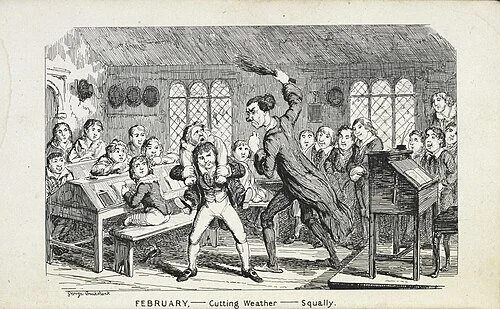
The first was John P. Gibney, a handsome young fellow who taught my class freshman year at the all-boys Catholic high school, Bishop Loughlin, in Brooklyn.
At Loughlin, teachers changed classrooms each period, not students. Very early on Mr. Gibney came into noisy Room 205 proclaiming: “When I enter this room, silence reigns supreme.”
A few days later, Jimmy Clarke and I were yakking between periods and we didn’t notice Mr. Gibney enter the room. He walked over to his desk on the riser and loudly let fall his books. We looked up, still standing by our seats near the front. Mr. Gibney looked at me, then at Clarke. He extended an arm toward Clarke and moved his index figure in a curling motion. Jimmy’s face dropped its smile, forming a pretty good silent version of “Sorry, sir” as he complied with the signal beckoning him closer. I slipped into my seat and hoped for the best.
It happened so quickly I cannot tell you if Mr. Gibney threw a right or a left. He connected with Jimmy’s jaw, dropping him flat out on the floor. My stomach and legs fell away in fear. Jimmy had not known what was coming whereas I now considered myself fully informed.
Jimmy slowly gained his feet and moved to behind his desk, near mine. I was owned utterly by fear as if awaiting the firing squad. But Mr. Gibney simply started the lesson. Perhaps he thought that he had gone too far, or perhaps he determined that a second assault would not be justified to prove his point. Or maybe that day I was just the luckiest kid in Brooklyn.
There was a big fellow in our class named James E. Freeman. Everyone called him by his last name only. He was very tall and muscular and had a large face and a shock of black hair. He looked just like Li’l Abner from the newspaper comic pages.
Freeman worked hard to make a favorable impression on Mr. Gibney. Seconds before class, Freeman would stack library books on his desk, such as War and Peace, works by James Joyce, poetry and plays. It was as if Freeman thought that the books would trigger Mr. Gibney’s interest, resulting in a literary conversation whereby Freeman might shine and impress. I recall that the teacher once picked up a volume but laid it right back down without stopping. I could not see if he did it with a smirk.
But, once, in the basement hall outside the cafeteria I heard the most gratuitously harsh words spoken by teacher to student. Mr. Gibney was extolling the Irish love of theater when Freeman interjected with his desire to visit Ireland one day and perhaps gain a job working at the legendary Abbey Theater, in Dublin. Mr. Gibney looked directly at Freeman, saying slowly: “Freeman, they wouldn’t let you clean the urinals at the Abbey Theater.”
None of us said another syllable. I watched the hope drain from Freeman’s face. I had neither the brains nor the heart to embrace Freeman or to take a swing at Gibney.
J.E. Freeman apparently grew up in Queens without his father and joined the Marines after high school. He served until he was 22, when he revealed his sexuality and was discharged. He claimed that he was present for the Stonewall Riots, in Greenwich Village, in 1969 and I believed him. He became a professional actor, with roles in such movies as David Lynch’s Wild at Heart, the Coen Brothers’ Miller’s Crossing, Alien Resurrection, with Sigourney Weaver, and the film Patriot Games, based on Tom Clancy’s novel with the same name. He was also kind and caring toward my eldest daughter, Megan, when she tried to break into Hollywood. He died at 68 after having been HIV-positive for 30 years and self-publishing some admirable books of his poetry.
Then there was my other English teacher at Loughlin, Brother Basilian. He was tall and fairly lean, had thinning white hair, and he was clergy -- kind of a male nun with a vertically split starched bib beneath his chin above his long black cassock, the costume of a La Salle Christian Brother.
Brother Basilian’s idea of teaching sophomore Shakespeare was to sit at his desk reading aloud all parts to Julius Caesar. I am happy to note that as a man I have avidly read, no thanks to Basilian, every word known to be written by Shakespeare, as well as many only thought to be written by The Bard.
But at the moment in question, I was utterly bored. My desk was second-to-last in the second row, as I recall. One desk ahead of me, and to my left, sat my classmate Christopher Kenney, surreptitiously reading a Superman comic held on his lap just below Brutus and the gang. In the softest whisper I could make I began to speak:
“Christopher Kenney, this is your conscience speaking.…”
Then, stretching the syllables of his name:
“Chrissss…to..pherrrr Kennn…ney, this is your conscience speaking…” Even from behind I could see Chris’s smile push up into his cheeks.
Suddenly came an unwelcome query:
“WHO IS THAAAAT?” came a wildly abrasive voice from the lips and beet-red cheeks of Bro. Basilian, He slowly rose, his eyes flaming.
Now, he was at the head of my row, swaying side-to-side, striding obsessively toward me down along the aisle.
“IS THAT YOUuuu, FitzGerald?”
He was upon me. He slapped me where I sat, striking my left cheek with his open right hand, twisting my head and neck violently to my right, and then smashed his left hard against my right cheek to send it back. Then his right again to my left cheek, and then his left again to my right cheek. He moved to the rhythm of a butcher. He swung his right open-hand hard and fast toward my left cheek again. I moved my head backward, causing him to miss me completely; his momentum carried him face down across my desk.
Briefly, I caught sight of the frozen, open-mouthed faces of my classmates gaping at Basilian lying across my desk like a roast on a platter. I reached for the hem of his black cassock and pulled it up over his covered black trousers. Then, with a small smile, I whacked his rump in a spanking gesture. The crowd exploded! The cheers and laughter must’ve been heard throughout the entire floor of the building, if not beyond. It was, at that moment, the pinnacle of my life.
Sputtering, the brother clumsily got to his feet, picked me up with both hands and threw me several desks up the aisle. Then did the same again. I finally grabbed the handle on the classroom door and heard him tell me to report to the principal.
Eventually, Loughlin bade me farewell -– unrelated to this incident — and I entered senior year in public school.
The last of my high-school English studies was taught by a woman whose name I recall as Rose Ventresca. Hers was an Advanced Placement class and, of course, I was the new kid in a room half-filled with girls, for the first time since my eighth grade. One early class reintroduced my old pal Shakespeare. Today I take great pleasure reading his sonnets regularly with the authorial tutelage of the late Helen Vendler via her fabulous study, The Art of Shakespeare’s Sonnets.
Our homework for the day of Ms. Ventresca’s class was to briefly explicate each of two sonnets on alternate sides of a loose-leaf page. I have no memory of either sonnet.
The next day I was the first called upon to discuss The Bard’s effort. What I had written to try to explain the first sonnet was right on the money. Ms. Ventresca was thrilled. Her joy at my explication bubbled through the room. I felt enormously proud.
“Read your next explication, please,” Ms. Ventresca commanded. Eagerly, almost boldly, I leapt to fill the air with golden commentary. My eyes never left the page until I was finished reading aloud. I looked up with a broad smile and saw that Ms. Ventresca had shrunk into something vile and withered. There was only foul, frightening silence, soon broken by the brittle, sharp slicing of her teeth and tongue.
“What have you done, you cheating, monstrous fraud? From where did you steal that first, brilliant essay? You cheat! You never wrote that first explication. It’s not possible you could be so right then only to be so wrong! You copied the first one you read from some book. No one could write that and then write such a worthless take on the second sonnet.”
“I am not a cheat, I did not cheat or copy anything,” was all I could stammer back to her wholly false accusation. I have no other memory of any aspect of her class.
Poetry has helped pump my blood since my days cutting classes at Loughlin to spend hours alone wandering New York City memorizing pages of The Pocket Book of Modern Verse, listening to records in booths at the East 53rd Street public library or reading behind the stone lions at the monumental New York Public Library’s headquarters, at Fifth Avenue and 42nd Street, or riding the Staten Island ferry or sneaking into the subway or hiding within The Cloisters or relaxing in my special room at the Metropolitan Museum. If it was free I spent time there with poetry. My best friend, an usher, provided a free pass to Radio City Music Hall, where I sometimes watched three consecutive shows of pretty legs and movies – but always with a book close by.
I still have my books, including a 60-cent paperback of Robert Frost’s poems given to me as my 17th birthday present by my mom shortly after the murder of President Kennedy, for whom Frost was his favorite poet.
I rarely think of my English teachers. They had very little to do with my love of literature.
Gerald FitzGerald, a Massachusetts-based writer, is a former newspaper reporter and managing editor, assistant district attorney and trial lawyer.

Gerald FitzGerald: My wild ride on a Dukakis campaign
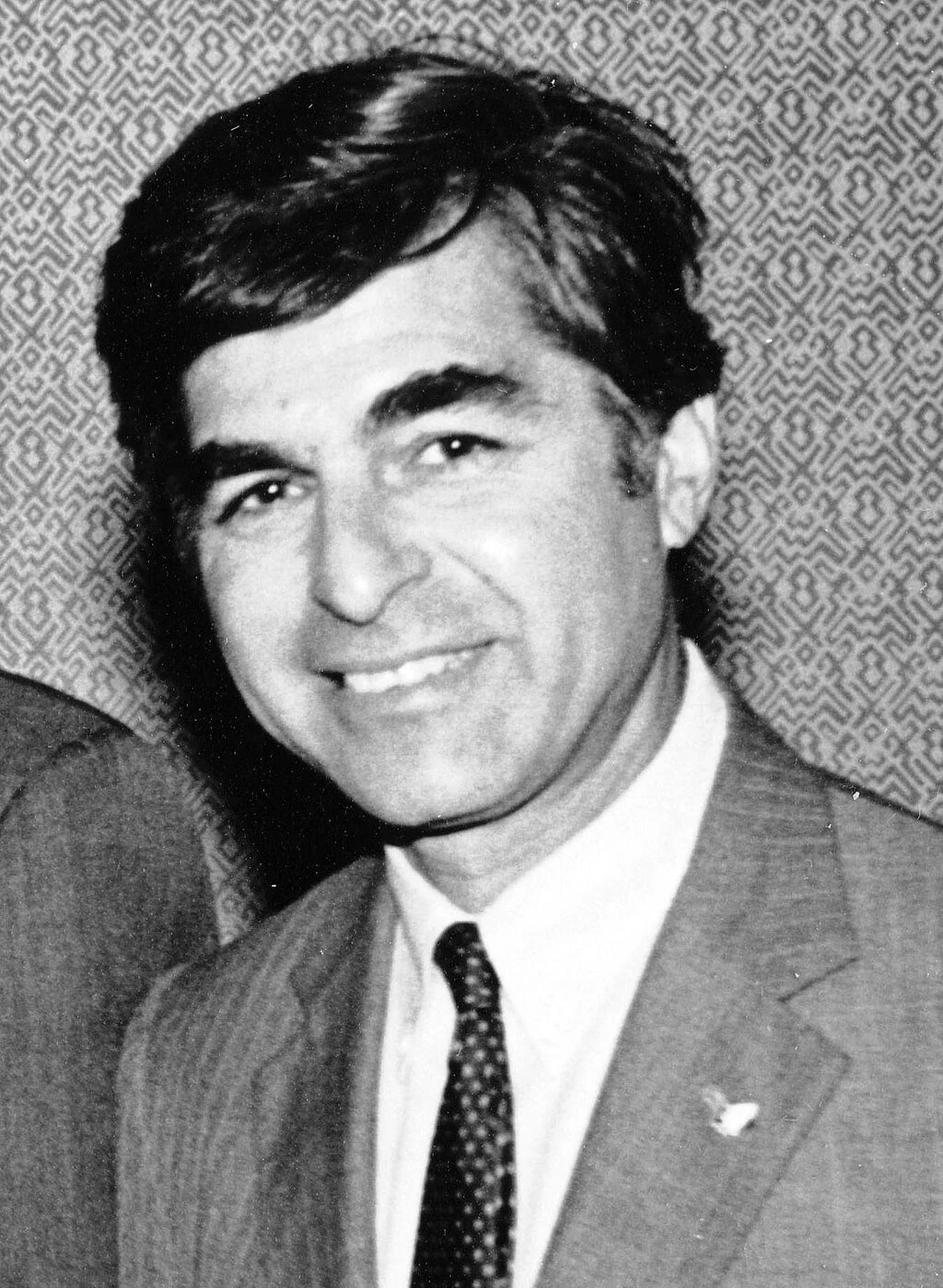
Michael Dukakis in 1984
At nearly one in the morning, two sets of three males paced the sidewalk in front of Phillips Drug Store at the corner of Charles and Cambridge Streets in Boston. It was 1982 in the heated Democratic primary race for governor. The youngish men were political enemies awaiting a delivery truck carrying the first edition of The Boston Globe. On the field for incumbent Massachusetts Gov. Edward J. King were Ed Reilly, political guru/re-election campaign manager; Gerry Morrissey, press secretary, and a factotum named Rick Stanton. Representing the challenger, once and future Gov. Michael S. Dukakis, were ace speechwriter Ira Jackson; deputy issues man Tom Herman and me, the Dukakis campaign press secretary. None of us spoke to any of them.
The bundles eventually dumped from the back of the truck were dragged inside and their cords cut. All six men scurried into Phillips to buy copies. Back outside, I had one Globe for us, holding it open while Jackson and Herman peered over my shoulders. Nothing on Page One! Nothing on the Metro cover! I slowly scanned succeeding pages until I found the story about our campaign besmirching Governor King’s wife. A freelance Dukakis supporter had bastardized a Jodie King radio ad to rearrange her statements as if she were answering a fictitious narrator's questions concerning her husband’s sexual preferences. Smiling broadly, I looked up at Morrissey:
“Inside. Page 19, below the fold,” I said with satisfaction.
Angry, Morrissey quickly moved toward me, thrusting an index finger close to my face:
“We’re going to get you!” he growled.
The doctored tape had arrived unsolicited in the campaign mail. I learned of it when John Sasso, Dukakis’s campaign manager, waved me into his office, grinning. We sat down and he began to play the offensively hilarious recording. Trouble was he had his telephone on speaker. Listening was a reporter from The Globe. I can’t recall clearly if it was Charlie Kenney or Ben Bradlee Jr. but I’m guessing it was Bradlee because my memory tells me that Sasso had first played it for Kenney alone and then again for me and Bradlee. I tried vigorously to stop the tape, but Sasso pushed me away. A brilliant man, John was making a mistake of earthquake proportions. He had grown close to several reporters. He treated them as buddies, expecting similar treatment in return. I had tried to convince Sasso that reporters were good people and fun to be around but they will eat you alive. A good story trumps a good “friend” any day.
The tape, we later learned, had been mailed in by an over-enthusiastic, brutally clever supporter from Ware, Mass., who supposedly used WARE’s radio facilities to create the satire. At the time I didn't even know where Ware was. As King’s campaign continued to work reporters to fan the fires of outrage, we Dukakis employees tried just as hard to hose it out of existence. Keeping what soon became known as “The Sex Tape” off the front page that first news cycle was a win for us good guys.
Earlier that day, Dukakis and I had met with the editorial board of The Patriot-Ledger at its old location in Quincy. The usual point of such meetings was to try to win a paper's endorsement, but the Patriot-Ledger’s policy was not to endorse any primary-election candidates. Dukakis still wanted to meet with them and answer their questions. Present were reporters and editors whose names I no longer recall. Near the end of the session someone entered the room and announced that there was a call for me that would be transferred to a telephone outside the door of the meeting room. I walked out and picked up the phone. Close by were wire-service teletype machines. These noisy, chattering tickers typed breaking news stories on a continuous roll of foolscap, sometimes preceded by dings whose urgency alerted staff to tear the stories off the roll to read.
It was Sasso on the phone. News of the Jodie King tape was out. He asked if the Patriot-Ledger knew this. Were they grilling Dukakis? I told him no. At the same time I turned to read the latest story coming in from Associated Press (or it might have been United Press International). It was all about the sex tape. I don't think I read the incoming story to John because that would have taken time I didn’t have. Instead, I told him that the wire service was breaking the story as we spoke. I turned around to face the newsroom. Glancing back at the machine, I noted where the story ended. Still holding the phone, I slid my left hand behind my back, ripping the paper from the teletype as silently as possible and brought it up under my suit jacket, shoving the paper down between my underpants and trousers.
Minutes later, the Duke and I were back in the car with a waiting driver. If anyone heard the crinkling sound as I scooted onto my seat, he was too polite to comment. They dropped me at campaign headquarters, and Michael went on to Springfield as scheduled.
That night, in the words of Ira Jackson quoting The Godfather script: “We hit the mattresses.” The telephones blazed for a couple of hours. After having been told that all copies of the errant tape had been destroyed, I told Frank Phillips: “The tape does not exist.” Phillips, writing for The Boston Herald, was someone I knew well and had once worked with on a journalism project. He didn’t ask if the tape had ever existed. Yes, I know – I am not proud of myself, then or now.
We went on to beat King by about seven points and defeat Republican John Sears by about a 59-38 percent margin in the general election. Although Dukakis eventually offered me his top press job, I stayed only a couple of weeks after the inauguration, which was on Jan. 6, to help with his transition. It’s one thing to work your heart out for low pay six or seven days a week all year to get your candidate elected. It’s another thing to have to go home for Thanksgiving not knowing if you've got an offer for a job to start in January. I never knew why the offer took so long, but I did learn that a paid campaign media adviser was pushing hard to clip me on behalf of his friend, an editor of an alternative weekly newspaper. Sasso is the one who told me, but advised me not to worry. When I told the Duke that I wouldn't stay he took me to lunch to talk me out of leaving. He even asked if he could meet with my wife to tell her why he wanted me. No way, I replied, she might cave. Dukakis asked me to recommend a replacement. In turn, I asked Frank Phillips. He suggested someone. To ice the interloper, I strongly recommended Frank's candidate, Jim Dorsey, who got the job.
Six years later Dukakis was serving his third term when he was nominated for president at the 1988 Democratic National Convention, in Atlanta. Sasso had run this campaign, too, until he hit a severe bump in the road five months before the convention. This time it was a videotape.
Then Delaware Sen. Joseph Biden, a primary competitor, had made himself vulnerable by delivering public remarks plagiarized from a British politician. Sasso leaked to the press a video comparison of the Biden speech with that of the Brit’s. It was enough to kill Biden's 1988 candidacy. But the public blow back was sufficient to make Sasso resign his own position at the end of September 1987. Still, I didn’t see a thing wrong with Sasso's action. While on a lunchtime walk up Beacon Street in front of the State House I learned from Mike Macklin, a TV news reporter, that Sasso was out. Macklin wanted me to comment since he knew that I had worked closely with John. I told Macklin on camera that Sasso should not take the fall for pointing out the truth and, further, that “I think he's being crucified.”
Years later, John's wife told me that during the Atlanta convention she and her husband dined with a group of national network newsmen. Speaking of his resignation Sasso told the gathering: “When I left the campaign only two people went on television to defend me – then New York Gov. Mario Cuomo and Jerry FitzGerald,” His listeners chewed their food, nodding their heads, until one, Tom Brokaw, I think, asked: “Who's Jerry FitzGerald?”
A year after the Biden tape debacle, about two months before the national election, Dukakis brought Sasso back to run the campaign as “vice-chairman.” John called me, I want to say, on Friday, Sept. 10. We met early next morning at the old Statler Building (now the Park Plaza) in Park Square, the same headquarters location used in 1982. After a brief chat I offered to help him any way he thought I could. Sadly, he declined.
“No, Fitzie. We're going down. What's worse is that we are going down never having stood for anything.” John's words cut me like a sharp knife. Even now, decades later, I find it extremely difficult to believe that he believed what he said.
Afterward followed one of my most enjoyable afternoons ever. Someone, I think on the side of the family of Sasso’s wife, Francine, was in town from New Hampshire with Red Sox tickets. John, the N.H. relative, and -- a surprise to me -- Ted Sorensen and I took a cab to Fenway Park to watch the Sox lose a close one to, as I recall, Cleveland. The seats were good, but sitting next to Sorensen made mine even better. I hardly let him shut up about his nearly 11 years as JFK's right arm, including writing speeches for the president whose phrases still ring in our hearts. In fact, we continued to chat walking all the way back from the stadium to Park Square. He was only 50 then. He would live another 22 years, but I never saw him again.
As we all parted, I clasped his hand and thanked him profusely for all he had done to help our president who had truly helped our nation. For much of my boyhood I had read books by Sorensen, Arthur M. Schlesinger Jr., Pierre Salinger, Arthur Krock and many others while daydreaming of assisting a worthy candidate to become president of the United States. That never happened for me. Still, sometimes the dreaming and the reaching out are nearly enough.
Gerald FitzGerald’s career has also included being a newspaper editor, a writer, a prosecutor, a defense lawyer and a civic leader.