
Chris Powell: Look for places with good parenting

MANCHESTER, Conn.
Anyone asked to guess the 10 best public high schools in Connecticut would probably select some of those chosen by the Internet site Niche, which connects high school graduates with colleges.
Nine of the 10 high schools chosen by Niche are in Westport, New Canaan, Darien, Greenwich, Wilton, Ridgefield, Avon, Farmington, Glastonbury and Norwalk. All but Norwalk are prosperous communities that spend a lot of money on their schools and get good results. The high school in Norwalk cited by Niche is a regional school drawing especially motivated students, many from outside the city.
According to Niche, all 10 of the best public elementary schools in the state are in three of the towns with the best high schools -- Greenwich, New Canaan and Westport -- and nine of the 10 best middle schools are in the towns with the best high schools.
Of course educators will conclude from these rankings that per-pupil spending correlates with student performance -- spending up, education up. This is self-serving and wrong.
For while not everyone in the towns with the supposedly best schools is rich, most people there are at least middle class and most children there have two parents, either living with them or otherwise involved in their lives. Their parents spend time with them. Most know their letters, numbers, and colors when they first arrive in school. They know how to behave. They have some interest in learning. Their attendance is good because their parents see to it.
Most such children are easy to teach -- not because per-pupil spending is high but because per-pupil parenting is.
Of course circumstances are much different in high schools in municipalities with terrible demographics, municipalities with high poverty and low parenting. Here many children live in fatherless homes, homes with only one wage earner and a smattering of welfare benefits, homes over which a stressed, exasperated, and sometimes addicted mother presides. These children get much less attention and many are frequently absent from school.
In New Haven, the city that is always lecturing Connecticut about how to live, high schools have a chronic absenteeism rate of 50 percent, highest in the state. Good luck to teachers and administrators trying to educate children who frequently don't show up and, when they do, often disrupt classes, get into fights, or suffer mental breakdowns, but whose general discipline or expulsion is forbidden.
That's why the Niche school rankings are so misleading.
For schools and teachers play the hands they are dealt by community demographics.
Any school dealt four aces is almost certain to win regardless of its resources and the competence of its staff. Any school dealt mostly jokers will resort to clamoring at the state Capitol for more money, as if the great increase in state financial aid to schools since the Education Enhancement Act was passed in 1986 has made any difference in education results, and as if the clamor for more money isn't just an excuse for ignoring the parenting problem, which seldom can be discussed in polite political company.
Connecticut's best schools are actually the ones that get the best results from the students who are hard to teach -- the students neglected at home -- not those who are easy to teach. Nobody seems to compile such data, perhaps because it would impugn the premise of education in Connecticut -- that only spending and teacher salaries count and educational results are irrelevant.
For many years in Connecticut the only honest justification for raising teacher salaries has been to induce teachers to stick around with the demoralized, indifferent, and misbehaving kids about whom nothing can be done until government finds the courage to restore academic and behavioral standards. These days teachers are given raises mainly to secure labor peace and union support for the Democratic Party.
It's the same with police departments. Cities, where poverty is worst, struggle to keep officers not so much because suburbs often pay better but because, like city teachers, city cops increasingly want to escape the worsening social disintegration and depravity around them.
Chris Powell has written about Connecticut government and politics for many years (CPowell@cox.net).
‘The Body Imagined’
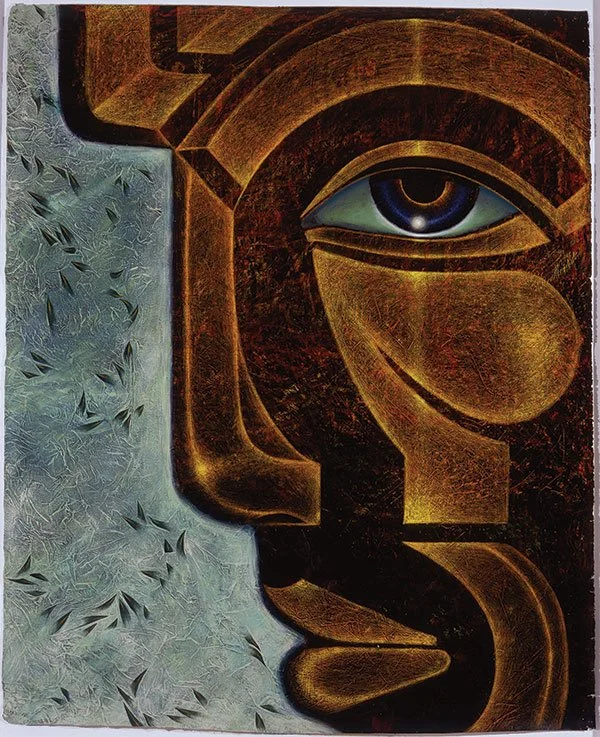
“El guerrero (The Warrior)” (acrylic and crayon on paper), by Javier Chavira (American, born in Mexico), in the show “The Body Imagined: Figurative Art in the Bank of America Collection,’’ at the Mattatuck Museum, Waterbury, Conn., June 22-Sept. 28.
His Web site says:
“Guided by both analytical and intuitive processes, Chavira’s pluralistic practice is open to using a variety media to seamlessly integrate formal elements to create pictures and objects that exist in the space between non-objective abstraction and representation, without rigidly adhering to either. Chavira’s diverse oeuvre is a testament to this distinctive approach.’’

Waterbury was once famous for clock and watch making, as well as for brass.
Rezoning plan blindsides Downtown Boston residents
This article is slightly edited for use here.
(Disclosure: Robert Whitcomb, New England Diary’s editor, is chairman of The Boston Guardian.)
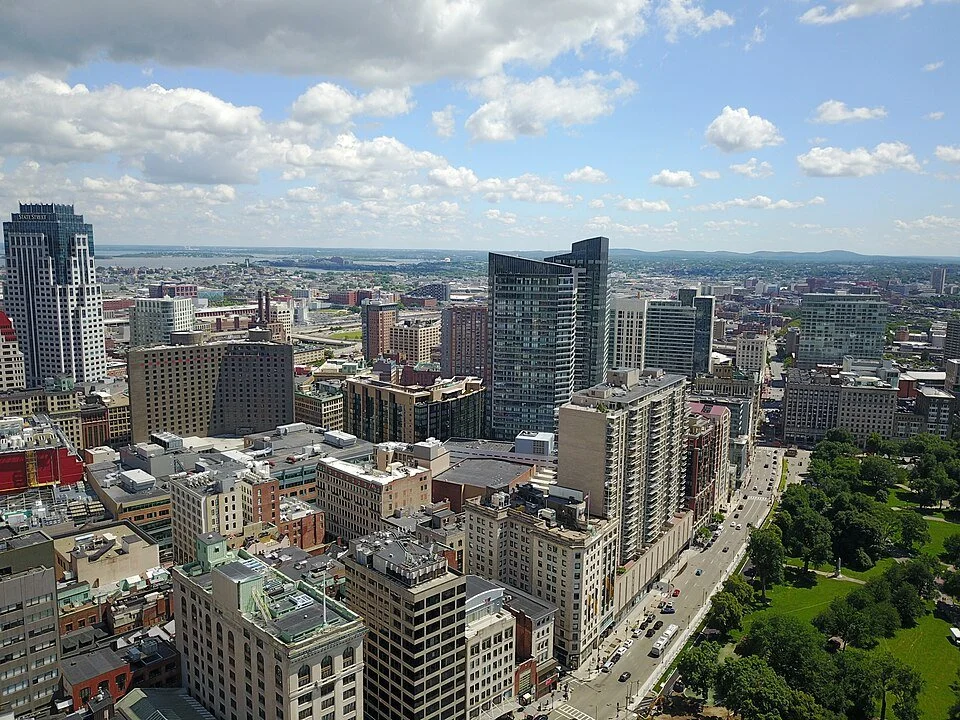
The newest Downtown Boston zoning update allows for towers of up to 700 feet, much to the surprise and disappointment of community leaders who have been involved in negotiations with the Planning Department (BPD) since February.
The zoning plan, known as PLAN: Downtown, has been an issue for months, after the city proposed a draft in January that allowed for 500-foot residential towers on Washington Street. When it received over 500 letters of opposition from residents, the city agreed to revise the plan along with a coalition of Downtown community leaders. But those stakeholders say the latest version of the draft is not what they expected or planned for.
“The mayor personally assured this coalition that the city would work collaboratively to engage in meaningful dialogue and aim to reach a compromise,” the Downtown Boston Neighborhood Association (DBNA), a major player in the coalition, said in a statement. “It has become abundantly clear that this was never the administration’s intention and that the few meetings that were held with the coalition were simply a disingenuous ‘check the box’ exercise.”
Rishi Shukla, of the DBNA, said the city had been radio silent with the coalition since mid-April after only three meetings. On May 27, Shukla had requested a call with Chief of Planning Kairos Shen to get an update. Midway through the call, Shukla said he received a text from a city contact letting him know the city planned to release its final draft two days later.
The latest draft of the plan has two districts spanning the Downtown. One, adjacent to the parks, has a maximum height of 155 feet. The other has a variable maximum height, such that it complies with whatever the smallest number is between state shadow regulations, parks shadow regulations, and the critical airspace limit of 800 feet. That means that, as buildings get farther away from the parks, they can increase in height in progressive stages, up to 700 feet.
The boundary of the districts is at Washington Street. A map of the zoning published by the city shows that the western side of the street, closer to the parks, has a height limit of 155 feet, while the eastern side can have up to 400-foot tall buildings.
The city has argued since January that its goal was to increase housing opportunities, despite resident opposition that any housing constructed in the area would not be affordable.
“This zoning update is one of several plans and initiatives underway across Boston to address our housing crisis,” Mohammed Missouri, Mayor Wu’s senior strategy advisor, wrote in an email to people who submitted comments on the original draft.
“As the most rapid-transit-accessible part of our city, Downtown is a critical location for focusing new mixed-use and residential density, where Inclusionary Zoning requirements will produce affordable housing at a scale not feasible in other parts of the city.”
But according to the DBNA, this initiative has not been accompanied with any actual planning.
“In its latest release, the city once again fails to provide any basic analysis, renderings, shadow studies, or infrastructure impacts related to the proposed zoning plans,” the DBNA wrote. “This is not thoughtful, comprehensive planning. It is a high-rise tower gamble devoid of sound analysis and valid proof of concept.”
The BPD will hold a virtual public meeting about the new plan on June 16 at 6 pm.
Llewellyn King: Europeans fear what will happen as Putin asset Trump abandons them

Murderous tyrant and a fan at G20 meeting on June 28, 2019, in Osaka, Japan.
WEST WARWICK, R.I.
Europe is naked and afraid.
That was the message at a recent meeting of the U.K. Section of the Association of European Journalists (AEJ), at which I was an invited speaker.
It preceded a stark warning just over a week later from NATO Secretary General Mark Rutte, also speaking in London, who said the danger from Vladimir Putin’s Russia won’t recede even if there is peace in Ukraine.
Rutte said defense spending must increase across Europe and recommended that it should reach 5 percent of GDP. Singling out Britain, he said if the Brits don’t do so, they should learn to speak Russian. He said Russia could overwhelm NATO by 2030.
The British journalists’ session reflected fear of Russia and astonishment at the United States. There was fear that Russia would invade the weaker states and that NATO had been neutered. Fear that the world’s most effective defense alliance, NATO, is no longer operational.
There was astonishment that America had abandoned its longstanding policies of support for Europe and preparedness to keep Russia in check. And there was disillusionment that President Trump would turn away from Ukraine in its war against Russian aggression.
The tone in Europe toward the United States isn’t one simply of anger or sorrow, but anger tinged with sorrow. Europeans see themselves as vulnerable in a way that hasn’t been true since the end of World War II.
They also are shattered by the change in America under Trump; his hostility to Europe, his tariffs and his preparedness to side with Russia. “How can this happen to America?” the British AEJ members asked me.
In many conversations, I found disbelief that America could do this to Europe, and that Trump should lean so far toward Putin. In Europe, where Putin has been an existential threat and where he invaded Ukraine, there is general amazement that Trump seems to crave the approbation of the Russian president.
Speaking to the journalists’ meeting via video from Romania, Edward Lucas, a former senior editor of The Economist, and now a columnist for The Times of London and a senior fellow at the Center for European Policy, said, “Donald Trump has turned the transatlantic relationship on its head. He wants to be friends with Vladimir Putin. We are in a bad mess.”
He said he saw no realistic possibility of a ceasefire in Ukraine in the near future, and he said Trump had made it clear that he was prepared to walk away from trying to bring peace “if it proved too hard.”
Lucas suggested that if European nations continue to back Ukraine after a Russian-dictated peace offer endorsed by America, Trump will punish them. He might do this by withdrawing U.S. assets from Europe, pulling back large numbers of troops from the 80,000 stationed there, and refusing to replace the American supreme commander of Europe.
“Then we will see how defenseless Europe is,” he said.
In Washington, it seems there is little understanding of the true weakness of Europe. No understanding that money alone won’t buy security for Europe.
Europe doesn’t have stand-off capacity, heavy airlift capacity, ultra-sophisticated electronic intelligence or anything approaching a defense infrastructure.
Trump has equated defense simply with money. But in Europe (although 27 of its nations are part of the European Union), there is no cohesive structure in place that could replace the role played by the United States.
Within the EU there are disagreements and there is the spoiler in the case of Hungary. Its pro-Russia ruler, Victor Orban, would like to try to block any concerted European action against Russia. The new right-wing Polish president’s hopes for good relations with Orban are a worry for most EU members.
I have long believed that there are three mutually exclusive views of Europe in the United States.
The first, favored by Trump and his MAGA allies, is that Europe is ripping off America in defense and through non-tariff trade barriers and is awash in expensive socialist systems embracing health, transportation and state nannying.
The second, favored by vacationers, is that Europe is a sort of Disney World for adults, as portrayed on PBS by Rick Steves’s travelogues: Watch the quaint people making wine or drinking beer.
The third is that Europe has been encouraged by successive administrations to accept the U.S. defense umbrella, as that favored America and its concerns, first about Soviet expansion and more recently about expansion under Putin.
Now Europe is alone in defense terms, naked and very afraid -- afraid of Trump’s pivot to Putin.
Llewellyn King is executive producer and host of White House Chronicle, on PBS. His email is llewellynking1@gmail.com, and he’s based in Rhode Island.
Pray for Ukraine

“Egg” (clay and glaze), by Rustem Skybin, Ukrainian artist living in the Kyiv region, at Fuller Craft Museum, Brockton, Mass.
Frank Carini:Trying to save Timber Rattlesnakes, which play useful ecological roles in New England

Timber Rattlesnake
— Photo by Glenn Bartolotti
Text edited and excerpted from an ecoRI News article by Frank Carini
“Providence’s Roger Williams Park Zoo, partnered with New England biologists and conservationists 14 years ago to try to save the region’s remaining Timber Rattlesnake populations.
“The project aligned perfectly with Lou Perrotti’s passion and experience. The zoo’s director of conservation programs believes that it is the responsibility of state wildlife agencies and other stakeholders, such as zoos and aquariums, to protect every species considered to be threatened or endangered, no matter how big or small. They all, even venomous snakes, play a role in ecosystem health.
“For example, research has shown that Timber Rattlesnakes help keep the occurrence of Lyme disease down by preying on deer mice, a popular host of the Lyme-carrying deer tick.
“The Northeast’s population of Timber Rattlesnakes, however, remains in serious decline, because of habitat loss, road mortality, and indiscriminate killing. Perrotti has noted this species historically has had a bounty on its head, which was a significant cause of its extirpation from Rhode Island in the late 1960s.’’
Distant relatives
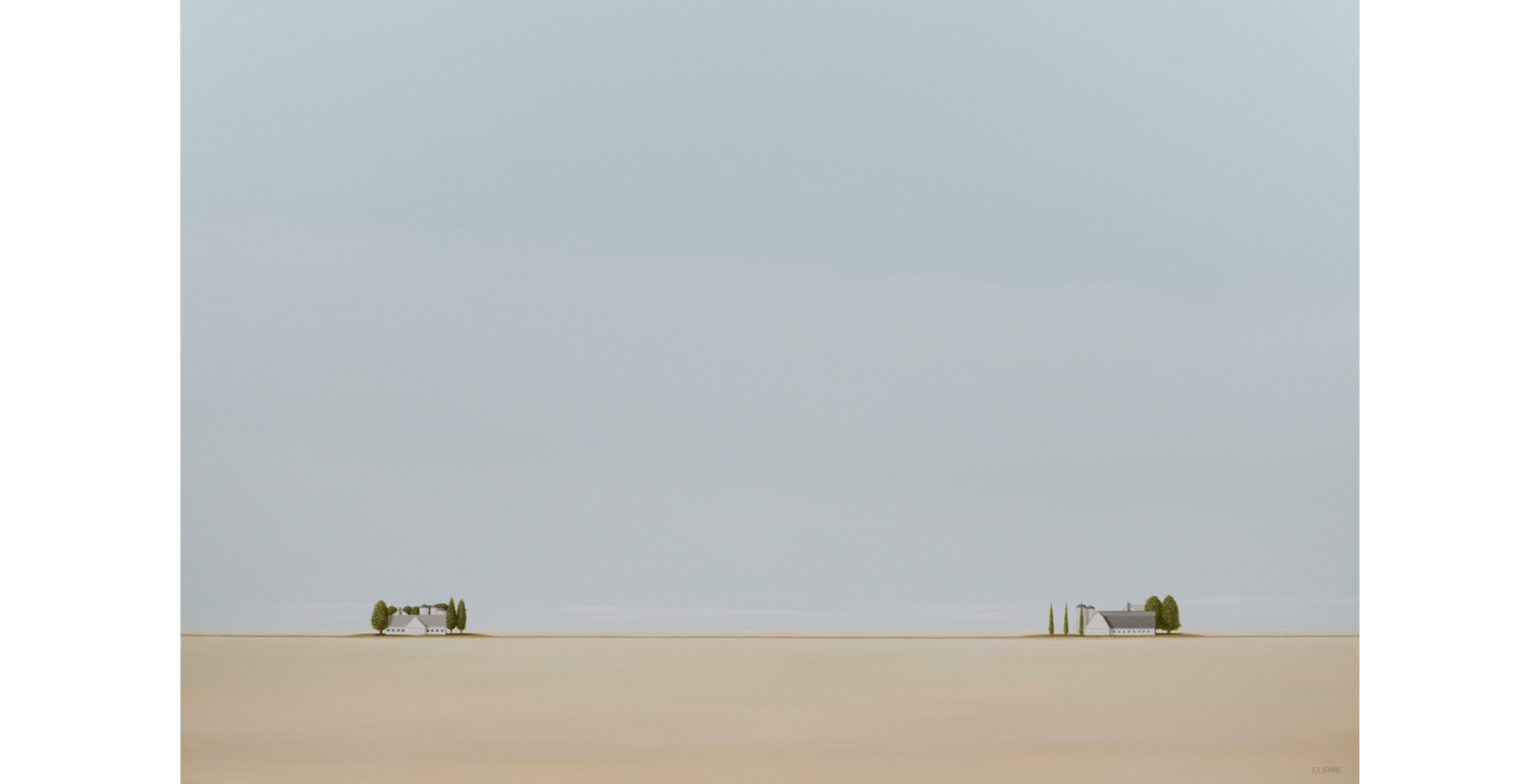
“Brothers,’’ by F. Lipari, at Bernay Fine Art, Great Barrington, Mass.
From Mr. Lipari’s artist statement:
“Influenced by his love of nature, his subjects are carefully chosen and presented in their purest form in a setting devoid of any clutter, thus evoking a sensation of serenity and stillness….
“Strokes of acrylics, multi-layers, subtle hues and blends create depth in his work, while the main feature is highlighted by a signature mark of etherealism giving it all the focus and attention it merits. When looking at his work, F.Lipari wants you to feel the mood and be transported into his world.’’
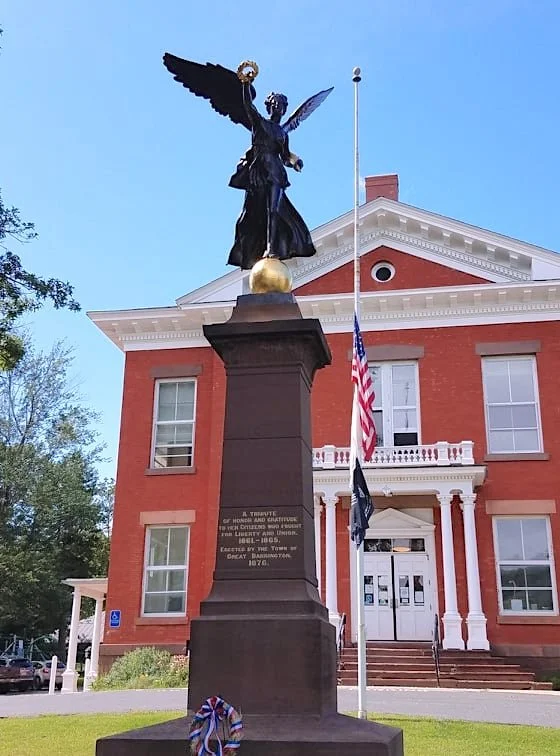
Civil War Monument, in front of the Great Barringon Town Hall.
—Photo by Francis Helminski
‘Rural Thrive’ program for Maine’s rural teachers
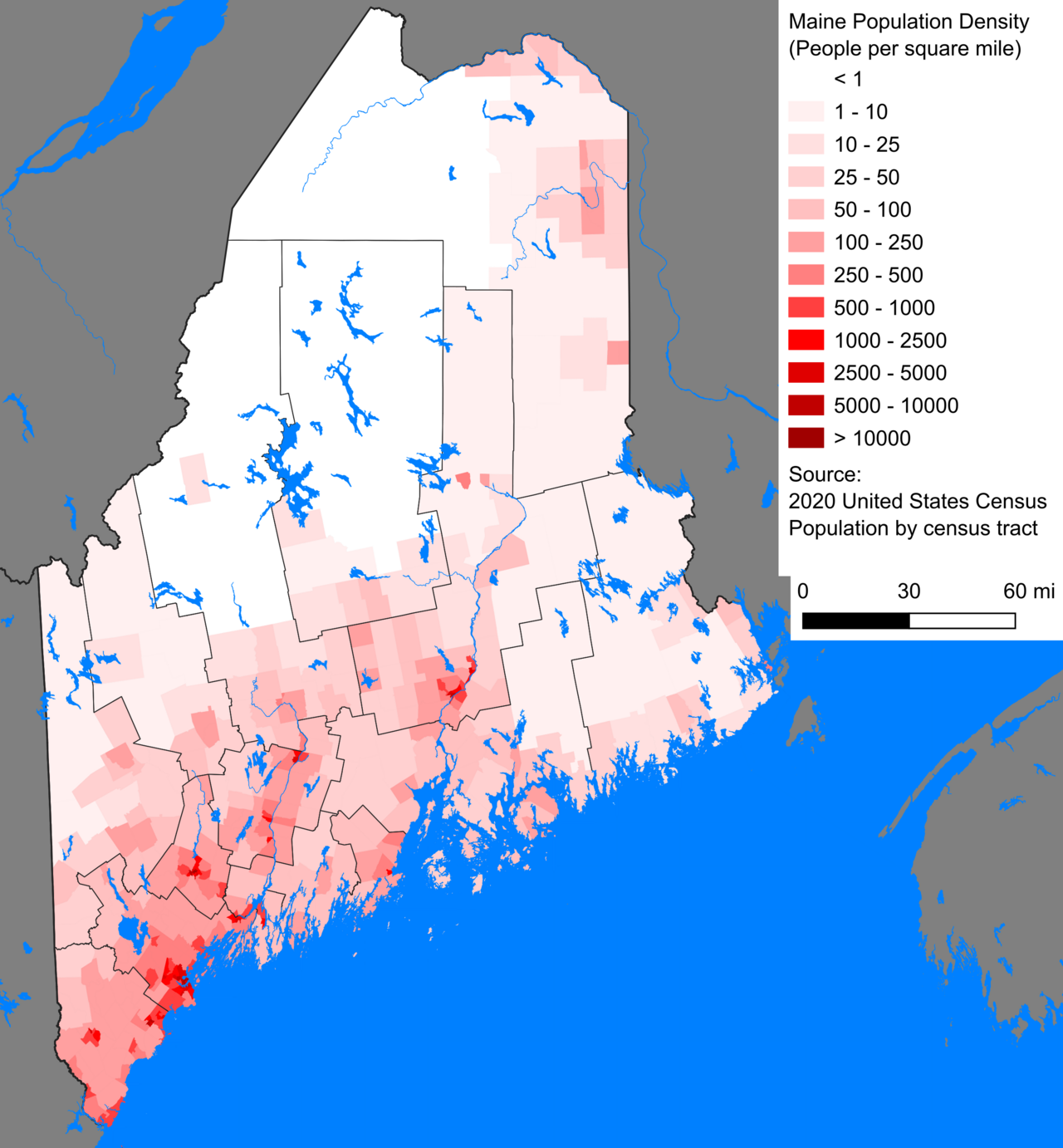
Population density of Maine by U.S. census tract as of the 2020 U.S. census. Map-generation process described here.
Crossover1370 map

— University of Maine photo
Text excerpted and edited from a New England Council report
“The University of Maine has established a new initiative called ‘Rural Thrive,’ which aims to assist rural educators through a more active mentorship network.
“The program has received $3.3 million in federal funding thanks to promotion from Maine U.S. Senators Angus King and Susan Collins.
“With a majority of Maine’s population residing in rural or exurban communities, the new education program is seen as a crucial step in strengthening education throughout the state.
“‘Rather than take a deficit-minded approach that asks, What’s wrong with rural schools?, we wanted to look at the many benefits to teaching in rural environments, such as access to nature and smaller class sizes,’ said program director Catharine Biddle. The program leaders hope to establish a guiding presence, providing teachers with mentorship throughout their careers.’’
Green and open days

“Summer Twilight, a Recollection of a Scene in New England’’ (1834), by Thomas Cole (1801-1848)

“Two Boys Playing at the Creek” (1883), photo by Thomas Eakins (1844-1916), one of America’s most celebrated painters.
“There’s Little League,
Hopscotch, the creek,
And, after supper,
Hide-and-seek.’’
— From “June,’’ by John Updike (1932-2009), American novelist, poet, critic and essayist. He spent most of life on the Massachusetts North Shore.
Summer books and jobs
Adapted from Robert Whitcomb’s “Digital Diary,’’ in GoLocal24.com
Summer is the prime season for reading books for pleasure. And physical books are the best way to read long works. You can better focus and reflect as you turn paper pages with your fingers than by looking at and clicking at backlit screens. The physicality of it helps. Science suggests that you remember more of what you read in a physical book than from a screen, though the latter is fine for shorter pieces, especially if you can discipline yourself from being distracted by the colorful and sometimes blinking features that accompany many Web pages.
The mild revival of small, independent bookstores in recent years shows a healthy desire to escape from digital distractions, which can be anxiety-provoking.
So happy summer reading, be it fiction (which boosts our imaginative powers and empathy) or nonfiction. Lose yourself in books, maybe while sitting under a tree. Even enjoy the musty smell of an old volume, which may bring back memories.
Take a look at some science on this. This and this.
xxx
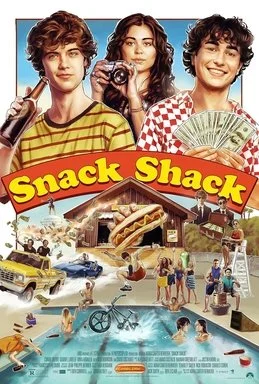
I again wonder if the regime’s sometimes brutal crackdown on immigrants will reduce the number of legal and illegal aliens working on the yards of so many homeowners, middle class on up, this summer. Many of those seasonal jobs used to be done by American middle-and-even-upper-middle-class high school and college kids, who also worked at such places as beach snack bars. But the immigration influx of the last 30 years changed that in many places.
Will more American kids start doing those discipline-building (if often boring) jobs again? And will AI destroy a lot of summer work that had been performed in offices?
Back in the ‘60’s I had both kinds of jobs – e.g., in earlier teenhood cutting grass, weeding and clipping hedges. (I also delivered newspapers by bike, back when those pubs were thick.) In later years I processed paper, mostly bills of lading, in a shipping company’s office on the then gritty Boston waterfront. For some reason, one of my most vivid memories of that job was when someone swiped $40 I had stuck in a drawer in a desk I was using. I told this tale of woe to a white-haired co-worker named Sylvester Gookin, who sadly noted: “You’ll lose a lot more than that in life.’’
Then I was a counselor at a camp along a mosquito-friendly lake in Plymouth, Mass., where some of the kids were bigger than me, so I had to be louder than them. Then I was a go-fer in the unairconditioned newsroom of a tabloid newspaper called the Boston Record American, after which I had no desire to go into the newspaper business. Too chaotic and low-paying. But I got into that racket again a year later because it gave me the first job offer I got after college, and in an air-conditioned newsroom this time.
In these summer jobs, we absorbed the value of showing up on time, learning how to deal with sometimes difficult customers and co-workers and getting an early handle on what we didn’t want to do in life.
And cheap
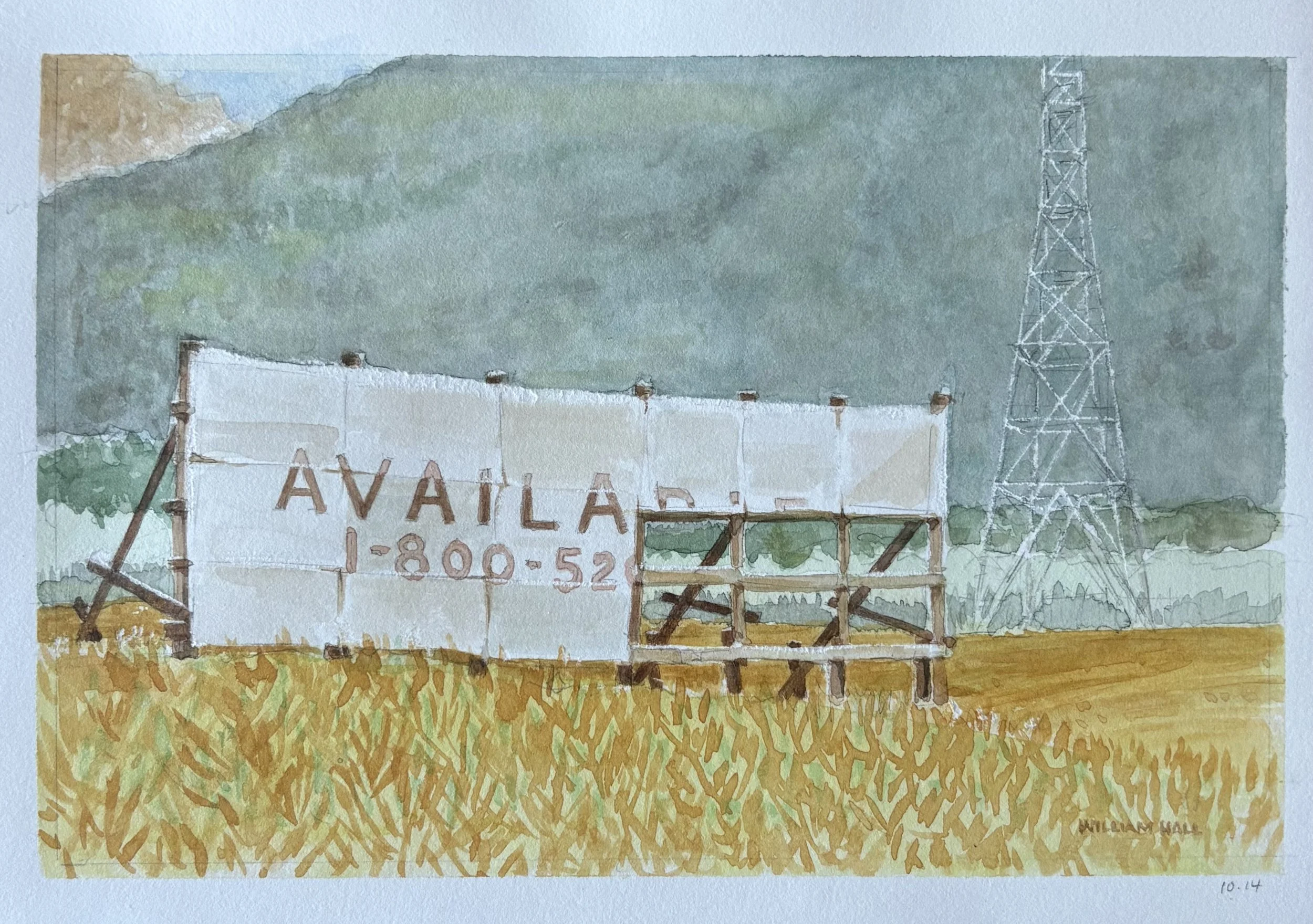
“Available” (watercolor), byWilliam Talmadge Hall, in his series “Obstruction to a Landscape’’.
Where it’s wettest
Item Information
Title:
New England Climate Graph
Description:
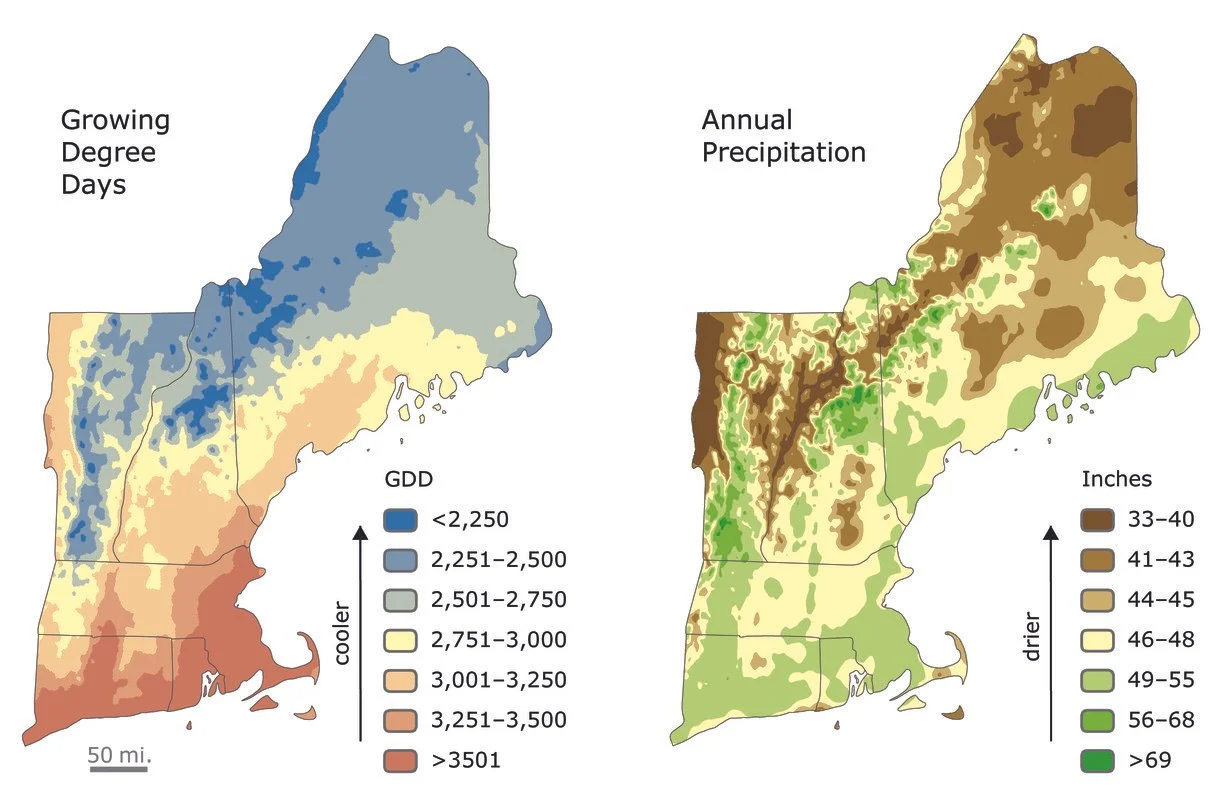
2-10 Although precipitation and temperature (shown as growing degree days, a measure of total warmth over the year) broadly decline to the north in New England, those patterns are strongly modified by elevation.
Name on Item:
Brian R. Hall [Compiler]
Date:
February 26, 2016
Format:
Genre:
Location:
Harvard University
Harvard Forest Archives
Collection (local):
Harvard Forest Martha's Vineyard Collection
Subjects:
Coastal
Regional Studies
Climate
Places:
New England (area)
Permalink:
https://ark.digitalcommonwealth.org/ark:/50959/vh53xs759
Terms of Use:
Copyright (c) Brian R. Hall
This work is licensed for use under a Creative Commons Attribution Non-Commercial No Derivatives License (CC BY-NC-ND).
Llewellyn King: You must manage rejection

“Pope Makes Love To Lady Mary Wortley Montagu,’’ by William Powell Frith,’’ depicts Lady Mary Wortley Montagu laughingly rejecting poet Alexander Pope's (1688-1744) pleas for courtship.
WEST WARWICK, R.I.
It is school commencement season. So I am taking the liberty of sharing my column of May 10, 2024, which was first published by InsideSources, and later published by newspapers across the country.
As so many commencement addresses haven’t been delivered yet this year, I thought I would share what I would have said to graduates if I had been invited by a college or university to be a speaker.
“The first thing to know is that you are graduating at a propitious time in human history — for example, think of how artificial intelligence is enabling medical breakthroughs.
“A vast world of possibilities awaits you because you are lucky enough to be living in a liberal democracy. It happens to be America, but the same could be true of any of the democratic countries.
“Look at the world, and you will see that the countries with democracy are also prosperous places where individuals can follow their passion. Doubly or triply so in America.
“Despite all the disputes, unfairness and politics, the United States is foremost among places to live and work — where the future is especially tempting. I say this having lived and worked on three continents and traveled to more than 180 countries. Just think of the tens of millions who would live here if they could.
“In a society that is politically and commercially free, as it is in the United States, the limits we encounter are the limits we place on ourselves.
“That is what I want to tell you: Don’t fence yourself in.
“But do work always to keep that freedom, your freedom, especially now.
“Seldom mentioned, but the greatest perverters of careers, stunters of ambition and all-around enfeeblers you will contend with aren’t the government, a foreign power, shortages or market conditions, but how you manage rejection.
“Fear of rejection is, I believe, the great inhibitor. It shapes lives, hinders careers and is ever-present, from young love to scientific creation.
“The creative is always vulnerable to the forces of no, to rejection.
“No matter what you do, at some point you will face rejection — in love, in business, in work or in your own family.
“But if you want to break out of the pack and leave a mark, you must face rejection over and over again.
“Those in the fine and performing arts and writers know rejection; it is an expected but nonetheless painful part of the tradition of their craft. If you plan to be an artist of some sort or a writer, prepare to face the dragon of rejection and fight it all the days of your career.
“All other creative people face rejection. Architects, engineers and scientists face it frequently. Many great entrepreneurial ideas have faced early rejection and near defeat.
“If you want to do something better, differently or disruptively, you will face rejection.
“To deal with this world where so many are ready to say no, you must know who you are. Remember that: Know who you are.
“But you can’t know who you are until you have found out who you are.
“Your view of yourself may change over time, but I adjure you always to judge yourself by your bests, your zeniths. That is who you are. Make past success your default setting in assessing your worth when you go forth to slay the dragons of rejection.
“There are two classes of people you will encounter again and again in your lives. The yes people and the no people.
“Seek out and cherish those who say yes. Anyone can say no. The people who have changed the world, who have made it a better place, are the people who have said, ‘Yes.’ ‘Why not?’ ‘Let’s try.’
“Those are people you need in life, and that is what you should aim to be: a yes person. Think of it historically: Thomas Edison, Winston Churchill, Franklin Roosevelt, and Steve Jobs were all yes people, undaunted by frequent rejection.
“Try to be open to ideas, to different voices and to contrarian voices. That way, you will not only prosper in what you seek to do, but you will also become someone who, in turn, will help others succeed.
“You enter a world of great opportunities in the arts, sciences and technology but with attendant challenges. The obvious ones are climate, injustice, war and peace.
“Think of yourselves as engineers, working around those who reject you, building for others, and having a lot of fun doing it.
“Avoid being a no person. No is neither a building block for you nor for those who may look to you. Good luck!”
On X: @llewellynking2
Bluesky: @llewellynking.bsky.social
Subscribe to Llewellyn King's File on Substack
Llewellyn King is executive producer and host of White House Chronicle, on PBS.
And rise and fall

“Push and Pull” (acrylic on canvas), by Sam Chappell, at Portland Art Gallery, during this month.
She says:
“To me, the act of being in nature is inseparable from feeling. Every landscape has its own personality, which in turn can spark a different series of emotions. I rely on a play of colors and expressive brushstrokes in an attempt to relate the whole experience of a landscape, in the hopes that viewers can build their own relationships and emotional attachment to it.’’

Breaking up a log jam on the Penobscot River around the turn of the last century, when Maine was a world lumber and wood-pulp center.
He’ll now take your order

“Mr. Funny/Mr. Slap” (glass sculpture), by Peter Muller, based on a drawing by Israel Hicks, age eleven, at the Brattleboro (Vt.) Museum & Art Center.
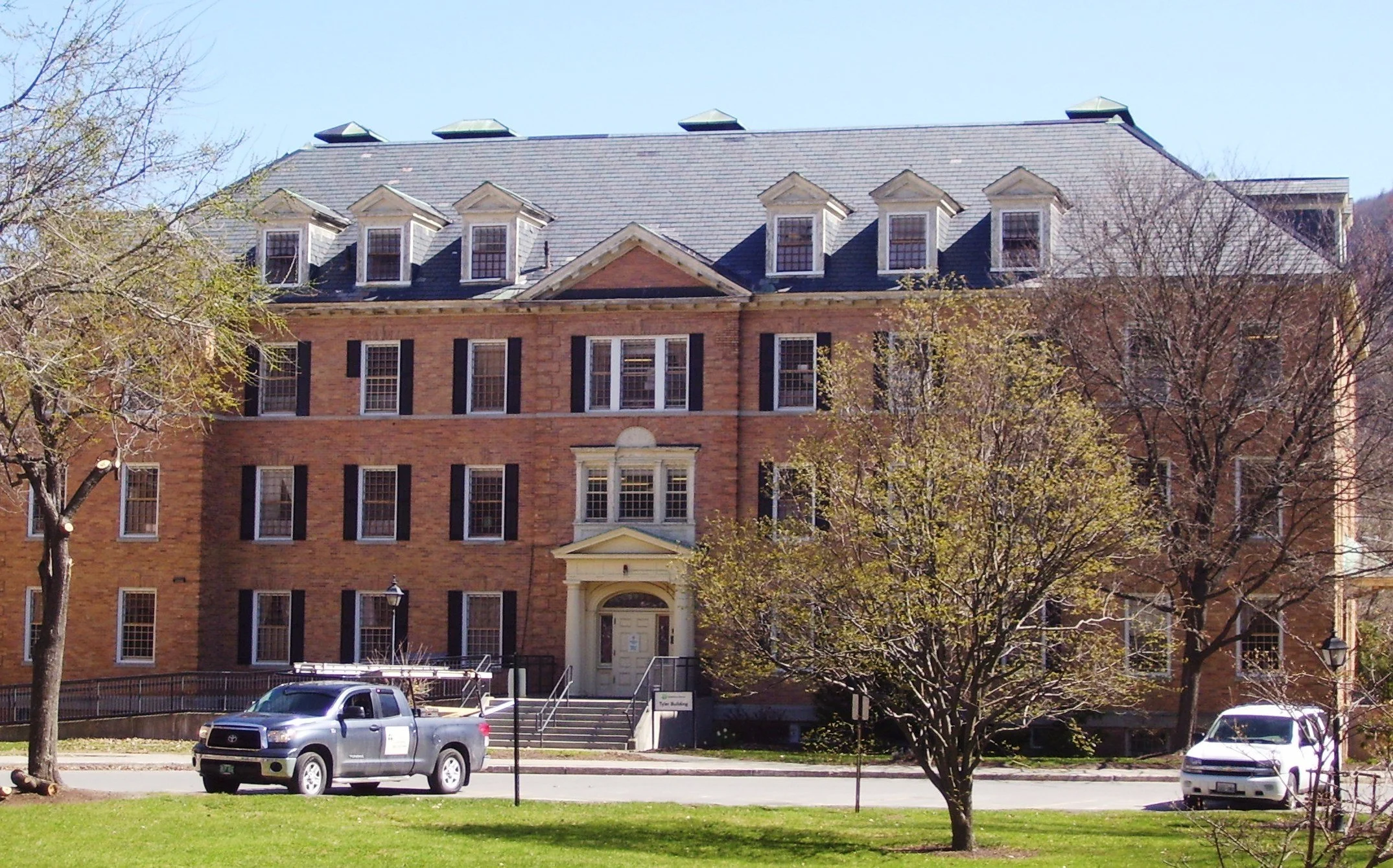
The Brattleboro Retreat treats mental illness and drug addiction.
Chris Powell: Conn. devalues education while throwing more money at it
MANCHESTER, Conn.
Except to the teacher unions, Connecticut's Linda McMahon is a big relief as secretary of the U.S. Education Department, mainly because her predecessor, Connecticut's Miguel Cardona, was such a disaster.
Cardona spent most of his time pandering to the unions. In contrast, the other day McMahon celebrated National Charter Schools Week, applauding competition among schools and the reduction of union influence, which has dumbed down education while inflating its costs.
As long as the teacher unions have so much power in the Democratic Party, and are the foremost special-interest in politics in most states, as in Connecticut, there's no chance of saving public education, and alternative schools may be the only way of preserving any education at all.
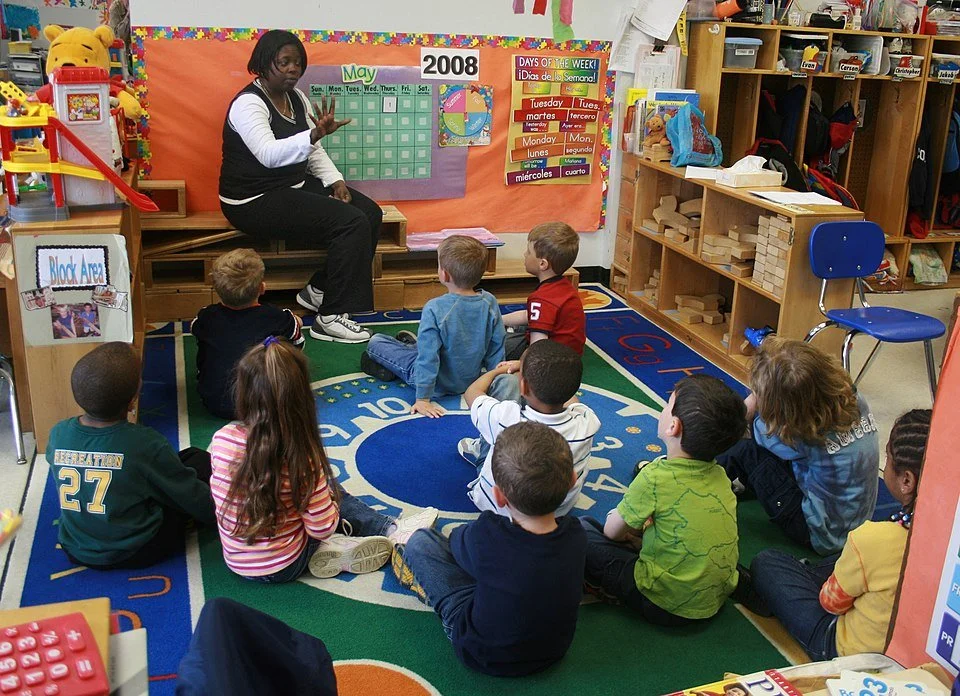
Still, it would be nice if somebody tried to restore public education. For public education often used to accomplish what private education seldom could and usually didn't even try to do: integrate society comprehensively -- racially, ethnically, religiously, economically, and by all levels of student intelligence.
Of course, children would and will always be bratty, snobby, cruel, and cliquish much of the time, but even then public schools still can introduce them to different kinds of people and force them to deal with differences and thereby get a hint of the need to unify the country.
Regional “magnet’’ schools in Connecticut and elsewhere were meant to increase racial integration by putting city and suburban students together across municipal boundaries. But there aren't enough “magnet’’ schools to achieve much integration, and, as Hartford's experience has shown, the integration achieved by “magnet’’ schools has led to greater segregation of the urban underclass. For the "magnet" schools have drawn the more parented and engaged students out of neighborhood schools in the city, leaving the students in those schools even more indifferent and demoralized.
The urban underclass is the essence of the education problem. Many people naturally want to escape it and place their children in schools that aren't dragged down by their demographics. That means “magnet’’ or charter schools or, most of all, fleeing the city for the suburbs, not that all suburban schools are so much better.
The only way to recover the integrative influence of public education may be to try to improve public education everywhere at once, first by recognizing that student learning correlates far more with parenting than with school spending. Parenting has declined not just because welfare policy is so pernicious, subsidizing fatherlessness and child neglect, but also because government and schools have let parenting decline by eliminating behavioral and academic standards for both parents and students.
There are no penalties for parents who fail to see that their children get to school reliably. There are no penalties for parents who avoid contact with their children's teachers when something is wrong. There are no penalties for parents or students when students fail to learn.
Indeed, Connecticut's only comprehensive policy of public education -- social promotion -- destroys behavioral and academic standards. It proclaims to parents and students alike that there is no need to learn and that school isn't important. Thus Connecticut devalues education even while increasing its cost.
Connecticut's underclass has figured this out. The underclass knows that no student needs to earn a high school diploma, and that people who have children they are unprepared to support will be subsidized extensively by the government in a fatherless home -- subsidized enough to avoid starvation but not enough to get a proper upbringing.
But if even ignorant students must be graduated from high school, at least their dismal academic records could be printed on their diplomas so a diploma might mean something again, if only a horror story.
Making failing students repeat grades, as was done before self-esteem trumped learning, would have even more impact. Limiting students to two repeated grades before graduating them early but ignorant would have still more.
Until society forcefully demonstrates its respect for education and realizes that just throwing more money at it doesn't work, the underclass won't respect it either.
Chris Powell has written about Connecticut government and politics for many years (CPowell@cox.net).
African, but with ‘universal themes’

Senambele (Senufo) artist, N Ivory Coast, SW Burkina Faso, SW Mali, NW Ghana. Composite animal helmet mask (kponiougo), late 19th-early 20th Century, wood, pigment, in the ongoing show “Festival: A Celebration of African Art,’’ at the Fitchburg (Mass.) Art Museum.
The museum explains:
“Drawing upon universal themes of life, death, power, love, and celebration, the show presents highlights of the museum’s African art collection organized around the concepts of Masquerades, Ceremonial Life, Ritual Life and Domestic Life.’’
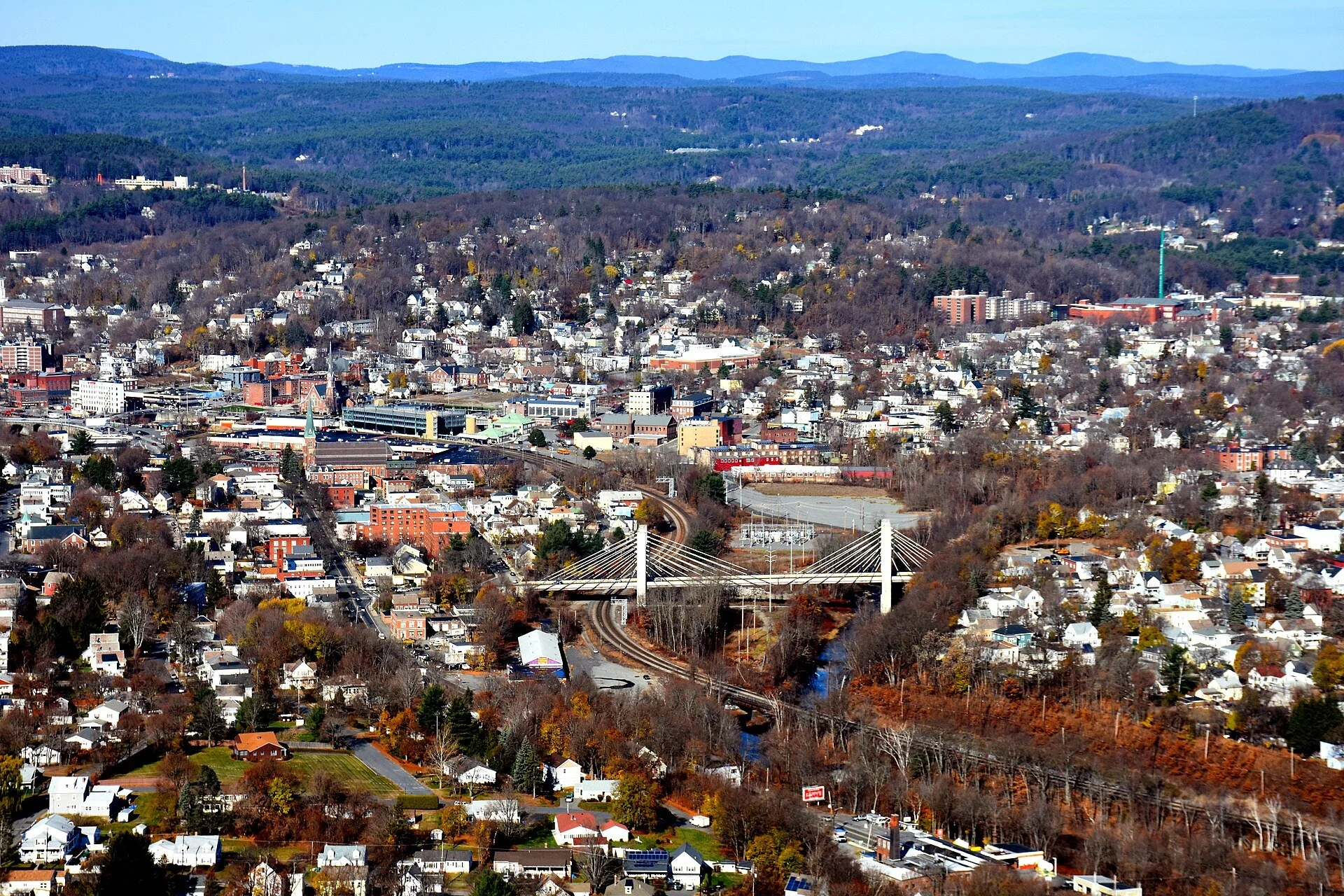
Central Fitchburg, including Nashua River, rail tracks and commuter rail station.
— Photo by Nick Allen
Amy Waxman: Experts say Trump regime has struck new blow against biosecurity by axing flu-virus-vaccine project
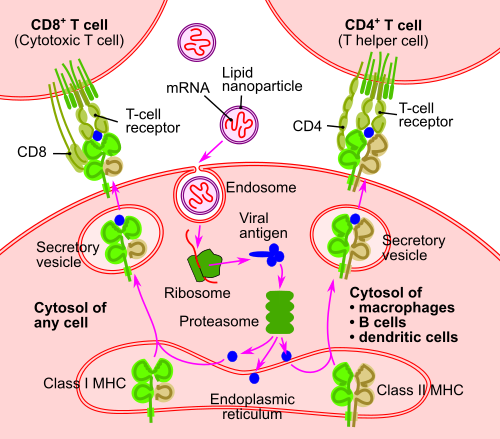
An illustration of the mechanism of action of a messenger RNA vaccine
Text from From Kaiser Family Foundation Health News
The Trump administration’s cancellation of $766 million in contracts to develop mRNA vaccines against potential pandemic flu viruses is the latest blow to national defense, former health-security officials said. They warned that the U.S. could be at the mercy of other countries in the next pandemic.
“The administration’s actions are gutting our deterrence from biological threats,” said Beth Cameron, a senior adviser to the Brown University Pandemic Center and a former director at the White House National Security Council. “Canceling this investment is a signal that we are changing our posture on pandemic preparedness,” she added, “and that is not good for the American people.”
Flu pandemics killed up to 103 million people worldwide last century, researchers estimate.
In anticipation of the next big one, the U.S. government began bolstering the nation’s pandemic flu defenses during the George W. Bush administration. These strategies were designed by the security council and the Biomedical Advanced Research and Development Authority at the Department of Health and Human Services, among other agencies. The plans rely on rolling out vaccines rapidly in a pandemic. Moving fast hinges on producing vaccines domestically, ensuring their safety, and getting them into arms across the nation through the public health system.
The Trump administration is undermining each of these steps as it guts health agencies, cuts research and health budgets, and issues perplexing policy changes, health security experts said.
Since President Donald Trump took office, at least half of the security council’s staff have been laid off or left, and the future of BARDA is murky. The nation’s top vaccine adviser, Peter Marks, resigned under pressure in March, citing “the unprecedented assault on scientific truth.”
Most recently, Trump’s clawback of funds for mRNA vaccine development put Americans on shakier ground in the next pandemic. “When the need hits and we aren’t ready, no other country will come to our rescue and we will suffer greatly,” said Rick Bright, an immunologist and a former BARDA director.
Countries that produced their own vaccines in the covid-19 pandemic had first dibs on the shots. While the United States, home to Moderna and Pfizer, rolled out second doses of mRNA vaccines in 2021, hundreds of thousands of people in countries that didn’t manufacture vaccines died waiting for them.
The most pertinent pandemic threat today is the bird flu virus H5N1. Researchers around the world were alarmed when it began spreading among cattle in the U.S. last year. Cows are closer to humans biologically than birds, indicating that the virus had evolved to thrive in cells like our own.
As hundreds of herds and dozens of people were infected in the U.S., the Biden administration funded Moderna to develop bird flu vaccines using mRNA technology. As part of the agreement, the U.S. government stipulated it could purchase doses in advance of a pandemic. That no longer stands.
Researchers can make bird flu vaccines in other ways, but mRNA vaccines are developed much more quickly because they don’t rely on finicky biological processes, such as growing elements of vaccines in chicken eggs or cells kept alive in laboratory tanks.
Time matters because flu viruses mutate constantly, and vaccines work better when they match whatever variant is circulating.
Developing vaccines within eggs or cells can take 10 months after the genetic sequence of a variant is known, Bright said. And relying on eggs presents an additional risk when it comes to bird flu because a pandemic could wipe out billions of chickens, crashing egg supplies.
Decades-old methods that rely on inactivated flu viruses are riskier for researchers and time-consuming. Still the Trump administration invested $500 million into this approach, which was largely abandoned by the 1980s after it caused seizures in children.
“This politicized regression is baffling,” Bright said.
A bird flu pandemic may begin quietly in the U.S. if the virus evolves to spread between people but no one is tested at first. Indeed, the Centers for Disease Control and Prevention’s dashboard suggests that only 10 farmworkers have been tested for the bird flu since March. Because of their close contact with cattle and poultry, farmworkers are at highest risk of infection.
As with many diseases, only a fraction of people with the bird flu become severely sick. So the first sign that the virus is widespread might be a surge in hospital cases.
“We’d need to immediately make vaccines,” said Angela Rasmussen, a virologist at the University of Saskatchewan.
The U.S. government could scale up production of existing bird flu vaccines developed in eggs or cells. However, these vaccines target an older strain of H5N1 and their efficacy against the virus circulating now is unknown.
In addition to the months it takes to develop an updated version within eggs or cells, Rasmussen questioned the ability of the government to rapidly test and license updated shots, with a quarter of HHS staff gone. If the Senate approves Trump’s proposed budget, the agency faces about $32 billion in cuts.
Further, the Trump administration’s cuts to biomedical research and its push to slash grant money for overhead costs could undermine academic hospitals, rendering them unable to conduct large clinical trials. And its cuts to the CDC and to public health funds to states mean that fewer health officials will be available in an emergency.
“You can’t just turn this all back on,” Rasmussen said. “The longer it takes to respond, the more people die.”
Researchers suggest other countries would produce bird flu vaccines first. “The U.S. may be on the receiving end like India was, where everyone — rich people, too — got vaccines late,” said Achal Prabhala, a public health researcher in India at medicines access group AccessIBSA.
He sits on the board of a World Health Organization initiative to improve access to mRNA vaccines in the next pandemic. A member of the initiative, the company Sinergium Biotech in Argentina, is testing an mRNA vaccine against the bird flu. If it works, Sinergium will share the intellectual property behind the vaccine with about a dozen other groups in the program from middle-income countries so they can produce it.
The Coalition for Epidemic Preparedness Innovations, an international partnership headquartered in Norway, is providing funds to research groups developing rapid-response vaccine technology, including mRNA, in South Korea, Singapore, and France. And CEPI committed up to $20 million to efforts to prepare for a bird flu pandemic. This year, the Indian government issued a call for grant applications to develop mRNA vaccines for the bird flu, warning it “poses a grave public health risk.”
Pharmaceutical companies are investing in mRNA vaccines for the bird flu as well. However, Prabhala says private capital isn’t sufficient to bring early-stage vaccines through clinical trials and large-scale manufacturing. That’s because there’s no market for bird flu vaccines until a pandemic hits.
Limited supplies means the United States would have to wait in line for mRNA vaccines made abroad. States and cities may compete against one another for deals with outside governments and companies, like they did for medical equipment at the peak of the covid pandemic.
“I fear we will once again see the kind of hunger games we saw in 2020,” Cameron said.
In an email response to queries, HHS communications director Andrew Nixon said, “We concluded that continued investment in Moderna’s H5N1 mRNA vaccine was not scientifically or ethically justifiable.” He added, “The decision reflects broader concerns about the use of mRNA platforms—particularly in light of mounting evidence of adverse events associated with COVID-19 mRNA vaccines.”
Nixon did not back up the claim by citing analyses published in scientific journals.
In dozens of published studies, researchers have found that mRNA vaccines against covid are safe. For example, a placebo-controlled trial of more than 30,000 people in the U.S. found that adverse effects of Moderna’s vaccine were rare and transient, whereas 30 participants in the placebo group suffered severe cases of covid and one died.
More recently, a study revealed that three of nearly 20,000 people who got Moderna’s vaccines and booster had significant adverse effects related to the vaccine, which resolved within a few months. Covid, on the other hand, killed four people during the course of the study.
As for concerns about the heart issue, myocarditis, a study of 2.5 million people who got at least one dose of Pfizer’s mRNA vaccine revealed about 2 cases per 100,000 people. Covid causes 10 to 105 myocarditis cases per 100,000.
Nonetheless, HHS Secretary Robert F. Kennedy Jr., who founded an anti-vaccine organization, has falsely called covid shots “the deadliest vaccine ever made.” And without providing evidence, he said the 1918 flu pandemic “came from vaccine research.”
Politicized mistrust in vaccines has grown. Far more Republicans said they trust Kennedy to provide reliable information on vaccines than their local health department or the CDC in a recent KFF poll: 73% versus about half.
Should the bird flu become a pandemic in the next few years, Rasmussen said, “we will be screwed on multiple levels.”
Amy Waxman is a Kaiser Family Foundation Health News reporter
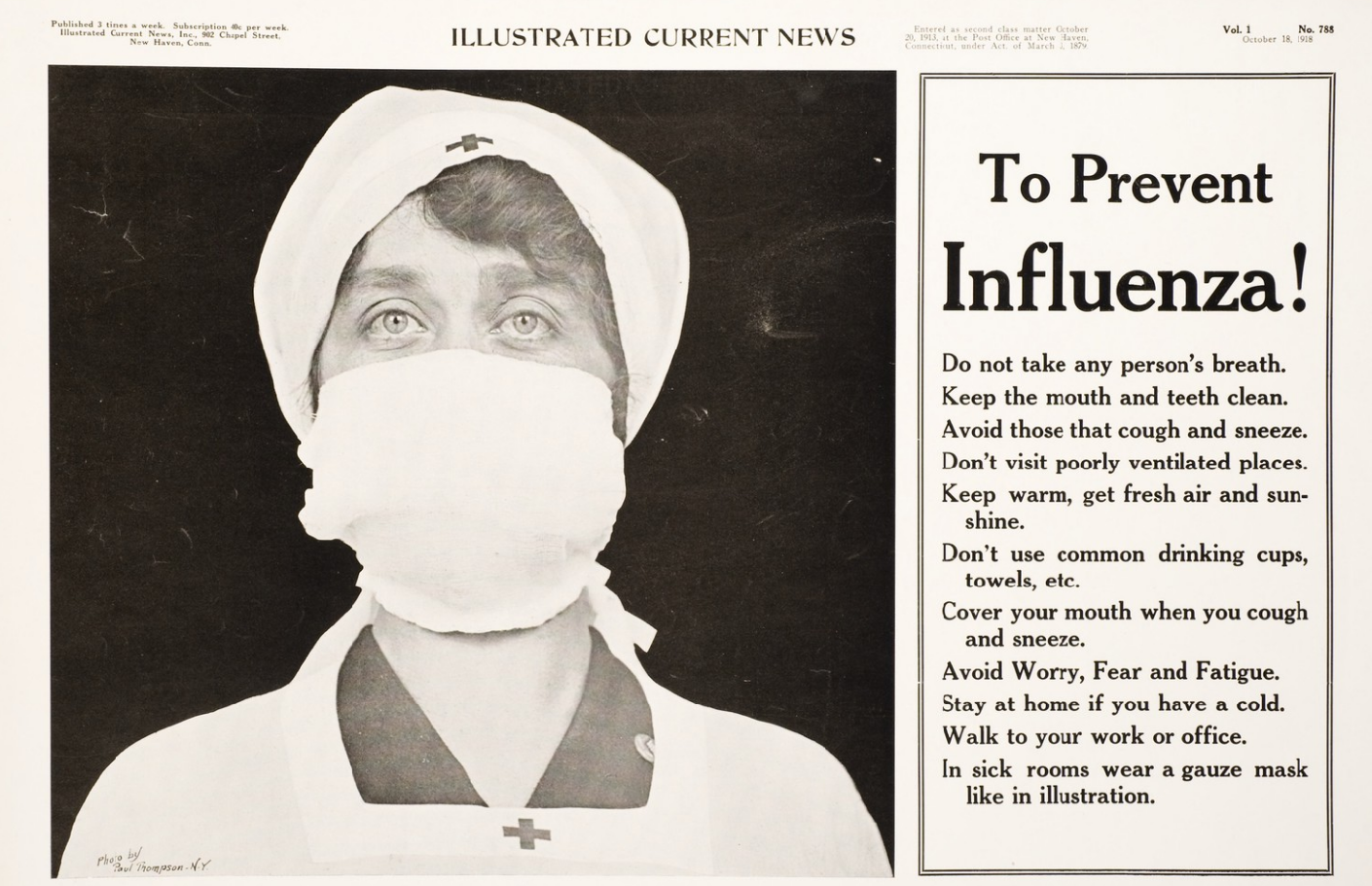
Advice during the 1918-1920 “Spanish” flu pademic, which may have killed up to 100 million people.
‘For the service of the weak’
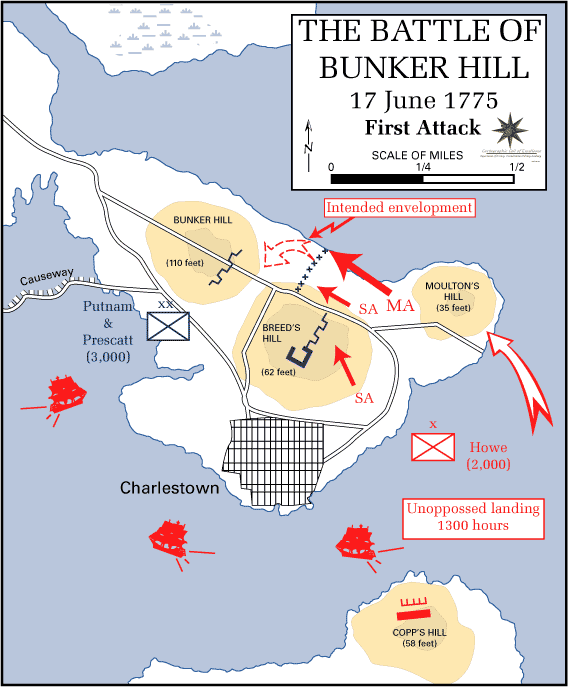
First British attack in the Battle of Bunker Hill, June 17, 1775.

Array of American forces for the battle.
Herewith speech by then Massachusetts Lt. Gov. Calvin Coolidge on June 17, 1918, Bunker Hill Day, at the Roxbury Historical Society. He went on to become governor, U.S. vice president and president.
Reverence is the measure not of others but of ourselves. This assemblage on the one hundred and forty-third anniversary of the Battle of Bunker Hill tells not only of the spirit of that day but of the spirit of to-day. What men worship that will they become. The heroes and holidays of a people which fascinate their soul reveal what they hold are the realities of life and mark out a line beyond which they will not retreat, but at which they will stand to overcome or die. They who reverence Bunker Hill will fight there. Your true patriot sees home and hearthstone in the welfare of his country.
Rightly viewed, then, this day is set apart for an examination of ourselves by recounting the deeds of the men of long ago. What was there in the events of the seventeenth day of June, 1775, which holds the veneration of Americans and the increasing admiration of the world? There are the physical facts not too unimportant to be unworthy of reiteration even in the learned presence of an Historical Society. A detachment of men clad for the most part in the dress of their daily occupations, standing with bared heads and muskets grounded muzzle down in the twilight glow on Cambridge Common, heard Samuel Langdon, President of Harvard College, seek divine blessing on their cause and marched away in the darkness to a little eminence at Charlestown, where, ere the setting of another sun, much history was to be made and much glory lost and won. When a new dawn had lifted the mists of the Bay, the British, under General Howe, saw an intrenchment on Breed’s Hill, which must be taken or Boston abandoned. The works were exposed in the rear to attack from land and sea. This was disdained by the king’s soldiers in their contempt for the supposed fighting ability of the Americans. Leisurely, as on dress parade, they assembled for an assault that they thought was to be a demonstration of the uselessness of any armed resistance on the part of the Colonies. In splendid array they advanced late in the day. A few straggling shots and all was still behind the parapet. It was easier than they had expected. But when they reached a point where ‘t is said the men behind the intrenchments could see the whites of their eyes, they were met by a withering fire that tore their ranks asunder and sent them back in disorder, utterly routed by their despised foes. In time they form and advance again but the result is the same.
The demonstration of superiority was not a success. For a third time they form, not now for dress parade, but for a hazardous assault. This time the result was different. The patriots had lost nothing of courage or determination but there was left scarcely one round of powder. They had no bayonets. Pouring in their last volley and still resisting with clubbed muskets, they retired slowly and in order from the field. So great was the British loss that there was no pursuit. The intensity of the battle is told by the loss of the Americans, out of about fifteen hundred engaged, of nearly twenty per cent, and of the British, out of some thirty-five hundred engaged, of nearly thirty-three per cent, all in one and one half hours.
It was the story of brave men bravely led but insufficiently equipped. Their leader, Colonel Prescott, had walked the breastworks to show his men that the cannonade was not particularly dangerous. John Stark, bringing his company, in which were his Irish compatriots, across Charlestown Neck under the guns of the battleships, refused to quicken his step. His Major, Andrew McCleary, fell at the rail fence which he had held during the day. Dr. Joseph Warren, your own son of Roxbury, fell in the retreat, but the Americans, though picking off his officers, spared General Howe. They had fought the French under his brother.
Such were some of the outstanding deeds of the day. But these were the deeds of men and the deeds of men always have an inward significance. In distant Philadelphia, on this very day, the Continental Congress had chosen as the Commander of their Army, General George Washington, a man whose clear vision looked into the realities of things and did not falter. On his way to the front four days later, dispatches reached him of the battle. He revealed the meaning of the day with one question, “Did the militia fight?” Learning how those heroic men fought, he said, “Then the liberties of the Country are safe.” No greater commentary has ever been made on the significance of Bunker Hill.
We read events by what goes before and after. We think of Bunker Hill as the first real battle for independence, the prelude to the Revolution. Yet these were both afterthoughts. Independence Day was still more than a year away and then eight years from accomplishment. The Revolution cannot be said to have become established until the adoption of the Federal Constitution. No, on this June day, these were not the conscious objects sought. They were contending for the liberties of the country, they were not yet bent on establishing a new nation nor on recognizing that relationship between men which the modern world calls democracy. They were maintaining well their traditions, these sons of Londonderry, lovers of freedom and anxious for the fray, and these sons of the Puritans, whom Macaulay tells us humbly abased themselves in the dust before the Lord, but hesitated not to set their foot upon the neck of their king.
It is the moral quality of the day that abides. It was the purpose of those plain garbed men behind the parapet that told whether they were savages bent on plunder, living under the law of the jungle, or sons of the morning bearing the light of civilization. The glorious revolution of 1688 was fading from memory. The English Government of that day rested upon privilege and corruption at the base, surmounted by a king bent on despotism, but fortunately too weak to accomplish any design either of good or ill. An empire still outwardly sound was rotting at the core. The privilege which had found Great Britain so complacent sought to establish itself over the Colonies. The purpose of the patriots was resistance to tyranny. Pitt and Burke and Lord Camden in England recognized this, and, loving liberty, approved the course of the Colonies. The Tories here, loving privilege, approved the course of the Royal Government. Bunker Hill meant that the Colonies would save themselves and saving themselves save the mother country for liberty. The war was not inevitable. Perhaps wars are never inevitable. But the conflict between freedom and privilege was inevitable. That it broke out in America rather than in England was accidental.
Liberty, the rights of man against tyranny, the rights of kings, was in the air. One side must give way. There might have been a peaceful settlement by timely concessions such as the Reform Bill of England some fifty years later, or the Japanese reforms of our own times, but wanting that a collision was inevitable. Lacking a Bunker Hill there had been another Dunbar.
The eighteenth century was the era of the development of political rights. It was the culmination of the ideas of the Renaissance. It was the putting into practice in government of the answer to the long pondered and much discussed question, “What is right?” Custom was giving way at last to reason. Class and caste and place, all the distinctions based on appearance and accident were giving way before reality. Men turned from distinctions which were temporal to those which were eternal. The sovereignty of kings and the nobility of peers was swallowed up in the sovereignty and nobility of all men. The inequal in quantity became equal in quality.
The successful solution of this problem was the crowning glory of a century and a half of America. It established for all time how men ought to act toward each other in the governmental relation. The rule of the people had begun.
Bunker Hill had a deeper significance. It was an example of the great law of human progress and civilization. There has been much talk in recent years of the survival of the fittest and of efficiency. We are beginning to hear of the development of the super-man and the claim that he has of right dominion over the rest of his inferiors on earth. This philosophy denies the doctrine of equality and holds that government is not based on consent but on compulsion. It holds that the weak must serve the strong, which is the law of slavery, it applies the law of the animal world to mankind and puts science above morals. This sounds the call to the jungle. It is not an advance to the morning but a retreat to night. It is not the light of human reason but the darkness of the wisdom of the serpent.
The law of progress and civilization is not the law of the jungle. It is not an earthly law, it is a divine law. It does not mean the survival of the fittest, it means the sacrifice of the fittest. Any mother will give her life for her child. Men put the women and children in the lifeboats before they themselves will leave the sinking ship. John Hampden and Nathan Hale did not survive, nor did Lincoln, but Benedict Arnold did. The example above all others takes us back to Jerusalem some nineteen hundred years ago. The men of Bunker Hill were true disciples of civilization, because they were willing to sacrifice themselves to resist the evils and redeem the liberties of the British Empire. The proud shaft which rises over their battlefield and the bronze form of Joseph Warren in your square are not monuments to expediency or success, they are monuments to righteousness.
This is the age-old story. Men are reading it again to-day — written in blood. The Prussian military despotism has abandoned the law of civilization for the law of barbarism. We could approve and join in the scramble to the jungle, or we could resist and sacrifice ourselves to save an erring nation. Not being beasts, but men, we choose the sacrifice.
This brings us to the part that America is taking at the end of its second hundred and fifty years of existence. Is it not a part of that increasing purpose which the poet, the seer, tells us runs through the ages? Has not our Nation been raised up and strengthened, trained and prepared, to meet the great sacrifice that must be made now to save the world from despotism? We have heard much of our lack of preparation. We have been altogether lacking in preparation in a strict military sense. We had no vast forces of artillery or infantry, no large stores of munitions, few trained men. But let us not forget to pay proper respect to the preparation we did have, which was the result of long training and careful teaching. We had a mental, a moral, a spiritual training that fitted us equally with any other people to engage in this great contest which after all is a contest of ideas as well as of arms. We must never neglect the military preparation again, but we may as well recognize that we have had a preparation without which arms in our hands would very much resemble in purpose those now arrayed against us.
Are we not realizing a noble destiny? The great Admiral who discovered America bore the significant name of Christopher. It has been pointed out that this name means Christ-bearer. Were not the men who stood at Bunker Hill bearing light to the world by their sacrifices? Are not the men of to-day, the entire Nation of to-day, living in accordance with the significance of that name, and by their service and sacrifice redeeming mankind from the forces that make for everlasting destruction? We seek no territory and no rewards. We give but do not take. We seek for a victory of our ideas. Our arms are but the means. America follows no such delusion as a place in the sun for the strong by the destruction of the weak. America seeks rather, by giving of her strength for the service of the weak, a place in eternity.
We’re all a bunch
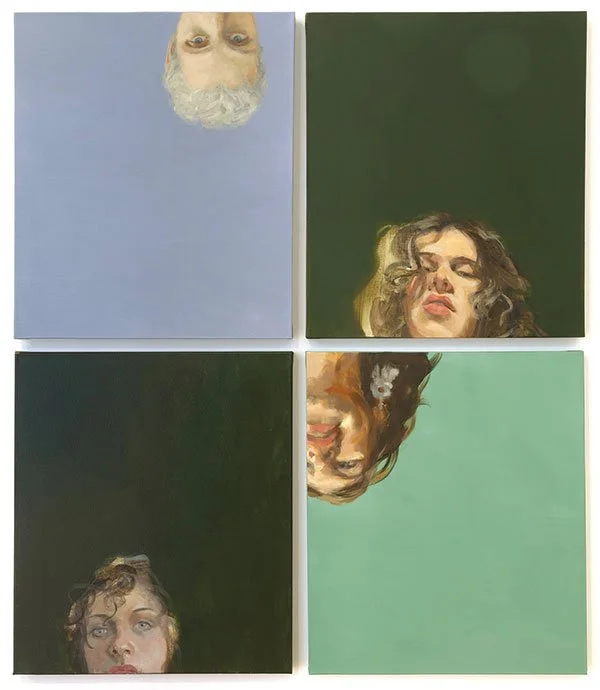
“Quartet,’’ by Kathryn Geismar, in the group show “Selfhood,’’ at the Danforth Art Museum, Framingham, Mass., though June.
She says:
“My work explores the complex and often fragmentary nature of identity through portraits and abstract collage. My recent figurative series depicts adolescents ranging in age from 14-21. These young adults are claiming an identity in an age when binary definitions of self are under question….Figures move in and out of focus; layers of mylar promote looking through; grommets pierce through layers like jewelry and at other times like windows into layers below.’’