
Vox clamantis in deserto





Re-examining her life

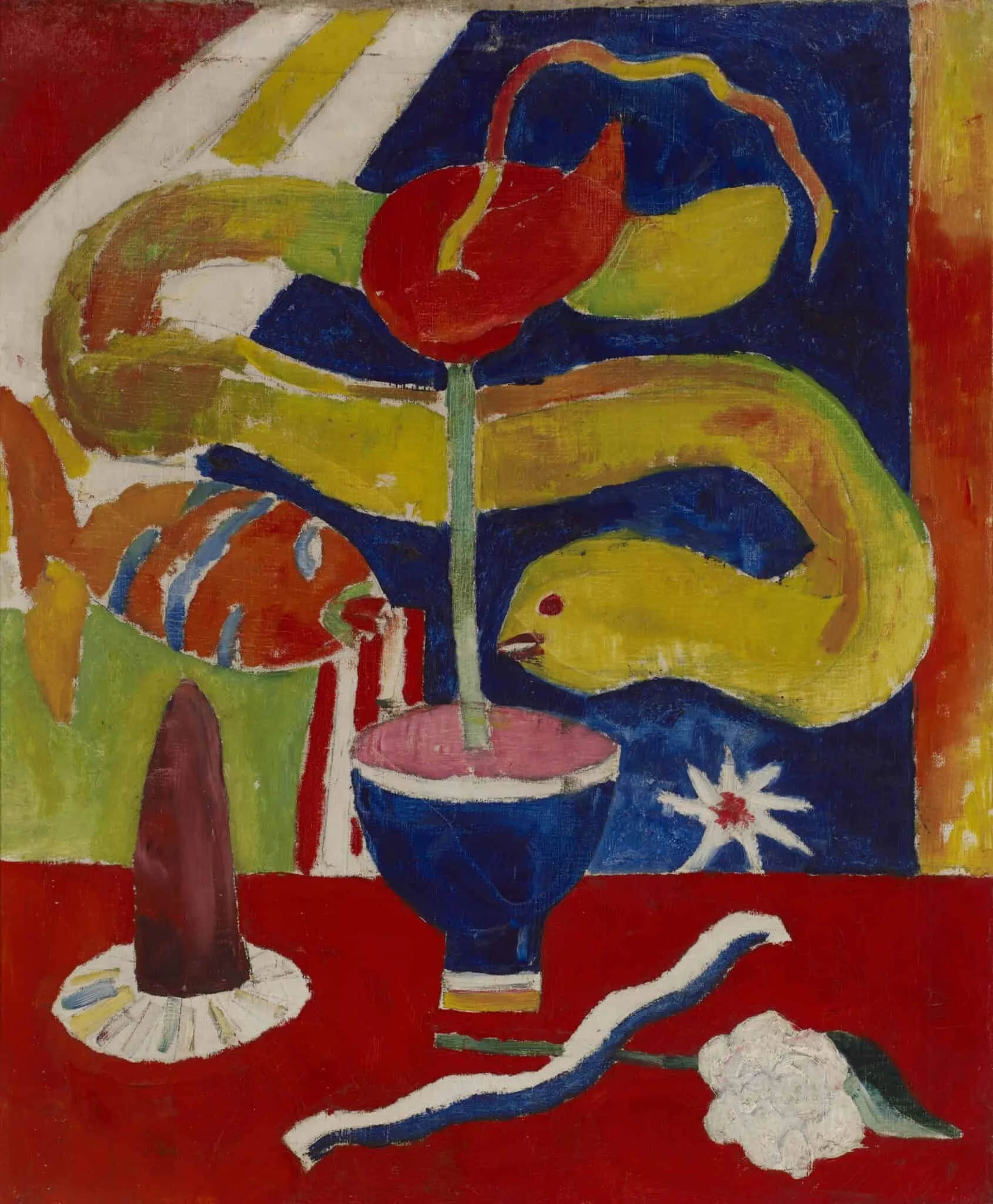
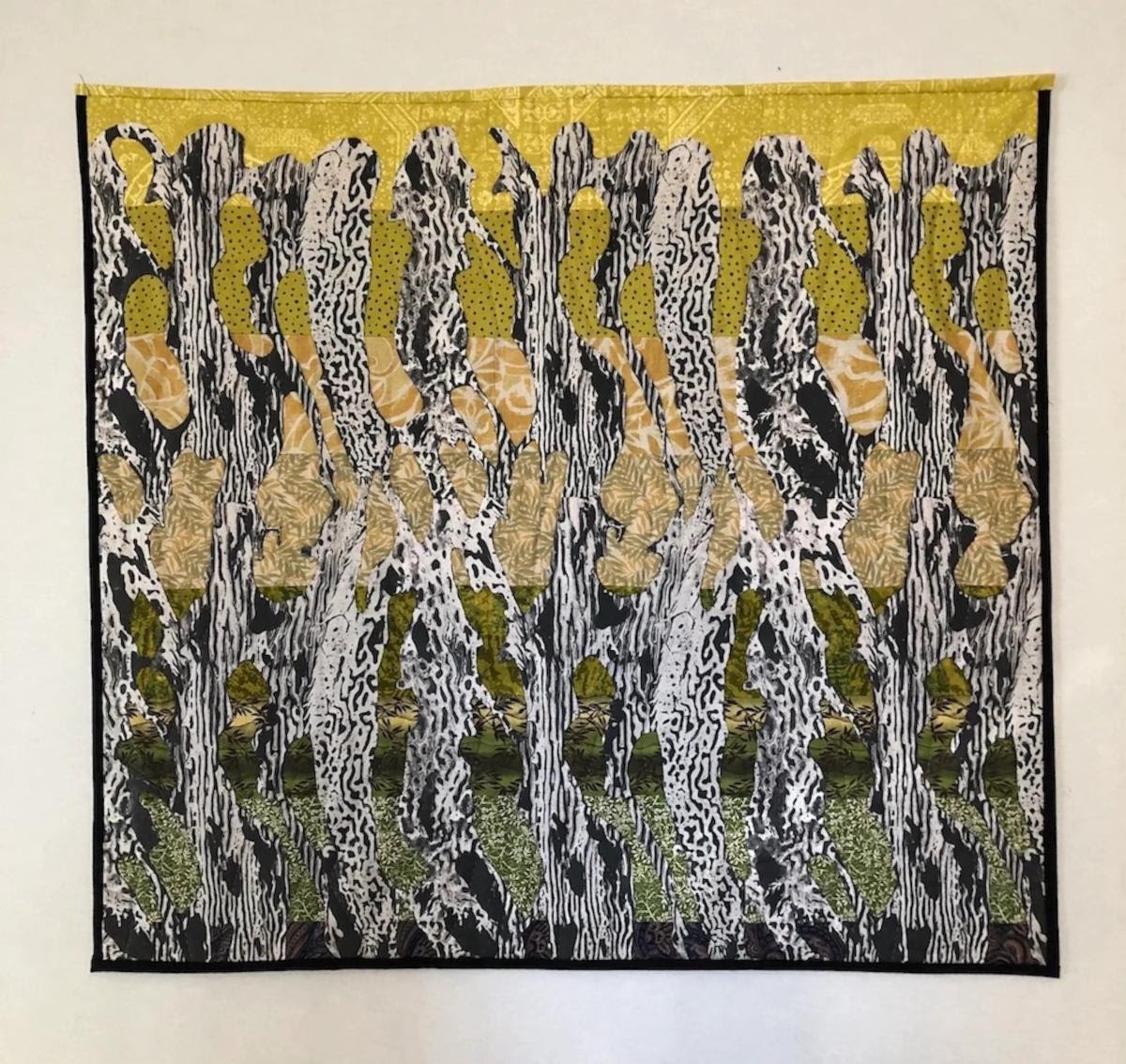
“Snake Den Mesa” (screen printed collage), by Jungil Hong, in her show “Jungil Hong: The Time Being,’’ at the ODD-KIN gallery, East Providence, R.I., through July 21.
The exhibition examines and reexamines Hong’s personal life and career. “In the time between oldest and newest work in the exhibition I have questioned parts of my identity—as an immigrant, a mother, a daughter, a partner, an artist,” said Hong.
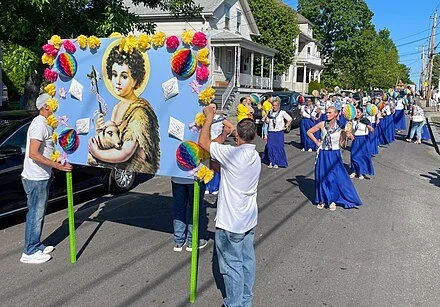
Portuguese Bodo de Leite parade on Orchard Street, in East Providence. The city has many residents with Portuguese and Cape Verdean origins.
Jim Hightower: Big companies’ CEO’s impose ‘shrinkflation’ on us
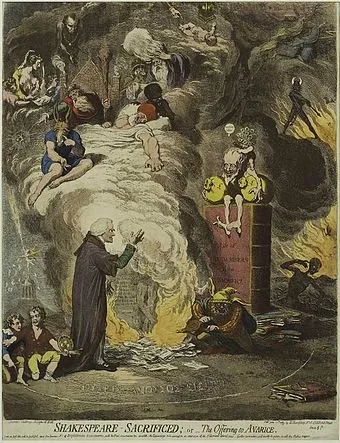
“Shakespeare Sacrificed: Or the Offering to Avarice ,’’ by James Gillray
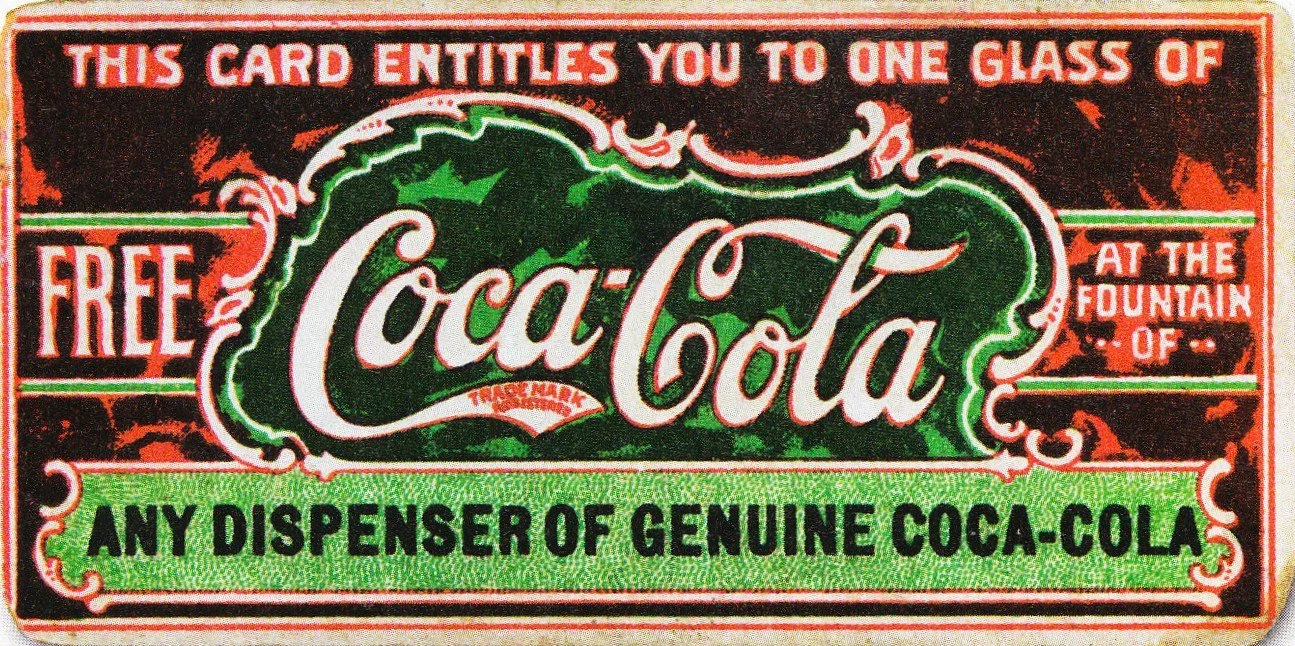
Believed to be the first coupon ever, this ticket for a free glass of Coca-Cola was first distributed in 1888 to help promote the drink. By 1913, the company had redeemed 8.5 million tickets.
Via OtherWords.org
We should pay attention to corporate America’s fluctuating wordplay, for their frequent contortions of language disguise ploys to dupe, confuse and rip off us hoi polloi — i.e., their customers.
For example, here’s a mouthful that’s been gaining popularity among manufacturers of food products: price pack architecture.
It’s a bit of gobbledygook meant to obscure the profiteering practice of ever so quietly shrinking the size and contents of their packages — without lowering prices. Economists dubbed this “shrinkflation,” but that too clearly implied gouging. Thus, corporate image-makers invented the incomprehensible nonsense phrase of PPA to cloak their anti-consumer trickery.
This convoluted codeword also allows the tricksters to brag openly about their cleverness to their Wall Street investors. Here’s Coca-Cola’s CEO, for example, doing corporate-speak to bankers in February: “We are leveraging our revenue growth management capabilities to tailor our offerings and price pack architecture to meet consumers’ evolving needs.”
English translation: Consumers will need to pay us more for less Coke. You could almost hear the bankers weep for joy over Coke’s sneaky scheme to stiff its customers.
Perhaps you’ve wondered what big-time corporate CEOs actually do to rake in their exorbitant salaries, now averaging more than $8,000 an hour! Well, there it is: The CEO’s main job is to keep workers’ pay low, monopolize markets, and constantly invent slick ways to squeeze another dime from each consumer’s pocket.
It’s not honest work, but it does pay well. Coca-Cola’s CEO James Quincey, for example, hauled in $25 million in pay last year. That’s 1,800 times more than the annual income of the typical Coca-Cola worker, who will now pay more for a sip of Coke, thanks to Quincey’s “price pack architecture.”
Jim Hightower is a radio commentator, writer and public speaker.
Fiber festival
“Dance of the Bull Kelp” (quilted cottons), by Boston-based Nancy Crasco, in the show “Untangled: Original Fiber,’’ sponsored by ArtSpace Maynard (Mass.) and 6Bridges Gallery, in Maynard. The show is being presented at 6Bridges.
- Image courtesy of the artist.
The show’s curator says artists were invited to submit works in fiber in every shape and form. Aside from the stipulation that all works must be in fiber, artists were free to run wild and create quilts, sculptures and anything else in any fiber technique.

See this story about kelp growing by Natutical Farms, in Machias, Maine.

Llewellyn King: Big Tech conquers American culture, including politics; striving to be first past the post

WEST WARWICK, R.I.
I sometimes write about the propensity for technology to be imperial, to conquer and to force itself on the world whether the world wants it or not. Now with AI taking hold, I have to say, “You ain’t seen nothing yet.”
The wise people who write about international trade say that globalization is dead, killed off by nationalism and protectionism.
Well, you might not be able to get a Big Mac in Russia these days, but I bet they know who Taylor Swift is. Tom Friedman may be a well-read New York Times columnist, but his penetration is nothing compared to that of the influencers on TikTok, or maybe even Heather Cox Richardson on Substack.
Then there is the money.
The Computer Age has spawned a new class of ultra-rich, dwarfing the rich of the past, such as John D. Rockefeller, Andrew Carnegie and the Rothschilds. Names like Bezos, Gates, Zuckerberg and Musk dominate the age.
The descendants of the great Internet-based companies will form a new aristocracy with money so abundant that they will be able to influence our lives culturally and politically.
Culture will be shaped by them via what they sponsor. The rich have always sponsored the arts, but now there will be so much money, seeming to dwarf what Carnegie, Rockefeller, Getty, Guggenheim and their millions wrought.
If a multibillionaire wants to weigh in politically with big money, both political parties and individual politicians will tailor their offerings to get some of that campaign cash. That is occurring now. But in the future it will be occurring even more.
One could reasonably argue that the political class has already sold out to its backers. It isn’t the kind of government that a candidate will provide so much as how much that worthy raised to get elected.
I suspect that we are only at the very beginning of the effects of money in politics and how it may well reshape the future.
The people creating innovative technologies today have little idea where their inventions will take them.
Did the guys who launched Uber in San Francisco ever think that it would go nationwide, let alone that it would sweep the world and wipe out many taxi fleets? One would have believed that every county or region would have its own rideshare operator. But no. Uber went global thanks to the controlling computer technology.
One of the realities of computer-based technology is that it picks winners and losers early on — and winners win bigger than anything heretofore seen. Losers fade away, as they did after the first tranche of tech upheaval: the dot-com bubble.
It turns out that computer tech favors monopoly, and the monopoly in each market segment wins.
With AI coming into daily use, and likely to command the way we live and work after a few decades, the companies that provide that service today, and will come to control it, will potentially dwarf the existing tech mega-giants. In theory, an AI company can employ AI to consolidate its authority in the field and to vanquish competition.
If that happens, a single company will have greater wealth and greater social and political power than any aspirant for global domination ever has had.
The backstory to why early bots are error-riddled and why we get hilarious “hallucinations” is that the companies — the big techies — are so aware of the stakes that they are rushing to market their products before they have perfected them. They calculate that it is better to achieve some market penetration with an inferior product than to wait for the perfected one, when a rival has become the bot of choice and technological world conquest is at hand. Never let the perfect get in the way of market share.
Consider the evolution of Google. When it perfected its search engine it was one of a handful of search engines (Remember Jeeves?). But it grabbed market share, and the rest is history. Microsoft’s Bing can do everything that Google does, but it has a third of the users. Google got the reputation and was first past the post.
Where does Taylor Swift fit in? Is she the greatest singer about the travails of love? Almost certainly not, but social media loved her.
Tech loved Taylor, and she is the brightest star ever seen in the firmament of tech-influenced culture — the equivalent in entertainment of world conquest. It is the future.
Llewellyn King is executive producer and host of White House Chronicle, on PBS. His email is llewellynking1@gmail.com, and he based in Rhode Island.
--
Co-host and Producer
"White House Chronicle" on PBS
Mobile: (202) 441-2703
Website: whchronicle.com
Shedding season
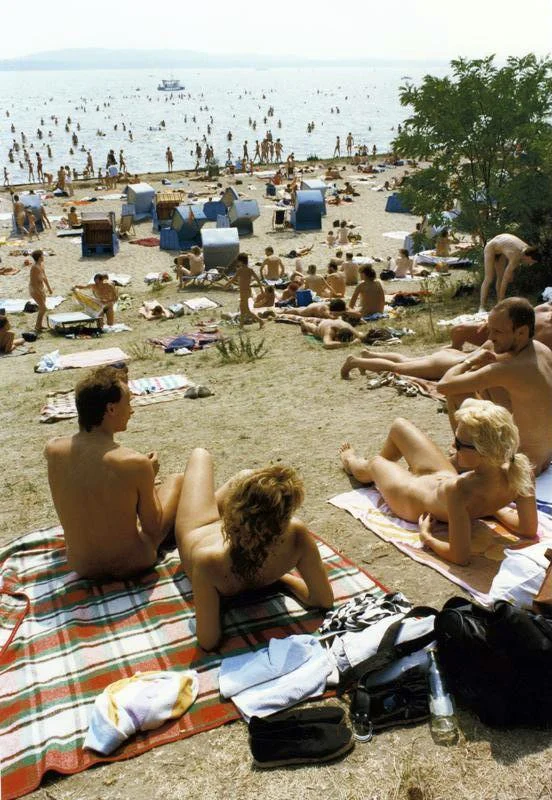
“Summer is the time when one sheds one's tensions with one's clothes, and the right kind of day is jeweled balm for the battered spirit. A few of those days and you can become drunk with the belief that all's right with the world.”
— Ada Louise Huxtable (1921-2013), famed architectural writer. She spent about half of each year in a ranch house in Marblehead, on the Massachusetts North Shore.
Don't go out in public without it

“La Commedia: Juliet's Mask” (cotton yarn, acrylic paint resin), by Anna Fubini, in her show “Unraveled Realities,’’ at Galatea Fine Art, Boston, July 5-July 28.
The gallery says:
“‘Unraveled Realities’ is a collection of fiber art and mixed-media works, including collaborative pieces and projects with fellow visual and performing artists. At its core, ‘Unraveled Realities ‘seeks to disrupt traditional narratives of canonical art and challenge the notion of a fixed nature of being, asserting the inherent dualities present in all things. The works showcase the interplay between materials, the creative process, and the thematic approach, embodying the concepts of deconstruction and reconstruction.’’
A kind of genius
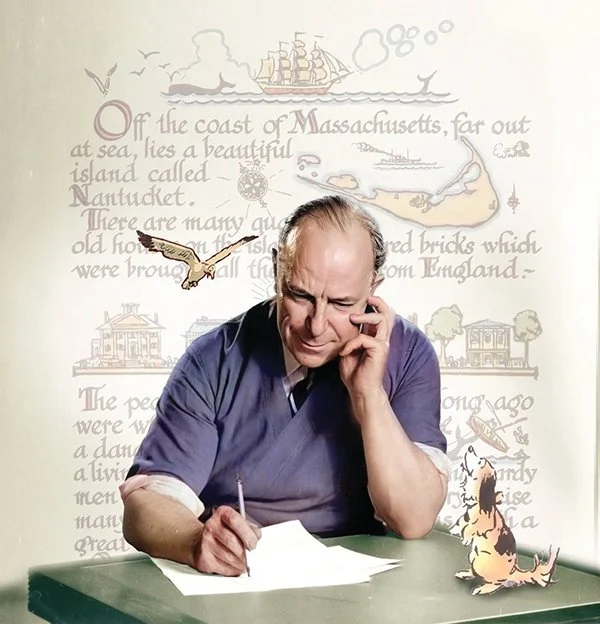
From the show “Tony Sarg: Genius at Play,” now at the Nantucket Historical Association/Whaling Museum.
Edited from the gallery’s statement:
This is is “the first comprehensive exhibition exploring the life, art, and adventures of Tony Sarg (1880–1942). Known as the father of modern puppetry in North America and the originator of the iconic Macy’s Thanksgiving Day parade balloons, Sarg was a famed illustrator, animator, designer and nimble entrepreneur who summered on, and took inspiration from, Nantucket for nearly 20 years. Organized and in partnership with the Normal Rockwell Museum, in Stockbridge, Mass.’’
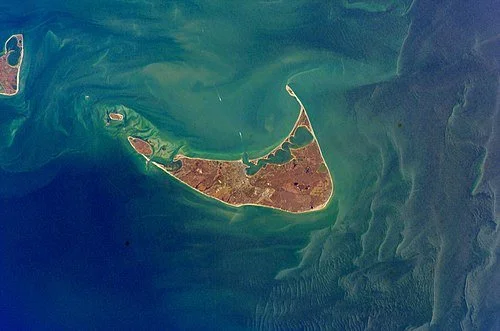
Nantucket from a NASA satellite
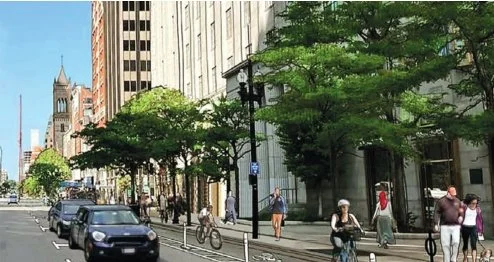
New bike, bus lanes on Boylston have fans and foes
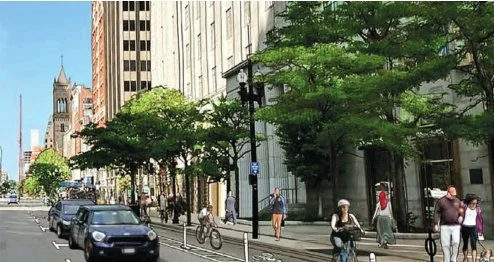
On Boylston Street
Excerpted from The Boston Guardian
The city has begun adding bike and bus lanes to Boylston Street in Boston’s Back Bay, kicking off weeks of intermittent road work along with furious debate among residents and commuters.
Boylston’s redesign comes courtesy of the Back Bay Mobility Projects, a sweeping initiative covering almost the entire neighborhood. Workers broke ground for the Boylston section on June 9, with the aim of installing bus and bike lanes, changing parking with new moped loading zones and new signals separating turn lights from crossing periods.
The redesign will be starting on Massachusetts Avenue and working its way east to Arlington Street. Sidewalks will remain open, but planners do anticipate the need for parking restrictions around affected areas.
A city spokesperson said they expect work to continue for about three weeks, probably ending near the start of July. Workers will be installing new markings and flex posts at night, saving daytimes for signal changes and sign installation.
"The changes on Boylston Street will make the roadway safer for all who live, work and visit in the Back Bay, improving speed and reliability for the more than 13,000 people who ride on the bus each day,” said the Boston Transportation Department (BTD). {But not everyone, especially some business people, agrees.}
'Economic development'
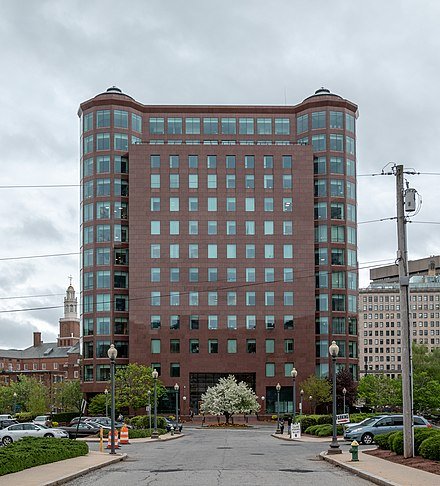
Citizens Bank headquarters, between two rivers in downtown Providence.
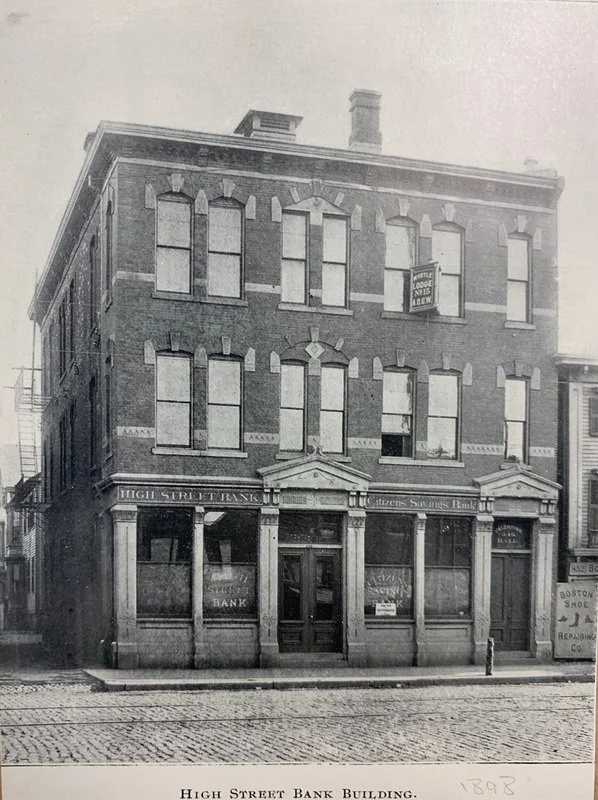
High Street Bank, founded in 1828, a precursor of Citizens Bank, in an 1898 photo. High Street established Citizens Savings Bank in 1871.
Adapted from Robert Whitcomb’s “Digital Diary’’ in GoLocal.24.com
Companies and their senior executives will always try to play states off against other in order to boost profits and thus executive compensation via friendlier tax and regulatory policies. So it is with Providence-based Citizens Bank’s apparently successful drive to get Rhode Island to give it a new tax break like the one that Massachusetts is giving to banks there. Citizens is the 14th biggest banking institution in the United States.
This involves jettisoning the current system, which bases a financial institution’s state taxes on the value of its property, payroll and sales, and letting Citizens, et al., use only sales to calculate their state corporate-income tax. This would give Citizens an effective $7.5 million tax cut.
Would Citizens move its headquarters (and perhaps some other operations, too) out of state, say to the Boston area, without the break? Maybe eventually, which would be a disaster for Rhode Island.
The painful fact is that Rhode Island must try to be competitive with its much bigger and richer neighbor and so is at the mercy of what Bay State policymakers decide in economic matters.
Much of what constitutes states’ economic-development policies is simply paying big companies to stay.
I increasingly believe that corporate-income taxes should be abolished and the loss of money to be offset by higher personal-income taxes. In the end, people, not some inorganic entity called a business, pay taxes, and the effort to avoid corporate taxes leads to what is in effect bribery of public officials through campaign contributions, etc.
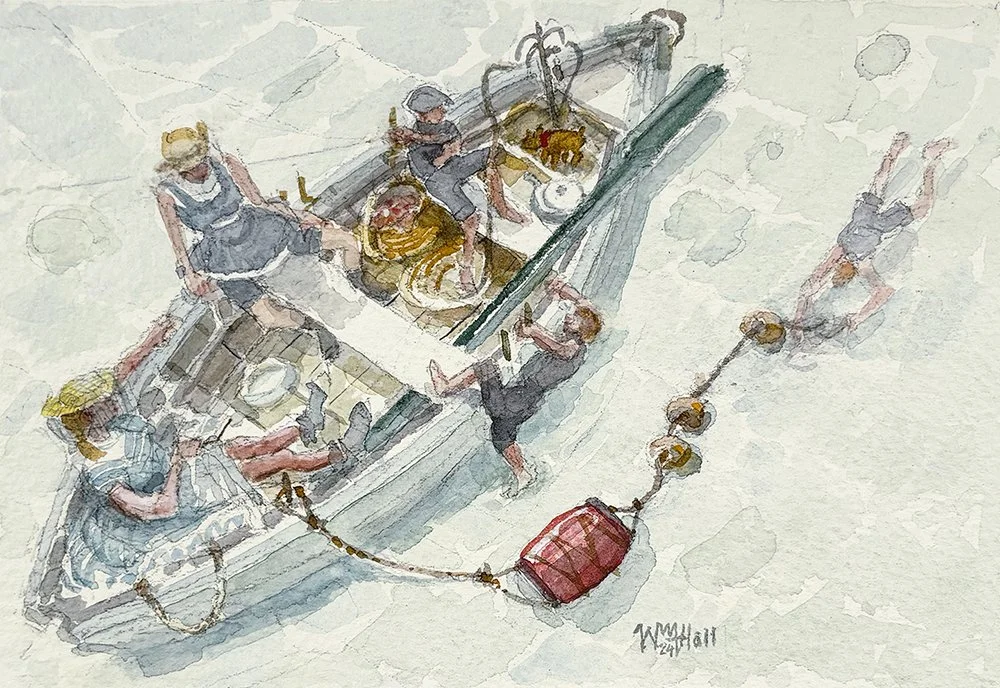
Times past on Block Island
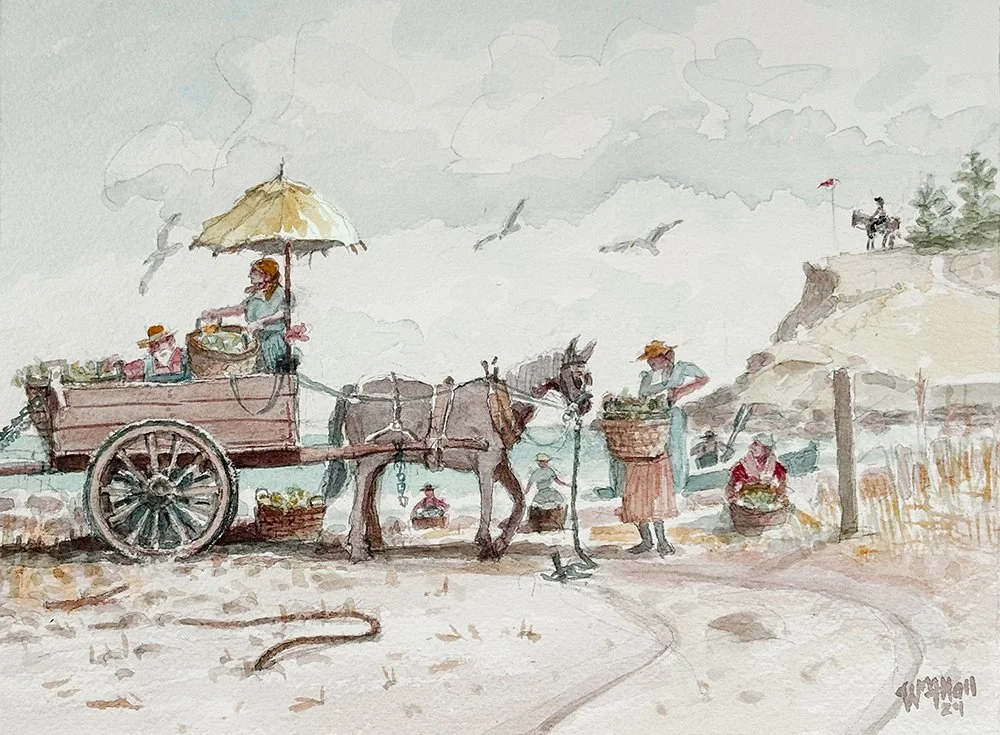
“Gathering Seaweed (watercolor), in the show “Times Past: New Works by William Talmadge Hall,’’ at the Jessie Edwards Gallery, Block Island, through July 2.
He writes: “Seaweed from the beaches on Block Island was gathered as fertilizer and for food. The rule on Block Island in the 1800’s was that access to all beaches was protected for islanders to gather whatever they could find. This included seaweed, fish, salvage from shipwrecks, heating fuel, such as driftwood, and virtually anything else that would help them survive.’’
{Editor’s note: Seaweed aquaculture has been expanding at a good clip in New England in the past few years. Seaweed has many uses and growing it removes carbon dioxide from the atmosphere.}
The gallery says:
The show “displays the artist’s love of Block Island and history. These works are personal for Hall, a third-generation islander, and encompass a past he hopes that people think about as he immortalizes the rich and fabulous, and now too-often forgotten, history of the island’s people, land and sea in his beautiful watercolors.’’
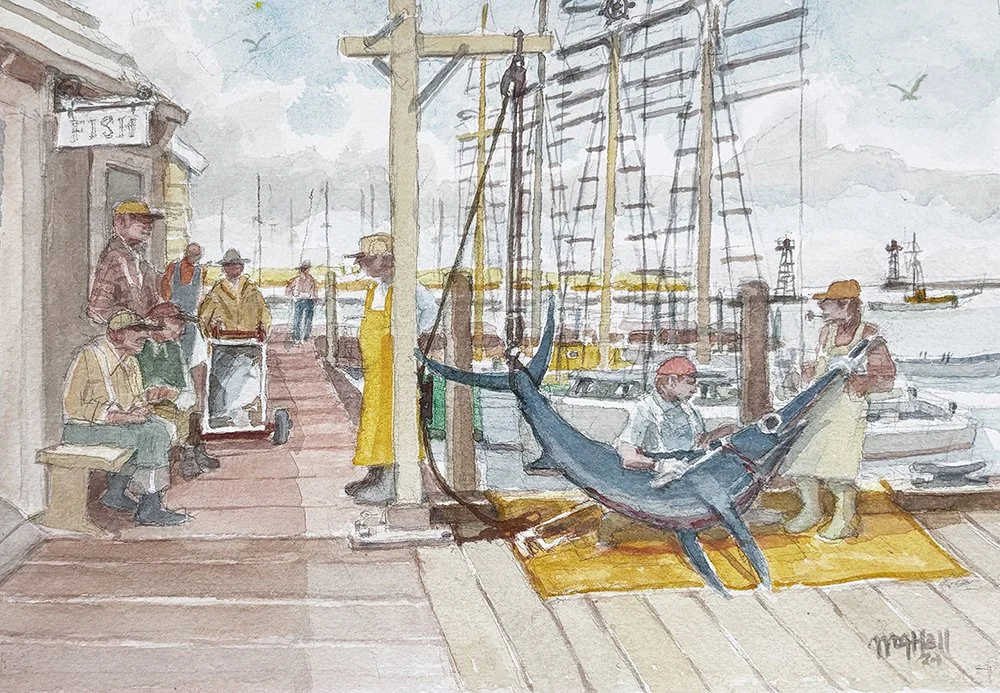
“Fisherman’s Corner-Old Harbor Block Island’’
Mr. Hall explains:
“Once thick with fishing shacks, the west corner of Old Harbor was the domain of the Block Island fishing fleet. When the steamers on the Fall River Line docked on the east side of this harbor of refuge, the passengers from New York City, Providence, Boston and elsewhere in the region were delivered into a bustling port. But the hurricane of 1938 devastated this fleet; 80 percent of it was destroyed in a few hours. In its heyday, these docks landed enough fresh fish to meet a substantial part of the demands of urban centers in southern New England as well as of the summer resort season.’’
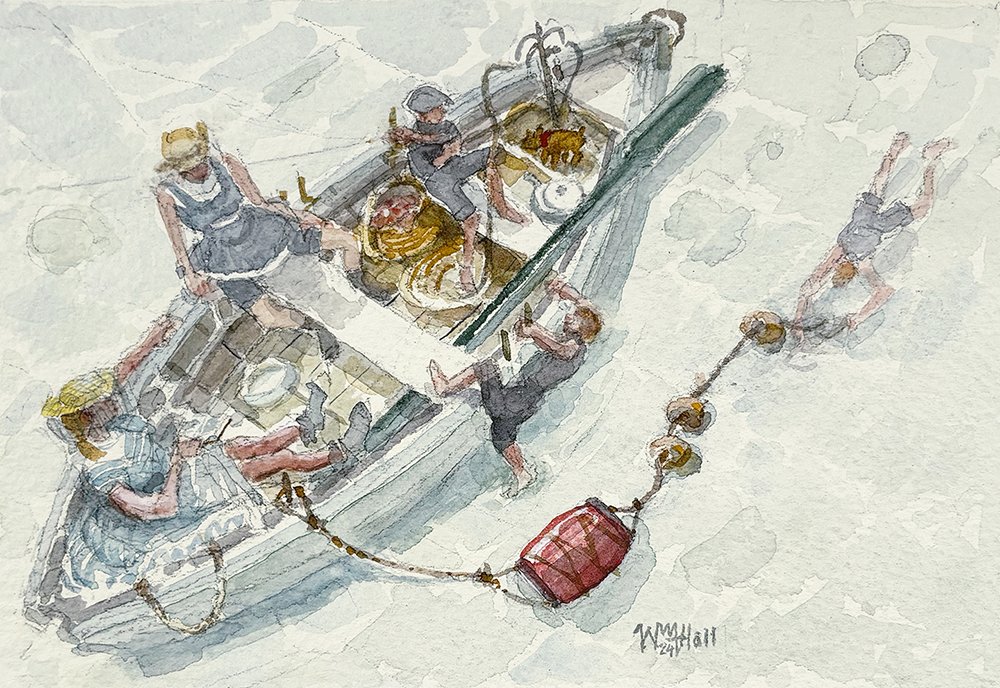
‘‘Victorian Swim Party” (1889)
“During the late Victorian era, which came to be called ‘The Gilded Age,’ Block Island became know as a tourist venue without the social restrictions imposed by, say, Newport high society. Large luxurious hotels offered a more open attitude to anyone, no matter who they were or where their money came from
“The beautiful and romantic scenery and relatively remote location encouraged discreet pleasure and relaxation.
“This painting evokes a slackening of Victorian dress codes and the pure pleasure
of being alive.’’


Elevated agriculture at Boston Medical Center

Expanded farming on a roof of the Boston Medical Center.
Edited from a New England Council report
“Boston Medical Center has opened a second farm on the roof of one of its administrative buildings, which will produce food to be donated to local nonprofits and community centers.
‘‘BMC’s first farm, Power Plant Farm, opened in 2017 to provide fresh and nutritious food for patients. Now BMC expects its new Newmarket Farm to quadruple the amount of produce grown annually while partnering with a local food-access nonprofit, in Boston Area Gleaners. The farms support a clinical program at BMC called the Preventive Food Pantry, which is meant for doctors to prescribe certain foods for recovery from certain illnesses.
“‘Our rooftop farms increase green space in our community, reduce the hospital’s carbon footprint, and strengthen at-risk local food systems,’ said senior director of support services at BMC David Maffeo.’’
'A primal presence'
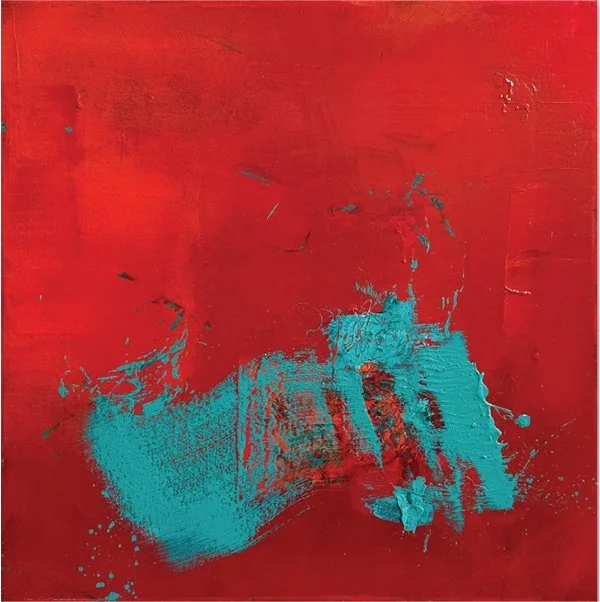
“Half Tree” (oil on canvas), by Barbara Groh, at Gallery Sitka, Newport, R.I.
She says in her artist statement:
“My visual inspiration began early with Abstract Expressionism. As I am primarily an abstract artist, I aspire to have my work affect others as I have been by provoking thought, emotional experiences, moods, and aesthetic pleasure.
“Landscape is a primal presence for me. I explore by walking in diverse environments and return to the studio to transform my experiences into physical being. These inspirations can happen just outside my studio door or in distant lands with unfamiliar landscapes and cultures.
“My paintings in oil, acrylic, or cold wax may reflect a quiet practice of noticing inner space, peace, and presence, while others may reflect a desire and will to express freedom and unencumbered thought. Both encompass the moment and the past – a synthesis of physicality, perception, meditation, and inner movement.’’
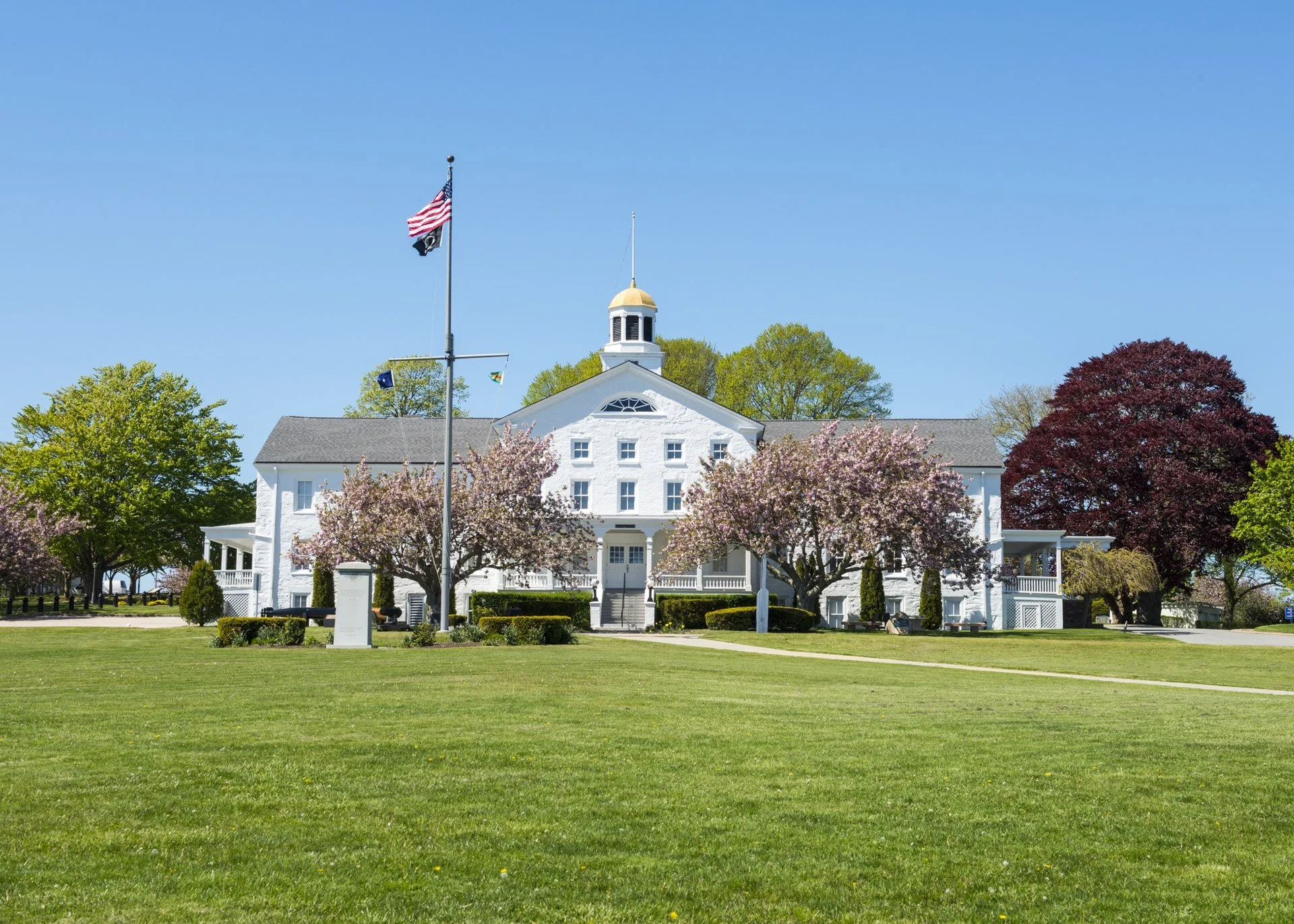
Founders Hall at the U.S. Naval War College, in Newport.
Chris Powell: What is ‘enough’? One-man crime wave in Conn.
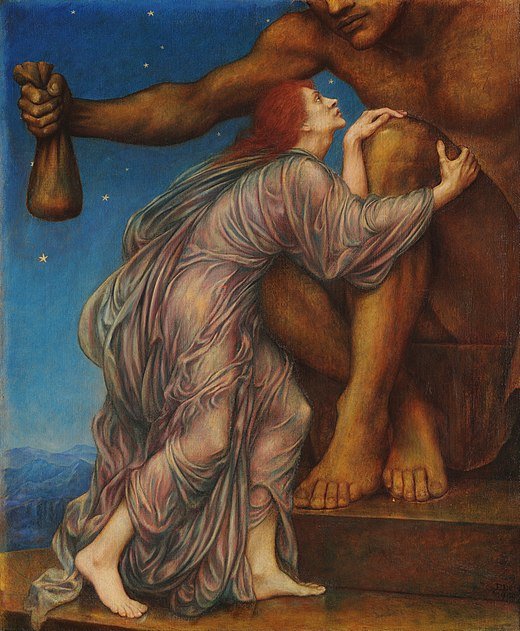
“The Worship of Mammon,’’ by Evelyn De Morgan
MA NCHESTER, Conn.
Connecticut is not just thrilled that UConn men's basketball coach Dan Hurley has declined a lucrative offer from the Los Angeles Lakers. People are also moved by the expressions of loyalty from the coach and his wife, Andrea -- not just loyalty to the state but, as Mrs. Hurley noted in a television interview, loyalty to the players the coach had recruited and who expected to be playing for him next year.
Of course this loyalty was not exactly reciprocated by some of the players on this year's championship UConn team. They are leaving college early for what will be their own lucrative contracts with the pros.
But there's a big difference between the situations of the players and the coach. The players aren't making much if any money and may suddenly earn millions of dollars for each year of early departure. But the coach already is making millions each year, and for having won consecutive national tournaments he is likely to make millions more from UConn with a big raise that will bring his annual compensation close to what the Lakers were offering him.
When one is already earning big money, loyalty isn't the sacrifice lately imagined and cheered by UConn basketball fans, people for whom a night out with the family for dinner and a game is a substantial expense. Indeed, as F. Scott Fitzgerald wrote, "the very rich are different from you and me."
But then there are differences among the rich too.
A recent essay recounted that two financially comfortable guys were discussing a billionaire who had just undertaken a business plan he expected would bring him even greater wealth. One guy boasted to the other: "I have what he'll never have." The other guy asked: "What's that?" The answer: "Enough."
If Hurley has enough for staying put at UConn -- even if "enough" includes a huge raise -- it still may be considered relative loyalty, and Connecticut may be glad of it all the same, but just shouldn't overdo it.
That wasn't a parody of criminal justice in Connecticut on the front page of The Hartford Courant the other day. It was reality that should have been shocking, except that repeat offenders on the loose are now so numerous in the state that few people -- and apparently none in authority -- are shocked.
State police say a 35-year-old Bozrah man with a long criminal record sped through a stop sign in Griswold, ramming another car and killing one of its passengers, Charlotte Degrado, 96, of Branford. The Courant says the offending driver has at least a dozen criminal convictions, has 10 more criminal cases pending against him, and was free because, after being arrested six times since January, he had managed to post $275,000 in bonds.
State police say the driver and his companions in the speeding car ran away after the crash but the driver was apprehended while hiding in nearby woods with a bag of fentanyl pills and $4,693 in cash.
The driver's convictions, according to the Courant, include larceny, burglary, narcotics possession, and engaging police in pursuit, and he has served three prison sentences since 2016 -- 18 months, a year, 90 days. He repeatedly has violated his probations.
If elected officials in Connecticut were more concerned about public safety than in reducing the state's prison population, they might investigate this situation urgently, interviewing every prosecutor and judge involved with the repeat offender's cases. While individually some of his crimes may seem minor, cumulatively they scream incorrigibility.
Could no one in the criminal-justice system perceive this before the fatality? Could no one note the chronic offender's 10 pending cases and realize that speedy trials and maximum sentences would be necessary to halt his crime wave?
Since Gov. Ned Lamont and state legislators don't seem to be taking note of the atrocity, will anyone in journalism confront them about it?
Or will the always dim prospect of reform be left to any efforts made by the dead woman's grieving family?]
Chris Powell has written about Connecticut government and politics for many years (CPowell@cox.net).
'Anatomy of the human soul'
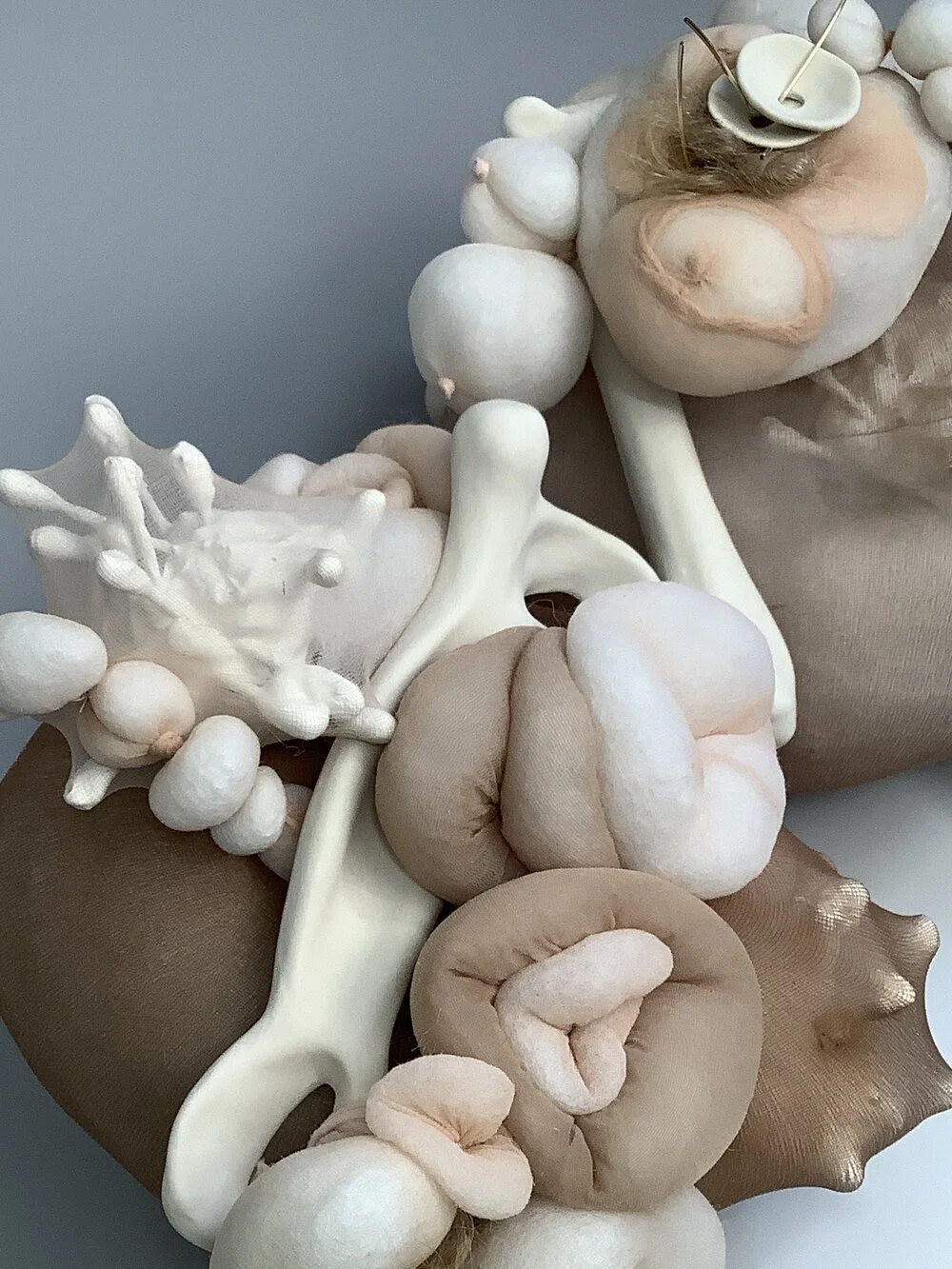
Detail from “Meditation,’’ in Keri Straka’s show “Biological Tithing,’' at Boston Sculptors Gallery through July 14.
The gallery says:
The gallery says that ‘“Keri Straka: Biological Tithing’ combines textiles and ceramics to create clusters of cells, tissue, organs, and bones, while posing intimate questions about the anatomy of the human soul as witnessed by the aging human body. …Straka uses delicate, organic shapes created from fabrics and hard, striking ceramic accents to muse on the concept of tithing, wondering whether molted cells could be collected and used to patch and protect skin as it becomes threadbare with age or illness."

Natives, residents and ticks
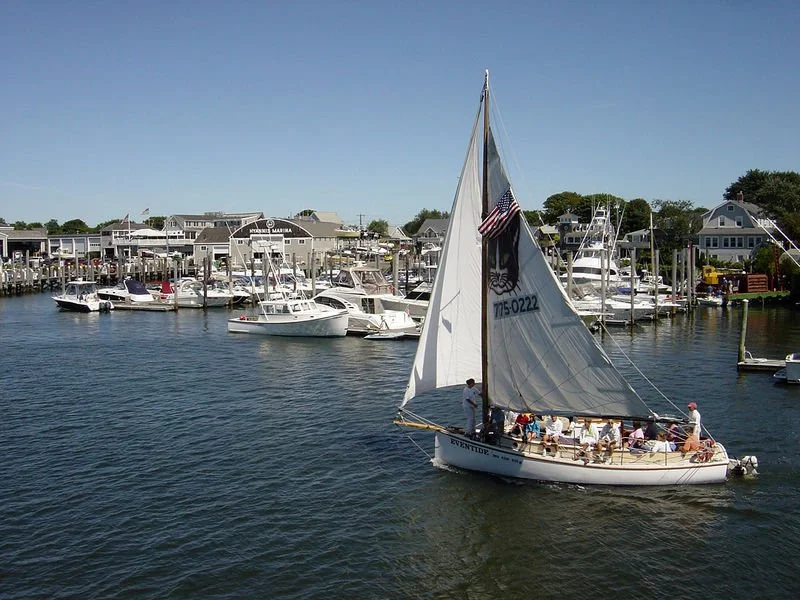
There are, generally speaking, five sorts of people found on Cape Cod at one time or another: native residents, natives who are not residents, residents who are not natives, summer residents who are natives, and summer residents who are not natives. A sixth classification…is the group known as ‘guests.’ Native residents have had company all their lives, as have summer residents who are natives. These hosts are fairly casual about guests, seeing them as a natural and inevitable part of any year – like ticks.’’
-- Marcia J. Monbleau, in her 2000 book The Inevitable Guest: A Survival Guide to Being Company and Having Company on Cape Cod
‘Sculptural perches’

“Perch,’’ by Jean Shin, at Appleton Farms, Ipswich, Mass. Studio shot.
Appleton Farms explains:
“‘Perch’ explores temporality (ecological and agricultural time) and regeneration. Bobolinks—songbirds who make the migratory journey from the Southern Hemisphere and whose populations are in decline—are the primary birds that use Appleton’s grasslands and hayfields as their nesting site. Shin created sculptural platforms made from Appleton’s fallen and dead trees that visitors can engage with, as they become participants in this critical monitoring throughout the project’s run. Within the nesting area, Shin will create sculptural perches made from fallen trees and salvaged copper in which male bobolinks can perch to search for mates and mark their territory.’’

Llewellyn King: Fusion power is looking more than dreamlike

Commonwealth Fusion Systems (CFS) facility in Devens, Mass.

The Sun (here in X-ray) like other stars, is a natural fusion reactor, where stellar nucleosynthesis transforms lighter elements into heavier elements with the release of energy.
WEST WARWICK, R.I.
Fusion power, the Holy Grail of nuclear power for decades, may finally be within our grasp.
If the scientists and engineers at Commonwealth Fusion Systems (CFS), a company with close ties to the Massachusetts Institute of Technology Plasma Science and Fusion Center, are right, fusion is nearly ready for power market entry.
CFS, based in Devens, Mass., says it will be ready to ship its first devices in the early 2030s.
That is astounding news, which has been so long in the making that much of the nuclear industry has failed to grasp it.
I first started writing about fusion power in the 1970s. Having been on hand for many of its false starts, I was one of the doubters.
But after I visited the CFS factory in Devens and saw the precision production of the giant magnets, which are the key to the company’s system, I am on my way to being a believer.
I think that it’s likely that CFS can manufacture a device they can ship to users — utilities or big data centers — in the early 2030s. If so, the news is huge; it is a moment in science history like the first telephone call or the first incandescent light bulb.
Governments, grasping the potential for clean and essentially limitless power without weapons proliferation or radioactive waste, have lavished billions of dollars on fusion energy research worldwide. Intergovernmental effort in recent years has concentrated on the Joint European Torus (JET), which has wrapped up in Britain, and the International Thermonuclear Experimental Reactor (ITER), a mega-project, involving 35 nations, is ongoing in France. Both are firmly in the category of scientific research.
But in the commercial world, there is a sense that fusion power is at hand, and many companies have raised money and are pressing forward. In the front of that pack is CFS.
There are two different technologies chasing the fusion dream: magnetic fusion energy (MFE) and inertial fusion energy (IFE). The former is where plasma at millions of degrees is contained in a magnetic bottle. The trick here isn’t in the plasma, but in the bottle.
A version of MFE, called the tokamak, is the technology expected to produce the first power plant. Worldwide dozens of startups are looking at fusion and in the United States, eight are considered frontline.
The other method, IFE, consists of hitting a small target pellet with an intense beam of energy, which can come from a laser or other device. It is still in the realm of research.
CFS has raised over $2 billion and is seen by many as the frontrunner in the fusion power stakes. It has been supported from its inception in 2018 by the Italian energy giant ENI. Bill Gates’s ubiquitous Breakthrough Energy is an investor. Altogether there are about 60 investors, mostly looking for a huge return as CFS begins to sell its devices.
According to Brandon Sorbom, co-founder and chief scientist at CFS, the big advance has been in the superconducting magnets that create containment bottles for plasma. He told me this had enabled them to design a device many times smaller than had previously been possible.
What makes CFS magnets different and revolutionary is the superconducting wire that is wound to make the magnets.
Think of the tape in a tape recorder, and you have an idea of the flat wire, called HTS, that is wound into each magnet. The HTS tape is first wound into VIPER cable, or NINT pancakes — acronyms for two types of magnet technology, developed by MIT in conjunction with CFS. Then the VIPER cable, or NINT pancakes, are assembled into magnets which make up the tokamak.
This superconducting wire enables a large amount of current to course through the magnet at many times the levels which have been unavailable previously. This means that the device can be smaller — about the size of a large truck.
The next stage is to complete the first full demonstration device at CFS, known as SPARC. Already, it is half-built and should become operational next year.
After that will come the first commercial fusion device, called ARC, which may be deployed in a decade. It will contain, as Sorbom said, “a star in a bottle using magnetic fields in a tokamak design,” and perchance bring abundant zero-carbon energy to users near you.
Llewellyn King is executive producer and host of White House Chronicle, on PBS. His email is llewellynking1@gmail.com and he’s based in Rhode Island.
whchronicle.com
The thrill is gone

Photo by J. Pinta (Redline2200)
By June our brook's run out of song and speed.
Sought for much after that, it will be found
Either to have gone groping underground
(And taken with it all the Hyla breed
That shouted in the mist a month ago,
Like ghost of sleigh-bells in a ghost of snow)—
Or flourished and come up in jewel-weed,
Weak foliage that is blown upon and bent
Even against the way its waters went.
Its bed is left a faded paper sheet
Of dead leaves stuck together by the heat—
A brook to none but who remember long.
This as it will be seen is other far
Than with brooks taken otherwhere in song.
We love the things we love for what they are.
— “Hyla Brook,’’ by Robert Frost (1874-1963). The brook was near the property where Frost lived with his family in 1900-1911
‘Whispers of the Wild’ in a resort town

“As the Sun Sets,’’ by Jessica Fligg, in the joint show with Linda McDermott,“Whispers of the Wild: Imagery of Land and Life,’’ at the WREN Gallery, Bethlehem, N.H., through June 23.
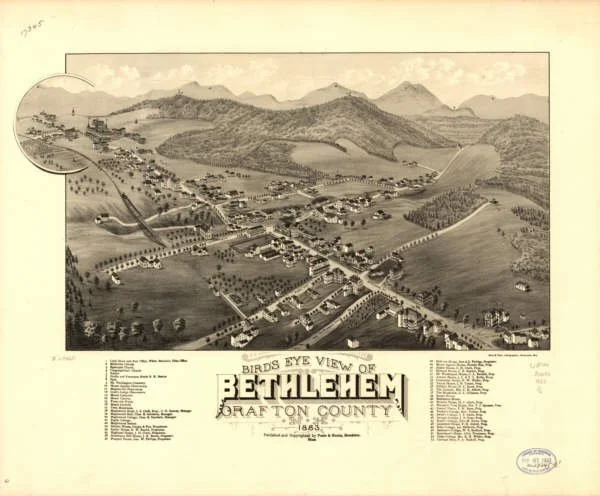
Bethlehem in 1883, as it was becoming a major summer resort.