
Vox clamantis in deserto






Sarah Jane Tribble: Beware sales pitches — Medicare Advantage can dangerously trap you
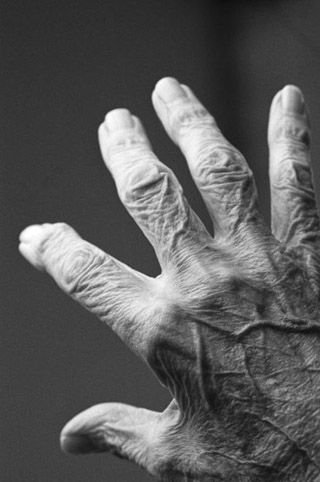

From Kaiser Family Foundation Health News (KFF Health News)
“The problem is that once you get into Medicare Advantage, if you have a couple of chronic conditions and you want to leave Medicare Advantage, even if Medicare Advantage isn’t meeting your needs, you might not have any ability to switch back to traditional Medicare.’’
— David Meyers, assistant professor of health services, policy, and practice at the Brown University School of Public Health
In 2016, Richard Timmins went to a free informational seminar to learn more about Medicare coverage.
“I listened to the insurance agent and, basically, he really promoted Medicare Advantage,” Timmins said. The agent described less expensive and broader coverage offered by the plans, which are funded largely by the government but administered by private insurance companies.
For Timmins, who is now 76, it made economic sense then to sign up. And his decision was great, for a while.
Then, three years ago, he noticed a lesion on his right earlobe.
“I have a family history of melanoma. And so, I was kind of tuned in to that and thinking about that,” Timmins said of the growth, which doctors later diagnosed as malignant melanoma. “It started to grow and started to become rather painful.”
Timmins, though, discovered that his enrollment in a Premera Blue Cross Medicare Advantage plan would mean a limited network of doctors and the potential need for preapproval, or prior authorization, from the insurer before getting care. The experience, he said, made getting care more difficult, and now he wants to switch back to traditional, government-administered Medicare.
But he can’t. And he’s not alone.
“I have very little control over my actual medical care,” he said, adding that he now advises friends not to sign up for the private plans. “I think that people are not understanding what Medicare Advantage is all about.”
Enrollment in Medicare Advantage plans has grown substantially in the past few decades, enticing more than half of all eligible people, primarily those 65 or older, with low premium costs and such perks as dental and vision insurance. And as the private plans’ share of the Medicare patient pie has ballooned to 30.8 million people, so, too, have concerns about the insurers’ aggressive sales tactics and misleading coverage claims.
Enrollees, like Timmins, who sign on when they are healthy can find themselves trapped as they grow older and sicker.
“It’s one of those things that people might like them on the front end because of their low to zero premiums and if they are getting a couple of these extra benefits — the vision, dental, that kind of thing,” said Christine Huberty, a lead benefit specialist supervising attorney for the Greater Wisconsin Agency on Aging Resources.
“But it’s when they actually need to use it for these bigger issues,” Huberty said, “that’s when people realize, ‘Oh no, this isn’t going to help me at all.’”
Medicare pays private insurers a fixed amount per Medicare Advantage enrollee and in many cases also pays out bonuses, which the insurers can use to provide supplemental benefits. Huberty said those extra benefits work as an incentive to “get people to join the plan” but that the plans then “restrict the access to so many services and coverage for the bigger stuff.”
David Meyers, assistant professor of health services, policy, and practice at the Brown University School of Public Health, analyzed a decade of Medicare Advantage enrollment and found that about 50% of beneficiaries — rural and urban — left their contract by the end of five years. Most of those enrollees switched to another Medicare Advantage plan rather than traditional Medicare.
In the study, Meyers and his co-authors muse that switching plans could be a positive sign of a free marketplace but that it could also signal “unmeasured discontent” with Medicare Advantage.
“The problem is that once you get into Medicare Advantage, if you have a couple of chronic conditions and you want to leave Medicare Advantage, even if Medicare Advantage isn’t meeting your needs, you might not have any ability to switch back to traditional Medicare,” Meyers said.
Traditional Medicare can be too expensive for beneficiaries switching back from Medicare Advantage, he said. In traditional Medicare, enrollees pay a monthly premium and, after reaching a deductible, in most cases are expected to pay 20% of the cost of each nonhospital service or item they use. And there is no limit on how much an enrollee may have to pay as part of that 20% coinsurance if they end up using a lot of care, Meyers said.
To limit what they spend out-of-pocket, traditional Medicare enrollees typically sign up for supplemental insurance, such as employer coverage or a private Medigap policy. If they are low-income, Medicaid may provide that supplemental coverage.
But, Meyers said, there’s a catch: While beneficiaries who enrolled first in traditional Medicare are guaranteed to qualify for a Medigap policy without pricing based on their medical history, Medigap insurers can deny coverage to beneficiaries transferring from Medicare Advantage plans or base their prices on medical underwriting.
Only four states — Connecticut, Maine, Massachusetts, and New York — prohibit insurers from denying a Medigap policy if the enrollee has preexisting conditions such as diabetes or heart disease.
Paul Ginsburg is a former commissioner on the Medicare Payment Advisory Commission, also known as MedPAC. It’s a legislative branch agency that advises Congress on the Medicare program. He said the inability of enrollees to easily switch between Medicare Advantage and traditional Medicare during open enrollment periods is “a real concern in our system; it shouldn’t be that way.”
The federal government offers specific enrollment periods every year for switching plans. During Medicare’s open enrollment period, from Oct. 15 to Dec. 7, enrollees can switch out of their private plans to traditional, government-administered Medicare.
Medicare Advantage enrollees can also switch plans or transfer to traditional Medicare during another open enrollment period, from Jan. 1 to March 31.
“There are a lot of people that say, ‘Hey, I’d love to come back, but I can’t get Medigap anymore, or I’ll have to just pay a lot more,’” said Ginsburg, who is now a professor of health policy at the University of Southern California.
Timmins is one of those people. The retired veterinarian lives in a rural community on Whidbey Island, just north of Seattle. It’s a rugged, idyllic landscape and a popular place for second homes, hiking, and the arts. But it’s also a bit remote.
While it’s typically harder to find doctors in rural areas, Timmins said he believes his Premera Blue Cross plan made it more challenging to get care for a variety of reasons, including the difficulty of finding and getting in to see specialists.
Nearly half of Medicare Advantage plan directories contained inaccurate information on what providers were available, according to the most recent federal review. Beginning in 2024, new or expanding Medicare Advantage plans must demonstrate compliance with federal network expectations or their applications could be denied.
Amanda Lansford, a Premera Blue Cross spokesperson, declined to comment on Timmins’ s case. She said the plan meets federal network adequacy requirements as well as travel time and distance standards “to ensure members are not experiencing undue burdens when seeking care.”
Traditional Medicare allows beneficiaries to go to nearly any doctor or hospital in the U.S., and in most cases enrollees do not need approval to get services.
Timmins, who recently finished immunotherapy, said he doesn’t think he would be approved for a Medigap policy, “because of my health issue.” And if he were to get into one, Timmins said, it would likely be too expensive.
For now, Timmins said, he is staying with his Medicare Advantage plan.
“I’m getting older. More stuff is going to happen.”
There is also a chance, Timmins said, that his cancer could resurface: “I’m very aware of my mortality.”
Sarah Jane Tribble is a reporter for KFF Health News
Doing their own things

At a town meeting in Huntington, Vt.
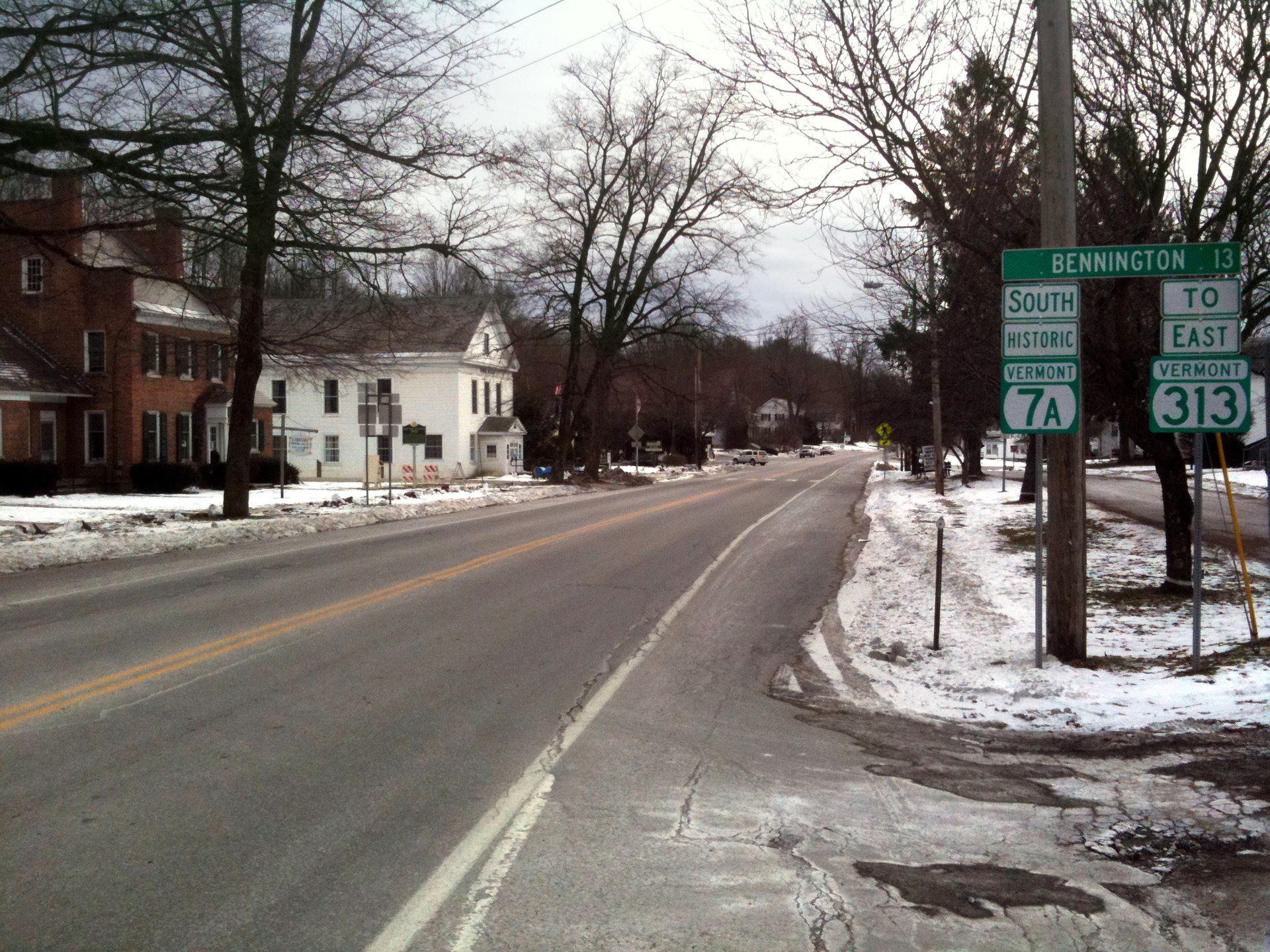
Downtown Arlington, Vt.
— Dorothy Canfield Fisher (1879-1958), American writer and social reformer. She lived in Arlington, Vt., where famed artist Norman Rockwell also lived for some years.

Llewellyn King: Great newspaper editors I’ve known

Martin Baron, who servved as head editor of The Miami Herald, The Boston Globe and The Washington Post. He lead The Globe’s investigation of sexual abuse of young people by Catholic priests, an investigation dramatized in the Academy Awards-winning movie Spotlight.
WEST WARWICK, R.I.
I am something of a connoisseur of editors. I have worked for them, alongside them, and have hated and admired them.
So I was ecstatic when Adam Clayton Powell III, my cop-host on the TV show White House Chronicle, told me he contacted Martin “Marty” Baron, who has a place in the pantheon of great editors, and he agreed to come on the show.
We recorded a two-part series with Baron, which was a tour de force appearance. He talked about the excitement of being the editor of The Miami Herald when Elian Gonzalez was the big story; the years-long unveiling of sexual abuse in the Catholic Church in The Boston Globe when he was its editor; and his becoming executive editor of The Washington Post and its transition from being a family property to being owned by Jeff Bezos, then the world’s richest man.
As he did in his book, Collision of Power: Trump, Bezos, and The Washington Post, he discussed how Trump early on had the new Post team to dinner at the White House and endeavored to co-opt them into the Trump camp. Trump had, as Baron explained, picked on the wrong team.
Baron’s biggest achievement, I believe, was the investigation that exposed the Catholic Church. I was traveling frequently to Ireland at that time — a country, sadly, that had seen more than its share of clerical excess. The Globe’s revelations had an immediate impact there and around the world: Think of the thousands of boys and girls who won’t be abused as a result.
Every editor edits differently and leaves a different mark. I worked for a weekly newspaper editor in Zimbabwe, Costa Theo, who set much of the hot type and edited on the Linotype machine. He urged me to use what he called “informants” many years before Watergate ushered in the practice of talking about “sources” without naming them and relying on the integrity of the reporter to guarantee the existence of the sources.
Herbert Gunn, father of the poet Thom Gunn, edited various newspapers in London’s Fleet Street — when I knew him, it was The Sunday Dispatch. He sat in a commanding way on what was called the “backbench” at the end of the newsroom and edited what he thought needed his touch in green ink with a Parker 51. If you saw green ink, you jumped.
Gunn was a superb editor and, like Ben Bradlee at The Post, gave a theatrical performance as well. All I ever saw in green ink were cryptic notes like “15 minutes.” That meant, “I will see you in the pub in 15 minutes.” It was an assignment not an invitation.
Some editors are technicians and change the look of the papers they edit. John Denson, at The New York Herald Tribune, is credited with introducing horizontal layouts using Bodoni typefaces as the principal type of the newspaper. This became the standard for many U.S. newspapers, including The Washington Post.
A newspaper genius, David Laventhol, put the women’s page in The Post to flight. As the Style section’s first editor, he did it with typological aplomb and with the use of photos in a Life magazine way: big and bold.
Laventhol, who ended up as publisher of the Los Angeles Times and Newsday, came to The Post from The New York Herald Tribune, where he had risen to managing editor. He and I worked together briefly in 1963 and I remember him having a days-long battle with Marguerite Higgins, the famous foreign correspondent, over the use of the word “exotic.”
Of course, Laventhol was only able to create the revolutionary Style section because executive editor Bradlee gave him free rein.
Bradlee edited with leadership, while affecting a kind international jewel thief persona, as might be played by David Niven or Steve McQueen. His genius always was the big picture. He didn’t write headlines or change captions, but he did decide the big stories of the day.
One of those stories was about a break-in at an office and apartment complex called The Watergate. I had arranged a dinner date with a reporter at the rival Evening Star. She called me and said, “I am afraid I will be late. There has been some sort of break-in at The Watergate. But it can’t be important because the Post is sending Carl.”
At that time, Carl Bernstein wasn’t a star, just a young city-desk reporter. I don’t think my date that night stayed in journalism.
Baron, like Bradlee, had a nose for the big one — and he brought it home.
On Twitter: @llewellynking2
Llewellyn King is executive producer and host of White House Chronicle, on PBS. He’s based in Rhode Island and Washington, D.C.
That day in D.C.
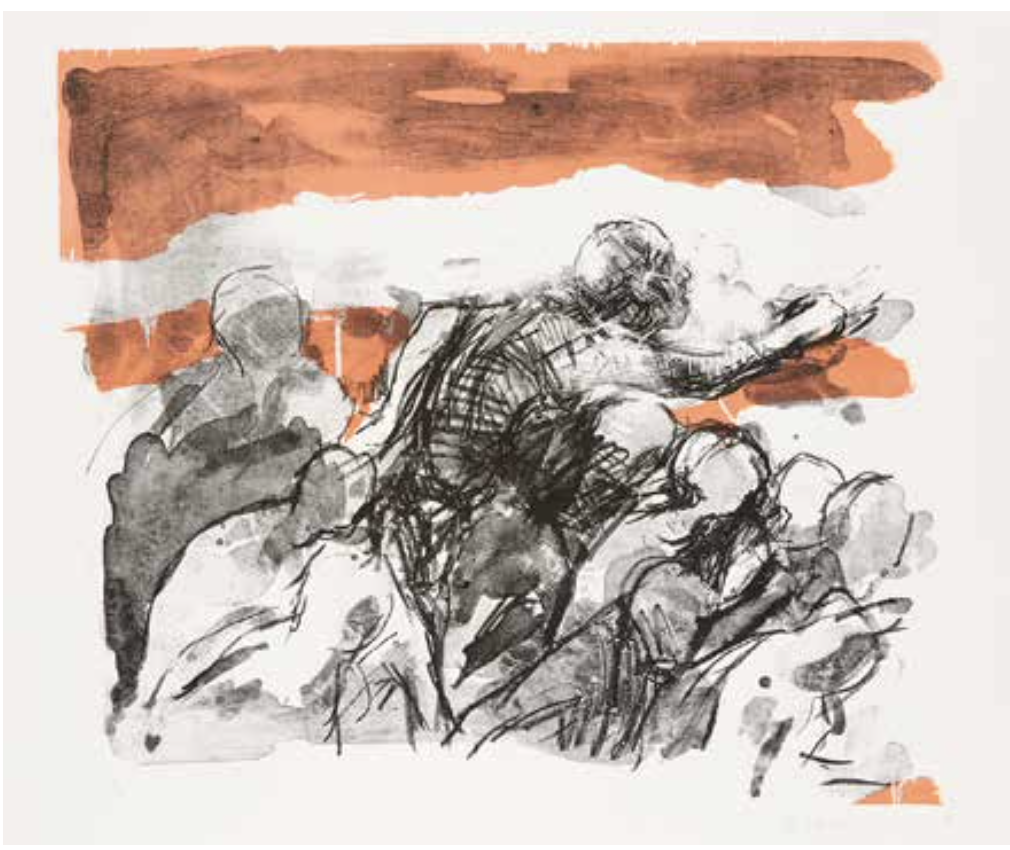
“January Sixth I, 2021,” (lithograph), by Nomi Silverman,, in her show “Palpable Process,’’ at the Center for Contemporary Printmaking, in Norwalk, Conn.
The gallery says:=
“Nomi Silverman is a visual storyteller whose work elevates the voices of outsiders and those perceived as ‘other’ –people on the margins of society. She often approaches a broader story by focusing on an individual narrative, putting a human face to the generic nameless, faceless masses that are often portrayed in the media. Her subject matter has included homelessness, racial violence, Matthew Shepard, and Iraq. Most recently, she has turned her lens to topics of immigration, emigration, and refugees.
For Palpable Process, Silverman selected prints from her personal collection that will provide insight into her storytelling process, and demonstrate how she collects and creates images that will ultimately come together into a cohesive artbook or exhibit.

Norwalk Harbor and vicinity
— Photo by Joe Mabel
Activated an alien probe?
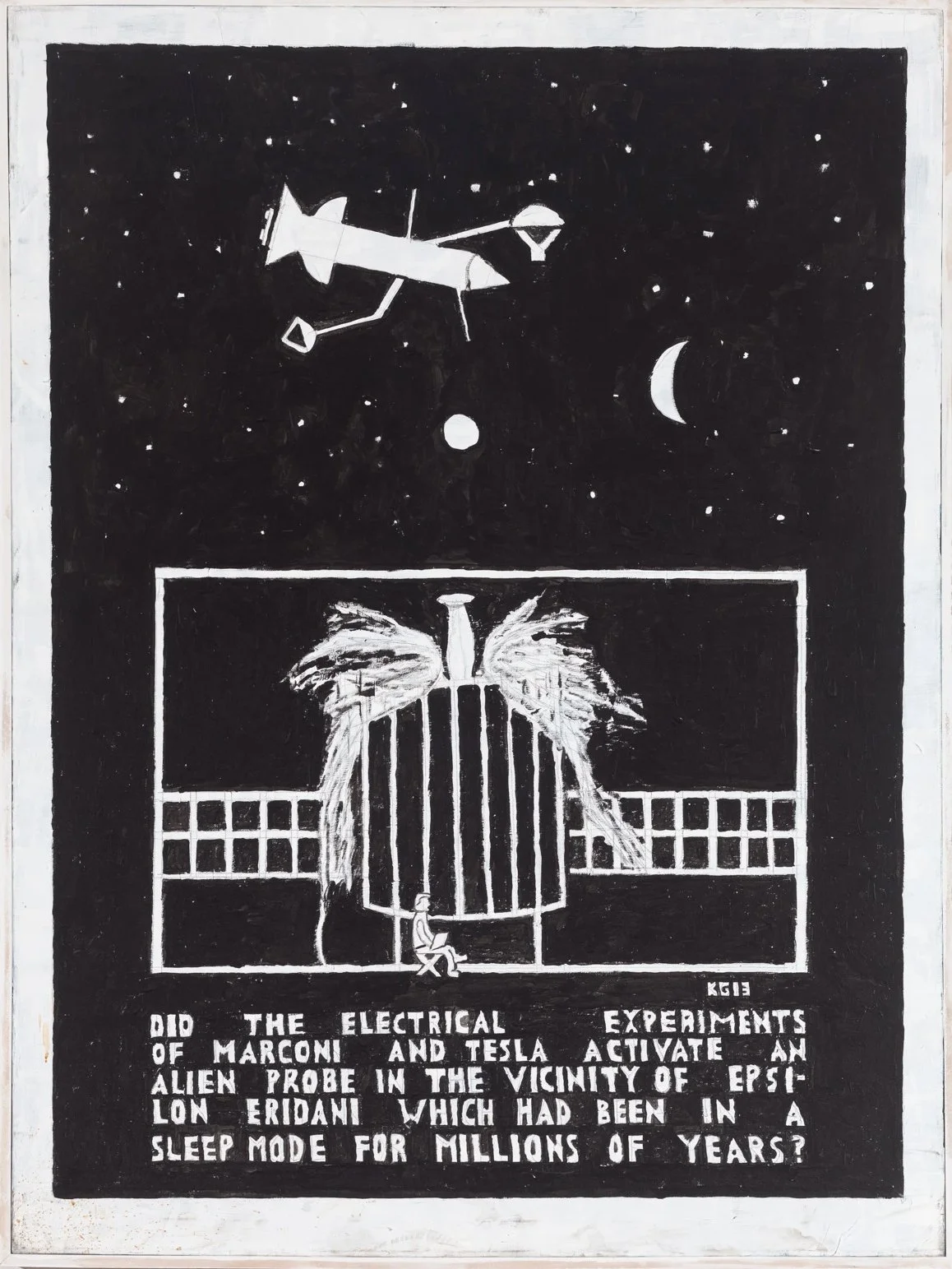
From the show “Ken Grimes: The Truth Is Out There,’’ at the Ely Center of Contemporary Art, New Haven, through Jan. 14.
The gallery says:
{The work of New Haven-based} Grimes {born in 1947} “focuses on the question of extraterrestrial life, a topic he has been focused on for most of his life due to a series of coincidences which he interpreted as messages from aliens. Grime’s work has primarily been black and white and so his paintings demand careful consideration yet also play with fantasy, indeed making the viewer question the possibility of life out there.’’
Chris Powell: In Connecticut and elsewhere, ‘dollar stores’ reflect poverty
— Photo by Michael Rivera
MANCHESTER, Conn
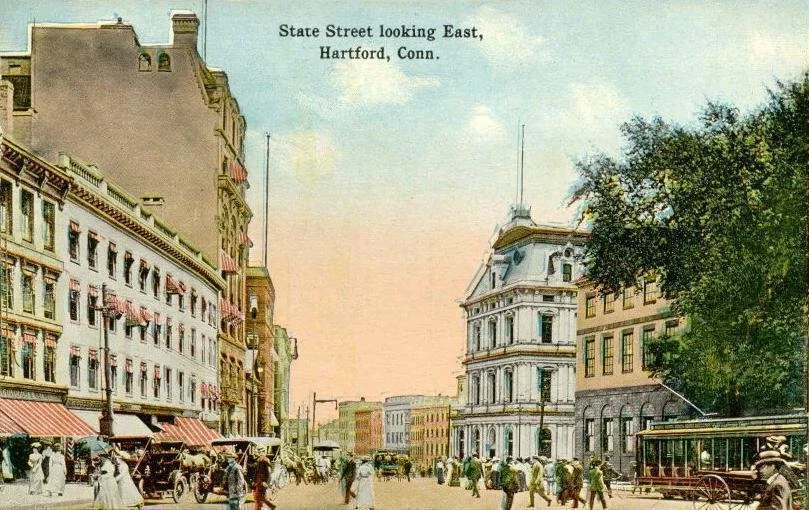
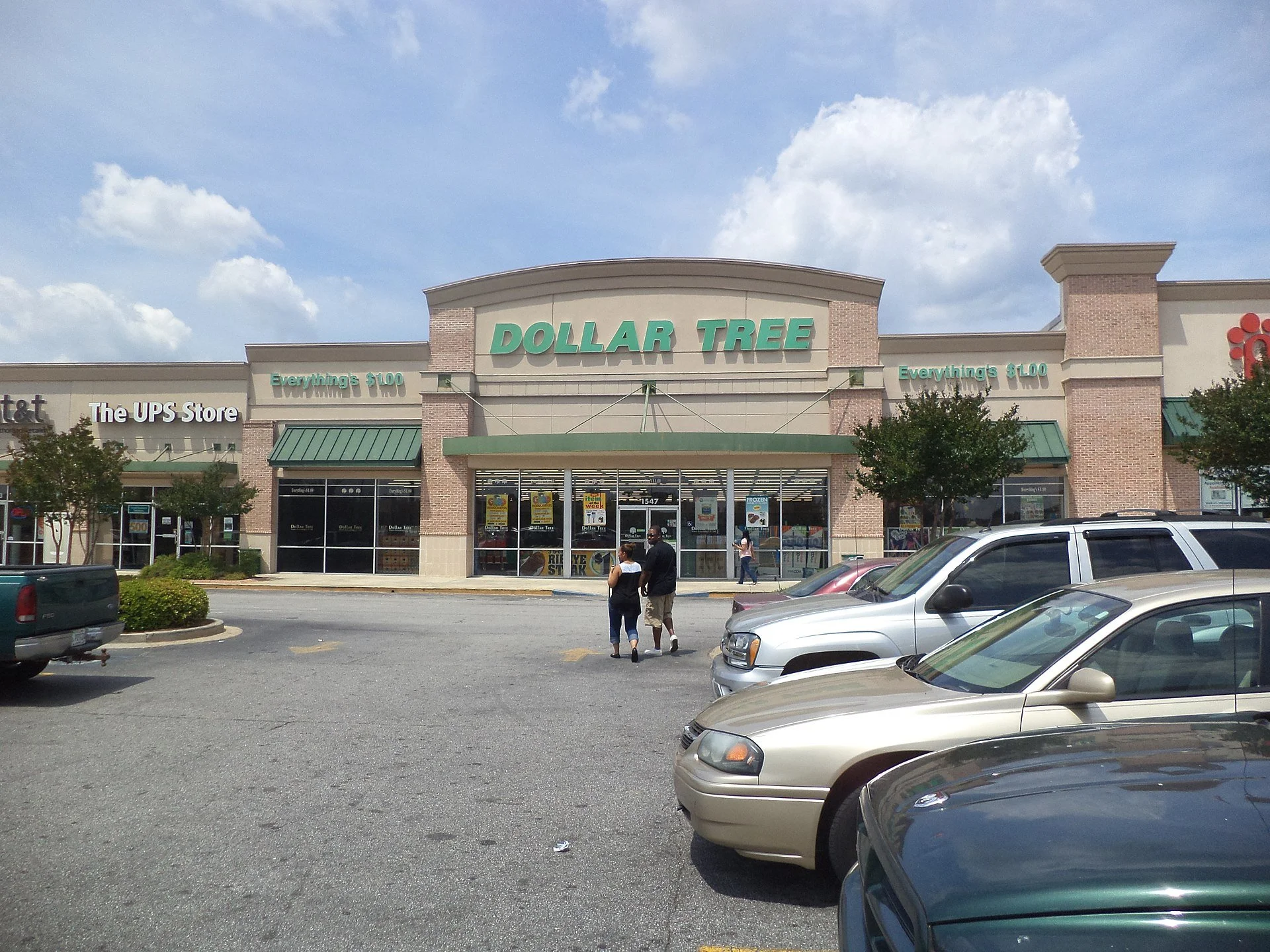
Like the rest of the country, Connecticut is seeing an explosion of "dollar stores,’’ such as Dollar General, Family Dollar and Dollar Tree, discount retailers that are causing alarm in some quarters because, while they sell food and consumer goods, they don't offer fresh meat, fruit, and vegetables and they are feared to be driving traditional food markets out of business. As a result, some municipalities around the country are legislating to restrict or even prohibit "dollar stores’’.
Now, The Hartford Courant reports, a University of Connecticut professor of agricultural and resource economics, Rigoberto A. Lopez, has published a study supporting this resentment, linking the growth of "dollar stores’’ to unhealthy diets in "food deserts" and the failure of regular grocery stores.
But "dollar stores’’ aren't doing anything illegal or immoral. They wouldn't be successful if they weren't providing goods that people want and at low prices. Nobody seems to be accusing the "dollar stores’’ of using unfair trade practices or violating anti-trust law. If "dollar stores’’ are doing better than traditional grocery stores, competition is what a free-market economy is about. People can choose where to shop.
Critics of "dollar stores’’ don't like that. They seem to think that they should be allowed to decide not just where people shop but also what they eat.
Of course there is a problem. "Food deserts" are real but retailers aren't to blame for them. Poverty is, and the expansion of "dollar stores’’ is largely a measure of worsening poverty for many in the country as a whole as well as in Connecticut.
Too many people don't eat enough fresh food quite apart from their ability to pay for it, and combine bad eating habits with poverty and the problem is worse.
But poor households qualify not just for government housing, energy and income subsidies but also for federal food subsidies -- Food Stamps are now the Supplemental Nutrition Assistance Program -- and if they live responsibly they can afford fresh food if they want it, and if they can travel outside their "food deserts."
That's the other part of the problem. Like other retailers, full-service supermarkets won't make as much money by locating in poor neighborhoods as they will make in middle-class and wealthy neighborhoods. By avoiding poor neighborhoods, any retailer will suffer less theft as well.
So Hartford's city government is considering opening its own supermarket. Whether city government has the competence to run anything well is always a fair question, since the poverty of so many city residents is inevitably reflected in city government itself. But there probably will be "food deserts" in cities as long as their demographics are so poor. A city government supermarket in Hartford won't solve the problem.
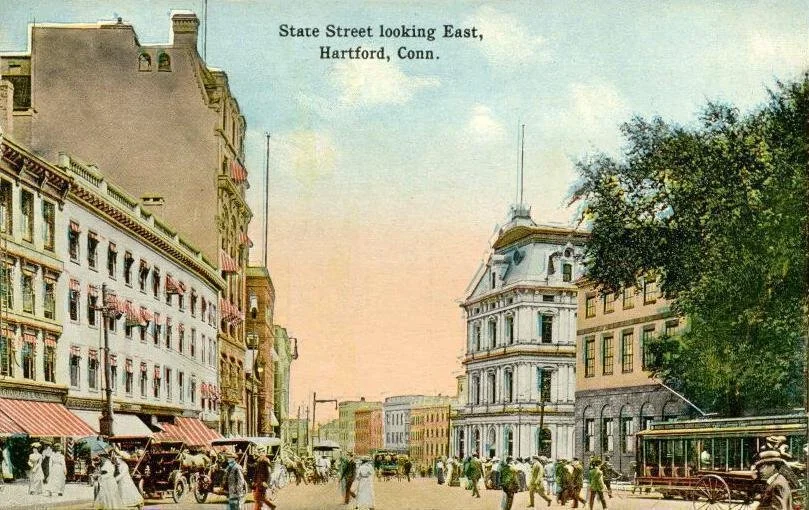
Indeed, a good measure of the long decline of Hartford from what was considered the country's most prosperous city a little more than a century ago to a struggling one is the decline in the number of chain-owned supermarkets in the city -- from 13 in 1968 to only one or two today.
Because of this poverty there isn't much retailing left in Hartford generally. For years city residents have done much if not most of their shopping in West Hartford and Manchester. West Hartford's downtown long has been far more vibrant than Hartford's, because that is where the middle and upper classes -- the people who have money to spend, people who many years ago might have lived in Hartford -- have moved.
Blaming "dollar stores” for poor nutrition among the poor is just an excuse to ignore the causes of poverty. More than a study of the impact of those stores, Connecticut could use a study of what pushed Hartford and its other cities from prosperity to privation -- such as fathers who don't father, mothers who don't parent well on their own, schools that don't educate, policies that produce dependence instead of self-sufficiency, and government that takes better care of itself than its constituents.
The decline was underway long before Ronald Reagan, Donald Trump or either of the Bushes became president. But even as the "dollar stores’’ spread across Connecticut, no one in authority seems to have any curiosity about what happened.
Chris Powell has written about Connecticut government and politics for many years (CPowell@cox.net).
Downtown Hartford in 1914, during “The Insurance Capital’s’’ heyday.
‘Poetry of their corpses’

“Hark,” (pastel), by Fu’una, in the show “Måhålang (Longing)”, at Bromfield Gallery, Boston, through Jan. 28.
The artist says:
“There are few things more consistent in my life than a sense of longing. To be Pacific Islander on the East Coast is to feel like a part of you is always missing. In my trips to Guåhan (Guam) I’ve learned to make the most of my time. I gather images and ideas that feed my creative practice. This practice has helped me connect to wherever I am living.
“In an era where we spend 90 percent of our lives in artificial environments, I find joy in the flora and fauna that indicate where you are. But biodiversity continues to shrink as land is eaten up by condos and shopping centers. For years I would draw dead animals not just for the poetry of their corpses but for the simple fact that we are an invasive species that has disrupted once thriving habitats. I seek out what I can find and compose them in my paintings into bouquets of animals, florals, and text.
“The antidote to måhålang is presence and connection. My large-scale paintings hint at memories of immersion and claim physical space where my subjects can live in perpetuity.’’

The French connection

Percentage of the population, by county, speaking French at home in New England. This information does not discern between specific demographics of New England French, Quebec French, and dialects of immigrants from France. This does not include French Creole languages, which are spoken by a sizable population in southern New England urban centers. Percent of residents speaking French (2015) 10–15% 5–10% 1–5% 0.5-1%
Coming distractions

Above,“Winter Blues” (encaustic), by Providence-based artist Nancy Whitcomb. Below, her “Winter Blues” in oil.

How about a county revival?
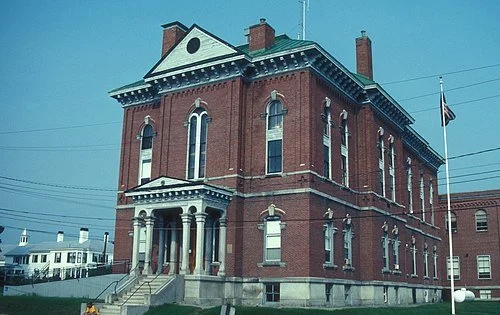
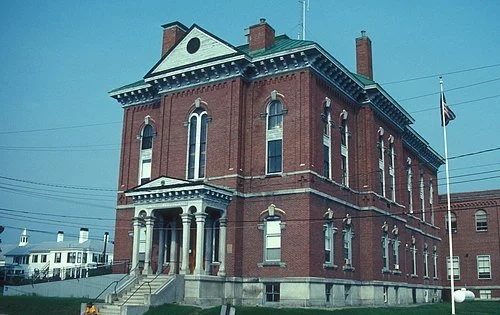
Somerset County Courthouse, in Skowhegan, Maine
Adapted from Robert Whitcomb’s “Digital Diary,’’ in GoLocal24.com
County governments with substantial powers are mostly long gone from New England. That’s for a variety of practical and political reasons. Among them are that towns and cities were incorporated here earlier than in the rest of America, and there has long been little unincorporated land (except in Maine). Still, many of the region’s counties used to have real powers (most of which were taken away in the past half century). But town and city officials have tended to want to grab those powers, and voters were increasingly convinced that counties were dinosaurs.
And yet some things are best handled regionally, rather than community-by-community, including such matters as open-space protection, water supplies and, increasingly, encouraging the provision of that somewhat ill-defined thing called “affordable housing.’’ Certainly there can be more regionalization of public-safety services and education, especially in suburban and exurban areas. This could save money (by reducing service duplication) and improve service quality.
I was impressed when I briefly worked in Delaware, in the ‘70’s, by the generally high quality of the services and infrastructure of New Castle County, which includes the city of Wilmington as well as suburban and exurban land. It’s one of three counties in The First State, which is the second smallest state in the Union by area. New Castle County has an elected county council and county executive. Rhode Island, especially, would do well to study it. As has been asked many times before, does the tiny Ocean State really need 39 municipalities and 36 school districts (32 municipal and 4 regional) school districts? But maybe the desire for very local control trumps efficiency?
Mixed traffic
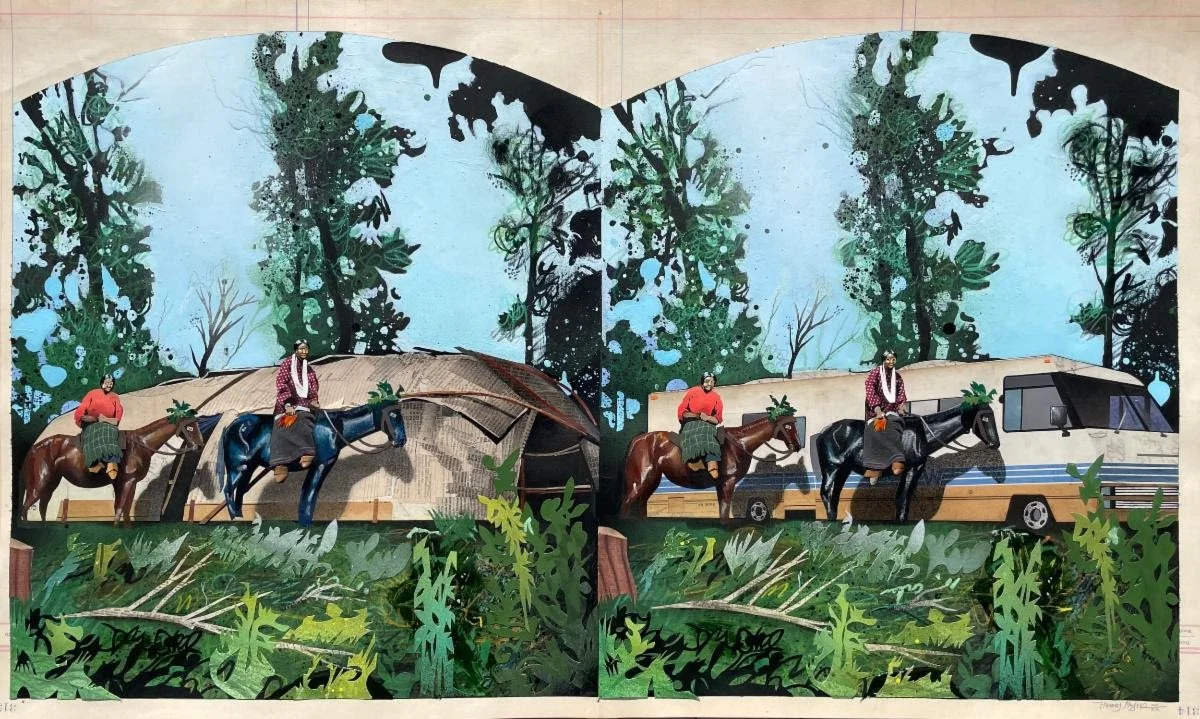
“Ciiserec —Now Do You See It?” (collage and mixed media on ledger paper), by Henry Payer, in the show “Free Association: New Acquisitions in Context,’’ at the Addison Gallery of American Art, in Andover, Mass.
The gallery says:
{The show} “places a focus on the gallery's newest additions to its collection. But new works don't exist in a vacuum, each piece is surrounded by other works collected over the Addison's nearly 100-year history. These associations create a dialogue between old and new, putting everything in a new light.’’
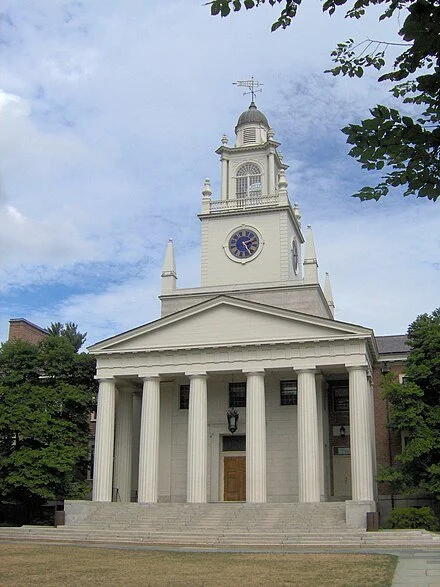
Samuel Phillips Hall, the social science and language building of Phillips Academy, the elite boarding school in Andover.
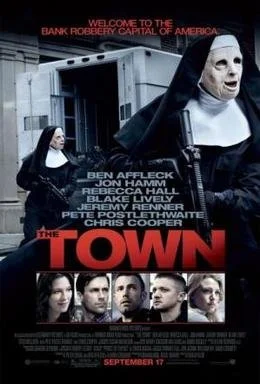
'And paying for the sins of their parents'
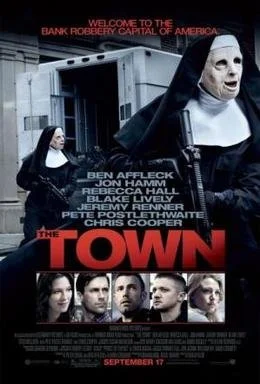
“When I grew up, there really was the sense of ’Why would you want to live anywhere else?’ {than the Boston area} .There’s a proudly parochial aspect to Boston. That strong tug of place was one of the themes I wanted to work with, the way environment influences what somebody becomes, that and children paying for the sins of their parents.”
— Ben Affleck (born 1972), American movie actor, director and producer. Born in Berkeley, Calif., he grew up in Cambridge, Mass.
My ‘stark vulnerabilty’

Work by Andy Moerlein at Boston Sculptors Gallery. He’s based in Maynard, Mass.
He says:
“Men are always expected to be ‘Age Defying Superheros.’
”As I add years to my very physical life, I am finding my limitations creeping inward ever so slowly. As a sculptor of large work, my pieces demand a wearing and persistent physicality. In my art I confront ideas and challenge different media – using my stamina and strength, my mind and memories.
”As I contemplate the endless and seemingly pointless things I do as an artist – as I meander around and try to process what I am experiencing. As I work to understand myself in relationship with the greater world around me, it seems the goal posts are always moving. A toil without end. Yet I relish the work. Perhaps as much as my results. It is a joy to work with my hands and mind every day.
”As maturity becomes evident, and those about me age and die, I am confronting a stark vulnerability that I have lived my life rather oblivious to.
“Frankly, at the start of this exploration, I struggled with my own modesty. I drew in masks and settled on clay reliefs as a medium. As I needed better renderings, I shot self-portraits. When I needed impossible positions, I collaged photocopies together. Through the hours of work, I became immune to my self exposure. My collages became more than references and I recognized them as works on their own.’’
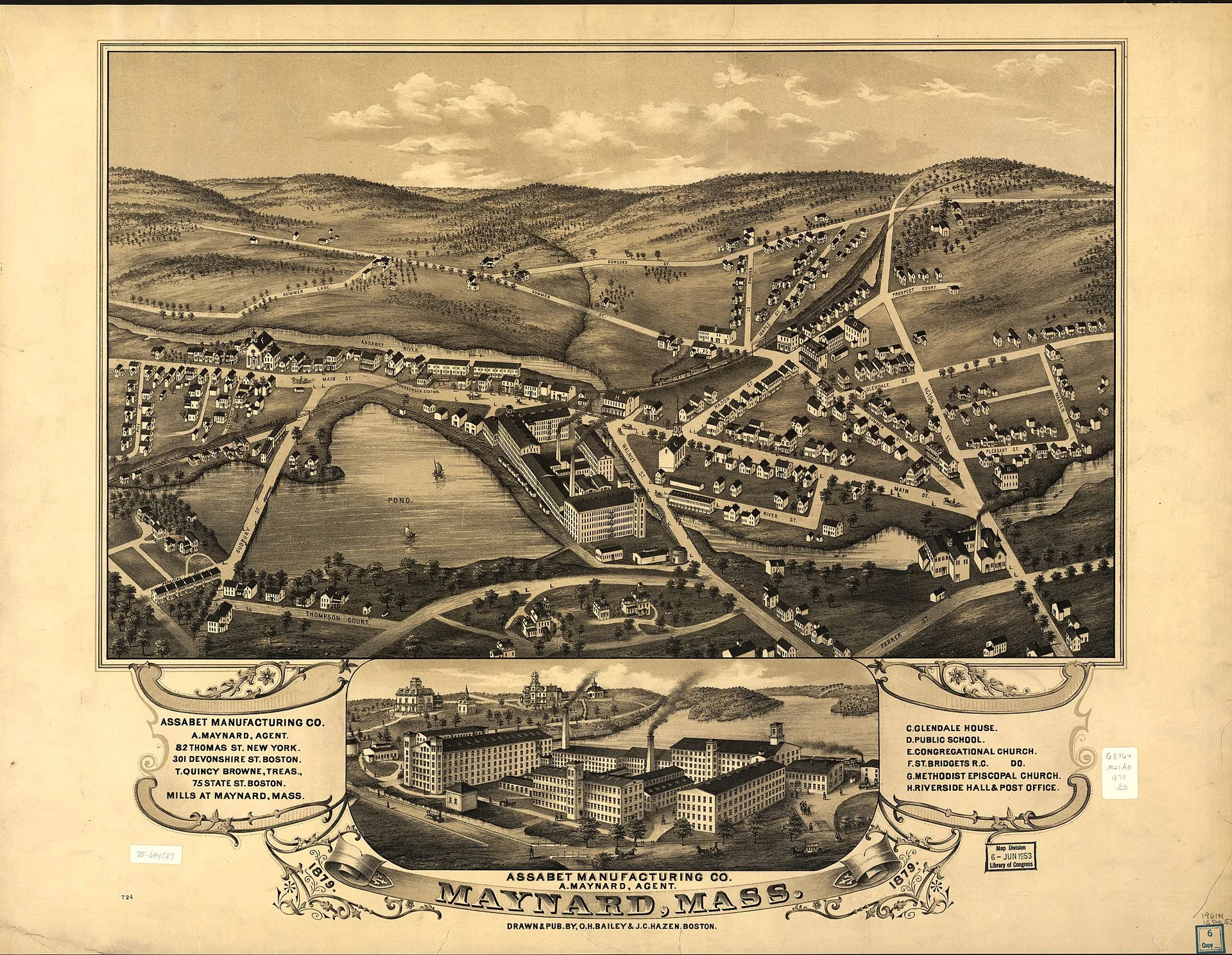
Maynard in 1879, at the height of the Industrial Revolution.
But you get used to it

“Cold Morning” (1951), by Francis P. Colburn (1909-1984) at the Fleming Museum of Art, at the University of Vermont, in Burlington. He was a native of Fairfax, Vt.
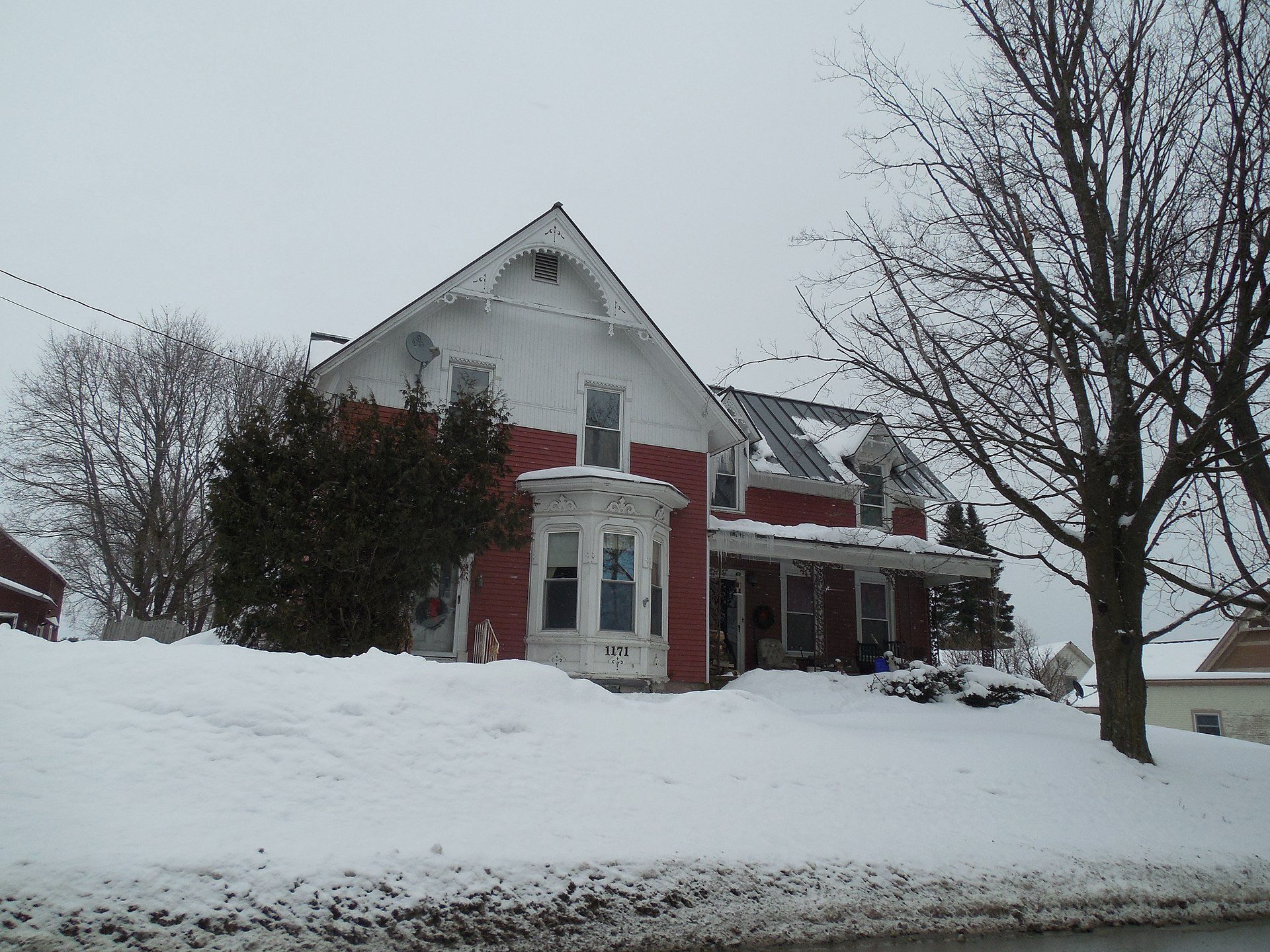
A house in Fairfax during winter
— Photo by Doug Kerr

James T. Brett: A plea for ‘civilizing speech’ in 2024
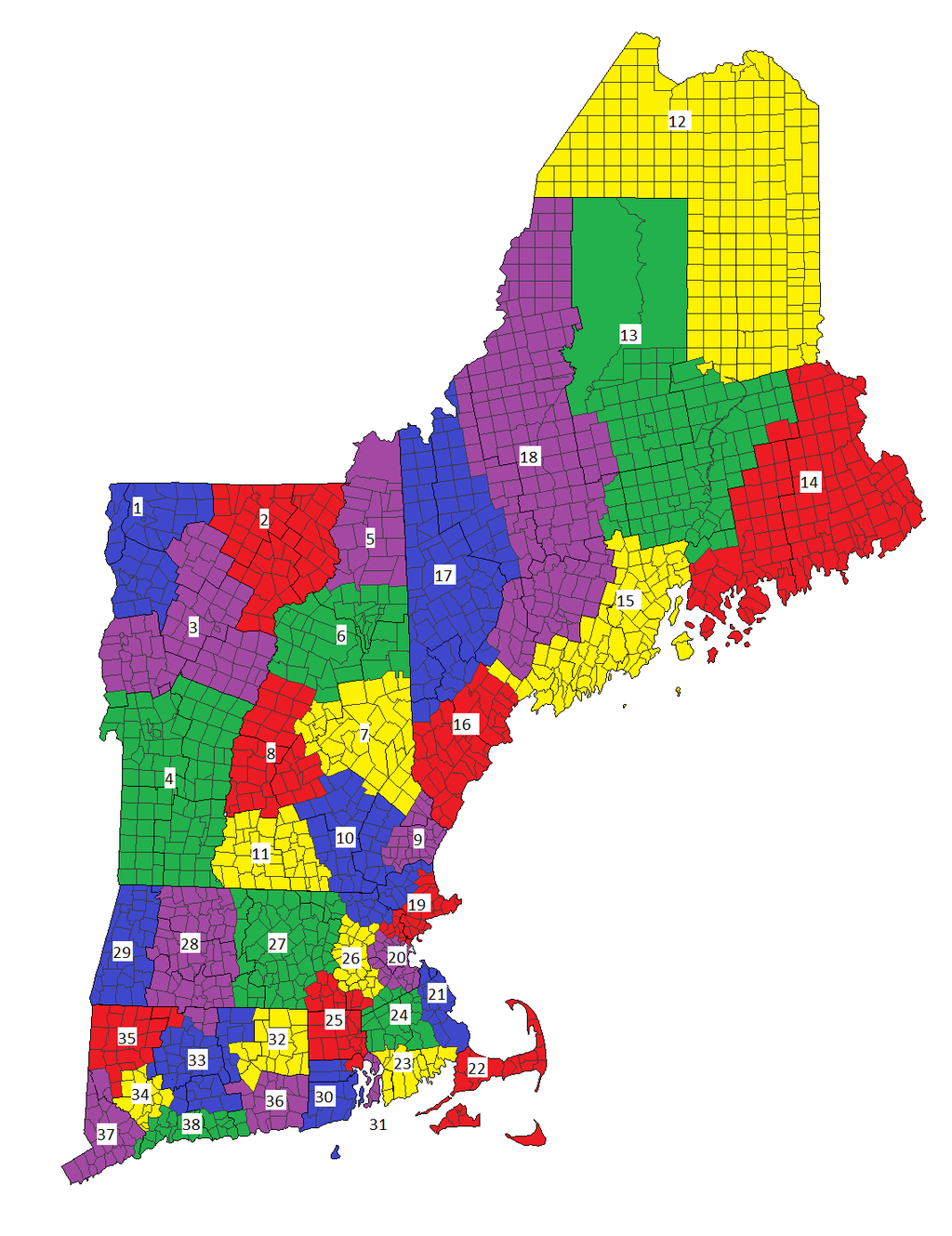
Regions of New England 1. Northwest Vermont 2. Northeast Kingdom 3. Central Vermont 4. Southern Vermont 5. Great North Woods Region 6. White Mountains 7. Lakes Region 8. Dartmouth/Lake Sunapee Region 9. Seacoast Region 10. Merrimack River Valley 11. Monadnock Region 12. North Woods 13. Maine Highlands 14. Acadia/Down East 15. Mid-Coast/Penobscot Bay 16. South Coast 17. Mountain and Lakes Region 18. Kennebec Valley 19. North Shore 20. Metro Boston 21. South Shore 22. Cape Cod and Islands 23. South Coast 24. Southeastern Massachusetts 25. Blackstone River Valley 26. Metrowest/Greater Boston 27. Central Massachusetts 28. Pioneer Valley 29. The Berkshires 30. South Country 31. East Bay and Newport 32. Quiet Corner 33. Greater Hartford 34. Central Naugatuck Valley 35. Northwest Hills 36. Southeastern Connecticut/Greater New London 37. Western Connecticut 38. Connecticut Shoreline
At the close of 2023, a pollster quipped that the state of our union resembled “mourning in America”… a sober sentiment about a turbulent year filled with relentless challenges and grievous perils as close as debates and disputes in our local communities… and as far away and yet as inextricably linked as the ongoing tragic upheavals in distant lands.
I would never turn my back on the past -- as we turn the pages of the calendar year -- for our past will always define, inform, and determine our future … the future that we will to need to face and address with renewed conviction, but also with a resolve that seeks to both break down walls and unwind the dispiriting display of uncivil discourse.
But the present moment – this new year – offers us an opportunity to start anew, to amend, to actually “look with eyes that see”. To soften the heart…to sharpen both the mind and the pencil, and to fix what is broken. To work to deepen the dialogue, to dial back the divisive rhetoric, to break down the walls of “us” and “them”.
What “we the people” need is civilizing speech for that is what makes us most human. What makes us most civil begins with respectful, open-minded listening – in our places of both labor and leisure. Offering our better selves… our “better angels” … in thoughtful and thought-filled communities where attentive deliberations can help us clarify what is important to us as moral beings as we renavigate our very differences. I know the tasks at-hand are many…and complex, often difficult, but vitally important. I know too that my and our efforts won’t always succeed, but I also know we cannot stand aside.
For all my years invested in such fine company kept at the New England Council, within the charitable organizations of our states, with our legislative bodies, and powerfully and poignantly for me in my faith community, I have received such bountiful blessings, made such special friends, and have had my belief that we are “stronger together” affirmed many times over. The work of the spirit and the will of good citizens can come together to produce revelatory miracles and great surprises.
On into the new year with renewed hope and optimism.
James T. Brett is president and chief executive of The New England Council, based in Boston.

The unofficial flag of New England.
‘The burden of a year'
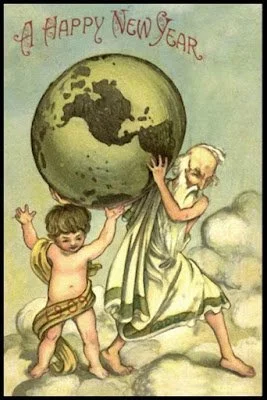
“Father Time and Baby,’’ 1909
What can be said in New Year rhymes,
That’s not been said a thousand times?
The new years come, the old years go,
We know we dream, we dream we know.
We rise up laughing with the light,
We lie down weeping with the night.
We hug the world until it stings,
We curse it then and sigh for wings.
We live, we love, we woo, we wed,
We wreathe our prides, we sheet our dead.
We laugh, we weep, we hope, we fear,
And that’s the burden of a year.
‘‘The Year,’’ by Ella Wheeler Wilcox (1850-1919). She spent much of her adult years living in Branford, Conn.
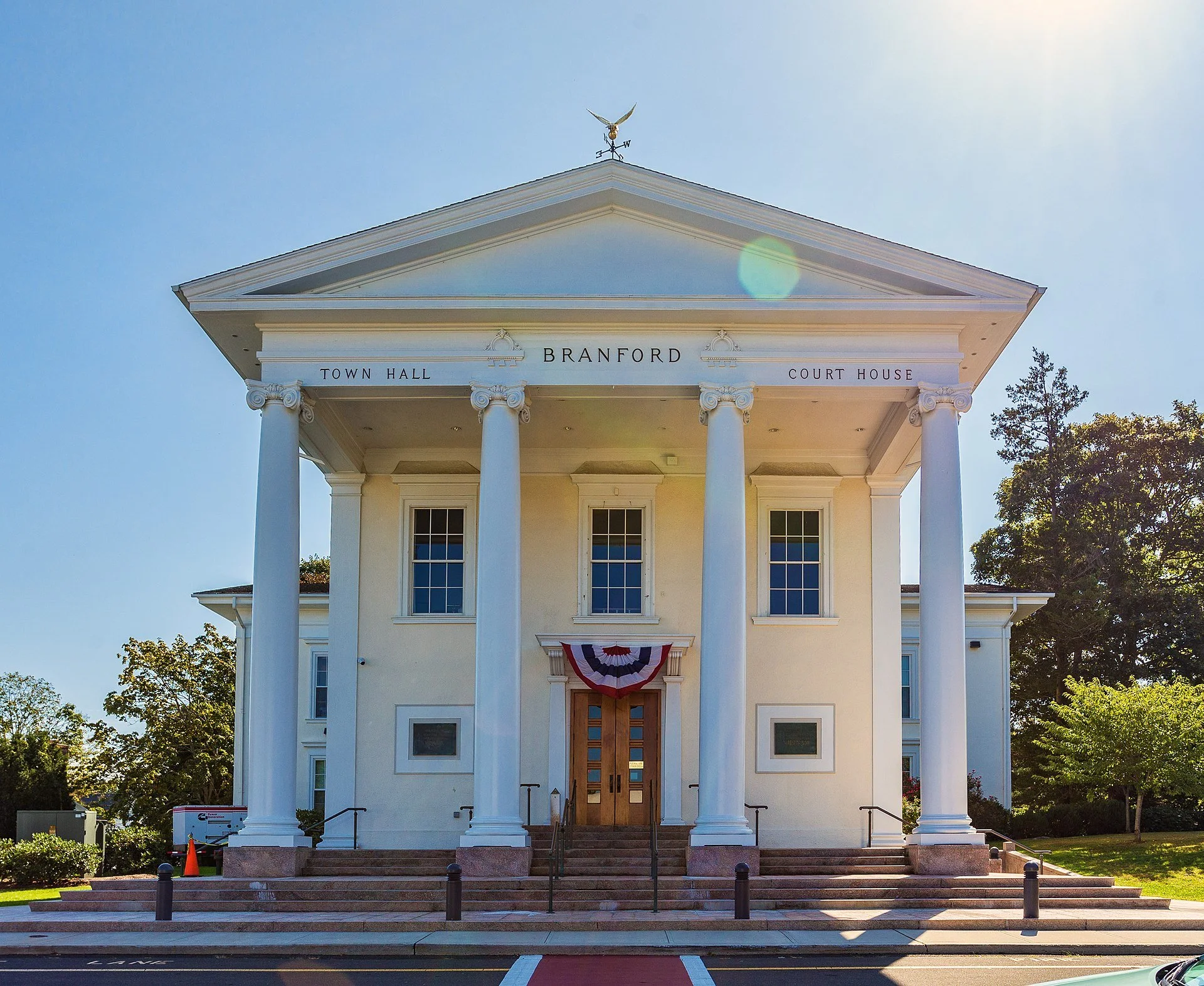
Branford Town Hall
— Photo by Kenneth Zirkel
Mountain marvels

The late lamented gondolas at Wildcat Mountain, in New Hampshire. Working from 1958-1998, they were the first ski area gondolas in the United States. They were replaced by a high-speed chair-lift system.

“Mount Lafayette in Winter” (1870), by Thomas Hill (1829-1908). The mountain, at 5,249 feet, is the highest peak in New Hampshire’s Franconia Range.
Thin religiosity and archaic roads
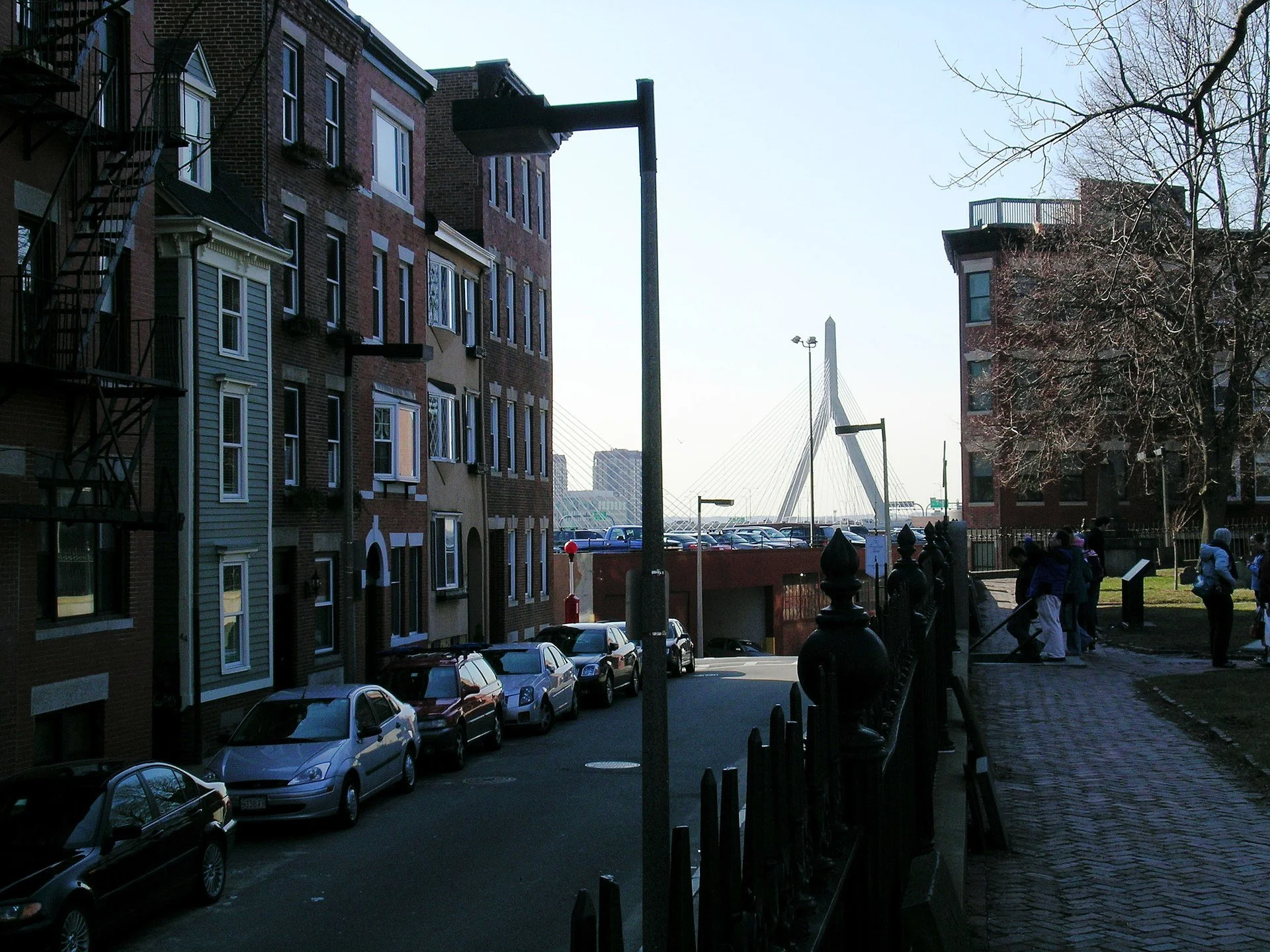
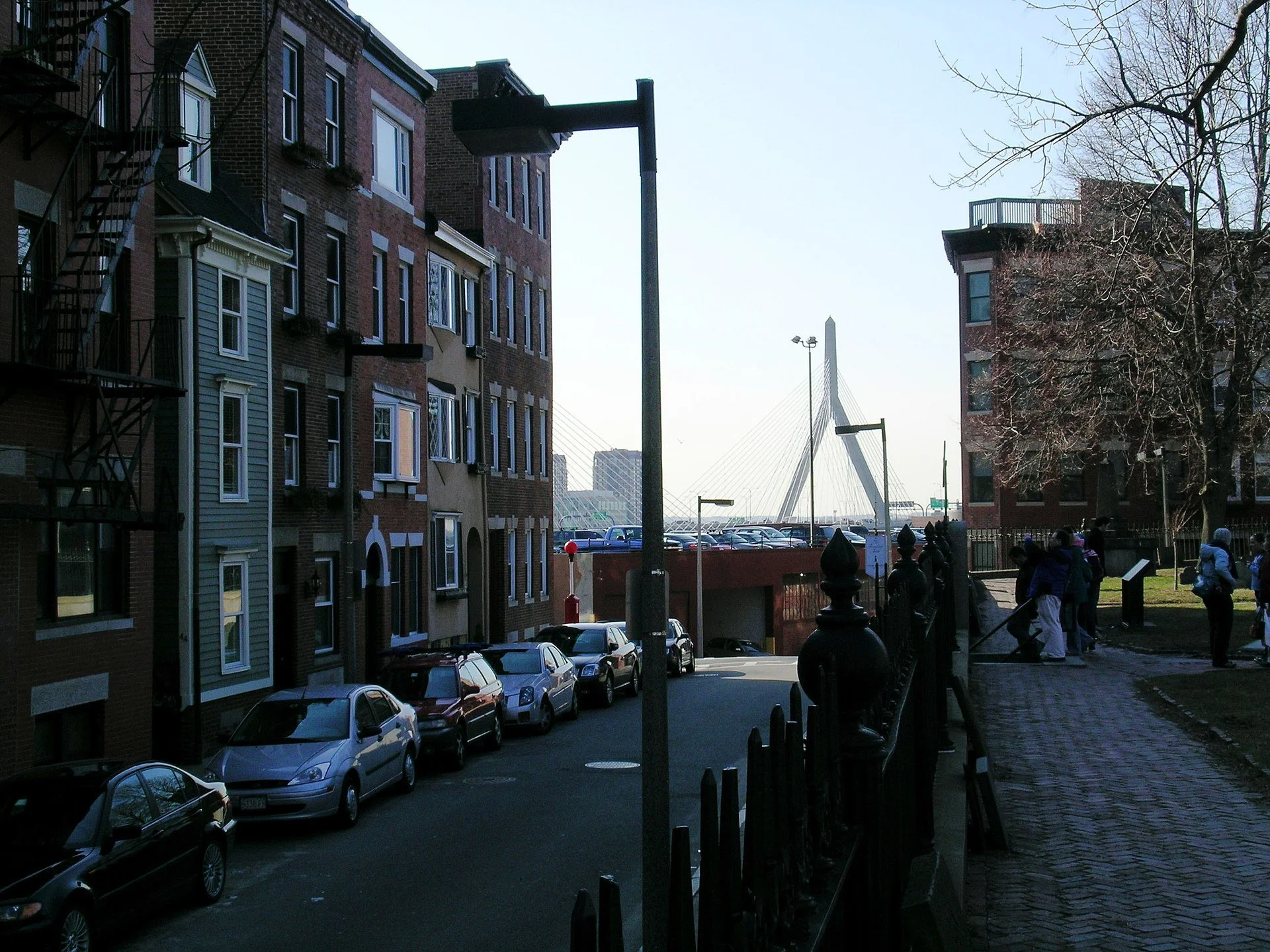
On a typically narrow Boston road — Hull Street. From left to right: the Skinny House, the Leonard P. Zakim Bunker Hill Memorial Bridge and the Copp's Hill Burying Ground. The Skinny House, built soon after the Civil War, is reportedly the most narrow in Boston, and is said to have been built to spite the neighbors.
“Even after thirty years, I still think New Englanders sound funny, that they expect too much of the Red Sox, that their religiosity is more procedural than deeply felt, and that their highways are built with the conviction that automobiles could not possibly replace the horse-drawn buggy, and therefore need not be wide, permanent, or especially well-designed.’’
-- C. Michael Curtis (1934-2023) in New England Stories (1992). A New York City native, he was the long-time fiction editor of The Atlantic (magazine ), which was based in Boston from its founding, in 1857, until it was moved to Washington, D.C., in 2006
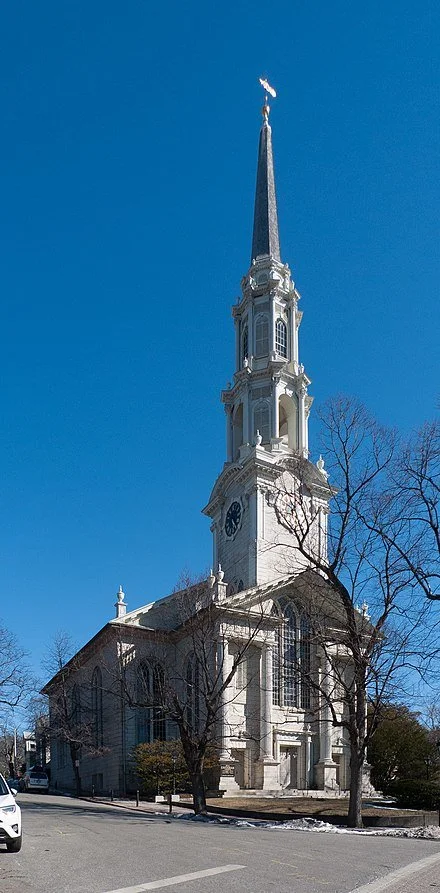
First Unitarian Church of Providence.
‘Light, space and poetry’

“Quarry Winter” (oil on linen), by Thomas Torak, at Helmholz Fine Art, Manchester, Vt.
He says:
“Luminosity, atmosphere, poetry, craftsmanship, joy, life. These are the cast of characters in my paintings. Most artists use light, color and design to express what they want to say about the objects in their paintings, I do just the opposite in my work. I use subject matter, apples, flowers, trees, mountains, portraits and nudes to explore the possibilities of light and space and poetry. Some artists paint in prose, some paint in poetry. There are artists who feel the more details they paint, the more accurately they describe something, the more successful their painting will be. Others, like myself, prefer to express things in the most elegant way possible.’’
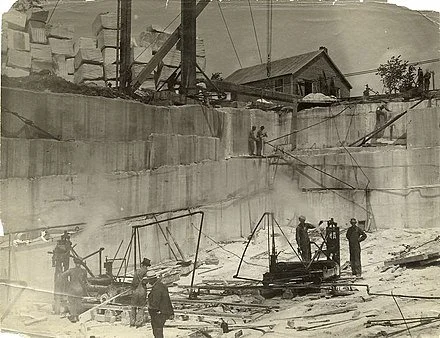
Marble quarry in Dorset, Vt.
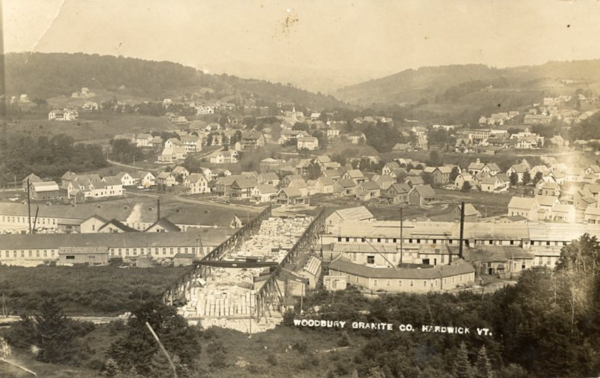
Woodbury Granite Co, around 1900.

Rock of Ages granite quarry in Graniteville, Vt.
— Photo by Mfwills