
Vox clamantis in deserto






Mixing it up in Lynn

Delightfully bizarre view of Lynn, Mass., in 1881. It was a major manufacturing center, especially of shoes.
“I grew up about 30 minutes north of Boston in a town {Lynn, Mass.) that was a virtual melting pot - I was exposed to all different backgrounds, cultures, and religions, fueling my personal interests in global issues.’’
—- Alex Newell, (born 1992) , actor and singer

Alex Newell in 2015
Connecting place to narrative

“Chicago” (oil on canvas), by Elizabeth Enders, in her show “A Different Time, A Different Place,’’ at the Lyman Allyn Museum, New London, Conn., Oct. 14-Jan 14. A New London native, she divides her time between Waterford, Conn., and New York City.
—Courtesy of the artist and the Betty Cuningham Gallery, New York.
The museum says:
“Exploring landscape, nature, and the role of place in the imagination, this exhibition presents the recent work of contemporary artist Elizabeth Enders (American, born 1939). In vibrant paintings and watercolors, Enders depicts abstracted landscapes, inviting viewers on a wide-ranging journey. Inspired by experiential knowledge and by places and events of the past and present, Enders renders volcanoes, rivers, oceans, deserts, fields, plants and tropical foliage, along with unusual monuments and structures found in places such as Egypt and Iceland. Such pieces consider how place is connected to meaning and narrative. ‘‘
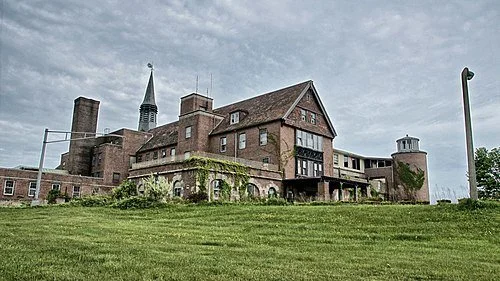
The historic and spooky Seaside Sanatorium, in Waterford

Chris Powell: City-operated supermarket in Hartford? UConn seems to condone rape

If only….
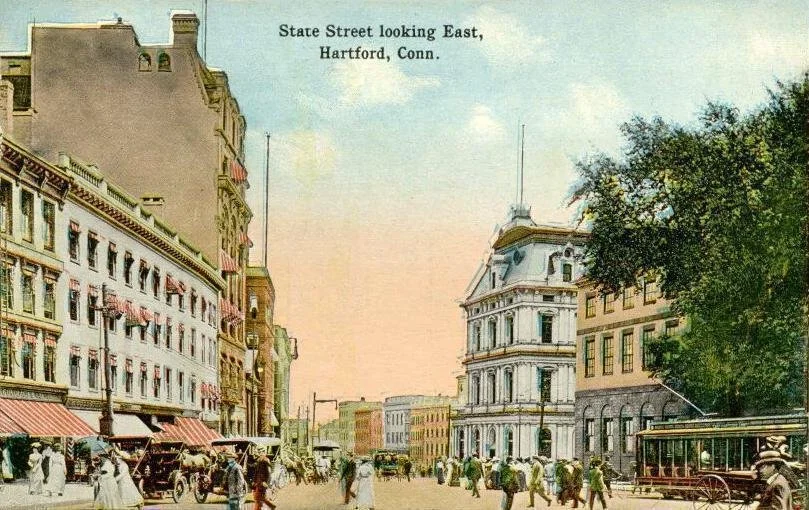
Hartford in 1914, during “The Insurance Capital of the World’s’’ economic heyday
MANCHESTER, Conn.
Hartford’s long descent from a prosperous hub of industry and finance (especially insurance) to a repository of poverty can be measured in several ways, but an especially telling one was publicized the other day as the City Council decided to hire a consultant to consider having city government operate a supermarket in the city, for profit or even at a loss.
Hartford is said to have become a "food desert," a place whose residents have to travel far to obtain fresh and nutritious food for preparation at home and so have to rely on less healthy items from neighborhood convenience stores. According to The Hartford Courant’s report on the supermarket initiative, in 1968 the city had 13 chain supermarkets but has only one today.
The idea of city government supermarkets is also being pursued in Chicago, where crime is exploding and destroying the city.
Like other businesses, supermarkets won’t operate where they can’t make money safely. They won’t operate where people don’t want or can’t afford fresh and nutritious food and where crime is common.
If, as the City Council’s initiative suggests, Hartford is, like Chicago, now so desperate that government must provide food directly to its residents, the problem goes far beyond a "food desert." The problem is demographic collapse under the pressure of poverty, welfare policy, family dysfunction and poor education -- and government in Connecticut does not seriously examine those things.
Hartford’s government can’t be blamed much here. Cities are the product of their demographics, and their demographics are largely the product of state and federal government policy, which long has been content to concentrate poverty in the cities, to minimize its impact on the middle and upper classes, rather than eliminate it. Indeed, Hartford may be doing all it can just by facilitating construction of middle-class housing downtown, since eventually a middle-class population with enough density might attract not only supermarkets but also other businesses basic to middle-class life.
But this will be a struggle even with a proper housing policy as long as the city’s schools serve mostly disadvantaged students and remain unattractive to people who want to avoid or escape the culture of poverty.
Would Hartford operate a supermarket professionally, or would such a supermarket become another mechanism of political patronage and graft? The less profit such a supermarket would have to make, the less professional it would be.
Middle-class places don’t need government supermarkets. Middle-class places can pretty much take care of themselves. So where is state government’s plan to make Connecticut’s cities middle-class again instead of just sustaining poverty there?
xxx
No one needs to be a feminist to deplore the University of Connecticut’s new association with the late professional basketball star Kobe Bryant. But it would be nice if a few feminists at least took notice\
Sports apparel manufacturer Nike announced the other day that it is renewing its “Kobe” brand of basketball shoes and other items, perhaps eventually including college basketball jerseys, and that six college basketball programs will promote the brand, UConn's among them
A statement from UConn’s athletic department, with which university President Radenka Maric concurred, said: "We are proud partners with Nike, whose support benefits hundreds of student-athletes at UConn every day. Kobe and Gigi Bryant" -- the star’s daughter, who was killed with him in a helicopter crash in 2020 -- "were tremendous fans of UConn basketball, and we're pleased to join Nike in honoring their memory in this way."
The problem is that in 2003 Bryant was charged with raping a young woman employee of a hotel in Colorado after luring her to his room. While he insisted that their encounter was consensual, the details he admitted about it were violent and disturbing. Eventually the woman declined to testify, so the charge against Bryant was dropped, whereupon she sued him. He apologized and settled the case for what was estimated at $2.5 million.
Money apparently excuses everything, even rape and even at UConn, which ordinarily prides itself on political correctness.
Chris Powell has written about Connecticut government and politics for many years. (CPowell@cox.net).
The great invasion


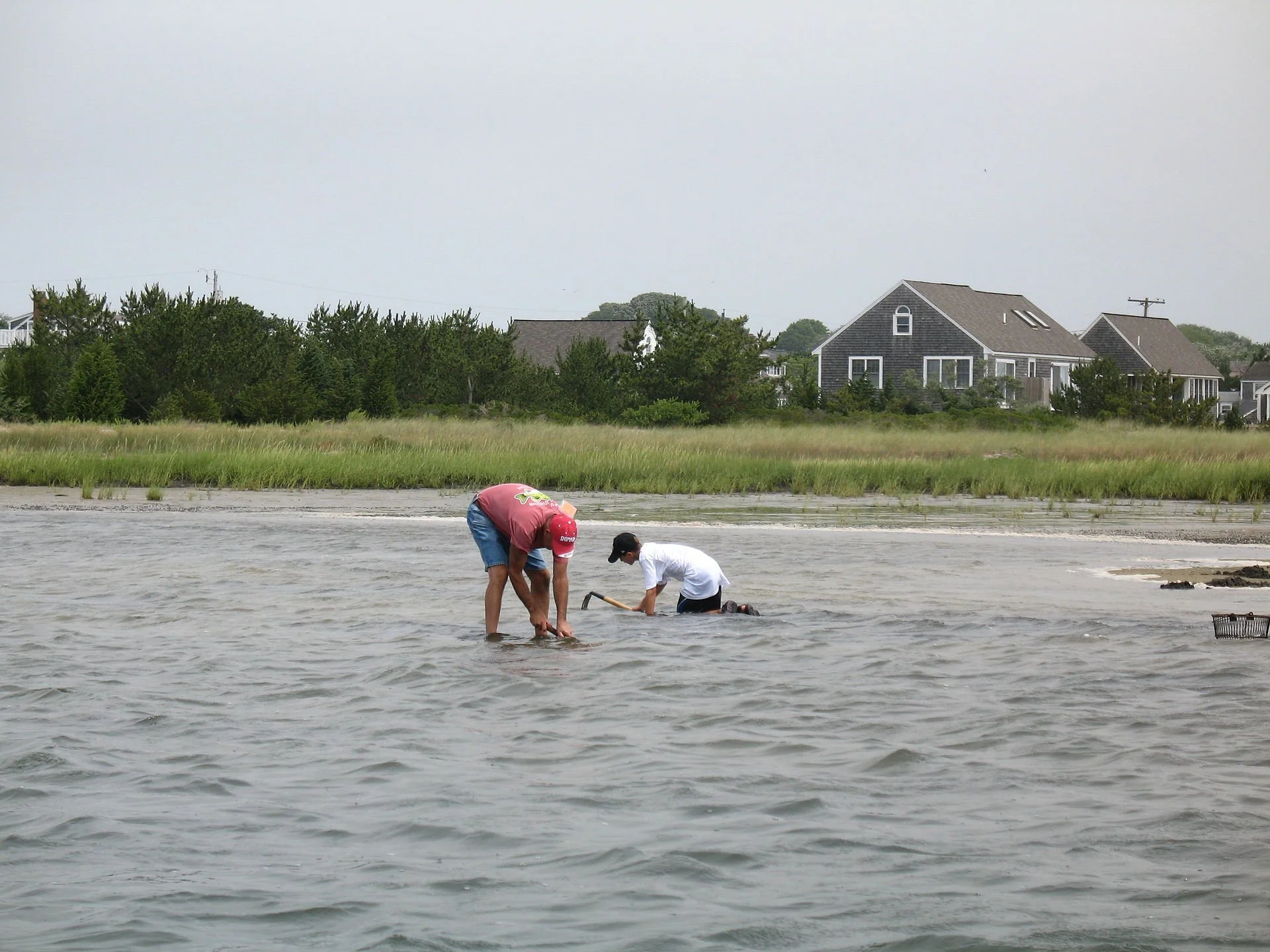
Text from article by Frank Carini in ecoRI news
A worldwide scientific intergovernmental group on biodiversity, which included a professor from the University of Rhode Island, provides evidence of the global spread and destruction caused by invasive alien species and recommends policy options to deal with the challenges of biological invasions.
The comprehensive report, released Sept. 4 by the Intergovernmental Science-Policy Platform on Biodiversity and Ecosystem Services for the United Nations, found the threat posed by invasive species introduced into new ecosystems is “enormous.”
In 2019, invasive species caused an estimated $423 billion in damages to nature, food sources, and human health. These alien invaders have also contributed to 60% of recorded animal and plant extinctions, and were the sole factor in 16% of extinctions, according to the report.
“This is the first global report on invasive alien species anywhere,” said Laura Meyerson, a URI professor in natural resources science and a contributing lead author on the report. “It’s truly an effort of scientists from around the world. The data touch on every world region, every biome and all major taxa — plants, vertebrates, invertebrates, micro-organisms, fungi.”
Invasive species pose to a threat biodiversity, ecosystem services, and human well-being. The report is designed to raise public awareness to “underpin action to mitigate the impacts of invasive alien species.”
To read the whole article, please hit this link.
Let them rest

“Forest in Autumn,’’ by Jean Courbet (1819-1877)

Fallen leaves in Harvard Yard, in Cambridge, Mass.
— Photo by David Adam Kess
I'll tell you how the leaves came down,"
The great Tree to his children said:
"You're getting sleepy, Yellow and Brown,
Yes, very sleepy, little Red.
It is quite time to go to bed."
"Ah!" begged each silly, pouting leaf,
"Let us a little longer stay;
Dear Father Tree, behold our grief!
'Tis such a very pleasant day
We do not want to go away."
So, for just one more merry day
To the great Tree the leaflets clung,
Frolicked and danced and had their way,
Upon the autumn breezes swung,
Whispering all their sports among--
"Perhaps the great Tree will forget
And let us stay until the spring,
If we all beg, and coax, and fret."
But the great Tree did no such thing;
He smiled to hear their whispering.
"Come, children, all to bed," he cried;
And ere the leaves could urge their prayer,
He shook his head, and far and wide,
Fluttering and rustling everywhere,
Down sped the leaflets through the air.
I saw them; on the ground they lay,
Golden and red, a huddled swarm,
Waiting till one from far away,
White bedclothes heaped upon her arm,
Should come to wrap them safe and warm.
The great bare Tree looked down and smiled.
"Good-night, dear little leaves," he said;
And from below each sleepy child
Replied, "Good-night," and murmured,
"It is so nice to go to bed."
“How the Leaves Came Down,’’ by Sarah Chauncey Woolsey (1835 -1905), an American children's author who wrote under the pen name Susan Coolidge. Born in Ohio into an old New England family, she spent most of her life in Newport, R.I.

Llewellyn King: The dangerous cheapening of the impeachment process

The impeachment trial of Bill Clinton, in 1999, with Chief Justice William H. Rehnquist presiding. The House managers are seated beside the quarter-circular tables on the left and the president's personal counsel on the right, much in the fashion of President Andrew Johnson's trial, in 1868.
WEST WARWICK, R.I.
Edmund Burke, the 18th-Century British statesman, argued during the celebrated impeachment of Warren Hastings, the governor of Bengal, that impeachment was essentially a political process, not a judicial one. Quite so.
The political dimension of impeachment is again on display in Washington, where the Republicans, driven by a faction of the party, are moving toward impeaching President Biden.
Historically, presidential impeachment has been reserved for actions that meet the undefined standard of “high crimes and misdemeanors.” It has been used with great restraint; until the impeachment of Bill Clinton, only Andrew Johnson had been impeached. The bar was lowered for the Clinton action then, and the attempt to impeach Biden is a further lowering — pointing up that it is, as Burke argued, a political process.
Impeachment is becoming a common political tactic not, as envisaged by the Founders, the ultimate censure, leading to a trial in the Senate and removal from office.
The two indictments of Donald Trump would seem to have met, to my mind, the constitutional standard and, had the Senate been in other hands, might have led to a trial and removal. It is argued that those indictments didn’t meet the standard and were no more than censure by another name, carried out along party lines.
The gravity of impeachment has been preserved since the beginning of the republic, but it is in danger.
Some aspects of the structure of the state should be out of reach to the political process most of the time. The U.S. Constitution guarantees that it can’t be easily amended or today it wouldn’t be recognizable, as every fashionable fixation would have been added. The mistake of Prohibition written again and again.
At the time that the Northern Ireland peace accords were being written, I was involved with a lively summer school in Ireland — which might be thought of as a think tank that meets once a year.
This organization, the International Humbert Summer School, studied Ireland’s relationship to the world, but became involved in the peace process. There were speakers from both the Unionists (pro-British) and Sinn Fein, the political wing of the IRA.
At one session, my role was to respond to the late Martin McGuinness, widely known as a top leader of the IRA, believed by the British to be a terrorist with blood on his hands.
Because I have a British accent, the organizers, John Cooney, the Irish historian and journalist, and Tony McGarry, a prominent local headmaster in Ballina, County Mayo, where we gathered, were nervous about what I might say to a man who was regarded with fear and awe as a killer.
Our event turned into a debate. McGuinness was sharp, had a good sense of humor and was open to ideas. Because the IRA had been engaged in armed struggle for so long, it hadn’t thought about constitutional arrangements in peace.
Thinking of the U.S. Constitution, I suggested to McGuinness that if a new constitution for Northern Ireland were to be written, it should sweep nothing under the carpet by ignoring it (as was the American case with slavery) and that when finished, it should be placed on “a high shelf” from which it couldn’t be easily taken down.
McGuinness agreed heartily, and this led to a discussion of constitutions and systems of government, and how the drafting could be perfected.
But my idea of a high shelf was what stuck with him.
So it is deeply disheartening to see impeachment treated as just another political tactic to be launched against any American president simply because the opposition party doesn’t like the president’s policies. But that is what is happening.
Incidentally, the impeachment of Warren Hastings, which dragged on for years and was enormously expensive, ended in acquittal before the House of Lords, proving Burke’s point that impeachment was a political process.
In the United States, for most of our history we have avoided keeping it out of the political maelstrom. It is a sad thing to see used now as a purely political tactic.
We have what is essentially a permanent campaign for the presidency. No sooner is one election certified then rumblings about the next one, with all the attendant speculation, begin.
Will presidential impeachment become part of the political process? And what if a Senate has the two-thirds majority to convict on political grounds? There is danger here.
At the end of our exchange, I wished the IRA leader “the best of British luck.” He laughed. No attempt to kneecap me followed.
Llewellyn King is executive producer and host of White House Chronicle, on PBS. His email is llewellynking1@gmail.com and he’s based in Rhode Island and Washington, D.C.
Visiting rights only
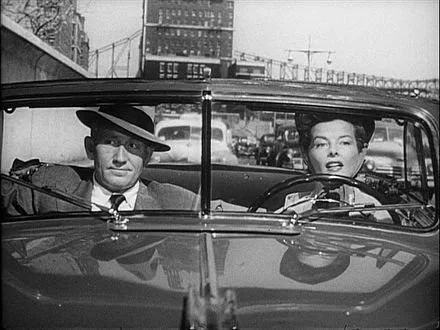
A shot from Adam’s Rib (1949), one of nine movies that Katherine Hepburn (1907-2003) made with her co-star here, Spencer Tracy (1900-1967), who was also her real-life romantic partner. She was from an affluent Connecticut family.
"I have always thought that marriage was a funny sort of institution. Sometimes I wonder if men and women really suit each other at all. It's inevitable that they should come together now and again, but how well suited are they to living in the same house? Perhaps they should live next door and visit every now and then."
— Katherine Hepburn

The former house of Katherine Hepburn, in the very hurricane-exposed Fenwick section of Old Saybrook, Conn.
All-in-one retailing
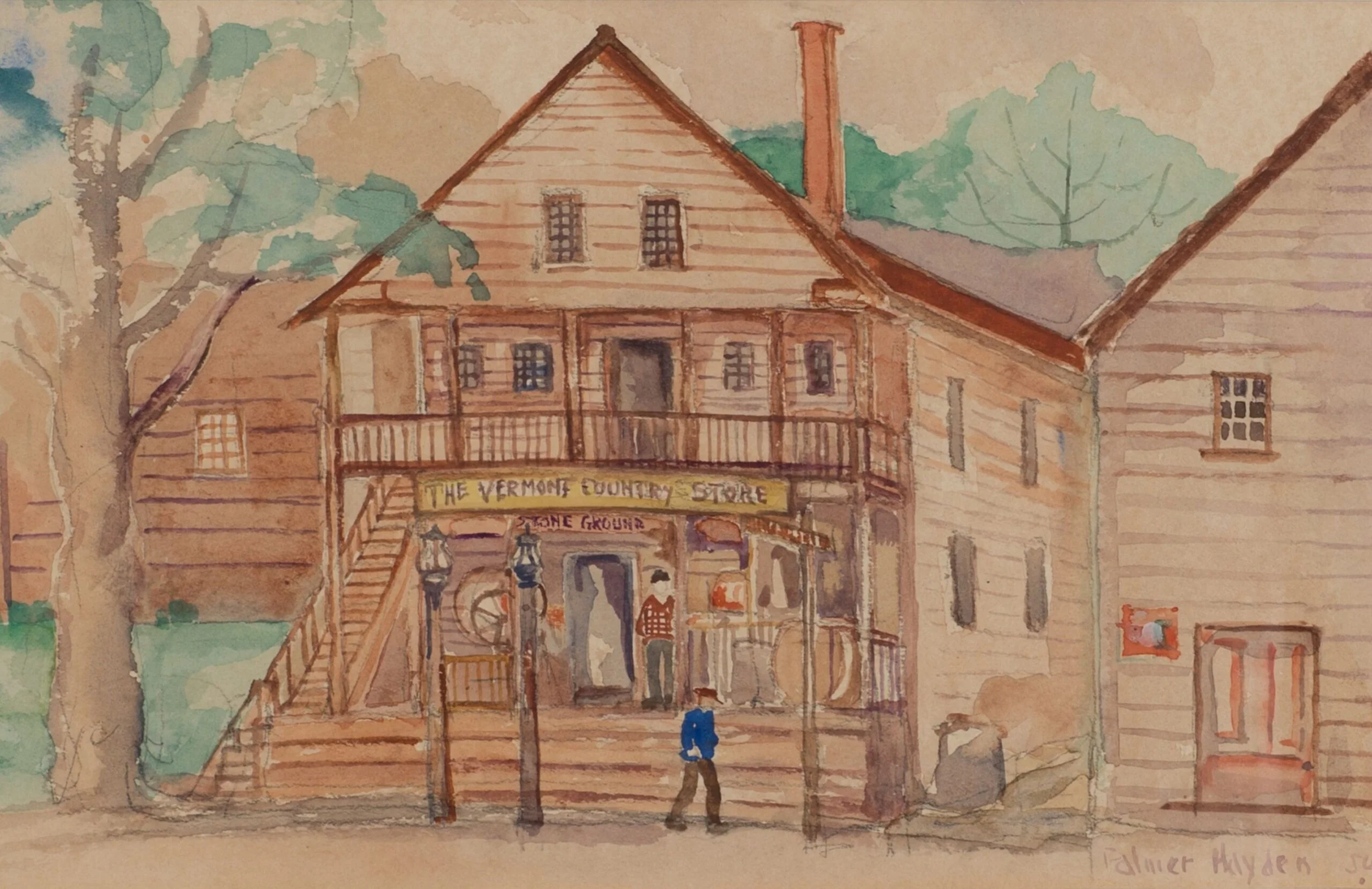
“Vermont Country Store”(watercolor) Palmer Hayden (1890-1973), in the show “For the Love of Vermont,’’ at the Southern Vermont Arts Center, Manchester, Vt., through Nov. 5
There’s a use for everything
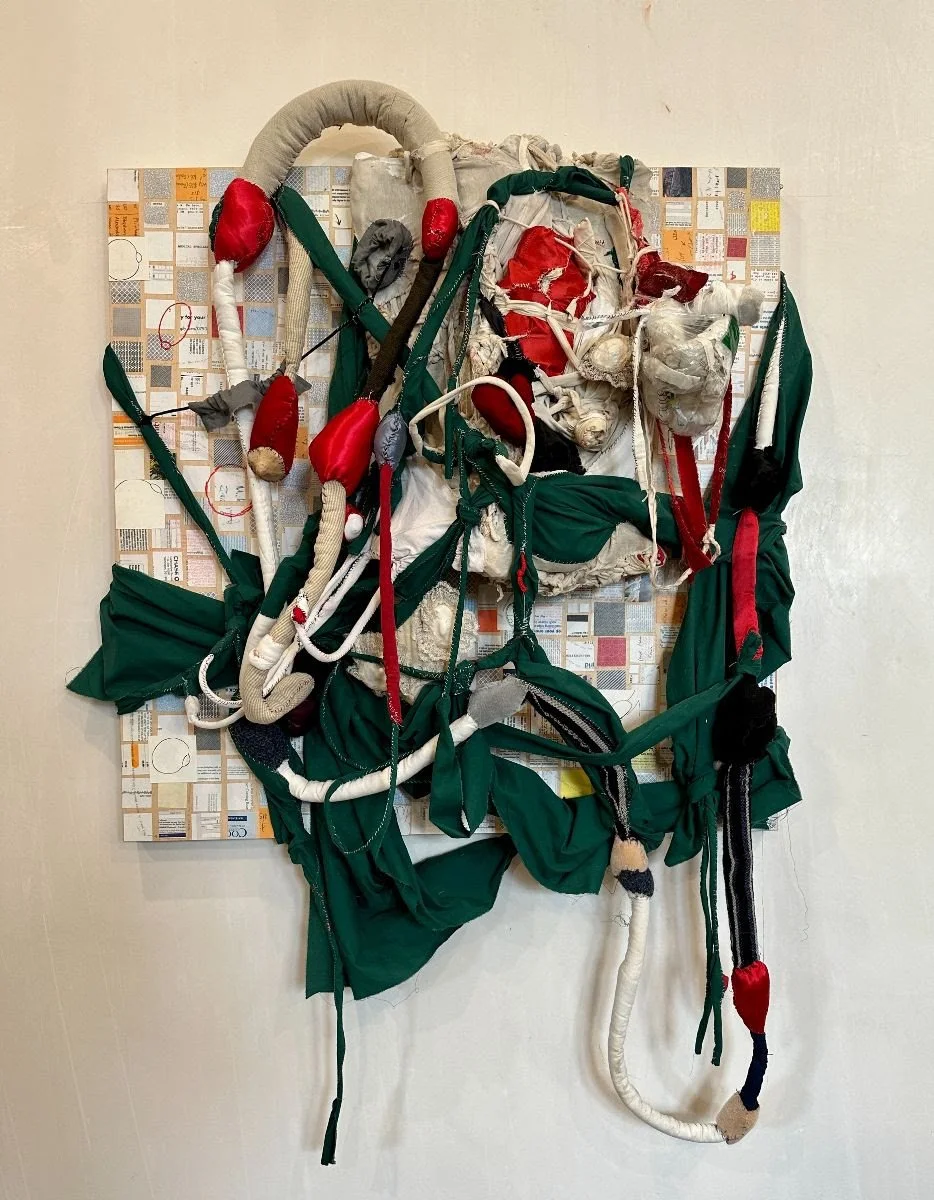
“What Remains’’ (mixed media)., by Massachusetts-based artist and fencing coach Elif Soyer, in her show “Making Meaning,’’ at Kingston Gallery, Boston, Nov. 29-Dec. 30.
"Everyday takes figuring out all over again how to f***ing live.”
(Calamity Jane/Deadwood)
The gallery says:
“‘Making Meaning’’’ is a conglomeration of old and new ideas and experiments, culminating in fabrications, layered with both time and materials. For Soyer, the Calamity Jane quote from her favorite character and all time favorite show is true for most of us. Soyer ponders this existential question often, especially in the studio where, for her, making art is making meaning out of the mundane, through work and invested time. Oscillating between the interior landscape of the human body and the exterior landscape of her immediate environment, through collecting, layering or other seemingly obsessive processes, Soyer’s work has always had a very strong tie to time.’’

An advocate for the insane
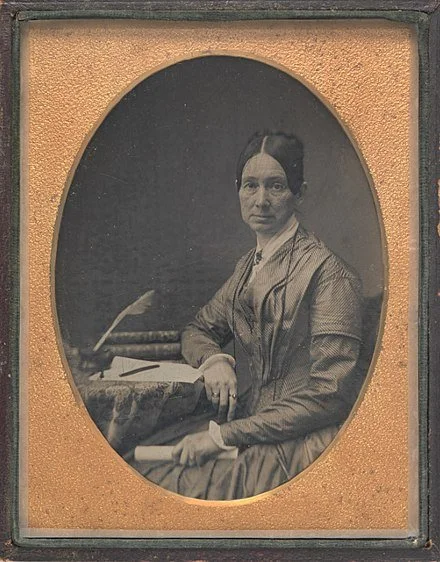
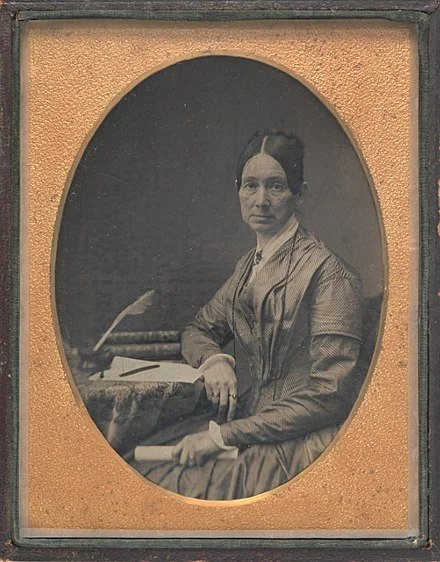
Half-plate daguerreotype of Dorothea Dix, c. 1849
• "I come to present the strong claims of suffering humanity. I come to place before the Legislature of Massachusetts the condition of the miserable, the desolate, the outcast. I come as the advocate of helpless, forgotten, insane men and women; of beings sunk to a condition from which the unconcerned world would start with real horror."
• "The tapestry of history has no point at which you can cut it and leave the design intelligible."
• "In a world where there is so much to be done, I felt strongly impressed that there must be something for me to do."
— Dorothea Dix (1802-1887), mental-health advocate, Civil War nurse and social reformer. She was born in Hampden, Maine, and raised in Worcester, Mass.
Hit this link on 19th Century Boston doctors appealing for a mental hospital.
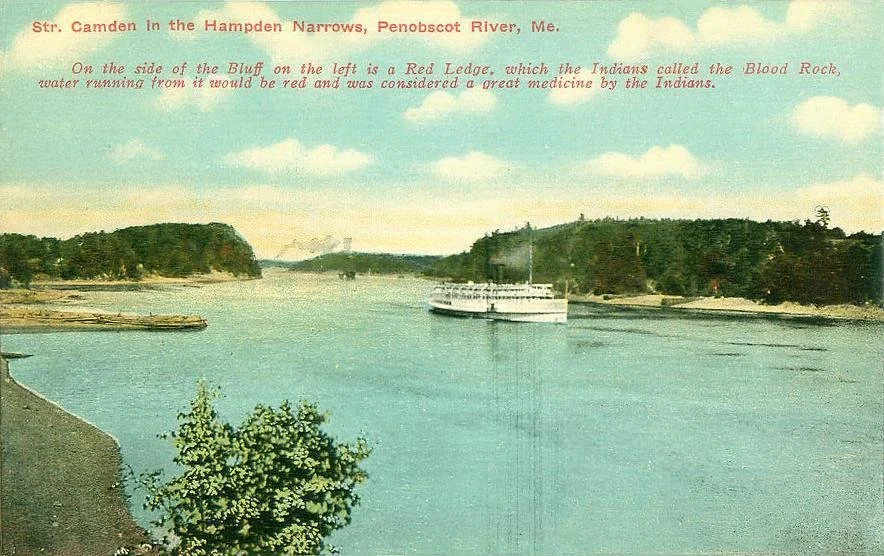
Hampden Narrows on the Penobscot River, c. 1910
From ‘the life she’s living’
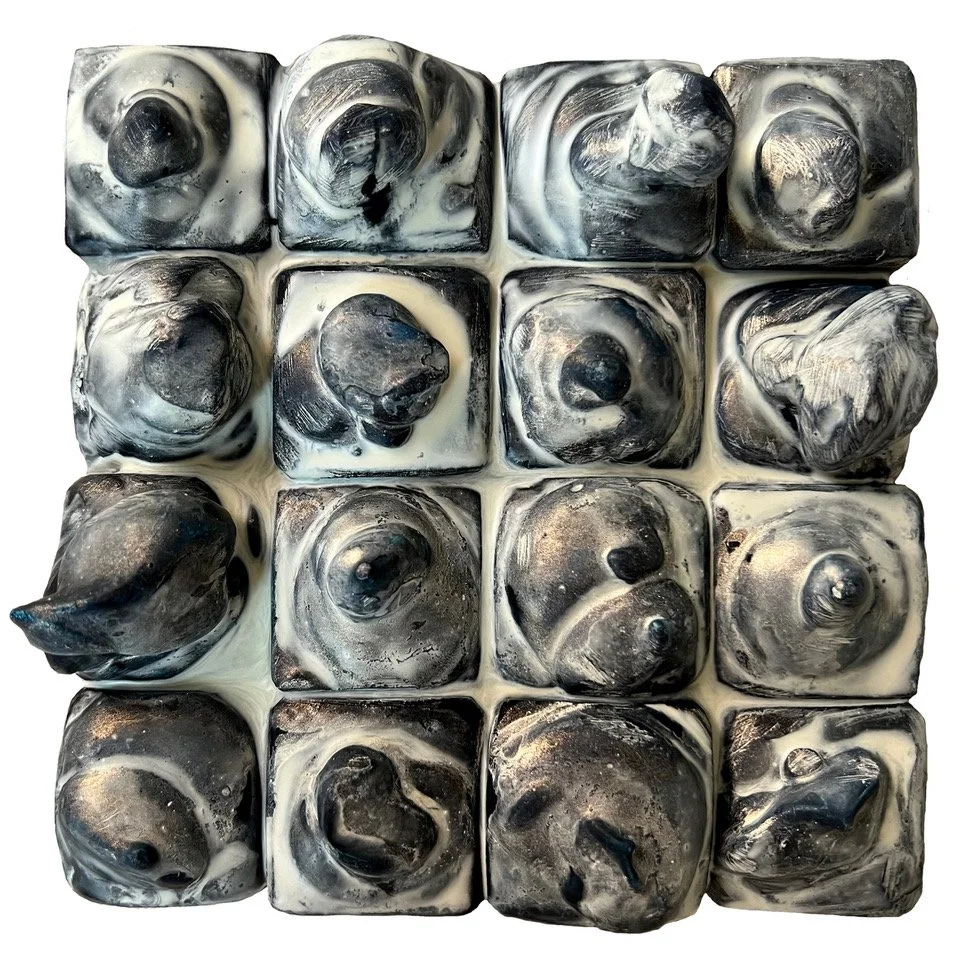
“Flesh Forms” (plaster of paris with encaustic), by Providence-based artist Angel Dean, in her “Flesh, Flora, and Flux’’ show, in the Providence Art Club’s Castelnovo Gallery, through Oct. 5.
Her artist statement says:
“Angel Dean is an artist who mainly works with encaustic media. Her work is personal and unconventional. By contesting the division between the realm of memory and the realm of experience, Dean makes work that is the by-product of the life she’s living.’’
“The advice I like to give young artists, or really anybody who’ll listen to me, is not to wait around for inspiration. Inspiration is for amateurs; the rest of us just show up & get to work. If you wait around for the clouds to part & a bolt of lightning to strike you in the brain, you are not going to make an awful lot of work. All the best ideas come out of the process; they come out of the work itself. Things occur to you.”
—- Chuck Close
First the hurricane, then the popcorn
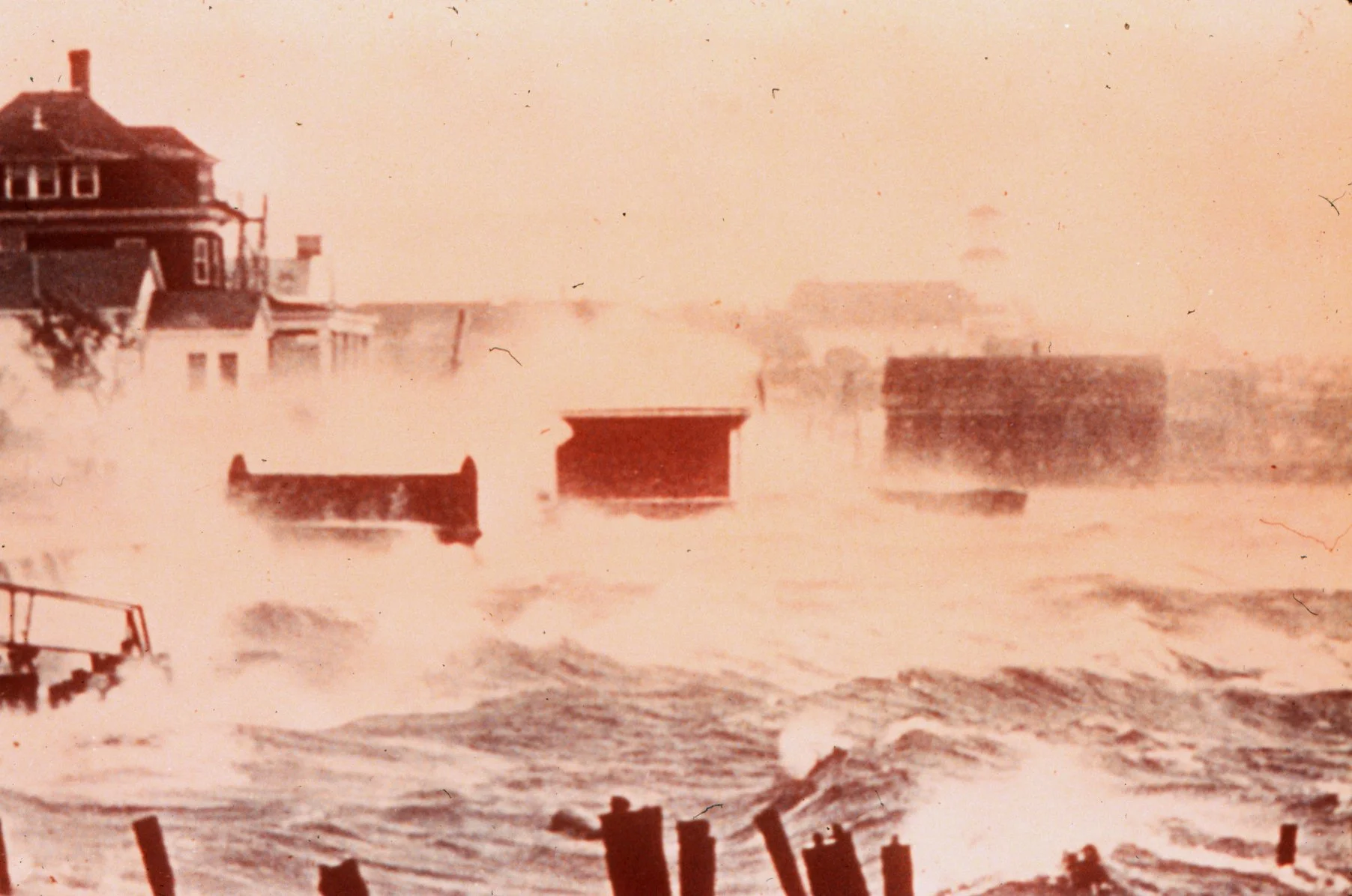
On the Connecticut coast during Hurricane Carol, on Aug. 31, 1954

Get out the popcorn
Adapted from Robert Whitcomb’s “Digital Diary,’’ in GoLocal24.com
The news-media hype last week about Hurricane Lee mostly reflects their craving for clicks/ratings from the drama associated with (mostly free) video. And I suspect that most people enjoy the excitement of a storm even if they’re in it, unless, of course, there’s some personal insult/expense, such as a tree falling on their house.
There was a minor hurricane called Belle back in 1976 that weakened and moved west of Rhode Island during our first residency in Providence. When it became clear that it wouldn’t amount to much, our next-door neighbor, the late great Luigi Bianco, whined in frustration: “But I want drama!”
Back in the ‘50’s, at our house on Massachusetts Bay, several hurricanes kept us well supplied with firewood from fallen trees and branches well into the ‘60s; we started to miss those storms when we ran low of firewood during the ‘60s tropical- storm shortage. The firewood was mostly for decorative fires during the holidays and to pop popcorn (to be soaked in butter and salt – no wonder we all got heart disease) -- and roast chestnuts. I still link the fires with watching home movies taken on a wind-up 8mm camera.

A new way of scaring away sharks from fishing operations?

Electromagnetic field receptors and motion-detecting canals in the head of a shark
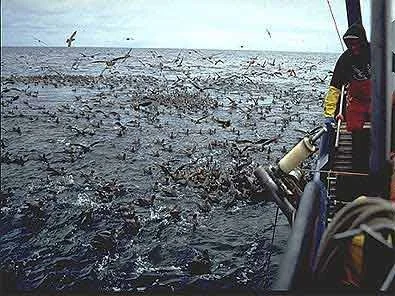
Seabirds attracted by longline fishing
Edited from a New England Council report:
“Students at the University of New England (UNE) are researching how electrical pulses can effectively protect sharks while saving fishermen time and money. (UNE has campuses in Portland and Biddeford, Maine.)
“The technology, which works by emitting small, erratic electrical impulses within the water, intends to scare away sharks, which can detect electrical fields, while leaving the intended catch unaffected. If the devices, which can be attached next to each fishing hook, are as effective as anticipated, they can significantly reduce shark bycatch on longline fishing equipment. This result would reduce waste and catch inefficiencies for fishermen and protect sharks from being caught unintentionally.
“Over the past decades, as fishing efforts have increased significantly, sharks and other marine life have seen their populations drop, in major part due to bycatch. The work by UNE students and faculty attempts to simultaneously minimize harm to wildlife, while boosting the sustainability and success of fishermen. While there is plenty of work left to be done before a final device is perfected, students understand how valuable this technology could become.
“‘[The fishermen] lose a lot of money, and they know it,’ Michael Nguyen, a second-year graduate student, told The Portland Press Herald. ‘We are still trying to work out specifics. This is a long way away from being integrated into any commercial fisheries, but there’s a lot of interest, a lot of need, especially now that they see the electrical field isn’t scaring away the tuna.’’’
‘Winter is lurking’

The Blackstone River Bikeway in Rhode Island
— Photo by Srs5694

— Photo by eflon
Sometimes a mortal feels in himself Nature
-- not his Father but his Mother stirs
within him, and he becomes immortal with her
immortality. From time to time she claims
kindredship with us, and some globule
from her veins steals up into our own.
I am the autumnal sun,
With autumn gales my race is run;
When will the hazel put forth its flowers,
Or the grape ripen under my bowers?
When will the harvest or the hunter's moon
Turn my midnight into mid-noon?
I am all sere and yellow,
And to my core mellow.
The mast is dropping within my woods,
The winter is lurking within my moods,
And the rustling of the withered leaf
Is the constant music of my grief...
“I Am the Autumnal Sun,’’ by Henry David Thoreau (1817-1862), of Concord, Mass., essayist, poet, naturalist and practical philosopher

Gerald FitzGerald: My wild ride on a Dukakis campaign

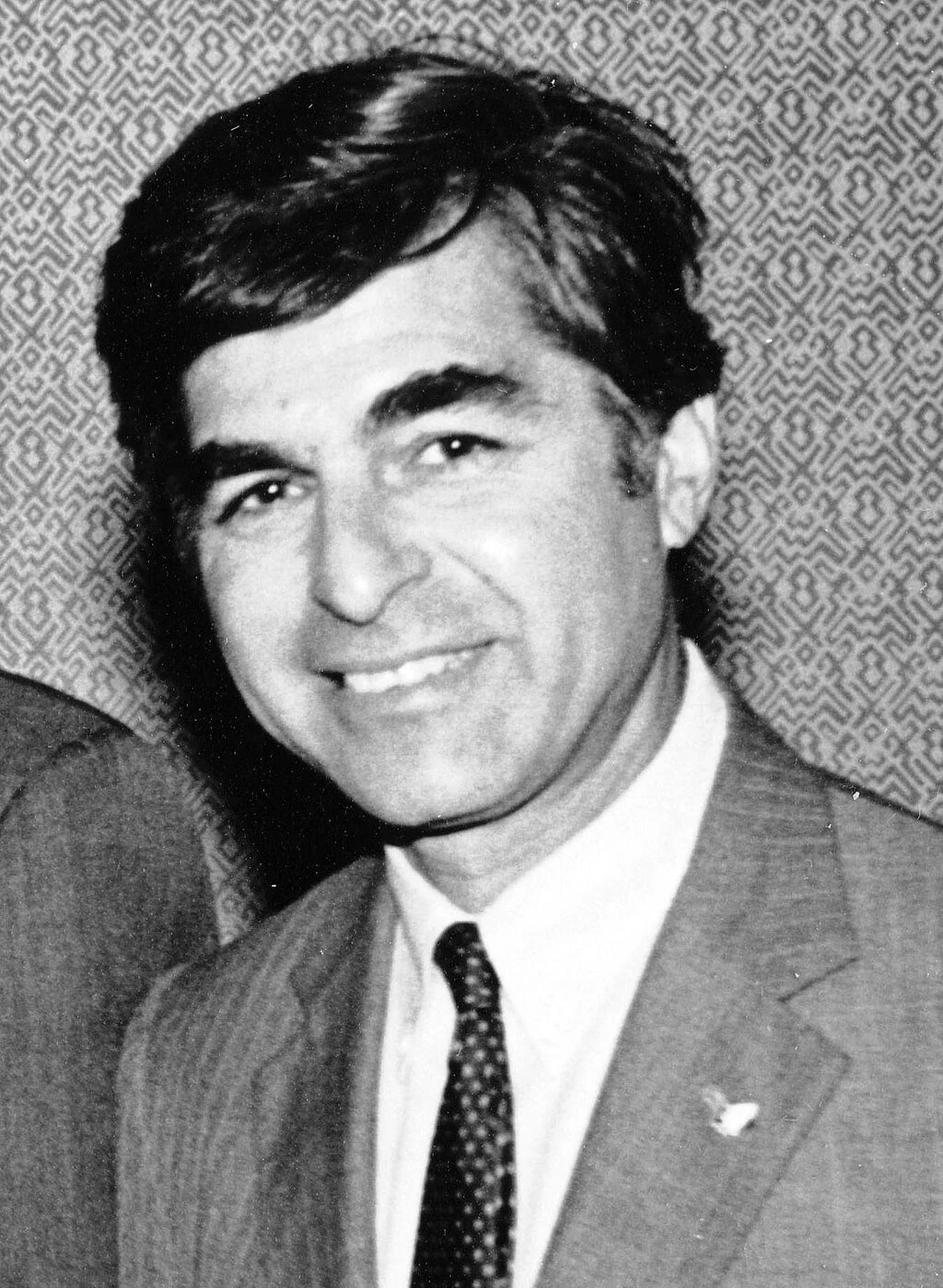
Michael Dukakis in 1984
At nearly one in the morning, two sets of three males paced the sidewalk in front of Phillips Drug Store at the corner of Charles and Cambridge Streets in Boston. It was 1982 in the heated Democratic primary race for governor. The youngish men were political enemies awaiting a delivery truck carrying the first edition of The Boston Globe. On the field for incumbent Massachusetts Gov. Edward J. King were Ed Reilly, political guru/re-election campaign manager; Gerry Morrissey, press secretary, and a factotum named Rick Stanton. Representing the challenger, once and future Gov. Michael S. Dukakis, were ace speechwriter Ira Jackson; deputy issues man Tom Herman and me, the Dukakis campaign press secretary. None of us spoke to any of them.
The bundles eventually dumped from the back of the truck were dragged inside and their cords cut. All six men scurried into Phillips to buy copies. Back outside, I had one Globe for us, holding it open while Jackson and Herman peered over my shoulders. Nothing on Page One! Nothing on the Metro cover! I slowly scanned succeeding pages until I found the story about our campaign besmirching Governor King’s wife. A freelance Dukakis supporter had bastardized a Jodie King radio ad to rearrange her statements as if she were answering a fictitious narrator's questions concerning her husband’s sexual preferences. Smiling broadly, I looked up at Morrissey:
“Inside. Page 19, below the fold,” I said with satisfaction.
Angry, Morrissey quickly moved toward me, thrusting an index finger close to my face:
“We’re going to get you!” he growled.
The doctored tape had arrived unsolicited in the campaign mail. I learned of it when John Sasso, Dukakis’s campaign manager, waved me into his office, grinning. We sat down and he began to play the offensively hilarious recording. Trouble was he had his telephone on speaker. Listening was a reporter from The Globe. I can’t recall clearly if it was Charlie Kenney or Ben Bradlee Jr. but I’m guessing it was Bradlee because my memory tells me that Sasso had first played it for Kenney alone and then again for me and Bradlee. I tried vigorously to stop the tape, but Sasso pushed me away. A brilliant man, John was making a mistake of earthquake proportions. He had grown close to several reporters. He treated them as buddies, expecting similar treatment in return. I had tried to convince Sasso that reporters were good people and fun to be around but they will eat you alive. A good story trumps a good “friend” any day.
The tape, we later learned, had been mailed in by an over-enthusiastic, brutally clever supporter from Ware, Mass., who supposedly used WARE’s radio facilities to create the satire. At the time I didn't even know where Ware was. As King’s campaign continued to work reporters to fan the fires of outrage, we Dukakis employees tried just as hard to hose it out of existence. Keeping what soon became known as “The Sex Tape” off the front page that first news cycle was a win for us good guys.
Earlier that day, Dukakis and I had met with the editorial board of The Patriot-Ledger at its old location in Quincy. The usual point of such meetings was to try to win a paper's endorsement, but the Patriot-Ledger’s policy was not to endorse any primary-election candidates. Dukakis still wanted to meet with them and answer their questions. Present were reporters and editors whose names I no longer recall. Near the end of the session someone entered the room and announced that there was a call for me that would be transferred to a telephone outside the door of the meeting room. I walked out and picked up the phone. Close by were wire-service teletype machines. These noisy, chattering tickers typed breaking news stories on a continuous roll of foolscap, sometimes preceded by dings whose urgency alerted staff to tear the stories off the roll to read.
It was Sasso on the phone. News of the Jodie King tape was out. He asked if the Patriot-Ledger knew this. Were they grilling Dukakis? I told him no. At the same time I turned to read the latest story coming in from Associated Press (or it might have been United Press International). It was all about the sex tape. I don't think I read the incoming story to John because that would have taken time I didn’t have. Instead, I told him that the wire service was breaking the story as we spoke. I turned around to face the newsroom. Glancing back at the machine, I noted where the story ended. Still holding the phone, I slid my left hand behind my back, ripping the paper from the teletype as silently as possible and brought it up under my suit jacket, shoving the paper down between my underpants and trousers.
Minutes later, the Duke and I were back in the car with a waiting driver. If anyone heard the crinkling sound as I scooted onto my seat, he was too polite to comment. They dropped me at campaign headquarters, and Michael went on to Springfield as scheduled.
That night, in the words of Ira Jackson quoting The Godfather script: “We hit the mattresses.” The telephones blazed for a couple of hours. After having been told that all copies of the errant tape had been destroyed, I told Frank Phillips: “The tape does not exist.” Phillips, writing for The Boston Herald, was someone I knew well and had once worked with on a journalism project. He didn’t ask if the tape had ever existed. Yes, I know – I am not proud of myself, then or now.
We went on to beat King by about seven points and defeat Republican John Sears by about a 59-38 percent margin in the general election. Although Dukakis eventually offered me his top press job, I stayed only a couple of weeks after the inauguration, which was on Jan. 6, to help with his transition. It’s one thing to work your heart out for low pay six or seven days a week all year to get your candidate elected. It’s another thing to have to go home for Thanksgiving not knowing if you've got an offer for a job to start in January. I never knew why the offer took so long, but I did learn that a paid campaign media adviser was pushing hard to clip me on behalf of his friend, an editor of an alternative weekly newspaper. Sasso is the one who told me, but advised me not to worry. When I told the Duke that I wouldn't stay he took me to lunch to talk me out of leaving. He even asked if he could meet with my wife to tell her why he wanted me. No way, I replied, she might cave. Dukakis asked me to recommend a replacement. In turn, I asked Frank Phillips. He suggested someone. To ice the interloper, I strongly recommended Frank's candidate, Jim Dorsey, who got the job.
Six years later Dukakis was serving his third term when he was nominated for president at the 1988 Democratic National Convention, in Atlanta. Sasso had run this campaign, too, until he hit a severe bump in the road five months before the convention. This time it was a videotape.
Then Delaware Sen. Joseph Biden, a primary competitor, had made himself vulnerable by delivering public remarks plagiarized from a British politician. Sasso leaked to the press a video comparison of the Biden speech with that of the Brit’s. It was enough to kill Biden's 1988 candidacy. But the public blow back was sufficient to make Sasso resign his own position at the end of September 1987. Still, I didn’t see a thing wrong with Sasso's action. While on a lunchtime walk up Beacon Street in front of the State House I learned from Mike Macklin, a TV news reporter, that Sasso was out. Macklin wanted me to comment since he knew that I had worked closely with John. I told Macklin on camera that Sasso should not take the fall for pointing out the truth and, further, that “I think he's being crucified.”
Years later, John's wife told me that during the Atlanta convention she and her husband dined with a group of national network newsmen. Speaking of his resignation Sasso told the gathering: “When I left the campaign only two people went on television to defend me – then New York Gov. Mario Cuomo and Jerry FitzGerald,” His listeners chewed their food, nodding their heads, until one, Tom Brokaw, I think, asked: “Who's Jerry FitzGerald?”
A year after the Biden tape debacle, about two months before the national election, Dukakis brought Sasso back to run the campaign as “vice-chairman.” John called me, I want to say, on Friday, Sept. 10. We met early next morning at the old Statler Building (now the Park Plaza) in Park Square, the same headquarters location used in 1982. After a brief chat I offered to help him any way he thought I could. Sadly, he declined.
“No, Fitzie. We're going down. What's worse is that we are going down never having stood for anything.” John's words cut me like a sharp knife. Even now, decades later, I find it extremely difficult to believe that he believed what he said.
Afterward followed one of my most enjoyable afternoons ever. Someone, I think on the side of the family of Sasso’s wife, Francine, was in town from New Hampshire with Red Sox tickets. John, the N.H. relative, and -- a surprise to me -- Ted Sorensen and I took a cab to Fenway Park to watch the Sox lose a close one to, as I recall, Cleveland. The seats were good, but sitting next to Sorensen made mine even better. I hardly let him shut up about his nearly 11 years as JFK's right arm, including writing speeches for the president whose phrases still ring in our hearts. In fact, we continued to chat walking all the way back from the stadium to Park Square. He was only 50 then. He would live another 22 years, but I never saw him again.
As we all parted, I clasped his hand and thanked him profusely for all he had done to help our president who had truly helped our nation. For much of my boyhood I had read books by Sorensen, Arthur M. Schlesinger Jr., Pierre Salinger, Arthur Krock and many others while daydreaming of assisting a worthy candidate to become president of the United States. That never happened for me. Still, sometimes the dreaming and the reaching out are nearly enough.
Gerald FitzGerald’s career has also included being a newspaper editor, a writer, a prosecutor, a defense lawyer and a civic leader.
All the world's a shadow box

Work by Melora Kennedy at The Front gallery, in Montpelier, Vt.
The gallery says:
“Melora Kennedy is a painter who has also made shadow boxes, and is currently occupied with still life. Still life makes it possible to practice her art a little every day—which makes it like meditation. Setting up a still life is similar to arranging the elements inside a shadow box: it resembles child's play. She's drawn in by the way that plants, in particular, express human emotion in their every gesture. She tries to paint so this feeling of liveliness comes across.’’
Melora has been living in Vermont since 1998. She teaches at a nursery school and lives with her partner on some land that they garden together.
That was then
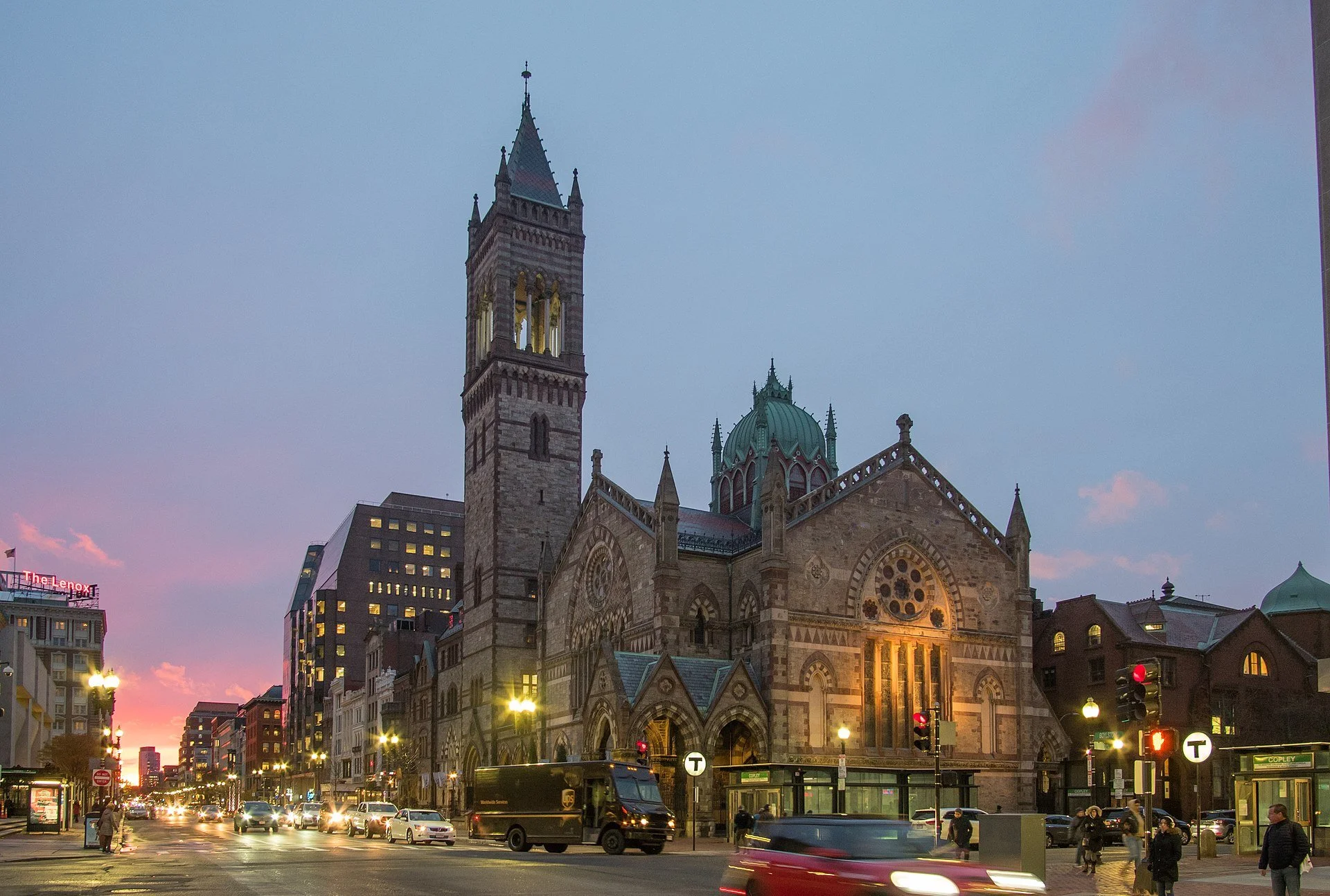
Old South Church at Copley Square at sunset. This United Church of Christ congregation was first organized in 1669.
— Photo by Rhododendrites
“Boston – wrinkled, spindly-legged, depleted of nearly all her spiritual and cutaneous oils, provincial, self-esteeming – has gone on spending and spending her inflated bills of pure reputation, decade after decade.”
— Elizabeth Hardwick (1916-2007), literary critic, short-story writer and novelist, in 1962
Blue but happy
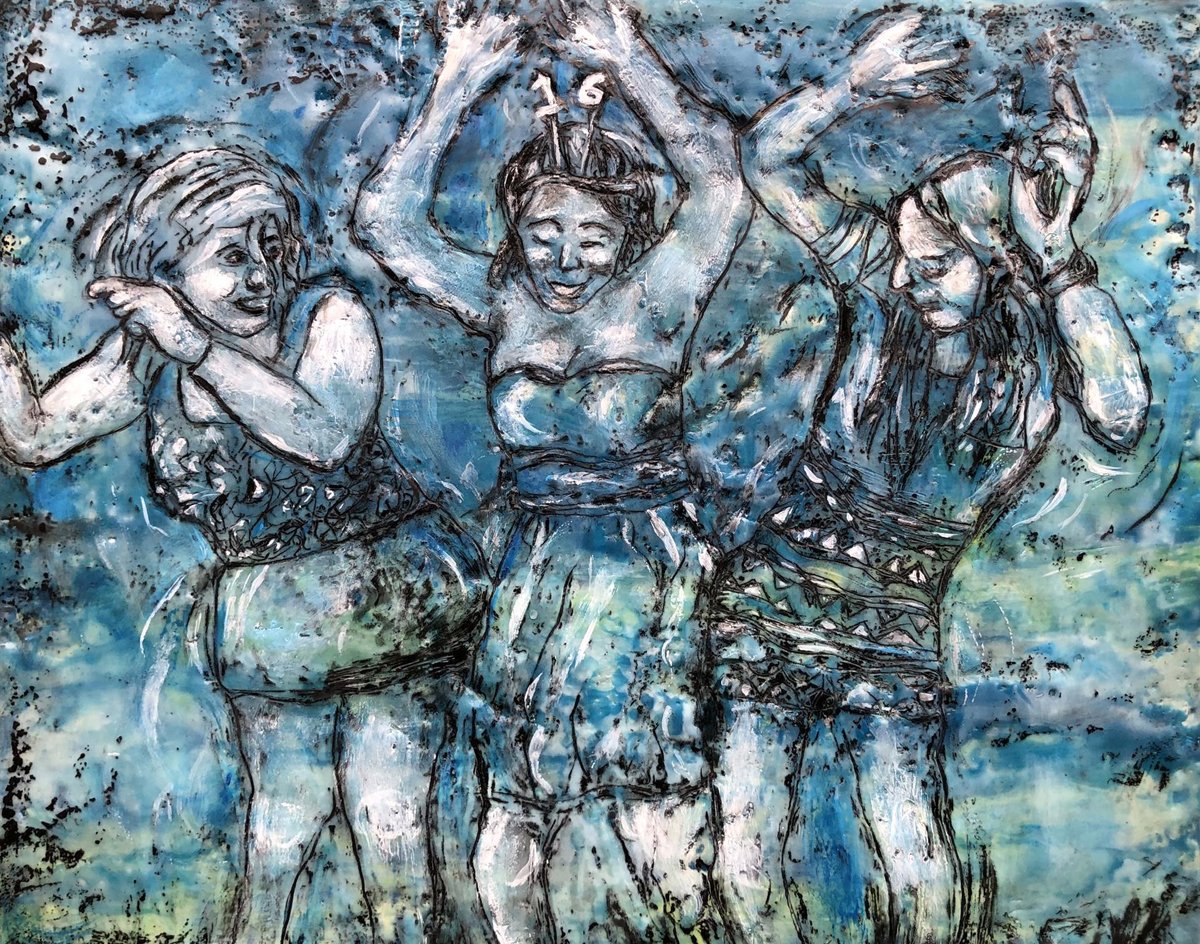
“Happy Dance” (encaustic and ink painting), by Nancy Whitcomb, in the “Out of the Blue” group show, at Spring Bull Gallery, Newport, R.I., through Oct. 29
Kevin Gilmore, the show’s juror, says:
“A word on ‘Out of the Blue’. The color blue is the first ‘clue’ in the prompt for this exhibition. Not surprisingly, for a gallery located on Aquidneck Island, surrounded by the beautiful shorelines and waters of Narragansett Bay, the color blue dominated the group of submissions.’'
Llewellyn King: Memories of people I knew from the Manhattan Project; beautiful "Barbie'
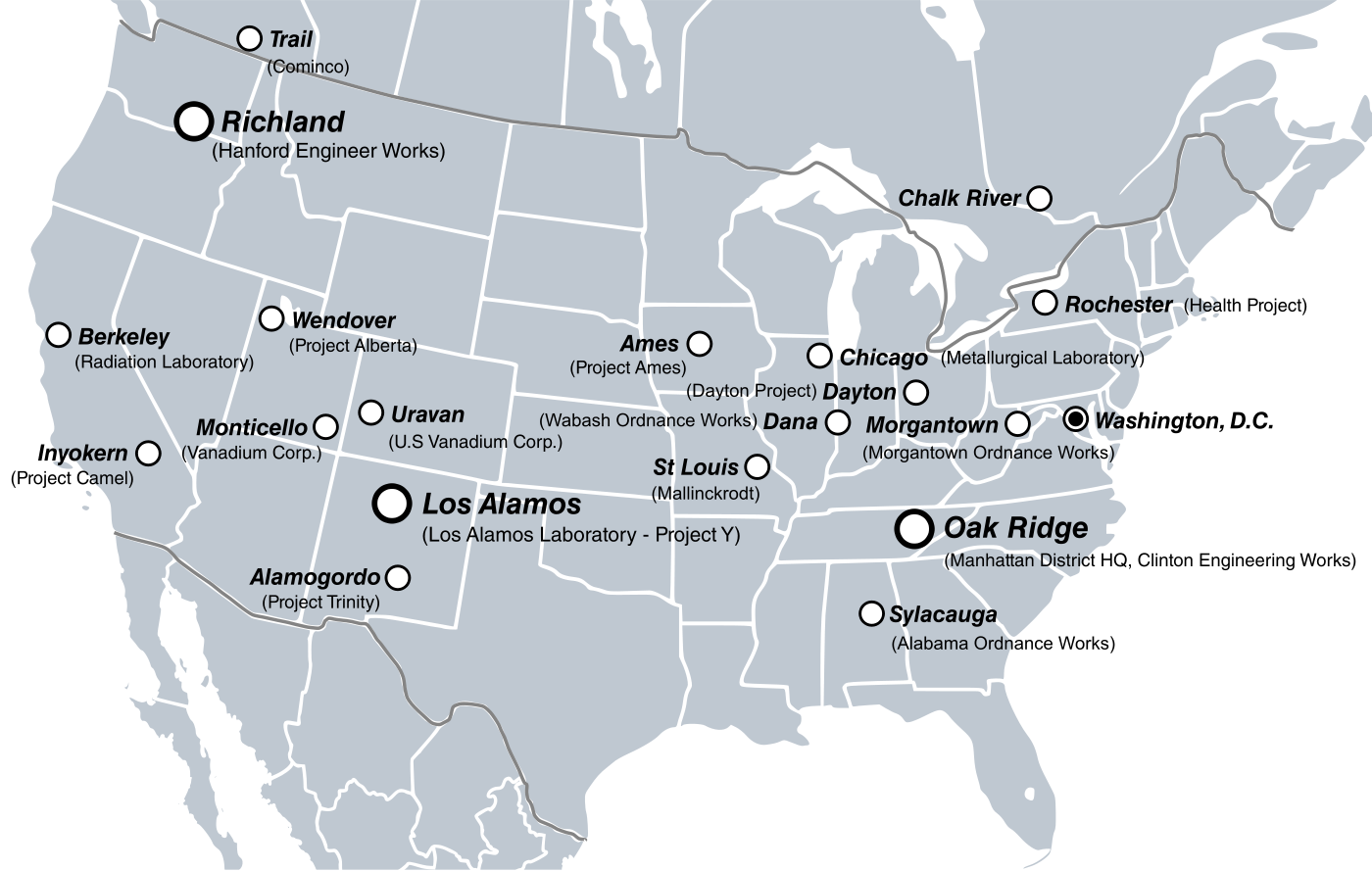
Important sites in the Manhattan Project. Alamogordo is where the first atomic bomb was detonated, on July 16, 1945. The map would have been better if it had included the site of uranium 238 refining for the project by Metal Hydrides Inc., in Beverly, Mass.
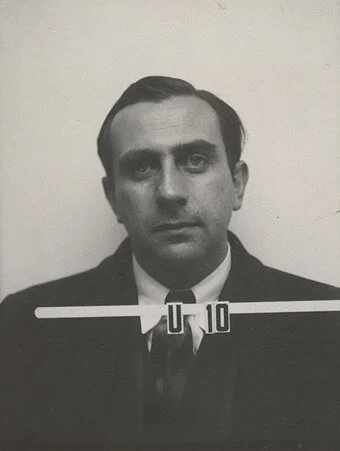
Edward Teller’s (1908-2003) badge photo at the Manhattan Project’s Los Alamos, N.H., facility. Called “The Father of the Hydrogen Bomb,’’ he was seen as an inspiration for the eponymous scientist in Stanley Kubrick’s classic 1964 black comedy Dr. Strangelove.
WEST WARWICK, R.I.
I have been to the movies. I haven’t done that since before the COVID shutdown.
I went to see two huge movies that have each grossed $1 billion so far, and I enjoyed them enormously. They are, of course, Barbie and Oppenheimer.
I went to see Barbie because I thought I should know what people were discussing. I went to see Oppenheimer because, in a sense, I have skin in that game. I knew a few people who worked on the Manhattan Project, and two of them were characterized in the movie: Hans Bethe and Edward Teller, known as the father of the hydrogen bomb.
About Barbie: It is a fantasy romp filled with popular, real-life messages. I had to see how director Greta Gerwig would make an adult movie about a doll, albeit a storied one — with brilliant imagination is how.
Oppenheimer, by contrast, is a major cinematic work, a remarkable recapturing of history and character development on the screen. Christopher Nolan is a director at the top of his game. He deserves a comparison with Orson Welles and David Lean.
Across the board, it is a triumph, compelling and true to the facts and the personalities. The evocative recreation of Los Alamos as it must have been, of the tower from which the first nuclear device was detonated, rings true. I have crawled all over the nuclear-test site and spent many hours at Los Alamos, where I used to give an annual lecture on energy or the relationship of humans to science.
In November 1975, Bethe and another veteran of the Manhattan Project, Ralph Lapp, and I put together a panel of 24 Nobel laureates (including Bethe) to defend civilian nuclear power. We got them all together on a stage at the National Press Club, in Washington. I had hoped that it would be a seminal event, ending some of the nonsense being spread about nuclear radiation.
Ralph Nader took up arms against us and assembled 36 Nobel laureates who were cool to nuclear. Ours were physicists, engineers and mathematicians who had a vast understanding of nuclear and endorsed it enthusiastically.
We didn’t win. Bethe, as I recall, was philosophical about being trounced.
I first met Teller in Geneva. I was to introduce him at a conference, and we had breakfast together. He seemed distracted and confused. But he was in top form when he spoke.
Later, I got to know him better. He gave a series of speeches for conferences I had organized on the Strategic Defense Initiative — colloquially known as Star Wars. He often sat slumped in his chair, clutching his enormous walking stick. But he stood erect on the podium, arguing vigorously the case for Ronald Reagan’s program.
The Oppenheimer movie reminded me of two institutions I covered intensely as a reporter: the Atomic Energy Commission (AEC) and its congressional overseer, the Joint Committee on Atomic Energy.
The committee was supposed to check the AEC. The AEC was a tool of the powerful and wildly pro-nuclear committee — the only joint committee empowered to introduce legislation in both houses of Congress. The reality of that partnership was that the committee proposed and the AEC disposed.
The movie is extraordinary in capturing the workings of Congress and how a nod or a smile can put great events in motion.
This understanding of the nuances and mores of Washington, and particularly the arcane theatricality of the congressional hearings, is accurate in ways seldom captured on film. This is more surprising given that the director is an Englishman who lives a very private life in Los Angeles.
I leave it to sociologists to ponder how two movies as different as Barbie and Oppenheimer could open simultaneously, becoming huge hits. If you see these movies, especially Oppenheimer, see them in the theater. They deserve that big-screen and wraparound-sound environment.
On Twitter: @llewellynking2
Llewellyn King is executive producer and host of White House Chronicle, on PBS.
White House Chronicle