
Vox clamantis in deserto







The mysteries of gray/grey
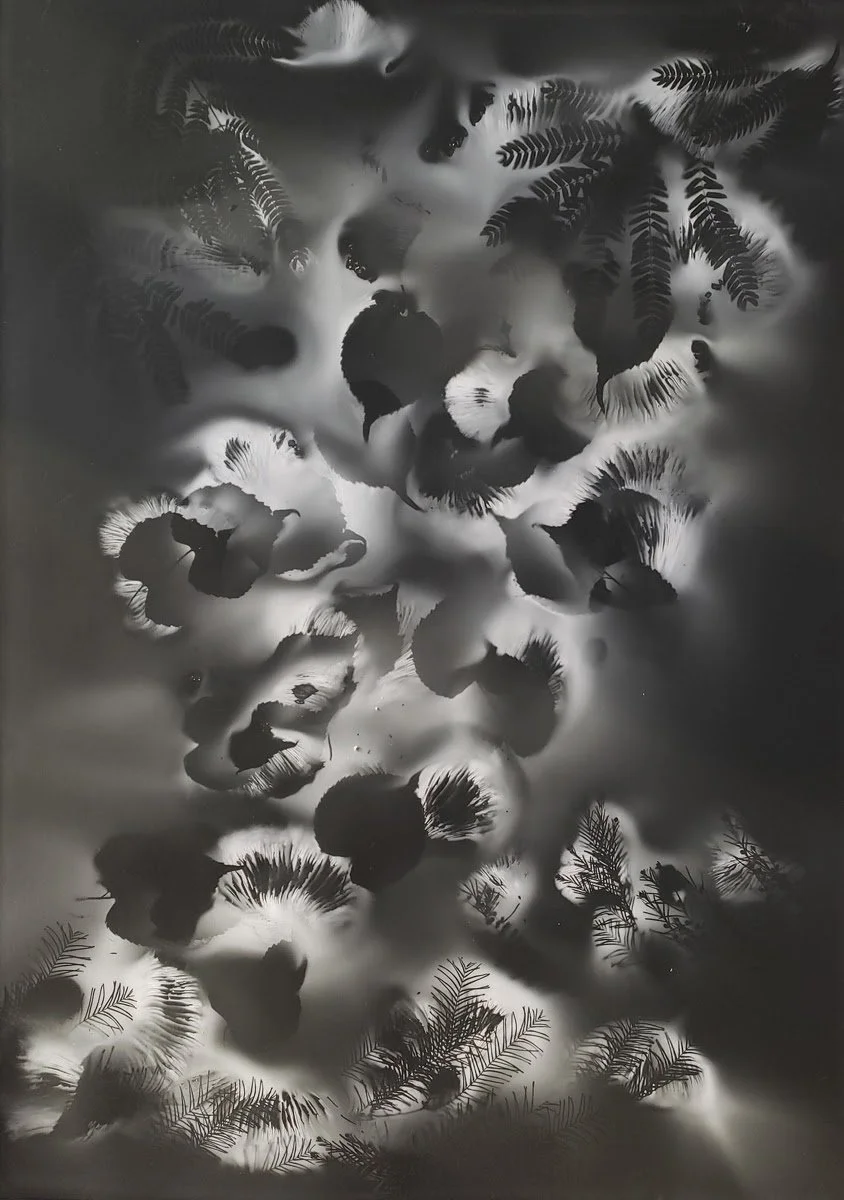
“Upward” (mushroom spores on paper), by western Massachusetts-based artist Madge Evers, in the group show “Grey Areas,’’ at Kingston Gallery, Boston, Aug. 2-27
The gallery says:
This year’s annual exhibition by Kingston Gallery’s Associate Artists explores the theme of “Grey Areas’’ from different perspectives and media. …The 10 artists interpret our world with divergent approaches to both the enigmatic concept and the color grey….They explore liminal places, ideas, and eras that generate questions - many without answers. Responding to the existential areas of an unknowable future or the space between ecosystems, they wonder how to acknowledge non-human collaborators, the myriad ‘what-ifs’ of depression, and the question of secrecy and abuses in institutions and systems of government that operate in obscurity. The diversity of work plays with grey’s ability to take on hue and enliven color, consider the spin of the stories we tell, uncertainty in understanding our world, and the difficulty of truly knowing the space one occupies in that world.’’
xxx
“Madge Evers has adapted the spore print, a mushroom identification tool typically used by mycologists and foragers, to create biomorphic monochromatic works on paper. Like the wind and other animals, she spreads the spores of mushrooms; germinates their powdery spores as they land on paper and creates her version of a fruiting body - it forms a two-dimensional image rather than toadstool. In this interdependence with mushrooms, she wonders: How do I best acknowledge my unwitting collaborators?’’

View from Mount Holyoke, Northampton, Mass., after a thunderstorm—The Oxbow (of the Connecticut River) (1836), by Thomas Cole
Except in February?

The “town’’ in this crime novel with Ben Affleck is the once tough but now substantially gentrified Boston section of Charlestown.

“Boston Street Scene (Boston Common), 1898-1899, by Edward Mitchell Bannister.
“When I grew up, there really was the sense of why would you want to live anywhere else?”
– Ben Affleck (born 1972), American actor and director, raised in Cambridge, Mass.

How to handle communications in an environmental crisis
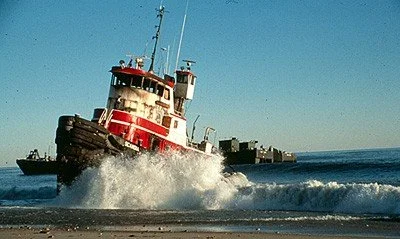
The North Cape oil spill took place on Jan. 19, 1996, when the oil barge North Cape and the tug Scandia grounded on Moonstone Beach, in South Kingstown, R.I., after the tug caught fire in its engine room during a winter storm. An estimated 828,000 gallons of home-heating oil escaped, causing major pollution.
Adapted from Robert Whitcomb’s “Digital Diary,’’ in GoLocal24.com
Christopher Reddy, a veteran scientist at the Woods Hole Oceanographic Institution, has just published a very useful, accessible and sometimes exciting guidebook for those navigating the shoals of environmental crises, about which Dr. Reddy, an expert on the effects of oil spills, among other things, has long personal experience. Science Communication in a Crisis: An Insider’s Guide has an engaging conversational voice and should be read by scientists, especially the more public-facing ones, journalists, communications officials, regulators, politicians and, for that matter, the general public.
Much of the expertise displayed in the book stems from the lessons he learned as a participant in efforts to study and mitigate such disasters as the massive Deepwater Horizon spill, in the Gulf of Mexico, in 2010.
Members of the groups above should keep Dr. Reddy’s book on their desks. And its compact guidebook format makes it easy to take into the next environmental emergency.
Sam Pizzigati: The outrage of child labor is creeping back into the U.S.

"Addie Card, 12 years. Spinner in North Pormal Cotton Mill, Vt." by Lewis Hine, 1912.
Via OtherWords.org
BOSTON
Ever since the middle of the 20th century, our history textbooks have applauded the reform movement that put an end to the child-labor horrors that ran widespread throughout the early Industrial Age.
Now those horrors are reappearing.
The number of kids employed in direct violation of existing child labor laws, the Economic Policy Institute reported this year, has soared 283 percent since 2015 — and 37 percent in just the last year alone.
More recently there was the alarming news that three Kentucky-based McDonald’s franchising companies had kids as young as 10 working at 62 stores across Kentucky, Indiana, Maryland, and Ohio. Some children were working as late as 2 a.m.
Federal legislation to crack down on child labor has stalled out amid Republican opposition. And at the state level, lawmakers across the country are moving to weaken — or even eliminate — child labor limits.
One bill in Iowa introduced earlier this year would let kids as young as 14 labor in workplaces ranging from meat coolers to industrial laundries. And Arkansas just eliminated the requirement to “verify the age of children younger than 16 before they can take a job,” the Washington Post reported.
Over a century ago, in the initial push against child labor, no American did more to protect kids than the educator and philosopher Felix Adler. In 1887, Adler sounded the alarm on child labor before a packed house at Manhattan’s famed Chickering Hall.
The “evil of child labor,” Adler warned, “is growing to an alarming extent.” In New York City alone, some 9,000 children as young as eight were working in factories. Many of those kids, Alder said, “could not read or write” and didn’t even know “the state they lived in.”
By the end of 1904, as the founding chair of the National Child Labor Committee, Adler had broadened the battle against exploiting kids. He railed against the “new kind of slavery” that had some 60,000 children under 14 working in Southern textile mills up to 14 hours a day, up from “only 24,000” just five years earlier.
Adler put full responsibility for this exploitation on those he called America’s “money kings,” who he said were after “cheap labor.” Alongside his campaigns to limit child labor, Adler pushed lawmakers to end the incentives that drive employers to exploit kids.
Aiming to prevent the ultra rich from grabbing all the wealth they could, Adler called for a tax rate of 100 percent on all income above the point “when a certain high and abundant sum has been reached, amply sufficient for all the comforts and true refinements of life.”
After the United States entered World War I, the national campaign for a 100-percent top income-tax rate on America’s highest incomes had a remarkable impact. In 1918, Congress raised the nation’s top marginal income tax rate up to 77 percent, 10 times the top rate in place just five years earlier.
During World War II, President Franklin Roosevelt renewed Adler’s call for a 100-percent top tax rate on the nation’s super rich. By the war’s end, lawmakers had okayed a top rate — at 94 percent — nearly that high. By the Eisenhower years, that top rate had leveled off at 91 percent.
Felix Adler died in 1933, before he could see the full scope of his victory. But by the mid-20th Century those inspired by him had won on both his key advocacy fronts. By the 1950s, America’s rich could no longer keep all they could grab, and masses of mere kids no longer had to labor so those rich could profit.
The triumphs thatAdler helped animate have now come undone. We need to recreate them.
Sam Pizzigati, based in Boston, co-edits Inequality.org at the Institute for Policy Studies. His books include The Case for a Maximum Wage and The Rich Don’t Always Win.

1900 ad for McCormick farm machines
#child labor
‘Fragrant with familiar baum’

On the Appalachian Train in Massachusetts’s Beartown State Forest, in The Berkshires

Blue blazes marking the Metacomet Trail, in Farmington, Conn.
— Photo by Ragesoss
New England woods are fair of face,
And warm with tender, homely grace,
Not vast with tropic mystery,
Nor scant with arctic poverty,
But fragrant with familiar balm,
And happy in a household calm.
And such O land of shining star
Hitched to a cart! thy poets are,
So wonted to the common ways
Of level nights and busy days,
Yet painting hackneyed toll and ease
With glories of the Pleiades.
For Bryant is an aged oak,
Beloved of Time, and sober folk;
And Whittler, a hickory,
The workman's and the children's tree;
And Lowell is a maple decked
With autumn splendor circumspect.
Clear Longfellow's an elm benign,
With fluent grace in every line
And Holmes, the cheerful birch intent;
On frankest, whitest merriment
While Emerson's high councils rise;
A pine, communing with the skies.
— “New England Woods,’’ by Amos Russel Wells (1862-1933), American editor, author and professor. The surnames here are of famous New England poets. #New England Woods

Llewellyn King: Investing in a green future that works

Fonio is an African sustainable “supergrain.’’
WEST WARWICK, R.I.
Adam Smith, the great Scottish economist and moral philosopher, didn’t have to confront the environmental crisis, the health-care delivery challenge or any of today’s issues. But his economic theory and moral philosophy — his unseen hand — are as pertinent today as they were in his lifetime.
Notably, Smith believed market forces were a force for good and a force for simply getting things done, acting.
A cardinal virtue of the market at work is discipline. Respect for the bottom line works wonders in producing discipline and results, even in the green economy that places a premium on sustainability.
And it is why Pegasus Capital Advisors, the fast-growing, impact investment firm based in Stamford, Conn., is having so much success in Africa, the Caribbean and South America, and Southeast Asia. In all, Pegasus is exploring investments in more than 40 countries.
An investment by Pegasus, under its ebullient founder, chairman and CEO, Craig Cogut, must make money and meet other strict criteria. It must help — and maybe save — the local environment. It must benefit local people with employment at decent wages. And it must have a long future of social and economic benefit.
And Pegasus always looks for a strong local partner.
In Africa, Cogut told me, the growing of sustainable crops should be wedded to cold storage and processing, which should be local. He has invested in a marketer of fonio, an African “supergrain.”
“Agriculture and fishing are important sources of food in the global south, but they get shipped out and they need to stay local,” Cogut said.
“In Ecuador, we’re focused on sustainable fishing and shrimp farming,” he said, adding, “Shrimp is an amazing source of protein, but you have to do it in an environmentally correct way.”
Cogut has two passions, and they are where he directs investments: the environment, and health and wellness.
A Harvard-trained lawyer, Cogut took his first job with a law firm in Los Angeles. He became an environmentalist while living there and visiting the nearby National Parks frequently. To this day, watching birds while hiking on Audubon Society trails in Connecticut, where he lives, is his passion.
He learned the art of big deals while working with the investment bank Drexel Burnham Lambert during its heyday. When it folded, in 1990, Cogut became one of the founding partners of Apollo Advisors, the wildly successful private-equity firm. After leaving Apollo, in 1996, he founded Pegasus, the private-equity firm that is making a difference.
A Pegasus success is Six Senses, which manages eco hotels and resorts with sensitivity to the environment. Pegasus sold Six Senses to IHG in 2019 and is currently partnering with IHG to develop new Six Senses resorts, including an eco-hotel on one of the Galapagos islands.
“We have been working with the Ecuadorian national park system to replicate what was there before Darwin’s time,” Cogut said.
Another previous Pegasus investment has restored a biodiesel plant in Lima, Peru. This plant, which has been sold, provides diesel fuel, produced from food waste and agricultural waste. “It is now helping the Peruvian government reach its environmental goals,” he said.
Off the coast of Nigeria, Cogut was appalled by natural-gas flaring, done in association with oil production. He personally invested in a company to capture the gas and convert it to liquefied natural gas, which is now used to displace diesel in electricity generation — much better for human health and the environment.
After his original investment, a large African infrastructure investor has become the majority owner. This is Cogut’s win-win, where sustainability and commerce come together.
I had a disagreement over how to help Africa’s economy with Britain’s chancellor of the exchequer, Gordon Brown, shortly before he became prime minister. He was trying to raise $50 billion for Africa. I asked Brown how it would be invested so that it would achieve real, positive results. He said, rather unconvincingly, “We’ll give it to the right people.”
If that encounter had taken place today, I would have been able to say, “Call Pegasus. Craig Cogut is the man who can help you.”
On Twitter: @llewellynking2
Llewellyn King is executive producer and host of White House Chronicle, on PBS. He’s based in Rhode Island and Washington, D.C.
White House Chronicle
InsideSources

Stamford , above, has miles of accessible shoreline for recreation and much parkland.
— Photo by John9474 #Pegasus Capitol Advisors
#sustainable agriculture
Your N.E. house-tour assistant

William (“Willit’’ ) Mason, M.D., has written has a delightful – and very handy -- book rich with photos and colorful anecdotes, called Guidebook to Historic Houses and Gardens in New England: 71 Sites from the Hudson Valley East (iUniverse, 240 pages. Paperback. $22.95). Oddly, given the cultural and historical richness of New England and the Hudson Valley, no one else has done a book quite like this before.
The blurb on the back of the book neatly summarizes his story.
“When Willit Mason retired in the summer of 2015, he and his wife decided to celebrate with a grand tour of the Berkshires and the Hudson Valley of New York.
While they intended to enjoy the area’s natural beauty, they also wanted to visit the numerous historic estates and gardens that lie along the Hudson River and the hills of the Berkshires.
But Mason could not find a guidebook highlighting the region’s houses and gardens, including their geographic context, strengths, and weaknesses. He had no way of knowing if one location offered a terrific horticultural experience with less historical value or vice versa.
Mason wrote this comprehensive guide of 71 historic New England houses and gardens to provide an overview of each site. Organized by region, it makes it easy to see as many historic houses and gardens in a limited time.
Filled with family histories, information on the architectural development of properties and overviews of gardens and their surroundings, this is a must-have guide for any New England traveler.’’
Dr. Mason noted of his tours: “Each visit has captured me in different ways, whether it be the scenic views, architecture of the houses, gardens and landscape architecture or collections of art. As we have learned from Downton Abbey, every house has its own personal story. And most of the original owners of the houses I visited in preparing the book have made significant contributions to American history.’’
To order a book, please go to www.willitmason.com
#Great New England houses
What stops you
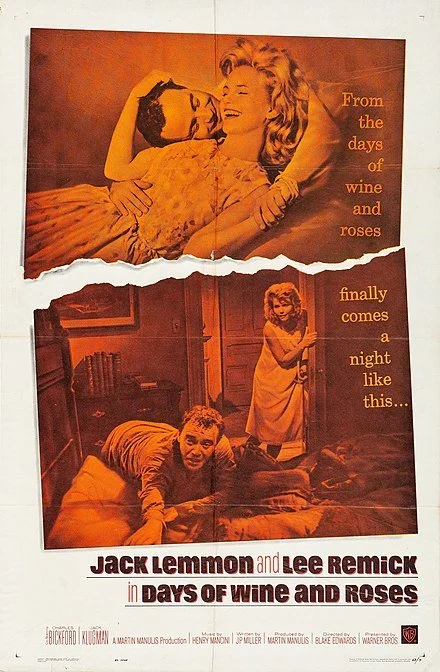
The devastating 1962 movie about alcoholism, with which Mr. Lemmon was familiar. His co-star, Lee Remick, came from Quincy, Mass., where her family owned a department store. Her favorite place as an adult was Osterville, Mass., on Cape Cod.
“Failure seldom stops you. What stops you is fear of failure.’’
— Jack Lemmon (1925-2001), raised in Newton, Mass., and a Harvard graduate, this famed movie and theater actor was best known for his anxious, middle-class everyman screen persona. He was a sort of tragi-comedian.
And no yard fees
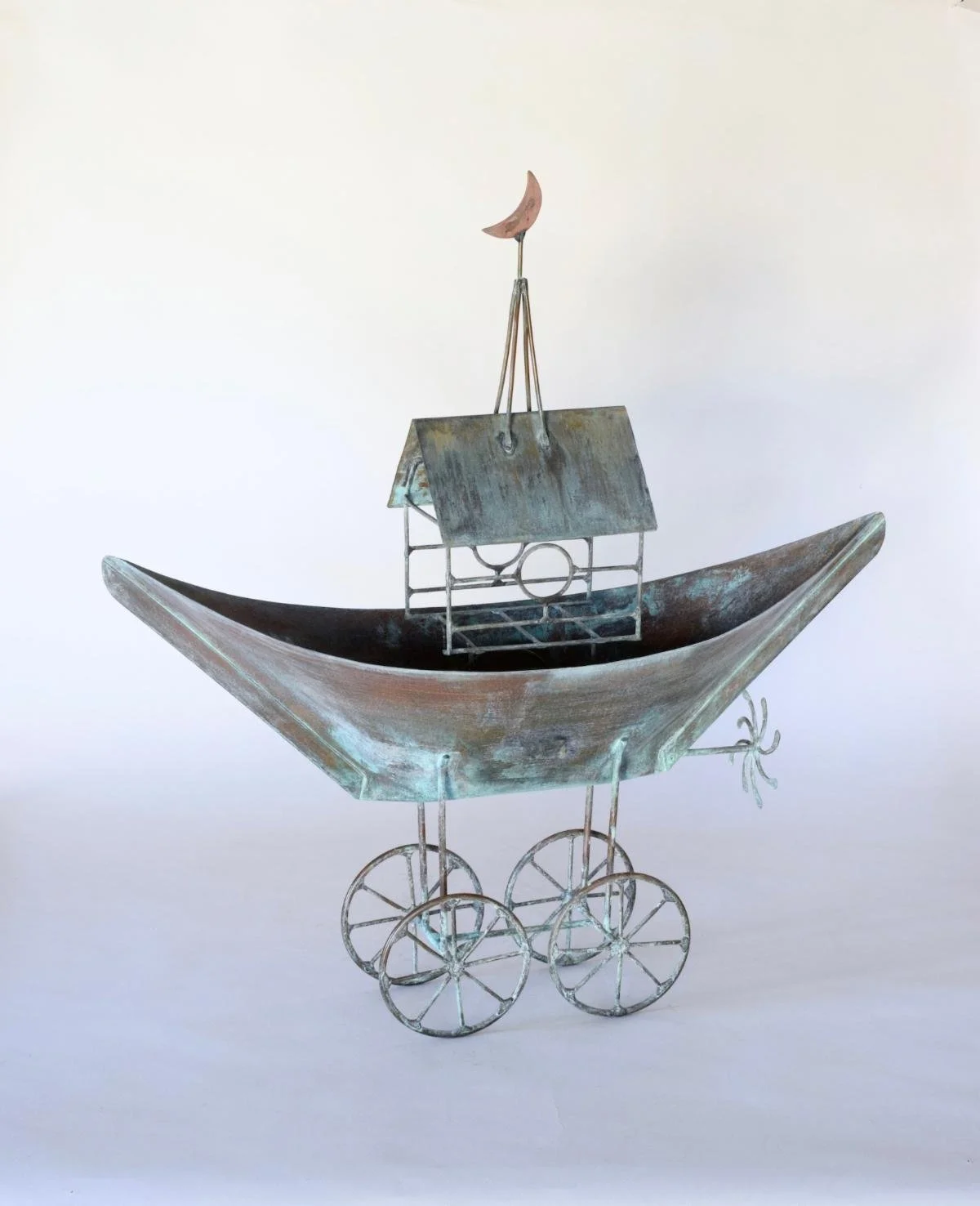
“Dreamboat” (copper with verdigris patina), by Pepperell, Mass.-based sculptor Charles Gibbs, at Alpers Fine Art, Rockport, Mass.
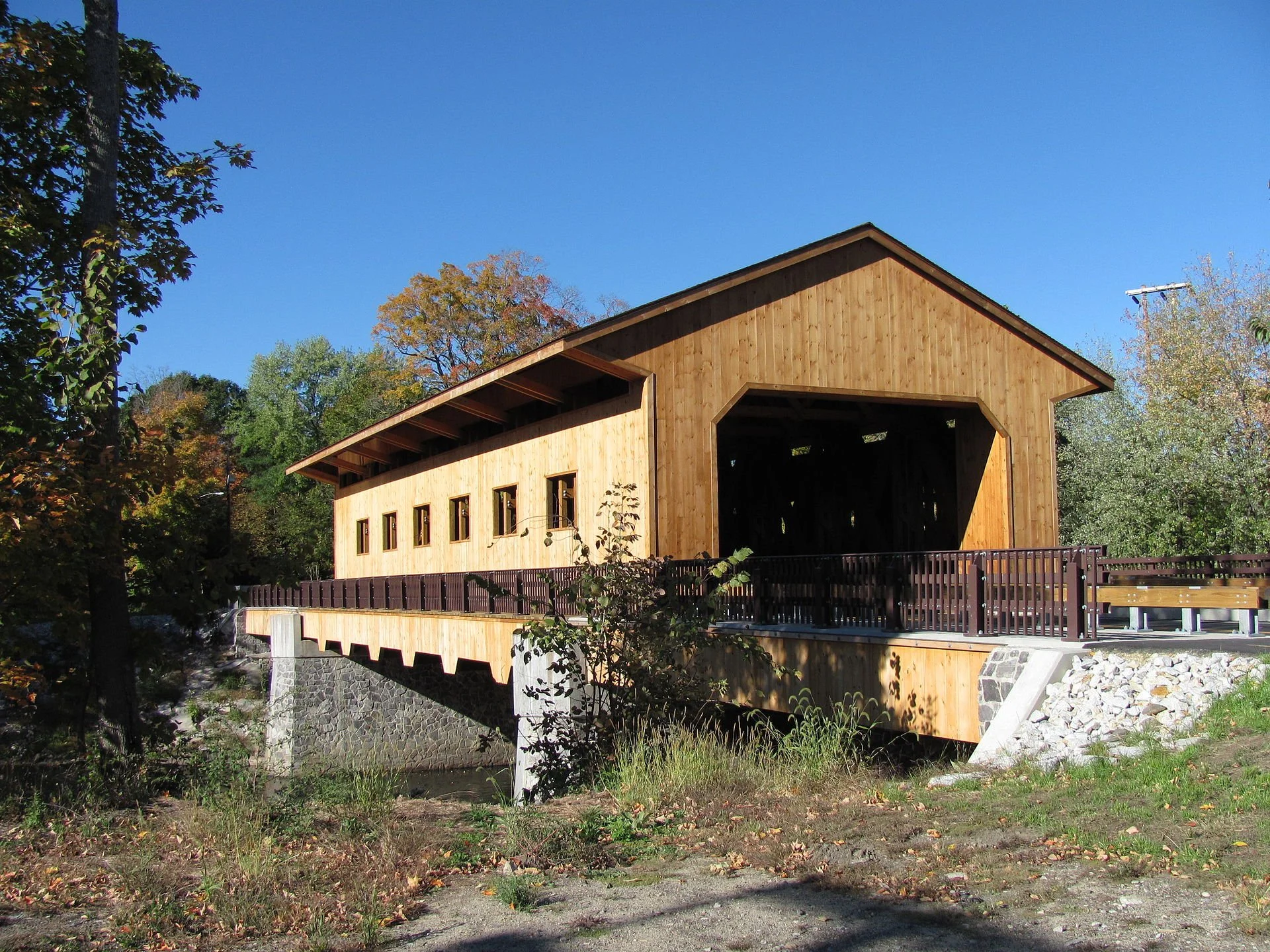
Pepperell Covered Bridge
— Photo by John Phelan
James T. Brett: Fixing federal tax code for technology is crucial for protecting New England’s prosperity
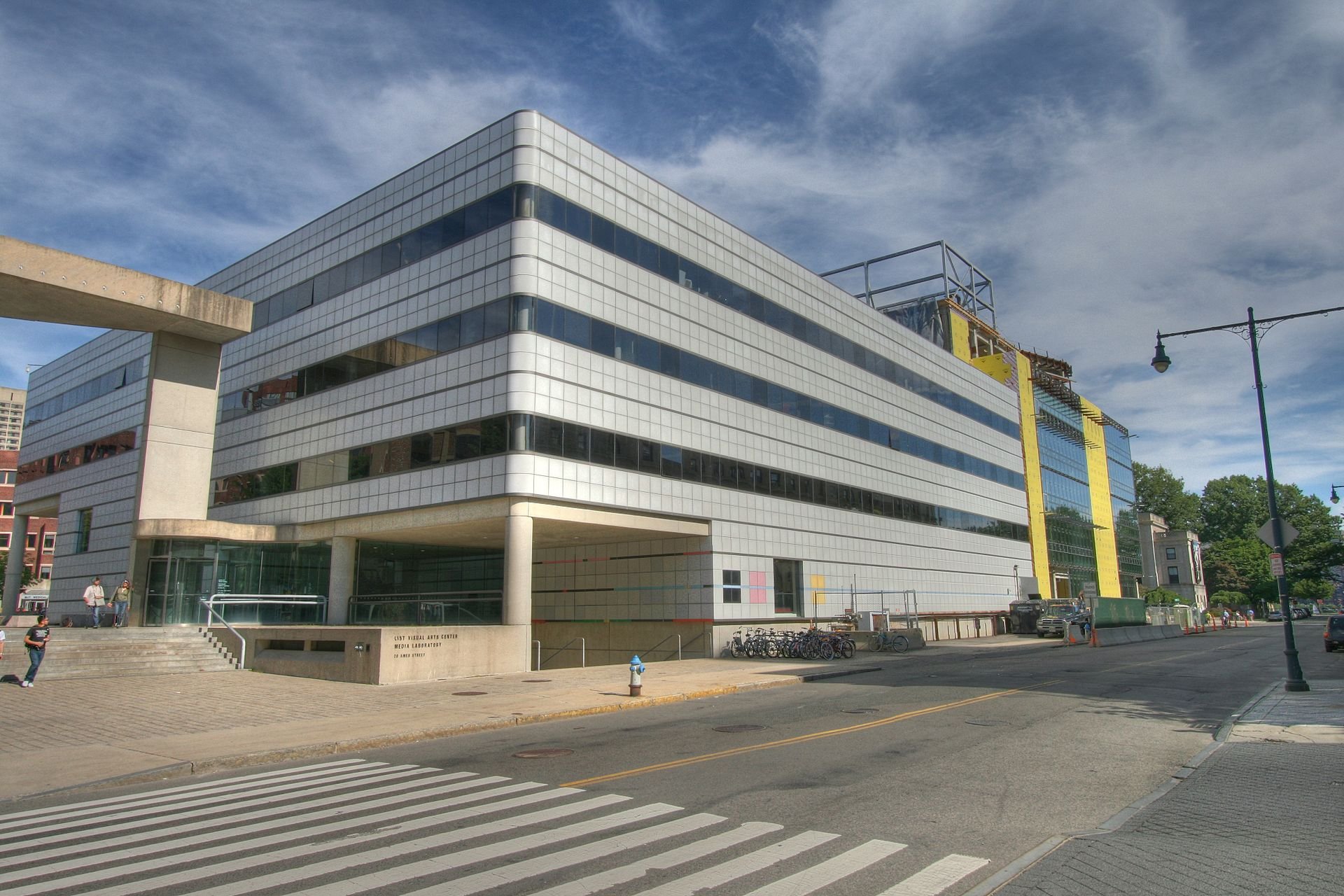
The Media Lab at the Massachusetts Institute of Technology, in Cambridge, houses researchers developing novel uses of computer technology. Greater Boston has long been one of the world’s greatest technology centers, primarily because spinoffs from its universities.
— Photo by Madcoverboy
BOSTON
Here in New England, we are proud of our region’s reputation as a global innovation hub. Our region hosts some of the world’s most innovative companies, in industries ranging from defense to life sciences to clean energy to technology. Each day, these businesses are making investments in ground-breaking research and development aimed at saving lives, combating climate change, safeguarding our national security and more.
For many years, the U.S. tax code has encouraged such investments by allowing businesses to fully deduct qualified research and development (R&D) expenses each year. However, under a provision of the Tax Cuts and Jobs Act of 2017, which was signed into law by then-President Trump, businesses must amortize or deduct these expenses over a period of five years. This provision went into effect for the 2022 tax year.
This will ultimately make R&D more costly to conduct in New England and across the U.S. The New England Council believes firmly that the new R&D amortization requirement will halt and harm our region’s continued growth and leadership on the global stage.
As a result of this change, the U.S. is now only one of two developed countries requiring the amortization of R&D expenses. Comparatively, our nation’s competitors, such as China, currently provide a “super deduction” for R&D expenses that drastically increases the allowed amount deducted for companies that previously did not qualify.
This change could result in companies relocating R&D facilities and funding out of the country, because it will be more costly to do research in the U.S. This will not only damage our competitiveness, but it could also have significant national security ramifications, as well as job losses.
In fact, a recent study conducted by EY for the R&D Coalition found: “Failing to reverse this change will cost well-paying jobs and reduce future innovation-directed R&D. Requiring the amortization of research expenses will reduce R&D spending and lead to a loss of more than 20,000 R&D jobs in the first five years with the number of lost jobs rising to nearly 60,000 over the following five years. Moreover, when accounting for the spillover effect from R&D spending, nearly three times as many jobs will be affected. This same study also found that for every $1 billion in R&D spending, 17,000 jobs are supported in the U.S.”
Fortunately, two members of Congress from New England are among those leading the bipartisan charge to reverse this harmful change in the tax code.
In the U.S. Senate, Sen. Maggie Hassan ( D.-N.H.) has partnered with Sen. Todd Young (R.-Ind.) to introduce the American Innovation and Jobs Act. In addition to allowing companies to fully deduct R&D expenses each year, Senator Hassan’s bill would also raise the cap over time for the refundable R&D tax credit for small businesses and startups, and expand eligibility for the refundable R&D tax credit so that more startups and new businesses can use it.
In the U.S. House, Congressman John Larson (D.-Conn.) has teamed up with Rep. Ron Estes (R.-Kan.) to introduce similar legislation, known as the American Innovation and R&D Competitiveness Act. Similar to the Senate bill, Representative Larson’s proposal would allow companies to continue to fully deduct R&D expenses each year.
The New England Council is proud to support both of these bills, and we urge others in the business community to also encourage Congress to pass this legislation. We have written to members of the New England congressional delegation, calling on them to support these bills, and are hopeful that Congress will take action to pass them in the near future.
Doing so will help ensure that the U.S. remains globally competitive, and it will drive continued innovation and job creation right here in New England, ensuring that the region remains a global innovation hub.
James T. Brett is president and CEO of The New England Council (newenglandcouncil.com)
Colorful memories

Brenda Cirioni, “Reminiscence” (mixed media), by Brenda Cirioni, in her joint show with Ellen Harasimowicz, “Terra Firma,’’ at Three Stones Gallery, Concord, Mass., through June 18.
— Image courtesy: Three Stones Gallery
#Brenda Cironi #Three Stones Gallery
The gallery says that Cirioni's abstract artwork, inspired by her garden and using natural tones and shapes, is paired with the documentary photography of Harasimowicz. Ms. Cirioni lives in Stow, Mass.
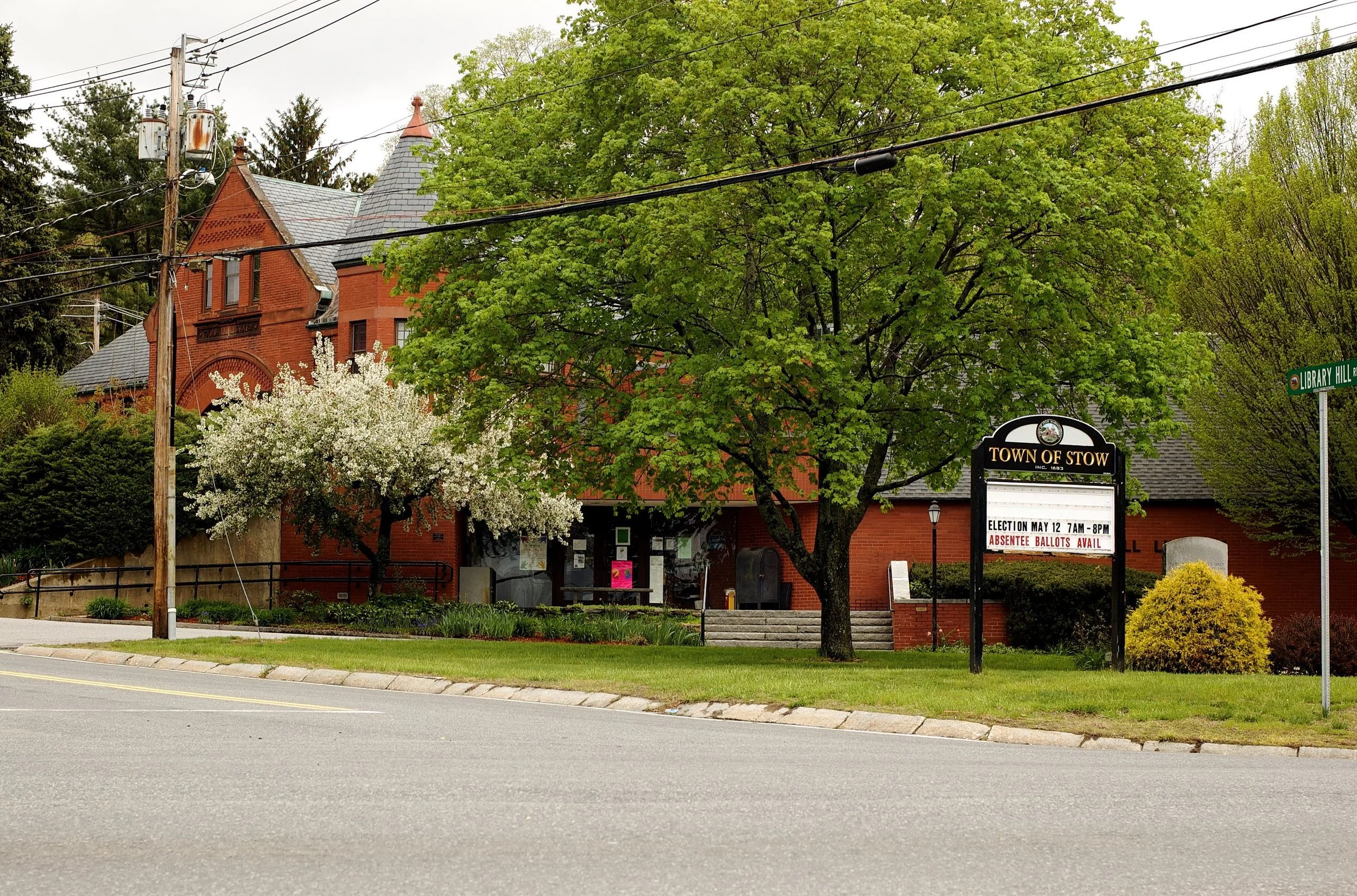
Town center of Stow
— Photo by Tim Pierce

Let the river do the heating

Spring on the Charles River Esplanade
— Photo by Ingfbruno
#heat pump #Charles River
Adapted from Robert Whitcomb’s “Digital Diary, in GoLocal24.com
Cleaner-energy progress continues in unexpected ways. I recently learned this:
Vicinity Energy, based in Boston, is partnering with Germany’s MAN Energy Solutions to collaborate in developing heat-pump systems for steam generation using water from the Charles River. Vicinity says it will install such an industrial-scale complex at its Kendall Station facility (in Cambridge) by 2026.
A heat pump extracts heat from a source, such as the air, geothermal energy in the ground or nearby sources of water or waste heat from a factory. It then amplifies and transfers the heat to where it is needed.
The giant heat-pump complex will generate steam with which to heat many large buildings in Cambridge and Boston, which could save owners and renters a lot of money.
Vicinity says that this will be the largest such facility in the U.S. and “will be powered by renewable electricity to safely and efficiently harvest energy from the Charles River, returning it at a lower temperature.’’ The idea is to renewably harvest thermal energy from rivers and oceans, which are warming because of climate change, thus helping decarbonize localities, especially cities.
How about something like this in Rhode Island? Lots of water available.
Hit these links:

Water-source heat-exchanger being installed in England
Colleges’ huge economic impact on New England

Flag of The New England Conference
Hit this link for a look at the economic impact of higher education in New England.
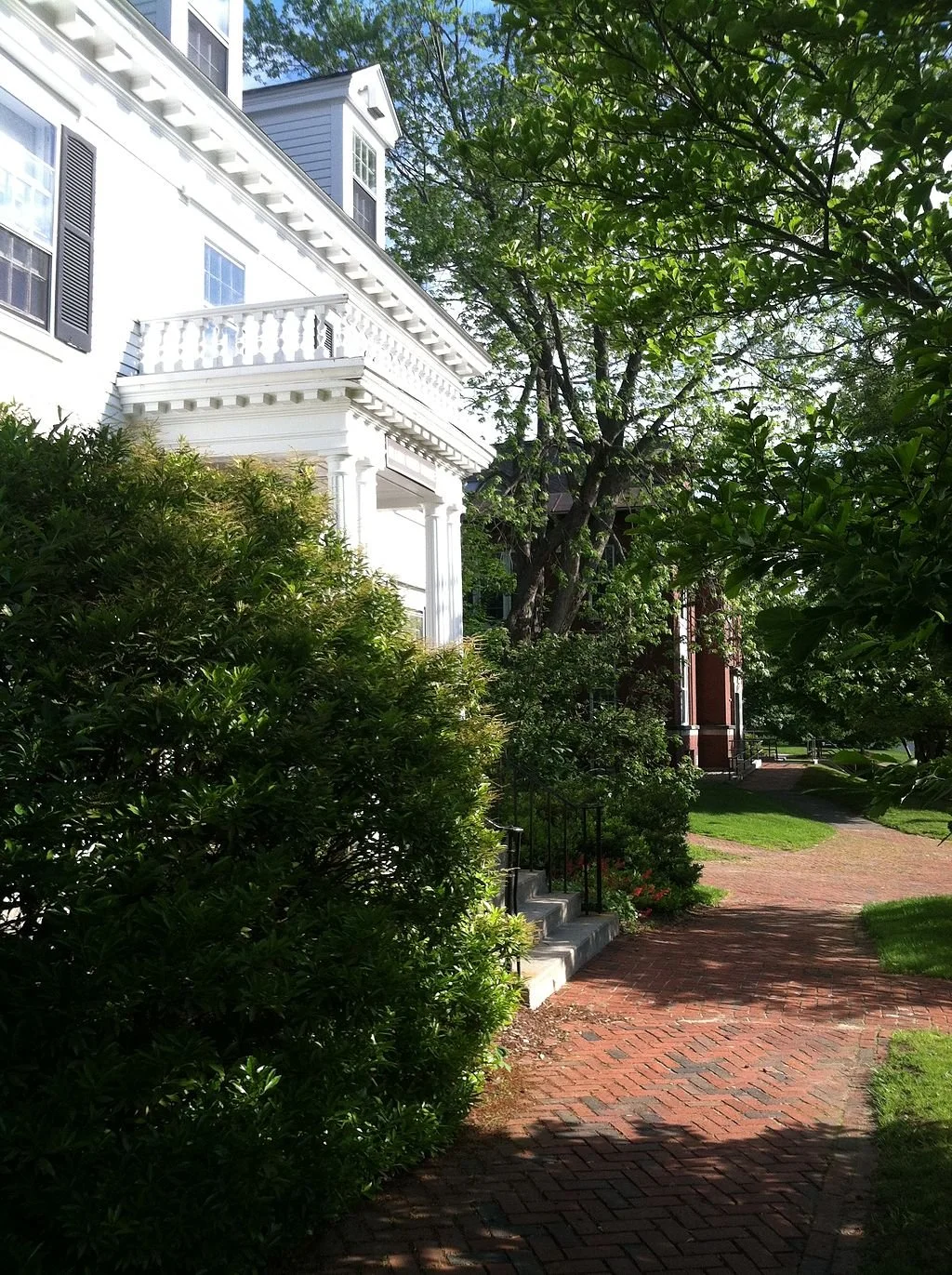
Ellen Reed House, home of the English Department faculty at Plymouth (N.H.) State University, in the foothills of the White Mountains
— Photo by Tysei91
‘Handsprings on her face’

_ Photo by waferboard
When she smiles, her lips perform with such grace
An acrobat does handsprings on her face.
Her nose quivers like an elephant’s trunk,
Stretching for peanuts or rooting in junk.
A clown’s arranged her cotton candy hair
And made her a whole sideshow at the fair.
As for lion trainers, you may surmise
Jungle cats stalk behind her gumball eyes.
— “One Ring Circus,’’ by Frank Robinson, a poet based in Ithaca, N.Y., art historian, director emeritus of the Johnson Museum of Art at Cornell University and former director of the Museum of Art, Rhode Island School of Design

A pet squirrel on a leash with a feeder in a medieval antiphonary. This is in the Bruges, Belgium, Public Library. #squirrel

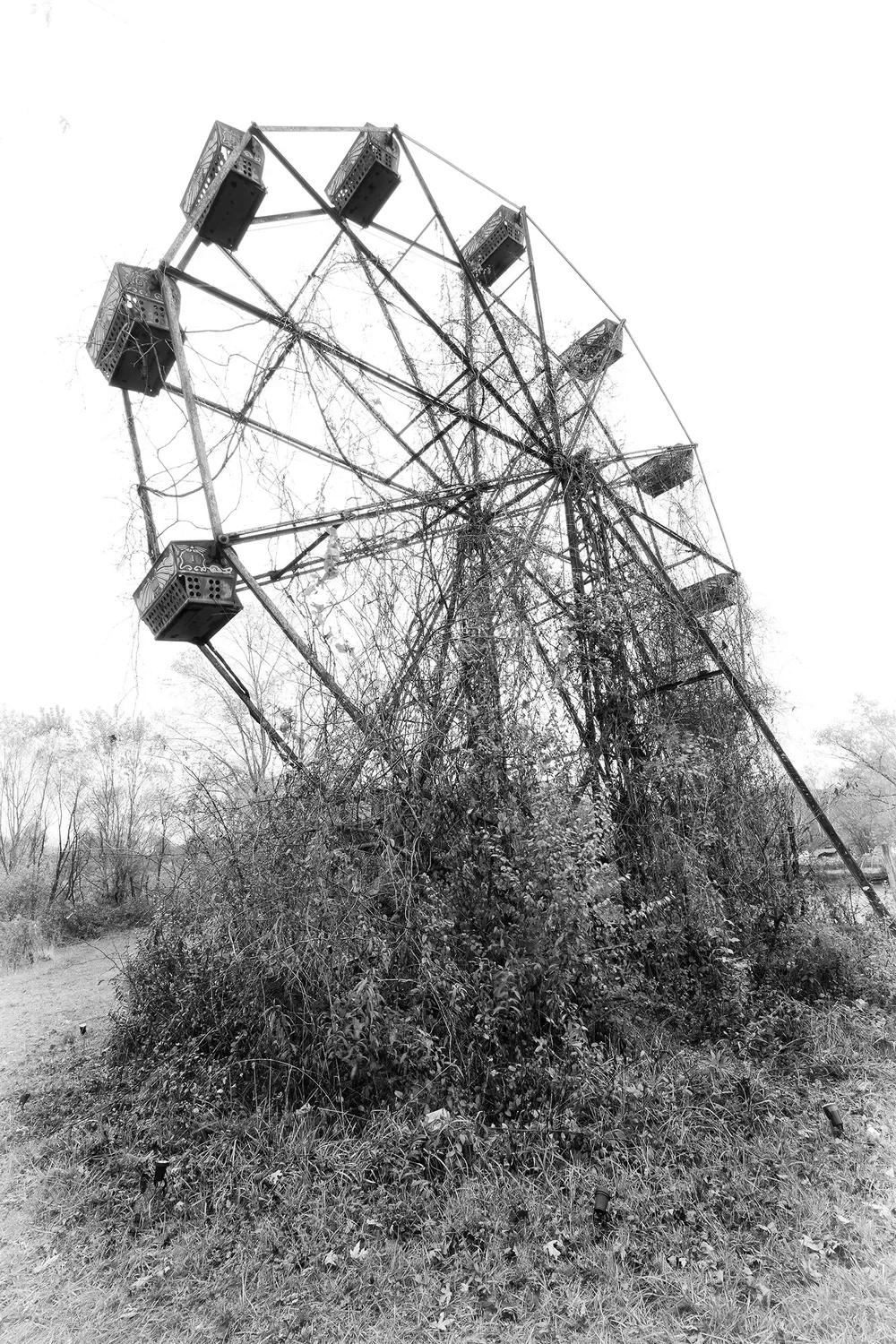
A carnival’s ‘childlike carefreeness’

“Traveling Circus’’ (oil on canvas), by Alexandra Rozenman, in Brickbottom Artists Association, Somerville, Mass., June 17-29
The gallery says:
‘‘There is a certain special kind of joy that takes place when the carnival comes to town. Nostalgia, excitement, and a childlike carefreeness that can be unshakeable for guests of all ages. The carnival can seem like a very intricate web of logistics but with the proper event planning team, you can put together a five-start carnival just about anywhere. Even your very own backyard.’’
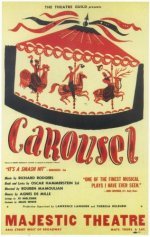
This 1945 Rodgers & Hammerstein Broadway musical is set on the Maine Coast. Rodgers said later it was his favorite of all his shows.

Chris Powell: How about basic literacy?

In a high school in the ‘50’s, when literacy was higher.
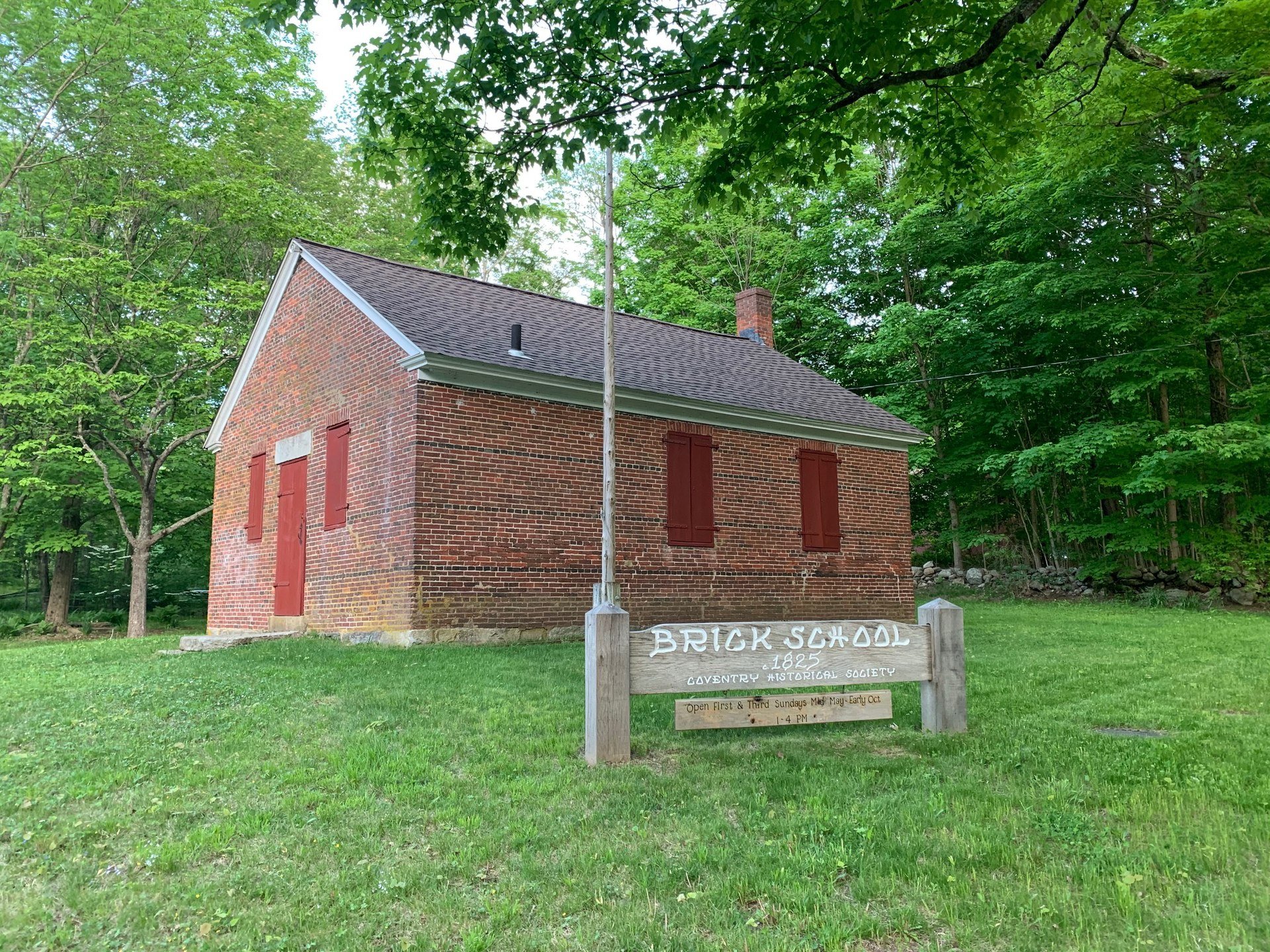
The Brick School House in Coventry, Conn., was built in 1825 and closed in 1953. It is now a local museum and the only one-room school open to the public in Connecticut
— Photo by Topshelver
MANCHESTER, Conn.
Connecticut state legislators are never more oblivious than when they propose requirements for schools to teach certain subjects. A few months ago the subject to be required was the history of the Indian tribes that inhabited the state centuries ago. Now the subject to be required is "financial literacy."
The Indian history requirement was stupid pandering to the owners of Connecticut's two casinos. For as the latest report from the National Assessment of Education Progress showed, knowledge of U.S. history among the country's eighth-graders has sunk to the lowest point since NAEP tests began, in 1994. The history of the country's Indian tribes is a mere subset of U.S. history generally, worth knowing only when the basics are mastered.
The Indian history requirement was also stupid pandering for the reason that the financial literacy requirement is simply stupid: Most students in Connecticut are hardly literate at all, never mastering basic English and math. Two weeks ago it was reported that only about a third of Bridgeport's students perform at grade level in English and only about a fifth in math. Proficiency is better in more prosperous areas but still mediocre on the whole for the state.
So why should schools pretend to teach advanced subjects when they fail with the basics?
It's because legislators and governors long have wanted to distract from the catastrophe of public education, for which they are responsible, as with state government's policy of social promotion. Legislators and governors have acted as if noisily expanding school curriculums automatically conveys learning when it conveys nothing but publicity for politicians.
Students and parents increasingly recognize the fraud, as signified by the high rates of chronic student absenteeism in schools, not just in poor cities but lately in middle-class suburbs as well. Attending school hardly seems necessary when everyone knows that, far from being penalized for not showing up, students will be promoted from grade to grade and given high-school diplomas without regard to learning.
One state legislator, Sen. Douglas McCrory, D.-Hartford, began to pick up on this issue last month at a meeting of the legislature's Education Committee. In debate on a budget amendment that would have authorized a charter school in Danbury, McCrory said the much-anticipated growth of the workforce at submarine builder Electric Boat in Groton will mean nothing to the children who are being graduated ignorant of basic skills. They won't qualify for serious jobs.
The failure with so many students in Connecticut schools is an old scandal. In his decision in the last of the futile school-financing lawsuits seven years ago, Superior Court Judge Thomas Moukawsher detailed the horrifying gaps in student proficiency across the state, especially in the cities, citing the graduation of the functionally illiterate.
The judge added that Connecticut's teacher-evaluation system is practically useless. He could have noted that it is useless in part because, unlike the evaluation system for other government employees in the state, the teacher-evaluation system is, at the insistence of teacher unions, entirely secret.
But the remedy Senator McCrory supported in debate on the state budget -- more charter schools -- is not so promising. For while charter schools let better-motivated students escape “failing” schools, schools fail mainly because the parents of their students do, and by removing better students, charter schools make neighborhood schools worse, depriving them of their good examples.
Judge Moukawsher's remedy in the school-financing case -- the old one of spending more on "failing" schools -- similarly fails, since Connecticut has been spending steadily more in the name of education for 45 years without improving student performance, just school-employee compensation.
That is, public education in Connecticut is collapsing not because of a lack of financing but because of a lack of parenting. Indeed, the more that Connecticut has spent in the name of education, the worse education results have been. More has been spent only to gain political results, and elected officials remain OK with that.
Chris Powell is a columnist for the Journal Inquirer, in Manchester. (CPowell@JournalInquirer.com)

‘Ropeless’ fishing has promise to protect whales but adds costs, complications to industry

Text from article by Mary Lhowe in ecoRI News.
A handful of Rhode Island lobster fishermen are working this season with federal regulators to use and study some complex and early stage equipment that is intended, eventually, to greatly reduce entanglements and deaths of whales.
The experimental equipment for this so-called “ropeless” fishing would eliminate the vertical ropes — or “lines” — running down the water column from buoys on the surface to lines connecting a series of traps on the seafloor. The existing function of buoys and vertical lines — to find and retrieve traps — would be replaced under a new system by computerized acoustic signals from boats to the seafloor and geopositioning via cell signals or satellites.
Using federal experimental fishing permits, three Port Judith-based lobstermen are struggling to use the new gear, borrowed from the National Marine Fisheries Service (NMFS), a branch of NOAA Fisheries.
To read entire article, please hit this link.
‘Invite and suspend’

Work from Claire Crews’s show “I Walked Up to the Cloud,’’ at Paper Nautilus, in Providence. It’s an exhibition of decorative and utilitarian woolen works. The title is a borrowed line from the poem “Samuel Palmer: the Characters of Fire,’’ by prairie poet Ronald Johnson.
Paper Nautilus says: “Like clouds—or translucent windows reflecting a changing sky—these geometric structures invite and suspend. They remind us that fog up close is radiant.
”All pieces are handwoven on a four-harness floor loom, using natural toned and dyed churro wool, the compositions based on watercolor sketches in the artist's daybooks.’’
An abstract hike

“Long Hill Trail, Saddleback Mountain”, by Lincolnville, Maine-based painter Mary Bourke, at Greenhut Galleries, Portland.
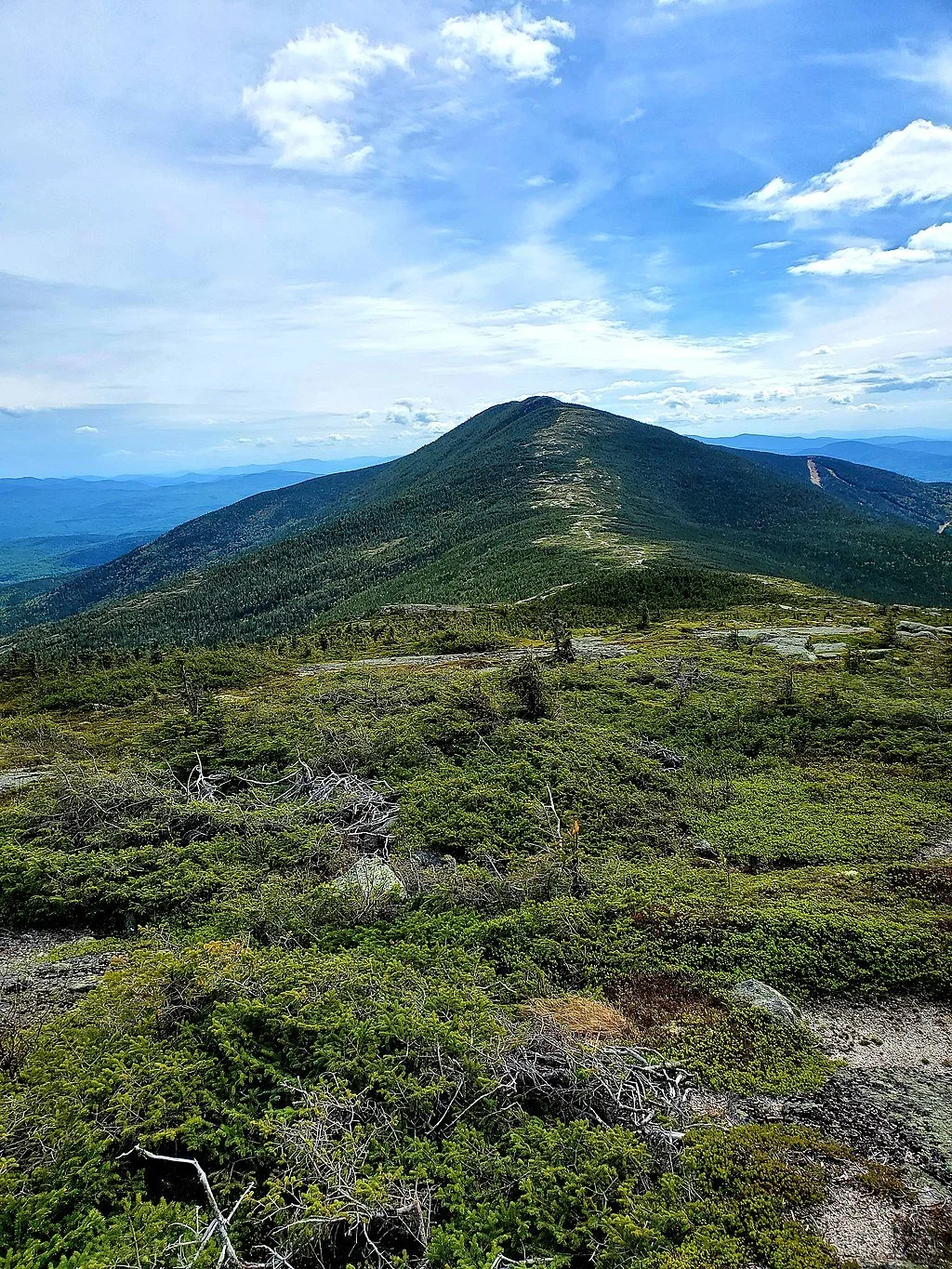
Saddleback Mountain, in western Maine, as seen from the Horn of Saddleback
— Photo by Jessica Casey

Lincolnville Beach in the summer of 2006
At the town’s centennial celebration