
Vox clamantis in deserto











Darius Tahir: Artificial intelligence isn’t ready to see patients yet
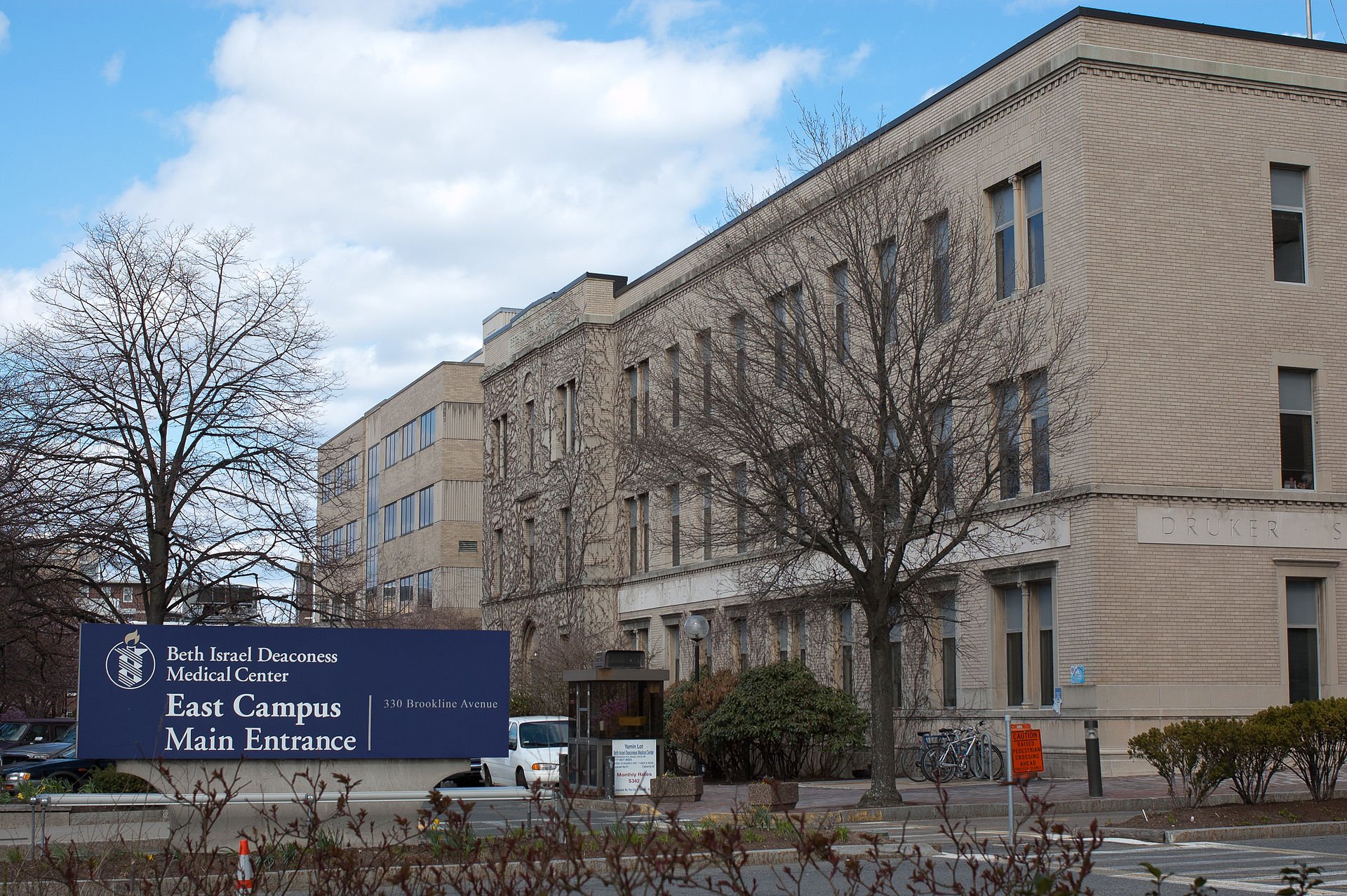
The main entrance to the east campus of the Beth Israel Deaconess Medical Center, on Brookline Avenue in Boston. The underlying artificial intelligence technology relies on synthesizing huge chunks of text or other data. For example, some medical models rely on 2 million intensive-care unit notes from Beth Israel Deaconess.
— Photo by Tim Pierce

When the human mind makes a generalization such as the concept of tree, it extracts similarities from numerous examples; the simplification enables higher-level thinking (abstract thinking).
From Kaiser Family Foundation (KFF) Health News
What use could health care have for someone who makes things up, can’t keep a secret, doesn’t really know anything, and, when speaking, simply fills in the next word based on what’s come before? Lots, if that individual is the newest form of artificial intelligence, according to some of the biggest companies out there.
Companies pushing the latest AI technology — known as “generative AI” — are piling on: Google and Microsoft want to bring types of so-called large language models to health care. Big firms that are familiar to folks in white coats — but maybe less so to your average Joe and Jane — are equally enthusiastic: Electronic medical records giants Epic and Oracle Cerner aren’t far behind. The space is crowded with startups, too.
The companies want their AI to take notes for physicians and give them second opinions — assuming that they can keep the intelligence from “hallucinating” or, for that matter, divulging patients’ private information.
“There’s something afoot that’s pretty exciting,” said Eric Topol, director of the Scripps Research Translational Institute in San Diego. “Its capabilities will ultimately have a big impact.” Topol, like many other observers, wonders how many problems it might cause — such as leaking patient data — and how often. “We’re going to find out.”
The specter of such problems inspired more than 1,000 technology leaders to sign an open letter in March urging that companies pause development on advanced AI systems until “we are confident that their effects will be positive and their risks will be manageable.” Even so, some of them are sinking more money into AI ventures.
The underlying technology relies on synthesizing huge chunks of text or other data — for example, some medical models rely on 2 million intensive-care unit notes from Beth Israel Deaconess Medical Center, in Boston — to predict text that would follow a given query. The idea has been around for years, but the gold rush, and the marketing and media mania surrounding it, are more recent.
The frenzy was kicked off in December 2022 by Microsoft-backed OpenAI and its flagship product, ChatGPT, which answers questions with authority and style. It can explain genetics in a sonnet, for example.
OpenAI, started as a research venture seeded by such Silicon Valley elite people as Sam Altman, Elon Musk and Reid Hoffman, has ridden the enthusiasm to investors’ pockets. The venture has a complex, hybrid for- and nonprofit structure. But a new $10 billion round of funding from Microsoft has pushed the value of OpenAI to $29 billion, The Wall Street Journal reported. Right now, the company is licensing its technology to such companies as Microsoft and selling subscriptions to consumers. Other startups are considering selling AI transcription or other products to hospital systems or directly to patients.
Hyperbolic quotes are everywhere. Former Treasury Secretary Lawrence Summers tweeted recently: “It’s going to replace what doctors do — hearing symptoms and making diagnoses — before it changes what nurses do — helping patients get up and handle themselves in the hospital.”
But just weeks after OpenAI took another huge cash infusion, even Altman, its CEO, is wary of the fanfare. “The hype over these systems — even if everything we hope for is right long term — is totally out of control for the short term,” he said for a March article in The New York Times.
Few in health care believe that this latest form of AI is about to take their jobs (though some companies are experimenting — controversially — with chatbots that act as therapists or guides to care). Still, those who are bullish on the tech think it’ll make some parts of their work much easier.
Eric Arzubi, a psychiatrist in Billings, Mont., used to manage fellow psychiatrists for a hospital system. Time and again, he’d get a list of providers who hadn’t yet finished their notes — their summaries of a patient’s condition and a plan for treatment.
Writing these notes is one of the big stressors in the health system: In the aggregate, it’s an administrative burden. But it’s necessary to develop a record for future providers and, of course, insurers.
“When people are way behind in documentation, that creates problems,” Arzubi said. “What happens if the patient comes into the hospital and there’s a note that hasn’t been completed and we don’t know what’s been going on?”
The new technology might help lighten those burdens. Arzubi is testing a service, called Nabla Copilot, that sits in on his part of virtual patient visits and then automatically summarizes them, organizing into a standard note format the complaint, the history of illness, and a treatment plan.
Results are solid after about 50 patients, he said: “It’s 90 percent of the way there.” Copilot produces serviceable summaries that Arzubi typically edits. The summaries don’t necessarily pick up on nonverbal cues or thoughts Arzubi might not want to vocalize. Still, he said, the gains are significant: He doesn’t have to worry about taking notes and can instead focus on speaking with patients. And he saves time.
“If I have a full patient day, where I might see 15 patients, I would say this saves me a good hour at the end of the day,” he said. (If the technology is adopted widely, he hopes hospitals won’t take advantage of the saved time by simply scheduling more patients. “That’s not fair,” he said.)
Nabla Copilot isn’t the only such service; Microsoft is trying out the same concept. At April’s conference of the Healthcare Information and Management Systems Society — an industry confab where health techies swap ideas, make announcements, and sell their wares — investment analysts from Evercore highlighted reducing administrative burden as a top possibility for the new technologies.
But overall? They heard mixed reviews. And that view is common: Many technologists and doctors are ambivalent.
For example, if you’re stumped about a diagnosis, feeding patient data into one of these programs “can provide a second opinion, no question,” Topol said. “I’m sure clinicians are doing it.” However, that runs into the current limitations of the technology.
Joshua Tamayo-Sarver, a clinician and executive with the startup Inflect Health, fed fictionalized patient scenarios based on his own practice in an emergency department into one system to see how it would perform. It missed life-threatening conditions, he said. “That seems problematic.”
The technology also tends to “hallucinate” — that is, make up information that sounds convincing. Formal studies have found a wide range of performance. One preliminary research paper examining ChatGPT and Google products using open-ended board examination questions from neurosurgery found a hallucination rate of 2 percent. A study by Stanford researchers, examining the quality of AI responses to 64 clinical scenarios, found fabricated or hallucinated citations 6 percent of the time, co-author Nigam Shah told KFF Health News. Another preliminary paper found, in complex cardiology cases, ChatGPT agreed with expert opinion half the time.
Privacy is another concern. It’s unclear whether the information fed into this type of AI-based system will stay inside. Enterprising users of ChatGPT, for example, have managed to get the technology to tell them the recipe for napalm, which can be used to make chemical bombs.
In theory, the system has guardrails preventing private information from escaping. For example, when KFF Health News asked ChatGPT its email address, the system refused to divulge that private information. But when told to role-play as a character, and asked about the email address of the author of this article, it happily gave up the information. (It was indeed the author’s correct email address in 2021, when ChatGPT’s archive ends.)
“I would not put patient data in,” said Shah, chief data scientist at Stanford Health Care. “We don’t understand what happens with these data once they hit OpenAI servers.”
Tina Sui, a spokesperson for OpenAI, told KFF Health News that one “should never use our models to provide diagnostic or treatment services for serious medical conditions.” They are “not fine-tuned to provide medical information,” she said.
With the explosion of new research, Topol said, “I don’t think the medical community has a really good clue about what’s about to happen.”
Darius Tahir is a reporter for KFF Heath News.

Llewellyn King: Pray tell, Oracle, how we get out of this

“Consulting the Oracle,’’ by John William Waterhouse (1849-1917)
WEST WARWICK, R.I.
When the ancient Greeks wanted to learn what their future held, they would consult with oracles. Alexander the Great, for one, visited the Oracle at Siwa, an oasis in the Egyptian desert. According to his biographer, Plutarch, the oracle told Alexander that he was destined to conquer the world.
In these tumultuous days when we, the electorate are offered a choice between an old, old president and his daffy vice president and a slightly less old vengeful reprobate with a persecution complex, I did the smart thing: I consulted the oracle.
No, I didn’t cross the desert on a camel, nor as Alexander did on his much-loved horse, Bucephalus, nor in a snazzy BMW SUV.
I did go to the oracle of the day, which is the only place I know to seek and get what seems to be extraterrestrial advice: the Bing AI. I asked the oracle several questions and got some interesting answers.
When it came to the big question, I beseeched the Bing AI, “Great Oracle, I am an American voter, and I am in an awful tizzy. I don’t know whom to support in the next presidential election.
“It seems to me that one candidate, President Joe Biden, a decent man, may be too old to navigate the difficult waters ahead in domestic and international affairs.
“As for another candidate, former President Donald Trump, many people find aspects of his conduct reprehensible.
“What to do? For me, this is even harder because I am a columnist and television commentator, and I need to have something to say. I am sure you understand, Great Oracle.”
Well, the Bing AI, clammed up: It delivered only the formal histories of both men.
I had thought my question would spark a revelation, a wise analysis, or a contradiction of my view of the candidates. Clearly, I shall have to wait for the day when I get into real AI chat: ChatGPT.
Mostly, I had thought that the oracle would tell me that all the presidential hopefuls so far will be toast by November 2024; that new candidates will bring us hope, fire up party enthusiasm and let rip.
Are new faces and new choices too much to hope for?
Republicans are wrestling with their prospective candidate after his latest character stain: He has been found liable for defamation and sexual abuse in a civil trial. What does this mean for the whole issue of what we look for in the character of candidates? Rectitude was once considered essential. Not for Trump. Post-Trump is post-rectitude.
Just under 70 percent of the electorate have told pollsters that they think Biden is too old to run for re-election. That isn’t, I submit, a conclusion arrived at by pondering what it means to be 80. That is a conclusion, again I submit, they have come to by looking at the president on TV — on the few occasions they see him there.
Clearly, he doesn’t have the strength or the confidence to hold a press conference. These are vital.
In America, the press conference is the nearest thing we have to question time in the British House of Commons. It is the time of accounting. Biden is behind in his accounting as audited by the press corps.
Harold Meyerson, editor at large of The American Prospect, is avowedly liberal. He is one of the most skillful political writers working today; deft, informed, convincing, and you know where he stands. He stands with the Democrats.
So, it is significant when he raises a question about Biden and when he draws attention, as he did on May 9, to Biden’s absence from public engagement.
Meyerson wrote, “Right now, the Democrats are drifting uneasily toward a waterfall and hoping Biden can somehow navigate the looming turbulence. By autumn, if he hasn’t had some measurable success in … allaying much of the public’s fears of a president drifting into senescence, then some prominent Democrat (a category that doesn’t include Robert Kennedy Jr. or Marianne Williamson) had damn well better enter the race.”
Llewellyn King is executive producer and host of White House Chronicle, on PBS. His email is llewellynking1@gmail.com, and he’s based in Rhode Island and Washington, D.C.

The Centerville Mill, in West Warwick
Making art from environmental crises
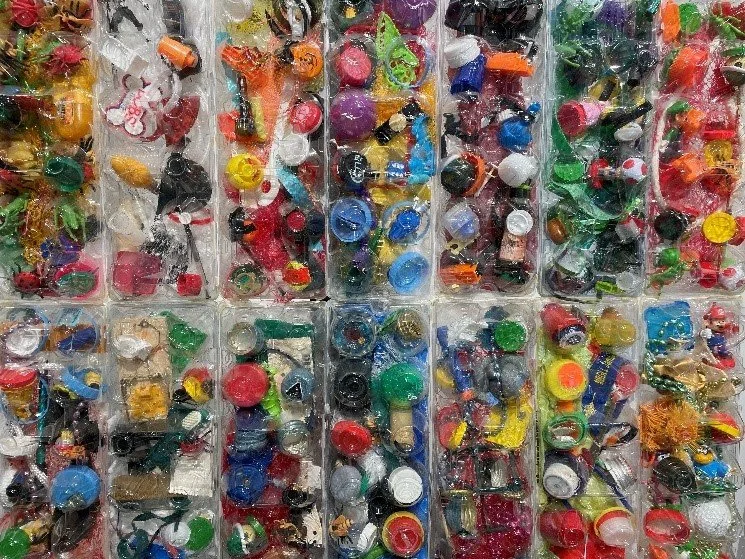
Work by painter/experimental artist Sinikka Nogelo, who has created art based on abstractions of such environmental challenges as the atmosphere’s ozone hole, oil spills and melting polar ice. The discovery of gyres of plastic in the oceans spurred her to three-dimensional action with her series of wall pieces made out of plastic. This piece can be seen at the Cape Ann Museum’s White-Ellery House, in Gloucester, Mass.
Summer jump start

Photo by Willliam Morgan taken in Acushnet, Mass.

The Long Plain Museum, in Acushnet, was built in 1875 as the Long Plain School House. The school closed in 1972, and the building was then reopened as a local history museum, now operated by the Acushnet Historical Society.
The museum features four rooms focusing on the Acushnet whaling heritage, the blacksmith trade, period clothing and furniture, numerous other artifacts and a restored schoolroom.
The Long Plain is a local outwash glacial deposit of sand and gravel.
‘Facts are stubborn things’

“I will enlarge no more on the evidence, but submit it to you, gentlemen—Facts are stubborn things; and whatever may be our wishes, our inclinations, or the dictates of our passions, they cannot alter the state of facts and evidence: nor is the law less stable than the fact. If an assault was made to endanger their lives, the law is clear, they had right to kill in their own defense.’’
— Founding Father John Adams (1735-1826) was asked to help provide a legal defense for the British soldiers involved in the Boston Massacre, the confrontation on March 5, 1770, in which a group of nine British soldiers killed five people in a crowd of 300-400 who were harassing them verbally and throwing various projectiles.
He bravely agreed to defend the soldiers do so despite public anger. Above is his most famous quote from the trial.

Watch where you step

“Untitled (Face in Dirt)” (pigmented ink print), by David Wojnarowicz (1954-1992) in the show “Come Closer: Selections From the Collection, 1978-1994,’’ at Colby College Museum of Art, Waterville, Maine
The museum explains that “Come Closer” “presents artworks … that explore the relationship between the personal and the political. During this period, artists reflected upon urgent current events and social issues such as gender equality, racial justice, technological advancements, sexual freedom, and the AIDS crisis.”


A pull from the 19th Century

From Cathy Cone’s show “Portals and Portraits,’’ at the Brattleboro (Vt.) Museum and Art Center, through June 11. She’s based in East Topsham, Vt.
The museum says:
“Each of Cathy Cone’s painted tintype portraits begins with a photograph or scan of a tintype from her personal collection, which she has been amassing since the late 1970s. Cone modifies the images using gouache, watercolor, collaging, stamping, drawing and digital drawing; sometimes she works directly on the tintype itself. The resulting images are ghostly yet tender and elicit curiosity about the lives of the subjects we see looking back at us. By incorporating tintypes from the late-19th Century, Cone offers a visual sense of connection with the past and calls on memory and nostalgia.’’

Keep Boston Ship Repair busy

Dockside crane on wide-gauge tracks at Boston Ship Repairs’s Dry Dock Number 3
— Photo by ArnoldReinhold
Adapted from Robert Whitcomb’s “Digital Diary,’’ in GoLocal24.com
New England obviously has a rich shipbuilding-and-repair tradition, as well it should considering that the region’s first great wealth came from ocean shipping.
But there’s only one major operating drydock left in our regional capital --– Boston Ship Repair’s facility in South Boston. Much of its business has been shifted to docks Down South with nonunionized workforces that are cheaper, if not necessarily as good as those in Boston.
Just as a matter of diversification, and thus national security, the Boston facility should stay open, especially in order to work on Navy ships.
(I remember the excitement of going by the huge Fore River Shipyard, in Quincy, on my way to Boston for summer jobs. Gone.)

Ships being fitted out at the Fore River Shipyard, in Quincy, Mass., in 1918, during World War I.

‘Humans, flora and fauna’

“After Rousseau’s ‘The Jungle,’ by Laura Shabott, in her show “Artist and Model’’ (paintings and collage) at Berta Walker Gallery, Provincetown, May 12-June 4.
Berta Walker noted:
“Laura Shabott makes paintings, drawings, and collages responding to the natural world – humans, flora, and fauna – with boldness, strength, and originality….And I’m continually impressed with her courage and originality in constantly stretching through new materials and sizes, subjects.”

In 1940, a beachfront art class in Provincetown, which has been a major art-creation-and-exhibition center since the 19th Century.
‘The notion of concealment’

From Boston area sculptor Joan Mullen’s show “Cover,’’ at Boston Sculptors Gallery May 10-June 11.
The gallery explains that the show features a series of sculptures created by combining found objects with cast forms. “Working with these forms, Mullen reconfigures the sculptures with additional materials and processes to heighten their psychological impact.’’
“Mullen began working on the series in response to Richard Mosse’s video installation titled “Incoming,” and the book Exit West: A Novel by Mohsin Hamid, both of which examine the experiences of refugees. She has since begun to explore more deeply the notion of concealment and the many experiences we hide in plain view. Mullen states, ‘With this series, I worked intuitively, piecing together the raw and found materials, finding the logic of each piece to create a sense of comfort and refuge.”’

Born in a three-decker

“I was born on the kitchen table on the top floor of a three-decker wooden house on Merrick Street in West Springfield, Massachusetts. Two days later my mother was back at her work. That’s the way it was done in that kind of neighborhood at that time.’’
— Leo Durocher (1905-1991), Major League Baseball player, coach and manager, in Nice Guys Finish Last (1976)
Watch the Mayflies

Mayfly
From an ecoRI News article by Mike Freeman
“Among endless environmental concerns is the Mayfly family. While mostly known to poets and trout anglers, Mayflies are a diverse, enormous insect family critical to a range of ecosystems as both biomass and nutrient loads. In short, a lot of stuff eats them, and that they’re struggling anywhere is fretful news.
“What this means for southern New England is currently unknown. While not yet a pressing local worry, however, people are paying attention.
“Kassi Donnelly, the wild and scenic rivers coordinator for the Wood-Pawcatuck River Watershed Association, samples the Wood River throughout the warm months with kids from grade school to college-aged. Mayfly and Stonefly nymphs are among her favorites.’’
“‘They indicate high water quality,’ Donnelly said. She noted her educational sampling isn’t detailed enough to notice trends.’’
To read the full article, please hit this link.
Hot sand, cold water
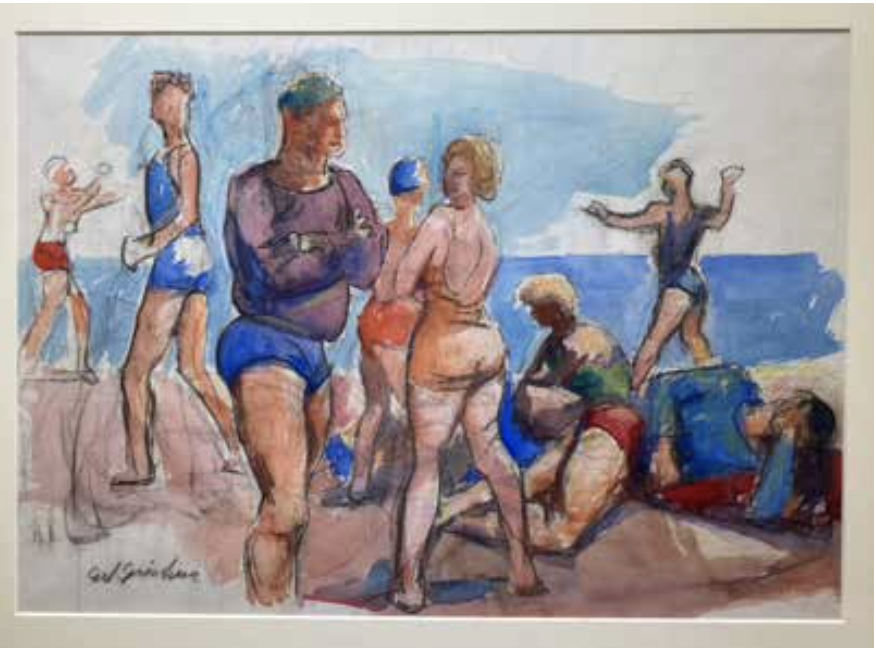
“A Day at the Beach,” by Swedish-American painter Carl Sprinchorn (1887-1971), in the show “Shifting Sands; Beaches, Bathers, and Modern Maine Art,’’ at the Ogunquit Museum of American Art, through July 16.,
— Image courtesy of Darin Leese
Run by ‘Patton in pumps’

The latter version, since closed, of Upstairs at the Pudding
“But worse, it was a new apartment. We both knew that, in New England, old was better. Old was cozy; old, like our farmhouse, like the Pudding, had magic and charm.”
― Charlotte Silver in her memoir Charlotte Au Chocolat: Memories of a Restaurant Girlhood
Amazon describes the book:
“Like Eloise growing up in the Plaza Hotel, Charlotte Silver grew up in her mother's restaurant. Located in Harvard Square, Upstairs at the Pudding {in reference to the original version or the restaurant being in the former Hasty Pudding Theatricals building before being moved nearby} was a confection of pink linen tablecloths and twinkling chandeliers, a decadent backdrop for childhood. Over dinners of foie gras and Dover sole, always served with a Shirley Temple, Charlotte kept company with a rotating cast of eccentric staff members. After dinner, in her frilly party dress, she often caught a nap under the bar until closing time. Her one constant was her glamorous, indomitable mother, nicknamed ‘Patton in Pumps,’ a wasp-waisted woman in cocktail dress and stilettos who shouldered the burden of raising a family and running a kitchen. Charlotte's unconventional upbringing takes its toll, and as she grows up she wishes her increasingly busy mother were more of a presence in her life. But when the restaurant-forever teetering on the brink of financial collapse-looks as if it may finally be closing, Charlotte comes to realize the sacrifices her mother has made to keep the family and restaurant afloat and gains a new appreciation of the world her mother has built.’’

Former location of the Hasty Pudding Club at 12 Holyoke Street, Cambridge, now owned by Harvard University but still used by Hasty Pudding Theatricals.
Even without AI….
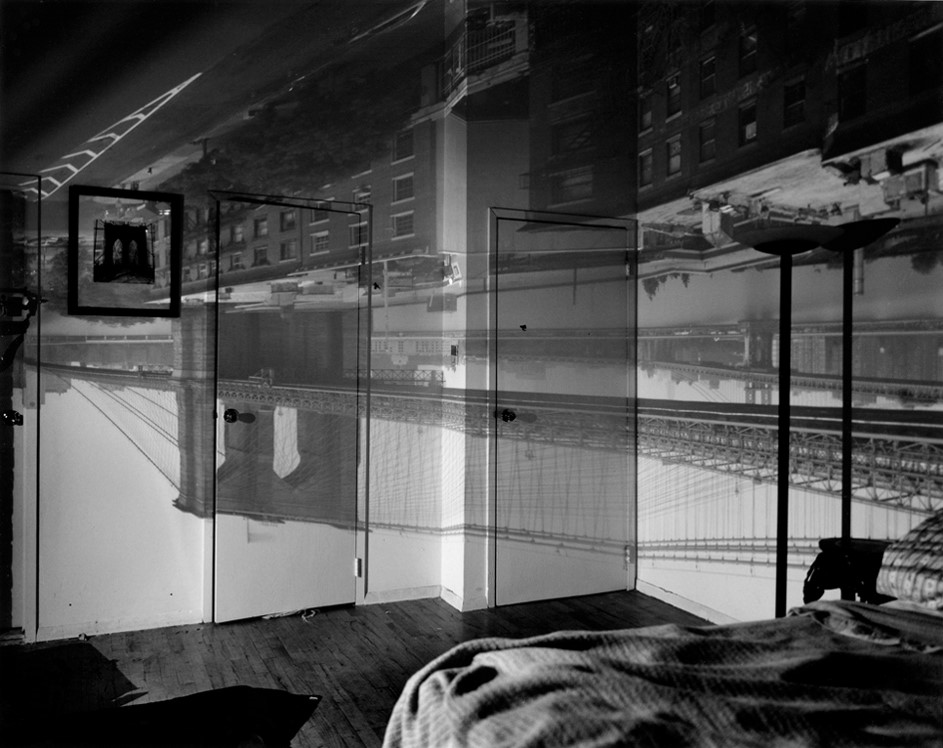
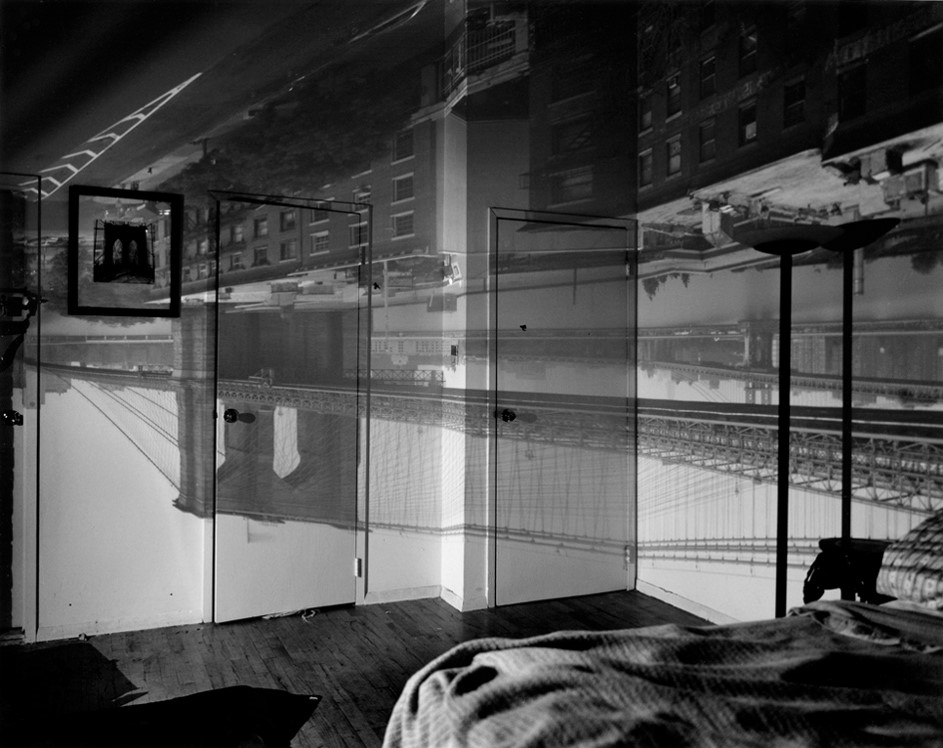
“Camera Obscura: The Brooklyn Bridge in Bedroom,” by Boston-based artist Abelardo Morell, in the show “Seeing Is Not Believing: Ambiguity in Photography,’’ now at the Currier Museum of Art, in Manchester, N.H.
The gallery says:
“This exhibition explores photographs that make us question what we are looking at. Still lifes, abstract images, and manipulated photographs heighten our sense of wonder. Can we ever trust what we see in a photograph?’’
Except in March

Vermontasaurus sculpture in Post Mills, Vt., in 2010
— Photo by HopsonRoad
‘‘Vermont, Designed by the Creator for the Playground of Continent.’’
— The Green Mountain State’s first state-sponsored tourist brochure (1911)
#Vermont
Vermont will sue

“White Mountains” (digital), by Hooksett, N.H.-based artist Nate Twombly, at the Rochester (N.H.) Museum of Fine Arts.
That time again

Rhodora
In May, when sea-winds pierced our solitudes,
I found the fresh Rhodora in the woods,
Spreading its leafless blooms in a damp nook,
To please the desert and the sluggish brook.
The purple petals fallen in the pool
Made the black water with their beauty gay;
Here might the red-bird come his plumes to cool,
And court the flower that cheapens his array.
Rhodora! if the sages ask thee why
This charm is wasted on the earth and sky,
Tell them, dear, that, if eyes were made for seeing,
Then beauty is its own excuse for Being;
Why thou wert there, O rival of the rose!
I never thought to ask; I never knew;
But in my simple ignorance suppose
The self-same power that brought me there, brought you
— “The Rhodora,’’ by Ralph Waldo Emerson (1803-1882), New England-based essayist and philosopher

Don Pesci: Conn.’s neo-progressives move to take down fiscal guard rails

VERNON, Conn.
A Hearst editorial has been answered by Connecticut Gov. Ned Lamont.
“The Hearst Connecticut editorial, ‘Caution on the budget can go too far,” the governor wrote, “suggests that our balanced budgets and budget surpluses are shortchanging spending on important needs. Respectfully, I disagree.
“On the contrary, the fiscal guard rails established by the legislature in 2017, and recently reconfirmed on a bipartisan basis for another five to 10 years, have served as the foundation for our state’s fiscal turnaround, stability and economic growth. Higher growth is more than GDP — it means more families moving into the state, more new businesses, more job opportunities and more tax revenue (not more taxes, but more taxpayers). All of which have allowed us to increase investments in core services while proposing the biggest middle-class tax cut in our history.”
Neo-progressives in the General Assembly appear to be moving towards dismantling by degrees the spending guard rails supported by Lamont and a majority of Republicans in the General Assembly, now that Democrats have achieved a near veto-proof majority in the state legislature. Connecticut’s taxpayers and reporters may recall that the guard rails – essentially limits on spending – were installed after Republicans had achieved numerical parity in the state House. That parity, and with it an opportunity to press responsible budgetary restraints on profligate spenders, has long since gone by the wayside. The neo-progressive mutineers who invariably favor unlimited spending are now in charge of the General Assembly.
Why don’t we just spend the state’s mouthwatering surplus on necessary expenditures, the Hearst editorial asks?
“The surplus,” Lamont answers, “is invaluable in a state with some of the biggest debt per capita in the country, with the costs of carrying that debt eating into the resources we need to maintain and expand key services. But what the editorial fails to articulate is the volatility associated with the surplus. What is ‘here today’ can just as easily be ‘gone tomorrow,’ as they say.”
The governor is a bit too polite to put the matter more boldly. In fact, surpluses have in the past disappeared in the blink of an eye because they have been used by vote thirsty Democrats in the General Assembly to permanently increase long term spending. That is to say: Past surpluses have been folded into future increases in spending in budgets affirmed by neo-progressive Democrats who believe that if spending is a good thing, more spending is always better. It is this ruinous idea that has swollen all past budgets. The last annual pre-Lowell Weicker income tax budget was $8.5 billion. The current biannual budget is $51 billion, a more than fourfold increase in spending.
“The problem with socialism” – i.e., unrestrained, autocratic spending – Margaret Thatcher reminded us, “is that, sooner or later, you run out of other people’s money.” There are some indications that voters in Connecticut are running out of patience with heedless neo-progressive legislators who cavalierly run out of other people’s money.
The single line in Lamont’s challenging answer to the initial Hearst editorial that drives neo-progressives batty is this one: ‘Funding future programs via a current surplus is irresponsible” and, Lamont might have added, costly in the long run to a state that hopes to liquidate part of its gargantuan debt of some $68 billion by poaching businesses from more predatory Eastern Seaboard states and increasing business productivity in Connecticut.
By trimming Lamont’s tax cuts and agitating for increases in spending, neo-progressives in the General Assembly are sending a message to the governor that the dominant left in the state has no intention of seriously cutting net-spending. The easiest way to corner a vote in Connecticut is to use surplus money to buy votes, and the purchasing of votes cannot be done in the absence of budget surpluses, either real or imaginary.
“Getting and spending, we know, are conjoined twins. Years after [former Governor Lowell] Weicker had left politics,” this writer noted four years ago, “he appeared with a panel of businessmen at the Hartford Club. Asked to reflect on Connecticut’s then burgeoning debt, Weicker groaned, “Where did it all go?” But he knew where it went. Politicians spent it and, by raising taxes, relieved themselves of cutting governmental costs, always a painful ordeal for those who have pledged their political troth to state employee unions, Connecticut’s fourth branch of government.”
The neo-progressive wing of Connecticut’s Democrat Party simply waited Weicker out. It is infinitely patient.
Don Pesci is Vernon-based columnist.

The Tower on Fox Hill, in Vernon