
Vox clamantis in deserto






Things are scary but calm down

“Coming Undone” (drawing on cradled board, encaustic, pigment stick), by Nancy Spears Whitcomb
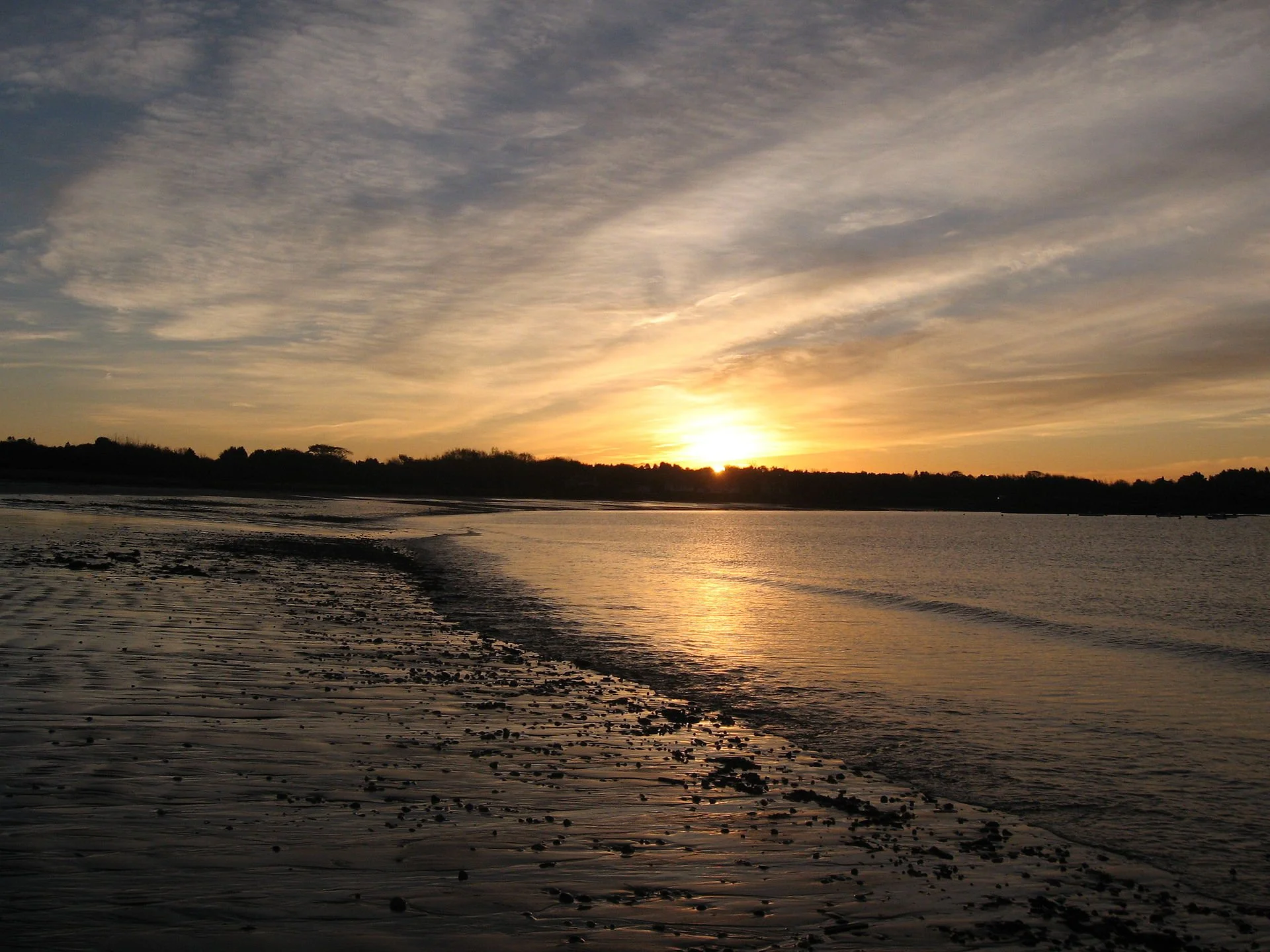
Find another place, please
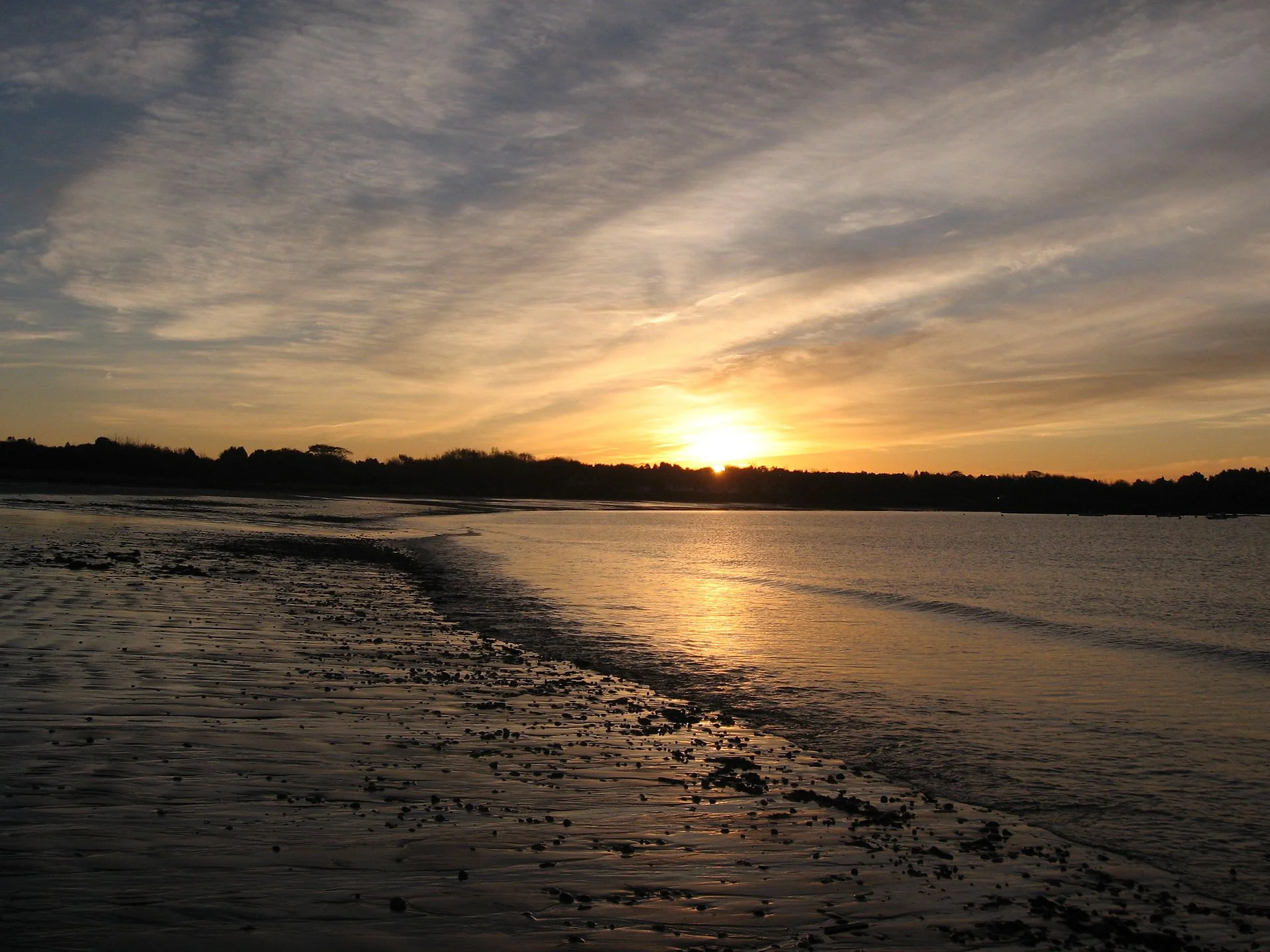
Sunrise in Cape Elizabeth
— Photo by Erin McDaniel (Erinmcd)
Adapted from Robert Whitcomb’s “Digital Diary,’’ in GoLocal24.com
Rhode Island Gov. Dan McKee’s administration has just approved spending nearly $31 million in state funds for 23 affordable-housing projects, for a total of 600 units in 13 cities and towns. Sounds nice, but I wonder how this will play out in certain localities, some of which have many poor people and some with quite a few wealthy ones.
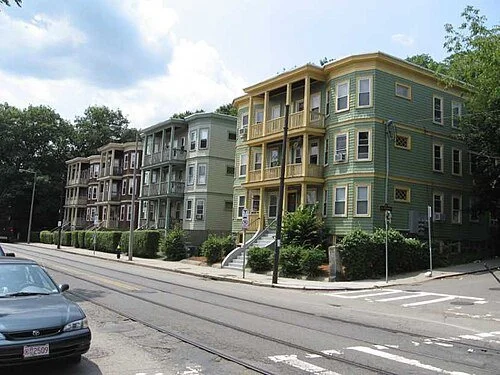
It's often close to impossible to put affordable housing in an affluent town. For example, I just came across a Portland Press Herald story of how foes of a project called Dunham Court, in toney Cape Elizabeth, Maine, have killed the project, which was to include a 46-unit apartment building near Cape Elizabeth’s town hall and within walking distance of a supermarket, pharmacy, public schools, community center, police and fire station and the Thomas Memorial Library. The proximity to these services would have decreased the need for the low-income renters to take on the expense of cars. Oh, well.
Affordable housing is scarce in Greater Portland, as it is in many places. Well-off people don’t want poorer people near them. This is part of the reason for “snob zoning,’’ which includes such things as high minimum acreage requirements. Of course, this limits the construction of new housing, which raises prices and makes housing even less affordable for moderate and low-income people.
To read about the Rhode Island plan, please hit this link.
To read about the Dunham Court collapse, please hit this link.
Don't look over the railings
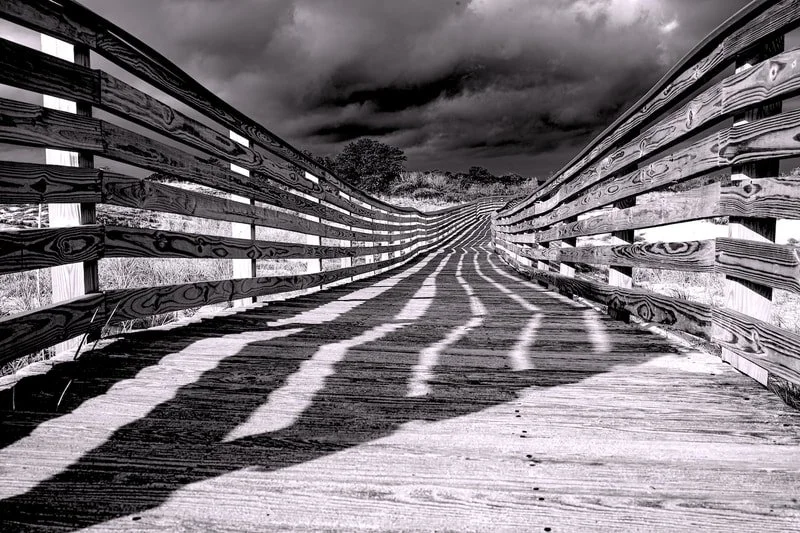
“Between the Lines” (limited edition photo print on anodized aluminum), by Kathleen McCarthy at Alpers Fine Art, Andover, Mass.
‘Too immense’

— Photo by Overberg

“The night was too immense for any lantern,
Yet one was coming swinging down the road,
And someone’s frosty breath was hung above it
And looked like dust of stars as someone strode.’
— From “The Cry,’’ by Robert P. Tristram Coffin (1892-1955), a Maine-based, Pulitzer Prize-winning poet (and an historian)
‘Pure, blank sheet’

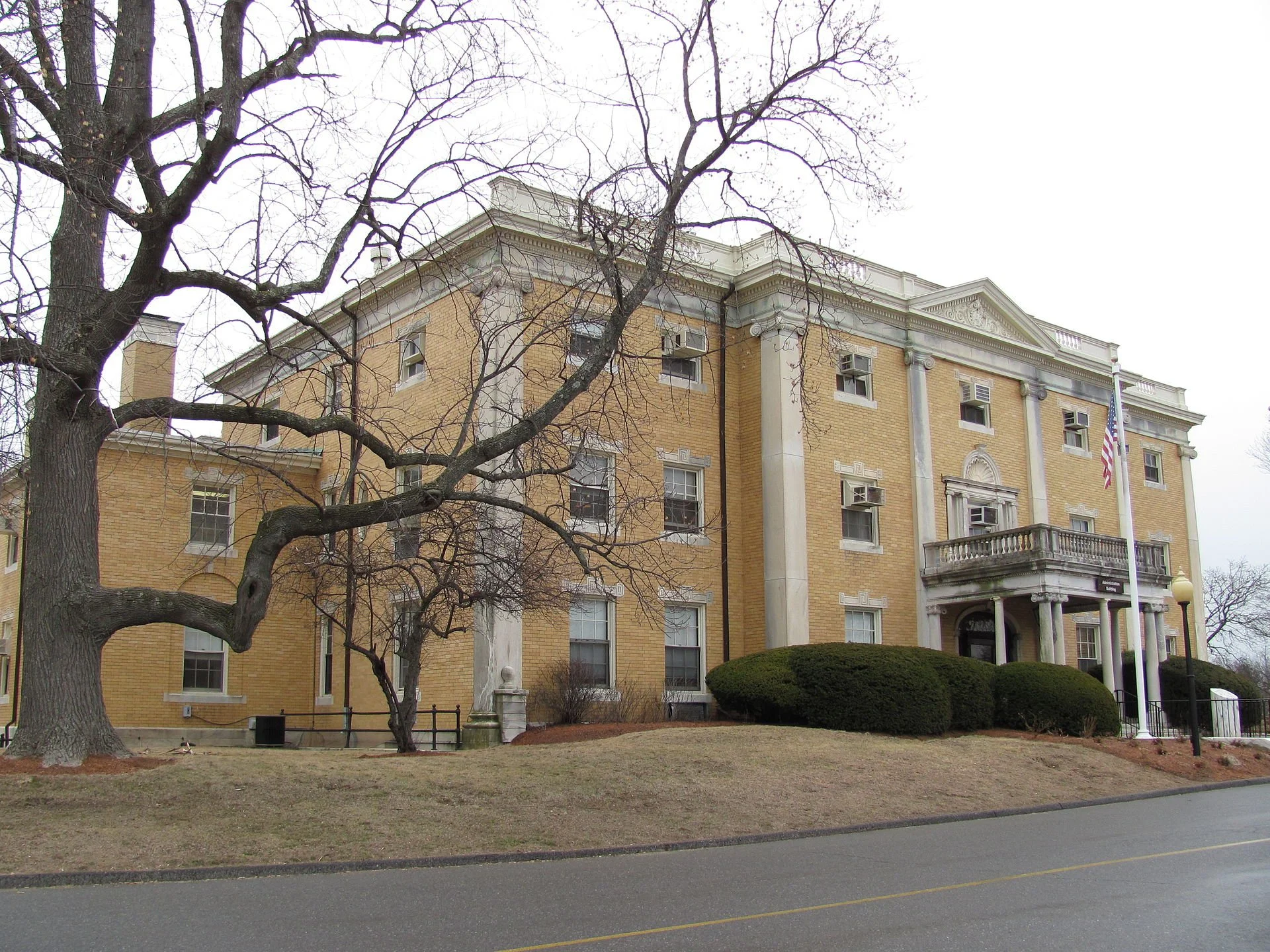
Administration Building at McLean Hospital
— Photo by John Phelan
“A fresh fall of snow blanketed the asylum grounds — not a Christmas sprinkle, but a man-high January deluge, the sort that snuffs out schools and offices and churches, and leaves, for a day or more, a pure, blank sheet in place of memo pads, date books and calendars.’’
From autobiographical novel The Bell Jar, by Sylvia Plath (1932-1963). She was depressed most of her life and killed herself. The “asylum’’ she refers to is probably McLean Hospital, in Belmont, Mass.
Climb every body
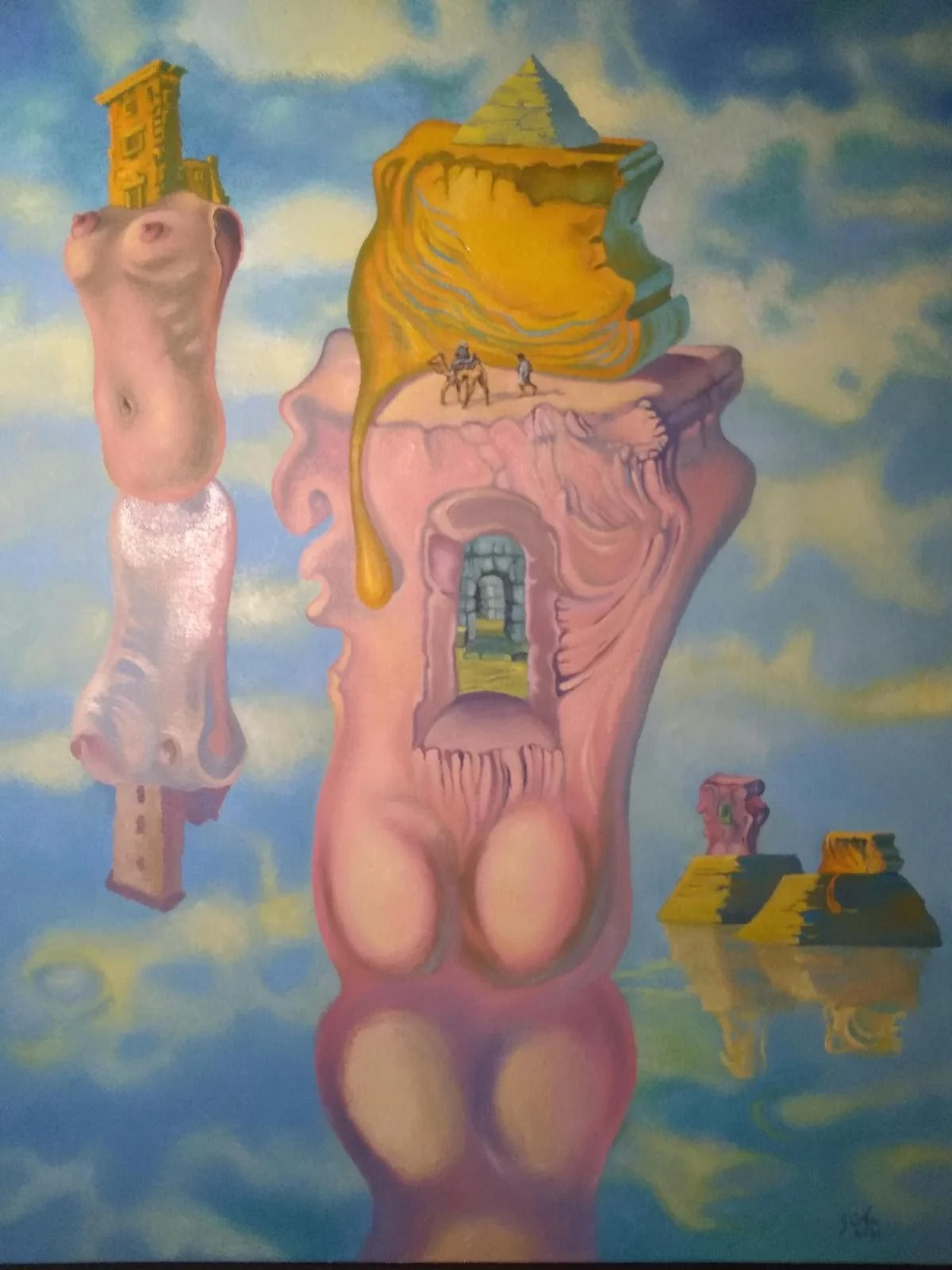
“Enochian Landscape” (oil on canvas), by James Cole, at Galatea Fine Art, Boston, through Jan. 16
Can't hear the forest for the trees?

“Adventures in Echolocations: Somnambulist,’’ by Serena Perrone, at Cade Tompkins Projects, Providence.
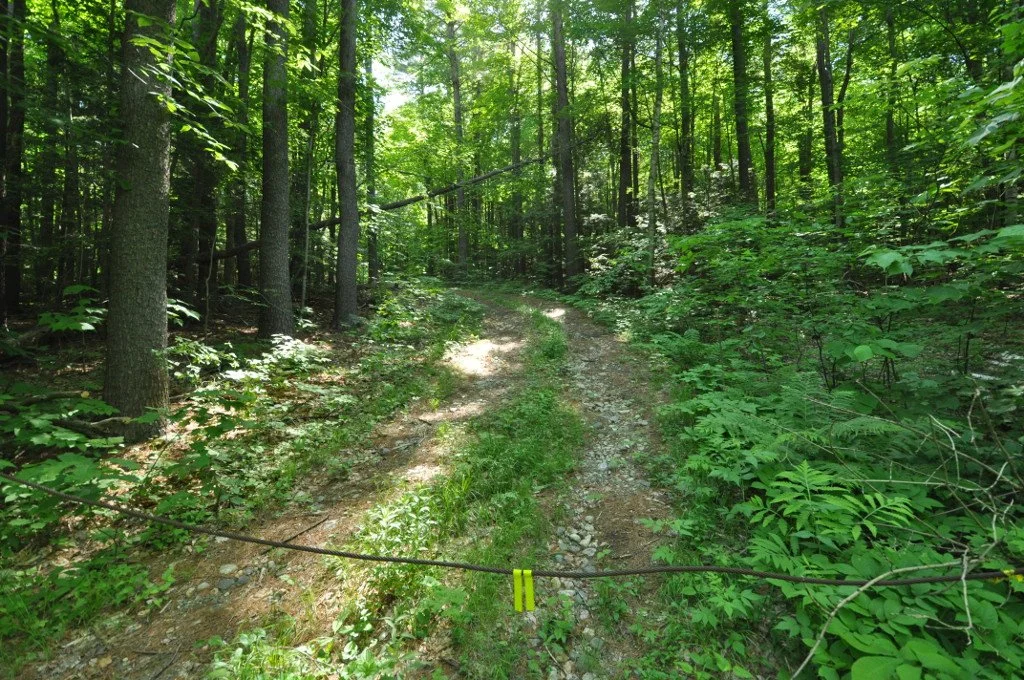
Buckland State Forest entrance, in Buckland, in western Massachusetts
Caitlin Faulds: Trying to keep climate change from turning more toxic at N.E. waste sites
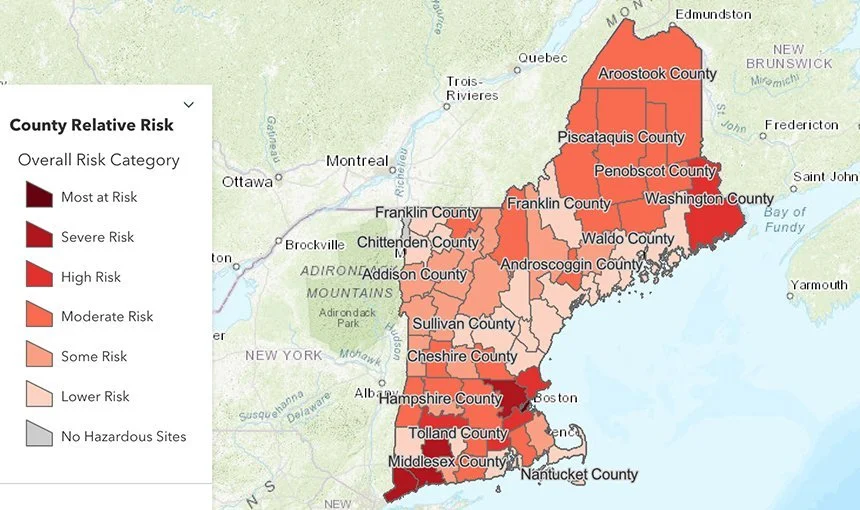
Providence County, in Rhode Island, and Suffolk County, in Massachusetts, are two of the most at-risk counties in New England from pollution buried at toxic sites.
— Conservation Law Foundation map
From ecoRI News (ecori.org)
Hazardous-waste sites and chemical facilities pockmark New England, leftovers of the region’s industrial past. And little action is being taken to prevent climate change from affecting these sites and cooking up a toxic future, according to analysts at the Conservation Law Foundation (CLF).
A regional report by CLF Massachusetts released this fall combined projections of climate risk with data on social vulnerability and hazardous- waste sites to build a comprehensive map of anticipated toxic-pollution risk from Connecticut to Maine. The results, which show that much of New England could face compounding threats, are startling — even to the mapmakers.
“I bought a house like six months ago … and was actually surprised by the number ... of [Superfund] sites that are in such close proximity to residential neighborhoods,” said Deanna Moran, CLF Massachusetts director of environmental planning. “It’s a little bit scary, but it’s a healthy amount of fear.”
In Rhode Island, Providence County was determined to be the county at highest risk, due to a combination of moderate wildfire risk, severe heat risk, high social vulnerability and 143 hazardous sites. Massachusetts’ s Suffolk County, which includes Boston, was deemed most at-risk in New England.
“A lot of people don’t realize how ubiquitous hazardous sites are, even Superfund sites are, throughout our region,” Moran said. “Even if a site is under remediation or fully remediated, those are the sites that we are still worried about because they were remediated without climate change at the forefront.”
The county-level analysis factors in risk associated with nearly 3,000 hazardous sites. These New England locations include landfills, Superfund sites, brownfields and 1,947 facilities across the region that generate large quantities of hazardous waste or are permitted for the treatment, storage or disposal of toxic chemicals. Many of these hazardous sites are aging, use failing technology, and/or do not have sufficient safeties in place to protect nearby communities in a warmer world, according to the CLF report.
“The techniques that we used to remediate those sites 20 years ago might not anticipate more extreme precipitation or flooding or heat,” Moran said, “and those are the ones that I think are really concerning ’cause they’re really not on the radar.”
Floods could damage infrastructure containing hazardous waste, trigger chemical fires, hinder technology monitoring toxic pollution, and create a toxic stew of floodwater and contaminants, according to the report. Rising temperatures could damage protective caps over contaminated properties and raise the toxicity level of some materials. Wildfires could ravage hazardous-waste sites, damaging protective infrastructure and releasing airborne contaminants.
The lineup of climate risks — which, according to CLF Massachusetts policy analyst Ali Hiple, were “weighted equally” in the report — paints a bleak scene of the region’s future, a future that has been glimpsed in isolated events across the country in recent years.
“Luckily, we have not seen that type of impact in the New England region yet, but we want to make sure that we’re being proactive now and not reactive later,” Moran said.
But despite knowing the dangers that climate poses, federal agencies “are not doing enough to address them, and that puts our communities in danger,” according to the CLF report. In 2019, a U.S. Government Accountability Office report suggested the Environmental Protection Agency should consider climate to ensure long-term Superfund site remediation and protection plans.
“We really just want to see the EPA really leading on this,” said Saranna Soroka, a legal fellow at CLF Massachusetts. “They’ve indicated they know the risk that climate change poses to these sites … but we want to see really consistent, really clear standards applied.”
Soroka noted that the federal agency could analyze climate impact as part of its existing Superfund-site review framework, which mandates site checks every five years. So far, climate analyses have not been incorporated, she said, despite EPA authority to do so.
“I think we’re well beyond the time of thinking through how we should be doing this,” Moran said. “We know the risks are real. In some cases, we’re already seeing them, and the time to be acting on them is now.”
Editor’s note: Here are links to EPA-designated Superfund sites in Rhode Island, Massachusetts, and Connecticut.
Caitlin Faulds is an ecoRI News journalist.
Warren Getler: This most uncertain winter
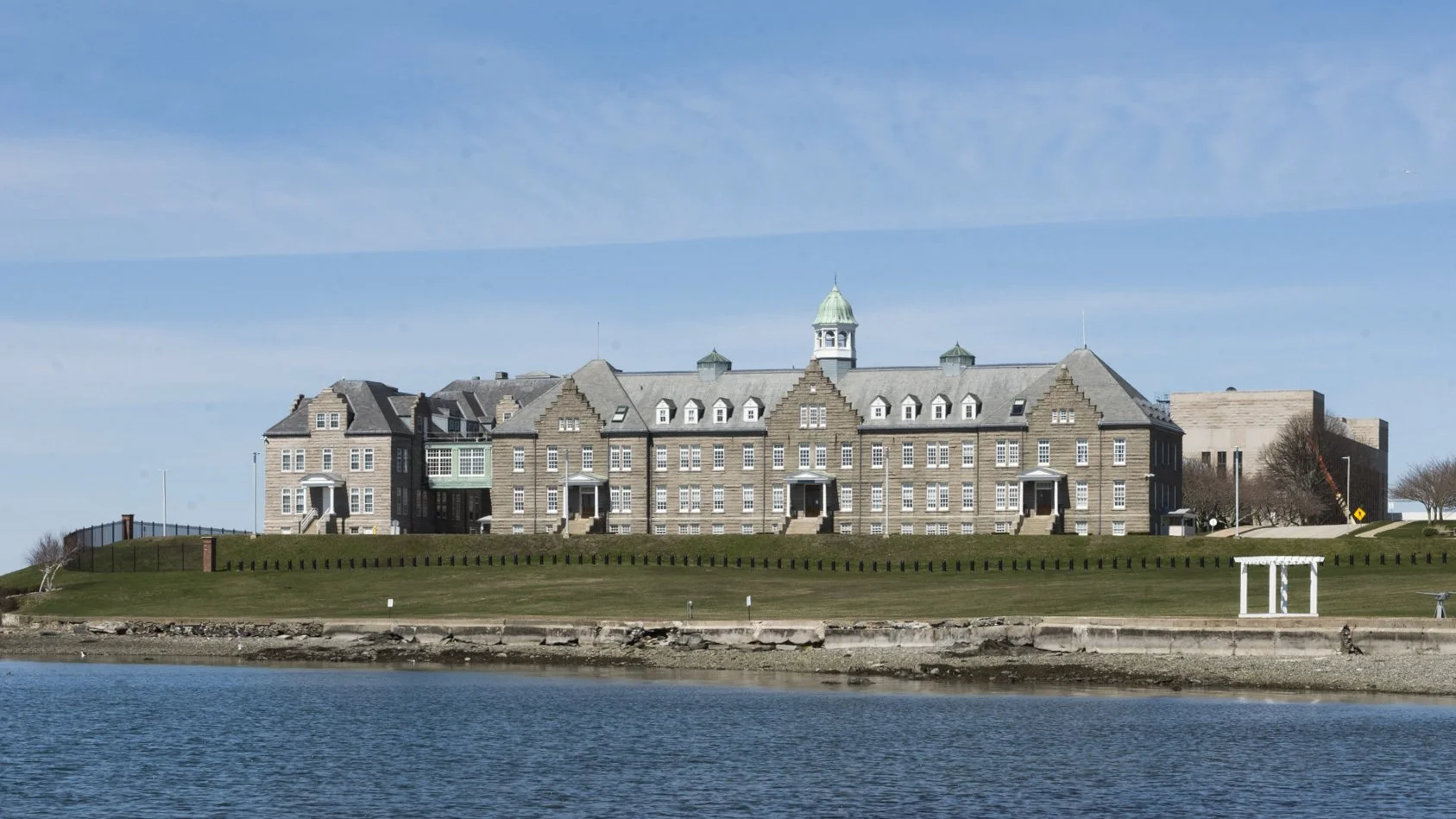
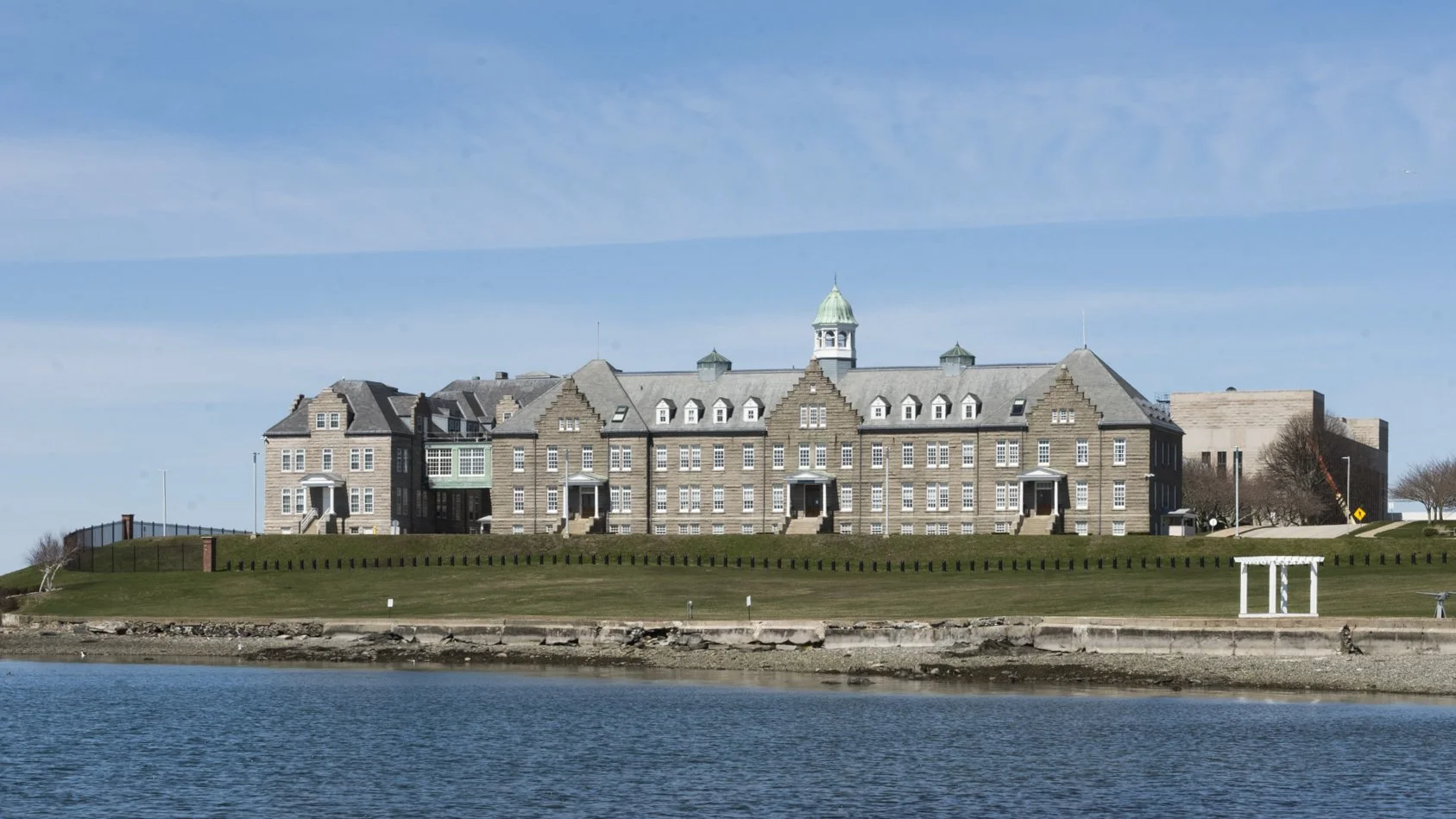
Luce Hall (1884) at the U.S. Naval War College, in Newport, R.I. The institution is a center of the U.S. military’s war-gaming work.
—U.S. Navy photo by Jaima Fogg

Ukrainian troops in the threatened country’s Donbas region. Russia has been massively increasing its troop strength nearby in what some observers fear is a precursor to an all-out invasion.
America faces its most challenging year-end since its formal entry into the Second World War, in December 1941.
While we have been internally grappling with COVID for nearly two years, dark clouds have gathered on the geopolitical map.
Russia is mobilizing some 175,000 troops on its border with Ukraine; China is flying repeated bomber test-runs near Taiwan; Iran is using its proxies to hit its Arab neighbors as well as Israel and U.S. bases in Iraq and Syria with drones and missiles. Russia and China are exhibiting their closest military collaboration – in joint-training exercises and bilateral arms sales – in decades. And both have signed military and economic pacts with Iran in recent years.
Will there be war, indeed, continental war, on several fronts?
The risk may be greater than at any time since World War II.
Authoritarian rulers-for-life in Moscow and in Beijing are testing the waters. Specifically, they are testing the mettle of U.S. President Joe Biden and his first-year administration. They’re gauging a Biden preoccupied with internal debates around vaccination policies, inflation, crime, supply-chain bottlenecks and other largely domestic, massively time-consuming matters.
And they perceive vulnerability in the Oval Office – with Biden, who just turned 79, coming off a grueling multi-year presidential campaign against incumbent Donald Trump and then seeing his approval ratings drop for months. What’s more, they sense a country deeply divided -- an American superpower at growing risk of civil unrest.
Are these Russian and Chinese military maneuvers mere provocations, mere signals of what could happen if the West challenges their geopolitical ambitions?
Or are these up-tempo deployments by Russia’s Putin and China’s Xi meant merely for domestic Russian and Chinese consumption? Possibly not.
This time, the activity around such large-scale mobilizations appears alarmingly furtive, and therefore open to wide interpretation, particularly regarding Moscow’s intentions toward Ukraine. These maneuvers (including rumors of a planned assault on eastern Ukraine in late January or early February) may invite retaliation and potential “miscalculations” by both sides. Putin and Xi may not appreciate the seriousness of possible "kinetic" responses by NATO allies and our friends in Asia. Israel, meanwhile, uncertain of backing from Washington, is leaning toward taking things into its own hands to stop -- with direct military action from the air -- a nuclear-armed Iran from emerging.
America, as the world’s leading democracy, is slow to anger, which is a good thing. Yet we are also at times too slow in confronting harsh realities beyond our borders. As a nation, we must focus on the large-scale threat scenarios developing in Europe, East Asia and the Middle East…with level-headed coolness and a serious, sustained focus.
John F. Kennedy, in his Harvard thesis-turned book, Why England Slept, pointed out the danger of Britain ignoring for too long Nazi Germany’s growing war machine and the bellicosity of its totalitarian dictator, Adolf Hitler.
“We can't escape the fact that democracy in America, like democracy in England, has been asleep at the switch. If we had not been surrounded by oceans three and five thousand miles wide, we ourselves might be caving in at some Munich of the Western World,” writes Kennedy, the then 22-year-old future president of the United States.
“To say that democracy has been awakened by the events of the last few weeks is not enough. Any person will awaken when the house is burning down. What we need is an armed guard that will wake up when the fire first starts, or, better yet, one that will not permit a fire to start at all. We should profit by the lesson of England and make our democracy work. We must make it work right now. Any system of government will work when everything is going well. It's the system that functions in the pinches that survives.”
To prevent tipping into something recalling the 1939-45 cataclysm, we must show resolve – an unquestioned firmness that lets our real and potential adversaries know that we stand united -- at home and with our key allies abroad. Such resolve deters dangerous opportunism among our foes, setting up a bulwark against a lurch into regional war, indeed, into seemingly unthinkable inter-continental war below the nuclear threshold.
We must recognize that both China and Russia have been developing advanced missile systems – notably conventional-use hypersonic weapons – that could put us at risk in the same manner (or more at risk) as the surprise Japanese attack on Pearl Harbor on Dec. 7, 1941. Back then, at least, we could surge into a mass production of armaments as never-before seen; today, given supply-chain restrictions and other factors, such an achievement would perhaps be less certain after any potentially devastating attack on our military bases, ports and other critical infrastructure.
Lest we forget, while Britain slept in those years before the outbreak of WWII, Germany was able to secretly develop its , first-of-their-kind V-2 rockets that would eventually rain down on London and cause widespread damage and terror. Today, Pentagon chiefs are repeatedly sounding the alarm about the yawning gap in U.S. vs. Chinese/Russian advanced hypersonic-missile capabilities, not to mention recently demonstrated Russian capabilities of destroying satellites in orbit with missiles fired from its territory.
To its credit, the Biden administration is slowly but surely turning its strategic military assessments and its inner-circle Pentagon planning toward our China challenge, thus pivoting away from the “forever wars” of Afghanistan, Iraq and, going further back, Vietnam. And, just last week, U.S. Secretary of State Antony Blinken had this to say about the massive Russian troop buildup, including more than 1,000 tanks, on the border of Ukraine. “We don’t know whether President Putin has made the decision to invade. We do know that he’s putting in place the capacity to do so in short order should he so decide.”
As we approach the 80th anniversary of Pearl Harbor this week -- not to mention the 250th anniversary as a nation in less than five years -- America cannot afford to be ill-prepared for tectonic convulsions on the geopolitical landscape. We can not, as a society, spend too much time navel-gazing or being preoccupied with the likes of the latest crazes on Instagram, Tik-Tok or the Metaverse.
These times demand extraordinary leadership, no matter the internal challenges and pre-occupations of the world’s greatest democracy. As Americans, we will be roundly tested during this most uncertain winter -- and not merely by inflationary pressures or a new surge of the Delta and Omicron COVID-19 variants, which are eroding the fabric of civil society both here and abroad.
Warren Getler, based in Washington, D.C., writes on international affairs. He’s a former journalist with Foreign Affairs Magazine, International Herald Tribune, The Wall Street Journal and Bloomberg News. His two sons serve in the U.S. military.
Hands across the sea
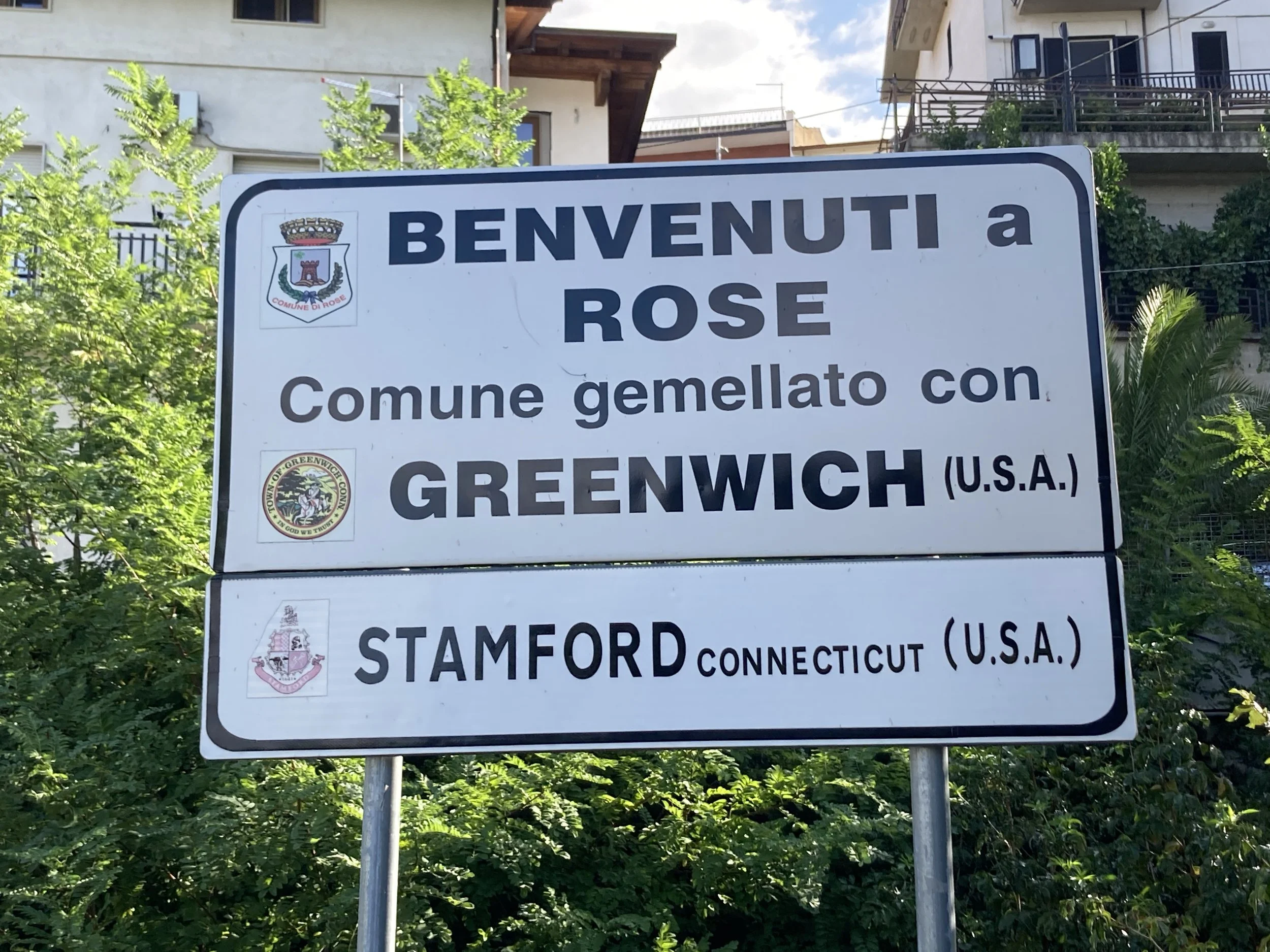
Our friend Bill Perna, who grew up in Greenwich, was very surprised to come across this sign while driving into the town of Rose in Italy’s Calabria region.
— Bill Perna
Taiwan scares Beijing

The flag of the Republic of China, Taiwan’s official name.
Adapted from Robert Whitcomb’s “Digital Diary,’’ in GoLocal24.com.
Good for the Biden administration for inviting Taiwan to the "Summit for Democracy" it has organized for Dec. 9-10, angering, of course, the Chinese dictatorship, which hates having the island democracy as a model that might tempt the dictatorship’s subjects in Mainland China. Bejing claims ownership of Taiwan.
But no, Taiwan has not “always been part of China,’’ contrary to Mainland claims. Hit this link for some history.
The summit is part of Biden’s effort to pull together the world’s democracies and semi-democracies (the latter including the U.S., where democracy is under siege by rising fascism) to push back against increasing aggression by autocracies led by China and Russia after the damage done by dictator-suck-up Donald Trump.
Taiwan, by the way, has many business investments in New England, especially in high technology, and vice versa, as well as many cultural activities. And since 1996, Taipei, the Taiwanese capital, has been a sister city of Boston.
Hit this link for more information.
Only six months to go
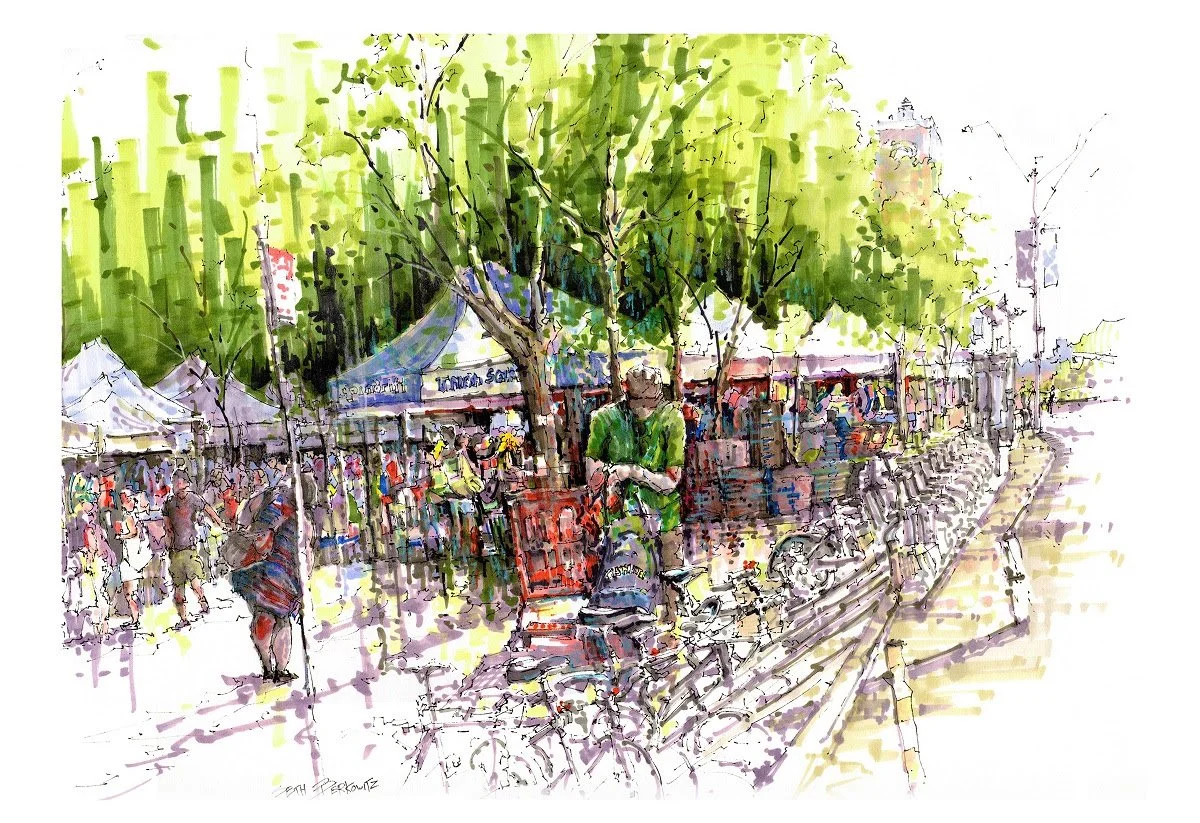
Union Square Farmers' Market (watercolor), by Seth Berkowitz, at Brickbottom Artists Association, Somerville, Mass., in the show “Somerville as Muse,” Dec. 9-Jan. 15
Circling makes sense
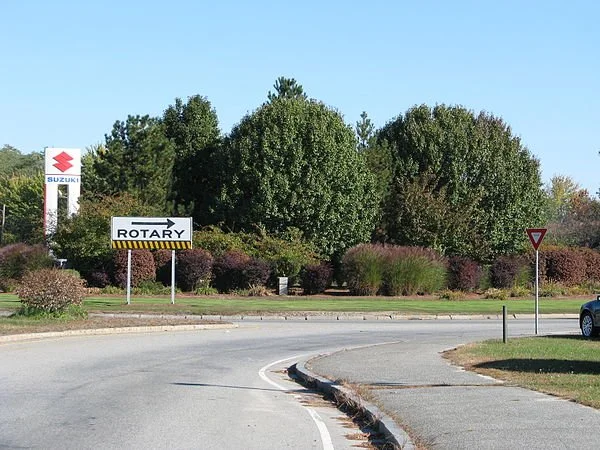
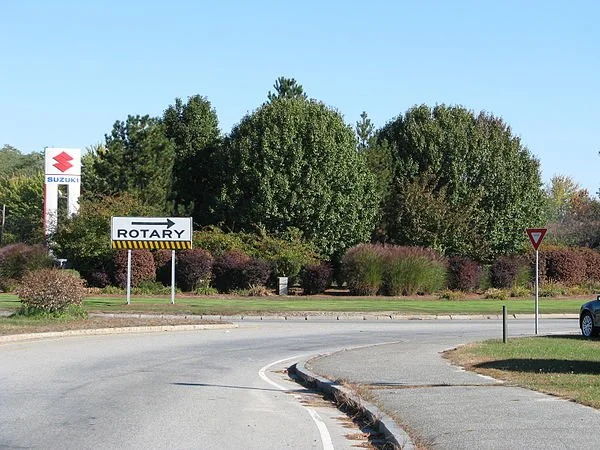
Rotary sign at a Lowell, Mass., traffic circle. Note the ‘Yield’’ sign.
From Robert Whitcomb’s “Digital Diary,’’ in GoLocal24.com
like too many other commentators on the $1.1 trillion physical-infrastructure law, have too often failed to note three very important things about, in addition, most famously, to the transportation-related stuff: It would help improve water-supply systems, which are dangerously corroded and outdated in many places and strengthen the electric grid and Internet, including their security, which are all too vulnerable to attacks by the Russians, Chinese, North Koreans and other enemies as well as those extortionists just in it for the money.
We need fewer road intersections with lights and more traffic circles, with landscaping in the middle. The latter have fewer accidents, in part because they slow down drivers where they should be slowed down.\
The Federal Highway Administration reports that traffic circles reduce injury and fatal crashes by 78-82 percent compared to conventional intersections. A typical intersection has 32 conflict points, compared to only 8 at a roundabout.
And, as I discovered last week driving up Route 10 in New Hampshire, they can be quite attractive.
Something for states and localities to consider when it comes to spending federal infrastructure money.
Even in moderation?

“Man’s Greatest Enemy” (c. 1915, oil on canvas), by Charles Allan Winter (1869-1942), at the Cape Ann Museum, Gloucester, Mass.
Modernist chowder

‘‘Today we take New England clam chowder as something traditional that makes our roots as American cooking very solid, with a lot of foundation. But the first person who decided to mix potatoes and clams and bacon and cream, in his own way 100 to 200 years ago, was a modernist.’’
— Jose Andres (born 1969), Spanish-born American celebrity chef, restaurateur and founder of World Central Kitchen (WCK), a non-profit devoted to providing meals in the wake of natural disasters
Stretching out the pandemic

“In the Time of Covid” (acrylic on paper), by Antoinette Winters, at Kingston Gallery, Boston, for December
She tells the gallery:
“Much like everyone else, I was consumed by the news. I read and listened to anything that might inform me. The language, and its daily repetition, took hold. I made lists of phrases and words. I organized and edited them, focusing primarily on the language and events of the first three months of the pandemic. The use of a long accordion book provided both a means of including the extensive text while also emphasizing the length of the pandemic.”
Antoinette Winters is a mixed-media artist who works at her studio at the Waltham Mills Artist Association, in Waltham, Mass.
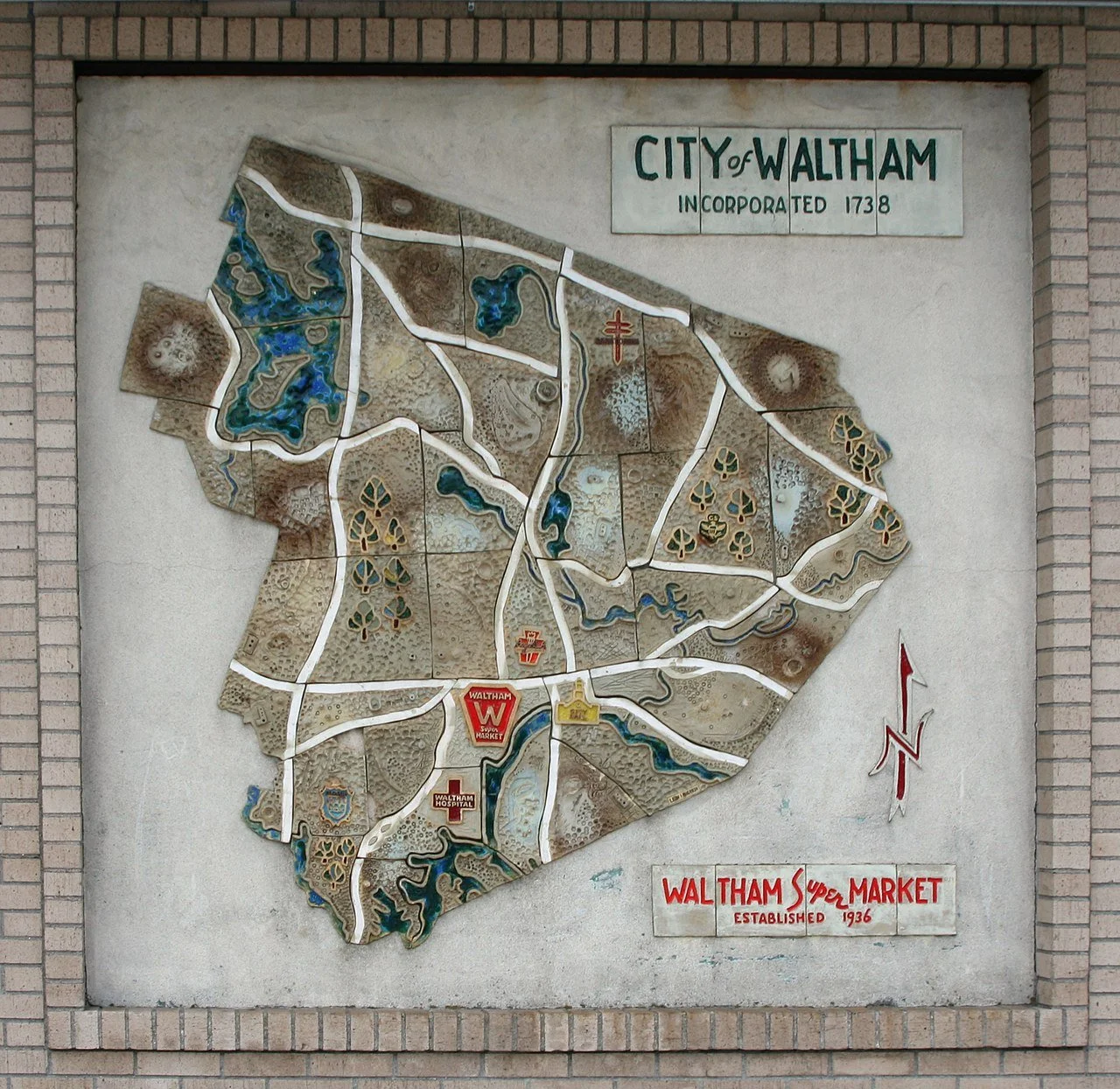
Waltham Supermarket on Main Street, in Waltham, established in 1936, was a large historic grocery store that closed in the 1990s. The building continues to be a supermarket, occupied subsequently by Shaw's, then Victory, and now Hannaford.
— Photo by jmorgan

Judith Graham: COVID-19 makes smelling the flowers more difficult

“We tend to think of our sense of smell as primarily aesthetic. What’s very clear is that it’s far more important. The olfactory system plays a key role in maintaining our emotional well-being and connecting us with the world.”
— Dr. Sandeep Robert Datta, a professor of neurobiology at Harvard Medical School
The reports from COVID-19 patients are disconcerting. Only a few hours before, they were enjoying a cup of pungent coffee or the fragrance of flowers in a garden. Then, as if a switch had been flipped, those smells disappeared.
Young and old alike are affected — more than 80% to 90% of those diagnosed with the virus, according to some estimates. While most people recover in a few months, 16% take half a year or longer to do so, research has found. According to new estimates, up to 1.6 million Americans have chronic smell problems due to covid.
Seniors are especially vulnerable, experts suggest. “We know that many older adults have a compromised sense of smell to begin with. Add to that the insult of covid, and it made these problems worse,” said Dr. Jayant Pinto, a professor of surgery and specialist in sinus and nasal diseases at the University of Chicago Medical Center.
Recent data highlights the interaction between covid, advanced age and loss of smell. When Italian researchers evaluated 101 patients who’d been hospitalized for mild to moderate covid, 50 showed objective signs of smell impairment six months later. Those 65 or older were nearly twice as likely to be impaired; those 75 or older were more than 2½ times as likely.
Most people aren’t aware of the extent to which smell can be diminished in later life. More than half of 65- to 80-year-olds have some degree of smell loss, or olfactory dysfunction, as it’s known in the scientific literature. That rises to as high as 80% for those even older. People affected often report concerns about safety, less enjoyment eating and an impaired quality of life.
But because the ability to detect, identify and discriminate among odors declines gradually, most older adults — up to 75% of those with some degree of smell loss — don’t realize they’re affected.
A host of factors are believed to contribute to age-related smell loss, including a reduction in the number of olfactory sensory neurons in the nose, which are essential for detecting odors; changes in stem cells that replenish these neurons every few months; atrophy of the processing center for smell in the brain, called the olfactory bulb; and the shrinkage of brain centers closely connected with the olfactory bulb, such as the hippocampus, a region central to learning and memory.
Also, environmental toxic substances such as air pollution play a part, research shows. “Olfactory neurons in your nose are basically little pieces of your brain hanging out in the outside world,” and exposure to them over time damages those neurons and the tissues that support them, explained Pamela Dalton, a principal investigator at the Monell Chemical Senses Center, a smell and taste research institute in Philadelphia.
Still, the complex workings of the olfactory system have not been mapped in detail yet, and much remains unknown, said Dr. Sandeep Robert Datta, a professor of neurobiology at Harvard Medical School.
“We tend to think of our sense of smell as primarily aesthetic,” he said. “What’s very clear is that it’s far more important. The olfactory system plays a key role in maintaining our emotional well-being and connecting us with the world.”
Datta experienced this after having a bone marrow transplant followed by chemotherapy years ago. Unable to smell or taste food, he said, he felt “very disoriented” in his environment.
Common consequences of smell loss include a loss of appetite (without smell, taste is deeply compromised), difficulty monitoring personal hygiene, depression and an inability to detect noxious fumes. In older adults, this can lead to weight loss, malnutrition, frailty, inadequate personal care, and accidents caused by gas leaks or fires.
Jerome Pisano, 75, of Bloomington, Ill., has been living with smell loss for five years. Repeated tests and consultations with physicians haven’t pinpointed a reason for this ailment, and sometimes he feels “hopeless,” Pisano admitted.
Before he became smell-impaired, Pisano was certified as a wine specialist. He has an 800-bottle wine cellar. “I can’t appreciate that as much as I’d like. I miss the smell of cut grass. Flowers. My wife’s cooking,” he said. “It certainly does decrease my quality of life.”
Smell loss is also associated in various research studies with a higher risk of death for older adults. One study, authored by Pinto and colleagues, found that older adults with olfactory dysfunction were nearly three times as likely to die over a period of five years as seniors whose sense of smell remained intact.
“Our sense of smell signals how our nervous system is doing and how well our brain is doing overall,” Pinto said. According to a review published earlier this year, 90% of people with early-stage Parkinson’s disease and more than 80% of people with Alzheimer’s disease have olfactory dysfunction — a symptom that can precede other symptoms by many years.
There is no treatment for smell loss associated with neurological illness or head trauma, but if someone has persistent sinus problems or allergies that cause congestion, an over-the-counter antihistamine or nasal steroid spray can help. Usually, smell returns in a few weeks.
For smell loss following a viral infection, the picture is less clear. It’s not known, yet, which viruses are associated with olfactory dysfunction, why they damage smell and what trajectory recovery takes. Covid may help shine a light on this since it has inspired a wave of research on olfaction loss around the world.
“What characteristics make people more vulnerable to a persistent loss of smell after a virus? We don’t know that, but I think we will because that research is underway and we’ve never had a cohort [of people with smell loss] this large to study,” said Dalton, of the Monell center.
Some experts recommend smell training, noting evidence of efficacy and no indication of harm. This involves sniffing four distinct scents (often eucalyptus, lemon, rose and cloves) twice a day for 30 seconds each, usually for four weeks. Sometimes the practice is combined with pictures of the items being smelled, a form of visual reinforcement.
The theory is that “practice, practice, practice” will stimulate the olfactory system, said Charles Greer, a professor of neurosurgery and neuroscience at the Yale University School of Medicine. Although scientific support isn’t well established, he said, he often recommends that people who think their smell is declining “get a shelf full of spices and smell them on a regular basis.”
Richard Doty, director of the University of Pennsylvania’s Smell and Taste Center, remains skeptical. He’s writing a review of smell training and notes that 20% to 30% of people with viral infections and smell loss recover in a relatively short time, whether or not they pursue this therapy.
“The main thing we recommend is avoid polluted environments and get your full complement of vitamins,” since several vitamins play an important role in maintaining the olfactory system, he said.
Judith Graham is a Kaiser Health News contributor.
A temporary treatment for SAD

“Christmas Cactus, Winter Light” (oil on panel), by Yvonne Troxell Lamothe, in the show “Beyond the Curve,’’ at Galatea Fine Art, Boston, Dec. 3-Jan. 16
The gallery says:
“{Ms. Lamothe} has been producing both oil paintings and watercolors mainly completed en plein air. Yvonne embraces her roots in New England. Finding intrigue with marshlands, woodlands and glorious vistas of Quincy, Mass., and Greater Boston’s South Shore, where she now lives and her cabin in Ossipee, N.H., and the White Mountains where she finds solitude gives her ample inspiration for painting. Trips to the Maine coast and Vermont offer great additional and endless places to stop and paint. It is no wonder that such a range of American painters have found their way here to New England. Among her favorites are Marsden Hartley, Lois Dodd and Milton Avery. Her paintings show close connections to the earth because of the unusual perspectives that she finds to insure a closeness to her subject. Color is of essence to Yvonne and this joy can be felt in her work. And, of course, as the earth becomes more threatened, she hopes her paintings will inspire others to take time to appreciate and celebrate our planet.’’
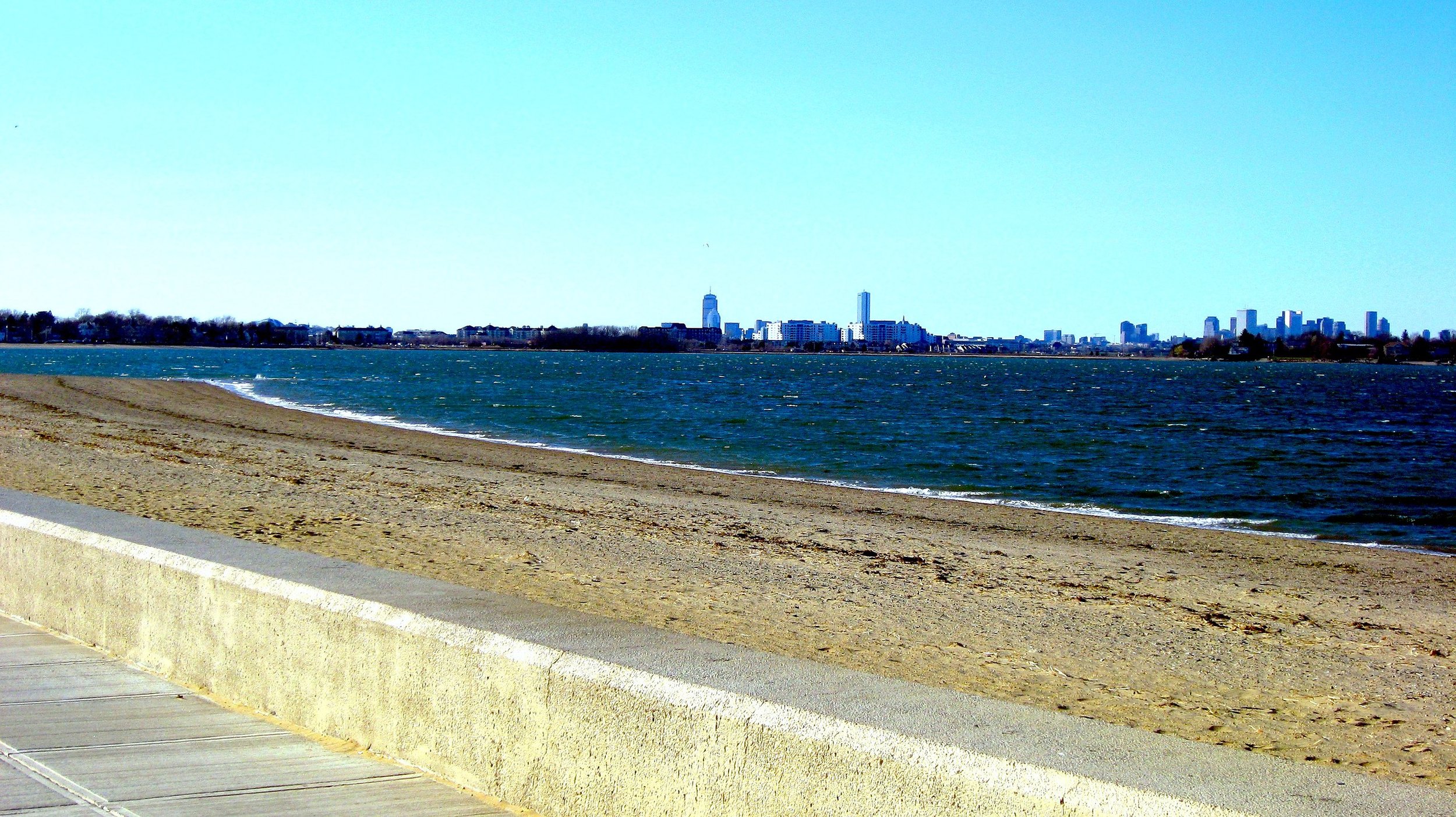
View of Marina Bay and Boston across Quincy Bay from Wollaston Beach, in Quincy
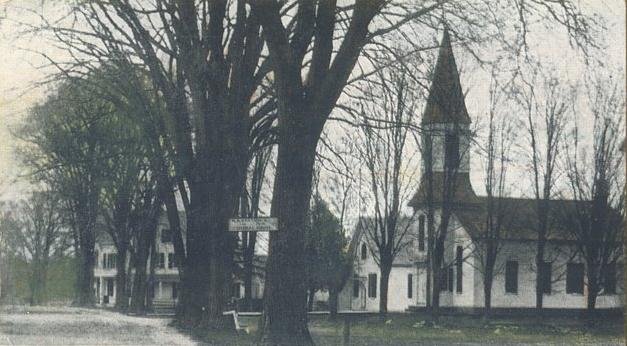
Center Ossipee in 1915
CVS wants stores with affluent customers — obviously; many others might be closed
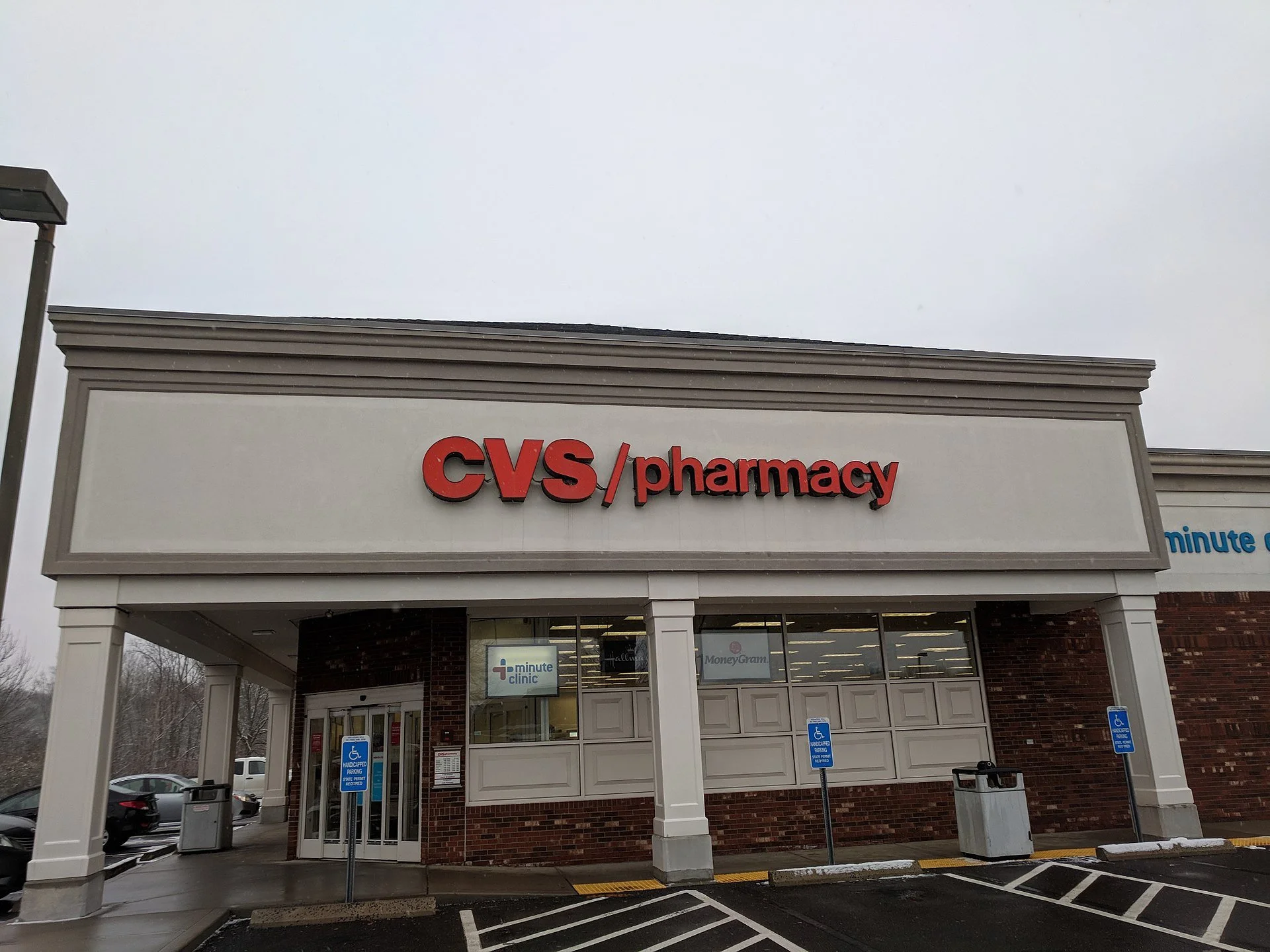
In Coventry, Conn.
From Robert Whitcomb’s “Digital Diary,’’ in GoLocal24.com
Woonsocket, R.I.-based CVS plans to close 10 percent of its stores. This may well be because of intensifying competition from Amazon, Walmart, etc., and the proliferation of cheap stores such as Dollar General that plan big expansions in offerings of health-related stuff. And the mail-order drug business will keep expanding.
Which stores will they close around here? I’ll bet they’ll be in poorer neighborhoods, with fewer well-insured people. CVS stores in affluent neighborhoods, such as Wayland Square, on Providence’s East Side, will survive.
Big and hugely profitable hospital chains such as Mass General Brigham are also acting to get more affluent, well-insured customer/patients by setting up mini hospitals in rich suburbs. That raises questions about what happens to the quality of care of patients in poor places as more resources are shifted to the suburban land of milk and honey.