
Vox clamantis in deserto
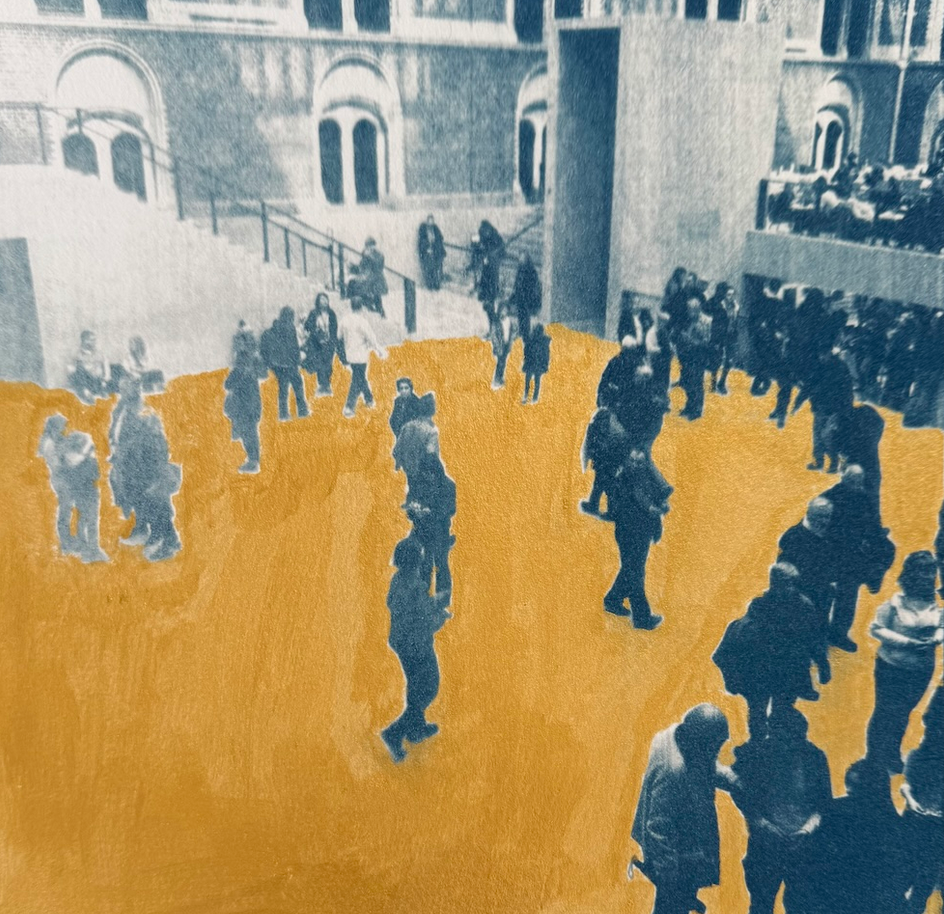
Keep the same tune

“Tell yourself
as it gets cold and gray falls from the air
that you will go on
walking, hearing
the same tune….’’
— From “Lines in Winter,’’ by Mark Strand (1934-2014), a Canadian-American poet. He won a Pulitzer Prize for his 1998 collection Blizzard of One: Poems.
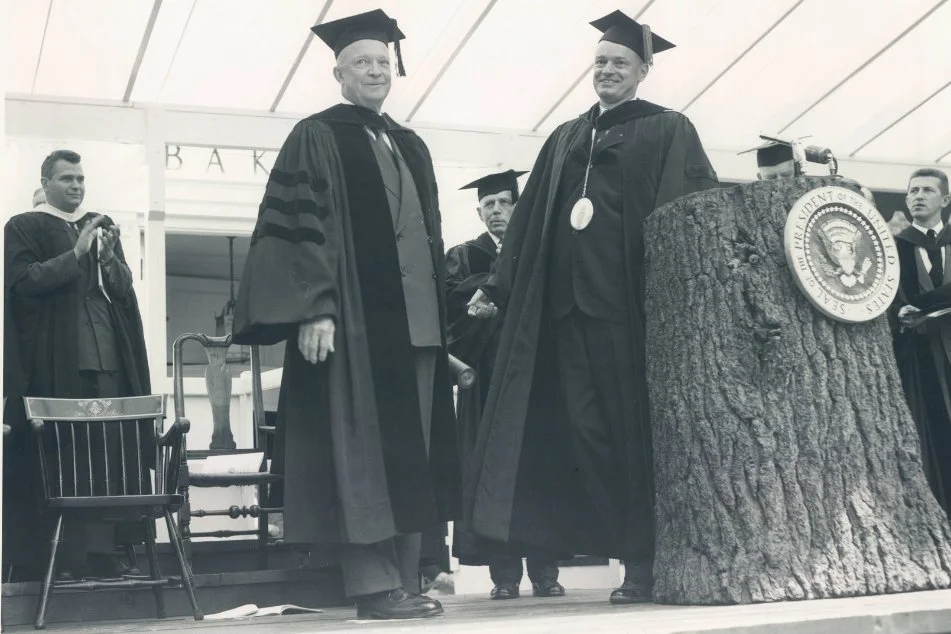
Anthony S. Fauci: What I learned at Holy Cross
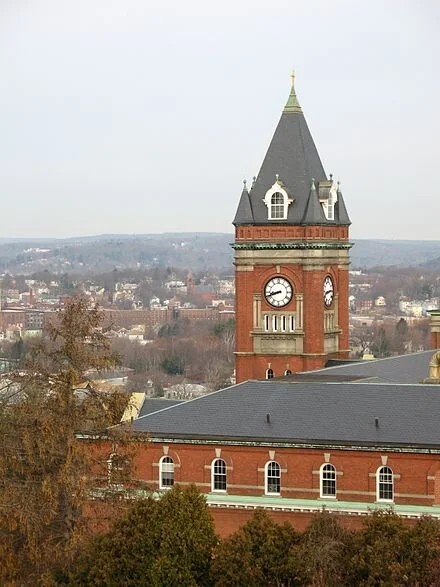
At Holy Cross: O'Kane Hall and clock tower. The 175-acre campus has an irregular layout on a steep hill named Mount Saint James, which offers a panoramic view of Worcester.
“Knowledge goes hand-in-hand with truth — something I learned with a bit of tough love from my Jesuit education at Regis High School in New York and then at the College of the Holy Cross, in Worcester.’’
— Anthony S. Fauci, M.D., director of the National Institute of Allergy and Infectious Diseases since 1984
Before the roads are closed

“The Last Truckload,” by William B. Hoyt, at Edgewater Gallery, Middlebury, Vt.
See:
http://www.wmbhoyt.com/paintings/
and:
https://edgewatergallery.co/
Llewellyn King: COVID-19 points way to faster medicines
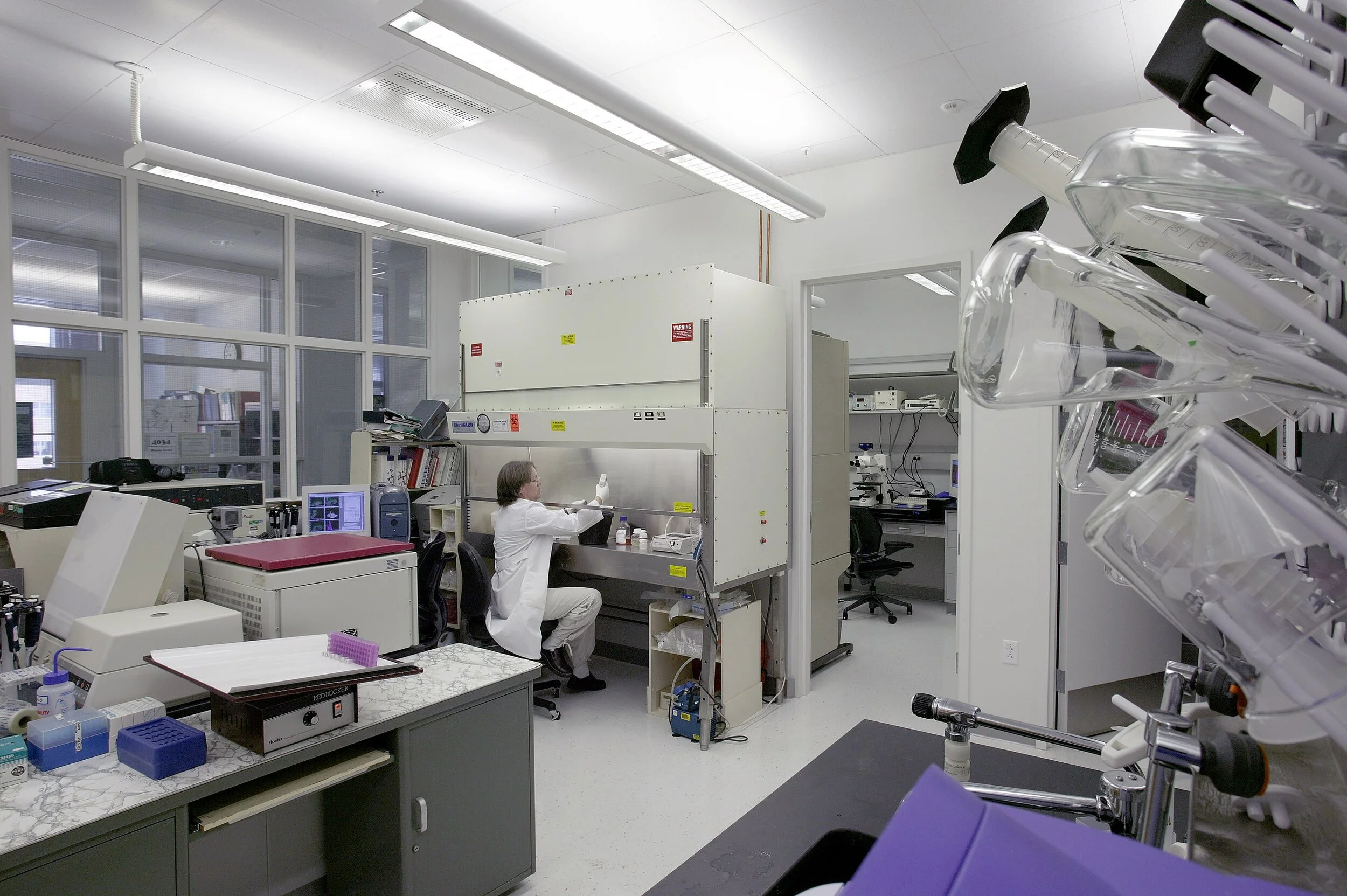
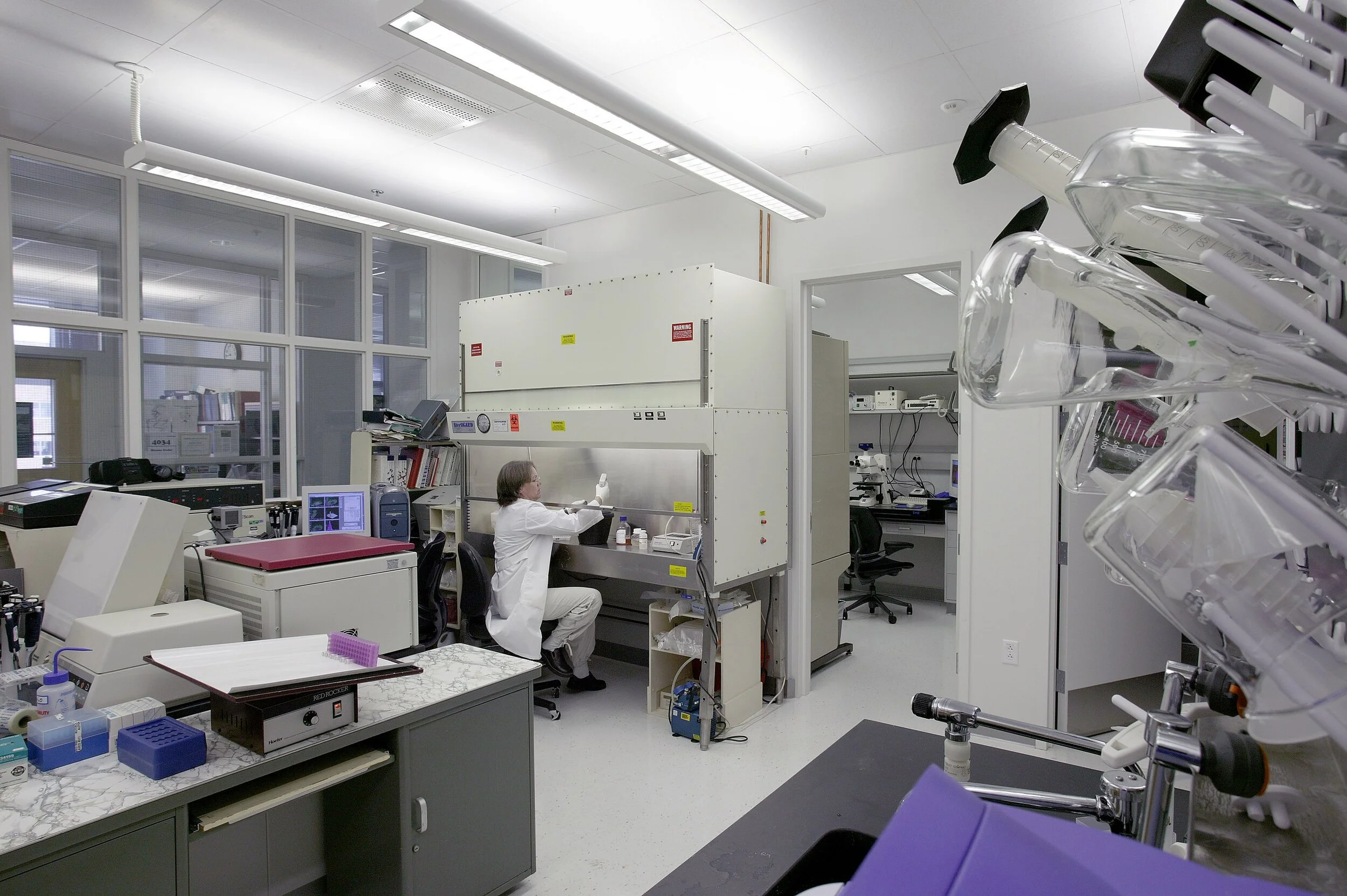
In a Food and Drug Administration lab in Silver Spring, Md.
WEST WARWICK, R.I.
This is the month when the national spirit should start to lift: COVID-19 vaccines could be administered by mid-December. While we won’t reach the summit of a mighty mountain this month, nor well into next year, the ascent will have begun.
It is unlikely to be a smooth journey. There will be contention, accusation, litigation and frustration. Nothing so big as setting out to administer two-dose vaccines to the whole country could be otherwise.
But the pall that hangs so heavily over us with rising deaths, exhausted first responders and overstretched hospitals, will begin to lift very slightly.
For the rest of foreseeable history, there will be accusations leveled at the Trump administration for its handling of the pandemic — or its failure to handle it.
But one thing is certain: Our faith in our ability to make superhuman scientific efforts in the face of crisis will be restored. Developing a COVID-19 vaccine will be compared to putting a man on the Moon.
The large pharmaceutical companies, known collectively as Big Pharma, have shown their muscle. The lesson: Throw enough research and unlimited money at a problem, accelerate the regulatory process, and a solution can result.
Even globalization gets a good grade.
The first-to-market vaccine comes from American pharmaceutical giant Pfizer. But the vaccine was developed at its small German subsidiary, BioNTech, by a husband-and-wife team of first-generation Turkish immigrants. (Beware of whom you exclude.)
Biopharmaceutical research often takes place this way, akin to how it happens in Silicon Valley: Small companies innovate and invent, and larger ones gobble them up and provide the all-important resources for absurdly complicated and expensive clinical trials. These contribute mightily to the cost of new drugs. A new “compound” -- as a drug is called in the trade -- can cost up to $2 billion to bring to market; and financial reserves are needed, should there be costly lawsuits.
The development of new drugs looks like an inverted pyramid. Linda Marban, a researcher and CEO of Capricor Therapeutics Inc., a clinical-stage biotechnology company based in Los Angeles, explained it to me: “The last 20 years have shown a seismic change in how drugs and therapies are developed. Due to the speed at which science is advancing, and the difficulty of early-stage development, most of the early-stage work is done by small companies or the occasional academic. Big Pharma has moved into the role of late-stage clinical, sometimes Phase 2, but mostly Phase 3 and commercial development.”
In the upheaval occasioned by the pandemic, overhaul of the Food and Drug Administration looms large as a national priority. It must be able -- maybe with a greater use of artificial intelligence and data management -- to assess the safety and efficiency of desperately needed drugs without the current painful and often fatal delays.
Marban said of the FDA clinical-trials process: “It is the most laborious and frustrating process which delays important scientific and medical discoveries from patients. There are many situations where patients are desperate for therapy, but we have to climb the long and ridiculous ladder of doing clinical trials due to inefficiencies at the site which include nearly endless layers of contracting, budget negotiations, IRB [Institutional Review Board] approvals and, finally, interest and attention from overworked clinical trial staff.”
This situation, according to Marban, is compounded by the FDA’s requirement for clinical trials conducted and presented in a certain way, which often precludes getting an effective therapy to market. “If we simplify this process alone, we could move rapidly towards treatments and even cures for many horrific diseases,” she added.
War is a time of upheaval, and we are at war against the COVID-19. But war also involves innovation. We have proved that speed is possible when bureaucracy is energized and streamlined.
When COVID-19 is finally vanquished, it should leave a legacy of better medical research and sped-up approval procedures, benefiting all going forward.
Llewellyn King is executive producer and host of White House Chronicle, on PBS. His email is llewellynking1@gmail.com and he’s based in Rhode Island and Washington, D.C.
Linda Gasparello
Co-host and Producer
"White House Chronicle" on PBS
Mobile: (202) 441-2703
Websi

Risk assessment and escapism

Adaped from Robert Whitcomb’s “Digital Diary,’’ in GoLocal24.com
The Boston Guardian ran stories the other week on the minor earthquake (3.6 on the Richter scale) that shook southeastern Massachusetts on Nov. 8 and on the plywood business in Boston. The latter suddenly surged last summer as street-side businesses prepared for vandalism in the social disorders/protests that erupted then. Some of the plywood went up again in anticipation of a possible Trump re-election. Most of the plywood has since been taken down.
Both cases are examples of how hard it is to decide when and how much to spend to mitigate or prevent damage from rare events, such as destructive civil disorder in cities, or very rare events such as a powerful earthquake in New England. Boston’s last big quake was way back in 1755, when a tremor estimated to have been higher than 6 on the Richter scale did much damage in eastern Massachusetts. The epicenter was off Cape Ann, so it’s usually called the Cape Ann Earthquake. It was the strongest one recorded so far in Massachusetts.
Naturally, most New Englanders don’t want to spend money on quake insurance, though depending on what kind and size of property you have, it might make sense.
Those threats are hard enough to get people’s attention. It’s much, much harder when it comes to global warming, whose severe effects might not be noticeable to most people for several decades. Global warming may seem both too vague and big to grasp. It recalls Stalin’s remark that “one death is a tragedy, a million deaths a statistic.’’ (No wonder he didn’t mind ordering the murder of millions.)
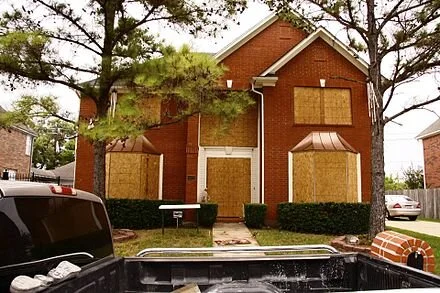
Stock up now!

Coastal cold
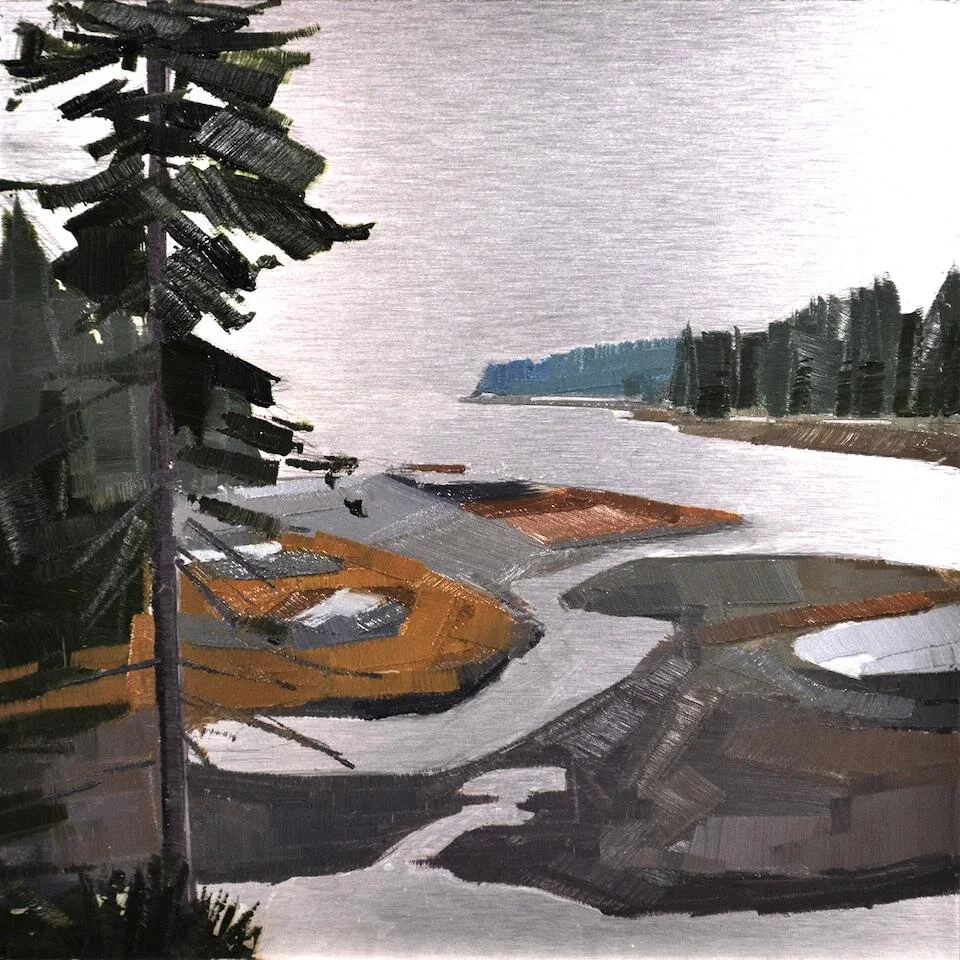
“Inlet, Isle au Haut (Maine)” (oil on anodized-aluminum panel) by Sue Charles, at Alpers Fine Art, Andover, Mass.
'By your leave'
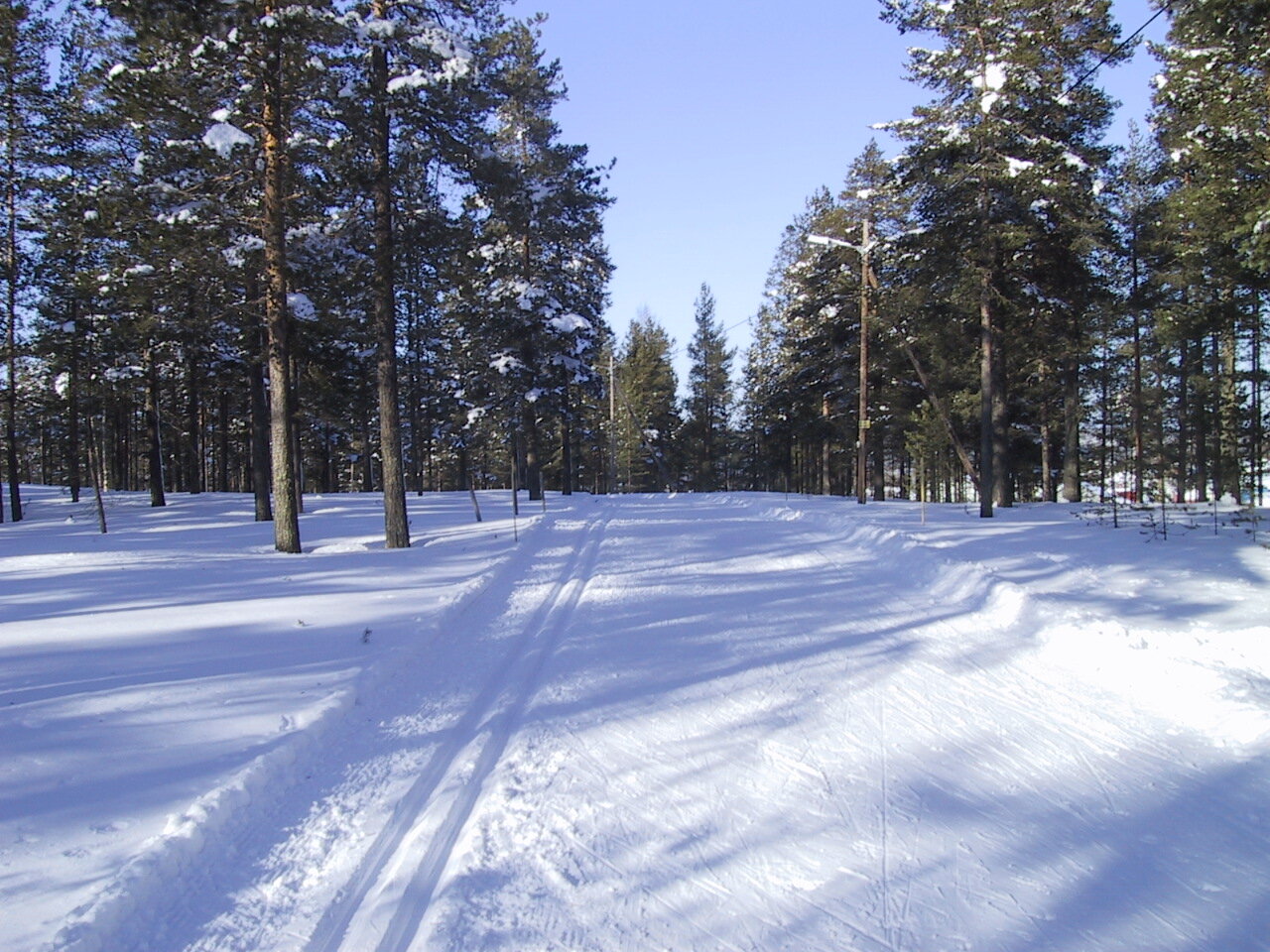
I had for my winter evening walk—
No one at all with whom to talk,
But I had the cottages in a row
Up to their shining eyes in snow.
And I thought I had the folk within:
I had the sound of a violin;
I had a glimpse through curtain laces
Of youthful forms and youthful faces.
I had such company outward bound.
I went till there were no cottages found.
I turned and repented, but coming back
I saw no window but that was black.
Over the snow my creaking feet
Disturbed the slumbering village street
Like profanation, by your leave,
At ten o'clock of a winter eve.
Robert Frost (1874-1963) wrote this poem based on a walk he took in the winter of 2011-12 in Plymouth, N.H, where he had taken a job as a teacher at the Plymouth Normal School (now Plymouth State University). This was soon before he moved with his family to England, where he lived until 1915. He left little known but came back being considered a major poet.
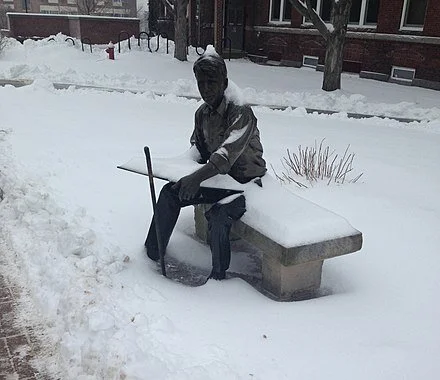
Statue of Robert Frost at Plymouth State University.
‘Goodness its own heaven’
“Sin makes its own hell, and goodness its own heaven.’’
— Christian Science founder Mary Baker Eddy (1821-1910) in her (1875) book Science and Health With Key to the Scriptures.
Her creation of the Church of Christ, Scientist, and its associated publishing and other ventures led to her becoming a multimillionaire. It also killed some people who failed to get proper medical attention, opting instead for prayer, which Christian Science has traditionally favored over all other treatments. For that matter, Mrs. Baker argued that illness is an illusion. (This led to many sick jokes about ailing Christian Scientists.)
Mrs. Baker’s creation attracted many affluent New Englanders as adherents. But its heyday is long past. But another denomination with New England roots, Mormonism, still thrives. Its founder, Joseph Smith, was born in Sharon, Vt.
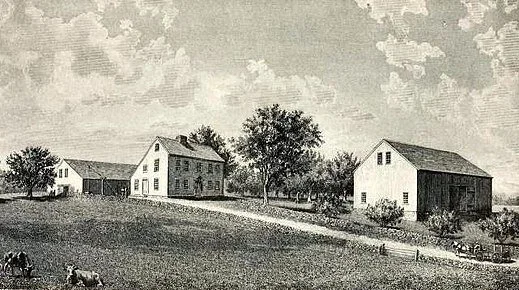
The farm in Bow, N.H., where Mary Baker Eddy was born.
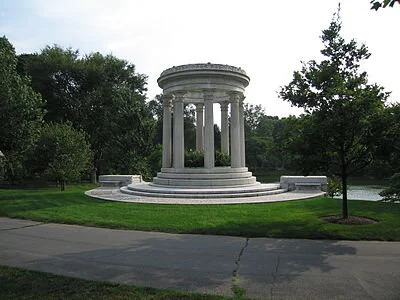
Mary Baker Eddy’s gravesite in Mt. Auburn Cemetery, in Cambridge, Mass.
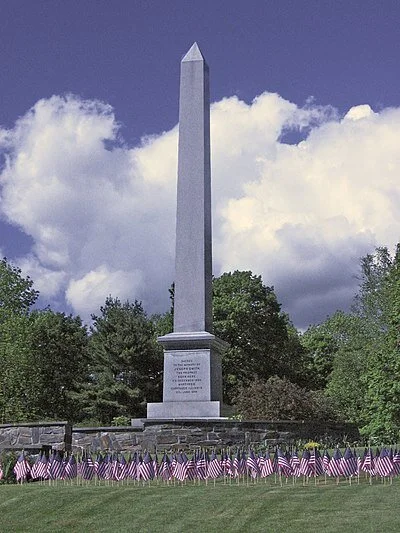
The Joseph Smith Birthplace Memorial, in Sharon, Vt., where the founder of the Church of the Latter Day Saints (the Mormons) was born in 1805. He was killed by angry mob in Nauvoo, Ill., in 1844. That’s where he is buried.
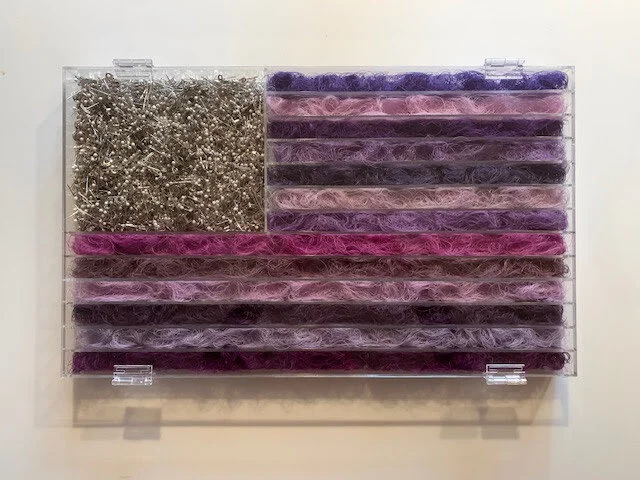
Our suppressed holiday season
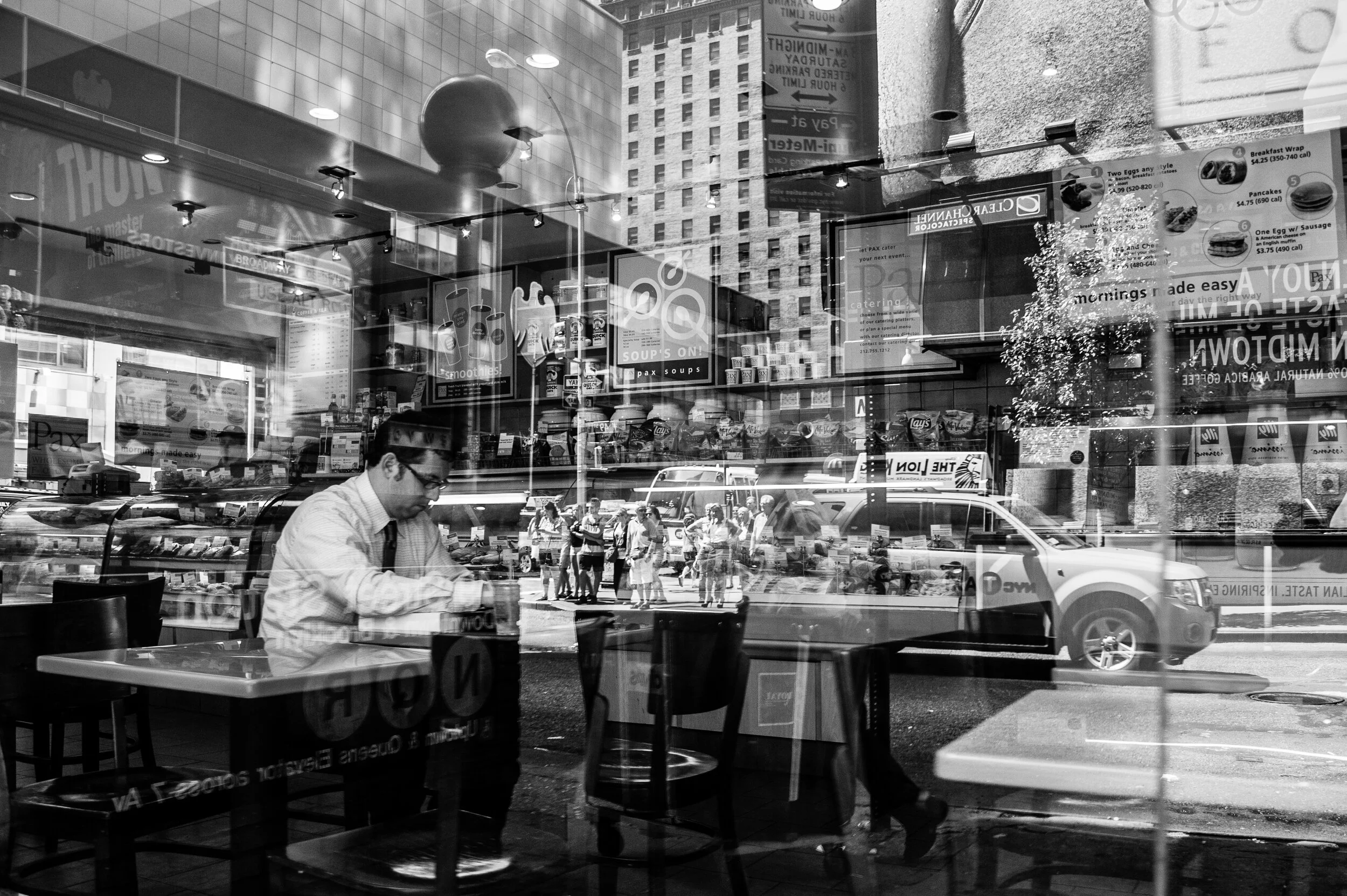
From Robert Whitcomb’s “Digital Diary,’’ in GoLocal24.com
This holiday season is bizarre, sad and frustrating. But holiday dynamics are always changing anyway with social/demographic/economic change. The thing I’ve most noticed is how the composition of holiday gatherings has changed since the heyday of the American nuclear family, back in the ‘50s -- two parents married to each other living together with a bunch of kids.
Families are smaller, relatives are more dispersed, fewer people get married, there are now many more open gay relationships and a higher percentage of people at holiday feasts are friends, not family members. Or, I suppose you could say, the definition of “family’’ has changed for many people.
All this has made the holidays more socially interesting, if more unpredictable. Meanwhile, I’m looking forward to seeing, in 2021, if the pandemic permanently changes how we celebrate the holidays, beyond our collective efforts to make Amazon’s Jeff Bezos a trillionaire. I’m guessing that there will be a huge pent-up demand for in-person gatherings. But some may decide that they prefer virtual communication after all.
Something else I’ve noted is while the holidays are still romanticized – after all, they’re an escape -- there’s a bit more realism around. Consider the reminders at Thanksgiving of how the Native Americans said to have joined in the “First Thanksgiving” feast had been traumatized by the English bringing highly infectious diseases to the “Indians,’’ who had no immunity. You never read that when I was a kid. And there are many more warnings about excessive drinking over the Christmas holidays. It used to be that the drunk at a Christmas party with a lampshade on his head tended to be seen as funny and part of the general jollity of the season; now he’s seen as sad.
We’re going into the darkest time of the year, made darker of course by the pandemic. The brevity of daylight depressed me more a few years ago. But an aspect of aging is that time seems to go by faster and faster. Remember the old line “After a certain age, we seem to be having breakfast every 15 minutes”? So I’m now more aware that the days will get longer in a few weeks, though we won’t notice it much until late January, and that we’re moving ever closer to spring. The old leaves are off the trees, making room for the new ones.
Tom Finneran, the former speaker of the Massachusetts House, among other big jobs, had some good advice in a GoLocal column as we enter the cold season: Read catalogs that remind you of happier times to come (if we’re lucky and careful) and escape in your mind to late next spring and summer, when vaccines, we hope, start to liberate most of us. Mr. Finneran mentions gardening, beekeeping (a surprise from this tough guy!) and travel.
Think of lines from the ‘30s song “These Foolish Things”: “An airline ticket to romantic places. Still my heart has wings…’’ or lines from “Let’s Fly Away,’’ the ‘50s song made famous by Frank Sinatra: “Once I get you up there, where the air is rarefied We'll just glide, starry-eyed….’’
Yes, it’s a good time to day dream.
To read the Finneran column, please hit this link.


Janie Grice: For an essential workers' bill of rights

From OtherWords.org
During the pandemic, essential workers have become public heroes. These frontline workers include tens of millions of retail employees, from those who stock our grocery shelves to those filling orders for Amazon.
With so many people seeing firsthand how low-wage workers make our society function, we have a once-in-a-lifetime opportunity to transform our society so that everyone can earn quality pay and benefits.
But beyond symbolic displays of gratitude, essential retail workers have not yet seen this transformation.
At Walmart, the largest private employer in the country, workers are still not receiving adequate hazard pay, safety protections or paid leave. The company remains the top employer of workers who are forced to rely on food stamps and other aid.
At Amazon, employees still face rigid limits on bathroom breaks and other policies that compromise their health and safety in the midst of a pandemic. At least 20,000 Amazon employees have tested positive for COVID-19.
These issues are deeply personal to me.
For four years, I worked at my local Walmart as a cashier and later as a customer-service manager — all while raising my son as a single mother and working on a bachelor’s degree. I started out making only $7.78 an hour and was never able to get a full-time position, let alone a stable schedule.
I understand the stresses faced by retail workers at our country’s largest employers, including struggling to pay bills and not being able to care for a sick child because of unpredictable hours and low wages.
Despite the challenges of the job, I got my degree in social work and now support retail workers across the country as an organizer for United for Respect. This national organization of working people fights for bold policies that would improve lives, particularly those in the retail industry.
One of our priority goals is an Essential Workers Bill of Rights, which would guarantee improved health and safety protections, universal health care, increased pay and paid leave, and whistleblower protection.
Workers also need a real voice in policy matters that affect our lives, from union organizing rights to personal protective equipment. So we’re pushing to get worker representation on corporate boards.
Without these rights, corporate executives and politicians will continue to put their interests before those of essential workers and their families. And retail workers, especially Black women like me, will continue to live in poverty while working for some of the largest and wealthiest employers in the world.
During the pandemic, the wealth of Amazon CEO Jeff Bezos and Walmart’s Walton family has skyrocketed to record levels, according to a new report by Bargaining for the Common Good, the Institute for Policy Studies, and United for Respect. The contrast between this wealth and the struggles essential workers face is shameful.
If this nation wants a real conversation about dignity for people like me and the people I organize, then we have to embrace bold solutions. And we can start with an Essential Workers Bill of Rights and a voice for workers in decision making.
Think about what corporate America would look like if workers actually had a seat at the table. Corporations would prioritize investments in their workers instead of padding their CEOs’ pockets. The millions of retail workers who now have to rely on food stamps and other public assistance could provide for their families.
Let’s push toward this dream by expanding opportunities for the working people who are critical to the health and security of our nation — today, during the pandemic, and beyond.
Janie Grice is an organizer with United for Respect, based in Marion, S.C.

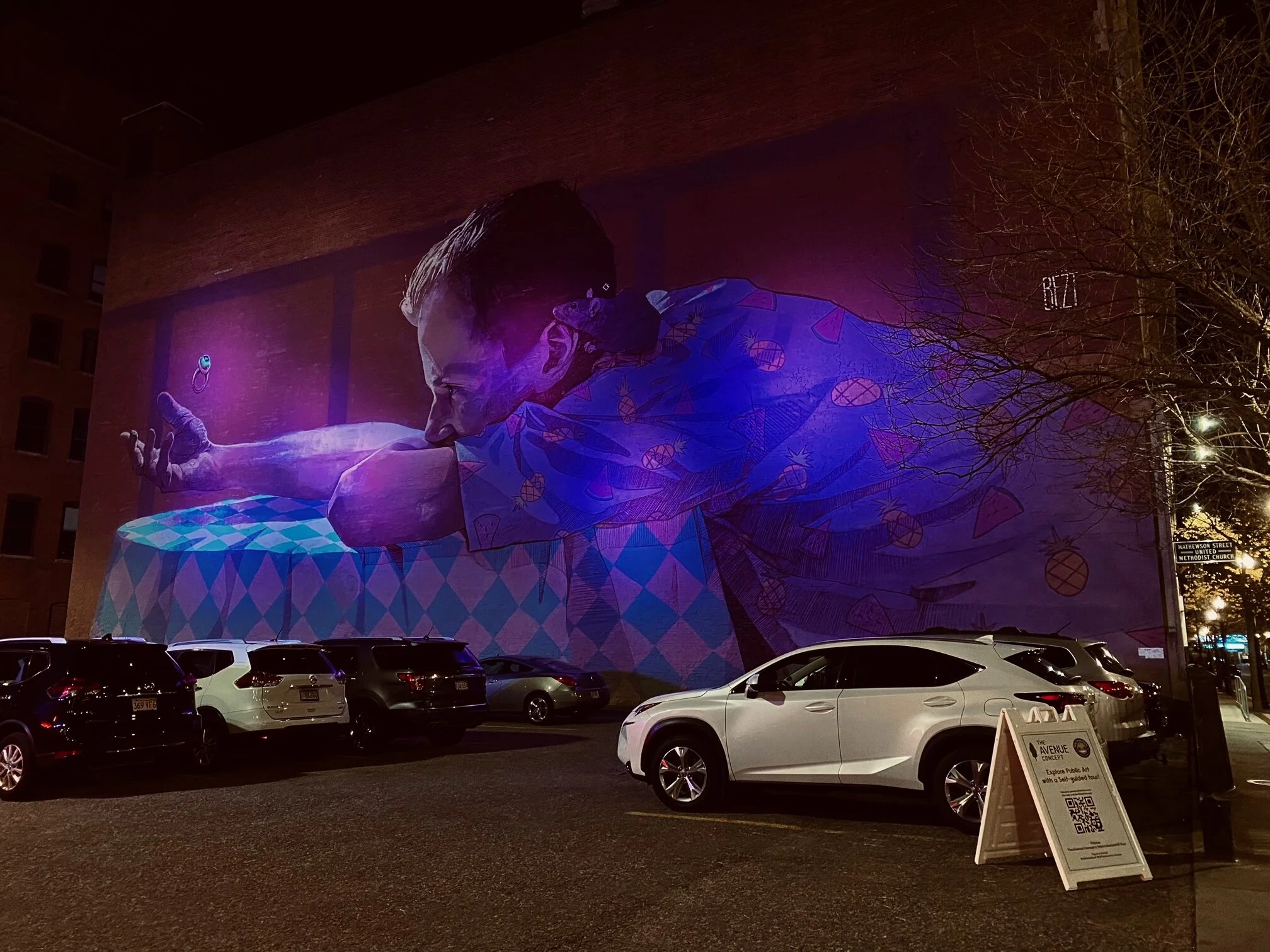
— Photo by Lars Frantzen

Ed Cervone: How a Maine college has adjusted to pandemic and recession

From The New England Journal of Higher Education, a service of The New England Board of Higher Education (nebhe.org)
In October 2019, NEBHE called together a group of economists and higher education leaders for a meeting at the Federal Reserve Bank of Boston to discuss the future of higher education (Preparing for Another Recession?). No one suspected that just months later, a global pandemic would turn the world upside down. Today, the same challenges highlighted at the meeting persist. The pandemic has only amplified the situation and accelerated the timeline. It also has forced the hands of institutions to advance some of the changes that will sustain higher education institutions through this crisis and beyond.
At the October 2019 meeting, the panelists identified the primary challenges facing colleges and universities: a declining pool of traditional-aged students, mounting student debt, increasing student-loan-default rates and growing income inequality.
Taken together, these trends were creating a perfect storm, simultaneously putting a college education out of reach for more and more students and forcing some New England higher-education institutions to close or merge with other institutions. Those trends were expected to continue.
Just three months later, COVID-19 had begun spreading across the U.S., and the education system had to shut down in-person learning. Students returned home to finish the semester. Higher-education institutions were forced to go fully remote in a matter of weeks. Institutions struggled to deliver content and keep students engaged. Inequities across the system were accentuated, as many students faced connectivity obstacles. Households felt the economic crunch as the unemployment rate increased sharply.
By summer, the pandemic was in full swing. Higher-education institutions looked to the fall. They had to convince students and their families that it would be safe to return to campus in an uncertain and potentially dangerous environment. Safety measures introduced new budgetary challenges: physical infrastructure upgrades, PPE and the development of screening and testing regimens.
In the fall, students resumed their education through combinations of remote and in-person instruction. Activities and engagement looked very different due to health and safety protocols. Many institutions experienced a larger than usual summer melt due to concerns from students and families about COVID and the college experience.
Despite these added challenges, New England higher-education institutions have adapted to keep students engaged in their education, but are running on small margins and expending unbudgeted funds to continue operations during the public-health crisis. Recruiting the next class of students is proving to be a challenge. The shrinking pool of recruits will contract even more and reaching them is much more difficult. Many low- and moderate-income families will find accessing higher education even harder and may choose to defer postsecondary learning.
Change is difficult but a crisis can provide necessary motivation. Maine institutions are using this opportunity to make the changes needed to address the current crisis that will also set them on a more sustainable path over the long term. Maine has a competitive advantage relative to the nation. A low-density rural setting and the comprehensive public-health response from Gov. Janet Mills have kept the overall incidence rate down. Public and private higher-education institutions coordinated their response, developed a set of protocols for resuming in-person education that were reviewed by the governor and public health officials, and successfully returned to in-person education in the fall.
In addition, Mills established the Economic Recovery Committee in May and charged the panel with identifying actions and investments that would be necessary to get the Maine economy back on track. This public process has reinforced the critical ties between education and a healthy economy. Not only is higher education a focus of the work, but the governor appointed Thomas College President Laurie Lachance to co-chair the effort. In addition, the governor appointed University of New England (in Biddeford, Maine) President James Herbert, University of Maine at Augusta President Rebecca Wyke, and Southern Maine Community College President Joseph Cassidy to serve on the committee.
At the individual institution level, a wide array of innovations will enable Thomas College to endure the pandemic and position itself for the future. Consider:
Affordability. Most Thomas College students come from low- to medium-income households and are the first in their families to attend college, so-called “first-generation” students. Cost will always be top of mind. For motivated students, Thomas has an accelerated pathway that allows students to earn their bachelor’s degree in three years (sometimes two) and they have the option of doing a plus-one to earn their master’s. This, coupled with generous merit scholarship packages (up to $72,000 of scholarship over four years) and a significant transition to Open Educational Resources to reduce book costs, represents real savings and the opportunity to be earning sooner than their peers.
Student success supports. Accelerated programs (or any program, for that matter) are not viable without purposeful strategies to keep students on track to complete based on their plans. In addition to a traditional array of academic and financial supports, Thomas College has invested in a true wraparound offering serving the whole student. For eligible students, Thomas has a dedicated TRIO Student Support Services program. Funded through a U.S. Department of Education grant, the program provides academic and personal support to students who are first-generation, are from families of modest incomes, or who have an identified disability. The benefits include individualized academic coaching, financial literacy development and college planning support for families. Thomas was also first in the nation to have a College Success program through JMG (Maine’s Jobs for America’s Graduates affiliate). Thomas College has expanded physical- and mental- health services in the wake of the pandemic, including our innovative Get Out And Live program, which uses Maine’s vast natural setting to provide a range of exciting four-season, outdoor activities for the whole campus community.
Employability. Thomas College students see preparing for a rewarding career as part of their college experience. This is core to the college’s mission and more important than ever in an uncertain economic environment. It is so important that it is guaranteed through the college’s Guaranteed Job Program. Thomas College’s Centers of Innovation focus on the employability of each student. Students pursue a core academic experience in their chosen field, and staff work with each student starting in their first semester to increase their professional and career development. This means field experiences and internships with Maine’s top employers. About 75 percent of Thomas College students have an internship before graduation. As part of their college experience, Thomas College students are coached to earn professional certificates, licenses and digital badges prior to graduation that make them stand out in their professional fields and improve their earning potential. These might include certificates in specific sectors like accounting and real estate or digital badges that show proficiency in professional skills like Design Thinking or Project Management, to name just a few. On the academic side, Thomas has expanded both undergraduate and graduate degree offerings to programs where the market has great demand, including Cybersecurity, Business Analytics, Applied Math, Project Management and Digital Media. Delivery is flexible in terms of mode and timing. And the institution is now offering Certificates of Advance Study (15-credit programs) in Cybersecurity, Human Resource Management and Project Management to meet the stated needs of our business partners seeking to upskill their employees.
Looking Ahead
Some of these changes and investments align with challenges identified before the pandemic as necessary if higher education institutions are to survive and sustain changing demographic and economic trends. The pandemic provided the opportunity to focus on these more quickly, allowing institutions such as Thomas College to right the ship today and set the right course for tomorrow.
Ed Cervone is vice president of innovative partnerships and the executive director of the Center for Innovation in Education at Thomas College, in Waterville, Maine., also the home of Colby College.
Season of tin
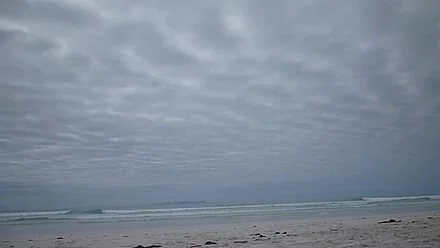
“I can taste the tin of the sky —- the real tin thing.
Winter dawn is the color of metal,
The trees stiffen into place like burnt nerves.’’
— From “Waking in Winter,’’ by Massachusetts native Sylvia Plath (1932-1963)
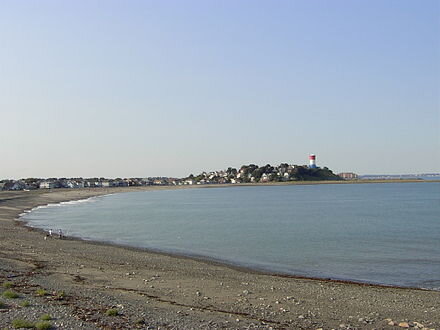
View of Winthrop, Mass., where Plath lived as a child.
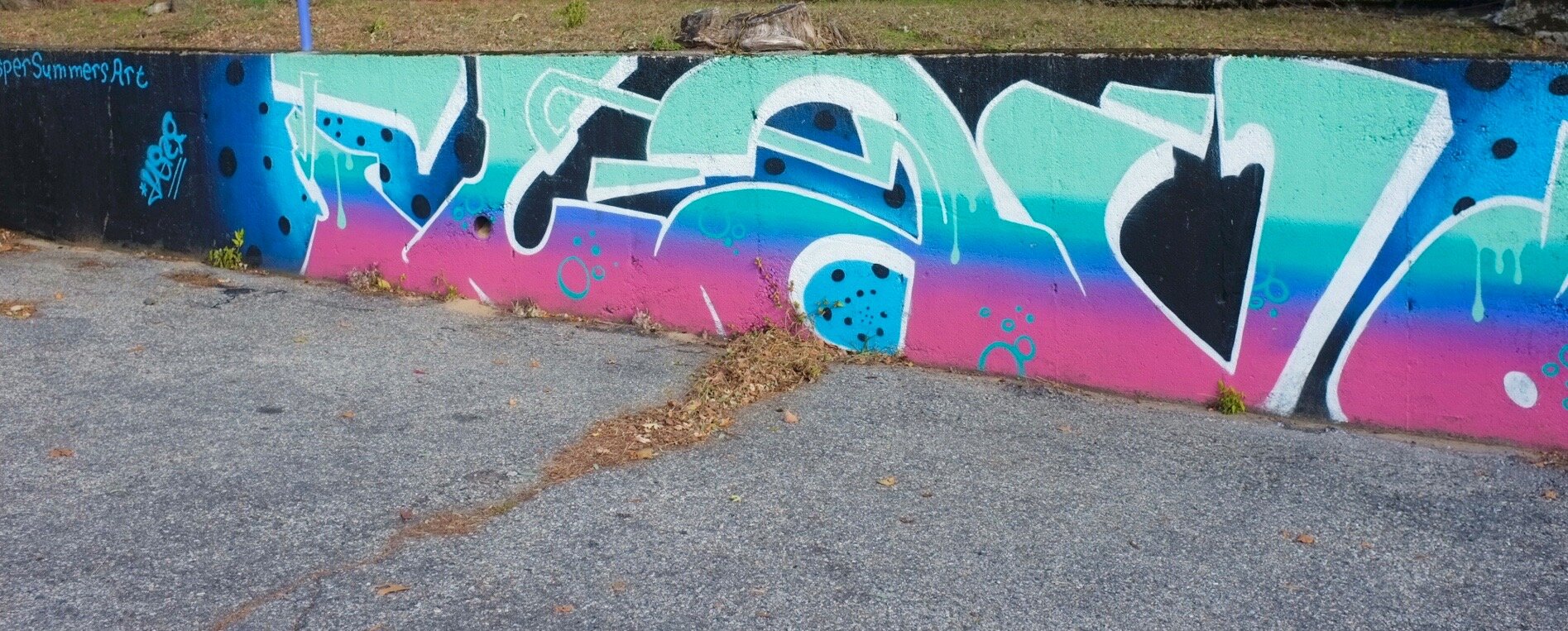
William Morgan: For creative responses to the graffiti challenge
After a seemingly endless rampage of city-blighting graffiti, the mayor recently announced that the police had finally identified and charged the most notorious tagger who "soiled hundreds of walls and buildings." The alleged culprit could get two years in prison for defacing property, "which had to be cleaned using public funds."
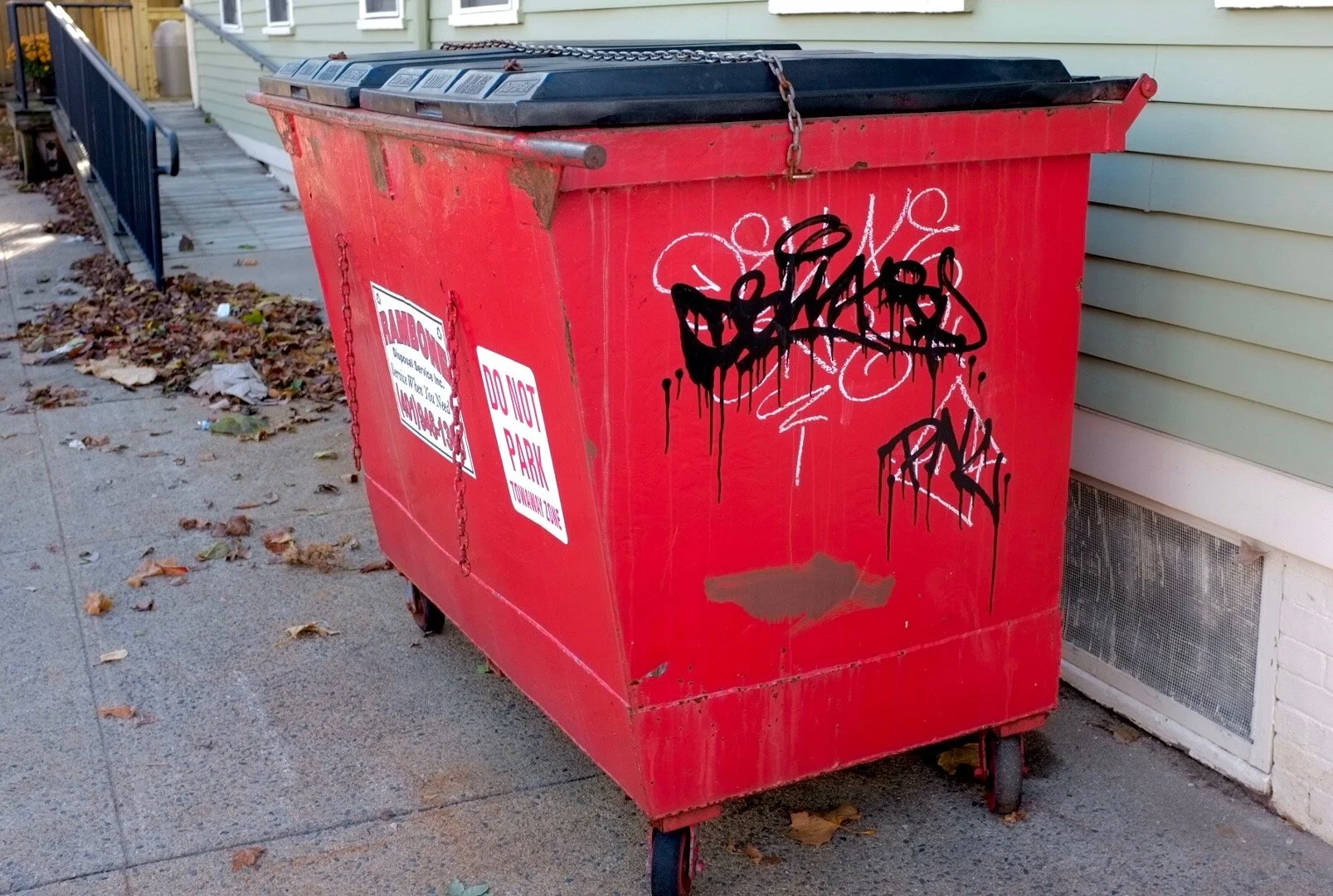
Dumpster on Providence’s Smith Hill.
— All photos by William Morgan.
This was welcome news, as most citizens regard as vandalism the bubble signatures and symbols painted on blank walls, mailboxes, dumpsters, and electrical boxes. Some lawmakers, however, protested that graffiti was a minor issue, while one accused the mayor of cracking down on graffiti as "a way to forge political consensus."
The mayor, however, is not Jorge Elorza of Providence, but the mayor of Rome, Virginia Raggi, and the alleged tagger was identified as “Geco” (no full name given).
But whether it's Providence or the Eternal City, the problem of such urban defacement is old as human settlement. The ancient Romans battled it, as did the Egyptians centuries before that. During World War II, American G.I.s' painted “Kilroy Was Here’’ on walls from Anzio to Guadalcanal. Like the poor, graffiti will always be with us.
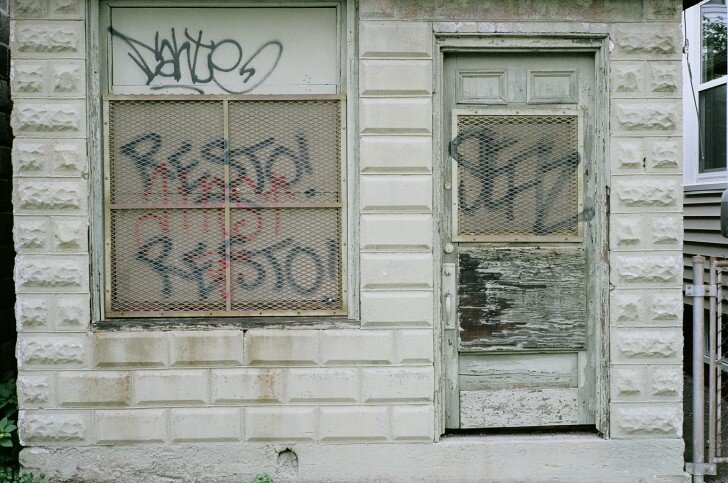
On Ives Street, in Providence’s Fox Point neighborhood.
Called tagging, painting your name in bold letters on the side of a building or a railroad car is about self-expression. Free spirits, the rebellious, and the disenfranchised tag their names to declare that they exist. According to Paolo von Vacaro, an authority on graffiti, "You tag your name to show that you are king of the street."
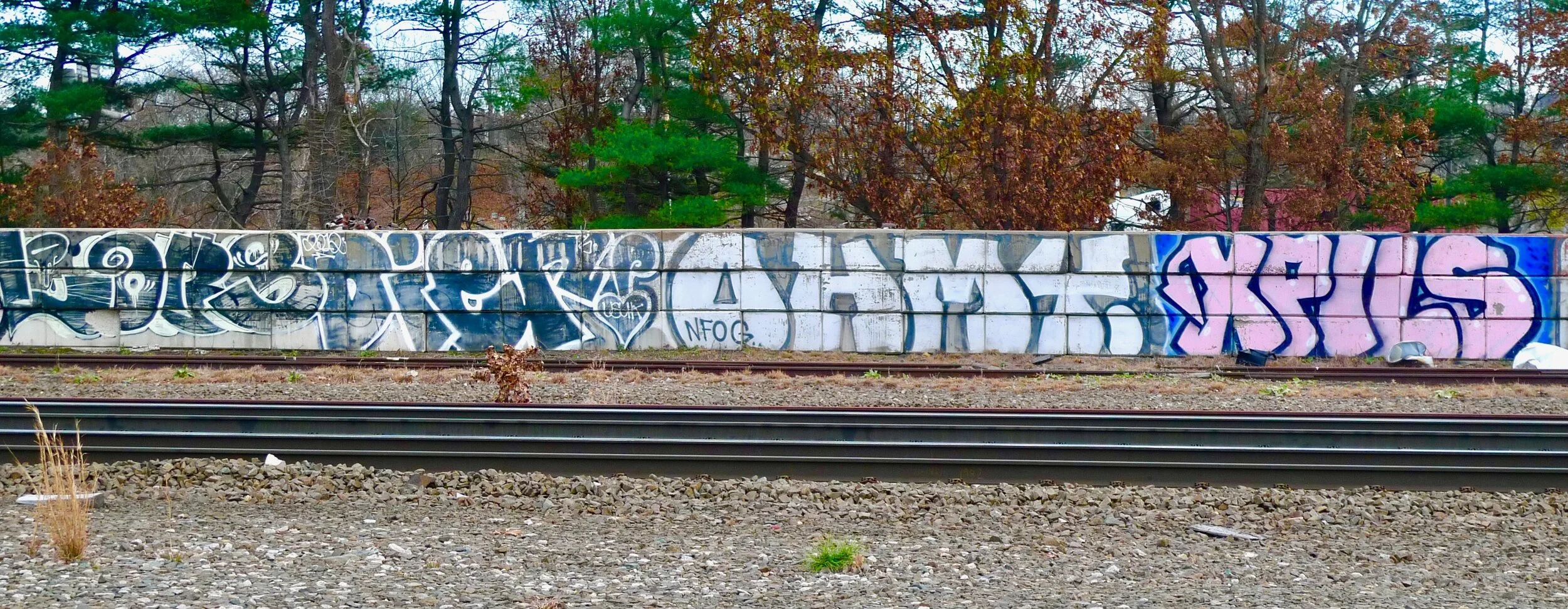
Competing artists lay their claims to a Providence wall.
As with many forms of self-expression, one man's creative genius is another's vandalism. One might admire the styles of particular graffitists, or how practitioners have artistic duels on public walls. But when the walls are historical, such as Providence Marine Corps of Artillery Arsenal, on Benefit Street, in a section of the city known for its historic architectural beauty, then graffiti is, according to the City of Providence, "a public nuisance and destructive of the rights and values of property owners as well as the entire community."
Defacing the Arsenal, the David Macaulay mural on I-95, or the Providence River pedestrian bridge is unacceptable. If residents and business are really stung by tagging, then they should push the city to get really serious about apprehending the spray-can brigade, and mete out fines stiff enough to cover the restoration of damaged walls and objects.
But how much of a public nuisance is the run-of-the-mill graffiti that covers so many walls, particularly in less affluent neighborhoods? Does it threaten the commonweal? Does painting freight cars make them less efficient? Or are the giant bubble letters symbolic of deeper strains within the community?
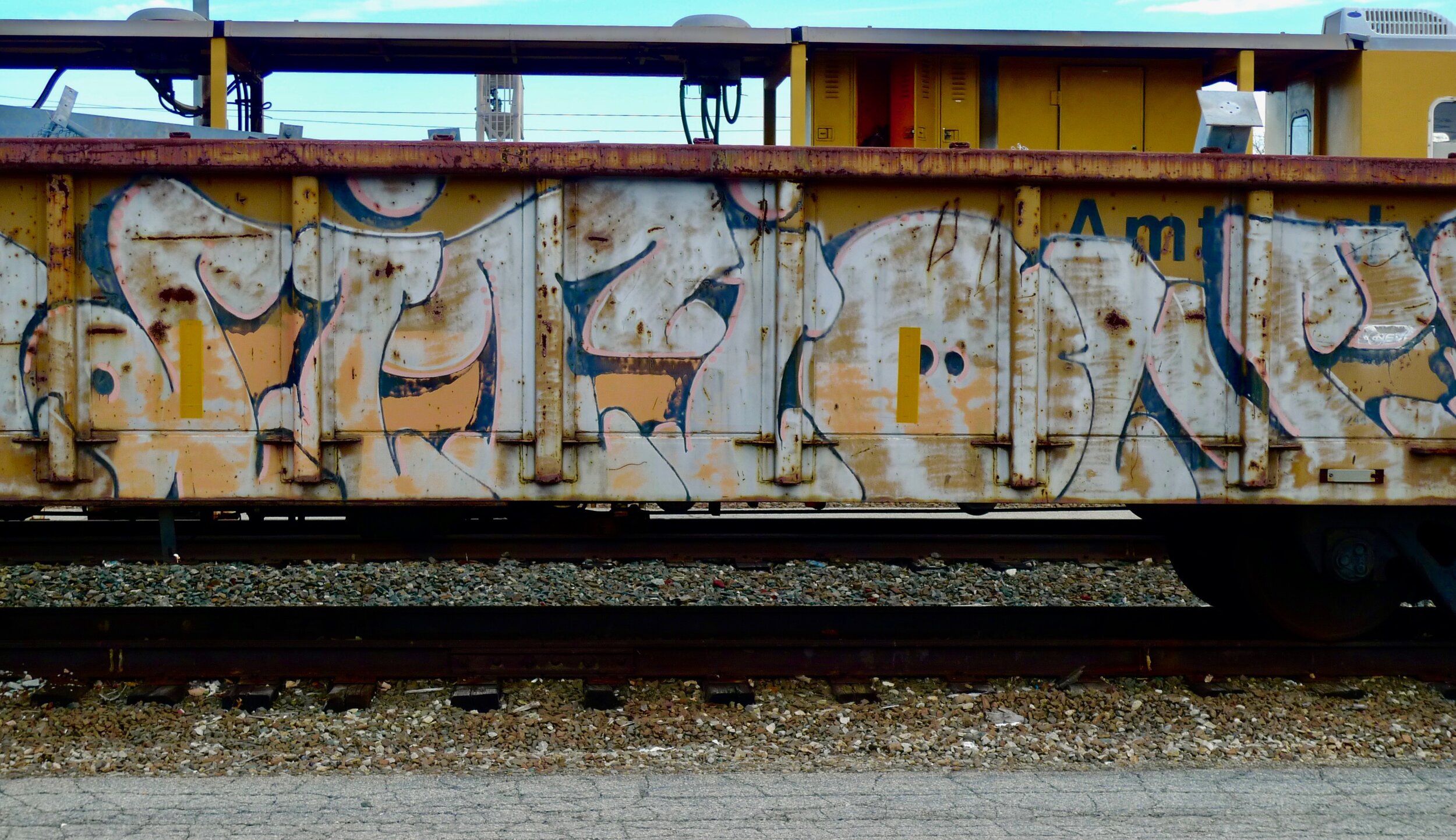
Masterpiece of railroad freight car graffiti.
Visual pollution is as unfortunate as it is indefinable: a certain building may enhance or offend, one man's Christmas lights may seem tacky to his neighbors. Graffiti, like smut (the late Supreme Court Justice Potter Stewart declared that he could not define smut, but knew it when he saw it), may be impossible to eradicate.
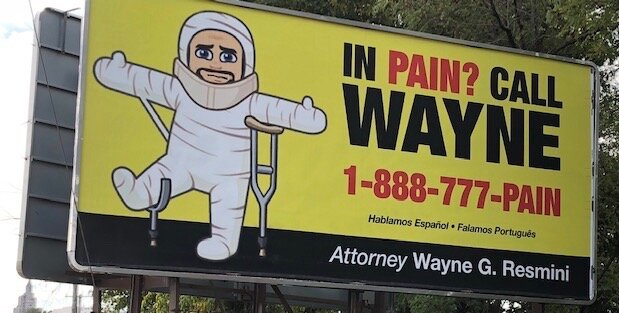
One of many injury law billboards.
If we are to tackle a city's visual pollution, why not eradicate the billboards that are a blot on the cityscape? As soon as you pass border signs admonishing you to “Discover Beautiful Rhode Island,’’ there are billboards touting one personal-injury law firm after another. (A traveler crossing Rhode Island for the first time might wonder if we do nothing here but chase ambulances)
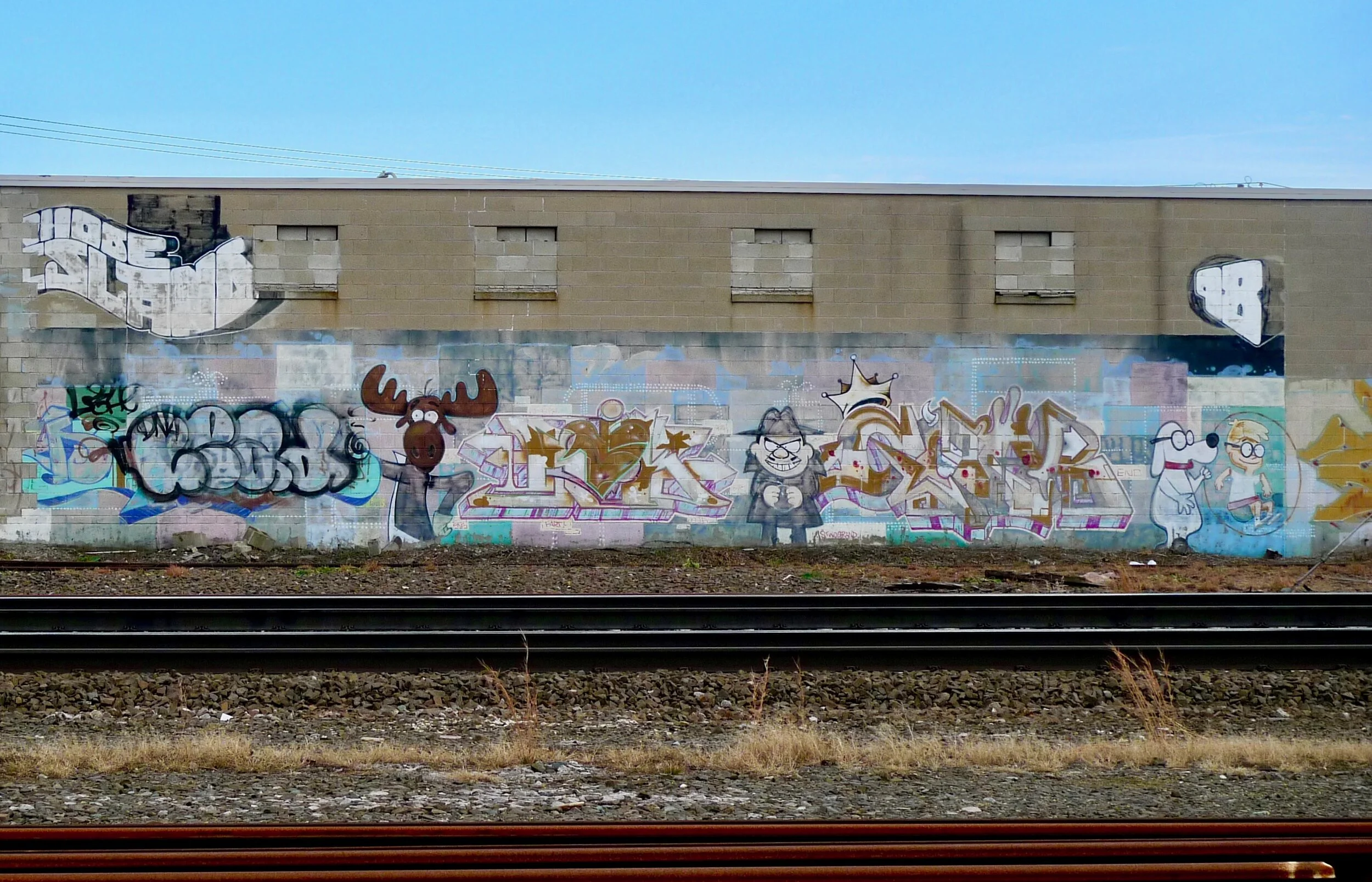
Rocky and Bullwinkle mural visible from the train, by a 21st-Century Leonardo.
Why not a creative solution for the Creative Capital? If graffiti is a fact of city life, why not embrace it? The destruction of property should be discouraged by strict law enforcement, but the vibrancy of famous artist-provocateurs such as Banksy and Jean-Michel Basquiat should be encouraged. Why not embrace it?
How about hosting a graffiti conference and contest, where local talent and free-spirited geniuses from all over America would come to compete for a national title? Blank walls on warehouses, factories, and other structures would be donated. Providence businesses could sponsor walls, the Rhode Island School of Design could offer a residency for certain artists, and there could be conferences on tagging, along with publications, and maybe even art-school scholarships for disadvantaged would-be artists. Such an event could boost the city on many levels.
Many free-spirited paint bandits might balk at the contra-indication of control, so they would have to continue their vandalism as outlaws. But in the spirit of the successful Gravity Games of 1999-2001, let’s plan for some post-COVID-events that encourage fun, artistic energy, and above all, optimism.

“If your graffiti is exceptional, thank your art teacher’’ says my wife, Carolyn Morgan. Graffiti mural on North Main Street by Jasper Summers..
William Morgan is a Providence-based architectural historian, essayist and photographer. His latest book is Snowbound: Dwelling in Winter
Balls for breakfast!

Fish balls before frying
“For breakfast, the baked beans again – warmed over, of course – and fish balls. I don’t remember ever having fish balls on Saturday, but we never failed to have them Sunday morning. Sometimes rye-meal muffins instead of the brown bread, but beans and fish balls, always. A solid orthodox breakfast like that laid the foundation for the orthodox day that followed.”
— Joseph C. Lincoln in Cape Cod Yesterdays (1935)
A fishball was a fried New England concoction made of potatoes and fish stock, and usually eaten for breakfast.
But they took only cash
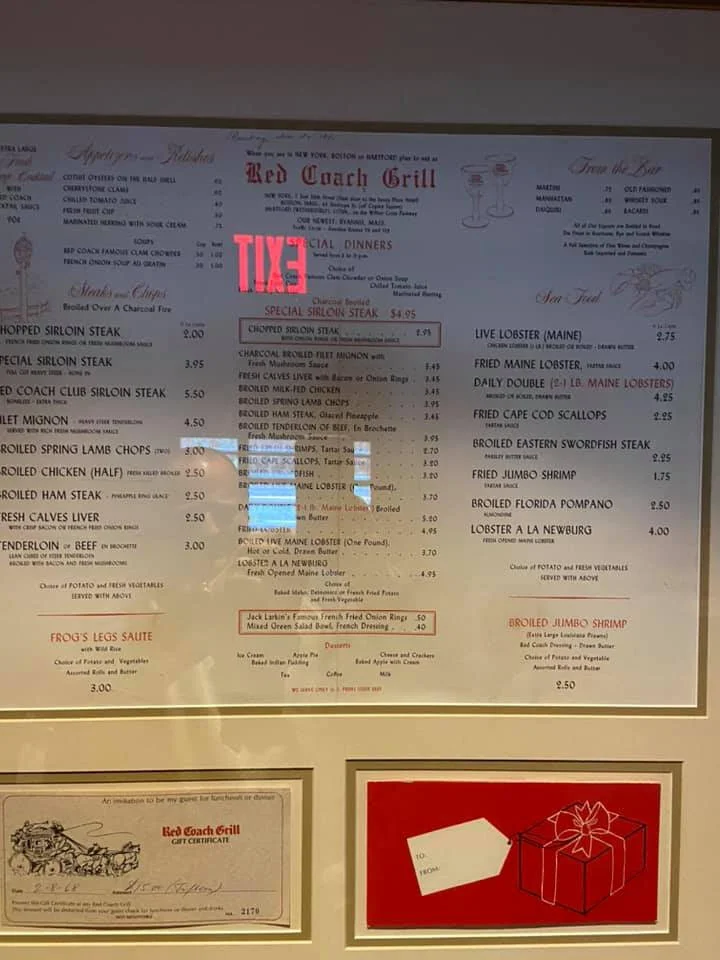
The Red Coach Grill was a very popular New England restaurant chain in the ‘60s. Look at the prices!
Todd McLeish: She's watching deer, earthworms and other threats to region's native plants

A Salt Marsh Pink flower. Hope Lesson is trying to propagate the rare native plant in Connecticut.
From ecoRI News (ecori.org)
Thanks to lessons taught by her grandparents, Hope Leeson has always been drawn to plants. Some of her oldest memories are of trees, especially their different shapes.
“I’ve always had this haunting sense of awareness of their forms,” said Leeson, a botanist, plant conservationist and botanical educator from South Kingstown, R.I., who has walked much of Rhode Island in search of wetlands and rare plants. “I was always interested by their shapes, and by other little things on the ground that also attracted my attention, like the incredible structure of inch-high plants, sedges and flowers. There are so many different unbelievable shapes and forms that plants take.”
Through more than 30 years of field experience, Leeson has developed an intimate knowledge of the Ocean State’s plant communities, and she has applied that knowledge to the protection of rare species, the sustainable collection of plant seeds and the propagation of native plants for habitat-restoration efforts. This work has given her unique insights into the changes taking place in the state’s natural areas and their impacts on native species.
“There’s a lot happening in the ground that we don’t see,” she said. “And there’s certainly a lot happening because of deer eating much of what’s on the ground. Both of those are influencing the next generation of plant communities.”
She noted that Rhode Island’s abundant deer primarily eat native plants, and they are so voracious that in many places few young plants have a chance to mature before they are eaten. And since deer avoid most invasive species, they are providing inroads for invasives to gain a foothold and spread widely.
“I also worry that we’re not really aware of the far-reaching impact of earthworms,” Leeson said of the eight species found in southern New England, all of which originated in Europe or Asia. “The plant communities we have are adapted to a slow cycling of nutrients, and earthworms really speed that up. They also take a lot of leaf litter and pull it down into the soil, which changes the whole nutrient cycle, in terms of what’s available to plants.
“So like deer, earthworms are opening up areas for nonnative species to come in, because those nonnatives come from areas that have earthworms and can take advantage of the opening that’s been created. We can’t control where earthworms go, and they’re really changing the chemistry of the soil.”
It’s not just soil chemistry that’s changing, Leeson said, but it’s also soil temperature. And that may be affecting the mycorrhizal relationship between plants and fungi that enables plants to acquire nutrients through their roots. If that relationship is disrupted, many plant communities could be impacted.
“I just see so many places where it appears like the forest is dying, particularly areas that are more urban,” she said. “It smells different, it looks different, it’s a big change, and how that comes out in the end, we don’t know. It may all be fine, but on our human scale it seems like a loss of something — or maybe there will be a gain in another hundred years.”
Leeson grew up in Providence and South Kingstown and earned an art degree at Brown University, where she took as many environmental courses as she could. After graduating, she spent a few years painting murals in people’s homes and creating decorative stenciling, before taking jobs as a naturalist on Prudence Island and at Goddard Memorial State Park in Warwick. That work led to jobs at the Rhode Island Department of Environmental Management and several environmental consulting firms.
During one project, when the Narragansett Electric Co. proposed a new power line corridor from East Greenwich to Burrillville, R.I., she walked the entire 44 miles to locate any wetlands the route would cross.
In more recent years, she consulted with the U.S. Fish & Wildlife Service, Save The Bay, The Nature Conservancy and other agencies to document rare plant communities and invasive species. She also worked for more than 10 years as the botanist for the Rhode Island Natural History Survey.
“Not only does Hope like to dig into the academic understanding of plants, she values the study of native plants because they connect to so many of her other interests and areas of accomplishment, including gastronomy, environmental conservation, art, gardening, teaching, and social networking,” said David Gregg, director of the Natural History Survey. “Her multi-level connection to native plants is readily apparent when you spend time with her, and is an important reason, besides the interest inherent in the projects themselves, that volunteers have been so attracted to working with her on the Survey’s various Rhody Native activities.”
Leeson’s establishment of the Rhody Native program to propagate up to 100 species of native plants helped diversify habitats at wildlife refuges, salt marshes, and private and public gardens. Eventually, the program became so successful that she was receiving orders for thousands of plants, which was more than she could produce on her own. Without a commercial nursery willing to take it over, the program was discontinued.
SShe is now completing a project to grow a rare wildflower called Salt-Marsh Pink, which is limited to two sites in Rhode Island and one in Connecticut. The plants she is growing will be used to bolster the Connecticut population following a restoration of the marsh.
“We thought we might cross-pollinate plants from Connecticut with the Rhode Island populations to reduce the genetic bottleneck,” Leeson said. “But the Rhode Island populations are really small, and rabbits ate all of the seedpods before they were ripe, so I was unable to collect any seedpods. But the Connecticut seeds are sown, and they’re just resting for the winter.”
When she’s not working, Leeson enjoys riding horses, which she said can “eat up a couple hours every other day.” But she’s never far from plants, whether in her garden or in nearby forests.
“I’m drawn to places that are rocky, because that geography and geology is interesting to me,” she said. “And the coastal plain pond shores are endlessly fascinating to me because their geological life cycle is so interesting. When water levels are down, they have this explosion of plant species, many of them rare, and then there will be a decade when everything is underwater and you wait for 10 years before they all reveal themselves again.”
Leeson also enjoys foraging for food, including the tubers of evening primrose, which she roasts with carrots. She even occasionally cooks with invasive species — she makes pie from Japanese knotweed, pesto from garlic mustard, and enjoys the berries from autumn olive.
As she approaches retirement age, Leeson is teaching botany and plant ecology at the Rhode Island School of Design. She is especially looking forward to teaching a five-week course in January called “Winter Treewatching” and a spring semester class on the “Weeds of Providence.”
“That one will look at all of the areas around Providence that are vegetated by things that come in on their own,” Leeson said. “It’s getting people to think about how we don’t even notice these things, and yet they’re performing pretty important functions, from carbon sequestration and air filtration to providing food for insects and birds.”
Although she said that teaching online during the pandemic has been “weird,” she has been pleased to see so many people walking at Rhode Island’s parks and nature preserves.
“It’s really helping people to slow down and look around them more, at least I hope it is,” she said. “They seem to be noticing things they never noticed before, and I think that’s a really good thing.
“We’ve gotten so distanced from the natural world around us that there’s not an impetus to steward it or take care of it. There’s a sense that it will always be there and it doesn’t really matter, but it’s what sustains us all. We won’t exist without it.”
Rhode Island resident and author Todd McLeish runs a wildlife blog.
David Warsh: The mysterious machinery of epidemic models
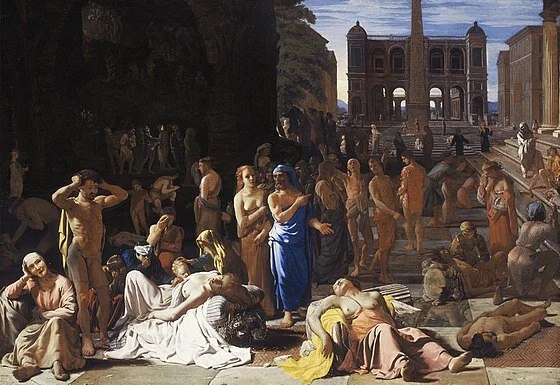
“The Plague of Athens ‘‘ by Michiel Sweerts (painted in 1652-54), illustrating the devastating epidemic that struck Athens in 430 B.C., as described by the historian Thucydides.
SOMERVILLE, Mass.
It is not difficult to identify a 9/11 moment in the 2020 COVID-19 pandemic, an event after which everything changed. Until mid-March, politicians in Britain and the United States were cautiously optimistic. Prime Minister Boris Johnson advised, “We should all basically just go about our normal daily lives.” President Trump, in an Oval Office address on March 11, said that for the vast majority of Americans, the risk is very, very low.”
Five days later, on March 16, the British government took the first of a series of measures leading to a lockdown on March 23. On March 17, President Trump read a statement to a press briefing:
My administration is recommending that all Americans, including the young and healthy, work to engage in schooling from home when possible. Avoid gathering in groups of more than 10 people. Avoid discretionary travel. And avoid eating and drinking at bars, restaurants and public food courts. If everyone makes this change or these critical changes and sacrifices now, we will rally together as one nation and we will defeat the virus. And we’re going to have a big celebration all together. With several weeks of focused action, we can turn the corner and turn it quickly.
What happened? Imperial College, London, released a model-based study on March 16 that made headlines around the world, predicting as many as 2.2 million deaths might occur in the U.S., and 510,000 in the U.K. as a result of the pandemic. To this point, 265,000 US deaths have been reported, and another 58,030 in Britain.
Since March, economists have gone to work seeking to better understand the machinery of epidemiological models and the theories on which they are based. In “An Economist’s Guide to Epidemiology Models of Infectious Disease,” in the Journal of Economic Perspectives, Fall 2020, Christopher Avery, William Bossert, Adam Clark, Glenn Ellison and Sarah Fisher Ellison lay out the facts above, along with some of their findings.
Epidemiology has become more empirical over time, they say, and epidemiologists are learning to add parameters to their models. But they make less of a distinction between theory and empirical approaches than do economists. Meanwhile, “a model which posits a symmetric, bell-shaped evolution of cases over time cannot accommodate repeated changes in the rate of spread due to changing regulations, changing public perception, and ‘quarantine fatigue.’”
Not surprisingly, economists have begun looking for means of suppressing the virus by changing behaviors in manners as cost-effective as possible. Representative is James Stock, of Harvard University, who argued in September that lockdowns are too are too blunt a method to rely on in most cases. In “Policies for a Second Wave,” for a special summer edition of Brookings Papers on Economic Activity, Stock and David Baqaee, Emmanuel Farhi and Michael Mina proposed framing the wearing of masks as a patriotic duty, pursuing cheap and rapid testing, stressing contact tracing and quarantine, and implementing waste-water testing as a means of surveillance once the virus is suppressed.
Epidemiology is not the only discipline to come under economists’ lens. Bruce Sacerdote, Ranjan Schgal and Molly Cook ask Why Is All Covid-19 News Bad News? in a National Bureau of Economic Research working paper out this month. They fault mainstream media for underplaying news of vaccine trials and school re-openings. Ninety-one percent of articles by U.S. major media outlets have been negative in tone since the first of the year compared with 54 percent abroad and 65 percent in scientific journals. Stories discussing Donald Trump and hydroxychloroquine were more numerous than all stories combined about companies and individuals working on a vaccine, they complained.
Of course those stories about hydroxychloroquine may have been more about the nature of the president’s leadership than about COVID-19. Even so, there is indeed evidence of hierarchy and momentum in the reporting: what Wall Street Journal columnist Holman Jenkins, Jr. goes on about. It’s going to be a long time before the strange coincidence of Donald Trump and the virus is untangled. Integrated assessment of the pandemic has far to go.
David Warsh, a veteran columnist and an economic historian, is proprietor of economicprincipals.com, where this piece first ran.