Llewellyn King: The tech bros won’t cut your electricity bill
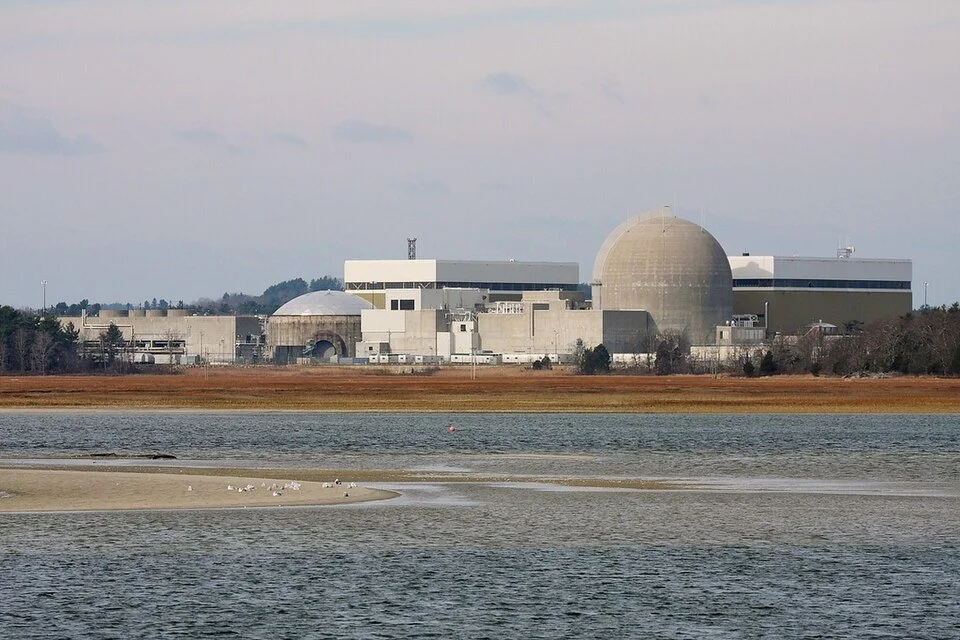
The Seabrook Nuclear Power Plant, in Seabrook, N.H., one of the only two remaining such plants in New England. The other is the Millstone Nuclear Power Plant, in Waterford, Conn.
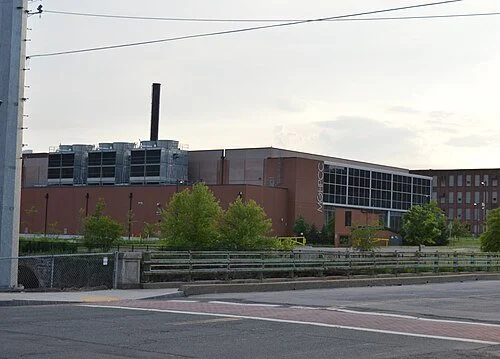
The Massachusetts Green High Performance Computing Center (MGHPCC) is an intercollegiate high-performance data center facility in Holyoke.
WEST WARWICK, R.I.
There is an abiding faith that if someone is good at one thing, they must be good at many things. At heart, it is a belief that outside the metaphorical box, there is much greater ability than inside it.
This is once again on display with widespread enthusiasm for the idea that the looming shortage of electricity can be solved by companies like Amazon, Google, Microsoft and Meta because they have been so wildly successful at what they do — and have mountains of cash to demonstrate it. Also, it is thought they will somehow do it better than the entrenched utilities.
The argument is that those who use vast new quantities of electricity for data centers will pay for its generation, and somehow the rest of the electricity supply system will be unaffected. It won’t.
The new dedicated generators will still buy steel, connectors (wires), transformers, switches, and the myriad bits that go to generating and transmitting electricity. They will still buy uranium, natural gas, strain the gas pipelines and the transmission system.
They will still buy available solar cells, wind turbines and dominate the competition to site these. They will be exerting four-square price pressure for all supplies, including utility-scale batteries.
The data center-dedicated generator will still compete in the labor marketplace for precious skilled workers, now in perilous short supply as the utility industry, without counting data center generators, spends well over $2 billion yearly on upgrading its systems.
I am not saying it isn’t a good thing to shake up the utility industry. I am saying not to expect magical new electricity developments that won’t affect everyone. The bills will still come, and they will be hefty.
Also, big tech will learn some sharp and costly lessons.
The thing about the Internet and the world of computing is that they have been a zero-sum game. There are no rules, there is no legacy drag, and every invention, every step forward, enters the marketplace unencumbered.
There was nothing and no one to hold things back. There still isn’t, except for the availability of power for the data centers.
Not so in the electricity ecosphere. There are rules — local, state and federal. There is political oversight, and issues such as land use, water supply and air pollution must be factored in.
The new generation has to accommodate the rules of yesterday. It will be examined, debated, disputed and delayed.
For big tech and artificial intelligence, its latest frontier, everything is possible. But in their new role of making kilowatt hours, there are entrenched stakeholders and they are vociferous and opinionated, and NIMBY (Not In My Back Yard) is an ever-present reality.
Building a power plant isn’t like designing an algorithm. It isn’t done in secret and then released to the world, as ChatGPT did in November 2022. It must be collaborative and transparent at every step.
The tech giants are betting on nuclear power for their future power needs. Two of them, Microsoft and Google, are supporting restarting mothballed reactors, Three Mile Island, in Pennsylvania, and Duane Arnold, in Iowa. All of them are interested in small modular reactors and have working arrangements with SMR developers.
In this way, the future of nuclear power may rest with the tech giants: They have the money to take the risk. Microsoft has even signed an agreement with Helion, a company planning to bring fusion power to market.
These developments favor a bright future for all electricity as the tech giants assume the challenges and risks of new nuclear technologies. But they won’t contain electric bills in the years ahead. These will continue to rise.
The utilities are doing what they can to contain these bills. The future demands significant expenditures, and, in some way, these will be reflected in consumer electricity costs.
The fact that the tech giants with money aplenty are going to shoulder greater risks doesn’t mean that their presence as ever more demanding electricity consumers won’t affect the commodity’s cost.
The war with Iran will affect global electricity demand. Countries will seek to substitute electricity for oil and gas where they can, thereby straining already-tight supply chains for generation and transmission components.
The essentiality of electricity is growing, as is the household outlay on it. Ouch!
On X: @llewellynking2
Llewellyn King is executive producer and host of White House Chronicle, on PBS, and an international energy-sector consultant. He’s based in Rhode Island.