
Vox clamantis in deserto






Green Mountain gorgeous

"Top of the World" (pastel), by Ann Coleman, in the Ann Coleman Gallery, West Dover, Vt., part of Dover, in southern Vermont, and best know for Mount Snow, the big ski area that was among the first to install snow-making equipment and that has always had a large percentage of “snow bunnies,’’ who tend to lounge at the base lodge rather than ski.
An edited version of the Wikipedia entry on Dover:
“West Dover was settled in 1796, when the area was part of Wardsboro, and was incorporated into Dover when that town was chartered, in 1810. The village grew economically in the 19th Century due to the construction of mills along the river. The first mill, a sawmill, was built in 1796, and was expanded to process wool through the first half of the 19th Century. The mill complex was destroyed by fire in 1901, bringing an end to that source of economic activity. Only traces of the mill complex survive today, but the village has a fine assortment of Federal and Greek Revival buildings that give it its character. In the 20th Century the village benefitted from the state's promotion of out-of-staters’ purchase of farms for vacation and weekend homes, and the growth of the nearby ski areas.’’

Judith Graham: What's in store for aging Boomers in this decade?
From Kaiser Health News
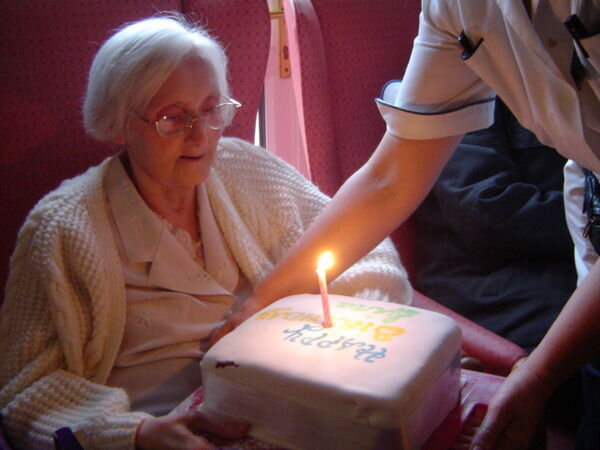
Within 10 years, all of the nation’s 74 million baby boomers will be 65 or older. The most senior among them will be on the cusp of 85. Even sooner, by 2025, the number of seniors (65 million) is expected to surpass that of children age 13 and under (58 million) for the first time, according to Census Bureau projections.
“In the history of the human species, there’s never been a time like [this],” said Dr. Richard Hodes, director of the National Institute on Aging, referring to the changing balance between young people and old.
What lies ahead in the 2020s, as society copes with this unprecedented demographic shift?
I asked a dozen experts to identify important trends. Some responses were aspirational, reflecting what they’d like to see happen. Some were sobering, reflecting a harsh reality: Our nation isn’t prepared for this vast demographic shift and its far-reaching consequences.
Here’s what the experts, in Boston and elsewhere, said:
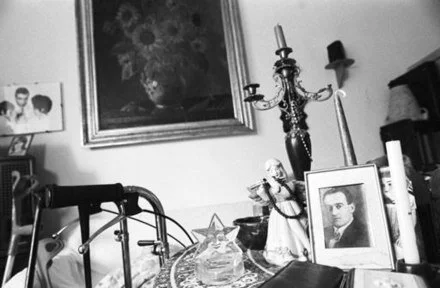
A crisis of care. Never have so many people lived so long, entering the furthest reaches of old age and becoming at risk of illness, frailty, disability, cognitive decline and the need for personal assistance.
Even if scientific advances prove extraordinary, “we are going to have to deal with the costs, workforce and service delivery arrangements for large numbers of elders living for at least a year or two with serious disabilities,” said Dr. Joanne Lynn, a legislative aide on health and aging policy for Rep. Thomas Suozzi (D-N.Y.).
Experts caution we’re not ready.
“The cost of long-term care [help in the home or care in assisted-living facilities or nursing homes] is unaffordable for most families,” said Jean Accius, senior vice president of thought leadership at AARP. She cited data from the Genworth Cost of Care Study: While the median household income for older adults was just $43,696 in 2019, the annual median cost for a private room in a nursing home was $102,204; $48,612 for assisted living; and $35,880 for 30 hours of home care a week.
Workforce issues are a pressing concern. The need for health aides at home and in medical settings is soaring, even as low wages and poor working conditions discourage workers from applying for or staying in these jobs. By 2026, 7.8 million workers of this kind will be required and hundreds of thousands of jobs may go unfilled.
“Boomers have smaller families and are more likely to enter old age single, so families cannot be expected to pick up the slack,” said Karl Pillemer, a professor of human development at Cornell University. “We have only a few years to plan different ways of providing care for frail older people to avoid disastrous consequences.”
Living better, longer. Could extending “healthspan,” the time during which older adults are healthy and able to function independently, ease some of these pressures?
The World Health Organization calls this “healthy life expectancy” and publishes this information by country. Japan was the world’s leader, with a healthy life expectancy at birth of 74.8 years in 2016, the most recent year for which data is available. In the U.S., healthy life expectancy was 68.5 years out of a total average life expectancy of 78.7 years.
Laura Carstensen, director of Stanford University’s Center on Longevity, sees some cause for optimism. “Americans are beginning to exercise more” and eat more healthful diets, she said. And scientific studies published in recent years have shown that behavior and living environments can alter the trajectory of aging.
“With this recognition, conversations about aging societies and longer lives are shifting to the potential to improve quality of life throughout,” Carstensen said.
Other trends are concerning. Notably, more than one-third of older adults are obese, while 28% are physically inactive, putting them at higher risk of physical impairments and chronic medical conditions.
Rather than concentrate on treating disease, “our focus should shift to health promotion and prevention, beginning in early life,” said Dr. Sharon Inouye, a professor at Harvard Medical School and a member of the planning committee for the National Academy of Sciences’ Healthy Longevity Global Grand Challenge.
Altering social infrastructure. Recognizing the role that social and physical environments play in healthy aging, experts are calling for significant investments in this area over the next decade.
Their wish list: make transportation more readily available, build more affordable housing, modify homes and apartments to help seniors age in place, and create programs to bring young and old people together.
Helping older adults remain connected to other people is a common theme. “There is a growing understanding of the need to design our environments and social infrastructure in a way that designs out loneliness” and social isolation, said Dr. Linda Fried, dean of Columbia University’s Mailman School of Public Health.
On a positive note, a worldwide movement to create “age-friendly communities” is taking hold in America, with 430 communities and six states joining an effort to identify and better respond to the needs of older adults. A companion effort to create “age-friendly health systems” is likely to gain momentum.
Technology will be increasingly important as well, with aging-in-place likely made easier by virtual assistants like Alexa, video chat platforms like Skype or FaceTime, telemedicine, robotic caregivers and wearable devices that monitor indicators such as falls, according to Deborah Carr, chair of the sociology department at Boston University.
Changing attitudes. Altering negative attitudes about aging — such as a widespread view that this stage of life is all about decline, loss and irrelevance — needs to be a high priority as these efforts proceed, experts say.
“I believe ageism is perhaps the biggest threat to improving quality of life for [older] people in America today,” Harvard’s Inouye said. She called for a national conversation about “how to make the last act of life productive, meaningful and fulfilling.”
Although the “OK Boomer” barbs that gained steam last year testify to persistent intergenerational tension, there are signs of progress. The World Health Organization has launched a global campaign to combat ageism. Last year, San Francisco became one of the first U.S. cities to tackle this issue via a public awareness campaign. And a “reframing aging” toolkit developed by the FrameWorks Institute is in use in communities across the country.
“On the bright side, as the younger Baby Boom cohort finally enters old age during this decade, the sheer numbers of older adults may help to shift public attitudes,” said Robyn Stone, co-director of LeadingAge’s LTSS (long-term services and supports) Center @UMass Boston.
Advancing science. On the scientific front, Dr. Pinchas Cohen, dean of the Leonard Davis School of Gerontology at the University of Southern California, points to a growing recognition that “we can’t just apply one-size-fits-all guidance for healthy aging.”
During the next 10 years, “advances in genetic research and big data analytics will enable more personalized — and effective — prescriptions” for both prevention and medical treatments, he said.
“My prediction is that the biggest impact of this is going to be felt around predicting dementia and Alzheimer’s disease as biomarker tests [that allow the early identification of people at heightened risk] become more available,” Cohen continued.
Although dementia has proved exceptionally difficult to address, “we are now able to identify many more potential targets for treatment than before,” said Hodes, of the National Institute on Aging, and this will result in a “dramatic translation of discovery into a new diversity of promising approaches.”
Another potential development: the search for therapies that might slow aging by targeting underlying molecular, cellular and biological processes — a field known as “geroscience.” Human trials will occur over the next decade, Hodes said, while noting “this is still far-reaching and very speculative.”
Addressing inequality. New therapies spawned by cutting-edge science may be extraordinarily expensive, raising ethical issues. “Will the miracles of bioscience be available to all in the next decade — or only to those with the resources and connections to access special treatment?” asked Paul Irving, chairman of the Milken Institute’s Center for the Future of Aging.
Several experts voiced concern about growing inequality in later life. Its most dramatic manifestation: The rich are living longer, while the poor are dying sooner. And the gap in their life expectancies is widening.
Carr noted that if the current poverty rate of 9% in the older population holds over the next decade, “more than 7 million older persons will live without sufficient income to pay for their food, medications and utilities.” Most vulnerable will be black and Latina women, she noted.
“We now know that health and illness are affected by income, race, education and other social factors” and that inequalities in these areas affect access to care and health outcomes, Pillemer said. “Over the coming decade, we must aggressively address these inequities to ensure a healthier later life for everyone.”
Working longer. How will economically vulnerable seniors survive? Many will see no choice but to try to work “past age 65, not necessarily because they prefer to, but because they need to,” Stone said.
Dr. John Rowe, a professor of health policy and aging at Columbia University, observed that “low savings rates, increasing out-of-pocket health expenditures and continued increases in life expectancy” put 41% of Americans at risk of running out of money in retirement.
Will working longer be a realistic alternative for seniors? Trends point in the opposite direction. On the one hand, the U.S. Bureau of Labor Statistics suggests that by 2026 about 30% of adults ages 65 to 74 and 11% of those 75 and older will be working.
On the other hand, age discrimination makes it difficult for large numbers of older adults to keep or find jobs. According to a 2018 AARP survey, 61% of older workers reported witnessing or experiencing age discrimination.
“We must address ageism and ageist attitudes within the workplace,” said Accius of AARP. “A new understanding of lifelong learning and training, as well as targeted public and private sector investments to help certain groups transition [from old jobs to new ones], will be essential.”
Judith Graham is a Kaiser Health News reporter.

U.S. birth rate (births per 1,000 population). The segment for 1946 to 1964 — the Baby Boomers — is highlighted in red.


William Morgan: Emlen book goes beyond the stereotype of the Shakers

The United Society of Believers in Christ's First and Second Appearing are among the most beloved – and thus most mythologized – religious groups in American history. The Shaking Quakers or Shakers, as we call them, are usually remembered for their vows of celibacy and their proto-Modern design.
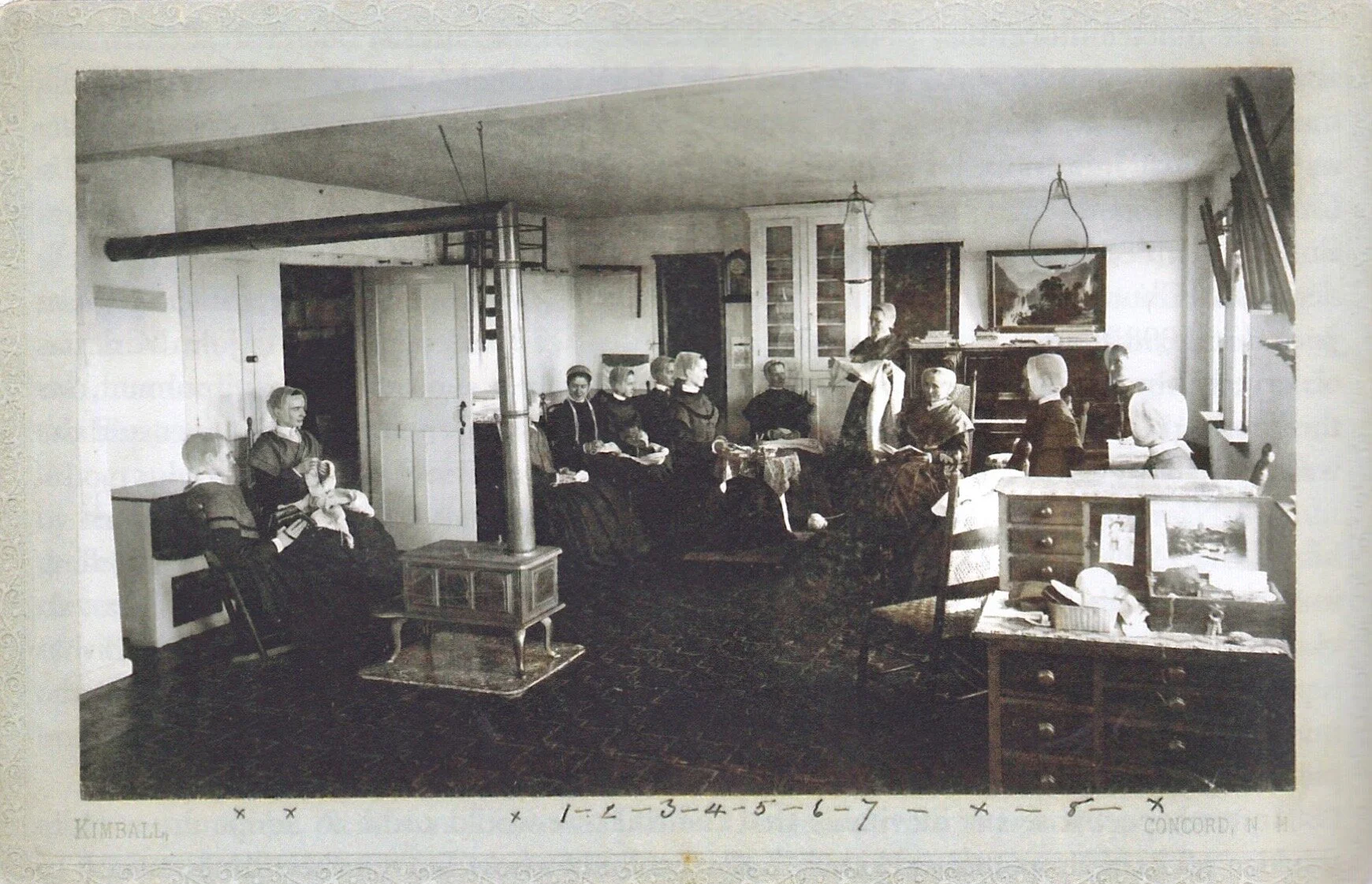
Shaker Sisters at Canterbury, N.H., circa 1893. All pictures are from Imagining the Shakers.
This stereotype does not do them justice, because while adhering to their tenets of simplicity, apartness, and prayer, they also managed to be remarkably efficient farmers and businesspeople. Even while having to depend upon recruits instead of future generations, the Shakers managed a widespread agricultural enterprise, along with furniture making, emanating from communities from Maine to Kentucky. There was much more that was worldly about these entrepreneurs than exquisite rocking chairs and efficient wood stoves.
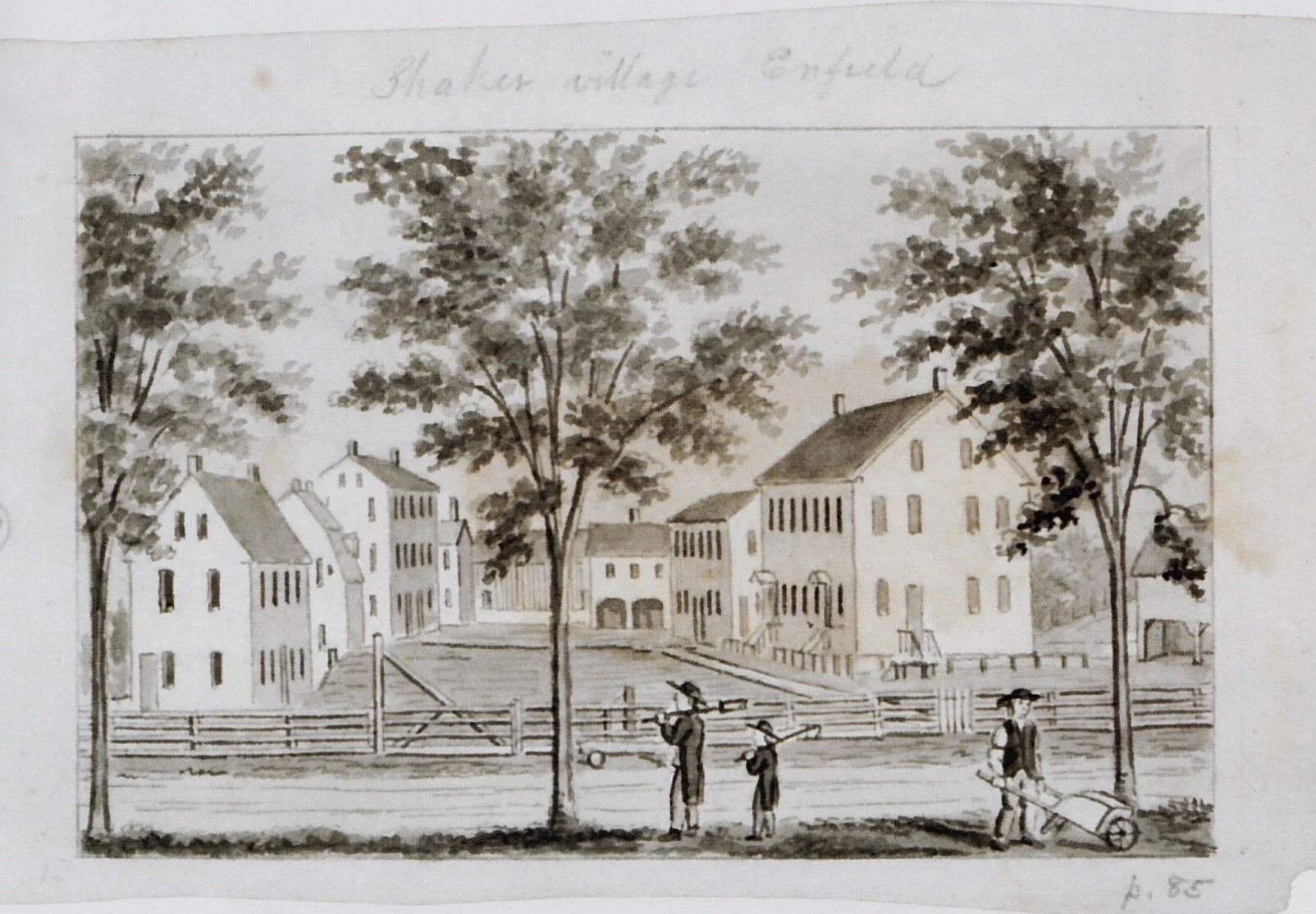
Shaker Village, Enfield, Conn., in 1834
Robert P. Emlen's Shaker Village Views of 1987 remains a classic among a cottage industry of Shaker books. Now, the retired curator of Brown University collections and a former Rhode Island School of Design professor, Emlen has published one of the most intriguing books on the Shakers ever: Imagining the Shakers: How Visual Culture of Shaker Life was Pictured in the Popular Illustrated Press of Nineteenth-Century America (R.W. Couper Press, 2019, $45; R.W. Couper Press is part of Hamilton College, in Clinton, N.Y.)
Emlen, who once lived with the last surviving Shakers at their farming village in Sabbathday Lake, Maine, has gathered every known engraving or lithograph about the Shakers between 1830 and 1880. There are a few photographs, plus advertisements of the Shakers’ own and some Shaker-themed products.
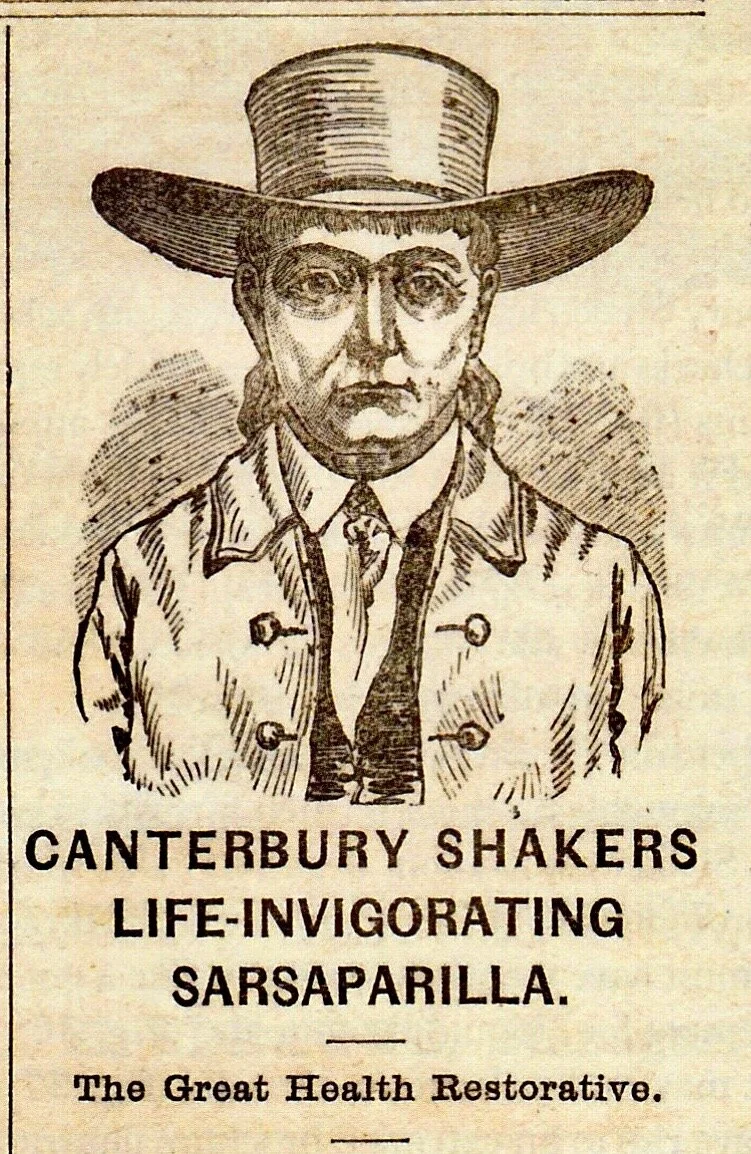
Advertisement in the Maine Farmer, 1890
Fascinating and important to furthering our understanding of the Shakers, this is the sort of book that needed the support of a university press. In this case, the committed publisher is at Hamilton College, and they earn high marks for a very handsome production.
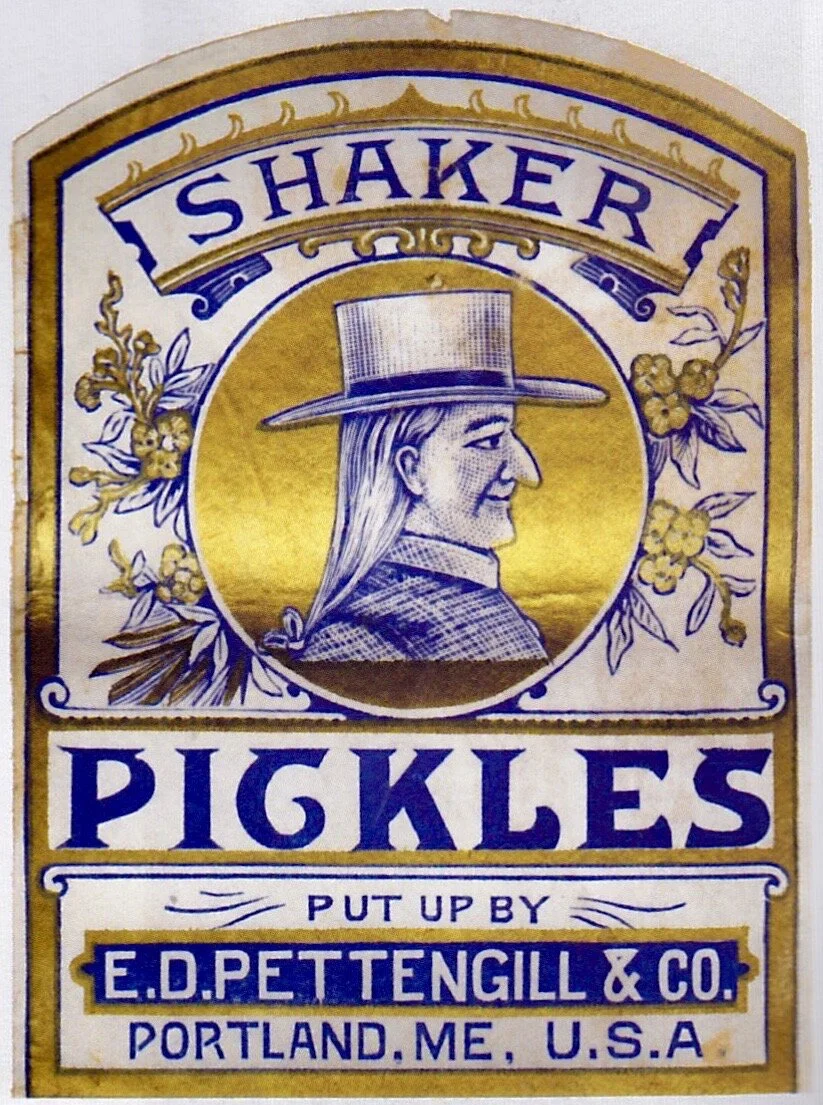
Shaker Pickles label, circa 1880-85
William Morgan, an architectural historian and a columnist, is the author of, among other books, American Country Churches, which includes a chapter on the Shaker settlement at Sabbathday Lake, Maine.
'Watch out for reefs'
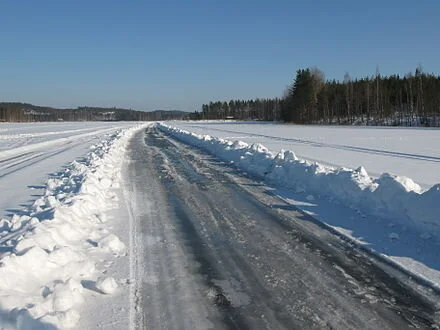
“As I set out across the lake, about noontime, the cook, emerging to draw molasses from the barrel, warned me to ‘watch out for reefs’– rifts, that is, in the ice, where a warm current might have melted most of the way through. But the ice was solid, several inches thick, heavy enough to hold a team. There was only gladness in my heart as I started across the wide white plain toward the woods on the far-off shore.’’
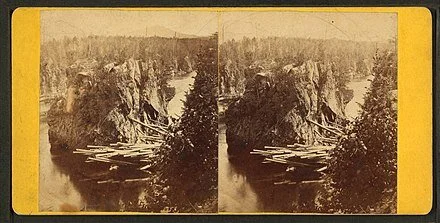
Stereoscopic photos of lumber being pushed down a Maine river around 1900
-- Robert Smith, in My Life in the North Woods (1986), a memoir of his stint in a lumber camp in Maine during the Depression.
Bret Murray: Possible Title IX changes could boost colleges' exposure, discourage victims from coming forward

Title IX played a major role in expanding women students’ team sports at co-ed institutions
From The New England Journal of Higher Education, a service of The New England Board of Higher Education (nebhe.org)
BOSTON
Title IX, the federal civil rights law passed in 1972, was a landmark piece of legislation that prohibited sexual discrimination in educational institutions across America. It reads, “No person in the United States shall, on the basis of sex, be excluded from participation in, be denied the benefits of, or be subjected to discrimination under any education program or activity receiving Federal financial assistance.”
Enforced by the U.S. Department of Education’s Office of Civil Rights (OCR), Title IX has helped level the playing field by ensuring that students of all genders receive access to scholarships, funding, sports, academic coursework, and protection from sexual harassment, among other things.
But three recent lawsuits in which male students (John Does) who were accused of and disciplined for sexual misconduct argue that they were denied due process by their universities because of unfair Title IX policies. The men filing suits are from Michigan State, the University of California and California State. While the circumstances of the cases are different, the John Does essentially argue that Title IX policies were administered unfairly at their universities. The accused male students say they were denied their due-process rights, they weren’t allowed to cross-examine their accusers, and they were not given a live hearing before a neutral fact-finder.
Significantly, the plaintiffs in these cases are seeking to have their cases certified as class-action suits.
If any of these cases receive class-action status and prevail, it could reverse the outcomes of numerous sexual violence cases that were adjudicated on college campuses over the years. The effects could be far-reaching and present a host of problems for universities that have sanctioned students after conducting Title IX investigations of sexual-misconduct accusations. This could include any investigation by a college or university of sexual assault, harassment, exploitation, indecent exposure, relationship violence and stalking.
What is the impact of a class-action certification for colleges and universities not named in the suits?
First of all, disciplinary sanctions on students who were previously found guilty on sexual violence charges at these universities could be overturned. And that could open the doors to more lawsuits at more colleges and universities within their federal circuit court jurisdictions. Any John or Jane Doe who was expelled from a school after a sexual misconduct adjudication hearing would only need to prove that they were denied their due-process rights by not having the opportunity to cross-examine their accuser or other witnesses before a neutral fact-finder to make a prima facie case. Universities could face mounting legal defense fees, potential settlement payouts, as well as other costs like hiring outside public relations counsel.
Secondly, class-action status could force universities to change their processes for handling sexual violence cases going forward. Affected schools would have to allow cross-examining opportunities in front of neutral fact-finders and wouldn’t be able to use school adjudication officers as judges. For institutions not utilizing mediators or other third-parties as neutral fact-finders during their Title IX processes, additional funds will need to be budgeted in order to pay for these new expenses.
Lastly, should the cases be certified and rule in favor of the John Does, the courts will base their rationale on due-process fairness to all parties. But such a ruling could have the unintended consequence of discouraging victims from coming forward if they must be cross-examined by a representative of the alleged assailant during the hearing process. Affected colleges and universities will clearly need to incorporate the courts’ holdings into their Title IX policies and processes, but they need to do so in ways that will not discourage victims from reporting acts of sexual violence.
These cases could have implications when it comes to the exposure that colleges and universities face in their Title IX policies and investigations.
How can universities mitigate their exposure if the Title IX cases are certified as class-action suits? Educator Legal Liability (ELL), Directors & Officers Liability and Commercial General Liability insurance policies can offer a layer of protection for both the higher education institutions and their employees. In addition to covering legal defense costs, ELL coverage can assist with fines and potential settlements in these matters as well.
Schools might have an adequate existing insurance program, or they might have to amend their policies and program to ensure coverage for such risk exposures. As these and other similar cases play out, now is a good time for colleges and universities to proactively check in with their risk advisers and brokers.
Bret Murray is higher-education practice leader at Boston-based Risk Strategies.
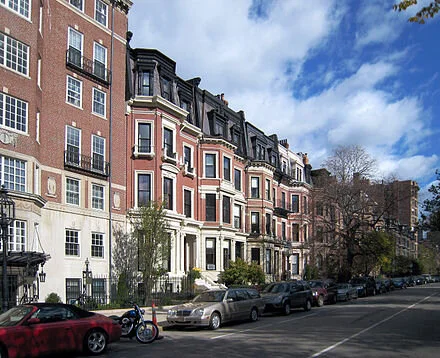
To address affordable-housing issue, fix zoning
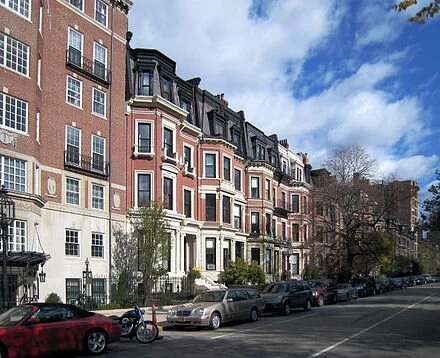
Unaffordable (except for the truly rich) housing on Commonwealth Avenue in Boston
From Robert Whitcomb’s “Digital Diary,’’ in GoLocal24.com
Officials in Rhode Island, Massachusetts and elsewhere are calling for a big push to expand that rather nebulous thing called “affordable housing.’’ Probably the most dramatic set of proposals in New England comes from Boston Mayor Marty Walsh, who presides over a city in the middle of a metro area whose tech, health-care and financial-services companies have brought great wealth but have also driven up further what have long been among America’s highest living costs.
Mr. Walsh has vowed to commit $500 million over five years to address the city’s affordable-housing crisis. That would necessitate, among other things, the sale of a parking garage and implementing a real-estate transfer tax.
The mayor is also pressing major companies and foundations to consider pooling some money — perhaps as much as $100 million — to help finance affordable housing in Boston. If this actually happens, Boston would apparently become the first East Coast city to do something like what’s happening on the West Coast, where tech companies are funding some big housing programs to address some of the cost challenges they created.
Still, isn’t having rich companies, with highly paid workers, better than having poor ones? As always, each success presents new problems.
Over the long run, the affordable-housing issue will be most effectively addressed through changes in zoning laws, especially in the suburbs, that have long discouraged mixed-used neighborhoods (commercial/residential) and multi-family housing. “Snob zoning,’’ which sets high per-residence minimum acreage, has, in particular, removed a lot of land from possible new-housing construction. But those who live on snob zoning lots have much more political clout than people searching for a place to live that they can afford. And zoning is mostly a local power.
Anyway, certain changes could dramatically increase the supply of less expensive housing, reducing the price pressure. That would include a slowing population growth, making housing more of a buyers’ market.
Warm memories; grow very old in Portland

“That Summer Day’’ (encaustic and photo transfer), by Kimberly Curry
Ms. Curry says she uses her home state of Maine as her muse, as well as her travels around the world, and is inspired by the the beauty (and its opposites) in ordinary things.
Her style ranges from seascapes of Maine that capture a point in time to following a concept in a loose abstract way.
She lives in hip Portland, whose excellent health care, physical beauty, exciting working waterfront, famous food sector and strong cultural and educational resources for older people put it on Parade magazine’s list of seven places in America to “Live Here and Live to 100’’.
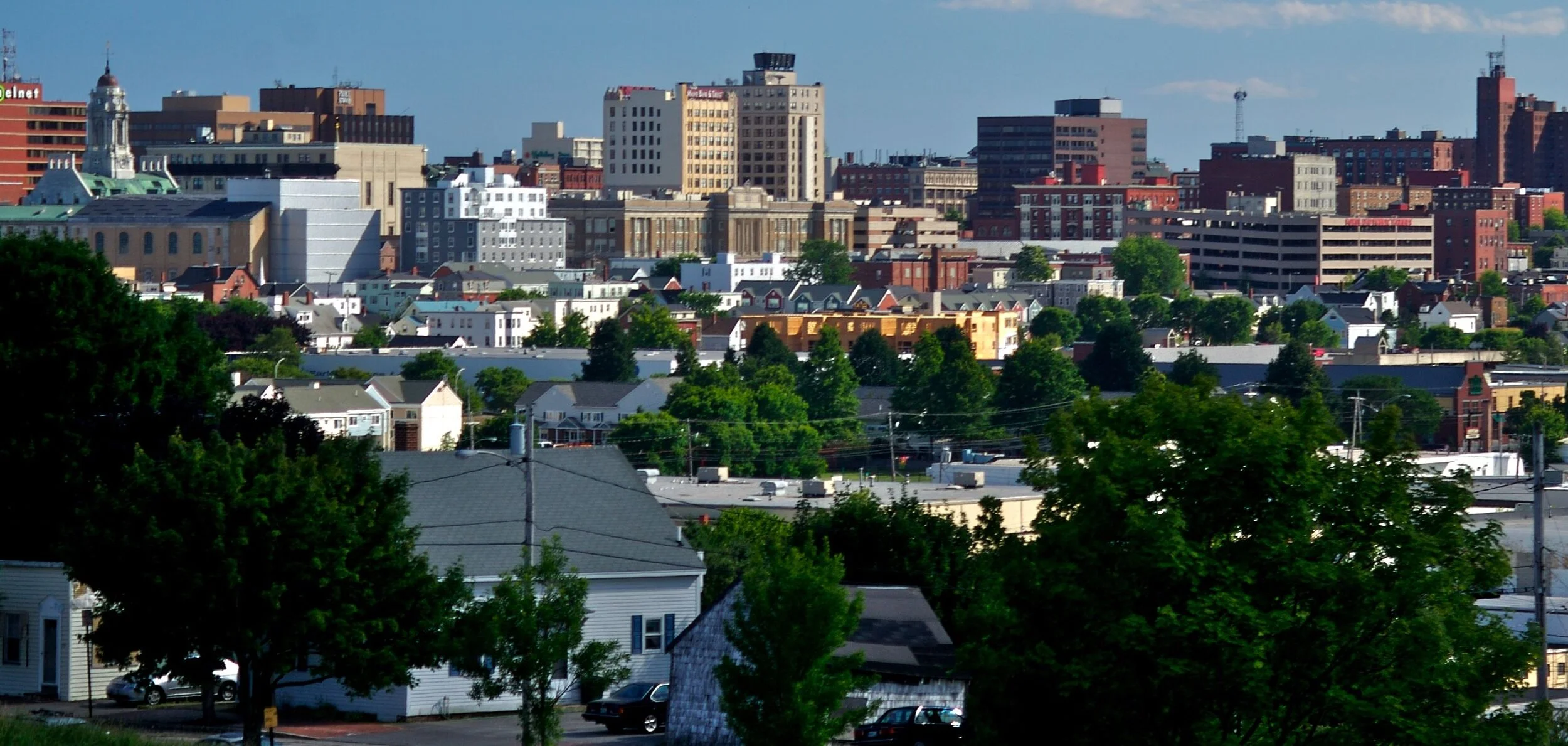
Downtown Portland
— Photo by Autocracy

Farmers market on Monument Square

Portland waterfront with warm-season cruise ships
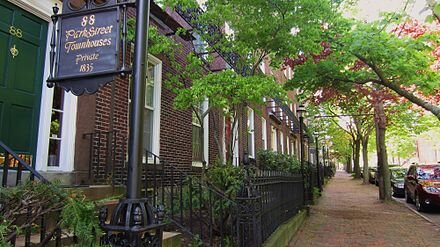
Old townhouses in Portland
'At a loss' on a winter's night

— Photo of frost patterns by Schnobby
All out of doors looked darkly in at him
Through the thin frost, almost in separate stars,
That gathers on the pane in empty rooms.
What kept his eyes from giving back the gaze
Was the lamp tilted near them in his hand.
What kept him from remembering what it was
That brought him to that creaking room was age.
He stood with barrels round him—at a loss.
And having scared the cellar under him
In clomping there, he scared it once again
In clomping off;—and scared the outer night,
Which has its sounds, familiar, like the roar
Of trees and crack of branches, common things,
But nothing so like beating on a box.
A light he was to no one but himself
Where now he sat, concerned with he knew what,
A quiet light, and then not even that.
He consigned to the moon, such as she was,
So late-arising, to the broken moon
As better than the sun in any case
For such a charge, his snow upon the roof,
His icicles along the wall to keep;
And slept. The log that shifted with a jolt
Once in the stove, disturbed him and he shifted,
And eased his heavy breathing, but still slept.
One aged man—one man—can’t keep a house,
A farm, a countryside, or if he can,
It’s thus he does it of a winter night.
“An Old Man’s Winter Night,’’ by Robert Frost (1874-1963), New England’s and probably America’s most famous poet. He lived in rural New Hampshire and Vermont for most of his life.

Chris Powell: Leave vaping to the vapers; 'the right to be forgotten'

Just when the country is realizing the futility of criminalizing marijuana, it is lapsing back into incoherence with campaigns, nationally and in Connecticut, to outlaw flavored "vaping" products.
Do people really think that smoking marijuana and chronic intoxication are better than inhaling flavored vapors? Science suggests that "vaping," risky as it may be, is less harmful than smoking tobacco and can help escape tobacco addiction.
Drug criminalization has done more damage than drugs themselves -- creating violent crime in a contraband trade, luring the undereducated into dangerous business, and burdening people with criminal records. Only drugs that can cause immediate death are worth criminalizing.
Tobacco smoking is being defeated without criminal law by publicity and taxes. Outlawing flavored "vaping" products promises only to create another contraband industry even as most people already know "vaping" can be harmful.
Indeed, if Connecticut wasn't full of convictions for drug possession and dealing, there wouldn't be clamor for the records-erasing, history-rewriting "clean slate" legislation that Gov. Ned Lamont has just endorsed in principle. The legislation would erase all sorts of convictions -- not just drug-related ones -- for people who go on to stay out of trouble for five years or so.
Erasing convictions for conduct that is decriminalized would not be so objectionable, since criminal law is sometimes unjust and unnecessary. Homosexual acts and adultery once were criminal offenses in Connecticut and now are considered none of government's business.
But blanket erasure of convictions for acts that remain criminal would diminish the deterrence of criminal law and the public's ability to protect itself with job applicants, tenants, contractors, and romantic partners. Blanket erasure also would diminish the advantage to offenders to stop offending, giving them not only second chances to achieve decent lives but also second chances to offend, their first offenses being concealed.
Besides, much of the burden borne by former offenders is not their criminal records at all but their lack of job skills when their sentences are discharged. Most people will give second chances to former offenders who can show that they want to go straight and that they have the skills to do so.
Crumbling from its loss of self-respect, the European Union has just established its own form of "clean slate" policy, a "right to be forgotten," requiring news organizations to suppress records of crimes and other disgraceful acts upon the request of the people involved. This doesn't make that misconduct any less disgraceful. Rather it minimizes disgrace, diminishing society's standards.
With its "right to be forgotten" Europe eventually may be asking, "Adolf who?" With "clean slate" legislation Connecticut eventually may be asking, "Fotis who?"
{Fotis Dulos, of New Canaan, has been charged with the murder of his missing wife, Jennifer Farber Dulos.}
Repealing statutes of limitations relieves accusers of their duty to come forward while evidence is fresh and available and justice more possible. Repeal also is grossly prejudicial to the accused, who will be tainted forever even if innocent. But these days discarding the ancient standards of justice is politically correct.
Chris Powell is a columnist for the Journal Inquirer, in Manchester, Conn.
Grace Kelly: 6 green resolutions for 2020

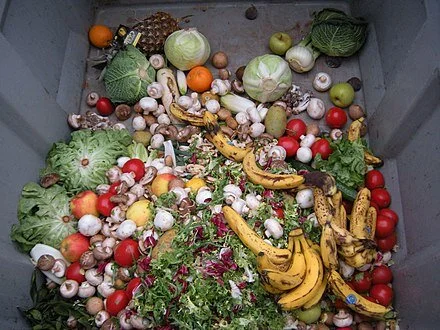
Fruit and vegetables in a dumpster
Last year is in the books, and, so far, 2020 has already proven to be a pivotal year when it comes to the climate crisis: devastating wildfires in Australia; the growing movement in Europe away from airplane travel; the pending presidential election here.
While pressuring companies and politicians to institute wide-ranging change is essential, it’s still important for us as consumers and citizens to make small changes in our own lives, and to show our commitment to addressing the problem.
According to a 2019 poll by The Washington Post and the Kaiser Family Foundation, 53 percent of adults say they have taken action to reduce their carbon footprint, and among those polled, the actions break down as such: 38 percent started to recycle; 37 percent try to drive less; 26 percent try to use less electricity at home; 17 percent said they drive a hybrid or more fuel-efficient car; 4 percent said they are reducing their meat consumption or cutting it out entirely.
There’s also been a trend of brands, companies, and celebrities (looking at you Jane Fonda!) pledging to be more sustainable in 2020, taking small steps toward a greener lifestyle and way of working.
As for me, as a newly minted environmental reporter, writing for ecoRI News has opened my eyes to some of my own lifestyle habits that need to change, from small things like remembering to bring my reusable bags to the grocery store to turning off the lights when I leave my apartment. But I offer six larger 2020 green resolutions that I will be working toward this year.
ecoRI News also put out a call on Instagram for reader 2020 green resolutions, and you provided some great answers, which are included at the end.
Here are my six green resolutions for 2020:
Reduce food waste. To say the United States wastes a lot of food is an understatement. According to the U.S. Department of Agriculture, we throw away 30 percent to 40 percent of our food supply, which equates to 133 billion pounds of food annually. To combat this, food media outlets like Bon Appétit are pledging to reduce their food waste, and local restaurants are turning to composting as a way to sustainably manage their food scraps. As an avid cook and kitchen experimenter who sometimes buys more than she can eat, I’ve made reducing food waste my big green resolution for this year.
Compost. Three of our Instagram followers told us composting was one of their green resolutions for 2020, and it’s easy to see why. Diverting food scrap from the landfill prevents it from rotting and producing methane, a greenhouse gas 30 times more potent than carbon dioxide. Plus, with new compost pickup services and businesses, it’s becoming more accessible.
Reduce use of single-use plastic. With 16 of Rhode Island’s 39 municipalities banning plastic shopping bags and with many nearby Massachusetts and Connecticut municipalities doing the same, the consumer push to ban the use of single-use plastics will continue into 2020. Numerous ecoRI News Instagram followers told us this was one of their green resolutions, and if remembering my reusable bags means running from the store back out to my car to grab them, I have no good excuse not to.
Eat less meat. With the burning of the Amazon forests last year to make way for pasture, and with top-three meat corporations — Tyson Foods, JBS S.A., and Cargill — emitting more greenhouse gases than the entire country of France in 2016, reducing our meat consumption is an important tool in combating the climate crisis. While the thought of going vegan might be intimidating, start by cutting out one or two meat-centric meals a week. It could give you the confidence to reduce your meat eating further. This is something I’ve been working on for the past few months, and one great blog I use for more vegetable-forward cooking inspiration is 101 Cookbooks. Also, shout out to your local libraries: They most definitely have vegetarian cookbooks on their shelves.
Buy old. Some 20,000 chemicals are used to make clothing, and according to the Environmental Protection Agency, 85 percent of said clothing ends up in a landfill or incinerator. To combat this, consider shopping secondhand; not only is it becoming more popular, with options like Savers and local thrift stores peddling both affordable and high-end finds, there’s something for every wardrobe. Also, if you’re going through your closet and looking to downsize, there’s a curbside clothing recycling program that will pick up your discarded items for free. And buying old doesn’t end with clothes. Purchasing refurbished electronics is an excellent way to prevent unnecessary waste. I scored a pair of noise-cancelling Sony headphones on Ebay for $56.
Get involved. As a millennial with college debt, rising rent costs, and a climate future that’s looking uncertain, I should care about what’s happening in local politics. But for my voting life, I’ve been admittedly lazy and uninformed when it comes to local elections, and that has to change. Luckily, the trend is the opposite of what I’ve been doing (or not doing). In the 2018 midterm elections, Gen Xers, Millennials, and Zoomers outvoted Baby Boomers and older generations by 2.1 million votes. This year I’m committing to not only voting, but also trying to attend public comment sessions as a concerned citizen. The climate crisis is an issue too big to sit back and do nothing.
Now, for some of our Instagram followers’ green resolutions
@Meejy_: Last year my partner and I decided to only buy local meat, and its going great!
@Hannanicoleknighton: compost; participate in a plastic clean up in my community; say no to single use as often as possible
@Cait_conquers: start purchasing mostly second hand instead of new when needed
@Marinaphyte: offset my oil bill by installing a wood stove! Save for an electric vehicle this year!
@Nicmore1220: Continue to reduce our waste! We have eliminated plastic wrap/Ziploc bags entirely; No more plastic straws either! Stainless/bamboo straws travel everywhere with us!
@Sweetfindvintage: Support more small, local business that are providing bulk and eco products!
@Allegrapedretti: Eat less meat! Use less plastic bags.
@Alexduryea: Fight for a green new deal (even more)
@Jaclynmsheridan: Use less water!!!
@Gloriousbig: Sign up for composting!
@Jocelyn.donald: starting to compost & shopping in bulk more often with my own containers
Grace Kelly is an ecoRI News journalist.
'Where the odometer stops'

“Like the shrug of black ice
As the cold gets colder
Running next to the ditch
Off the soft shoulder
Where the odometer stops
And no one gets older….’’
— From ‘‘Harm’s Way,’’ by A.E. Stallings
Plant a forest first?

In Allston, Park Vale Avenue looking toward Brighton Avenue
From Robert Whitcomb’s “Digital Diary,’’ in GoLocal24.com
Joan Wickersham writes in The Boston Globe: “I remembered how, ten years ago, the great Italian architect Renzo Piano told me about a proposal he had made to the university, that they begin by planting trees, enough trees to turn this land {hundreds of acres in Boston’s Allston neighborhood} into an urban forest. The trees would have created a healthy natural ecosystem, with its own cooling and flood controls. My point is not to pick on Harvard’s current planning. The Allston land will eventually be filled with high-performance hard-working buildings.’’
“But I am wistful about that forest that never happened, which would have created an environment in which the buildings wouldn’t have had to work so hard. Piano’s visionary question was not just ‘What should we put on this land?’ but rather ‘What kind of land should this be?’”
An interesting idea – start a development with the vegetation and landscaping, then fit in the buildings.
To read Ms. Wickersham’s column, please hit this link.
Come swim with the sharks

"Great Barrier Reef" (archival pigment print), by Jane Paradise, at Galatea Fine Art, Boston, Feb. 5-March 1. She’s based in Provincetown
Fragile art, fragile planet

“Earth” (handbuilt colored porcelain, unglazed), by Cary Rapaport, at Bromfield Gallery, Boston, through Feb. 2
Llewellyn King: New York and London mayors' vacuous 'virtue signaling' on fossil fuel
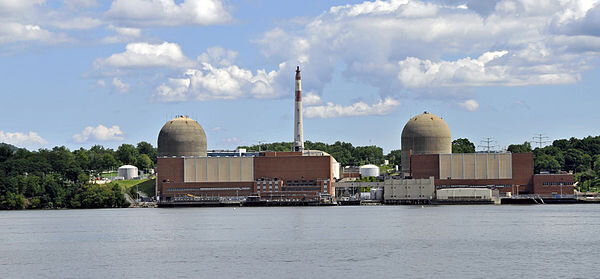
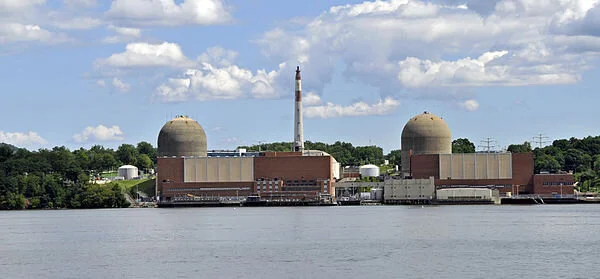
Indian Point Energy Center, a three-unit nuclear power plant station, in Buchanan, N.Y. New York City Mayor Bill de Blasio should fight to keep it open.
The mayors of the two greatest cities in the world, New York and London, combined on Jan. 6 to endorse folly. New York’s Bill de Blasio and London’s Sadiq Khan issued a combined call for all cities to follow their example and divest pension funds in fossil-fuel companies.
The plan is to force an end the burning of fossil fuels by pulling their pension funds out of fossil-fuel company investments. In another context, this was known as a starve-the-beast strategy.
In reality it was cheap politics: an example of what the British like to refer to as “signaling virtue.”
Putting pressure on the oil and gas companies that are the targets of their worships somehow is meant to force them to do what? To pack up, shutdown and “say ‘uncle’!”, leaving us without gasoline for cars, diesel for trucks or natural gas for electric generation, to say nothing of heating our homes and making meals?
The big woolly idea behind this and much of the Green New Deal, on which the mayors based their pronouncements, is that by punishing the oil and gas companies, they speed the arrival of carbon-free electricity and transportation. Their worships should work on congestion, affordable housing, homelessness and the other innumerable ills that plague cities, not the least New York and London.
As for de Blasio, he could do something efficacious for cleaning the air. He could fight to save the Indian Point Energy Center nuclear plant up the Hudson River, which has provided more than 20 percent of New York City’s electric power for decades with nary a smidgen of carbon being produced. Now it is to close and not a squeak from the clean-air mayor. Also, he could have spoken for other regional nuclear plants that have been closed in an untimely fashion.
Like many supporters of the Green New Deal, the two mayors are correctly worried about global warming. Their low-lying cities with tidal rivers are likely to suffer irreversible flooding within the decade. But they are closed-minded about the measures that can be taken to reverse global warming. They want clean electricity, but only if it is made in ways that are approved by the left of their parties -- the Democrats for de Blasio and Labor for Khan. They want only politically correct, clean air.
The mayors want electricity that is produced from the wind or the sun. In their dreams, to misquote Annie Oakley in the musical Annie Get Your Gun — they have the sun in the morning and the wind at night. If only. The wind blows irregularly and the sun, well we know when that shines.
Politicians are out of their depths and dangerous when they prescribe a solution not a destination. If a government, say that of the City of New York, declares that it wants more and more of the electricity generated in the city to be carbon-free, it should stick to that goal. It should not tell the market – and the industry -- which kinds of carbon-free electricity meet the goal.
The goal should be the aim, not the plays that will get the ball there.
Nuclear plants in the United States are failing because after deregulation of the electric utility industry in the 1990s, a market was established in which the lowest-priced electricity was always to be favored – neither social value nor consideration for the fact that this would favor a carbon fuel, natural gas, over highly regulated nuclear plants was considered.
The mayors did not mention -- as those who decide that the fossil companies are to blame are wont to do -- that there are technologies on the horizon to capture carbon before it gets into the air. This is known as carbon capture use and storage (CCUS).
Oddly a rah-rah, American Petroleum Institute event, which API does every January in Washington, staged after the mayors’ announcement, under the rubric of “America’s Energy Future,” didn’t play up carbon capture use and storage, although oil companies are leaders in the field. Instead, API dwelled on the virtues of oil and gas in everything thing from job growth to entrepreneurship to quality of life.
Science brought us the fracking boom, cheap solar cells, efficient windmills and it should be given a chance to solve the carbon problem, both with clean nuclear and with much cleaner fossil. The rest is posturing, even as we have just finished the hottest decade on history.
The worshipful mayors of New York and London should be panicked about saving their cities, not signaling their liberal credentials.
On Twitter: @llewellynking2
Llewellyn King is executive producer and host of White House Chronicle, on PBS. He’s based in Rhode Island and Washington, D.C.
'The ideal pursuit'

A 17th-Century map depicting New England as a coastal enclave extending from Cape Cod to New France
“History ... with its long, leisurely, gentlemanly labors, the books arriving by post, the cards to be kept and filed, the sections to be copied, the documents to be checked, is the ideal pursuit for the New England mind.’’
— Elizabeth Hardwick (1916-2007), celebrated novelist, short story writer and critic. From 1949 until their divorce, in 1972, she was married to Robert Lowell, the Pulitzer Prize‐winning poet from a prominent Boston Brahmin family.
Partners and GE team up in AI project

The word "robot" was coined by Karel Čapek in his 1921 play R.U.R., the title standing for "Rossum's Universal Robots"

The road to artificial intelligence: This ontology represents knowledge as a set of concepts within a domain and the relationships between those concepts.
From The New England Council (newenglandcouncil.com)
“Partners HealthCare and General Electric, both based in Boston, have announced that they are in the midst of obtaining FDA approval for deployment of their newly developed artificial intelligence (AI) to hospitals and health systems across the world. Partners and GE Healthcare have been partnering to develop the AI program for nearly three years.
“As a baseline, the health-care providers’ new platform seeks to couple data results from GE imaging equipment with electronic medical record inputs, and then use the AI to aid clinicians in making treatment decisions. The new technology’s approach differs from less accurate and overreaching ones currently on the market, using contextual data from imaging equipment and aiming to help clinicians make decisions, rather than making the decisions for them. In addition, the AI and its data would be a shared platform, allowing the system to improve itself by exploring a wider range of information. The software’s design gives all clinicians navigable access to patients’ medical records that can be utilized and acted upon in the midst of day-to-day work.
“‘What we are doing now is we’re actually taking the capabilities of these platforms, and you’re going to expose these to the external world, from our developer community perspective so that you know developers across the globe could use some of these features, and that cross-section that we have created, to rapidly develop applications,’ said Amit Phadnis, chief digital officer for GE Healthcare.’’
'Winter waterwings'

Beach on Outer Cape Cod
“The smell of snow, stinging in nostrils as the wind lifts it from a beach
Eve-shuttering, mixed with sand, or when snow lies under the street lamps and on all
And the air is emptied to an uplifting gassiness
That turns lungs to winter waterwings, buoying, and the bright white night
Freezes in sight a lapse of waves, balsamic, salty, unexpected:
Hours after swimming, sitting thinking biting at a hangnail
And the taste of the—to your eyes—invisible crystals irradiates the world…’’
— From “The Chrystal Lithium,’’ by James Schuyler (1923-1991)
Consuming beauty while extracting resources

“Melas Chasms Sunrise,’’ by Isabel Beavers, in the show “Golden Spike,’’ at Brookline (Mass.) Arts Center, through Jan. 31.
This is a three-person exhibition about the environment and climate change. A "golden spike" is presented as a signifier of the extreme man-made change in recent geologic record. Artists Beavers, Allison Gray and William Van Beckum explore the concept of "anthropocence," or the landscape as evidence of humanity's mark in time through models and other representations of landscapes from across history. "We simultaneously consume aesthetic beauty from landscapes, while treating them as sites of extraction and destruction," the artists say.

Overlooking Leverett Pond in Olmsted Park in Brookline
Here’s an edited version of a Wikipedia list of historic buildings in Brookline (Massachusetts’s largest town) that are open to the public:
The birthplace of John F. Kennedy stands in Brookline and is listed in the National Register of Historic Places. It is maintained by the National Park Service and is open to the public from May through September.
"Fairsted", the 100-year-old business headquarters and design office for renowned landscape architect Frederick Law Olmsted and the Olmsted Brothers firm, has been carefully preserved as the Frederick Law Olmsted National Historic Site, on 7 acres of landscaped grounds at 99 Warren St.
John Goddard House, an historic house at 235 Goddard Ave., was built in 1767 and added to the National Register of Historic Places in 1985.
Larz Anderson Park is in Brookline on the 64-acre estate once owned by Larz Anderson and Isabel Weld Perkins. The park contains the Larz Anderson Auto Museum, the oldest automobile collection in the country, as well as Putterham School, a one-room schoolhouse from colonial times.