
Vox clamantis in deserto






Verizon's Boston 5G network concentrated in the Fenway area

Aerial view of West Fenway and Kenmore showing the Back Bay Fens (lower left), Fenway Park (center) and the edge of Kenmore Square (right)
From The New England Council (newenglandcouncil.com)
“As of Nov. 19, customers have been able to access Verizon’s 5G Ultra-Wideband network in various parts of Boston. The telecommunications company made a promise to bring 5G to mobile customers in more cities by the end of 2019.
“Verizon’s 5G network will be concentrated in the Fenway area of Boston, along Brookline Avenue and near Beth Israel Deaconess Medical Center. The service will also be available near Harvard Medical School, Northeastern University, Fenway Park, and Emmanuel College. 5G has a greater bandwidth than 4G, allowing for the transfer of more data in the same amount of time at a lower latency. The network also allows for more devices to be connected at the same time. Verizon began its rollout of 5G in Providence earlier this year.
“We are building our 5G Ultra-Wideband network to support the type of transformative breakthroughs people imagine when they think of next-generation connectivity, and we’re working to build those services with leaders in manufacturing, publishing and entertainment, and in our 5G Labs,” said Kyle Malady, Verizon’s chief technology officer.’’

Ledgy fields
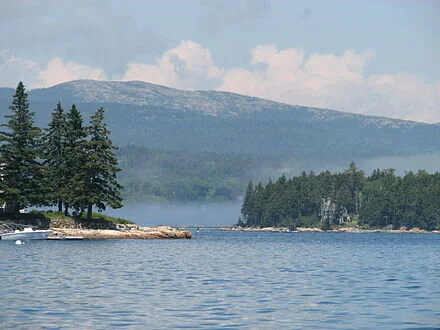
The shore of Mount Desert Island, Maine
“She was the one who lived up country
Half in the woods on a rain-washed road
With a well not near and a barn too far
And the fields ledgy and full of stones
That the crows cawed over and liked to walk in…’’
From “After Reading The Country of the Pointed Firs,’’ by Jean Garrigue (1912-1972)
The Country of the Pointed Firs (1896) was Sarah Orne Jewett’s (1849-1909) most successful novel. It’s about a woman novelist who travels to Maine to find peace in order to finish a book.’’
Set in the fictional fishing community of Dunnet Landing, based on villages on Mount Desert Island, the novel reads rather like a collection of sketches, Like Jewett, the narrator is a woman, a writer, unattached and genteel. Anxious to protect her writing time, she works in an empty schoolhouse. Still, she also spend a lot of time with her landlady, Mrs. Todd, a herbalist, and the latter’s family and friends.

Ballet Russes in Clinton

“Tamara Karsivina as Columbine in Le Carnaval, ‘‘1912, (platinum palladium print ©Curatorial Assistance Inc. / E.O. Hoppé Collection), by Emil Hoppé, in the show “Emil Hoppé: Photographs from the Ballet Russes,’’ at the Museum of Russian Icons, Clinton, Mass., through March 8.
The museum says: The exhibition “pays homage to the genius of two men: famed Russian impresario Sergei Diaghilev, who founded the Ballets Russes; and renowned photographer Emil Otto Hoppé, who photographed the champions of that illustrious company.’’

In Clinton, Mass., the Wachusett Reservoir, the second-largest body of fresh water in the Bay State.

Fuller Field, in Clinton, is said to be the oldest ballpark in continuous use, since 1878.

The Foster Fountain in Clinton’s Central Park. As with many New England mill towns that flourished in the 19th Century, Clinton has a lovely public park.
This from the town:
“Central Park was established in 1852 when the land was donated to the town by Horatio N. Bigelow. The four-acre lot contains two war monuments, one for Clinton residents who served in the Spanish-American War, and the other a Civil War monument. A sundial can also be found on the south side of the park, and the ‘Foster Fountain’ on the north side of the park. The Foster Fountain was given to the town by John R. Foster in 1890 and later was destroyed in the hurricane of 1938. A replica fountain was fabricated from the original Fiske Iron Works patterns and re-dedicated by the Town of Clinton on September 9, 2000.’’
Stores out, restaurants in
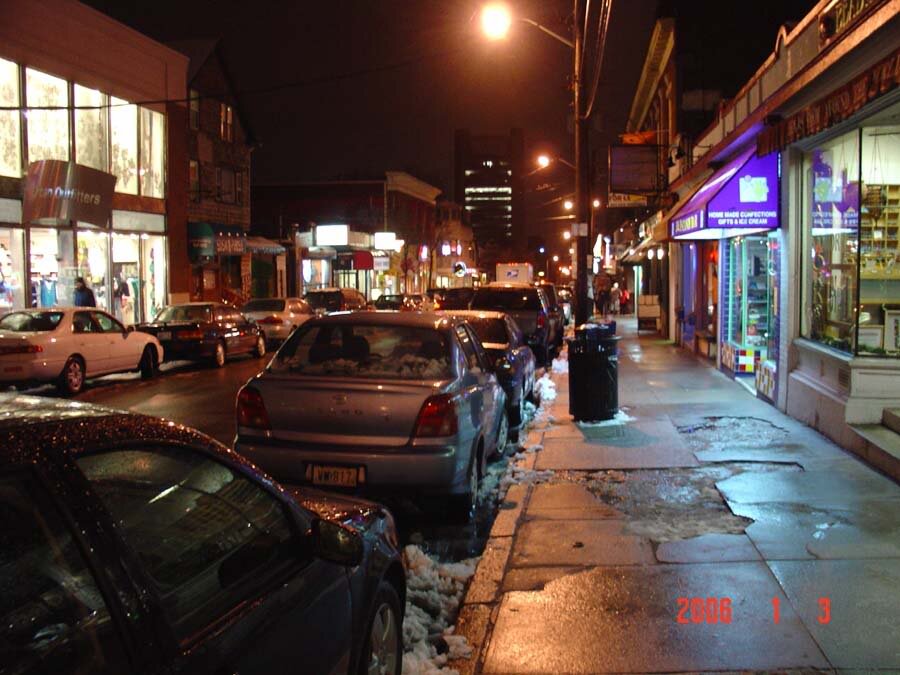
On Thayer Street, in Providence
From Robert Whitcomb’s “Digital Diary,’’ in GoLocal24.com
Chris and Jennifer Daltry opened a store, What Cheer Records and Vintage, on Thayer Street, on Providence’s College Hill in June 2012. “here was a lot of optimism; there were still enough little independent places on the street,” Jennifer Daltry told The Brown Daily Herald’s Isabel Inadomi. But changes, such as tougher parking and a rent increase, led then to close in May 2017.
Chris Daltry noted: “This used to be a shopping district, and now it’s an eating district.’’ This is a situation replicated all over the country, as the Internet and big chains kill many small independently owned stores. It must be -- in general -- what the public wants, but it’s sad that we’re losing that local texture. Meanwhile, more than ever, people go out to eat.
To read Ms. Inadomi’s article, please hit this link.
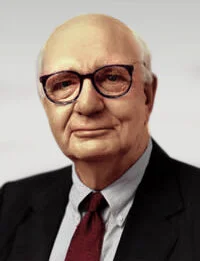
David Warsh: Two heroes -- Volcker and Comey
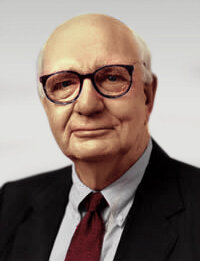
Paul Volcker

James Comey
SOMERVILLE, Mass.
It’s difficult to explain heroics of the past to young leaders of the present day. Circumstances change so swiftly, new perils mount with such sudden speed that what was required even forty years ago in terms of preparation, ingenuity, and courage may fail to impress – especially if it happens to involve monetary policy.
Former Federal Reserve Board Chairman Paul Volcker died recently at 92. In recognition of his passing, I read the superbly detailed “The Reform of October 1979: How It Happened and Why,’’ by David Lindsey, Athanasios Orphanides and Robert Rasche. Their article was written for a conference of the Federal Reserve Bank of St. Louis on the twenty-fifth anniversary of a momentous change.
It was on a Saturday evening — Oct. 6, 1979 — that Volcker summoned reporters to the Fed, the first such press conference in the central bank’s history. Volcker had recently been appointed to the job by President Jimmy Carter. The atmosphere in financial markets was one of crisis. A climactic meeting of the system’s policy-making Federal Open Market Committee had ended three hours before.
Volcker announced that, after decades of seeking to control inflation by manipulating the price of money, meaning the short-term interest rates it controlled itself, the Fed would henceforth begin targeting the quantity of money instead. After decades relying entirely on Keynesian doctrine, the Fed would capitulate to its monetarist critics and see what would happen. Whatever the change meant in theory, policy-makers knew that in practice they were tying their hands with respect to interest rates. Monetary stringency meant that market rates would move to heights that the FOMC never would have dared to have explicitly voted.
A crushing recession followed, complicated by much political byplay. To make a long and scary story short, market participants of all sorts gradually revised downward their expectations of future price increases. Convinced that the Fed’s governors would not relent, world markets began a financial asset boom. By 1985 inflation had declined to 3.4 percent, from the 12 percent annual rate during Volcker’s first year on the job.
Meanwhile, the FOMC quietly gave up on the policy of seeking to manage “the money supply” and returned to targeting interest rates. As Fed chairman Ben Bernanke would later explain, deregulation and financial innovation meant that they couldn’t get a handle on the behavior of the monetary aggregates, no matter which one they chose.
There are accounts of Volcker’s story for every taste and attention span. The best is William Silber’s narrative of his friend’s career, Volcker: The Triumph of Persistence (Bloomsbury, 2012). Stephen Axilrod’s Inside the Fed: Monetary Policy and its Management, Martin through Greenspan (MIT, 2011). Volcker’s autobiography, Keeping at It: the Quest for Sound Money and Good Government (Public Affairs, 2018), written with Christine Harper, gives the fullest flavor of the man. For a short course, you can’t beat the obit in The New York Times.
I particularly admire The Great Inflation and Its Aftermath: The Past and Future of American Affluence, by Robert Samuelson (Random House, 2009), Samuelson covered the events of those years as a newspaper reporter and columnist, first for Newsweek, then for The Washington Post. He decided to write the book, he explained, because no one else had, or apparently would. He began
History is what we say it is. If you asked a group of scholars to name the most important landmarks in the American story of the past half-century, they would some or all of the following: the war in Vietnam; the civil rights movement; the assassinations of John Kennedy, Robert Kennedy, and Martin Luther King, Jr.; Watergate and President Richard Nixon’s resignation; the sexual revolution; the invention of the computer chip; Ronald Reagan’s election in 1980; the end of the Cold War; the creation of the Internet; the emergence of AIDS; the terrorist attacks of September 11, 2001; and the two wars in Iraq (1991 and 2003). Looking ahead, these scholars might include other developments: the rise of Japan as a major economic power in the 1970s and 1980s’ the emergence of China in the 1980s from its self-imposed isolation’ and the spread of nuclear weapons (to China, India, Pakistan, and others.) But missing from any list would be the rise and fall of double-digit US inflation. This would be a huge oversight.
Many of Volcker’s efforts after leaving office, in 1987 were devoted to improving the lot of public servants. Instead, their standing has continued to degrade. Especially striking therefore was the afterword for the paperback edition of Keeping at It, which he finished in September. It appeared Friday as a column on the op-ed page of the Financial Times, under the headline “Paul Volcker’s Final Warning for America’’.
Increasingly, by design or not, there appears to be a movement to undermine Americans’ faith in our government and its policies and institutions. We’ve moved well beyond former President Ronald Reagan’s credo that ‘government is the problem.’ with its aim of reversing decades of government expansion.
Today we see something very different and far more sinister. Nihilistic forces are dismantling policies to protect our air, water, and climate. And they seek to discredit the pillars of our democracy: voting rights and fair elections, the rule of law, the free press, the separation of powers, the belief in science, and the concept of truth itself.
That brought the story forward to last week. As I listened, on a long drive, to congressional Republicans defend Donald Trump on a long drive, I thought about another civil servant, this one a hero of the present day. It always seemed to me that Volcker’s attitude towards his job had something to do with his physical stature. He was 6 feet 7 inches tall. His seriousness may have derived in part from his height (and, of course, in part from his parents), but his authority stemmed from his seriousness. In the end being tall simply helped.
Similarly tall, and, as far as I can tell, similarly motivated, is former FBI Director James Comey. If Comey is not as slyly funny as was Volcker, he is at least as high-minded, or perhaps more, by as much as an inch – he is 6 feet 8 inches tall. He is also scrupulously honest (an undesirable trait in a central banker), yesterday acknowledging that the FBI had loaded the dice when they sought court permission to eavesdrop on former Trump campaign adviser Carter Page.
Today the battles of the Trump presidency present a complicated landscape. In another forty years, though, my hunch is that it will be Comey who will be seen to have symbolically slain the dragon.
David Warsh, an economic historian and long-time columnist, is proprietor of Somerville-based economicprincipals.com, where column first appeared.
Holes to the heart
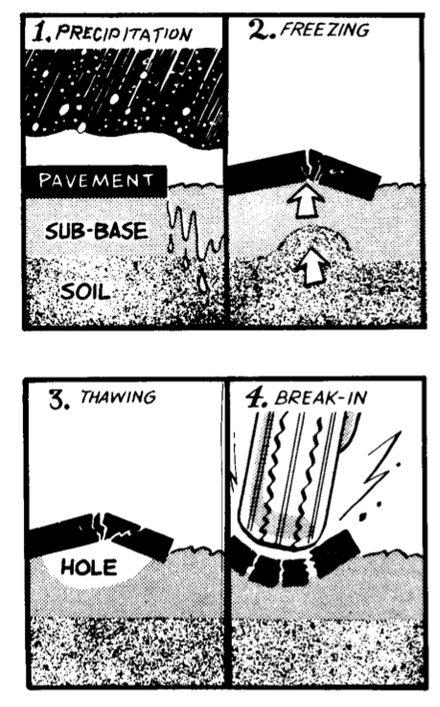
“Testing the soul's mettle,
the frost heaves
holes in the roads
to the heart…’’
— From “New England Winter,’’ by Erica Jong
Vermont's lucrative image
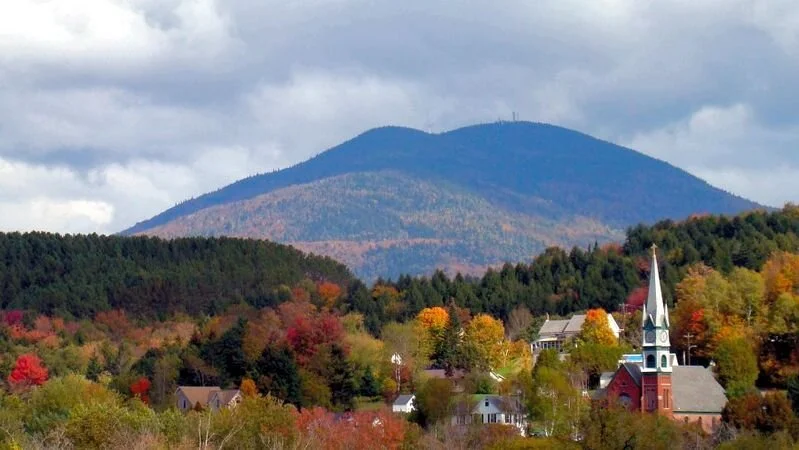
Burke Mountain from Lyndonville, in Vermont’s Northeast Kingdom
“We have helped create the Vermont image as a place where the skies are bluer, people work harder, the land is more fertile, and virtue springs from every brook. The state has made money on that image.’’
— Tom Slayton, then editor of Vermont Life magazine, quoted in the October 1996 issue of Yankee magazine.

Brian Wakamo: Save Minor League Baseball teams

Home of the Vermont Lake Monsters, a Minor League Baseball affiliate of the Oakland Athletics
Via OtherWords.org
Baseball had an exciting year — breakout stars, a major cheating scandal, a seven-game World Series.
And now it’s capping off the year with a disastrous idea from the owners. Led by the Houston Astros — the same Astros mired in scandals over cheating and domestic violence — Major League Baseball has proposed cutting 42 minor league teams all around the country.
Who’s on the chopping block? Teams from Quad Cities, Iowa, and Williamsport, Penn., where the Little League World Series takes place every year, to Missoula, Montana and Orem, Utah.
These places have, in many cases, been a part of the fabric of baseball in America for over a century. The Vermont Lake Monsters, in Burlington (on Lake Champlain), another team on the “hit list,” play in a stadium built in 1906, older than Fenway Park. The similarly targeted Hagerstown (MD) Suns play in one built in 1930.
These teams have provided a way for folks in rural and underserved areas to see baseball and future major leaguers for a fraction of the price of traveling to an MLB city. And they’re a way to boost the communities they play in.
Compensation for these players is often ridiculously low — around the poverty line — and they don’t have a union like their professional counterparts. It’s a cutthroat and competitive environment, with only about one in ten minor leaguers making it to the majors. And with low per diems and intensive travel, it’s an exhausting endeavor.
These issues need to be addressed not only to ensure the survival of Minor League Baseball, but to help baseball itself thrive. Players aren’t going to become their best if they’re stuck on futons in host families’ homes, living off PB&J sandwiches.
But the solution is not to destroy the teams — and the local communities — who give them the chance in the first place. No wonder the proposal has been criticized by folks all over the political spectrum.
Vermont Sen. Bernie Sanders wrote a letter to MLB Commissioner Rob Manfred protesting the move. And over 100 representatives — from Congressional Progressive Caucus leaders Mark Pocan (D.-WI) and Jamie Raskin (D-MD.) to Trump supporters Elise Stefanik (R-N.Y.) and Greg Gianforte (R.-Calif.)— signed on to a letter condemning the MLB’s hit list.
MLB has tried to justify the cuts in the name of cost savings, low attendance, and stadiums that fail to meet MLB standards. In reality, it’s rooted in greed and a desire for more profits — and it will backfire.
These teams employ 1,000 players and countless more workers, and the Minor Leagues saw over 40 million fans attend their games. At a time when the MLB is wringing its hands about attendance (now at a 16-year low while young fans are tuning in to other sports), eliminating this link to 42 communities would be deeply harmful.
Even so, major league teams in relatively modest markets like Kansas City are getting sold for $1 billion, and the MLB is making record revenues thanks to television deals. Meanwhile, they have the gall to balk at requests for higher minor league salaries, while demanding minor league franchises pay for every part of their teams, which train those major leaguers.
It’s ridiculous. The MLB should be investing in these teams and players, so they’re not stuck on poverty wages and couches — and helping these historic stadiums endure for another hundred years. Baseball isn’t called America’s pastime for nothing, and these teams in locales all around the U.S. are a huge reason for that.
The MLB’s greed is wrong and destructive. Let’s build up the minor leagues, not cut them down.
Brian Wakamo is an inequality researcher at the Institute for Policy Studies.
More uses for New England's wood wealth

In the White Mountain National Forest, in New Hampshire
From Robert Whitcomb’s “Digital Diary,’’ in GoLocal24.com
The two most forested states are Maine and New Hampshire. (The other New England states also have a lot of woods, some of them remarkably close to cities.) There’s tremendous unused economic potential in them as businesses work on making environmentally sustainable products from this organic material. Consider particle board made from wood chips, and even particle board held together with an adhesive that’s also made from wood.
A story on New Hampshire Public Radio described some of these products:
“ass timber -- thick, strong wood panels made out of layers of lumber and sometimes woodchips. It's seen as a climate- and city-friendly alternative to steel and concrete’’…and cellulose, “a wood pulp so fine that researchers say its uses are almost endless -- it can feed 3D printers or make insulation, thicken paints and food, make car parts and cell phone screens, or even be used in medicine, to create synthetic bones and nerves.’’ It could become a major alternative to plastic, which is made from oil.
There’s also burning wood chips in “biomass’’ projects to generate electricity and for heating. Yes, that’s renewable energy – just keeping growing trees! – but this puts out carbon emissions, albeit from a New England-sourced carbon source.
To read more, please hit this link.
GPS won't save you

“Main Break” (acrylic on board), by Keri Kimura, at The Harlow (gallery), Hallowell, Maine, Jan. 10-Feb. 8
Hallowell, on the Kennebec River, has quite a reputation for culture.
It’s long been a regional center for the arts for central Maine, with well-known art galleries, theaters, studios, festivals, antique stores and locally based artists, and it has well-known taverns and restaurants, with the downtown area having a high concentration of eating and drinking establishments.
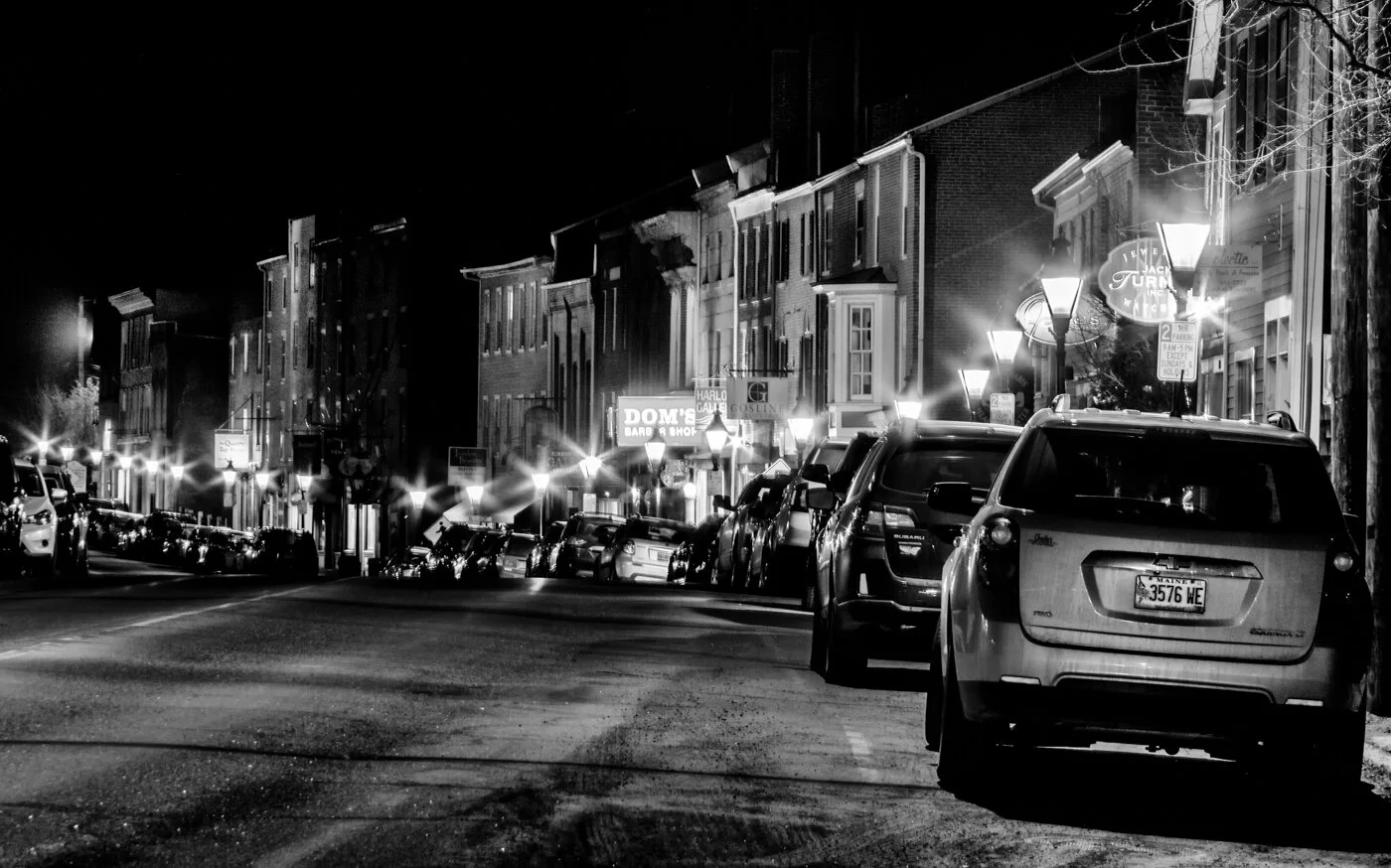
Water Street in Hallowell. Some have called the city (with only about 2,400 year-round residents!) the New Orleans of Maine. Well, not quite, but….
— Photo by Paul VanDerWerf
Crow to the rescue

The way a crow
Shook down on me
The dust of snow
From a hemlock tree
Has given my heart
A change of mood
And saved some part
Of a day I had rued.
— “Dust of Snow,’’ by Robert Frost
Builds character
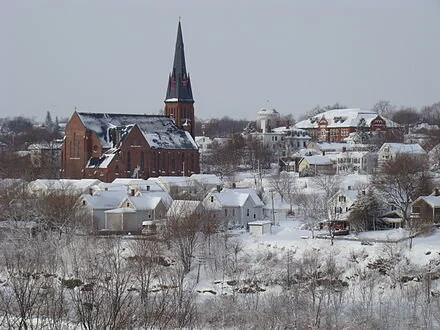
Bangor, Maine
“Maine's long and cold winters may help keep our state's population low, but our harsh climate also accounts for what is unique and valuable about our land and our people.’’
— Former Maine Congressman Tom Allen


He didn't go for the night life
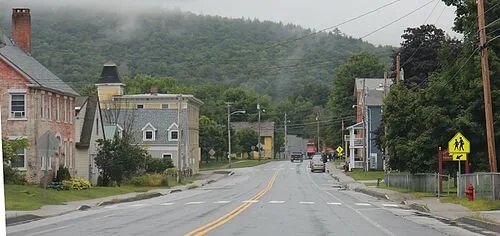
Downtown Cavendish, Vt.
“Exile is always difficult, and yet I could not have imagined a better place to live, and wait for my return home, than Cavendish, Vermont.’’
— Russian novelist, historian, short story writer (and Nobel laureate) and anti-Soviet political activist Alexander Solzhenitsyn (1918-2008) in a 1994 letter to the Town of Cavendish. He was expelled from the Soviet Union in 1974 and returned in 1994, after that empire fell apart, in 1991.
From dartblog.com:
An article in Humanities, the National Endowment for the Humanities’ magazine, “A Tiny Village in Vermont Was the Perfect Spot to Hide Aleksandr Solzhenitsyn,’’ describes Solzhenitsyn’s time in Vermont.
After traveling throughout the region in 1975, they decided Cavendish would be their new home. Its small size (population: 1,264 in 1970) meant that privacy wouldn’t be a problem. Its remote location was far away from reporters, fans, and the Soviet security services. And its proximity to Dartmouth College provided easy access to a wealth of library and research resources. The entire family, including Natalia’s mother, Ekaterina, moved to a large wooded property there in 1976 [where they stayed until 1994].
Wild and tamed

From Vaughn Sills’s show “Inside Outside,’’ at Kingston Gallery, Boston, Feb. 5-29. The gallery says “the group of photographs blend still life and landscape, “combining bouquets of flowers with landscapes that Sills creates of Prince Edward Island, her mother’s home. For the artist, the fundamental concept is expressed in the exhibition title, a juxtaposition of highly cultivated nature versus the untamed natural world. Domestic life is represented by garden-grown flowers in vases, alluding to the traditional notion of women’s work in gardens and in the home; while the outside world is seen in the images of sea and land.’’
Mortality and beauty are explored in a secondary layer of this body of work. The Prince Edward Island landscapes and seascapes are part of a series about grieving for Sills’ mother, a woman noted for her remarkable beauty. They represent expressions of sadness, love, memory, and connection. Flowers, with their ephemeral beauty, are reminders of death and contrast with the feeling of infinitude implied by the sea and rolling hills. A third layer speaks to the artist’s concern for the planet. She is attuned to the climate crisis implied in these photographs. Local streams and ponds are polluted by the farmer’s field featured in her work, and the flowers purchased for the photographs are transported via trucks that contribute to carbon emissions, a factor in the rise of sea levels. It is the ugly price of beauty, and a reminder of the impermanence of our world.
Visit here for the artist's bio.
Image credit: Vaughn Sills, Double Northumberland Strait Boom Tulips, archival pigment print, 21 x 14 inches, 2015, courtesy the artist.

Llewellyn King: Brexit may be good for the E.U.

PARIS
There are those who believe when Britain finally shakes off its European bondage it will prosper as never before. This prosperity will be so compelling that the remaining 27 countries that comprise the European Union will follow suit in pursuit of riches. The end of European integration.
This is a view easier to find in Washington than it is here in Paris or in London. There is a sense here of Europe Rising not Europe Disintegrating. Britain will still, despite the contrived case against membership, look to selling to and buying from Europe. After all, the E.U. will still be there: a huge market just a little over 20 miles across the English Channel.
Europe is beset with sluggish growth. The euro -- the currency used by 19 of Europe’s nations -- has been a mixed blessing, unable to serve hurting states by devaluing to increase exports. Yet it is the symbol of Europe, particularly to a new generation that has known nothing else and looks more to a united Europe than, perhaps, their parents.
These are problems but not insuperable. From what I heard here at the annual congress of the Association of European Journalists (AEJ), Europeans feel that they really need each other, not least because they are constantly under a sophisticated and relentless attack of fake news and disinformation from Russia. Russia is a huge problem in Europe with fake information and even fake events, like the planting of disrupters pretending to be reporters or staged events suggesting a fascist penetration that does not exist. Daily, Russia endangers the truth in Europe.
The AEJ is, to my mind, as good a place as any to take the temperature of Europe. It is made up of working journalists, not stars or polemicists, but day-to-day reporters from across Europe, from Bulgaria to Spain and from Finland to Ireland. Collectively, they provide unique insight on the mood of Europe.
Rather than Britain’s departure (which nobody in Europe wants), here at the AEJ congress Brexit is regarded as the kind of misfortune that brings people together and leads on to triumph. Rather than Europe’s tragedy, here it is seen as Britain’s tragedy. And rather than Brexit being a precursor to the breakup of the E.U., here it is seen as a precursor to the breakup of the United Kingdom.
Otmar Lahodynsky, president of the AEJ, says that England has discovered nationalism, as have Scotland and Wales -- suggesting the inevitable breakup of the United Kingdom as it has been constituted since the Act of Union in 1707.
For Europe, the continuing problem is immigration.
While there are rich and poor nations, those in poverty will try to live in those with prosperity and migrate illegally. Not only has this been one of the drivers of Brexit, but it is also a massive problem for Europe, both the internal movement of people from countries like Poland to France, Holland and Germany, and from countries outside, especially Africa where people board unseaworthy vessels and risk drowning trying to reach Europe.
Add climate change to worries about Russia and immigration.
Europeans, much more than Americans, are palpably stricken about climate change and concomitant sea level rise. This adds to immigration pressure and free-floating anxiety about the future -- an anxiety which is unifying, particularly for the young.
In London, once my home, and now a bitterly divided place, there is agreement that new trade deals will not be written at the speed of a French train. People point out ruefully that it took Britain seven years to conclude a trade deal with Canada -- and Britain and Canada l-o-v-e each other as mother and daughter. Who wants a deal with, say, the Czech Republic, with such passion? Not a tempting future.
Llewellyn King is executive producer and host of White House Chronicle, on PBS. His email is llewellynking1@gmail.com.
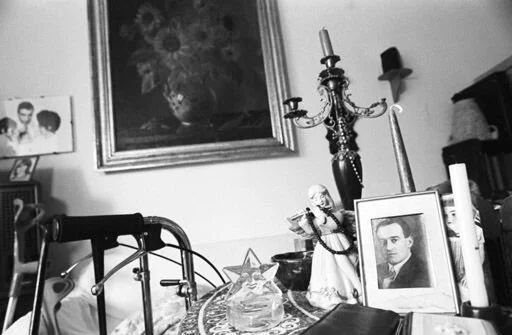
Judith Graham: Some promises you can't keep
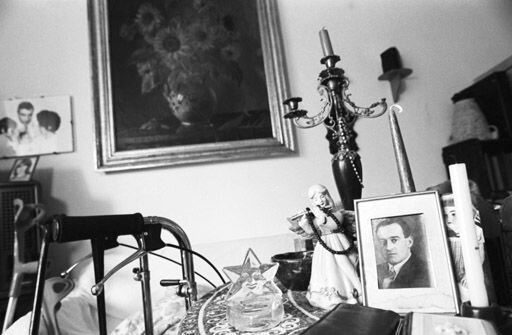
— Photo by Andreas Bohnenstengel
It was a promise Matt Perrin wasn’t able to keep.
“I’ll never take away your independence,” he’d told his mother, Rosemary, then 71, who lived alone on Cape Cod, in a much-loved cottage.
That was before Rosemary started calling Perrin and her brother, confused and disoriented, when she was out driving. Her Alzheimer’s disease was progressing.
Worried about the potential for a dangerous accident, Perrin took away his mother’s car keys, then got rid of her car. She was furious.
For family caregivers, this is a common, anxiety-provoking dilemma. They’ll promise Mom or Dad that they can stay at home through the end of their lives and never go to assisted living or a nursing home. Or they’ll commit to taking care of a spouse’s needs and not bringing paid help into the home. Or they’ll vow to pursue every possible medical intervention in a medical crisis.
Eventually, though, the unforeseen will arise ― after a devastating stroke or a heart attack, for instance, or a diagnosis of advanced cancer or dementia ― and these promises will be broken.
Mom or Dad will need more care than can be arranged at home. A husband or wife won’t be able to handle mounting responsibilities and will need to bring in help. A judgment call ― “this will only prolong suffering, there’s no point in doing more” ― will be made at the bedside of someone who is dying.
“We want to give loved ones who are sick or dying everything we think they want ― but we can’t,” said Barbara Karnes, 78, an end-of-life educator and hospice nurse based in Vancouver, Wash. “And then, we feel we’ve failed them and guilt can stay with us for the rest of our lives.”
She hasn’t forgotten an experience with her mother-in-law, Vi, who moved in with Karnes, her husband and two children after becoming a widow 30 years ago. At the time, Vi was in her 70s, weak and frail. Karnes was working full time and keeping the household going.
“My mother-in-law and I got into a disagreement, I don’t remember what it was about. But I remember her saying to me, ‘You promised you would take care of me,’ and making it clear that she felt I’d let her down. And I said, ‘I know, I was wrong ― I can’t do it all,’” she remembered. “I still feel bad about that.”
“No caregiver I know sets out to deceive another person: It’s just that none of us have a crystal ball or can predict what the future will hold,” she said. “And the best we can do isn’t always as much as we thought was possible.” “We have to figure out a way to forgive ourselves.”
Richard Narad, 64, a professor of health services administration at California State University, spent months after his wife’s death in December 2011 mentally reviewing the last hours of her life before achieving a measure of peace.
His wife, April, was diagnosed with Type 1 diabetes at age 5 and was legally blind when the couple married in 1994. A year later, she had the first of a series of strokes. Eventually, April was diagnosed with congestive heart failure. In the last 18 months of her life, she was hospitalized 13 times.
April Narad had told her husband she wanted “full code” status in the event of an emergency ― in other words, “do everything possible to keep me alive.” But she was nervous about his willingness to honor her wishes because his own end-of-life views differed from hers.
“I think certain care is futile and you need to give up earlier,” he explained.
In the end, April was rushed to the hospital one night after dinner, gasping for breath. There, Narad directed medical staff to pursue “full code” interventions. But when a physician came out to tell him that death appeared inevitable, Narad remembers saying, “Well, if that’s the case, just call it.
Had he broken a promise to insist that other treatments be tried? Narad spent months wondering but eventually accepted that he acted in good faith and couldn’t have saved April’s life.
With illness, older couples can end up re-evaluating commitments they’ve made. Kathy Bell, 66, of Silver Spring, Md., promised her husband, Bruce Riggs, 82, that she’d stay with him “through all the changes in our lives” when they married in 1987. Then in August 2011, he received a diagnosis of Alzheimer’s.
The couple moved into a senior living facility, but as Riggs’s condition worsened he had to go to a memory care facility in 2014. The following year, Bell had lunch with a man whose wife lived at the same facility. He told her his therapist had recommended he start dating.
“That planted the idea of possibly doing this myself at some point,” Bell said, and two years ago she met a man who has become a regular companion.
Does she feel she’s broken her promise to her husband, who was committed to a monogamous marriage? “No, I don’t,” Bell said, adding that “it’s not clear whether he knows me at this point. He doesn’t talk. The way I view it: I still love him. I still go to see him. I’m still taking care of him.”
Promises can be explicit ― spoken aloud ― or implicit, understood without direct communication. Both kinds can inspire regret.
Debra Hallisey, 62, a caregiver consultant based in Lawrenceville, N.J., describes making an unspoken promise to her father, Don, when he was diagnosed with congestive heart failure in 2014. Their agreement, which was never voiced: Neither would tell Hallisey’s mother, Doris ― who has diabetes, mobility issues and is legally blind ― how sick he was.
“I knew he was shielding [Mom] from knowing the truth. When she would ask questions, he wouldn’t say anything,” Hallisey said. Because her mother was disabled, Hallisey accompanied her father to doctor’s appointments.
When Hallisey’s father died, in February 2015, Doris was profoundly shocked and Hallisey was overcome by remorse. “It was then, I said to my mother, ‘Mommy, there are no more secrets. If something is wrong, I am going to tell you, and together we’re going to determine the best thing to do,’” she said.
In line with that promise, Hallisey has been direct with her mother, who uses a walker to get around her home in Somerset, N.J., and has round-the-clock home care. If and when Doris becomes unable to walk, she’ll have to move, Hallisey has said.
“I’ve told her, ‘Mommy, I’ll do everything to keep you in this house, but you have to use your walker and work at staying strong. A wheelchair won’t work in your house,’” Hallisey said. “I know that keeping her at home is a promise I may not be able to keep.”
Matt Perrin made the decision to move his mother, Rosemary, to assisted living in 2017, after realizing he couldn’t coordinate care for her escalating needs at a distance. (Rosemary lived on Cape Cod; Perrin lived in New Hampshire.) Because he’d vowed to protect her independence, “I felt so guilty ― a guilt that I had never felt before,” he admitted.
Rosemary resisted the move passionately, but after a few months settled into her new home.
“I felt relief then, and I still do,” Perrin said. “I wish I didn’t make that promise to my mom, and I wish she weren’t living with Alzheimer’s. But I’m thankful that she’s in a place that’s really good for her, all things considered.”
Judith Graham is a Kaiser Health News reporter.
RELATED TOPICS
AGING NAVIGATING AGING
365-day growing season in Providence

From Robert Whitcomb’s “Digital Diary,’’ in GoLocal24.com
Gotham Greens, in Providence, is the most exciting new business in the city for a long time. The company will grow about 10 million heads of leafy greens a year inside its 110,000-square-foot facility, now open. This gives our region a tad more food independence by letting crops be harvested even through our annual cold snap called “winter’’ and in what had been an industrial wasteland. There are other tracts in the city that could be converted to year-round food production.
That includes crops that can be grown in rooftop greenhouses. Then there’s the stuff to grow on open rooftops seasonally. Hit this link for more information.